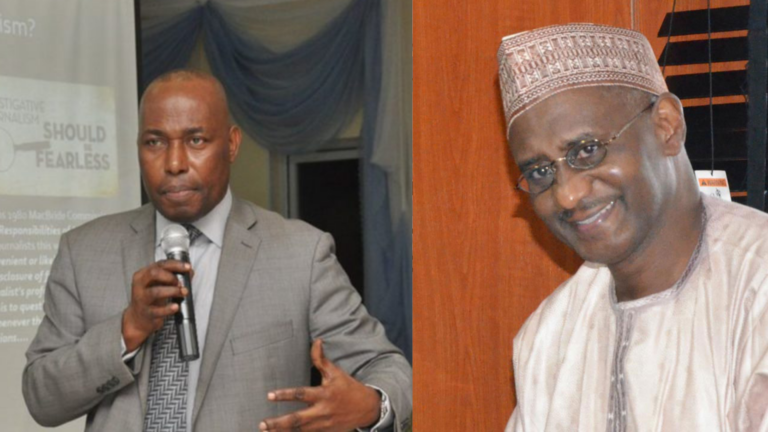
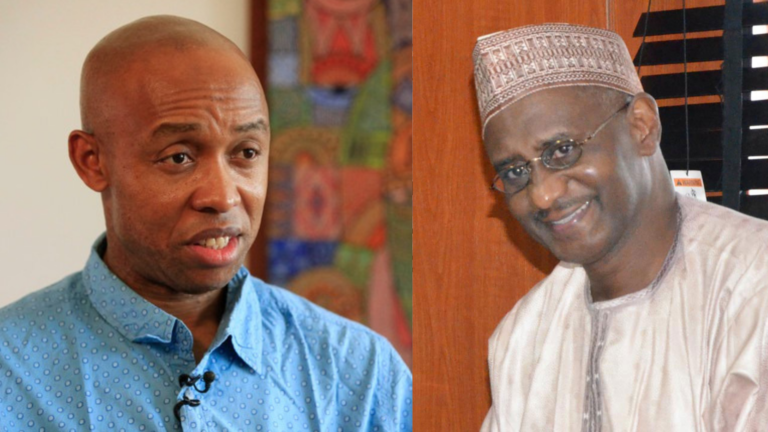
EDITOR-in-CHIEF of The Guardian Martins Oloja has warned Nigerians to be wary of those he described as ‘crisis entrepreneurs,’ stressing that their activities were worsening banditry in Nigeria.
Speaking at a webinar organised by The ICIR on Thursday themed, ‘Nigeria’s Insecurity: Addressing the Challenges of Banditry and Kidnapping,’ Oloja said the perception of the public was that some people were benefitting from crisis ravaging the country.
According to him, some authors had alerted the public of ‘crisis entrepreneurs’ who were beneficiaries of insecurity in the nation.
“It appears that banditry has become a big business. So, how do we deal with crisis entrepreneurs? How do we deal with the Federal Government of Nigeria within the context of injustice, within the context of dominance?” he asked.
The ace journalist wondered why the Federal Government was reluctant to dialogue with bandits and solve insecurity challenges ravaging the country.
“We have at this moment a Fulani man in office and in power. Why is it that Sheik Gumi, Senator Shehu Sani and some others are able to get all these bandits to a point of dialogue? Why is it that the military authorities and indeed the Federal Government have not been enthusiastic about using dialogue to end this banditry, to even reduce banditry? Why the reluctance of the authorities?” he queried.
He also condemned increased budgeting for insecurity when the nation was earning lower revenues and called for probe into crisis commercialisation in the nation.
Oloja also hinted that the Hausa people in the North had been conquered by the Fulanis and they could no longer talk.
“What of injustice to the Hausa people in the North? We need to deepen our understanding. Of all the emirates in the North, how many of them are of Hausa origin? We are beginning to read that history, how the Fulani people also conquered the Hausas in the past, took their cultures, language and gave them religion. We are beginning to see that now. The Hausa people are silent and nobody is talking about them.”
On his part, former Executive Secretary of the National Health Insurance Scheme (NHIS) Usman Yusuf called for dialogue with bandits, saying that banditry was a social problem, rather than a military issue.
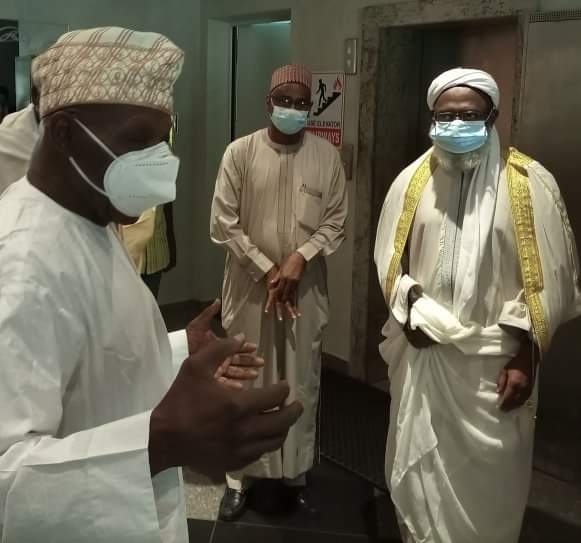
Chief Olusegun Obasanjo (left), Sheikh Ahmad Gumi (right) and Professor Usman Yusuf (middle) at a recent courtesy visit to the former president
Yusuf, who was a keynote speaker at the event, explained that he had been involved in dialoguing with the bandits because insecurity in the country could consume Africa’s biggest economy.
“We know the injustices that have been done to the Fulanis over generations before we were born. They are one people that do not own land in this country. Their cows are rustled; there are a lot of injustices, usually by the local authority, local judges, local police and local police officers. They would sell their cattle. All these injustices are catching with us,” he said.
He frowned at what he described as government increasing militarisation of what was essentially a social problem and emphasised that dialogue was the best option to end banditry and kidnapping in the nation. “There is a crucial role for the military, but there is no military solution to this conflict,” he stated.
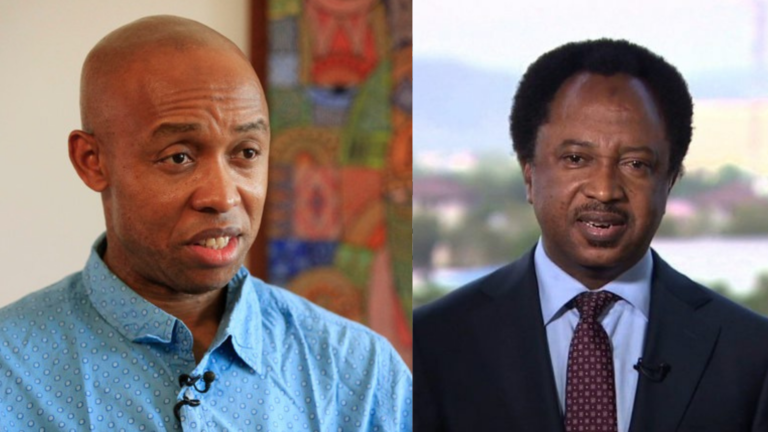
Former Chairman of the National Human Rights Commission (NHRC) Chidi Odinkalu and former Senator representing Kaduna Central Shehu Sani have said that nobody in the country, including Fulanis, have monopoly of grievances.
Speaking at a webinar organised by The ICIR on Thursday themed, ‘Nigeria’s Insecurity: Addressing the Challenges of Banditry and Kidnapping,’ the civil society leaders said there was no justification for carrying arms against the state and its people.
“Nobody has monopoly of grievances. Several other Nigerians could possibly argue that Fulanis have dominated the country. This is an uncomfortable conversation, but I do think Nigerians must have the conversation about grievance and domination and hegemony,” Odinkalu said.
“If everyone who has a grievance resorts to shooting, there is not just going to be enough people to be destroyed in the country,” he stated.
He noted that there were between 379 to 383 ethnic groups in the country, with everyone having its sense of grievances. “The Fulanis have no monopoly of grievance or capacity to shoot their ways into grievance or out of it. I think that needs to be made very clear,” he stated.
He, however, called for dialogue for all aggrieved groups in the country, rather than just Fulanis.
In his contribution, Sani said insecurity in the nation had economic and political undertones.
He said the Fulani banditry should be condemned and no one should, in any way, support such actions.
“We all have grievances, but it is not an excuse for anyone to pick up arms, kidnap people and extort ransom from individuals, particularly poor people,” Sani said.
He called on governors in northern part of the country to come together and see the challenge as a serious problem threatening whatever efforts they made to develop the region.
Sani also called for harmonious approach to addressing banditry in the country. “A situation where you have some governors believing that this is a channel that can be explored to bring an end to this violence and some thinking that it’s not something they should associate with, then, you can’t have solution to the problem. If you solve the problem in Zamfara and Niger and the problem is not solved in Kaduna and Sokoto states, the problem will never be solved at all,” he said, referring to Governor Nasir El-Rufai and others who have vowed never to dialogue with criminals.
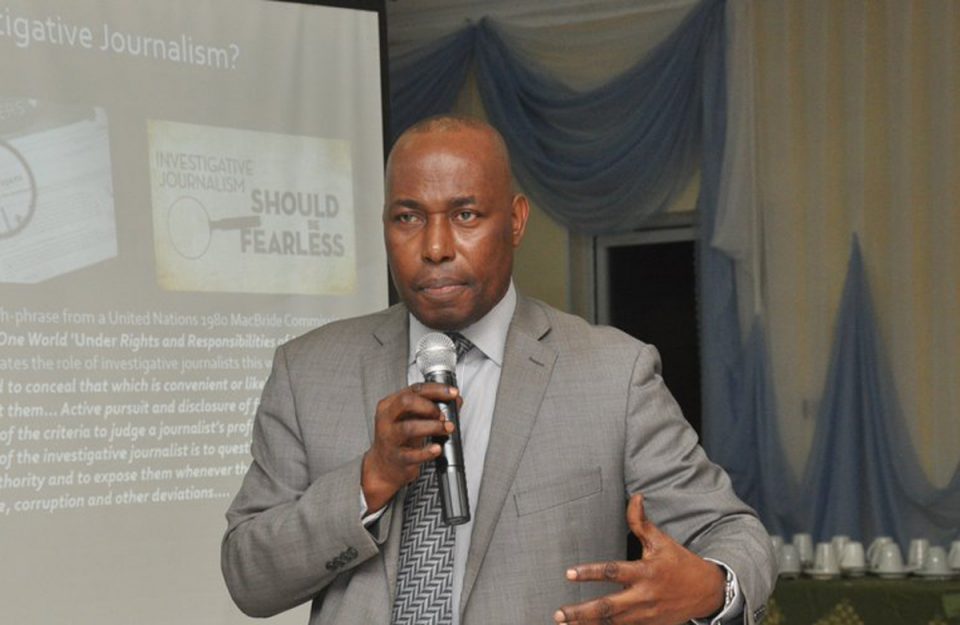
Mr Martins Oloja, Editor-in-Chief, The Guardian Source: Tbiafrica.com
Meanwhile, Editor-in-Chief of The Guardian Martins Oloja said there was a need to deepen understanding of intervention by Sheik Gumi, a prominent Islamic scholar and retired soldier who had been consulting with the bandits.
According to him, some authors had alerted the public of ‘crisis entrepreneurs’ who were beneficiaries of insecurity in the nation.
“It appears that banditry has become a big business. So, how do we deal with crisis entrepreneurs? How do we deal with the Federal Government of Nigeria within the context of injustice, within the context of dominance?
“We have at this moment a Fulani man in office and in power. Why is it that Sheik Gumi, Senator Shehu Sani and some others are able to get all these bandits to a point of dialogue? Why is it that the military authorities and indeed the Federal Government have not been enthusiastic about using dialogue to end this banditry, to even reduce banditry? Why the reluctance of the authorities?”
He also condemned increased budgeting for insecurity when the nation had been earning lower revenues, and called for probe into crisis commercialisation in the nation.
Oloja also hinted that the Hausa people in the North had been conquered by the Fulanis and they could no longer talk.
“What of injustice to the Hausa people in the North? We need to deepen our understanding. Of all the emirates in the North, how many of them are of Hausa origin? We are beginning to read that history, how the Fulani people also conquered the Hausas in the past, took their cultures, language and gave them religion. We are beginning to see that now. The Hausa people are silent and nobody is talking about them.”
FORMER Executive Secretary of the National Health Insurance Scheme (NHIS) Usman Yusuf and former Chairman of the National Human Rights Commission (NHRC) Chidi Odinkalu, on Thursday, disagreed on the origin of banditry in Nigeria.
Yusuf was a keynote speaker at The ICIR live discussion series titled ‘Nigeria’s Insecurity: Addressing the Challenges of Banditry and Kidnapping,’ while Odinkalu was among the panellists.
Other discussants who joined them at the virtual meeting were former senator representing Kaduna Central Shehu Sani; Editor-in-Chief of the Guardian newspapers Martins Oloja, and Executive Director of The ICIR Dayo Ayetan.
Yusuf, a haematology-oncology and bone marrow transplantation professor, said banditry in Nigeria started in Kogi State, where kidnappers from Edo State hired herders from the North to keep their victims and shared part of their ransoms with the herders.
Upon realising how lucrative the business was, the herders returned home to begin kidnapping, he said.
“We know the injustices that have been done to the Fulanis over generations before we were born. They are one people that do not own land in this country. Their cows are rustled; there are a lot of injustices, usually by the local authorities, local judges and local police officers. They would sell their cattle. All these injustices are catching up with us.
Bandits.
“A bandit told me that all kidnapping in Nigeria started around 1999 to 2000 in Kogi State. What happened was that many of these young herders were told by their parents to take their cattle down South for pasture. They spent months and came back up North during the rainy season. He told me there is a forest around Kogi where kidnappers from Edo would bring in their abductees into the forest for these Fulani young men to hold for them.
“Once they get the ransom money, they come and give it to them and they took the abductees back. So, they realised there was money to be made from this criminality; and they started doing that. They started getting involved in drug; they started getting involved in alcohol,” he narrated.
However, Odinkalu disagreed with him and said there had been a proliferation of arms in the North before the 1987 Kafanchan crisis.
Odinkalu, a Professor of Law, said the proliferation of arms in the North escalated the crisis in 1987.
According to him, the weapons were imported from various West African countries, and former President Babangida tried to chase the foreigners who brought the arms into the country at the time.
He said there were drugs in Kano and in various Fulani settlements years before Lawrence Anini, a famous armed robber in the southern part of the country, came into the limelight, adding that the Kafanchan crisis was a crisis of banditry over artisanal mining.
Reacting to other issues mentioned by Yusuf, Odinkalu said there were issues that people in different regions of the country could agree on, which he listed to include the inability of military action to resolve banditry, governance crisis. Still, he objected to Yusuf’s position that the Fulanis’ grievances were responsible for insecurity in the country.
He noted that nobody had a monopoly of grievances in the country. “In fact, several other Nigerians could possibly argue that Fulanis have dominated the country. This is an uncomfortable conversation, but I think Nigerians must have the conversation about grievance and domination and hegemony.
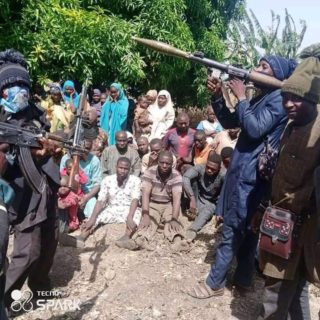
Snapshot from video footage of kidnapped persons in Niger state
“If everyone who has a grievance resorts to shooting, there is not just going to be enough people to be destroyed in the country,” he stated.
He added that there were 379 to 383 ethnic groups in the country, with everyone having its sense of grievances, therefore, “the Fulanis have no monopoly of grievance or capacity to shoot their ways into grievance or out of it. I think that needs to be made very clear,” he stated.
Yusuf had earlier explained that he had been involved in dialogue with the bandits because insecurity in the country could consume the nation.
“Why did I get involved? Bandits are ours, IPOB members are ours, Boko Haram are ours. All of these non-state actors, they are ours. Unless we come to this space (by talking), they will occupy this space, and we’ll find nowhere to go.”
He said banditry and kidnapping in the country was a social problem and not military’s, adding that insecurity stemmed from corruption and bad governance.
He frowned at what he described as government increasing militarisation of what was essentially a social problem and emphasised that dialogue was the best option to end banditry and kidnapping in the nation. “There is a crucial role for the military, but there is no military solution to this conflict,” he stated.
Yusuf stated that Nigeria does not know the enemies it is fighting and that there has been a lack of synergy among its security top brass.
Stressing the imperative of dialogue, he appealed to governors across the country not to close their windows against dialogue with criminal elements in their domains.
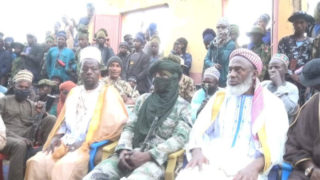
Sheikh Gumi with bandits in the forests of Zamfara
In his contribution, a former Senator Shehu from Kaduna State Sani said insecurity in the nation had economic and political undertones and argued that the Fulani bandits should be condemned.
“We all have grievances, but it is not an excuse for anyone to pick up arms, kidnap people and extort ransom from individuals, particularly poor people,” Sani said.
He called on governors in the northern states to come together and see the challenge as a serious problem threatening efforts to develop the region.
Sani also called for harmonious approach to addressing banditry in the country.
“A situation where you have some governors believing that this is a channel that can be explored to bring an end to this violence and some thinking that it’s not something they should associate with, then, you can’t have a solution to the problem. If you solve the problem in Zamfara and Niger and the problem is not solved in Kaduna and Sokoto states, the problem will never be solved at all,” he said, referring to Governor Nasir El-Rufai and others who have vowed never to dialogue with criminals.
Meanwhile, Oloja said there was a need to deepen the understanding of intervention by Sheik Gumi, a prominent Islamic scholar and retired soldier who had been meeting with the bandits.
According to him, some authors had alerted the public about ‘crisis entrepreneurs’ who are beneficiaries of insecurity in the nation.
“It appears that banditry has become a big business. So, how do we deal with crisis entrepreneurs? How do we deal with the Federal Government of Nigeria within the context of injustice, within the context of dominance?
“We have at this moment a Fulani man in office and in power. Why is it that Sheik Gumi, Senator Shehu Sani and some others are able to get all these bandits to a point of dialogue? Why is it that the military authorities and indeed the Federal Government have not been enthusiastic about using dialogue to end this banditry, to even reduce banditry? Why the reluctance of the authorities?”
He also called on the intelligence agencies to monitor the motives and activities of “crisis entrepreneurs” benefiting from the criminality, while condemning the increased budgeting for insecurity when the nation had been earning lower revenues.
On the final note, the Guardian’s editor-in-chief also hinted that the injustice of the Fulani against the Hausa people put them on the wrong side of history.
“ Of all the emirates in the North, how many of them are of Hausa origin? We are beginning to read that history. How the Fulani people also conquered the Hausas in the past, took their cultures, language and gave them religion. We are beginning to see that now. The Hausa people are silent and nobody is talking about them.”
NIGERIA’S government has attributed power outage across the country to the breakdown of eight power generation plants.
This was stated in series of tweets by Minister of Power Saleh Mamman on Thursday.
While adding that seven other plants were battling with low gas shortages, Mamman apologised for the difficulties the situation had brought to Nigerians.
“I sincerely regret the recent Power outages across the Nation and the difficulties it has brought with it, and wish to assure my Fellow Nigerians that everyone involved is working assiduously to restore the National grid to its previous historical levels and exceed that,” he said.
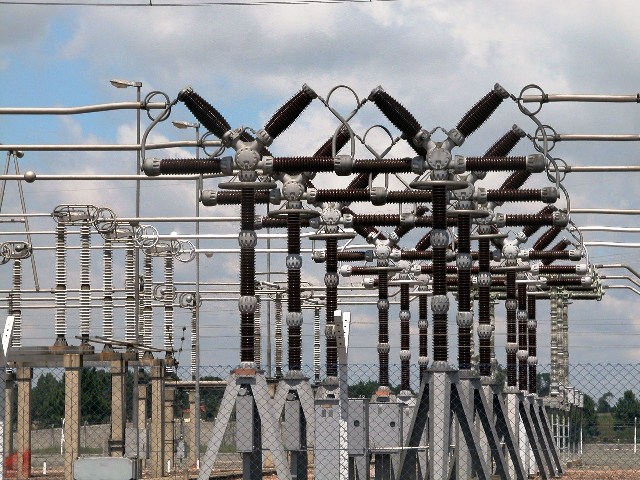
“The problem is caused by the breakdown of some National Integrated Power Plants supplying electricity to the national grid. The plants are namely, Sapele, Afam, Olonrunsogo, Omotosho, Ibom, Egbin, Alaoji and Ihovbor. The Jebba Power Plant was shut down for annual maintenance.
“Seven other integrated Power plants, namely Geregu, Sepele, Omotosho, Gbarain, Omuku, Paras and Alaoji are experiencing gas constraints while the Shiroro hydroelectric power plant has water management issues. This unfortunate development has drastically affected Power generation, thus effectively minimizing the national grid.”
While stating that hands were on deck to address the situation, the minister further assured that the national grid would be restored to its previous historic distribution peak of about 5,600MW of electricity achieved early this year, so as to relieve Nigerians of the current harsh climatic conditions and restore full economic activities.
Africa’s most populous nation relies on hydro for electricity supply. However, many countries have moved on with energy mix, exploring other energy sources to achieve regular electricity.
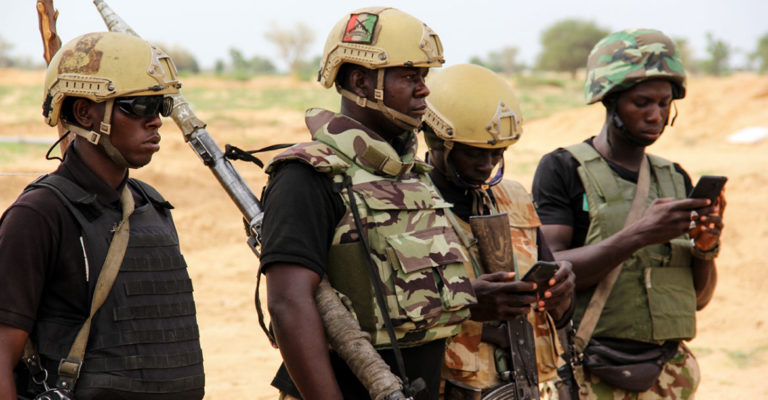
THE Nigerian Army have denied reports making the rounds that Damasak town in Mobbar Local Government Area of Borno State has been recaptured by suspected Boko Haram terrorists.
This was contained in a series of tweets posted on the official Twitter handle of the Nigerian Army @HQNigerianArmy on Thursday.
According to the Army, although there was an attack in Damamsak town on Wednesday, the terrorists did not recapture the town.
The tweet accompanied, with videos of military officials who went around speaking to some residents, also read that the attackers were ‘effectively repelled’ by troops of the Nigerian Army during the attack.
“As we speak, troops are in total control of the general area and as can be seen in the attached video, the Commander of 5 Brigade, Brig Gen SS Tilawan, is driving round the town earlier this afternoon to assess the general situation,” the tweet read.
The Army also assured residents of Damasak and adjoining communities to remain calm as mop operation by the troops were ongoing to flush out the remnant of the terrorists who attacked a section of the town.
However, the Army’s claim was not consistent with reports earlier circulated about the attack on Tuesday evening.
The Vanguard had reported that the suspected insurgents who attacked Damasak town razed down houses, the Divisional Police Command, schools and shops before they hoisted their flags in strategic locations of the town.
Chairman of Mobbar Local Government Area Mustapha Bunu Kolo was reported to have said that many people lost their lives and properties during the attack on Wednesday.
“I was also informed that many people lost their lives in the attack, but I don’t have the actual number of casualties as the insurgents are still much around, wreaking havoc on innocent civilians”. Kolo stated.
When asked by The ICIR if any life was lost, Army Spokesperson Muhammad Yerima said “no single life was lost.”
THE Senate has summoned Minister of Finance Zainab Ahmed and Accountant-General of the Federation Ahmed Idris to explain an alleged secret withdrawal of N7.5 billion from the National Automotive Design and Development Council (NADDC)’s account domiciled with the Central Bank of Nigeria (CBN).
The summon was made by Mathew Urhoghide-led Senate Committee on Public Accounts on Wednesday, following a query raised in the Auditor-General of the Federation’s (AuGF) report.
The AuGF’s report had revealed that the funds were withdrawn on various occasions from 2000 to 2006 for government transactions carried out by the Presidency.
The NADDC director-general Jelani Aliyu told the lawmakers that the money was withdrawn without the knowledge of the agency.
He also said previous efforts by the agency to get the money refunded had failed.
The AuGF report had also said N3.7 billion was withdrawn between March and December 2000, while N3.8 billion was withdrawn in two instalments — N2.8 billion in 2005 and N1 billion in 2006.
“A total sum of N3.836 billion was irregularly withdrawn from the two per cent National Automotive Council Levy Account with the Central Bank of Nigeria, Abuja, in two installments of N2.8 billion (in 2005) and N1.036 billion (in 2006) by the Accountant-General of the Federation and the Federal Ministry of Finance as car loans to be granted for the Security Personnel Car Purchase Scheme Loan,” the AuGF had written in the query.
“The transaction was carried out by the Presidency in collaboration with the Bank of Industry, the Federal Ministry of Finance and the Accountant-General of the Federation without the involvement of NAC, the account owner.
“However the principal and the accrued interest from the fictitious loan have not been paid back nor are records available on the beneficiaries, agreement documents, moratorium, duration of the loan, the yearly interest rates accruable and how the fund will be paid back by the beneficiary.
“The director-general (of NADDC) has been requested to intensify correspondence with the Honourable Minister of Finance, Accountant-General of the Federation and the Presidency to recover the fund (loan).”
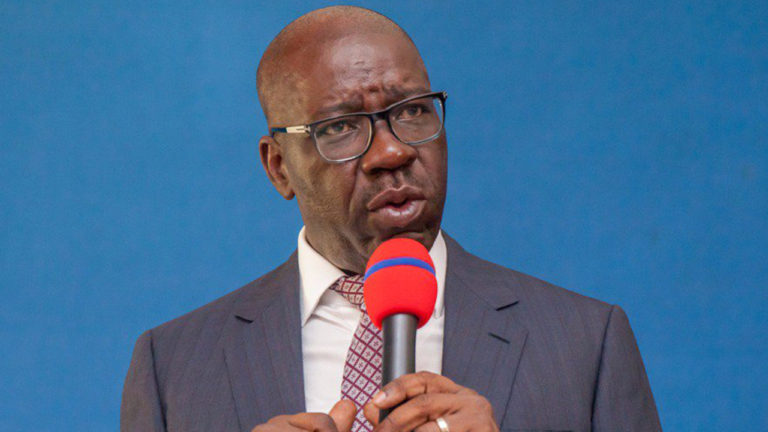
EDO State Governor Godwin Obaseki has asked the Federal Government to take urgent steps to end what he described as ‘current monetary rascality’ so as to prevent further depletion of the country’s economy.
The governor was reacting to denial by Finance Minister Zainab Ahmed that the Federal Government authorised the printing of N60 billion to augment allocations received by states in March due to paucity of funds as alleged by Obaseki.
Ahmed had, while addressing newsmen shortly after the weekly Federal Executive Council (FEC) meeting on Wednesday in Abuja, said the issue raised by the governor was very sad, noting that what was distributed to states in March was revenue generated by various revenue organs of the government.
The minister said, contrary to assertions by Obaseki that the Nigeria economy was in a bad shape due to huge borrowing and lack of diversification of the economy, Nigeria’s debt, estimated at 23 percent of the Gross Domestic Product (GDP), was sustainable.
Ahmed called for improved revenue so as to meet government obligations.
However, while reacting in a statement on his Twitter page on Thursday, Obaseki said he was not ready to join issues with the minister, but rather, she should rally Nigerians to rescue the country from its imminent economic doldrums.
“While we do not want to join issues with the @FinMinNigeria, we believe it is our duty to offer useful advice for the benefit of our country,” he said.
“The Minister of Finance, Budget and National Planning, @ZShamsuna should rally Nigerians to stem the obvious fiscal slide facing our country.
“Rather than play the Ostrich, we urge the government to take urgent steps to end the current monetary rascality, so as to prevent the prevailing economic challenge from degenerating further.”
“We believe it is imperative to approach the Nigerian project with all sense of responsibility and commitment and not play to the gallery because ultimately, time shall be the judge of us all,” he further said.
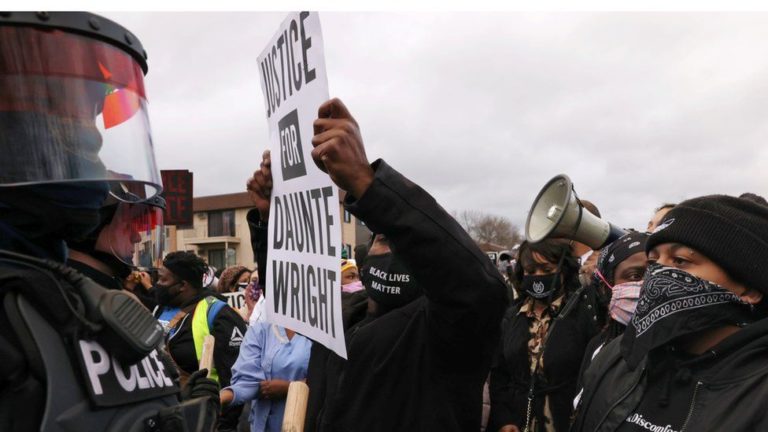
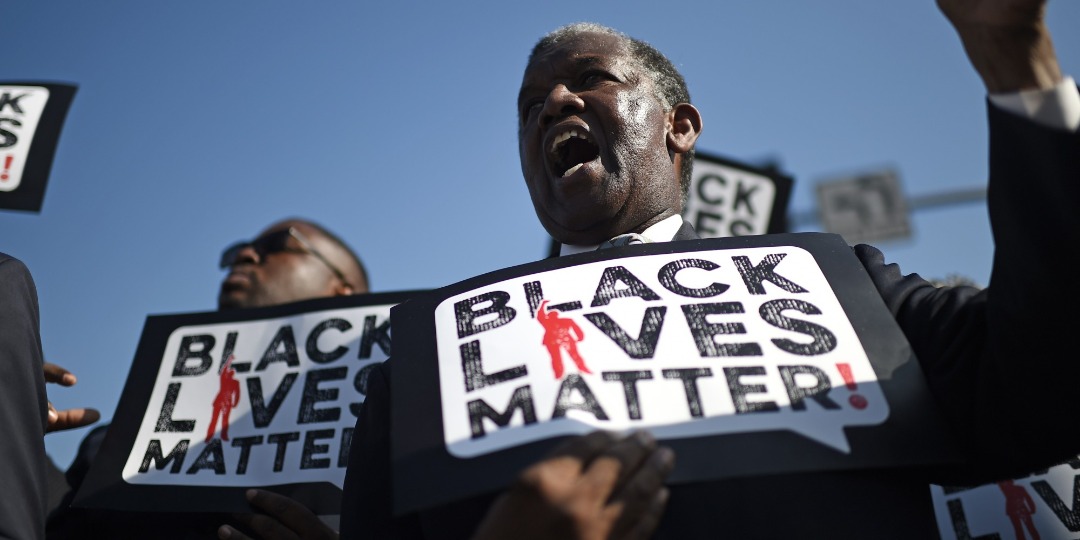
THE death of Daunte Wright, a black man in Brooklyn Center, Minnesota, USA, has sparked protests in world’s biggest democracy, forcing the people of colour into the streets for the fourth straight day.
The 20-year-old Wright was shot by a Police officer Kim Potter last Sunday, in what Police chief Tim Gannon of Brooklyn Center Police described as an accident.
Daunte Wright
The killing has brought to the front burner, once again, the rising cases of Police brutality in the United States.
The traffic stop that led to shooting
Wright was reportedly shot after he was pulled over for driving a car with expired registration.
A graphic video was released by the Minnesota Center Police showing that Wright had resisted arrest and shot while attempting to drive off.
The report said the police body camera video showed officer Potter yelling ‘Taser,’ while pointing a gun at Wright, and afterwards relaying to fellow police officers around that “oh, I just shot him.”’
A crowd gathers at the Brooklyn Center Police Department in Brooklyn Center, Minn., Monday, April 12, 2021, for a No Justice No Peace rally following the police shooting death of Daunte Wright. (Carlos Gonzalez/Star Tribune via AP)
The first night saw a vigil held in the honour of the deceased where the mother, Katie Wright, pleaded for peaceful protests.
On Monday, however, the protests soon turned violent and a curfew was placed on the city by Mayor Jacob Frey of Minneapolis, from 7pm Monday to 6am Tuesday.
The events of the past few days have generated so much emotions owing to the fact that not so long ago, George Floyd died in the hands of the Police in the same city. The trial of alleged killer Derek Chauvin is ongoing and is attracting global attention.
A persistent problem
Reactions on the social media space has also sometimes been filled with rage.
Twitter user LCSWMama in CO, with the handle @Ecilar12, expressed dismay at the Police chief’s claim that the officer’s was confused over the difference between the material sight of a gun and a taser.
“I have a tea cup in my hand. I know because it’s in front of me and I can see it quite clearly. If it were a gun, I would be able to tell. If it were a taser, I would be able to tell. #blacklivesmatter,” LCSWMama in CO tweeted on Tuesday
Prominent leaders in the United States have also reacted to the tragic event, sympathising with the family of the deceased, calling for justice and criticising the claims of confusion by the Police officer.
Former US Democratic Party presidential nominee Hillary Clinton @HillaryClinton also lent her voice to the incident in her tweet which read, “Daunte Wright’s life mattered. An investigation must yield answers and justice for his family. #BlackLivesMatter.”
The killing of Daunte Wright due to a claim of confusion on firearm use by the Police is not the first of its kind, as a report on the death of Oscar Grant in California more than a decade ago says it is not new.
THE People’s Court of the southwestern province of Tay Ninh, Vietnam, has sentenced a 25-year-old Nigerian Unachukwu Chiluba Paulinus to death for illegally transporting narcotic substances into the country from Cambodia.
The judgment delivered on Tuesday, April 13, was based on Article 250 of the 2015 Penal Code of the Socialist Republic of Vietnam, local media reported.
Paulinus was arrested on February 19, 2020, in the Ta Pheng area of Thuan Tay hamlet in Loi Thuan commune, Ben Cau district, while transporting nearly three kilogrammes of methamphetamine.
He told police that he arrived in Cambodia in 2019, where he met an African man called Oscar who hired him to transport the drugs from Phnom Penh to Ho Chi Minh City for $2,000. He was paid $650 in advance.
After traveling by taxi from Phnom Penh to the border, he crossed over into Vietnam and was arrested by Ben Cau district’s Police.
He also confessed to having earlier transported a backpack containing drugs from Cambodia to HCM City, which he delivered to an unknown man.
Paulinus’ conviction came a few days after another Nigerian Ekwegbalu James Nzube was also sentenced to death for trafficking nearly four kilogrammes of methamphetamine in the same country.
Nzube was arrested in 2014 when he allegedly transported the drugs into the country from China.
No child should die from any vaccine-preventable disease, especially when the cost is much lower than the cost of treating a sick child or fighting an outbreak. ADETOLA BADEMOSI, in the first edition of this two-part report, writes on how children miss out on important vaccines and the irregularities between public and private hospitals routine immunisation schedules.
AT nine months, Moyinoluwa James contracted the chickenpox virus. The infection had caused itchy rashes with small, fluid-filled blisters that disfigured her entire skin. It started with a slight fever that made her restless and irritated. In about 48 hours, rashes had formed on her face, spreading quickly to other parts of the body.
“It was a sordid experience,” says Mrs Anike James, Moyinoluwa’s mother. Considering her tender age, Moyinoluwa would often cry helplessly, rubbing her tiny hands over her body in an attempt to scratch the blisters. The situation worsened due to erratic power supply, in a densely packed one-bedroom apartment, in one of Nigeria’s populated cities: Abuja.
With eyes filled with tears, her mother wished she could fight off the virus that had befallen her daughter. This was five years ago. Moyinoluwa has healed, but sadly, she still bears obvious dark marks in some parts of her body.
“She had chickenpox before her due time to take the vaccine,” says Mrs. Anike James. “In fact, if you look at her closely, you will see some of the marks. As she is growing, the marks are fading,” she pointed out with a smile.
Ironically, Mrs. James currently lives with a disability caused by poliomyelitis (polio). She became paralysed, not because her parents did not get her immunised against the virus, but because children who had reportedly received the vaccine at the period were given expired shots.
“When I grew up, I questioned my mum why she chose not to get me particularly vaccinated against polio among her five other children, but she said she did! And even showed me my card. I later found out through an investigation I carried out with some friends that the polio vaccine given to children at the time had expired,” she told Nigerian Tribune.
Globally, early childhood vaccines are made compulsory for children/infants to help protect them against preventable diseases. Infants from birth are introduced to a national immunisation schedule which varies by country. Some of these key vaccines are Bacillus Calmette–Guérin(BCG), OPV (polio), Hepatitis A and B, Measles, Diptheria, Tetanus Toxoids and Pertussis (DPT), Pneumococcal, Meningitis, Penta, among others. These vaccines have undoubtedly helped prevent life-threatening ailments that may affect children’s health in later years.
The World Health Organisation (WHO) 2020 fact sheet on immunisation coverage says vaccination currently prevents two-three million deaths annually. But despite the numerous benefits, some children in Nigeria are losing out on important routine vaccines due to poor functional vaccination system, high cost and parents’ ignorance.
In Nigeria, for instance, it is widely believed that about 18 northern states are performing poorly in terms of immunisation coverage, with those in the south doing better with a great margin. But a brief on the National Immunisation Coverage Indicators (NICI) 2016/2017 states that only one in four children received all recommended vaccines.
It says more children are fully immunised in the South-South, South-West and South-East zones, but noted that lack of awareness was the main reason children are not fully vaccinated.
However, investigations carried out in the North-Central and South-West, for instance, revealed that some important vaccines are left out of the national immunisation schedule either deliberately or otherwise, leaving parents with the belief that their children or wards have been fully vaccinated. This is peculiar with public health institutions across the places visited.
In other cases, parents who lack the financial resources coupled with the challenge of a proper monitoring system will ensure children are compulsorily vaccinated.
The public healthcare centres do not entirely specify all required vaccines in the immunisation cards given to parents. This was later discovered to be due to the costs of vaccines, which the government does not subsidise. Examples of these vaccines are rotavirus, chickenpox, hepatitis A, MMR, cholera, and typhoid.
In the case of Mrs. James, Moyinoluwa’s mother, she said as of 2017, she was asked to pay for chickenpox, measles, mumps and rubella (MMR) and pneumococcal vaccines.
“I paid for MMR, chickenpox and even pneumococcal. During postnatal, they will tell you these vaccines are not compulsory but are necessary, in the sense that if you don’t have them, it’s nobody’s business, but they are necessary. If you need it, then you pay for it,” Mrs. James explains.
Another parent, Mrs. Oluwatoyin Igbinlola, expressed dismay after telling her four-year-old child might have skipped some vaccines. “That is not possible,” she exclaimed. “I can show you his card. He got all the vaccines except for this (pointing at the omitted rotavirus section).” A check at the child’s immunisation card showed he had taken other vaccines except for rotavirus. MMR, chickenpox, among others, were not included in the card.
Also, Mrs. Faith Oloyede, a Lagos State resident, had strongly argued her daughter was fully vaccinated. She thought that any vaccine not administered to her child was probably not necessary or important.
“Maybe they are not important because I don’t see why the hospital will not include it in the card if they are so important. They told me her immunisation was complete, but they did not give us this rota and I didn’t ask why,” she complained.
The reporter met with at least five other mothers who had similar experiences.
Copies of immunisation hand-cards gotten from both private and public hospitals revealed notable differences. For instance, a comparison between the immunisation schedule cards obtained from private hospitals within the Federal Capital Territory (FCT) and Lagos State showed that compared with public hospitals, the child vaccines schedule is listed to include: rotavirus, MMR, chickenpox, typhoid fever, hepatitis A, pneumococcal conjugate (IV) and cholera were included.
But for public health care providers, the schedule only includes BCG, hepatitis B, oral polio1-3, pneumococcal conjugate (PCV) 1-3, Penta 1-3, injectable polio vaccine (IPV), measles1 and 2, yellow fever and meningitis.
Nigeria’s Minister of Health Osagie Ehanire
Health practitioners share diverse views
To further authenticate these findings, over 10 public and private hospitals were visited in the Federal Capital Territory (FCT), Abuja and Lagos state.
The reporter visited hospitals in six local government areas (LGAs) in Lagos State, Nigeria’s largest and most populous city with a landmass of 999.6 km,
At the Ifako-Ijaiye LGA, Primary Healthcare Centre, College Road, Lagos, the nurse in charge of immunisation whose name was displayed on her (Identity withheld) spoke on why vaccines such as hepatitis A, chickenpox, MMR, PCV (IV) were not given. She said such vaccines were not necessary.
She argued that they are only listed in cards given in private hospitals to swindle parents. “The child does not need rotavirus, chickenpox, MMR and others that you mentioned. These vaccines are listed in the immunisation cards given in private hospitals to obtain money,” She disclosed.
She explained that the pentavalent injection, which comes in four doses, is a five-in-one vaccine. As a result, apart from DTP, chickenpox and Hepatitis are included in the Penta vaccine.
“This means that the child has collected four times. Penta is five in one, in the injection, chickenpox is also included, diphtheria is included, tetanus is included,” she noted.
The nurse who seemingly found the enquiries hilarious not only noted that there is no known vaccine for typhoid, she also claimed pharmaceutical companies no longer produce the rotavirus vaccines.
Also, at the Ifako-Ijaiye General Hospital, the nurse on duty, who was administering vaccines to children at the time of visit, outrightly told this reporter that the set of vaccines in question were not available.
Later, the nurse, identified as Mrs. Salawu, further stressed that such vaccines were not given as they are not included in the schedule. “We don’t have chickenpox and MMR. Government hospitals don’t give because it is not in the schedule, except you go to private hospitals,” she said.
“We are cautious in suggesting such vaccines to parents that do not know because this is a rural area,” said Mrs. Eunice Adepoju, another nurse at Ikola Primary Health Centre, Agbado Oke-Odo LCDA, Alimosho Local Government Area of Lagos. “Most of these parents will come to you and ask if you could help them buy and we did that before but not again.”
According to her, the shots were as important as others but asking parents to pay for them generated serious controversies in the past, hence the need to stop suggesting such.
While stressing the importance of these vaccines, she, however, noted: “I cannot go about preaching to parents on the importance of these vaccines. What a qualified nurse will only say is that they have not introduced these into their schedule. Once they do, we will start administering them.”
Similarly, an unidentified nurse at the Baruwa PHC, Ayobo, Ipaja, Lagos, said these vaccines are not given in any government hospital as they are not necessary.
While stressing that the chickenpox virus has been eradicated, there was no need to administer the shot on children. She said giving a child the Hepatitis A vaccine was also not necessary.
“As time goes on, even the polio vaccine will no longer be administered to children once it has been eradicated,” she stressed.
“We don’t give MMR, and all these are no more existing. Once a child is given measles 2 vaccination and booster, it is okay. Private hospitals are only using it to swindle parents,” she said.
What about the Hepatitis A vaccine? The reporter queried. “They are not necessary!” The nurse answered. “Like Hepatitis A vaccine, you will only find these in private hospitals; we don’t give it because it is not necessary,” she added.
“There is nothing like chickenpox again, for the MMR, it has been included in the Penta vaccine – don’t mind the card. You follow whatever is stated in the card. Don’t stress yourself; the Measles II has replaced MMR,” another nurse at the Alausa Health Centre alluded.
Also, at the Ikeja Primary Health Centre, the nurses on duty explained that such vaccines were not administered in government hospitals. Children are considered okay once they get the measles and yellow fever vaccine.
The officer-in-charge (OIC), whose identity could not be ascertained at the time of visit, said against beliefs, the set of vaccines was as important as others but for the cost.
“As a parent, if you feel you can afford to get it for your child, please do. I will advise you to get them for your children. I also got them for my children,” she reiterated.
Nigeria’s largest slum lacks functional health care facility
At Makoko community, Yaba, Lagos, the case is slightly different. As of the time of visit, there was no functional Primary Health Centre. Residents disclosed that the newly-built health facility was yet to be commissioned.
However, Mrs. Julianah Okimiji expressed disappointment that there were vaccines for diarrhoea, vomiting or cholera in children.
Makoko is recognised as Nigeria’s largest slum, where thousands of people reside on water. They lack basic amenities, sanitation facilities and often time access to drinkable water is a great challenge. As such, residents, including children, are susceptible to infections.
“When they are teething normally, they experience vomiting and stooling. I don’t know there is a vaccine that works against that one. If not that you are saying it now. When such a thing happens, the normal thing I do is to use a measurement of salt and water in clean water and give the child,” Mrs. Okimiji said.
Another resident, Mrs. Omolola Omole, a mother of two, said. However, not everyone can afford to pay such huge amounts on the vaccine; parents should be given opportunity to make their decisions.
“Although I am not happy that my child skipped these vaccines, we, the poor masses, not all of us, can afford to pay that huge amount to get these vaccines. They are supposed to be in public hospitals and if at all they are not available, they should indicate and advise us to get them,” she stated.
Mrs. Abigail Jackson, a caregiver, said in her submission that the government could not be totally blamed for not including these vaccines in the cards as Nigerians, in her words, “like free things a lot. Everything is not free, but then knowledge is power.”
In her opinion, she said both free and non-free vaccines should rather be listed out for parents to decide.
“They should tell us this is free and this is to be paid for, but they don’t tell. What will be beneficial to a child’s health, they won’t say. There are lots of children here in Makoko with cases of diarrhoea even vomiting. You will even pity their parents,” noted Mrs. Jackson.
Meanwhile, at the Federal Capital Territory (FCT), most public hospitals visited do not give vaccine shots beyond nine months.
At the Lugbe PHC, under the Abuja Municipal Area Council (AMAC), the nurses on duty said apart from those stated in the cards, they do not give the ones being enquired about.
Despite being listed in the vaccination cards, the rotavirus vaccine is not administered to children. This is not, however, peculiar to FCT alone but to other hospitals visited in Lagos.
Fatima Yahaya, a mother, enquired about the rationale for their decision, but the woman (nurse) she met on duty just told her, “they don’t have it.”
Unlike Mrs. Yahaya, Evelyn Kadiri, a mother of two, was not financially privileged to get her children immunized for the “non-free” vaccines at the National Hospital, Abuja.
She watched in obvious confusion as a nurse, after administering her son’s ninth-month vaccines, told her:”…Madam, you come prepared from one year.”
Apparently, vaccines taken beyond nine months in this hospital are paid for.
Government hospitals like Gwarinpa, Federal Medical Centre, Jabi, Kuchingoro Primary Health Centre, Airport road, among other hospitals, had similar responses to every enquiry on these vaccines.
This report was done with the support of Wits Journalism and the African Investigative Journalism Conference.