Home Blog Page 1835

LCCI faults Nigeria’s FX policy, $1.5bn Port Harcourt refinery rehabilitation

THE Lagos Chamber of Commerce and Industry (LCCI) has criticised the Central Bank of Nigeria (CBN)’s management of the foreign exchange (FX) market and the $1.5 billion fund mapped out for the rehabilitation of Port Harcourt refinery, saying both are unsustainable for a country in dire need of growth.

In a statement made available to The ICIR on Thursday, President of the LCCI  Toki Mabogunje said lack of FX cohesion among policymakers was sending a negative signal to the investment community, worsening uncertainties in the economy and dampening investor confidence.

“It is important for the fiscal authorities, CBN and Economic Advisory Council to be on the same page as far as the country’s foreign exchange policy framework is concerned,” Mabugunje said.

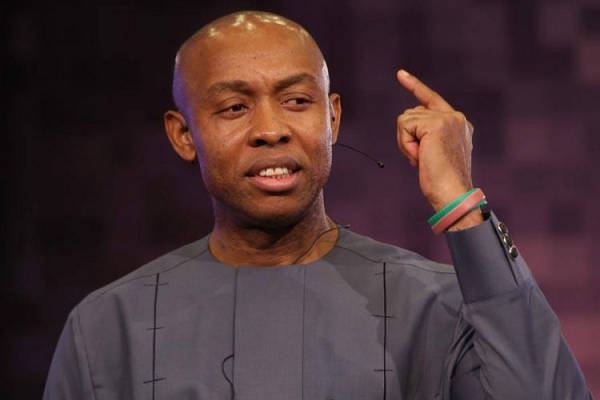
Toki Mabogunje, LCCI President

The CBN has maintained multiple exchange rate windows, frustrating investors’ expectations of a transparent FX market.

Investors are unable to make projections in the Nigerian economy due to the CBN’s reluctance to harmonise the various widows, including the Investors  & Exporters’ Window, NAFEX, Parallel Market, among others.

The International Monetary Fund (IMF) has warned Nigeria to maintain a single window to make FX available, but the apex bank has ignored the advice.

Mabogunje said Nigeria’s FX policy framework needs to be reviewed to expand the scope of market mechanism in the determination of exchange rate, stressing that  policymakers must harmonise the multiple exchange rates into a single market-reflective rate.

“This is imperative in strengthening investor confidence and engendering macroeconomic stability,’ she said.

“Unification of exchange rates would complement recent efforts by the CBN geared at enhancing liquidity at the supply segment of the foreign exchange market. Ensuring clarity on the country’s foreign exchange policy direction among participants in the investment environment is even more imperative in attracting private investments into the economy.”

She explained that many investors in the economy, including those in the real sector, were lamenting the difficulties in accessing FX for importation of raw materials, equipment and critical inputs for production and processing – in spite of  recovery in crude oil prices.

She contended that the situation was a taking a huge toll on capacity utilisation, business turnover and profitability of businesses, noting that the  sustainability the investments were at risk with dire implications for jobs.

Port Harcourt refinery
Credit: The Punch

On the $1.5 billion being mapped out for Port Harcourt refinery, she said it was ill-advised.

“While we appreciate government’s resolve in revamping these facilities, we do not consider the approval as economically and fiscally expedient given the fact that billions of dollars have been expended on turnaround maintenance over the years with no tangible results.”

“The Chamber believes the refineries should be concessioned to private investors with government taking a minority stake. Such funds should be invested in critical infrastructural projects that would further stimulate economic development in the country,” she recommended.

The ICIR has done an expert financial analysis of the plan to pump $1.5 billion on the refinery and found it ill-advised and financially imprudent. In 2019, for example, the refinery did not record any revenue.  Yet, it reported N25.19 billion in expenses. Six directors collected N59.65 million in fees, meaning that each of them received an average payment of N9.94 million a month in 2019 from a company that recorded no revenue.

In 2019, total liabilities were estimated at N529.544 billion while assets stood at N93.31 billion.

In 2018, total liabilities were put at N399.96 billion whereas assets stood merely at N14.265 billion. In 2017, assets were valued at N26.004 billion while liabilities stood at N365.97 billion.
Ezekwesili petitions IGP, demands prosecution of Omojuwa over alleged forgery

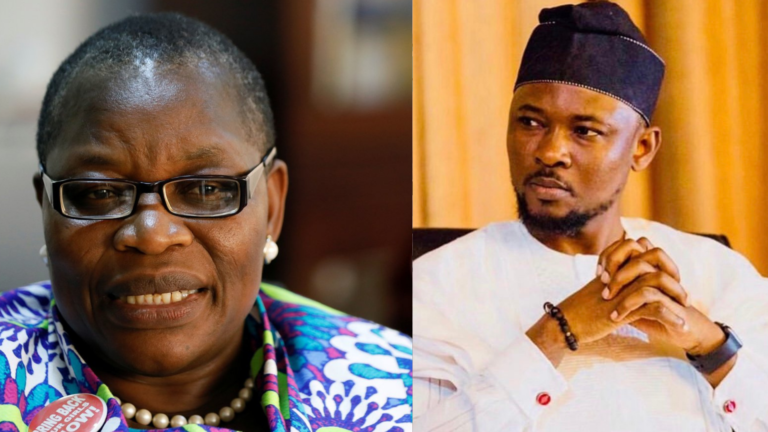
FORMER Minister of Education Obiageli Ezekwesili has asked the Inspector General of Police Usman Baba to investigate and prosecute a social media influencer Japhet Omojuwa over allegations of forgery and misrepresentation.

This was contained in a petition seen by The ICIR titled, “Petition Against Mr Japheth Omojuwa for Forgery, Fraudulent Misrepresentation and Fraudulent Use of the Name, Identity and Particulars of Mrs. Obiageli Ezekwesili as a Director of Alpha Reach Limited RC No: 1066507” and dated April 14, 2021. It was submitted and acknowledged by the Force Headquarters in Abuja on Friday.

In the petition signed by Marshal Abubakar of the Falana and Falana Chambers on behalf of Ezekwesili, Omojuwa was accused of listing the name of the former minister as a director of a company, Alpha Reach Limited, without her consent in 2012.

The petition claimed that Ezekwesili was not aware that her name was listed until March 30, 2021, when she was contacted by someone from Buzzfeed informing her that she was listed as one of the directors of Alpha Reach Limited alongside Nasir El-Rufai and Japhet Omojuwa.

Ezekwesili noted that she contacted Omojuwa to confirm whether he forged her signature and other incorporation documents, but he informed her that the Alpha Reach Company Limited was his company and she was not involved in it.

Ezekwesili also claimed that her name was later delisted in 2017 as a director and replaced with the name of one Indimi Ahmed Mohammed in 2017.

READ ALSOImage laundering: How Nigerian Twitter influencers, PR firm got involved with suspected money launderer Alex Saab – Report

Noting that she had never at a time signed documents as a director of the company, the petition further read that throughout the time Ezekwesili was ‘fraudulently’ made a director of the said company, no notice of meeting, annual returns, accounts and board resolution was ever issued to her.

The petition read that the alleged actions of Omojuwa amounted to “forgery, fraudulent misrepresentation, and egregious breach of extant provisions of the Penal Code Law, the Administration of Criminal Justice Act, 2015 and the Companies and Allied Matters Act, deserving of investigation and prosecution.”

Omojuwa had earlier claimed that he sought and obtained the consent of Ezekwesili before he listed her name as a director in Alpha Reach Limited in 2012.

Controversies concerning the name of directors came into public after Alpha Reach was accused of receiving money to launder the image of Alex Saab, a detained diplomat indicted by the United States government of money laundering.

Politicians are Nigeria’s biggest bandits – Odinkalu

FORMER Chairman of Nigeria Human Rights Commission and Professor of Law Chidi Odinkalu has said that Nigerian politicians are the biggest bandits.

Speaking at a webinar organised by The ICIR on Thursday on banditry and security challenges in Nigeria, Odinkalu explained that discussions on banditry would not be complete without mentioning politicians.

He explained that there was no justification for Fulanis to carry arms against the state and its people.

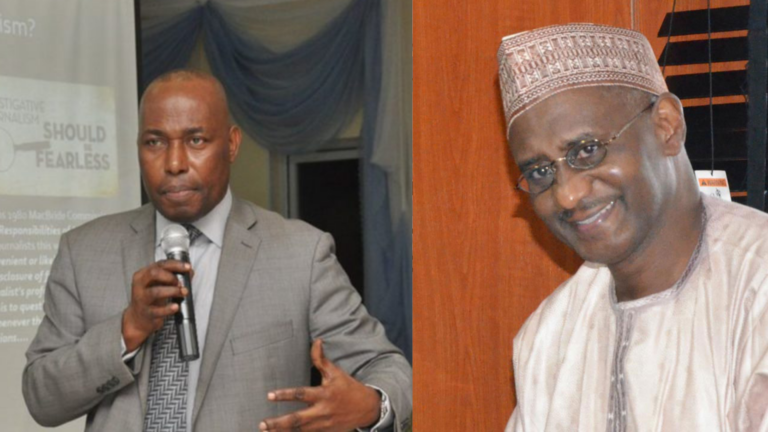
Prof Chidi Odinkalu and Prof Usman Yusuf

“Nobody has monopoly of grievances. Several other Nigerians could possibly argue that Fulanis have dominated the country. This is an uncomfortable conversation, but I do think Nigerians must have the conversation about grievance and domination and hegemony,” Odinkalu said.

“If everyone who has a grievance resorts to shooting, there is not just going to be enough people to be destroyed in the country,” he stated.

Nigeria’s politicians have severally been accused of stealing and corruption. Several politicians have been successfully prosecuted by the Economic and Financial Crimes Commission (EFCC) for stealing from the coffers of world’s poverty capital.  Activities of politicians are said to be one of the major causes of terrorism, banditry and kidnapping ravaging the country, particularly in the Northern part.


You may wish to read

Fulanis do not have monopoly of grievances – Odinkalu, Sani

Yusuf, Odinkalu differ on origin of banditry in the North

Banditry: Oloja warns Nigerians against ‘crisis entrepreneurs’ as Yusuf calls for dialogue


Former  Executive Secretary of the National Health Insurance Scheme (NHIS) Usman Yusuf explained that banditry was a social problem,  and not a military issue.

Yusuf, who was a keynote speaker at the event, explained that he had been involved in dialoguing with the bandits because insecurity in the country could consume Africa’s biggest economy.

He called on the Federal Government and all stakeholders to dialogue with bandits to hear their own side of the story.

He frowned at what he described as government increasing militarisation of what was essentially a social problem and emphasised that dialogue was the best option to end banditry and kidnapping in the nation. “There is a crucial role for the military, but there is no military solution to this conflict,” he stated.

Buhari appoints wife’s biographer as Nigeria’s representative to UNESCO

PRESIDENT Muhammadu Buhari has appointed the biographer of Aisha Buhari, Hajo Sani, as Nigeria’s ambassador and permanent delegate to the United Nations Educational Scientific and Cultural Organisation (UNESCO).

Director Press and Public Relations, Federal Ministry of Education Ben Bem Goong, announced the appointment in a statement on Wednesday.

Sani has in the last six years served as the head of Administration to the office of the First Lady of Nigeria.

A statement from the office of the First Lady said she brought “her experience in government and development circles as a humanitarian, gender, health, and education advocate, as well as a teacher, administrator, and politician to bear in the smooth operation of the office.

Goong wrote that Sani would bring invaluable contributions to Nigeria and the world during her tour of duty.

He said the president also made other key appointments in the education sector including, Prof. John Okpako Enaohwo, Chairman, Governing Board of National Commission for Colleges of Education, (NCCE), Abuja; Prof. Abdullahi A. Abba, Pro-Chancellor/ Chairman, Governing Council, Federal University of Health Sciences, Otukpo, Benue State; Prof. Idris Muhammad Bugaje, Executive Secretary, National Board For Technical Education, (NBTE) Kaduna and Dr. Benjamin Ogbole Abakpa as Executive Secretary of National Senior Secondary Education Commission, (NSSEC), Abuja.

Others are Prof. Paulinus Chijikoke Okwelle, Executive Secretary, National Commission for Colleges of Education (NCCE), Abuja and Prof. Ibrahim Muhammad as Director/CEO, Nigerian Arabic Language Village, Ngala, Borno State.

Printing of currency, CBN’s lending means to government, Emefiele replies Obaseki

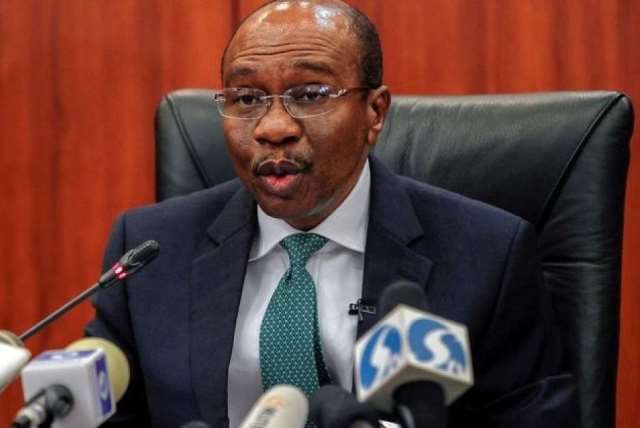
THE Central Bank of Nigeria (CBN) Governor Godwin Emefiele has said that printing of currency is part of the apex bank’s effort towards lending to the government to meet its obligations.

Emefiele was reacting to a recent statement by Edo Governor Godwin Obaseki that the Federal Government authorised the printing of N60 billion to augment allocations received by states in March due to paucity of funds – an allegation Finance Minister  Zainab Ahmed denied.

Ahmed said the issue raised by the governor was very sad, noting that what was distributed to states in March was revenue generated by various revenue organs of the government.

The minister said, contrary to assertions by Obaseki that the Nigeria economy was in a bad shape due to huge borrowing and lack of diversification of the economy, Nigeria’s debt, estimated at 23 percent of the Gross Domestic Product (GDP), was sustainable.

In response, Obaseki, who stood by his position, asked the Federal Government to end the current monetary rascality and stop playing the ostrich.

But in a viral video seen by The ICIR on Thursday, Emefiele described Obaseki’s claim as a political ploy that was “unfortunate and totally inappropriate.”

According to him, the Federal Government had disbursed loans to states to manage the economic difficulties occasioned by the COVID-19 pandemic.

“If you understand the concept of printing of money, it is about lending money. There is no need for all the controversy around money printing as if we are going into the factory to print naira and then distribute on the streets,” he said.

“It is very inappropriate for people to just give some colouration to the word ‘printing of money’ as if it is a foreign word coming from the sky.

“In 2015/2016, we were in a similar [fiscal] situation, but it is far worse today. We provided budget support facility to all the states of the country and that loan remains unpaid till now. We are going to insist on the states paying the loan back since they are effectively accusing us of giving them loans.

“Most countries of the world today are confronted by not just the health crisis from the COVID pandemic but also economic crisis. I keep saying this: it would be irresponsible of the Central Bank of Nigeria or any central bank to stand idle and refuse to support its government at this time. Whatever we do in Nigeria is being done in any clime.

“Nigeria is unfortunately in a very bad situation and we cannot pretend about it in the sense that we are facing problems about productivity output which is gross domestic product (GDP). We are working very hard to see how we can get our heads above water. We are also concerned with issues of inflation.

“For us to see some people playing some games, overheating his polity talking about printing of money, I think it is unfortunate and totally inappropriate. I would like to advise that this should stop. We should all work for the growth of our country and not play politics.”

Women farmers demand better security as FG distributes agric inputs

THE Small Scale Women Farmers Organisation of Nigeria (SWOFON) have called on the Nigerian government to provide better security on their farms.

National President of SWOFON Mary Afan made this call during the flag-off of the distribution of agricultural inputs to smallholder women farmers from the North Central states and the Federal Capital Territory in Abuja on Thursday.

Afan, who expressed her appreciation on behalf of the SWOFON, said the distribution of farm inputs had demonstrated to the women farmers that the rainy season had begun.

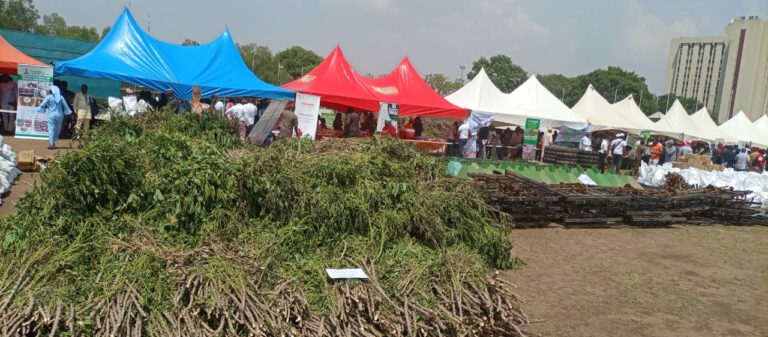
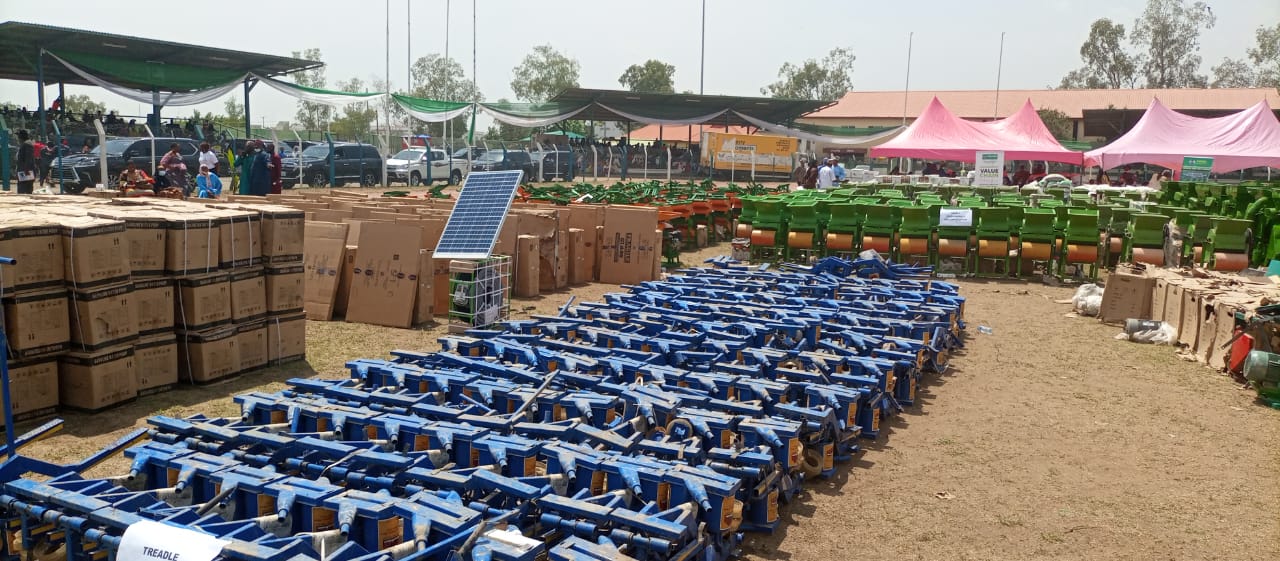
Mechanised tools presented to farmers

She noted that in December 2020, the women farmers had handed over their hoes and cutlass, and were now being equipped with mechanised tools.

However, she stated that to ensure food security in the country, the government should provide security for them.

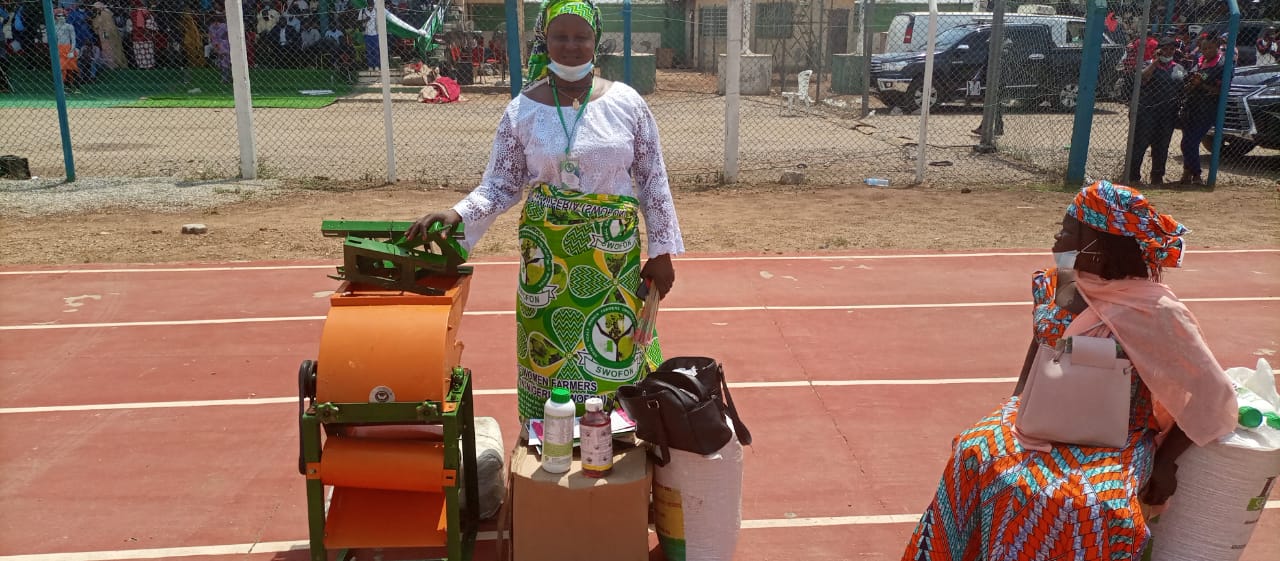
The SWOFON was allocated 500 pineapple peelers, 100 3hp water pumps, 30 small groundnut decorticators, and 20 small charcoal stoves.

Mary Afan with the display of some allocated farm equipment

They were also allocated 20 small threshers and five orange pushcarts during the flag-off ceremony.

Minister of Agriculture and Rural Development Muhammad Nanono, during his address, said the distribution of the farm inputs was part of the mitigation measures against the effect of the COVID-19 pandemic.

“Today, the ministry is supporting about 7, 500 women with value kits (planting materials, growth enhancers and agro-chemicals) in yam, cassava, potatoes, soybean, rice, maize, sesame, ginger, sorghum/millet, cowpea and horticultural crops.

“In addition, nutritional value kits will be distributed to the women today. The choice of the crops is based on comparative advantage to its production,” Nanono said.

He added that aside the distribution of inputs to the women, the ministry was also distributing production and processing equipment in an effort to reduce drudgery, improve efficiency, reduce cost of production and improve the quality of products and produce from the operations. 

FCT Minister Mohammed Bello acknowledged the resilience of the hard-working Nigerian women farmers.

He said that the event was significant as it would alleviate the hardship caused by the COVID-19 pandemic.

“The event today signifies the building of the local economy. The roll-out of the agricultural inputs will enable our women to scale up agriculture to improve productivity,” he said.

READ ALSOAs climate change hits Nigeria, small scale women farmers count losses

Delivering her goodwill message,  Minister of Women’s Affairs Pauline Tallen expressed happiness for the inputs, noting that history was being made at the event because it was an answered prayer for the women.

She also called on all women in positions to support other women, thanking President Muhammadu Buhari for the initiative to cushion the effect of the pandemic.

Minister of Labour and Employment Chris Ngige, who was also present at the flag-off ceremony, said the occasion was one of the reasons the president had called back the 2021 budget to rework it to fit the economy of the country that had nosedived.

He stated that during the COVID-19, jobs were lost and the worst hit were those in the informal sector, especially casual workers, most of whom were women.

“The women deserve special place in our factorisation, both in government and private sector, because any harsh condition that affects the nation affects the women more,” Ngige said.

He said the Ministry of Agriculture had delivered its responsibility in cushioning the effects of COVID-19 very remarkably by distributing the farm inputs to the women farmers.

NGF, House of Assembly speakers ask judicial workers to call off strike

THE Nigerian Governors’ Forum (NGF) and Conference of Speakers of State Assemblies have appealed to the leadership of Judiciary Staff Union of Nigeria (JUSUN) to call off strike.

Governor of Sokoto State Aminu Tambuwal,  who is also Deputy Chairman of the NGF, made the appeal on Thursday in Abuja after a meeting with the Conference of Speakers of State Assemblies at the office of the Chief of Staff to the President Ibrahim Gambari.

“We’ve just finished talking to the speakers, and indeed the state chief judges and the judiciary to continue to engage. The Minister of Labour is also engaging with the striking bodies to appeal to them, to appreciate the fact that we have made progress,” Tambuwal said.

“We’re appealing to them in the interest of this country that  they should call off the strike,” Tambuwal further said.

He added that progress had been made in the negotiations and  the matter would be put to rest by next week.

The governor said during the meeting with the speakers and  Chief of Staff to the President, substantial progress was made and only finishing touches were left to be made to meet the demand of the judicial workers.

“As I told you before, some of the issues are constitutional and when matters have to do with the constitution, you have to be sure of what you’re doing that you’re actually following the constitution,” he said.

He reiterated that governors had always been in support of the autonomy of state legislature and the judiciary.

JUSUN had commenced an indefinite strike over the failure of state assemblies to implement financial autonomy for judicial workers at state levels.

The battle between  federal, state governments and judicial workers has been lingering since 2015 when JUSUN embarked on three weeks’ strike to protest the non-implementation of financial autonomy.

Six years down the line, the judicial workers and the governments have been unable to find a long-lasting agreement to completely resolve all issues about financial autonomy.

Similarly, the Nigerian Bar Association (NBA) has also urged the judicial workers to suspend their strike action because of its consequences on the judicial administration in the country.

Buhari returns to Nigeria from UK medical trip

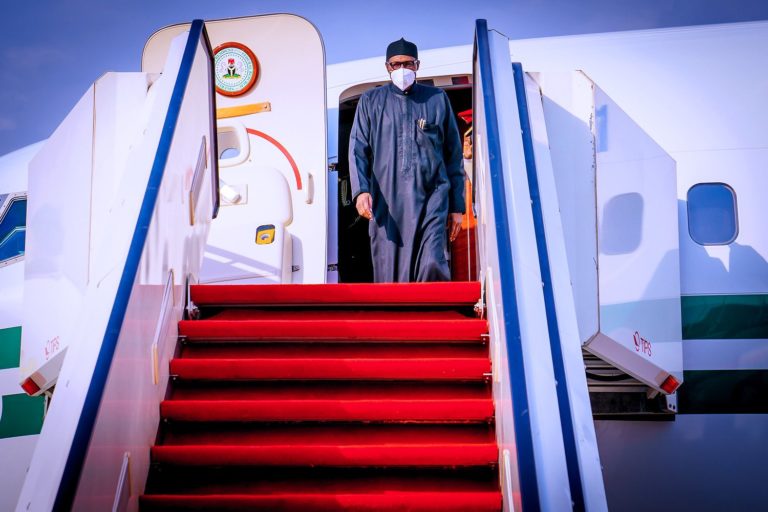
PRESIDENT Muhammadu Buhari returned to Nigeria on Thursday following his two-week medical trip to the United Kingdom.

The presidential aircraft conveying the president and some of his aides landed at the Presidential Wing of the Nnamdi Azikiwe International Airport Abuja at about 4.45 p.m.

According to the News Agency of Nigeria, Buhari was received by Chief of Staff to the President Ibrahim Gambari; Minister of the Federal Capital Territory (FCT) Muhammed Bello, and the National Security Adviser to the President Babagana Monguno.

Others were the service chiefs; acting Inspector General of Police Usman Baba;  Director-General  of National Intelligence Agency (NIA) Ahmed Rufa’i;  Director-General of the Department of State Services Yusuf Bichi, among others.

The president had left Nigeria on March 30 for a medical check-up in the UK at a time Nigerian doctors were on strike over non-payment of their emoluments and other benefits.

Apart from the Nigerian doctors’ strike, other workers in Nigeria, including the Judicial workers and polytechnic lecturers, have been on strike.

While he was in the UK, some Nigerians had stormed the Abuja House in London and demanded that the president return  and fix healthcare system in Nigeria, instead of seeking medical treatment in another country.

Former Presidential Aide Reno Omokri, who led the group of protesters, said the president had failed to construct a befitting hospital for Nigerians since his assumption into office in 2015.

Apart from the strike actions across the country, there has not been a substantial improvement in the security situation across the country. The national unrest and ethnic clashes have  continued among Nigerians.

Violence, major driver of food insecurity in Nigeria – EU 

THE European Union (EU) has said that violence is the major factor responsible for food insecurity in Nigeria.

This is contained in a statement released on Thursday by the EU Commissioner for Crisis Management Janez Lenarcic concerning the attacks on Damasak in Borno State.

Lenarcic said due to  food price increases in Nigeria, there were currently over nine million citizens requiring ‘urgent food assistance.’

The EU Commissioner said the EU was deeply concerned over the recurring violent attacks by non-state armed groups against the people of the town of Damasak.

He lamented that life and security of civilians were in danger while humanitarian premises had been destroyed and humanitarian workers deliberately targeted.

“Because of the recent increase of violence in Northeast Nigeria, hundreds of thousands of vulnerable people will be left without assistance in an area where humanitarian assistance was already struggling to reach all those in need,” the statement read in part.

Condemning the attack, the EU called on all parties to respect International humanitarian laws and to safeguard human rights, saying that the country should allow people caught in violence to move freely to safe places, and facilitate unimpeded passage of humanitarian reliefs for civilians in need.

UN Resident and Humanitarian  Coordinator in Nigeria Edward Kallon, in a statement, said three international aid partners’ facilities were directly targeted and set ablaze in Damask.

He said the UN was concerned about the safety and security of civilians and humanitarian workers in the state.

The Hunger Hotspots’ report released by the Food and Agriculture Organisation of the United Nations (FAO) and the World Food Programme (WFP) on March 23 had ranked Nigeria among top three countries where acute hunger and food insecurity were set to worsen in the coming months.

According to the report, over 34 million people in various areas in the concerned countries were grappling with emergency levels of acute hunger (IPC4) – meaning they were one step away from starvation.

The Hunger Hotspots report also stated that conflict in the North-Eastern part of Nigeria was a major cause of acute hunger in the country.

Banditry: Oloja warns Nigerians against ‘crisis entrepreneurs’ as Yusuf calls for dialogue

EDITOR-in-CHIEF of The Guardian Martins Oloja has warned Nigerians to be wary of those he described as ‘crisis entrepreneurs,’ stressing that their activities were worsening banditry in Nigeria. 

Speaking at a webinar organised by The ICIR on Thursday themed, ‘Nigeria’s Insecurity: Addressing the Challenges of Banditry and Kidnapping,’ Oloja said the perception of the public was that some people were benefitting from crisis ravaging the country.

According to him, some authors had alerted the public of ‘crisis entrepreneurs’ who were beneficiaries of insecurity in the nation.


You may wish to read

Fulanis do not have monopoly of grievances – Odinkalu, Sani

Yusuf, Odinkalu differ on origin of banditry in the North

Army say terrorists did not recapture Damasak town in Borno


“It appears that banditry has become a big business. So, how do we deal with crisis entrepreneurs? How do we deal with the Federal Government of Nigeria within the context of injustice, within the context of dominance?” he asked.

The ace journalist wondered why the Federal Government was reluctant to dialogue with bandits and solve insecurity challenges ravaging the country.

“We have at this moment a Fulani man in office and in power. Why is it that Sheik Gumi, Senator Shehu Sani and some others are able to get all these bandits to a point of dialogue? Why is it that the military authorities and indeed the Federal Government have not been enthusiastic about using dialogue to end this banditry, to even reduce banditry? Why the reluctance of the authorities?” he queried.

He also condemned increased budgeting for insecurity when the nation was earning lower revenues and called for probe into crisis commercialisation in the nation.

Oloja also hinted that the Hausa people in the North had been conquered by the Fulanis and they could no longer talk.

“What of injustice to the Hausa people in the North? We need to deepen our understanding. Of all the emirates in the North, how many of them are of Hausa origin? We are beginning to read that history, how the Fulani people also conquered the Hausas in the past, took their cultures, language and gave them religion. We are beginning to see that now. The Hausa people  are silent and nobody is talking about them.”

On his part, former  Executive Secretary of the National Health Insurance Scheme (NHIS) Usman Yusuf called for dialogue with bandits, saying that banditry was a social problem, rather than a military issue.

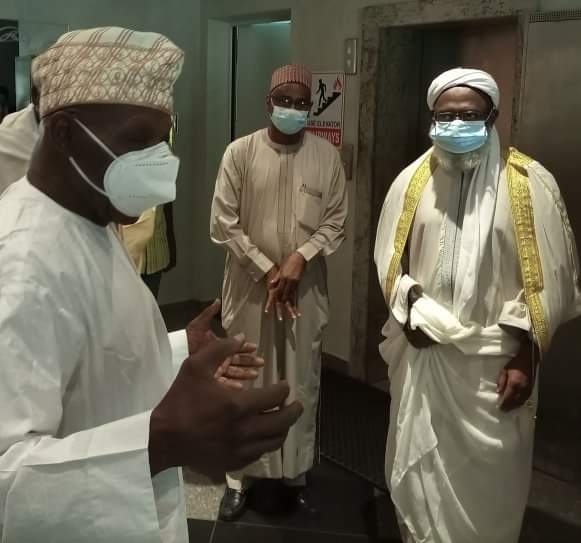
Chief Olusegun Obasanjo (left), Sheikh Ahmad Gumi (right) and Professor Usman Yusuf (middle) at a recent courtesy visit to the former president

Yusuf, who was a keynote speaker at the event, explained that he had been involved in dialoguing with the bandits because insecurity in the country could consume Africa’s biggest economy.

“We know the injustices that have been done to the Fulanis over generations before we were born. They are one people that do not own land in this country. Their cows are rustled; there are a lot of injustices, usually by the local authority, local judges, local police and local police officers. They would sell their cattle. All these injustices are catching with us,” he said.

He frowned at what he described as government increasing militarisation of what was essentially a social problem and emphasised that dialogue was the best option to end banditry and kidnapping in the nation. “There is a crucial role for the military, but there is no military solution to this conflict,” he stated.