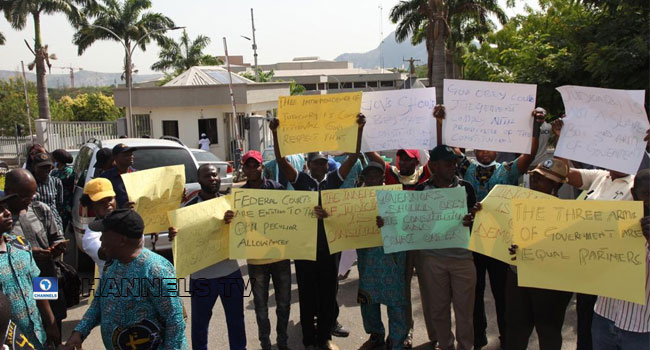
THE Judiciary Staff Union of Nigeria (JUSUN), on Monday, commenced a nationwide protest in Abuja, demanding financial autonomy from the executive arm of government.
Some of the protesting union members were seen at the gate of the Appeal Court on Monday morning with placards.
‘The three arms of government are equal partners,’ ‘Governors should obey the constitution and court order,” some of their placards read.
The Nigeria Bar Association (NBA) also marched with the protesting union to the National Assembly Complex, but they were refused entrance.
Chairman of the NBA Olumide Akpata had asked all state chapters to march in solidarity with the judiciary workers to government houses to help propagate their demands.
However, the NBA were also refused entrance into the Ekiti State Government House on Monday by security operatives.
The judiciary workers had commenced an indefinite strike over the failure of state assemblies to implement financial autonomy for judicial workers at state levels.
Last week, the Nigerian Governors’ Forum (NGF) and Conference of Speakers of State Assemblies had appealed to the leadership of the judiciary workers to call off the strike.
Governor of Sokoto State Aminu Tambuwal, who is also Deputy Chairman of the NGF, said plans were being fine-tuned to meet the demands of the workers.
“We’ve just finished talking to the speakers, and indeed the state chief judges and the judiciary to continue to engage. The Minister of Labour is also engaging with the striking bodies to appeal to them, to appreciate the fact that we have made progress,” Tambuwal said.
“We’re appealing to them in the interest of this country that they should call off the strike,” Tambuwal further said.
The battle between the federal, state governments and judicial workers has lingeree since 2015 when JUSUN embarked on three weeks’ strike to protest the non-implementation of financial autonomy.
THE Ekiti State Police Command has announced that six persons were killed in a bloody clash of two rival cults in Ikere Ekiti, Ikere Local Government Area.
The Police said 10 persons were arrested for directly and indirectly participating in the incident that happened on Saturday night till the early hours of Sunday.
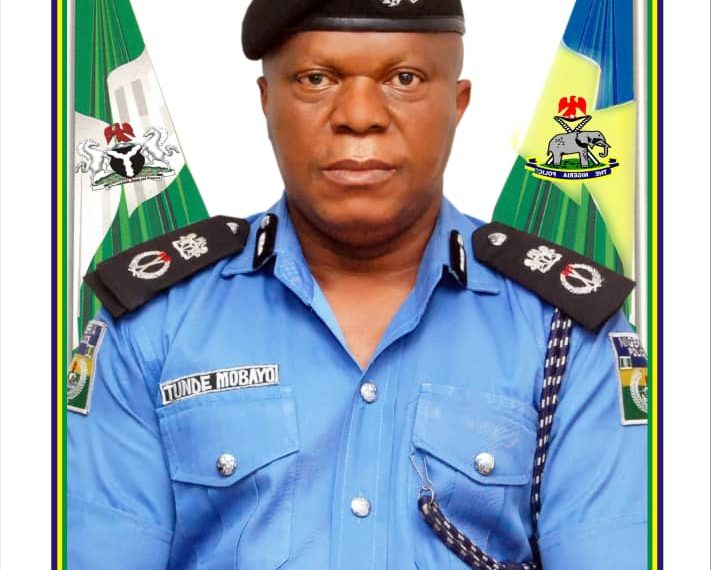
The Police spokesperson Sunday Abutu, who confirmed the incident in a statement to The ICIR, said the clash occurred on Saturday night and the early hours of Sunday.
“I can confirm to you that 10 suspects have been arrested in connection with the bloody cult clash. The clash was caused by rivalry and show of strength,” he said.
The Police spokesperson also confirmed that six persons lost their lives in the clash, adding that their corpses had been deposited in the morgue. “We have begun serious operations by combined forces of the men of the Nigeria Police Force, Nigerian Army, Amotekun Corps and the Nigeria Security and Civil Defence Corps.
“Those arrested are in our custody and by the time we conclude our investigations, they will be charged to court accordingly.”
He added that more operatives of the Police had been deployed to help restore calm and peace to the town.
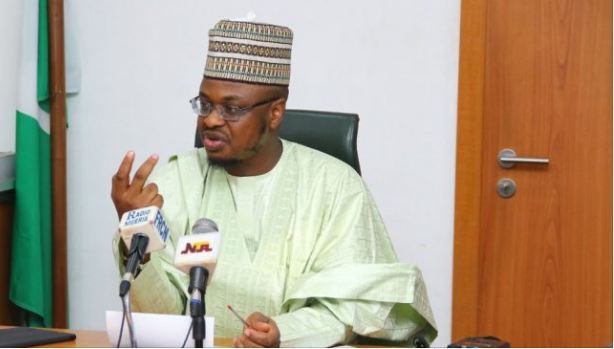
NIGERIA’s Minister of Communications and Digital Economy Ali Isa Pantami has renounced past controversial comments supporting terrorism and terrorist groups.
The minister said he was young when he made the comments, stating that he was now mature and had come to understand issues better.
He also said the campaign against him was politically motivated.
The ICIR had earlier reported how the minister came under severe criticism, with many demanding for his resignation, after controversial comments made in the past in support of Jihad, Al-Qaeda, and the Taliban surfaced online.
Pantami’s statement of admiration for the Taliban’s, Al-Qaeda and Jihad were from some of his preaching and lecture recordings translated by a professor and African expert at Naples University in Italy Andrea Brigaglia, and a Nigerian scholar Musa Ibrahim of the University of Florida in the United States, both of whom contributed to the academic paper published in March 2019 that explored the emergence of Boko Haram in Nigeria.
Pantami, according to Daily Trust, spoke while answering questions during his daily Ramadan lecture at Annor Mosque in Abuja on Saturday.
He said, “For 15 years, I have moved round the country while educating people about the dangers of terrorism. I have traveled to Katsina, Gombe, Borno, Kano states and Difa in Niger Republic to preach against terrorism,” he said.
“I have engaged those with Boko Haram ideologies in different places. I have been writing pamphlets in Hausa, English and Arabic. I have managed to bring back several young persons who have derailed from the right path,” he explained.
“Some of the comments I made some years ago that are generating controversies now were based on my understanding of religious issues at the time, and I have changed several positions taken in the past based on new evidence and maturity.”
“I was young when I made some of the comments. I was in university, some of the comments were made when I was a teenager. I started preaching when I was 13, many scholars and individuals did not understand some of international events and, therefore, took some positions based on their understanding. slSome have come to change their positions later,” he noted.
DRIVERS of e-hailing companies such as Uber and Bolt, on Saturday, said they would go off the roads on Monday except cab fares were raised.
The e-cab operators, under the auspices of Professional E-hailing Drivers and Private Owners Association (PEDFA), threatened to embark on the strike if their demands were not met.
National Secretary of PEDPA Ajani Titilayo, who spoke with The ICIR, said the strike action by the drivers was overdue, noting that they were clamouring for an immediate upward review of e-cab fares to reflect the current economic realities in the country.
“The ridiculous fares being charged by the ride-hailing companies means that the services of our drivers are being de-valued, considering everything in the market has skyrocketed from the price of fuel to vehicles spare parts which has also increased,” she said.
Ajani said the current rate of N65 per kilometre was not reasonable for the drivers, stressing that it was the reason the drivers on the app were calling for an upward review to N100 per kilometre with a minimum fare of N1,000 for every ride placed on the app.
“You don’t expect an air-conditioned car in a good working condition, which is likely to be stuck in traffic, to pick a passenger for N400 or N300. It’s very challenging,” she said.
The e-cab operators also demanded adequate insurance and welfare packages for drivers and compensation to the families of those that lost their lives or were permanently disabled in the line of duty.
The association said that more than 15 drivers had lost their lives, while some had been permanently disabled in accidents in the course of the service.
More than 20 others had also lost their lives through kidnapping or killed by robbers without any compensation from the operators, the association revealed in a press statement.
According to an analysis by Nigerian tech site Technext, Bolt controls about 60 per cent share of the Nigerian ride-hailing market with around 20,000 drivers, which is more than double the number of its nearest rival, Uber.
Bolt’s popularity may simply be a result of its extraordinarily low prices. The app is far cheaper than Uber, whose fees remain out of reach for many Nigerians.
THE UN Refugee Agency (UNHCR) has said that 65,000 persons are on the move following a series of attacks by armed groups on Damasak town, Borno State.
UNHCR Spokesperson Babar Baloch said this on Friday at a press briefing at the Palais des Nations in Geneva, Switzerland, stating that Initial reports had indicated that eight people were killed and a dozen injured.
Baloch said the residents fled Damasak following the latest attack on Wednesday April 14, which was the third in seven days.
He stated that up to 80 per cent of the town’s population – including the local community and internally displaced people – were forced to flee.
“Assailants looted and burned down private homes, warehouses of humanitarian agencies, a police station, a clinic and a UNHCR Protection Desk. Those fleeing include Nigerians and Niger nationals living in the area,” Baloch said.
Baloch stated that many fled towards Borno State capital Maiduguri, and to Geidam town in neighbouring Yobe State, while others crossed into Niger’s Diffa region.
He said the staff and partners in both countries had immediately deployed assessment missions to identify the most pressing needs and tailor the response.
However, the Nigerian Army have insisted that the town is safe and secure, adding that no life was lost during the attack on Wednesday.
When questioned about the statement of the UN, Army Spokesperson Muhammed Yerima told The ICIR on Saturday that the Army had released own statement over the matter and insisted the town was safe and secure.
“There is no controversy about the situation in Damasak. We stand by our position that the town is safe and secure,” Yerima said.
UNHRC Spokesperson in Nigeria Roland Schoenbauer said the agency had conducted its own assessment and would not concern itself with Nigeria’s military assessment.
“The answer is simple, we don’t make any military assessment and get into military details, we are Humanitarian. We made an assessment and put out an estimate that 80 per cent of the population previously living in Damasak, which amounts to 65,000 persons, was displaced due to recent attacks. All the rest being discussed is for others to assess,” Schoenbauer told The ICIR during a telephone interview on Saturday.
An initial report of the attack in Damasak on Wednesday was that suspected insurgents razed down houses, the Divisional Police Command, schools and shops before they hoisted their flags in strategic locations of the town.
Chairman of Mobbar Local Government Area Mustapha Bunu Kolo was reported to have said that many people lost their lives and properties during the attack on Wednesday.
“I was also informed that many people lost their lives in the attack, but I don’t have the actual number of casualties as the insurgents are still much around, wreaking havoc on innocent civilians,” Kolo stated.
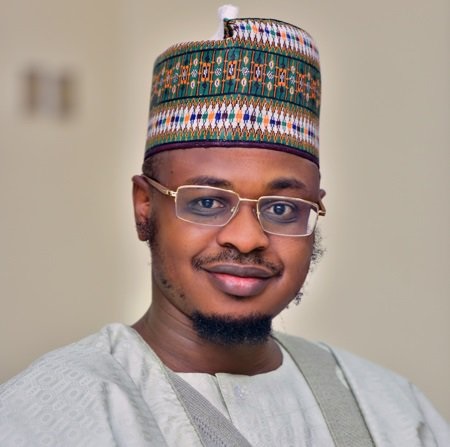
NIGERIANS are asking for the resignation of Minister of Communications and Digital Economy Ali Isa Pantami over statements made in the past in support of terrorist groups such as Al-Qaeda and Taliban.
Pantami was appointed in 2019 as a Minister at the inception of President Muhammadu Buhari’s second tenure after spending between 2016-2019 as the Director-General and CEO of the National Information Technology Development Agency (NITDA).
Using the hashtag #PantamiResign, Nigerian have begun to demand online for his resignation after multiple reports accused him of endorsing terrorism, while expressing admiration and praise for Al-Qaeda founder Osama Bin Ladin, and founder of the Taliban Islamist group Mullah Omar. He has also been accused of intolerance for non-Muslims.
Mullah Muhammed Omar, widely known as Mullah Omar, is an Afghan militant and leader of the Taliban who was the emir of Afghanistan (1996–2001).
The Taliban, according to Britannica, is an ultraconservative political and religious faction that emerged in Afghanistan in the mid-1990s following the withdrawal of Soviet troops, the collapse of Afghanistan’s communist regime, and the subsequent breakdown in civil order.
Osama Bin Laden is the founder of the militant Islamist organisation al-Qaeda and mastermind of numerous terrorist attacks against the United States and other Western powers, including the 2000 suicide bombing of the U.S. warship Cole in the Yemeni port of Aden and the September 11, 2001, attacks on the World Trade Center in New York City and the Pentagon near Washington, D.C.
The ICIR sought a response from an aide to the Minister Uwa Suleiman about Pantami’s reaction to the agitations, particularly on social media, that he should resign due to his past statements on terrorists and terrorism and also comments in support of Al-Qaeda and the Taliban.
Uwa Suleiman, PR Personality Spokesperson to the Minister of Communications and Digital Economy
The aide, in her response, feigned ignorance of the agitations.
Pantami’s statement of admiration for the Taliban’s, Al-Qaeda and Jihad were from some of his preaching and lecture recordings translated by a professor and African expert at Naples University in Italy Andrea Brigaglia, and a Nigerian scholar Musa Ibrahim of the University of Florida in the United States, both of whom contributed to the academic paper published in March 2019 that explored the emergence of Boko Haram in Nigeria.
Andrea Brigaglia, in his contributing paper to ‘Debating Boko Haram,’ documented how some clerics in Northern Nigeria, including Pantami, and late Sheikh Ja’afar Adam, who was assassinated at his mosque in 2007 in the northern city of Kano, created mass support for Jihadism in Nigeria. It was titled ‘The ‘Popular Discourses of Salafi Counter-Radicalism in Nigeria’ Revisited: A Response to Abdullahi Lamido’s Review of Alexander Thurston, Boko Haram.’
Some of the controversial comments made by the Minister were: “We are all happy whenever unbelievers are being killed,” Pantami said. “But the Sharia does not allow us to kill them without a reason. Our zeal (hamasa) should not take precedence over our obedience to the sacred law.”
In his praise of Osama Bin Laden, the late founder of Al-Qaeda and Saudi Arabia-born global terrorist, while responding to audience questions about his views on Osama’s ‘killing of innocent unbelievers’ during a lecture about the Taliban, Pantami said although he conceded that Bin Laden was liable to mistakes because he was human, “I still consider him as a better Muslim than myself.”
Also in a lecture delivered by Pantami in 2006, the minister offered his public condolences for the death of the leader of Al-Qaeda in Iraq, al-Zarqawi.
Pantami had also featured in a 2009 U.S. diplomatic cable leaked by WikiLeaks in 2011 about a religious crisis in Bauchi.
The US cable read, “Imam Fantami Isa, who preached at the mosque, had been previously thrown out of Abubakar Tafawa Balewa University and of a Gombe mosque for preaching inflammatory rhetoric.”
Based on these, Nigerians on the social media, especially on Twitter, are calling for his resignation.
A tweep, @YemieFASH wrote, “A terrorist apologist is not worthy of being a government official. #PantamiResign”
Also, @chosensomto, a twitter user tweeted,” I will not join you people and have that ‘it was in the past’ conversation, because it’s same as arguing ‘if a repented Boko Haram member can become a minister?’ Terrorism is not a drinking habit you drop in the past; Pantami should resign immediately. #PantamiResign”
@funshographix said, “Isa Pantami once said. ‘Jihad is an obligation for every single believer, especially in Nigeria.’’ He also said, ‘Oh God, give victory to the Taliban and al-Qaeda.’ Isa Pantami shouldn’t be in the government talkless (sic) of we saying #PantamiResign. People like Isa are many in govt.”
@dondekojo said, “Fact that a lot of moderates are quiet or defending Pantami after initially claiming Islamophobia may just prove the point that some terrorists enjoy protection from moderates. It’s been shameful to watch. Everybody must now demand his resignation #PantamiResign.”
Another handle, @DrOlufunmilayo, however, said the President Muhammadu Buhari, who returned to the country on Thursday from London, “might not be aware of the calls for the resignation of the Minister.”
“The funny thing about this whole #PantamiResign situation is that Buhari may not even be aware at all,” he tweeted.
In response to an article by a U.S.-based Nigerian Professor of Communication Farooq Kperogi titled, ‘Pantami is My Friend, But He Can’t Be Defended,’ oil and gas analyst Ademola Adigun said “Patanmi should resign. Your person is not different from your speech and what you espouse Farooq Kperogi.”
“You made plenty of sense and then you allowed your friendship with him to becloud your conclusions. People like him have no business in government or governance. And that suggestion that it is Telcos after him, Haba? Even so… he said what he said. He spoke his mind. Your mind is your person.”
Farooq had, in his article on Saturday, said there was a vast disjunction between his rhetoric and his person, stating further that he believed he had evolved from the days of his fiery homiletic entanglements with stochastic terrorism.
The article read in part, “Nevertheless, while I denounce Pantami’s past embrace of extremism in his public preaching, I want to point out that there is a vast disjunction between his rhetoric and his person. People who know him outside the pulpit attest to his compassion, kindness, and peacefulness.”
“I also think he has evolved from the days of his fiery homiletic entanglements with stochastic terrorism. I can point to a few evidentiary proofs. First, although he said in one audio that he wanted to push Nigeria to the point where there would be no iconography in our national currency and even political campaign posters, he now obviously loves photography.”
While some tweeted in demanding the resignation of Pantami, others tweeted in support, stating that he should not be judged by his past.
Notably, a former journalist at Premium Times Abdulaziz Abdulaziz, who exposed the National Youth Corps Scheme exemption certificate forgery of former Minister of Finance Kemi Adeosun, in a series of tweets, said Pantami should not be judged by his past.
He had said, “On @DrIsaPantami: Yes, public officers deserve all the scrutiny. But while we’re at it, we’ve to be thorough, fair & nuanced. Yes, we can dig the past but passing judgement would have to be alongside context and current realities. A lot of people have had a severed past.”
“We all have a past. Not everyone will escape if our past actions and speeches are used against our present positions. Opinions and stands do change in the face of new knowledge or facts, or even maturity. And being progressive, other than dogmatic is whole mark of great minds.”
Abdulaziz’s tweets generated condemnation, with some Nigerians asking why he did not extend the same gesture to the former Minister of Finance.
Abdulaziz’s story on Adeosun certificate forgery led to her resignation in September 2018 barely three years after her appointment by President Buhari.
Also, Lukman Abdulrazak, a public affairs analyst based in Abuja, writing in an opinion article published by Daily Nigerian, an online news platform, alleged that statements made by Pantami in support of terrorist groups were based on solidarity with the Muslim interests at that time.
“In Northern Nigeria, where Pantami operated as a celebrity critic, there was well-deployed support for the anti-American forces and terrorist groups, including the Al-Qaeda and the Taliban. It’s also untrue that the sympathy for Osama Bin Laden, one of the masterminds of the 9/11 attack, was a solely Salafi affair. It cut across other sects in the North because the American presence in the Middle East was framed as agenda to decimate Islam. It took a while before the region began to see Osama as the monster he was, and just as reprehensible as the Americans who perpetrated horror in Abu Ghraib prison and elsewhere during the operation.”
“Pantami, like the other clerics who held sway in that period, participated in commenting on the complexities of the Middle East politics based on solidarity with the Muslim interests, but cherry-picking his utterances to nail him as a terrorist sympathiser is both dangerous and unfair. Of course, the global terror network took a dimension that has alarmed the world and drawn criticism from their erstwhile sympathisers, this doesn’t erase the excesses of the American military in the Middle East,” he wrote.
CSO calls for investigation, petitions U.S. government
Meanwhile, a civil society organisation Concerned Nigerians has petitioned the United States government, urging the administration of President Joe Biden to investigate the Nigeria Minister of Communications and Digital economy’s alleged involvement with terrorist groups.
The convener of the group Deji Adeyanju, in a signed petition dated April 11, 2021, and titled, ‘Terrorist Watchlist –Isa Pantami,’ also asked that the US to place the minister on its terror watch list if the allegations against him were found to be true.
Pantami denies link to extremism, says criminals are behind attacks on him.
Pantami, despite considerable evidence showing his past extremist views, in an interview with Premium Times, said the allegations were untrue.
He said it was being peddled by forces against the Federal Government’s policy of compulsory national identity registration for all Nigerians and those residing in the country.
“I have no doubt about this. It has to do with the National Identification Number. Do you know one thing? This policy was started in 2011, it was not successful. Why? It was fought,” he said.
RISING food prices and conflict have raised the number of people facing hunger in West Africa by more than 30 per cent compared with the same period in 2019, according to the World Food Programme (WFP).
More than 31 million people in the region are expected to be food insecure and unable to feed themselves between June and August of 2021, a period when food is scarce ahead of the next harvest, the United Nations organisation said in a statement.
WFP’s Regional Director for West Africa Chris Nikoi said the situation could be more dire as the rise in food prices might accelerate growing concerns for hunger and desperation.
“In West Africa, conflict is already driving hunger and misery, the relentless rise in prices acts as a misery multiplier, driving millions deeper into hunger and desperation.
“Even when food is available, families simply cannot afford it – and soaring prices are pushing a basic meal beyond the reach of millions of poor families who were already struggling to get by,” he said.
The National Bureau of Statistics (NBS), in its monthly report in February, said that food prices, which made up the bulk of the inflation basket, rose to 21.79 per cent, signifying 1.22 percentage point in January.
Staples such as bread, cereals, potatoes, fruits and oil also drove the increase in the food price index, the NBS said in its report. Core inflation was driven by increases in prices of passenger transport, medical services and cars.
This was partly attributed to restrictions put in place to curb the spread of the coronavirus pandemic, which threw many people out of work.
The Boko Haram insurgency in the North, a weakening currency and higher fuel prices have also contributed to rising food prices, according to SBM Intelligence, a Nigerian research firm.
In the first three months of 2021, WFP estimated that 10 million children under five years were acutely malnourished across West Africa, and the numbers could rise significantly alongside the projected 30 per cent increase in hunger, coupled with high prices of nutritious foods.
“Until markets stabilise, food assistance may be the only source of hope for millions of families. The needs are immense, and unless we can raise the funds we need, we simply won’t be able to keep up. We cannot let 2021 become the year of the ration cut,” Nikoi warned.
THE Internally Generated Revenue (IGR) by States released on Friday shows that only Lagos, the Federal Capital Territory (FCT) and Ogun State are fiscally sustainable.
According to the ‘Internally Generated Revenue At State Level – Q4 and full year 2020 report ‘ computed by the National Bureau of Statistics (NBS), the 36 states of the federation and the FCT generated about N1.33 trillion in 2019, representing a decrease of about 1.93 percent when compared to what was generated in 2019. The COVID-19 pandemic and its effect on businesses across the states could have been responsible for this reduction, experts say.
The reports also reveals that Lagos State recorded the highest IGR of N418.99 billion, closely followed by Rivers with N117.19 billion and the FCT with N92.05 billion.
Delta State recorded N59.732 billion; Kaduna-N50.768 billion; Ogun-N50.749 billion; Oyo-N38.042 billion; Kano-N31.819 billion; Akwa-Ibom-N30.696 billion; Anambra-N28.009 billion; Edo-N27.184 billion; Ondo-N24.848 billion, and Enugu-N23.650 billion.
Meanwhile, Yobe recorded the least IGR of N7.779 billion, followed by Taraba-N8.114 billion; Adamawa-N8.329 billion; Gombe-N8.537 billion; Jigawa-N8.667 billion, and Ekiti-N8.716 billion.
Fiscal Sustainability of States
Fiscal sustainability is states’ ability to meet their financial obligations with little or no reliance on federal allocation and loans.
According to the FAAC and IGR data available from the NBS, in 2020, only Lagos, Ogun and the FCT were states that showed potential fiscal independence, as their IGRs were higher than the allocations they received.
Total revenue data (FAAC+IGR) showed that these three states’ IGR accounted for more than 50 per cent of their total revenue for 2020. Lagos had 78 per cent; FCT -57.85 per cent, and the Ogun State- 57.39 per cent.
All other 34 states, including the nine oil-producing states, rely about 74 per cent on federal support to meet their financial obligations.
THE Lagos Chamber of Commerce and Industry (LCCI) has criticised the Central Bank of Nigeria (CBN)’s management of the foreign exchange (FX) market and the $1.5 billion fund mapped out for the rehabilitation of Port Harcourt refinery, saying both are unsustainable for a country in dire need of growth.
In a statement made available to The ICIR on Thursday, President of the LCCI Toki Mabogunje said lack of FX cohesion among policymakers was sending a negative signal to the investment community, worsening uncertainties in the economy and dampening investor confidence.
“It is important for the fiscal authorities, CBN and Economic Advisory Council to be on the same page as far as the country’s foreign exchange policy framework is concerned,” Mabugunje said.
Toki Mabogunje, LCCI President
The CBN has maintained multiple exchange rate windows, frustrating investors’ expectations of a transparent FX market.
Investors are unable to make projections in the Nigerian economy due to the CBN’s reluctance to harmonise the various widows, including the Investors & Exporters’ Window, NAFEX, Parallel Market, among others.
The International Monetary Fund (IMF) has warned Nigeria to maintain a single window to make FX available, but the apex bank has ignored the advice.
Mabogunje said Nigeria’s FX policy framework needs to be reviewed to expand the scope of market mechanism in the determination of exchange rate, stressing that policymakers must harmonise the multiple exchange rates into a single market-reflective rate.
“This is imperative in strengthening investor confidence and engendering macroeconomic stability,’ she said.
“Unification of exchange rates would complement recent efforts by the CBN geared at enhancing liquidity at the supply segment of the foreign exchange market. Ensuring clarity on the country’s foreign exchange policy direction among participants in the investment environment is even more imperative in attracting private investments into the economy.”
She explained that many investors in the economy, including those in the real sector, were lamenting the difficulties in accessing FX for importation of raw materials, equipment and critical inputs for production and processing – in spite of recovery in crude oil prices.
She contended that the situation was a taking a huge toll on capacity utilisation, business turnover and profitability of businesses, noting that the sustainability the investments were at risk with dire implications for jobs.
Port Harcourt refinery Credit: The Punch
On the $1.5 billion being mapped out for Port Harcourt refinery, she said it was ill-advised.
“While we appreciate government’s resolve in revamping these facilities, we do not consider the approval as economically and fiscally expedient given the fact that billions of dollars have been expended on turnaround maintenance over the years with no tangible results.”
“The Chamber believes the refineries should be concessioned to private investors with government taking a minority stake. Such funds should be invested in critical infrastructural projects that would further stimulate economic development in the country,” she recommended.
The ICIR has done an expert financial analysis of the plan to pump $1.5 billion on the refinery and found it ill-advised and financially imprudent. In 2019, for example, the refinery did not record any revenue. Yet, it reported N25.19 billion in expenses. Six directors collected N59.65 million in fees, meaning that each of them received an average payment of N9.94 million a month in 2019 from a company that recorded no revenue.
In 2019, total liabilities were estimated at N529.544 billion while assets stood at N93.31 billion.
In 2018, total liabilities were put at N399.96 billion whereas assets stood merely at N14.265 billion. In 2017, assets were valued at N26.004 billion while liabilities stood at N365.97 billion.
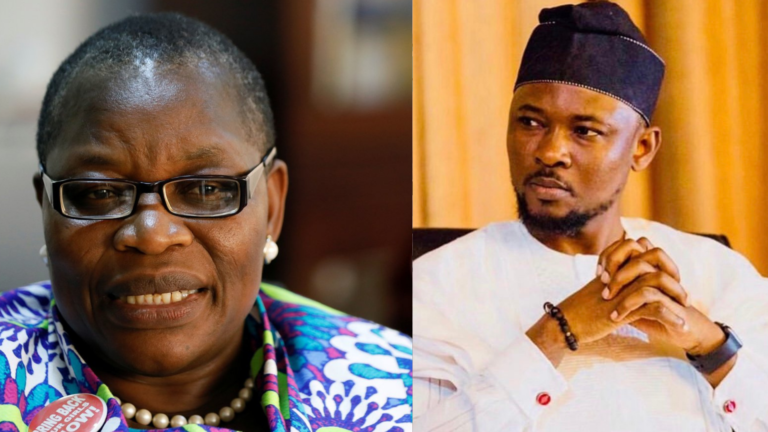
FORMER Minister of Education Obiageli Ezekwesili has asked the Inspector General of Police Usman Baba to investigate and prosecute a social media influencer Japhet Omojuwa over allegations of forgery and misrepresentation.
This was contained in a petition seen by The ICIR titled, “Petition Against Mr Japheth Omojuwa for Forgery, Fraudulent Misrepresentation and Fraudulent Use of the Name, Identity and Particulars of Mrs. Obiageli Ezekwesili as a Director of Alpha Reach Limited RC No: 1066507” and dated April 14, 2021. It was submitted and acknowledged by the Force Headquarters in Abuja on Friday.
In the petition signed by Marshal Abubakar of the Falana and Falana Chambers on behalf of Ezekwesili, Omojuwa was accused of listing the name of the former minister as a director of a company, Alpha Reach Limited, without her consent in 2012.
The petition claimed that Ezekwesili was not aware that her name was listed until March 30, 2021, when she was contacted by someone from Buzzfeed informing her that she was listed as one of the directors of Alpha Reach Limited alongside Nasir El-Rufai and Japhet Omojuwa.
Ezekwesili noted that she contacted Omojuwa to confirm whether he forged her signature and other incorporation documents, but he informed her that the Alpha Reach Company Limited was his company and she was not involved in it.
Ezekwesili also claimed that her name was later delisted in 2017 as a director and replaced with the name of one Indimi Ahmed Mohammed in 2017.
Noting that she had never at a time signed documents as a director of the company, the petition further read that throughout the time Ezekwesili was ‘fraudulently’ made a director of the said company, no notice of meeting, annual returns, accounts and board resolution was ever issued to her.
The petition read that the alleged actions of Omojuwa amounted to “forgery, fraudulent misrepresentation, and egregious breach of extant provisions of the Penal Code Law, the Administration of Criminal Justice Act, 2015 and the Companies and Allied Matters Act, deserving of investigation and prosecution.”
Omojuwa had earlier claimed that he sought and obtained the consent of Ezekwesili before he listed her name as a director in Alpha Reach Limited in 2012.
Controversies concerning the name of directors came into public after Alpha Reach was accused of receiving money to launder the image of Alex Saab, a detained diplomat indicted by the United States government of money laundering.