INFLATION rate in Nigeria has increased to 18.17 per cent in March 2021, indicating the highest level since January 2017, the Consumer Price Index (CPI) of March 2020 has shown.
It is also an indication that the cost of living is rising fast in Africa’s most populous nation.
The report, published by the National Bureau of Statistics (NBS), also revealed that food for the increasing number of poor Nigerians is not getting cheaper as food inflation increased from 21.79 in February to 22.95 percent in March, the highest point since the 2009 data series.
“This rise in the food index was caused by increases in prices of Bread and cereals, Potatoes, yam and other tubers, Meat, Vegetable, Fish, Oils and fats and fruits,” NBS explains.
According to the report, increases were recorded in the 12 Classification of Individual Consumption According by Purpose (COICOP) divisions that yielded the headline index.
The COICOP includes food and non-alcoholic beverages, alcoholic, and beverages; tobacco, and kola; clothing and footwear; housing, water, electricity, and gas; furnishings and household equipment.
Others are health, transport, communication, recreation and culture, education, restaurants and hotels, miscellaneous goods and services.
The closure of land borders in the country in August 2019 was a major driving force for the upward trend of the inflation rates of the country, according to NBS data, which shows the rates started increasing from September 2019.
Inflation in states
In March 2021, all-items inflation on year-on-year basis was highest in Kogi at -24.51 per cent; Bauchi at – 22.24 per cent, and Sokoto at – 20.70 percent, while Imo, – 16.08 per cent; Kwara,- 15.34 per cent, and Cross River, – 14.45 percent recorded the slowest rise in headline year-on-year inflation.
For food inflation, Kogi,- 29.71 percent; Sokoto,- 27.02 percent, and Ebonyi,- 26.59 percent recorded the highest, while Abuja,- 20.1 percent; Kebbi,- 19.98 percent, and Bauchi- 18.61 percent recorded the slowest rise in headline year-on-year inflation.
Why Inflation is on the rise
Economists and other experts attribute rising inflation to exchange rate risks as well as dwindling productivity and production.
“Insecurity and attacks are hurting agricultural production, leading to high cost of food products,” said Ike Ibeabuchi, managing director of MD Services Limited, a services and manufacturing outfit.
“Then, there is the issue of low productivity caused by skyrocketing cost of inputs and raw materials. When products or food items are not in expected quantity, demand exceeds supply and prices rise. So we need to address this point by supporting local farmers and manufacturers with tools that can enhance their productivity,” he recommended.
“There is also the issue of money supply in the market. Is the money going to government or to productive sectors?” he asked.
Financial Derivatives CEO Bismark Rewane, in an interview Aljazeera last month, noted that stagflation crisis ( inflation and unemployment) “would take a long time to resolve, with inflation eating up economic gains to the point where any government stimulus might be too weak to generate jobs.”
The International Monetary Fund (IMF) has advised the Central Bank of Nigeria (CBN) in February 2021 that it would need to tighten measures once inflation was out of control, urging the apex bank to stop financing government deficit to ease price pressures.
According to the World Poverty Clock, Nigeria has the highest number of poor people globally, with 89.8 million living in extreme poverty. Also, the country is home to one of the largest unemployment rates globally, with 33.3 percent of its working population out of jobs.
A former Inspector-General of Police Mike Mbama Okiro, on Wednesday, said corruption was the least problem of the Nigeria Police Force.
He, however, revealed that poor funding was the biggest challenge of the Force, and one of the reasons responsible for rising rate of crimes and corruption in the country.
Okiro made this known during a radio programme, ‘Public Conscience,’ produced by the Progressive Impact Organization for Community Development (PRIMORG) in Abuja.
He was reacting to an investigation by Daily Trust Newspapers which exposed that some police divisions received only N10, 000 monthly to run their operations -which meant Police stations in the country now depended on the money raised from unlawful acts such as bail fees, bribes, and extortion to ‘raise’ money for their day-to-day activities.
The former Police chief, who served between 2007–2009, disclosed that the Police under him also struggled with low budgetary allocation from the Federal Government, and noted that only 50 to 60 per cent of the Police budget was usually implemented which limited their productivity.
He argued that poor funding much more affected the output of Nigeria Police than issues of poor management and corruption.
“When I was the Inspector General of the Police, I was forced to give money down to the division. I donated and distributed money to all the divisions, and how much was it, N10,000 per quarter, to enable them to do certain things for themselves but that is not enough.
“If there is a robbery, you tell the Police to come and there is no vehicle, even if there is a vehicle, there is no fuel for the vehicle. You don’t expect the policeman to trek covering meters to go and confront armed robbers.
“As a CP in Lagos, I was having N360,000 as a quarter fund to buy a vehicle. Can N360,000 buy and cater for a vehicle? It is not an issue of corruption, you can only corrupt what you get when there is no money where you will get to steal,” Okiro stated.
He backed the planned decentralisation of the Police to enable zones to receive their funds directly and distribute them to divisions under them while warning the government of the dangers of poor funding of Police in the country.
“Police is the lead agency in our internal security. Technically and logically, if our Police are not effective, our internal security will be in a shambles and that’s what we are getting now. No funding, no manpower in a country where we have millions of youths roaming the streets without employment. Going into crime becomes easy and yet the Police do not have enough manpower to do their jobs,” Okiro said.
Similarly, General Editor at Daily Trust Newspapers Hamza Idris stated that poor funding of the Police Force was largely responsible for the corruption associated with policemen.
He revealed that the idea behind the investigation was the prevailing security situation in the county, hence the media house decided to look at the systemic problems facing the Police in Nigeria.
According to Idris, with a strong and viable Police force, the nation would not have had numerous security outfits, and soldiers would hardly have been seen on the streets. Idris emphasised the need to salvage the Force by making more funds available and exploiting technology in policing.
On his part, Head of Judiciary Desk at Daily Trust Newspapers John Azu identified accountability as a major problem militating against proper utilisation of funds approved for the Nigerian Police Force.
According to him, besides the challenge of under-funding, the Nigerian Police were also faced with issues of corruption, integrity, or lack of moral status.
“It is not a mystery whether corruption is directly linked to what is going on in our Police stations. Naturally, humans have this tendency to acquire more, so the police are part of society,” he said.
“There is a mystery in the aspect of the utilisation of some of the support Police gets, especially in logistics. Annually state governments and organisations donate vehicles, equipment to the police which nobody gets to know the whereabouts of those facilities and vehicles.
“I think that there is this detachment from the Police. Even among the personnel, accountability is an issue, and then lack of interest.
“Maybe it’s a question of morale going down among the officers and men of the Force,” Azu stated.
Public Conscience is a syndicated weekly anti-corruption radio programme used by PRIMORG to draw government and citizens’ attention to
corruption and integrity issues in Nigeria.
THE Osun State Government has suspended three school principals for allowing a group to spread and preach disunity and secessionist message of the Yoruba nation to students.
The state government has also dissociated itself from the group, noting that it was not aware and never gave consent to the group to speak with public school students in the state.
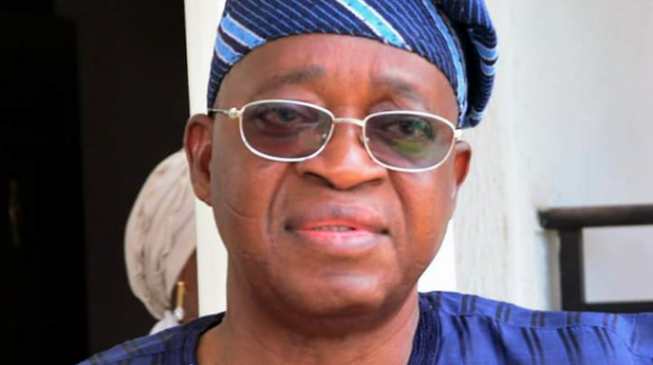
State Governor Adegboyega Oyetola, through Commissioner for Education Folorunsho Bamisayemi, emphasised that his administration frowned at any move to disunite the country.
He maintained that the state had never at any point in time associated with any group capable of hindering the unity of the country.
“Nigeria is one entity and will continue to remain so. The State Government of Osun never gave consent to any group to speak with students of public schools on a matter we know can cause disunity and chaos in the country,” he said.
“As a Nigerian state, we believe in the Nigerian dream. We urge every Nigerian to pray and work for Nigeria not to break up. As for those principals that allowed such a group into the premises of our schools, they will face the consequences of their actions.”
Also reacting, Special Adviser to Governor on Education Jamiu Olawumi said it was unfortunate that some unscrupulous elements were going about polluting the minds of young children who were still naïve.
While warning such seditious groups to stay away from the state, he assured that students of secondary schools in the state would continue to be symbols of Nigeria’s unity at all times.
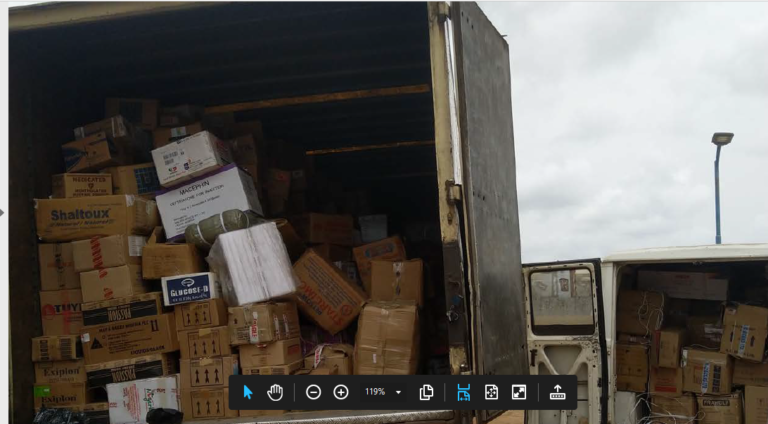
The National Agency for Food and Drug Administration and Control (NAFDAC) says it has intercepted a Mercedes truck laden with fake drugs and vaccines along Asaba-Benin road.
The agency says the truck was heading for Warri, Delta State capital, to deliver its consignments to 15 drug retail outlets in the oil-rich town.
Fake drugs and vaccines seized by NAFDAC. Source: NAFDAC
In a statement signed by Resident Media Consultant to the agency Sayo Akintola and mailed to The ICIR Wednesday, the agency explains that it intercepted the products through its Investigation and Enforcement (I&E) Directorate, following an intelligence report.
NAFDAC says the “unregistered, banned and controlled medicinal products” were manufactured at Ogbo-Ogwu Bridge Head market in Onitsha, Anambra State.
It lists some of the products as tetanus diphtheria vaccine, analgin injection, CSP with codeine cough syrup, mepacrine HCL tablets, diethylcarbamazine citrate tablets, dano tetanus vaccine and artestunate injection.
According to the statement, Director-General of the agency Mojisola Adeyeye dropped the hint on Thursday, April 14 in Abuja.
Adeyeye reiterates NAFDAC’s determination to ensure that only wholesome medicinal products and other regulated products are available in Nigerian markets for public consumption.
She further explains that the products were evacuated and inventory taken, while the suspects with cartons containing the products made police statements and were released on administrative bail.
Some of the fake drugs seized by NAFDAC in Delta state. Source: NAFDAC
She, however, warns medicine merchants to always have the general wellbeing of people in the country at heart above other considerations, stressing that there is no longer a hiding place for them if they fail to stop illicit business of circulating dangerous medicinal products that are capable of compromising the health of the Nigerian public.
The agency names outlets where the drugs were to be delivered, of which 15 are in Warri while one is in Onitsha.
They outlets are: Pendrix Pharmacy; Samtex Pharmacy; Onos Pharmacy; Chima Patent Medicine Store; Imoson Patent Medicine Store; Sam-C Patent Medicine Store; Sunshine Patent Medicine Store; and Hyunus Patent Medicine Store.
Others are Chuks Patent Medicine Store; Solomon Patent Medicine Store; Friday Patent Medicine Store; Madam Faithmax Patent Medicine Store; Omas Pharmacy; Evans Patent Medicine Store; Chiyere Patent Medicine Store; and Philo Patent Medicine Store, Bridge Head Market, Onitsha.
THE Joint Admissions and Matriculation Board (JAMB) has explained how hackers gained access to its site and diverted over N10 million meant for the payment of ad-hoc staff.
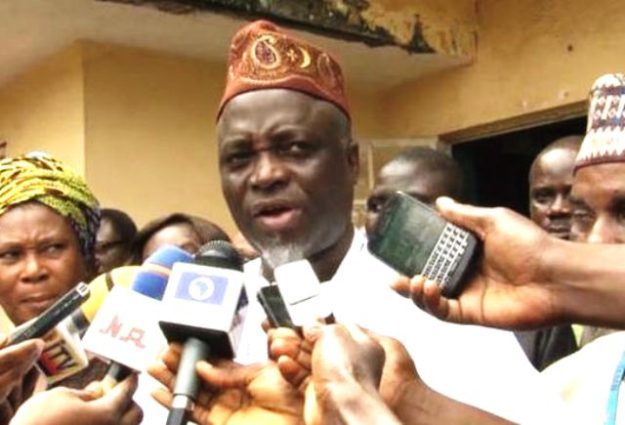
Jamb Registrar Ishaq Oloyede, who disclosed this to journalists in Abuja on Wednesday, said the hackers penetrated the board’s payment portal for ad hoc staff and stole the money.
He said 10 persons had been apprehended by security operatives in connection with the crime in Kaduna, Nasarawa and Abuja.
“We did not ask anyone to apply to be an ad hoc staff on the site, we had already chosen them through recommendations from various agencies,” he said.
“We only created the site just to pay them via a code that was assigned to them. However, these suspects gained access to the site, deleted the original account details and phone numbers and inserted theirs.
“We paid N20, 000 each for accommodation per night and N100, 000 for flight tickets, depending on the location of each staff that worked for that period. The payments ranged from N200, 000 to over N300, 000 per person. Yet, these suspected fraudsters, after gaining access to the sites, also inserted details for their family members.
“They didn’t go to partake in the exercise but ignored the messages sent from our domain. One of them Saidu Zubairu collected over N3.7 million for himself because he inserted the account details of his mother, sisters and other family members.
“We have not calculated all the monies they all have so far received, but altogether, the amount will definitely sum up to more than N10 million. We have already paid the original owners. Though it took us over a year to track the suspects, we finally apprehended them and I assure you the law will take its course.”
Oloyede further assured that JAMB would get rid of corrupt practices in its system, adding that some of the illegalities had prompted changes in the board’s mode of operations.
He said Zubairu was the principal suspect of the crime, revealing that he got the code for the site through his friend (currently at large) and indulged others.
Zubairu confessed that he lured at least 12 people into the crime, some of whom were his family members, adding that he received over N400,000 diverted to his account, JAMB registrar noted.
Nasiru Mohammed, one of the alleged culprits, said he received N220,000 payment from JAMB while others said they got between N286,000 to N440,000, he further said.
THE 2021 Annual Threat Assessment (ATA) report of the United States Intelligence Community says terrorism and inter-communal violence can destabilise Nigeria and other West African countries in 2021.
The Annual Threat Assessment, a yearly report of worldwide threats to the national security of the US, reflects the collective insights of the US Intelligence Community (IC).
The 2021 edition was released by the Office of the Director of National Intelligence (DNI) in April 2021. Director of National Intelligence Avril Haines, in coordination with Intelligence Community leaders, released the report to the Congress as an unclassified annual report of worldwide threats to the national security of the United States.
The report, posted on the website of the Office of the Director of National Intelligence, dni.gov, identifies China’s push for global power and ‘provocative’ actions by Russia as the major threats to the US at the moment.
However, looking at how instability in different parts of the world will affect US interests, the report notes that most parts of Africa will experience instability as a result of terrorism and socio-economic and political issues.
Specifically, the report observes that West African countries, including Nigeria, may be destabilised by a ‘volatile’ mixture of terrorism and inter-communal violence.
Assessing the situation in Africa, the report says, “East Africa will struggle with ethnic conflict in Ethiopia, power struggles within the transitional government in Sudan and continued instability in Somalia, while a volatile mixture of inter-communal violence and terrorism will threaten West Africa’s stability.
“Conflicts, undergoverned spaces, the marginalisation of some communities, and persistent communications connectivity are likely to fuel terrorism during the next year, particularly in the Sahel and parts of eastern and southern Africa.”
It explains that “Throughout Sub-Saharan Africa, a string of contentious elections will elevate the risk of political instability and violence.”
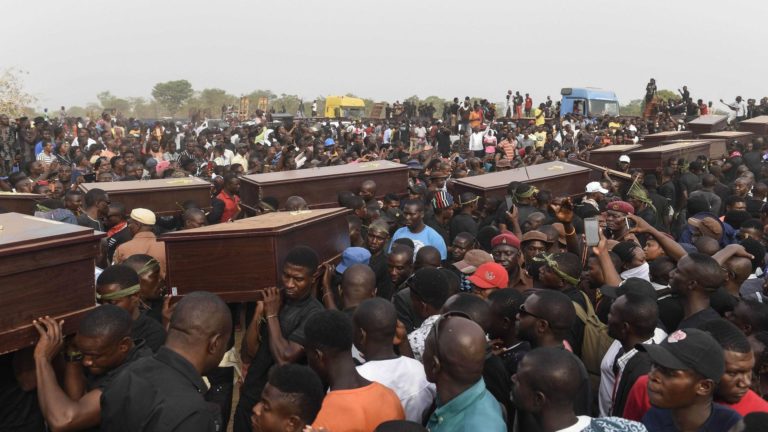
Nigeria is already grappling with the dismal effects of the terrorist activities of Boko Haram and other Jihadist insurgents in parts of the North, while clashes between herdsmen and farmers have resulted in deadly inter-communal violence in the Middle Belt and the South. Nigeria is also currently witnessing violent communal clashes in Southern Kaduna and escalating banditry in some of the northern states.
In a recent memo, the Federal Airports Authority of Nigeria (FAAN) said it had uncovered a plot by terrorists to attack airports across the country.
Army, Police keep mum on US intelligence report
Meanwhile, efforts by The ICIR to get the Nigerian Army and the Nigerian Police Force to react to the US intelligence report, particularly the prediction that terrorism and inter-communal violence could destabilise Nigeria and other West African countries, were not successful.
When contacted by The ICIR, Spokesman of the Nigerian Army Muhammed Yerima said he was just getting to know about the report and therefore would not be able to comment on it.
Also, spokesman of the Nigerian Police Force Frank Mba did not answer phone calls made by The ICIR‘s correspondent. An SMS sent to his mobile phone was also not replied as of the time of filing this report.
Intelligence report identifies China, Russia as biggest threats to US interests
‘China’s push for global power’ is the biggest threat faced by the US, according to the report.
Chinese leader Xi Jinping
“The Chinese Communist Party (CCP) will continue its efforts to spread China’s influence, undercut that of the US, drive wedges between Washington and its allies and partners, and foster new international norms that favor the authoritarian Chinese system,” the report says, adding that Chinese authorities believe that the US has been trying to check the country’s rise with economic measures since 2018.
The US intelligence community, in the report, further observes that “China is touting its success containing the COVID-19 pandemic as evidence of the superiority of its system” over that of the United States.
According to the report, China will try to increase its influence through ‘vaccine diplomacy’ by giving countries favored access to the COVID-19 vaccines it is developing.
“China also will promote new international norms for technology and human rights, emphasising state sovereignty and political stability over individual rights,” the report says, adding that “China will remain the top threat to US technological competitiveness”.
“China uses a variety of tools, from public investment to espionage and theft, to advance its technological capabilities,” the report stresses.
Noting that China will continue pursuing its goals of becoming a great power, the report says, “Beijing is increasingly combining its growing military power with its economic, technological, and diplomatic clout to preserve the Communist Party, secure what it views as its territory and regional preeminence, and pursue international cooperation at Washington’s expense.”
The US intelligence community further observes that China will advance its interests by building a world-class army while at the same time destabilising international norms and relationships.
The intelligence report says China will continue to rapidly expand and diversify its nuclear arsenal and double the size of its nuclear stockpile during the next decade.
The report equally notes that China is not interested in arms control agreements that restrict its modernisation plans and will not agree to substantive negotiations that lock in US or Russian nuclear advantages.
The report further says China is working to match or exceed US capabilities in space to gain the military, economic, and prestige benefits that the US has accrued from space leadership. Noting that counterspace operations will be integral to potential military campaigns by the Chinese Peoples Liberation Army (PLA), the report says China has counterspace weapons capabilities intended to target US and allied satellites.
China’s deployment of cyber technology also poses a major threat to the US interests.
“We assess that China presents a prolific and effective cyber-espionage threat, possesses substantial cyber-attack capabilities, and presents a growing influence threat,” the report says, noting that China’s cyber pursuits and proliferation of related technologies increase the threats of cyber attacks against the US homeland, suppression of US web content that Beijing views as threatening to its internal ideological control, and the expansion of technology-driven authoritarianism around the world.
The report equally notes that China can launch cyber attacks that, at a minimum, can cause localised, temporary disruptions to critical infrastructure within the United States.
“China will continue expanding its global intelligence footprint to better support its growing political, economic, and security interests around the world, increasingly challenging the United States’ alliances and partnerships,” the report further observes.
In the same vein, the 2021 Annual Threats Assessment says Russia “will continue to employ a variety of tactics this year meant to undermine US influence, develop new international norms and partnerships, divide Western countries and weaken Western alliances, and demonstrate Russia’s ability to shape global events as a major player in a new multipolar international order.”
Russian leader Vladimir Putin
According to the report, Russia will continue to develop its military, nuclear, space, cyber and intelligence capabilities, while actively engaging abroad and leveraging its energy resources to advance its agenda and undermine the United States.
The intelligence report adds, “We assess that Moscow will employ an array of tools – especially influence campaigns, intelligence and counterterrorism cooperation, military aid and combined exercises, mercenary operations, assassinations, and arms sales – to advance its interests or undermine the interests of the United States and its allies.”
It further notes that Russia will continue to expand its global military, intelligence, security, commercial, and energy footprint and build partnerships with US allies and adversaries, particularly China, to achieve its objectives.
The 2021 Annual Threat Assessment explains that Russia will remain the largest and most capable rival to the US on weapons of mass destruction (WMD) for the foreseeable future.
Noting that Russia will remain a top cyber threat to the US, the report says that “Russia presents one of the most serious intelligence threats to the US, using its intelligence services and influence tools to try to divide Western alliances, preserve its influence in the post-Soviet area, and increase its sway around the world, while undermining US global standing, sowing discord inside the US, and influencing US voters and decisionmaking.”
Russia, according to the report, views US elections as an opportunity to try to undermine US global standing, sow discord inside the United States, influence US decisionmaking, and sway US voters.
“Moscow conducted influence operations against US elections in 2016, 2018, and 2020,” the report states.
Further observing that Russia will remain a key space competitor, the report says that Russia continues to train its military space elements and field new antisatellite (ASAT) weapons to disrupt and degrade US and allied space capabilities.
Besides China’s push for global power and provocative actions by Russia, the 2021 Annual Threats Assessment also identifies ‘provocative’ actions by Iran and North Korea as major threats to the US.
“Iran will present a continuing threat to US and allied interests in the region as it tries to erode US influence and support Shia populations abroad, entrench its influence and project power in neighboring states,” the report says, adding that North Korean leader Kim Jong Un may take a number of aggressive and potentially destabilising actions, including the resumption of nuclear weapons and intercontinental ballistic missile (ICBM) testing, to reshape the regional security environment and drive wedges between the United States and its allies.
The Federal Government has denied a claim by Edo State Governor Godwin Obaseki that N60 billion was printed to augment revenue allocation given to states in March.
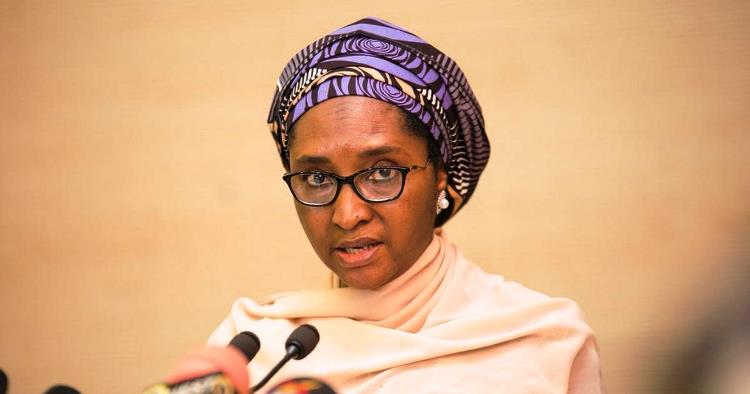
The claim was denied by Finance Minister Zainab Ahmed while addressing newsmen shortly after the weekly Federal Executive Council (FEC) meeting on Wednesday.
She said the issue raised by the governor was very sad, noting that what was distributed to states in March was revenue generated by various revenue organs of the government.
“The issue that was raised by the Edo State Governor for me is very, very sad. Because it is not a fact. What we distribute at FAAC is a revenue that is generated and in fact distributed revenue is public information,” she said.
“We publish revenue generated by FIRS, the Customs and the NNPC and we distribute at FAAC. So, it is not true to say we printed money to distribute at FAAC, it is not true.”
The minister said contrary to assertions by Obaseki that the Nigeria economy was in a bad shape due to huge borrowing and lack of diversification of the economy, Nigeria’s debt, estimated at 23 percent of the Gross Domestic Product (GDP), was sustainable.
Ahmed called for improved revenue so as to meet government obligations.
“What we need to do, as I have said several times, is to improve our revenue to enhance our capacity to service not only our debt but to service the needs of running government on day-to-day basis. So our debt currently at about 23 per cent to GDP is at a very sustainable level if you look at all the reports that you see from multilateral institutions.”
Away from Obaseki’s claims: What do the numbers say?
According to the Debt Management Office (DMO), Nigeria’s total public debt as at December 31, 2020 was N32.915 trillion, representing a 20.13 per cent rise from N27.40 trillion recorded in December 2019.
The increase in the country’s total debt stock was mainly due to a 40.82 per cent rise in external debt to N12.71 trillion as at December 2020, from N9.02 trillion in December 2019.
The Nigerian economy is in dire straits. Oil price has hit over $60 per barrel, but the country is wasting its market gains on petrol subsidy which gulps N120 billion every month.
“We may be eating up the future with the way we are going. For some us ,we cannot say this enough. This is not the way to go. Most often, I wonder what the Nigerian Labour Congress wants to achieve in the way and manner they tread with the government on the subsidy issue. We cannot keep making economic decision political all the time You can see the way we’re struggling to pull this through.” Chairman of Major Oil Marketers Association of Nigeria Adetunji Oyebanji told the ICIR on Tuesday.
Nigeria’s inflation rate rose to 17.33 per cent in February 2021, from 16.47 per cent recorded in the previous month. This represents the highest inflation rate recorded in four years. Unemployment reached 33 per cent in the last quarter of 2020, putting the country among the highest in the world. States are struggling to pay salaries and even the Nigerian National Petroleum Corporation (NNPC) cannot meet its cash-call obligations to international oil companies (IOCs).
ANALYSIS of top management of the Nigerian National Petroleum Corporation (NNPC) and its subsidiaries shows an uneven geographical spread of senior appointments and reflects a less gender-friendly national corporation.
Group Managing Director (GMD) of the NNPC Mele Kyari, while announcing the reshuffling of the senior leadership of the NNPC in July 2020, said the appointments and redeployment of some top officers were in line with the corporation’s vision of Transparency, Accountability and Performance Excellence (TAPE).
However, a scrutiny of the top cadre staff at the NNPC by The ICIR reveals a geographical imbalance within the ranks of the corporation.
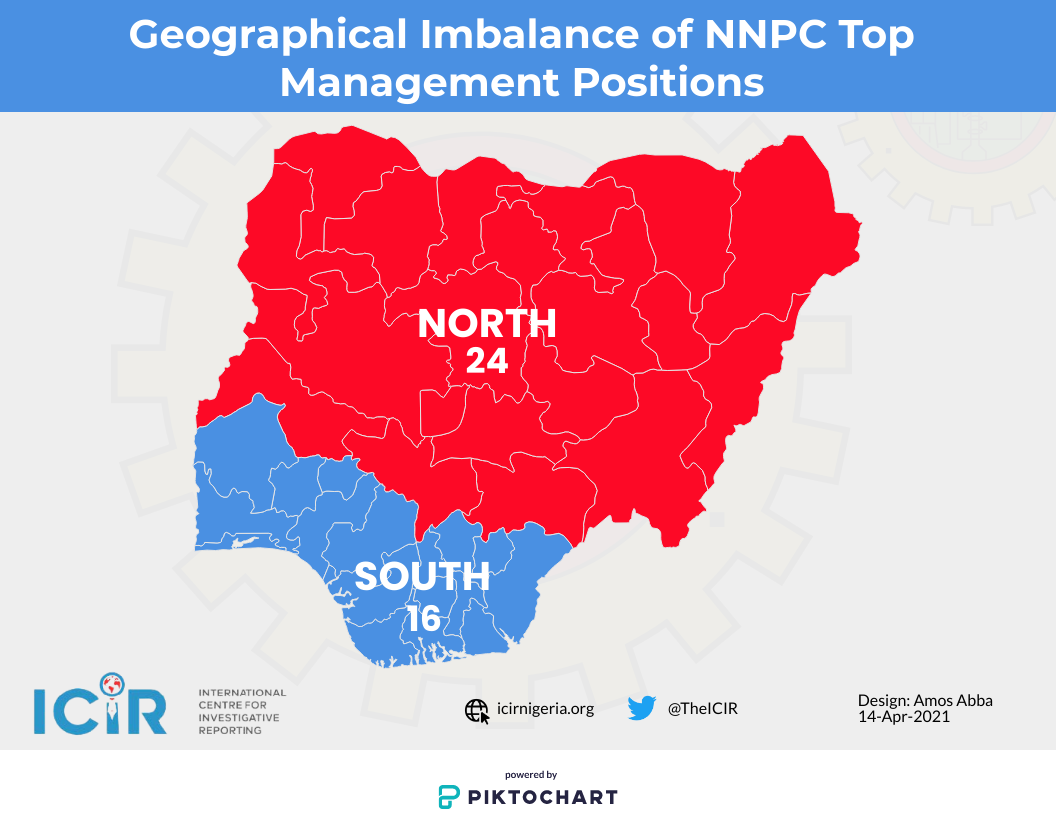
Hence the North-East, North-West and North-Central occupy 60 per cent of all the appointments. Women, on the other hand, constitute only 25 per cent of NNPC’s top management.
Out of 40 senior management positions within the NNPC ranging from chief operating officers and managing directors of its subsidiaries to general managers’ roles in the corporation, 24 are occupied by Nigerians from the North while 16 are headed by those from the South.
On the website of the NNPC, the internal executive board of the NNPC consists of the GMD of the corporation Kyari who hails from the North-East, alongside eight other board members.
The total representation comprises two from North-East, two from North-West, one from North-Central, one from South-South and one from the South-West.
The list is as follows: Chief Operating Officer (COO) in charge of refineries Mustapha Yinusa Yakubu (North-Central); Chief Financial Officer in charge of Accounts and Finance Umar Isa Ajiya (North-West); COO, Gas and Power Yusuf Usman (North East); while COO overseeing ventures and investments is Adeyemi Adetunji (South-West).
Others are COO in charge of Upstream Tombomieye Adokiye from South-South; COO, Corporate Services Mohammed Abdulkabir Ahmed (North West), and corporation’s legal adviser Hadiza Coomassie from North-West.
The position of the COO, Downstream, which was vacated by Ndupu Lawrencia from South-East, who retired early in the year, is yet to be filled.
The South-East has no representation in the internal board of the NNPC, which is saddled with running the day-to-day activities of the corporation. Yet, the region has two oil-producing states -Imo and Abia.
The NNPC’s investment management unit, made up of its subsidiaries and associated companies, has been its most profitable, reporting revenue of N5.04 trillion and a profit of N1.01 trillion in 2018, but its four decrepit refineries posted N154 billion loss within the year. They recorded more losses in 2019.
Of 21 subsidiaries and associated companies of the NNPC that were assessed by The ICIR, 16 of the chief executive officers (CEOs) managing the companies are from the North, accounting for 76.1 per cent. On the other hand, only five are from the South, indicating 23.9 per cent.
According to the Extractive Industries Transparency Initiative (EITI), the most profitable subsidiary of the NNPC is Integrated Data Sciences Limited (IDSL) headed by Ayebateke Bariwei (South-South), registering a N23 billion increase in profits in 2019.
Other top earners for the NNPC in 2019 were: Nigerian Petroleum Development Company (NPDC) headed by Sambo Mansur (North-East); National Petroleum Investment Management Service (NAPIMS) which is headed by Bala Wunti(North-East); Petroleum Products Marketing Company (PPMC) whose CEO is Musa Lawan(North), and Nigerian Gas Marketing Company (NGMC) headed by Usman Farouk(North).
Breach of public trust
Oil accounts for over 70-85 per cent of Nigeria’s foreign exchange revenues, official records say.
The official Twitter account of the NNPC unveils the list of current board members of the NNPC pegged at nine, with two members from the North-East, two from North-Central, two from the North-West, two from the South-South, one from the South West and one from the South-East.
The list of the board members is as follows: Timipre Sylva (South-South); Thomas John (South-South); Mele Kyari (North East); Lami Onayi Ahmed (North Central); Tajudden Umar (North East); Mahmoud Isa-Dutse (North Central); Mohammed Lawal (North-West); Yusuf Lawal (North-West), and Pius Akinyelure (South-West).
Others are Stephen Dike (South-East) and Hadiza Coomassie (North-West) who also doubles as the legal adviser of the corporation.
With six members from the North against four from the South, the appointments do not reflect the federal character which strives to achieve equitable distribution of appointments to the geopolitical zones in the country.
Infographics
InfographicsThe Federal Character Commission Act seeks to promote, monitor and enforce compliance with the principles of the proportional sharing of all bureaucratic, economic, media and political posts at all levels of government.
Since the formation of the NNPC in 1977, different administrations have sought to wield control, with two out of the past four presidents, including incumbent President Buhari, retaining the petroleum minister portfolio for themselves.
Section 14 (3) of the 1999 Constitution stipulates that the appointments into agencies of government should reflect the federal character without predominance of persons from a few states or from a few ethnic or other sectional groups in that government or in any of its agencies.
However, this provision is flagrantly disregarded at the corporation despite its pledge to promote accountability and transparency.
When The ICIR reached out to the NNPC to get the geo-political zones of senior management staff of the corporation, the request was declined.
Calls placed to Public Affairs Director Kennie Obateru were unanswered, but a staff member in his office responded to the messages sent to him, stating that the request to get the states of origin of the executive staff at the NNPC would not be granted because it could raise ethnic tensions across the country.
Women play a less prominent role
Of the 40 executive management positions in Africa’s largest petroleum company, only 10 were occupied by women, signifying 25 per cent of total appointments. The positions comprise three managing directors of subsidiaries, five group general managers (GGM), one chief operating officer and the legal adviser of the corporation.
At the top of the managerial roles played by women in the corporation is Secretary and Legal Adviser of the corporation Hadiza Coomassie from North-West.
Others include Group General Manager (GGM) for Finance, Channels and Quantity Eshiett Rose (South-South); GGM for Human Resources Division Ladipo Oyeyemi (South-West); GGM for Research, Technology and Innovation Ugona Betty (South-East); GGM for Corporate Planning & Strategy (South-South) Oritsemeyiwa Eyesan; and GGM, LNG investments Services Nike Kolawole (South-West).
According to a Wall Street Journal article, women have become executives in supportive roles in the oil and gas sector, but their share of jobs with profit-and-loss responsibility, which is considered as stepping stones to the CEO’s roles, are flat. Profit and loss positions are those with direct influence on how company resources are allocated, according to a financial blog Bluesteps.com.
Elizabeth Aliyuda, who hails from Taraba State (North-East), boasts of 32 years of experience in the downstream oil sector and is the current managing director of NNPC Retail Limited, a subsidiary of the NNPC.
Other female CEOs in the corporation are MD Nigeria Pipeline and Storage Company (NPSC) Oyetunde Nneka (South-East); and MD, NNPC Shipping Christiana Onabu (South-East).
A series of studies by McKinsey titled ‘Women Matter’ revealed that companies with a higher proportion of female executives showed stronger financial performance than those with no women in top positions.
Men were three times as likely as women to have been encouraged to consider a profit and loss role and twice likely to have been promoted or selected for leadership training in two years, according to a 2019 study by Working Mother Research Institute.
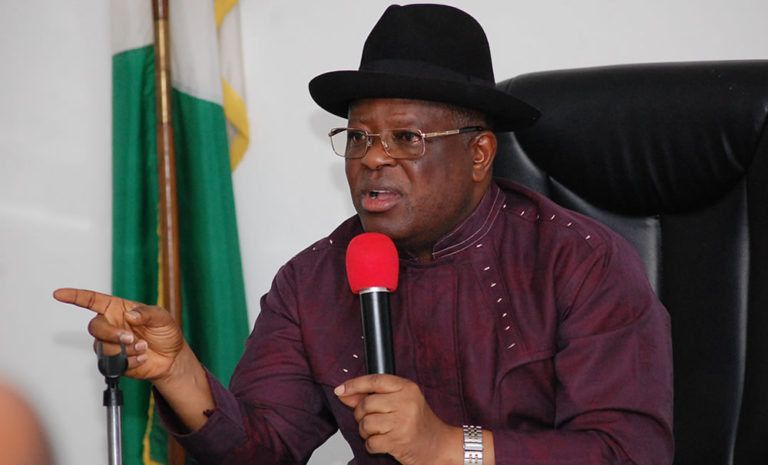
THE Ebonyi State Governor Dave Umahi has stated that those behind burning of police stations and killing of both security operatives and residents in the South-East region of Nigeria are hired bandits and not members of the Indigenous People of Biafra (IPOB)
Umahi, who stated this during his appearance on Channels Television’s ‘Sunrise Daily’ programme on Wednesday morning, did not, however, exonerate IPOB and its security outfit, the Eastern Security Network (ESN), from insecurity in the region.
While blaming the activities of those that wanted to “get to the top by all means” for hiring bandits to destabilise the peace of the region, the governor lamented that the country at large was descending into what he called ‘extreme politics.’
“Of late, we have bandits that are doing a lot of evil and say that they are Eastern Security Network. They commit a lot of crimes and say that they are IPOB and later IPOB will say they have no hand in it. This is what is going on. We will not allow illegality to thrive in our land. Conflict will not resolve conflict,” he said.
“A lot of people want to get to the top by all means and they hire bandits who go to burn police stations, kill people and they come out to say that they are IPOB. They are not IPOB, they are just criminals being hired by people.
“The truth remains that the country is going into extreme politics. It is easier to make money in politics, blackmail people and so, we have departed from the culture of hard work,” he said.
He, however, warned that the governors of the region would not back illegality in any form but would operate within the context of the law.
Umahi’s statement buttressed claims by Imo State governor Hope Uzodinma that the recent multiple attacks on the headquarters of the Police and the Nigeria Correctional facility in Owerri, leading to the escape of more than 1,800 inmates, were caused by aggrieved politicians in Imo State.
IN September 2015, Akwa Ibom State Governor Udom Emmanuel announced Peacock Paints Limited’s resuscitation, a public limited company in Akwa Ibom with N526 million. Few years after its reactivation, investigations indicate the company is caught up in a web of corruption allegedly carried out by the management in connivance with the Board of Directors.
This, coupled with the misappropriation of the state officials’ intervention funds and controversy over the firm’s ownership, has thrown the company into disarray and caused untold hardship to staff who are owed 15 months salary, even under the biting economy occasioned by COVID-19.
Intervention gone wrong!
Since Udom’s intervention, the company’s fortunes have continued to nosedive. Checks into Peacock Paints Limited’s financial records show an imbalance in its expenditure and sales records. For instance, the company’s sales and expenditure profile in 2019 show that N48.36 million was made from sales by Peacock Paints products while N64.31 million stood as expenditure for that year. A year earlier, the loss stood at N65.30 million.
Findings indicate that the bulk of the expenditure came through questionable administrative expenses. The company’s staff revealed that Peacock Paints only showed gleams of hope when the state governor revived the company. They noted that the company began to retrogress until the governor appointed new board members and management.
“This place is down, and we need assistance. We are not in real production. The government did put in funds in the past, but the money was not put to the right use. The fund is no longer there, and the place is not functioning as it should. The reason for the collapse stems from the fact that the intervention fund was misappropriated,” says Christian Sampson, chairman of Senior Staff Union and head of depot staff of Peacock Paints Limited.
Our investigations showed that the company’s Colour Centre was originally designed to have a colour catalogue for customers at 93 Tunde Ogbeha street, Ewet Housing Estate, and a depot at Oron Road Uyo, have ceased operations as products are no longer supplied to the branches.
Even then, there has been controversy surrounding the company’s ownership and the legality of government intervention. The company had been virtually bankrupt due to N30 million debt owed First Bank of Nigeria Limited (First Bank). The debt with interest accumulated to N150 million. The bank sued the company and got a judgment to claim ownership of the company’s properties. Thereafter, the state government, which owns a 15 per cent stake, renegotiated the debt burden to N102 million, paid it off and claimed total ownership in September 2015.
Despite this, the state government has failed to undertake due diligence in taking over the company. The 100 per cent ownership claim is not reflected in important government documents five years after pumped funds to resuscitate the company. For instance, the audited financial statements and annual report of the Accountant General of the State for 2019 show that the state still holds 15 per cent stake in the company. This is the same stake the state held before the purported take over while other shareholders had 85 per cent stake.
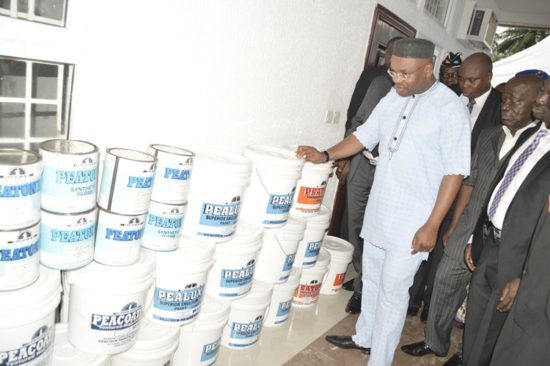
Governor Udom Emmanuel with Peacock Paints Photo Credit: 9jaecho.com
Also, it was discovered, Peacock Paints Limited’s name as incorporated by shareholders is still being used in business dealings. While the state government is making efforts to change the company’s name, some shareholders are still laying claim to its ownership.
Misappropriation of reactivation funds
While a cloak of uncertainty hangs over Peacock Paints’ ownership, investigations revealed that the Ministry of Trade and Investment, which was in charge of the N526 million reactivation funds for the company, misappropriated the funds.
A senior civil servant in the ministry who cannot be named for security reasons said that after N102 million debt owed First Bank was settled, the remaining N424.069 million was given to the ministry for the reactivation project. The source also disclosed that the handover notes by the then Commissioner for Trade and Investment, Emmanuel Enoidem, noted that out of the N424.069 million released to the ministry for the project, N339.385 million was the actual funds committed for the reactivation. At the same time, N84.684 million was expended on transactions not related to Peacock Paints Limited.
The breakdown of the unrelated transactions is as follows: Coconut Plantation (N30 million), Petroleum Refinery (N26 million), One Hilux Car for Peacock Paints transferred to Coconut Plantation (N7.750 million), while sundry expenses gulped N20.934 million.
Of the N339.385 million, only N88.430 million has so far been transferred from the ministry to the company to produce paints and other operational expenses.
The transfer breakdown is as follows: N49.950 million on October 24, 2016; N19.480million on June 22, 2017; N10 million on November 27, 2018; and N9 million on February 6, 2019.
The remaining N250 million was allegedly used for renovation of the company’s production facility, settlement of minor debts from suppliers of production materials and the purchase of a multi-functional grinding machine called Basket Mill for the facility.
A top source in the company confirmed that Kreis Basket Mill is the only machine bought by the former trade and investment commissioner. Even with a mark-up of 25 per cent profit for the machine’s supplier, findings show that the machine should not have cost more than N8 million. The best price for 500lt Basket Mill 30 kilowatts with a jacketed tank as of February 2021 on a popular global trade company’s website, Alibaba.com, is $33,000. The exchange rate of dollar to naira between January and June 2016 was about N199, thus keeping the product’s price at N6.567 million.
The same source also alleged that the facility’s renovation was the primary means through which funds were siphoned. For instance, our source informed us that N19m was appropriated for the renovation of the company’s administrative block. Our FOIA request to the Ministry of Trade and Investment was not acceded to, raising suspicion that the facility’s renovation was the primary means through which funds were stolen. Our source alleged that of the N19m appropriated for renovation, N6m was remitted to principal officers of the Ministry of Trade and Investment. When the then Commissioner for Trade and Investment, Emmanuel Enoidem, was contacted on the claim of allegedly receiving kickbacks, he said: “I will oblige you all the information you need if you mention those who told you and the amount. I was paid as a bribe.” When this was declined, he asked the newspaper to go ahead with its publication.
“Please go ahead and publish the names of the contractors and how much I collected from each of them. Let’s start from there, sir. I am sure before you sent this to me as an investigator, you are satisfied with the facts.”
The source said the same dealings played out with others who had contracts to renovate the canteen and some offices. When contacted, Ukobong Umoh, the contractor who handled the administrative block’s renovation, confirmed that he is being owed N1.8 million for the work done. Sunny Ekpothe, the contractor who handled the canteen’s renovation, said about N7 million debt owed him from the contract is yet to be paid five years after he completed the work.
The contractors, however, did not confirm if they gave kickbacks to Enoidem.
Questionable expenditure
Checks into the company’s payment vouchers showed that the management and the board engaged in many questionable disbursements, which are believed to have contributed to the company’s crash after the government’s intervention.
A few of these expenditures stand out. For instance, over N10 million was spent between December 2016 and January 2017 on the procurement of unspecified number of closed-circuit television (CCTV) cameras. Payment vouchers seen by this newspaper revealed the disbursement of N7.2 million, N2.448 million and N821,400 was staggered for the purchase of CCTVs cameras to unknown contractors between 14 December 2016 and 31 January 2017.
Yet, findings show that only four night-vision CCTVs were installed on the company’s premises since its reactivation. Several staff members who pleaded anonymity for fear of victimisation disclosed that none of the four CCTVs has functioned since they were installed. A Freedom of Information Act (FOIA) letter requesting the purchase invoice from the management was greeted with silence. A CCTV installation firm in Uyo, Wilkommen Energy, said that it would cost N226,000 to install four Night Vision High Definition (HD) CCTVs.
The Managing Director of Wilkommen Energy, Williams Ikotidem, said: ” The camera’s average cost is N14,000. N14,000 multiplied by four is N56,000. Four channels DVR is about N18,000. The power supply unit is about N15,000. A drum of approved standard cable, which is called RG59 Siamese cable, presently is about N32,000. Other materials, including BNC connector, power plug, HDMI, extension, router, installation charges amongst others, will put the total cost at N226,000,” he said.
The financial statement of the company also confirmed the management’s unwholesome appetite for frivolous spending. The statement showed that N5.334 million was spent on furniture and fillings in 2017. On January 13, 2017, the management spent N2.3 million for the purchase of Ephra-wood used as a table for the board meeting. Again, an FOI request asking for the contract details, including the invoice for the expenditure, was not attended to.
A trend not to be ignored
There is a compelling pattern of corruption and misappropriation of funds by the board and management of Peacock Paints Limited that cannot be ignored. On December 14, 2016, the management paid to rent a property at N2.5 million per annum for two years from January 2017 to December 2018. The rented property, located at plot 93, Tunde Ogbega Street, Ewet Housing Estate, Uyo, was used by the company as Colour Centre. A year after, the company could not meet up with its rent obligation despite the withdrawal of N2.5 million purportedly as payment for the rent in 2019, sources within the company disclosed.
This was affirmed by the attorney over the property, Elijah Usah. He chronicled efforts made to ensure that the company fulfilled its rent obligation.
“Peacock Paints did not fulfil her rent obligation for 2019 even after occupying the facility for the year. The unfulfilled rent obligation and the need to renovate the property after several damages were noticed necessitated our law firm on behalf of the landlord to write the company and board for action,” Usah noted.
He added: “When they failed to respond, we wrote the Head of Service, which through one Ekpeyong Michael responded on July 21, 2020, that they were not in the position to respond. The Board Chairman, Billy Etuk, later approached the property owner to take non-functional air-conditioners which they left behind in place of the unremitted rent”.
A chunk of the company’s expenditure also went to servicing allowances of board members. Board members of Peacock Paints Limited, including Etuk, Sam Emeh, Nsudo Nsudo who is currently a serving permanent secretary in the State Civil Service, and Edet Idim were paid N14 million as sitting allowance and fringe benefits, N601,000 as entertainment expenses and N1 million travelling expenses between January 2017 to December 2018. These expenses were incurred even though some of them received statutory salaries and allowances running into millions of naira per annum.
There are also cases of missing funds. For instance, at the Colour Centre, stocktaking documents for 2019 exclusively obtained showed that N1.25 million made from sales of the company’s products was not lodged in the company’s account within the period. Besides, in a three-page petition by the cashier of the company, Joe Ossom, addressed to the Board of the company on January 28, 2021, the Account Manager, Godwin Mfon and Acting General Manager (AGM), Aniefiok Essien, were indicted for paying N4 million of the company’s fund into the AGM personal account with Guaranty Trust Bank (GTB) in November 2020.
It was also found out that N1.698 million was paid to Elizabeth Consultants on May 25, 2017, without concrete information on the reason for the payment. The management did not provide the invoice of the transaction as requested through FOI. Checks at CAC on Elizabeth Consultants turned in no results implying the company does not exist.
The beginning of troubles
Corrupt practices in Peacock Paints Limited date back many years. After years of battling to stand out in the paints industry, the company witnessed a turnaround when Ben Attah was appointed as managing director in October 1999.
According to a major stakeholder of the company, Peter Linus, the company was revamped and new shareholders and investors were brought in during Attah’s tenure.
Linus, the former Speaker of the Akwa Ibom State House of Assembly, said that the company could declare dividends of about 40 Kobo per share under a year of Attah’s management.
“Attah later resigned, and that was the beginning of the slide of the company into an abyss of corruption. Truth must be told; it died in the hands of Okokon Etuk, the chairman board of directors,” Linus said.
He observed that the straw that broke the camel’s back was when the company under Obong Etuk’s watch acquired a loan from First Bank without shareholders’ involvement.
“There were no board meetings to address the indebtedness coupled with litigations; it resulted in court ordering receivership.”
When contacted, Attah said the company’s main problem was that some of the directors were unable to distinguish the business from politics and personal endeavours. Attah also noted that the bad debt that changed the company’s fortunes was obtained after he left.
“We paid off all loans the company ever inherited. We had a good credit balance in all our accounts when I was there,” he said.
Controversy over source of reactivation fund
There has been controversy over the funding source of Peacock Paints’ reactivation fund. During the company’s re-commissioning on September 5, 2015, Governor Emmanuel said that his administration spent N526 million in reactivating the company.
Checks into the 2015 budget of the Akwa Ibom State Government show that N1 billion was approved for Akwa Ibom State Investment Corporation (AKICORP) for the reactivation of state-owned enterprises, namely Akwa Palm, Qua Steel, Quality Ceramics, Sunshine Batteries, Peacock Paints and Qua Rivers Hotels.
However, the audited financial statements and annual report of the Accountant General of the State for 2015 did not reflect that funds were taken from the coffers of the State Government for the project. When the Accountant General, Uwem Andrew-Essien, was contacted, he could not explain how the state government came about the funds used in reactivating Peacock Paints.
He asked that an official request for the information be made to his office. Subsequently, an FOI request submitted to his office was replied to by Assistant Director and Head, Funds Directorate, Mfon Udomah, who asked that the request be channelled to the Secretary to the State Government (SSG) before the information can be released.
“You will please write to the Secretary to the State Government who will authorize the release of the information,” the letter stated.
However, the FOI Act 2011 gives the Accountant General’s Office the obligation to transfer such a request to the SSG’s office.
The Act in Section 5(1) states: “Where a public institution receives an application for access to information, and the institution is of the view that another public institution has a greater interest in the information, the institution to which the application is made may within 3 days but not later than 7 days after the application is received, transfer the application, and if necessary, the information, to the other public institution, in which case, the institution transferring the application shall give written notice of the transfer to the applicant…”
On May 15, 2019, the state government announced the change of name of Peacock Paints to Ibom Paints Limited. According to the then Commissioner for Information, Charles Udoh, “the name change is to enable the company to operate on a clean slate without inherited liabilities”.
Checks on Ibom Paints Limited at the Corporate Affairs Commission (CAC) reveal that the firm incorporated on July 6, 2020, with Registration number 1683217, has nine officers and no person with significant control.
Curiously, CAC only made five of the nine officers of Ibom Paints public. Except for Akanimo Effiong, who serves as the secretary, others including Nsikan Nkan; representative of Ministry of Finance, Ukpong Akpabio; representative of Ministry of Trade and Investment, Elijah Akpan; representative of Akwa Ibom Investment Corporation, and Uwemedimo Nwoko; representative of Ministry of Justice, are designated as directors of the company.
CAC did not respond to the request to disclose the identity of the four concealed officers. The other four undisclosed officers are suspected to be the dark horses that may be financing the reactivation of Peacock Paints Limited with plans of having a major stake in Ibom Paints Limited, sources within the government disclosed.
Spiral of silence from government, peacock management
Meanwhile, the chairman of the Akwa Ibom State House of Assembly’s Committee on Trade and Investment, Kufreabasi Edidem, said the House was not aware of the problems bedevilling the company.
Edidem, whose committee has oversight powers on the state government’s investments, said: “No, we haven’t been there yet. But to inform you that I saw Peacock paint sold at a paint depot in Aka Road today while buying paint for my constituency project. Therefore, I doubt if it is comatose”.
Besides not responding to FOI request for key documents and information required for this investigation, the Commissioner for Trade and Investment, Ukpong Akpabio, refused to comment on the issue, noting that the state government will take decisions that will be in the interest of the company and the state.
Also, Peacock Paints Limited’s management did not respond to an FOIA request for invoices and clarifications during the period of this investigation. However, when this reporter contacted Etuk on the phone, he became dodgy.
“This week is out already. Let’s look at next week,” he said on March 3, 2021.
Asked the exact day for the appointment, he replied, “You know our schedule is not fixed. You may wake up in the morning and see text messages for Government appointment, and that alters everything.”
That was the last I heard from him. Subsequent calls and messages sent to him were not replied to. The same attitude was received from the AGM of Peacock Paints Limited, Mr Aniefiok Essien, who did not respond to calls and text messages put across to him. All messages sent to him via WhatsApp were also read but not replied to.
The effort to get comments from the Chairman of Akwa Ibom Investment Corporation, Elijah Akpan, proved abortive. He was not available on February 25 and 26 when a visit was paid to his office. He did not also respond to calls put across to him. However, he replied via WhatsApp on March 2, 2021, that he was on a trip and would only speak on the issue when he gets back. Since then, he has kept mum and has failed to respond to reminders sent to him on March 11, 18 and April 4, 2021. The Commissioner for Finance, Linus Nkan, also toed the same line. When asked for comments, Nkan said he was out of town and would only speak when he returned to the state.
Akwa Ibom State Government must come clean- CSO, Staff’ Union
Meanwhile, Policy Alert, a non-governmental organisation working on fiscal justice, has said that there is a need for the State Government to come out clean on the true state of the company and its equity investment.
Executive Director of Policy Alert, Mr Tijah Bolton-Akpan, said: “A situation where Government officials or institutions issue policy statements, but they are not matched with its fiscal records that are available to the public calls for scrutiny.
“The current moribund state of the investment in Peacock Paints Limited is worrisome, to say the least. The investments in industrialization generally in the State have to be transparent, and we have not seen that level of transparency in several of state government’s investments. The people should know the government’s equity in these investments. It creates a burden for analysts, even for the Government itself, when the company is not performing. Ab initio, nobody knew who owns how many per cent of shares. Hence it is not clear where liabilities should be apportioned.”
Bolton-Akpan warned that for a Government that prides industrialization as its policy thrust, transparency and accountability are lacking in its operations in the sector. It would inhibit trust and reduce the attractiveness of the State as a destination of investment capital.
Members of the company’s staff are united in their conviction about what would address the company’s problems. They recommend that new management be instituted and working capital released directly to the company under strict monitoring procedures.
The Chairman of the National Union of Chemicals, Footwear, Rubber Leather and Non-metallic Products Employees (NUCFRLANMPE), Emmanuel Robinson, asked that government should not make the mistake of releasing working capital to the board as presently constituted.
“I call on the Governor to dissolve the Board. He should put in place a fresh environment for the Board to work with the union. Government should discuss reasonably on matters of workers and the survival of this company. The government, in line with a fresh Board and strict monitoring procedure, should inject working capital. Government should not make any mistake of releasing working capital to this present Board. A chartered accountant should be asked to come and manage the funds released.”
Captain Sampson Ewang, a shareholder of the company who served as the military governor of Ogun State in 1996, believes government should return the company to the owners.
“Akwa Ibom State Government has to give back the company to the owners. When they do that, they should give them timelines to pay back their money. What Government should have done should have been to investigate the management structure of that company, put it back to work and restructure the management together with the directors.”
* This investigation is supported by the John D. and Catherine T. MacArthur Foundation and the International Centre for Investigative Reporting.

 Inflation in states