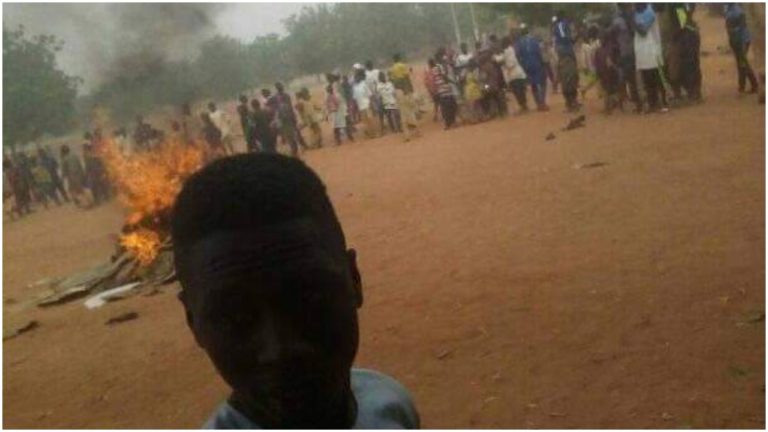
A WATER vendor identified as Talle Mai Ruwa has been burnt to death in Bauchi State for allegedly insulting Prophet Muhammad.
According to The Punch, the incident happened between Monday night and Tuesday morning.
A source was quoted as saying that Ruwa and his parents were all Muslims in Sade village, stressing that trouble had started when a certain lady went to fetch water from the deceased.
He was reportedly detained at a police station in Darazo Local Government Area of the state before he was seized the following day from the police cell by an irate mob who beat him to death and set his corpse ablaze using petrol and a disused car tyre.
“She fetched the water while he was not around and when he came back and saw her, he used his leg to kick the bucket and the water spilt.
“She pleaded with him in the prophet’s name to allow her fetch the water. He then abused her, her father, mother and the Prophet Mohammed. This infuriated the youth and the district head, who took him to a police station.
“The spiritual and traditional leaders met and brought him out. They were looking for a way out of the situation. They asked him if he was guilty of what he was being accused of, and he admitted to it. They asked him thrice, and he admitted to it. They then took him back to the police station.”
“In the morning, the whole town gathered and besieged the station. Because of the number of people that were there, they overwhelmed the police officers. The people brought him out and started pelting him with stones and shouting, ‘Allahu Akbar!’ They kept stoning him till he died. The youth brought car tyres and put it on him and set him ablaze.”
The ICIR tried to get the state police command’s reaction, but several calls to the state police public relations officer Ahmed Wakil on Wednesday were not answered.
THREE persons have been arraigned by Lagos State Police Command for allegedly forging COVID-19 test results in the state.
The suspects were Emmanuel Adelegan, Ibrahim Abubakar and Tope Shoaga. They were arrested by the police and brought before an Ikeja magistrate court on Thursday.
They were charged with conspiracy, obtaining money under false pretence and forgery.
The police prosecution counsel Lucky Ihiehie told the court that the defendants committed the offences on February 8 at Murtala Mohammed International Airport, Ikeja, Lagos.
He said the defendants fraudulently obtained N33,000 from one Chisom Emmanalon with a promise to get her a COVID-19 test certificate but when the certificate was presented at the airport, authorities discovered that it was fake.
He said the offences contravened sections 314, 365 and 411 of the Criminal Law of LagosState, 2015.
Following the defendants’ plea of “not guilty,” the magistrate O. A. Layinka released the suspects on bail in the sum of N100,000 each with two sureties each in like sum.
THE Independent Electoral Commission (INEC) has announced that continuous voter registration (CVR) would commence on Monday, June 28, 2021, across the country.
INEC chairman Mahmud Yakubu disclosed this on Thursday during a press conference held in Abuja.
He said the CVR exercise would commence nationwide and be carried out continuously for over a year until the third quarter of 2022.
According to Yakubu, the voter registration would be done online while biometric verifications would be conducted at designated centres with schedules for registrants.
According to the commission, the online portal registration would reduce crowding at registration centres in line with advice from health officials in the country.
Yakubu said voter registration could not commence earlier due to COVID-19 pandemic and other offset elections in Kogi and Bayelsa states in November 2019.
The INEC chairman added that the CVR registration could also not commence earlier due to the commission’s determination to expand voter access to polling units by increasing their number.
Yakubu noted that the existing polling units in Nigeria were inadequate because they were initially designed to cater for a projected 50 million voters but were presently serving over 84 million voters.
He also stated that many of the polling units were inaccessible to voters, especially persons with disability (PWDs), and were not conducive to the commission’s election regulations in the context of the COVID-19 pandemic.
He disclosed that the commission had begun the conversion of voting points and voting point settlements into full-fledged polling units, and relocating poorly situated polling units to better locations.
However, Yakubu said in the process of registration, emphasis would initially be on Anambra State where more centres would be established in view of the governorship election scheduled for Saturday 6th November 2021.
He stated that in order to complete preparations for the governorship election, the CVR exercise in the state would be temporarily suspended in August 2021.
The CVR was temporarily suspended on 31st August 2018 due to preparations for the conduct of the 2019 general elections.
During the last voter registration in Nigeria, a total of 84.004 million Nigerians registered while 72.755 million collected their permanent voters’ card (PVC), according to data obtained from the commission.
WITH the Arabian Travel Market, which was cancelled last year owing to the covid-19 pandemic just around the corner, the impasse on travel between Nigeria and the United Arab Emirates may be resolved soon. The UAE has also removed the controversial antigens rapid test requirement for passengers from Nigeria but gives new conditions to be met. Oghenekevwe Uchechukwu reports.
PASSENGER flights between Nigeria and the United Arab Emirates (UAE) may soon resume as both countries continue to work out measures for the safe resumption of travels after the UAE agreed to remove antigens’ rapid test requirements passengers from Nigeria.
In addition to the Covid-19 Reverse Transcription Polymerase Chain Reaction (RT-PCR), the UAE had imposed antigens rapid test on travellers from Nigeria and 57 other countries. Passengers transiting through Dubai from Nigeria, Afghanistan, Angola, Argentina, Bangladesh, Brazil, Cambodia, Chile, Croatia, Cyprus, Czech Republic, Djibouti, Egypt, Eritrea, Ethiopia, Georgia, Ghana, Guinea and Hungary, were required to present a negative COVID‑19 RT-PCR test certificate for a test taken no more than 72 hours before departure.
Other countries included on the list are India, Indonesia, Iran, Iraq, Israel, Ivory Coast, Jordan, Kenya, Lebanon, Malta, Moldova, Montenegro, Morocco, Myanmar, Nepal, Nigeria, Pakistan, Philippines, Romania, Rwanda, Russia, Senegal, Slovakia, Somaliland, Somalia, South Africa, South Sudan, Sudan, Syria, Tajikistan, Tanzania, Tunisia, Turkey, Turkmenistan, Uganda, Ukraine, Uzbekistan, Vietnam, Zambia, and Zimbabwe.
The UAE later barred travellers from Nigeria and South Africa, excluding UAE nationals returning to the UAE and members of diplomatic missions, after more transmissible variants of the SARS CoV-2 virus B.1.525/501Y.V2 were reported. The ban was to be lifted on 20th March.
However, the move to subject passengers to additional tests was not well received by the Nigerian government, and it announced an indefinite suspension of Emirates airline with effect from 17th March. Hadi Sirika, minister of aviation, the imposed antigen rapid tests was “devoid of any scientific reasons because the virus itself will incubate at least within or after 72 hours”.
The RT-PCR, which is a molecular test, can detect more than one variant of the Covid-19 virus, and experts say that it remains the best and most accurate way of testing the emerging variants. Still, the more recently-developed rapid antigen tests offer the advantage of producing results much more quickly. They are also cheaper, simple to use, and can be used on a huge scale, but the results are less reliable.
The UAE had agreed it will stop conducting antigens rapid test for passengers from Nigeria but will only allow 200 passengers with direct flights from Nigeria who have a negative PCR test certificate conducted 48 hours before boarding. It said that 200 passengers are the maximum it will allow from Nigeria over two weeks, as part of its new travel requirements.
Fernando Judel, Director, Nigerians in Diaspora Dubai-United Arab Emirates (NIDDUAE), told our reporter that flights could resume soon if the Nigerian government accepts these new requirements, adding that the selection will be based on priority – business, medical and vacation or leisure purposes.
“Before now, there has been a structural plan to reduce the inflow of Nigerians here, especially the job seekers. The new regulations’ bottom line is the new strain of covid-19 found in Nigeria late last year. If it is no accepted by Nigeria, the only option is to reduce the inflow of passengers. When the passengers reduce, they can manage it better even if it (the new variant of the covid-19 virus) emerges,” Judel explained.
Meanwhile, the UAE hopes to open for tourism from next month as the Arabian Trade Market (ATM), which was cancelled last year owing to the covid-19 pandemic, is expected to hold from 16th – 19th May. The ATM is an international travel and tourism event unlocking business potential within the Middle East for inbound and outbound tourism professionals.
This year’s ATM, the 28th version, is themed “A New Dawn for Travel and Tourism”. Tourists worldwide will showcase their brand and exhibit at the show along with the biggest names in accommodation and hospitality, renowned tourism attractions, innovative travel technology companies, and key airline routes.
Later in the year, the country will host the World Expo 2020, an event originally scheduled for 20th October 2020 – 10th April 2021 but which will now hold between 1st October and 31st March 2022.
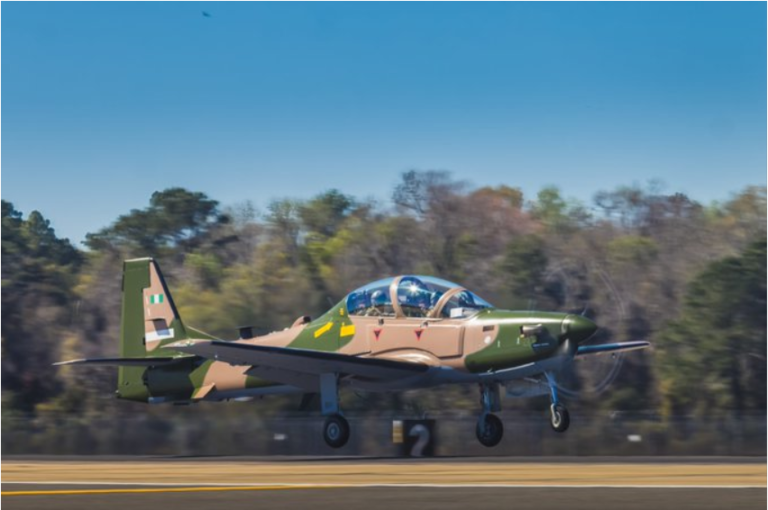
Nigerian pilots are currently training on Super Tucano fighter jets at the Moody Air Force Base in Georgia, United States, checks by The ICIR have revealed.
The federal government recently announced that Nigeria would deliver six out of the 12 units of fighter aircraft it ordered in mid-July 2021. The aircraft are to be deployed in the war against terror in the country.
The United States Africa Command (AFRICOM) told The ICIR that the Nigerian pilots are training with the jets ahead of their delivery to Nigeria.
AFRICOM’s West Africa media chief, Nicole Kirschmann, disclosed in response to enquiries by The ICIR concerning steps taken by the US military command to tackle terrorism in Sub-Saharan African countries, including Nigeria.
The Embraer EMB 314 Super Tucano, also named ALX or A-29, is a Brazilian turboprop light attack aircraft designed and built by Embraer to develop the Embraer EMB 312 Tucano. The A-29 Super Tucano carries a wide variety of weapons, including precision-guided munitions, and was designed to be a low-cost system operated in low-threat environments. In addition to its manufacture in Brazil, Embraer has set up a production line in the US in conjunction with Sierra Nevada Corporation to manufacture A-29s to many export customers.
Super Tucano fighter jet
“Currently, the US is working to deliver A-29 Super Tucanos to the Nigerian Armed Forces, and Nigerian pilots are currently training on that aircraft with US Air Force Pilots at Moody Air Force Base in Georgia, USA,” Kirschmann said in an email response to questions raised by The ICIR‘s correspondent.
Sierra Nevada Corporation (SNC), the prime contractor for the purchase of the Super Tucanos, had in a report published by Flight Global on March 9, 2021, said five Nigerian Super Tucanos, which have been painted in jungle camouflage, are at Moody AFB in Georgia for pilot and maintainer training.
“The painted jungle scheme NAF A-29 now moves on to mission modification at Moody Air Force Base. Following modification, before delivery, NAF pilots and maintenance personnel will further train in the aircraft,” SNC said in the report by Flight Global.
In November 2018, SNC was awarded a $329 million Foreign Military Sales contract from the US government to build 12 A-29 Super Tucanos for the Nigerian air force. The armed turboprops are intended for use against Boko Haram and Islamic State militants.
SNC reported produces the aircraft in Jacksonville, Florida.
The AFRICOM spokesperson’s response confirmed that Nigerian Air Force pilots are now training with the fighter jets following the modification stage’s completion.
Kirschmann told The ICIR that the US African Command partners with several nations in West Africa, including Nigeria, to increase peace and security across the region.
“Through multinational exercises and military-to-military engagements, US Africa Command strengthens relationships with African partner nations to help build the defence capability and capacity of their security forces. US Africa Command embraces a holistic approach to security challenges by working closely with US government inter-agency counterparts and partner nation militaries from around the world,” she said.
Kirschmann listed multinational security cooperation efforts initiated by AFRICOM in West Africa to include the G5 Sahel Joint Force, the Multinational Joint Task Force, Operation Barkhane, and Task Force Takuba.
AFRICOM and the US Department of Defense also host several military exercises in North and West Africa, including Flintlock, African Lion, and the recently completed annual Gulf of Guinea naval exercise, Obangame Express.
6000 US troops currently in Africa
Currently, about 6000 US soldiers are stationed in Africa.
Out of the number, 1,200 are on the ground in West Africa.
Kirschmann disclosed the figures in response to enquiries by The ICIR‘s correspondent concerning whether, beyond assisting regional governments and military units, AFRICOM engages in actual campaigns to neutralise terrorists in the continent.
A recent report by Jerusalem Center for Public Affairs had noted that Africa was becoming a ‘Jihadist playground for the resurgent Islamic State and al-Qaeda’s and warned that Sub-Saharan Africa could because an operational base for Jihadist groups if their current activities in the region are left unchecked. The report observed that, if that should happen, it will hurt US and Western interests.
“The Department of Defense typically has approximately 6,000 troops, DoD (Department of Defence) civilians, and DoD contractors stationed on the continent, including approximately 1,200 personnel in West Africa,” the AFRICOM spokesperson disclosed.
She added that, as part of the campaign against terrorism in the continent, the US government frequently sells or donates military equipment to militaries in West Africa, including the Nigerian Armed Forces. The sale of the Super Tucanos to Nigeria was in line with the military assistance to African governments.
Nigeria critical partner in the fight against terror
Kirschmann told The ICIR that “Nigeria is a critical partner for US Africa Command in the fight against terrorism and violent extremist organisations in Africa, specifically Boko Haram and ISIS-West Africa.”
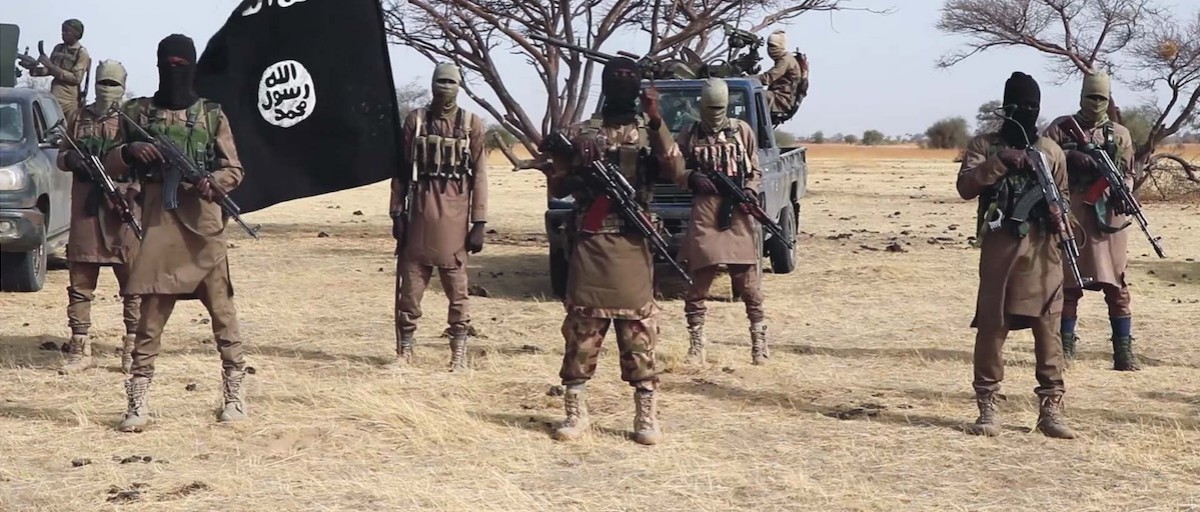
Boko Haram insurgents have been engaged in a terror campaign in parts of Nigeria. Image credits: ISS Africa
According to her, the command is looking forward to a continued and strengthened partnership with the Government of Nigeria to ensure greater stability in the region.
“US Africa Command’s security cooperation with Nigeria aims to enable the Nigerian government to protect its citizens better and defeat terrorist groups in the region while respecting human rights and the law of armed conflict,” she added.
Kirschmann further disclosed that Nigeria is a major focus of the US Africa Command’s Women, Peace, and Security (WPS) program.
She explained that Nigeria is a WPS priority country due to Boko Haram’s kidnapping and the use of female fighters and enablers through the conflict.
AFRICOM alarmed at kidnapping-for-ransom in Nigeria
In further response to The ICIR‘s enquiries, Kirschmann said AFRICOM was alarmed at the kidnapping rate for ransom going on in Nigeria.
In recent times, kidnapping-for-ransom has become the norm in Nigeria, with all classes of citizens, including affluent prominent individuals and petty traders and students, being abducted for ransom.
Commenting on the development, Kirschmann said, “One of US Africa Command’s concerns in the region is the kidnapping-for-ransom network. We are alarmed by the increase in kidnappings across the region.”
According to Kirschmann, while kidnapping is a concern for Americans living and working in West Africa, it is a much larger concern and threat for locals in the region.
“These abductions must stop, and those responsible must be held accountable to the full extent of the law,” she stressed.
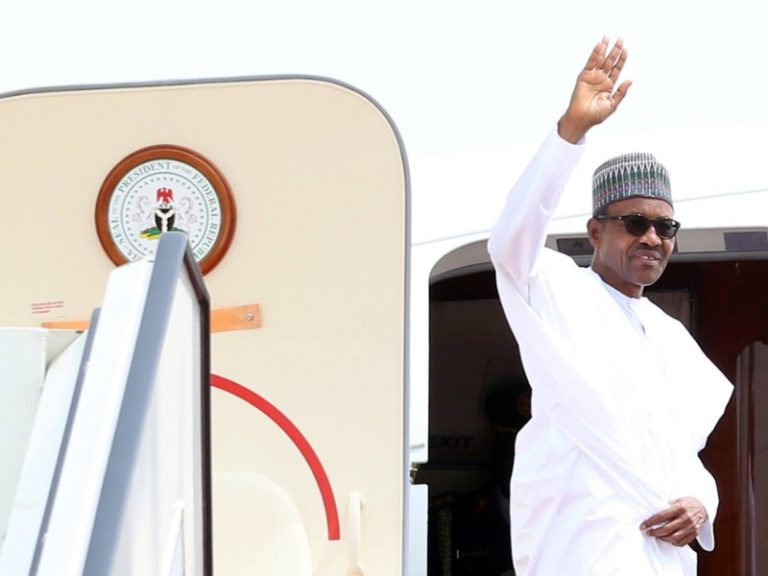
PRESIDENT Muhammadu Buhari jetted out of Nigeria to London on Tuesday, March 30, 2021, for a medical check-up, leaving behind a health sector grounded by a doctors’ strike across the country.
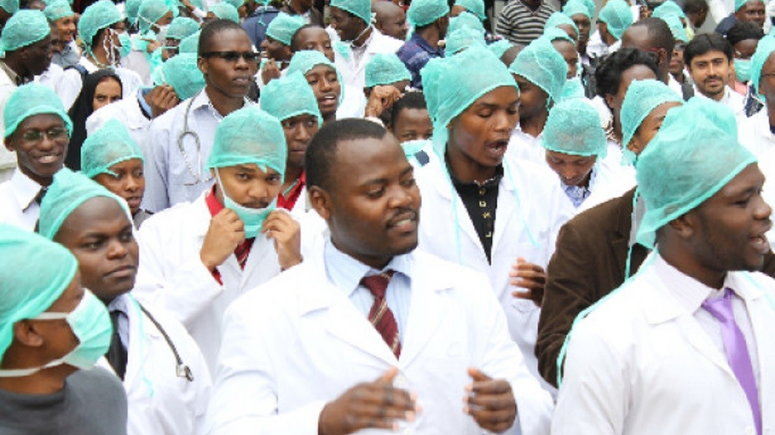
Under the aegis of the National Association of Resident Doctors in Nigeria (NARD), the doctors had, on March 28, 2021, threatened to down tools over unpaid emoluments to house officers, otherwise known as housemen working in tertiary health facilities, among other demands. The strike has commenced in earnest despite government initial pressure on doctors to shelve the plan.
While resident doctors are on strike in Nigeria, President Muhammadu Buhari is in the United Kingdom getting the best of medical care. He has, as usual, abandoned his country’s decrepit health care system for a better and more equipped hospital in the UK, leaving millions of poor people in Africa’s most populous nation without hope of enjoying a relatively good health system.
The ICIR had, on March 14, reported how the rift between the Nigerian Medical and Dental Council of Nigeria (MDCN) and chief medical directors of public tertiary hospitals in the country denied the house officers of their three months’ salaries – from January to March 2021.
Feud arose between the parties over the federal government’s decision to centralise the placement (or engagement) and payment of the housemen, thus obliterating the responsibilities of hospitals’ chief executives. The government had alleged abuse of the process by the hospital’s management.
Only 19 of 42 affected hospitals had paid resident doctors when the doctors issued the threat of a strike.
Doctors in Nigeria
Among the aggrieved doctors is Okorie Venatus, a houseman who collapsed at the University of Port Harcourt Teaching Hospital (UPTH) in February this year. He spent two weeks at the hospital, receiving treatment.
The ICIRexclusively reported on March 30, 2021, how his family played a huge role in his treatment after he collapsed. The federal government has not paid Venatus since January 1, 2021.
Housemen are medical graduates (male and female) who are training whileworking in hospitals.
NARD president Uyilawa Okhuaihesuyi told The ICIR on Wednesday morning that the strike would go on as planned. As he promised, the strike has started in earnest.
Buhari’s many medical trips and Nigeria’s weak health system
Between June 6, 2016, and August 19, 2017, Buhari made three medical vacations to London, spending in all 168 days, according to The ICIR’s report published on May 8, 2018.
The report showed that Buhari beat the record set by one of his predecessors, late Umar Musa Yar’Adua, who reportedly spent 109 days on medical trips in 32 months.
In January 2017, the president was in the UK for seven weeks after writing to the National Assembly, informing the government’s legislative arm that his vice, Yemi Osinbajo, would perform his functions. He was away for 51 days.
The president again travelled to the UK’s capital on May 7, 2017, for medical attention. He spent four days on that occasion.
After meeting former President Donald Trump in Washington on April 30, 2018, Buhari headed for London, where his aircraft had a ‘technical stopover.’ He returned on May 2, only to notify the nation, through his senior special assistant on media and publicity Garba
Shehu that he would be jetting out of the country again to seek medical attention in the UK.
A year later, he was on another journey to London for treatment on May 8, 2018, where he spent a record 104 days.
The president’s last medical trip to the UK was on May 8, 2018.
The coronavirus pandemic confined most medical tourists to their home countries in 2020, as nations worldwide, mostly in Europe and the Americas, battled to save millions of their citizens who were at the mercy of the killer virus.
Nigerian health sector bedevilled by many woes.
The emergence of coronavirus exposed Nigeria’s degree of weakness, mostly to the influential Nigerians.
In an unusual admission of failure by public officials, the secretary to the federation government, Boss Mustapha, confessed he never knew the nation’s health system was in a deplorable state.
Nigeria runs a health system in which health services are both run by national and state government. This means that health is on the concurrent list of the nation’s constitution.
But the federal government believes that state governments are not doing enough to provide quality, affordable and accessible health services to the nation’s population.
Director of hospital services in the Federal Ministry of Health Adebimpe Adebiyi told The ICIR, in an interview seeking the ministry’s position on non-payment of doctors by the government, that state hospitals were not doing enough for resident doctors.
“There has been much pressure on tertiary hospitals in the country and that many people are eager to work there. Where are the state hospitals? In some states, it’s virtually the federal hospitals that are sustaining the health sector there. There’s so much pressure that everybody wants to enter into the federal tertiary hospitals.”
Tomori speaks
A renowned professor of virologist Oyewale Tomori told our reporter that the government needed to invest more in its health care system.
Tomori stated this while reacting to The ICIR’s request for his comment on President Buhari’s latest trip to London while doctors in the country were on the verge of embarking on strike.
He said there was no link between the president travelling abroad for medical attention and a strike embarked upon by medical doctors. But he was quick to note that if the nation’s hospitals were in good shape, the president would not travel abroad.
“It is obvious. If they (hospitals) can take care of him, he would not go out. If the hospital were there, he would have done it (his treatment) at home. The hospital is not there.”
Empty ward in Nigerian hospital during a strike by doctors. Source: Vanguard newspaper
Asked to state the factors responsible for not making the hospitals available, he said, “years of neglect. They’ve neglected our hospitals in the country for a long time.”
He said he expected the Buhari administration to have fixed the sector six years into his government.
“His government should have done something; if it hasn’t, then there is a problem,” Tomori stated.
Responding to a question on pundits’ argument that other leaders in Africa also travel outside the continent for treatment, Tomori replied: “You should ask if governments of Europe come to Africa for treatment.”
“If he (Buhari) likes, let him travel to Togo, that is his own problem. The point is, leaders from other parts of the world, do they come to Africa? They don’t because they have the facilities in their countries to take care of themselves. Why can’t we also do the same here? He noted.
“Arguing that other African leaders go abroad for treatment doesn’t make sense. If your classmate is failing the exam, would you compare yourself with him and say you want to fail like him?”
Nigeria had budgeted just 3.7 percent of its 2021 national budget to the health sector.
Out of the N13.58 trillion budget for the year, the government devoted only N514.8 billion to the sector (in both concurrent and capital projects sections of the budget).
The allocation, which has largely revolved around this percentage for many years, is a contravention of the 2001 Abuja Declaration, where heads of governments in Africa agreed to set aside at least 15 percent of their annual budgets to the health sector. Nigeria is a signatory to the agreement.
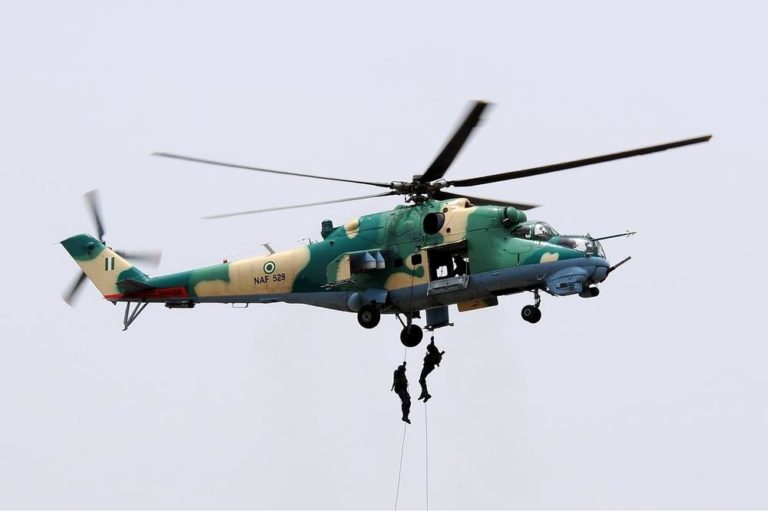
THE Nigerian Air Force has declared missing one of its fighter jets providing support to land troops in the ongoing war against terror in the northeast.
Air force spokesperson Edward Gabkwet disclosed this in a statement issued on Thursday, saying that the aircraft lost contact with the radar in Borno State.
He added that the alpha jet’s whereabouts were unknown, but a search effort was in progress.
“A Nigerian Air Force (NAF) Alpha-Jet has lost contact with radar in Borno State, while on interdiction mission in support of ground troops,” he said in a statement.
“The mission was part of the ongoing counterinsurgency operations in the North East. The loss of radar contact occurred at about 5:08 pm on 31 March 2021.
“Details of the whereabouts of the aircraft or likely cause of contact loss are still sketchy but will be relayed to the general public as soon as they become clear.
“Meanwhile, search and rescue efforts are ongoing.”
The incident came a month after an Air Force aircraft crashed at Abuja Airport with all seven personnel on board dead.
The Nigerian NAF201, a B350 aircraft, had departed Abuja at 1033UTC with seven persons on board, including two crew.
The aircraft reported engine failure and crashed-landed on its final approach to the Abuja Airport runway.
The Air Force personnel who died were en route Niger State to rescue students abducted from Government Science College, Kagara.
A Nigerian-born medical doctor living in the United States Iyalla Elvis Peterside has been named among recipients of the America’s Best Physicians 2021 award, based on evidence of superior training, experience, continuing education and commitment to excellence.
Peterside, an attending neonatologist in the Division of Neonatology at Children’s Hospital of Philadelphia, was among 1,280 physicians recognised by the US National Consumer Advisory Board and Todaysbestphysician.com.
He is a professor of Pediatrics and Neonatalogy at the University of Pennsylvania Medical School and has expertise in neonatal apnea, neonatal brain injury, neonatal extracorporeal membrane oxygenation, neonatal surgery, nosocomial infections and ventilation of the neonate.
Until recently, he was medical director at the Neonatal Intensive Care Unit at the University of Pennsylvania Hospital where he worked for over 20 years. He was the president of the Philadelphia Perinatal Society.
Peterside graduated from the University of Ibadan in 1985 and has practised medicine in four continents of Africa, Europe, Asia and North America.
In 2012, a healthcare research and information company Castle Connolly founded in 1991 to help guide consumers to America’s top doctors and top hospitals, named Oluyemi Badero among the top interventional cardiologists in the United States.
Interventional Cardiology is deemed a rarefied specialty in medical practice, and fewer African-Americans and blacks are qualified in that field.
Reports say there are over 4,000 Nigerian doctors, excluding other health workers, practising in the US.
THE United States has cast doubt on the reports of killings at Lekki Toll Gate during the #ENDSARS protest in October 2020.
This is contained in its 2020 Country Reports on Human Rights Practices released by the Department of States on Wednesday.
The report stated that there was no accurate information on the fatalities of the shooting despite detailed, evidence-based and credible reports by media houses like CNN and Amnesty International, stressing that there were inconsistencies in the army’s parts of the Nigerian government.
“The national police, army, and other security services sometimes used force to disperse protesters and apprehend criminals and suspects. Police forces engaging in crowd-control operations generally attempted to disperse crowds using nonlethal tactics, such as firing tear gas, before escalating their use of force,” the report read.
“On October 20, members of the security forces enforced curfew by firing shots into the air to disperse protesters, who had gathered at the Lekki Toll Gate in Lagos to protest abusive practices by the Nigerian Police Force’s Special Anti-Robbery Squad (SARS)” it noted.
“Accurate information on fatalities resulting from the shooting was not available at year’s end. Amnesty International reported 10 persons died during the event, but the government disputed Amnesty’s report, and no other organisation was able to verify the claim.
“The government reported two deaths connected to the event. One body from the toll gate showed signs of blunt force trauma. A second body from another location in Lagos State had bullet wounds.
“The government acknowledged that soldiers armed with live ammunition were present at the Lekki Toll Gate. At year’s end, the Lagos State Judicial Panel of Inquiry and Restitution continued to hear testimony and investigate the shooting at Lekki Toll Gate.”
Inconsistencies, lies, cover-up
Not only will the report do damage to the ongoing process and efforts by the Lagos panel investigating human rights abuses and police brutality, but it will further give credence to claims of no massacre or massacre without bodies by the Nigerian government.
When the media reported the shooting at Lekki Toll Gate, which happened on October 20, the Nigerian military feigned ignorance and denied the allegation, saying its men were not involved.
In subsequent press releases, acting deputy director at 81 Division and army public relations officer Osoba Olaniyi admitted that soldiers were deployed to Lekki but were only there to carry a request of the state government to enforce an earlier curfew is imposed.
He, however, denied that the soldiers shot civilians and that there was glaring and convincing evidence to attest to the fact. He maintained that the allegations of shootings were the “handiwork of mischief-makers who will stop at nothing to tarnish the image of the Nigerian Army.”
In a bid to further discredit the media reports on the Lekki incident, coordinator of Defence Media Operations John Enenche, citing some military analysts, told reporters in Abuja that videos of the incident circulating in social media were fake or photoshops.
However, on Saturday, during his appearance before the Lagos State Judicial Panel of Enquiry, commander of the 81 Military Intelligence Brigade Ahmed Taiwo said soldiers deployed to the scene did not shoot the protesters with live bullets but fired blank bullets into the air.
While explaining that the blank bullets used could not have caused any damage to the flesh, Taiwo said if real bullets were indeed fired, one bullet had the potency to kill three persons.
Contrary to claims by the governor of Lagos State Babajide Sanwo-Olu, the incident happened without his knowledge. The army said the state government invited it to help restore normalcy.
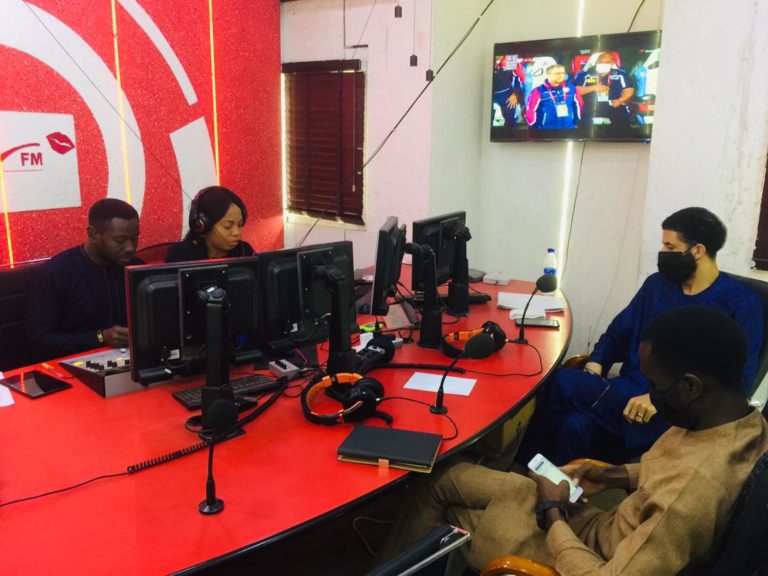
THE Federal government and Transparency International, TI, have continued in their disagreements over the state of the war against corruption in Nigeria as they trade tackles during an anti-corruption radio program in Abuja this Wednesday.
The international anti-corruption watchdog recently faulted Nigeria’s war and again scored her low in the 2020 Transparency International Corruption Perception Index (TI-CPI), describing it as inaccurate and unreal.
Senior Special Assistant to President Muhammadu Buhari On Public Affairs, Ajuri Ngelale and Program Officer Anti-corruption at CISLAC, which houses the Nigerian chapter of TI, Samuel Asimi, disagreed on issues of nepotism, transparency, and rules of engagement in the FG’s fight against corruption.
They both were guests on the popular radio programme, PUBLIC CONSCIENCE, produced by the Progressive Impact Organization for Community Development, PRIMORG, Wednesday in Abuja.
It will be recalled that Nigeria was ranked 149th out of 180 nations surveyed when Transparency International released its 2020 Corruption Perception Index. And similarly, the Civil Society Legislative Advocacy Centre (CISLAC), a subsidiary of Transparency International, accused the Buhari-lead administration of lack of transparency in the recovery of stolen assets.
While dismissing the 2020 CPI rating, Ngelale said that perception is different from reality, noting that prioritising a country’s corruption perception over realities on the ground was a problem.
He acknowledged that Nigeria has more work to do in the war against corruption but has progressed under President Buhari leadership.
Responding to allegations of lack of transparency in the emergency response of the government to COVID-19, nepotism, and favouritism in the appointment and promotion of some public officers, Ngelale had these to say: “I want to deal with facts and not emotions or perceptions, before now Vanguard and Premium Times research show that the Buhari government gave 51 percent appointments to Southerners.
“When President Buhari took over office, it was then the full list implementation of Treasury Single Account was put in place, and we have seen the result of that.
“Look at EFCC, and what they have recovered in a ten-year period from 2009-2019, the EFCC recovered about N1.28 trillion, and it is not including dollars or Euros recoveries, properties and physical assets, only naira recoveries. Out of that N1.28 trillion that was recovered by the EFCC between 2009-2015, which is six years’ period, less than 300 billion was recovered from 2015-2019.
“Right now, over five thousand Nigerians are being paid their salaries directly by the Federal government of Nigeria through the survival funds, N300 billion CBN COVID-19 loan and this administration leveraged on ICT on N-Power.
“I think anybody saying that we have not been transparent is into general misinformation,” Ngelale said.
He decried that Nigerians focus more on the Federal government, whereas many anomalies go on at the state level.
Ngelale also questioned Transparency International’s credibility, alleging that one of the founders of the organization ran for Presidency against Buhari in 2015; hence, it cannot be trusted.
The president’s spokesperson was referring to Dr Oby Ezekwesili, the founding Director of Transparency International.
On his part, Program Officer Anti-corruption at CISLAC, Samuel Asimi, debunked any form of political interference or influence in the ratings churned out by Transparency International every year.
However, he noted that CPI does not measure only corruption at the Federal government level but also the states, adding that CPI ratings did not target trivializing the government’s anti-corruption war efforts.
On the issues of lack of transparency by the Buhari administration, Asimi stated that the Federal Government still does not have a dedicated and known database to track recovered assets, stressing that transparency and accountability will increase if only the government provided a portal where citizens can view stolen assets recovered by the government.
“If there’s a portal that citizens can go straight and get information about recovered monies, the doubt in government processes will reduce drastically.”
Asimi maintained that nepotism was a major problem of the Buhari-led government and remained one reason why Nigeria dropped on the 2020 Corruption Perception Index. Besides nepotism, Inadequate anti-corruption legal frameworks and interference in the operation of law enforcement agencies; Prevalence of bribery and extortion in the Nigerian Police; Security sector corruption; and absence of transparency in the COVID-19 pandemic were some of the main reasons Transparency International rated Nigeria low in 2020.
He called on the Buhari-led government and the National Assembly to enact a legal framework for the management of the recovered stolen assets and ensure that anti-corruption agencies are fully independent and work in synergy.
The Minister of Information and Culture, Alhaji Lai Mohammed, also rejected the 2020 CPI rating of Nigeria and CISLAC’s assessment of the Buhari administration last week, describing it as unfair and unacceptable.