Home Blog Page 1850

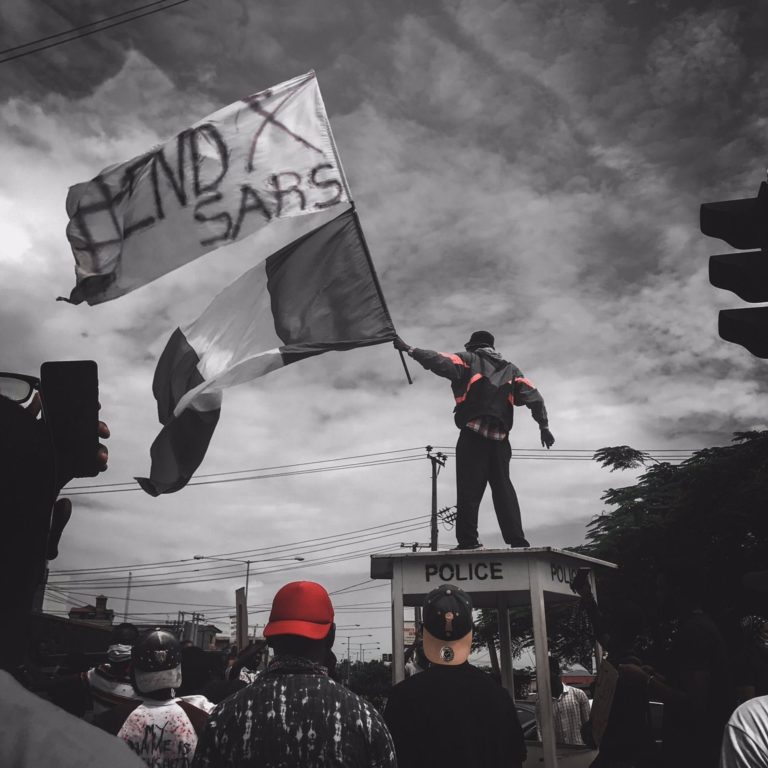
ENDSARS: No justice in sight for victims of police brutality in Anambra as govt plays to the gallery

After a nationwide protest against police brutality, the federal government directed the 36 states, including FCT, to constitute judicial panels to hear victims’ petitions. The government’s directive gave hope to many police brutality victims until recently, when it became clear that many of them may never get justice. Lukman ABOLADE reports.


FOR more than six years, Amala Uju Nwabudu, a resident of Umuanugo, wakes up every morning wondering if she is indeed a widow or is caught in an endless trance.

Her inquiry started in March 2014, when her husband, Emmanuel Nwabudu, disappeared.

It was about five years into her marriage. Uju said the Awkuzu SARS unit in Anambra state invited her husband for questioning, but that was the last time she saw him.

Emmanuel and Uju Nwabudu
Picture of Emmanuel and Uju Nwabudu before her husband disappeared.

Several days of waiting turned to weeks, then months, and months lapsed into years, but the reality remains the same: Her husband is gone.

In an interview with The ICIR in December 2020, Uju said she did not sit at home just waiting for the father of her then five-year-old daughter to reappear; she made efforts to secure his release.

According to her, on several occasions, the SARS operatives warned her to stay at home and stop coming for her husband’s release, but she refused to heed the warning.

Her unrelenting attempts to get her husband released became irritating to the SARS operatives, who eventually accused her of harbouring arms at her residence, claiming that the guns allegedly kept in her residence are used for her husband’s kidnapping operations.

So, one morning in March 2014, her house was raided by men from SARS and officers of the State Security Service (SSS) searching for weapons. Though they did not find guns, they carted away her property, including her generator set and her husband’s hand drums.

Uju Nwabudu
Uju Nwabudu, wife of the disappeared Emmanuel Nwabudu.

“When they came, they beat me up and arrested me alongside one of our neighbours who was later released on the road to Amawbia,” Uju narrated.

From custody of the SSS, she was transferred to SARS Awkuzu, where she was heavily beaten and maltreated for one month while her two and five-year-old daughters were left at home without parental care.

Uju’s brother, Pius Udenwa, who made efforts to secure his sister and her husband’s release, said the security agents also told him to desist. Otherwise, he would be branded a kidnapper.

After spending a month in police detention, Uju was bailed and was never contacted again by the police; until now, she doesn’t know whether her husband was alive or dead because he is yet to be found.

In October 2020, when she heard about the Anambra State Judicial Panel constitution, Uju, through her lawyer, Chiadi Obidi, sought justice. Still, her petition is yet to be heard, and she has not been called upon by the panel. Now, Uju’s hope for justice is dashed because there is nowhere else to go.

Pius Udenwa, a petitioner in Anambra state

In a separate petition to the Anambra State Judicial Panel, her brother is also seeking justice over his brother-in-law’s disappearance or possible death. Still, his case has also not been heard.

Udenwa told The ICIR that his petition has remained unrescinded. He is yet to be contacted since submitting the petition on November 3rd, 2020, six days after the Anambra State Judicial panel was constituted.

Just like the Nwabudu’s, Alfred Nwaofulundu awaits a call from the Anambra State Judicial Panel to hear his case.

Nwaofulundu is a resident of Etiti Awovu village in Anambra state, and he was arrested on March 15, 2017, by SARS operatives over the alleged kidnapping case.

Nwaofulundu was held in the custody of the SARS operatives in Akwuzu but later transferred to Neni command after several months of torture and brutality.

During his stay at Awkuzu, Nwaofulundu said he witnessed several dehumanising treatments unleashed by the SARS operatives on him and 23 other detainees, most of whom spent more time in detention.

 Nwaofulundu recounted how he was stripped naked and starved by those paid to protect him.

One day, he was transferred to the SARS command at Neni, a move he recalled was to ‘hasten his death’ because he had refused to accede to the allegation that he is a kidnapper.

According to Alfred, he heard the SARS operative sing him a song every day, saying, “you are a kidnapper, and you must die”. 

Nwaofulundu added he was kept in the worst cell,  alongside 43 other detainees who have not been charged to court and denied a visit by relatives.

Nwaofulundu said inmates were left with no choice but to sleep naked on top of each other.

After spending months in detention, he made a friend, Onyedika, who had spent several months in the SARS detention before him.

Nwaofulundu said Onyedika was arrested and detained but was never charged to court. Instead, he was steadily tortured and made to confess to crimes he did not commit.

“Constantly, teargas was thrown into the cell to suffocate us and force us into admitting crimes we did not commit,” Nwaofulundu said.

One day, a police officer threw teargas again, which suffocated Onyedika so much that he died while groaning in excruciating pain. Nwaofulundu was made to watch his body decompose for five days.

“On one occasion, when teargas was thrown into the cell by the cell guard, five persons amongst us died from the effect. Onyedika, my friend, also died eventually with his decomposing bodies left with us for about five days before he was removed but never returned to his people,” Nwaofulundu said.

After eight months in the SARS detention, pressure from the then Deputy Governor of Anambra State, Nkem Okeke, helped pave the way for his release. Nwaofulundu noted that Okeke told the police commissioner to either charge him to a court or release him.

Finally, he was charged to court by the SARS operatives under the command of one Okpenye as the OC SARS and Uzo, aka Onyeluoukaofunanya as the investigating officer.

The Magistrate Court of Anambra State sitting at Ukpo discharged and acquitted him after Ifeanyickuhwi, who was accused of kidnapping, appeared before the court and testified that Nwaofulunduwas not among his captors.

According to the court ruling, Nwaofulundu was tortured and manhandled by the police concerning a crime he never committed.

The brutalised victim is seeking justice through a petition addressed to the Anambra State Judicial Panel dated November 11, 2020.

According to documents available to The ICIR, Nwaofulundu’s petition was received by the Office of the Anambra.

Copies of petitions

State Secretary to the Government on November 13, 2020, but he was never called upon or contacted by the state judicial panel.

Nwaofulundu’s petition is one of the many ignored in the Anambra state judicial panel.

Aside from the endless wait for petitions to be heard, The ICIR also gathered that some state panels struck out victims’ petitions on the ground that human rights groups find questionable.

But Anambra state panel said it has only dismissed two cases because they are currently being heard at a competent court of justice. Therefore it is beyond the power of the panel to hear such cases.

Before Judicial Panels were set up across Nigerian states, the only course of seeking justice for police brutality victims in Nigeria was through the court, but the process is slow.

Currently, there are cases of ENDSARS victims seeking the implementation of a court order that ruled that compensation be paid to victims of police brutality. Still, the police have refused to comply, and an indication that if the victims get justice at the court, there are slim chances that the police would comply considering their record of disobeying court orders to pay damages or compensation to victims.

In February, Sunday Kehinde, a petitioner before the panel to investigate police brutality organised by the Nigeria Human Rights Commission, presented a certified true copy of the judgement from an FCT high court awarding him Two million (two million naira) due to injustice meted out to him by the police, however, since 22nd January 2011, the police haven’t complied with the order.

During a panel executive session on petitions relating to the enforcement of judicial decisions /awards attended by The ICIR in Abuja on Thursday, March 18, Sulaiman Galadima, the Chairman of the IIP-SARS panel, said there are exactly 44 petitions before it that borders on the police’s refusal to pay compensations to victims of police misconduct after Court rulings.

Galadima stated that 20 of the petitions bordered on extrajudicial killings, unlawful arrest and detention, cruel, inhuman and degrading treatment and torture, alleged enforced disappearance, confiscation of property, among others.

Inside Anambra State Judicial Panel; failure of a state

In Nigeria, Anambra state has the highest number of petitions on police brutality, with 313 petitions, followed by Lagos. However, The ICIR observed that the state is apathetic in the pursuit of justice for the citizens.

Despite the high number of victims approaching the panel, the state has failed to address the allegations levied against the police properly.

Anambra Judicial Panel

Rita Onyeka, the Secretary of the Anambra State judicial panel, in an interview with The ICIR, said truly it has not heard up to half of the total 313 petitions received because of the time frame allocated to it by the state government.

Onyeka said the panel had filed for an extension to the Anambra State Government since December 2020, but it has not been granted when filing this report.

According to available documents, The ICIR can also confirm that only a few of the panel’s petitions have been heard, and just a very few has been concluded. Still, no recommendation has been made yet to address the agitations of the victims.

An analysis of the petitions before the panel shows that most victims bothered on disappearance and allegations of extrajudicial killing by the police while a few others were on maltreatment and high handedness of the security operatives.

The ICIR also found out that the panel received about 40 petitions from the Nigerian Police against those accused of either assaulting the police officers or destroying the Force’s properties.

The Anambra state judicial panel has also been fractured, as youth representatives resigned due to the state government’s ‘unseriousness’ in getting

The youth members of the Anambra State Judicial Panel of Inquiry

justice for the many victims of police brutality.

Announcing their resignations, the youth representatives lamented that the governor of the state, Willie Obiano, has refused to provide adequate logistics to ensure the panel’s smooth running, an attitude they said has hampered the hearing of petitions by victims.

“We are, however, now convinced that the Anambra State Government has no regard for the victims of human rights violations by the police. The Government has totally ignored the panel and had set up the panel to play to the gallery,” said Chijioke Ifediora, a lawyer and one of the youth representatives at the panel.

As of the time of filing this report, the panel has not been able to sit or hear other cases three months after the closure.

The untouchable James Nwafor and his many sins

 James Nwafor, a former commander of the Awkuzu SARS and special assistant to Willie Obiano, the Anambra State Governor, is not unpopular.

He had supervised and commanded a series of illegal killings, disappearance, torture and brutality of Anambra residents during his tenure that lasted between 2012 till 2016 when he was transferred to Bauchi State, according to victims who spoke at the panel. In September 2016,  Nwafor was again transferred to his Awkuzu office, where he retired in 2018. Governor  Obiano later appointed him as a senior special assistant on security.

James Nwafor, a former commander of the Awkuzu SARS accused of supervising many killings in Anambra State

Several testimonies by victims and their families confirmed the atrocity of the former police officer. From the unknown destination of Emmanuel Nwabudu to the illegal detention of his wife, Uju Nwabudu, the disappearance or possible death of 20-year-old Chijioke Iloanya, who was arrested by the SARS operatives in 2012 and has never been seen again, many cases of police brutality hang around the neck of Nwafor, but he remains untouchable by the law.

Onyeka, secretary to the state judicial panel, had also told The ICIR that many of the submitted cases are against Nwafor.

Anambra state panel summoned Nwafor before it to explain the alleged crimes, but the summon was dishonoured.

In an interview with The ICIR, Haruna Muhammed, the Anambra State Public Relations Officer, said Nwafor is no longer a police officer and cannot be arrested without a court order.

The Anambra state panel said it had made efforts to bring Nwafor before it, including sending letters to the state police command and Abuja’s police headquarters.

While the state police command responded, the headquarters rejected the letter and did not respond; the panel told The ICIR.

Onyeka said the state panel has no other legal backing within the purview of its power to ‘forcefully’ make Nwafor appear before it.

Nwafor himself did not respond to the text message sent to him by The ICIR.

Sources close to him said he changed his contact number after the allegations against him were brought to open.

The number he was known with during his time as Commander of the Awkuzu SARS and SSA to Anambra governor was not reachable.

Also, text and WhatsApp messages sent to the number were not responded to.

Nigerian Human Rights Commission overwhelmed to take more cases 

Out of the 36 states and the federal capital territory, only 13 states heard police brutality cases as directed by the presidential panel on SARS.

The states are Akwa Ibom, Benue, Delta, Enugu, FCT, Gombe, Imo, Kaduna, Kogi, Kwara, Lagos, Ogun, and Rivers. At the same time, there is no hearing or decision in respect of the remaining states.

The NHRC oversees another panel called the Independent Investigative Panel on allegations of human rights violations by the defunct Special Anti-Robbery Squad (SARS) and other units of the Nigerian Police sitting in Abuja, where a few cases are being heard.

When asked about the seeming lack of commitment from some state governments,  Fatimah Agwai Muhammed, the NHRC Assistant Director of Public Affairs, said states that think they can not carry on with their cases are expected to pass it on the panel sitting in Abuja.

According to Agwai, the panel sitting in Abuja would absorb such cases and commence trial from where the state panel had stopped.

The ICIR asked Agwai why the NHRC has refused to look out for states whose panel are not effective to absorb the petitions; Agwai retracted, saying the panel sitting in Abuja is already overwhelmed with several petitions, therefore, may be unable to accept more cases.

Speaking with Mike Onyekwelu, a Lawyer with Human Rights Law Service (HURILAW),  a non-profit organisation that provides legal service on human rights in Anambra State, he expressed disappointment over the way the panel is being handled in Anambra state.

According to Onyekwelu, there is no seriousness on the part of the governor to get justice for victims of police brutality in the state.

“I don’t think the Anambra State government is committed to giving justice to these people (victims), because of what we have seen so far, now some of the panel members have resigned, and since then we have not heard anything from the governor, it shows lack of seriousness,” Onyekwelu said.

For many of the over 300 victims that have approached the panel, their wait for justice seems endless as there is no green light yet for restitution.
Days after soldiers’ protest, Army chief pledges to fix fighting equipment, others

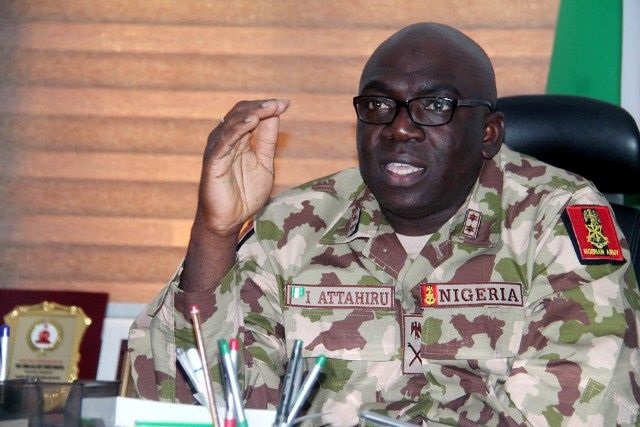
Chief of Army Staff Ibrahim Attahiru has pledged to fix fighting equipment few days after soldiers’ protest in Borno State.

Attahiru said this on Monday during his address at the Chief of Army Staff First Quarter Conference and Nigerian Army Operations Retreat held at the Army Headquarters Command Officers’ Mess, Abuja.

The COAS said he was determined to rebuild fighting skills and capacity of the Nigerian Army across theatres of operation in the country.

“I will ensure that through functional training, officers and soldiers of the Nigerian Army are equipped with the right competences and skills to effectively undertake missions in addition to developing special operations forces.

“This would be closely followed by procurement that ensures appropriate kitting and provision of protective gear, weapons, equipment and platforms,” Attahiru noted.

On Saturday, some soldiers of the Operation Lafiya Dole protested lack of adequate equipment and poor welfare in Borno State.

The soldiers, who shot sporadically into the air, said some of their officers who went to the battleground were killed due to lack of proper arms and ammunition and superior firepower of their targets.

Recently,  national security adviser Babangana Monguno said $1 billion meant for the purchase of arms and ammunition was missing under the immediate past service chiefs.

Monguno, who later recanted his words, had said the funds and the weapons were not there.

The ICIR had also reported that Nigerian soldiers fighting insurgency in the northern part of the country had, on several occasions, lamented poor equipment and welfarism.

Some of the soldiers that have come out to speak openly about lack of weapon have either been arrested, demoted or disciplined by the Army authorities.

A major general and former commander of the operation Lafiya Dole Olusegun Adeniyi was demoted after spraking about inadequate weapon for his team at the battle front.

Tinubu faults Buhari’s austerity measures, canvasses economic stimulus

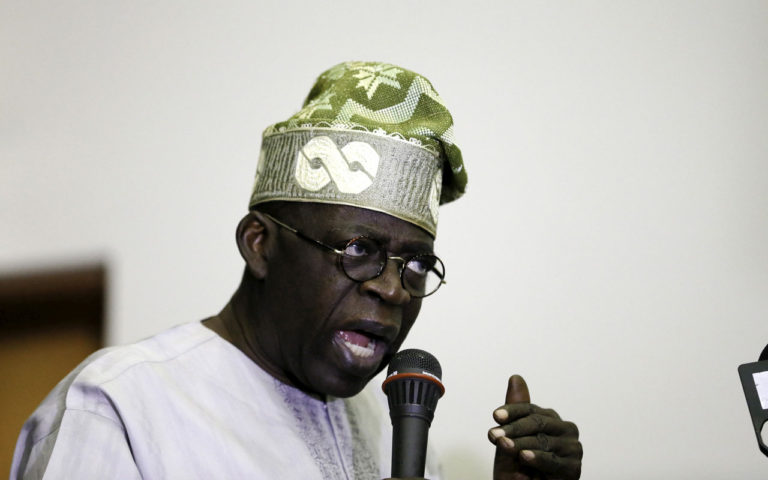
THE national leader of the All Progressive Congress (APC) Bola Tinubu has urged President Muhammadu Buhari and the National Assembly to immediately put a stop to economic austerity measures and introduce economic stimulus.

Speaking at the 12th colloquium to mark his 69th birthday in Kano on Monday, Tinubu said the country must fine-tune its economic programmes.

“This is the time to put stimulus expenditure in place, this is no more time for austerity. This is no more time to constrain the economy, it is time to create opportunities,” he said.

He cited example of the recent stimulus package by the US government while taking a dig at Nigeria’s increasing unemployment rate under the present administration.

READ ALSORising clean energy demand offers Nigeria opportunity to exploit gas resources – Buhari

“Your own employment rate is 33 percent and you ask us to keep on fasting. The one we are fasting spiritually is voluntary. We have been fasting for so many years. I hope the National Assembly, I hope the president himself will not pay attention to austerity. It is only the state that must constrain itself and balance budget.”

He added that  it was only the federal government that had the sovereign power and must use it to improve the quality of life of Nigerians.

Tinubu also called on the government to employ more youths into the security sector.

“We are under-policed and are competing with armed robbers and bandits to recruit from the youths who are unemployed.

“Don’t call them illiterates, anybody that can handle guns is capable of handling tractors in the farm. We can create the jobs.”

How IMF COVID-19 loan forced FG to increase pump price, electricity tariffs- Oxfam report

He also identified with the youths, saying: “Surprisingly, when you see the social media today, you see the minds of our youths. They are angry, but we appeal to them that we will listen to them.”

Nigerians have agreed that we are better together, says Buhari 

PRESIDENT Muhammadu Buhari has said that Nigerians have agreed that the country is better together as a nation despite its diversity.

Buhari said this on Monday during his virtual address at the 69th birthday of Bola Ahmed Tinubu, a former governor of Lagos State and chieftain of the All Progressive Congress (APC), held in Kano State, according to a statement by presidential spokesperson Femi Adesina.

“Despite occasional inter-ethnic tensions in our national history, it seems to me that we have all agreed on one point that, notwithstanding our diversity of ethnicity, culture, language and religion, Nigerians are better together; even stronger together,” said Buhari.


Read Also:


The president, who delivered a speech on ‘Our Common Wealth: The Imperative of National Cohesion for Growth and Prosperity,’ said the theme of the colloquium spoke to a very contemporary but potentially ruinous trend, which Nigerians must all join hands to check at once.

Buhari stated that his experience of working in all parts of the country showed possibilities of a strong and united nation.

“In the course of my career, I have also been opportune to serve in all parts of Nigeria, seeing first-hand the enticing possibilities of a strong, united nation.

“More importantly, I fought for the unity of Nigeria during the Civil War of 1967 -1970, and I saw first-hand the unspeakable horrors of war, not just on fellow soldiers on both sides, but on the civilians: innocent children, women and elderly citizens that they left behind,” Buhari said.

He added that peace-building, recovery and reconstruction that followed the civil war could not have succeeded under an atmosphere of inter-ethnic animosity.

He further stated that the lesson of the colloquium was that the course of conduct of all Nigerian citizens and leaders was to ensure that justice and harmony reigned in the country.

Buhari noted that Nigerians must also ensure the devotion of the nation’s resources to the benefit and development of the country, while ensuring that every citizen felt comfortable in every part of the country.

The president was speaking to the recent crisis that engulfed the nation in the past months.

While some of the crisis have been around for long, it again came into the national debate following inter ethnic clashes and calls for secession.

Some Southeastern groups in the country under the aegis of Independent People of Biafra (IPOB) are demanding a Biafra nation away from Nigeria.

Also in the Southwest region of the country, some persons are calling for a Yoruba nation.

There have also been clashes between groups across Nigeria, most especially the farmers and herders in some parts of the country.

The most recent of the crises were the fatal and destructive clashes between Yorubas and Fulanis in Oyo State that led to loss of lives and property.

Senior Advocate of Nigeria and human rights activist Femi Falana had described those calling for a break-up of the nation as ‘short sighted.’

Falana said this during an interview last Friday, stating that they simply wanted to transfer national oppression to their own ethnic freedom.

“None of them is talking about education for everybody in Nigeria; none of them is advocating the type of economy that would promote prosperity in the republic of their dream, it is all about, let us serve our own freedom to continue the oppression of the masses,” Falana said.


Police in search of three kidnapped persons in Osun

THE Osun State police are in search of three persons kidnapped after a bus was hijacked by unknown gunmen on Friday.

The victims were kidnapped at Osu town, along Ife-Ilesha Expressway in the state, and taken into the forest from where they are being held in captivity.

According to The Punch, one of those kidnapped was identified as Usman, a brother of Seriki Hausa of Iyere town, Haruna Tanko, while the identities of the other two persons were yet to be ascertained as of the time of filing this report.

Read Also: Nigerians have agreed that we are better together, says Buhari 

Tanko told journalists that the kidnappers had reached out to him, requesting N50 million ransom to free his brother.

“It is true that my brother, Usman, was abducted by gunmen. They demanded ransom, but we have not been able to raise the money,” he was quoted by The Punch as saying.

The state police spokesperson Yemimi Opalola said security operatives were already in the forest to secure the release of the kidnapped victims.

“The matter was reported to the police in Osu division on Friday by one Tanko Haruna, said to be Seriki Hausa of Iyere community. He said someone called him on the telephone that his brother, Usman, and two others had been abducted.

Police confirm kidnap of 2 university students in Ogun

“He also said N50m has been demanded by the kidnappers. Operatives are working hard to rescue those abducted and arrest the perpetrators.”

Operations of Warri refinery question NNPC’s financial prudence

Odinaka Anudu & Harrison Edeh

IF private individuals had owned Warri Refining and Petrochemical Company Limited, they would have shut down the plant by now.

The reasons are simple: The refinery is unprofitable, inefficient and in huge debt. The continued operation of the distressed company exposes the Nigerian National Petroleum Corporation (NNPC)’s financial recklessness, The ICIR analysis of its 2017-2019 financial statements has shown. 

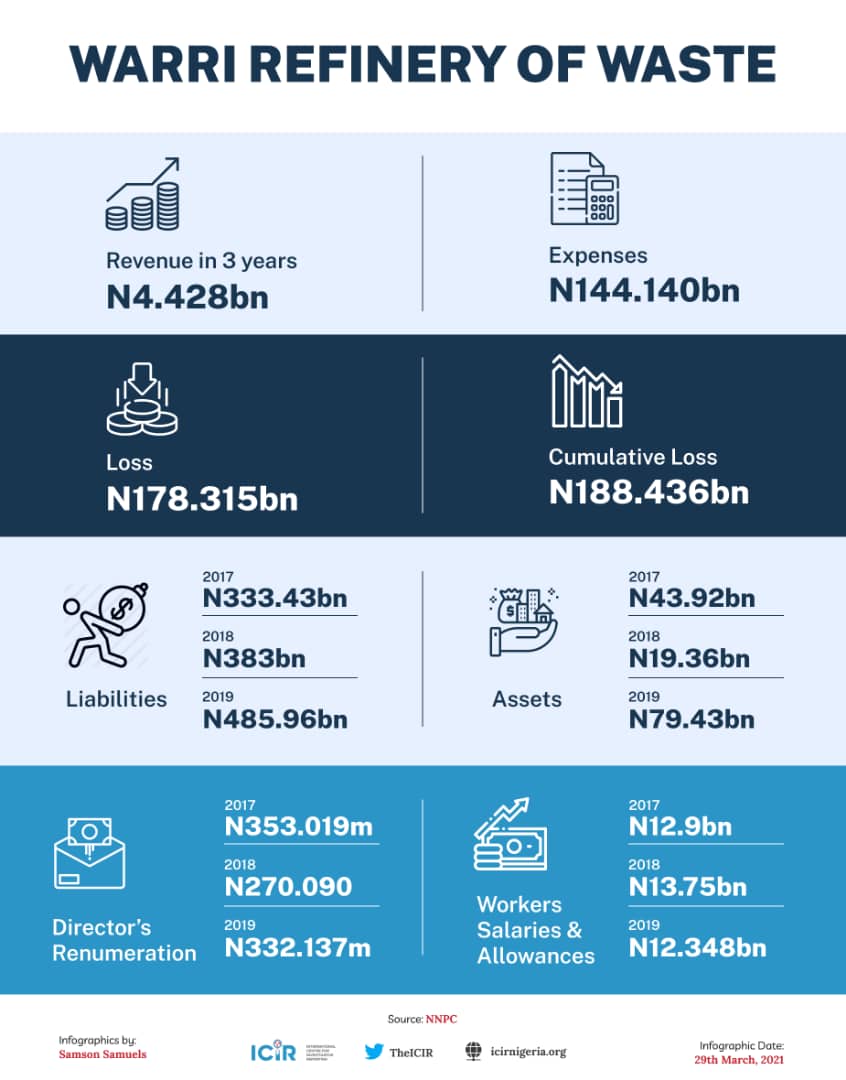
Imagine a company generating revenue of N4.429 billion in three years, but incurring expenses of N144. 140 billion within the same period. Who bears the N139.711 billion deficit burden? This is the story of Warri refinery, which has a workforce of 515 staff that have been unable to justify their take-home pays – while the NNPC watches on.

Between 2017 and 2019, the refinery incurred N178.315 billion cumulative loss, which rises to N188.436 billion if ‘comprehensive loss’ is factored in. Comprehensive income/loss is  “net income and unrealized income, such as unrealized gains or losses on hedge/derivative financial instruments and foreign currency transaction gains or losses.”

Warri Refinery of Waste

In the traditional calculation of debt ratio, total liabilities (debt) is divided by total assets. According to Investopedia, debt ratio is expected to be less than one for any firm to be considered sustainable.

A ratio less than one means that a significant portion of a company’s assets is funded by equity or investors’ money. But when it is above one, then a significant proportion of company’s assets is funded by debt and the firm could be at a risk of default.

In the case of Warri refinery, the debt ratios were 25.1 in 2018 and  6.12 in 2019, a red flag to lenders who wanted their money back, said Innocent Unah, an investment banker and accountant. In 2017, its debt ratio was 7.6  – similar to previous years.

In simple accounting, when liability stands above assets, it is a sign that a company like Warri Refinery is headed for bankruptcy.

The NNPC has been borrowing to fund activities at Warri refinery, even when its operations do not show any capacity to pay back.

In 2019, liabilities (tax, debt, lease) of the refinery stood at N485.96 billion whereas total assets amounted to only N79.43 billion.

In 2018, liabilities were estimated at N383 billion while the company had assets of N19.36 billion.

With total assets valued at N43.92 billion in 2017, liabilities were valued at N333.43 billion.

“When you have a company like this, shut it down or hand it over to people who can manage it.  Why should you keep this company on when all it does is to eat into your savings,” said Attah  Anzaku, business expert and chief executive of an international commodity trading firm, AgroEknor.

Financial analysts say there are many ways of calculating firm efficiency, including return on assets (ROA) and return on equity (ROE).


KEEP READING


Warri refinery has a negative net income due to its humongous losses. Its ROA from 2017 to 2019 were -1.94, -2.33 and -0.62 respectively.

A negative ROA means that the company cannot generate money from its assets, implying that it is not a good investment, says Easy Portfolio, an online investment website.

On the other hand, ROE for 2017-2019 were all in the negative, standing at -0.298, -0.124 and -0.123 respectively.

This means the refinery is neither profitable nor efficient.

Warri Refinery’s 2019 financial statement
Credit: NNPC


Warri 2018 Financial Statement
Credit: NNPC

It is conventional wisdom that when a business’ return on equity is negative,  shareholders are losing, rather than gaining value, said Matt Petryni a business and investment analyst of Pocketsense fame.

“This is usually a terrible sign, for investors and managers try to avoid a negative return as aggressively as possible. Most investors avoid placing their money in a company that fails to deliver positive returns consistently. Still, investors may overlook a negative return for a single tough year if they believe the company is well-positioned for long-term growth,” Petryni said.

From the ICIR’s computations, Warri refinery failed in all financial metrics, returning negative outcomes even in cash flows.

Its net cash flows at the end of 2018 and 2019 were N160.9 million and N5.90 billion respectively. The figure stood at N264.2 million in 2017.

This means that Warri refinery does not even have enough cash to run its operations.

Directors, workers  enjoy largesse

Despite the huge losses incurred by the refinery, directors increased their remuneration from N270.090 million in 2018 to N332.137 million in 2019. The directors had collected N353.019 million as remuneration in 2017.  In 2017, salaries, wages and allowances of workers were valued at N12.9 billion.  This increased to N13.755 billion the following year. In 2019, it reduced to N12.348 billion.

Initial names of directors in 2019 were Eng. M. Abali, Mr F.I. Ololo, Engr A. Number and Mr A.E Bisong. However, NNPC said in the 2019 financial statement that these names were later replaced with Mr Babatunde Bakare, Mrs Regina D. Falomo,  Engr Kofar- Bai A Zubairu, and Mr Danlami K. Bello.

In 2018, names of directors were Eng. M. Abali, Mr A.E Bisong, Mr H.C Amadi, Mr F.I.O Ololo and Eng A. Ariaga.

Warri refinery and wasted years of turn-around maintenance

The Warri refinery is the first Nigerian government wholly-owned refinery.

It was commissioned in 1978 but was incorporated as a limited liability company in November 1988 after its merger with Ekpan Petrochemical Plants. It was built to process 100,000 barrels of crude oil per day but was later de-bottlenecked to process 125,000 barrels per day in 1987, according to the NNPC.

It was essentially targeted at adding value to some of the refinery by-products such as propylene, rich stock and decant oil. However, this has not happened.

There have been several turnaround maintenance contracts awarded for the repair of Warri Refining and Petrochemical Company Limited.

In  June 1989, the then federal government of Ibrahim Badamosi Babangida borrowed $27.7 million from the World Bank to repair the refinery.

About $10.7 million was devoted to the maintenance of Warri refinery, representing 39 percent of the total loan. Another $5.9 million was sourced from the local market for the same purpose.

The loan was to be made available to the NNPC at the then World Bank standard variable interest rate for 15 years. The federal government guaranteed the loan while the NNPC was to bear the foreign exchange risk.

The federal government awarded another contract in 1994 for the same purpose. In 2000, turnaround maintenance valued at $7.6 million was awarded to an Italian company Comerint SPA. As at 2000, the refinery was in a decrepit state, even with the last maintenance work done six years earlier.  Before the maintenance project started, the plant had been out of service due to an explosion in its crude distillation unit heater that caused huge damage to the main crude oil heater, Oil and Gas Journal reported.

Warri RefinerY
Warri Refinery
Credit: NNPC

Experts  knock FG, suggest privatisation of Warri refinery

President of Nigerian Society of Petroleum  Engineers Joe Nwakwue said the major problem with such a refinery was policy dissonance.

“What strategic purposes does retaining full ownership of the refineries serve?” he asked, in response to The ICIR questions.
“Having an Operate and Manage contractor with no skin in the game by way of equity can be challenging, but we have a successful story of such an arrangement.  My personal view is that we should have gone through with sale of majority stake to a core investor and let them worry about rehabilitation and operation,” he said.

Nwakwue was, perhaps, speaking about the LNG model in which the NNPC owns 49 percent, while  Shell Gas B.V,  Total LNG Nigeria Ltd and Eni International have 51 percent stake.

Being a joint ownership, there is little interference on the part of the government, which has a minority stake in the business and enjoys dividends and returns on investment.

An oil sector governance expert Henry Ademola Adigun said the refineries in Nigeria were never going to add any value to Nigerians’ lives. He wondered why the government was still holding onto a refinery like  Warri rather than privatise it.

An associate consultant at the British Department for International Development Celestine Okeke told The ICIR that  Nigerian government was losing money while workers were gaining.
“All the refineries in Nigeria are in the same condition. There has not been rational thinking in managing these refineries,” he said.
“If the government is seeking a genuine solution, it should put out the refineries for the private sector to operate and manage it,” Okeke noted.
“The recruitment process and the quality of the recruited staff into the NNPC has been questionable. They should adopt the NLNG model and run the enterprise as a commercial entity. We are losing money from the cost of insurance, salaries and paying for a refinery that doesn’t generate money.”

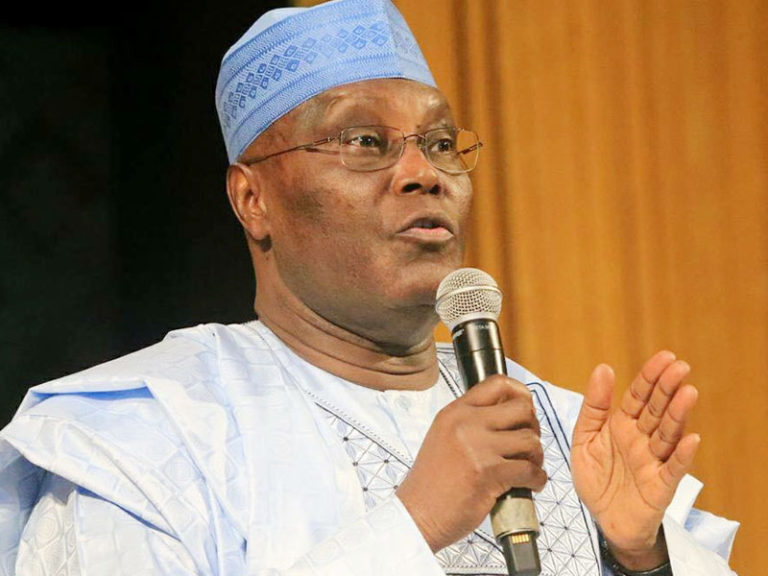
Former vice president Atiku Abubakar has asked the federal government to privatise Nigeria’s obsolete refineries and the Nigerian National Petroleum Corporation (NNPC) using the time-tested LNG model.

Atiku said this on his Twitter handle on Sunday where he proffered solutions to Nigeria’s endemic unemployment rate, which rose from 27.1 percent in the second quarter of 2020 to 33.3 percent in the fourth quarter of the same year.

“We can no longer say we cannot afford this. We can.  As a nation, we are better off privatising our refineries and the NNPC through the time-tested LNG model in which the FG owns 49 percent equity and the private sector 51 percent,” he said.

NNPC’s position

The NNPC’s responses have centred on how it reduced losses in the 2019 financial year.

Before releasing the 2019 financial statement, NNPC spokesman Kennie Obateru had quoted chief financial officer (CFO) Umar Ajiya as saying that the majority of the subsidiaries posted improved performance.

Ajiya admitted that the refineries had maintained the same level of losses as in 2018, assuring that it would reduce significantly in 2020 due to cost optimisation drive.

The CFO explained that the improved performance in the 2019 financial year was driven mainly by cost optimisation, contracts renegotiation and operational efficiency.

Why Nigerians should anticipate increase in petrol’s pump price despite assurances from NNPC

“The 2019 AFS goes further to demonstrate our unwavering commitment to the principle of Transparency, Accountability and Performance Excellence (TAPE) while the outlook for 2020 looks promising given the Management’s strong drive to prune down running cost and grow revenues.” 

NNPC said it reduced cost by 99.7 percent, but failed to explain how it intended to cut wastes at the refineries.


Privatise Nigeria’s refineries, NNPC using LNG model, Atiku tells FG

FORMER vice president Atiku Abubakar has asked the federal government to privatise Nigeria’s obsolete refineries and the Nigerian National Petroleum Corporation (NNPC) using the time-tested LNG model.

Atiku said this on his Twitter handle on Sunday where he proffered solutions to Nigeria’s endemic unemployment rate, which rose from 27.1 percent in the second quarter of 2020 to 33.3 percent in the fourth quarter of the same year.

“We can no longer say we cannot afford this. We can.  As a nation, we are better off privatising our refineries and the NNPC through the time-tested LNG model in which the FG owns 49 percent equity and the private sector 51 percent,” he said.

NNPC
NNPC
Credit: Thisdaylive

The LNG model is an ownership system in which NNPC owns 49 percent of Nigeria LNG, with  Shell Gas B.V. owning 25.6 percent, Total LNG Nigeria Ltd having a 15 percent share and Eni International having a 10.4 percent stake.

Being a joint ownership, there is little interference on the part of the government, which has a minority stake in the business and  enjoys dividends and returns on investment.  The former vice president said that in 20 years ending 2020, the NLNG delivered $18.3 billion dividends to government irrespective of taxes and other benefit accruals to the country.

READ ALSONNPC can’t continue paying N120bn monthly as petrol subsidy – Kyari

Atiku, while speaking on the state of the economy, said Nigeria must move towards a singe exchange rate regime that would be determined by market forces, stressing that federal and state governments must reduce taxes to make Nigeria more business and investor friendly.

Atiku’s position on exchange rate regime in Nigeria is predicated upon multiple rate system operated by the Central Bank of Nigeria( CBN). While the official rate is N379/$, the parallel market rate hovers between N480-N485/$.  The International Monetary Fund (IMF) has warned the country’s monetary authorities to embrace a single market regime, but this is yet to happen.

Atiku  also noted that financial and monetary institutions must be free from political interference to enable them perform their roles optimally.

“Financial and monetary institutions like the Central Bank of Nigeria and the Securities and Exchange Commission (SEC) must be free from the type of political influence that resulted in the prohibition of Bitcoin and other cryptocurrencies,” he said.

The former vice president, who expressed concern that government failed to heed his earlier warning on rising unemployment said, “I’ve never felt so bad at being proven right, as I am by the report from Bloomberg Business on Saturday March 27, 2021 that Nigeria is to emerge as country with the highest unemployment rate on Earth, at just over 33  percent.

Port Harcourt refiner
Port Harcourt refinery
Credit: The Punch

“What the government must realise is that the unprecedented insecurity Nigeria is facing is as as a result of youth unemployment.

“Idleness is the worst feature of unemployment because it channels the energy of our youth away from production and towards destruction, and that is why Nigeria is now the third most terrorist nation in the world.”

Atiku observed that government’s implementation of the discredited command and control policies had led to massive capital flight from Nigeria.

“How did Nigeria get here? We got here by abandoning the people-centred leadership and free trade and deregulatory policies of the Obasanjo years which saw us maintain a single digit unemployment rate, and implementing discredited command and control policies that have led to massive capital flight from Nigeria.”

On the $1.5 billion approved for the rehabilitation of the Port Harcourt Refinery, the former vice president said there was no need for the government to get involved in sectors that ought to be left in the hands of the private sector.

“In 2020, I recommend that to immediately and drastically bring down youth unemployment, every family in Nigeria with at least one school age child, and earning less that $800 per annum should receive a monthly stipend of N5,000 from the government via their BVN and NIN on the condition that they verifiably keep their children in school.

Why Nigerians should anticipate increase in petrol’s pump price despite assurances from NNPC

“My recommendation still stands, and stands even stronger now that we have crossed the rubicon in youth unemployment,”  the former vice president said.

“If we can get the 13.5 million out-of-school Nigerian children into school, we will turn the corner in one generation. If we do not do this, then the floodgates  of unemployment will be further opened.”

Global funding shifting from oil to clean energy – Experts

FUNDING from international organisations such as World Bank and International Finance Corporation (IFC) are shifting away from oil to clean energy, finance and energy experts have said.

Findings by The ICIR show that some lenders to International oil companies (IOCs) are seriously emphasising clean energy investments in line with global energy transition. This development, energy analysts say, could threaten Nigeria’s reliance on oil since IOCs own as much as 45 percent stake in the country’s oil blocs.

“International lenders, comprising mainly of World Bank and IFC, are now very attentive where they invest their money. They want to see green-friendly companies investing in clean energy,” executive director and the chief finance officer of  Total E&P Nigeria Tai Oshinaya told The ICIR on the sidelines of the just-concluded Oloibiri Lecture Series and Energy Forum in Abuja.

She said Total E&P Nigeria had devoted efforts towards transition to cleaner, affordable energy, being a member of the Paris Climate Change.

“Lenders have put stringent measures on environmental issues, and safety guides must be urgently passed to have better fiscal framework to drive investments in place. We still need oil and gas to fund the clean energy space, which is why the Petroleum industry Bill (PIB) is needed to drive this.”

Read AlsoElectricity failure is gradually killing small businesses in Nigeria’s Power State

Clean energy is energy from renewable or zero omission sources, according to PWI Global, a group that offers expert advice on engineering and science. The World Bank and other funders have been criticised for funding fossil fuel, including oil, gas and coal, thereby supporting emissions. Consequently, the World Bank is pumping money into clean energy, approving $6.9 million in September 2020 in additional financing for the Haiti: Renewable Energy for All Project.  The IFC is also supporting many clean-energy projects in Africa and beyond.

Managing director of AITEO E&P Limited Victor Okoronkwo said leveraging the country’s natural gas potential would drive the electricity sector in the country, stressing that global energy shift equalled energy transition. Okoronkwo urged the government to use revenue from gas to electricity in driving clean energy initiatives.

Energy analyst and managing director of Anoh Gas Processing Company Okey Mbah told The ICIR  that there was a need for Nigeria’s gas revolution to be done in a cost-efficient manner in line with global climate change realities.

“We should begin by emphasising gas-fired generators instead of diesel fired generators. It is a lot cheaper to generate electricity through gas-fired stations, but it requires lots of funding for us to deliver that energy transition, ” Mbah said.

“For us today in Nigeria, the way out is to look at the gas portfolio and begin to develop them, creating positive impact by displacing diesel with gas and LPG and gradually prioritising energy transition direction,” he further said.

SPECIAL REPORT: In Nigeria, citizens pay more for darkness than electricity

Nigeria is currently banking on its National Gas Expansion Programme,  which seeks to provide alternative source of energy from oil, but energy analysts say the country needs to attract greater funding options through enabling policies in clean energy.

Industry analysts say passage of the Petroleum Industry Bill will provide a better framework to enable funding partners invest in the country’s vast gas resources.

How Nigeria lost N439bn to gas flared by oil companies in 2020

0

DATA obtained from Nigeria’s Gas Flare Tracker have revealed that Nigeria lost an estimated N439 billion to gas flared by international oil companies (IOCs) and local stakeholders.

Gas Flare Tracker, an environmental monitoring tool that tracks gas flares in the country, was one of two online platforms launched by the National Oil Spill Detection and Response Agency (NOSDRA) in 2019 to monitor oil spills and track gas flares in the Niger Delta region.

A breakdown of the data on the total gas flared in the country showed that 452.5 million standard cubic feet (SCF) of natural gas were flared both onshore and offshore between January and December 2020.

READ ALSOPrivatise Nigeria’s refineries, NNPC using LNG model, Atiku tells FG

Using the price of natural gas at $2.56 per thousand SCF as at Friday, The ICIR compared the price of gas against the 452.5 million SCF flared gas, and this translated to an estimated loss of $1.158 billion or N439 billion using the official Central Bank of Nigeria (CBN) exchange rate of N379 to a dollar.

The offshore flare sites referring to gas flared on water accounted for 63.3 percent of the flared gases with 286.5 million SCF while 165.7 million SCF of gases were flared onshore.

Director-general of the Budget Office Ben Akabueze had, in a recent interview, said that gas flaring penalties would be tightened in a bid to forestall future losses of revenue.

This prompted a revised payment regime that resulted in an increase in collected revenue from $120 million in 2019 to $270 million in 2020.

The gas flaring fine for companies producing 10,000 barrels of oil per day or more is now set at $2 per 1,000 cubic feet of gas, while the fine for companies producing less than 10,000 barrels a day is $0.5 per 1,000 cubic feet

Over the past five years, the country has lost close to $1 billion in revenue annually due to flaring, increasing environmental pollution in the Niger Delta region.

From 2014 to 2018, Nigeria lost N301 billion, N243 billion, N229 billion, N227 billion and N233 billion respectively from flared gases. Nigeria’s Gas FlareTrackeralso revealed that there were over 100 active flare sites in eight states where gas was currently being flared.

According to the data, five international oil companies involved in flaring the bulk of the gases were Chevron, ExxonMobil, Royal Dutch Shell, Total and Eni.

Nigeria is one of the top 10 gas-flaring countries in the world, having flared some 282 million SCF of gas in 2018, according to accounting firm PricewaterhouseCoopers (PWC).

The dataset also revealed that carbon dioxide emissions from the flare sites reached 21.6 million tonnes as Nigeria hoped to meet its pledge to cut greenhouse gas emissions by 20 percent in 2030.

Nigeria Gas Flare Commercialisation Programme (NGFCP) was approved in 2016, and the Department of Petroleum Resources (DPR) held rounds for companies to bid for the opportunity to commercialise 96 of 198 flare points in February 2020.

Tracking bank fraud perpetrators in Nigeria could cost victims more than they lost

Although DPR approved 200 bidders in February 2020 it said in June, when the sites should have been awarded, that the process was delayed by six weeks due to coronavirus-related restrictions.

Nigerian govt raises alarm over fake COVID-19 vaccines

THE Nigerian government has alerted its health authorities to the importation of fake COVID-19 vaccines from China to Africa.

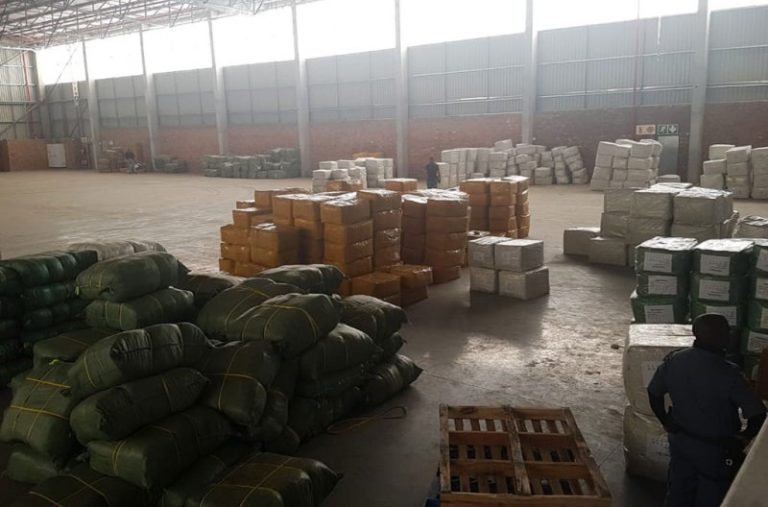
In a memo titled ‘Report of Fake COVID-19 Vaccines Destined for Africa Arrested in China,’ Federal Ministry of Health said it received a letter from the Presidential Task Force (PTF) on COVID-19 about the confiscation of nearly 3,000 doses of fake COVID-19 vaccines which were being shipped into the continent from the East Asian country.

The report said that fake COVID-19 vaccines were already in circulation in Africa.

Memo from the Federal Ministry of Health

“To prevent the importation of fake vaccines, kindly note that the Nigeria Customs Service has designated Nnamdi Azikiwe International Airport as the only point of entry (PoE) for imported COVID-19 vaccines.

“I am therefore to bring this to your notice and dispel any possibility of COVID-19 vaccines being available for sale or being administered by any unauthorized institution,” part of the statement, signed by director of hospital services Adebimpe Adebiyi in the health ministry, read.

This is, however, not the first time the government would raise such alarm. The National Agency for Food and Drug Administration and Control (NAFDAC) had, in January 2021, said that there were reports of fake vaccines in Nigeria.

The ICIR findings show that the new alarm may not be unconnected with revelation by Interpol of shipment of  fake vaccine doses in South Africa on March 3, 2021. The disclosure was captured in a report in the TIME, published on March 3.

TIME noted that Interpol first issued a warning about the potential for such crimes in early December (2020), alerting law enforcement agents in its 194-member countries that criminal networks were trying to “infiltrate and disrupt supply chains” involved in the global rollout of vaccines to fight the COVID-19 pandemic.

A central city of China Wuhan recorded first case of coronavirus, otherwise known as COVID-19, in December 2019.

Read Also1 year after first COVID-19 death in Nigeria, mortality rate stands at 1.25%

The virus then went on to become a global pandemic weeks later, resulting in lockdown of most nations around the world, including Nigeria.

Globally, as of 27 March 2021, there had been 125.8 million confirmed cases of COVID-19, including 2.8 million deaths, according to the World Health Organization(WHO).

Interpol arrests a suspected criminal. Source: Financial Times

A total of 4,2 million cases, 111 million deaths and 3.7 million recoveries had been recorded in Africa at the time of filing this report on Saturday 27 March, 2021, according to Africa Centre for Disease Control.

As of 18 February 2021, at least seven different vaccines across three platforms had been rolled out globally to combat the pandemic, according to WHO.

The agency said more than 200 additional vaccine candidates were in development, of which more than 60 were in clinical level.

Some of the vaccines approved by WHO under its Emergency Use Listing are Pfizer-BioNTech, Mordena, AstraZeneca, Janssen COVID-19 Vaccine and Novavax COVID-19 vaccine​

The Emergency Use Listing procedure assesses the suitability of novel health products during public health emergencies. The objective is to make medicines, vaccines and diagnostics available as rapidly as possible to address the situation(s), while adhering to stringent criteria of safety, efficacy and quality. The assessment weighs the threat posed by the emergency as well as the benefit that would accrue from the use of the product against any potential risks.

Nigeria is unlikely to purchase Covid-19 vaccines except through donor grants

Sensing vaccine nationalism which would ultimately leave developing nations facing acute dearth of vaccines for the virus, WHO constituted the COVID-19 Vaccines Global Access COVAX) in 2020.

COVAX, formally known as The COVID-19 Vaccines Global Access Facility, is a global collaboration for speeding up the development, manufacture and equitable distribution of new vaccines.

COVAX is co-led by Gavi, the Vaccine Alliance, the Coalition for Epidemic Preparedness Innovations and WHO.

Nigeria took delivery of AstraZeneca vaccine on March 2, 2021

Through COVAX, Nigeria received the shipment of 3.94 million doses of AstraZeneca vaccine on March 2, 2021, at Nnamdi Azikiwe International Airport, Abuja, with pomp.

Nigerian private sector-led Coalition Against Coronavirus (COCAVID) has also made significant strides to assist the country with COVID-19 vaccines.

The ICIR reported how a number of European countries suspended AstraZeneca vaccine in early March, 2021, following reports of blood clot. But the Nigeria government allayed fears over the safety of the vaccine. WHO also denounced the claim, with countries that earlier suspended the vaccine continuing with its use.

On March 21, The ICIR reported how United States and other Western countries had fallen behind in the global COVID-19 vaccine diplomacy race, citing multiple reports, including a publication by the World Politics Review, while China, Russia and India were using vaccines produced in their countries to expand spheres of influence across the world.