MUHAMMED Shehu, spokesperson for Zamfara State Police Command, on Sunday, denied the purported release of 317 abducted schoolgirls seized by their captors on Friday.
Shehu told The ICIR in a phone interview that the authorities were still on a search and rescue exercise.
“Honestly I’m not aware of that story,” he said.
“I don’t know where they got the story from but if there is anything like that, both the government and police will speak about it.”
The reporter further identified two major national dailies with correspondents in Gusau, the state capital, who reported the information. However, he insisted there was no such development.
“If there is any development, both the government and police will speak about it,” he noted adding that, “there is ongoing effort to secure their release. We are still on it.”
The state government, through Suleiman Anka, commissioner of information and culture, also debunked the girls’ freedom from their captors.
According to Anka, the state was still making efforts to ensure the safe rescue of the girls.
“I want to call the attention of good people of Zamfara State. They should disregard any fake news regarding the release of abducted students of the Government Girls Secondary School, Jangebe, by one national daily.
“It is not true. But Alhamdulillah, the state government and securities are their trying their best.”
I want to call the attention of good people of Zamfara state, they should disregard any fake news regarding the released of abducted students of GGSS Jangebe by one national daily, it’s not true. But Alhamdulillah the state government and securities are their trying their best. pic.twitter.com/ZeQgFmK6nY
The ICIR had earlier reported on the persistent cases of kidnappings and abductions in the country, especially since President Muhammadu Buhari resumed office in 2015.
The general state of insecurity has also raised doubts on the competence of Buhari to safeguard lives and property in the country, hence demands for his resignation or impeachment by members of the National Assembly (NASS).
Northern group, under the Northern Elders Forum (NEF), has also demanded for Buhari’s sack.
On Saturday, February 27, the forum advised state governments to devise security measures that could help protect the lives of their people.
They asserted that Nigerians were becoming more endangered under the current administration of the president.
“In spite of assurances from the federal government that it will end banditry and kidnappings, the life of the Nigerian is becoming more endangered by the day, and citizens have lost faith that governments will reverse the successes of the criminal against defenseless citizens.
“The forum advises particularly Northern governors to explore all lawful avenues to improve the security of citizens,” NEF stated.
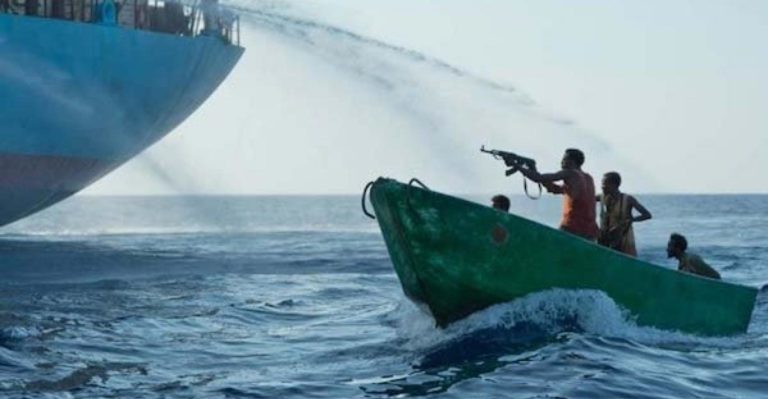
Areport by a British maritime security intelligence group Dryad Global has blamed weak response by the Nigerian government for the escalation of piracy attacks in the Gulf of Guinea.
Countries within the Gulf of Guinea – the northeasternmost part of the Atlantic Ocean – include Nigeria, Liberia, Ivory Coast, Togo, Benin, Cameroon, Equatorial Guinea, Gabon, Sao Tomé and Principe, Republic of Congo, Democratic Republic of Congo and Angola. The Gulf of Guinea is a major route for petroleum products.
The Gulf of Guinea is considered as the most dangerous sea in the world for piracy and accounted for 95 percent of 195 seafarers kidnapped from their vessels in 2020, the highest ever number, according to the International Maritime Bureau (IMB).
Dryad Global, in its 2021 annual report, noted that the activities of Nigerian pirates were largely responsible for the escalating insecurity in the area. “The West African maritime security situation is at breaking point; seafarers’ lives are at risk from ever-increasing violent attacks and Nigerian pirates are operating with increased impunity,” the report said.
“If there is an epidemic of piracy in the Gulf of Guinea, then Nigeria is undoubtedly the epicentre,” the report noted.
Dryad Global further observed that although Nigerian authorities had continued to implement programmes aimed at curbing piracy in the Gulf of Guinea, the measures had not been effective.
“Thus far, however, programmes aimed at tackling the root of the issue through social-economic coastal development and community regeneration are limited,” the report said.
As part of the non-binding Yaoundé Code of Conduct and the binding Lomé charter, Nigeria has several international obligations, which include investment in equipment, operations and training to improve maritime security and safety.
In 2019, Nigeria launched the Integrated National Security and Waterways Protection Infrastructure, otherwise known as Deep Blue Project (DBP), which aims to address insecurity and criminality in the country’s territorial waters. The Deep Blue Project is estimated to have cost 195 million dollars and will oversee all security matters in Nigeria.
If implemented in the expected timeframe, the DBP is likely to lead to a reduction in piracy in 2021.
Also, the Nigerian Maritime Safety Agency (NIMASA) has announced that the DB Abuja and DB Lagos – two multi-purpose surveillance vessels – would be deployed with eight fast interceptor attack boats in the Lagos Security Anchorage Area (SAA).
The federal government had enacted the Suppression of Piracy and other Maritime Offences Act (SUPMOA) in 2019, with a view to to suppressin piracy, armed robbery and other unlawful acts in the maritime domain. Going by SUPMOA provisions, piracy is punishable with life imprisonment and payment of N50 million naira fine, in addition to restitution to the owner of the hijacked vessel.
Nigeria’s campaign against piracy strong on rhetoric, short on substance
But the Dryad Global report said the efforts being made by the Nigerian government to counter piracy were lacking in substance.
“Unfortunately, whilst strong on rhetoric, Nigeria’s efforts to combat piracy are, thus far, short on substance,” the report said.
The report pointed to the unsatisfactory implementation of the Suppression of Piracy and other Maritime Offences Act as a sign that the federal government was not really committed to the fight against piracy.
The recent dismantling of the privately-run Security Anchorage Area at Nigerian ports by the Nigerian Ports Authority (NPA) on the orders of President Muhammadu Buhari was also cited as a sign that Nigeria was merely paying lip service to the anti-piracy campaign.
A Secure Anchorage Area (SAA) is an area outside the Lagos port that the Nigerian Navy, with a private company, had established as a secure place where vessels could anchor safely from the threat of pirate attack. But Hadiza Bala Usman, managing director of the NPA, announced that henceforth, private security companies would no longer provide SAA services.
The Dryad Global report said, “The prosecution of a private company involved in the transfer of a ransom payment as the first conviction under the Suppression of Piracy and other Maritime Offences Act is symptomatic of a wider trend in which the Nigerian government appears more focused on holding the commercial balance of power over third-party security providers than combating piracy.
“Recently, President Buhari ordered the Nigerian Ports Authority (NPA) to dismantle the privately-run Security Anchorage Area and cancel the commercial contract facilitating its operation, referring to it as a ‘threat to national security,’ despite the anchorage effectively being operated by the Nigerian Navy.
“The NPA maintains that commercial maritime fleet transiting through Nigerian territorial water should rely solely on the Nigerian Navy for its protection, yet expressly forbids the embarkation of armed security including Nigerian Naval personnel.”
Following the dismantling of the privately-run Security Anchorage Area, the Dryad Global report noted that the Nigerian government issued a memorandum of understanding (MOU) to 17 security companies allowing them to cooperate with the Nigerian Navy to arrange armed security escorts for commercial vessels whilst at the same time expressly forbidding the use of private security within Nigerian waters.
Faulting the development, the report observed, “With some vessels continuing to embark guards, albeit Nigerian Navy personnel and others not, this is far from an opaque policy. Indeed it has created a situation of legal ambiguity that stands only to benefit Nigeria as it chooses when and where to apply these laws.”
The report advised that Nigerian authorities must strike a balance between restrictions for the sake of national security and creating space for third-party security providers to complement the Nigerian Navy’s security activities in support of commercial operations.
“The current restrictions serve only to complicate the process of implementing appropriate security measures,” the report further said.
136 seafarers abducted in Gulf of Guinea in 2020
According to the report, 136 seafarers were abducted in 27 incidents in the Gulf of Guinea in 2020 and evidence showed that attacks were becoming increasingly violent – the use of guns was reported in over 80 percent of kidnapping incidents.
In addition to the 27 cases where seafarers were abducted, the Gulf of Guinea recorded 132 incidents in 2020. These included robbery, kidnapping, violent armed boarding and hijack.
In comparison, only 36 incidents occurred in the entire Indian Ocean, of which none was tangibly linked to issues of piracy.
The number of personnel and vessels impacted by kidnapping incidents in the Gulf of Guinea has been increasing since 2017, with 140 personnel kidnapped in 2018, 135 kidnapped in 2019 and 136 in 2020.
So far, in 2021, 15 seafarers have been kidnapped while one was killed.
One Azerbaijani sailor killed, 15 Turkish crew kidnapped in January 2021 attack
In the January 2021 incident, MV Mozart, a Liberian-flagged vessel, was on its way from Lagos to Cape Town when it became the target of a pirate attack that resulted in the death of one Azerbaijani seafarer and kidnapping of 15 Turkish crew members.
The Turkish government disclosed on February 12 that the 15 men had been freed and would be returned to Turkey as soon as possible. Turkish officials suggested that ransom was paid to secure the freedom of the 15 crew members.
Between piracy in Nigeria and Somalia
The report looked at comparisons being made between piracy in Nigeria and what was obtainable in Somalia, where the activities of pirates posed a threat to international shipping vessels in the late 2000s.
However, the Dryad Global report noted that Nigeria should have a greater capacity to combat piracy than Somalia, which was largely a failed state, following the Somali Civil War.
“Comparisons between piracy off the Horn of Africa and that of the Gulf of Guinea are common, but ultimately of limited benefit. The principal difference being that Somalia, as a failed state, was largely exempt from its legal and moral obligation to provide security within its waters.
“By comparison, Nigeria is a considerably more developed state with the largest economy in Africa. The difference between the path to piracy and the capacity to act could not be more profound,” the Dryad Global report said.
Piracy in Gulf of Guinea poses serious threat to global trade, IMO warns
Meanwhile, the International Maritime Organisation (IMO) has said the increasing number and severity of attacks and vessels by pirates in the Gulf of Guinea are posing a threat to global trade and the safety of seafarers working in the region.
Kitack Lim, IMO secretary-general, in a letter to all United Nations agencies, dated February 10, 2021, noted that piracy in the gulf presented a ‘serious and immediate threat’ and called on governments in the region, including Nigeria, to “make good on their commitments to deter pirates with a strong naval and coastguard presence.”
THE Northern Elders Forum (NEF) has expressed concerns about President Muhammadu Buhari’s administration, saying that Nigerians are becoming more endangered by the day.
The group has also warned state governors, especially those from the northern part of the country, to design their security architectures while maintaining cooperation with the existing national security operatives.
Hakeem Baba-Ahmed, NEF’s director in charge of publicity and advocacy, in a statement, stressed that the current administration had lost the initial confidence reposed in it by the citizenry.
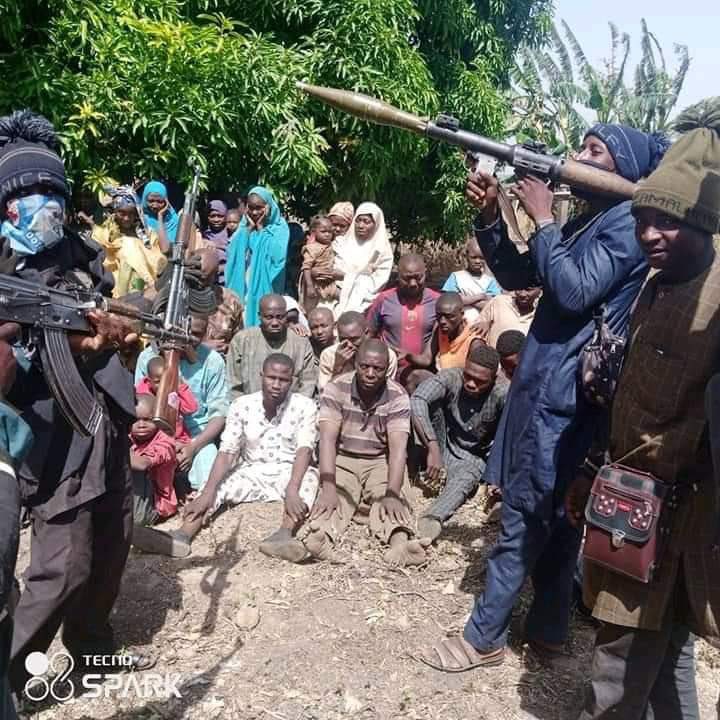
This is coming on the heels of Friday kidnap of 317 schoolgirls attending Government Girls Secondary School, Jangebe, Talata-Mafara Local Government Area of Zamfara State.
No group has claimed responsibility for the incident.
“It has become painfully obvious that the federal government is unable to muster the will or the capacity to limit exposure of Nigerians to violent criminals,” the forum stated.
The statement said that “in spite of assurances from the federal government that it will end banditry and kidnappings, the life of the Nigerian is becoming more endangered by the day, and citizens have lost faith that governments will reverse the successes of the criminal against defenseless citizens.
“The forum advises particularly Northern governors to explore all lawful avenues to improve the security of citizens.”
“While they should improve their support to the military, the police and security agencies, they should also explore avenues which give them more powers to secure citizens within the confines of the constitution which gives states powers to establish policing structures, including those with specialisation such as forest rangers. This should now be pursued as a matter of national priority.
“Bandits who refuse to submit to mediation and cessation of criminal activities should be treated in accordance with the laws of the country,” the forum advised.
The forum expressed concerns on the implication of continuous child abduction on the education sector in northern states.
The group urged parents to remain resolute and not be discouraged from sending their wards to school.
It further urged state governments to also ensure adequate security around school premises.
“Apart from the likelihood of similar abductions reccurring as bandits engage in copycat crimes in a region that is basically unprotected, these abductions will severely damage the poor state of education in the North, particularly girl-child education,” it said.
The recent incident is one of the series of abductions that have occurred in the country since President Muhammadu Buhari assumed office.
NO fewer than 881 students have been kidnapped since President Muhammadu Buhari came to power in 2015, findings by The ICIR have shown.
Buhari had struggled to clinch the presidential seat three times, until he eventually made it in the 2015 presidential election.
The thrust of his campaign promise to Nigerians was to tackle insecurity, apart from fighting corruption and boosting Nigeria’s economy.
Nevertheless, most Nigerians believe not much has been achieved, especially in the area of security.
Reports have shown that terrorist attacks, kidnappings and all forms of insecurity have been on the rise.
Worse still, kidnapping has become a sudden attractive enterprise under Buhari’s government.
Recent report from the SBM, an independent research and strategic communications consultancy outfit, disclosed that between June 2011 and March 31, 2020, at least 18.34 million dollars were paid to kidnappers as ransom.
“Even more frightening is that the larger proportion of that figure (just below 11 million dollars), was paid out between January 2016 and March 2020, indicating that kidnapping is becoming more lucrative,” the report read.
However, beyond the various kidnap and abduction incidents, The ICIR highlights those involving school students which are summed to 884 students.
Kidnappings under Buhari’s Administration
3 Schoolgirls Kidnapped in Lagos
In March 2016, three schoolgirls, Timilehin Olusa, Tofunmi Popo and Deborah Akinayo, were abducted by kidnappers in Ikorodu, Lagos State. The girls were taken from their boarding school – Babington Macaulay Junior Seminary School–to a hideout, according to a BBC report.
The police confirmed the incident and later launched a search for the abducted school girls. Though it was not established whether it was abduction or kidnapping, an eyewitness said the abductors were heavily armed – a similar pattern adopted by kidnappers in other parts of the country.
The criminals destroyed part of the school fence, shot in the air to scare the people, before taking the schoolgirls away at about 8pm.
They were late rescued after six days in captivity.
Babington Macaulay Seminary School Photo Credit: PT
113 kidnapped Dapchi Students
In February 2018, about 110 schoolgirls from age 11 to 19 were kidnapped by the Boko Haram terrorist group. The students were taken from the Government Girls Science and Technical College (GGSTC) in Dapchi, a town located in Bulabulin, Yunusari Local Government Area of Yobe State.
Two other girls and a boy from another school were among those abducted by the insurgents which summed up to 113 students.
It was not the first time the insurgents would be kidnapping school girls. A similar incident had occurred in 2014 when the Boko Haram terrorist group stormed into Government Secondary School in Chibok and kidnapped 276 girls from their dormitories.
However, most of the Dapchi students were later returned after almost a month in the kidnappers’ den.
It is not clear if the federal government paid ransoms to secure their releases. Lai Mohammed, minister of information and culture, had said, “The only thing they asked for was that they should be the ones to drop them off.”
“They didn’t want to hand them over to any third party. Nothing was given in exchange for them,” he stated.
While most of the students have gained their freedom, Leah Sharibu, one of the kidnapped girls, who refused to renounce her faith, was held back.
Up till today, Sharibu is still believed to be in the custody of her abductors. As a result, religious leaders locally and from abroad have continued to call for her release.
In October 2008, Mohammed Khalid, chief Imam of Apo Legislative Quarters, and Yakubu Pam, chairman of the Northern region for the Christian Association of Nigeria (CAN) both appealed for a safe return of the girl.
About six days ago, Enoch Adeboye, general overseer of the Redeemed Christian Church of God, further demanded the safe return of Sharibu. He tasked clergymen within the church to intensify prayers for her release, but not much action has been heard from the government in recent times as new cases of kidnapping have continued to emerge.
344 abducted students from President’s Own State
Amid these incidents, there was an abduction of 344 students from the Government Science Secondary School, Kankara, Katsina State.
A viral video about the boys’ kidnap incident surfaced on the internet. The Boko Haram insurgents reportedly claimed responsibility for the incident which occurred on December 11, 2020. It was reported that the bandits who perpetrated the criminal act were under the instruction of the insurgents.
The boys were later released about a week after.
Abdul Labaran, director-general in charge of media to Governor Aminu Bello, also confirmed the release to the Vanguard newspaper.
80 abducted students from Islamiya School in Katsina
Barely 10 days after the last abduction of 344 school children, 80 students, mostly young girls, were kidnapped in Mahuta town, Dandume Local Government Area of Katsina state.
Eyewitnesses said the incident occurred while the students were returning from Unguwan Alkasim village where they went to celebrate the birth of Prophet Muhammad. They were ambushed by the assailants.
Gambo Isah, Katsina State Police spokesperson, also confirmed the incident that appeared to have become a regular occurrence.
The victims were later safely rescued by the police authority. It was probably the last kidnapping incident of the year 2020 that made it to the news.
27 students kidnapped in Niger State
On February 17, 42 persons were abducted by armed men in Niger State. The incident occurred at the Government Secondary School, Kagara, where the criminals, who reportedly dressed in military camouflages, stormed the school at about 2 am Wednesday and whisked their victims away.
Both teachers and the schoolboys were taken, but the figure of kidnappers’ students was 27.
“Information reaching us is that 27 students are still missing. We don’t know the number of teachers at the moment, we don’t want to put out numbers that will turn out contradictory, but efforts are being made to rescue them,” Mary Noel Barje, chief press secretary, told CNN.
The incident which forced the state government to temporarily shut down boarding schools in the state drew the attention of the federal government and civil society organisations.
After spending about nine days with their kidnappers, the victims were released to the state government. However, a boy was killed in the process of rescue.
“The abducted students, staff, and relatives of Government Science College, Kagara have regained their freedom and have been received by the Niger State government,” Abubbakar Bello, state governor, had disclosed.
317 schoolgirls kidnaped in Zamfara State
Last in the series of kidnapping incidents under Buhari’s government, at least for now, was the abduction of 317 of schoolgirls of the Government Girls Secondary School, Jangebe, Talata-Mafara Local Government Area of Zamfara State.
The incident reportedly happened at about 1:00 am at midnight on Friday. No group has so far claimed responsibility for the attack. Bello Matawalle, state governor, in a special state broadcast, assured parents of the students’ of safe return of their children. “I wish to assure everyone that we are wholly committed to ensuring a speedy rescue of our dear school girls,” he stated.
Incidentally, the recent attack occurred barely days after Adamu Mohammed, inspector-general of police (IGP), had deployed 275 special police officers to the state.
Their task was to quell banditry, kidnapping, armed robbery among other criminal activities, in the state until the latest abduction.
Buhari, in a statement issued by Garba Shehu, his official spokesperson, told state and local governments to be more proactive and increase safety measures around schools in their respective states.
He challenged state governments that had adopted the style of rewarding bandits with cash and vehicles to reconsider, as the method “might boomerang disastrously.”
“Let them not entertain any illusions that they are more powerful than the government. They shouldn’t mistake our restraint for the humanitarian goals of protecting innocent lives as a weakness or a sign of fear or irresolution,” Buhari told the bandits, stressing that there were ongoing measures to address the situation.
Buhari’s assurance means nothing – Aisha Yesufu
However, Nigerians have continued to express their anger over the reccurring insecurity situations.
Aisha Yesufu, one of the popular critics of the current administration, described the president’s assurance as worthless
She alleged that Buhari was clueless, incompetent, and bothered less about the safety of Nigerians. “…the statement is absolutely nothing. We are used to a president whose words mean absolutely nothing. He says one thing and the opposite happens,” she remarked on ChannelsTV.
“The president should come out and tell us what is going on. The media should sit with the president and ask, what is the way forward? …He was voted to provide solutions; his salaries are being paid.”
She stressed further that the “body language of the president enables the terrorists, they know that we have an ineffective president and commander-in-chief. We have an incompetent one, we have a clueless one who does not even bother about what is happening in the country.”
While driving home her arguments, Yesufu criticised Buhari’s absence at the burial of seven military officers who died in an aircraft crash while on official assignment.
“Yesterday, we buried seven military officers, among them, the best that we had. The nation was in mourning, and the president was a few minutes away from where they were buried and he didn’t turn up.
“What does that mean to anybody, even the nation?” she queried. “It is time we began to make serious demands from the president. Let him know that if he is not ready to do this for us, he can resign and go away. Enough of the abductions,” she stated.
This is not the first time Buhari would be asked to leave the office for his perceived incompetence.
Resign from office – Nigerians demand
A coalition of civil society organisations (CSOs) last week also told the president to be more serious concerning the security situation in the country or resign from office.
The over 40 non-government organisations (NGOs) tasked the National Assembly (NASS) to impeach the president if insecurity persistee in the country.
The People’s Democratic Party (PDP) had earlier called for Buhari’s resignation due to the worsening security situation.
Last December, northern elders under the umbrella body of Northern Elders Forum also told Buhari to resign over a similar concern.
Meanwhile, The ICIR contacted Muhammaed Salisu, police spokesperson for the Zamafara State Police Command, for an update about the missing girls. He said the police had already commenced aerial surveillance on the forest where the children might likely be taken to. The efforts, he emphasised, was being carried out by joint security operatives led by the state police commissioner.
“Other security operatives are also in support of the operation,” he said.
Moreover, The ICIR had earlier reached out to the Army spokesperson, Mohammed Yerima, about the incident, but he claimed he was unaware of it. The ICIR again reached out to him on Saturday evening, for an update about the kidnap victims but he queried why the reporter had to reach out on a constant basis. However, he said a press statement would be issued once there was an update.
“You can’t be calling me every hour over the incident. If there is any update, I will issue a release,” he stated.
DELE Olojede, founder of now rested NEXT newspaper and winner of Pulitzer Prize, says insecurity has persisted in Nigeria because the country is not being led.
Olojedesaid this when he featured on ARISE News programme on Friday to discuss ‘Reconciliation and Development.’ He questioned the motive of the Muhammdu Buhari for running for the presidency on four occasions.
“I have to be honest, I have many many friends in that administration, as well as governors. The frank truth is that we are not being led, we are not being governed, and it leaves one to question why Buhari wanted this job so much, why he ran four times for president before he finally made it. Then he made it and just went into Aso Villa and just closed the door behind him,” Olojede said.
He noted that what would be done with the power was more important than the power itself, stressing that he did not think that ‘most rational people’ would argue that Buhari’s presidency had not brought success to the country.
Olojede further noted that the root cause of abductions and kidnappings in the country was lack of proper governance.
“Just only a few years ago when the Chibok girls were abducted, it was such a shocking thing. We had never experienced that before in our country, and the whole world was in an uproar. Now, it has become almost every week, a larger number of school children are abducted throughout our country, mostly in the North.
“The suffering, especially in the North today, is unbearable for human beings and sooner or later the whole country is going to be engulfed in it. At the root cause of all of these is that we are not governed,” Olojede further said.
The veteran journalist noted that the government did not have control over its territory, and non-state actors had moved into the void with different mischiefs.
He compared the current situation of the country to the Rwanda crisis, stating that if not curbed, it could get to a point where “everything might collapse.”
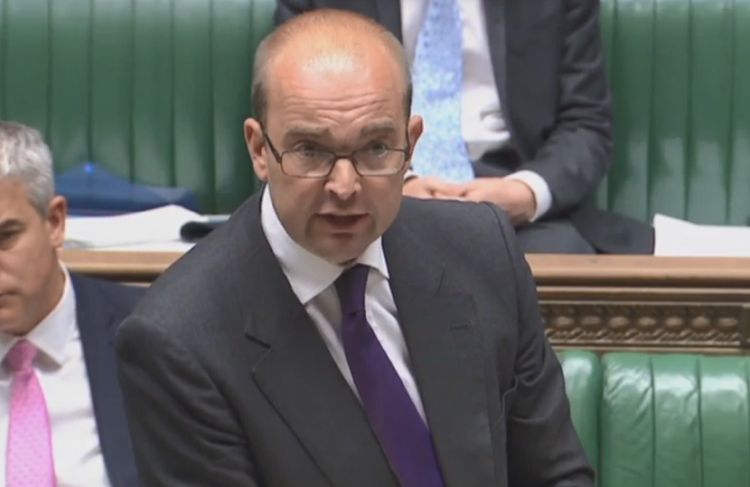
GOVERNMENT of the United Kingdom, through its minister for Africa James Duddridge, has criticised the continuous kidnapping of secondary schoolgirls in Nigeria, describing it as disgusting.
Duddridge, who is also a UK member of parliament (MP) for Rochford and Southend East, said every child was entitled to safe access to education.
“The abduction of hundreds of schoolgirls in Nigeria is abhorrent,” the lawmaker stated at the weekend.
Recall that on Friday, February 26, over 300 students at the Government Girls Secondary School, Jangebe, were kidnapped in Zamfara State.
The kidnap incident has elicited public outcry and huge criticism against Muhammadu Buhari-led administration, especially as it relates to the state of insecurity in the country.
Prior to the most recent kidnap incident was the capturing of 42 persons, among whom were 27 students of Government Science College, Kagara in Niger State.
The students’ kidnap also occurred this month – February 17.
During the Kagara incident, a student was shot dead, according to Abdullberqy Ebbo, director-general of Strategic Operation, an official of the state government.
On December 20, 2020, 80 students of Islamiyya Schools at Mahuta town of Katsina State were also kidnapped few days to Christmas.
The students, mostly girls, were later rescued by the military alongside other four persons held by the bandits.
On December 11, about 344 students of Government Science Secondary School, Kankara, in the same Katsina State, were kidnapped
The students were later released to the state government after spending six days in captivity.
The series of abductions and other forms of insecurity in the country have become a growing concern for Nigerians.
Kidnapping for ransom also appears to have become the new trend following recent insecurity incidents across the country.
As a result, a coalition of Civil Society Organisations (CSOs) consisting of over 40 non-governmental organisations asked Buhari to resign if he could not find a sustainable solution to the deteriorating security situation.
“Where the president fails to fulfil his constitutional duties as stated above, we demand he steps aside or the National Assembly initiate impeachment proceedings against him on grounds of gross misconduct as provided for in Section 143 of the 1999 Constitution of the Federal Republic of Nigeria,” the group demanded.
Last year December, a group of leaders under the aegis of Northern Elders Forum (NEF) also told the president to resign from office due to state of insecurity in Nigeria.
“Under this administration, life has lost its value, and more and more citizens are coming under the influence of criminals. We do not see any evidence of willingness on the part of President Buhari to honour his oath to provide security over Nigerians. In civilised nations, leaders who fail so spectacularly to provide security will do the honourable thing and resign,” NEF said in a statement issued by Hakeem Baba-Ahmed, director, publicity and advocacy.
Meanwhile, some concerned Nigerians have challenged the UK government to intervene in Nigeria’s crisis.
Others have called for the disintegration of the country as the current security situation is unsustainable.
“Directly or indirectly UK is part of Nigeria’s problems. If you have conscience and feelings allow #Referendum in Nigeria. Stop this one Nigeria thing…,” Ifeanyi @ohakwegifeanyi stated.
Chris Ejimofor @chrisejimofor1 said the country was on the verge of collapse, thus called for peaceful disintegration.
“This useless amalgamation has expired because the country is on the verge. Calamity is underway if a peaceful division is not done now to save souls,” he tweeted.
Nnamdi @afamdi247 also shared a similar position.
“Uk divide Nigeria let everybody go their separate ways. UK divide Nigeria let everybody go their separate ways,” he stated.
“End Nigeria now to save lives. People are dying every day. A referendum is the only solution.”
Last year October, the Arewa Consultative Forum (ACF) called for a referendum. Secretary-General of the forum, Murtala Aliyu, while reacting to the contentious issue of restructuring, said the north was in support of a referendum.
“We can restructure. We can become a confederation. We can devolve powers. We can have state police and all that we want. But I can tell you the thinking of the North now is that we should have a referendum if we want Nigeria or not,” he reportedly stated.
“Ohaeneze welcomes the idea of a referendum. This is what Indigenous People of Biafra (IPOB) has been calling for – a referendum for the aggregating geopolitical zones or the people to decide whether to still remain in the present unwieldy marriage of convenience or go their separate ways, John Nwodo, former head of Ohaneze Ndigbo, remarked while adding his voice recently.
Ladi Williams, a Senior Advocate of Nigeria, also supported the proposal.
His words: “This (proposal for a referendum) is fantastic. In my humble view, the North is being sensible for the first time. Britain, which foisted the current arrangement on us, is even talking about Scotland seeking to go.
“Referendum and everyone working on his own, it means each man will govern himself. All these complaints of nepotism and ethnicity will not be there, that people from a particular zone in the country are being put in total charge of the security and so on. For me, I have always said if the entire military leadership is from a village, I won’t have a problem with it, as long as they can govern well and do the job very well. But it must also be noted that no village has the monopoly of competent people.
“We can now have healthy competition. We should have the referendum, conducted by United Nations and African Union, to avoid the situation of some people claiming it has been rigged from the beginning.
“The proposal is fantastic. Nobody will say he is a second-class citizen again because an Egba man would now be dealing with an Ekiti man. They are both Yoruba. The problem will now be how to manage the minority questions in each area.”
In 2016, the Niger Delta Avengers group also called for a referendum, asking the president to consider the idea.
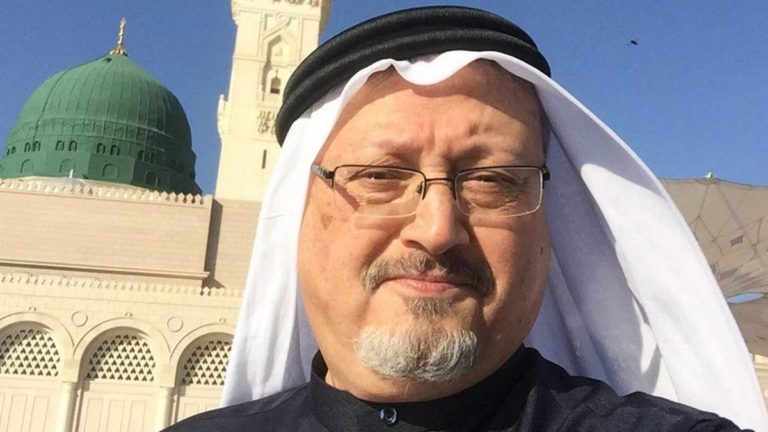
PRESIDENT Joe Biden of the United States has enforced a visa ban on 76 Saudi nationals over their connection with the 2018 murder of Jamal Khashoggi, a Washington Post journalist.
The ban follows the release of a four-page US intelligence report which accused Mohammed bin Salman, Saudi Arabia’s Crown Prince, of ordering the killing of Khashoggi’s who was a major critic of Saudi and Salman’s policies.
Khashoggi was killed and allegedly dismembered on October 2, 2018, in the Saudi consulate in Istanbul, Turkey, by men said to be connected with the top levels of Kingdom’s government and the Crown Prince.
Antony Blinken, US Secretary of State, who described the visa restriction policy as “Khashoggi Ban,” announced that the affected individuals who were acting on behalf of a foreign government, are believed to have been directly engaged in serious, extraterritorial counter-dissident activities.
“The murder of journalist and US lawful permanent resident Jamal Khashoggi shocked the world. Starting today, we will have a new global policy bearing his name to impose visa restrictions on those who engage in extraterritorial attacks on journalists or activists.
“As a matter of safety for all within our borders, perpetrators targeting perceived dissidents on behalf of any foreign government should not be permitted to reach American soil,” Blinken said.
He explained that the ban was part of measures by the US government to “reinforce the world’s condemnation of that crime”.
“I also have directed that the State Department fully report on any such extraterritorial activities by any government in our annual Country Reports on Human Rights Practices,” he said.
He also added that the new policy was aimed at stopping governments that “reach beyond their borders to threaten and attack journalists and perceived dissidents for exercising their fundamental freedoms”.
According to the declassified report, released by the US Director of National Intelligence, the Saudi prince had approved the capture or killing of the late journalist, according to a New York Times report.
The report also listed 21 individuals involved directly in the killing of Khashoggi, which includes seven members of Prince Mohammed’s elite protective detail, called the Rapid Intervention Force, RIF, that provided support for the 15-man team that killed Khashoggi.
The seven guards of the prince are Saud al Qhatani, Maher Muthreb, Naif al- Arifi, Mohammed al -Zahrani, Mansour Abahussein,Badr Utaybah, Abudul Aziz Al Hawsawi.
“To that end, we have made absolutely clear that extraterritorial threats and assaults by Saudi Arabia against activists, dissidents and journalists must end. They will not be tolerated by the United States,” Blinken said.
YEMI Osinbajo, vice president, has advised the Central Bank of Nigeria (CBN) and the Security and Exchange Commission (SEC) to regulate cryptocurrency in Nigeria rather than prohibit its use.
Osinbajo said this on Friday during his keynote address at the CBN Bankers’ Committee/Vanguard Economic Summit in Abuja.
The vice president said while he appreciated the position of the apex bank, the SEC and other security agencies on the abuse of cryptocurrencies, he believed that there was room for ‘further reflection’ on their decisions.
“There are other well-articulated concepts, but I believe that their position should be the subject for further reflection. There is a role for regulation here and it is in the place of our monetary authorities and SEC to provide a robust regulatory regime that addresses these serious concepts without necessarily killing the goose that that lays the egg,” Osinbajo said.
He was reacting to the recent directive of the CBN and the position of other related agencies over the use of cryptocurrencies in Nigeria.
The ICIR had reported on Thursday that Bolaji Owasanoye, chair of the Independent Corrupt Practices and Other Related Offences Commission (ICPC), had said that virtual assets and cryptocurrencies were risky for Nigeria.
Owasonaye said the system for the wallet of a cryptocurrency user only stored information or encrypted links in the blockchain where transaction confirmation could be found, revealing that over 3.5 billion dollar worth of bitcoin was associated with criminality in 2020.
The CBN had, on February 5, directed all financial institutions in Nigerian to shun crypto-based transactions.
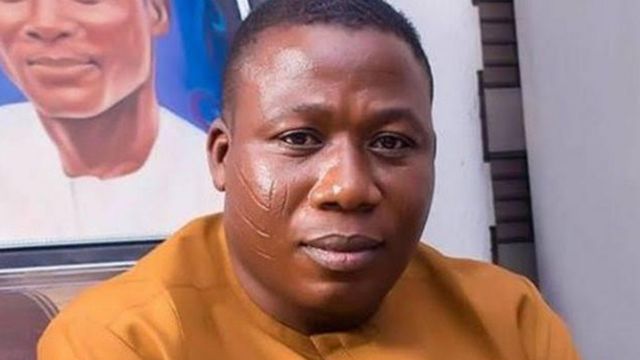
THE Yoruba socio-political group, Afenifere, has condemned the attempt by operatives of the Nigeria Police Force and the men of the State Security Service to arrest Sunday Adeyemo, popularly known as Sunday Igboho, on Friday.
Yinka Odumakin, spokesperson for the group, stated this in an interview with The Punch on Friday.
There was a mild tension on Friday along the Lagos-Ibadan Expressway when Igboho and his supporters were on their way to meet with 93-year-old Afenifere chieftain, Ayo Adebanjo.
In a viral video, a shirtless Igboho was seen with his men daring the security operatives and throwing expletives.
Odumakin said that there was no sense in the attempted arrest as Igboho was a free citizen of Nigeria. He said they should invite him if they needed him for any questioning, rather than waylay him on way like an armed robber.
“We condemn their attempt. There is no need for it. He has not been invited let alone not honouring the invitation. Chasing him on the road is condemnable.”
He lamented that President Muhammadu Buhari-led administration was concerned about Igboho instead of deploying all its effort in arresting the activities of banditry currently bedevilling the nation.
“Sunday Igboho is not a bandit. Bandits are special under this administration. That is the difference between a bandit and a non-bandit in Nigeria today,” Odumakin stressed.
Igboho, an Oyo indigene, has been in the news in recent times after he issued a one-week quit notice to Fulani herdsmen residing in Ibarapa area of Oyo State over the spate of kidnappings and killings attributed to herdsmen in the area.
When his two-week ultimatum expired, he led some youths to Fulani herdsmen in the area where property worth millions of naira was burnt and destroyed.
Earlier this month, he had also led some youths to Yewa North Local Government Area of Ogun State where herdsmen were said to be terrorising farmers and residents.
A Fulani settlement in Igua area of the local government was reportedly set on fire by some of the youth after Igboho’s visit to the community.
Rotimi Akeredolu, governor of Ondo State and chairman of the Southwest governors forum, has called on the federal government to examine the situation that led to Sunday Igboho’s intervention in the insecurity crises in both Oyo and Ogun states.
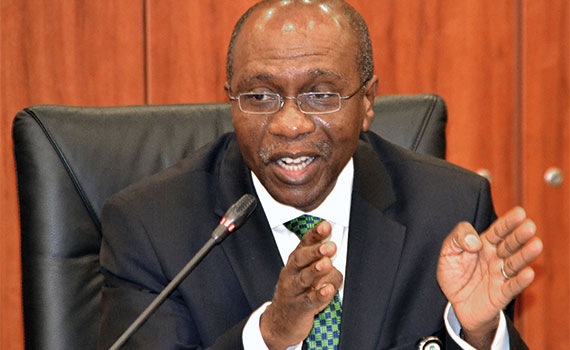
THE Central Bank of Nigeria (CBN) governor has disclosed that weekly remittances into Nigeria have increased from 5 million dollars to 30 million dollars due to the bank’s new foreign exchange (FX) policy that allows recipients to withdraw proceeds in foreign currency. The movement from 5 million dollars to 30 million dollars represents 500 percent increase.
Emefiele said on Friday at Vanguard/CBN/Bankers’ Committee Summit in Abuja that the new measure had increased the volume of transactions while reducing FX diversion by international money transfer operators (IMTOs) who had profited from dollar arbitrage arrangements.
CBN had, in November 2020, announced that it would allow diaspora remittances to be withdrawn in cash in a move to spur liquidity in the FX market and close the gap between the official FX rate and parallel/ black market rates. The bank had, before then, foreclosed the possibility of withdrawing foreign remittances in dollars due to FX scarcity in the economy. But the move proved very costly for the economy as it led to acute dollar shortages, which hurt manufacturers and key economic players, plunging the economy into a deep slump.
However, the apex bank reversed the policy gear three months ago by allowing recipients to withdraw dollar remittances in cash.
Why remittances went north
Emefiele said in Lagos that the change of policy had led to increased remittances into the economy. The implication of this is that the former CBN policy drove Nigerians into diverting foreign remittances to informal channels; this, in simple terms, implies that people were diverting their remittances or receiving them via informal routes due to the former policy that barred them from getting dollars in cash. The former CBN’s policy made receiving FX in cash difficult. Still, it encouraged FX’s receipt in naira rather than dollars, pushing diaspora senders and receivers into routing their remittances via other means.
Many say the CBN’s former policy was inimical to the economy as it shortchanged several Nigerians and hurt their capacity to do business.
“I did a business with someone in the United States. The transaction was in dollars, but I could not withdraw in dollars. That shortchanged me in the end,” Eniola Akinsanya, a hairstylist in Lagos, told The ICIR.
Gregory Mankiw, a Harvard professor of economics, explained that the economy would always respond to incentives. “Incentive is something that causes a person to act. Because people use cost and benefit analysis, they also respond to incentives,” Mankiw said in his ’10 Principles of Economics.’
In the context of CBN remittances, Mankiw argues that foreign inflows through official channels will rise when policies allow recipients to receive money in dollars. With naira becoming weaker, many senders would not wire dollars or pounds through official routes in order to not shortchange recipients as long as the former CBN policy subsisted. However, with a policy change, senders now feel at home to send money via official means.
“Behaviour changes when costs or benefits change,” Tom Spencer, an economist, said.
The Lagos Chamber of Commerce and Industry (LCCI) said the policy had proved to be a step in the right direction.
“It is a step in the right direction in resolving the liquidity issue in the currency market by ensuring the availability of foreign exchange, especially at the retail segment,” Toki Mabogunje, president of the chamber, said.
“This should be replicated for other sources of inflows such as export proceeds, Foreign Direct Investment [FDIs], and Foreign Portfolio
Investments [FPIs]. Robust remittance inflow is expected to moderate FX pressure and narrow the wide parallel market premium
as economic agents have access to a harmonized rate. A unified FX framework is necessary to boost investor confidence.”
Nigeria is facing FX scarcity arising from low oil prices and the demand for Brent. Africa’s most populous country is dollar-dependent, and fluctuations in the crude oil market since late 2014 have derailed FX inflows, leading to the economic slump. The economic growth has averaged o.28 percent in the last four years.