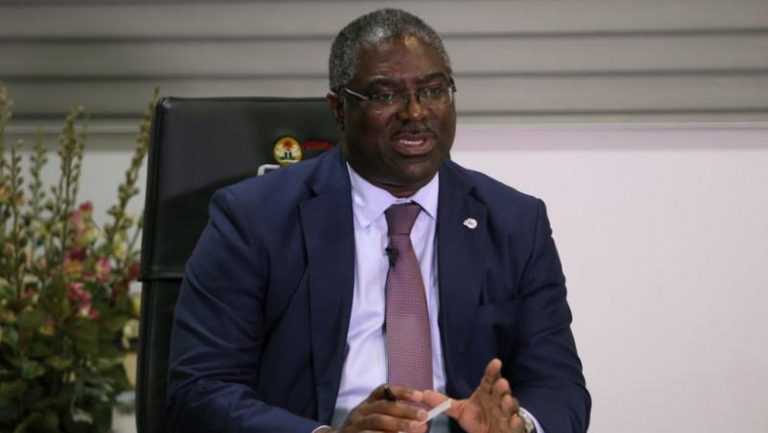
YEMI Osinbajo, vice president, has advised the Central Bank of Nigeria (CBN) and the Security and Exchange Commission (SEC) to regulate cryptocurrency in Nigeria rather than prohibit its use.
Osinbajo said this on Friday during his keynote address at the CBN Bankers’ Committee/Vanguard Economic Summit in Abuja.
The vice president said while he appreciated the position of the apex bank, the SEC and other security agencies on the abuse of cryptocurrencies, he believed that there was room for ‘further reflection’ on their decisions.
“There are other well-articulated concepts, but I believe that their position should be the subject for further reflection. There is a role for regulation here and it is in the place of our monetary authorities and SEC to provide a robust regulatory regime that addresses these serious concepts without necessarily killing the goose that that lays the egg,” Osinbajo said.
He was reacting to the recent directive of the CBN and the position of other related agencies over the use of cryptocurrencies in Nigeria.
The ICIR had reported on Thursday that Bolaji Owasanoye, chair of the Independent Corrupt Practices and Other Related Offences Commission (ICPC), had said that virtual assets and cryptocurrencies were risky for Nigeria.
Owasonaye said the system for the wallet of a cryptocurrency user only stored information or encrypted links in the blockchain where transaction confirmation could be found, revealing that over 3.5 billion dollar worth of bitcoin was associated with criminality in 2020.
The CBN had, on February 5, directed all financial institutions in Nigerian to shun crypto-based transactions.
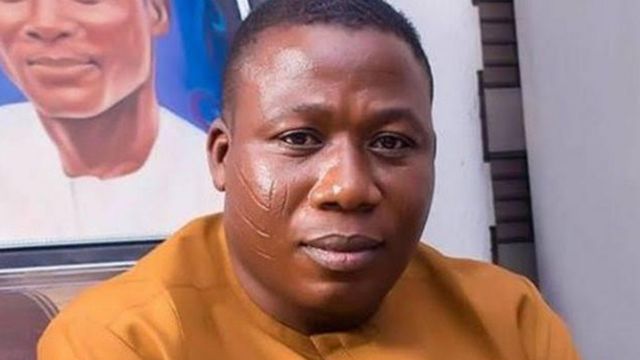
THE Yoruba socio-political group, Afenifere, has condemned the attempt by operatives of the Nigeria Police Force and the men of the State Security Service to arrest Sunday Adeyemo, popularly known as Sunday Igboho, on Friday.
Yinka Odumakin, spokesperson for the group, stated this in an interview with The Punch on Friday.
There was a mild tension on Friday along the Lagos-Ibadan Expressway when Igboho and his supporters were on their way to meet with 93-year-old Afenifere chieftain, Ayo Adebanjo.
In a viral video, a shirtless Igboho was seen with his men daring the security operatives and throwing expletives.
Odumakin said that there was no sense in the attempted arrest as Igboho was a free citizen of Nigeria. He said they should invite him if they needed him for any questioning, rather than waylay him on way like an armed robber.
“We condemn their attempt. There is no need for it. He has not been invited let alone not honouring the invitation. Chasing him on the road is condemnable.”
He lamented that President Muhammadu Buhari-led administration was concerned about Igboho instead of deploying all its effort in arresting the activities of banditry currently bedevilling the nation.
“Sunday Igboho is not a bandit. Bandits are special under this administration. That is the difference between a bandit and a non-bandit in Nigeria today,” Odumakin stressed.
Igboho, an Oyo indigene, has been in the news in recent times after he issued a one-week quit notice to Fulani herdsmen residing in Ibarapa area of Oyo State over the spate of kidnappings and killings attributed to herdsmen in the area.
When his two-week ultimatum expired, he led some youths to Fulani herdsmen in the area where property worth millions of naira was burnt and destroyed.
Earlier this month, he had also led some youths to Yewa North Local Government Area of Ogun State where herdsmen were said to be terrorising farmers and residents.
A Fulani settlement in Igua area of the local government was reportedly set on fire by some of the youth after Igboho’s visit to the community.
Rotimi Akeredolu, governor of Ondo State and chairman of the Southwest governors forum, has called on the federal government to examine the situation that led to Sunday Igboho’s intervention in the insecurity crises in both Oyo and Ogun states.
THE Central Bank of Nigeria (CBN) governor has disclosed that weekly remittances into Nigeria have increased from 5 million dollars to 30 million dollars due to the bank’s new foreign exchange (FX) policy that allows recipients to withdraw proceeds in foreign currency. The movement from 5 million dollars to 30 million dollars represents 500 percent increase.
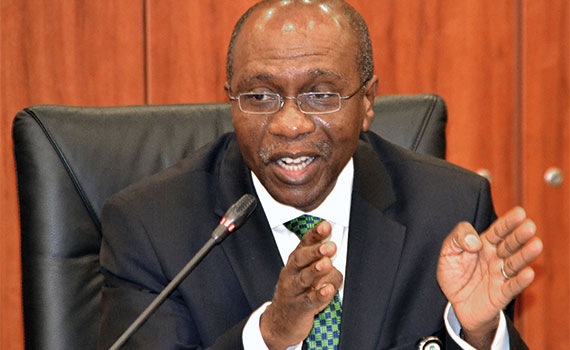
Emefiele said on Friday at Vanguard/CBN/Bankers’ Committee Summit in Abuja that the new measure had increased the volume of transactions while reducing FX diversion by international money transfer operators (IMTOs) who had profited from dollar arbitrage arrangements.
CBN had, in November 2020, announced that it would allow diaspora remittances to be withdrawn in cash in a move to spur liquidity in the FX market and close the gap between the official FX rate and parallel/ black market rates. The bank had, before then, foreclosed the possibility of withdrawing foreign remittances in dollars due to FX scarcity in the economy. But the move proved very costly for the economy as it led to acute dollar shortages, which hurt manufacturers and key economic players, plunging the economy into a deep slump.
However, the apex bank reversed the policy gear three months ago by allowing recipients to withdraw dollar remittances in cash.
Why remittances went north
Emefiele said in Lagos that the change of policy had led to increased remittances into the economy. The implication of this is that the former CBN policy drove Nigerians into diverting foreign remittances to informal channels; this, in simple terms, implies that people were diverting their remittances or receiving them via informal routes due to the former policy that barred them from getting dollars in cash. The former CBN’s policy made receiving FX in cash difficult. Still, it encouraged FX’s receipt in naira rather than dollars, pushing diaspora senders and receivers into routing their remittances via other means.
Many say the CBN’s former policy was inimical to the economy as it shortchanged several Nigerians and hurt their capacity to do business.
“I did a business with someone in the United States. The transaction was in dollars, but I could not withdraw in dollars. That shortchanged me in the end,” Eniola Akinsanya, a hairstylist in Lagos, told The ICIR.
Gregory Mankiw, a Harvard professor of economics, explained that the economy would always respond to incentives. “Incentive is something that causes a person to act. Because people use cost and benefit analysis, they also respond to incentives,” Mankiw said in his ’10 Principles of Economics.’
In the context of CBN remittances, Mankiw argues that foreign inflows through official channels will rise when policies allow recipients to receive money in dollars. With naira becoming weaker, many senders would not wire dollars or pounds through official routes in order to not shortchange recipients as long as the former CBN policy subsisted. However, with a policy change, senders now feel at home to send money via official means.
“Behaviour changes when costs or benefits change,” Tom Spencer, an economist, said.
The Lagos Chamber of Commerce and Industry (LCCI) said the policy had proved to be a step in the right direction.
“It is a step in the right direction in resolving the liquidity issue in the currency market by ensuring the availability of foreign exchange, especially at the retail segment,” Toki Mabogunje, president of the chamber, said.
“This should be replicated for other sources of inflows such as export proceeds, Foreign Direct Investment [FDIs], and Foreign Portfolio
Investments [FPIs]. Robust remittance inflow is expected to moderate FX pressure and narrow the wide parallel market premium
as economic agents have access to a harmonized rate. A unified FX framework is necessary to boost investor confidence.”
Nigeria is facing FX scarcity arising from low oil prices and the demand for Brent. Africa’s most populous country is dollar-dependent, and fluctuations in the crude oil market since late 2014 have derailed FX inflows, leading to the economic slump. The economic growth has averaged o.28 percent in the last four years.
THE Socio-Economic Rights and Accountability Project (SERAP) has urged the United Nations security council to treat students’ abductions, most especially in the northern parts of Nigeria, as a breach of the United Nations’ charter Nigeria’s international human rights obligations.
It also urged the council to urgently hold a special session on Nigeria and visit the country to press the Nigerian authorities to end continuing abductions of students and the increasing level of insecurity across the country.”
Kolawole Oluwadare, SERAP deputy director, in a letter dated 26 February 2021 to react to the recent kidnap of school children from Government Girls Secondary School, Jangebe, Talata-Mafara Local Government Area of Zamfara State, on Friday night, the organization said: “Attacks on schools and abductions of students are a violation of children’s rights. Nigeria has legal obligations to ensure the immediate release of the abducted students, teachers and family members, provide the necessary counselling following the traumatic experience, and bring the perpetrators to justice.”
According to SERAP, “These abductions and attacks also undermine the purposes and principles of the UN Charter. If not urgently prevented and combatted, such attacks may rise to the level of threat to international peace and security. The first ‘purpose’ listed for the United Nations is to maintain international peace and security, and to that end: to take effective collective measures for the prevention and removal of threats to the peace.”
The letter, read in part: “SERAP is concerned that the government of President Muhammadu Buhari is failing to uphold its responsibility to protect Nigerian students from increasing abductions, and attacks on other people by armed men, and if not urgently addressed these abductions and attacks may constitute a threat to regional peace and security, and by extension, international peace and security.
“Ensuring the release of the students and holding perpetrators accountable will contribute to ending impunity. A UN Security Council resolution would help put pressure on the Nigerian authorities to take urgent and concrete measures to end the abductions of students, secure their safety, and promote all Nigerians’ security and safety.
“The Security Council must act now to protect Nigerian students and other citizens if the Council is not to be accused of failing the people of Nigeria.
“SERAP urges the Security Council and its members to publicly condemn these terrorist attacks, express concern about the protection of Nigerian students and other people and communities affected by the violations of international law and press the authorities to put in place mechanisms for bringing those suspected to be responsible to justice, and victims to receive redress, including adequate compensation and guarantee of non-repetition.
“According to our information, some armed men today abducted over 300 schoolgirls at Government Girls Secondary School, Jangebe in the Talata-Mafara Local Government Area of Zamfara State. The armed men arrived at the school around 1 am with Hilux vehicles and motorcycles and abducted them.
“This abduction occurred some eight days after armed men abducted dozens of students and workers of Government Science College in Kagara, Niger State. Last year, armed men abducted over 300 schoolboys from Government Science Secondary School in Kankara, Katsina State. Aside from Kankara and Kagara, hundreds of secondary school girls have also been abducted from Chibok in Borno State; and Dapchi in Yobe State.
“There are continuing reports of attacks against innocent citizens, including unlawful killings, destruction and pillage of property by terrorists across the country. The attacks have been fuelled by the impunity that has plagued the authorities’ response to the problem.”
SERAP, therefore, urged the security council and its members to adopt a resolution to: Urge Nigerian authorities to urgently take steps to ensure the safe release of the students and workers, and to hold to account those responsible for the attacks on Nigerian students;
Characterise the abductions of students and attacks on other people as terrorist acts and mobilize international support for Nigeria to combat these attacks, including for the authorities to adopt and implement measures to tackle the causes and consequences of these attacks and end the abductions and attacks in the country;
Call on the UN Secretary-General to carry out a joint visit to Nigeria with the High Commissioner for Human Rights, Chairperson of the African Union Commission, the Chairperson of the African Commission on Human and Peoples’ Rights, and the African Union Peace and Security Council to investigate allegations of abductions of students and attacks on other people and to better understand their root causes and put pressure on the Nigerian authorities to end them;
Express concern that unabated abductions of students and attacks on other people by terrorists may ultimately contribute to undermining the ability of the Nigerian authorities to provide security, governance, social and economic development in the country;
Affirm the international community’s solidarity and full support for the victims;
Recognize that security, development and human rights are interlinked and mutually reinforcing and are vital to an effective and comprehensive approach to countering all forms of terrorism in Nigeria, and to;
Support collaboration with the African Union Peace and Security Council to combat the threats posed by terrorists and enable both institutions to support stability and development in Nigeria
A REPORT by the High-Level Panel on International Financial Accountability, Transparency and Integrity for achieving the 2030 agenda (FACTI Panel) has proposed a Global Pact for Financial Integrity for Sustainable Development based on countries’ priorities.
In the 85-page report titled “Financial Integrity for Sustainable Development”, which was released on Thursday, the panel reasoned that given the magnitude of resources that could be unlocked with financial integrity, the Global Pact could have a substantial impact on the well-being of people and planet in developing and developed countries, as well as constitute a major contribution to improving multilateral and national governance.
While noting that countries have varying standards of financial transparency, with some States’ policies allowing secrecy to flourish, the FACTI Panel maintained that the global financial system must be reformed, redesigned and revitalized so that it conforms to the four core values of accountability, legitimacy, transparency, and fairness.
It said these values could lay the foundations for States, businesses, and others’ concrete actions towards financial integrity for sustainable development and undo the harmful effects of Illicit financial flows (IFFs) from tax abuse, cross-border corruption, and transnational financial crime.
“Aside from values, policies are needed to promote financial integrity. Those financial institutions, lawyers and accountants that enable illicit financial flows to course through the international financial system must be held accountable on an equivalent basis as those that commit the abuses. Civil society and the media play a critical role in building the support for financial integrity,” the panel noted.
“To address the lack of cooperation presently hampering efforts against cross-border corruption and tax abuse, governments must adopt unified approaches at the national level built on shared information. States must also facilitate the global exchange of financial information to strengthen enforcement,” it added.
It also urged the international community to develop minimum protection standards for human rights defenders, anti-corruption advocates, investigative journalists, and whistleblowers.
The 2030 Agenda for Sustainable Development envisioned extensive global transformation to end poverty and shift the world onto a sustainable and resilient path. The Addis Ababa Action Agenda on Financing for Development provided the framework for aligning all financing to implement the Sustainable Development Goals (SDGs) and targets. However, six years after these agreements in 2015, the world has fallen short in achieving transformative change.
The FACTI Panel was convened by the 74th President of the United Nations General Assembly and the 75th President of the Economic and Social Council on 2 March 2020. Its mandate was to assess the limitations of current systems, their impact on financing the SDGs, and recommend ways to address the challenges. Given the magnitude of illicit outflows, these resources have immense transformative potential if recovered or retained.
The Panel is co-chaired by H.E. Ibrahim Assane Mayaki, former prime minister of Niger, and H.E. Dalia Grybauskaitė, former president of Lithuania. The members include Annet Wanyana Oguttu, Benedicte Schilbred Fasmer, Bolaji Owasanoye, Heidemarie Wieczorek-Zeul, Irene Ovonji-Odida, José Antonio Ocampo, Karim Daher, Magdalena Sepúlveda, Manorma Soeknandan, Shahid Hafiz Kardar, Susan Rose-Ackerman, Tarisa Watanagase, Thomas Stelzer, Yu Yongding and Yury Fedotov.
The Panel is supported by an independent secretariat, hosted by the United Nations Department of Economic and Social Affairs, Financing for Sustainable Development Office led by its Director, Navid Hanif. At the same time, the Government of Norway has provided funding to support the FACTI Panel’s work.
THE Kwara State government has approved the use of Muslim headgear, also known as Hijab, for female students in public schools.
This is contained in a statement titled ‘Position of Kwara State Government on the Hijaab Question in Public Schools’ signed by Mamma Jibril, secretary to the state government, on Thursday.
According to Jibril, the government position was that Muslim students should be allowed to wear Hijab in all grant-aided public schools in the state.
“Consequently, the government hereby acknowledges and approves the right of the Muslim schoolgirl to wear the hijab, and directs the Ministry of Education and Human Capital Development to come up with a uniform hijab for all public/ grant-aided schools, which will be the accepted mode of head covering in schools.
“Any willing schoolgirl with the approved (uniform) hijab shall have the right to wear same in public/grant-aided schools. Also, the government affirms the right of every child in public schools to freedom of worship,” the statement read in part
Jibril also noted that the affected schools should reopen to commence classes on Monday, 8th of March 2021.
The state government further urged the two faith communities (Muslim and Christian), especially the leaders, opinion moulders, and media personalities, to act with restraint and great responsibility in their public utterances and actions and continue to live in peace and harmony with one another.
The ICIR had reported that the Kwara State government had ordered the closure of 10 schools in the ongoing crisis over the use of Hijab in some Christian-founded schools.
Some principals of schools in Kwara State had banned the use of Hijab in their schools, resulting in clashes between the Muslim and Christian communities in the state.
The schools affected in the ongoing crisis include: Cherubim and Seraphim (C&S) College, Sabo Oke; St. Anthony College, Offa Road; ECWA School, Oja Iya; Surulere Baptist Secondary School, and Bishop Smith Secondary School, Agba Dam.
Others are: Christ Apostolic Church Secondary School, Asa Dam; St. Barnabas Secondary School, Sabo Oke; St. John School, Maraba; St. William Secondary School, Taiwo Isale; and St. James Secondary School, Maraba.
FRANK Onyeka Nwaru, a Nigerian, has been sentenced to 12 years imprisonment in South Africa for drug trafficking.
51-year-old Nwaru was convicted for dealing in drugs on Wednesday, February 24, 2021, at the Stilfontein Regional Court, following his arrest on 21 May 2018 by the Hawks’ South African Narcotics Enforcement Bureau (SANEB).
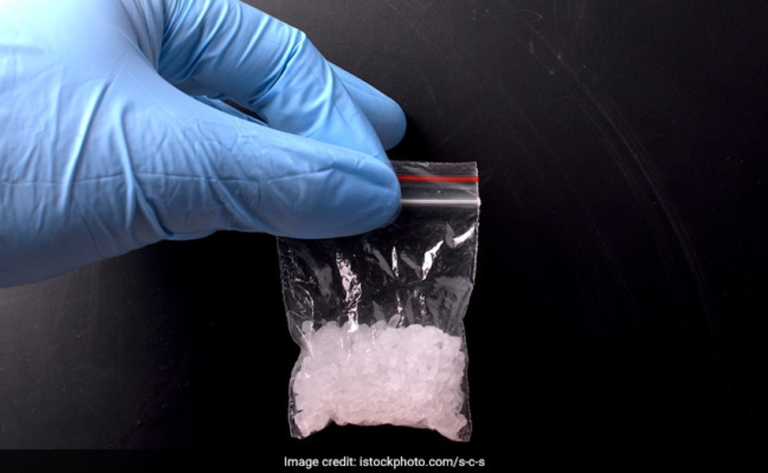
The investigative team had followed up on alleged drug dealing activities near Klerksdorp primary school. After searching for his apartment, the investigative team discovered neatly packed packets containing Crystal meth and CAT drugs worth about R1.5 million.
He made a brief appearance before the Klerksdorp Magistrate’s Court shortly after his arrest. The state successfully opposed bail, and the accused remained in custody until ultimately being convicted of dealing in drugs.
The Provincial Head of the Directorate for Priority Crime Investigation, Patrick Mbotho, a Major General, welcomed the sentence and thanked the investigative team and the National Prosecuting Authority (NPA) for their outstanding work.
WILLIAM Fowler, a former Chairman of the Federal Inland Revenue Service (FIRS) is listed among prominent and politically exposed Nigerians owning properties in Dubai, United Arab Emirate (UAE).
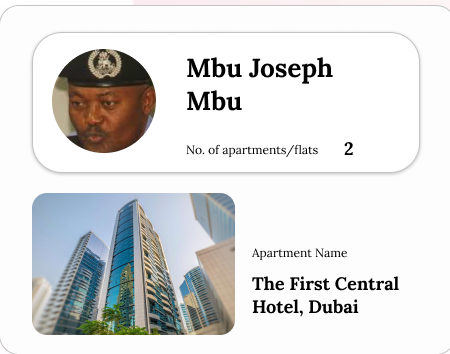
Fowler’s name popped-up alongside that of Tukur Buratai, the immediate past Chief of Army Staff (COAS); Mbu Joseph Mbu, a retired Assistant Inspector-General of Police (AIG), and Ahmed Ibrahim Dasuki, the late Sultan of Sokoto who died in 2016.
A document exclusively made available to The ICIR by the Center for Advanced Defense Studies, (C4ADS), a United State-based non-governmental organisation (NGO) shows that not less than 800 Nigerians were identified as owners of Dubai properties worth N146 billion.
The ICIR had earlier reported that Tafa Balogun, a former inspector general of police (IGP), who was disgraced out of office over corruption is one of the Dubai property owners. The list includes jailed Olisah Metu, former National Publicity Secretary of the People’s Democratic Party (PDP), and his spouse, Kanayo Olisa Metu. Other influential Nigerians who own property in the city identified as “one of the enablers of global corruption, crime, and illicit financial flows” are former aviation minister, Osita Chidoka and his spouse, Chidinma Chidoka. They both own two flats at the Azizi Feirouz Apartments.
William Fowler
William Babatunde Fowler is a successful tax administrator and a strong ally of Bola Tinubu, a former governor of Lagos State and chieftain of the ruling All Progressive Congress (APC). Prior to his emergence as the executive chairman of the FIRS, during the first tenure of President Muhammadu Buhari, fowler led the Lagos State Board of Internal Revenue for about seven years.
He managed the board from 2006 – 2013, where he was applauded for transforming the state’s revenue.
In August 2015, he was appointed as the FIRS chairman. Four years after, by December 2019, he was sacked by President Buhari and replaced with Muhammed Nami. This however is unconnected to various corruption allegations leveled against him.
The late Abba Kyari, former chief of staff to the president in a letter dated August 8, 2019, queried Fowler over a shortfall in expected tax collection. He was asked to explain the rationale for alleged noticeable discrepancies in budgeted tax collections by the agency and actual collected tax between 2015 and 2018.
A copy of the query served to Mr. Fowler
For instance, the letter stated that in 2015, real tax collected was N3.7trillion, while the proposed target was N4.5trillion. It targeted N4.027trillion in 2016 but collected N3.307trillion as total taxes. In 2017, the projected tax collected by the agency was N4.89trillion but it raked N4,027trillion and in 2018, the actual collection was N5.32trillion while the budgeted sum was N6.7trillion.
Though, the presidency exonerated Fowler, he was later arrested by the Economic and Financial Crimes Commission (EFCC) for his involvement over an alleged N100 billion tax evasion as it relates to Alpha Beta, a tax consulting firm supposedly linked to Tinubu.
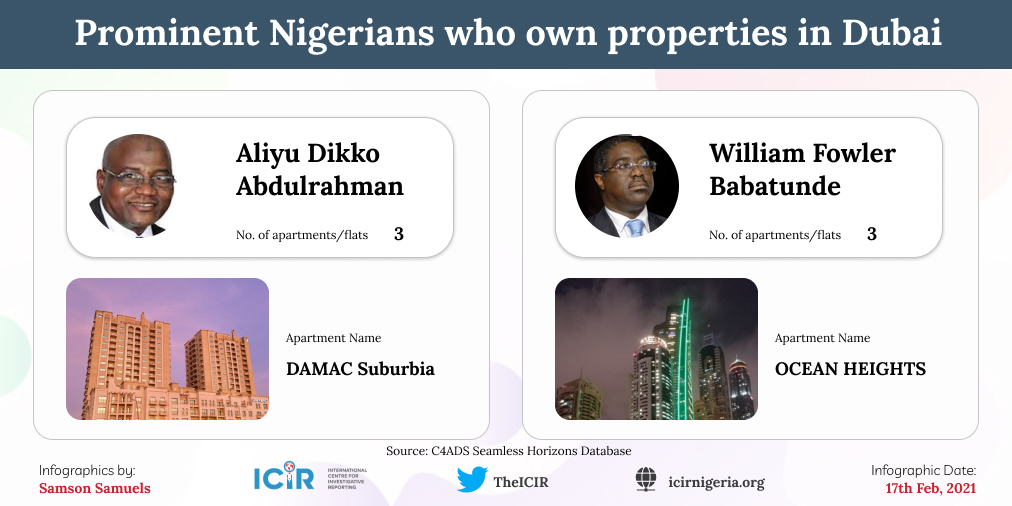
Based on the C4ADS data, Fowler owns three apartments at Ocean Heights. The 83-storey building was completed in 2010, and a 2-bedroom in the apartment is sold at an approximate sum of $409, 000. This implies the three flats could have gone for about $1.22 million.
Fowler did not respond to calls and text messages sent to him by The ICIR.
Tukur Buratai
From July 2015 to January 2021, Tukur Buratai, a retired Army lieutenant was the chief of army staff in Nigeria. Under his leadership, the Nigerian Army strived to restore peace in the North-East region, but not much success was recorded, due to several allegations ranging from non-payment of appropriate allowances, benefits, and supposed profiting from the decade-long crisis.
Buratai has always exonerated himself from personally owning a property in Dubai. He described the properties as family investments, made before he became the military chief.
“Substantial property is just an investment; my family does their own private business they should afford to have such property in Dubai.” Pushed further, he emphasized that, “the property I invested was far back as 2013 before I became the chief of army staff,” he told the BBC Hardtalk.
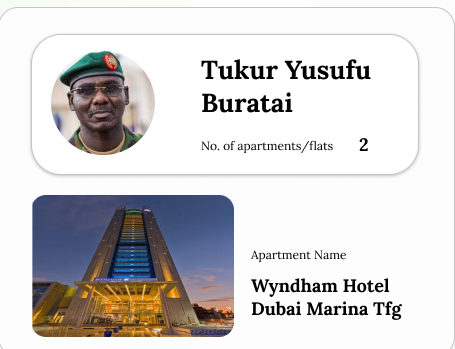
Nevertheless, available records from The ICIR show he owns two apartments at the Wyndham Hotel. This differs from the ones owned by his wife, Aishat Tukur Buratai who possesses two flats at the First Central Hotel.
A 2019 report authored by Mattew Page and published on the Carnegie Endowment for International Peace examined how the political elites have made Dubai a haven to stash away their ill-gotten wealth. Despite public concerns about the leadership of Buratai, President Buhari still submitted his name and that of past service chiefs for an ambassadorial appointment. On Wednesday, February 23, his appointment with others has been confirmed by the National Assembly.
Aliyu Dikko Abdulrahman
In 2017, Vice President Yemi Osinbajo while acting as president appointed Aliyu Dikko Abdulrahman as Chairman, Governing Board of the Bank of Industry (BOI). He was appointed with Olukayode Pitan who was to serve as the Managing Director of the bank.
Dikko was earlier presented to the National Assembly for confirmation to lead the National Pension Commission (NPC). However, his selection for confirmation by the Senate was rejected by the lawmakers. The Senate argued that the appointment contravened the National Pension Commission Act. He was to replace Chinelo Anohu-Amazu, former Director-General of the Commission who was sacked by the president in 2017. Anohu-Amazu is currently with the African Development Bank (AfDB).
As of July 2020, Abdulrahman was still the BOI chairman, but The ICIR could not ascertain his present status. He could not be found on LinkedIn, a professional social media group. The ICIR reached out to Hadiza Olaosebikan, Head of Corporate Communications at BOI but she did not respond to calls. Text message to her line was also not returned.
Abdulrahman owns three flats at DAMAC Suburbia apartments located close to Sheikh Zayed Road, Dubai. It will cost nearly $254, 000 to secure one apartment in the twin-towers luxurious building. But, Abdulrahman remains one of the politically exposed Nigerians who owned apartments in Dubai.
Mbu Joseph Mbu
Mbu Joseph Mbu is known as Nigeria’s most controversial police officer. In 2015, he gave a shoot-out order to the police as a way of preventing electoral violence in the wake of the 2015 general election. As former Commissioner in Rivers State, he is believed to have eschewed professionalism to satisfy political demands of the former president Goodluck Jonathan in Rivers. This occurred at a time Rotimi Amaechi, the state governor left the PDP for the ruling party while in office.
His strong closeness to Jonathan’s family, especially the first lady who was accused of over N9.2 billion fraud also became an issue of public concern.
After much public outcry, he was later removed from Rivers and posted as Police Commissioner in the Federal Capital Territory (FCT). He was eventually retired after spending 31 years in service. Findings from the property record showed that he owns two apartments at the First Central Hotel, where Buratai’s wife bought her two apartments.
Efforts to reach out to Mbu were also unsuccessful. His mobile number was unreachable and text message sent to his line has not been returned.
THE Amnesty International Nigeria has said that education is under attack in northern Nigeria.
It said this while reacting to the recent kidnap of school children from Government Girls Secondary School, Jangebe, Talata-Mafara Local Government Area of Zamfara State, on Friday night.
“Education is under attack in northern Nigeria. Schools should be places of safety, and no child should have to choose between their education and their life. Other children have had to abandon their education after being displaced by frequent violent attacks on their communities,” it said.
While calling for the safe return of the girls and others still in the custody of armed men, Amnesty Nigeria noted that “attacks on schools and abductions of girls are war crimes.”
“The girls abducted are in serious risk of being harmed. Nigerian authorities must take all measures to return them to safety, along with all children currently under the custody of armed groups.”
Mohammed Yerima, spokesperson for the Nigerian Army, had earlier toldThe ICIR on the phone that the Army were unaware of the kidnap several hours after the incident.
Nigeria has experienced many kidnappings in schools, especially in the northern part of the country. The first of such ugly incident took place in 2014 with the kidnap of 276 girls from Girls Secondary School, Chibok, Borno State.
Boko Haram, an Islamist extremist terrorist group, claimed responsibility for the kidnap.
Although some of them have regained their freedom, the whereabouts of 113 of them are still unknown till date.
Dapchi Kidnap
Four years after, another 110 students were kidnapped from Government Girls’ Science and Technical College in Dapchi, Yunusari Local Government area of Yobe State.
Boko Haram also claimed responsibility for the kidnapping.
Five schoolgirls died on the same day of the kidnap, while the others were released in March 2018 except the lone Christian girl, Leah Sharibu. Till date, Sharibu’s whereabouts are still shrouded in mystery.
Kaduna
In November 2020, seven school children were kidnapped by unknown gunmen at a private school in Kaduna State.
Premium Times reported that seven students and a teacher were kidnapped at Prince Academy, a school located at Damba-Kasaya village in Chikun Local Government Area of Kaduna State.
Kankara, Kastina
In December 2020, about 300 students, all boys of Government Science Secondary School, were kidnapped in Kankara Kastina State.
A criminal gang, who wanted to take revenge against others, claimed responsibility for the abduction.
On 17 December, the kidnapped students were freed in neighbouring Zamfara State.
Kagara, Niger State
Again, only on Tuesday night, gunmen suspected to be kidnappers, invaded a school in Niger State, whisking away an undisclosed number of students.
The latest incident, ThisNigeria gathered, took place at Government Science College (GSC) Kagara.
The bandits were said to have subdued the security guards and abducted the students.
Meanwhile, President Muhammadu Buhari has ordered security operatives to ensure that all those kidnapped are rescued.
According to his media aide, Bashir Ahmad, the president has asked security chiefs to coordinate the rescue operation of the kidnapped students and teachers
Also, the Niger State Government has said that it has taken concrete security measures to ensure safety in the state and safe return of the abducted students of the Government Science College, Kagara.
The Nigerian Army has said it is unaware that gunmen kidnapped 300 female students in Zamfara State Friday midnight.
Mohammed Yerima, the Nigerian Army spokesperson, said this in a telephone interview with The ICIR when asked for an update.
“I am not aware; you are just informing me of it,” Yerima told The ICIR. There are reports that unknown gunmen from Government Girls Secondary School, Jangebe, in Talata-Mafara Local Government Area of Zamfara State, were kidnapped on Friday night.
According to the BBC, the female students were kidnapped at the boarding school by yet-to-be-identified gunmen.
The Punch also reported that a staff member of the school confirmed that the gunmen arrived in the school around 1 am on Friday with Hilux vehicles and motorcycles and forcefully evacuated the students.
According to the staff, the gunmen besieged the school, pretending to be security personnel.
“When they came into the school, we thought they were security personnel, but to our utmost fear and dismay, they started putting the girls into Hilux vehicles and motorcycles and then drove out of the school,” the newspaper quoted its source.
This is coming a few days after ‘bandits’ kidnapped about 100 Nigerian schoolboys from the all-boys Government Science College (GSC) in Kagara Town, Niger State.
The ICIR also reported how Nigerian schools in the northern part of the country were targeted in terrorist and bandit attacks.
About 1,000 school children have been kidnapped in Northern Nigeria from 2014 to 2021 across five states; Niger, Yobe, Borno, Zamfara and Niger.
Less than 10 days ago, Adamu Mohammed, inspector-general of police, had announced the deployment of 275 ‘special police officers’ on Operation Puff Adder 2.
According to Adamu, the special security forces aimed to reinforce the fight against banditry, kidnapping, armed robbery, and other violent crimes being perpetrated across the country.
Welcoming the 275 special police officers to Zamfara, Abutu Yaro, the state commissioner of police, had said inadequate personnel had ended with deploying the officers in the state.