Home Blog Page 1873

Nigerians react to bill seeking to make degree minimum qualification for journalists

A cross-section of journalists and other Nigerians have expressed divergent views over the proposed amendment to the National Press Council Act by Francis Agbo, the lawmaker representing Ado/Ogbadigbo/Okpokwu in the federal constituency in the House of Representatives, Benue state.

The Act, which repealed the Nigerian Media Council Act 1988, was enacted in 1992 to promote high professional standards for the Nigerian press, attend to complaints from the public over journalists conducts and complaints from the practitioners over public attitude towards them, and related matters.

Agbo, a journalist-turned-politician, had proposed some amendments to the bill, at a plenary in November 2019. The changes being sought by him include making a degree in journalism training or related disciplines the minimum qualification for practising the profession; increase in punishment for offenders and including a provision in the law that will compel media owners to pay their workers regularly, failure of which their outfits will be shut by the government.

Agbo argued that raising academic qualification for practising journalism in the country would check quackery and further dignify the profession.

He also wants the punishments prescribed by the subsisting law to be reviewed upward to reflect the socio-economic dynamics of nearly the past three decades that the law was enacted.

Agbo was a former political editor of the Sunday Sun and group political editor of the Leadership newspaper. He was appointed Senior Special Assistant on Media Relations by Seriake Dickson, a former Governor of Bayelsa state and now Senator, representing Bayelsa West in the current 9th National Assembly. Agbo also worked with late Dora Akunyili, a former minister of information, as a Senior Special Assistant.

The new bill seeks amendment to sections 19 (1) (a), 19 (1) (b), 21 (5) (a), 21 (5) (b) and 35 National Press Council Act Cap N128 LFN 2004.


Francis Ottah Agbo.
Source: Dateline Nigeria

Section 19 (1) (a) and (b) of the Act says “subject to rules made under this Act, a person shall be entitled to be fully registered under this Act if…(a) he has attended a course of training recognised by the Council so acquired, with the cognate experience recognised by the Council; or (b) the course was conducted at an institution so approved, or partly at one such institution and partly at another or others…”

But the new amendment wants those paragraphs changed. For example, Section 19 (1) (a) now should read: “…He holds a first degree, Higher National Diploma Certificate or its equivalence in Journalism, media Art, or communication from any Higher Institution in Nigeria or elsewhere,” and  19 (1) (b) “in the case of a person who has a first degree in any other course, he shall within 5 years obtain a postgraduate certificate in Journalism, media Art, Communication, or related field from any higher institution in Nigeria or elsewhere.”

Similarly, section 21 (5) (a) and 21 (5) (b) which specify the measure of punishment for offenders of the Act is listed for amended in the bill.

The subsisting Act, section 21 (5) (a) reads that “In a high court, he (offender) shall be liable to a fine not exceeding N5,000 or imprisonment for a term not exceeding two years or to both such fine and imprisonment and to an additional fine of N200 for each day during which the offence continues,” and; (b) “In a Magistrate Court, he shall be liable to fine of N3000 and to an additional fine of N100 for each day during which the offence continues.”

Agbo is requesting that section 21 (5) (a) be amended as ( a) “In a High Court, he shall be liable to a fine not exceeding N200, 000 or imprisonment for a term not exceeding two years or to both such fine and imprisonment and an additional fine of N500 for each day during which the offence continues;” and Section 21 (5) (b) will be amended as; “In a Magistrate court, he (offenders) shall be liable to a fine of N 300,000 and to an additional fine of N500 for each day during which the offence continues.”

The bill, scheduled for second reading soon, also demands that Section 35 of the Act which stipulates that proprietors of newspapers, magazines or journals should submit an annual report on the performance of their outfits to the council should include mandatory payment of monthly salaries to their employees. It notes that proprietors that owe their workers for more than three months should have their outfits shut.

Some of the journalists who spoke with The ICIR over the matter supported the move while other opined that addressing the challenges facing journalism in the country was beyond legislation. The same goes for other Nigerians who shared their thoughts with this newspaper over the development.


Akindele Orimolade

In his opinion, Akindele Orimolade, a lawyer and veteran journalist said the move was in the best interest of the profession.

Orimolade, who is the Head, Investigative Unit of National Star newspaper decried unprofessional conducts among journalists in the country.

“I think it’s the right thing by the House of Reps to put journalism in the right place. If you did not go to university to study Law and attend Law school, you cannot practice Law. If we are going to have a critical and sensitive profession as journalism, we should have people who are trained, who are skilled in that field to handle it. If you are skilled as a journalist, you’ll be told so many things about patriotism, about ethics of the profession, about what you should publish, about what you should post.

“There are some information you have at your disposal which you don’t use immediately because of national interest and all that. But, if you are not a trained journalist, you’ll not able to do this. I think it’s good for the profession,” he stated.

He said if editors share their experiences on “poor” copies they receive from their reporters, people would feel sorry for them.

He explained that though some of the journalists who didn’t have a background in journalism training could be doing well, sanitizing the profession should not be jettisoned because of those persons.

He said the likes of former governor of Ogun State, Olusegun Osoba who did not study journalism in school but rose to the pinnacle of the profession later went through journalism schools locally and abroad, where they acquired needed training for the job.

Besides, he said other veterans grew from being office assistants to being Editors of their organizations where they worked because they exposed themselves to training.

Orimolade also strongly frowned at many of the undercover reports done by some persons in the country “against the ethics of the profession.” He argued that if the people who specialize in conducting and reporting undercover “such as bribing policemen on the highways from one part of the country to the other” had journalism training in school, they would know that they were not doing real journalism.

He said undercover for any trained journalist should always be the last resort.

Rafat Salami.
Source: Women in Media

Rafat Salam, immediate past secretary of FCT NUJ council said the NUJ constitution is very clear on who a journalist is.

“The NUJ constitution already provides for that and says that before 1993, you should have practised for five years, otherwise, whatever your discipline is, you should have at least a diploma in journalism. That was the idea behind the setting up of the International Institute of Journalism; that person who has an interest in journalism should go there and do a post-graduate diploma, as the case may be,” she said.

According to her, going to the school and other journalism institutions would help people who want to practise journalism to understand the ethics of the profession and possess the academic requirement.

Rafat, a senior journalist with the Voice of Nigeria, noted that journalism is about flair, passion and ability to communicate, but practising the profession in the country requires academic qualification.

She said she didn’t see the amendment as any attempt to shut anyone out of the profession by reviewing the Act.

She explained that the decision to raise the entry requirement should be a wakeup call to everyone who wants to practice journalism to go to school and do journalism, adding that those who are already graduates should apply for a post-graduate diploma in journalism to enable them practice.

“You can’t be an accountant, no matter how good you are, you need qualifying professional examination and certification for you to do it. I think we should all embrace it. Those who don’t have a diploma in journalism can go and have a diploma to enable them to practice.”

She also said there is no system that couldn’t get rid of quacks or minimize it if it is so determined. She pointed out that no professional group could make its profession an all-comers affair, as she emphasized that if journalists in the country agree that degree is the minimum requirement that should be used for employment in the media, employers would have no option to agree with the decision.

Kemi Yesufu, Editor-in-Chief of Frontline newspaper said though the decision to increase the academic qualification is good, there are yet very talented practising journalists who were not trained in school to report.

“I think it’s ok, but the challenge is that there are some talented people that have special education, very hardworking journalists. Some of the good reporters we have now actually come into the media with their secondary education. With time, they went to university (didn’t study journalism or related courses) and are still doing very well in the media.”

She expressed hope that the amendment would not be discriminatory at last, if it eventually scales through.

She however agreed with the argument that people in other fields are ensuring that only those who have a degree or relevant qualification could practice them. She expressed caution that journalism is a profession and a career that could accommodate people from other fields, especially when those people are very skilled.

“I’m just saying that if you have a young person that likes to write, and for certain reasons, he’s not been able to attend tertiary institution, I understand what people are saying with Law and Medicine, but when it comes to writing and informing people, you see that people go to social media, post recorded videos of newsworthy events. So, journalism is about informing people,” she explained.

Franklin Adebayo

For Franklin Adebayo, a real estate consultant and a trained journalist based in Lagos state, the amendment to the bill is just a step towards sanitizing the profession.

He said a significant percentage of brilliant journalists in the country were not Mass Communication graduates, but graduates of History, Political Science and other courses.

Adebayo said legislation of this kind could only attempt to minimize quackery “and other infiltrators” in the profession but would never eliminate it.

He attributed his position to many dimensions to the practice of journalism in the 21st century, including the use of social media.

“The issue of quacks in the profession still rests on many of those factors that we have known for ages as students and practitioners. The only twist to it is the dimension it is taking, given the powerful emergence of social media. The multifaceted matters that are needed to be dealt with in this fourth estate or fourth pillar of democracy have little connection with qualifications but much of proper training and adherence to professional ethics. This is because they are correlative and none of them can be addressed in isolation. An attempt to do that will definitely be an effort in futility.”

Read also: International Center for Journalists offers Health Innovation Journalism Fellowship

He cited poor remuneration for journalists as one of the factors that the new law might find difficult to cover, as according to him, the law is only proposing monthly salary, but it did not specify the minimum amount that should be paid by media owners.

“Many practising journalists in Nigeria are poorly paid. This subjects them to a lot of untold abuses and tacitly explains why they are always at the mercy of their news sources. In such instances, the attribute of objectivity and fairness has almost totally vacated the corridor of consideration once brown envelopes were passed and received.

“Do you think journalists in Nigeria fall from heaven? Are they not a reflection of the same society where we are and where many professionals adopted career shift to greener pastures because the profession is not paying off? Even as it stands, the porosity in the profession is not because of qualifications. It’s because of survival of the fittest,” he reasoned.

He cited religion, ethnicity, political sentiment, ownership influence, weak professional body, corrupt regulatory agencies, social media invention and proliferation, activities of bloggers among others as major challenges responsible for ballooning quackery, misinformation and distortions of news in the country.

While noting that politicians directly or indirectly own about 90 percent of media outfits in the country, he suggested that the use of social media should be regulated by the government.

“This, therefore, implies that the bill cannot be impactful without taking into consideration the absolute need to regulate social media,” he said.

Ada Egbu Ezenwa

Ada Egbu Ezenwa, an entrepreneur based in Abia and Lagos states gave a similar perspective to the debate.

She said though journalism in Nigeria seems like an all comers affair, the infiltration of people from other spheres of endeavour isn’t peculiar to journalism alone.

She listed other disciplines such as banking, aviation as some of the fields that accommodate people from diverse fields.

Ezenwa said in newspapers, for instance, there are health columns, history, crime, religion among others, and that it won’t be wrong for any sound professional in these areas to write about issues that should go into those columns. But, she advised that a well-trained journalist in the position of an editor must look into such copies.

She opined that in the course of recruiting journalists by media owners, the Nigeria Union of Journalists and guild of editors must be part of the screening and employment process, so they could recruit the best heads.

According to her, the National Assembly cannot do the work of serious training by higher institutions, media house and editors through a bill.

She explained that corruption remained one of the ills facing the profession, as according to her, members of the political class could bribe editors to push their sponsored or unfounded stories and achievement through compromising journalists.

“The problem here is more of the loopholes/shortcomings in practice than law,” she said, adding that “quackery in the true sense, is not only when a person is not properly trained, practice is key. Some owners of media houses did not receive any relevant training. They are capitalists and entrepreneurs who sometimes dictate what should be reported in their mediums.

“The house should rather look at the issues on how to give journalism adequate protection and to ensure that the ethics of this noble profession are strictly adhered to. Let’s not forget that the world is evolving and many who have a flair or passion for writing have become a part of the system somehow,” Ezenwa added.

Meanwhile, Patience Edamivoh, a former employee of Edo State Liaison Office, Abuja, threw her weight behind the bill.

Read also: 66 Nigerian journalists, 3 media houses attacked in 2022 – IPC

She said passing the bill to peg a minimum qualification of a degree or HND on journalism in the country would be a welcome development.

Edamivoh noted that there were too many practitioners who lacked needed skills to do the job.

She said if passed into law, the bill would stop people who claimed to be journalists but lack the skills and would consequently add more dignity to the profession.

With the law, she said practitioners would be able to demand better pay and would be motivated to be more productive.

The National Universities Commission (NUC), had in January 2020 unbundled Mass Communication into several separate degree programmes in the nation’s universities.

The commission disclosed that the step was taken to reposition and revitalise university education in the country.

The NUC said unbundling the programme was to meet contemporary demands in university education, in line with global development and best practices.

The programme was split into Journalism and Media Studies; Public Relations; Advertising; Broadcasting; Film and Multi-media studies; Development Communication Studies; and Information and Media Studies.


Malami will not allow Bawa to succeed as EFCC chairman – Sagay

0

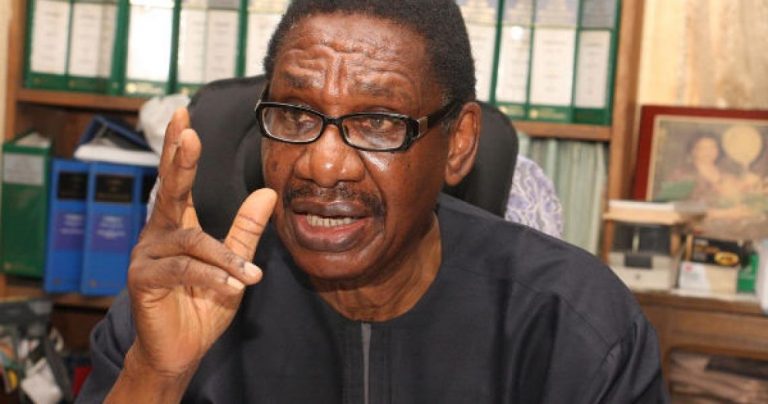
Abubakar Malami, attorney-general of the federation (AGF), may not allow Abdulrasheed Bawa  to succeed as chairman of the Economic and Financial Crimes Commission (EFCC), according to Itse Sagay, chairman of the Presidential Advisory Committee Against Corruption (PACAC).

In an interview with The PUNCH, Sagay described Malami as a politician, stressing that the power of the AGF must be checked so as not to control the activities of the anti-graft agency.

He faulted the fact that Malami and Bawa came from the same state, adding that both might even be related.

“This issue is a very big question because I noticed that they both come from the same state of Kebbi and they may even be related,” Sagay said.

“For me, that is not a very healthy thing because the chairman of the EFCC and the EFCC are supposed to be independent.

READ ALSO: EFCC arraigns ex-Lagos Scholarship Board boss for allegedly diverting N127m

“They are not politicians, but are trained security officers. The attorney-general is a politician who has all the weaknesses and loads of a politician.

“He has people he is obliged to. He has people who are close to him. Some of them may be criminals who might have committed crimes. In fact, some of them may deliberately do things because they think they know the attorney-general.

“So, in such a situation, if Bawa is related to the attorney-general, then there will be a problem because he will not be able to do his job freely because the attorney-general will certainly interfere.

“He has already indicated his tendency to interfere in both the EFCC and the ICPC with the regulations he purported to make months ago. So, I am not comfortable at all that the possibility that they might be related.”

The PACAC chairman said the AGF wielded too much power which had increased over the years.

“Malami has never been inclined to allow the anti-corruption agencies to operate freely. He is always sitting on their neck one way or the other,” Sagay said.

“I have complained about that several times and nothing has happened. In fact, he has become more powerful. So, I will not be comfortable if they are related. I don’t want any outside influence on the EFCC or the ICPC.”

Although admitting that he did not know the newly-appointed chairman of the EFCC on a personal level, Sagay said he was impressed by his curriculum vitae and background.

He said since Ibrahim Magu, former acting chairman of the commission, had been removed, it was time for all parties to move on and work together to ensure Bawa’s success.

Cryptocurrency: There is a place for regulation, not prohibition – Osinbajo

“I don’t really know him. I have just read what has been said about him and he seems to have impressive credentials and a fairly good record from what I read apart from this issue of trucks which the EFCC has denied on his behalf,” Sagay said.

“So, inasmuch as the removal of Magu to me looks unsatisfactory, we have to move on and if he is as good as his credentials indicate, then I think the future looks promising for the EFCC.”

The Senate had, on Tuesday, confirmed Bawa following his nomination by President Muhammadu Buhari earlier this month.

Sagay and Malami are both serving in the government of President Muhammadu Buhari.

Court refuses Maina’s second bail application

0

THE Federal High Court, Abuja, has denied Abdulrasheed Maina, former chairman of the defunct Pension Reformed Taskforce Team (PRTT), a second bail application.

Okon Abang, presiding judge,  ruled on Thursday that his bail application lacked merit before the court.

According to Abang, Maina had jumped bail when his application was initially granted by the court.

He added that the medical report brought from the University of Abuja Teaching Hospital showed that Maina was not under any medical emergency.

The judge said Maina was not only a flight risk but a proving risk, having fled to the Republic of Niger and Chad in violation of the court order. The judge said Maina had “disappointed the court.”

Abang also refused to grant the defendant’s application for an order directing the Economic and Financial Crimes Commission (EFCC) to release his confiscated property, including a BMW car, dismissing his request to set aside an order of trial in absentia made by the court late last year.

Maina had earlier applied through his lawyer, Anayo Adibe, seeking the court to grant him another bail.

Adibe argued before the court that his client only travelled to the Niger Republic for knee surgery and did not jump bail against the widely held belief.

In the motion, the ex-pension boss told the court that he had reasonable and responsible people who would act as sureties if granted bail.

The ICIR had reported how Maina’s former surety, Ali Ndume,  senator representing Borno South, was ordered to be remanded in Kuje Correctional Centre over the former’s refusal to appear before the court after bail.

Maina refused to appear before the court from the time it granted him bail on the grounds of failing health condition.

He was eventually extradited to Nigeria by operatives of the Nigeria Police Force earlier on 30th November 2020 through a collaborative effort with INTERPOL NCB, Abuja and their Nigerien counterpart.

Maina is standing trial over charges brought against him by the EFCC for ‘mindlessly’ looting billions of naira in the pension coffers  and other money laundering-related issues during his tenure as the chair of the PRTT.

ENDSARS: Kwara receives panel report, to set up implementation committee

0

THE Kwara State judicial panel of enquiry probing rights abuses by the defunct Special Anti-Robbery Squad (SARS) and other units of the force in the state has submitted its final report and findings to the state government for onward implementation.

Rafiu Ajakaye, chief press secretary to Governor AbdulRahman AbdulRazaq, revealed this in a statement issued on Thursday.

According to the statement, AbdulRazaq, who received the panel’s report from Tunde Garba, chairman of the panel, said the state would set up an implementation committee on its recommendations.

“Kwara State is one of the few states that are turning in their reports. It shows that we are on track. We will also set up an implementation committee to look into the recommendations of the panel,” AbdulRazaq was quoted to have said.

“I thank the committee for doing a very delicate work. You were able to bring your experience and expertise to bear on the difficult task. We understand from the size of the document you are submitting that a lot of work has gone into it. You needed more time which we acceded to.”

He commended the police and the entire security agencies in Nigeria for their services to the nation and urged them to continue to do their duties diligently and in line with the law.

Read AlsoReactions as Oba of Lagos claims hoodlums stole $2m, N17m during #EndSARS palace invasion

“We must thank the Police and other security agencies for their services to Nigeria for keeping us safe. We encourage them to do their work diligently. Some of the demands of #ENDSARS are already being met by the president. Salaries and emoluments of the police are being looked into,” he said.

“President Muhammadu Buhari is also rolling out a lot of programmes through the social investment programme for the youths and indigents to ensure there is prosperity in the country.

“We need to remain focus and maintain law and order to tame the current insecurity in the country. We need to live together peacefully for the progress of the country.”

For his part, Garba said if the government adopted the recommendations of the panel, it would help to support victims of identified cases of police brutality and also improve the living conditions of serving and retired police officers.

The panel’s report was based on various petitions received, bordering on alleged police brutality, unlawful arrests, extortion, violation of fundamental human rights, and impunity, the retired judge said.

Pathologist contradicts police at #ENDSARS panel, says Abugu died of anoxia

“The report is in three volumes; volume one is the main report, volume two contains the petitions received and adopted by the panel, while volume three contains the list of all the exhibits tendered and admitted during the panel’s proceedings,” he said.

“The main report contains proceedings, our findings and recommendations on each of the 25 petitions received and treated holistically by the panel. It is, therefore, our hope that the recommendations therein, if adopted by the government, will wipe the tears and put a smile on the faces of all the victims of police brutality and even the serving and retired police officers inclusive.”

The panel recommended, among other things, that some erring F-SARS operatives named in unlawful activities be prosecuted and legitimate petitioners compensated with varying sums.

The report also recommended that officers of the Nigeria Police be made to enjoy adequate training and their salaries and emoluments reviewed upward to reduce excesses and improve productivity in the system.

Other members of the panel are Issa Ojibara; Oluronke Adeyemi; Hajia Fatima Jummai Audu; Jumoke Olaoye; Idris Gana Jibril; Nafisat Musa Buge; Kaosarah Abdulrasaq Adeyi; Hassan Yusuff Adio; and Shuaib AbdulGaniyu (Secretary).

ICPC recovers $919,207 from staff of federal high court

0

THE Independent Corrupt Practices and Other Related Offences Commission (ICPC) said it has secured the final forfeiture of $919,202.07 fraudulently kept in an interest yielding bank account by some staff of the Federal High Court, Port Harcourt in Rivers State.

This is contained in a statement posted on the website of the ICPC on Thursday stating that the staff of the Federal High Court involved in the illegal transaction includes the Chief Registrar and Deputy Registrar of the Court.

According to ICPC, the fund was recovered from three respondents including the Chief Registrar, the Deputy Registrar of the Federal High Court and the Station Road, Port-Harcourt Branch of Union Bank of Nigeria.

The anti-graft agency added that the recovery followed a petition against some officials of the court for alleged violation of ICPC Act 2000, the Commission’s special investigation team uncovered the money, “being the sum of confiscated, value and sold vessel hidden in a bank account”.

ICPC said an ex-parte motion for an Interim Order of Forfeiture of the fund was granted earlier in November 2020 following an investigation into the matter.

Ruling on the application for final forfeiture of the fund, Mohammed Sani, a Judge at the Federal High Court, Port Harcourt said the commission had justified with evidence reasons for final forfeiture of the contentious money.

Sani ordered Union Bank, Station Road Branch, Port-Harcourt to pay the money into the Federal Government’s Treasury Single Account as it belongs to the Federal Government of Nigeria.

Although the names of the Court Staff were not disclosed, on to the website of the FHC in Nigeria; Mba N.A. Omotosho is the deputy chief registrar of the Federal High Court, Port Harcourt.

I wrestled with demons in Kuje prison – Olisa Metuh

0

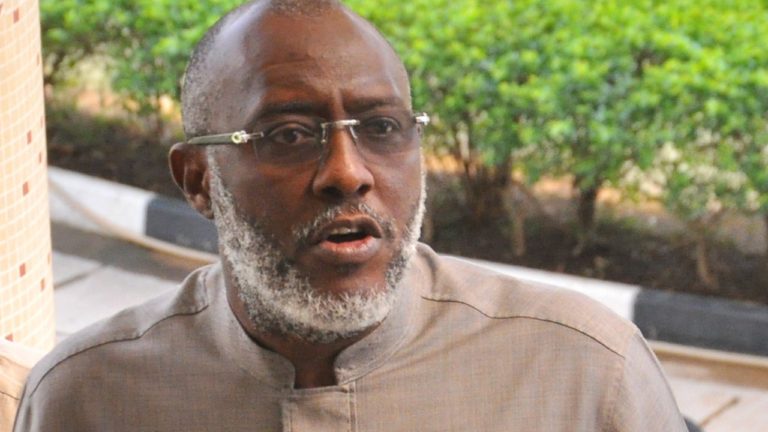
OLISA Metuh, former national publicity secretary of the People’s Democratic Party (PDP), has narrated his ordeal during his 10-month stay at Kuje Correctional Centre, saying that he fought with demons and devils.

Metuh was sentenced to seven years in a correctional facility after an Abuja Federal High Court found him quilty of money laundering in February 2020.

The Economic and Financial Crimes Commission (EFCC) had charged Metuh and his company, Destra Investment, with seven counts bordering on criminal diversion of money received from former national security adviser (NSA), Sambo Dasuki.

Okon Abang found him guilty of illegally receiving monies to the tune of 400m naira from Dasuki.

But the judgement was set aside by the Court of Appeal in December.

Read AlsoCorruption: Lawal, Kalu, Amosu, Metuh top EFCC’s major arraignments for 2021

A three-man panel led by Stephen Adah in a unanimous judgment delivered that the proceedings of the Federal High Court leading to the conviction of Metuh and his company were tainted with bias, and therefore must not be allowed to stand.

Adah, who delivered the lead judgment, held that the utterances of the trial judge, Okon Abang, in the course of the trial, established that he was biased against the convicts.

He, therefore, ordered that trial be conducted afresh and directed that the case file be sent back to the chief judge of the Federal High Court for reassignment to another judge other than Abang.

Tafa Balogun, Olisa Metuh and other prominent Nigerians who own properties in Dubai

While addressing his supporters at a reception held in his honour on Thursday in Awka, Anambra State capital, Metuh described his 10-month stay behind bars as the lowest point in his life.

He vowed to serve God as a result of his harrowing experience.

“I have been to the lowest, deepest end of the valley. I have wrestled with the demons. I wrestled with the devils,” he said.

“The Almighty God has saved me. For that, I commit the rest of my life to the service of God and the people.”

Seven Air Force officers who died in plane crash buried in Abuja

0

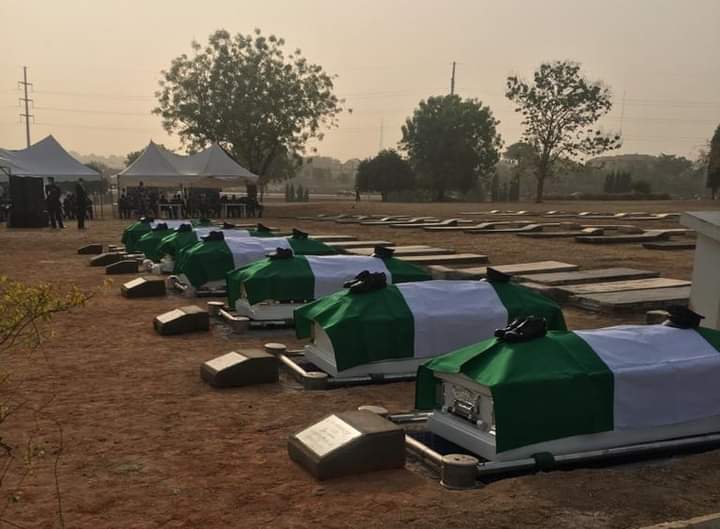
NIGERIANS, on Thursday, mourned as the remains of seven officers of the Nigeria Air Force who died in a plane crash on Sunday were buried in Abuja, the nation’s capital.

The military funeral procession was organised for the seven officers as they were laid to rest at the National Cemetery, Lugbe, Airport Road, Abuja.

The Air Force officials who died in the crash were Haruna Gadzama, flight lieutenant and captain of the aircraft; Henry Piyo, co-pilot and flight lieutenant; Micheal Okpara, a flying officer and airborne tactical observation system (ATOS) specialist; and Bassey Etim, a warrant officer.

Others were Olasunkanmi Olawunmi, a flight sergeant (ATOS Specialist); Ugochukwu Oluka, a sergeant (ATOS Specialist); and Adewale Johnson, an aircraftman who was the onboard technician.

7 officers confirmed dead in military plane crash

According to Ibikunle Daramola, spokesperson for the Nigeria Air Force, the aircraft Beechcraft B350i crashed very close to the Nnamdi Azikwe International Airport in Abuja after reporting an engine failure en-route to Minna, Niger State.

Although the NAF said the burial was strictly by invitation due to compliance with COVID-19 protocol, top military officials were in attendance at the funeral.

Salihi Magash, minister of defence; Lucky Irabor, chief of defence staff; Ibrahim Atahiru, chief of army staff; Isiaka Amao, chief of air staff, and family members of the deceased were in attendance.

Read Also: FCT, Kaduna remain places where Nigerians are most likely to die on the highway

Reacting to the funeral procession, many Nigerians took to the social media to bid farewell to the fallen heroes of the nation’s Air Force.

Pathologist contradicts police at #ENDSARS panel, says Abugu died of anoxia

0

AHMED Abimiku, chief consultant pathologist at the University of Abuja Teaching Hospital (UATH), Gwagwalada, says Ifeoma Abugu died of anoxia. This means that she died of lack of oxygen supply to the lungs or tissues.

Abugu was arrested at Wumba village near the Lokogoma area, Abuja, on September 10, 2020, following an allegation by Special Anti-Robbery Squad (SARS) operatives that Afam Ugwunwa, her fiance, with whom she had just had a marriage introduction, was a drug dealer.

She died on September 11 with the police attributing her death to drug overdose.

But while appearing before the Federal Capital Territory judicial panel of enquiry probing rights abuses by the defunct SARS and other units of the force on Wednesday, Abimiku said lack of oxygen, which led to her death, could be “as a result of strangulation, choking or suffocation.”

He said the result of an autopsy carried out on the deceased showed that her fingernails, lips and tongue were bluish, indicating that she had a respiratory problem before her death. The pathologist also noted that there were bruises on her knees.

READ ALSO#ENDSARS: Lagos judicial panel summons IGP over alleged seizure of 25 acres of land

He said a look at her organs revealed that there was an accumulation of fluid in her lungs, which led to pulmonary congestion, adding that an examination of her kidney also revealed a noncancerous cyst and multiple fibroids.

Explaining further, Abimiku said dead sperm was found in her vagina.

Refuting the testimony of the police, he said body fluid was used to test for all eleven drugs commonly abused, including cocaine, rohypnol, diazepam, barbiturate, marijuana, narcotics, cannabis, tranquillizers, and amphetamines, but all results came back negative.

Under cross-examination by James Idachaba, police counsel, the pathologist said a DNA test could not be carried out on the sperm deposit found in the deceased, because it had been there for over 72 hours.

Following his testimony, the Suleiman Galadima-chaired panel ordered that the corpse of the deceased be released to the family for burial by the police.

The panel further adjourned the case till March 23 for the defendants to appear before the panel.

Outrage as Buhari mourns ex-Saudi minister but ignores victims of Maiduguri attack

A CONDOLENCE message released by Muhammadu Buhari on the death of a former Saudi Arabian minister has elicited outrage from Nigerians who were angered that the president ignored victims of a Boko Haram attack in Maiduguri, Borno State capital.

No fewer than 10 persons died, while scores were injured when Islamic insurgents launched rocket-propelled grenades on Maiduguri on February 23.

On the same day Nigerians were killed by insurgents in Maiduguri, Ahmed Zaki Yamani, a former Saudi Arabian minister of petroleum resources, died in a London hospital at the age of 90.

Buhari did not issue any statement to mourn the Maiduguri victims. Rather, he released a condolence message to mourn the Saudi former minister’s passing, whom he described as a ‘world statesman and consummate oil minister.’

Going by the condolence message contents, Buhari and the late Yamani were associates in the Organisation of Petroleum Exporting Countries (OPEC) when Buhari served as Nigeria’s petroleum minister during the Murtala Muhammed regime.

The condolence message, posted on Twitter on February 24 by Garba Shehu, senior special assistant, media and publicity, was praised for the late Saudi politician, and sadness at his demise.

  • Buhari mourns former Saudi oil minister

The condolence message read, “President Muhammadu Buhari has expressed sadness over the death of Saudi Arabia’s longest-serving oil minister, Sheikh Ahmed Zaki Yamani, who died at a London hospital at 90. Reacting to the passing of Yamani, President Buhari said, “Yamani was one of the greatest and most skilful negotiators I ever met when I was minister for Petroleum Resources during the Murtala/Obasanjo regime.”

“According to the President, “the late Yamani was a towering figure in the Organisation of Petroleum Exporting Countries (OPEC) because of his remarkable leadership skills and fierce commitment to protecting the interests of oil-producing countries.”

“President Buhari recalled that the 1973 oil embargo drew world attention to Yamani’s tremendous influence in the oil cartel.

“Whether you love him or loathe him, there is no denying the fact that Zaki Yamani was a powerful force in OPEC affairs who commanded respect and admiration of friends and foes alike,” Buhari said of the late Saudi oil minister.

“The president added that, “as one of the younger oil ministers representing their countries at OPEC, I was awed and inspired by Yamani’s leadership skills and diplomatic finesse.” He described Yamani as a lucky man who survived terrorist captivity after being taken by the notorious terrorist, Carlos the Jackal’ in 1973.

Read AlsoInsecurity: Buhari has abdicated his responsibility-CSOs

“President Buhari extended his condolences to King Salman, the Custodian of the two Holy Mosques and the government of Saudi Arabia over what he called the “immense loss of a world statesman and consummate oil minister.”

  • Buhari ignored Nigerians killed in Maiduguri attack on the same day

Buhari is yet to comment on the February 23 rocket attack in Maiduguri, either to mourn the victims, or to condemn the incident.

The presidency has been silent on the matter, as no statement has been issued concerning it.

According to report,  nine boys, who were playing football, were among the victims. Forty-seven people were also reported to have sustained injuries.

  • Buhari comes under attack for ignoring Nigerians that died in Maiduguri

Most Nigerians, who reacted to Buhari’s condolence message for Yamani, which Shehu tweeted on his official handle – @GarShehu – were furious that the president chose to mourn the late Saudi oil minister but ignored his subjects who were killed and maimed in the Maiduguri terror attack.

The first to comment on the condolence message, Tahir Aliyu, with the Twitter handle @Tahir30, asked, “Fear Allah, what about those that lost their lives in Maiduguri?”

Idara (Coolio) Akpan, also reacting to Buhari’s message, observed, “Nigerians died yesterday at the hands of Boko Haram, you people (presidency) don’t care, but you are concerned about Saudi Arabia that is very far.”

Another Twitter user, Idris Hamza Yana, also asked, “What about the Nigerians who lost their lives in Maiduguri due to Boko Haram attack last night?”

Others accused Buhari of insensitivity, claiming that he did not value Nigerians.

Croesus Ameh noted that “Saudi Arabia is valued more than Nigerians killed almost on daily basis” while Amorous observed that “He (Buhari) hasn’t expressed shock over the attack in Maiduguri”. “Tell him we are waiting for that ‘shock’ part,” he added.

“Maybe he hasn’t heard about the attacks in Borno. When he wakes up, please inform him,” Collins Eze tweeted in reaction to the condolence message. In the same vein, Alhaji Ahmed observed, “He (Buhari) is quiet about what is going on here.”

Sampson Monday, also reacting to the condolence message, said, “He (Buhari) should be sad about all Borno deaths yesterday, not 90 years old Saudi man. Misplacement of priority.”

Viral video on social media shows stranded Nigerians in Saudi Arabia calling for help

Another Twitter user, Sholay Sholay, noted that failure to issue any statement on the Maiduguri victims shows that the Buhari administration is a ‘bad’ government.  “Garba Shehu and his friend Femi Adesina will regret this. Killings in Borno yesterday without any statement. What a bad government,” he said.

A Twitter user who goes by the name, @The Masses Voice, while accusing Buhari of insensitivity, asked, “Are you aware that Boko Haram has taken over one local government in Borno State?” In the same vein, Biola wondered, “What is his (Buhari’s) business with a Saudi minister when bandits are killing us day by day here?”

Buhari was equally accused of incompetence, ‘eye service’ and hypocrisy.

“Nigerians are dying per seconds. Stop wasting condolences. Eye service government,” Sam tweeted in reaction to Buhari’s condolence message for the late Saudi oil minister. On his part, Bernard noted, “He (Buhari) did not express sadness on the deaths of Nigerian youths at Lekki tollgate, Obigbo (Rivers State) and all over Nigeria (during the #EndSARS protests). Shame. Hypocrisy everywhere.”

A Nigerian with the tweeter handle, mumu president, noted that Buhari was interested in issues that were inconsequential to Nigerians but “does not pay any attention to the systematic killings of people in his country.”

“So Buhari did not express sadness over the death of many Nigerians that were killed by herdsmen, bandits and Boko Haram but went ahead to express sadness for a person that is not in Nigeria?” A Twitter user, @MozeyWilly, wondered.

Noting that Buhari’s sadness at the death of the former Saudi oil minister was the president’s personal affair and not a national issue, Jamie said, “What is our business with who dies or lives in Saudi Arabia? If you don’t have anything to say concerning the plight of many Nigerians, don’t say anything.”

  • Buhari’s reluctance to address ‘critical national issues’

Failure to issue any statement on the latest Boko Haram attack in Maiduguri is in keeping with Buhari’s apparent reluctance to address critical national issues. Nigerians have, over time, faulted the president for continuing to remain aloof over attacks by Fulani herdsmen on farming communities in several parts of the country, which has led to the loss of hundreds of lives.

During the #EndSARS protests, Buhari kept mute despite a national and international outcry that ensued after soldiers opened fire on unarmed protesters at Lekki toll plaza in Lagos on October 20, 2020.

Nigerians demanded that Buhari address the nation after no official statement was issued on the Lekki toll gate incident by presidential media aides.

However, despite the public outrage, Buhari refused to talk about the Lekki toll gate shooting when he delivered the highly anticipated national broadcast on October 22, 2020.

Rather, in the 12 minutes address, Buhari cautioned the international community against what he described as hasty comments and conclusions on happenings in Nigeria.

Facebook bans Myanmar military accounts, cites use of force against protesters

0

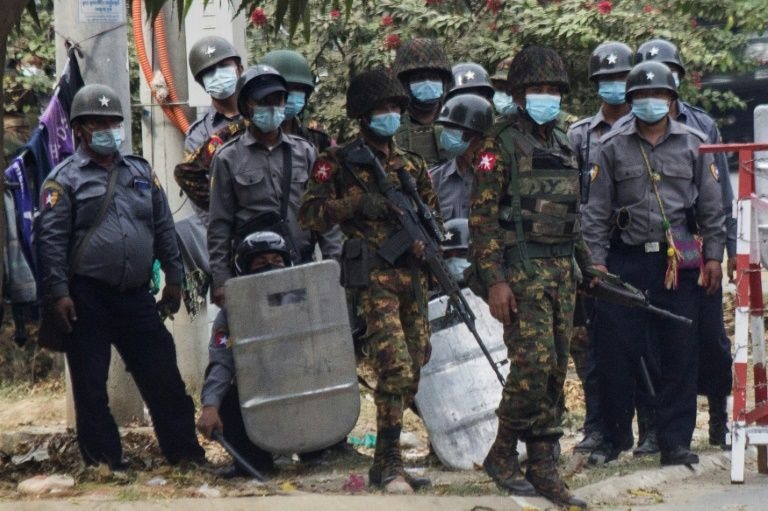
FACEBOOK has announced a further ban on all accounts linked to the Myanmar military on Thursday, citing the junta’s use of deadly force against anti-coup demonstrators.

The move, which takes effect immediately, applies to the military and entities controlled by the armed forces on both Facebook and Instagram.

It also bans “military-linked commercial entities” from advertising on the platforms.

“Events since the February 1 coup, including deadly violence, have precipitated a need for this ban,” the social media giant said in a statement.

“We believe the risks of allowing the Tatmadaw on Facebook and Instagram are too great,” it added, using the Myanmar name for the country’s armed forces.

The junta has steadily increased its use of force against a massive and largely peaceful civil disobedience campaign demanding Myanmar’s army leaders relinquish power since it forcefully seized power earlier this month.

According to the AFP, three anti-coup protesters have been killed in demonstrations, while a man patrolling his Yangon neighbourhood against night arrests was also shot dead.

Facebook said its ban was intended to prevent Myanmar’s generals “from abusing our platform”.

Facebook apologises for flagging as false, images, posts from Lekki shootings

The military has used Facebook to boost its claims that voter fraud marred an election last November after ousted civilian leader Aung San Suu Kyi’s party won in a landslide.

Since seizing power, the junta has arrested hundreds of anti-coup protesters, ordered nightly internet blackouts and banned social media platforms — including Facebook — in an effort to quell resistance.

Thursday’s announcement follows Facebook’s earlier decision to kick off a page run by the regime’s “True News” information service after the tech giant accusing it of inciting violence.

Pages for government offices now run by the junta remain unaffected.

“This ban does not cover government ministries and agencies engaged in the provision of essential public services,” the company said. “This includes the Ministry of Health and Sport and the Ministry of Education.”

In recent years, hundreds of army-linked pages have been blocked by Facebook after the social media giant came under heavy criticism for its ineffective response to malicious posts in the country.

Read AlsoFacebook launches news tab to support journalism

Junta chief Min Aung Hlaing and other top brass were booted from the platform in 2018, a year after a military-led crackdown forced around 750,000 members of the Rohingya Muslim community to flee into neighbouring Bangladesh.

Facebook admitted that year it had failed to do enough to prevent the incitement of violence in Myanmar.

“We can and should do more,” Facebook executive Alex Warofka said at the time.

US sanctions:

Since the coup was staged earlier this month, there are have been several calls by the United Nations including the United States for the military leader to free all arrested leaders and restore the country back to a democratic rule.

Last week, Joe Biden, US President, issued an executive order to impose sanctions on the leaders of the coup.

The sanctions target 10 individuals, including Myanmar’s acting president, and three companies.

BBC reports that additional steps are also being taken to block access by the military to $1bn (£720m) of government funds held in the US.