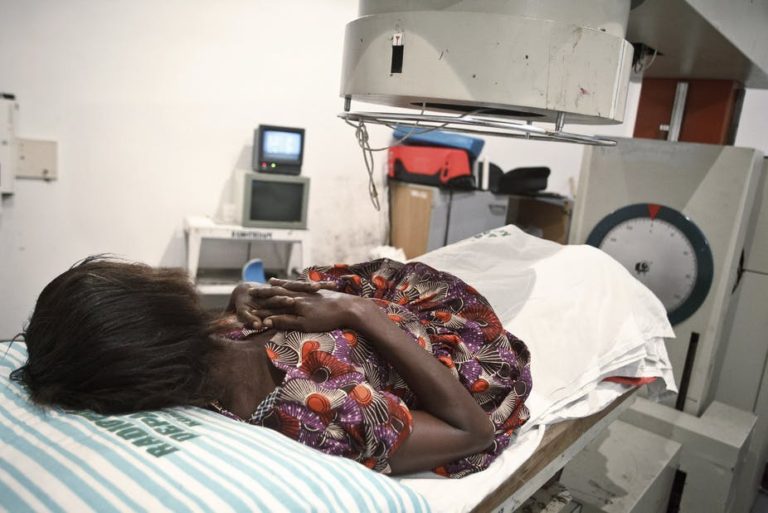
THE World Health Organisation (WHO) has revealed that one in every six deaths in the last decade was caused by cancer.
This is contained in a report published by the WHO in commemoration of the World Cancer Day celebrated on February 4th of every year to raise awareness on the deadly disease.
According to the WHO, the number of deaths from cancer has significantly increased in 2020 compared to the last decade.
“The number of deaths from cancer has also increased, from 6.2 million in 2000 to 10 million in 2020. More than one out of every six deaths is due to cancer,” WHO says.
WHO adds that the overall number of people diagnosed with cancer nearly doubled, from an estimated 10 million in 2000 to 19.3 million in 2020.
It also predicts that one in every five people in the world develops cancer during their lifetime.
“Projections suggest that the number of people being diagnosed with cancer will increase still further in the coming years, and will be nearly 50 percent higher in 2040 than in 2020,” the report reads in part.
COVID-19 worsens situation of last-stage patients
The report further states that the COVID-19 pandemic, which struck the world in 2019, worsened the condition of late-stage diagnosis.
WHO says the situation was exacerbated by late diagnosis and lack of access to treatment.
During the peak of 2020, many countries, including Nigeria, locked down their nations to curb the spread of the virus that has so far killed more than two million people in the world.
On lack of access and late diagnosis, the WHO says the situation occurred everywhere but particularly in low- and middle-income countries.
“In addition to having to cope with the disruption of services, people living with cancer are also at higher risk of severe COVID-19 illness and death,” the report reads.
In 2018, The ICIR reported that a cancer activist, Runcie Chidebe, executive director of Project PinkBlue, a non-governmental organisation working to eradicate or at least minimise incidents of cancer in Nigeria, said more than 72,000 people died of cancer each year in Nigeria.
Chidebe added that out of the over 72,000 deaths, about 102,000 cases of cancer were recorded in the country every year.
THE coronavirus pandemic has made the rich richer while further impoverishing the poor, according to a report by Oxfam, a global charity organisation.
Oxfam is an international confederation of 20 non-governmental organisations that work with partners in over 90 countries, including Nigeria, to end the injustices that cause poverty.
In the report titled ‘The Inequality Virus,’ released in January 2021, Oxfam observes that in multiracial societies such as the United States, United Kingdom and Brazil, marginalised groups, especially Blacks, are more likely to die from the coronavirus pandemic than Whites.
Coronavirus has increased inequality across the world
Noting that the COVID-19 pandemic has fed off, and increased, existing inequalities around the world, Oxfam, which assessed the global impact of the crisis, says that it has “hurt people living in poverty far harder than the rich, and has had particularly severe impacts on women, Black people, Afro-descendants, Indigenous Peoples, and historically marginalised and oppressed communities around the world.”
While the pandemic has forced the global economy into recession – a worldwide contraction – Oxfam, in the report, notes that “since the virus hit, the rich have got richer and the poor poorer.”
“It took just nine months for the top 1,000 billionaires’ fortunes to return to their pre-pandemic highs, but for the world’s poorest people, recovery could take 14 times longer; more than a decade,” the report states, adding that the increase in the wealth of the 10 richest billionaires in the world since the crisis began is more than enough to prevent anyone on earth from falling into poverty due to the virus and to pay for a COVID-19 vaccine for everyone.
According to Oxfam, a stock market collapse in the first months of the pandemic resulted in dramatic reductions in the wealth of the richest billionaires, some of the biggest stockholders. But the setback was short-lived.
Within nine months, the top 1,000 billionaires, mainly white men, have recovered all the wealth they lost. With unprecedented support from governments for their economies, the stock market has been booming, driving up billionaires’ wealth, even while the real economy faces the deepest recession in a century.
Oxfam notes that across the world, billionaires’ wealth increased by a staggering 3.9 trillion dollars between March 18 and December 31, 2020.
“Their total wealth now stands at 11.95 trillion dollars, which is equivalent to what G20 governments have spent in response to the pandemic. The world’s 10 richest billionaires have collectively seen their wealth increase by 540 billion dollars over this period.
“Only three of the 50 richest billionaires in the world saw their fortunes diminish over that period, losing 3 billion dollars between them,” Oxfam says.
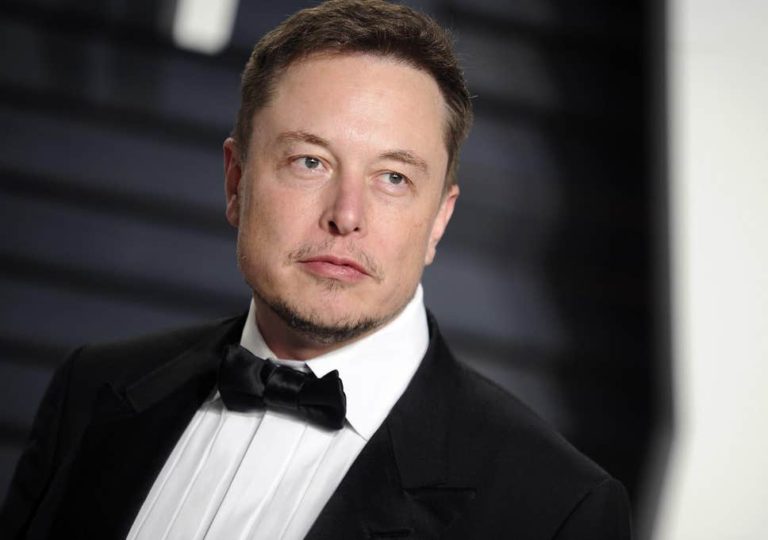
The two billionaires who have seen the largest increases in their wealth in this period – Elon Musk and Jeff Bezos – are active in the technology and automotive, battery production and space sectors.
The billionaires’ index
According to Bloomberg, Musk increased his net wealth by 140 billion dollars from March to December while Bezos increased his by 72 billion dollars.
Also, Zhong Shanshan, founder of Nongfu Spring, Chinese bottled water and beverage company, raised his wealth by 66.2 billion dollars, according to CNBC and Bloomberg. Also, Collin Huang, a 40-year-old CEO of Pinduoduo, an agrotech platform, added 33 billion dollars more to his net worth. According to CNBC and Bloomberg, Mark Zuckerberg increased his wealth by 26 billion dollars within the period, as Dan Gilbert, chairman of Rocket Companies, became 28.1 billion dollars richer within the period.
According to Oxfam, some of the world’s largest corporations are funnelling billions of dollars in profits to shareholders, giving yet another windfall to the world’s richest billionaires.
The Oxfam report discloses that between March and August 2020, billionaires in the Middle East and North Africa increased their wealth by 20 percent, more than double the IMF emergency financing to the region during that same period, and almost five times the value of the United Nations’ COVID-19 humanitarian appeal for the region.
Also, in Latin America and the Caribbean, after the market crash, the combined wealth of billionaires increased by 17 percent between March and July 2020.
Oxfam says the 17 percent increase amounts to an additional $48 billion, which is enough to pay for one-third of all fiscal stimulus packages introduced by governments in Latin America and the Caribbean in response to the coronavirus crisis over that period, and also nine times more than the emergency credit provided by the IMF in the region in that same period, and more than five times the amount needed to prevent 12.4 million people from falling into extreme poverty in the region for a year.
Across the world, the richest people have escaped the worst impact of the pandemic
“Evidence shows us that, all around the world, the wealthiest people have escaped the worst impacts of the pandemic,” Oxfam says, noting that “in the UK, while lower-income households have fallen into debt during the lockdown, the richest 20 percent saved 30 billion dollars.”
More privates jets are being purchased as a result of COVID-19
Interestingly, the report reveals that private jets sales soared globally when commercial travel was banned during the lockdown, revealing that the world’s rich moved much of their money to tax havens in response to lockdown.
The poor became poorer
In the report, Oxfam states that while the world’s billionaires got richer, people living in poverty became even poorer due to the coronavirus pandemic.
“Recent estimates show that the number of people living on less than 5.50 dollars a day could have increased by between more than 200 million to half a billion in 2020. According to Development Initiatives, the poorest people in almost every country have seen their income fall due to the pandemic,” Oxfam observes.
Although many of the world’s poorest people are in Sub-Saharan Africa, Oxfam says that more than two-thirds of people who have been ‘newly’ forced into poverty are in South Asia, East Asia and the Pacific.
The report adds that most of those forced into poverty are informal workers who are excluded from social protection and social support programmes and access to credit.
Marginalised groups, particularly Blacks, are more likely to die from COVID-19 in US, UK, Brazil, other multiracial societies
The Oxfam report also says that, in multiracial societies such as the US, UK and Brazil, marginalised groups, particularly Blacks, are more likely to die from COVID-19 due to ‘systemic racism.’
According to Oxfam, “Systemic racism puts Black people, Afro-descendants, Indigenous Peoples and historically marginalised and oppressed communities at higher risk. In several countries, the pandemic has highlighted gross inequality in health outcomes based on race and ethnicity. Black people, Afro-descendants, Indigenous Peoples and other racialised groups are more likely to contract COVID-19, and to suffer the worst consequences, as suggested by evidence from several countries. In the US, for example, age-adjusted hospitalisation rates due to COVID-19 were five times higher for Black, Latino, and Native Americans than for White people. COVID-19 mortality rates among Black people were found to be twice those of White people.”
“In the US, Latino and Black people are more likely to die of COVID-19 than White people. In Brazil, people of Afro-descent have been 40 percent more likely to die of COVID-19 than White people,” Oxfam adds.
Noting that rates of infection among long-neglected migrant and refugee populations have also been disproportionately high, Oxfam notes that as of April 2020, the percentage of confirmed COVID-19 cases among Somalis in Norway and Finland was 10 times their percentage share of the population, and they accounted for a significant proportion of deaths.
Also, in the Amazon region, the number of deaths among the Indigenous population increased from 113 to 2,139 in barely six months, an increase that is two-and-a-half times more than what was registered among the general population. Oxfam further observes that out of the 400 Indigenous Peoples that inhabit the Amazon region, by the middle of November 2020, the virus had reached 238.
To drive home the dismal impact of ‘systemic racism’ on marginalised groups, Oxfam notes that, in the US, if the death rate of Blacks had been the same as that of White people between February and December 2020, over 16,800 Black people would still be alive.
ON Saturday, January 30, 2021, a viral claim circulating on WhatsApp said the Nigerian government was giving out 10,500 naira weekly support to Nigerians.
The post entitled ‘COVID-19 Second Wave Support Fund Programme’ encouraged members of the public to take advantage of the funding opportunity by submitting an application through a website.
It read:
“Don’t miss this federal government N10,500 weekly grant. It takes few seconds to apply. Don’t miss this great opportunity. Apply here
It added a website link.
THE CLAIM
Due to COVID-19 second wave, the federal government is giving out a weekly grant of 10, 500 naira to support Nigerians.
THE FINDINGS
Findings by the FactCheckHub show that the claim is FALSE.
The FactCheckHub observed that the website on the forwarded post had photos of the minister of humanitarian affairs, disaster management and social development (FMHDS), Sadiya Umar Farouq. However, it was different from that of the ministry.
The website in the claim sought to gain traffic by prompting people to share. For instance, after filling the questionnaire, it said, “Share until the blue bar is full.”
The website was also riddled with several pop-up advertisements for dating sites, bitcoin trading, among others. It is unusual for government websites to have commercially driven adverts.
In addition, the website was not secure as it did not have ‘S’ after the ‘HTTP,’ neither did it have the padlock symbol at the URL.
Another red flag the FactCheckHub discovered was that the social media icons attached to the website did not redirect to any social media account; it rather refreshed back to the website.
More so, the contact button found on the website was also inactive, thus questioning the credibility of the support fund.
The website also had a comment section – mimicking a Facebook comment plugin. This was also phony as it did not redirect to Facebook as the plugin was often expected to work.
Furthermore, The FMHDS, which coordinates support schemes on behalf of the Nigerian government, had no such information on its official website or social media accounts.
The ministry, however, has special funds such as the N75 billion Nigerian Youth Investment Fund (N-YIF) partly managed by the Federal Ministry of Youths and Sport initiated by the federal government and the Micro, Small and Medium Enterprises (MSME) Survival Fund.
They are all part of the Nigeria Economic Sustainability Plan (NESP) designed by the federal government under the leadership of the Vice President Yemi Osinbajo to reduce the impacts of COVID-19 on the nation’s economy.
Not the first time
This is not the first time that the FactCheckHub has debunked similar claims. The FactCheckHub has debunked claims that the Nigerian government was giving out free N50,000 lockdown funds; that the National Identity Management was giving out 5GB free data; that the Nigerian government was giving N25,000 relief funds , and that the government was giving out grants to support Nigerians.
They all have the same script of broadcasting the claims via WhatsApp, putting out a phony website link, and asking for multiple shares.
The FactCheckHub had reported that such claims usually targeted topics and areas that a lot of people would be interested in, such as relief funds, recruitment, and free data.
Sometimes, such websites are set up to obtain people’s information for nefarious purposes or to get traffic so that they can sell advertisements.
Going to the government, institution, agency or a company’s social media handles to see if they have such claims can help one avoid falling victim.
A number of such institutions that attract public interest are verified on social media. Such social media handles usually have the website included in the bio.
In addition, Google-searching information using keywords is another way of verifying claims like this to find out if it is legitimate or not.
From the findings presented above, the claim that due to COVID-19 second wave, the federal government is giving out a weekly grant of 1o, 500 naira to support Nigerians is FALSE.
JULIUS Berger (JB) has refused to release copies of contract detail on the Abuja-Kaduna-Zaria road construction project awarded by the federal government.
Julius Berger, one of the leading construction companies in Nigeria, was incorporated by the Corporate Affairs Commission (CAC) in 1970, thus transforming it into a Nigerian entity. The construction company has executed various complex projects nationwide.
The ICIR, on December 07, 2020, through the Freedom of Information Act (FOIA), requested the details of the ongoing Abuja-Kaduna-Zaria project and specifically asked for the record(s) of contract agreement and specification details of the project. Information demanded by The ICIR include full details of the total payment received for the project, exact state, quality and level of completion of the project and expected time of completion.
Almost two months after, Julius Berger is yet to respond to the request and has also failed to give a reason for the refusal, as stipulated by the FOI Act.
The ICIR on January 25 also sent another letter reminding Julius Berger of the initial letter sent in December. It is over seven days and Julius Berger is yet to respond.
Section 2(7) of the FOIA classifies Julius Berger as a public institution, which the law is binding upon. According to the section of the Act, “Public institutions are all authorities whether executive, legislative or judicial agencies, ministries, and extraministerial departments of the government, together with all corporations established by law and all companies in which government has a controlling interest, and private companies utilizing public funds, providing public services or performing public functions.”
By enacting the FOIA, 2011, the Seventh National Assembly gave effect to the constitutionally guaranteed right of the public to access public documents held by public institutions and relevant private entities in Nigeria, including Julius Berger.
Recall that in a case between the Public and Private Development Centre (PPDC) and Julius Berger in 2014, Justice M.M Kolo of the High Court of the Federal Capital Territory (FCT) granted a leave against Julius Berger, compelling it to furnish PPDC with copies of documents and information to the bidding and award of the contract for the reconstruction of the Lagos-Ibadan Expressway.
This is an indication that Julius Berger, the contractor who handled the construction of the National Assembly complex and also the developer of the FCT, may have a reputation for violating FOI requests.
Section 7 of the FOIA explains what should happen when a public institution denies access to public information. The section states:
(1) Where the government or public institution refuses to give access to a record or information applied for under this Act, or a part thereof, the institution shall state in the notice given to the applicant the grounds for the refusal, the specific provision of this Act that it relates to and that the applicant has a right to challenge the decision refusing access and have it reviewed by a Court.
(2) A notification of denial of any application for information or records shall state the names, designation and signature, of each person responsible for the denial of such application.
(3) The government or public institution shall be required to indicate under subsection (1) of this Section whether the information or record exists.
(4) Where the government or public institution fails to give access to information or record applied for under this Act or part thereof within the time limit set out in this Act, the institution shall, for the purposes of this Act, be deemed to have refused to give access.
(5) Where a case of wrongful denial of access is established, the defaulting officer or institution commits an offence and is liable on conviction to a fine of N500,000.
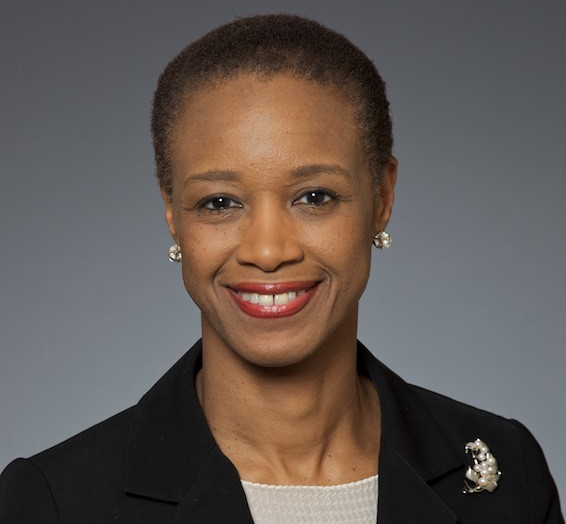
NIGERIANS are applauding the appointment of Enoh Titilayo Ebong as the Acting Director of US Trade and Development Agency (USTDA).
Ebong is the fourth Nigerian to be appointed by the President Joe Biden-led administration. Previous appointments include: Adewale Adeyemo as deputy secretary of the treasury department, Funmi Olorunnipa Badejo as white house counsel, and Osaremen Okolo as a member of Biden’s COVID-19 response team.
Many Nigerians view the latest appointment of a Nigerian as a well-deserved recognition of the brilliance and competitiveness of the Nigerian people. They also commended President Biden for giving consciously creating a path towards inclusiveness and equity.
On twitter, @GeorgeIfeanyiU1 tweeted: “This man (Biden) is showing non-bias to Nigerians. It (His appointments) shows he has capability and merit in mind. Quite different from Trump who called African countries shitholes and toilets and asked them to go back to their countries”.
Another Nigerian, @Aviego, said: “I am glad you can see how our people are appreciated outside (Nigeria). It is not about where she is from or who her father is; not about the quota from that region…or how many followers she has”.
Julian Chekwas who spoke to the ICIR in Abuja said “the recent appointment of Nigerians into to Biden-Harris administration is an eye-opener that we need to engage our youths more. If you consider the age group of these appointees against the position of responsibility they are assigned, you will discover that our youths back at home are grossly underestimated. When was the last time someone as young as these ones was appointed into public office in this country?”
Announcing the appointment in a press statement released on Tuedsay, the agency said Ebong had served in a variety of roles, most recently as the Agency’s General Counsel, and Deputy Director and Chief Operating Officer.
“Today, President Joseph R. Biden, Jr. appointed Enoh T. Ebong as the Acting Director of the U.S. Trade and Development Agency…As Acting Director, Ms. Ebong leads an agency that partners with the U.S. private sector to develop sustainable infrastructure and foster economic growth in emerging economies, while supporting U.S. jobs through the export of U.S. goods and services,” the statement said.
It also quoted Ebong as saying during her swearing-in ceremony that: “It is an honor to return to USTDA. The opportunity to lead the Agency comes at a critical moment when the world is turning to the United States for leadership on clean energy and climate-smart infrastructure, as well as safe and secure ICT solutions”.
“The Agency is one of the most effective, targeted and proven tools within the U.S. government. I’ve long believed in USTDA’s mission and program, which are fully aligned with the President’s vision of strengthening our economy and addressing climate as an essential component of American foreign policy and national security,” the new acting director added.
Prior to her return to USTDA, Ebong served as the Head of Strategic Partnerships at the Milken Center for Advancing the American Dream, where she drove the development of strategic partnerships to expand access to education, health, financial empowerment and entrepreneurship.
She earned a Juris Doctor from the University of Michigan Law School, a Master of Arts in Communication from the Annenberg School for Communication at the University of Pennsylvania, and a Master of Arts in History, with Honors, from The University of Edinburgh, Scotland. She is a member of the Commonwealth of Massachusetts Bar.
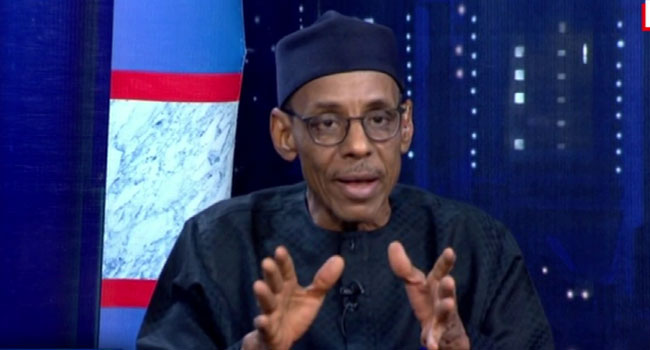
THE Northern Elders Forum (NEF) has said that it is a dangerous development to criminalise all Fulanis living in any part of the country on the account of few criminal ones among them.
The forum noted that it was the responsibility of government through security agencies to fish out criminals amongst Fulani herdsmen and not the duty of ethnic champions to usurp the function of the government.
“There are decent hardworking Fulani who are not criminals in this country and those people must be protected. This idea that all Fulani are criminal is a very dangerous development. It criminalises an entire ethnic group, puts millions of Nigerians under threat,” said Hakeem Baba-Ahmed, NEF spokesperson on Tuesday night while featuring on Channels Television’s Politics Today programme.
“It creates an image of reality which is not true and it also puts other ethnic groups in danger because all you need to do is to identify a particular crime with an ethnic group. If we begin to demonise people and profile an ethnic group and we link them up with a crime, this is dangerous.
“Yes, there is some infiltration among the Fulani, we accept that. We also believe that it is the responsibility of the state to identify that infiltration; it is not up to any ethnic champion or anybody. People cannot assume responsibilities for the state. It is the Nigerian state that should fish out and determine criminals whether Fulani or whatever.”
He added that “if people start usurping the responsibilities of the Nigerian state, chasing people and burning down their homes, their cattle, killing them, harassing them, that is not acceptable.”
The statement is coming after weeks of tension in the South-West region of the country, over a one-week quit notice by Sunday Adeyemo, popularly known as Sunday Igboho, to Fulani herdsmen in the Ibarapa area of Oyo State.
When the notice elapsed, Igboho, who accused the herdsmen of being responsible for the killings and kidnapping for ransom in the area, led a group of irate young men to a Fulani settlement in the area where properties belonging to the herdsmen were burnt and destroyed.
On Monday, Igboho also led some youths to Yewa North Local Government Area of Ogun State where herdsmen were said to be terrorising farmers and residents.
A Fulani settlement in Igua area of the local government was reportedly set on fire by some of the youth after Igboho’s visit to the community.
The Ogun State government has since distanced itself from the move, stating that it would not need Igboho to resolve the security challenges facing the people of the state,
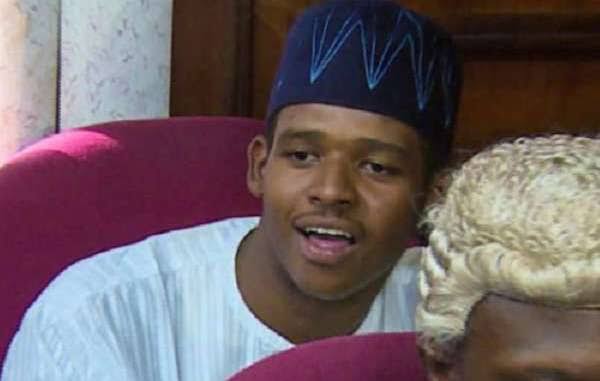
FAISAL Maina, son of Abdulrasheed Maina, the embattled former chairman of the defunct Pension Reformed Task Team (PRTT), has again violated the terms of his bail by fleeing to the United States, the Economic and Financial Crimes Commission (EFCC) has revealed.
Mohammed Abubakar, counsel to the EFCC, who stated this on Thursday at the Federal High Court in Abuja, said the Commission got credible information that Faisal sneaked to the U.S through the Republic of Niger.
Background Story
Faisal, who is being prosecuted in a separate three-count money laundering case, jumped bail and stopped attending trial, according to the EFCC. But the trial has continued in his absence.
EFCC alleged that Maina’s son had, sometime between 2013 and 2019, received the sum of 58.11million naira, being proceeds of a corrupt act by his father.
He was also accused of failing to properly declare his assets before the EFCC.
Before he was released on bail, the defendant was initially remanded in police custody after the prosecution notified the court that he was being investigated on allegation bordering on alleged possession of an illegal firearm.
Faisal reportedly pulled a gun to challenge operatives of the Department of State Service (DSS) that arrested his father at a hotel in Abuja on September 30, 2020.
Justice Okon Abang, on November 24, 2020, revoked the bail granted him and ordered his arrest after he was reported to have fled the country and violated the terms of his bail.
He was, however, reportedly rearrested in December, 2020.
Earlier on Thursday, the trial judge, Okon Abang, had ordered Faisal’s surety, Sani Dan-Galadima, who is a member of the House of Representatives, to forfeit a property used as a bail bond.
Dan-Galadima, who represents Kaura-Namoda Federal Constituency of Zamfara, had entered into an 60million naira bail bond on behalf of Faisal.
It will be recalled that his father, Maina, who is facing a separate 12-count money laundering charge, also jumped bail and was later arrested in the Niger Republic by the Interpol.
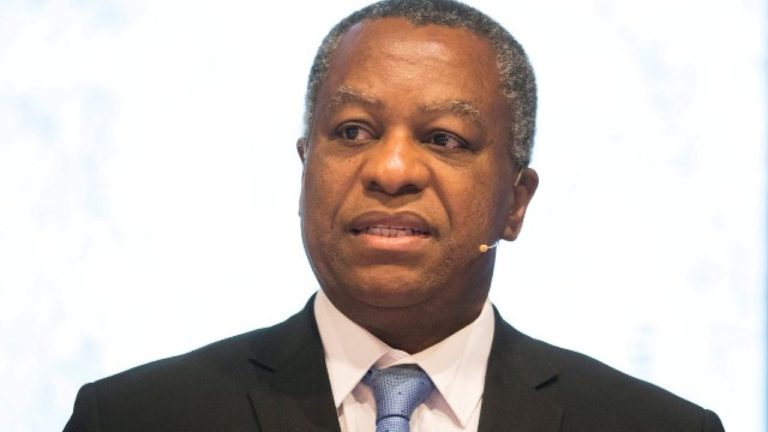
THE Federal Ministry of Foreign Affairs has condemned Agbaeze Francis Chinedu, a Nigerian man living in Switzerland, for filming what it describes as a defamatory video where he called for the closure of the embassy of Nigeria in Berne, Switzerland, over poor services rendered and for failing to serve the interest of Nigerians in the country.
In the video which has since gone viral, Chinedu who had driven for more than two hours to get to the embassy was disappointed to see that the office was locked against visitors; he accused officials of failing to respond to calls or emails sent, actions which according to him, do not justify taxpayers money spent in running the embassy as they rarely perform their task.
“Nigerian government bikonu (please), I use God beg you people, its better we close this embassy here because this nonsense embassy has no simple feeling about the Nigerians in Switzerland. You will book an appointment in embassy, call them, call them, register for the passport, do everything; calling embassy from day one, nobody will pick your call.
”Write email to embassy, embassy will never, never, reply your email, and there is people receiving salary,” he alleged in the video.
However, the statement signed by Ferdinand Nwonye, spokesperson of the ministry, said that due to the COVID-19 pandemic, “there has been varying levels of lockdown measures implemented by several countries and our Missions are obligated to respect and comply with the directives of their host countries”.
Nwonye further explained that in compliance with the new developments in Switzerland, as regards the mandatory teleworking directive, strict restrictions and limit on the number of people in workplaces, the Immigration Officers had informed that all cancelled appointments will be re-booked when the lockdown is lifted.
“In line with the mandatory COVID-19 policy measures and directives (third-tier lockdown) announced by the Swiss Government on 14th January, 2021, the Immigration Officers of the Embassy were obliged to cancel all earlier booked appointments and all applicants were informed accordingly,” the statement said.
Nwonye reiterated that “Information regarding discontinuation of consular services were sent via public notices to the President of Nigerians in Diaspora Organization (NIDO) Swiss chapter, relevant media in Switzerland and also uploaded on the official website of the Mission,” insisting also that Chinedu had no prior booking with the Embassy and neither did any records show or prove that he contacted the Immigration officers of the Embassy.
Recall that The ICIR in July published report of an investigation it carried out on 46 Nigerian diplomatic missions and embassies located in the United States, US, Germany, China, amongst other countries, to determine how they respond to the concerns of Nigerian citizens residing in those countries via their official online mailing addresses.
The investigation revealed that 53 per cent of the emails sent to 66 addresses accounting for 35 email addresses as announced by the mail delivery subsystem were “inactive” and four consulates were without websites.
Last year, another video surfaced online alleging that officials of the Embassy of Nigeria in Switzerland had called the police on some Nigerians who had come to receive their passports, but the Nigerian government had refuted the allegation saying that the Embassy protection unit was only invited to bring calm and decorum after 64 Nigerians overcrowded a hall that was meant to receive only 10 people at a time in line with Covid-19 protocols.
Meanwhile, the ministry of Foreign Affairs urged Nigerian citizens in their various host countries to “kindly abide by the online booking systems of their Missions and refrain from disorderly conduct,” to ensure that consular services at the Embassies are carried out with the observation of COVID-19 protocols, and in the interest of all.
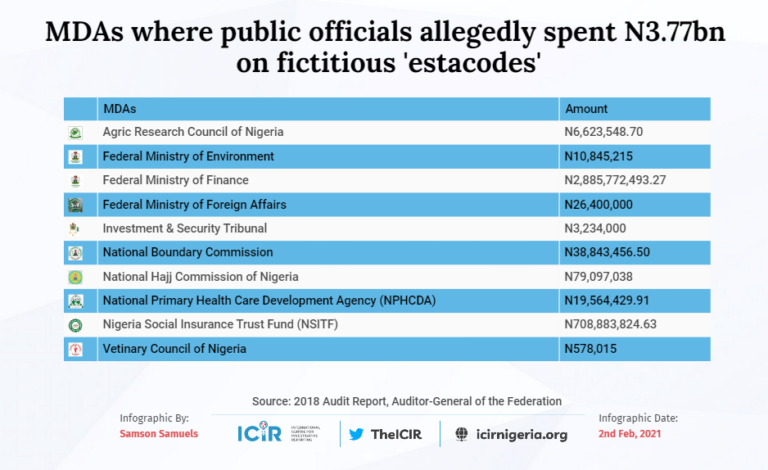
OFFICIAL documents from Office of the Auditor-General of the Federation (OAuGF) have indicted the staff of Federal Ministry of Finance, National Boundary Commission, the Nigeria Social Insurance Trust Fund (NSITF) and seven other government agencies of receiving fictitious estacodes valued at 3.77 billion naira under President Muhammadu Buhari administration.
The 2018 OAuGF audit report revealed that most of the oversea travels upon which estacodes were claimed had no authorisation from the Office of the Head of Civil Service of the Federation, a clear violation of the financial regulation guidelines.
There was also no document to show that officials of these government parastatals undertook foreign trips.
Most of the cases investigated by the reporter revealed that the accused government officials had no boarding passes, air tickets and other relevant documents to validate the oversea trips as claimed.
The National Boundary Commission, one of the federal government’s establishments indicted in the latest audit report. Photo Credit: Olugbenga Adanikin, The ICIR
Not only did the civil servants claim money for the trip they did not undertake, they also violated the directive of President Muhamadu Buhari who, in 2015, banned civil servants including top executives of government agencies from embarking on oversea training except those approved by the head of the civil service.
“…proposals for participation or attendance of international conferences, seminars, workshops study tours, presentation of papers and negotiating/signing of Memoranda of Understanding abroad at government expenses, shall no longer be allowed except those that are fully funded by sponsoring/inviting organizations,” a circular issued by Danladi Kifasi, a former head of civil service of the federation stated.
President Buhari reaffirmed this decision after tenure of the former president Goodluck Jonathan. In 2016, Buhari banned distribution of souvenirs at public events organised by MDAs.
By October 2019, Office of the Secretary to the Government of the Federation rolled out stricter measures on the policy, all to reduce costs and cut wastages in the public service. Hence, Ministries, Departments and Agencies (MDAs) of government were directed to submit yearly travel plans to the SGF or office of the head of the civil service of the federation for approval within the first quarter of the fiscal year.
The report by OAuGF has shown that many government functionaries did not comply with the directive.
Those accused of this infraction are officials of the National Hajj Commission of Nigeria, National Primary Health Care Development Centre (NPHCDA), the Investment and Security Tribunal (IST), Agricultural Research Council of Nigeria (ARCN), and the Veterinary Council of Nigeria (VCN). Officials of the Federal Ministry of Environment and Federal Ministry of Foreign Affairs were also indicted.
NSITF paid estacodes for international travel without approval to spouses of management staff, others
On seven different occasions, NSITF officials were paid several benefits either directly or through proxy for unapproved international trips and training.
Between January and December 2017, the audit showed how staff of the Fund got N180.8m as estacode allowance, air passage, return tickets and the likes to embark on an unapproved foreign trip.
Another N31.3m was paid to unidentified four top management staff and their spouses as estacode allowances, airfares for vacations abroad, but without approval from the right authorities.
Also, officials of the NSITF was accused to have paid N467.41 million to four Bureau De Change (BDC) agents in 2013 and 2014, according to the auditor-general’s report. The payments were reported as estacode or course fee which should have been paid directly to the account of beneficiaries of the training or consulting firms in charge.
“…evidence of a contractual agreement between the Fund and the BDC was not provided for audit. In addition, there was no evidence to show that the amounts paid to the BDC, got to the ultimate beneficiaries,” the report reads partly.
The above offence contravenes the Financial Regulation guideline which says, “A public officer who makes an irregular payment from public funds shall be given 21 days’ notice to offer an explanation, where no satisfactory explanation is given, the amount involved shall the recovered from the officer and such officer shall be removed from the schedule”.
Similarly, other undue payments including N4.94 million; N9.45 million and N11.33 million. N4.42 million were also received as pocket expenses.
In total, the NSITF spent N708.88 million on unapproved foreign trips including estacodes and other benefits.
Ministry of Finance Building, Abuja
Opacity around N2.88 billion released to Finance ministry from the ‘Service Wide Vote’
In recent years, the federal government has criticised MDAs of arbitrary spending from the Service Wide Vote. Though, the law requires agencies and ministries of government to include in their annual budgets, proposed spending for the year, but, in situations where an agency of government needs an important procurement not reflected in its budget, the ‘Service Wide Vote’ is considered an option.
The service-wide vote otherwise known as contingency budget targets developmental activities.
The federal ministry of finance got a release of N2.88 billion from the service-wide vote which it used to pay estacodes and other allowances of government officials assigned to represent the FG at international conferences such as the Organisation of Petroleum Exporting Countries (OPEC).
From the allocation, “payment vouchers were raised for N113.5 million, leaving the sum of N2.8 billion unaccounted for,” the audit reads in part.
Reacting to the allegation, the finance ministry said N2.82 billion (N2,828,771,854.37) was Nigeria’s contribution to OPEC, and it was released by the cash department of the ministry to the Office of the Accountant General of the Federation, and not the finance ministry.
“With regards to the sum of N113,558,372.85 spent on annual board meetings, conferences and workshops, the sum of N57,000,638.90 was funded from the Service Wide Vote while the balance i.e. N56,557,733.95 was funded from the ministry’s 2017 budget. All the payments made are in line with the mandate of the ministry and all necessary documents including the payment vouchers attached,” response from the ministry read.
The auditor general’s office, however, insisted the accountant general’s office should account for the N2.82 billion.
Foreign Affairs ministry takes loans to fund estacode allowance
The Financial Regulation guideline (2019) prohibits that, “no loan or any form of advance shall be obtained from the bank without prior approval from Debt Management Office.” But, the foreign affairs ministry was found guilty of flouting this guideline.
The audit report revealed that on December 13, 2017, a payment voucher N0: MFA/OC/1281/2017 was raised for N26.40 million in favour of an official of the ministry, and actual payment was made on December 28, about two weeks after.
While officials of the ministry could not provide a valid justification for their actions, the auditor-general’s office posits that loans obtained without authorisation could be diverted for private use.
Besides, the investment and security tribunal was accused of overpayment of estacode above the approved rate. This is to the tune of N3.23 million.
The NPHCDA was also allegedly involved in the irregular payment of estacode to its staff up to N19.56 million.
According to the report, grade levels of the NPHCDA officials were not declared to ascertain how much of estacode allowances was received. Also, the number of days spent on the trip was not stated and the payment documents presented lack approval of the SGF.
Still, the auditor-general’s office claimed no response was provided to justify the amounts released as estacodes.
Similarly, officials of the national hajj commission of Nigeria were indicted of raising payment vouchers to the tune of N79.05 million.
The four vouchers were reportedly raised on December 18, 2017, for a pre-visit, ahead of 2018 hajj to Saudi Arabia. As observed in other agencies, the vouchers lack relevant supporting documents such as stamped pages on their international passports, air tickets or boarding passes.
Moreover, the federal ministry of environment was accused of spending N10.84 million on unapproved foreign conferences, training and workshops. Similarly, the ARCN also expended N6.62 million on an unauthorised oversea trip.
In 2017, contrary to the directive from the SGF, the VCN also paid its staff N1.07 million to attend the World Organisation on Animal Health (OIE) conference, held in Bangkok without approval.
The registrar has been directed to return the sum into the government’s coffer.
Surv Adamu Adaji, Director-General, National Boundary Commission.
Officials of Boundary commission receive N12.05m estacode on repairs carried out within Nigeria
Based on discovery from the audit report, the national boundary commission paid N12.05 million as estacode to reconstruct pillars at the Nigeria-Niger international boundary. But findings revealed the pillars were still within the Nigerian border, yet, the officials took the money.
“…there was no need for payment of estacode as they did not cross over to Niger Republic for any further activities,” the report stated.
“In addition, the officers that travelled for this programme were engaged to work for fifteen (15) days while the local guide and security personnel were paid for forty (40) days each, and there was no evidence that money paid to officers representing the State and Local government amounting to N960,000.00, got to them.”
A separate N26.78 million was also spent by the agency to attend the 33rd meeting of the Nigeria-Cameroun mixed commission in Yaounde, Cameroun. The event held between 3rd and 14th June, 2018. The audit revealed $2,000 set aside for contingency could not be accounted for. Moreover, there was no evidence of travel such as immigration stamped pages in delegates international passports. Both air tickets and boarding passes were not provided.
Still, no response was provided to the AUGF to justify the spending. The DG has, however, been directed to account for the sum.
Reactions
Yunusa Abdullahi, Director of Information, Ministry of finance pushed the blame to the Permanent Secretary (PS). He said the PS is the accounting officer of the ministry, thus, he is the most appropriate to comment on the discovery.
The ICIR requested for the PS’s contact but Abdullahi did not provide it. He said he was driving, thus promised to share at a later time. As of the time of filing this report, he is yet to fulfil his promise.
Also, Mohammed Ohitoto, the NPHCDA spokesperson told The ICIR he has “no reaction” to the allegations. Nevertheless, he promised to share the contact of Stephen Yusuf, the agency’s Director of Finance and Account but he never did.
He later called to inform the reporter that the director truly confirmed the anomaly. “Yes, there was something like that,” Ohitoto stated in a phone conversation. However, he claimed the estacode problem has been sorted, stressing that it was no longer an issue.
Then, Ohitoto fixed an appointment with the reporter to meet with Yusuf on Monday, February 1. He promised to present a justifiable document to validate the director’s claim on the set appointment date.
At about 11 am, on the set date, this reporter met with Ohitoto, and he introduced The ICIR to the director of finance and account.
“It is not an infraction,” Yusuf started with an explanation. He said the trips were not funded by the government but development partners such as the World Health Organisation (WHO), Bill and Melinda Gates Foundation and the World Bank, at different periods.
The beneficiaries, he said, were paid estacodes by the partners but it was not commensurate with the regular estacodes payable to civil servants once they travel abroad. Thus, upon arrival to the country, Yusuf said the staff applied to get the “estacode difference.”
A document sighted by The ICIR showed names of the said beneficiaries. There were 19 names including the NPHCDA’s Executive Director, Faisal Shuaib. It also included dates the estacodes were paid, the descriptions as well as the exact amount paid.
“It is the difference in estacodes that they paid and not the full estacodes,” Yusuf stressed.
Curios, the reporter queried the rationale for paying an “estacode difference,” since the trip was not approved by the head of the service or the SGF. While the clarification was ongoing, Rotimi Okunade, a deputy director from the same department interjected. He said the normal civil service rule permits public servants to get estacode refunds on foreign trips of that nature.
Okunade, argued further that the agency’s ED approved the N19.56 million payments. All the while, Ohitoto was seated while these explanations were made.
Eventually, Yusuf said the needed clarifications have been produced and would be presented to the House Committee on Public Accounts as well as the office of the accountant general.
Silence in environment ministry, foreign affairs
To get a reaction, Sagir Mohammed, Director of Information, the federal ministry of environment did not respond to calls and text message sent to his line.
Ferdinard Nwonye, spokesperson for the foreign affairs ministry also did not respond when contacted through text message.
Nimma Egun, the Head of Media, investment and security tribunal told this reporter she cannot react to the allegation, except her chief executive officer does, who she claimed was travelling to Kano.
Surv. Adamu Adeji, Director-General of the national boundary commission acknowledged the irregularities exposed by the audit. He disclosed that the National Assembly (NASS) has summoned the commission, thus, he would rather wait for the hearing before he makes any further comments.
“The panel has given the commission a date to appear and until then, we cannot speak on it,” he said through Efe Ovuakporie, the commission’s head of media and publicity.
Kayode Aiyedogbon, ARCN Head of Media and Public Relations told The ICIR, in a text message he knew nothing about the allegation. “You may wish to carry out your investigation on it,” he said.
At headquarters of the national hajj commission, officials from the media department could not provide an answer to illegal disbursement of N79.09 million. A senior official referred the reporter to the office of the Director of Finance and Account. But, the DFA was said to be in a meeting with the chief executive of the commission. The ICIR waited. After a while, a senior official from the same department who pleaded anonymity disclosed that a response to the query was sent to the Public Account a day before the reporter’s visit. “I don’t think it will be right to say anything for now because this same response would be provided to the national assembly. So we are waiting for the National Assembly’s invitation. Once that is done, we can respond.”
The ICIR also independently verified from another department if the response was sent as claimed. It was gathered 10 issues were responded to and submitted to public accounts committee but it is uncertain if the N79.09 million was included.
Ezenwa Nwakonobi, VCN Registrar, was contacted for reaction on the unapproved trip to Bangkok but he repeatedly terminated the call. Text message sent to him was not returned.
Is Buhari really fighting corruption?
It is worthy of note that most of these allegations of corrupt practices exposed in public service occurred while Buhari is in power. This is despite the President’s repeated commitment to tackling corruption. However, the popular perception remains that he might need to do more.
Beyond this report, other cases of corrupt practices under his government have been reported by the media.
Recent, Corruption Perception Index (CPI) released by Transparency International also revealed how the country is perceived differently on corruption and its continuous drop in the global ranking. Nigeria ranked 149 from 180 nations.
Prof. Bola Akinterinwa in a recent interview with The ICIR advised for a holistic approach in tackling corruption in the system. “So, how do you cut off a tree from the top when the root is still being wet with water. I have not read the report itself. I only heard it over the radio but the report cannot but be right because we see it on a daily basis. Why will the NIMC be demanding for N5000 to register people? They request for money openly and the TI are there, so these are the reasons. No big deal, in fact, if TI has done its work very well, there is no reason why we should not be the 180th country,” he stated.
DAPO Abiodun, governor of Ogun State, has appealed to Nigerians to learn how to live together by managing the country’s diversity.
He made this appeal during the commemoration of the 45th anniversary of the state on Wednesday.
The governor, who stressed that there would be no meaningful progress and development in an atmosphere of insecurity, credited the development of his state to good management of its diversities.
“Let us also use the occasion of the 45th anniversary of our dear state to appeal to the rest of Nigerians. We must eschew all forms of violence and learn to live together. We must also appreciate that there can be no development in an atmosphere of insecurity. We must learn to manage our diversity and turn it into our strength,” he said.
“There can never be a better lesson in the management of diversity as a source of strength than from us in Ogun State. With over 10 sub-ethnic groups, this diversity has been one of the major forces propelling the development of our dear state. We keep harnessing the strengths and potential of these sub-ethnic groups for the general good of everyone.”
While stating that those fanning the embers of division across the country must not be allowed, he added that ”Ogun State is for all Nigerians and as such, folks from other tribes and every part of Nigeria should be accommodated by indigenes in the spirit of oneness.”
“Today, Ogun State is the home to not just indigenes of our dear state, but people from diverse backgrounds all over the country and even to a lot of foreigners.
“Yes, I agree there may be reasons for us to disagree on certain issues of our essentials. But, we will only disagree to agree and move forward. We must not encourage those stoking the embers of violence for the disintegration of our great nation. A country where tribes and tongues may differ but stands in brotherhood is where unity in our diversity thrives.
“We all have duties, responsibilities and obligations to aid better understanding of our local and national realities. All we need to do is manage our differences effectively and efficiently and Nigeria will be greater.”
The governo’s appeal is coming days after Sunday Adeyemo, popularly known as Sunday Igboho, led some youths to Yewa North Local Government Area of the state where herdsmen were said to be terrorising farmers and residents.
A Fulani settlement in Igua area of the local government was reportedly set on fire by some irate youths after Igboho’s visit to the community.
The state government has since distanced itself from the move, stating that it would not need Igboho to resolve the security challenges facing the people of the state,