Home Blog Page 1890

Buhari’s base instincts bear eloquent testimony to his nepotism

0

By Ikechukwu AMAECHI


ON January 29, 2021, Aso Rock once again raised an alarm that some unnamed Nigerians were plotting to wage a campaign of calumny against President Muhammadu Buhari.

Femi Adesina, his Special Adviser on Media and Publicity, said a plan was afoot to portray the president as pandering to ethnic and primordial tendencies contrary to his pledge to belong to all Nigerians.

Sketching out the alleged plot with the sole intent of sullying Buhari’s supposedly sterling repute, Adesina said it entails the release of editorials by media houses alleging, among other things, that the president places members of his ethnic nationality in sensitive positions.

“The campaign, scheduled to be launched any time soon through editorials and purported special investigative stories, is designed to further exacerbate tension in the land, by portraying the President as pandering to ethnic and other primordial tendencies, contrary to his pledge to belong to all Nigerians,” Adesina cried out.

Apart from “alleging subjugation and suppression of a particular religion and ethnic groups,” he added, “part of the planned publication is to make unwary readers believe that the President has continually used the powers of his office to shield and protect an ethnic group against crimes of murder, kidnappings, rape and banditry in the southern, middle belt and some northern states.”

I couldn’t help but laugh at his conclusion that the idea was to damage Buhari’s reputation.

Why would anybody bother to embark on such a campaign that will only succeed in telling people what they already know? Is it worthwhile preaching to the converted?

Who does not know that Buhari is Nigeria’s most unapologetic provincial leader ever? Who does not know that Buhari as president of Nigeria values his relationship with fellow ethnic Fulani from Niger Republic than citizens who happen to be Igbo for instance?

To be sure, Buhari didn’t become an ethnic irredentist today. What has changed is that he has used his position as president to further enhance the ethnic supremacy agenda he has championed all his life.

When he, as a former head of state, led a delegation of Arewa Consultative Forum (ACF) chieftains – that included former Lagos State Governor, Buba Marwa, and Aliko Muhammed on October 13, 2000 – to confront the then Governor of Oyo State, Lam Adesina, over the alleged killing of his “people” by the Yoruba, what was that?

Has Buhari ever championed the cause of any other group in Nigeria other than the Fulani?

Narrating what happened in that meeting, Lam Adesina’s Chief Press Secretary, Kehinde Olaosebikan, quoted Buhari as telling his host at the Executive Council Chambers of the Government House, Ibadan thus:

“Your Excellency, our visit here is to discuss with you and your government our displeasure about the incident of clashes between two peoples … the Fulani cattle rearers and merchants are today being harassed, attacked and killed like in Saki.

Read also: Students threaten showdown over Buhari’s refusal to end Bsc/HND dichotomy 

“In the month of May, 2000, 68 bodies of Fulani cattle rearers were recovered and buried under the supervision and protection from a team of Mobile Police from Oyo State Command.

“That some arrests were made by Oyo State Police Command in the massacre with their immediate release without court trial. This was said to have been ordered by Oyo State authorities and they were so released to their amazement.

“The release of the arrested suspects gave the clear impression that the authorities are backing and protecting them to continue the unjust and illegal killings of Fulani cattle rearers ….”

Buhari asked the governor to immediately stop the killings, bring the alleged culprits to book and pay compensation to the Fulani.

These allegations were false. But it is instructive that Buhari only bothered because he was fed with a false narrative that his people, the Fulani, were being massacred by the Yoruba.

But now that he is the president and it has become evident that the Fulani, most of them non-citizens, are wreaking havoc across the country, killing and maiming Nigerians, what is he doing? He asked Benue people to be good neighbours. How many people have been brought to justice over the unending carnage in the country?

So, Buhari has no reputation on such matters. Nigerians know that. To borrow a legal parlance, res ipsa loquito (the fact speaks for itself). So, if there is no such reputation, what then is there to protect?

Was it not Lord Alfred Thompson Denning, the legendary English lawyer and judge, who famously said in the celebrated case of Benjamin Leonard MacFoy versus the United Africa Company Ltd on November 27, 1961 that, “You cannot put something on nothing and expect it to stay there. It will collapse.” Buhari simply has no peg to hang his assumed nationalistic coattail.

Curiously, last Friday’s false alarm is the second time in a month that the Presidency is crying wolf.

On December 23, 2020, the Presidency also raised an alarm over an alleged plan to smear Buhari’s image by portraying him as someone not in charge of the government.

Just as he did last Friday, Adesina pointed fingers of blame at unnamed persons who have allegedly procured the services of an equally unnamed online platform to launch a campaign of calumny that would portray Buhari as not being in charge of the country.

Till date, the Presidency did not bother telling Nigerians what happened to the December plot. Was it carried out or the plotters were scared away after their cover was blown?

Read also: Buhari’s photographers, special assistants, others get national awards

So, why is Buhari crying wolf? It smacks of mischief. Having reached its wits end in disinformation and propaganda, the government is crying wolf to divert attention from something. Sooner than later, Nigerians will know.

But after Adesina’s latest hoax, I remembered the Igbo axiom of the guilty fleeing when no one is pursuing, or as the Bible puts it in Proverbs 28:1: “The wicked flee when no one pursues, but the righteous are bold as a lion.”

Buhari’s false alarm is a metaphor for guilty conscience. If he had taken to heart the time-tested aphorism of his progenitor, Usmanu Dan Fodiyo, that ‘conscience is an open wound, which only truth can heal,’ he wouldn’t have been in this bind.

If he is doing the right thing and living by his Oath of Office – “… in all circumstances, I will do right to all manner of people, according to law, without fear or favour, affection or ill-will …” – there will be no pangs of conscience.

The problem is that the Presidency has mastered the ill-advised art of believing its own lies and Buhari has been corralled into the mendacious loop.

Or, how else can one explain that he actually believes that he treats all Nigerians equally, that those accusing him of nepotism are lying? If Buhari has somehow managed to convince himself that the charge of nepotism against him is, indeed, false, then he is a man to be pitied.

But he needs not bother about those who portray him as someone not in charge of the government because I sincerely believe that Buhari is in absolute control. He is in charge, a fact which explains why things have gone dangerously south. Those who blame his aides for all the shenanigans don’t get it.

While Buhari has remained Teflon, his aides have always taken the bullet on his behalf. That was the case with the late Chief of Staff, Mallam Abba Kyari, who took all the flak. A friend who had a very close relationship with Kyari insisted after his death that he was only a victim of blind loyalty.

“If you knew Abba, you will understand what I am talking about. The man just couldn’t do anything against the wishes of his boss even if he feels otherwise. Take this to the bank, he never did anything without the clearance or directive of the president. The man did nothing that Buhari didn’t ask him to do. He never did anything without the president’s say so or approval.”

I didn’t believe him then, but I do now because almost one year after the death of the man who became Nigerians’ bête noire, nothing has changed.

Truth be told, nobody is launching any smear campaign to convince Nigerians that Buhari is nepotistic. It is unnecessary. His base instincts bear eloquent testimony against him every day.

Writer’s opinion does not represent the viewpoint of The ICIR
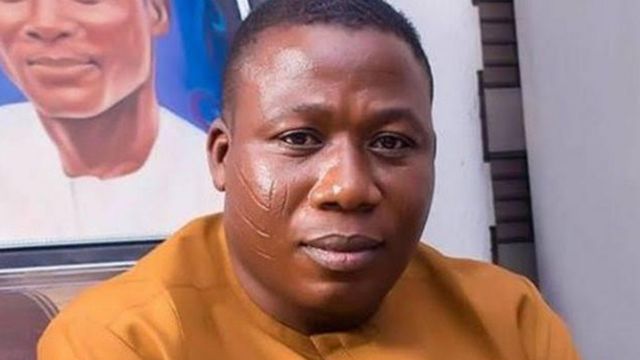
Supporters raise over N7 million Gofundme for Sunday Igboho

SUPPORTERS of Sunday Adeyemo, also known as Sunday Igboho, a Yoruba activist have through Gofundme fundraiser raised more than seven million for his activities in the western region of the country.

The Gofundme organised by one Maureen Badejo has raised £13,820 out of the proposed £100,000 for the purchase of buses.

In the description of the fundraiser, the organiser said Igboho is in need of buses in order to move around and ‘secure our ancestral land’.

The description further read that their security is threatened and the people in the position of authority are helpless.

“Let us rise up and support chief Sunday Adeyemo Igboho, they need buses to move around to secure our ancestral land. Our security is threatened as we speak. It seems people in a position of authority are helpless,” the description read in part.

In support of the donation, one Bankole Ogedengbe who donated £50 to the Gofundme account said Yorubaland must be free of a ‘bad deal’ called the 1999 Nigerian constitution.

Another donator identified as Kayode Ojetunde who donated £100 while stating his reason for donating said it is in order to liberate Yoruba nation from looming dangers if insurgency and banditry.

The Fulani herders’ crisis has again become an issue of national crisis in Nigeria.

Read Also: Reactions trail Sunday Igboho’s return to Nigeria after 30 months

The ICIR had reported that after issuing an ultimatum, Igboho visited Igangan town in Oyo state, alongside his supporters razed the residence of the Seriki of Igangan town over allegations that the Seriki connives with Fulani bandits to perpetrate violence on residents of the town.

Although the Seriki Fulani had fled the town before the expiration of Igboho’s ultimatum, he insists that he is innocent of the allegations.

After his time in Igangan, Igboho moved to Ogun state where he visited some town in the Yewa North Local government of the state.

According to reports, a series of violence was unleashed on the residence of the Seriki Fulani of Kaza town while one person was reported to have died as a result of the crisis.

Apart from Oyo and Ogun states, many other states in the Southern part of the country including Edo and Delta states have demanded the departure of Fulani herders.

The residents of some of the states alleged that the Fulani herders’ are responsible for the destruction of their farms and attacks on their properties.

In Igangan town, residents of the community said the Fulani herders’ kidnap their people and demand for ransoms.

Meanwhile, Nasir El-Rufai, the governor of Kaduna state has said that Nigerians have the rights to live anywhere in the country.

El-Rufai said this in a statement Wednesday as regards the ongoing crisis in the country over the activities of Fulani herders.

“On behalf of the Government of Kaduna State, I call on all Nigerians living in our state to respect law and order and the rights of all citizens to live in peace and security wherever they reside or work,” the statement read.

He also called on other state governments to ensure that citizen’s right to live anywhere in the country are protected.

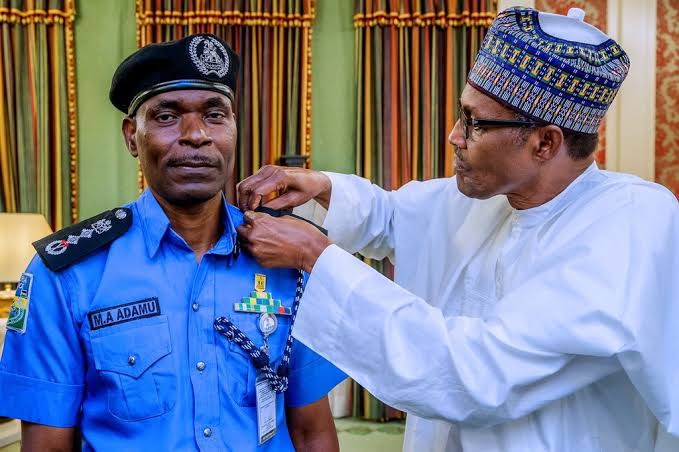
In blatant violation of Police Act, Buhari extends Adamu’s tenure as IGP

PRESIDENT Muhammadu Buhari has extended the tenure of Mohammed Adamu, by three months despite the completion of his tenure as the inspector-general of police (IGP), on Monday.

Muhammad Dingyadi, Nigerian minister of police affairs, announced this to newsmen on Thursday in the State House, Abuja.

He said that the decision of the President to extend the IGP’s tenure for another three months was to give time for the proper selection of a new police helmsman.

Read also: NBA drags Buhari, PSC to court over extension of IGP’s tenure

On Monday, while fielding questions on Channels Television, Garba Shehu, a senior presidential spokesperson had said there was no date for the announcement of a new IGP, raising suspicion among Nigerians that there were plans for tenure elongation for Adamu.

Buhari violates Police Act

The 2020 amended Police Act, signed into law by Buhari in September last year specifically spelt out the tenureship of any personnel of the police force. The Act pegs the retirement age of police officers at 60 years of age or 35 years of service.

Part 111 Section 7 (6) of the Act, which repealed the Police Act Cap. P19, Laws of the Federation of Nigeria, 2004, prescribed a four-year single tenure for a person appointed to the office of the IGP subject to the provisions of clause 18 (8), which stipulates that every police officer shall, on recruitment or appointment, serve in the Nigeria Police Force for a period of 35 years or until he attains the age of 60 years, whichever is earlier.

Also, under the Police Act, Adamu’s tenure extension also violates Section 7 (6), which fixes a single term of four years without an option of extension of tenure for the holder of the office of the IGP.

Open grazing is obsolete, government should end it – Bakare

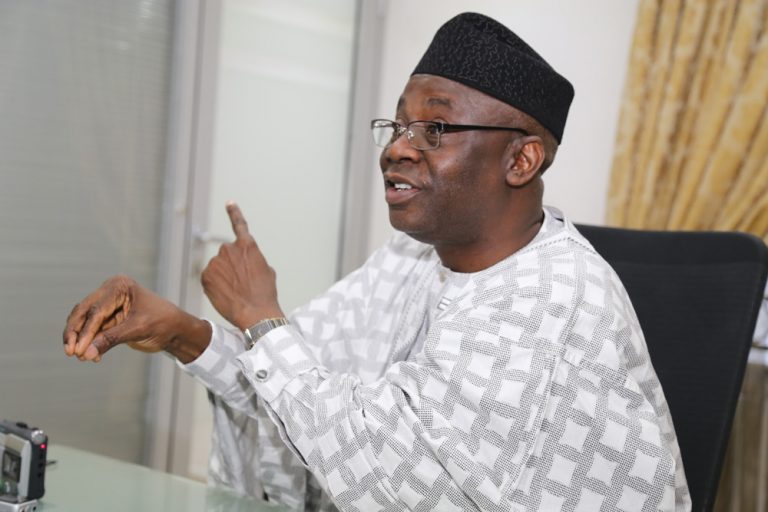
PASTOR Tunde Bakare, general overseer of Citadel Global Community Church, has urged the Muhammadu Buhari-led administration to end open grazing presently practised by herdsmen in the country.

He also said there was the need for herdsmen to register in their host communities and states for proper identification.

He made the call when he appeared on Arise TV’s ‘The Morning Show’ monitored by The ICIR on Thursday.

The pastor said he would bring the issue of the ‘obsolete’ practice of open grazing to the president when the opportunity availed itself.

Bakare’s comments came amid calls from communities in South-West and North-Central part of the country that herders should leave over concerns related to insecurity.

Some communities across the country have accused herdsmen of invading farmlands, forcing some state governments to enact anti-open grazing laws and ordering registration of herders in their states.

Rotimi Akeredolu, Ondo State governor had, on the 18th of January, in a bid to curb kidnapping, rape, destruction of farms by herdsmen, ordered herdsmen to register with the state government or vacate the state’s forest reserves.

The government had said, “These unfortunate incidents are traceable to the activities of some bad elements masquerading as herdsmen. These felons have turned our forest reserves into hideouts for keeping victims of kidnapping, negotiating for ransom and carrying out other criminal activities.”

But the presidency, through Garba Shehu, senior special assistant to the president on media and publicity, while reacting to the governor’s order said the governor had no constitutional powers to ask anybody to leave the state or any part of the state.

But on Thursday, Bakare said, “Open grazing needs to end as nations of the earth have gone beyond the practice and will also solve the myriad of issues associated with open grazing.

“Please, let’s be very very careful not to tear this country apart and I am appealing to all men of goodwill to rise to this occasion. There are four issues involved in this matter that I have considered and by the grace of God, as soon as I have the opportunity, I will also bring to the attention of president.

“We have lived with Fulanis and Fulanis have lived with us across this land. We must separate this agricultural pastoralism from the second thing, which is the terrorist issues in the forest.

“One of the issues is open grazing. I think it’s obsolete and it needs to end. It needs to end because the nations of the earth have gone beyond this. I was in Glasgow, I was in Israel, there are so many things we can do about agricultural pastoralism that will stop all the trouble in our land,” he said.

“We must be careful of indiscriminate violence, and separate terrorists in the forests from agricultural pastoralism. Those who are invading other people’s farms must be stopped. If our laws do not stop them and if property rights are not respected, then the government is not doing what it should do,” he added.

Did Larry King survive multiple ailments, several marriages?

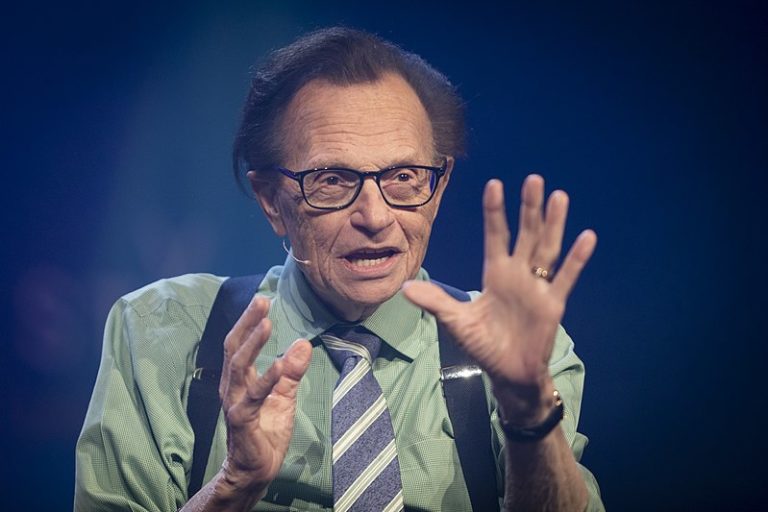
A few days after the passing of American television and radio host, Larry King, a post surfaced online in Nigeria that he survived several ailments and multiple divorces before finally dying of COVID-19.

The post was meant to get people to take COVID-19 seriously and observe its prevention protocols, like wearing masks.

The post made by an online user, Ben Agande, on Facebook has been shared multiple times.

THE CLAIM

Larry king

Larry King survived two cancers – lung and prostate, quintuple by-pass heart surgery, cardiac arrest, seven wives, and diabetic.

The finding

Findings by the FactCheckHub show that the claim is TRUE.

Larry King was a prominent broadcaster and host of the famous show – ‘Larry King Live’ on Cable News Network (CNN).

He hosted the show for more than 25 years and recorded over 6,000 episodes.

King died at 87. His family announced his death on January 24, 2021, on his verified Facebook page.

“He was an amazing father, and he was fiercely loyal to those lucky enough to call him a friend. We will miss him every single day of our lives,” the statement reads in part.

King’s family did not categorically state the cause of his death. However, his former employer said he was hospitalized for contracting COVID-19.

A day before, Ora Media, a firm he co-founded also disclosed that he died at the Cedars-Sinai Medical Centre, in Los Angeles, United States.

For 63 years, the ace broadcaster worked across different news platforms such as radio, television, and digital media. “Larry’s many thousands of interviews, awards, and global acclaim stand as a testament to his unique and lasting talent as a broadcaster,” the firm stated.

King has suffered from a series of ailments and largely managed to survive them. Some of which are cancer of the lung and prostate cancer.

In 2017, King struggled with lung cancer, USA Today reports.

Medical doctors discovered a stage 1 tumour during the broadcaster’s annual chest X-ray, which was removed via surgery.

In an interview with EXTRA, King said he had a heart attack and a heart surgery.

“I have a check-up every year. I have gone through a lot in my life – I’ve had a heart attack and heart surgery. Part of my check-up is the chest X-ray, and that is the protocol, I do it every year. Then, the doctor says I see a little spot here,” he said.

In a statement to the CNN, his representative also stated that King  was “diagnosed with stage 1 Adenocarcinoma, the most common type of lung cancer, through a routine chest examination.”

The report also noted that King has type 2 diabetes. 

On February 24, 1987, King suffered a heart attack. The heart disease was found to be hereditary. When King was 9, his father died of cardiac arrest at 46. In an interview with Alene Dawson of the Los Angeles Times, he said:

‘I’ve had heart attack and heart surgery. I defeated prostate cancer, have type 2 diabetes, but I remain in good health…I follow my doctor’s wishes, I take my prescriptions drugs, I take a lot of vitamins…”

By December of the same year, the bypass surgery was done.

King was married eight times to seven different women, including Alene Akins, whom he married and divorced twice. One of his marriages was reportedly annulled.

His longest and last marriage was with Shawn Southwick.  He filed for divorce after  22 years of marriage.

The verdict

The claim that Larry King survived two cancers – lung and prostate, quintuple by-pass heart surgery, cardiac arrest, seven wives and was diabetic is TRUE.

1 out of 6 deaths globally caused by cancer–WHO

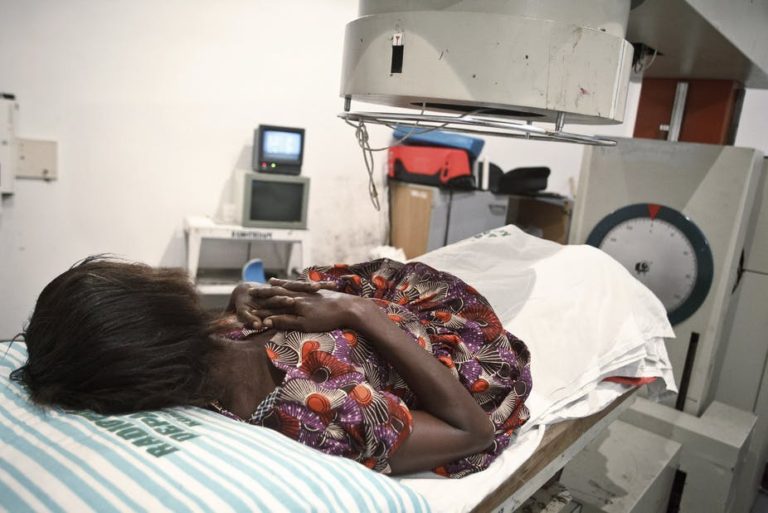
THE World Health Organisation (WHO) has revealed that one in every six deaths in the last decade was caused by cancer.

This is contained in a report published by the WHO in commemoration of the World Cancer Day celebrated on February 4th of every year to raise awareness on the deadly disease.

According to the WHO, the number of deaths from cancer has significantly increased in 2020 compared to the last decade.

“The number of deaths from cancer has also increased, from 6.2 million in 2000 to 10 million in 2020. More than one out of every six deaths is due to cancer,” WHO says.

WHO adds that the overall number of people diagnosed with cancer nearly doubled, from an estimated 10 million in 2000 to 19.3 million in 2020.

It also predicts that one in every five people in the world develops cancer during their lifetime.

“Projections suggest that the number of people being diagnosed with cancer will increase still further in the coming years, and will be nearly 50 percent higher in 2040 than in 2020,” the report reads in part.

COVID-19 worsens situation of last-stage patients

The report further states that the COVID-19 pandemic, which struck the world in 2019, worsened the condition of late-stage diagnosis.

WHO says the situation was exacerbated by late diagnosis and lack of access to treatment.
During the peak of 2020, many countries, including Nigeria, locked down their nations to curb the spread of the virus that has so far killed more than two million people in the world.

On lack of access and late diagnosis, the WHO says the situation occurred everywhere but particularly in low- and middle-income countries.

“In addition to having to cope with the disruption of services, people living with cancer are also at higher risk of severe COVID-19 illness and death,” the report reads.

In 2018, The ICIR reported that a cancer activist, Runcie Chidebe, executive director of Project PinkBlue, a non-governmental organisation working to eradicate or at least minimise incidents of cancer in Nigeria, said more than 72,000 people died of cancer each year in Nigeria.

Chidebe added that out of the over 72,000 deaths, about 102,000 cases of cancer were recorded in the country every year.

‎COVID-19 has made world’s rich richer, the poor poorer – Oxfam

THE coronavirus pandemic has made the rich richer while further impoverishing the poor, according to a report by Oxfam, a global charity organisation. 

Oxfam is an international confederation of 20 non-governmental organisations that work with partners in over 90 countries, including Nigeria, to end the injustices that cause poverty.

In the report titled ‘The Inequality Virus,’ released in January 2021, Oxfam observes that in multiracial societies such as the United States, United Kingdom and Brazil, marginalised groups, especially Blacks, are more likely to die from the coronavirus pandemic than Whites.

Coronavirus has increased inequality across the world

Noting that the COVID-19 pandemic has fed off, and increased, existing inequalities around the world, Oxfam, which assessed the global impact of the crisis, says that it has “hurt people living in poverty far harder than the rich, and has had particularly severe impacts on women, Black people, Afro-descendants, Indigenous Peoples, and historically marginalised and oppressed communities around the world.”

While the pandemic has forced the global economy into recession – a worldwide contraction – Oxfam, in the report, notes that “since the virus hit, the rich have got richer and the poor poorer.”

“It took just nine months for the top 1,000 billionaires’ fortunes to return to their pre-pandemic highs, but for the world’s poorest people, recovery could take 14 times longer; more than a decade,” the report states, adding that the increase in the wealth of the 10 richest billionaires in the world since the crisis began is more than enough to prevent anyone on earth from falling into poverty due to the virus and to pay for a COVID-19 vaccine for everyone.

According to Oxfam, a stock market collapse in the first months of the pandemic resulted in dramatic reductions in the wealth of the richest billionaires, some of the biggest stockholders. But the setback was short-lived.

Within nine months, the top 1,000 billionaires, mainly white men, have recovered all the wealth they lost. With unprecedented support from‎ governments for their economies,  the stock market has been booming, driving up billionaires’ wealth, even while the real economy faces the deepest recession in a century.

Read Also: How IMF COVID-19 loan forced FG to increase pump price, electricity tariffs- Oxfam report

Oxfam notes that across the world, billionaires’ wealth increased by a staggering 3.9 trillion dollars between March 18 and December 31, 2020.

“Their total wealth now stands at 11.95 trillion dollars, which is equivalent to what G20 governments have spent in response to the pandemic. The world’s 10 richest billionaires have collectively seen their wealth increase by 540 billion dollars over this period.

“Only three of the 50 richest billionaires in the world saw their fortunes diminish over that period, losing 3 billion dollars between them,” Oxfam says.

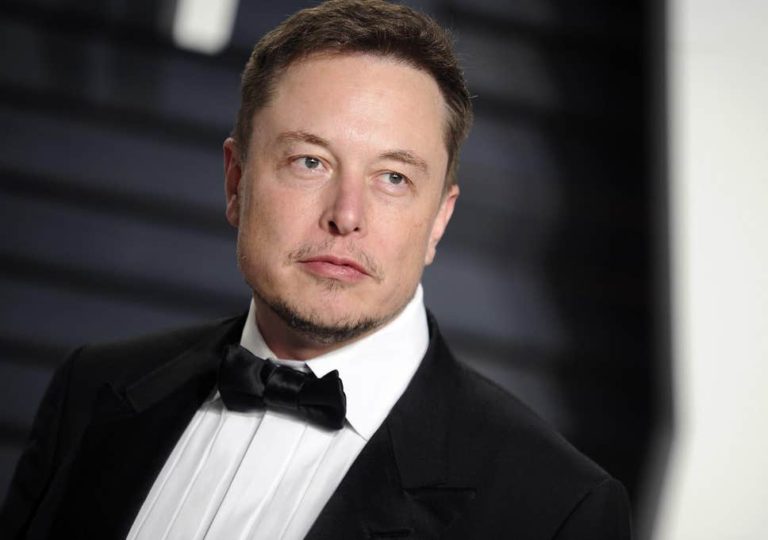
The two billionaires who have seen the largest increases in their wealth in this period – Elon Musk and Jeff Bezos – are active in the technology and automotive, battery production and space sectors.

The billionaires’ index

According to Bloomberg, Musk increased his net wealth by 140 billion dollars from March to December while Bezos increased his by 72 billion dollars.

Also, Zhong Shanshan, founder of Nongfu Spring, Chinese bottled water and beverage company, raised his wealth by 66.2 billion dollars, according to CNBC and Bloomberg. Also, Collin Huang, a 40-year-old CEO of Pinduoduo, an agrotech platform, added 33 billion dollars more to his net worth. According to CNBC and Bloomberg, Mark Zuckerberg increased his wealth by 26 billion dollars within the period, as Dan Gilbert, chairman of Rocket Companies,  became 28.1 billion dollars richer within the period.

According to Oxfam, some of the world’s largest corporations are funnelling billions of dollars in profits to shareholders, giving yet another windfall to the world’s richest billionaires.

The Oxfam report discloses that between March and August 2020, billionaires in the Middle East and North Africa increased their wealth by 20 percent, more than double the IMF emergency financing to the region during that same period, and almost five times the value of the United Nations’ COVID-19 humanitarian appeal for the region.

Also, in Latin America and the Caribbean, after the market crash, the combined wealth of billionaires increased by 17 percent between March and July 2020.

Oxfam says the 17 percent increase amounts to an additional $48 billion, which is enough to pay for one-third of all fiscal stimulus packages introduced by governments in Latin America and the Caribbean in response to the coronavirus crisis over that period, and also nine times more than the emergency credit provided by the IMF in the region in that same period, and more than five times the amount needed to prevent 12.4 million people from falling into extreme poverty in the region for a year.

Across the world, the richest people have escaped the worst impact of the pandemic

“Evidence shows us that, all around the world, the wealthiest people have escaped the worst impacts of the pandemic,” Oxfam says, noting that “in the UK, while lower-income households have fallen into debt during the lockdown, the richest 20 percent saved 30 billion dollars.”

More privates jets are being purchased as a result of COVID-19

Interestingly, the report reveals that private jets sales soared globally when commercial travel was banned during the lockdown, revealing that the world’s rich moved much of their money to tax havens in response to lockdown.

The poor became poorer

In the report, Oxfam states that while the world’s billionaires got richer, people living in poverty became even poorer due to the coronavirus pandemic.

“Recent estimates show that the number of people living on less than 5.50 dollars a day could have increased by between more than 200 million to half a billion in 2020. According to Development Initiatives, the poorest people in almost every country have seen their income fall due to the pandemic,” Oxfam observes.

Although many of the world’s poorest people are in Sub-Saharan Africa, Oxfam says that more than two-thirds of people who have been ‘newly’ forced into poverty are in South Asia, East Asia and the Pacific.

The report adds that most of those forced into poverty are informal workers who are excluded from social protection and social support programmes and access to credit.

Marginalised groups, particularly Blacks, are more likely to die from COVID-19 in US, UK, Brazil, other multiracial societies

The Oxfam report also says that, in multiracial societies such as the US, UK and Brazil, marginalised groups, particularly Blacks, are more likely to die from COVID-19 due to ‘systemic racism.’

According to Oxfam, “Systemic racism puts Black people, Afro-descendants, Indigenous Peoples and historically marginalised and oppressed communities at higher risk. In several countries, the pandemic has highlighted gross inequality in health outcomes based on race and ethnicity. Black people, Afro-descendants, Indigenous Peoples and other racialised groups are more likely to contract COVID-19, and to suffer the worst consequences, as suggested by evidence from several countries. In the US, for example, age-adjusted hospitalisation rates due to COVID-19 were five times higher for Black, Latino, and Native Americans than for White people. COVID-19 mortality rates among Black people were found to be twice those of White people.”

“In the US, Latino and Black people are more likely to die of COVID-19 than White people. In Brazil, people of Afro-descent have been 40 percent more likely to die of COVID-19 than White people,” Oxfam adds.

Noting that rates of infection among long-neglected migrant and refugee populations have also been disproportionately high, Oxfam notes that as of April 2020, the percentage of confirmed COVID-19 cases among Somalis in Norway and Finland was 10 times their percentage share of the population, and they accounted for a significant proportion of deaths.

Also, in the Amazon region, the number of deaths among the Indigenous population increased from 113 to 2,139 in barely six months, an increase that is two-and-a-half times more than what was registered among the general population. Oxfam further observes that out of the 400 Indigenous Peoples that inhabit the Amazon region, by the middle of November 2020, the virus had reached 238.

To drive home the dismal impact of ‘systemic racism’ on marginalised groups, Oxfam notes that, in the US, if the death rate of Blacks had been the same as that of White people between February and December 2020, over 16,800 Black people would still be alive.

Is Nigerian government giving out N10,500 weekly COVID-19 support?

ON Saturday, January 30, 2021, a viral claim circulating on WhatsApp said the Nigerian government was giving out 10,500 naira weekly support to Nigerians.

The post entitled ‘COVID-19 Second Wave Support Fund Programme’ encouraged members of the public to take advantage of the funding opportunity by submitting an application through a website.

It read:

“Don’t miss this federal government N10,500 weekly grant. It takes few seconds to apply. Don’t miss this great opportunity. Apply here

It added a website link.

THE CLAIM

Due to COVID-19 second wave, the federal government is giving out a weekly grant of 10, 500 naira to support Nigerians.

THE FINDINGS

Findings by the FactCheckHub show that the claim is FALSE.

The FactCheckHub observed that the website on the forwarded post had photos of the minister of humanitarian affairs, disaster management and social development (FMHDS), Sadiya Umar Farouq. However, it was different from that of the ministry.

The FMHDS website is fmhds.gov.ng.

The website in the claim sought to gain traffic by prompting people to share. For instance, after filling the questionnaire, it said, “Share until the blue bar is full.”

The website was also riddled with several pop-up advertisements for dating sites, bitcoin trading, among others. It is unusual for government websites to have commercially driven adverts.

In addition, the website was not secure as it did not have ‘S’ after the ‘HTTP,’ neither did it have the padlock symbol at the URL.

Another red flag the FactCheckHub discovered was that the social media icons attached to the website did not redirect to any social media account; it rather refreshed back to the website.

More so, the contact button found on the website was also inactive, thus questioning the credibility of the support fund.

The website also had a comment section – mimicking a Facebook comment plugin. This was also phony as it did not redirect to Facebook as the plugin was often expected to work.

Furthermore, The FMHDS, which coordinates support schemes on behalf of the Nigerian government, had no such information on its official website or social media accounts.

The ministry, however,  has special funds such as the N75 billion Nigerian Youth Investment Fund (N-YIF) partly managed by the Federal Ministry of Youths and Sport initiated by the federal government and the Micro, Small and Medium Enterprises (MSME) Survival Fund.

They are all part of the Nigeria Economic Sustainability Plan (NESP) designed by the federal government under the leadership of the Vice President Yemi Osinbajo to reduce the impacts of COVID-19 on the nation’s economy.

Not the first time

This is not the first time that the FactCheckHub has debunked similar claims. The FactCheckHub has debunked claims that the Nigerian government was giving out free N50,000 lockdown funds; that the National Identity Management was giving out 5GB free data;  that the Nigerian government was giving N25,000 relief funds , and that the government was giving out grants to support Nigerians.

All these claims were false.

Read Also: FACT CHECK: Claim that Anambra’s debt profile is over N200bn is FALSE

They all have the same script of broadcasting the claims via WhatsApp, putting out a phony website link, and asking for multiple shares.

The FactCheckHub had reported that such claims usually targeted topics and areas that a lot of people would be interested in, such as relief funds, recruitment, and free data.

Sometimes, such websites are set up to obtain people’s information for nefarious purposes or to get traffic so that they can sell advertisements.

Going to the government, institution, agency or a company’s social media handles to see if they have such claims can help one avoid falling victim.

A number of such institutions that attract public interest are verified on social media. Such social media handles usually have the website included in the bio.

In addition, Google-searching information using keywords is another way of verifying claims like this to find out if it is legitimate or not.

Read AlsoFrustration of Nigerian undergraduates learning over a video conferencing app

THE VERDICT

From the findings presented above, the claim that due to COVID-19 second wave, the federal government is giving out a weekly grant of 1o, 500 naira to support Nigerians is FALSE.

Julius Berger flouts FOI Act, refuses to release contract details of federal government projects

JULIUS Berger (JB) has refused to release copies of contract detail on the Abuja-Kaduna-Zaria road construction project awarded by the federal government.

Julius Berger, one of the leading construction companies in Nigeria, was incorporated by the Corporate Affairs Commission (CAC) in 1970, thus transforming it into a Nigerian entity. The construction company has executed various complex projects nationwide.

The ICIR, on December 07, 2020, through the Freedom of Information Act (FOIA), requested the details of the ongoing Abuja-Kaduna-Zaria project and specifically asked for the record(s) of contract agreement and specification details of the project. Information demanded by The ICIR include full details of the total payment received for the project, exact state, quality and level of completion of the project and expected time of completion.

Almost two months after, Julius Berger is yet to respond to the request and has also failed to give a reason for the refusal, as stipulated by the FOI Act.

The ICIR on January 25 also sent another letter reminding Julius Berger of the initial letter sent in December. It is over seven days and Julius Berger is yet to respond.

Section 2(7) of the FOIA classifies Julius Berger as a public institution, which the law is binding upon. According to the section of the Act, “Public institutions are all authorities whether executive, legislative or judicial agencies, ministries, and extraministerial departments of the government, together with all corporations established by law and all companies in which government has a controlling interest, and private companies utilizing public funds, providing public services or performing public functions.”

By enacting the FOIA, 2011, the Seventh National Assembly gave effect to the constitutionally guaranteed right of the public to access public documents held by public institutions and relevant private entities in Nigeria, including Julius Berger.

Read Also: Auditor-General’s office fails to comply with FOIA, declines ICIR’s request

Recall that in a case between the Public and Private Development Centre (PPDC) and Julius Berger in 2014, Justice M.M Kolo of the High Court of the Federal Capital Territory (FCT) granted a leave against Julius Berger, compelling it to furnish PPDC with copies of documents and information to the bidding and award of the contract for the reconstruction of the Lagos-Ibadan Expressway.

This is an indication that Julius Berger, the contractor who handled the construction of the National Assembly complex and also the developer of the FCT, may have a reputation for violating FOI requests.

Section 7 of the FOIA explains what should happen when a public institution denies access to public information. The section states:

(1) Where the government or public institution refuses to give access to a record or information applied for under this Act, or a part thereof, the institution shall state in the notice given to the applicant the grounds for the refusal, the specific provision of this Act that it relates to and that the applicant has a right to challenge the decision refusing access and have it reviewed by a Court.

(2) A notification of denial of any application for information or records shall state the names, designation and signature, of each person responsible for the denial of such application.

Read AlsoFederal agencies paid N3.77bn in fictitious ‘estacodes’ to top staff, families

(3) The government or public institution shall be required to indicate under subsection (1) of this Section whether the information or record exists.

(4) Where the government or public institution fails to give access to information or record applied for under this Act or part thereof within the time limit set out in this Act, the institution shall, for the purposes of this Act, be deemed to have refused to give access.

(5) Where a case of wrongful denial of access is established, the defaulting officer or institution commits an offence and is liable on conviction to a fine of N500,000.

Nigerians applaud Biden’s appointment of Titilayo Ebong

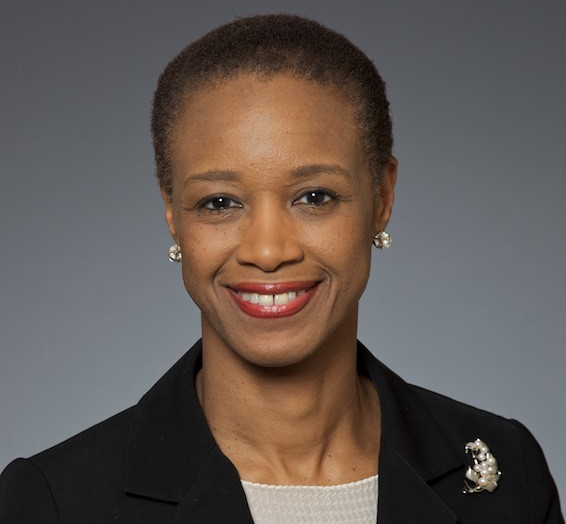
NIGERIANS are applauding the appointment of Enoh Titilayo Ebong as the Acting Director of US Trade and Development Agency (USTDA).

Ebong is the fourth Nigerian to be appointed by the President Joe Biden-led administration. Previous appointments include: Adewale Adeyemo as deputy secretary of the treasury department, Funmi Olorunnipa Badejo as white house counsel, and Osaremen Okolo as a member of Biden’s COVID-19 response team.

Many Nigerians view the latest appointment of a Nigerian as a well-deserved recognition of the brilliance and competitiveness of the Nigerian people. They also commended President Biden for giving consciously creating a path towards inclusiveness and equity.

On twitter, @GeorgeIfeanyiU1 tweeted: “This man (Biden) is showing non-bias to Nigerians. It (His appointments) shows he has capability and merit in mind. Quite different from Trump who called African countries shitholes and toilets and asked them to go back to their countries”.

Another Nigerian, @Aviego, said: “I am glad you can see how our people are appreciated outside (Nigeria). It is not about where she is from or who her father is; not about the quota from that region…or how many followers she has”.

Julian Chekwas who spoke to the ICIR in Abuja said “the recent appointment of Nigerians into to Biden-Harris administration is an eye-opener that we need to engage our youths more. If you consider the age group of these appointees against the position of responsibility they are assigned, you will discover that our youths back at home are grossly underestimated. When was the last time someone as young as these ones was appointed into public office in this country?”

Read Also: Biden reverses Trump’s travel ban on Nigeria, others

Announcing the appointment in a press statement released on Tuedsay, the agency said Ebong had served in a variety of roles, most recently as the Agency’s General Counsel, and Deputy Director and Chief Operating Officer.

“Today, President Joseph R. Biden, Jr. appointed Enoh T. Ebong as the Acting Director of the U.S. Trade and Development Agency…As Acting Director, Ms. Ebong leads an agency that partners with the U.S. private sector to develop sustainable infrastructure and foster economic growth in emerging economies, while supporting U.S. jobs through the export of U.S. goods and services,” the statement said.

It also quoted Ebong as saying during her swearing-in ceremony that: “It is an honor to return to USTDA. The opportunity to lead the Agency comes at a critical moment when the world is turning to the United States for leadership on clean energy and climate-smart infrastructure, as well as safe and secure ICT solutions”.

“The Agency is one of the most effective, targeted and proven tools within the U.S. government. I’ve long believed in USTDA’s mission and program, which are fully aligned with the President’s vision of strengthening our economy and addressing climate as an essential component of American foreign policy and national security,” the new acting director added.

Read Also: Is Nigerian government giving out N10,500 weekly COVID-19 support?

Prior to her return to USTDA, Ebong served as the Head of Strategic Partnerships at the Milken Center for Advancing the American Dream, where she drove the development of strategic partnerships to expand access to education, health, financial empowerment and entrepreneurship.

She earned a Juris Doctor from the University of Michigan Law School, a Master of Arts in Communication from the Annenberg School for Communication at the University of Pennsylvania, and a Master of Arts in History, with Honors, from The University of Edinburgh, Scotland. She is a member of the Commonwealth of Massachusetts Bar.