Home Blog Page 196

NRC suspends Abuja-Kaduna rail service after derailment

0

THE Nigerian Railway Corporation (NRC) has suspended operations on the Abuja-Kaduna corridor following Tuesday’s derailment of its train along the route.

Managing Director of the NRC, Kayode Opeifa, told reporters in Abuja that the suspension would remain until investigations are concluded.

He said that teams from the corporation, the Nigeria Safety Investigation Bureau (NSIB), and other agencies were already examining the scene to determine the cause.

Opeifa dismissed suggestions that the ill-fated train was faulty, insisting its coaches and locomotives were in good working condition.

He added that refunds had been processed for all affected passengers.

While at the Idu and Asham train stations in Abuja, Opeifa met with some of the affected passengers.

He disclosed that six people sustained minor injuries and had been treated, though the total number of passengers on board has yet to be verified.

Meanwhile, the NSIB has launched a full-scale investigation into the incident.

The NSIB’s Director General, Alex Badeh Junior, extended sympathy to the injured and pledged a thorough inquiry.

“Our investigators are on ground to uncover the root cause of this derailment. The Bureau is committed to ensuring the safety of Nigerians through an independent and transparent process,” Badeh stated.

According to the Bureau, the inquiry will look into both immediate and systemic factors that might have contributed to the derailment, with recommendations expected to prevent a repeat.

The NSIB’s spokesperson, Bimbo Oladeji, confirmed that no lives were lost, asserting that six passengers were injured.

A team of investigators has been deployed to gather evidence, interview witnesses, and liaise with stakeholders, he said.

The ICIR reported that the train travelling from Abuja to Kaduna derailed around Jere, Kaduna State.

The train derailed at about 11 a.m. on Tuesday, August 26, triggering fear among passengers and their relatives.

A passenger who spoke with Channels TV at the scene said the situation was chaotic, with terrified passengers scampering for safety in confusion.

Confirming the incident, the Managing Director of the NRC, Kayode Opeifa, explained that a rescue operation was already underway at the scene but declined to provide further details.

Military personnel were deployed to the site to assist in evacuating stranded passengers.

The ICIR reports that the Abuja-Kaduna train corridor is a very sensitive route. Despite being one of Nigeria’s most active rail corridors, used daily by hundreds of commuters, it has faced many challenges.

In March 2022, passengers using the service sustained injuries during a terrorist attack on a Monday evening.
Concerns as NAFDAC warns of fake postinor-2 pills in circulation

0

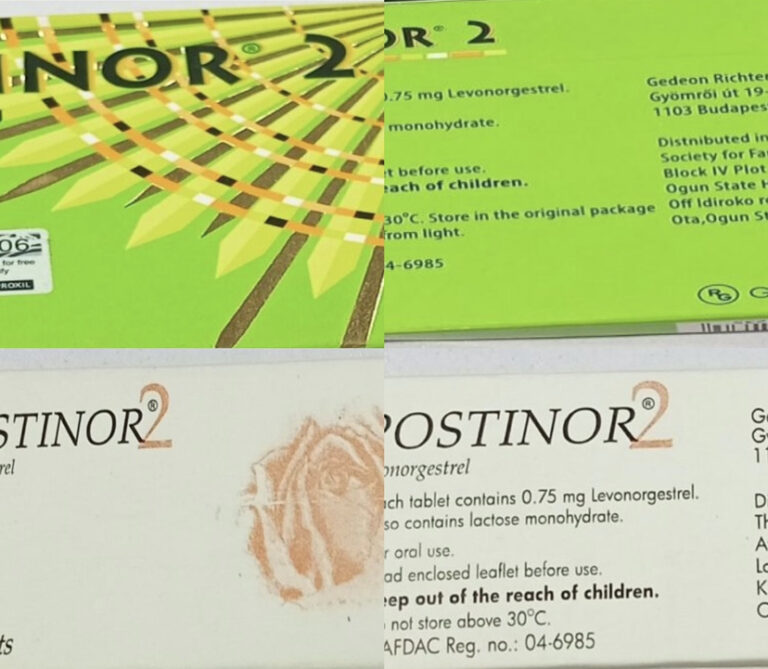
THE National Agency for Food and Drug Administration and Control (NAFDAC) has raised alarm over the circulation of counterfeit versions of Postinor-2 (Levonorgestrel 0.75mg), a popular emergency contraceptive pill.

The agency warned that the falsified products could endanger women’s health and fuel unwanted pregnancies across Nigeria.

In a statement via its X handle on August 26, NAFDAC disclosed that falsified Type 1 and Type 2 batches of the product were confirmed in the market following a report from the Society for Family Health (SFH), which clarified it had not imported the affected batches.

The agency identified spelling errors and packaging discrepancies as major signs of the counterfeit products. 

For instance, the verification sticker on the fake version carries the misspelled word “Veify” instead of “Verify,” and the packaging reads “Distnibuted in Nigeria” instead of “Distributed in Nigeria.”

The NAFDAC warned that the falsified contraceptives posed serious health risks, including contraceptive failure, exposure to toxic or harmful substances, unpredictable side effects, and long-term reproductive complications. 

The agency noted that counterfeit medicines are unregulated, unsafe, and illegal, stressing that their safety and efficacy could not be guaranteed.

Counterfeit medicines are unregulated, untested, and illegal, making their safety and efficacy impossible to guarantee. Patients should only obtain Postinor-2 from verified pharmacies or licensed healthcare providers,” part of the statement read.

The agency said investigations were ongoing to trace the source of the fake products, while its zonal directors and state coordinators had been directed to conduct surveillance and mop up the falsified batches across Nigeria.

It urged healthcare professionals, distributors, and consumers to remain vigilant and report any suspected counterfeit medicines to its nearest office or through its dedicated hotlines and reporting platforms. 

Nigerians express fears

Meanwhile, the development has sparked widespread concerns among Nigerians. 

Many worried that the circulation of fake Postinor-2 could worsen the country’s challenges with unplanned pregnancies, unsafe abortions, and maternal health complications.

They also noted that the circulation of the fake contraceptives had been ongoing for a long time.

A social media user, Champion Idowu, a doctor, expressed concerns over the situation.

“Postinor-2 is commonly used, but with counterfeits around, the risk is huge.

“Beyond this, young and unmarried people really need to prioritise abstinence. Why gamble with unplanned pregnancy or the dangers of fake drugs when prevention is safer?,” he wrote on X.

Another user @abimbolaxoxo wrote “In Nigeria, this was bound to happen. It is everywhere and the use of it is usually accompanied by desperation. Trust marauders to prey on it. Women should explore other birth control options and research less popular and approved brands.”

The ICIR reports that the latest alarm came less than a week when the agency alerted Nigerians to a fake cowmilk product in circulation.

Assembly suspends member who revealed lawmakers earned N10m constituency allowance quarterly

0

THE Anambra State House of Assembly has suspended the member representing Ayamelum Constituency, Bernard Udemezue, following his social media post on lawmakers’ allowances and criticism of the state’s security outfit.

The suspension, announced during Tuesday’s plenary in Awka, came after a motion of urgent public importance raised by Tony Moubike, representing Aguata II Constituency, according to Punch Newspaper.

The development followed the Assembly’s order to the House Committee on Rules, Business, Ethics and Privileges on Tuesday, August 19, to further deliberate on Udemezue’s case and submits its findings today.

The lawmakers had argued last Tuesday that Udemezue’s posts contained “damaging content” that could tarnish the image of the Assembly and jeopardise security in the state. 

The Assembly Speaker Somtochukwu Udeze subsequently referred the matter to the House Committee on Rules, Business, Ethics and Privileges for further investigation, with a report expected today.

Reacting to the accusations in an interview with Radio Nigeria, Udemezue defended his actions, saying he was only fulfilling a campaign promise of transparency. 

He revealed that constituency allowances for lawmakers had recently risen from N7.5 million to 10 million quarterly.

The lawmaker also accused his colleagues of trying to silence him to prevent their constituents from knowing what they earned.

The embattled lawmaker further accused the Assembly of failing in its oversight of the executive.

He alleged that the Udogachi security outfit, established under Governor Chukwuma Soludo’s administration, was involved in abuses.

According to him, he was removed as Chairman of the House Committee on Homeland Affairs after an oversight visit to the outfit’s headquarters, where he uncovered cases of unlawful detention.

Falana joins Obi, NLC, Atiku, others, slams pay rise for public office holders

0

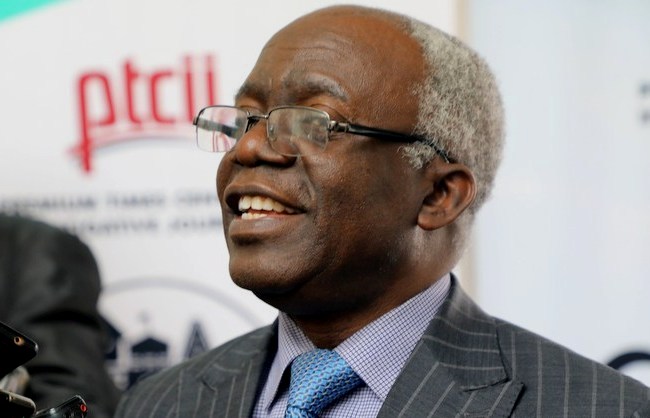
PROMINENT Nigerians, including human rights lawyer, Femi Falana, have criticised the proposed salary hike for political office holders, calling it grossly insensitive in light of Nigeria’s prevailing economic hardships.

Speaking on Channels Television’s Sunrise Daily on Tuesday, August 26, Falana, a senior advocate, took aim at the Revenue Mobilisation Allocation and Fiscal Commission, accusing it of misplaced priorities and neglecting the daily hardships faced by millions of Nigerians.

“The RMAFC seems to have overlooked the harsh living conditions in the country and the daily hardships endured by ordinary people,” he said.

The ICIR reported that the Chairman of Revenue Mobilisation Allocation and Fiscal Commission (RMAFC), Mohammed Shehu, revealed on August 18 that the commission planned to review the salaries of political office holders, describing the current pay structure as “inadequate and outdated.”

Shehu said President Bola Tinubu earned N1.5 million monthly, while ministers received less than N1 million, amounts he said had remained unchanged since 2008.

He argued that the salaries were no longer realistic given the responsibilities of the offices.

The Nigeria Labour Congress (NLC) was among the first group of Nigerians to oppose the plan.

The NLC cited growing inequality and the hidden perks politicians enjoy as why such plan should be dropped. It said workers earned only N70,000 as minimum wage monthly, which did not reflect the hardship faced in the country.

However, the RMAFC chairman clarified that his organisation only determined the salaries of political, judicial, and legislative officers, not civil servants.

He added that the commission has also begun reviewing Nigeria’s revenue-sharing formula, which has not been revised since 1992 to reflect current socio-economic realities and reduce overdependence on the Federal Government.

Reacting to the proposal on Channels TV, Falana cited recent National Bureau of Statistics (NBS) data indicating that over 133 million Nigerians lived in multidimensional poverty, questioning the justification for any salary increase for public officials.

“At this point, proposing higher wages for political office holders is not only tone-deaf but also unfair to the majority battling severe economic pressure,” he added.

Similarly, Former presidential candidate and Labour Party leader, Peter Obi, criticised the proposal describing the move as a “shameless grab for more” at the expense of Nigeria’s struggling majority.

Obi in a statement on his X handle said salary hike was “totally unjustifiable” and exposed the “greed and insensitivity” of political leaders.

“The recent proposal by the Revenue Mobilisation Allocation and Fiscal Commission to increase the salaries of political leaders is causing widespread anger and bitterness among Nigerians, and we share the concerns of many Nigerians who question the necessity and timing of this proposal.

Similarly, former Vice President Atiku Abubakar condemned the move, stating that whoever conceived the idea of “salary increase for government officials doesn’t even mean well for the administration”.

In an interview with DAILY POST, Atiku’s spokesperson, Paul Ibe, said the policies of Tinubu’s administration were designed solely for the benefit of those in power.

“It is all to serve their interests. We saw how much that was wasted on the vice president’s residence” Ibe said.

Fear as Abuja–Kaduna train derails

0

A PASSENGER train travelling from Abuja to Kaduna has derailed around Jere, Kaduna State.

The train derailed at about 11 a.m. on Tuesday, August 26, triggering fear among passengers and their relations.

According to reports, the incident occurred along the Kaduna corridor shortly after the train departed Abuja en route to Kaduna.

A passenger who spoke with Channels TV at the scene said the situation was chaotic, with terrified passengers scampering for safety in confusion.

As of the time of filing this report, the cause of the derailment remains unknown, and officials of the Nigeria Railway Commission (NRC) have yet to confirm any injuries or casualties.

Confirming the incident to Punch, the Managing Director of the NRC, Kayode Opeifa, explained that a rescue operation was already underway at the scene but declined to provide further details.

Reports indicate that military personnel have been deployed to the site to assist in evacuating stranded passengers.

The ICIR reports that the Abuja-Kaduna train corridor is a very sensitive route. Despite being one of Nigeria’s most active rail corridors, used daily by hundreds of commuters, it has faced many challenges.

In March 2022, passengers on the Abuja-Kaduna train sustained injuries during a terrorist attack on a Monday evening.
The ICIR gathered that the terrorists used an improvised explosive device to derail the train.

Pictures and videos from the attack seen by The ICIR show passengers who sustained injuries, while some parts of the train were destroyed.

Some of the passengers were abducted by the terrorists.

Earlier in October 2021, terrorists attacked the Abuja-Kaduna train with explosives, forcing a suspension of operations on the rail line.

As of December 2021, The ICIR confirmed that security operatives travel alongside passengers and constantly patrol the chambers of the train with guns.

Due to the rampant kidnapping and abduction on the Abuja-Kaduna expressway, travellers had embraced the train as a safer alternative.

Beyond attacks on transport systems, terrorists operating in the state have also unleashed mayhem on residents of Kaduna.

Terrorists have killed many residents in the state during attacks on Giwa, Birnin Gwari, Kaura and Jema’a Local Government Areas, among others in the state.

.

NERC transfers regulatory oversight to Bayelsa Electricity Commission

THE Nigerian Electricity Regulatory Commission (NERC) has issued an order to transfer regulatory oversight of the electricity market in Bayelsa State to the Bayelsa State Electricity Regulatory Commission (BYERA).

The NERC disclosed this on its official social media handle on Monday, August 25.

The decision complied with the Constitution of the Federal Republic of Nigeria (CFRN) and the Electricity Act (EA) 2023 as amended.

The Ccmmission, however, in accordance with the provisions of the EA 2023, retains the role as a central regulator with regulatory oversight on the inter-state/international generation, transmission, supply, trading, and system operations.

The EA mandates any state that intends to establish and regulate intrastate electricity markets to deliver a formal notification of its processes and requests NERC to transfer regulatory authority over electricity operations in the state to the state regulator.

The NERC, following this demand, has directed the Port Harcourt Electricity Distribution Company Plc (PHED) to incorporate a subsidiary (PHED SubCo) to assume responsibilities for intrastate supply and distribution of electricity in Bayelsa State from PHED.

The Commission said the PHED shall complete the incorporation of PHED SubCo within 60 days from August 21, 2025. It noted that the sub+company shall apply for and obtain a licence for the intrastate supply and distribution of electricity from BYERA, among other directives.

It said all transfers envisaged by this order shall be completed by February 20, 2026.

The ICIR reports that many states are firming up control of regulatory oversight of the electricity business in their respective territory with the support of NERC.

This development followed the transfer of regulatory oversight of over 10 states which have been granted regulatory powers to regulate and manage their own electricity.

States with regulatory oversight powers include Enugu, Ekiti, Ondo, Imo, Oyo, Edo, Kogi, Lagos, Ogun, Plateau, and Nasarawa states have completed the transfer of regulatory oversight from NERC.

It would be noted that the states’ control came on the heels of the Electricity Act 2023, signed by the late President Muhammadu Buhari and later amended by President Bola Tinubu.

The Act removed power generation, transmission, and distribution from the exclusive legislative list, effectively ending the Federal Government’s sole jurisdiction over these areas.

States will specifically regulate the generation, transmission, and distribution of electricity within their territories.

They are also expected to oversee and manage their local electricity markets.

This includes licensing local power projects, managing state-owned power assets, and overseeing retail electricity distribution and pricing.

The states will also be responsible for promoting rural electrification projects and integrating renewable energy sources into their local grids.

Reports claiming special visa for Nigerians in ‘hometown’ initiative false – Japan

0

THE Japanese government has clarified that its new “JICA Africa Hometown” initiative did not involve offering special visas or immigration privileges to Nigerians or other Africans.

In a statement on Monday, Japan’s Ministry of Foreign Affairs dismissed claims that Nigerians relocating to Kisarazu city would receive a new visa category, describing such reports as “contrary to the facts.”

Recall that last week, reports indicated that the Federal Government, in a statement signed by the Director of Information at the State House, Abiodun Oladunjoye, announced that Japan had designated Kisarazu city as the ‘hometown’ for Nigerians.

The reports said the Japanese government would create a special visa category for highly skilled and talented Nigerians moving to the city to live and work.

The reports noted that the ‘hometown’ status introduced a new visa path that simplified living, working, and studying in Japan, enhancing cultural exchange and Nigeria–Japan relations.

It added that Nigeria’s Chargé d’Affaires in Japan, Florence Akinyemi Adeseke, alongside Kisarazu’s Mayor Yoshikuni Watanabe, received a certificate naming the city the ‘hometown’ of Nigerians.

However, in its latest statement, Japan’s Ministry of Foreign Affairs explained that during the ninth Tokyo International Conference on African Development, the Japan International Cooperation Agency (JICA) launched the Africa Hometown programme to strengthen exchanges between African countries and Japanese local governments.

“Under this programme, four cities in Japan are designated as ‘home towns’ for four African countries. Under this programme, JICA plans to promote exchanges between the four Japanese cities and the four African countries through various activities, including the organisation of exchange events involving JICA overseas cooperation volunteers.

“On the other hand, there are no plans to take measures to promote the acceptance of immigrants or issue special visas for residents of African countries, and the series of reports and announcements concerning such measures are not true. The Ministry of Foreign Affairs of Japan will continue to make efforts to ensure that appropriate reporting and statements regarding this matter are carried out,” the statement read.

Air Peace gets approval to begin direct flights to Brazil

AIR Peace, a Nigerian national flag carrier, has received approval to commence direct flight operations from Lagos to São Paulo in Brazil.

The Special Adviser to the President on Information and Strategy, Bayo Onanuga, announced this in a statement on Tuesday, August 26.

He said the direct flight deal was one of the agreements between President Bola Tinubu and his Brazilian counterpart, Luiz Inácio Lula da Silva.

Tinubu, who is on a two-day state visit to Brazil, on Monday, August 25, had a joint news conference with Lula da Silva, where deals on aviation, trade, agriculture, and others were signed.

According to Onanuga’s statement, the Brazilian President affirmed that, “Increasing the direct connections between Nigeria and Brazil is another essential step to strengthen the ties between our societies.

“We have approved the launch of a direct flight, to be operated by Nigeria’s largest airline company, Air Peace, between Lagos and São Paulo.”

The development followed the two-hour bilateral meeting at the Palácio do Planalto in Brasília, where the two leaders witnessed the signing of agreements and memoranda of understanding (MoUs).

Onanuga said the Nigerian minister of aviation and aerospace development, Festus Keyamo, and Brazilian minister of ports and airports, Silvio Costa Filhos, signed a bilateral air services agreement to “boost trade and people-to-people ties.”

He further stated that Nigeria’s minister of state for foreign affairs, Bianca Ojukwu, and her Brazilian counterpart, Mauro Vieira, signed an agreement on diplomatic training cooperation.

Both ministers also signed an MoU on political consultations to address bilateral, regional, and international issues of common interest, the presidential aide said.

“Nigeria’s Minister of Innovation, Science, and Technology, Geoffrey Nnaji, and Brazil’s Minister of Science, Technology, and Innovation, Luciana Santos, signed an MoU on cooperation in biotechnology, bioeconomy, ocean science, innovation ecosystems, energy, space development, digital transformation, and raw materials research.

“Managing Director of Nigeria’s Bank of Agriculture, Ayo Sotinrin, and Brazil’s Minister for the National Bank for Economic and Social Development (BNDES), Aluísio Mercadante, signed an MOU for cooperation on trade and investment promotion, harmonising efforts to expand agricultural financing, investment, and joint projects,” Onanuga added.

The ICIR reports that Tinubu had arrived in Brasília, Brazil’s capital city, on Monday, August 25, for a two-day state visit after a trip to Los Angeles, United States (US).

The president was received by senior Brazilian government officials at the Brasília Air Base.

The ICIR reported recently that Nigeria and Brazil have advanced discussions to activate their Bilateral Air Services Agreement (BASA) towards establishing direct flights between the two countries.

This follows a commitment made in February 2024 by Presidents Tinubu and Lula da Silva in Addis Ababa to strengthen air connectivity between the two countries.

Rivers communities battle environmental crisis after NNPCL’s oil well fire

0
SEVERAL communities in the Degema Local Government Area (LGA) of Rivers State are currently facing an environmental crisis following a month-long fire that consumed one of the communities – Zion City – in January this year.
The blaze, which stemmed from an oil and gas spill, destroyed several hectares of land, some of which have yet to have a weed grow on them after six months since the fire was quenched.
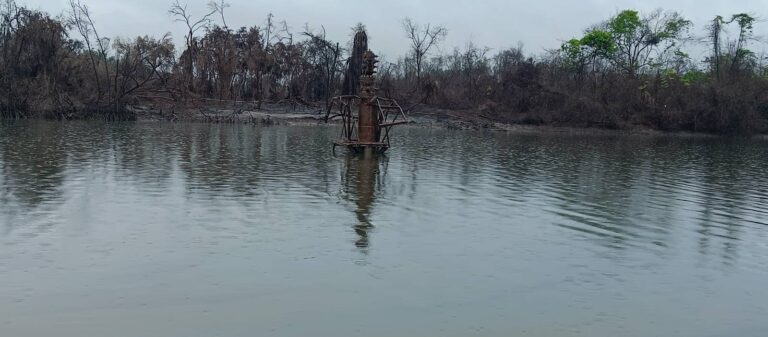
Owned by the Nigeria National Petroleum Corporation (NNPCL), the OML 18, Well 8 that caused the tragedy continues to hiss scarily on the creek in Zion City. Residents of the community expressed fear that they might experience further spills from the well because the same noise heralded the initial tragedy.
The oil and gas spill affected 17 communities, including Bukuma, Okpurata, Christ Liberty, Daily Bread, and Ambiama. The spill also polluted the water in the communities, posing serious health hazards.
Documents obtained by The ICIR showed how the NNPCL’s negligence caused the disaster.
The NNPCL also failed to appear before the House of Representatives’ Committee on Environment, which convened public hearings on the issue.
The hearing took place three times in Abuja and the NNPCL did not show up in any of them. The company also ignored the committee’s directive that it should provide palliatives for the affected residents.
OML 18, Well 8 sitting on the creek at Zion City
The ICIR reported how the National Oil Spill Detection and Response Agency (NOSDRA) blamed the crisis on the NNPCL.
When our reporter visited the communities in June, residents decried how the spill and fire rendered them jobless.
People in the largely fishing communities said they could no longer fend for their families because the creeks had been polluted, and they struggled to catch fish they could eat.
Residents who spoke with The ICIR blamed the NNPCL for the crisis.
The king of Bukuma, Steven Jeremiah Tobis, said the NNPCL and other relevant agencies failed to respond to the spill despite being notified on time.
He said NNPCL Eighteen Operating Ltd (NOEL) left the facilities for years and didn’t care about them.
“So, the gas took off, and along the line, it turned into heavy fire. The fire consumed many houses. Up till now, the people are homeless in my communities, especially Zion City. Many houses were burnt. The flames were so intense that they covered all 18 communities in the neighbourhood.
“The smokes caused a lot of havoc. The sound of the fire was so loud that it affected other communities like Bukuma and some other LGAs in my area. The spillage was so much. It covered the three local governments of Asaga, Akuku-Toru, and Degema. But we are the most impacted people,” he stated.
Crude oil on the creek accommodating OML 18, Well 8 at Zion City
The woman leader of the Bukuma communities, Tuomora Amagboruju, a doctoral holder and an indigene of Zion City, said the NNPCL was not bigger than the Nigerian government.
She appealed to President Bola Tinubu to prevail on the organisation to ensure comprehensive environmental cleanup, remediation and restoration of the communities.
At the Okpuruta village, the Community Development Chairman, Godukoye Natebou, said life had been good for the residents until the spill contaminated the water in the area and polluted the air.
“Since the spill occurred, life has been difficult for us. Fishing is no longer possible. We had to leave the environment and look for ways to survive elsewhere. You can see the place is scanty with people because there is no fish and business. The place has been deserted; nobody wants to stay there.”
Another resident, Alali Aworiabo, said the community had always been lively with many people fishing and farming. “Since the disaster occurred, most of the people who do business and farm in the community have run away,” he noted.
A Zion City resident, MacDonald Beresibo, said crude oil drenched trees and homes before the fire erupted. “The crude covered hectares of land away from the oil well, and it was like rain on our trees and buildings. The crude was everywhere, and there was nobody on the ground to stop it,” he stated.
As of the time of filing this report, The ICIR was informed that the NNPCL had begun clean-up activities in the communities. However, the activity initially experienced a hiccup with the protesting communities, until all the parties reached a truce.

We opposed subsidy removal by Jonathan out of ignorance – APC chieftain

0

A chieftain of the All Progressives Congress (APC), Farouk Aliyu, said the party members opposed former President Goodluck Jonathan’s fuel subsidy removal out of ignorance.

Aliyu, who spoke exclusively with The ICIR, said some of the APC’s chieftains who protested the subsidy removal were ignorant about the stark realities of the Nigerian economy.

Despite making fuel subsidy removal a core policy of its administration, President Bola Tinubu, alongside key members of the ruling party, opposed Jonathan and took to the streets in protest, christened ‘Occupy Nigeria’ in major cities including Lagos, Abuja, Kano, and the Nigerian High Commission in London.

“But there are also certain things that when you’re in opposition or where you’re not in government, you don’t know. So, there are certain things we did when Jonathan was in government. Sadly, it was due to ignorance of all of us, on our side,” Aliyu said.

“So, this means when you’re in government, there are certain decisions you will take that nobody will understand. Now we understand that Jonathan was not wrong in trying to remove the subsidy because everybody in Nigeria believed it was a fraud,” he disclosed further.

The fuel subsidy removal which was partially enforced, according to Jonathan’s government also led to an increase in fuel prices from ₦65 per litre to ₦141 per litre.

Conversely, fuel prices have increased by more than 200 per cent under Tinubu, which has prompted high energy prices and high inflation, leaving Nigerians poorer with lower purchasing power.

Aliyu, recalled that the late former President Muhammadu Buhari, in the company of other party leaders, championed the protest for the fuel subsidy removal under Jonathan, despite an intermittent rise in the price of fuel under Buhari and total removal by the Tinubu administration.

“I think we as a government should be knocked for the protest, for back in the days when Jonathan was in government, myself, President Tinubu, late President Buhari and Oyegun, were all in the streets all over the country demonstrating against the increase of oil prices at that time and we did everything to make sure Jonathan chickened out.”

He added, “When Buhari came, I think the prices of petroleum went up about three times, and then Tinubu removed the subsidy totally.”

He said Buhari would have removed the fuel subsidy totally, but was advised not to because of the 2023 election.

The ICIR reports that this is not the first time a key member of the ruling party has spoken up about political antics surrounding fuel subsidy removal.

The immediate past governor of Ekiti State, Kayode Fayemi, revealed that the protest launched against the planned fuel subsidy removal during Jonathan’s administration in 2012 was mere politics.

Fayemi stated this while delivering his keynote address at a national dialogue organised to celebrate the 60th birthday of the founding National Secretary of Alliance for Democracy (AD), Udenta Udenta, a professor, in Abuja.

It would be noted that fuel subsidy removal under Jonathan had a structured scheme where the proceeds from the savings were plugged into as Subsidy Reinvestment Programmes (SURE-P).

The funds were ploughed into purchasing high-capacity buses and for improving health of pregnant mothers and children, among others.

The ICIR reports that although Nigerians saw improved accruals to the federation allocations and states following fuel subsidy removal by Tinubu, there are still unanswered questions about wholistic social safety nets for Nigerians worse hit by the decision.

Amid increased allocation to States and Federal Government, The ICIR reported that the Director-General of the World Trade Organisation (WTO), Ngozi Okonjo-Iweala, called on the Tinubu government to establish social safety nets for poor Nigerians affected by its reforms.