Home Blog Page 1963

EFCC wants Court to dismiss Mompha’s no-case submission in N32.9b fraud trial

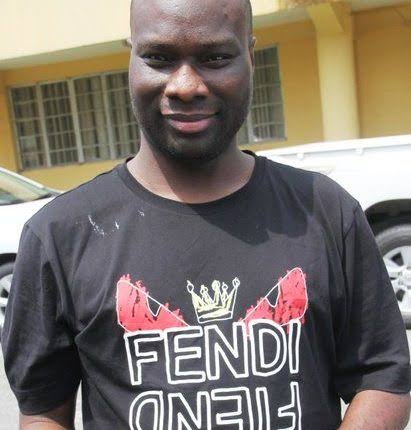
THE Economic and Financial Crimes Commission (EFCC), has asked the Federal High Court sitting in Ikoyi, Lagos State to dismiss the no-case submission filed by Ismail Mustapha, alias Mompha, a suspected internet fraudster, who is standing trial over an alleged N32.9 billion fraud.

Wilson Uwujaren, the EFCC spokesperson stated in a statement on Wednesday that Mompha was re-arraigned on Wednesday, March 4, 2020, alongside his company, Ismalob Ventures, on an amended 22-count charge of fraud.

According to the statement,  Gbenga Oyewole, counsel to Mompha filed a no-case submission at the resumed hearing after the prosecution had closed its case at the last sitting.

Oyewole, in urging the court to uphold his client’s no-case submission, said the prosecution had failed to link his client to any offence on all the counts of the charge.

In contrary to Oyewole’s argument, S. I. Sulaiman, the EFCC counsel told the court to dismiss Mompha’s no-case submission application.

Sulaiman said the prosecution had been able to link the defendant to the alleged offences based on the evidence adduced and exhibits tendered through the 10 prosecution witnesses, who had testified in the matter.

After hearing the plea of the parties in the case, Mohammed Liman, the sitting judge on the case, adjourned the matter to November 18, 2020, for ruling on the defendant’s no-case submission.

Mompha was rearrested by the EFCC on August 18, two weeks after a Federal High Court, Ikoyi had granted his bail application.

The suspect was rearrested at the EFCC office when he went to retrieve his belonging from the Commission as ordered by the court.

#SARSMustEnd Protests: NBA condemns use of live ammunition on protesters by police

THE Nigerian Bar Association (NBA), has condemned the use of live ammunition by Policemen against protesters in the ongoing protests against police brutality in the country.

Olumide Akpata, President of the NBA, while speaking during a press conference on Tuesday in Abuja, said under no circumstances should the use of live ammunition on protesters be tolerated. 

“Under no circumstances should the use of live ammunition against peaceful and lawful protesters be tolerated,” Akpata said.

“Those found culpable must be apprehended and made examples of in the wake of the protests that have resurrected the consciousness of the Nigerian society and indeed the international community to these very important and systemic issues.”

The NBA president who said the protest is a result of decades of institutional failure added that reposting men of the disbanded dreaded SARS without institutional and operational reforms will only scratch the surface and not address the perennial issues affecting the police.

“The protests have again brought to fore perennial issues affecting the Nigerian Police, our security agencies, their interface with the citizenry and the fundamental issues affecting our security system that can no longer be put off,” he said.

“In the wake of the protests that have resurrected the consciousness of the Nigerian society and indeed the international community to these very important and systemic issues, the NBA is convinced that disbandment of SARS (or any other unit by whatever name called), re-posting or transferring officers of any disbanded unit and other knee-jerk reactions will only scratch the surface and not offer long-lasting solutions to the endemic issues bedevilling the Nigerian Police as currently constituted.”

Speaking further, Akpata called on both the Federal Government and State Governments to protect the rights of citizens participating in peaceful protests across the country.

In doing this, the NBA leader wants security agencies to be warned against “assaulting, attacking, abusing or otherwise harassing or otherwise using force against citizens who seek to have their voices heard through the peaceful protests.”

FG considers adoption of ASUU’s proposed payment platform

0

THE Federal Government has expressed willingness to adopt University Transparency and Accounting Solution (UTAS), the preferred payment system by the Academic Staff Union of Universities (ASUU).

The  Federal Government after a new round of dialogue with ASUU resolved to adopt the UTAS payment platform, saying it will first of all subject it to integrity test.

Chris Ngige,  the Minister of Labour and Employment, said at the end of the meeting held at the instance of Ahmad Lawan, Senate President in Abuja, said government’s acceptance of the UTAS would be dependent upon the passing of a series of integrity test to which it would be subjected.

“UTAS would have to undergo an integrity test. A demonstration of it would be done on Wednesday at the Office of the Accountant-General of the Federation. Other relevant Agencies of Government like the National Information Technology Development Agency (NITDA) and Office of the National Security Adviser (NSA) would also assess it. It is a stage-by-stage process,” Ngige said.

He stated that the government was not against UTAS, as it would always appreciate and be willing to adopt local content.

The Minister described the meeting as fruitful and frank but noted that the dialogue was still on-going.

“We are continuing next week. After the test on Wednesday, we will reconvene in the Ministry of Labour and Employment on Thursday. We will then convene again next Tuesday or Wednesday for a final decision,” he said.

Earlier, Ngige had stated that the Ministry of Labour and Employment had over the months resolved seven out of nine issues tabled by ASUU.

Regarding the matter of UTAS, ASUU’s homegrown payment system, the Minister noted that an earlier understanding with ASUU was for it to be submitted for assessment by stakeholders.

Declaring the dialogue open, Ahmad Lawan, the Senate President, called for a speedy resolution of the impasse, as students staying away from school for too long posed enormous danger to the society.

He called for understanding and accommodation on both sides, as the danger inherent in the situation went beyond education.

“It borders on security as well, with the attendant adverse effect on the society”, he said.

Also at the meeting were Principal Officers of the Senate, Minister of Education, Adamu Adamu; Accountant General of the Federation, Ahmed Idris, representing Minister of Finance, Zainab Ahmed, and the leadership of ASUU, led by its  President, Professor Biodun Ogunyemi.

#EndSARS: Why I ordered suspension of Flutterwave’s payment platform- Tunde Lemo

TUNDE Lemo, a former deputy governor of Central Bank of Nigeria (CBN) and chairman of Flutterwave, a payment technology company says he ordered the suspension of the fintech firm’s payment platform, to prevent illicit financial flow.

The Fintech firm has provided a platform to gather donations to provide medical and legal aid, food and drinks for #EndSARS protesters across the country.

But there were reports on social media Tuesday that the CBN has placed a ban on the platform as a measure to clip the wings of the protesters.

While reacting to this development, Lemo was quoted in a report by This Day that he gave the order that the platform be shut down to check the activities of fraudsters.

“I was the one that instructed them to shut down their system yesterday when the bad guys were moving money through them,” Lemo explained, This Day reports.

In support of the #EndSARS protest, the staff of Flutterwave announced on October 9, that they had started an internal fund generation, raising up to N2 million to support injured protestors.

Flutterwave and Feminist Coalition, a pro-#EndSARS women group have been at the fore front of raising funds for victims of the ENDSARS protests.

On Tuesday, the Feminist Coalition via its Twitter page announced that its account had come under attack, disclosing that the bank account linked to the donation fund had been deactivated and the donation link severed.

For demanding an end to police brutality we are now under attack! Our bank account has been deactivated and so has the Flutterwave donation link. Our members’ lives are also being threatened! #SARSMustEnd,” the tweet read. 

The suspected move by the government to cut off the essential lifeline of the protestors has met even more resistance. Nigerian youths on social media have criticised what they believed to be an attack on Flutterwave and expressed their solidarity with the payment platform.

Japheth Omojuwa, a Nigerian youth and Chevening scholar in a series of tweets expressed his displeasure with the alleged ban against Flutterwave.

“If they shutdown Flutterwave, we have a valid claim to submit names to the UK, US, Swiss etc embassies to ban everyone involved because that’d be a direct affront on human rights. Not worse than election rigging,” one of his tweets read.

However, in a more recent tweet, he stated that the donation link would be reset, noting that the government was not attacking Flutterwave.

“I have now been informed that the government isn’t shutting Flutterwave down. So we are clear on that. No one is shutting Flutterwave down. They will reset the donation link and get things going again. We are good,” he tweeted.

Nigerians have since last week across the country been on a  protest against police brutality demanding the complete abolition of the Special Anti-Robbery Squad (SARS).

Since the beginning of the protest, several cases of brutality have been recorded, including the deaths of a number of youths who have allegedly been gunned down by police officers.

On Tuesday, the Nigerian Security Operatives during the EndSARS protest held in Abuja, assaulted, and seized the camera belonging to the Arise news crew covering the protest.

The ICIR reported that the television station’s crew members were trying to get the reactions of protesters at the National Assembly, Abuja when they were attacked by the security operatives who wore the Nigerian military uniform.

Why disbanding the notorious anti-robbery squad won’t stop bad policing in Nigeria

0

By Lanre Ikuteyijo, Obafemi Awolowo University

A WAVE of protests has spread through Nigeria as citizens call for the disbandment of the Special Anti-Robbery Squad, a unit of the Nigeria police. This followed footage that went viral of the squad beating a man to death. Protesters took to the streets, and started a social media campaign using the hashtag #ENDSARS. On Sunday, October 11, 2020, the Inspector General of Police, Mohammed Adamu, announced the unit would be dissolved, though protests continued as there was little clarity on what the next steps would be.

Nigeria has had several special tactical police squads. Like the Special Anti-Robbery Squad, they too have been accused of gross human rights violations. These included the Mobile Police Force, derogatorily referred to as “Kill and Go” in the era of military rule in Nigeria. Following the advent of civilian rule in the country (particularly post-1999), no unit of the Nigerian Police has come under criticism as severe as that levelled against the Special Anti-Robbery Squad. Lanre Ikuteyijo explains the unit’s origin, mandate, achievements and governance structure. And why disbanding it falls short of what needs to be done to end bad policing in Nigeria.


Why was the squad formed? What was its mandate?

The squad was established nearly three decades ago as a special unit of the Nigerian Police dedicated to the fight against highly violent crimes such as kidnapping and armed robbery.

There are various versions about the origins of Special Anti-Robbery Squad. One is that it was pioneered by a retired Commissioner of Police, Simeon Danladi Midenda in 1992. But the Nigeria Police had, in fact, had an anti-robbery unit prior to the establishment of the squad.

At the time of its establishment, Special Anti-Robbery Squad was given the authority to operate covertly with operatives in mufti and in unmarked vehicles. Their operations were initially akin to undercover police agents who operated to complement the efforts of the conventional police in tackling violent crimes. But, over time, their identity and activities became more conspicuous, and disturbing. It soon became clear that they were using high-handed treatment of suspects. In recent years evidence has emerged that they have used extra-judicial methods to clamp down on suspected perpetrators of internet fraud otherwise known as Yahoo boys.

Over the past seven years, the Special Anti-Robbery Squad has become notorious for extra judicial killings, unlawful arrests and extortion, among other illegal activities. These have led to several bans and sanctions from the police authorities.

And on Sunday, the Inspector General of Police announced the unit’s dissolution.

Has it been credited with any achievements?

Yes. Firstly, their crime fighting lead to some abatement in criminal activities.

Also, the squad initially had a better reputation than the conventional police, which was associated with bribery and corruption.

In addition, the introduction of Special Anti-Robbery Squad brought some legitimacy to the police as citizens had more trust in their ability to stem the tide of crime.

Finally, operatives from the squad were involved in several successful joint missions involving personnel from other police tactical units.

Why the special units?

Globally, special tactical units are often established to carry out certain mandates in law enforcement. These can involve highly violent crimes such as terrorism, banditry, religious insurrections, armed robbery and kidnapping.

In Nigeria, the establishment of special units within the police force followed rising incidents of violent crimes. The situation was considered to be beyond the capability of the conventional police. Tactical units have included the Intelligence Response Team, Special Tactical Squad, Counter Terrorism Unit, Force Intelligence Unit, and the Special Anti-Robbery Squad. Members of the special units were often specially trained and given specific mandates.

Given that police are underfunded in Nigeria, most policemen were often eager to serve in the tactical units.

It is important to note that most of the breakthrough operations by the Nigeria Police Force have been facilitated by some of these tactical units. The Intelligence Response Unit is reputed to have apprehended some high-profile criminals. These have included the arrests of notorious kidnap ringleaders like Chukwudi Onwuamadike (aka Evans) and Bala Hamisu (aka Wadume).

What about governance? Can structures be strengthened?

As an institution, the Nigeria Police Force is subjected to both internal and external monitoring mechanisms. The Ministry of Police Affairs, Police Service Commission and the Nigerian Police Council serve as external monitors.

Internally, police activities are monitored by the human rights desks and the X-Squad which is an internal anti-graft unit of the police. Special Anti-Robbery Squad, and other tactical units, are integral parts of the Nigeria Police Force and are under the command of the Inspector General of Police.

The same governance structures surrounding the Nigeria Police Force are therefore applicable to the squad.

But both the internal and external oversight mechanisms have proven to be grossly inadequate given the incessant violations of human rights and overbearing nature of the Nigeria Police Force.

Will disbanding the unit solve the problem?

The dissolution of the squad will send a warning signal to other tactical squads. But the Special Anti-Robbery Squad is just a microcosm of the bigger problem – bad policing in Nigeria. Its dissolution will barely scratch the surface.

The dissolution is only part of the solution as operatives from the squad were and will always be members of the National Police Force. They will simply be redeployed to other units. If the proper identification and “deradicalisation” of erring operatives doesn’t happen, then the exercise will only amount to recycling.

Steps must be taken to immediately provide an alternative unit that is well recruited, trained, and retrained with the more professional policing skills. Also, the petitions against former operatives of the squad should be followed up to ensure that culpable people are brought to book.

Lastly, the new tactical unit – and by extension the entire police force – should be more transparent and they should be accountable for their operations.

In addition, the following measures could be taken to address the perennial crises of law enforcement as far as the squad and other tactical units of the police are concerned:

  • Promotion of human rights as the core responsibility of the tactical squads and the police. This will lead to improved work ethos of operatives of the tactical units.
  • Promotion of accountability and transparency of these tactical units.
  • Funding and training of personnel in line with the core values of policing
    professionalism.
  • Inculcate the principles and philosophies of community policing.
  • Implementation of the provisions of the Police Act 2020, especially innovations that emphasise the respect for human rights including rules for documentation of arrests, detention, morbidity and death of suspects. These and other innovations were aimed at bridging the gaps in previous laws.The Conversation

Lanre Ikuteyijo, , Obafemi Awolowo University

This article is republished from The Conversation under a Creative Commons license. Read the original article.

Lauretta Onochie: What constitution says about appointing INEC National Commissioner

0

NIGERIANS were stunned Tuesday afternoon when Ahmad Lawan, the President of the Senate read the names of four Nigerians recommended by President Muhammadu Buhari for confirmation as National Commissioners at the Independent National Electoral Commission (INEC).

Of the four Nigerians nominated by the President, only Lauretta Onochie, who was nominated to represent Delta State has generated furore among Nigerians.

Onochie is President Buhari’s Personal Assistant on Social Media – her appointment has come under public scrutiny since Lawan announced her name. While many who condemned her inclusion in the list argued that she is a card-carrying member of the ruling All Progressives Congress (APC), others said she has always been partisan in her social media posts and as such not qualify for the position in the INEC.

The main opposition party, Peoples Democratic Party (PDP) and rights activists who have also condemned Onochie’s appointment by the President, argued also that her political leaning makes her nomination by the President contravenes the Act establishing INEC and the 1999 Constitution.

What the Constitution says

In appointing the members of the INEC, the 1999 Constitution requires the President to consult with the Council of State pursuant to section 154 (3) of the constitution.

In addition, Paragraph B of Part 1 of the Third Schedule of the constitution provides that “The Council of State shall have the power to advise the president in the exercise of his powers with respect to (iv) the Independent National Electoral Commission including the appointment of the members of the commission.

The constitution adds that pursuant to section 154 (1) of the constitution, the appointment of the members of the Independent National Electoral Commission shall be subject to confirmation by the Senate.

Paragraph 14 of Part 1 of the Third Schedule of the constitution as amended by Section 30, Act No 1 of 2010, clearly stated that a member of the Independent National Electoral Commission “shall be non-partisan”.

Opposition party reacts

The Peoples Democratic Party (PDP) has described Onochie’s appointment as a highly provocative assault on the nation’s constitution and democratic process.

The party in a statement by Kola Ologbondiyan, its National Publicity Secretary, said her appointment by the President is an attempt to plant unscrupulous elements in INEC in order to corrupt and further desecrate the sanctity of the Commission.

It added that Onochie’s appointment is to undermine the country’s electoral system and destabilize its democratic process ahead of the 2023 general elections.

“Indeed, her nomination dresses up Mr. President as having more than an interest in legacy building and portrays him as one who has a personal candidature interest in the 2023 election. The only way to prove otherwise is to quickly withdraw Onochie’s nomination before the Senate.

“Moreover, being a card-carrying member of the APC as records shows (from Ward 5 Onicha Olona, Aniocha North Local Government Area of Delta State), Onochie’s nomination is in clear violation of paragraph 14 of the 3rd schedule of the 1999 Constitution (as amended), which forbids a person involved in partisan politics to hold office as a member of INEC.

“It is therefore surprising that having sworn to the constitution of the Federal Republic of Nigeria, Mr. President is taking actions that are antithetical to the very constitution and democratic governance.

“These actions are deliberate attempts by President Buhari to inflame social tensions, undermine our constitution and desecrate the sanctity of our electoral process, rather than finding solutions to the myriads of problems pervading our country,” the PDP said.

It vowed to deploy every legitimate means possible in a democracy to stop the approval of her nomination as an INEC national commissioner.

Similarly, Femi Falana, Senior Advocate of Nigeria (SAN) and human rights activist, in a statement on Tuesday said the partisanship of Onochie has disqualified her from occupying such a position in INEC.

“As an unrepentant member of the ruling party, Mrs. Loretta Onochie, has consistently attacked members of other political parties. To that extent, she is partisan and therefore not qualified to be a member of the Independent National Electoral Commission,” Falana said.

IGP orders disbanded SARS operatives to report at force HQ for psychological and medical examination

MOHAMMED Adamu, Inspector-General of Police, has ordered the operatives of the disbanded Special anti-robbery squad (SARS) to report to Force Headquarters, Abuja for debriefing psychological and medical examination.

“The Inspector-General of Police, IGP M.A. Adamu, NPM, mni has, today, 13th October 2020, in accordance with Section 18 (10) of the Police Act 2020, ordered all personnel of the defunct SARS to report at the Force Headquarters, Abuja for debriefing, psychological and medical examination,” Frank Mba, the Police spokesman said in a statement.

Mba further disclosed in the statement issued on Tuesday, that a new unit has been set up to replace the disbanded SARS unit.

According to him, the IGP has set up a new Special Weapons and Tactics (SWAT) Team that will fill the gaps arising from the dissolution of the controversial SARS.

The Police Chief announcement of a formation of the new unit comes 48 hours after the rogue SARS unit was dissolved following a nationwide outcry.

The officers are expected to undergo this process as a prelude to further training and reorientation before being redeployed into mainstream policing duties, Mba stated.

“The medical examination will be carried out by the newly set-up Police Counselling and Support Unit (PCSU), a Unit, which henceforth shall engage in psychological management, re-orientation and training of officers of the Force deployed for tactical operations and other duties,” he said.

“The Unit, which is domiciled with the Force Medical Department and coordinated by the Force Medical Officer, has its membership drawn from amongst psychiatrists, psychologists, medics, pastors and imams, Public Relations practitioners, Civil Society and other Human Rights groups with relevant qualifications and expertise.”

The Police Spokesman explained that prospective members of the new team will also undergo psychological and medical examination to ascertain their fitness and eligibility for the new assignment.

He added that they are to commence training at the different Police tactical training institutions nationwide, next week.

While personnel from the Police Commands in the South-East and the South-South will be trained at the Counter-Terrorism College, Nonwa-Tai, Rivers State, those from the  Police Commands from the North and the South-West will be trained at the Police Mobile Force Training College, Ende, Nasarawa State and the Police Mobile Force Training College, Ila-Orangun, Osun State, respectively, he said.

Presidential Panel on Police reforms okays #EndSARS protesters’ demands

THE Presidential Panel on Police reforms has okayed the demands by protesters asking for an end to Police brutality across the country.

Femi Adesina, the Special Adviser to the President on Media and Publicity disclosed this in a statement titled, ‘Presidential panel on police reforms swings into action, okays 5-point demand of protesters.’

Nigerians have since last week across the country been on a  protest against police brutality demanding the complete abolition of the Special Anti-Robbery Squad (SARS).

“Following directives by President Muhammadu Buhari on the dissolution of Special Anti-Robbery Squad and immediate response to yearnings of citizens, the Inspector General of Police, Mohammed Adamu, convened a meeting with stakeholders, agreeing to meet demands,” the statement read.

It added that the panel also agreed to halt the use of force against protesters and the unconditional release of arrested citizens.

Adesina further disclosed that the meeting, organised by the Office of the Inspector General of Police and National Human Rights Commission, was a multi-stakeholders’ forum attended by leaders and representatives of civil society organisations in Nigeria, activists from the entertainment industry and the ENDSARS movement, and development partners.

“The Ministry of Police Affairs and Police Service Commission were also present at the meeting that affirmed that the five-point demands of the protesters and the ENDSARS movement are genuine concerns and will be addressed by the Government.”

Quoting a communiqué of Stakeholders’ Meeting on the Implementation of the Recommendations of the Presidential Panel on the Reform of the Special Anti-Robbery Squad (SARS) signed by the IGP and Executive Secretary of the National Human Rights Commission, Tony Ojukwu, he said the forum noted that the dissolution of SARS presents an opportunity to embark on comprehensive reforms aimed at repositioning the Nigerian Police Force as a modern, responsive and citizens-centered law enforcement organisation.

“Following the public protests regarding various forms of human rights violations by the Special Anti-Robbery Squad (SARS) and the consequent disbandment of the unit by the Inspector General of Police, Mohammed Adamu, there arose the need for stakeholder engagement to build trust and restore public confidence in law enforcement.”

“The agitations also brought to the fore, the need to implement the recommendations of the Presidential Panel on the Reform of the Special Anti-Robbery Squad (SARS).”

He added that the “Forum collectively welcomed the dissolution of the Special Anti-Robbery Squad (SARS) by the Inspector General of Police, Mohammed Adamu; Reaffirmed the constitutional rights of Nigerians to peaceful assembly and protest; Further affirmed the sanctity of life of every Nigerian and the role of the Police in protecting this right; Affirms that the five-point demands of the protesters and the ENDSARS movement are genuine concerns and will be addressed by the Government.’’

The communiqué stated that sub-Committees will be supported by the National Human Rights Commission and other civil society organisations.

Those who attended the meeting, according to the statement, are: Dr Kole Shettima- MAC Arthur Foundation; Innocent Chukwuma – Ford Foundation; Jude Ilo- of OSIWA; Segun Awosanya (segalinks) – End Sars Movement; Yemi Adamolekun- Enough is Enough; Clément Nwankwo- PLAC; Rafsanjani- CISLAC; Kemi Okonyedo- PWAN; YZ – CITAD; Folarin Falana Falz; Prof Deji Adekunle –NIALS; Chris Ngwodo, SSA to President Research & Policy; Dr Fatima Waziri – Rule of Law Adviser OVP and Abdulrahman Yakubu – NHRC Secretariat.

Others are: Hilary Ogbonna- NHRC secretariat; Halilu Adamu – NHRC Secretariat; Ben Aguh – NHRC secretariat; Dr Uju Agomuoh – PRAWA and Onyinye Ndubuisi – UNDP.

The protesters have made five key demands which included: immediate release of all arrested protesters, justice for all deceased victims of police brutality and appropriate compensation for their families, setting up an independent body to oversee the investigation and prosecution of all reports of misconduct (within 10 days).

Other demands are psychological evaluation and retraining (to be confirmed by an independent body) of all disbanded SARS officers before they can be redeployed, increase police salary so that they are adequately compensated  for protecting lives and protection of citizens.

#EndSARS: Security operatives assault Arise TV crew, seize camera in Abuja

0

THE Nigerian Security Operatives in Abuja on Tuesday, during the EndSARS protest, assaulted and seize the camera belonging to the Arise news crew covering the protest.

The television station’s crew members were trying to get the reactions of protesters at the National Assembly, Abuja when they were attacked by the security operatives who are in Nigerian military uniform.

Ferdinand Duruoha, Arise News correspondent, was one of the assaulted crew members of the television station at the entrance of the National Assembly complex.

On Sunday, October 11, Policemen attacked and brutalised an Arise crew covering the IGP Mohammed Adamu’s dissolution of SARS. The cameraman Francis Ogbonna was hit several times on the head and his camera destroyed while while his correspondent, Ferdinand Duruoha was intimidated.


A video seen by The ICIR shows how the security operatives were assaulting the protesting youths.


It would be recalled that Mohammed Adamu, Nigeria’s  Inspector General of Police (IGP) had announced the dissolution of the controversial and brutal Special Anti-Robbery Squad (SARS) unit of the Nigeria Police Force.

Meanwhile, protests by Nigerian youths across the nation are still ongoing as protesters insist that their demands have not been met.

The protesters had issued a five-point demand including justice for all victims of SARS brutality, an increase in Police salary, psychological assessment of operatives of the squad, the release of all arrested protesters, and setting up of an independent body to investigate alleged police brutality in the country.

However, the Arise TV news has announced that the camera has been released back to the crew.

Situation room urges Buhari to reverse Onochie’s appointment as INEC Commissioner

A COALITION of Civil Society Organisations under the aegis of Situation Room has called on Muhammadu Buhari, the Nigerian President to reverse the appointment of his media aide, Lauretta Onochie as Independent National Electoral Commission (INEC) Commissioner.

“Situation Room calls on President Muhammadu Buhari to immediately withdraw her nomination. Should the President fail to withdraw this nomination the Nigerian Senate is hereby called upon to disregard her nomination without any consideration whatsoever,” the statement read.

The group said this in a statement made available to The ICIR on Tuesday signed by Clement Nwankwo, the Situation Room Convener.

According to the statement, Onochie ‘is a known partisan supporter of President Muhammadu Buhari and his ruling party, the All Progressives Congress (APC)’.

Situation Room stated that Onochie’s appointment contravenes the 1999 constitution of the Federal Republic of Nigeria as amended.

“Item F, paragraph 14 of the third schedule of the 1999 Constitution of Nigeria (as amended) forbids a partisan politician as a member of INEC – a body charged under the Constitution to unbiasedly conduct of free and fair elections. Her nomination amounts to a major attempt at undermining efforts to build credibility for an improved electoral process in the country,” the statement read.

The group said if Buhari fails to reverse the appointment of Ononchie, the Nigerian Senate should reject her appointment.

“Situation Room is also calling on the Nigerian Senate to investigate all of the other nominations by the President especially as there are concerns that some of these nominations may have been by self-serving interests,” the statement further read.

Nwankwo wrote that ‘it is important for Nigeria that the composition of INEC is transparently non-partisan and independent of partisan political manipulation’.

The ICIR had reported that Buhari on Tuesday sent the names of four persons including Onochie to the Senate for confirmation as INEC commissioners.