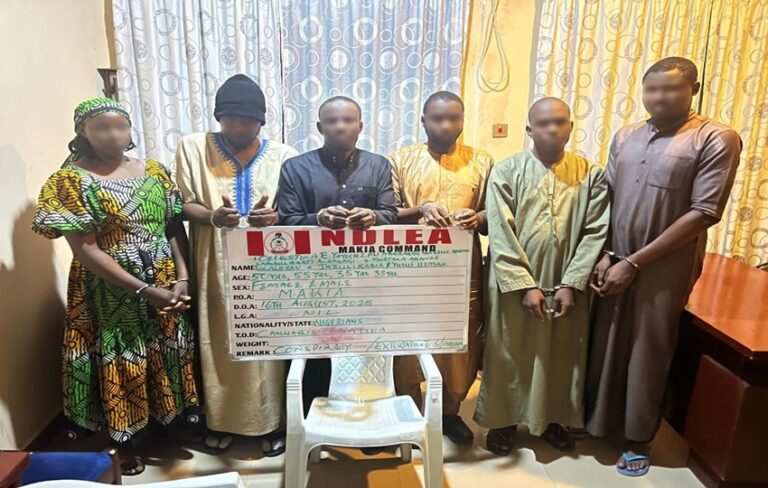
THE National Drug Law Enforcement Agency (NDLEA) has arrested a 55-year-old alleged drug kingpin, Mohammed Ali Abubakar, alias Bello Karama, and five members of his ‘syndicate’ operating at the Mallam Aminu Kano International Airport (MAKIA), Kano.
They were arrested after they were linked to a drug trafficking scheme that left three innocent Nigerian pilgrims detained in Saudi Arabia.
The NDLEA disclosed this on Monday, August 25, at a press conference held at its headquarters in Abuja.
Addressing journalists, the NDLEA’s Director of Media and Advocacy, Femi Babafemi, said the three victims — Maryam Hussain Abdullahi, Abdullahi Bahijja Aminu, and Abdulhamid Saddiq — were wrongly implicated after illicit substances were secretly tagged to their names on an Ethiopian Airlines flight from Kano to Jeddah on August 6, 2025.
“Investigations revealed that the bags containing illicit drug substances intercepted in Saudi Arabia were checked in against the complainants’ names by members of a criminal syndicate operating in Mallam Aminu Kano International Airport without their knowledge,” NDLEA said.
According to the agency, Abdullahi, while embarking on the flight, only checked in one luggage weighing nine kilogrammes.
The NDLEA said the bag never arrived with her in Jeddah but was later delivered 10 days after, yet she was detained alongside two others because syndicate-linked bags tagged to their names were found to contain illicit drugs.
The agency said it traced the operation to Karama, the suspected kingpin, who allegedly checked in seven bags on the same day but boarded a different airline, Egypt Air, to Jeddah.
“All the bags were traced to one Ali Abubakar Mohammed (aka Bello Karama), the leader of the syndicate. Interestingly, he travelled to Jeddah on Egypt Air rather than Ethiopian Airlines, even though his contaminated bags were checked in on the latter under the names of the three innocent pilgrims,” the anti-graft agency said.
According to the NDLEA, six suspects are already in its custody, with four charged to court and awaiting arraignment. Apart from Karama, other suspects include Abdulbasit Adamu, Murtala Akande Olalekan, and Celestina Emmanuel Yayock.
“They have all made confessional statements. While Ali admitted bringing in seven luggage, Celestina confessed to checking in two of them for a fee of ₦100,000, and another suspect, Jazuli Kabir, admitted checking in two more bags for ₦100,000,” NDLEA added.
Investigators also recovered receipts showing money transfers between the syndicate members.
The agency said its chairman, Mohamed Buba Marwa, has opened discussions with Saudi authorities to secure the release of the innocent Nigerians.
“He intends to present our findings and seek their cooperation. If required, he is prepared to travel to Saudi Arabia personally to pursue this matter to its conclusion.”
The agency stressed that “Nigeria will never abandon its citizens, especially when the facts clearly show that they are victims of criminal conspiracies.”
The NDLEA commended the Ministry of Aviation, the Federal Airports Authority of Nigeria (FAAN), Aviation Security (AVSEC), and the State Security Service (SSS) for their collaboration, adding that interim measures had been introduced at the Kano Airport to block similar security breaches in the future.
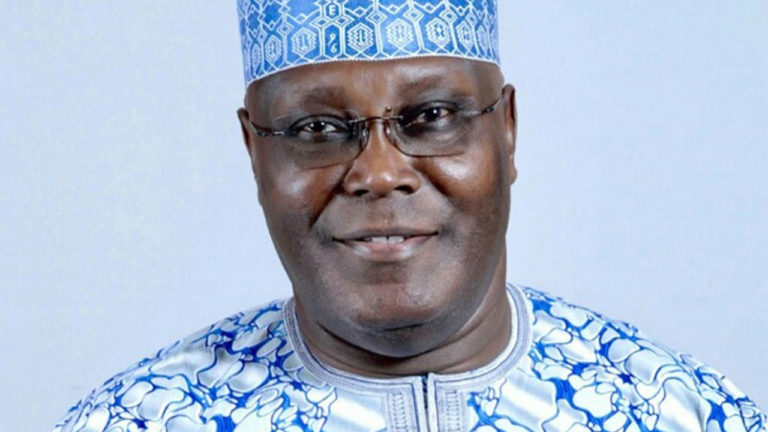
FORMER Vice President Atiku Abubakar has declared that he would run as president in the next general election.
Abubakar disclosed this on Sunday, August 24, by Tunde Olusunle, his spokesperson during the 2023 presidential election.
Abubakar’s comment followed a recent statement by Ola Olateju at the Achievers University when he represented the former vice president at an event.
Olateju, a professor, said the former vice president had yet to make up his mind on the 2027 poll.
He suggested that Abubakar was more focused on improving Nigeria than on the presidency.
Reacting to the claim through his aide during an interview with ThisDay on Sunday, Abubakar said through Olusunle, “When people stand in for me at events, we preview my thoughts on the instant subject. In this particular instance, there was no engagement with me to distil my thoughts. Prof. Olateju was not speaking for me.
“I will run in 2027. Nigeria needs to be decisively rescued from the intensive care unit it has been consigned to. The degeneration in our country, the level of poverty and pain, the anguish, is unacceptable.”
He added that the degeneration, level of poverty, pain and anguish in the country was unacceptable.
According to him, the reaction was also to calm the frayed nerves of his teeming supporters.
He assured that the coalition would shock the world in the 2027 presidential election despite efforts by the ruling All Progressives Congress (APC) to ridicule it.
The Peoples Democratic Party (PDP) presidential candidate in the 2023 condemned what he referred to as unprecedented ‘theft’ under the President Bola Tinubu’s administration, emphasising the urgent need to ‘rescue’ the country from its leaders.
The ICIR reported that Abubakar resigned again from the PDP on July 14.
Abubakar, who recently said he was not desperate to be Nigeria’s president, has contested six times for the same position and has lost in all.
IN 1981, Chief Gani Fawehinmi was already 16 years at the Nigerian Bar and one of its brightest stars.
Already a breakout litigator, Gani had also become a pioneer in the enterprise of legal publishing. One decade earlier, he had served the Nigerian Bar Association (NBA) as its national publicity secretary. Among the lawyers of his or, in fact, any other generation active at the bar, there were few who could claim to be more accomplished.
The hallmark of excellence in legal practice in Nigeria, the rank of Senior Advocate of Nigeria (SAN), was a mere six years old at the time. Then – as now – the Legal Practitioners Privileges Committee (LPPC) was the statutory body established to consider and determine eligible applicants for the rank. As always, it was chaired by the Chief Justice of Nigeria (CJN). By any measure, Gani Fawehinmi was more than eligible to take the rank in 1981.
Instead of sending him to the LPPC, however, then Attorney-General of the Federation, Richard Akinjide, a SAN since 1978 and eighth on the all-time list of SANs, sent Gani to the Legal Practitioners Disciplinary Committee (LPDC) for the supposedly high professional crime daring to announce the existence of a path-breaking law reporting enterprise in which he was engaged. As the Attorney-General of the Federation, Akinjide happened to sit on the LPPC and was also the chair of the LPDC. Vocational or institutional independence for the legal profession was alien to this design.
The complaint against Gani seemed pre-determined. So, he sued. When Candide Ademola Johnson, Chief Judge of Lagos State, ruled in Gani’s favour at the first instance, Akinjide’s LPDC was unhappy. They appealed to the Federal Court of Appeal (as it was called then) and lost. An implacable LPDC appealed to the Supreme Court. Four years after Gani first sued, in July 1985, the Supreme Court tossed the appeal of Akinjide’s LPDC with a unanimous judgment in his favour.
With a case pending before the courts over the lawfulness of the plan by the legal establishment to throw the kitchen sink at him, Gani was frozen out of consideration for elevation to the rank of SAN. His credentials were irrelevant. Indeed, it was rumoured with more than a modest whiff of credibility that they did approach him with an offer to concede the legal proceedings in return for a favorable consideration for elevation to the rank. He reportedly declined.
By the time the Supreme Court decided the case in July 1985, the cast of actors was different and the issues were about to get even more interesting. At the end of September 1983, Akinjide ceased to be Attorney-General of the Federation and, with that, also departed as the chair of the LPDC. When the Supreme Court handed down its judgment in July 1985, the chair was Chike Offodile, then Attorney-General to military ruler, Muhammadu Buhari.
By then, Gani was already deep in another battle with the legal profession as to how to approach Gen. Buhari’s military and anti-corruption tribunals. The NBA asked lawyers to boycott them; Gani refused. The month after the Supreme Court rendered its judgment in his favour in 1985, the Buhari regime was overthrown.
Bola Ajibola, the new Attorney-General of the Federation, was the president of the Bar whose call on lawyers to boycott the military tribunals went unheeded by Gani. When Gani’s name came up the following year for consideration for the rank of SAN, it ended up in the bin. In September 2001, more than two decades after he emerged as perhaps the most eligible to take the rank, Nigeria’s legal and political establishments yielded ground and finally conceded the rank of SAN to Gani Fawehinmi.
Gani’s is the most obvious and most willful exclusion from the rank and for political reasons. He is by no means the only one. Former president of the NBA, Alao Aka Basorun and late lawyer to Fela Anikulapo-Kuti, Kanmi Isola Osobu, were two others probably passed over because of their ideological leanings. Political reasons similarly explain the reason why former Attorney-General of the Federation, Olu Onagoruwa, was passed over for the rank until 2014 when he was too unwell to attend the investiture.
Among the living, former Attorney-General of Lagos and former Chair of the Body of Benchers, Hairat Balogun; Ayo Obe; and Jide Ogundipe are three examples of outstanding litigators whose exclusion from the rank casts aspersions on any claims to objectivity in the decision making process for its conferment.
When, therefore, he claimed in a release on 18 August 2025 that the conferment of the rank of SAN “is not a political appointment, nor is it an executive patronage”, former General Secretary of the NBA, Olumuyiwa Akinboro SAN (who is also running to be the next president of the Nigerian Bar ), indulged in both historical inaccuracy and factual revisionism. He was wrong on both claims, and he knew it. Akinboro’s grouse was with the requirement for the State Security Service (SSS) to screen candidates for elevation to the rank of SAN.
It is useful to note what Akinboro chose not to see. First, the requirement for the screening by the State Security Services (SSS) is contained in the Guidelines for the Conferment of the rank of SAN made in October 2022 by then CJN and Chair of the LPPC, Olukayode Ariwoola.
Second, those guidelines specifically required the screening to be conducted respectively by three agencies: the Independent Corrupt Practice Commission (ICPC); the Economic and Financial Crimes Commission (EFCC); and the SSS. Akinboro could not be bothered to acknowledge that these were rules made by the CJN; nor did he notice that they also required the EFCC and the ICPC to do the same.
Third, Akinboro justified his intervention with an emotive appeal to the need not to compromise the rank of SAN and to preserve the “independence of the courts”. Perhaps he did not know that the rules on judicial appointments made by the National Judicial Council (NJC) require also that a recommendation for judicial appointment from the Judicial Service Commission shall be accompanied by a “report by the Department of State Security (sic) on the suitability of the candidate for appointment to a Judicial Office supported by verifiable facts on which the report is based.”
The agency referred to here as “Department of State Security” is exactly the same one that the SAN Guidelines call SSS. Akinboro sees nothing wrong with candidates for judicial appointments going through the same process which he says intrude into the independence of the SAN application process. Apparently, what is bad for the rank of SAN is good for the judiciary.
It is evident that these ebullitions from Akinboro and his ilk do not come from a place of principle. It is not about independence of the legal profession nor is it about a commitment to professional excellence. Instead, these kinds of views seek assurances of privilege for a few procured at the expense of the many and all under the convenient artifice of “independence” of the legal profession.
Interestingly, this occurs in the week that the NBA begins its annual general conference in Enugu, Eastern Nigeria, under the very fitting theme: “Stand out; stand tall.” A bar and a legal profession that lacks independence cannot stand out nor stand tall. An independent legal profession would have challenged the Ariwoola guidelines promptly in 2022 rather than wait until after three years later to mis-represent their import for cheap politics. In any case, a CJN would not be the person making the rules for the quality mark of an independent bar.
Independence of the legal profession is not a privilege handed out on a platter. It is fought for. Lack of independence is congenital design flaw in the institutions of Nigeria’s legal profession. For the record, regimes of exceptionalism such as that advocated for by Akinboro, do not advance the cause of independence. That is not to say that independence is not a desirable goal.
Rather, it is an acknowledgement that Nigeria’s legal profession is nowhere near that goal. Identifying the steps required to get there could usefully preoccupy the NBA when it meets in Enugu this week.
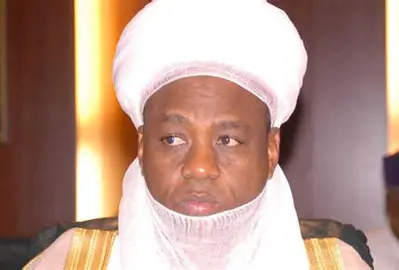
THE Sultan of Sokoto, Muhammadu Sa’ad Abubakar, has raised an alarm that justice in Nigeria is increasingly becoming a “purchasable commodity.”
According to the revered monarch, the poor are the victims while the rich escape accountability.
“Justice is increasingly becoming a purchasable commodity, and the poor are becoming victims, while the rich commit all manner of crime and walk the streets scot-free,” he stated.
Abubakar stated this at the Nigeria Bar Association (NBA) Annual General Conference in Enugu on Sunday, August 24.
The Sultan, a guest speaker at the event, warned that the integrity of the judicial system was being compromised by corruption and inequality.
He lauded the NBA for choosing the theme “Stand Out and Stand Tall”, saying it aligned with the urgent need for lawyers to deliver on their professional assignments.
He added that the legal profession must remain committed to upholding the rule of law to guarantee fairness, accountability, and equality before the law.
“You are resolving to uphold the highest principles of the rule of law to ensure that everyone, including those in power, is subject to and accountable under the law. If we can do this, we would have addressed the core of the crisis of governance in this country,” he said.
The Sultan emphasised that justice is the foundation of sound societies and that law must always target justice as its ultimate goal.
He urged participants to use the conference to address pressing issues that would shape Nigeria’s future.
He also expressed concern about Nigeria’s struggle with implementing policies effectively, noting that despite having well-crafted policies, the country often failed to put them into practice.
He emphasised the interconnectedness of law and learning, highlighting that the study of law is rooted in understanding core values, with justice being a fundamental one.
The ICIR reported that the NBA shifted its 2025 Annual General Conference (AGC) from Port Harcourt to Enugu amidst the declaration of Emergency Rule in Rivers State.
BIG Brother Naija Season 10 served up yet another dramatic Sunday night as Nicole Simon-Ogan, better known as Gigi Jasmine, and Victory Okokon became the latest housemates to be evicted from the show.
The announcement, made by host Ebuka Obi-Uchendu during the live eviction show, left viewers stunned, especially since the pair had spent much of the season in a complicated ‘situationship.’
According to official figures, Ivatar narrowly escaped eviction for the second week in a row, surviving with 2.22 per cent of the votes. Victory followed closely with 2.15 per cent, while Gigi Jasmine trailed with 1.51 per cent, sealing her exit. Deloitte independently verified the results.
The red envelope twist that shook the house
Earlier in the week, Big Brother raised the stakes by ordering all housemates (except HoH Zita) to search for a red envelope containing an immunity card. The catch? No one found it, meaning the entire house, minus Zita, was automatically up for eviction. The tension in the house was palpable all week as alliances scrambled.
Their journey in Biggie’s house
Victory, 28, a psychologist from Akwa Ibom, leaves after a four-week run that gave fans plenty to talk about. From his brief reign as Head of House to his messy entanglements with an ex-girlfriend and even a marriage proposal, his stay was anything but quiet. Describing himself before the show, Victory said, “I have all it takes to win. My life is really a movie and deserves to be put out there.”
Gigi Jasmine, 31, a vibrant DJ also from Akwa Ibom, brought colour and charisma to the house. Known for her boldness and charm, she often captured attention with her energy and strong opinions. “This platform is huge, and I want to utilise it to benefit both myself and my audience,” she explained at the start of her BBNaija journey.
The ‘almost romance’ that never was
Their simultaneous eviction struck a bittersweet chord with viewers. Gigi often expressed her interest in Victory, but their connection remained undefined, too complicated to blossom into a full romance, yet too visible to ignore. Many fans dubbed it the season’s “almost love story,” and their joint exit on the same night felt like a fitting, if heartbreaking, finale to their arc.
What’s next
With 24 contestants still in the running, the stakes continue to climb. As old storylines close, new rivalries, alliances and unexpected twists are guaranteed to keep the house and the audience on edge in the weeks ahead.
AMID shortage of food aid and a worsening hunger crisis in internally displaced persons camps in Niger State, female IDPs in some of the camps have been pushed into the hands of officials who exploit them sexually before providing them with food.
Gambo* was just 18 years old when bandits’ attack displaced her family in a remote community in Shiroro Local Government Area of Niger State.
Now 22 years old, Gambo who was at the time taking refuge in Kuta IDP camp, alleged that an official of the camp, began to show curious generosity to her and her distressed parents who were in desperate need. According to her, the official, whom she identified as Idris Ismail, told them to always approach him with their needs.
“I’m from Kondo* community of Shiroro Local Government Area of Niger State. I spent four years in Kuta IDP camp located in the Kuta Central Primary School.
“There are numerous reasons I and my family left the IDP camp back to our insurgents-ravaged community despite the continued banditry attacks.
“I got impregnated by an official of the camp by name ‘Umar Ismail’ who assured me and my family of support. He said whenever we needed anything, be it food or money, we should ask him. That was how my parents and I got closer to him.
Although the accused official denied impregnating the victim, the Niger State government confirmed to The ICIR that it was, indeed, aware of the case and handling it.
Subject of ridicule
After spending four years in Kuta IDP camp, Gambo and her parents returned to their community, already ravaged by bandits. She explained to The ICIR that the family could no longer endure the shame and stigma that followed her pregnancy at the camp.
“After the ugly incident, I became the subject of public discussion. Whenever I stepped out, people pointed fingers at me, discussed me, and I became so ashamed of myself that I began to hide inside the room,” she said.
Gambo further told The ICIR that at the time the incident occurred in 2023, the entire camp population was suffering from severe shortage of food and aid.
She said she was driven into the situation by hunger and hardship, adding that even when her family left the camp in early 2024, the food crisis had not improved.
“At the time this incident happened, the entire IDPs were in serious shortage of food and other aid. It was hunger and hardship that pushed me into it. I didn’t even realise what had happened,” she said.
‘How my wedding was cancelled’
“Despite aborting the pregnancy, my fiancée cancelled our proposed wedding,” Gambo told The ICIR, saying that her she eventually had to abort the pregnancy because the man responsible was not willing to take responsibility, and her parents were not financially capable of supporting her and a baby.
“After a series of discussions with my parents, they all agreed that abortion was the only viable option. My parents and I felt abortion was the only way out.”
“My fiancée was devastated when he found out. He couldn’t understand how such a thing happened when we were preparing to start a life together,” she said.
She said the traditional and religious ceremonies had already been planned and publicised but were cancelled just days before the scheduled dates.
Two female IDPs walking inside a camp. PC: Hamza Ibrahim Abaga/ICIR
The groom, who had reportedly been fully committed to the relationship, withdrew from the union immediately after confirming the pregnancy was not his.
“He told me he couldn’t go ahead with a marriage built on lies,” Gambo said, as tears rolled down her cheeks, her voice trembling with regret.
She said efforts by elders from both sides to mediate and salvage the situation proved unsuccessful, as her fiancée refused to reconsider.
Now facing public outrage from her community, Gambo expressed regrets, saying: “I know I made a mistake and I’m dealing with the consequences now. This wasn’t how I wanted things to go.”
Gambo’s story is one of many that show the difficult decisions many displaced young women are forced to make due to emotional, social, and economic pressures, especially when male partners refuse to support them and families are struggling.
UNICEF data on sexual abuse
Globally, more than 370 million girls and women currently alive—1 in 8—were raped or sexually assaulted before turning 18, according to a new UNICEF report.
The highest burden is in Sub-Saharan Africa, with 79 million victims (22 per cent), the report indicates.
Other regional figures include 75 million in Eastern and South-Eastern Asia (8 per cent), 73 million in Central and Southern Asia (9 per cent), 68 million in Europe and Northern America (14 per cent), 45 million in Latin America and the Caribbean (18 per cent), 29 million in Northern Africa and Western Asia (15 per cent), and 6 million in Oceania (34 per cent).
Globally, the report finds that 1 in 4 girls and 10 per cent of boys have experienced sexual violence. In Nigeria, the crisis is multi-layered. It has Africa’s highest number of child brides, with over 23 million girls and women married before the age of 18—mostly from poor rural areas.
Though a 9 per cent drop in child marriage has been recorded since 2003, and a further 6 per cent decline is expected by 2030, the report postulates that Nigeria’s growing population means the number of child brides will still rise by over 1 million by 2030, and double by 2050.
Nigeria also holds the third largest global burden of child brides (3.3 million), behind India (26.6 million) and Bangladesh (3.9 million). Alarmingly, 43 per cent of Nigerian girls are married before they turn 18, while 18.5 per cent are married before the age of 15.
The report also reveals that 21 per cent of Nigerian girls aged 15–19 have begun childbearing—17 per cent have had their first child, but only 2 per cent of sexually active teenagers in that age group use contraceptives.
It shows that low literacy is strongly linked to higher rates of early pregnancy, with education increasing contraceptive use and awareness of the dangers of early childbirth.
More accounts of sexual exploitation
A 30-year-old housewife, Kauna* described what she called coordinated sexual exploitation involving staff and displaced persons.
She told The ICIR that when bandits attacked her community in Shiroro LGA in 2023, she and her husband had nowhere to go and ended up at the IDP camp. However, she said the experience was unpleasant for her and many other women and young girls.
“When I arrived, I met over 500 persons in the camp, familiar and unfamiliar faces. But what stood out was how many of the people I was associating with repeatedly warned me to be careful of some males in the camp because they had made sexual advances towards IDPs,” she recounted.
According to her, the warnings became persistent, and her husband was not comfortable with the situation. This prompted them to quickly secure accommodation outside the camp, although they still relied on the camp’s little food supply for survival.
“I had colleagues in the camp already. When there was any food aid, they informed me, and I and my husband would go and queue up to receive our little portion,” she explained.
Another IDP laments on food shortage in IDP camps. PC: Hamza Ibrahim Abaga
She said this arrangement helped her to avoid the sexual exploitation and advances from camp officials.
“To be honest, the issue of sexual exploitation is going on in the camp; One official was at one time suspended,” she added.
Mother, daughter impregnated
Kauna recalled a disturbing incident from 2023 in which a camp official allegedly impregnated both a mother and her daughter.
“The man was suspended from all camp-related activities, but I later started seeing him again after some time,” she said.
‘I sleep on empty stomach, no hope for next day’
Hauwa Askari, an IDP narrating her ordeal said the Kuta camp had become a place of hunger and hopelessness for displaced persons who once had some form of relief.
“I have been in Kuta IDP camp for nine years now. The first few years that I was here we didn’t experience any issue of lack of food and other challenges as the government was paying serious attention to our plight,” Askari said, adding that the situation has changed drastically.
Askari, who lives with her two children and 14 grandchildren, pleaded with authorities to intervene. “Our problem here is lack of food, let the government help us with food,” she said.
“Sometimes we sleep in empty stomach without eating and without hope of getting to eat the following morning or day,” she added in a voice filled with despair.
Sexual advances hinder women access to food in Gadima Kogo and Gunu camps
Mercy, * 21, from Kalu village in Shiroro LGA, revealed how some officials at the Gunu IDP camp exploited displaced women by demanding sex and personal favours before handing out food aid.
“After enduring days of hunger, I personally approached a relief official to request food. But instead of providing help, the official asked for a private conversation.
“He told me, ‘If you want to get your share, we need to talk privately,” she said, adding that when she sought for clarification, the official said: “I’d prefer we get to know each other better before I give you anything…”
Shaken by disbelief and fear, Mercy left without receiving any aid and later discovered her name had been removed from the list of beneficiaries, effectively cutting her off from food supplies.
Hunger occasioned by food shortages has forced some IDPs into menial labour at some artisanal mining sites in Niger State. PC: Hamza Ibrahim Abaga/ICIR
Mercy further told The ICIR that many other women felt pressured to comply with such demands.
She said, “Some women agreed to such demands because they had no other option. They said if they didn’t cooperate, they would continue to go hungry.
Mary’s account further exposes the vulnerability of displaced women and the lack of accountability for those exploiting them.
Similarly, Kande, 23, in Shiroro LGA, shared how displaced women at the Gadima Kogo IDP camp were warned about camp officials making sexual advances in exchange for food.
Kande said: “When I arrived in 2024, other women warned me to be careful,” she said adding that despite the warnings, she experienced advances from a camp official who asked her out.
“When I refused, I found it difficult to get my food rations,” she said. She also described how another official responsible for managing the food list hinted that favours were expected from female IDPs to remain on the list.
Kande recalled, “One man handling the food list told me, ‘If you want your name to remain on the list, you know what to do.’ After refusing to comply, I was removed from the list of beneficiaries.”
N100 billion earmarked in Niger 2025 budget but hunger persists
In the 2025 budget presented by the Niger State government, a total of ₦1.558 trillion was allocated under the theme, “Budget of Hope for Sustainability and Food Security.” According to the appropriated figures, aid and grants was allocated ₦100,085,043,797.19.
This includes ₦275,755,250.00 for aid, ₦275,755,250.00 for foreign aid, ₦275,755,250.00 for capital aid, and ₦99,809,288,547.19 for grants.
However, humanitarian conditions across the state have continued to deteriorate. By early 2025, more than 42,000 internally displaced persons (IDPs) in Shiroro, Munya, and Rafi LGAs were living in overcrowded shelters with inadequate food supplies and limited access to healthcare.
The crisis worsened in May 2025 when severe flooding in Mokwa reportedly claimed over 200 lives, displaced thousands, and destroyed homes and farmland.
A primary school in Kuta serves as an IDP camp. PC: Hamza Ibrahim Abaga/ICIR
Meanwhile, the World Food Programme (WFP) has warned of potential funding cuts beginning in April 2025, which could significantly affect subnational humanitarian responses.
Camp officials downplay sexual abuse reports, say hunger driving IDPs away
Alhassan Ibrahim, Administrative Officer of the Kuta IDP camp, has denied allegations of sexual exploitation involving a female IDP and a camp official.
However, the Niger State Ministry of Humanitarian Affairs confirmed that the incident occurred between 2023 and 2024 and is being investigated.
“We didn’t have any issue like that in this camp,” Ibrahim said in response to The ICIR’s inquiry, adding, “Some people alleged that something like that happened, and people from the state government came to find out, but they didn’t see anything.”
Ibrahim, however, raised concerns over government neglect, revealing that the Kuta camp had gone nearly two years without food or aid from authorities.
“Many IDPs have left the camp to cater for themselves because government aid is no longer forthcoming,” he said, adding, “The aid brought by individual philanthropists was not enough; we used to share just one to two cups of rice or grains per household. Some families have up to eight or nine people.”
Ibrahim said the camp’s population has declined from over 1,000 to just a few hundred as a result of hunger and abandonment, adding, “In previous years, government officials used to come and ask about our needs, but that has stopped.”
Accused official denies sexual allegation
Umar Ismail, the accused official at the Kuta IDP camp, denied knowing the woman identified as Gambo or being involved in any misconduct with her.
When contacted, Ismail said, “I deny my involvement in the act and deny knowing the lady.”
Ismail, who is now an ex-official, said: “I worked as an official in Kuta IDP camp for three years before leaving, and during this period, I didn’t have an affair with any woman or lady.”
He added that he left the camp four years ago and now works with the immunisation team in Kuta.
Efforts by The ICIR to get a response from officials at the Gunu IDP camp were unsuccessful as they declined to speak. Similarly, attempts to reach out to officials at Gadima Kogo IDP camp were hindered by their absence, making it difficult to obtain any reaction.
Group raises alarm as over poor condition of IDPs in Shiroro
Chairman of the Coalition of Shiroro Associations (COSA), Usman Ibrahim, has raised alarm over the worsening health crisis among displaced persons in Shiroro, stressing that many face life-threatening conditions without access to proper medical care.
“Medical personnel cannot be able to handle some of their issues. They have to be referred to standard hospitals,” Ibrahim said, warning that the situation is becoming unmanageable.
He noted that when referrals are made, families or individuals often bear the burden. “The responsibility at times [falls on] those individuals who take responsibility, while the government also tries their own best,” he added.
He described the overall condition of displaced persons as “critical and complex,” with food, water, and education also in short supply. However, he insisted that health remains the most urgent need, urging swift government and NGO intervention to prevent avoidable deaths.
Niger govt confirms pregnancy allegation, says matter being investigated
The Niger State Government has confirmed it is aware of a disturbing incident involving an IDP camp official who allegedly impregnated a young lady in one of the camps, stating that relevant authorities were already handling the case.
Director of Media and Strategy at the Ministry for Humanitarian Affairs and Disaster Management, Habibu Wushishi, made the disclosure in an interview with The ICIR.
“The government is aware of the incident of this lady. We heard about it, that was 2023–2024, and we even visited the camp, and of course the government is on top of the situation,” he said.
He added that the Ministry of Women Affairs, Ministry of Justice, Ministry of Health, and Gender-Based Violence units, along with human rights organisations, are handling the matter.
Wushishi, however, defended the state’s support for IDPs, saying food, blankets, and educational materials have been consistently distributed since 2023.
“Even on Friday and Thursday of last week, we went to IDP camps and distributed items,” he said, noting that logistical delays sometimes occur due to funding.
He reaffirmed the government’s commitment to both IDP welfare and justice for victims of abuse.
Note: The names of sources and locations asterisked have been changed for identity protection.
ITALIAN giant AC Milan has called off their move for Nigerian striker Victor Boniface after the player reportedly failed to pass medical tests in Milan.
The 24-year-old forward had travelled to Italy on Friday, August 22, with both clubs reaching a verbal agreement for a deal worth €5 million as a loan fee with an obligatory buy clause of €24 million.
However, reports indicated that Milan had decided to withdraw from the transfer following the results of Boniface’s medical examinations.
The striker, who had been expected to strengthen Milan’s attacking options this season, is now set to return to Germany, where he currently plays, according to one of the leading transfer news journalists, Fabrizio Romano.
Boniface, who has enjoyed an impressive rise in European football, had attracted interest from several top clubs after his performances in the Bundesliga in the last two years.
Earlier today, Milan’s sporting director, Igli Tare, confirmed that doubts arose after reviewing the medical results, even though the player’s quality was never in question.
“We are checking Victor Boniface’s medical. His football skills are excellent, but we need to make the right decision.
“We will make a final decision soon on his medical, also with our coach Max Allegri,” he was quoted to have saying.
The collapse of the Milan deal further casts uncertainty over his immediate future.
The ICIR reports that since joining Bayer Leverkusen in 2023, the Nigerian forward has emerged as one of the Bundesliga’s brightest attacking talents, while playing a vital role in helping the club secure their first-ever league title under coach Xabi Alonso.
Last summer, the Nigerian striker came close to a lucrative move to Saudi Pro League side Al Nassr FC, but negotiations also broke down late in the process.
TO strengthen investor confidence in Nigeria’s capital market, the Securities and Exchange Commission (SEC) has called on market operators and institutions to be transparent and accountable.
The Director General, Emomotimi Agama, made the call at a stakeholder engagement on internal control over financial reporting in the public sector, according to a statement issued on Sunday, August 24, by the SEC.
The engagement, focused on ‘Strengthening Accounting and Transparency through ICRC,’ was organised by Smith Ighodalo Adewale Odiachi, SIAO under the Internal Control over Financial Reporting (ICFR), in collaboration with the Financial Reporting Council (FRC).
The Director General stressed that proper internal control mechanisms over financial reporting are essential for market integrity and investor trust.
“Internal control over our financial reporting is a critical part of disclosures. Whether in the securities market, for public companies, or other organisations, these controls strengthen accountability, transparency, and integrity within the financial system,” Agama said.
He said investors’ confidence is closely tied to market operators’ and financial institutions’ transparency and accountability.
“For investors, what matters is knowing that there is accountability, that people are doing what they ought to do, and that stewardship is being upheld.
“When investors see that management is committed to these principles, they are more likely to invest,” Agama said.
Hinting at the recently passed Investment and Securities Act (ISA) 2025, he described it as a milestone in capital market reform.
The ISA 2025 has introduced key reforms aimed at fostering a more transparent and efficient market.
“We are already seeing improved investor sentiment and increased confidence in the system.”
The ICIRreported that President Bola Tinubu signed the ISA 2024 into law on March 25 this year.
The Act is aimed at strengthening the financial sector as the country pushes toward achieving a $1 trillion economy by 2030.
It repeals and consolidates several outdated insurance laws into a single, modern legal framework, providing for comprehensive regulation and supervision of all insurance and reinsurance businesses operating within Nigeria.
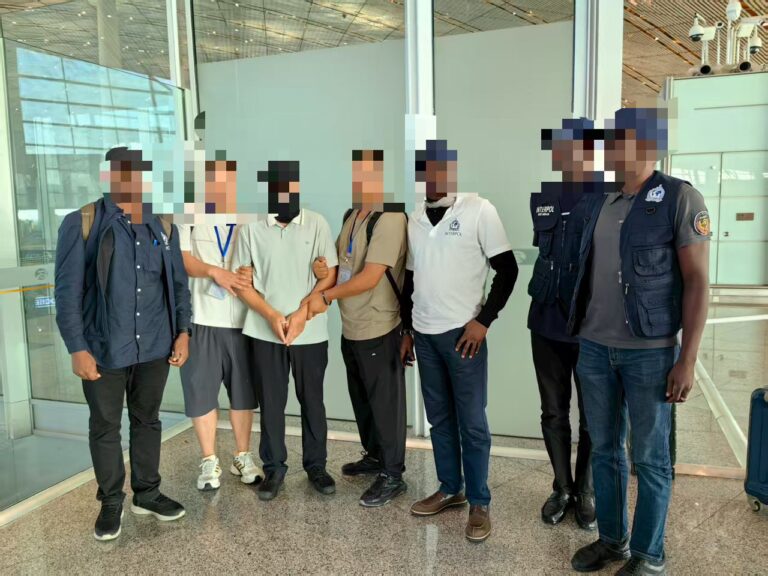
THE Nigeria Police Force (NPF) has repatriated a notorious Chinese fugitive, Dai Qisheng, to Beijing after he was arrested in Abuja, in what authorities described as a landmark operation against transnational organised crime.
The operation, carried out by the Police through the INTERPOL National Central Bureau (NCB) Abuja, was done in collaboration with INTERPOL NCB Beijing and the Embassy of the People’s Republic of China in Nigeria.
A statement by the police spokesperson Muyiwa Adejobi on Sunday, August 24, stated that Qisheng, a gang leader wanted in Guizhou Province, China, was declared a fugitive in 2024 after the Public Security Bureau of Zhijin County issued a warrant for his arrest over violent organised crimes.
He added that the wanted Chinese fled China to evade justice and sought refuge in Nigeria.
According to the police, operatives of INTERPOL Abuja tracked, monitored, and eventually arrested him in the Federal Capital Territory on August 8, 2025.
“Dai Qisheng, a notorious gang leader wanted in Guizhou Province, China, for orchestrating and leading violent organized crimes, fled his home country in 2024 after a warrant for his arrest was issued by the Public Security Bureau of Zhijin County. Determined to evade justice, he sought refuge in Nigeria. Operatives of INTERPOL NCB Abuja tracked, surveilled, and apprehended the fugitive in Abuja on 8th August 2025.
“Following his arrest, the fugitive was repatriated on 15th August, 2025, to Beijing under the established framework of police-to-police cooperation, coordinated by INTERPOL,” he wrote.
He stated that the Inspector-General of Police, Kayode Egbetokun, described the successful operation as a clear demonstration of Nigeria’s commitment to ensuring that its territory does not become a haven for fugitives.
“The Inspector-General of Police, IGP Olukayode Adeolu Egbetokun, Ph.D, NPM, has reassured of the Nigeria Police Force’s commitment to continuously improve on international alliances, leveraging intelligence-sharing and operational collaboration to ensure that borders never become barriers to justice.
“The arrest and repatriation of Dai Qisheng is a clear message to criminals worldwide that the Federal Republic of Nigeria will not be a hiding place for fugitives,”he added.
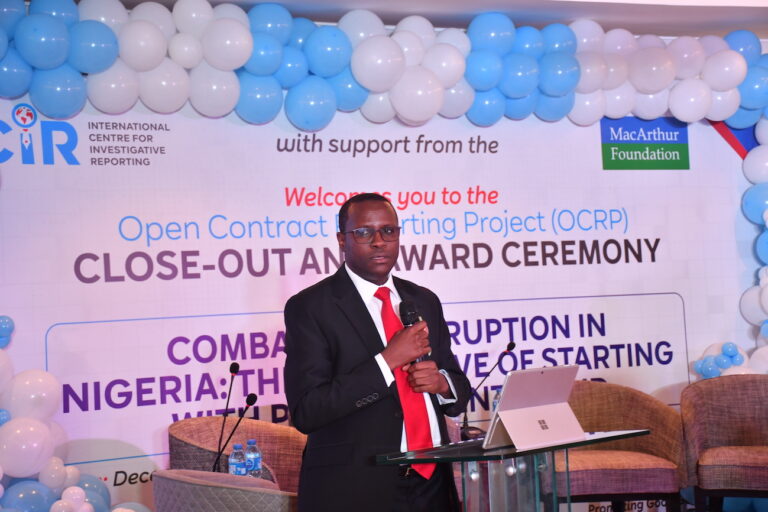
THE Chairman of the Independent Corrupt Practices and other Related Offences Commission (ICPC), Musa Aliyu, is advocating for constitutional provisions that would establish deadlines for prosecuting high-profile corruption cases involving politicians and other prominent figures.
Speaking on Inside Sources, a Channels Television programme, on Saturday, August 23, Aliyu said corruption trials should not be left open-ended but concluded within clear timelines.
Expanding on his call for constitutional reform, Aliyu noted that corruption trials often drag on for over a decade in the absence of clear timelines.
“Initially, I had the view that we don’t need special courts, but now, when I have a second look at it, I look at some countries and I discovered that we need it. Why? Because you need a time frame to finish corruption cases.
“So this is one challenge, because if you keep on dragging corruption cases, it will take 10, 12, 15 years… Even the chairman of ICPC will have finished (his tenure),” Aliyu said.
He expressed concerns that the constitution did not mention a clear timeline for cases, adding that you cannot determine the time within which they can be finished unless it is stipulated in the constitution.
Commenting on the Supreme Court’s ruling on local government’s autonomy, Aliyu said political interference continued to hinder its implementation.
He noted further that despite the court’s decision, enforcing it remained difficult, adding that state-independent electoral commissions also posed a major challenge to credible democracy.
Aliyu stressed the need to review the role of state electoral bodies, describing them as lacking independence and transparency. He argued that for democracy to thrive, elections must be conducted by a truly independent and credible umpire, pointing out that in most states, the ruling party always emerged as the winner.
On the anti-graft war, the ICPC boss said recent reports showed encouraging progress, with more citizens rejecting bribes and actively reporting corruption.
“When you look at the third corruption survey, which was done by the United Nations Office on Drugs and Crime, and other stakeholders, ICPC, EFCC, and other agencies included, and National Bureau of Statistics, you will see that from that report, which was in 2024, it has shown that… yes, Nigerians, 70% of Nigerians that were probably demanded bribes within that period of time between, I think, 2019 and 2023, they refused to pay bribes,” Aliyu explained.
He further commended Nigerians for increasingly reporting corruption, noting that greater awareness and reduced fear of backlash have boosted confidence in engaging with anti-corruption agencies.
He also described Nigeria’s slight improvement on Transparency International’s Corruption Perception Index, moving from 145th to 140th place, as modest but meaningful progress.