Home Blog Page 201

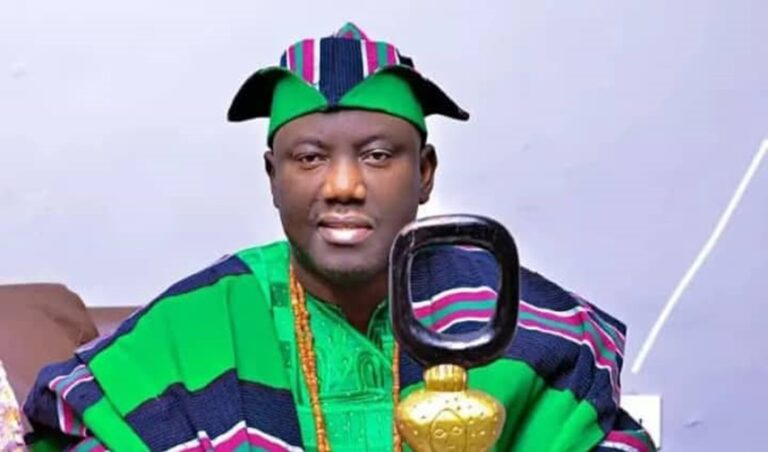
Alaafin replies Ooni, says Oyo ‘the most important, authoritative of all early Yoruba principalities’

0

THE Alaafin of Oyo, Akeem Owoade, has declared that he had no reason to engage in battle for supremacy with any monarch, whether within Yorubaland or elsewhere.

However, he maintained his stance as being superior to any monarch among the Yorubas, worldwide, including the Ooni of Ife, Enitan Adeyeye Ogunwusi.

In a statement by his spokesperson, Bode Durojaiye, on Thursday, August 21, the monarch said he was a custodian of Yoruba culture and tradition, and had always taken into consideration the safety and welfare of his subjects at all times. 

“He (Alaafin) is a veritable custodian of Yoruba culture and tradition and has always taken into consideration the safety and welfare of his subjects and will never compromise tradition, culture and development of his people for a pot of porridge. The history has been so kind and friendly to Alaafin Owoade publicity since he ascended the throne of his forefathers, as he does not need to get into any battle for supremacy with any oba, either in Yorubaland or anywhere in the universe…

“Alaafin combines humility with royalty to meet the modern-day demands. Kabiyesi (the king who no one questions), Iku Baba Yeye (the one who commands death/he who is parent to death), Alashe (he who wields authority), Ekeji Orisha (second-in-command to the gods), the Alaafin was inducted into the mysteries of various gods like Ifa, Sango etc to be the direct representative of these deities on earth,the palace said.

The ICIR reported that on Monday, August 18, the Alaafin issued a 48-hour ultimatum to the Ooni, demanding the revocation of the chieftaincy title of Okanlomo of Yorubaland he recently conferred on businessman Dotun Sanusi.

Citing a Supreme Court judgement which The ICIR has yet to verify, the Alaafin said he was the only monarch in Yorubaland with the prerogative to confer a title covering the entire Yorubaland to anyone.

Reacting, the Ooni reportedly said he would not dignify the Alaafin with a response.

He said he left the Alaafin’s position in the court of public opinion to judge.

Meanwhile, the Alaafin reiterated in his latest statement on Thursday that his kingdom had pre-eminence over others in the Yoruba ethnic nationality.

“At the hallowed ground of the Yoruba ancient shrine, as Owoade made a covenant with illustrious Yoruba ancestors that he would defend, protect and add glamour to the Yoruba norms and tradition. Oduduwa’s Principal minister and grandson, Oranmiyan (Because Oduduwa begot Okanbi, (an only child and Okanbi begot Oranmiyan, among others, namely Ila-Orangun, Oni-Sabe, Olu-Popo, Ala-Ketu, Oba-Benin) founded the city of Oyo when prolonged drought struck Ile-Ife as a result of people’s emigration.

“Oyo simply rose to prominence through wealth gained from trade and its military skills. It was the largest West African empire, the most important and authoritative of all the early Yoruba principalities. More so, the British, as it was in their tradition, recognised lineage as meaningful supremacy and legitimacy, preferring to sign the Treaty of Cessation with the Alaafin as the Superior Head of the Yoruba Nation,” the Alaafin said.

The monarch said he did not need to prove his supremacy, adding that history, culture, tradition, and the loyalty of his subjects placed him above rivalry.

He maintained that his rule was measured by results – particularly in prosperity, peace, and the cultural advancement of his people.

While issuing his ultimatum to the Ooni on Monday, he had argued that the power of the Ile-Ife monarch, as defined by his instrument of office, did not extend beyond the Oranmiyan Local Government Area (LGA) (now Ife Central, North, and South LGAs), rendering the title conferment invalid.

The ICIR reports that the clash between the Alaafin and the Ooni highlights a longstanding rivalry over supremacy and traditional jurisdiction between the Oyo and Ile-Ife kingdoms.

Media reports indicate that influential monarch and political leaders in the South-West are already appealing to the two monarchs to sheathe their swords.


Sowore accuses Egbetokun, Police of witch-hunt, plotting to gag Sahara Reporters

0

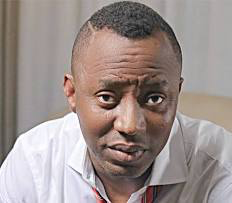
HUMAN rights activist, Omoyele Sowore, has accused the Nigeria Police Force, under its Inspector-General, Kayode Egbetokun, of orchestrating a fresh plot to intimidate him and muzzle the operations of his media platform, Sahara Reporters.

In a statement on Wednesday, August 20, Sowore said he was once again summoned by the IGP Monitoring Unit over the operations of Sahara Reporters in Nigeria.

According to Sowore, the police sought to question him over Sahara Reporters Media Foundation and Sahara Reporters Ltd., after obtaining documents from the Corporate Affairs Commission (CAC).

The activist insisted the move was part of a wider campaign by Egbetokun and his allies to stifle Sahara Reporters following its recent investigative reports exposing alleged contract-splitting, illegal promotions, and financial improprieties within the police hierarchy.

He further alleged that the Head of the IGP’s Monitoring Unit, Akin Fakorede, a police comissioner, expressed personal anger at Sahara Reporters’ reporting. 

“The Nigeria Police Force, under Egbetokun’s illegal command, is bent on stifling @SaharaReporters because of its fearless reporting and its recent exposés on the scandals surrounding him regarding contract splitting and controversial promotions of unqualified senior police officers in dalliances with him.

“Fakorede himself appeared personally aggrieved. He was visibly livid that Sahara Reporters had described his controversial promotion to the rank of Commissioner of Police as questionable. He also complained bitterly that @SaharaReporters reporting of his intervention in the recent Park Estate matter was an attempt to embarrass him,” he wrote.

Sowore likened the current harassment to previous state-led crackdowns against him and Sahara Reporters under the late former President Muhammadu Buhari, including his treason charges in 2019, restrictions placed on the media foundation’s Lagos office, and past attempts by senior government officials to silence the platform through bogus lawsuits.

He also revealed that after his detention last week, Fakorede allegedly offered a “backdoor deal” that would see his seized passport returned and pending charges withdrawn if he agreed to reconcile with Egbetokun. 

Sowore said he rejected the offer, insisting that Egbetokun had been illegally occupying the office of IGP since September 2024 when he surpassed the statutory retirement age of 60.

“Over the years, the Nigerian state has tried to use government ministers, pastors, and even diplomats to sue Sahara Reporters in U.S. courts. Every attempt has failed. Unlike in Nigeria, judges in the United States cannot be intimidated, coerced, or bribed into submission. This current witch-hunt is nothing more than another wild goose chase.

“The desperation is so brazen that after my unlawful detention last week, Fakorede himself sat with us twice in the presence of my lawyers. He offered a backdoor deal. According to him, if I would agree to make peace with Egbetokun, he would ensure that my illegally seized passport is returned and that all the bogus charges filed against me are withdrawn. This speaks to the influence they wield on judges who brazenly do their biddings to subvert the course of justice.

“He even suggested arranging a meeting with Egbetokun to seal this so-called ‘peace.’ I rejected it outright. I am not interested in peace built on blackmail and illegality,” he added.

The ICIR reached out to the police spokesperson, Olumuyiwa Adejobi, through call, SMS and WhatsApp message Thursday morning on claims made by Sowore. He declined the call to his line and did not respond to the message sent to him hours before this report was published.

This latest incident came just days after Sowore regained freedom on August 8, 2025, following nearly three days in police custody. 

The ICIR reported that his detention was based on two petitions, one alleging forgery of a police document and another accusing him of criminal defamation of a senior female officer.

Sowore described that arrest as “unjust, unwarranted and unlawful.”

During his detention, Sowore accused police operatives, including Fakorede, of assaulting him and breaking his hand, while the police insisted they were merely following due process and didn’t assault the activist.

House of Reps summons 11 Discos over N2.6trillion debt

THE House of Representatives Public Accounts Committee has summoned 11 electricity Distribution Companies (Discos) to appear before it over an outstanding debt of N2.6 trillion owed to the Federation Account.

The resolution was reached on Wednesday, August 20, during an investigative hearing chaired by Representative Bamidele Salam, following a review of the 2021 Auditor General’s report.

The session featured an appearance by the Managing Director of the Nigerian Bulk Electricity Trading Company (NBET) PLC, Johnson Akinnawo, who disclosed the scale of the liabilities.

According to NBET documents submitted to the Committee, as of September 30, 2020, the 11 Discos collectively owed N2.6 trillion. The breakdown is as follows:

Abuja Electricity Distribution Company (AEDC) – N330.4 billion; Eko Electricity Distribution Company – N231 billion; Benin Electricity Distribution Company – N233.2 billion; Enugu Electricity Distribution Company – N258.3 billion; Ibadan Electricity Distribution Company – N325.7 billion.

Ikeja Electricity Distribution Company – N310 billion; Jos Electricity Distribution Company – N161.7 billion; Kaduna Electricity Distribution Company – N277.7 billion; Kano Electricity Distribution Company – N211.7 billion; Port Harcourt Electricity Distribution Company – N239.7 billion; and Yola Electricity Distribution Company – N107.4 billion.

It would be noted that the Auditor General’s 2021 report, which prompted the hearing, flagged multiple irregularities in the power sector.

These include N30 billion in uncollected debt by NBET from market operators; N549 million shortfall in NBET’s one per cent income from institutional charges; N100 billion paid by NBET to Generation Companies (GENCOs) for electricity not delivered to the national grid; and N26 billion owed to Nigeria by two foreign firms for power exported to Togo, Benin, and Niger.

Other irregularities discovered in the audit report include: N166 billion in under-remittance by Discos, below the Nigerian Electricity Regulatory Commission’s (NERC) minimum threshold, and N2.7 billion in unpaid invoices by the 11 Discos.

Following deliberations, a motion was moved by Yahya Kusada and seconded by Billy Osawaru, directing that all 11 Discos be summoned to explain the persistent non-settlement of their financial obligations.

“With the magnitude of liabilities before us, these companies must appear before the committee to clarify their positions and outline repayment plans,” Kusada said.

The committee has also resolved to invite other market operators and participants to address concerns raised in the Auditor General’s report.

The committee said a date for the appearances would be communicated to the affected parties in due course.

The power sector was privatised on November 1, 2013. However, it still relies on intervention support from the World Bank, the Federal Government, and the African Development Bank (AfDB) to survive while showing lack of capacity to manage its liquidity problems, an earlier report by The ICIR has shown.

After privatisation, the sector was projected to grow its on-grid power to 40,000 megawatts (MW) in 2020. But as of 2025, on-grid power is slightly above 4,000MW, raising concerns about the efficiency of the privatisation.

Banks seek N900 billion more as CBN recapitalisation deadline nears

AS the deadline for the Central Bank of Nigeria (CBN) mandatory recapitalisation draws near, banks are expected to raise additional N900 billion before the year-end, according to a report sighted by The ICIR.

The report, ‘2025 Nigerian Banking Industry Report,’ was released by Agusto & Co. Limited, a pan-African credit rating agency.

It provides a comprehensive review of Nigeria’s banking industry, detailing the industry’s structure, competitive environment, regulatory landscape, financial condition, trends, near-term expectations, and outlook.

“We anticipate the injection of an additional N900 billion as a significant number of banks strive to comply with the minimum capital directive before 31 December 2025.

“Thus, providing additional capital buffer for current business risks and near-term growth plans,” it stated.

Between January and July this year, banks have raised about N800 billion in capital and are expected to raise additional N900 billion in the last five months of the year, ahead of the March 31, 2026, recapitalisation deadline.

Last year, 16 banks raised N1.7 trillion, but as of July 31 this year, only eight banks have met the minimum capital requirement, according to a recent disclosure by CBN Governor Olayemi Cardoso.

In March 2024, the apex bank introduced the minimum paid-up capital requirement to drive recapitalisation activities in the banking industry, The ICIR reported.

It pegged the minimum capital requirement for commercial banks with international exposure at N500 billion, commercial banks with national authorisation at N200 billion, regional banks and merchant banks at N50 billion, non-interest banks with national and regional operations at N20 billion and N10 billion, respectively.

In its report, Agusto & Co noted, however, that the mandatory verifications by the CBN and Securities and Exchange Commission (SEC) are pending on some of the capital raised.

“We note positively that domestic investors provided most of the capital raised by the banks in the last 19 months, reflecting the acceptability of the Industry by Nigerians,” it stated.

Non-performing loans to rise to 6.9%

According to the report, banks’ non-performing loans, which stood at 5.2 per cent as of December 31, 2024, higher than four per cent recorded in 2023, are likely to surge to 6.9 per cent at year’s end.

“We note that some non-performing loans benefitting from regulatory forbearance were included in the stage 2 category as at 31 December 2024.

“In June 2025, the CBN terminated the regulatory forbearance. Thus, all loans are expected to be classified appropriately with the required provisions taken,” it stated.

All credit exposures are also expected to comply with the prescribed single obligor limit (SOL).

The ICIR reports that a  single obligor loan refers to the maximum amount a bank can lend to a single borrower or a group of related borrowers. In Nigeria, the Central Bank of Nigeria (CBN) sets guidelines to limit exposure to a single obligor to reduce concentration risk.

The ICIR reported that CBN had directed banks with unresolved forbearance exposures to submit a recovery plan.

Agusto & Co believes the ongoing capital raising activities will resolve most SOL breaches on some exposures hitherto under forbearance.

“We also anticipate a surge in write-offs as some banks leverage the transition relief (waiver on the twelve-month mandatory waiting period for duly provisioned impaired loans before write-offs) to address non-performing forbearance loans.

“Notwithstanding, we believe the Industry’s impaired loan ratio will surge to 6.9% as some non-performing forbearance loans are classified appropriately,” it said.

It, however, expects a reduction in the impaired loan ratio before December 31, 2026, as the non-performing loans are resolved.

Profit before tax to decline by 19.2%

Relative to 2023 and 2024 financial performances, banks are likely to see a decline in their profit margins this year.

“In FY 2025, we anticipate a decline in profitability indicators,” Agusto & Co. maintained.

It expects forbearance loans to drive a surge in the impairment charge as banks decide to write off some impaired loans as part of the transitional relief measure.

“In addition, we anticipate lower foreign currency revaluation gains that have bolstered profitability since FY 2023.

“Overall, we expect a 19.2% decline in profit before taxation with the pre-tax return on average equity plummeting to 27.3% (FY 2024: 48.2%) in FY 2025,” the report showed.

The banking industry’s profitability is, however, expected to rebound in 2026 as the proceeds of the capital raising activities are fully deployed and the impact of the uptick in the impairment charge is moderated.

Assets to reach N242.3 trillion

According to Agusto & Co., the Nigerian banking industry remains resilient, navigating various global and domestic macroeconomic headwinds.

“The industry has maintained an upward growth trajectory with total assets and contingents projected to reach N242.3 trillion ($151.4 billion @N1,600/$) by 31 December 2025 after expanding by 44.9% year-on-year to N186.6 trillion ($121.5 billion @₦1,536/$) as at 31 December 2024,” it projected.

Amid the funding pressure from the prevailing high-interest rate CBN contractionary stance, the banking industry remained liquid with a 59.4 per cent liquidity ratio compared to 43.5 per cent in 2023.

“We believe the liquidity ratio will exceed 60% by FYE 2025, supported by favourable, albeit declining, yields on treasury securities.

“In our view, banks will accelerate the adoption of innovative funding strategies, as reflected in the uptick in commercial paper issuances, to moderate the impact of the funding pressures,” it stated.

In the first seven months, commercial papers amounting to N750 billion were issued by various players.

“We anticipate more issuances, particularly as the prevailing yields gradually moderate in the latter part of the year,” it said.

Amid an expected N900 billion capital injection, profits decline, and a higher loan book, Agusto & Co added that it has attached a “stable” outlook to the Nigerian banking industry.

Soludo sacks, orders prosecution of 8 vigilantes for assaulting corps member

0

THE Anambra State Government has sacked eight operatives of the Agunechemba Security outfit for brutally assaulting and publicly stripping a female National Youth Service Corps (NYSC) member, Jennifer Elobor.

Governor Chukwuma Soludo’s Special Adviser on Community Security, Ken Emeakayi, announced this on Wednesday August 20, at the agency’s headquarters in Awka.

“The Soludo administration will not tolerate any form of unprofessionalism, brutality or abuse of office by security operatives. Any officer found guilty of misconduct will face immediate dismissal and prosecution,” he said.

The ICIR reported earlier that Cyprus Onu, the lawyer to Elobor, who appeared on Channels Television’s The Morning Brief on Wednesday alleged that the the sacked officers threatened to rape and kill the corps member for speaking out during her ordeal.

Onu explained that he had written a petition to the state government demanding that those persons be prosecuted, noting that he would follow up the case to also ensure compensatory damages.

In his latest remarks, the governor’s aide said that the government moved promptly upon receiving reports of the incident and confirmed that the operatives would be handed over to the police for prosecution.

He explained that the dismissed officers were chasing suspected cultists on Tuesday when they assaulted the corps member- an act he described as “totally outside the mandate of the agency and utterly condemnable.”

He stressed that the incident would mark a turning point in reforming the outfit and rebuilding public trust in community security operations.

Emeakayi further noted that the government had covered Elobor’s medical expenses, replaced her damaged belongings including a laptop and phone and issued a public apology to her family, the NYSC, and the general public.

The ICIR reported that videos of the incident which surfaced on Tuesday showed armed men in plain clothes storming the corps members’ lodge in Oba community, Anambra State, where they were seen beating and harassing the corps member.

Emeakayi, on Tuesday confirmed that the men seen in the video were members of Operation ‘Udo Ga-Achi,’ also known as the Agunechemba Vigilante Group. He condemned the assault.

Similarly, the NYSC condemned the attack and described it as “unacceptable and dehumanising,” in a statement on Wednesday pledging full support for the police investigation to ensure justice. 

The institution also stated that it had begun offering psychological support to the victim while reaffirming its commitment to the welfare and safety of corps members.

Eyebrows as Nigeria’s booth stands empty at TICAD9 summit

0

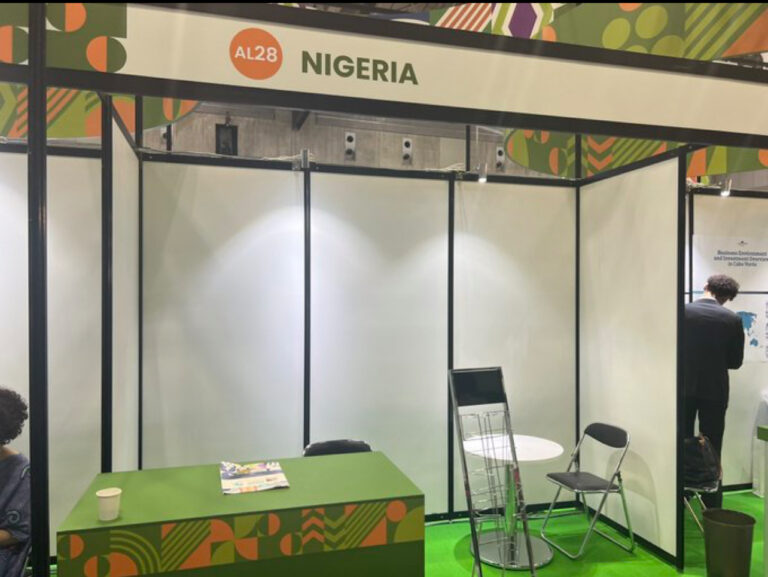
NIGRIA’s absence at its own booth during the ongoing Tokyo International Conference on African Development (TICAD9) in Japan, has raised questions after a viral video showed the country’s stand empty despite the presence of President Bola Tinubu and top government officials at the summit.

TICAD, launched in 1993 by the Japanese government in partnership with the United Nations, the African Union, and the World Bank, is one of the most important global platforms for discussing Africa’s development.

The summit brings together African leaders, Japanese officials, business executives, and international organisations to explore cooperation on trade, investment, technology, and sustainable growth.

The 9th edition of the conference is currently being held in Yokohama City.

According to the thematic guidebook for the event seen by The ICIR, the exhibition segment of the conference, which includes country booths, panel displays, and networking sessions, officially kicked off today on August 20 and is scheduled to run until August 22.

This means that all participating countries, including Nigeria, were expected to have their stands open from the first day of the conference.

The country joined the conference to woo investors and deepen trade relations with Japan. The Nigerian booth, like those of other African countries, was expected to showcase its economic potential, highlighting opportunities in agriculture, mining, energy, and digital innovation.

Ahead of the summit, President Bola Tinubu expressed optimism about Nigeria’s participation, noting that the gathering was about strengthening Africa–Japan ties, attracting sustainable investments, and unlocking innovation to benefit the people.

“Nigeria is at the table, not as a bystander, but as a leader shaping solutions for Africa’s future,” he wrote shortly after arriving in Tokyo for the 9th TICAD Summit.

On the opening day, the president emphasised that Nigeria was attending with “clarity of purpose.”

He explained that the country’s participation was aimed at unlocking over $1 billion in trade and investment, driving green innovation, boosting industrial growth, and creating opportunities for young people.

According to him, the summit was not just another diplomatic event but a launchpad for lasting development and global partnerships.

Empty booth raises questions

However, a Nigerian participant in Japan, Idris Ayodeji Bello, shared a video showing the Nigerian booth completely deserted while countries like Senegal, Togo, and Cameroon were actively engaging visitors.

In his post, Bello lamented: “I hate to show negative things about Nigeria, but it is sad that Nigeria is the only unmanned booth at TICAD9 in Japan.

“Upon all the folks who probably got estacode for coming to Japan Only God knows how many Japanese folks have asked me about the unmanned booth seeing my dressing. So ashamed, I have now designated myself as Honorary Consul and taken over the booth to engage visitors.

The video quickly went viral, sparking heavy criticism of the Nigerian delegation. Another Nigerian, Abiodun, wrote: “Nigeria sent delegates to TICAD9 in Japan. The President and the Foreign Affairs Minister are even present but there was no embassy officials nor delegates from Nigeria at the Nigerian booth. International disgrace.”

A member of the ruling All Progressives Congress (APC), Aina Dipo, argued that the government ought to be embarrassed and that the failure reflected poorly on ministries responsible for trade, industry, and foreign affairs.

He posted, “There are times you just don’t defend whatever pops up as a party member, and this is one of them. The present administration ought to be deeply embarrassed. From the minister of Foreign Affairs to that of Trade and Industry, and even the ministry of Mines and Steel, the level of neglect displayed is disgraceful.

“If the booth is opening on Monday morning, as long as our flag is present and the TICAD9 event is ongoing, there is no justification for leaving our space empty while other countries are actively showcasing and marketing themselves.

“This is an unnecessary stain on our image and reputation. Proper planning and a proactive approach would have prevented such a setback. Once again, those responsible should hang their heads in shame. Nigeria deserves better preparation and serious representation.”

Ministry reacts

The Federal Ministry of Foreign Affairs has dismissed the criticisms, insisting the booth had not yet been launched, a claim that contradicts the official program of the summit.

“Contrary to a tweet made by a participant at TICAD, the Nigerian Booth at #TICAD9 has not yet been opened. The booth will be officially inaugurated on Thursday, August 21, 2025, after which it will become fully operational and serve the delegates of TICAD,” the ministry said.

Spokesperson of Foreign Affairs Ministry, Kimiebi Imomotimi Ebienfa, told The ICIR that Nigeria’s booth had not yet opened because it was awaiting official inauguration.

On concerns that other countries had already unveiled theirs despite the programme agenda showing the exhibition had started, Ebienfa said: “Different countries select different dates to inaugurate their booth. You will invite your friends, and there will be a designated government official to declare the booth open. That ceremony is for tomorrow.”

“Somebody just went and said the Nigeria booth is not yet occupied. That’s misleading information. Other countries have their own dates of inauguration.”

Ebienfa also denied that delegates were hastily sent to the booth after the video surfaced, saying: “Go and fact-check what happened during the Dubai Expo. Different countries select different dates when they will inaugurate their booth.”

Mele Kyari on EFCC’s watchlist as court freezes 4 bank accounts allegedly linked to him

0

FORMER Group Chief Executive Officer of the Nigerian National Petroleum Company Limited (NNPCL), Mele Kyari, is currently on the watchlist of the Economic and Financial Crimes Commission (EFCC) due to the ongoing probe into the $7.2 billion refineries’ turnaround maintenance under his watch.

The watchlist placement is in line with the Federal High Court’s order in Abuja that bank accounts linked to Kyari in four banks be temporarily frozen following allegations of fraud against him.

Informed sources confirmed that investigations into the activities of the NNPCL during the period Kyari held sway had reached an advanced stage last month, following the arrest of his close associates, Daily Trust reported.

Already, Kyari’s associates have been interrogated on how some funds earmarked for the maintenance of the country’s refineries were managed.

It was further gathered that documents and other necessary information had since been obtained by the crack detectives investigating how the fund meant for the refineries’ turnaround maintenance was used.

A highly placed source also confirmed that the commission would soon invite Kyari for interrogation, following the evidence gathered from the preliminary investigations.

“I can assure you that we have even gone further with his (Kyari’s) investigation. Don’t forget that in criminal investigations, the territorial integrity and territorial boundaries of countries have no effect on criminal investigations.

“This is because the anti-corruption agencies operate at the transnational level; whether somebody leaves the country or not, it has nothing to do with our investigations, because whenever we need him, we will get him, and he’s already on our watch list,” the official said.

Another top EFCC source affirmed this and said: “We’re investigating him (Mele Kyari) and our investigation has reached an advanced stage. How is it possible that we will not investigate him? When those around him are already being investigated!

“The fact that the commission is not talking about him is for us to be able to get some critical information. We are discreet about it because there are so many officials that are involved.

“It is deliberate that we are not talking about him. It is to assist us in our investigations and to ensure that we get the right report that we need,” the source added.

The EFCC has yet to put up an official position on the development, despite several calls made in that respect.

It would be noted that despite billions of dollars spent on turnaround maintenance of Nigeria’s three refineries, the country has largely been relying on the Dangote Refinery for its petroleum needs.

In 2021, The ICIR reported that the three refineries wasted taxpayers’ money without commensurate productivity. Between 2017 and 2021, the Port Harcourt Refining Company Limited lost N343.66 billion, while maintaining a staff strength of 506.

The refinery engaged 487 new workers in 2020, paying them N3.93 billion annually. Despite the moribund state of the refineries, each worker took home an average of N8.072 million annually, according to the report.

Notably, President Bola Ahmed Tinubu had, in April 2025, in a sweeping reconstitution of the NNPCL board, removed the chairman, Pius Akinyelure, and the Group Chief Executive Officer (GCEO), Kyari.

The GCEO was consequently replaced by Bashir Ojulari as the new CEO, effective from April 2.

A few months after Kyari’s sack, the EFCC clamped down on top former officials of the oil firm, including the Managing Director of the three refineries, in its bid to probe where the funds were expended amid the refineries’ failure to function.

Justice Emeka Nwite on Tuesday issued an order while ruling on an ex parte motion marked: FHC/ABJ/CS/1641, which was brought by the EFCC and was argued by its lawyer, Ogechi Ujam, that Kyari’s accounts be frozen.

Although the EFCC lawyer had urged the court to freeze the account for 60 days to enable the organisation to conclude its investigation, Nwite limited the tenure of the order to 30 days, which he said could be renewed if necessary.

The lawyer had told the court that the temporary freezing order was necessary because the accounts were being investigated in a case involving the offences of conspiracy, abuse of office, and money laundering pending the conclusion of the investigation.

She identified the accounts as Jaiz Bank account number: 0017922724 with account name: Mele Kyari; Jaiz Bank account number: 0017922724 with account name: Mele Kyari; Jaiz Bank account number: 0018575055 with account name: Guwori Community Dev., and Jaiz Bank account number: 0018575141 with account name: Guwori Community Development Foundation Flood Relief.

In his ruling, the judge said, “I have listened to counsel to the applicant and gone through the affidavit evidence with the exhibits and written address attached. I find that this application is meritorious, and it is hereby granted as prayed,” he said.

The judge then adjourned till September 23 for the EFCC to report on further developments.

The ICIR in May reported that the EFCC launched an investigation into alleged abuse of office and misappropriation of funds by former senior officials of the Nigerian National Petroleum Company Limited (NNPC Ltd), including two former chief executives, Kyari and Abubakar Yar’Adua.

This was confirmed in a letter dated April 28, 2025, with reference number CR:3000/EFCC/ABJ/HQ/SDC.2/NNPC/VOL.1/698, and addressed to the NNPC Managing Director. The EFCC requested certified records of salaries and allowances paid to 14 officials, some of whom were retired.

Titled, “Investigation Activities Request for Information,” the letter stated that the EFCC was probing allegations of financial misconduct and abuse of office and asked the company to submit certified true copies of relevant documents concerning both current and former staff.

Among those named are Kyari; former Managing Director of the Port Harcourt Refining Company Limited (PHRC), Ibrahim Onoja; and former Managing Director of the Kaduna Refining and Petrochemical Company (KRPC), Mustafa Sugungun.

Anambra security agents threatened to rape, kill assaulted ‘corper’ – Lawyer

CYRUS Onu, the lawyer to female National Youth Service Corps (NYSC) member Jennifer Elobor, who was assaulted by local security operatives in Anambra State, has alleged that the attackers threatened to rape and kill her for speaking out during the ordeal.

Speaking on Channels Television’s The Morning Brief on Wednesday, August 20, Onu explained that Elobor was severely assaulted after she requested to dress properly.

“We’ve since written a petition to the government of Anambra State demanding that those persons be prosecuted, and we will follow up to also ensure compensatory damages,” he said.

The ICIR reported that videos that surfaced on Tuesday showed armed men in plain clothes storming the corps members’ lodge in Oba community, Anambra State, where they were seen beating and harassing a female corps member.

The state governor’s Special Adviser on Community Security, Ken Emeakayi, on Tuesday confirmed that the men seen in the video were members of Operation ‘Udo Ga-Achi,’ also known as the Agunechemba Vigilante Group. He condemned the assault.

Emeakayi said the operatives involved in the assault had been suspended and were undergoing a final review process.

“They are suspended because when a case has been established against someone, you arrest the person, then hand him over to the police.

“Now, since they were not readily prepared for persecution, which will be carried out by the police, they are now undergoing other disciplinary measures within our system, pending the final evaluation of the matter, whether they are going to court or not going to court as it relates to the victim,” he said.

However, speaking further on the Channels TV programme on Wednesday, Elobor’s lawyer dismissed the Anambra governor’s aide’s remarks as unacceptable, accusing him of falsely claiming that Elobor was uncooperative, which allegedly hindered investigation into the case. “That is not true,” he insisted.

“They were banging the door, and Jennifer was trying to open the door, and they just kicked the door, and it almost hit their face.

“Most of them were masked in mufti with guns, so you can imagine how scared the kids were. They didn’t give any identification. They just said, ‘Come down, come down. You’re all thieves! You’re all ‘Yahoo’ people!’

“When they tried to drag them downstairs, Jennifer was insisting that if they must take them anywhere, they should allow them [corps members] to call their LGI [Local Government Inspector] because the corps members did not know who the operatives were,” the lawyer said.

He added, “That was when they started pouncing on her. They made derogatory comments, asking her who gave her the right as a lady to speak to them anyhow. They started beating her.

“She asked them to allow her to change into something appropriate, and they said, ‘That thing you’re trying to cover, we’ll see it today. We’ll beat you up, we’ll rape you, kill you, and dump you, and nobody can say anything.”

The lawyer further alleged that when the Anambra security operatives arrived at the secretariat, they continued firing shots into the air to intimidate the corps members.

“It was one of the local inspectors who came from the NYSC that told them to allow them to go; that was how they let them go.

“If not for the fact that it came to the public. All of those things they are saying are not true. They are not prepared to prosecute; they are not going to prosecute. And, of course, that is not the only redress our clients are seeking. There must be consequences for bad behaviour, and they [the perpetrators] will pay damages. My clients are seeking compensatory damages, and they will have to pay.”

The ICIR reports that the NYSC condemned the assault as “unacceptable and dehumanising,” in a statement on Wednesday pledging full support for the police investigation to ensure justice. 

The institution also stated that it had begun offering psychological support to the victim while reaffirming its commitment to the welfare and safety of corps members.

Traditional worshippers urge Tinubu to declare August 20, 21 public holidays

0

TRADIONAL worshippers, also known as Isese believers, under the aegis of the International Council for Ifa Religion (ICIR) have called on President Bola Tinubu to give equal recognition to believers in the three major faiths in Nigeria by declaring August 20 and 21 as public holidays for their members.

The group’s president, Fayemi Fakayode, made the call in a statement issued in Ibadan, Oyo State, on Wednesday, August 20, to mark the 2025 Isese Day celebration.

Recall that Ogun, Osun, Oyo and Lagos state governments had declared Wednesday a work-free day in honour of this year’s Isese Day.

Fakayode encouraged the governors of Ekiti, Ondo, Kwara, Kogi, Edo, and Delta states to follow the example of their South-West counterparts and declare August 20 a holiday to commemorate Isese.

The call for recognition and respect for traditional worshippers’ rights has been ongoing, with some notable figures advocating for greater inclusivity and tolerance.

Fakayode called for national recognition from Tinubu and appealed that he declares August 20 and 21 as public holidays for Isese across Nigeria.

“We also want the government to fund cultural festivals, protect shrines and sacred lands and integrate practitioners into cultural councils like it is being done for Muslims and Christians,” Fakayode stated.

He appealed to the Presidency to put an end to the current state of inequality among the country’s three major religions by granting Isese practitioners due recognition through a national holiday.

While praising the South-West governors for supporting Isese Day celebrations, he encouraged the Federal Government to invest in cultural sites nationwide.

According to him, Isese Day preserves Yoruba and African heritage, promotes unity, and upholds values like honesty, respect, and hard work.

The group maintained that Isese represented the foundation of Yoruba and African identity, embodying morality, unity, reverence for nature, and communal living.

He added that by investing in cultural sites, the government could boost revenue and community development, further solidifying the significance of Isese Day.

Isese Worshippers’ constant cry over alleged stigmatisation, marginalisation, neglect

In a series of reports, The ICIR reported that Isese, the Yoruba word for tradition, refers to the religious and spiritual practices of the Yoruba people.

The belief system venerates deities such as Sango, Osun, Esu, Obatala, Oya, Yemoja, and Obaluaye, while acknowledging Eledumare as the supreme being.

With roots in ancient Yoruba civilisation, Isese is regarded by its adherents as one of the earliest religions in Africa and has spread beyond Nigeria to Cuba, Brazil, the United States, and the Benin Republic.

Despite its long history and global presence, followers of the faith say they are increasingly marginalised in Nigeria. In a country dominated by Christianity and Islam, traditionalists complain of discrimination, stigmatisation, and harassment in schools, workplaces, and even at community events.

Several adherents recount experiences of humiliation. Some have been marked down by lecturers for refusing to attend church, while others had religious symbols like beads forcibly removed in schools.

Parents say their children are bullied and falsely accused of evil powers, leading many to abandon traditional practices for Islam or Christianity. Others admit they conceal their beliefs in public, pretending to be like their peers to avoid mockery and exclusion.

Traditional worshippers accuse foreign religions of deliberately demonising their faith to gain followers.

They point to constant sermons portraying non-Christians and non-Muslims as doomed to hellfire, and to the frequent label of “idol worshippers” in the media. Some recall being denied admission, employment, or social acceptance because of their association with traditional religion.

Another grievance is the Nigerian film industry, particularly Yoruba Nollywood productions, which many accuse of reinforcing negative stereotypes.

According to traditionalists, movies often depict Ifa priests and herbalists as ritual killers or agents of evil, a misrepresentation of reality.

They argue that their religion relies on natural elements such as plants, animals, and water—not human sacrifice—and accuse filmmakers of ignorance or deliberate bias.

By contrast, they note that Indian, Chinese, and American films consistently present their cultures positively, while Nigerian projects their traditions as backwards and sinister.

Clashes between traditionalists and members of other faiths have also turned violent. During festivals such as Egungun and Oro, confrontations with Muslim groups in parts of Oyo and Osun States have sometimes led to injuries and deaths.

Worshippers allege they are frequently the targets of such attacks, yet claim security agencies often side with Christians and Muslims. The police, however, deny this, insisting they remain neutral in matters of religion.

Government policies also draw criticism. Millions of naira are budgeted annually to sponsor Christian and Muslim pilgrimages to Jerusalem and Mecca, but traditionalists are excluded.

They argue that heritage sites such as the Osun Grove, already recognised internationally, deserve similar attention and funding.

Some Isese adherents acknowledge progress, pointing to former Osun governor Rauf Aregbesola’s decision to declare August 20 Isese Day, as well as Oyo and Osun states’ support for traditional festivals. Still, they say representation remains minimal compared to the recognition enjoyed by Christianity and Islam.

They insist that Isese forbids human sacrifice and harmful practices, and that it is a religion of truth handed down by ancestors long before the arrival of foreign influences.

Their demands are clear: equal recognition under the law, fair representation in governance, and respect from fellow citizens. For them, peaceful coexistence is only possible if all religions are treated with dignity, without prejudice or distortion.

Tinubu scraps 5% telecoms tax on voice, data services — NCC

0

PRESIDENT Bola Tinubu has scrapped the controversial five per cent tariff applied on telecommunications (telecoms) mobile voice and data services.

The Executive Vice-Chairman of the Nigerian Communications Commission (NCC), Aminu Maida, hinted at this during a media briefing in Abuja on Tuesday, August 19.

Its aim is to ease financial pressures on consumers and businesses in the digital economy.

The tariff was initially suspended in 2023 but has now been officially removed under revised national tax laws.

“The 5% excise duty is no longer in effect. Initially, it was only suspended, but the President has now completely removed it.

“I was present when the issue was raised, and he firmly said, ‘No, we cannot place this burden on Nigerians.’ I was very pleased to see that this directive was upheld in the new legislation,” Maida said.

The duty, which applied to mobile voice and data services, had sparked significant backlash from both industry stakeholders and consumer advocacy groups, The ICIR reported.

The argument has been that it would increase the cost of digital access and threaten the viability of telecom operators already grappling with high operational costs.

In July 2023, Tinubu first suspended the tax as part of a broader fiscal policy overhaul aimed at mitigating the impact of multiple tax burdens on businesses and households.

The suspension came through a series of executive orders signed shortly after he assumed office.

In October 2024, the issue resurfaced when the National Assembly proposed reinstating the tax as part of broader revenue-generating measures, which also included levies on gaming, betting, and lottery services.

The proposal was met with strong resistance from the telecom sector.

At the time, the Association of Telecommunications Companies of Nigeria (ATCON) said reinstating the excise duty would undermine service affordability and hinder sectoral growth, particularly at a time when reliable internet access is increasingly vital to Nigeria’s economy.