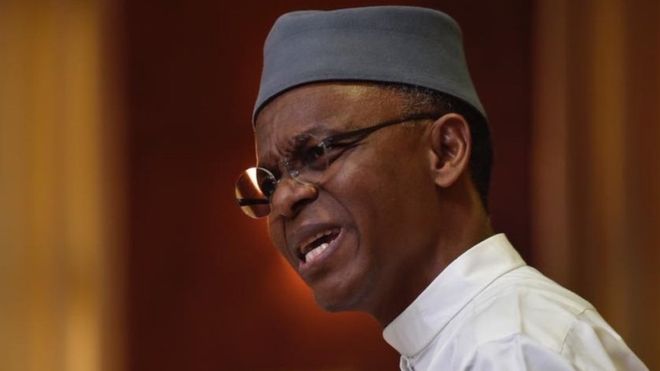
THE Kaduna State Government on Friday closed down some recreational centres in the state over failure to obey guidelines on reopening businesses put in place for operating within the COVID-19 pandemic.
The state Ministry of Business Innovation and Technology enforced the shutting down of the leisure facilities which included hotels, bars, lounges, restaurants, bakeries, and swimming pools.
Idris Nyam, the Commissioner in charge of the ministry who led the enforcement team met customers dining in the restaurants, bakeries, and drinking inside the hotel bars during the course of the exercise.
According to Channels Television, the hotels and restaurant operators were also sanctioned for non-compliance with social distancing, failure to provide hand washing facilities at the entrance of the facilities and other designated points. Others were sanctioned for failure to wear face masks.
The Commissioner, however warned that the state government would not hesitate to punish violators of safety protocols or tolerate non-compliant facilities that violate the stipulated guidelines.
In June, The ICIR reported that Kaduna State Government shut down a private secondary school, Future Leaders International School and revoked its license to operate.
The state government said the school authorities violated the federal and the state’s government COVID-19 Quarantine Order, which directed that all schools should remain closed.
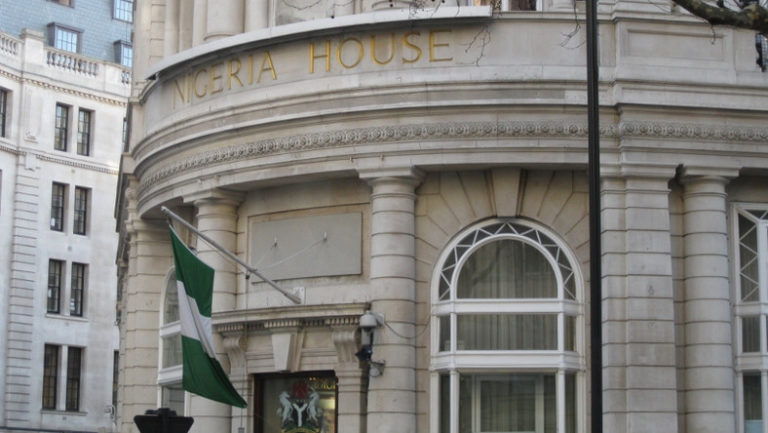
FINDINGS by The ICIR have shown that most of Nigeria’s diplomatic missions and embassies abroad have a poor culture of responding to enquiries via their online email addresses as most have inactive email addresses.
The ICIR sent a total of 66 enquiry emails to 46 Nigerian diplomatic missions and embassies located in the United States, US, Germany, China, amongst other countries.
To determine how they respond to the concerns of Nigerian citizens residing in those countries via their official online mailing addresses.
Posing as a resident seeking to renew his Nigerian passport due for expiration on July 25, the reporter in the email asked for a breakdown of the costs involved and the duration for the process.
“I am writing to know how long it would take to have my International passport renewed. The passport expires on July 25, 2020. I also would like to know the costs involved in getting a new passport,” the email read.
Based on information available on the websites of several Nigerian embassies, the duration for International passport renewal takes between two weeks and one month.
For 11 Nigerian consulates, it took at least 18 hours to reply
Eleven of the forty-six Nigerian embassies and high commissions sent a reply to the request of passport renewal which accounts for 20 per cent of the High Commission and embassies that received the enquiry.
The first set of emails was sent on July 6 at 4:43 pm, to Nigerian diplomatic missions in 19 countries of which the consular section of the Nigerian High Commission in Canberra, Australia was the first to respond at 5:06 am after 12 hours and 23 minutes.
“Please find attached the passport renewal process. Please note that you will need to reply to this email with a copy of your payment receipt in order to obtain an appointment for capture. For a standard passport renewal, the cost is usually $106.
“Please also reply to this email with where you will be travelling from in order to attend your passport appointment,” the reply read.
A document was also attached to the email detailing the steps on how to apply for e-passport renewal and book an appointment at the consulate.
The Nigerian embassy in Sweden and the Nigerian High Commission in Ghana were the only missions that acknowledged the emails were received via an automatic message.
The Nigerian embassy in Sweden responded in an email on July 7, at 10:46 am which was after 18 hours and 3 minutes, directing the reporter to fill the online form and make payments on a website listed aswww.innovate1services.com to complete the process.
Its counterpart in Austria, Vienna which replied after 17 hours and 22 minutes, asking the reporter to fill the online form and submit it in person.
Two days, 23 hours and 47 minutes was the time it took the Nigerian embassy in Lisbon, Portugal to reply from one of its three email addresses the request was sent to.
Directing the reporter to take a letter of introduction to the Nigerian embassy in Madrid, Spain as its operations in Lisbon does not involve passport renewal.
On July 7 at 12:46 pm, the enquiry was sent to email addresses in twenty-seven countries where Nigerian embassies and diplomatic missions are domiciled, amongst the first to respond include Senegal, South Africa, Togo, Uganda, Ghana, Brazil and United Arab Emirate, UAE.
However, the Nigerian consulate in Accra, Ghana replied after 1 day, 2 hours and 52 minutes, and Kampala, Uganda sent a reply after 19 hours, 26 minutes.
The shortest time it took a Nigerian foreign mission to reply to the enquiry via email was 49 minutes by the Nigerian embassy in Lome, Togo, followed by the embassy in Dakar, Senegal which sent in a reply after 2 hours 20 minutes, that they had run out of passport booklets and would let the reporter know when it arrives.
At the time of filing the report, the Nigerian embassy in Senegal never replied.
The Nigerian embassy in Brazil replied after 2 hours and 38 minutes at 6:24 pm of the same day, using the email address admin@nigerianembassy-brazil.org which revealed that the consulate was closed due to COVID-19 pandemic.
On July 7 at 1:06 am, Yvonne Maha, a representative of the embassy in Brazil also sent in a response from the address social.sec@nigerianembassy-brazil.org, informing the reporter the embassy was closed after 9 hours 21 minutes.
The most concise response came from the Nigerian embassy in Abu Dhabi, UAE, at 9:12 am on July 8 after 17 hours 27 minutes, detailing the collection procedure and cost for passport renewal stating the process would take a month which would involve image acquisition and biometrics at the embassy.
The time of record shows it takes averagely 18 hours before a Nigerian diplomatic consulate abroad can reply an online enquiry based on The ICIR analysis. However, this delay may rob Nigerian citizens of valuable time as they seek to sort out issues with regards to their passport renewal.
“Outdated Information” on Nigerian (China, Australia ) embassy’s websites
When The ICIR examined some of the websites of Nigerian embassies abroad, some of the websites contained outdated information that did not reflect current realities.
According to the homepage of the website of the Nigerian embassy in China, the Minister of foreign affairs is Aminu Wali, who left office in 2015 his picture is still displayed on the website.
He has since been replaced since 2015 by Geoffrey Onyeama who is the current Minister of foreign affairs but the change of guard is yet to take place on the website.
Though the homepage had recent information from the publicity department dated 13th, July 2020, advising visitors on the time the embassy opens and closes, other information posted on the website dates between 2014 to 2017.
Also the picture of former President, Goodluck Jonathan is still a prominent feature on the website despite leaving office in 2015. On some of its subpages, it shows the information contained was last updated in 2015.
The Nigeria High Commission in Australia also shared a video of former President Goodluck Jonathan on the sidebar on its homepage, while the announcement for public holidays calling for Eid-Ul-Maulud celebration posted in 2017 sits comfortably on the website.
“The High Commission will reopen for normal business on Monday, 4th December 2017 at 9.00 am,” a section of the post reads.
35 inactive emails, 4 consulates without websites
Fifty-three per cent of the emails sent to 66 addresses accounting for 35 email addresses as announced by the mail delivery subsystem were “inactive”.
The only email address belonging to the NHC listed on its website for immigration purposes in the UK returned as “Not found”.
However, the Nigerian High Commission in the UK does not have an official email address on its website to direct enquiries but a contact form requesting visitors to the website to fill the form for their enquiries.
This was a familiar message reply as 27 other enquiry emails sent were hauled back, stating their intended addresses could not be reached.
Six emails belonging to the embassies in China, India and Philippines returned as “delivery incomplete” while six Nigerian embassies in Turkey, Belgium, Japan, France and Russia failed to provide a reply to the enquiry.
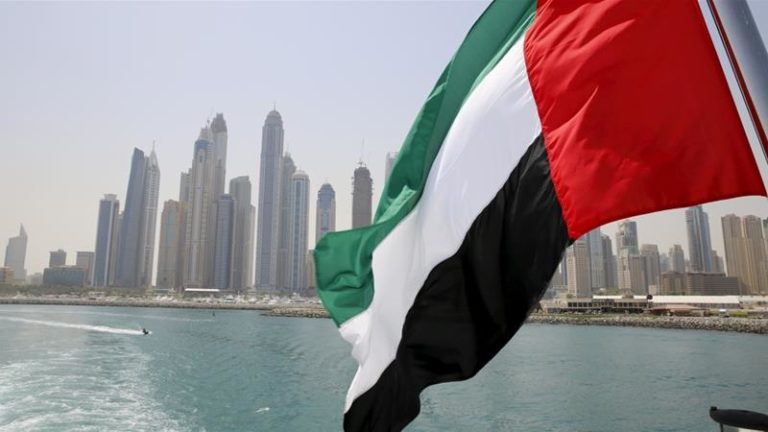
THE Nigerian Embassy in United Arab Emirates (UAE) says the Arab country has granted a waiver on penalty fees for Nigerians willing to return home before` August 17, 2020.
In a public notice issued by the Nigerian Embassy UAE, dated 21 July and sighted by The ICIR, the embassy disclosed that the UAE government has granted a waiver on penalty fee on visas that expired before 1 March 2020.
The document explained that the waiver is available for Nigerians willing to leave the UAE before August 17, 2020.
The Nigerian Embassy urged the affected Nigerians to leave the country with the impending Air Peace which is bound to leave by 2, August 2020.
“Consequently, the Embassy is urging fellow Nigerians living in the UAE to avail themselves of this opportunity to return home with the impending Air Peace evacuation flight scheduled for 2′ August 2020, and or subsequent Emirates evacuation flights before the expiration of the grace period 2,” the public notice read in part.
The embassy further urged Nigerians who are willing to take advantage of the ‘opportunity’ to submit their names and passport numbers to the embassy for clearance with the authorities of UAE.
“Accordingly, affected Nigerian nationals who are willing to return home are kindly requested to submit their names and passport numbers to the Embassy and or the Consulate for onward transmission to the UAE authorities in order to obtain the necessary clearance, the document further read.
THE ICIR investigations revealed how millions of naira released for the National Biosafety Management Agency’s capital projects were mismanaged via inflated project prices. Niyi OYEDEJI reports. Photographs and Video by Uthman SAMAD
THE National Biosafety Management Agency (NBMA) headed by Dr. Rufus Egbegba has spent over N365 million on vehicles, computers, and equipment, all between 2016 and 2019, among other procurements. The ICIR’s investigation, however, revealed that the prices quoted for these items are inflated beyond the market price.
NBMA was established by the National Biosafety Management Act of 2015 and on April 15, 2015, Dr. Egbegba was appointed as the pioneer Director-General/Chief Executive Officer but the agency commenced full operation in 2016.
The agency is mandated to regulate modern biotechnology activities and the release into the environment, handling and use of genetically modified organisms which are products of modern biotechnology to prevent adverse impact on the environment and human health.
In the last four years, the agency has executed no fewer than 30 capital projects, but all at inflated prices, according to the document obtained from NBMA through FOIA request.
170 million spent on five vehicles
For instance, The ICIR’s check shows that the agency has spent over N170 million on only five operational vehicles between 2016 and 2019.
The breakdown of the spending shows that N40 million, exactly 40 percent of the money released to NBMA for capital projects in 2016 was spent on the procurement of operational vehicles.
In the following year, another sum of N48,890,100 was also awarded and paid for the same project.
However, in 2018, NBMA first awarded a sum of N10,815,787 for operational vehicles and another N41,479,500 for the same project.
In 2019, the agency awarded and paid a sum of N29,059,870 also for operational vehicles, which brought the total amount of money expended on vehicles between the years 2016 and 2019 to N170,245,207.
When Dr. Rufus Egbegba, DG of the agency was contacted by The ICIR for clarifications on the money spent on vehicles, he acknowledged the purchase of the five vehicles at N170.2 million and listed the vehicles as 32-seaters bus (One), 18-seaters bus (One), Saloon cars (Two), and SUV car (One).
The ICIR further asked him if he thinks those vehicles were not procured at an inflated price, and he responded: “That’s all the vehicles we have bought and if from your investigation you’ve realized we’ve spent N170,245 207 on the five vehicles, then that’s the amount we’ve spent,” Egbegba responded.
When The ICIR reached out to one of the two contractors that got the contract for the procurement of operational vehicles for the agency ― Circular Automobile Limited, who was awarded the sum of 40 million and 48.9 million in 2016 and 2017 respectively, their director who decided not to disclose his name to this reporter noted that it was true that his company got the contract to supply two vehicles to the agency between the year 2016 and 2017.
He stated further that he delivered two brand new vehicles ― one 18-seater HiAce bus and one Prado car to the agency.
When asked if he received in total a sum of N88.9 million for the project from the agency, he stated instead that only ten percent for tax and VAT were deducted from the money and that the agency paid him fully for the contract. This implies that a sum of N8.9m was deducted for VAT while N80m was remitted to the contractor.
The second contractor who was also commissioned to supply operational vehicles could not be reached, but from the information gotten from the Circular Automobile Limited that a sum of N88.9 million was spent on two vehicles, it is conceivable the agency spent the remaining N81.4 million on the three remaining vehicles ―one 32-seaters bus and two saloon cars.
It is, however, curious that NBMA would buy vehicles through middlemen when they could directly buy from the licensed Toyota-car dealers in Nigeria, and saved the agent’s mark-up.
There are seven of such dealers in Nigeria. They are Elizade Nigeria Limited, R.T. Briscoe Plc, Omoregie Motors, Germaine Auto Centre, Mandilas Enterprise Limited, Kojo Motors and Metropolitan Motors, but NBMA did not purchase vehicles from any of them.
The market price of the vehicles
The ICIR checked online price of a brand new Toyota HiAce 2017 model, and the asking price ranges from N11.5 million to N16 million. Brand New Toyota HiAce 2018 model price ranges from N13 million to N17 million, while Toyota HiAce 2019 model price ranges from N12 million to N25 million.
SUV Prado car 2017/2018 model ranges from N29 to N40 million, depending on the variance.
Considering that that the 18-seater buses and the SUV Prado were bought between 2016 and 2017, the highest amount that could have been paid for the two vehicles were N65 million as against N80 million reportedly paid for the two cars. That leaves a difference of N15 million.
Even if the two vehicles were purchased at the current market price, with unstable inflation and foreign exchange considered, the going price of automobiles could still have been lower than the price quoted by NMBA.
The ICIR reached out to RT Briscoe, one of the licensed Toyota car dealers in Nigeria, who indeed confirmed that there has been inflation in the price of vehicles in recent years, which makes the current market prices pretty higher than the prices when the two vehicles were bought.
He also stated that there are different variances for each of the vehicles the agency purchased.
He said for the 18-seater Hiace bus, the price ranges from N22 million to N26 million, depending on the variance.
He said further that the 32-seaters coaster bus is currently being sold for N48 million while the current market price of the SUV Prado car ranges from N32 to N50 million, depending on the variance.
He concluded that although there are different types of saloon cars, the price varies, depending on the brand, noting that the average price for a typical saloon car ranges from N15 million to N30 million.
Going by the prices quoted by the RT Briscoe, it is evident that even if the cars were bought at the current market price, there are still discrepancies in the money the agency claimed to have spent on these vehicles.
For instance, the highest amount an 18-seater Hiace bus could be purchased now is N26 million while the price of SUV Prado car goes for N50 million, which means both vehicles could be purchased for the total amount of N76 million, this is against the sum of N80 million the agency claimed to have paid to the contractor for this project. In essence, it means the agency cannot account for a minimum of N4 million in the course of procuring these two vehicles.
Also, since the second contractor ― Temotoy Temtop Limited that was contracted for the purchase of the three other vehicles could not be reached by The ICIR, it is difficult to establish the type of vehicles and the amount the agency paid in purchasing these vehicles.
N164m spent on laboratory
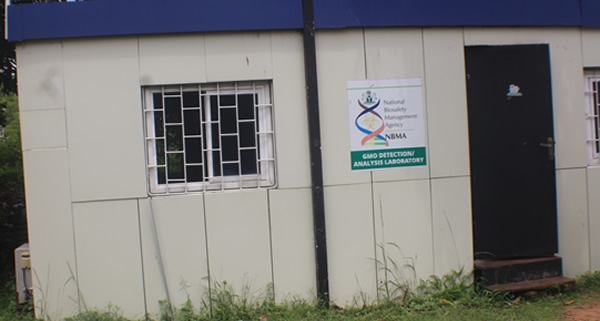
the outer part of the NBMA laboratory
Apart from the five operational vehicles ostensibly bought at the market price, findings revealed that the agency has so far spent N164,084,740 on its laboratory.
In 2016 when the agency started operation, half of the agency’s budget fixed at N50 million was spent to purchase and equip its laboratory for GMO detection and analysis.
The following year, 2017, the agency also spent another N49,619,089 on the same project.
In 2018, N32,747,205 was also expended on the same budget line – procurement and equipping of laboratory for GMO detection and analysis.
This implies that in the space of three years, the NBMA has spent N132,366,294 to equip its GMO laboratory which is housed in an office container.
The interior part of the NBMA laboratory
Findings revealed that despite not having budgetary allocation for equipping the makeshift GMO laboratory in 2019, about N9 million was spent on the same project to procure GMO detection kits in the same year.
Between 2017 and 2019, N31 million was spent on GMO detection kits.
In 2017, NBMA spent N11,536,045 on GMO test kits; N10,737,927 in 2018 and N9,444,474 in 2019 making a total of N31,718,446.
This further implies that the agency has spent in total N164,084,740 to procure equipment for the GMO laboratory and GMO detection kits.
When The ICIR visited the agency on July 8, it was observed the laboratory is a sparsely-equipped mobile facility, though it is difficult to evaluate the worth of the laboratory on which N164 million already has been expended, according to the document shared with The ICIR.
NBMA Director-General reacts
Dr. Rufus Egbegba DG
The ICIR asked Egbegba, the agency’s DG to account for how the money was spent. He agreed to findings by the reporter as being correct and that he has no further explanation to make rather, to even solicit for more funds for the agency.
“If those amounts are what is written in the report gotten by you, then maybe it is correct,” Egbegba said.
He argued that the equipment in the agency’s laboratory is the best in the world and that’s why the agency expended such a huge amount of money on them.
“You see that equipment in our laboratory, they are the best you can see anywhere in the world,” he noted.
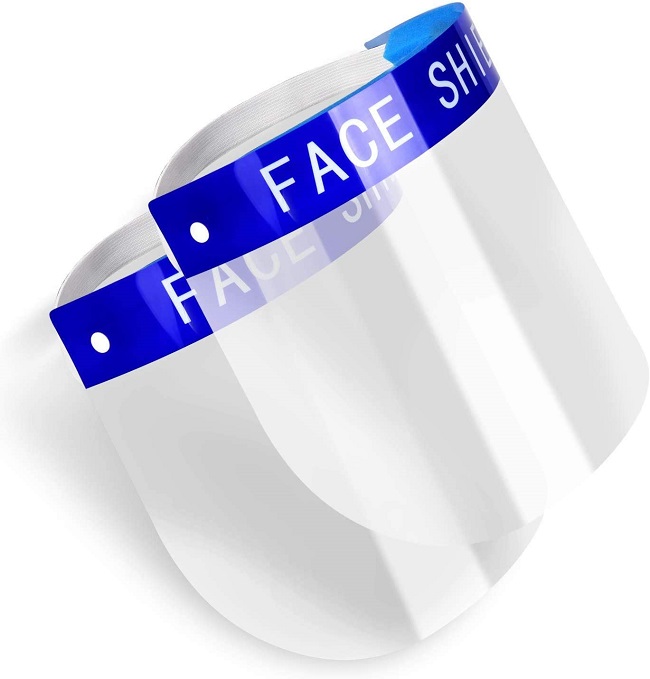
A STATEMENT attributed to the Ghana Medical Association (GMA) and the West African College of Surgeons (Ghana Chapter) issuing a warning on the danger posed by using face shields alone has gone viral on the internet, blogs, social media.
The statement claimed that using face shields without face masks could lead to further spread of coronavirus disease (COVID-19).
As at the time of this report neither the GMA nor the West African College of Surgeons have debunked the statement. They neither responded to the numerous calls and messages – spanning several days – from The ICIR to confirm if the statement was actually from them.
The statement accused blogs of misinforming the public that using face masks could cause a build-up of carbon dioxide.
THE CLAIM
The joint press statement dated Wednesday, July 16, 2020 and allegedly signed by Dr. Frank Ankobea, GMA President and Prof. Peter Donkor, the first Vice President and Country Representative of the West African College of Surgeons in Ghana makes two claims:
The statement from Ghana Medical Association (GMA) and the West African College of Surgeons (Ghana chapter)
CLAIM 1:
That “continuous use of face shields without masks by the general public will lead to increase cases of COVID-19”
CLAIM 2:
That “emerging scientific evidence has shown that COVID-19 has the potential to spread through the air.”
THE FINDINGS
The World Health Organisation (WHO) recommends the use of face masks as a preventive measure against COVID-19.
The United States Center for Disease Control and Prevention (CDC) also shared the same position on the importance of using face masks for self-protection and to slow the spread of the disease.
Dr. Robert Redfield, the US, CDC Director in a release issued by the Center, Tuesday, July 14, 2020, emphasised how the use of face masks could protect families and communities from being infected.
“Cloth face coverings are one of the most powerful weapons we have to slow and stop the spread of the virus – particularly when used universally within a community setting. All Americans have a responsibility to protect themselves, their families, and their communities,” Redfield said.
The ICIR contacted the World Health Organisation (WHO) Nigeria to further verify the claims.
The Infection, Prevention and Control Expert with the WHO, Nigeria, Prof. Adebola Olayinka, said using the mask reduces the virus transmission not face shields.
“That is actually very right. In fact, it is something we have also been discussing because many people now use face shields,” Olayinka said while commenting on the first claim.
She described the issue of community spread as a major concern emphasising that “what will really help to reduce community transmission is the mask and not the shield.”
Olayinka noted that the phrasing of the statement on face shield increasing coronavirus cases could have been better stated.
“Although, the way they put it that the use of it (face shield) will increase, I think it will be better to say the use of face shields would not help us reduce the transmission.
“The use of face shields alone without masks will not help us reduce transmission of the virus,” she noted.
On the second claim, Olayinka concurred with the claim about COVID-19 being potentially airborne, but with a caveat.
She was specific about conditions COVID-19 could become airborne especially in cramped places, crowded locations that are poorly ventilated.
“It is not completely correct because yes, there are emerging piece of evidence that there could be potential airborne transmission in confined places, crowded places and places where there is poor ventilation. We have some conditions attached to it.
“So, there is that potential for it to spread but how easily it spread, we are not really sure but we know that it spread by droplets and also there have been articles based on experiments that have shown it could stay in the air for some time.
“How long it does or not but of course if the ventilation is good, then the chances are much more reduced but if people stay closer together in confined places, then the chances increase.”
Her comment was similar to the position of the WHO International.
The WHO defines airborne transmission as, “the spread of an infectious agent caused by the dissemination of droplet nuclei (aerosols) that remain infectious when suspended in air over long distances and time.”
The document affirmed the disease could be transmitted through respiratory secretions or droplets expelled on hard surfaces from a confirmed case.
It stated that the airborne transmission of the virus could occur during medical operations that generate aerosols.
Aside that , there are theories that the virus, especially from an infected person could escape through normal breathing and talking via the aerosols. However, this would largely depend on the quantity of the breath out droplets “and the infectious dose of viable COVID-19 virus.”
The WHO brief which was backed up with 99 references, however, called for an in-depth high-quality research to clarify the different mode the virus could be transmitted, the role of airborne transmission and the proportion of COVID-19 virus required for the disease transmission to occur.
Likewise, a study conducted by a group of scientists from China and US to examine if COVID-19 is airborne showed that the virus could spread in enclosed places such as buses and conference rooms.
The study, released in April 2020 was conducted on samples taken from 293 Buddhists and 30 trainees. It, however, concluded on the likelihood of airborne transmission.
Sunday Omilabu a Professor of Virology, Lagos University Teaching Hospital (LUTH) shared further insights on the need for face masks, and not just the use of face shields alone like obtainable.
The Face shield, Omilabu said is to protect medical officials who take samples from individuals and the idea was to prevent splashes of particles from patients during sample collection.
He said both items serve different purposes, thus face shields should not replace face masks.
“…you can see that it is not only the face shield they (medical personnel) put on. They also have the face mask on,” the Omalibu said while stressing that face mask is to protect the nose and mouth.
On the second claim, the virologist agreed that the virus causing COVID-19 could spread through the air.
He explained that since the virus attacks the respiratory tract and it is lighter compared to bacteria, it could be transmitted by air.
“All along, I have that belief that the virus can be airborne because it is released through saliva. Since all these pathogens are released into the air, the wind has that capacity to transport it, to move it from one place to the other.
“And because the virus attacks the respiratory tract, that gives it the power of being transmitted by air. Most of the respiratory tract infections are airborne. So, it’s not unexpected because it (the virus) is carried by air and air can move it from one place to the other and the virus particles are very light when you compared them to bacteria.”
The ICIR also contacted Dr Emmanuel Balogun, a lecturer in the Biochemistry Department of Ahmadu Bello University, Zaria, he said ‘it is absolutely wrong’, to discard face masks for face shields.
“Taking away the masks and using the face shield alone does not protect you because this is a disease that can be transmitted to you through droplets and this thing can travel far.”
Balogun buttressed his point that individuals could still touch their mouths after touching contaminated surfaces while having the face shield on without masks. But, it is safer when the face mask is on.
On the question, if the virus is airborne, the Varsity teacher shared a similar position with the WHO and the other experts.
He said the possibility of the virus being airborne is high as it could be transmitted through aerosols citing an instance of when an infected person coughs.
The ICIR further attempted to authenticate the statement but every efforts to reach out to the GMA via an email and official phone line failed.
THE VERDICT
From the evidence above the claim that “continuous use of face shields without masks by the general public will lead to increase cases of COVID-19” is TRUE.
The claim that “emerging scientific evidence has shown that COVID-19 has the potential to spread through the air” is also TRUE.
JACK Dorsey, Chief Executive Officer, CEO, of Twitter, a social media networking platform on Thursday said the company is considering a subscription model to explore more money-making options from its users, following a decline in its revenue.
The advertising business of Twitter had suffered a hit in revenue which is at the centre of its earnings according to a CNN report.
“People are taking note of our differences and also at the same time seeing a lot of the opportunity on Twitter as we advance our roadmap.
“You will likely see some tests this year” of various approaches”, Dorsey announced to investors during a call held to discuss the company’s second-quarter revenue report.
Twitter’s advertising revenue was pegged at $562 million for the second quarter of 2020, which was a 23 per cent drop from the same quarter of 2019.
A development the company attributes to the money spent in building its now completed advertising server after it had blamed the server for its Q3 2019 earnings drop. The server allows Twitter allows brands to target ads to its millions of users.
Shares of Twitter grew by 6 per cent in early trading on Thursday after posting its financial statement for the second quarter, as its monetisable daily active users grew by 186 million users.
“We do think there is a world where subscription is complementary, where commerce is complimentary, and we are helping people manage paywalls,” Dorsey said.
Earlier in July, a job post alluding to a subscription product created a frenzy among Twitter investors as the post announced that the company was building a subscription platform codenamed “Gryphon” which increased Twitter’s stock indicating investor appetite for the company to find new revenue streams.
Dorsey described as a “tough week” in which the company struggled to address a massive hack that compromised several verified accounts, including those of Barack Obama, Joe Biden, Elon Musk and Jeff Bezos.
Dorsey apologised on the conference call, saying “we fell behind” on the company’s security obligations.
“We feel terrible about the security incident. Security doesn’t have an endpoint. It’s a constant iteration. We will continue to go above and beyond here as we continue to secure our systems and as we continue to work with external firms and law enforcement,” he said.
THE World Health Organization (WHO) has disclosed that more than 10,000 health workers in 40 countries have been infected with COVID-19 so far, indicating challenges faced by medical staff on the frontlines of the outbreak.
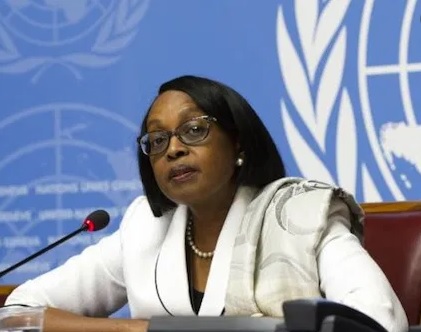
Speaking about health worker infections in Africa during a virtual press conference organized by APO Group on Thursday, Dr. Matshidiso Moeti, WHO Regional Director for Africa warned of the threat posed by COVID-19 to health workers across Africa.
This comes as COVID-19 cases in Africa appear to be spiking. There are now more than 750, 000 cases of COVID-19, with over 15 000 deaths.
Some countries are approaching a critical number of infections that can place stress on health systems. South Africa is now among the worst-hit countries in the world.
“The growth we are seeing in COVID-19 cases in Africa is placing an ever-greater strain on health services across the continent,” Moeti said.
“This has very real consequences for the individuals who work in them, and there is no more sobering example of this than the rising number of health worker infections.”
Moeti added that Inadequate access to personal protective equipment or weak infection prevention and control measures raise the risk of health worker infection.
Surging global demand for protective equipment as well as global restrictions on travel have triggered supply shortages. Health workers can also be exposed to patients who do not show signs of the disease and are in the health facilities for a range of other services.
Risks may also arise when health personnel are repurposed for COVID-19 response without adequate briefing, or because of heavy workloads which result in fatigue, burnout and possibly not fully applying the standard operating procedures.
In many African countries, infection prevention and control measures aimed at preventing infections in health facilities are still not fully implemented.
When WHO assessed clinics and hospitals across the continent for these measures, only 16 per cent of the nearly 30 000 facilities surveyed had assessment scores above 75 per cent.
Many health centres were found to lack the infrastructure necessary to implement key infection prevention measures or to prevent overcrowding. Only 7.8 per cent (2213) had isolation capacities and just a third had the capacity to triage patients.
“One infection among health workers is one too many,” said Dr. Moeti. “Doctors, nurses, and other health professionals are our mothers, brothers, and sisters. They are helping to save lives endangered by COVID-19. We must make sure that they have the equipment, skills, and information they need to keep themselves, their patients and colleagues safe.”
WHO has been working closely with health ministries to reduce health worker infections since the outbreak began.
The organisation has trained more than 50 000 health workers in Africa in infection prevention and control, with plans to train over 200 000 more, as well as providing guidance documents and guidelines on best care practices and the most up-to-date treatment regimes.
She further added that the WHO is also helping to fill gaps in the supply of personal protective equipment. Currently, 41 million items of personal protective equipment are ready to ship from China to cover the needs of 47 African countries. Shipments for an initial set of 23 African countries are planned to start this weekend.
As a result of concerted efforts by WHO and partners some African countries have managed to reduce health worker infections considerably. For example, two months ago over 16 per cent of COVID-19 infections in Sierra Leone were among health workers.
The figure has now dropped to 9 per cent. Cote d’Ivoire has reduced the proportion of infections among health workers from 6.1 per cent to 1.4 per cent. Scaling up infection prevention and control measures can further reduce infections among health workers.
She was joined by Hon Dr. Léonie Claudine Lougue, Minister of Health of Burkina Faso; Hon Dr. Alpha T. Wurie, Minister of Health and Population of Sierra Leone; and Dr. Jemima A. Dennis-Antwi, International Maternal Health & Midwifery Specialist.
So far, about 10 percent of all cases globally are among health workers, though there is a wide range between individual countries.
In Africa, information on health worker infections is still limited, but preliminary data finds that they make up more than 5 per cent of cases in 14 countries in sub-Saharan Africa alone, and in four of these, health workers make up more than 10 per cent of all infections.
Meanwhile, in June, The Punch reported that no fewer than 812 healthcare workers tested positive for COVID-19 in Nigeria,
The newspaper quoted Chikwe Ihekweazu, the Director-General of the Nigeria Centre for Disease Control (NCDC).
Ihekweazu was speaking during the daily briefing of the Presidential Task Force on COVID-19, in Abuja.
He disclosed that 29 of the affected healthcare workers are NCDC staff.
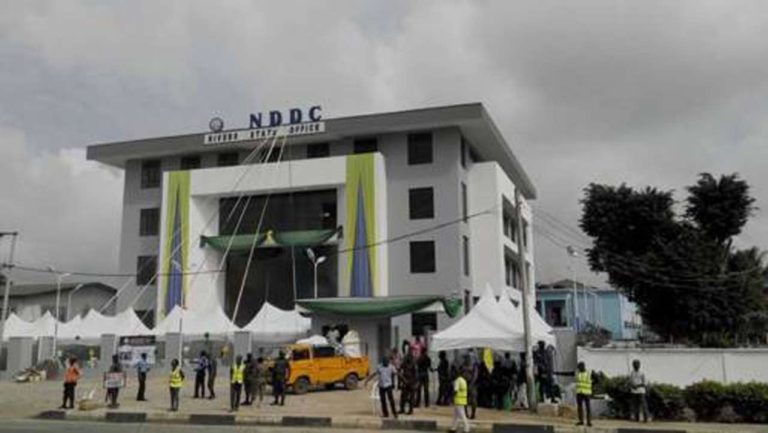
THE Niger Delta Development Commission (NDDC) has denied the allegation of its involvement in the construction of a wooden bridge trending on social media, allegedly constructed by the Commission at Elebele in Ogbia Local Government Area of Bayelsa State.
According to the post, the NDDC built the wooden bridge at a cost of N2.3 billion.
In a press statement signed by Charles Obi Odili Director, Corporate Affairs on Thursday, he said the information is fake.
”The Commission hereby declares that it has no such project at Elebele. We have gone through our records for the past 18 years and there is even no contract offer for the construction of a bridge in the community,” the statement read in part
Odili in the statement disclosed that the Elebele community in 2018 sought the assistance of the Commission to rebuild the bridge which had collapsed which he stated that the proposal is still going through the commission’s system and is presently at the design stage.
The statement also revealed that the community undertook a self-help project and built the wooden bridge while awaiting NDDC’s intervention.
The Commission emphatically states that It has no input or connection with the bridge, neither was a contract signed nor money paid.
”It has no NDDC input. NDDC has not paid out any money for it. In clear terms, this bridge has nothing to do with NDDC.”
The Commission, therefore, urged stakeholders to regard the post as part of the propaganda tactics of those who want the NDDC to be scrapped to deny the people of the region, the benefit of infrastructural and economic development.
”The fake photograph is a follow up to the false allegations and campaigns launched by these detractors of the Niger Delta Development Commission in the news and social media space and even at the recent public hearing by the National Assembly. These forces and their spokespersons are not from the Niger Delta.’
”They are enemies of the region. The people of the Niger Delta have lined up behind President Muhammadu Buhari’s ordered forensic audit exercise. That exercise will account for how the projects undertaken by NDDC were done and bring to account those who failed in their responsibilities to the people of the Niger Delta Region.”
Odili however stated that the NDDC under its current leadership remains committed to ensuring the Commission achieves its core mandate as the interventionist agency for the Niger Delta region and its people.
He also stated in the statement that for the avoidance of doubt, NDDC has some of the best engineers in Nigeria and the quality of their work are world-class.
Odili also advised those in doubt to visit the 29-kilometre Ogbia-Nembe Road in Bayelsa, which cuts through the swamps with ten bridges and 99 culverts.
The road, constructed in partnership with Shell Petroleum Development Company, SPDC, is ready for commission, he stated.
THE Lagos State Government has said the numbers of COVID-19 cases are likely to increase in August, despite already having the highest number of confirmed cases in the country.
Akin Abayomi, the State Commissioner for Health said this during a press briefing at the Bagaulto Kaltho Press Centre in Alausa, Lagos state, according to The Nations Newspaper.
Abayomi stated that based on observations by the ministry, the COVID-19 cases are likely to peak in the month of August.
“Based on postulations, COVID-19 cases are like to peak next month; we are hoping it peaks soon and the curve eventually gets flattened,” Abayomi said.
Recall that the Health Commissioner had in May said the number of COVID-19 cases in the state could rise up to 120,000 between July and August.
“We definitely have not reached the peak of our outbreak, we suspect that the peak will happen sometime in July or August and so we are preparing for the oncoming of about 90,000 to 120,000 cases during that period,” Abayomi had predicted.
According to the National Centre for Disease Control (NCDC), the number of confirmed cases in the state is 13,806 with 117 COVID-19 recorded deaths.
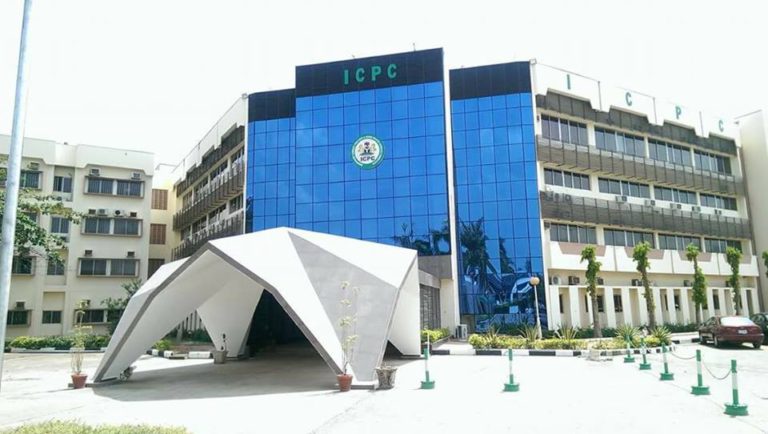
THE Independent Corrupt Practices and other Related offenses Commission (ICPC), says it has widened the scope of its constituency project tracking to accommodate projects below N100 million.
Jimoh Sulahhiman, ICPC’s Assistant Commissioner made the disclosure on Wednesday during a radio programme, Public Conscience produced by the Progressive Impact Organization for Community Development ( PRIMORG).
It will be recalled that ICPC has flagged off the second phase of constituency projects, having made marked success in the first phase.
While responding to questions on the radio programme, Sulahhiman, said the Commission wouldn’t have achieved much if it tracked all projects, hence, it focused on projects with threshold of N100 million.
He added that ICPC has been tracking projects that are above N1oo million.
“We just started last year, that was why we brought the threshold to N100 million, definitely now that it is continuing, we have to go back to maybe 50 million,” Sulahhiman said.
“These are project that make the people in the community feel that there are project in their community.”
He explained that people at the grassroots should also contribute by writing and getting involved, telling the Commission what is happening in their community.
According to him, if a project is 20 million and they feel it was not well executed, the Commission will go there and see what has happened.
“So it doesn’t mean we are going to stay put in a hundred million treasury we can come down to 50, 20 and even 10,” he said.
When asked the experiences ICPC gathered during the first phase of constituency projects tracking, Sulahhiman said “we saw that the legislator can put a project on his land, and before we know it, it becomes a hotel, these are the issues we see on the field.”
Azuka Ogugua, ICPC’s Acting Head of Department, Public Enlightenment and Spokesperson, revealed that the Commission tracked projects in 12 states which are; Adamawa, Akwa Ibom, Bauchi , Benue, Enugu, Edo, Imo, Kano, Kogi, Lagos, Osun, Sokoto, as well as part of the FCT.
She said the second phase will accommodate Cross River, Taraba, Ekiti, Ogun, Gombe, Nasarawa, Kebbi, Kwara, Jigawa, Abia, Delta, Ebonyi, Niger, Rivers, Oyo, and Kaduna, and will focus on the following sectors: health, education, water resources, agriculture, and power.
Earlier, a co-convener of the programme, Okhiria Agbosuremi added his voice to ICPC’s call for citizens to become more proactive in reporting abandoned or uncompleted projects in their localities.
The programme PUBLIC CONSCIENCE by PRIMORG is supported by the MacArthur Foundation.