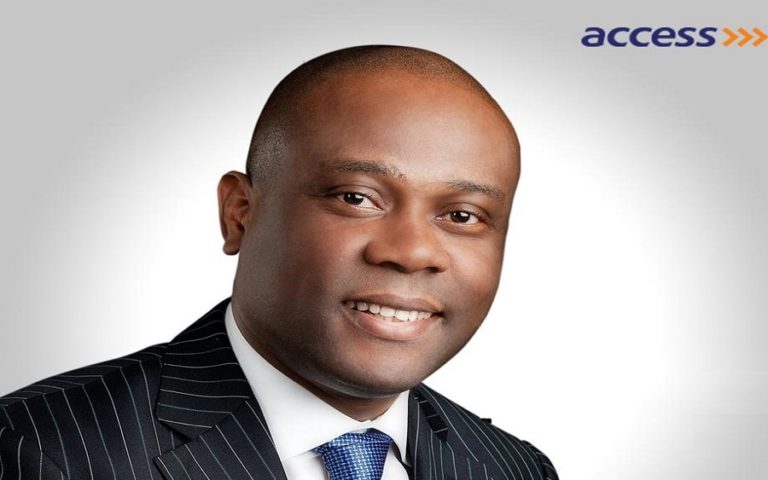
HERBET Wigwe, Managing Director of Access Bank has disclosed that contributions by the private sector to the war against Covid-19 is now N23billion.
Wigwe who spoke to Stephanie Busari of CNN in an interview on how the private sector is helping to further reduce the negative impact of Covid-19 pandemic in Nigeria added that another N20billion would soon be realised from donations.
He said the donations would be used to get medical equipment, build isolation centres and distribute food to citizens.
According to him, the whole money donated by the private sector is domiciled at the Central Bank of Nigeria (CBN) and not in the custody of the Federal Government.
“There are different committees that give an account of every penny spent from the money,” Wigwe said.
“Every 30 days KPMG carries out an audit process on money going in and coming out from this donations for accountability purposes.”
He stated that there there would be distribution of foodstuffs to 1.67 million households all over the country noting that each food item is bagged and branded “CACOVID NOT FOR SALE”.
The Access Bank boss said the foodstuff distribution would be done through state governors of each state, to the local government and finally to the wards, stressing that “we would give to the female head of homes in each family, the process would take two to three weeks.”
He said if the distribution can reach out to 80 per cent of the 1.67 million homes, it would be a success level in reaching out to Nigerians.
Speaking on the building of isolation centres, he explained that the private sector coalition would be partnering with the World Health Organisation (WHO) and Nigeria Centre for Disease Control (NCDC) to get it done in about 20 states including Lagos, Abuja and Portharcourt, adding that ventilators and bed would be provided.
Wigwe also assured that by next week the group would receive 38,000 molecular testing kits which he said were part of the 250,000 ordered.
With that, he said ,at least 1000 tests can be performed a day noting however, that 100 PCR testing kits that were ordered cannot come again due to rationing of it all over the world.
He said the Covid-19 pandemic has shown that the private sector and the banks need to invest heavily into the health care and pharmaceuticals even after the pandemic.
The CEO of Access Bank also said his group was open to supporting the Small and Medium Enterprises (SMEs) and the manufacturing sector such as companies manufacturing face-masks and health care equipment especially now that foreign exchange is scarce.
He said Access Bank has been significantly supporting the SMEs.
In February, four young men lost their lives in Sagamu, Ogun State. They are victims of brutality that has characterised operations of the Special Anti-Robbery Squad (SARS), a unit of the Nigerian Police Force. The police authorities hurriedly made promises that justice would be served. But people are skeptical, believing that the victims would soon be an addition to statistics of police extra-judicial killings in Nigeria. In this report, The ICIR’s Editor, Ajibola AMZAT, tracked the family of each of the victims who re-lived personal experience of their loss in a manner that questions the efficiency of Nigeria’s criminal justice system.
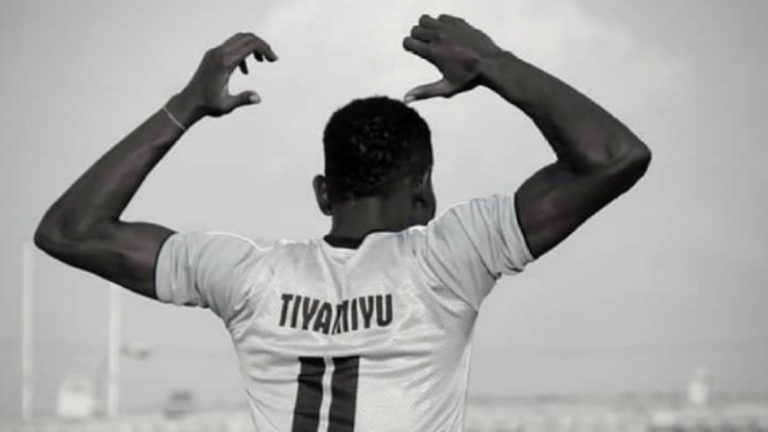
KAZEEM Tiamiyu, aged 25, left home one Friday evening in February to meet his manager, Oluwaseun Oyesanya, who just arrived Sagamu from Lagos. The man was the bridge to his dream for a sensational football career in Europe and Kazeem was always excited anytime he was in town. The manager had recently completed a plan for him to meet with some foreign partners in Sweden. So, that evening, he told his parents he would be sleeping over at the manager’s house but promised to return the following morning.
He never did.
The next day, his father Honourable Fasasi Tiamiyu, received a phone call from a stranger asking him to come to the General Hospital Owode–Egba in Ogun State to see his son who had gotten into a fight with a policeman. The fisticuffs turned tragic, the man at the other end told him. But Hon. Tiamiyu did not believe the words of the strange caller because his son was not a trouble maker.
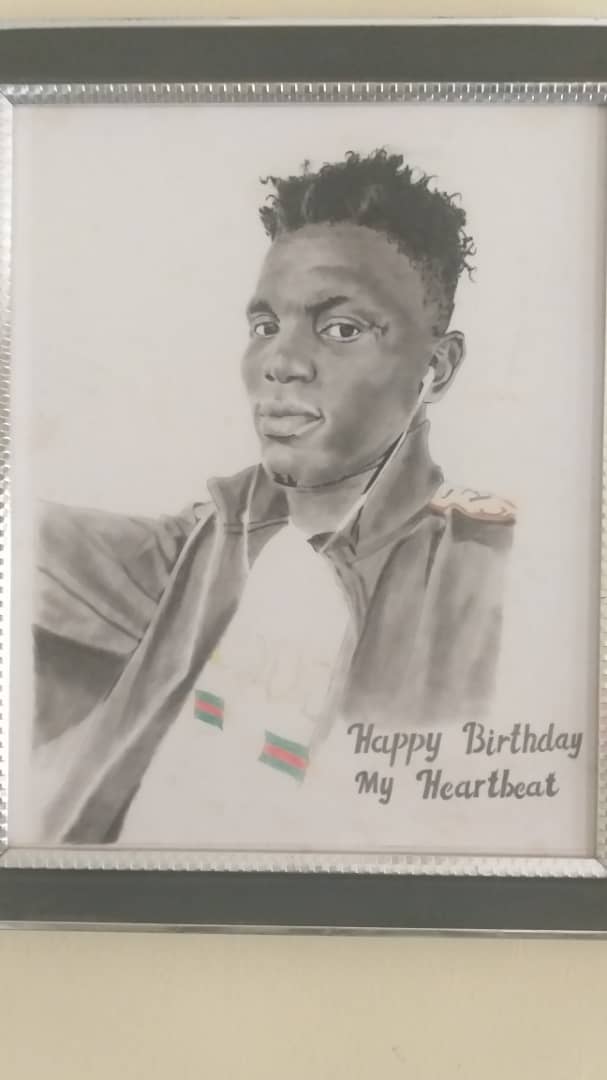
“You never could find him fighting anyone. Never!” The father said to the reporter who visited the family in February, pointing at the pencil portrait of Kazeem.
Kaka/ CREDIT: Family Album
Arriving at the hospital less than 30 minutes later, he saw his son lying face-up on a rusty wheel stretcher in his navy blue jersey. His body was lifeless.
For a while, he stood there, staring at his son’s athletic body. Then in a fit of rage, he lunged at the man identified as his killer, shouting “why did you kill him? Why did you kill my son?”
The suspect, in his bewildered state, could not utter a word. In those seconds, it seemed a deadly scuffle would ensue between the two adults, until the small crowd that gathered at the hospital freed the suspect from the fierce grip of the bereaved man, and detained him till he was finally arrested.
SARS: A refuge for rogue police officers
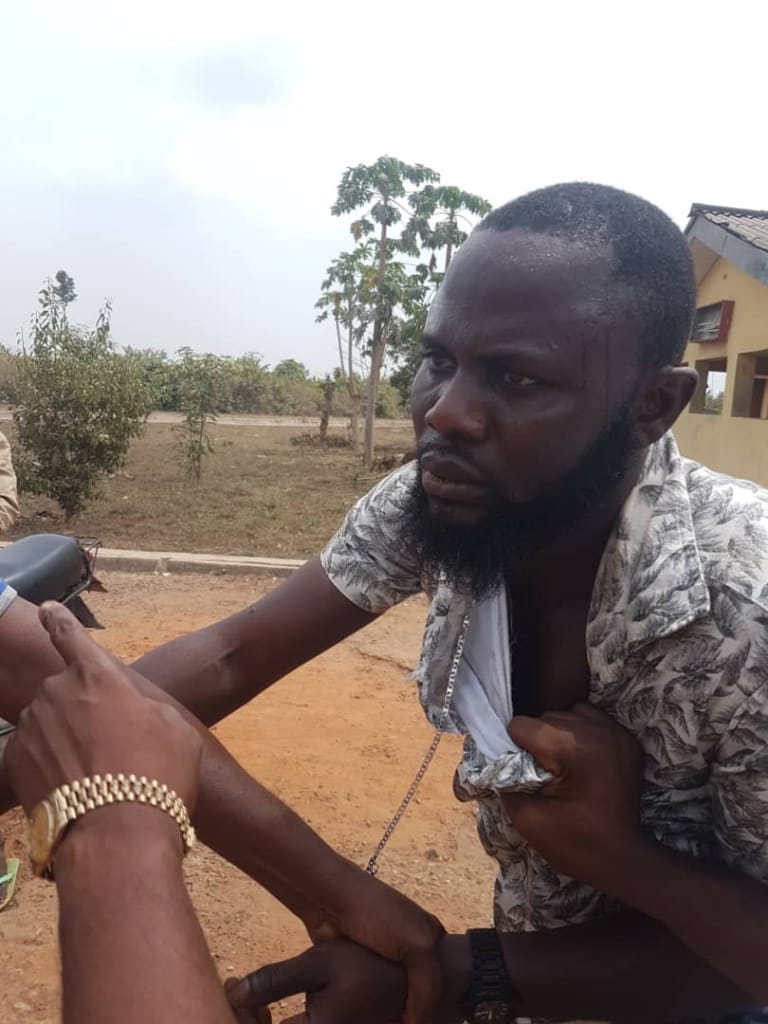
The man was later identified as Niyi Oshinowo, a police officer from the
Kaka’s corpse CREDIT: Family Album
dreaded Special Anti-Robbery Squad (SARS) in Elewe-Eran, Abeokuta.
SARS is one the 14 units in the Force Criminal Investigation and Intelligence Department of the Nigerian Police Force. It was established in 1992 to detain, investigate and prosecute people involved in crimes like armed robbery and kidnapping. Over the years, the squad has transformed into a special operation unit of the NPF, except that it is now infamous for extortion, torture, framing up of suspects and even blackmail.
According to a 2016 report by Amnesty International, SARS officers are rarely held to account for their involvement in torture and other ill-treatment of detainees, and in some cases, they are transferred to another location to avoid punishment.
Oshinowo is one of the SARS operatives notorious for extortion and torture in Sagamu, a town of nearly 400, 000 people according to the 2016 projection of the National Population Commission.
The local youths in the town told The ICIR how the police officer and his team usually obtained money from them by force and threat.
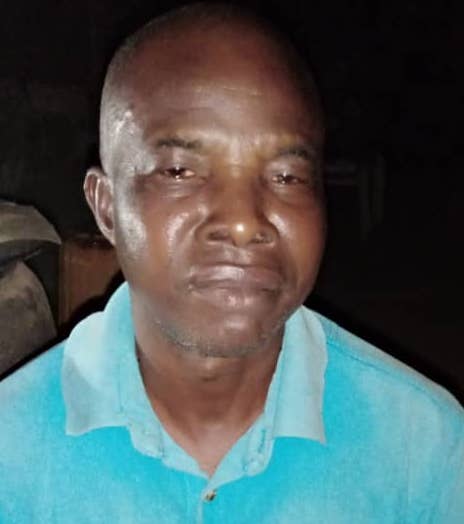
SARS officer, Oshinowo/Credit: Ganiyu Tiamiyu
On Saturday February 22 around 10:30 am, Oshinowo and his colleague arrested the late Kazeem in company of his teammate, Sanni Abubakar.
Kazeem, also known as Kaka by fans, was a defender with Remo Stars FC, a popular local football club founded by Kunle Soname, the owner of Bet9ja, the gaming company. The club plays in the second division in the Nigerian Football League, NFL.
That morning, Kaka, along with Abubakar, was running an errand for his manager when the SARS police officers stopped him at Ita Oba Roundabout in Sagamu.
According to Abubakar, the two policemen came down from an unidentified Sienna bus, ordered them to surrender their mobile phones before they led Kazeem away from the Lexus car he was driving into the Siena, while he (Abubakar) was ordered to remain in the Lexus car with the another SARS operative and two ladies whose identities were then unknown. The two footballers were driven away.
The car Kaka was driving when he was arrested/CREDIT: Ganiyu Tiamiyu
Narrating how his friend died to The ICIR, Abubakar said:
“Getting to the expressway, a U-turn was made towards Abeokuta and Kazeem questioned why they were heading to Abeokuta instead of Sagamu and due to his consistent questioning he was thrown out of the bus from the back seat of the driver’s side. Within seconds, a coming vehicle hit him and he was fatally injured. But instead of taking him to Ogun State University Teaching Hospital (OSUTH) which was nearer, the policemen took him to a hospital farther away from Sagamu town and he died before they arrived at the hospital.”
The reason why Kaka was not taken to the nearby hospital remains a puzzle to his family.
“If they had, he probably could have survived,” the father said. The parents are unequivocal about who was responsible for their son’s death: the dreaded SARS.
But the police’s account is different.
Kaka was not pushed, he tried to escape — police
According to Abimbola Opeyemi, a Superintendent of Police and Ogun State Command Public Relations Officer, Kaka was arrested by the SARS operatives for wearing a military cap to intimidate other people in the community. And he was not a soldier.
“The report about him says he always put on military fatigue, and with that, he used to harass people and when the police went to arrest him they saw him with the military face-cap” the police spokesperson said.
“And after he was arrested, the police officers decided to bring him to Abeokuta, but Kaka’s vehicles developed a fault at Orile-Imo and the two vehicles had to stop. Then the suspect jumped down in an attempt to escape. As he came down, an oncoming car knocked him down. If the policeman was the one that pushed him down, can he be so stupid to carry him to the hospital?”
The spokesman told The ICIR that Abubakar’s statement taken by the police confirmed that Kaka was not pushed by the police. Rather, he was hit while trying to escape.
“We interrogated the friend and he said the force at which Kaka came down from the vehicle made him think that maybe he was pushed.” He also said it was only one policeman that carried out the arrest, as against the rumour that the policemen are two. “The others are civilians, an informant and two other ladies.”
Public Relations Officer, Ogun State Police Command, Supol Abimbola Opeyemi/ CREDIT: Ajibola Amzat, The ICIR
In an interview with The ICIR, Abubakar denied making such a statement to the police.
“The police have their own way of telling their story, but I am very sure that he was pushed,” he insisted.
The deceased boy’s parents have also denied the claim their son used to wear military fatigue. “His favourite dresses were his jerseys. He had them in different colours. I was the one who used to wash his clothes, so I should know. He never had to wear military clothes, he did not have any,” said Mrs. Selimot Tiamiyu, Kaka’s Mother.
Other cases of police brutality
Nothing ever prepares anyone to deal with the dreaded SARS operatives. And many youths have found out this truth only too late.
One of the unlucky youths is Emeka Egbo, 29, who was arrested by SARS operatives in Enugu and was beaten to death.
After the arrest of Emeka, his relative visited the police to have him released, but the officers denied them entry because they could not pay, Amnesty International reported.
“We were not told why he was arrested. We returned in the evening and were taken inside the SARS office after paying the money demanded by the policemen. The squad leader told me and five of our relatives that Emeka is dead… They said they were not responsible for the death of Emeka. We were not allowed to ask any questions or seek clarification,” a relative told Amnesty Nigeria.
The family contacted a lawyer and the National Human Rights Commission, NHRC, who made repeated demands for an investigation.
In December 2015, the police authorities decided to investigate the incident but the family did not hear anything further on the outcome of the investigation.
Then there was the case of Kolade Johnson who was killed by SARS operatives in Lagos, March last year. Johnson was watching a live football match between Liverpool and Tottenham at around 4:30 p.m when he was hit by a stray police bullet and died. He was 36 years old.
Though there is no comprehensive data of extra-judicial killings in the country, the Nigerian Security Tracker has recorded not fewer than 29 deaths caused by the SARS operatives between 2015 and 2020. The death of Kaka, a promising soccer star has added to the data.
Other victims of police killings in Sagamu
Michael, the barber
Kaka’s gruesome death shocked the youths of Sagamu, especially his fans, who had watched him play many times at the Gateway International Stadium. Their shock would later snowball into anger that led to the street protest the next day.
Michael Ogundiya, 28, was one of the youths who protested that day. That Sunday, he left home for his barbershop after bidding his mother Kehinde Ogundiya, goodbye, but he never told her he was going for a protest.
“It was later I heard that he followed his friends to protest the killing of Kaka and a policeman shot him. I could not believe the news until I saw his corpse,” the woman said in a tone suggesting she was yet to come to terms with the death of her first son. She had only two of them, Michael and his younger brother who is still in school.
One of the lucky survivors of the police attack at the protest said he knew the officer whose bullet killed Michael. He identified the killer policeman as Asa.
Michael Ogundiya/CREDIT: Family AlbumMichael’s mother/CREDIT: Ajibola Amzat, The ICIR
The ICIR visited the Nigerian Police Area Command, Sagamu in search of the suspected officer. But the Divisional Police Officer who identified himself as Okikiolu Agunbiade, feigned ignorance of the incident; then, he declined to comment.
“Please, direct all your questions to the PPRO in Abeokuta,” he said with an uneasy demeanour as he went back to work.
Within the premises of the police station, several officers were seen engaging in small talk, some were taking statements from suspected criminals but none showed any concern about the tragedy that occurred the previous days when three youths were felled by the police bullets.
In his interview with The ICIR, the police spokesperson had said the protesters were mere miscreants aiming “to burn down the police station”.
David, the bricklayer
But Odunayo Amusan, 25, wife of one of the victims of the police killing, said her husband, David Amusan, aged thirty-five, was no miscreant. He was a bricklayer and had just returned from work to have his meal the day he was killed.
“He just had his meal right here,” pointing at the two-seater in their one-room apartment where he was last seated, “and later he told me he wanted to stroll. I did not know he was not coming back home,” she said as fresh tear rolled down her face.
A neighbour’s wife from next door who heard her cry came in to calm her. Then she started crying herself. When the two women finally got hold of themselves, Odunayo continued to narrate how she learnt about her husband death.
She said many people who knew her and about the incident had been calling her to see whether she was at home. But nobody confirmed to her that her husband was killed in the protest. Instinctively, she decided to call her husband’s phone number but instead of hearing his voice, it was the voice of a stranger. “The owner of this phone is dead. I helped pick the phone where it fell,” that was how the news of her husband’s death was broken to her.
Odunayo said her world came crashing at that moment.
“I didn’t know whether to start crying or stay calm. But I felt something left my body. How could David who had never quarrelled or shouted or raised his hands at anyone including me be among those who were trying to burn down a police station? That is not my husband they are talking about. He just finished eating here…”
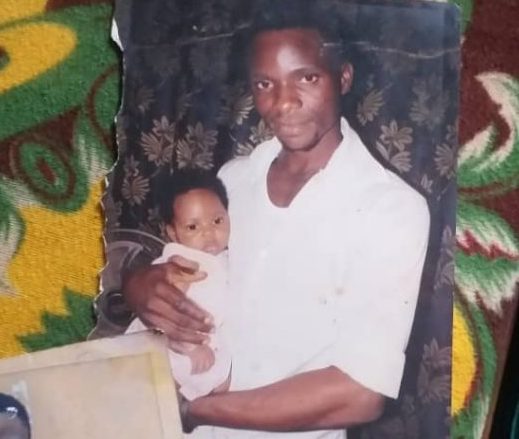
David sat on this two-seater to have his meal before going out to meet his death/CREDIT: Ajibola Amzat, The ICIRDavid and his daughter, Darasimi when she was a few months old/CREDIT: Family album
In the room, there was a king size bed covered with a colourful duvet, and opposite the bed is a worn two-sitter, standing next to a 16 inch-television. On the TV stand, David’s photographs were displayed. In one of the photographs, he was holding his certificate of apprenticeship at CASSO, a training outfit owned by a local building contractor. Most of the letters on the certificate have faded. In another, he was holding his daughter, Darasimi, now aged eight when she was a few months old. There were others, and all the photographs show the image of a happy youth. “That is the way he was in real life, a very happy person. He was no troublemaker,” the wife said.
Ganiyu Tiamiyu, the younger brother of the late Kaka said several eye-witness accounts confirmed that David indeed was not part of the protesters. He was caught by the bullet because the police was shooting indiscriminately at the crowd as people were running to different directions.
When the family went to OSUTH to claim the remains of the deceased, the hospital declined, asking them to obtain a police report and pay a service charge of N100, 000 before the body can be released. “And for three days, they left my husband unattended to. By the time we eventually returned to the hospital, he was swollen up,” and she started to weep again.
Odunayo met her husband about 11 years ago when the latter came to Sagamu from Oyo town in search of job, and they married not long after. The marriage has been blessed with two children, a girl Darasimi, 8 and a boy, Jeremiah 5.
When The ICIR visited the family, the two children were still unaware that their father was dead. They both thought their father had travelled, and would soon return. In their optimistic expectation, they smiled for the reporter’s camera. Odunayo said she is yet to tell them what happened to their father. “I just don’t know how to tell them.”
But that was the least of her problems, she said. The bigger problem is catering for the two children without the help of her husband who was the family breadwinner. Though there is a small stall in front of their rented apartment where she sells candies, biscuits and household items, the three family members could barely survive on petty trading. Yet there was a loan of N110, 000 which the deceased was paying back every Tuesday at the rate of N6,000. The loan was used to buy a portion of land.
“We planned to build a small house after paying the loan because my husband said we could not continue to pay N48, 000 every year as rent.”
That land has become David’s final resting place since the family could not afford to take him back to Oyo.
“It is too expensive to take him home,” the deceased younger brother, Timothy said.
Even the money paid at the hospital to have him released was paid by the family of the slain footballer. Kaka’s brother -confirmed that the family paid N425, 000 before all those killed in the protest could be discharged from the hospital.
Otega, the tailor
The third victim of the police brutality was Otega Ogaga, a 30-year-old youth who had just completed his apprenticeship as a tailor. His father, Samuel Ogaga, said he rose from sleep that day without any premonition that he would lose a child. Otega’s father, a native of Delta State, arrived Sagamu in 1979 and has lived in the town since then “because it is peaceful.” The man said he had all his six children in Sagamu: Four females and two males. “I had six of them and ‘Tega is the fourth but he is such a lovely boy, my carbon-copy, the favourite of his mother.” It was only recently he rented an apartment of his own in Texaco area, having completed his apprentice, the father said.
On the fateful day, it was Otega’s younger brother, who now lives in Ile-Ife, that called their father saying he heard from friends that his brother had been shot, and that he had been taken to the teaching hospital, OSUTH.
Mr. Samuel Ogaga, father of the late Otega/CREDIT: Ajibola Amzat, The ICIR
The old man said he first hesitated telling his wife who was frying fish in the backyard, but later decided against it because she might find out from others. After assuring the woman that all would be well, he rushed down to the hospital where he was told to get blood for transfusion because ‘Tega and other victims of the gun shots had lost too much blood. And some youths immediately offered to donate blood, but later they were told that he did not make it. “It was at the mortuary I first saw his dead body.”
Since then, he said, nobody has come to explain to him why his son deserved to die like a dog on the street when he is not an armed robber.
“And there is nothing we could do because I have nobody to fight on my behalf. So I have left everything to God who has power over all of us. We have accepted our fate.”
#EndSARS campaign
Mr. Ogaga is unaware of the # EndSARS campaign which started on the social media in 2017 by a man called Segun Awosanya, a human rights activist who has been on the frontline of the struggle against police brutality in Nigeria.
Awosanya, also known as Segalink on Twitter, said in an interview with Channels Television that the youth are the most affected by police brutality.
He blamed the culture of impunity by the police on the oppressive colonial law that created the police force.
“The Police Act that created the police in 1943 did not give consideration to the human rights of people. Human rights came years long after the law came. The military interregnum makes it worse for them, So over time, police see itself as an oppressive system that protects the ruling class from the people.”
He is of the view that commanders of SARS must be prosecuted for all the crimes committed by rogue operatives in the unit.
“We must repudiate the attempt to relegate the citizenry to a subclass of human existence. The spate of abuse of human rights cum extrajudicial killings is alarming,” he tweeted last year.
Segun Awosanya, convener of #EndSARS
A former Assistant Inspector General of Police, AIG, James Caulcrick also noted in the interview with Channels that previous administrations have made efforts to reform the police, but this claim appears incredible because Nigerians have not seen any significant change in the conduct of policemen, especially the SARS operatives.
Caulcrick said it would take time for the culture of ensuring the human rights of citizens to be entrenched in the police.
“This will happen soon,” but he added that there is a need to improve the recruitment process as well as the welfare of the police.
This will require regulation.
In April 2019, the Nigerian Senate passed the Police Reform Bill. Bukola Saraki, the former Senate President said the bill aims at improving the condition of service of the Nigerian police as well as ensuring that Nigerians are protected at all times.
“…There is nothing better we can do in honour of those who have lost their lives along the way due to the fact that our laws at that time were not in line,” Saraki said.
Today marks a year that the Senate passed the Police Reform Bill, but President Muhammadu Buhari is yet to give assent. And between April last year when the bill was passed and now, several young Nigerians have been fell by bullets from SARS operatives.
While the wait continues, the family of Kazeem Tiamiyu and other victims of police brutality across the country can only hope that justice will be served.
“I want to see that my son gets justice, and that the man who killed my son gets his own punishment. And I want a stadium to be named after him,” said Kaka’s mother.
But it remains uncertain how soon the request of the bereaved woman will be granted.
This investigation was supported by a grant from the Institute for War and Peace Reporting.
THE United Nations has donated essential health supplies to Nigeria in support of the government’s fight against Covid-19 pandemic.
TheICIR can report that the Nigerian office of the world body today received delivery of the health supplies on a flight funded by APM Terminals.
According to a press released signed by Eliana Drakopoulos, the Chief of Communications, United Nations Children’s Fund (UNICEF) Nigeria, “the supplies made up of 10,000 test kits, 15 oxygen concentrators, and various personal protective equipment (PPE), vaccines, IEHK/PEP kits, and other vital health supplies, will support the Nigerian Government’s COVID-19 Response Plan and UNICEF’s work with children and families in Nigeria.
The supplies are co-financed by the European Union (EU) and IHS Nigeria, the Nigerian subsidiary of IHS Towers.
The supplies will also support the Government of Nigeria, through the National Center for Disease Control (NCDC), to prevent and respond to the COVID-19 pandemic in affected states across the country.
However, Eliana Drakopoulos added that additional COVID-19 response supplies are expected in a UN joint flight to be delivered to Nigeria in the coming days.
“We know that to limit the spread of the virus, it is important to test as many people as possible, especially those with recent travel history and those who came into contact with travelers. These test kits will support Nigeria’s drive to control the transmission of COVID-19 infections and support the Government’s ongoing strong efforts to protect the country from an escalating pandemic,” said Edward Kallon, the United Nation’s Resident Coordinator in Nigeria.
Kallon added that “since the outbreak of the coronavirus in Nigeria in late February, the UN has been supporting the Government of Nigeria to respond to the pandemic through risk communications and community engagement, infection prevention and control, epidemiology/surveillance and management of coronavirus cases”.
The organisation noted that working with government and other partners, the UN is developing and disseminating messages, infographics, and audio-visual material informing the public about the risks of COVID-19 across the country, and how to protect oneself.
“Working closely together with the Government and other partners, including the private sector, is the surest way of preventing and containing the COVID-19 pandemic. We are grateful for the support of the EU and IHS in getting these vital supplies to strengthen the UN’s efforts in helping the Government of Nigeria to address the COVID-19 challenge,” said Edward Kallon.
As at the time of filling this report, according to the available figure on TheICIR‘s Covid-19 dashboard, Nigeria is currently treating two hundred and sixty-seven(267) Covid-19 patients. This stemmed from the 407 total recorded cases, 128 discharged patients and 12 deaths.
THE Musan Lafiyarmu foundation and COVID-19 Relief Support Initiative (CORSI) based in Kano and Osun state, respectively, are two examples of how Youths in Nigeria through humanitarian foundations are supporting the fight against the Covid-19 pandemic.
These bodies are doing this through donations and awareness creation, TheICIR has monitored.
TheICIR gathered that Musan Lafiyarmu foundation has donated hand sanitizers, disinfectants and other items to about 6,000 individuals in states such as Abuja, Yobe, Kano and other Northern states.
According to the founder of the northern foundation, Dr. Naima Idris, the distribution of palliatives has become as important as building isolation centres.
“It is a great feat that isolation centres are springing up but what about the equipment inside them, we should not just have beds without equipment to treat the patients” .
Dr. Naima Idris, while tasking the Nigerian government on equipping isolation centres around the country, encouraged the Nigerians to support their neighbours.
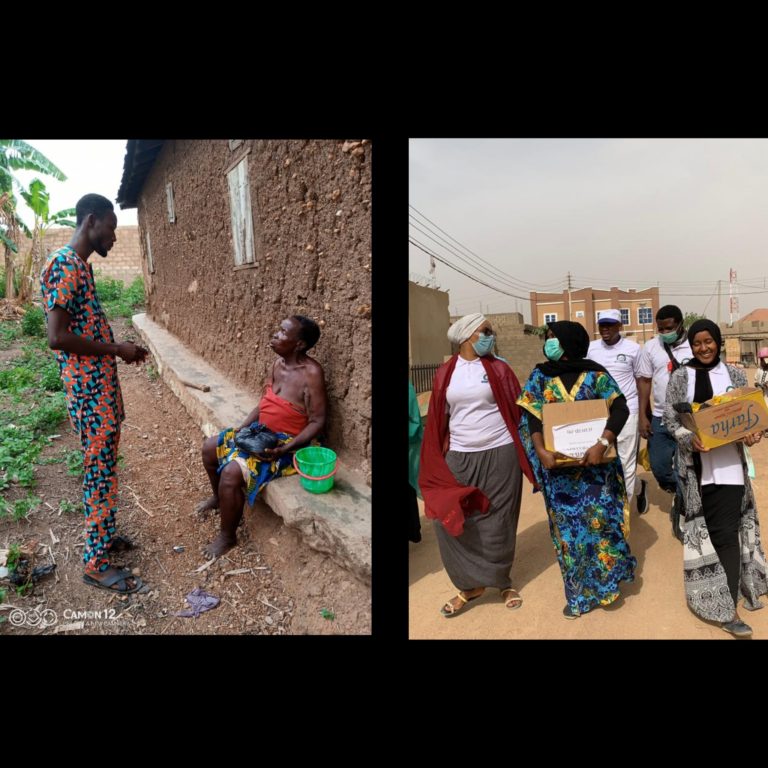
Musan Lafiyarmu foundation distributing palliatives. Photo credit: Musan Lafiyarmu foundation
Speaking on the challenges encountered during the donation, Dr Naima said lack of proper orientation about Coronavirus makes some people sceptical about support given by humanitarian groups.
“We had issue of people fearing contracting the virus through our donation. Infact, at a place, a young lady rejected our item and refused to touch it, when I asked her why, i found out that they have feeling of contamination of donations which is a wrong idea but generally we were accepted and it was helpful seeing how much impact efforts, no matter how little can make a difference” Dr Naima told this newspaper.
While Dr Naima Idris is championing the course in the northern part of the country, Oladoyin Mahroof and Odejobi Muyiwa, the founders of COVID-19 Relief Support Initiative (CORSI) are also contributing their quota in Gbongan, Aiyedaade local government of Osun state, southwest Nigeria.
Odejobi Muyiwa giving packaged food item to an old woman. Source: CORSI
According to Mahroof, the initiative was founded and committed to reaching out to the aged ones in Osun state who are no longer fit for labour.
“These people deserve to be catered for in every conceivable way as part of our ultimate deliverable objectives. It is our collective responsibility to make the world a better place to live for others through the act and gesture of charity to the needy and vulnerable ones”
While asked by TheICIR on how they funded the initiative despite the obvious economic hardship in the country, Muyiwa disclosed that the initiative called for donations and contributions from the general public towards distributing relief materials to the aged through Facebook posts and unsolicited Whatsapp broadcast to friends and families.
“I and Mahroof designed the broadcast message and we sent it to all our contacts on whatsapp and also posted it on Facebook. We received credit alerts, gift items and other supplementary items after then and we distributed the goods we bought with it in two phases to the old ones in our communities. we are doing this towards making life meaningful for the ageing fathers and mothers”.
While recounting the challenges faced, Mahroof expressed that aside paucity of fund, their greatest challenge was the inability to reach to many more people because of limited resources.
“Many aged people are still looking up to us to bring food stuffs… those we were unable to give anything.”
Part of the food items distributed by CORSI. Source: CORSI
He added that in the course of distributing the foodstuffs, they realised that “there are many vulnerable in the society than what the government will make us to believe.”
NIGERIA Police on Thursday, says it has arrested suspected killers of late Funke Olakunrin, daughter of Afenifere leader, Chief Reuben Fasorantin, who was killed in July 2019 by armed men along Ondo-Ore road, Ondo State.
The arrest was effected nine months after the incident.
According to the police, the operation which led to the death of Olakunrin was carried out by an eight-man gang, headed by one Tambaya, currently at large.
The Inspector-General of Police (IGP) Mohammed Adamu, who confirmed the arrest in a statement issued by the Force Spokesperson, Deputy Commissioner of Police (DCP) Frank Mba identified the suspects as Lawal Mazaje ‘m’ 40yrs from Felele area in Kogi State, Adamu Adamu ‘m’ 50yrs from Jada area of Adamawa State, Mohammed Shehu Usman ‘m’ 26 years from Illela area of Sokoto State and Auwal Abubakar ‘m’ 25yrs from Shinkafi area of Zamfara State.
It explained that the arrest of one of the gang members, Auwal Abubakar after a high-profile armed robbery and kidnap in Ogun state, led to the arrest of others in Edo and Ondo states respectively.
“…The arrest of Auwal Abubakar led to the arrest of two (2) other members of the gang, Mohammed Shehu Usman and Lawal Mazaje in Benin, Edo State from whom cache of ammunition was recovered and one other Adamu Adamu in Akure, Ondo State,” it stated.
“Having established sufficient physical and forensic evidence linking the suspects to the killing of Mrs Funke Olakunrin, the investigators, determined to clear all doubts relating to their findings, on 8th April, 2020, conducted an identification parade at the Federal SARS Headquarters, Lagos which led to the positive and physical identification of three (3) suspects, Adamu Adamu, Lawal Mazaje and Mohammed Shehu Usman by a survivor of the earlier crime.”
It further stated that the survivor had given a clear description of the roles each of the identified suspects played in the killing of Olakunrin, which subsequently caused the suspects to ‘voluntarily offered a no-holds-barred confession’ on how the deceased was killed.
It could be recalled that Olakunrin was murdered by unknown persons on 12 July, 2019.
On 13 July, the IGP had deployed Fimihan Adeoye, the Commissioner for Police in charge of the Federal Special Anti-Robbery Squad (FSARS), to coordinate the team of Police Special Forces and investigators from the Force Criminal Investigations Department (FCID), Federal SARS, Intelligence Response Team (IRT) and the Technical Intelligence Unit (TIU) from the Force Headquarters, Abuja to fish-out Olakunrin’s killers.
The Police emphasised that while four of the suspects mentioned above remained in custody, it is intensifying efforts to arrest the four others who, according to the operatives are still on the run.
“The 8-man gang has their operational base and membership spread in the south-western part of the country and Edo State.
“Investigations have also revealed that they are responsible for series of high-profile armed robbery and kidnap operations in the region. They also attack, vandalize and steal components of critical national infrastructures such as electrical and telecommunications installations,” the statement added.
The IGP, however, declared ‘Tambaya’ wanted for his involvement in the death of the deceased.
“Tambaya, a Nigerian, speaks Hausa, Fulfulde and Pidgin English languages. He is fair in complexion and in his late 20s – between the age of 27 and 30. His last known address is Isanlu, Kogi State. He has visible scar from stitches on his forehead down to his nose and mouth.”
The ICIR further queried Mba to know if the suspects’s confession was not induced by torture since information obtained by coercion or threat is not admissible in law.
Mba dismissed the question, saying the press release was “self-explanatory.”
THE Federal Capital Territory Administration (FCTA) has directed that markets in the territory would henceforth be opening only on Wednesdays and Saturdays after residents defied the lockdown order to contain the spread of Covid-19.
This was part of the outcome of a security meeting chaired by Muhammad Bello, FCT Minister to review the effects and level of compliance of the cessation of movement in the FCT as part of measures to contain the spread of Covid-19.
A statement issued at the end of the meeting by Anthony Ogunleye, Chief Press Secretary to the FCT Minister lamented the low level of compliance with the lockdown order across the satellite towns located at the various area councils where residents have largely ignored the lockdown directive.
The statement added that adherence to the lockdown directive at the city center has also deteriorated over the past few days.
“Residents have used the excuse of going to the markets to flout the lockdown directives and traders selling non-essential food commodities have also used this window to open their shops in clear violation of the directives not to do so,” it said.
“Despite the directives that residents should patronise neighborhood shops and markets within their districts and not move from one district to the other to buy their essential items in order to minimize movement of people and vehicles across the city, this has largely been flouted as well.”
However, Ogunleye said in the statement that the FCT Administration has issued new guidelines in order to ensure that Abuja does not witness an escalation in the number of Covid-19 positive cases and prevent a public health emergency.
Besides opening markets in the territory twice in a week, residents are now allowed to patronise only neighborhood markets, noting that movement from one district to the other now constitutes a violation of the lockdown.
He added that Mobile courts will now be activated to try all violators of the directive on the cessation of movement across the FCT while motorcycles (Okada) are henceforth barred from operating anywhere in Kubwa and Dutse Alhaji during the lockdown.
“The FCTA will step up sensitization efforts especially in the rural communities and enjoins Area Council, Chairmen, traditional rulers and community leaders to actively engage in sensitizing the populace on the dangers of Covid -19,” Ogunleye said.
Abuja has recorded 58 confirmed cases of Covid-19 and is second behind Lagos State that has 214 confirmed cases.
The ICIR had reported how hunger, indiscipline and ignorance were defeating the lockdown order in Abuja.
DISINFORMATION campaigns sponsored on social media by foreign actors in Nigeria’s socio-political landscape is a recurring feature that enables the spread of fake news in the country, according to a study released by the Centre for Development and Democracy, CDD.
The study titled “Disinformation and the new media landscape in Nigeria” identified that though Nigerians play a major role in boosting or suppressing misleading content, the agents involved in facilitating disinformation in Nigeria, include international firms outside the country, paid trolls, partisan media outlets, social media influencers and automated bots.
The study was based on more than sixty interviews with respondents across the six geopolitical zones in the country.
Data analysed by CDD from a Twitter dataset of over 30 million tweets between 31 December 2018
and 30 January 2019 involving the accounts of major politicians, political parties, media houses, and hashtags that discussed the issue of Nigeria’s election boycott and Biafra secession.
About 96.4 per cent of the accounts analysed were located within the country, of the 532 that
mentioned the issue of Biafra and election boycotts, only 56 per cent which accounts for 301 Twitter accounts were based in Nigeria while 231 Twitter accounts were based outside Nigeria.
However, the accounts produced such a high number of tweets of which nearly half of them came from outside the country reinforcing biases in ways that are potentially divisive.
Citing an active Twitter bot account, @nwakpa_gabriel, that generated 521,518 tweets within a 40 day period which is equivalent of over 13,000 tweets per day.
“With the increasingly sophisticated technology, it is becoming harder to decipher fact from fiction online in Nigeria with any greater certainty.
“The same tools and mechanisms that are enabling disinformation to penetrate society faster than ever before, are those that can be used to shed light on facts that can drive more accountable and transparent governance,” the study revealed.
Hinting that online campaigns which blossomed from factual reports have drawn on a strong digital presence to amplify pre-existing, offline campaigns which include #EndSARS, #NotTooYoungToRun, #BringBackOurGirls and #FollowTheMoney.
In 2019, We Are Social, a social media analysis firm, estimated that Nigeria had 24 million active social media users, an increase of 26 per cent on the previous years figures with numbers likely to have risen as internet infrastructure improves and mobile data and phones become more affordable.
According to the study, the deliberate intent to mislead is fuelled by Nigeria’s political and ethnoreligious landscape, challenged by insecurity, provides fertile ground for the spread of disinformation on social media platforms and private messaging applications that are growing in user’s month on month.
“The more sustainable solution lies with creating a more digitally informed and educated citizenry, capable of assessing for themselves what is true and what is not online,” the study stated.
With the increasing spread of disinformation, the need to curb the spread of false information has been proposed and implemented in some countries, but it comes with serious risks to citizens freedom of expression.
“However, information shared online is not always false. In fact, the same tools and mechanisms enabling disinformation to penetrate society faster than ever before, are those that can be used to shed light on facts that can drive more accountable and transparent governance,” the study concluded.
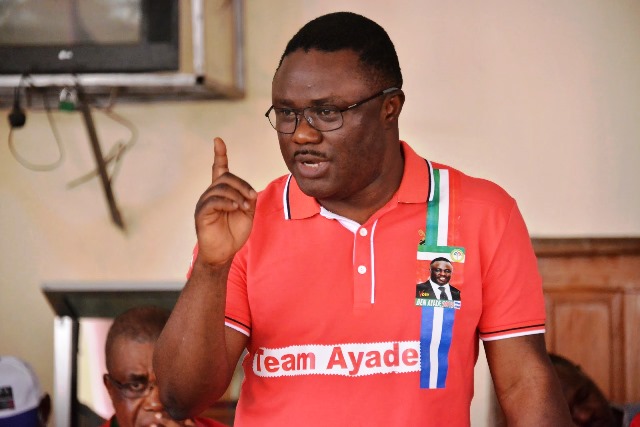
BEN Ayade, Governor of Cross River State and also a professor of Microbiology stirred controversy recently when he said the practice of social distancing might be ineffective to control the spread of coronavirus.
“Social distancing presupposes that things are so equal, that you stay in an isolated room, it is completely wrong because in natural circumstances, in our own cultural habit people are used to interacting, we are not electric poles, we are not trees, we are interacting by nature,” Ayade said in a video that went viral on the social media.
“Social distancing gives a false impression of security because I know that if you and I stand together and I sneeze, that two metres distance, the factors that govern the transmissivity are things that are beyond your own control. Variables like humidity, wind speed, wind direction, how do you control those factors?” he questioned.
He said science has backed the use of nose masks as an option; that social distancing is not as effective as some people have argued.
Consequently, the governor whose state is yet to record any case of Covid-19, directed all civil servants from grade level 10 and above in the state should wear a face mask and resume work on Tuesday, April 14.
The governor’s position has generated controversy, but not many of his critics have invalidated his position with evidence. But is the governor right in his estimation?
Social distancing according to WHO
The World Health Organisation (WHO) recently reeled out some public health guidelines for public safety. In an article titled, “Basic protective measures against the new coronavirus,” the world health body listed frequent washing of hands and maintaining social distancing among others as preventive measures.
According to the WHO, everyone who has not contracted the virus should maintain at least 1 metre (3 feet) distance between anyone who is coughing or sneezing.
The guideline explains that when someone coughs or sneezes they spray small liquid droplets from their nose or mouth which may contain virus.
If you are too close, you can breathe in the droplets, including the Covid-19 virus if the person coughing has the disease, it said.
What Centre for Disease Control says about social distancing
The Centre for Disease Control and Prevention (CDD) sayssocial distancing which is also called “physical distancing,” means keeping space between yourself and other people outside of your home.
To practice social or physical distancing, the Centre says someone must stay at least 6 feet (2 meters) from other people, and people should not gather in groups as well as stay out of crowded places and avoid mass gatherings.
It emphasised that in addition to everyday steps to prevent COVID-19, “keeping space between you and others is one of the best tools we have to avoid being exposed to this virus and slowing its spread locally and across the country and world.”
“When COVID-19 is spreading in your area, everyone should limit close contact with individuals outside your household in indoor and outdoor spaces,”CDD advises.
“Since people can spread the virus before they know they are sick, it is important to stay away from others when possible, even if you have no symptoms. Social distancing is especially important for people who are at higher risk of getting very sick.”
Why practice social distancing?
The Centre explained that Covid-19 spreads mainly among people who are in close contact (within about 6 feet) for a prolonged period.
It said spread happens when an infected person coughs, sneezes, or talks, and droplets from their mouth or nose are launched into the air and land in the mouths or noses of people nearby.
“The droplets can also be inhaled into the lungs. Recent studies indicate that people who are infected but do not have symptoms likely also play a role in the spread of COVID-19,” it explained.
The CDD added that it may be possible that a person can get COVID-19 by touching a surface or object that has the virus on it and then touching their own mouth, nose, or eyes.
However, this is not the only way the virus spreads. Covid-19 can live for hours or days on a surface, depending on factors such as sunlight and humidity.
It emphasised that social distancing helps limit contact with infected people and contaminated surfaces.
Scientific basis for social-distancing interventions against COVID-19
Joseph A. Lewnard and Nathan C. Lo in an article published in Lancet Journals on March 23 gave both a scientific and ethical basis for social distancing against Covid-19. The Lancet is an independent, international general medical journal founded in 1823 by Thomas Wakley.
Lewnard is is an Assistant Professor of Epidemiology at the School of Public Health, University of California who uses mathematical and statistical modeling to study infectious diseases, Nathan C Lo is a Resident physician and public health scientist, at the School of Medicine, University of California.
In the article, they both agreed that, by all scientifically meaningful criteria, the world is undergoing a Covid-19 pandemic.
Writing on the ways to prevent the spread of the virus which has no cure at the moment, they said: “In the absence of any pharmaceutical intervention, the only strategy against COVID-19 is to reduce mixing of susceptible and infectious people through early ascertainment of cases or reduction of contact.
Under the Lancet Infectious Diseases, Joel Koo and colleagues assessed the potential effect of such social distancing interventions on SARS-CoV-2 spread and COVID-19 burden in Singapore.
They concluded that the effectiveness and societal impact of quarantine and social distancing will depend on the credibility of public health authorities, political leaders, and institutions. It is important that policymakers maintain the public’s trust through the use of evidence-based interventions and fully transparent, fact-based communication.
In another article titled “The effect of control strategies to reduce social mixing on outcomes of the COVID-19 epidemic in Wuhan, China: a modelling study” published on March 25 in Lancent Journals, researchers concluded Restrictions on activities in Wuhan, if maintained until April, would probably help to delay the epidemic peak.
According to them, the research was aimed to estimate the effects of physical distancing measures on the progression of the Covid-19 epidemic, hoping to provide some insights for the rest of the world.
At the end of the exercise they summarised their findings: “Our projections show that physical distancing measures were most effective if the staggered return to work was at the beginning of April; this reduced the median number of infections by more than 92% (IQR 66–97) and 24% (13–90) in mid-2020 and end-2020, respectively.
“There are benefits to sustaining these measures until April in terms of delaying and reducing the height of the peak, median epidemic size at end-2020, and affording health-care systems more time to expand and respond. However, the modelled effects of physical distancing measures vary by the duration of infectiousness and the role school children have in the epidemic.”
While interpreting their findings, they said: “Restrictions on activities in Wuhan, if maintained until April, would probably help to delay the epidemic peak. Our projections suggest that premature and sudden lifting of interventions could lead to an earlier secondary peak, which could be flattened by relaxing the interventions gradually. However, there are limitations to our analysis, including large uncertainties around estimates of R0 and the duration of infectiousness.”
Verdict
It is safe therefore to say that Ben Ayade, Governor of Cross River was not right about his dismissal of the social distancing as an effective measure against the spread of Covid-19. He has also not provided empirical evidence to support his claim.
THE Nigeria Medical Association, Cross River Branch (NMA CRS) has debunked claims by the health commissioner, Betta Edu, that the State has over 105 medical doctors in active duty, clarifying that only 33 doctors are in the State’s civil service.
In a statement released on Wednesday, signed by the NMA’s state chairman, Agam E. Ayuk and state secretary, Ezoke Epoke, the medical body said Edu’s claim is misleading and a misrepresentation of a critical issue adversely affecting healthcare delivery in Cross River State.
It disclosed that 33 doctors and not 105 are in the state’s civil service, adding that the doctors are also paid lesser salaries than their counterparts in other states.
According to NMA CRS, doctors in the State’s civil service earn only about 50 per cent of what other doctors across the country earn, making Cross River the only state in the country that pays the least salaries to doctors.
The poor pay makes retainment of critical workforce difficult, the association said.
NMA CRS therefore urged the government to do the needful by addressing human capacity lapses in the the State’s medical sector, especially in this COVID-19 period.
The medical body commended the State Government for shutting its borders and reducing chances of coronavirus transmission into the state.
It however warned that the State Government’s policy on the use of face masks as sole protection against the virus is dangerous.
It advised that such a policy will lure the citizens of the State into a false sense of security.
It cited the World Health Organisation (WHO) Interim Guidance, which classifies the use of face masks alone as protection against COVID-19 as insufficient and that facemasks is complementary to social/physical distancing of at least 1 meter.
The recommended action according to WHO is that people avoid mass gatherings, observe effective hand and respiratory hygiene and the cleaning of all contact surfaces.
NMA CRS also criticised the State Government for issuing an order requiring all civil servants from Grade level 10 and above in the state to resume work, describing the action as ill-timed and not in the best public interest of the people.
“The primordial/primary prevention strategy of the State Government is obviously the cheapest, safest and best strategy to adopt considering our peculiar challenges, but could be derailed by this mass resumption of staff that constitutes almost 50% of the workforce. We advise other means of getting critical sectors to work while avoiding mass gatherings because of the risk posed by asymptomatic carriers of the virus and without resources for mass testing of the population,” the statement read in part.
The statement also addressed the lack of an isolation centre. According to NMA CRS, the State has only a 4-bed capacity isolation unit at the University of Calabar Teaching Hospital, (UCTH), which is ill-equipped.
“UCTH Isolation Centre lacks basic facilities, equipment and accessories based on NCDC specifications. The patient capacity of UCTH Isolation Centre is grossly inadequate.”
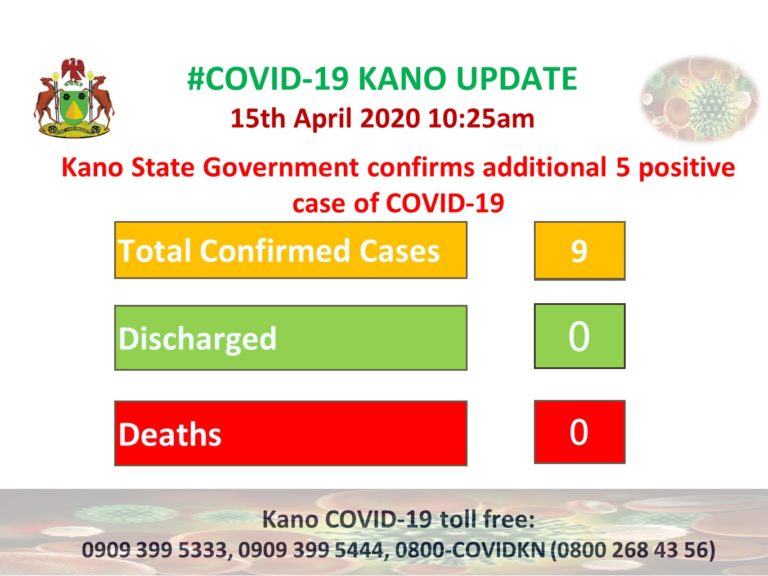
THE Kano State Ministry of Health has announced five new additional Covid-19 cases in the state.
Salihu Yakasai, Media aide to Kano State Governor , confirmed this through his official Twitter account on Wednesday.
It will be recalled that Abdullahi Ganduje, Governor of the state had earlier announced a total lock down in Kano State which will take effect from Thursday, April 16.
“From Thursday 16th April by 10 pm Kano is locked down for the benefit of all in the state. All markets are closed and all public gatherings are banned,” Ganduje said.
The governor also confirmed that the index case was in Lagos, Abuja, Kaduna before returning to Kano, adding that “when he came back, he visited some places, that are now under our close surveillance.”
“All the places are fumigated,” he said.
However, Yakasai said that the five new confirmed cases were all traced to the index case totaling nine in the state.
Meanwhile, nine patients receiving treatment for coronavirus in Abuja have been discharged after recovering from the disease.
The Federal Capital Territory Administration (FCTA) announced this in a tweet on Wednesday totaling 20 in all.