THE Federal Government has disclosed that People Living with Disabilities (PLWDS) would be considered in the new tranche of palliatives to cushion the effects of lock down on Nigerians.
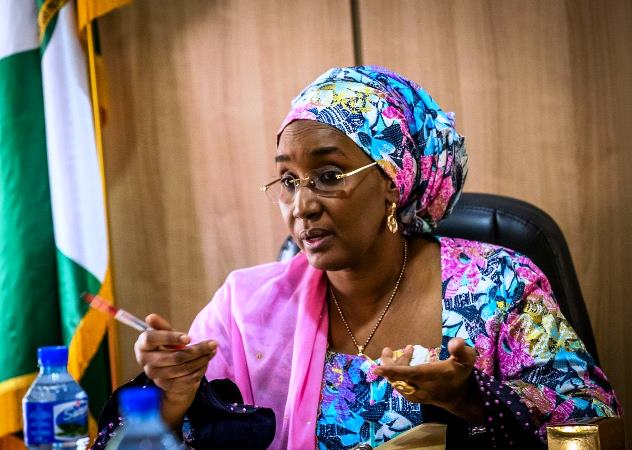
Sadiya Farouq, the Minister of Humanitarian Affairs and Disaster Management who disclosed this during a press briefing at the State House, Abuja on Wednesday said those with more than N5000 bank credit in their accounts would be excluded from the support.
She added that the government would also consider Nigerians who load credit units less than N100.
“Well, we have three options; one, we are going to use the National Social Register that we already have; two, we are also going to focus on the urban poor as I mentioned, by using their Verified Biometric Verification Number (BVN) accounts to get them, that is, people that have an account balance of N5,000 and below,” Farouq said.
“We are also using mobile networks to know people that top up the credit units for their phones with may be N100 or less. Those are also people that we consider to be poor and vulnerable. So, these are the three options that we are exploring and I am sure that by the time we get this data we will be able to give this intervention.”
The support is part of the palliatives introduced by the Federal Government to mitigate likely effects of the COVID-19 lock down, particularly in Ogun, Lagos and the Federal Capital Territory (FCT).
It could be recalled that President Muhammadu Buhari during his nationwide broadcast on Monday April 13 announced the inclusion of extra 1 million people into the social register.
He directed that the new beneficiaries should be considered in the Conditional Cash Transfer programme currently ongoing across the states.
The Minister emphasised that programme would focus more on the urban poor and largely people in the informal sector.
“These are people who depend on the informal sector to earn their livelihood, they are daily wage earners and these are the people that we are really going to focus more on as well as people living with disabilities,” she added.
Farouq said only 25 percent of the nation’s population would benefit from the programme stressing that it might be later extended to cover more beneficiaries.
“Let me also say that we have a standard; 25 per cent of the total population is what we will take out,” the Minister explained.
“It cannot go round but we are starting from somewhere. Around 25 per cent of let’s say the location of Lagos State for example is what is going to benefit from this intervention that we are doing. Going forward, we might expand it but this is what is obtainable for now.”
WITH over 1.2 million cases, 70,000 deaths and unprecedented global economic disruption reported in less than five months around the world, Severe Acute Respiratory Syndrome(SARS) also known as Covid-19 is threatening human existence.
It has ravaged 20 states in Nigeria with over 300 confirmed cases of which Lagos, Abuja and Osun are the worst hit.
While the importation of cases slowed down following the suspension the Nigerian airline operatio, land and sea entry ports, the disease continues to spread within the country.
However, while some drugs have been touted as having potentials to cure the virus including chloroquine and hydroxychloroquine which are still in the trial phase, there are warnings that they should not be referred to as a cure yet.
The Covid-19 has crippled global economy and potentially causing another economic melt down, the consequences of which might be too much for Africa countries.
The threat has made the search for the cure more intense.
Claims by monarchs and trado-medical experts
As search for the cure continues, some monarchs, trado-medical experts and traditionalists in Nigeria are already suggesting local solutions.
Prominent among those canvassing for use of alternative medicine to cure coronavirus is the paramount ruler of Ile-Ife, Enitan Ogunwusi, the Ooni of Ile-Ife who ‘claimed’ to have a cure to the SARS-CoV2.
The monarch started the conversation on his Twitter handle on March 30 where he noted that the cure to coronavirus is by putting natural elements together. “It is about time to save the world now. Tomorrow may be too late. Let’s all keep safe,” he said.
He went further to expatiate in the tweets on his position, Ogunwusi maintained that his suggested cure has been tested which has been used for chronic corona patients with testimonials.
He shared two videos of how to prepare the herbs including an incense which according to him is needed to clean the environment.
“PLEASE DO NOT TAKE THIS FOR GRANTED (The world did with the warning Last Year June). I also challenge researchers both in Nigeria and the world to make these natural herbs into clinical medicine and extract the vaccines from it,” Ooni wrote on his Twitter handle.
To solve this ailment is through natural elements put together above all from nature. It has been tested!!! I have used it and also used it for some of the chronic Corona patients with testimonials.
The Ooni of Ife also disclosed that he was currently working with a popular Nigerian herbal doctor, Yem Kem international for packaging and distribution around the world.
He explained in the videos, how to put the elements together as well mentioning their local and botanical names
The elements to be mixed together include: Ewe-akoko ( boundary tree, botanical name: Newbouldia laevis), Dogoyaro ( nim tree or Indian lilac, botanical name: Azadirachta indica), Alubosa (Onion ,botanical name: Allium cepa), Ogirisako ( Forest anchomanes/Blume, botanical name: Anchomanes difformis), Aidan (Aridan fruit, botanical name: Tetrapleura tetraptera), Eeru or Erinje (African pepper, Guinia pepper, botanical name: Xylopia aethiopica), Ewuro (Bitter leaf, botanical name: Vernonia amygdalina), Iyin ojo (Sulfur).
However, the king received backlash on this acclaimed cure as he did not attach dosage and quantity of each herb to be used neither did he attach any scientific proof to it.
Also, Joseph Akpa, a professor and Provost of Luminar International College of Alternative Medicine, Enugu, also claimed to have a cure for the deadly coronavirus.
The Nigerian professor who challenged health institutions and agencies to bring any known case of Covid-19 to him and see how it would disappear in days claimed that he had already made energy health medicines superficially meant to boost the human immune system and others meant to directly attack the virus to ensure 100 per cent successful cure.
On March 30, Seyi Makinde, Governor of Oyo State tested positive for coronavirus, though he was asymptomatic. After spending five days in isolation, the governor came out on April 5 and tested negative. He claimed to have taken a mixture of black-seed and honey.
“My body temperature is 36.4 degrees. My very good friend and brother, Dr Muyideen Olatunji. He is the one in charge of the Primary Healthcare for Oyo State. He came to me and said, look, I am going to send to you this blackseed oil, it boosts immunity so I mixed it with honey and take one teaspoon in the morning and one in the evening. So, there are local solutions to boost immunity. So, our people should not fret. They shouldn’t fret. Just as I have been able to get the virus out of my system, so will it be for majority of our people,” the governor was quoted as said in a report by the Cable.
There are other reported cases of patients who recovered from the deadly virus after the use of herbs
Despite heavy funding on alternative medicine, government yet to explore its potentials
According to Anthony Elujoba, a professor of Pharmacognosy and two-time acting Vice-Chancellor of Obafemi Awolowo University Ile-Ife, the Nigerian government has shown little will in implementing the recommendation proffered by experts despite its huge financial commitment and heavy funding on research on alternative herbal medicine.
“Ghana now has a parallel unit in some general hospitals in their country where all they do is to prepare herbal medicine for the patient there,” Elujoba said in an interview with TheICIR.
He disclosed that the Federal Government in 2013 sent a team in which he was a member to Ghana to understudy them.
“They sent us to United Kingdom, two universities are teaching herbal medicine there at degree level. And we got to Ghana, it was the Ghana model that we recommended for the Nigerian Federal Ministry of Health,” he said.
“So in Ghana, when a patient comes to the general hospital, he will make a choice of whether going for herbal medicine treatment or orthodox medicine. That started around 2012 and it is still in practice till date in Ghana,” he told The ICIR.
“Our government has what it takes to try herbal medicine, because the government has also committed funds into the study and use of herbal medicine. For example, there is a book we call Pharmacopoeia. The book contains drugs that can be used safely in any country. This government has committed funds to bring it out. ”
Speaking further, the university don noted that the book which is now published has medical plants that can cure respiratory problems.
“In 2008, that book now is a an official book, and medicinal plants that are inside are official. Many of these plants can cure what we call malaria today,” he said.
The Pharmacopoeia book, Elujoba said contains names of plants that can cure respiratory problems noting that many of these plants are immune system modifier.
“This particular book that was launched in 2008, contains immune stimulant that can now be formulated for people that have the virus to boost their immune system, to cure their fever, diarrhea and many other symptoms we have seen of the virus,” he disclosed.
He however wondered “Why the government is still not doing anything, having committed a lot of money. As I am talking to you now, there is a national committee that is reviewing that Pharmacopoeia to have the second volume.”
“The government is spending money to keep us, the members of the committee each time we meet. There are two other committees that came up recently and we have met. The second one is what we call medicinal plant drugs that are approved to be used, we are compiling that now as essential plant drugs that can be used in the hospital.
“This same Federal Government has set up a national committee which I am a member. This committee contains experts, both traditional healers and intellectuals in medicinal plant science and we are recommending medicinal plants for different diseases that can be made official that people can use to compose medicine to finished product level which can be listed by NAFDAC and be used by our people.
“We have met only once but that once, we met for three days and we have brought out beautiful things. In fact, we spoke to the Permanent Secretary of the Ministry of Health that day and we also deliberated on Covid-19 and how much herbal medicine can do to reduce a lot of importation. We have gotten several areas of traditional medicine that can be made use of sometimes better than orthodox.”
He submitted that as the Federal Government is spending, same as the international organisations.
According to his explanation, the West African Health Organisation has also committed a lot of money to funding research on alternative medicine.
There are herbal medicines that can ‘cure’ and challenge the symptoms of the present pandemic — Elujoba
Women selling traditional medicines look at piles of leaves, vines and other herbs for sale at Jankara herbal market in Lagos, Nigeria. Photo credit: https://qz.com/africa
The professor of Pharmacognosy maintained that the herbal medicine is not as useless as the government ‘tagged’ it. He believes that there are herbal medicines that can ‘cure’ and challenge the symptoms of the present pandemic.
“As far as my exposure is concerned in the practice of herbal medicine, its research and development, herbal and complimentary medicine is not as useless as people think,” he said.
Elujoba stressed that there are medicinal plants that can challenge most of the symptoms of’ all these deadly diseases.’
“I’m not just talking in abstract, I am talking in practice, I am talking in experience, knowledge, intellectualism, I am not a traditional healer neither a native doctor but I am a scientist of traditional medicine, scientist of herbal medicine. I don’t know why the government is not looking at that side at all, I can not state for the government,” he said.
Elujoba disclosed that there are many medicinal plants that have been tested and used to boost human immune system which, he said can be devised to cure Covid-19.
“In herbal medicine science, we have many plant that can de-congest the airways,whether those plants will kill the virus or not, we cannot ascertain, since we are yet to apply the possible cure,” he said.
“I know many medicinal plants in Africa that can resolve fever. We do not need to buy many of them, even without paying a kobo that (the plant) will resolve malaria instantly without using chlroloquine. It is in the plant that chloroquine resolve itself during synthesis.”
“There are multitude of medicinal plant in our bush that can boost immune system to the surprise of orthodox practice. And most of these plants also have so many other activities that will resolve symptoms of Covid-19 or any other emerging diseases that we have gotten.
“We had Ebola in 2014, and I was asked by Punch if we can find plant to resolve Ebola. I said yes and no. Yes because some of the medicinal plants for Ebola, we have plants that can cure it. But can it eradicate Ebola virus, I would not know, because our system has not provided laboratory to test our medicinal plant extracts directly on the viruses.
“I am a scientist of herbal medicine not a traditional healer not a native doctor, I can only say what I have tested and gotten positively, as a scientist, I can not say what I have not tested in the laboratory, and in practice, until a clinical trial has been done in the hospital.”
“In terms of symptoms we have many medicinal plant that can cure it. Covid-19 has three major symptoms that can trouble those that have gotten it.
One is the respiratory problems, and it is a problem that can heal fast. Anyone that does not breath within seven minute is dead. And we have been told scientifically that this virus blocks the airways, and wont allow people to breath.”
It could be recalled that The ICIR exclusively reported how six patients out of 127 persons under quarantine in Osun State escaped from the isolation center to seek native herbal medicine to cure the Covid-19.
What NAFDAC is doing to bring herbalists and researchers together —Adeyeye
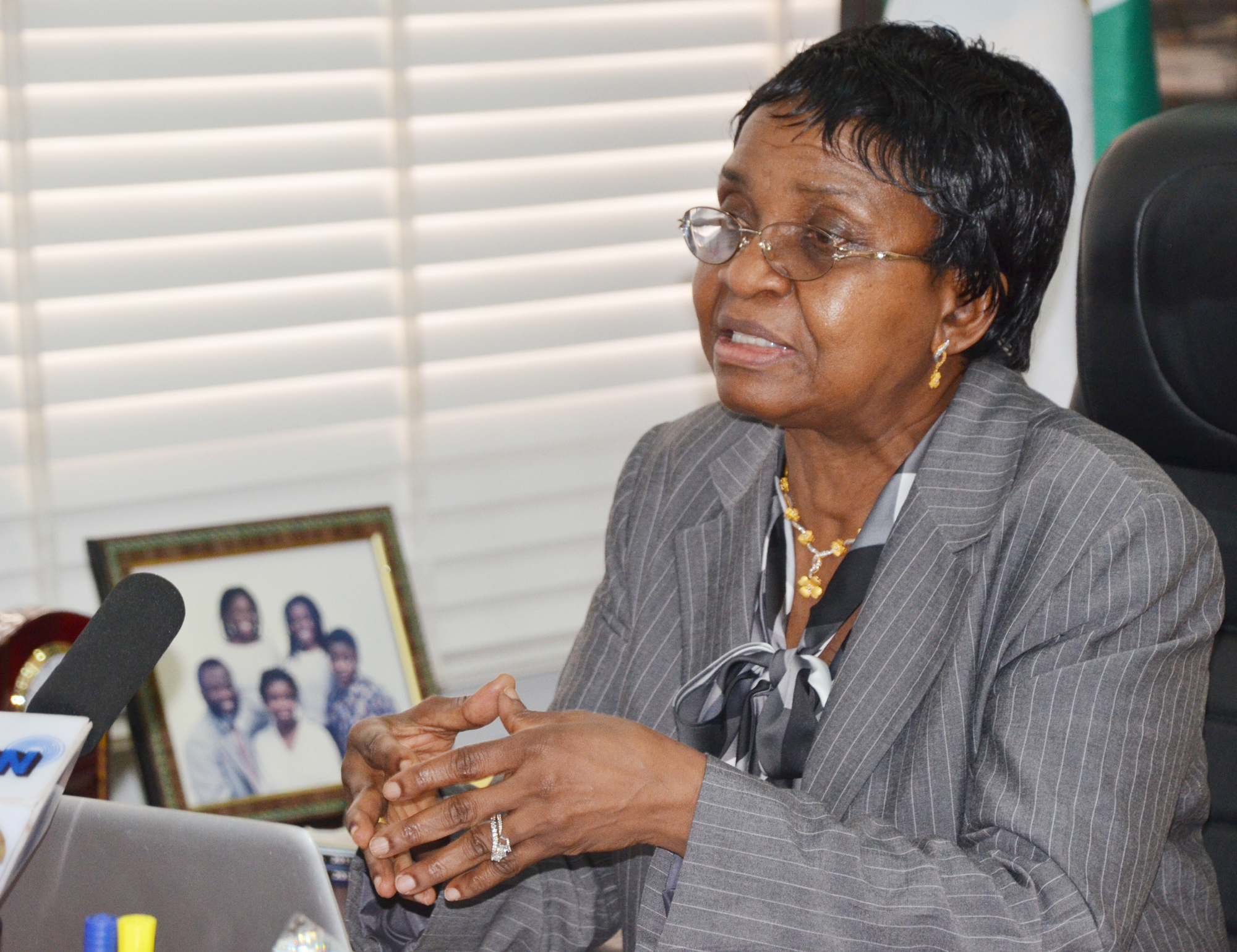
Mojisola Adeyeye, the Director-General of National Agency for Food and Drug Administration and Control (NAFDAC) has said that the agency is cooperating with the local herbalists and experts in the field of alternative medicine to have a sustainable and harmonised Nigerian made drugs without heavy importation from China.
This, Adeyeye said, will help conduct enough researches on the acclaimed effective drugs.
“NAFDAC started thinking about alternative medicine about a year ago in terms of general needs not even related to Covid-19,” she said in an interview with The ICIR.
She revealed that the agency started a herbal medicine product committee which brought local herbalists or practitioners together with University professors or researchers all over the country.
The meeting which held in March 2019 had about 72 participants.
“We are doing this in NAFDAC because we have a lot of herbal medicines that work. However, enough of research has not been done on them,” Adeyeye said.
“The herbalist or the practitioner know that some of this medicine or even many of these medicines work, but they can not explain. That is where the researcher comes in. The researcher can do the research, explaining why this is doing this, you know in terms of making the patient better.”
She noted that Nigeria would have made significant impacts with herbal medicine but mistrust between local herbalists and the academic community has been the bane of the progress.
“There is a mistrust between the local herbalists and the academic community or research community,” she said.
“And that mistrust resulted in us not moving forward as a country and Nigeria has lost a lot of money even in the protection of intellectual property. And you know how to make it but we don’t know or we don’t respect intellectual property.”
“Ewuro is now being sold, chewing stick is now on Amazon , you know, Nigeria has lost so much because we turn everything into politic.”
Adeyeye explained that NAFDAC under her watch is bringing the two sides together to forge a way forward in herbal medicine.
“So the reason for starting that is to make sure we consolidate on the effort of our grandfathers, grandmothers and what many of them handed to to us.
“Many of them died with a lot of information in terms of herbal medicine. But in any case, we had another meeting towards the end of the year and what NAFDAC is doing right now is to midwife the coming together of these two groups.”
Light at the end of the tunnel
Osagie Ehanire, Nigerian Minister of Health, has said at a press conference the held in Lagos recently by the Presidential Task Force on Covid-19 that the Federal Government would consider “serious” stakeholders in traditional medicine in the treatment of the pandemic.
He said those who are serious with the use of local herbs and concoctions would be considered.
“We will look into every assertion. Some people say they have herbs and some others say they have concoctions. Only for those that are serious, the Department of Traditional, Complementary and Alternative Medicine in the Ministry of Health will look into their claims and we will not throw away any suggestion,” he said.
“The efficacy and efficiency of these medicines have to be proven first before it is recommended for people.”
He added that different trials are taking place such as “the use of convalescent plasma, which is taken from people that had coronavirus that have been treated successfully.”
The Minister said “these trials are being reviewed and a confirmation will be passed as time goes on.”
“The same goes for hydroxychloroquine. It had been found in some tests to work outside the body, that is ‘in vitro testing’, but the chloroquine that people can swallow needs to be tested to see if it works the same way with the one taken outside the body,” he added.
The minister said the Federal Government is also depending on the World Health Organisation (WHO) like other countries for recommendations on the use of proper medicines to treat coronavirus.
However, stakeholders have continued to question the Federal Government on how soon this consideration will become a reality.
Despite this promise, the Federal Government received medical doctors from China to help in the war against Covid-19
The ICIRreported that these set of 15 Chinese doctors came with drugs, equipment and vaccines. This has generated criticisms from the Nigeria Medical Association (NMA) which called for the overhauling of the Nigerian healthcare system.
A Noodles seller in Igwo community of Cross River has been hit by a misfired bullet from men of the Mopol 75 Squad of the Nigerian Police Force, Cross River Command on Tuesday according to reports.
The stray bullet was shot by the police during a face-off with women of Igwo community in Obudu local government area of the state.
The yet-to-be-identified noodles seller who was present at the scene of the clash has been reported to be undergoing treatment in a medical facility in the state.
An eye witness told CrossRiverwatch that men of the police fired bullets and tear gas at the protesting women who stripped naked to express their register their displeasure.
“As at the time I left there around 9:30PM, the shooting continued and the Mopol had also fired tear gas with the women stripping bare,” the eyewitness said.
Ushe Adie, another eyewitness at the scene said the protesting women threw stones into the compound shattering a window pane which resulted into the police’ shooting.
“The women were said to have thrown stones into the compound and shattered a window pane which some are saying really infuriated the Mopol men,” another eyewitness, Adie said.
According to reports, the women of the community are protesting a mass arrest by the mobile police which was followed by the alleged killing of community head.
The women also alleged that the mobile police squad had razed thebuilding of the Igwo clan head due to land disagreement.
The disagreements ensued over a purpoted payment of compensations by the state government for plots of land meant for the construction of a cargo airport in the community.
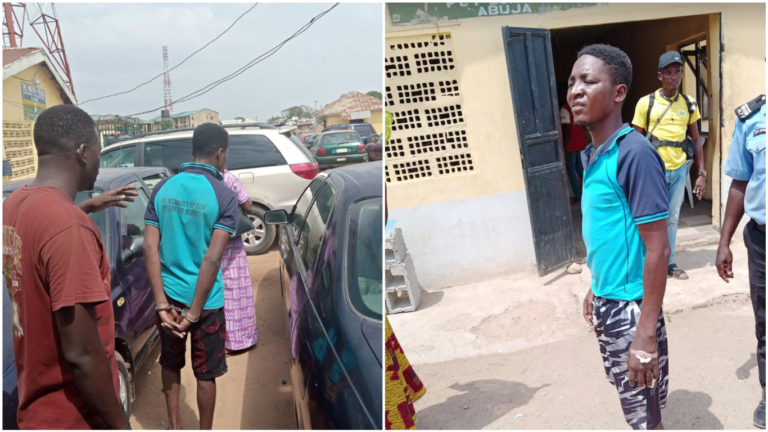
A 21-YEAR-OLD meat seller identified as Yakubu Diko has been remanded in prison following the allegation of rape of an 8-year-old girl in Karimo Sabo area of the Federal Capital Territory (FCT).
Diko confessed to tricking the young girl into his home and defiled her about three weeks ago, just before the lockdown order by President Muhammadu Buhari was effected.
Abiodun Essiet, a Special Adviser to the Chairman of Abuja Municipal Area council (AMAC), who knew about the incident told The ICIR that Diko approached the playground where the girl was with her peers and chased everyone except the little girl.
He beckoned to her, pretending he wanted to send her on an errand. While indoor, Diko squeezed a towel in the girl’s mouth, held her down and sexually abused her.
He then warned her to keep the secret of his carnal knowledge of her, but on the third day after the incident, the victim started passing blood while trying to urinate, and crying.
It was then her parents became aware that their child had been sexually violated.
The parents then reported the case to the community chief, who then spoke to Essiet and sought her guidance in handling the rape case.
Essiet advised the chief to report the case to the Karimo Sabo station after the girl was examined in a clinic and confirmed to have been sexually abused.
In the medical report sighted by The ICIR , the young girl’s clinical report read that her labia minora was swollen with her hymen broken, indicating forced penetration.
Acting on the report, the police arrested Dikko and locked him up in a cell.
However, after spending two weeks in the cell, the parents of the suspect pleaded with the girl’s parents to have him released, saying they were ready to settle out of court.
The girl’s family agreed and requested that the man be released.
On getting to the police station, they were referred back to Essiet, who acting as a representative of the social welfare unit of AMAC, warned that anyone who tried to frustrate the case would be arrested for obstructing justice.
The suspect, therefore, has been relocated to the force Criminal Investigation Department (CID) for further prosecution, Essiet said.
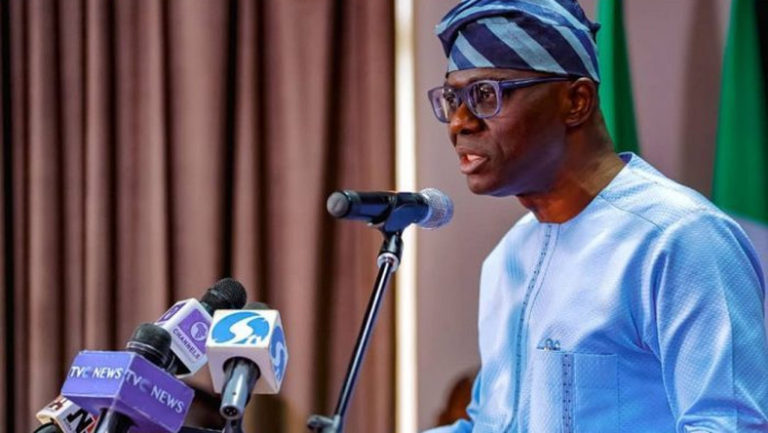
LAGOS State Governor Babajide Sanwo-Olu has expressed his concern on security and welfare of Lagosians over the two-week lockdown extension, announced on Monday by President Muhammadu Buhari.
Sanwo-Olu who disclosed that his biggest focus now is security and welfare said the decision was tough but, like seen in countries that couldn’t stop the spread of COVID19, the effects have been catastrophic.
There have been reports of pockets of insecurity across different areas and intelligence has shown an exploitation by criminal elements.
The governor said the police have been responsive and have increased surveillance and response time in the last 24 hours.
On welfare, Sanwo-Olu said the second half of the first phase of the reformed Lagos Food Relief distribution targeted at the vulnerable is on course.
The federal government’s conditional cash transfer has also begun to help reduce the burden and also assured the state government’s commitment to do more, he added.
Sanwo-Olu said the state was encouraged by the success rate of the isolation and treatment initiatives for Covid19.
He noted that working with the NCDC and Lagos State Ministry of Health testing capacity for Covid19 has increased and the state government would continue to do all it can to stop the spread of the virus.
“As a state, we understand that this lockdown will stretch us because of some structural problems we are contending with, however I want to thank Lagosians for rising up with empathy and strength. We have to do more and the government will do more. Let’s beat Covid19 together.”
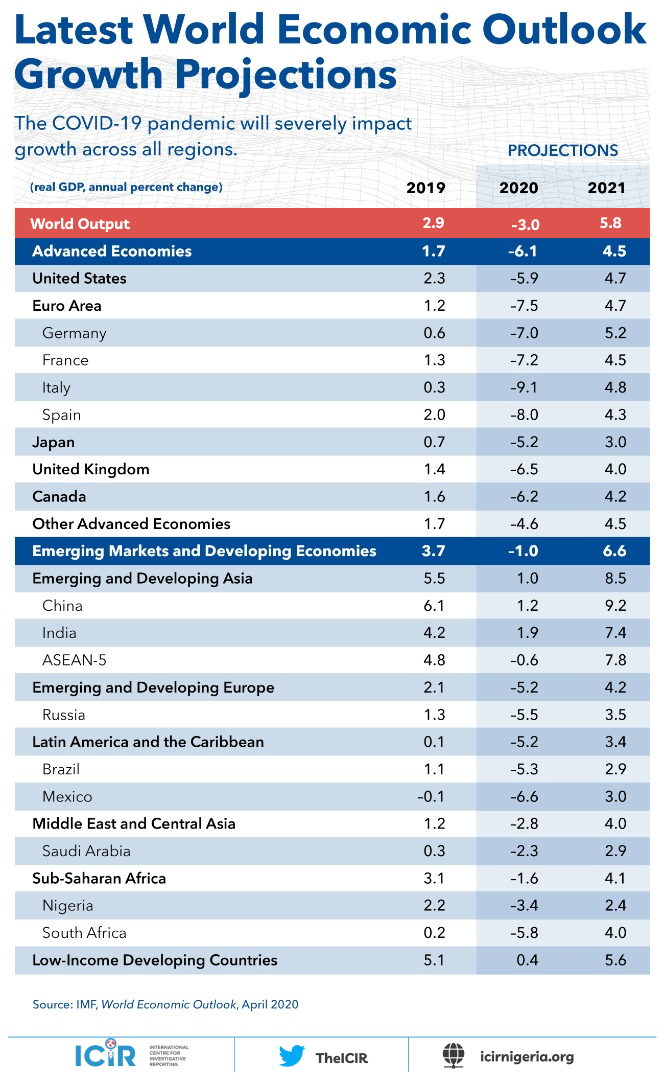
THE International Monetary Fund (IMF) has listed Nigeria as one of the countries to be severely hit by the impact of COVID-19 pandemic.
The Fund predicts the annual percentage decline in Gross Domestic Product (GDP) of -3.4 per cent.
According to the April World Economic Outlook, the IMF project global growth in 2020 to fall to -3 per cent, this is a downgrade of 6.3 percentage points from January 2020, a major revision over a very short period.
For the first time since the great depression both advanced economies and emerging market and developing economies are in recession.
According to the IMF, for this year growth in advanced economies is projected at -6.1 per cent while emerging market and developing economies with normal growth levels well above advanced economies are also projected to have negative growth rates of -1.0 per cent in 2020, and -2.2 per cent if you exclude China.
Income per capita is projected to shrink for over 170 countries, both advanced economies and emerging market and developing economies are expected to partially recover in 2021, the report showed.
The IMF said it is developing its one trillion-dollar lending capacity to support vulnerable countries, through rapid-disbursing emergency financing and debt service relief to the poorest member countries.
“We are calling on official bilateral creditors to do the same”.
The coronavirus pandemic has resulted in huge human loss.
As countries implement necessary quarantines and social distancing practices to contain the pandemic, the world has been put in a Great Lockdown, the IMF said.
The magnitude and speed of collapse in the activity that has followed is unlike anything experienced in the lifetimes of many nations.
The ICIR has reported that the Central Bank of Nigeria (CBN) announced six initial policy measures to contain the impacts of COVID-19 on the Nigerian economy.
The IMF has adviced that policymakers must also plan for the recovery, as containment measures come off, policies should shift swiftly to supporting demand, incentivizing firm hiring, and repairing balance sheets in the private and public sector to aid the recovery.
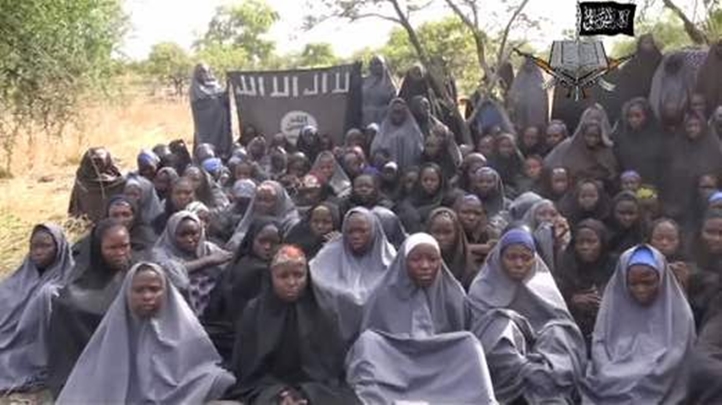
THE Bring Back Our Girls Movement said Presidency copied and pasted the press statement from 2019 to commemorate six years since the abduction of 276 schoolgirls from Government Girls’ Secondary School Chibok, Borno State in 2014.
The group made this known through a press statement signed by Florence Ozor, Gapani Yanga and Nifemi Onifade on behalf of the movement.
“It is most sad and disheartening that the administration copied the statement from last year verbatim and pasted with minor updates like the date to deceive the public,” the group said.
According to the group, President Muhammadu Buhari has forgotten the remaining 112 Chibok school girls, Leah Sharibu who has been in Boko Haram captivity.
Bring back our girls further noted that the war against insurgency in Nigeria has become a ‘decade-long devastation that appears to have no end in sight,’ adding that the government is ignorant of its failure to ensure peace and security of Nigerian citizens.
“The Government remains culpable to its failure to ensure the safety and well-being of its Citizens which ought to be its main priority,” the group noted.
Bring back our girls further noted that the federal government has continued to ignore a number of suggestions that has been made and submitted over the abduction of Chibok girls and other missing persons.
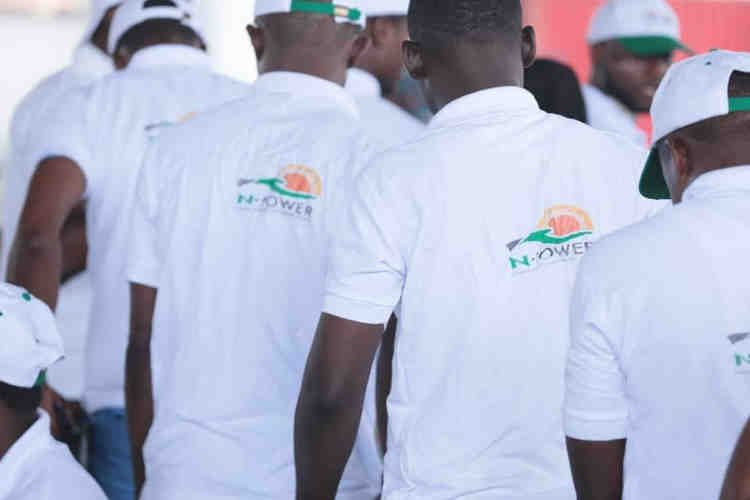
THE Federal Government on Tuesday says it is ready to offset from today, the outstanding monthly entitlements of 500, 000 beneficiaries of the N-Power programme spread nationwide.
Salisu Na’inna Dambatta disclosed in a statement issued on behalf of the Ministry of Humanitarian Affairs, Disaster Management and Social Development that the payments would be done through bank account of the beneficiaries.
He said the minister, Sadiya Umar Farouq, has already signed the payment mandate and followed every due process in line with the required directive.
“Those responsible for processing the payment must do it in conformity with the necessary rules and regulations to ensure accountability,” Farouq stated.
“Now that the rules were followed strictly and the process concluded, I was given the assurance that they will start receiving credit alerts from their banks today, Tuesday, April 14, 2020.”
The N-Power Project is part of the National Social Intervention Programme (NSIP) developed by the current administration to address unemployment in the country.
It is spread across the nation with different categories such as N-teach, N-agriculture etc.
The payment is coming 24 hours after President Muhammadu Buhari directed the inclusion of extra 1 million households to the social register.
“The Ministry of Humanitarian Affairs, Disaster Management and Social Development will along with relevant partners drive the overhauling process to ensure that the expected benefits of the NSIPs are realised in full,” the minister said.
She further promised to ensure transparency, effectiveness, accountability and the judicious application of public resources in running the programmes.
It can be recalled that the N-Power Programme is a job creation and skills empowerment programme of the Federal Government, which is designed to help young Nigerians acquire and develop life-long skills to become practical solution providers in their communities, enabling them to become innovative players in the domestic and global markets.
The N-Power programme was designed for young Nigerians between the ages of 18 and 35.
“Enrolled participants will be weaned off the programme after every 24 months to be replaced by another batch of youths drawn from across the country. Each participant is paid N30, 000 monthly allowance.”
THE European Union (EU) has donated a grant of N21 billion, about €50 million, to Nigeria to aid the fight against coronavirus in the country.
The Special Adviser to President Muhammadu Buhari on Media and Publicity, Femi Adesina, shared the news in a tweet, where he disclosed that the president received the EU delegation at the Council Chambers, State House, in Abuja on Tuesday.
The EU delegation led by Ketil Karlsen said the fund is so far, the largest single contribution to the fight against Coronavirus in Nigeria and the largest support that EU is providing anywhere outside Europe.
This is coming shortly after the president of the EU Commission, Ursula von der Leyen, announced that the EU plans to secure up to €15 billion to help partners worldwide to combat the coronavirus.
Leyen stressed that it is necessary to wage a global war against Coronavirus pandemic.
In response, President Buhari expressed appreciation for the EU’s contribution, stating that the donation would go a long way in stopping the spread of the virus in the country, as well as rejiggering the nation’s fragile healthcare system.
He said the fund which is channeled through the (UN) One COVID-19 Basket Fund is the result of collaboration between the EU, its member states and financial institutions such as the European Investment Bank and the European Bank for Reconstruction and Development.
The fund would help cushion the effect of the COVID-19 pandemic in Nigeria, the president added.
“Indeed, this brotherly support will save millions of lives. Nigeria, Africa and many beneficiary countries across the world will remain grateful for generations to come.’’
President Buhari on behalf of the Nigerian government and the people expressed condolences to EU-member countries and the families of those who lost their loved ones as a result of COVID-19 pandemic.
‘‘Our thoughts and prayers are with the families, friends and communities impacted. We are confident from history that the resilience of Europe and our global collective will enable us to emerge stronger from this tragedy.
‘‘Although the EU is facing significant challenges due to this pandemic, I am indeed touched and grateful that the European Union still has the vision and foresight to remember its friends, partners and allies across the world,’’ he said.
Currently, Nigeria has recorded 343 confirmed cases of COVID-19 and almost a dozen deaths from complications arising from Covid-19.
Meanwhile, Italy, a member of the EU has recorded over 159,000 coronavirus cases and over 20,000 deaths, with its health system completely overwhelmed and the virus still ravaging the country.
To support Italy and other country-members facing tougher situation than African countries, Leyen, in a short address said the EU has provided support by sending doctors and equipments to the affected nations.
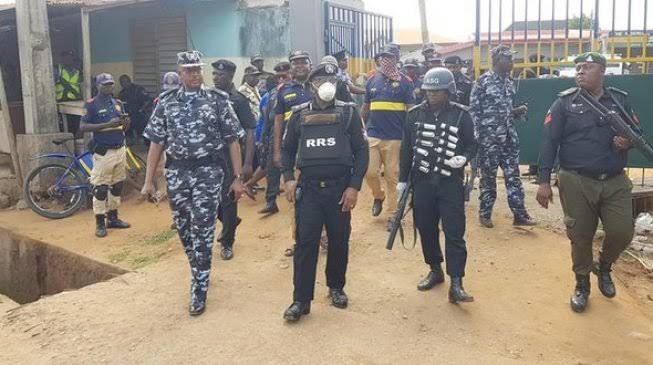
Lagos, Ogun residents are no doubt celebrating this Easter season with caution and trepidation. At any time of the day since the lock down became effective, fear has continued to rule the hearts of many people — it is not that of the unknown — It is a veritable fear of armed robbers, hoodlums and miscreants who strike and operate in raw dare-devilry.
While the wave of armed robbery appears to be sweeping through these two states — Ogun and Lagos respectively — in an alarming manner and with terrific frequency. Many news outlets in screaming headlines, report daily incidences of these nefarious activities perpetrated by armed robbers. Similarly, social media has been abuzz with series of distressing updates about the threats of these men. Sadly, lives and property are at the mercy of these hoodlums.
For days now, It has become sort of a dark dawn for residents of Ifo, Sango, Agbado, neighbouring communities in Ogun State, and even extensively down to some major spots in Lagos.
Many people have lamented about the rising criminal activities occasioned by the lockdown in the state. When these armed men came calling, the men of the underworld came prepared; over hundred of them.
It is quite surprising that metres away from these crime scenes are countless of road blocks and police surveillances, yet these robbers are having a smooth operation.
One would begin to wonder about SARS’ critical role in curbing armed robbery and kidnapping as well as maintenance of law and order.
It raises the question on whether the police have lived up to expectation in discharging their primary responsibility of protecting lives and property.
A situation where innocent residents are attacked by “armed robbers”, and the police fail to stop such nefarious acts, leaves one terrified.
Many residents who indeed are very worried about the recent upsurge in cases of armed robberies, especially those who have been victims of these men, have taken up the position of ‘Amotekun’, in keeping their territory safe.
Even those who are operating under the directives of provision of essential services, have complained and lamented bitterly.
Lagos for example is gradually returning to the old bad jungle days, maybe due to the lockdown. These miscreants who are always living under the bridges or some dark sports, break windscreen to get access to their victims. They waylay passersby to steal their belongings in broad day light.
While it is understandable that the lockdown birthed this sort of insecurity, it is therefore unacceptable that our security agencies have allowed these cases to escalate beyond what it can handle, many residents have used this an opportunity to take up arms and other dangerous items as a means of protection.
It is quite saddening that some of our leaders and politicians have continued to be insensitive to the needs of the society that they are supposed to serve.
The social and cultural order in Nigeria is constantly sending negative ‘stimuli’ that encourage armed robbery as one of the many ‘anomalie’ in the society.
With the current spate of insecurity arising from these criminal elements, everything must be done by “everyone” to ensure that armed robbery attacks and other criminal activities are reduced to the barest minimum.
The security agencies must devise a strategy to ensure that our streets are safe, as they reflect the state of safety or the absence of it in the country.
If these armed robbers and hoodlums are so elusive, like a will-o-the wisp, security agents must devise some equally strategic plans of tackling the menace of these sepulchral objects before they overrun our states.