Home Blog Page 2130

FG proposes 20 percent cut on capital projects in 2020 budget

THE Federal Government has proposed a 20 per cent cut in the 2020 budget on capital projects across ministries, departments and agencies in the sum of N312.82 billion.

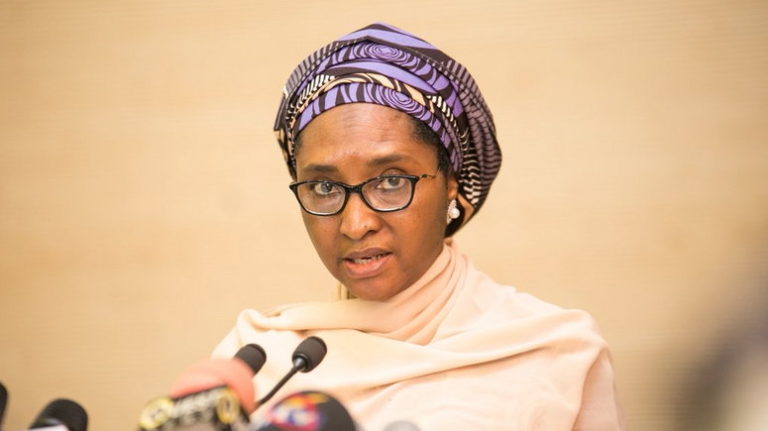
Zainab Ahmed, Minister of Finance, Budget and National Planning,  has presented before the National Assembly on Wednesday the proposal titled “2020 Capital Revised Adjustment”.

Recall that President Muhamadu Buhari had earlier set up a committee in March to be headed by the finance minister to review the crude oil budget benchmark.

Other members of the committee are Godwin Emefiele, Central Bank of Nigeria governor, Mele Kyari Group Managing Director NNPC and Clement Agba minister for state Budget and National Planning.

The ICIR earlier reported also in March the plans by the Federal Government to review the 2020 budget as oil prices and revenue shrink further due to the negative impact of the coronavirus.

The budget review became necessary following reduced revenue and crash in oil prices as a result of the Covid-19 pandemic, the minister showed in her document.

Other proposed changes to the budget include a reduction of the budget oil production volume from 2.18 million barrels per day to 1.70 million barrels.

The budget benchmark has also been reduced from $57 per barrel to $30.

You don’t need social distancing once you put on a mask — Gov Ben Ayade says

BEN Ayade, Governor of Cross River State, has said there is no need to observe social distancing in preventing coronavirus, once citizens wear face masks in public. 

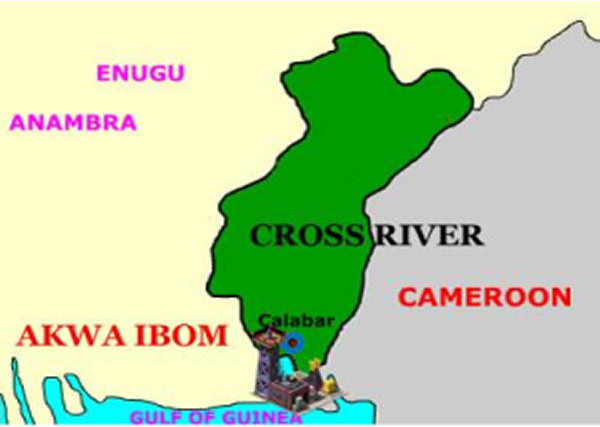
Ayade made this submission while addressing some residents of Calabar, the state capital on Tuesday, at the Peregrino Lodge (Governor’s official residence).

“I’m a professor of science and I know how this virus moves; I know its etiology, I know it transmissibility, I know its antigenicity; because I do, I know that once you put on this mask, you have already been protected.

“You don’t need social distancing when you are properly protected because your mucal glands that secretes the mucus and the musins already forms a network of coats to attack the virus,” Ayade announced to a cheering audience.

https://www.facebook.com/TheICIR/videos/149996986414328/

Ayade has a Master’s degree in Microbiology and a Ph.D in Environmental Microbiology, both from the University of Ibadan.

With his new finding, Ayade, selected commissioners and other appointees in the state as enforcers of the new order – which permits all residents to freely move around as long as they wear face masks.

The governor also gifted 50 branded COVID-19 vehicles to the task-force officials – to aid movement around the state and support enforcement of his new order.

In accordance with the new order, residents caught driving without a mask on would have their vehicles impounded and would have to pay N300,000, a CrossRiverWatch reporter told The ICIR. 

Ayade’s preaching against social distancing is in contrast to the official recommendation of the Nigeria Centre for Disease Control (NCDC) and the World Health Organisation (WHO).

The NCDC, which is the government agency leading Nigeria’s fight against coronavirus has repeatedly announced that social distancing is the most effective method of preventing coronavirus.

On a larger scale, the WHO has, as part of its public health advisory, recommended all persons to practice social distancing to avoid getting infected with coronavirus.

All around the world, countries are effecting lock-downs, travel restrictions to aid the growing need for social distancing in this pandemic period, given that no known cure or vaccine for the virus is available.

As at the time of filing this report, coronavirus has infected  over 1.5 million globally and killed over 88,000 persons, according to Worldometer.

Of the 17 states with confirmed cases of the virus in Nigeria, Cross River is yet to record a single case.

Lock down: DISCOs accede to provide two-month free electricity nationwide

THE Electricity Distribution Companies (DISCOS) has assented to a proposition by the Federal Government to offer Nigerians two- month electricity without charges as Nigerians combat the impacts of lock down imposed due to the Covid-19 outbreak.

The distribution companies made this known through a press statement by the Association of Nigerian Electricity Distributors (ANED) on Wednesday evening.

According to the statement signed by Sunday Oduntan, Executive Director (Research & Advocacy) of ANED and spokesman for all the DISCOS, the companies said they align with the Federal Government’s effort to mitigate the hardship of Nigerians during this period.

“In fulfilment our commitments to the nation, we hereby align ourselves with the efforts of the National Assembly and the Federal Executive to mitigate the hardships that are currently being borne by our customers and other citizens all over the country,” the statement read.

Commending the legislators, Executive arm and the Nigerian Electricity Regulatory Commission (NERC) for the development, ANED said all distribution companies were committed to ensuring good power supply during this period and after.

“We commend the Federal Legislators, the Executive arm and The Nigerian Electricity Regulatory Commission (NERC) for their initiative and we are committed to working with them to ensure more efficient power supply within this difficult period, as the nation battles with the ravages of COVID-19,” the statement further read.

The association noted that the while details of implementation would be conveyed to Nigerians soon, its members were committed to improving service delivery to their customers.

Meanwhile, some Nigerians have taken to social media to express their concerns over poor electricity supply during the lock down.

Oluwaseun, a social media user, wrote on Twitter, that his residence in Lagos has had less than 10 hours of electricity supply in the past week.

“We are in Lagos. And we have come to terms with how terrible the electricity situation is. Less than 10 hours of light in the last week,” Oluwaseun wrote.


No N1 billion spent on SMS to Nigerians says NCDC

THE Nigeria Centre for Disease Control (NCDC) has dispelled reports that the commission has spent N1 billion on sending text messages to Nigerians as part of measures to contain the spread of Covid-19.

The NCDC via a tweet on its official Twitter handle, posted Thursday morning maintained that such reports were not true.

The Centre, while quoting an headline that said it has spent N1 billion to educate Nigerians on Covid-19, refuted the claim as fake news.

It said while the text messages were a key component in educating citizens of the country about the pandemic, it has not spent such amount.

The NCDC further explained that the text messages have been ‘largely provided as ‘in-kind support’ by some telecommunications companies in the country.

Listing the telecommunications companies, NCDC mentioned Airtel Nigeria, MTN, Nigeria and Global Communications (GLO) as companies supporting the agency with the text messages.

For the past weeks, some Nigerians have received messages by the NCDC orientating them on what to do, who to call and restriction orders in some Nigerian states.

Lesotho, Comoros and Sao Tome and Principe—three African countries yet to record covid-19 case

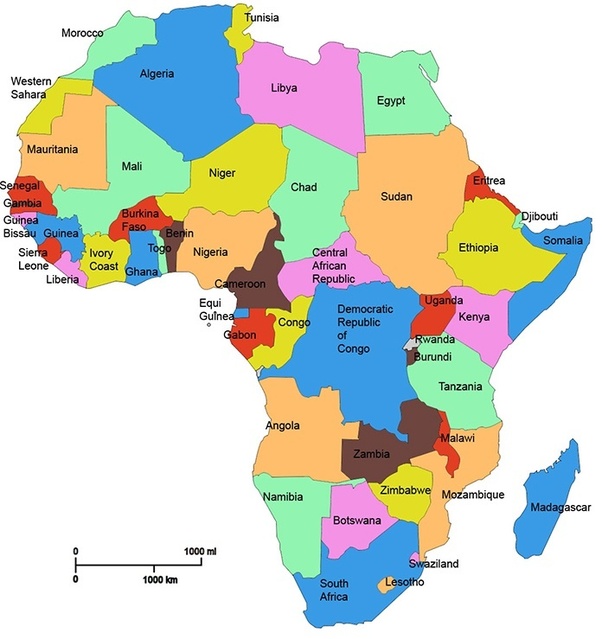
OUT of the 54 countries on the continent of Africa, three countries— Lesotho, Comoros and Sao Tome and Principe—are the only three that are yet to record Covid-19 case.

“With South Sudan the latest country on the continent to confirm a case on Sunday, there remain just three African countries – Lesotho, Comoros and Sao Tome and Principe – who have yet to report a case of COVID-19,” Amanuel Mamo, Director, Advocacy and Campaigns, Save the Children International, Nigeria said in a statement.

According to Save the Children, the continent of Africa has recorded its 10, 000 case of COVID-19 as of Tuesday, warning that some of the most vulnerable children and their families across Africa who depend on the informal economy for their livelihoods are and would increasingly be impacted by measures designed to stop the spread of Covid-19.


READ ALSO:

Mamo said significant efforts were being made by African governments to respond to this growing pandemic.

“Governments in the region are focusing on limiting the spread of the Covid-19 with increased restrictions, however, these measures disproportionately impact the poorest households, who depend on the informal economy for their already fragile livelihoods.”

Mamo however, noted that the number of cases in Africa have been increasing exponentially since  March 13 with the total caseload on the continent doubling from just over 5000 to 10,000 in the space of a week.

He pointed out that, across the continent, unlike in many parts of the world, social security coverage in Africa was extremely limited or non-existent and largely confined to workers in the formal economy and their families.

Quoting the International Labour Organisation (ILO), Mamo said only 17.8 per cent of Africans receive at least one social protection cash benefit, and only about 10 per cent of the economically active population is covered by social security schemes.

“Children and their families across Africa have already been struggling through a decade of climate shocks and regular food crisis, which have driven numbers of hunger crises across the continent,” he said.

“Save the Children is warning that as markets close and movement is restricted, many households will have less income to meet their basic needs, including food and fuel for cooking. The lack of income will have particularly dire consequences for the poorest households, who may be forced to choose between paying rent and feeding their children.”

He added that families dependent on casual work  were particularly vulnerable, as they could not earn an income through working from home or self-isolating.

Many of these families, Mamo explained would need to rely on their savings to get by, and be forced to deplete whatever food, fuel and water stocks they have.

Also, Save the Children’s Campaign and Advocacy Director for Africa, Eric Hazard, said: “We’re extremely concerned that mounting financial pressures on families will increase food insecurity in communities already struggling to know where their next meal is coming from , which in turn will have a devastating impact on children.

“We know through experience that when families lose their incomes and have no social safety net, children become vulnerable to abuse and exploitation. As COVID-19 starts to impact on the economy, the loss of parental income and closure of schools may force many children to beg for food, take hazardous jobs to support their families, or families to split up in search of food, leaving children, especially girls alone, unprotected and exposed to violence, abuse, exploitation and at risk of child marriage.

“Local and donor governments and institutions need to act together and commit to stopping the pandemic in Africa and tackle the negative effects of restrictive measures on vulnerable populations’ livelihoods, and in doing so, sustain food security and access to health services, by integrating the needs of the most vulnerable in their response to the COVID-19.”

To protect a generation of children from the devastating effects of the Covid-19 outbreak, Save the Children has launched the largest appeal in its 100-year-history, aiming to raise $100 million to urgently keep children and their families safe during the global COVID-19 outbreak, the most serious threat to global health and security in modern times.

The appeal will support its Agenda for Action – a five point plan for a coordinated community, national and global action on five fronts to avert a catastrophe that could affect the lives of millions of children.

Globally, Save the Children works with half a million community health workers in 44 countries to deliver vital health services – the agency aims to support them in recognising symptoms and preventing COVID-19 – and aims to train another 100,000 in the coming six months.

It will work with local communities to deliver training and protective equipment so that prevention measures can be ramped up, and cases can be identified early, referred for treatment and where possible, isolated.

Swine flu, Hong Kong Flu, three other pandemics that shook the world

FOR the first time in world history, a disease called COVID – 19 which has proved difficult to contain, confining millions of people to their homes and grounding the global economy emerged from Wuhan, China in December 2019.

For centuries, several diseases have defined human history and changed the world’s perception about invisible pathogen capable of bringing human beings down to earth.

The ICIR chronicles the notable global pandemics that have hit the world from the swine flu outbreak to the current COVID – 19 which has claimed the lives of millions of people and also provided opportunities for understanding how to keep the future pandemics at bay.

The Spanish Flu (1918 – 1919)

One of the world’s most deadly pandemic described by doctors as the”greatest medical holocaust in history”.

The flu is believed to have started in crowded army training camps during World War I, but there is no universal agreement where the virus originated. It spread worldwide during 1918-1919.

The disease was caused by an H1N1 virus with genes of avian origin, the Spanish flu pandemic resulted in a high mortality rate for young adults, while children and people with weaker immune systems had low mortality rates.

Without a vaccine to protect against influenza infection at the time and treat secondary bacterial infections associated with the Spanish flu, control efforts worldwide were limited to non-pharmaceutical interventions such as isolation, quarantine, good personal hygiene, use of disinfectants, and limitations of public gatherings, which were applied unevenly.

It was estimated that about 500 million people which is one-third of the world’s population then were infected with this virus. The number of deaths was estimated to be at least 50 million worldwide with about 675,000 occurring in the United States.

The contagious flu which was caused by A/H3N2 influenza virus which is a subtype of viruses that can infect birds and humans by mutating into several strains. It is associated with mild or severe symptoms such as high fever, runny nose, sore throat, muscle and joint pain, headache, coughing, and fatigue.

The first outbreak was recorded in Hong Kong in 1968, infecting and 500,000 Hong Kong residents before spreading to different parts of the world. The virus was highly contagious, a factor that facilitated its rapid global dissemination.

The outbreak was the third influenza pandemic to occur in the 20th century, however, the H3N2 virus continues to circulate worldwide as a seasonal influenza A virus.

Over 1 million lives across the world were lost to influenza while 100,000 deaths recorded in the United States. The Hong Kong flu registered a high death rate for adults who were above 65 years, according to the Pandemic Severity Index the disease had a low case fatality ratio because of its low death rate.

It was first reported in Guangdong, China in 2002, when doctors noticed that patients admitted had a highly contagious germ, unaware that they were also at risk of a lethal infection.

SARS is a viral respiratory disease caused by a coronavirus called SARS-associated coronavirus, SARS-CoV – 1, but since 2004 there have not been any known cases of SARS reported anywhere in the world until COVID – 12.

Coronaviruses are viruses that circulate among animals with some of them also known to infect humans, SARS-CoV-1 is transmitted to humans from civet cats.

The disease had spread to several parts of Asia, Europe and North America, despite being contagious killed 774 people worldwide.

Its symptoms include common cold to more severe fever, chills, muscle aches, headache, dry cough and shortness of breath.

The SARS pandemic was eventually brought under control in July 2003, following a policy of isolating people suspected of having the condition and screening all passengers travelling by air from affected countries for signs of the infection.

There’s currently no cure for SARS, but research to find a vaccine is still ongoing.

In 2009, the World Health Organisation, WHO, officially declared the “swine flu” a pandemic after it was first identified in Mexico in April 2009. The flu became known as swine flu because of it’s similarity to flu viruses that affect pigs.

The scientific name for swine flu is A/H1N1 and shortened to “H1N1”. Statistics by the WHO reveals that the virus had killed more than 18,000 people after it appeared in April 2009 hinting that the total mortality including unconfirmed deaths from the H1N1 strain was higher.

Studies carried out at the U.S. Centers for Disease Control and Prevention published in May 2009 showed that children had no immunity to the new strain but adults, older than 60, had some degree of immunity.

In June 2010, Fiona Godlee, editor-in-chief of the British Medical Journal, BMJ, published an editorial criticising WHO for calling the swine flu a “pandemic” too soon and also alleged that some of the experts advising WHO on the pandemic had financial ties with drug companies which were producing antivirals and vaccines for the flu after an investigative report.

On 12, April 2010, Keiji Fukuda, the WHO’s top influenza expert, said that the system leading to the declaration of a pandemic led to confusion about H1N1 circulating around the world and he expressed concern that there was a failure to communicate in regard to uncertainties about the new virus, which turned out to be not as deadly as feared.

WHO Director-General Margaret Chan at the time said she appointed 29 flu experts from outside the organisation to conduct a review of WHO’s handling of the H1N1 flu pandemic for balance and fairness.

COVID – 19 (2019-)

SARS-CoV-2 is a new strain of coronavirus that has not been previously identified in humans until the first case was recorded in Wuhan, China in December 2019. Coronavirus are viruses that circulate among animals with some of them also known to infect humans

The strain of coronavirus SARS-CoV-2 was given to the novel 2019 coronavirus, while the name for the resulting disease associated with the virus is COVID – 19.

As of 30 March 2020, the COVID-19 outbreak had caused over 700, 000 cases globally since the first case, more than 30, 000 people are known to have died.

Infected persons might have the virus between 1 to 14 days before developing symptoms. The most common symptom of COVID-19 includes fever, fatigue, and dry cough.

Supply shortages affected trade globally due to panic buying, increased usage of goods to fight the pandemic, disruption to factories and logistics due to complete shut down of activities in different countries in a bid to contain the virus.

As of February 28, stock markets worldwide saw their largest single-week declines since the 2008 financial crisis as global stock markets crashed in March 2020, with a freefall of several of the world’s major indices.

As the pandemic spreads, global conferences and events across technology, fashion, and sports are being cancelled or postponed. While the monetary impact on the travel and trade industry is yet to be estimated, it is likely to be in the billions.

You can also read: The History of Influenza Pandemics By The Numbers.

After alleged assault on driver, Nigerian judge risks prosecution

A CROSS River Judge, Agnes Onyebueke  of the Akamkpa High Court Division, is currently under fire for allegedly assaulting and abusing her driver, Otu Okon Edem, The ICIR has learnt. 

According to documents and information obtained by our reporter, a four-man Committee has been set up by the Cross River State Judiciary to look into and resolve the case of the alleged assault.

This is coming weeks after a video  posted by one Deborah Edem, Okon Edem’s sister, surfaced online.

In the video, Deborah called on the Cross River State authority and other relevant agencies to investigate the case of alleged abuse and assault meted out to her elder brother by the Judge.

In the 17 minutes video posted, Deborah alleged that the Judge had on several occasions abused her brother who is a senior driver posted to her office.

She explained that her brother was posted to Justice Agnes office in November 2019 and within the short time, her brother has experienced “abuse, oppression and molestation.”

In his own account, Edem narrated that the assault happened on March 4.

According to him, he was waiting for Justice Onyebueke’s orderly, Jerry, a police Sergeant after washing and positioning her car when he heard the call of his boss, Agnes.

“What I saw was the other guy, Obinna, was with iron rod, and she asked me to go down from the security post. I was so surprised. She first insulted my mother and I asked her what was wrong? Before I could say anything more, a blow was landed upon me which was at the right side of my face. The guy hit me up and beat on the ground,” he narrated.

Edem further disclosed that he was hit with an iron rod, noting that the old man who is the gate man could not help the situation. He revealed that he has instituted a case with the police and investigation is ongoing.

Available pictures retrieved by The ICIR from the local press showed that he sustained injuries on different parts of his body, including a fractured bone around his hand.

The husband of the embattled judge, Fidelis Onyebueke, also a barrister at law while giving his own account alleged that Edem was being sponsored to destroy the name of his family. He accused him of being a drug addict who had made open threat to kill his wife.

According to Onyebueke, the fight ensued after his son who had just undergone abdominal surgery weeks before the incident, asked Edem to re-position the car in order for him to drive out and get fruits.

What the law says

According to chapter 25 of the Nigerian Criminal Law, a person who strikes, touches, or moves, or otherwise applies force of any kind to, the person of another, either directly or indirectly, without his consent, or with his consent, if the consent is obtained by fraud, or who by any bodily act or gesture attempts or threatens to apply force of any kind to the person of another without his consent, in such circumstances that the person making the attempt or threat has actually or apparently a present ability to effect his purpose, is said to assault that other person, and the act is called an assault.

The four man panel set up by the  Cross River State Judiciary  is expected to sit between Tuesday April 7 and Friday April, 10 2020. Edem Okokon, Chief Registrar is the Secretary of the Committee.

Cross River: Court dismisses suit seeking confirmation of former acting chief judge

A Federal High Court sitting in Calabar has dismissed a suit seeking the declaration of the former Cross River acting Chief Judge, Justice Akon Ikpeme  as substantive Chief Judge over unsatisfactory evidence, The ICIR can report.

The Speaker of the Cross River State House of Assembly,  John Gaul Lebo, the ninth assembly of the state and the Government of Cross River state were listed as first, second and third respondents in the suit.

The case presided over by Justice Simon Amobeda, is coming after the Cross River House of Assembly refused to confirm her as the state’s chief judge after years of serving as the acting in the same position over her state of origin.

The embattled justice had in a fundamental human rights suit filed before the Court sought the enforcement of the right of freedom from discrimination after the Cross River House of Assembly rejected her nomination as substantive Chief Judge of the State.

After a careful examination, Justice Amobeda said of the exhibits presented by the applicants, there was no where it was explicitly stated without ambiguity that the assembly did not confirm Justice Ikpeme due to her state of origin.

The ICIR learnt that the State House of Assembly had reportedly voted against the confirmation of Justice Ikpeme on grounds that she was hailed from Akwa Ibom state despite being married to an indigene of the state.

The court also dismissed the preliminary objections filed by the three respondents challenging the jurisdiction of the court to entertain the matter as well as the locus standi of the applicants.

In his Judgment, Justice Amobeda while ruling on the preliminary objections, held that “so long as the enforcement of human right is the principal claim then the High Court of a state or the FCT and the Federal High Court have concurrent jurisdictions.”

According to him, the five claims sought were in line with Chapter 4 and section 42 of the 1999 constitution as amended. He therefore held that the first ground of the preliminary objection was “misconceived” and dismissed.

On the second objection based on locus standi, Justice Amobeda who relied on paragraph 3E of the preamble of the Fundamental Human Rights Enforcement Procedure rules of the court said the want of locus standi cannot be an impediment on a matter which the principal claim was on fundamental human rights.


15 Chinese medical doctors arrive Nigeria to help fight coronavirus

A 15-PERSON Chinese medical team has arrived Abuja to help the country combat coronavirus. 

It was gathered that the medical personnel arrived at the Nnamdi Azikiwe International Airport, Abuja, on Wednesday, where they were received by a Federal Government delegation led by the health minister, Osagie Ehanire.

Reports reveal that the medical team arrived with 16-ton test kits, ventilators, disinfection machine, disposable medical masks, drugs, infrared thermometer and other items ordered by the Federal Government.

This is despite verbal protest against the Federal Government welcoming medical assistance and personnel from China.

The Nigerian Medical Association (NMA) had earlier kicked against the idea, stating that Nigeria has a large pool of medical practitioners and urging the government to scale up and empower Nigerian medical personnels instead of importing foreign doctors.

However, the Presidential Task Force on COVID-19, chaired by Secretary to the Government of the Federation, Boss Mustapha, on Friday, appealed that medical experts in the country should welcome and accept the effort of the Chinese.

Mustapha explained that the contribution of the Chinese medical personnels in tackling COVID_19 in the country would help to effectively combat the pandemic.

“I wish to clarify that all the countries of the world are seeking assistance and are receiving help in the fight against COVID-19 – even the United States is looking for help elsewhere,” Mustapha said.

Meanwhile, for doctors at the forefront of containing the COVID -19 pandemic in Nigeria, the federal government pays doctors in public hospitals a monthly hazard fee of N5,000, which is equivalent to $13.64, for any risk they might encounter while carrying out their duties, The ICIR earlier reported.

I wonder how Minister came up with her list on money disbursment – Shina Peller

HOUSE of Representatives member, Shina Peller has expressed disappointment about how the Minister for Humanitarian Affairs, Disaster Management and Social Development, Sadiyat Farouq came up with her list and how palliatives were disbursed across the geopolitical spread.

Peller in a Twitter message said he was still trying to make sense off the palliative of N20,000 each the Federal Government claimed it shared among 2.6 million households, which implies that the government has shared N52 billion to Nigerians as palliatives.

“The federal government needs a better strategy because if after this huge amount has been disbursed to households, I am still getting loads of calls and pressure from many of my people asking for my help with palliatives, then the government strategy isn’t right,” he said.

The lawmaker however suggested what the Federal Government should have done rather than waste huge amount of money, noting that many Nigerians were still left out of the safety net.

He said if the government had given N10 million to each 774 local government in the country, it would have cost the government N7.7 billion and the government would have saved a huge N44 billion.

Expressing his disappointments further, Peller gave an example of him representing four local governments in his federal constituency namely; Iseyin, Itesiwaju, Kajola and Iwajowa local government areas of Oyo State.

He explained that supervising the distribution of N10 million to 500 people at N20,000 per head in a local government would be more beneficial while the impact would be felt more.

According to him, the list of account numbers and beneficiaries would have been pasted on a notice board at the ward level.

While stressing that every local government is divided into wards, Peller added that it takes nothing to paste the list of 50 beneficiaries in every ward in the country.

“If this process is replicated by all members of the House of Representatives, the money would go down to the grassroot, and those who should benefit would have benefited, he said.

“The impact would be felt better than “Federal Government distributing N52 billion to 2.6 million households that can’t be verified.”