Home Blog Page 2132

Covid-19: Plan International Nigeria calls for guard against fake news

PLAN International Nigeria, a civil society organisation campaigning to promote children’s rights and equality for girls says there is a need for a properly coordinated information management and community mobilisation to guard against fake news, disinformation, demobilisation and stigmatisation as the world battles Covid-19 pandemic.

“Social media may spread incorrect information, and can worsen and impair fragile socio-political situations, heightening the risk of civil unrest. Lack of appropriate information could lead to and exacerbate misinformation and stigma,” said the organisation in its Covid-19 policy brief tagged “The Need for an Inclusive Approach,” released on Monday.

It emphasised that fake news and misinformation could increase the likelihood of preventing potentially infected people from immediately seeking care to avoid discrimination and stigma, especially among minorities and marginalised groups.

For effective data management, the organisation stated that it was  important that data collected on COVID-19 cases are disaggregated by sex, age, disability, aggregate number of tested persons to enable an inclusive analysis in exposure and treatment, and to design differential preventive measures.

While commending the frantic effort of the states that have taken immediate actions and the Nigeria Centre for Disease Control (NCDC), it lamented that inadequate number of test centres across the country.

“We find the number of testing centres in the country, put at now at seven , extremely inadequate for a country with a population of over two hundred million,” it said.

“It is thus urgent that government increase the number of diagnostic centres, and ensure that every state has at least one functioning diagnostic centre. In addition to this, diagnostics should also be decentralised allowing the private hospitals, diagnostic centres and state governments to establish laboratories with coordination and support from the NCDC.”

Plan International Nigeria also commended President Muhammadu Buhari’s confirmation to the country that “the whole instruments of government are now mobilised to confront what has now become both a health emergency and an economic crisis”.

While noting that “This is an important statement,” it added that ” but this should be reflected in a comprehensive Strategic Country Response Plan that will guide the response at all levels.”

On the efforts of the government and the support of the private sector, including individuals,  the organisation stressed that there is a need for development partners, who have been major contributors to the health sector over the years, to reprogramme existing funding to support the COVID-19 response.

“This is urgent and it will be a major turnaround, which will help to catalyse and support existing responses. The development and humanitarian community must rise to the occasion to support communities with public health information and emergency relief, especially for the poor and the vulnerable, who are mostly women, children, adolescent girls, IDPs, and the people living with disability,” it said.

“The crisis will not only impact on the economy, it will hugely impact the lives of the poor and vulnerable people. In stimulating the economy, the government will need to take an important note of the poor and vulnerable.

“The lock-down in cities and major informal market centres will further compound the condition of these groups. It is therefore important for the government to invest and support the livelihoods of the marginalised and the vulnerable groups, who, for decades, were already locked—down socially and economically, before the onset of the pandemic and the recent lock-down ordered by the government.”

It advised that government and all stakeholders involved in creation of Isolation centres should ensure that such facilities are established in strict accordance with human rights standards (including gender-responsive measures).

“Some of these centres should be retained and sustainably maintained as communicable diseases centres.”


[My Covid-19 Diary]: Day 5 – Coronavirus infects the flesh and heart of media

LIKE Israelites who lost appetite for Manna and panted for flesh in the desert, I began to thirst and hunger after news in the print format. My hankering for news online dwindled and faded as the borders among social media platforms blurred on my handheld device and laptop. I craved for my newspaper with varieties of headlines, breathtaking photographs, illuminating infographics, and, of course, the inexplicable sensation of having it spread in between my palms. As the desire for a newspaper welled up in me like the gas that foamed up when I open my Coca-cola drink, I grabbed my identity card and drove to Area One Roundabout to purchase copies from the numerous titles on display.

Without interrogating their headlines, I picked four titles, gave the vendor N1,000 and requested for my balance. Holding the newspapers gave me a feeling that something was unusual about them. They felt very light, as if I was holding two, or even just one of the newspapers. I had edited an 80-page, and sometimes, 100-page Sunday newspaper, so my fingers had become accustomed to the weight of a typical newspaper. The four did not give me the feel of the combined effect typical of four newspapers – normally.

I jumped into my car and quickly examined the paginations. Yes, there was an unusual depreciation! Three of the newspapers printed 32 pages, one had the courage of printing 40 pages. Quickly, I took the next step; scanned through each paper to count the number of advertisements. Oh! Awfully, there were few – no tenders, no classified, no Change of Name. I noticed sprinkles of adverts by federal or state governments or some banks, publicizing their responses to Covid-19. Some newspapers had two pages, others just one; some few quarter pages of adverts.

A nasty thought strolled into my mind: ‘some newspapers may not pay April salaries.’ But I quickly exorcised it because the thought was inadvertently saying many of my friends across multitudes of media houses in Nigeria would be exposed to difficult times. Coronavirus, in a way, had infected the media, and as their media organizations sneezed and coughed, journalists, too, would be infected.

To find out how Covid-19 was affecting the media, I put a call through to the Chief Operating Officer (COO) of Peoples Daily newspaper, Dr Hameed Bello.

“We’ve taken a very realistic decision,” he told me. “We no longer print the newspaper. We just update our website, and produce a digital version which we email to our subscribers.” Dr Bello explained further that Covid-19 affected the media in diverse ways. With the lockdown of public and private institutions, advertisements could not be sourced as all activities had practically frozen. For many print publications, subscriptions by public and private organisations were major sources of copy sales. With the lockdown, that source had dried up. Vendors could not freely move from neighbourhood to neighbourhood to sell copies. It, therefore, became senseless for any print medium to continue to waste imported newsprints and ink in print publications.

Beyond the economics of it, Dr Bello harped on the fact that sourcing news stories on Covid-19 was difficult for journalists. “Mobility is difficult. Our reporters work from home, but the credibility of some stories may be in doubt, because of the difficulty in verification and fact-checking.” It would be the first time ever that Nigeria would suffer a lockdown, and without a previous experience, or inability to properly forecast it, many journalists are confused about how to cover such pandemic that has ruined the world.

Mr Tom Chiahemen, the Editor-in-Chief of an online newspaper, National Accord, lamented the effect of Covid-19 on the online platform. He said, “Covid-19 has dominated headlines; 95 per cent of contents are on Covid-19, so readers are bored; they are even suspicious of the authenticity of some of the reports they read.”

As many online readers classify websites and social media in the same frame, the approach online newspaper reports with skepticism that equals how they approach WhatsApp, Facebook, and even Twitter, which are prone to distortions, fake news, and other inaccuracies that have plagued the new media. In the era of Covid-19, there has been an overflow of inaccurate reporting, exaggeration and all forms of hyperboles, caricatures, so-called fair comments that compete with authentic reports. They deface the integrity of online journalism in Nigeria.

But Chiahemen added that, “the apathy is not only about the doubts and monotony of reading Covid-19 stories. It’s also because we hardly report varieties of stories. There are no more sports stories because sporting activities have been halted due to social distancing; no human-interest stories; no investigative stories that expose fraud and wrongdoings, no scandals receive attention today. So, readers are not excited about patronizing online websites.”

Like the COO of Peoples Daily, Chiahemen also lamented the freeze in advertisements. But had added that internet connectivity had compounded the predicament of online publishers. “The services provided by the networks in this season of Covid-19 are appalling. We used to relish in the generosity and connectivity of some Internet service providers, but they’ve all gone really bad. We can’t do our business under this atmosphere.”

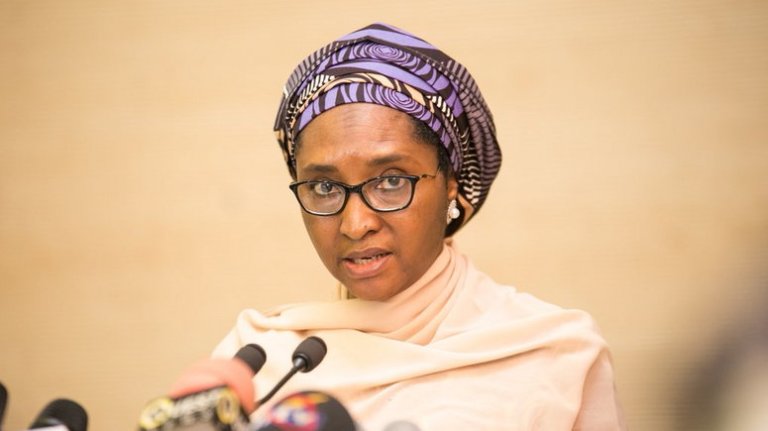
Finance Minister Zainab Ahmed

I even feared that internet service providers may be over-stretched because government and corporate organisations have migrated to online; I fear their services may have been oversubscribed and, for a couple of them, the demand for their services outweigh what they can supply. This way, attention may be given to big corporations who buy data in millions of Naira, instead of the small buyers of internet services.

As I reflected on the predicament, I feel strongly that media organisations need palliatives, more than any other sector. For one, without the media, government cannot properly communicate with the 200 million Nigerians who need to receive authentic information about how to #StaySafe in this dangerous period. Though there is information overflow on the social media, most of them do not pass through the furnace of editing, so that all the dirt and harmful fats are burnt out. In the news editing factory, every claim must be supported with evidence, opinions are separated from facts, illogical arguments are yanked off, libelous statements are deleted, figures are checked and cross-checked, all sides to a story are made to have their say, and national interest weighs over and above copy sales. This way, fake news is weeded out.

Government can provide palliatives for this kinds of media organisations by, at least, paying a percentage of their wage bill, to enable them continue to do their good work. For online platforms, government can provide incentives to members of the Guild of Corporate Online Publishers. Government can make it mandatory for all banks and revenue-generating agencies to place Covid-19 enlightenment advertisements in, at least, a dozen media organisations across print, broadcast and online, as a palliative measure. Without this and similar measures, many media organisations could drop the ball and leave the field of news and information to social media tigers, lions, and mind-hunters who compete for the attention of the people.

Palliatives would support government’s effort to serve the people with cooked meat instead of raw and poisonous flesh, which would worsen the spread of coronavirus rather than curtail it.

The biggest threats to Nigeria managing COVID-19: panic, politics and indecision

Doyin Odubanjo, Nigerian Academy of Science

Cases of COVID-19 are rising in Nigeria. Although the federal government hasn’t announced a firm plan to lock down, individual states have started to take steps such as closing markets, schools and places of worship. Accompanying daily developments has been a rise in panic levels fuelled in many cases by misinformation. The Conversation Africa’s West Africa regional editor, Adejuwon Soyinka, put questions to Dr Doyin Odubanjo about the biggest threats to Nigeria’s war against the pandemic.


HOW much of a threat is misinformation and panic in Nigeria?

Perhaps the biggest danger faced at the moment is panic. To control diseases such as COVID-19, it is critical that human behaviour is controlled in a way that inhibits the spread of the disease. The challenge with panic is that people change their behaviour erratically. They might even behave in a way that leads to the disease spreading, or poses a different risk entirely to them and their communities.

Misinformation can lead to panic. In fact it does more than create panic. It can lead to wrong actions. We have already seen people come down with chloroquine toxicity in this pandemic when they heard the drug might be effective.


Read more:
Could chloroquine treat coronavirus? 5 questions answered about a promising, problematic and unproven use for an antimalarial drug


Misinformation can also lead to complacency. There are people who believe that black people can’t have the COVID-19 infection.

Given the current situation, what are the biggest threats?

Right now, I would say the biggest threats are panic, politics and indecision. While COVID-19 is a serious disease and we should tackle it as such, we must do so with calmness and focus. We should never forget that, if the situation is handled right, most people are not expected to die.

But that’s also the tricky nature of the disease. Most people will be asymptomatic or with mild illness. But they will nevertheless pose a great risk to those who are more susceptible to severe disease and death – the elderly and those with other underlying diseases.

There are already more people dead and dying from other diseases. But COVID-19 has gained notoriety to such an extent that it cannot be ignored. Panic leads to knee-jerk responses that are not likely to effectively curtail the spread of the disease.

Rather, what is needed is the calm implementation of a clear and effective strategy.

Politics should have some boundaries. One such boundary is the containment of a pandemic. This is no time to make promises that are not immediately fulfilled. I was alarmed at the disparity between the public statements about Nigeria’s preparedness and the reality on the ground as revealed by ordinary people. An example is the accounts given by people who passed through Nigeria’s airports before they were shut down. While the politicians talked about money that had been assigned, two weeks later the Nigeria Centre for Disease Control said that no money had been released .

Lastly, we need to know that not making a decision is a decision itself. The rate at which this disease has spread has shown that we must be thinking on our feet. There is no time to waste. We must think, act, think again, and act again. We must be ready to make hard decisions if the situation requires it.


Read more:
Steps Nigeria is taking to prepare for cases of coronavirus


What is missing in the current narrative around COVID-19 and its handling in Nigeria?

A coordinated response across the federation is really missing.

The Federal Ministry of Health and the Nigeria Centre for Disease Control are supposed to be the national coordinators. But states seem to be making individual decisions. Some states shut down schools last week with the dramatic rise in the number of confirmed cases. Others looked on. We have seen that diseases don’t know boundaries (not even international ones) so the best thing to do is to have a synchronised response. For example, most countries have found that locking down only parts of their countries was ineffective and had to do a total lock down eventually.

That does not mean that exactly the same thing is done at all the places at the same time. But it does mean that you have an eye on how every place is faring at once and are able to make all respond appropriately.

A lot has been said about what Nigeria does not have in combating the pandemic. What does it have at its disposal?

Nigeria has been ‘haemorrhaging’ health care workers in recent years. But, thankfully, the country still has some dedicated and innovative health care workers left. Its health workers are nothing short of heroes given the environment in which they work. I assume that this situation now reveals how much the country needs them and that this will inform future policies to ensure that the health system improves and health workers are retained in the country.

Nigeria also has a big economy and a strong private sector. It is time to draw on the strengths of its private sector to combat this disease. Apart from money, the private sector can drive community engagement, communication, procurement, and even the manufacturing of drugs and equipment.

Last, but not least, is that Nigeria and Nigerians are resilient. We must not forget that this is also a psychological warfare in the face of fear, socio-economic depression, and lock downs. Nigerians are fighters and can fight this off.


Read more:
VIDEO: Some basic tips on staying safe from the coronavirus


What can science bring to the table in managing this pandemic?

The COVID-19 virus being new means that there are many questions and few answers. Many people have information about their experience. And there’s been research. Some of the information being gathered will be found to be correct, some wrong.

There’s a need for a whole lot more research. For instance, we still need answers about how the virus behaves in a particular local environment and how long it lasts outside the human body in Nigeria.

Research has to be validated and reproducible. Even a great deal of the good research being done has to be repeated to be sure that the findings are correct.

Then, how about the near or distant future? What drugs and or vaccines can be developed? Will the virus mutate? There is a reason why the Redeemer’s University Nigeria (in collaboration with the federal government) sequenced and reported the genome of the virus in Nigeria. It will help with drug development.

Doyin Odubanjo, Executive Secretary, Nigerian Academy of Science

This article is republished from The Conversation under a Creative Commons license. Read the original article.

How to keep your smartphone Corona-free, Security firm shares tips

THE lockdown that countries all over the world are currently experiencing is putting a renewed focus on personal hygiene. But despite people being advised to wash their hands often, how many apply the same rigour to their smartphones? Kaspersky (www.Kaspersky.co.za) provides a few tips on keeping mobile devices ‘virus-free’.

“Even before the COVID-19 pandemic, it is frightening to think how much bacteria lives on our personal mobile devices. And with the Coronavirus able to survive at room temperature and remain infectious on metal, glass, ceramic, and plastic for several days, it becomes essential to follow effective disinfection protocol,” says Maher Yamout, Senior Security Researcher for the Global Research and Analysis Team at Kaspersky.

The virus can get onto a phone or tablet in two ways: either in tiny droplets when an infected person coughs nearby, or from your own hands after touching door handles, ATM buttons, and the like.

Fortunately, unless a person hands their mobile device to someone who is infected to cough and splutter all over it, the probability of infection by airborne route is low. Transmission by hand depends on the duration of contact and varies for different microorganisms. But with no reliable data for COVID-19 available yet, it is always best to be extra cautious.

“If you must go to the shop for essential goods, it is imperative to disinfect your phone when you return home. There are several common household products that can deal with the Coronavirus effectively – ethanol (C2H5OH), isopropyl alcohol (C3H7OH), hydrogen peroxide (H2O2), and sodium hypochlorite (NaClO),” adds Yamout.

Isopropyl alcohol is considered the least harmful to the oleophobic coating that allows fingers to slide over the screen without covering it in fingerprints. So, use it if you can (as spray or wet wipes).

Ethanol and hydrogen peroxide should be considered a backup if nothing else is available. With frequent use, these products can easily ruin the oleophobic coating. Even once might be enough, it depends on the coating.

As for concentration, the optimal to go for is approximately 70-80%. Purer alcohol evaporates too quickly for best results. The disinfecting solution must sit on the surface for about a minute. A lower concentration is less efficient in killing viruses.

People should therefore not rely on vodka for example instead of ethyl alcohol. Even glass cleaner is not as effective as isopropyl alcohol given it has a considerably lower alcohol content. It is also critical to not pour the disinfectant into the connectors, speakers, and other openings in the smartphone, even if it is waterproof. Rather, take a cotton pad, soak it in the liquid, and apply it to all sides of the device. There is no need to press hard, just carefully and thoroughly wipe the whole surface.

People should apply the same disinfection regiment to any other gadgets they use in public places. These can include tablets, laptops, smartwatches, bracelets, headphones, and so on. However, always check the product Website whether the manufacturer has any recommendations as to which substances are best suited for the device cleaning and how to apply them.

Nigeria’s debt stock stands at N27.4 trillion trillion – NBS

THE National Bureau of Statistics (NBS) has reported that Nigeria’s total public debts, consisting of external and domestic debts, stands at N27.4 trillion as at 31st December 2019.

The debt portfolio comprising state and federal debt stocks were N9.02 trillion or 31.55 per cent of the debt was external while N18.37 trillion or 67.07 per cent of the debt was domestic. 

Data is supplied administratively by the Debt Management Office (DMO), and verified and validated by
the National Bureau of Statistics (NBS)

In economics, debt stock refers to a debt instrument, such as a government bond, corporate bond, or preferred stock, that can be bought or sold between two parties and has basic terms defined.

Lagos state accounted for 10.82 per cent of the total domestic debt stock, the highest while Yobe State has the least debt stock in this category with a contribution of 0.71 per cent to the total domestic debt stock.

According to the report, Nigeria’s total public debt portfolio as of December 31, 2019, total external debt was  N9.02 trillion ($27.67 billion) with a percentage of 32.93.

Break down showed that federal government debt instrument accounted for N7.53 trillion ($23.11 billion) with a percentage of 27.50, states and Federal Capital Territory (FCT) accounted for  N1.48 trillion ($12.59 billion) with a percentage of 5.43.

A further breakdown of the NBS report showed that total domestic debt stood at $56.37 billion at N18.37 trillion with a percentage of 67.07.

Federal government domestic debt stood atN14.27 trillion ( $43.78 billion) with a percentage of 52.09, with states and FCT contributing N4.10 trillion ( $12.59 billion) with a percentage of 14.99.

The report showed that the total public debt is the addition of external and domestic debt instruments for the year 2019 which was N27.40 trillion ($84.05 billion).

This accounted for 100 per cent of both domestic and external debt instruments for the entire 2019.

Lockdown without palliatives puts disabled persons at risk in Lagos, group cries out

By benga Ogundare


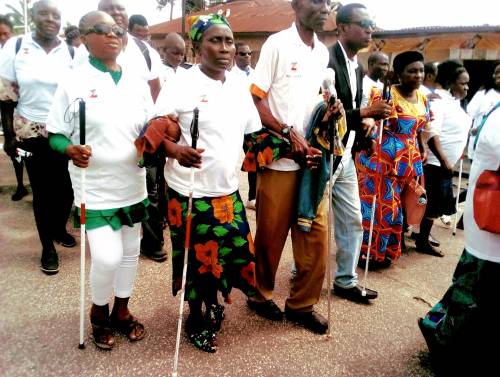
THE Nigeria Association of the Blind (NAB), Lagos State Chapter, has raised alarm that more than 500,000 persons living with disabilities (PWLD) in the state are at risk of avoidable health crises and needless deaths as the lockdown occasioned by the coronavirus pandemic worsens the livelihoods and survival of PLWDs.

The group expressed concern that a large number of persons living with disabilities may never benefit from the free food stimulus program introduced by the Lagos State Government if Governor Sanwo-Olu fails to co-opt disabled person clusters and Civil Society Organizations as monitors in the palliative distribution process.

According to a press statement signed by Mr. Babatunde Mohammed, Chairman of the Nigeria Association of the Blind in Lagos, “we are deeply worried about recent revelation by Governor Sanwo-Olu that some elements have hijacked the free food program initiated by the state, and the severe consequences this sabotage will bring to persons with special needs in the state.”

While the group lauded efforts by the Lagos State Residents Registration Agency (LASRRA) for reaching out to PLWDs and the old in the state via text messages, it, however, raised concerns that a lot of persons with disabilities are yet to receive the food package promised them in the SMS one week after the promise was made.

“As a matter of fact, the majority of PLWDs who received the LASRRA SMS have become frustrated by the failed delivery notices they get each time they tried to respond to the text message,” the statement read.

“Others who have relocated from their earlier addresses captured in the LASRRA register are also left with no option to supply information about their current location, neither do they have the opportunity to call specific mobile lines for that purpose.”
In reviewing its response strategy henceforth, the group urged the state government to provide each cluster of persons with special needs with the logistics to distribute the stimulus package to their members in collaboration with the Lagos State Office for Disability Affairs, since each of the clusters (Blind, Deaf, Albinos, Physical, etc) has a register of their bonafide members.

“This response strategy, if considered by His Excellency, will have a far-reaching positive impact on disabled persons in the state in the long run, compared to the initial strategy where the Joint National Association of Persons With Disabilities (JONAPWDs) in the state was given 100 food package to share among a disabled person community numbering over 500,000,” the statement read.

MRA issues Nigerian Police ultimatum to prosecute SARS operatives’ attack on journalists

THE Media Rights Agenda (MRA) has on Monday issued a 14-day ultimatum to the Nigeria Police Force to investigate the attack and detention of journalists by men of the Special Anti-Robbery Squad (SARS).

MRA through an official statement gave the ultimatum to the police authorities condemning the invasion of the SARS operatives on the Nigeria Union of Journalists (NUJ) secretariat in Adamawa state on Tuesday, April 2.

Ayode Longe, MRA’s programme director, explained that the attack occurred at about 6.28 pm on April 2, the Officer in Charge of SARS in Adamawa State reportedly went to the state secretariat of the NUJ where he met reporters in the process of filing news reports to their different media organizations, using the internet services at the press centre due to the closure of business centres around the city.


READ ALSO:

Longe added that a while after the journalists got to the press centre, the SARS officers made phone calls after which six Toyota Hilux vans filled with heavily armed police operatives invaded the press centre and beat up journalists, forcing journalists all 12 of them into the vehicles including the state chairman of the NUJ, Mr. Ishaku Dedan.

According to Longe, the journalists were released after two hours in custody on the orders of the State Commissioner of Police, Mr. Audu Adamu Madaki, who also directed the police officers involved in the arrest to apologize to the NUJ within three days.

“By failing to take any punitive or disciplinary action against the police officers involved in the outrage, the Police authorities have ensured impunity for crimes against journalists in breach of Nigeria’s international commitments and obligations, a situation which is bound to encourage similar action in future as it sends a message to policemen everywhere that there will never be consequences for them for such unacceptable behaviou,” Longe said.

On the ultimatum, MRA said if it elapses and the Nigeria Police fail to arrest and prosecute the SARS operatives, the organisation would issue a formal.report to the United Nations Secretary General and request him to bring the matter to the attention of the UN General Assembly so that appropriate action can be taken against Nigeria for crimes against journalists in violation of several UN instruments.

However, he called on the Inspector General of Police, Mohammed Adamu, to restore discipline within the Force, saying the constant brutalization of journalists and other innocent citizens with impunity by the police was no longer acceptable.

UPDATED: Wife of index case asymptomatic after testing positive, contact tracing begins in Kwara as UITH suspends Prof. Salami

THE wife of the man, a UK returnee who died as a result of contracting coronavirus at the University of Ilorin Teaching Hospital (UITH) last Thursday, is asymptomatic after testing positive.

The ICIR source from Kwara State Ministry of Health, said the wife of the deceased man, Kwara Covid-19 index case, is still alive and well, also asymptomatic at the moment.

According to the source, “the wife is alive and well, asymptomatic at the moment. She was picked up last night to the isolation centre by members of Kwara COVID-19 team and the State Department of Public Health.

As at now, the team has about 300+ contacts it is already tracing, among those who attended the burial and those who had contact with the index case before his demise, the source said.


READ ALSO:

It will be recall that medical personnel, including doctors and nurses also came in contact with the index case have been placed on self-isolation.

Other possible contacts include Professor A.K Salami, a Senior Consultant at UITH, who bathed the deceased and those who followed them for the burial in Offa last Friday.

Considering the exposure of the deceased to many people, more suspected cases of COVID-19 are expected to be identified in Ilorin.

The state capital neither has a COVID- 19 isolation centre nor a testing centre.

According to a source who pleaded for anonymity, Offa has in a few days witnessed influx of UK returnees, but the town, about 30 minutes’ drive from Ilorin, has only one isolation centre in Sobi Specialist Hospital and does not have any testing centre.

Meanwhile, the Management of the University of Ilorin Teaching Hospital has approved the suspension of Professor A.K Salami as a Senior Consultant in the hospital.

According to a release signed by the Director of Administration , David Odaibo, on behalf of the Chief Medical Director, the professor was suspended due to what it describe as “unethical conduct in the admission, management and eventual release of the corpse of a suspected Covid-19 patient who died in the hospital on the 3rd of April, 2020.”

The state government has disclosed plan to address a press briefing at 11am on the update.

NNPC announces subsidy removal on petroleum products

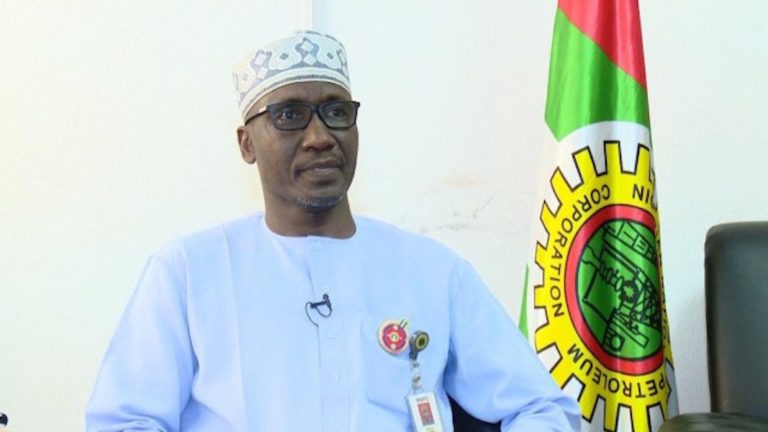
ON Monday, Group Managing Director of the Nigerian National Petroleum Corporation, NNPC, Mele Kyari, revealed that Nigeria would no longer pay subsidy on petrol following the fall in global oil price.

This development was announced in a statement by NNPC’s spokesperson Kennie Obateru, who spoke on behalf of Kyari at a television programme in Abuja.

“There is no subsidy and it is zero forever, going forward there will be no resort to either subsidy or under-recovery of any nature.

“NNPC will play in the marketplace, it will just be another marketer in the space. But we will be there for the country to sustain the security of supply at market price,” he said.

He said that NNPC was a transparent organisation, saying the National Oil Company was probably the only company in the world that published its monthly financial and operations reports.

During the interview, he said as of  April 5, Nigeria produced 2.3 million barrels of crude oil, including condensates stating the plan was for the country to ramp up production to 3 million barrels per day in the nearest future.

He admitted that though the COVID-19 pandemic had ground demand and supply fundamentals, all Nigeria’s export terminals were still in operations.

“The key issue in the crude oil business is market fundamentals of demand and supply. I believe COVID-19 will subside and countries will come back to life.

“I don’t see the oil price going below the $20 we witnessed last week. I’m certain, all things being equal, the oil price will bounce back,” he added. The NNPC’s helmsman assured Nigerians of ample supply and distribution of petroleum products.

He said the corporation had in stock about 2.6 billion litres of petroleum products that could serve the country’s energy needs for the next two months, stating that the NNPC was collaborating with all relevant stakeholders to ensure that the supply and distribution value chain was not disrupted to guarantee energy security for the country.

Covid-19: UK Prime Minister health worsens, moved to ICU

BORIS Johnson, UK Prime Minister has been moved to an intensive care unit in a London hospital after his health conditions took turn for worse ten days after he tested positive for Coronavirus.

According to Downing Street,  the Prime Minister was moved on the advice of his medical team and is receiving care at St Thomas’ Hospital, in London.

Downing added that the United kingdom’s Foreign Secretary, Dominic Raab will deputise Johnson where neccessary

The 55-year old Prime Minister was admitted to hospital in London with “persistent symptoms” on Sunday evening.

According to BBC, Guto Harri, Boris Johnson’s Communications Director when he was mayor of London, explained why he was taken to the hospital.

“There has tragically been quite clearly a deterioration that is quite significant for him to now have to succumb to intensive care and to have to deputise formally to the foreign secretary,” he said.

Harri said in the four years he worked for  Johnson, “I don’t think he was ill once” and said the PM would be “hugely frustrated” that he cannot now take the lead.

“I think what’s clearly happened over the last few weeks, there have been enormous decisions about lives and livelihoods… and he’d have felt that the important thing was he was out there, he was seen to lead from the front and he probably wouldn’t have slept well and would have been working too hard.”

Borris Johnson was initially taken to hospital for routine tests after testing positive for coronavirus 10 days ago. His symptoms included a high temperature and a cough.