THE Economic Financial Crimes Commission (EFCC) says it has uncovered 35 lottery and betting companies operating illegally in Nigeria, including popular ones like Surebet and Betnow.
The anti graft agency said the discovery followed an investigation which it said was carried out as part of efforts to end fraud related taxes in the lottery and betting industry in the country.
Tony Orilade, EFCC spokesperson said in a statement on Thursday that the investigation was carried out in collaboration with the National Lottery Regulatory Commission (NLRC), following a request from the Commission.
Orilade explained that the 35 illegal companies were discovered during the investigation to be lacking the ‘core license to operate in Nigeria’.
He added that the anti graft’s findings were corroborated by a document made available by the NLRC.
According to the Commission, only 21 licensed operators and 18 companies with permits from the NLRC currently operate in Nigeria while others were believed to be illegal operators.
Naming the illegal operators in the country, EFCC listed Emerald Bets International Limited (Emerald Bet), Saharabets Sports Ltd (Surebet247), Bimm Entertainment Ltd (Easy Bet), Champion Superbet (Superbet), EbonyBet, 360Bets Limited, Bet Now Global Business Services Limited, Caryle Investment Limited (BetMunster), Camlake Limited (Wakabet) and West Africa Betting Company Limited (PMUbet).
The Commission also named Playwin International Limited (RukkaBet), Ana Lottery Ltd, ParknBet Champion Bookmakers. Nig. Limited, Space Gaming, Fane Int’l Sports Tour Limited (First Fane Sports), Zandalex Int’l Nigeria Limited, Gidi Games, Uwin Bets Limited, Megawin Bets Limited, Vertical Bets and Gaming Limited, Smart Bet Limited (Power Bet), EasyGold Network (Awoof Bet), Melbet and 22Bet as part of the illegal operators.
LovingBet, LionBet, NetBet, Nairapower Bet, SupaBet, SportBet, KorectWin, 2SureBet, Betwin9ja and Western Sportbet Nigeria Limited were also blacklisted by the commission.
Those hitherto operating illegally, in contravention of the relevant laws and guidelines would, henceforth , face the full wrath of the law as investigation is ongoing on their illegal activities, he said.
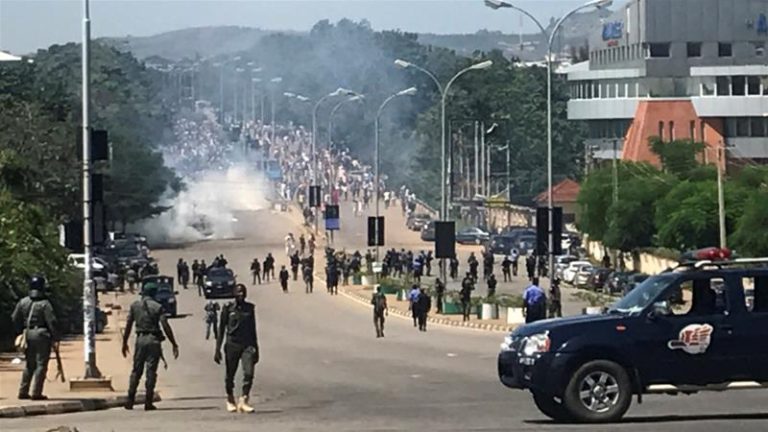
COALITION of Civil Society Organisations on Thursday condemned the Nigeria Police for allegedly attacking office of the National Human Rights Commission (NHRC), Abuja.
The coalition which consists of 20 Non-Governmental Organisations (NGOs) across the country stated that such an attack could demean the country before the United Nations Human Rights Council.
The NHRC is an agency of the Federal Government established by the constitution to promote human rights and check harassment, intimidation and all forms of human rights abuses in the country.
The CSOs noted that police men reportedly shot at the agency in an attempt to disperse members of the Islamic Movement of Nigeria (Shiites), who were on peaceful assembly around the commission to demonstrate against the continued detention of their leader, Ibrahim El Zakzaky, and his wife in clear violation of court orders to release them.
They condemned the use of force and live weapons by the police on the protesters who were not armed, noting that such action violated the rights to peaceful assembly and expression.
The organisations also expressed worry about alleged prior harassment and intimidation of staff of the Commission while carrying out their constitutionally empowered functions which dwell on probing human rights abuses.
“The attack is dastardly and desecrates the sanctity of the Commission as a state institution established to promote, defend and expand the frontiers of human rights in Nigeria. National human rights institutions are independent institutions bestowed with the responsibility to broadly protect, monitor and promote human rights in a given country under the Paris Principles.
“Attack on such an important institution is a threat to the human rights of citizens and residents of the country who depend on the Commission for the protection, defence and enforcement of their human rights guaranteed under the constitution as well as under regional and international human rights standards which Nigeria subscribes to,” the group stated in the jointly signed statement.
“The premises of National Institutions, the world over, are hallowed grounds, like the courts. This desecration has significantly diminished the esteem of Nigeria in the comity of nations and it is capable of crashing Nigeria’s status before the United Nations Human Rights Council.”
However, the coalition called on the Federal Government to deploy every legal means to investigate the matter and sanction police officers involved in the act.
They also challenged Office of the Attorney General of the Federation, the National Assembly to probe the officers with a view to making them face severe penalties that would serve as a deterrent to others.
“We condemn in totality this act of audacity and impudence and call on both the Inspector General of Police and the Federal Attorney General to carry out a prompt, exhaustive and effective investigation to identify those responsible and to bring them to account.
“The Inspector-General of Police must give an assurance that the Commission and it’s staff will henceforth be protected from any further attack from police or other quarters and that such reckless action will not repeat again.”
The group called on the Senate Committees on Human Rights and Police Affairs to jointly conduct an investigation using parliamentary mechanisms to hold the Nigerian Police to account.
“While it is important that police officers who abuse or misuse force and firearms are brought to account, this recent shameful conduct by the Police highlights the need to create awareness among Police officers of the newly reviewed Force Order 237 which regulates the use of Force by police personnel. Force and firearms must be used in legal and responsible ways and must be proportionate to the objective sought to be achieved.”
The statement was signed by Adedeji Adeleye, Independent Advocacy Project (IAP) Lagos; Arthur Judah Angel, Life Wire International Foundation, Lagos State; Walter Duru, Media Initiative against Injustice, Violence and Corruption, Rivers State and Bankole Solomon , People Against Corruption and Injustice, Ogun State.
Others are Segun Awosanya, Social Intervention Advocacy Foundation (SIAF), Lagos; Ngozi Nwosu-Juba, Project Director, Vision Spring Initiative, Lagos; Comrade Obasanni Jude PhD; Josemaria Escriva Foundation among others.
AS the number of Covid-19 cases across Africa rises dramatically this week, healthcare systems that serve the most vulnerable and marginalised children and families in the world will come under ever-increasing strain, warns Save the Children.
The NGO in a statement issued on Thursday further warned that the lives of thousands of children on the African continent could be at risk, if the virus continues to spread at this rate.
The humanitarian organisation stated that “there are now at least 2,412 confirmed cases across 43 countries in Africa – an increase of more than 500 per cent since March 17 – with only nine countries without a confirmed case.”
South Africa has the most confirmed cases of Covid-19 in sub-Saharan Africa, followed by Burkina Faso, raising concerns the virus could overwhelm the health system if infection rates continue to rise, it said.
According to Save the Children, a spike in Covid-19 cases could risk disrupting nutrition, immunisation and other health services for children if facilities become overstretched, health workers fall ill or families might stay away because of fears of contracting the virus.
“This would impact efforts aimed at saving children from acute malnutrition and diseases such as malaria, pneumonia and diarrhoea,” it said.
Save the Children lamented that households would have less income to meet their basic needs as markets close and restrictions to movement are put into place.
To support children and their families in affected countries on the African continent and across the globe, Save the Children launched an appeal to raise an initial 30 million dollars in the coming months.
Inevitably, as the response progresses, this financial need will go up.
With the funds, Save the Children said it aims to strengthen its programmes that protect children in countries that are hit by the virus, increase support for national health systems and raise awareness among parents and caregivers on how to provide mental support to children.
The funds, it added, would also be used to support children who have lost parents.
It called on the international community to increase their funding to support national governments’ efforts in their response to the pandemic and save children’s lives.
African governments already have responded to the Covid-19 outbreak over the past few months in several ways, including curfews, flight bans, lockdowns and major public awareness and sanitation campaigns.
However, given the rapid rise in confirmed cases across the continent, Save the Children believes that more needs to be done to prevent a larger outbreak.
Save the Children’s Regional Advocacy Director, Eric Hazard said: “While we know donors have many demands on them, it is critical that we do not draw back from our global responsibility now.
“We can see right in front of us that if we ignore a COVID-19 outbreak in one country, it will quickly lead to more cases in another.
“We must support countries with weaker health systems and stand with the poorest and most marginalised communities who do have the means to support and protect themselves from the impact of this outbreak.
“International donors must invest in supporting countries to scale up their health systems, with particular support for countries that have less capacity to manage the outbreak, so that the impact on highly vulnerable children and their families is minimised as much as possible.”
Hazard said Save the Children was urging all governments to take additional steps to ensure the right information reaches vulnerable communities before case numbers increase to potentially overwhelming levels, including practical measures such as ensuring all communities have access to basic sanitary supplies.
Others are sharing accurate and age-appropriate COVID-19 prevention information with communities via national media and child-friendly press conferences; developing and rolling out clear, child-friendly public information campaigns to give children and their families the information they need to protect themselves from infection; ensuring access to education for all children, even if schools are closed, for example by distance learning (online or via radio); and combatting misinformation about COVID-19 that can increase anxiety and distress among children and adults.
IN a bid to mitigate the spread of the pandemic coronavirus, the federal government of Nigeria has announced new plan to ban inter and intra-state travels.
Lai Muhammad, the minister for information in a press briefing today, has said that except for essential services, the federal government will stop travelling of the citizens within their states and to other states in the country.
The minister added that the new measures will require shutting down all motor parks and inter-state rail stations.
He also said the government is ready to fumigate towns and cities by using fire fighters and other adaptable vehicles.
This is coming after TheICIR reported South African government’s move to lock-down the country today for 21 days following the increasing number of COVID-19 confirmed cases in the former apartheid country.
MANAGEMENT of the United Bank of Africa (UBA) group has announced on its official Twitter handle that the bank will provide five billion Naira to COVID-19 relief support across Africa.
According to the Bank, the fund is to catalyse a comprehensive pan-African response to the fight against Coronavirus pandemic.
The bank explained that the donation will provide significant and much needed support to Nigeria and 19 other African countries.
The funds would be used to supply relief materials, critical care facilities and financial support to governments across Africa.
According to the post on Twitter by the bank, support program would be allocated as follows; one billion Naira to Lagos, 500 million Naira to Abuja, one billion Naira to the remaining 35 states in Nigeria.
In addition, 1.5 billion Naira will be given to other countries in Africa where UBA has presence and one billion Naira for medical centres with equipments and supplies.
UBA group also said the they would be supplying free telemedicine call center facility.
The bank also said in the post that, it would fund a medical center immediately in Lagos with beds for isolation and Intensive Care Unit (ICU) facilities managed and operated in partnership with Heirs Holdings Limited and its subsidiary, Avon Medical Hospital.
UBA group would be providing a free telemedicine platform that will provide citizens direct access to medical advice in compliance with social distancing requirements.
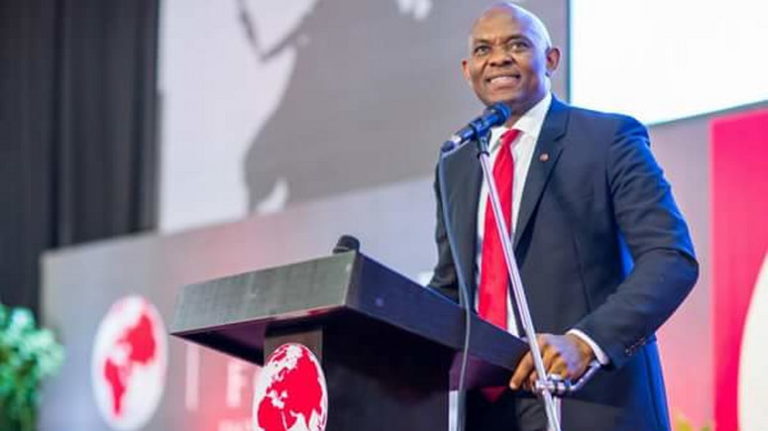
According to the Chairman of the bank, Tony Elumelu, ”This is a time where we must all play our part”.
”The global pandemic must bring citizens, government and business leaders together and quickly, as we see rapid increasing number of cases of the coronavirus in Nigeria and Africa, the private sector hs to work hand in hand with various governments in stemming the spread,” he added.
”We commend the effort of governments and we are keen to partner and contribute our resources to the collective effort, that would ensure the response to the pandemic is swift and effective,” Elumelu said
THE personal assistant on new media to the president of Nigeria, Bashir Ahmad has tweeted that six patients who earlier tested positive to the deadly coronavirus have been treated and will be discharged soon.
“Six patients who are being treated for the #coronavirus have recovered and will soon be discharged from hospital in Lagos. Nigeria will win this fight, by God’s grace!”
The special assistant to the Lagos state governor on media, Wale Ajetunmobi, also confirmed the news to The ICIR. He said the patients have been treated and will soon be allowed to go home.
Earlier this morning, Nigeria recorded five new cases of coronavirus, bringing the number of confirmed cases to 51. This has been confirmed by the Nigeria Centre for Disease Control (NCDC).
In its update, shared on Twitter, NCDC announced that Lagos now has 32 cases of coronavirus, making it the state with the highest number of cases in the country.
THE Central Bank of Nigeria (CBN) released its first-quarter Consumer Expectations Survey (CES) report which showed that consumers’ confidence in the economy worsened drastically between the last quarter of 2019 and the first quarter of this year, sliding from 3.3 index points to -0.3 in between the periods.
The consumers’ overall confidence outlook dipped in Q1’20, leading to consumers’ pessimism.
The index at -0.3 point was 5.1 points lower than the index in the corresponding period of 2019, the CBN report showed.
According to the report, respondents attributed this unfavourable outlook to declining economic conditions.
The report also showed that consumers were however optimistic in their outlook for the next quarter and next 12 months with indices of 28.9 and 43.3 points, respectively.
The level of optimism businesses had in the macro-economic situation of the country sank to 6.6 index points in March 2020, compared to the 26.6 recorded last month, the report showed.
The CBN report highlighted that most respondents expect prices of goods and services to rise in the next 12 months, with an index of 22.9 points.
The major drivers are medical expenses, education, telecommunication, savings, purchase of houses, and food & other household needs.
The overall buying conditions index for big-ticket items in the current quarter stood at 24.4 points.
This indicates that the majority of consumers believed that the current quarter was not the ideal time to purchase big-ticket items like consumer durables, motor vehicles and houses, the report showed.
As regards unemployment, it showed that the unemployment index for the next 12 months remained positive at 27.7 points in Q1’20, indicating that consumers generally expect the unemployment rate to rise in the next one year.
TWO domestic airline carriers, Air Peace and Aero Contractors on Wednesday announced the suspension of all flight operations from Friday March 27.
Airpeace, which operates a 23-craft fleet of commercial flights within Nigeria and a few African countries, has announced the suspension of all flights from 23.00hrs Friday March 27 as a result of the COVID-19 pandemic.
“This difficult decision was reached in order to support the efforts of the Federal Government and other stakeholders in curbing the spread of this virus in our nation, while also protecting our esteemed passengers and staff from becoming victims of the pandemic,” said the management.
The flight operation is suspected for 23 days.
Also, Aero contractors announced the suspension of flights for 14 days.
“At all the time, the safety of Aero’s passengers and staff remains our focus and we will do everything within us to ensure your safety,” said the management of Aero.
Since the outbreak of the COVID-19 late December 2019 in Wuhan, China, global economic has been greatly affected.
Over 22,000 deaths have been recorded with 487,452 confirmed cases. According to the Nigeria Centre for Disease Control, Nigeria currently has registered 51 confirmed cases with two recoveries and one death.
THE Central Bank of Nigeria (CBN) has concluded that due to the effect of COVID -19, inflation level will rise in the next 6 months but it is expected to fall in the next 12 months.
The CBN monthly Business Expectations Survey (BES) showed that the borrowing rate will rise in the next 6 months.
According to the CBN, the March 2020 BES was conducted from March 9-13, with a sample size of 1050 businesses nationwide.
A response rate of 92.8 per cent was achieved, and the sample covered the agric/services manufacturing, wholesale/retail trade, and construction sectors.
Survey firms used by the CBN were made up of small, medium and large corporations covering both import- and export-oriented businesses.
The CBN report showed that all sectors expressed optimism on own operations in the review month.
Respondents from the agric/services sector expressed the greatest optimism on own operations, with an index of 7.7 points, followed by the manufacturing sector with 5.6 points, the wholesale/retail trade with 1.1 points, while the construction sector had 0.8 points.
Similarly, the outlook on financial conditions (working capital) and average capacity utilization remained positive for the month of March, the CBN showed.
Also, the CBN report showed that the employment outlook index by sector showed that the construction sector had the highest prospect for employment in April.
Employment outlook had an index of 30.0 points followed by wholesale/retail trade 25.8 points, manufacturing sector 23.7 points and agric/services sector 22.8 points.
Respondents showed in the report optimism on the volume of business activity and employment outlook index in the next two and six months.
The analysis shown by the apex bank of businesses with expansion plans in April showed that the construction sector indicates the highest disposition to expand with an index of 69.2 points.
While the agric/services sector had an index of 61.2 points, wholesale/retail trade sector had an index of 50.9 points and the manufacturing sector had an index of 49.7 points.
According to the survey by CBN, respondent firms expect the naira to appreciate in March, April, next 2 months and next 6 months, as their confidence indices stood at 7.8, 17.0 and 23.7 and 30.6 index points, respectively.
Also surveyed firms expect the average inflation rate in the next six months and the next twelve months to stand at 11.66 and 11.75 per cent, respectively.
A six-month investigation unravels how frequent oil spill in Ogoniland, Rivers State contaminates the environment, silently killing the people, and how the slow pace of the cleanup exercise worsens the living condition of the community people.
By Kelechukwu Iruoma & Ruth Olurounbi
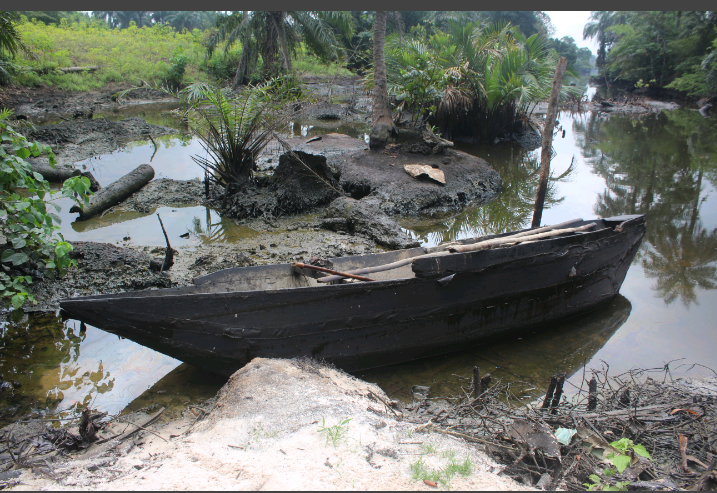
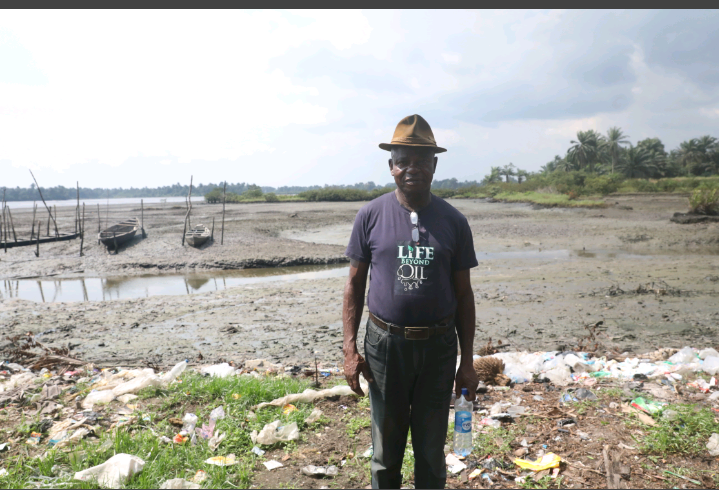
ERIC Dooh, 60, had just returned from Goi, a community in Ogoniland in Nigeria’s Niger Delta. He visited his family property in the community he left a few years back due to air pollution. Near the property is a large river where men fish, but it has been constantly contaminated by oil spills that has made the entire environment unsafe.
Exhausted, Dooh sat on a red couch in his sitting room, with eyes as red as fireballs. Moments later, he stood up, went to where he had hung a plain trouser he wore to the community the previous day and dipped his right hand inside one of the pockets. He started searching for a sachet of Franol (a drug that relieves breathing difficulties) he usually takes after returning from the oil spill site but could not find it.
Chief Eric Doo sits on a couch in his sitting room in Bodo
Goi, where Dooh comes from, is one of the affected communities ravaged by oil spills.
“Our people suffer very seriously; they inhale chemicals,” Dooh lamented. “My mother and father died in 2005 and 2012 respectively. They were diagnosed with respiratory disease and could not survive it.”
Nigeria has the largest oil-producing mines in Africa with the bulk of its crude laying beneath farmlands and rivers in Ogoniland with oil companies like Shell Petroleum Development Company (SPDC) extracting about 100 million barrels of crude every year.
Crude oil is very important to Nigeria’s economy. According to the Nigeria Bureau of Statistics (NBS), Nigeria exported crude oil to the tune of N3.74 trillion or 70.84 per cent of total exports in the third quarter of 2019, contributing 9.77 per cent. to the Gross Domestic Products (GDP). Despite this, the oil-producing communities suffer from numerous oil spills.
Between 2003 and 2014, there were devastating oil spills from the Bomu manifold, a Shell facility at Kegbara Dere (K-Dere) located in Gokana local government area of Rivers State. Shell has been pumping oil from the Niger Delta since 1958 and it remains the largest multinational oil company operating in the region.
Although Shell has not pumped oil from its oil wells in Ogoni since 1993 when Ogoni activists led protests against the oil company for destroying the environment, halting its operations, its pipelines still carry oil worth 150, 000 barrels daily through the region to its export terminal at Bonny Island on the coast.
The pipelines were reported to be ageing and poorly maintained, making them burst and spilling thousands of barrels of crude oil. Amnesty International, a global human rights organisation, in its 2015 report said about 352, 000 barrels of crude were spilled from 2007 to 2014.
Dooh said the major oil spill occurred in 2009. The fire from Bomu manifold burned for 36 hours and spread to neighbouring Mogho, Bodo and Goi communities, causing damages that destroyed the people’s livelihoods.
Loss of livelihood
That night, 35-year-old Dorgbaa Bariooma said goodnight to her children and husband, turned off the light switch and went to sleep. Neither she nor thousands of people at K-Dere knew the event of the night would change their lives forever. The first thing she woke up to see was the heat from the explosion.
“It was as if our house had been set on fire. Later came the smell of crude oil. It was so bad we could not breathe well for the first few months,” said Bariooma.
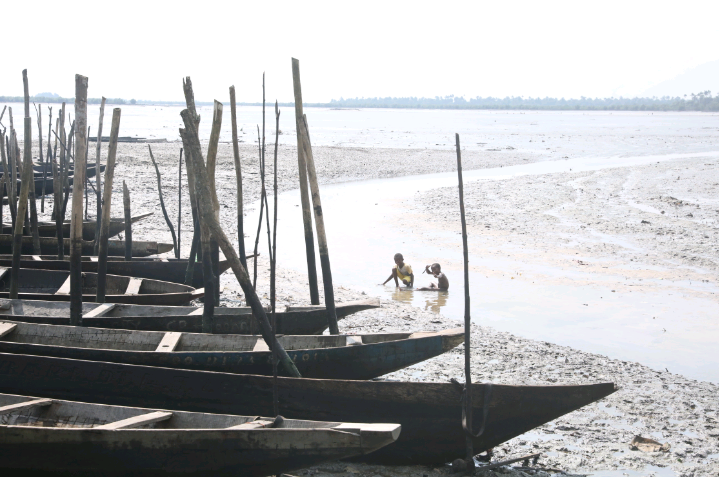
The oil spills had devastating impacts on the forests and fisheries that the people depend on for their food and livelihood. Many K-Dere residents grew up near Kidaro Creek, where they fish. Fishing was the mainstay of the local economy but the harvest has dwindled because of the pollution of the water body.
contaminated River at Bodo community
“Growing up, I would watch my father fish from this very creek and on sunny days like this, many of us will come to the creek to cool off. Here, there was once luscious vegetation and the sound of laughter and happiness was infectious,” said Erabanabari Kobah, an environmental scientist from K-Dere.
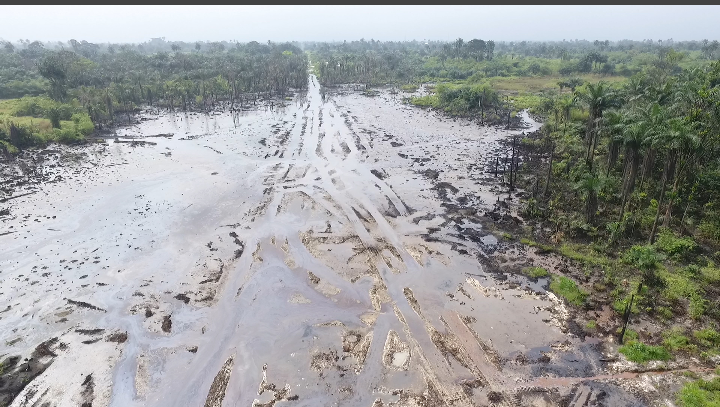
Oil spill contaminated Barabeedom swamp in K-Dere community
At an intersection leading to Goi, the smell of crude oil pervaded the air and several deserted houses littered the community. A kilometer or thereabout from the spill site, reporters covered their nose as the noxious smell of polluted environment became more intense.
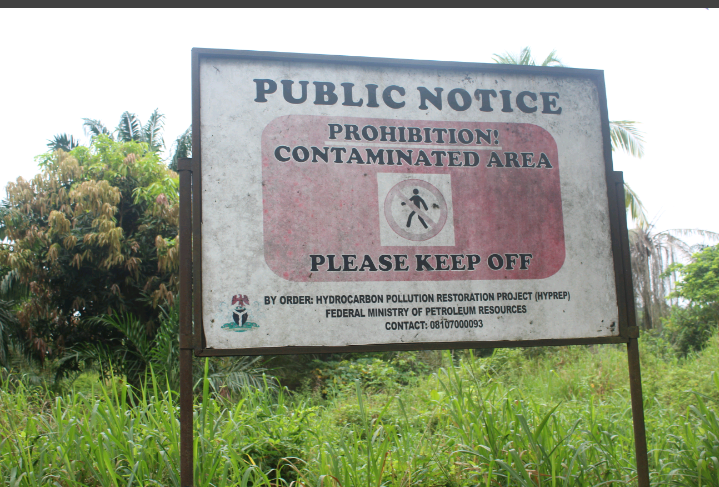
Near the riverbank was a public notice inscribed “Prohibition! contaminated area. Keep off.”
Displayed public notice stopping people from performing activities at Goi community
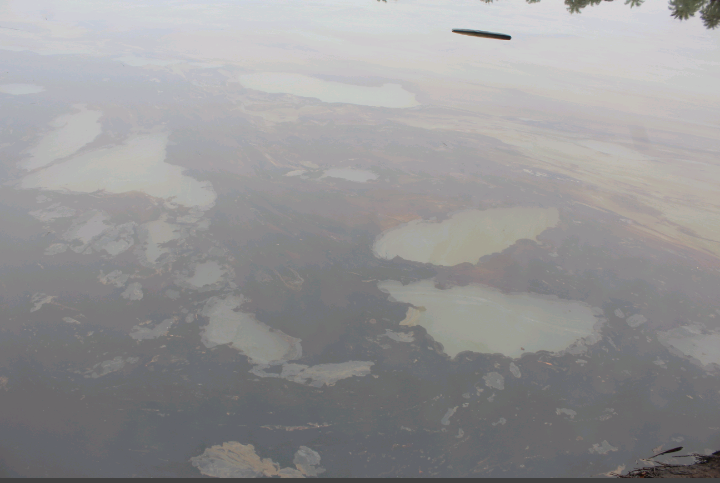
The river has been contaminated with crude oil gliding on the water. Fishermen could only catch a few unhealthy crabs after several hours of trying.
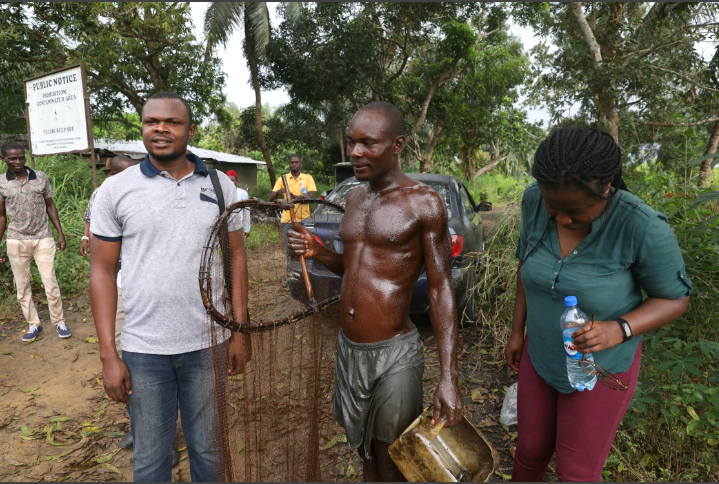
Raphael Vaneba, 47, still goes to the river to fish despite the environmental and health risks involved. He came out of the river carrying a fishing net on his right hand and an open gallon containing five crabs he had caught. His body was soaked in crude oil. Soon he dropped the fishing net and started to scratch every part of his body.
The reporters and a fisherman soaked in crude oil who had returned from the contaminated river in Goi
“I scratch my body whenever I come out of the contaminated river after fishing. We do not catch fish here anymore because the spilled crude oil has killed them and we don’t get money,” he lamented as he opened the mouth of a crab to show crude oil inside.
As a farmer in Bodo, Caroline Gbogbara’s farmlands also were affected by the oil spill but she continues to farm. During harvest, her cassava and vegetables smell of crude oil.
“We don’t have anything to eat. Farmers farm on lands filled with crude and have no choice but to feed on the contaminated produce. Families are forced to eat from poisoned crops,” she said.
According to the Center for Environment, Human Rights and Development (CEHRD), oil spills could lead to a 60 per cent reduction in household food security and were capable of reducing the ascorbic acid content of vegetables by as much as 36 per cent and the crude protein content of cassava by 40 per cent, which could result in a 24 per cent increase in the prevalence of childhood malnutrition.
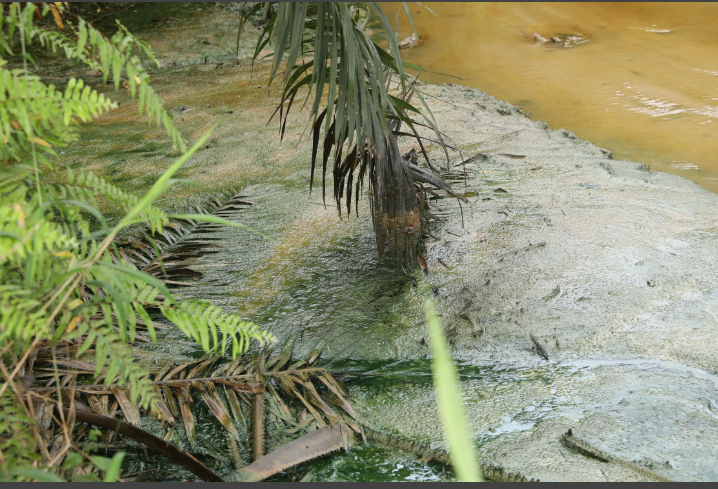
Besides the contamination of rivers and farmlands, the communities’ sources of drinking water, which are mainly underground water and streams, have also been contaminated with crude. Goi has a stream where the people collect water to drink. The stream which pathway is now bushy no longer receives visitors to fetch and drink from.
Contaminated stream where people go to fetch drinking water at Goi
“If you fetch the water and pour on a glass cup, you will see crude oil inside. We are drinking poison here,” lamented Dooh.
Before oil was discovered in Bodo community, Emma Pii, chairman, the council of village heads, said the people were living a peaceful life. The economy was buoyant, everybody enjoyed themselves and every family was happy. But with the discovery of oil, they started living in misery.
“Instead of oil to be a blessing, it has become a curse to us,” said Pii. “What Shell has done is to take our oil and make money from it while the people who own the oil are suffering.”
Fishermen inside the contaminated river at Goi
It’s a terrible moment for the people of Ogoni who now live with the consequences of a mistake that was not their doing.
Eleven years after the major oil spill that ravaged the oil-producing communities, people’s health is now failing. They complain of symptoms they do not know the underlying cause.
Oil spills release certain harmful chemicals such as benzene and toluene. Benzene is a known carcinogen while toluene can cause kidney and liver damage. Many spills also cause fires, which release toxic fumes that can cause respiratory problems.
Blood Tests
Each year, hundreds of post-impact assessment studies are conducted to assess the impact of the hazards generated by the oil industry on the social environment and human health due to oil spills. The reporters decided to conduct blood test to determine how oil spills impact the health of the people of Ogoni.
The reporters contacted Dr. Olawale Shipeolu of the Sapphire Health Group in Port Harcourt. He recommended we carry out blood tests to check the kidney and liver functions of the people.
The laboratory scientist drawing a blood sample for investigation
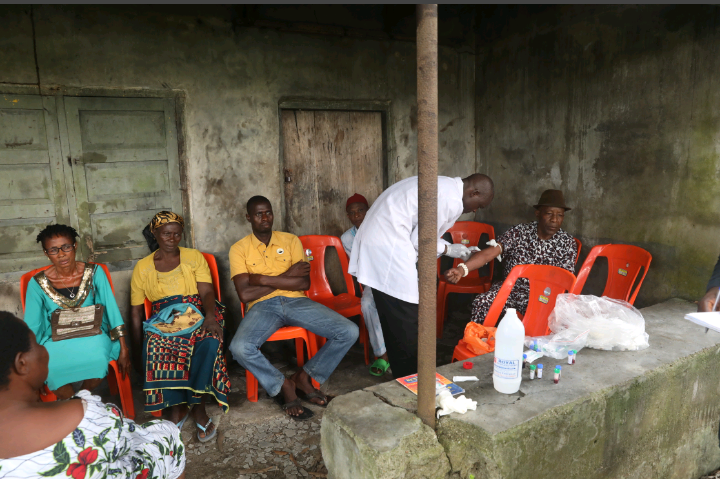
Chukwunonso Okoye, a clinical lab scientist with the Union Diagnostics and Clinical Services, traveled with the reporters to Ogoniland to take blood samples of 50 non-smoking and non-drinking volunteers from Bodo, Goi, K-Dere, and Mogho communities. The collected samples were then taken to the lab’s headquarters in Lagos for analysis.
Blood samples taken for laboratory investigation on the effect of oil spill in Ogoni
Full Blood Count (FBC), electrotype urea and creatinine (e/u/cr) and Liver Function Test (LFT) was conducted on 50 blood samples drawn from 26 males and 24 females, including youths and adults.
The laboratory scientist drawing a blood sample for investigation
The laboratory scientist drawing a blood sample for investigation
The laboratory scientist drawing a blood sample for investigation
Based on the results generated by the Union diagnostics and clinical services, no electrolytes were deranged, indicating nothing was happening with the kidneys. However, the results showed some level of derangements of liver enzymes.
The test results showing the effect of the oil spills in the liver cells
Out of 50, 38 people representing 76 per cent of the total number were found to have elevated Aspartate Aminotransferase (AST); 18 people representing 36 per cent of the population had elevated Alanine Transaminase (ALT); 22 people representing 44 per cent of the population had elevated direct bilirubin; 11 people representing 22 per cent of the population had elevated total bilirubin while none had an elevated Alkaline Phosphatase.
For instance, Stephen Kpea had an elevated AST of 253 U/L and ALT of 107 U/L while Clement Glogo had an elevated AST level of 164 U/L.
Young people within the age of 18 – 25 also had elevated liver enzymes. 19-year-old Gbogbara Barriduula had an elevated AST of 60 U/L while 20-year-old Happiness Sunday had an elevated AST of 62 U/L and ALT of 79 U/L.
The United States Centre for Disease Control and Prevention (CDC) in 2008 put the reference range for Alanine Aminotransferase (ALT), an enzyme found primarily in the liver and kidney at 11-47 U/L for males over 20 years and 7-30 U/L for females of the same age.
CDC in 2012 also put the reference range of Aspartate Aminotransferase (AST) at 13-38 U/L for 10 to 20 years of age and 13-33 U/L for 20 years and above for both genders. Based on the results, more than half of the tested volunteers had their unit levels higher than the CDC reference range.
On the other hand, total bilirubin normal levels fall between 0.3 and 1.2 milligrams per deciliter (mg/dL). Anything above 1.2 mg/dL is usually considered high while direct bilirubin level is less than 0.4 mg/dl, according to Union Diagnostics.
For example, Lucky Yira’s total bilirubin and direct bilirubin were 8.0 mg/dl and 3.9 mg/dl respectively.
“Such elevated liver enzymes may indicate damage to the liver cells and such patients might be prone to liver disease,” said Dr. Festus Davies of the Sapphire Health Group.
A study published in the Journal of Hepatology by Dr. Kezhong Zhang of the Wayne State University School of Medicine’s Center for Molecular Medicine and Genetics and his team discovered that exposure to airborne particulate matter in fine ranges (PM 2.5) has a direct adverse health effect on the liver and causes hepatic fibrosis, an illness associated with metabolic disease and liver cancer.
Also, research by Kesava Reddy and Mark D’Andrea of the University Cancer and Diagnostic Centers, Houston, Texas, linked elevated AST and ALT to exposure to toxic substances due to oil spills.
A contaminated oil spill site at K-Dere community
“That is the effect of the polluted environment,” said Dooh, when he learnt he had an elevated AST. “The environment should be taken care of and there should be medical outreach to treat the people so that they can recover.”
Exposure to toxic substances
Petroleum hydrocarbons can enter the body through the air, food, and water or when one accidentally eats or touches soil or sediment that is contaminated with oil. Crude oil contains a significant amount of aromatic compounds including Benzene, Ethylbenzene, Toluene, and Xylenes (BTEX), which are the most dangerous gaseous elements of crude oil and poses the risk of acute or chronic toxicity in humans during its production, distribution, and use.
In 2011, the United Nations Environment Programme (UNEP) published a study on the impact of the oil spill on the communities in Ogoniland after the federal government hired its services to assess the extent of the oil spill.
Crude oil moving on water at the river in Goi
The report revealed an appalling level of pollution, including the contamination of agricultural land and fisheries, drinking water, and the exposure of hundreds of thousands of people to serious health risks.
The report revealed that water from wells in communities in Ogoniland is contaminated with benzene, a known carcinogen at levels over 900 times above the World Health Organization (WHO) guideline.
At 60, Dooh still remembers how his parents suffered and died due to diseases caused by the oil spill. Dooh’s anger was felt through his voice as he spoke.
“Any young man who wants to [continue to] stay here will definitely not see tomorrow,” Dooh said angrily as his voice intensified. We are inhaling poisonous air.”
Migration looms
Houses in Goi have been deserted as residents run for survival. While some migrated to Port Harcourt, others migrated to neighbouring communities.
Dooh now lives with his family in a small bungalow house his father built in Bodo since UNEP advised them to leave to protect themselves. He has been living there ever since but still visits Goi occasionally.
“We are migrating,” said Pii. “We are refugees because when the means of livelihood of the people have been destroyed and you do not have what to sustain you, you have to migrate to where you can do something to survive.”
89-year-old Tudor Tomii is from Goi community but now lives in Bodo due to the oil spill that ravaged his community.
“Here I am living in diaspora because of oil pollution. We can’t eat anything we plant there. We order anything we eat from Port Harcourt. We buy water from outside Ogoniland. Normally we drink from streams. Since the stream is polluted, we don’t have anywhere to drink from,” he lamented.
Compensation to the communities
Of the communities affected, only Bodo has been compensated by Shell after its people filed a case in the United Kingdom, where Shell is incorporated. Shell accepted the responsibility for the oil spill in Bodo in 2008 and 2009. The parties settled in 2015 and US$83.4 million, 82 percent short of their original demand of US$454.9 million was paid to the people of Bodo.
Emma Pii, Chairman, Bodo Council of Village Heads at the spill site
Pii said every indigene of Bodo who was 18 years above received N600, 000 from the money. But they are still not satisfied because the oil spill is yet to be cleaned.
Goi, Mogho, and K-Dere are hoping to be compensated by Shell for destroying their livelihood. K-Dere had filed a case for compensation in a Federal High Court in Port Harcourt against Shell for the havoc caused on its land.
But Shell said it can only pay compensation to communities whose oil spills happened as a result of operational failure and not spills caused by sabotage and vandalism.
“The majority of the spill recorded in the Niger Delta, including in Ogoniland were as a result of sabotage and vandalism,” said Shell’s spokesperson Bamildele Odugbesan.
“We don’t pay for sabotage spill. Every operational spill with impact is what we pay compensation for and if there is no impact, we don’t pay. Our pipelines have continued to suffer third party interference.”
Slow cleanup exercise
UNEP in 2011 said the environmental restoration of Ogoniland was possible but could take 25 to 30 years if a comprehensive clean up exercise could begin immediately. It recommended the creation of an Environmental Restoration Fund (ERF) for Ogoniland with a capital of USD 1 billion, to be co-funded by the federal government, Nigeria National Petroleum Corporation (NNPC) and Shell for the remediation of polluted sites in Ogoniland and restoration of livelihoods of people in impacted communities.
A year later, the Nigerian government established the Hydrocarbon Pollution Restoration Project (HYPREP), an agency under the ministry of the environment with the mandate to implement the environmental clean-up programme in Ogoniland.
In 2016, the government then launched a USD 1 billion clean-up and restoration programme of the Ogoniland, with $200 million to be released every year. But the cleanup exercise did not kick off immediately.
UNEP said continued delay in the implementation of the recommendations will not only undermine the livelihoods of the Ogoni communities, but it will also cause the pollution footprint to expand, requiring a fresh investigation to rescope the place and determine the extent of the contamination. Ogoniland is a high rainfall area and the spill has been carried across farmlands and into creeks and the root zone to other areas.
The cleanup exercise later took off in 2019, eight years after UNEP’s recommendation. So far, the sum of $360 million has been released to HYPREP out of which less than $30 million has been spent.
But the cleanup exercise has been slow.
“The cleanup will not be successful,” said Kobah.
“The speed of the cleanup is so slow that the desired results will not be achieved. Since 2011, this place has remained contaminated. This is what the people have been living with all through their lives. This is suicide. The people have been crying and complaining.”
HYPREP said it is only following due process to have a successful cleanup exercise. Being quick without observing the rules, according to HYPREP, will be the reverse side of the slowness and that will be counterproductive.
“The Ogoniland clean-up project is not slow, it is on course and going at a pace that standard remediation practice allows,” said HYPREP’s spokesperson Joseph Kpoobari Nafo.
Sam Kabari, an environmental expert and a lecturer at the Nigerian Maritime University, Delta State disagrees. He sees the drag as a bureaucracy every government agency experiences in the procurement and civil service processes. He believes HYPREP will only achieve its mandate if it functions independently.
“We wanted an independent HYPREP that would own its processes and take critical decisions towards achieving its aims and mandates itself. HYPREP should be in charge of its funds, decisions and day-to-day running,” he suggested.
Dooh accused HYPREP of only cleaning less impacted sites, leaving the highly impacted areas. But HYPREP said the highly impacted sites are not being cleaned yet because they are complex sites, which will be difficult to clean by any of the Nigerian contractors.
According to HYPREP Project Coordinator Marvin Deekil, “We are coming to the highly impacted areas. We need more detailed and extensive work in delivering those sites. That is why we had further strategic meetings in Geneva with UNEP so that we can come up with a better way of addressing those sites. We need international contractors.”
Declare state of emergency in Ogoniland
Ogoni people want the federal government to declare a state of emergency in the region to clean up the entire affected areas. Pii said the oil spill has affected the people socially, politically and culturally.
“With what we have seen here, what we have passed through, what has happened to our children, the elderly and pregnant women, we want the government to declare a state of emergency in Ogoniland,” he said.
They said the emergency measures such as the construction of hospitals and providing alternative sources of water for the affected communities have not been done, putting the health of the people at risk.
Kabari, who is the head, environmental and conservation unit of CEHRD described UNEP’s inability to implement the emergency measures as unacceptable. He said the emergency measures were supposed to have been implemented before the actual remediation activities began.
“Stakeholders are yet to see the provision of portable drinking water in communities where the groundwater was significantly impacted. Stakeholders are however doubtful of HYPREP’s understanding of the UNEP report given the misplaced priority of sequence of the UNEP report implementation,” he said.
“Water for Ogoni is almost there,” said Deekil. “This year, we told you there would be water in the communities. That is the commitment the government is keeping and we are working very hard to ensure it happens. We are going to be seeing the [water] contractors in the communities very soon,” he assured.
To avoid future oil spills, Shell said it has taken effective steps. For the last seven years, Odegbesan said, Shell has replaced 1,300 kilometers of its pipelines, including those in Ogoniland.
“We also monitor the pipelines to ensure nothing is happening to them. If something is happening to them, we can respond swiftly. We have helicopters with high definition aerial cameras hovering over our assets daily to capture the illegal activity on our pipeline. We have intensified our campaign among the local people not to go near oil facilities and engage the public on the danger of pipeline vandalism.
Dooh is sad the cleanup exercise has not been effective as expected. He said until the people are compensated and HYPREP follows UNEP recommendations as instructed, Ogoniland cannot be restored.
“If the cleanup becomes effective, people will go back to the communities and start living well. But if the cleanup is not successful, Ogoni people will continue to suffer,” said Dooh.
This investigation was supported by a grant from the International Center for Journalists (ICFJ) and Microsoft News