THE Central Bank of Nigeria (CBN) has concluded that due to the effect of COVID -19, inflation level will rise in the next 6 months but it is expected to fall in the next 12 months.
The CBN monthly Business Expectations Survey (BES) showed that the borrowing rate will rise in the next 6 months.
According to the CBN, the March 2020 BES was conducted from March 9-13, with a sample size of 1050 businesses nationwide.
A response rate of 92.8 per cent was achieved, and the sample covered the agric/services manufacturing, wholesale/retail trade, and construction sectors.
Survey firms used by the CBN were made up of small, medium and large corporations covering both import- and export-oriented businesses.
The CBN report showed that all sectors expressed optimism on own operations in the review month.
Respondents from the agric/services sector expressed the greatest optimism on own operations, with an index of 7.7 points, followed by the manufacturing sector with 5.6 points, the wholesale/retail trade with 1.1 points, while the construction sector had 0.8 points.
Similarly, the outlook on financial conditions (working capital) and average capacity utilization remained positive for the month of March, the CBN showed.
Also, the CBN report showed that the employment outlook index by sector showed that the construction sector had the highest prospect for employment in April.
Employment outlook had an index of 30.0 points followed by wholesale/retail trade 25.8 points, manufacturing sector 23.7 points and agric/services sector 22.8 points.
Respondents showed in the report optimism on the volume of business activity and employment outlook index in the next two and six months.
The analysis shown by the apex bank of businesses with expansion plans in April showed that the construction sector indicates the highest disposition to expand with an index of 69.2 points.
While the agric/services sector had an index of 61.2 points, wholesale/retail trade sector had an index of 50.9 points and the manufacturing sector had an index of 49.7 points.
According to the survey by CBN, respondent firms expect the naira to appreciate in March, April, next 2 months and next 6 months, as their confidence indices stood at 7.8, 17.0 and 23.7 and 30.6 index points, respectively.
Also surveyed firms expect the average inflation rate in the next six months and the next twelve months to stand at 11.66 and 11.75 per cent, respectively.
A six-month investigation unravels how frequent oil spill in Ogoniland, Rivers State contaminates the environment, silently killing the people, and how the slow pace of the cleanup exercise worsens the living condition of the community people.
By Kelechukwu Iruoma & Ruth Olurounbi
ERIC Dooh, 60, had just returned from Goi, a community in Ogoniland in Nigeria’s Niger Delta. He visited his family property in the community he left a few years back due to air pollution. Near the property is a large river where men fish, but it has been constantly contaminated by oil spills that has made the entire environment unsafe.
Exhausted, Dooh sat on a red couch in his sitting room, with eyes as red as fireballs. Moments later, he stood up, went to where he had hung a plain trouser he wore to the community the previous day and dipped his right hand inside one of the pockets. He started searching for a sachet of Franol (a drug that relieves breathing difficulties) he usually takes after returning from the oil spill site but could not find it.
Chief Eric Doo sits on a couch in his sitting room in Bodo
Goi, where Dooh comes from, is one of the affected communities ravaged by oil spills.
“Our people suffer very seriously; they inhale chemicals,” Dooh lamented. “My mother and father died in 2005 and 2012 respectively. They were diagnosed with respiratory disease and could not survive it.”
Nigeria has the largest oil-producing mines in Africa with the bulk of its crude laying beneath farmlands and rivers in Ogoniland with oil companies like Shell Petroleum Development Company (SPDC) extracting about 100 million barrels of crude every year.
Crude oil is very important to Nigeria’s economy. According to the Nigeria Bureau of Statistics (NBS), Nigeria exported crude oil to the tune of N3.74 trillion or 70.84 per cent of total exports in the third quarter of 2019, contributing 9.77 per cent. to the Gross Domestic Products (GDP). Despite this, the oil-producing communities suffer from numerous oil spills.
Between 2003 and 2014, there were devastating oil spills from the Bomu manifold, a Shell facility at Kegbara Dere (K-Dere) located in Gokana local government area of Rivers State. Shell has been pumping oil from the Niger Delta since 1958 and it remains the largest multinational oil company operating in the region.
Although Shell has not pumped oil from its oil wells in Ogoni since 1993 when Ogoni activists led protests against the oil company for destroying the environment, halting its operations, its pipelines still carry oil worth 150, 000 barrels daily through the region to its export terminal at Bonny Island on the coast.
The pipelines were reported to be ageing and poorly maintained, making them burst and spilling thousands of barrels of crude oil. Amnesty International, a global human rights organisation, in its 2015 report said about 352, 000 barrels of crude were spilled from 2007 to 2014.
Dooh said the major oil spill occurred in 2009. The fire from Bomu manifold burned for 36 hours and spread to neighbouring Mogho, Bodo and Goi communities, causing damages that destroyed the people’s livelihoods.
Loss of livelihood
That night, 35-year-old Dorgbaa Bariooma said goodnight to her children and husband, turned off the light switch and went to sleep. Neither she nor thousands of people at K-Dere knew the event of the night would change their lives forever. The first thing she woke up to see was the heat from the explosion.
“It was as if our house had been set on fire. Later came the smell of crude oil. It was so bad we could not breathe well for the first few months,” said Bariooma.
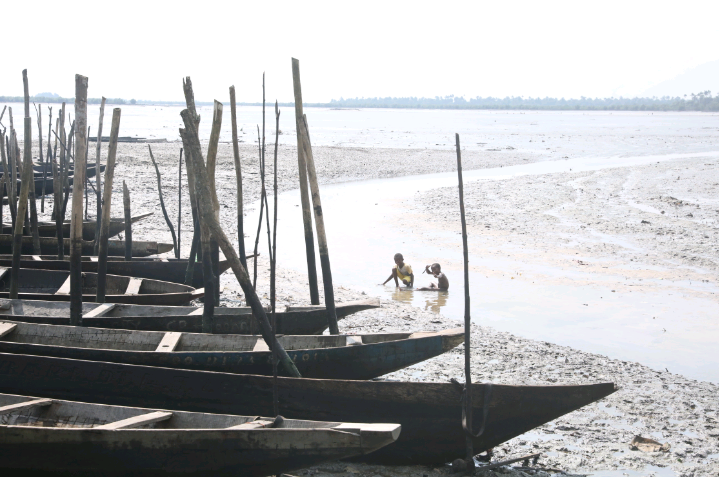
The oil spills had devastating impacts on the forests and fisheries that the people depend on for their food and livelihood. Many K-Dere residents grew up near Kidaro Creek, where they fish. Fishing was the mainstay of the local economy but the harvest has dwindled because of the pollution of the water body.
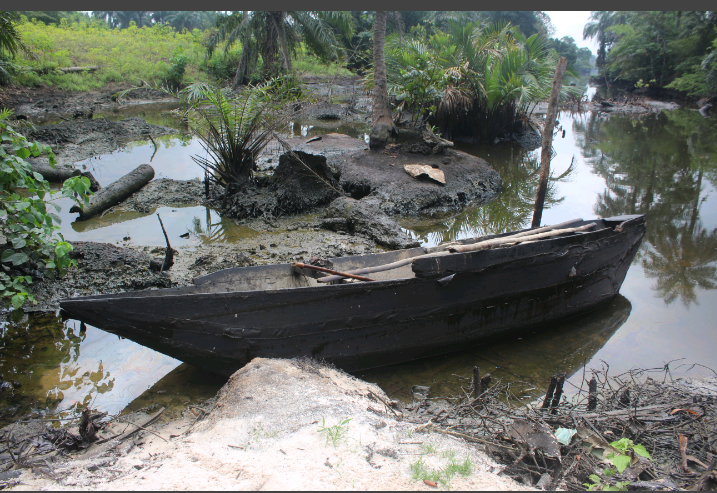
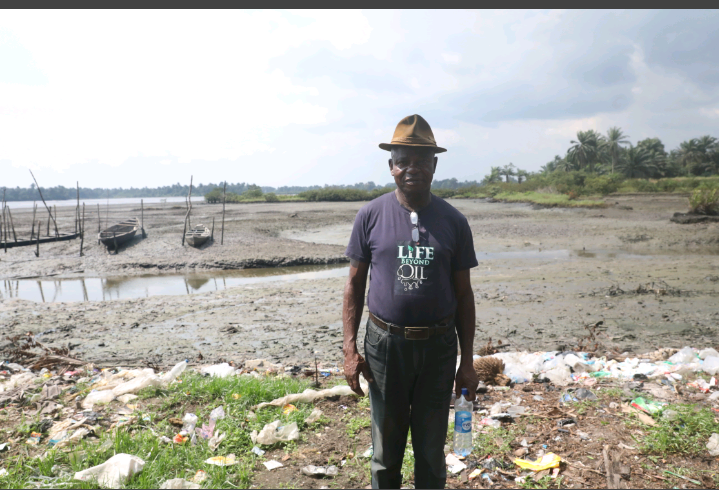
contaminated River at Bodo community
“Growing up, I would watch my father fish from this very creek and on sunny days like this, many of us will come to the creek to cool off. Here, there was once luscious vegetation and the sound of laughter and happiness was infectious,” said Erabanabari Kobah, an environmental scientist from K-Dere.
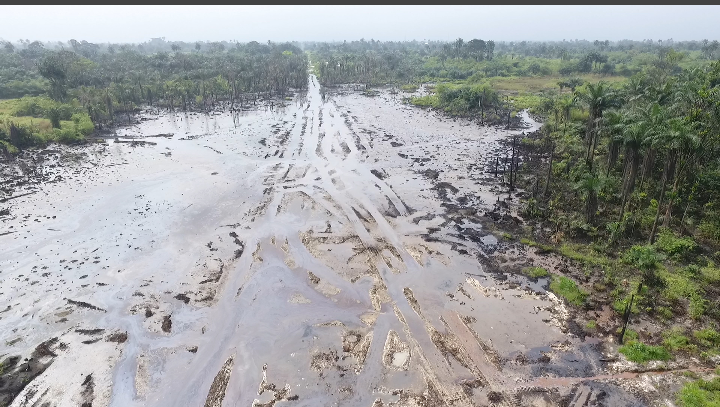
Oil spill contaminated Barabeedom swamp in K-Dere community
At an intersection leading to Goi, the smell of crude oil pervaded the air and several deserted houses littered the community. A kilometer or thereabout from the spill site, reporters covered their nose as the noxious smell of polluted environment became more intense.
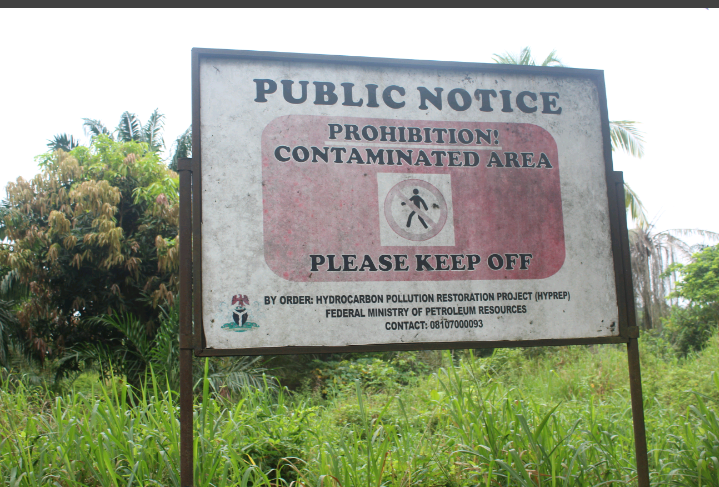
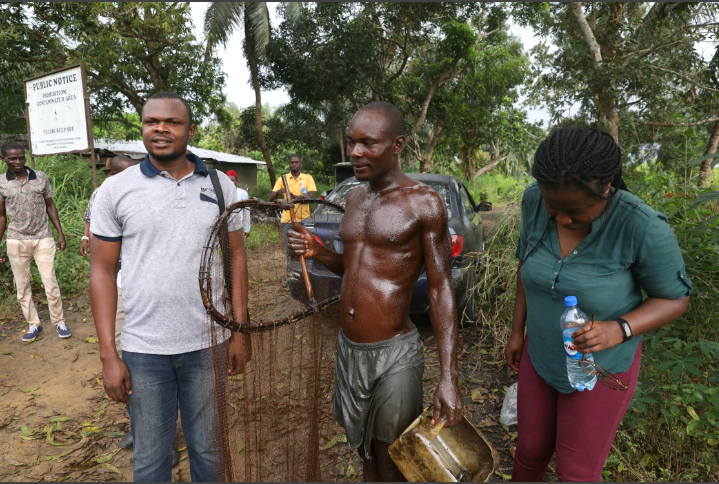
Near the riverbank was a public notice inscribed “Prohibition! contaminated area. Keep off.”
Displayed public notice stopping people from performing activities at Goi community
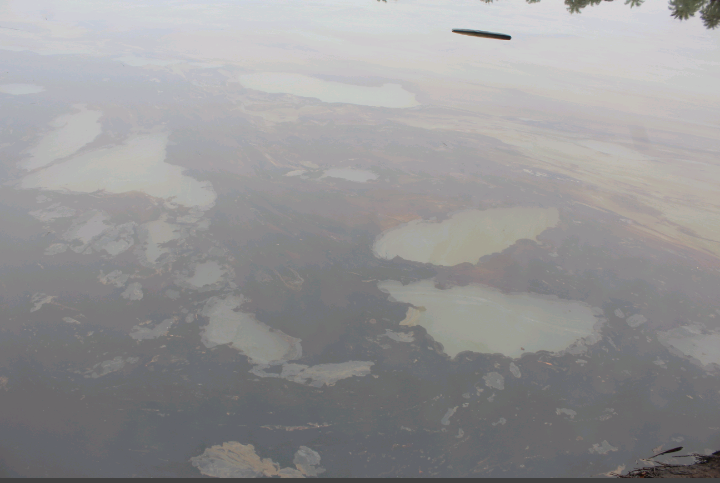
The river has been contaminated with crude oil gliding on the water. Fishermen could only catch a few unhealthy crabs after several hours of trying.
Raphael Vaneba, 47, still goes to the river to fish despite the environmental and health risks involved. He came out of the river carrying a fishing net on his right hand and an open gallon containing five crabs he had caught. His body was soaked in crude oil. Soon he dropped the fishing net and started to scratch every part of his body.
The reporters and a fisherman soaked in crude oil who had returned from the contaminated river in Goi
“I scratch my body whenever I come out of the contaminated river after fishing. We do not catch fish here anymore because the spilled crude oil has killed them and we don’t get money,” he lamented as he opened the mouth of a crab to show crude oil inside.
As a farmer in Bodo, Caroline Gbogbara’s farmlands also were affected by the oil spill but she continues to farm. During harvest, her cassava and vegetables smell of crude oil.
“We don’t have anything to eat. Farmers farm on lands filled with crude and have no choice but to feed on the contaminated produce. Families are forced to eat from poisoned crops,” she said.
According to the Center for Environment, Human Rights and Development (CEHRD), oil spills could lead to a 60 per cent reduction in household food security and were capable of reducing the ascorbic acid content of vegetables by as much as 36 per cent and the crude protein content of cassava by 40 per cent, which could result in a 24 per cent increase in the prevalence of childhood malnutrition.
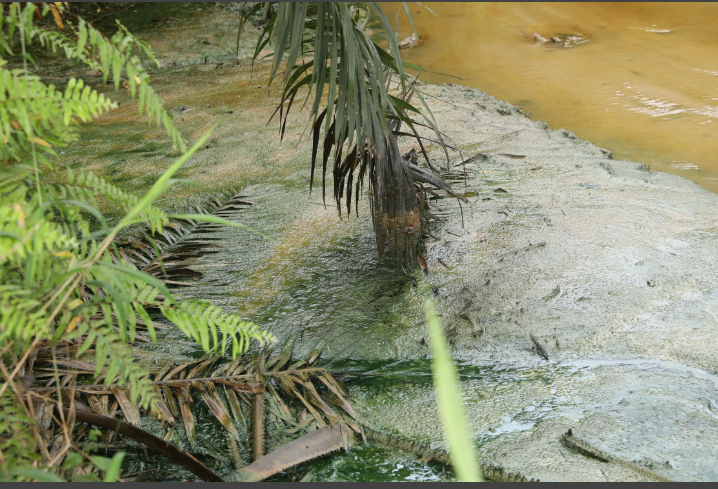
Besides the contamination of rivers and farmlands, the communities’ sources of drinking water, which are mainly underground water and streams, have also been contaminated with crude. Goi has a stream where the people collect water to drink. The stream which pathway is now bushy no longer receives visitors to fetch and drink from.
Contaminated stream where people go to fetch drinking water at Goi
“If you fetch the water and pour on a glass cup, you will see crude oil inside. We are drinking poison here,” lamented Dooh.
Before oil was discovered in Bodo community, Emma Pii, chairman, the council of village heads, said the people were living a peaceful life. The economy was buoyant, everybody enjoyed themselves and every family was happy. But with the discovery of oil, they started living in misery.
“Instead of oil to be a blessing, it has become a curse to us,” said Pii. “What Shell has done is to take our oil and make money from it while the people who own the oil are suffering.”
Fishermen inside the contaminated river at Goi
It’s a terrible moment for the people of Ogoni who now live with the consequences of a mistake that was not their doing.
Eleven years after the major oil spill that ravaged the oil-producing communities, people’s health is now failing. They complain of symptoms they do not know the underlying cause.
Oil spills release certain harmful chemicals such as benzene and toluene. Benzene is a known carcinogen while toluene can cause kidney and liver damage. Many spills also cause fires, which release toxic fumes that can cause respiratory problems.
Blood Tests
Each year, hundreds of post-impact assessment studies are conducted to assess the impact of the hazards generated by the oil industry on the social environment and human health due to oil spills. The reporters decided to conduct blood test to determine how oil spills impact the health of the people of Ogoni.
The reporters contacted Dr. Olawale Shipeolu of the Sapphire Health Group in Port Harcourt. He recommended we carry out blood tests to check the kidney and liver functions of the people.
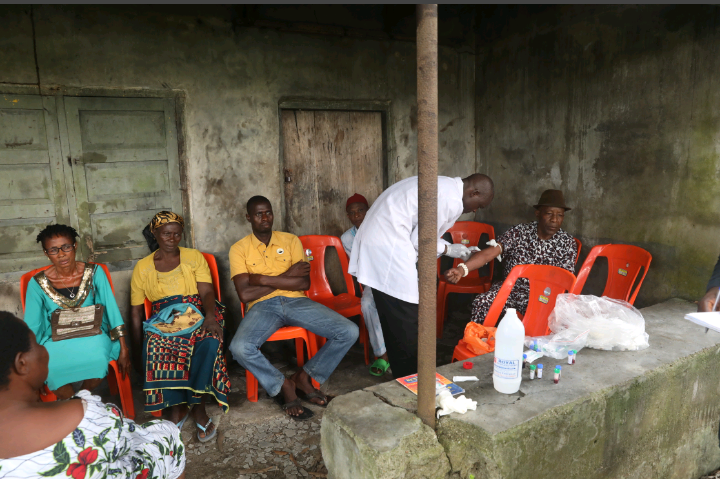
The laboratory scientist drawing a blood sample for investigation
Chukwunonso Okoye, a clinical lab scientist with the Union Diagnostics and Clinical Services, traveled with the reporters to Ogoniland to take blood samples of 50 non-smoking and non-drinking volunteers from Bodo, Goi, K-Dere, and Mogho communities. The collected samples were then taken to the lab’s headquarters in Lagos for analysis.
Blood samples taken for laboratory investigation on the effect of oil spill in Ogoni
Full Blood Count (FBC), electrotype urea and creatinine (e/u/cr) and Liver Function Test (LFT) was conducted on 50 blood samples drawn from 26 males and 24 females, including youths and adults.
The laboratory scientist drawing a blood sample for investigation
The laboratory scientist drawing a blood sample for investigation
The laboratory scientist drawing a blood sample for investigation
Based on the results generated by the Union diagnostics and clinical services, no electrolytes were deranged, indicating nothing was happening with the kidneys. However, the results showed some level of derangements of liver enzymes.
The test results showing the effect of the oil spills in the liver cells
Out of 50, 38 people representing 76 per cent of the total number were found to have elevated Aspartate Aminotransferase (AST); 18 people representing 36 per cent of the population had elevated Alanine Transaminase (ALT); 22 people representing 44 per cent of the population had elevated direct bilirubin; 11 people representing 22 per cent of the population had elevated total bilirubin while none had an elevated Alkaline Phosphatase.
For instance, Stephen Kpea had an elevated AST of 253 U/L and ALT of 107 U/L while Clement Glogo had an elevated AST level of 164 U/L.
Young people within the age of 18 – 25 also had elevated liver enzymes. 19-year-old Gbogbara Barriduula had an elevated AST of 60 U/L while 20-year-old Happiness Sunday had an elevated AST of 62 U/L and ALT of 79 U/L.
The United States Centre for Disease Control and Prevention (CDC) in 2008 put the reference range for Alanine Aminotransferase (ALT), an enzyme found primarily in the liver and kidney at 11-47 U/L for males over 20 years and 7-30 U/L for females of the same age.
CDC in 2012 also put the reference range of Aspartate Aminotransferase (AST) at 13-38 U/L for 10 to 20 years of age and 13-33 U/L for 20 years and above for both genders. Based on the results, more than half of the tested volunteers had their unit levels higher than the CDC reference range.
On the other hand, total bilirubin normal levels fall between 0.3 and 1.2 milligrams per deciliter (mg/dL). Anything above 1.2 mg/dL is usually considered high while direct bilirubin level is less than 0.4 mg/dl, according to Union Diagnostics.
For example, Lucky Yira’s total bilirubin and direct bilirubin were 8.0 mg/dl and 3.9 mg/dl respectively.
“Such elevated liver enzymes may indicate damage to the liver cells and such patients might be prone to liver disease,” said Dr. Festus Davies of the Sapphire Health Group.
A study published in the Journal of Hepatology by Dr. Kezhong Zhang of the Wayne State University School of Medicine’s Center for Molecular Medicine and Genetics and his team discovered that exposure to airborne particulate matter in fine ranges (PM 2.5) has a direct adverse health effect on the liver and causes hepatic fibrosis, an illness associated with metabolic disease and liver cancer.
Also, research by Kesava Reddy and Mark D’Andrea of the University Cancer and Diagnostic Centers, Houston, Texas, linked elevated AST and ALT to exposure to toxic substances due to oil spills.
A contaminated oil spill site at K-Dere community
“That is the effect of the polluted environment,” said Dooh, when he learnt he had an elevated AST. “The environment should be taken care of and there should be medical outreach to treat the people so that they can recover.”
Exposure to toxic substances
Petroleum hydrocarbons can enter the body through the air, food, and water or when one accidentally eats or touches soil or sediment that is contaminated with oil. Crude oil contains a significant amount of aromatic compounds including Benzene, Ethylbenzene, Toluene, and Xylenes (BTEX), which are the most dangerous gaseous elements of crude oil and poses the risk of acute or chronic toxicity in humans during its production, distribution, and use.
In 2011, the United Nations Environment Programme (UNEP) published a study on the impact of the oil spill on the communities in Ogoniland after the federal government hired its services to assess the extent of the oil spill.
Crude oil moving on water at the river in Goi
The report revealed an appalling level of pollution, including the contamination of agricultural land and fisheries, drinking water, and the exposure of hundreds of thousands of people to serious health risks.
The report revealed that water from wells in communities in Ogoniland is contaminated with benzene, a known carcinogen at levels over 900 times above the World Health Organization (WHO) guideline.
At 60, Dooh still remembers how his parents suffered and died due to diseases caused by the oil spill. Dooh’s anger was felt through his voice as he spoke.
“Any young man who wants to [continue to] stay here will definitely not see tomorrow,” Dooh said angrily as his voice intensified. We are inhaling poisonous air.”
Migration looms
Houses in Goi have been deserted as residents run for survival. While some migrated to Port Harcourt, others migrated to neighbouring communities.
Dooh now lives with his family in a small bungalow house his father built in Bodo since UNEP advised them to leave to protect themselves. He has been living there ever since but still visits Goi occasionally.
“We are migrating,” said Pii. “We are refugees because when the means of livelihood of the people have been destroyed and you do not have what to sustain you, you have to migrate to where you can do something to survive.”
89-year-old Tudor Tomii is from Goi community but now lives in Bodo due to the oil spill that ravaged his community.
“Here I am living in diaspora because of oil pollution. We can’t eat anything we plant there. We order anything we eat from Port Harcourt. We buy water from outside Ogoniland. Normally we drink from streams. Since the stream is polluted, we don’t have anywhere to drink from,” he lamented.
Compensation to the communities
Of the communities affected, only Bodo has been compensated by Shell after its people filed a case in the United Kingdom, where Shell is incorporated. Shell accepted the responsibility for the oil spill in Bodo in 2008 and 2009. The parties settled in 2015 and US$83.4 million, 82 percent short of their original demand of US$454.9 million was paid to the people of Bodo.
Emma Pii, Chairman, Bodo Council of Village Heads at the spill site
Pii said every indigene of Bodo who was 18 years above received N600, 000 from the money. But they are still not satisfied because the oil spill is yet to be cleaned.
Goi, Mogho, and K-Dere are hoping to be compensated by Shell for destroying their livelihood. K-Dere had filed a case for compensation in a Federal High Court in Port Harcourt against Shell for the havoc caused on its land.
But Shell said it can only pay compensation to communities whose oil spills happened as a result of operational failure and not spills caused by sabotage and vandalism.
“The majority of the spill recorded in the Niger Delta, including in Ogoniland were as a result of sabotage and vandalism,” said Shell’s spokesperson Bamildele Odugbesan.
“We don’t pay for sabotage spill. Every operational spill with impact is what we pay compensation for and if there is no impact, we don’t pay. Our pipelines have continued to suffer third party interference.”
Slow cleanup exercise
UNEP in 2011 said the environmental restoration of Ogoniland was possible but could take 25 to 30 years if a comprehensive clean up exercise could begin immediately. It recommended the creation of an Environmental Restoration Fund (ERF) for Ogoniland with a capital of USD 1 billion, to be co-funded by the federal government, Nigeria National Petroleum Corporation (NNPC) and Shell for the remediation of polluted sites in Ogoniland and restoration of livelihoods of people in impacted communities.
A year later, the Nigerian government established the Hydrocarbon Pollution Restoration Project (HYPREP), an agency under the ministry of the environment with the mandate to implement the environmental clean-up programme in Ogoniland.
In 2016, the government then launched a USD 1 billion clean-up and restoration programme of the Ogoniland, with $200 million to be released every year. But the cleanup exercise did not kick off immediately.
UNEP said continued delay in the implementation of the recommendations will not only undermine the livelihoods of the Ogoni communities, but it will also cause the pollution footprint to expand, requiring a fresh investigation to rescope the place and determine the extent of the contamination. Ogoniland is a high rainfall area and the spill has been carried across farmlands and into creeks and the root zone to other areas.
The cleanup exercise later took off in 2019, eight years after UNEP’s recommendation. So far, the sum of $360 million has been released to HYPREP out of which less than $30 million has been spent.
But the cleanup exercise has been slow.
“The cleanup will not be successful,” said Kobah.
“The speed of the cleanup is so slow that the desired results will not be achieved. Since 2011, this place has remained contaminated. This is what the people have been living with all through their lives. This is suicide. The people have been crying and complaining.”
HYPREP said it is only following due process to have a successful cleanup exercise. Being quick without observing the rules, according to HYPREP, will be the reverse side of the slowness and that will be counterproductive.
“The Ogoniland clean-up project is not slow, it is on course and going at a pace that standard remediation practice allows,” said HYPREP’s spokesperson Joseph Kpoobari Nafo.
Sam Kabari, an environmental expert and a lecturer at the Nigerian Maritime University, Delta State disagrees. He sees the drag as a bureaucracy every government agency experiences in the procurement and civil service processes. He believes HYPREP will only achieve its mandate if it functions independently.
“We wanted an independent HYPREP that would own its processes and take critical decisions towards achieving its aims and mandates itself. HYPREP should be in charge of its funds, decisions and day-to-day running,” he suggested.
Dooh accused HYPREP of only cleaning less impacted sites, leaving the highly impacted areas. But HYPREP said the highly impacted sites are not being cleaned yet because they are complex sites, which will be difficult to clean by any of the Nigerian contractors.
According to HYPREP Project Coordinator Marvin Deekil, “We are coming to the highly impacted areas. We need more detailed and extensive work in delivering those sites. That is why we had further strategic meetings in Geneva with UNEP so that we can come up with a better way of addressing those sites. We need international contractors.”
Declare state of emergency in Ogoniland
Ogoni people want the federal government to declare a state of emergency in the region to clean up the entire affected areas. Pii said the oil spill has affected the people socially, politically and culturally.
“With what we have seen here, what we have passed through, what has happened to our children, the elderly and pregnant women, we want the government to declare a state of emergency in Ogoniland,” he said.
They said the emergency measures such as the construction of hospitals and providing alternative sources of water for the affected communities have not been done, putting the health of the people at risk.
Kabari, who is the head, environmental and conservation unit of CEHRD described UNEP’s inability to implement the emergency measures as unacceptable. He said the emergency measures were supposed to have been implemented before the actual remediation activities began.
“Stakeholders are yet to see the provision of portable drinking water in communities where the groundwater was significantly impacted. Stakeholders are however doubtful of HYPREP’s understanding of the UNEP report given the misplaced priority of sequence of the UNEP report implementation,” he said.
“Water for Ogoni is almost there,” said Deekil. “This year, we told you there would be water in the communities. That is the commitment the government is keeping and we are working very hard to ensure it happens. We are going to be seeing the [water] contractors in the communities very soon,” he assured.
To avoid future oil spills, Shell said it has taken effective steps. For the last seven years, Odegbesan said, Shell has replaced 1,300 kilometers of its pipelines, including those in Ogoniland.
“We also monitor the pipelines to ensure nothing is happening to them. If something is happening to them, we can respond swiftly. We have helicopters with high definition aerial cameras hovering over our assets daily to capture the illegal activity on our pipeline. We have intensified our campaign among the local people not to go near oil facilities and engage the public on the danger of pipeline vandalism.
Dooh is sad the cleanup exercise has not been effective as expected. He said until the people are compensated and HYPREP follows UNEP recommendations as instructed, Ogoniland cannot be restored.
“If the cleanup becomes effective, people will go back to the communities and start living well. But if the cleanup is not successful, Ogoni people will continue to suffer,” said Dooh.
This investigation was supported by a grant from the International Center for Journalists (ICFJ) and Microsoft News
NIGERIA has recorded five new cases of coronavirus, bringing the number of confirmed cases to 51.
This new development was confirmed by the Nigeria Centre for Disease Control (NCDC) on Thursday. In its update, shared on Twitter, NCDC announced that Lagos now has 32 cases of coronavirus, making it the state with the highest number of cases in the country.
The Federal Capital Territory, FCT, has now recorded 10 cases, with one of them linked to the Chief of Staff to the President, Abba Kyari, who tested positive a few days ago and is currently receiving treatment.
Ogun State has recorded three cases, while Ekiti, Oyo, Edo, Bauchi, Osun and Rivers each has an index case.
The growing cases in Nigeria has raised concerns over an impending outbreak, for which NCDC and health experts maintain the need for citizens to practice social distancing and observe improved personal hygiene to curb the spread of the virus.
To further prevent the spread of the deadly virus which has killed over 20,000 people globally, institutions and examination bodies in the country have shut down operations and postponed services till further notice.
The ICIR earlier reported that the National Examinations Council (NECO) announced the indefinite postponement of the 2020 National Common Entrance Examination in compliance with regulations on COVID- 19, following the gradual spread of the virus in the country.
So far, Nigeria has recorded one death from COVID-19.
Globally, over 300,000 persons have been infected according to World Health Organisation, WHO.
Currently, there is no known cure or vaccine for the virus and the world remains at the level of managing and curtailing the spread of the virus till a solution is found.
When journalists cover crises, tragedies, and disasters, and interview people affected by them, they face a complicated task: to not cause additional harm to the victims, while at the same time taking care of their own mental health.
The Dart Center is one of the world’s leading authorities on journalism and trauma. At the 11th Global Investigative Journalism Conference, Dr. Cait McMahon, director of Dart Center Asia Pacific, discussed the psychological issues investigative journalists may face in the course of their work — and ways to minimize them. This week, GIJN also spoke with Dart Center Executive Director Bruce Shapiro and Dr. McMahon about how their trauma-reporting guidelines apply to the current global novel coronavirus pandemic.
During a natural disaster or outbreak of violence, a journalist — like a psychotherapist — often takes on the role of a witness, who at times may experience a horror, rage and despair that is almost like that of the victim’s, Dr. McMahon said. The journalist risks psychological harm at three different stages of his or her work: firstly, as a witness or participant in the event; secondly, while communicating and showing compassion to the victims; and thirdly, by telling their stories — allowing their experiences to pass through the reporter to an audience.
While many of the same risks apply, the current coronavirus pandemic also differs from a traumatic event like a tsunami or a bomb blast, Dr. McMahon said: “This is a creeping, invisible thing that everyone in the world is experiencing… we are all in this together for better or worse.”
Director of the Dart Center Asia Pacific Dr. Cait McMahon. Photo: Olga Simanovych
“It’s different to you going to work on a story that’s happened to someone else, which you may or may not have experienced,” she added. “We all have our own experience of this at the moment and we are all part of the story, albeit to different degrees. That means journalists need to be more in tune with what their anxieties are, and what the anxieties are of the people they’re interviewing.”
Dr. McMahon and Shapiro advise journalists to adopt the following strategies for mental health care before, during, and after tackling traumatic stories, including covering the COVID-19 outbreak.
Before: Preparing for a Traumatic Story
Don’t wait until you’re already immersed in a story, when you may be exhausted and overwhelmed by emotions. Draw up an action plan in advance that you‘ll be able to follow once the story is underway.
Investigative Marathon Plan
Plan your reporting schedule. Decide when you will do your toughest work, for example in the morning when you may have more energy.
Take breaks.
Map out the times that will require deep immersion in the situation or during in-depth interviews.
If possible, do as much of this emotionally intense work as early in the story as you can, when you are less tired.
Don’t consume traumatic content before you go to bed.
Make sure to plan for regular sleep and rest, such as swimming, yoga, or seeing friends.
Know your limits, triggers, and weak points.
Make it a rule that you evaluate psychological as well as physical risks before starting an emotionally demanding assignment.
Update your schedule if circumstances require so that you don’t miss a deadline, causing additional stress.
“The brain needs recovery time from stress in order not to get overwhelmed,” Shapiro said. “It’s important to plan now, for example to integrate positive actions into your day.”
Understand your triggers: You need to be aware of the topics that could provoke memories or powerful emotions in you.
Make regular psychological self-examinations. Dr. McMahon noted that if you have recently experienced stress, you may be more vulnerable. Take into consideration not only recent experiences but long-standing trauma as well. Dramatic events, inter-generational conflicts, and personal trauma that have impacted you or the people you care about — these past events can affect your present.
During an interview, you may feel the victim’s trauma more acutely. This can serve as a trigger, re-surfacing your trauma in the form of flashbacks or intense feelings of sadness, anxiety, or panic. Understand your triggers: You need to be aware of the topics that could provoke memories or powerful emotions in you.
Dr. McMahon suggested the following draft checklist of questions to ask yourself before scheduling an important interview.
Checklist for Evaluating Psychological Risk
Do I feel ready to survive other people’s high anxiety and distress? Yes No
Have I recently had any emotional or psychological problems?
Have I recently had personal losses?
Do my relatives have health issues?
Have any family difficulties, arguments, or illnesses forced me to change my plans?
Do I feel more vulnerable than usual?
Am I feeling physically healthy?
Journalists who are feeling vulnerable and anxious because of social distancing or other personal disruptions during the coronavirus outbreak should be aware of their own triggers and seek social connections and support.
Resilience for Reporters amid Social Distancing
Pay extra attention to structure and boundaries in your work day.
Look for opportunities for positive coping, such as through humor or social solidarity.
Examine your mission: A clear sense of purpose and ethics is helpful to making choices and feeling good about what we do each day.
Pursue attainable victories — both personal and professional.
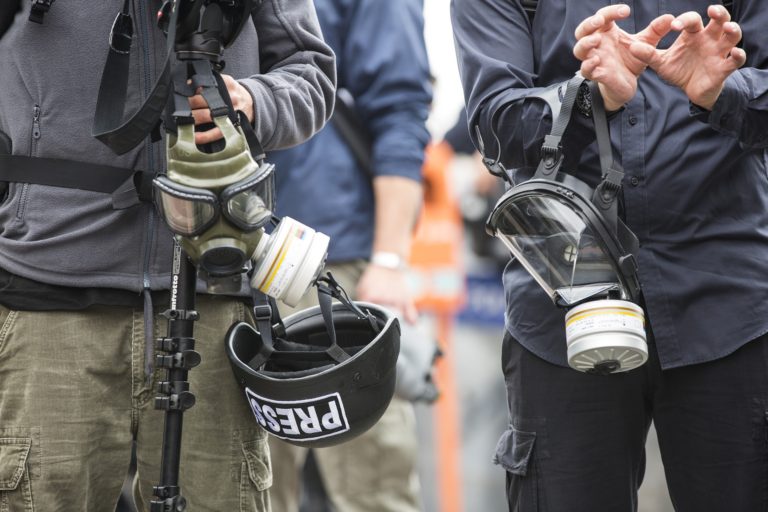
Physical preparedness is also crucial for covering the COVID-19 outbreak, including obtaining masks, gloves, and sanitizer for hands, equipment, and surfaces. Dr. McMahon noted that some journalists may feel uncomfortable or claustrophobic wearing protective equipment due to previous trauma; in which case they should speak to their managers.
During: Working with Traumatic Content
Due to COVID-19 protection measures, you may have to limit face-to-face interviews for your and your interviewees’ safety; Dr. McMahon suggests greater eye contact can help compensate for physical distance. Virtual reporting can still be traumatic.
Psychological trauma is first of all a physical condition. Learn to read your physical reactions to traumatic situations. Remember that journalists are not an exception to these rules, Dr. McMahon said. She advised journalists to get to know themselves, their reactions, and prepare in advance.
The Body’s Response to Trauma
Your body enters a state of alert, as if you were in danger. Your defense mechanisms are activated, affecting your brain chemistry.
You experience pain and distress — this is normal.
You will feel both a physiological and psychological reaction.
If you experience rapid heart palpitations, excessive sweating, crying, or even physical pain, psychologists advise you to take further measures to protect yourself.
Psychological Self-Defense Measures
Pause and breathe.
Take a step back. If possible, leave the room, at least for a short while. Do some exercise: jump or run. Movement and the change of location can help normalize your reaction.
If you can’t leave the room, change your body’s position, making sure to sit as comfortably as possible and straighten your spine. Try feel your body again. At moments of psychological discomfort, we often cross our legs or wring our hands without noticing. Stretch out your legs and unclench your muscles.
Ground yourself. Uncross your legs. Put both feet evenly on the floor, feeling the contact with the ground.
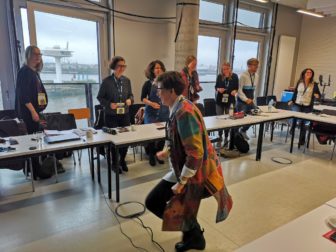
If you feel overwhelmed, do some exercise. Photo: Olga Simanovych
Do a breathing exercise. Inhale on the count of three, hold your breath on the count of five and exhale on the count of eight.
Journalists should also be prepared to encounter unexpected behavior during these unprecedented times. “People’s anxieties are coming out in all sorts of ways,” Dr. McMahon said. “You may not know what people’s triggers are. If you interview a grieving mother, you might be more aware of what her triggers might be, because it’s a contained situation. But this is a new situation.”
After: Recovering from Emotionally Taxing Stories
After reporting on a difficult story, ask yourself whether you have any of the following signs of psychological distress:
Anxiety
Confusion
Feeling isolated
Shame
Feelings of guilt
Passivity
Desperation
Self-condemnation
Feeling demoralized
Feelings of betrayal
Remember that in-depth stories are marathons, not sprints, Dr. McMahon said. Journalists need to pace themselves, vary their schedule and the content of their work, and make time for joy and laughter. Some helpful responses after reporting on a traumatic story include meditation, a session with a therapist, or exercise, according to the Dart Center.
Surviving Psychological Trauma
Do not rush to transcribe the interview immediately; put the traumatic material to one side if you can.
Vary your story angles, including stories of resilience and creative coping strategies, and provide context that includes death rates but also recovery numbers.
Return to your plan for rest and do something to switch off, like walking your dog, sports, meditation, or just having dinner with friends or colleagues.
Discuss any issues that arise with your colleagues. Social support is important. Help each other — find a person in the newsroom with whom you can share your experiences and look for solutions.
Support your colleagues if they have worked on a difficult story.
Take time to think over your response: why it impacted you and what you can do to cope.
“It’s really important to understand the nature of sustained stress,” Shapiro said. “If stress is unrelenting and protracted, eventually your performance falls off and you burn out. It’s important to take proactive steps to get our bodies and minds away from stress.”
Journalists are resilient people, but we are only human, Shapiro added. “Take the time our brains need to recover.”
AN Adamawa State High Court has sentenced Jinga Mayo, the Executive Secretary of the state Christian Pilgrims Welfare Board to five years in prison for embezzling N69 million belonging to the agency.
Mayo was arraigned by the Independent Corrupt Practices and Other Related Offences Commission (ICPC) on three count charges in 2016.
According to the ICPC, the charges border on false information and embezzlement.
One of the charges read that Mayo converted ₦69.2 million meant to execute pilgrims operation in Israel to his personal use and returned duly signed vouchers of payment and receipts by members of the committee which he did not pay.
Second count of the charges read that he conferred corrupt advantage upon himself while the third count said that he knowingly made false statement to an officer of the ICPC.
Delivering his ruling, Justice Nathan Musa found Mayo guilty of two of the charges and acquitted him of one.
A statement by the ICPC read that “Justice Nathan Musa, found him guilty only on two counts and acquitted him on one. He was sentenced to five years imprisonment on the 2nd count without an option of fine, and 6 months imprisonment on the 3rd count with an option of N50, 000. He is however to spend five years in prison, as the sentence is to run concurrently.”
The statement further read that after the judgement, the convict was transferred to officials of Adamawa State Correctional facilitY in Jimeta by the operatives of the ICPC.
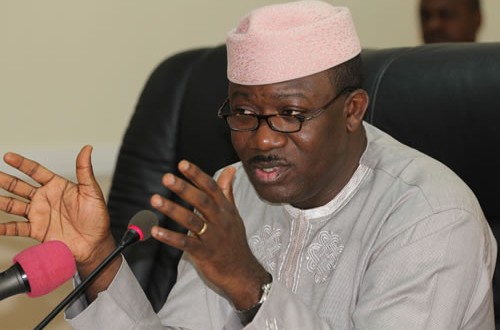
ABOUT 24 hours after the Lagos State government shut down markets in the state, Kayode Fayemi, the Ekiti State governor on Wednesday directed all markets in his state to suspend normal activities.
Those exempted are traders involved in essential goods such as food stuffs, water, medicine and pharmaceutical equipments.
The directive would take effect from Thursday, March 26 at about 5:00pm.
Fayemi described the decision as vital to prevent further spread of the disease and to ensure citizens of the state observe social distancing, among other precautionary measure.
He also encouraged staple food sellers to avoid price inflation of their commodities and produce. Pharmacies were also urged not to hike the prices of essential drugs.
“All medicine stores that are open to the public to make sure they do not sell or display any other items whatsoever, while those selling foodstuffs should not display or sell anything outside foodstuffs,” Fayemi stated in a statement issued by his Chief Press Secretary, Yinka Oyebode, in Ado-Ekiti, on Wednesday.
The governor appealed to commercial drivers and the leadership of National Union of Road Transport Workers (NURTW) and Road Transport Employers Association of Nigeria (RTEAN) in the state to reduce the outrageous fares being charged commuters, mainly students who have been returning home in large numbers, since the closure of schools in the state.
Meanwhile, he tasked the public to adhere to the ban on public gatherings that are above 20 persons either for social, communal or religious purposes, adding that a monitoring and enforcement task force had been dispatched across the state.
Citizens in the state were also urged to support the government and its agencies in the collective war against the coronavirus.
So far, 46 cases of COVID-19 have been recorded in Nigeria, out of which one person died, two were discharged and with 43 active cases.
From the active cases, one was confirmed in Ekiti State.
A Coalition of Civil Societies Organisations, CSOs, under the umbrella of Civil Society Alliance Against COVID-19 (CSAA COVID-19) has condemned the refusal of some Nigerian politicians who recently traveled overseas to self isolate in accordance with directives of the federal government.
Through a statement signed by the 38 member groups, the coalition lamented that their refusal to adhere to the government directive could further hamper efforts to curtail the spread of the deadly virus.
The group named the governors Godwin Ikpeazu, Hope uzodinma and Ifeanyi Ugwuani of Abia, Imo and Enugu states, as some of the politicians that have ignored laid down procedures for persons who have return from foreign traveled in the last 14 days.
“Most notably, the Chief of Staff to President Buhari, and the Governor of Bauchi State, have tested positive for Covid-19. We are also calling attention to members of the National Assembly and governors such as those of Abia, Enugu and Imo who have been seen at public events well within the period of 14 days since their return from overseas,” the coalitions statement read.
Applauding the efforts of Nigeria Centre for Disease Control (NCDC), the Federal Ministry of Health, and other medical professionals, the group said their prayers and support are with the agencies and individuals as they put themselves at risk for the benefit of all Nigerians.
Owing to the fast spreading nature of the disease, the CSOs said it stands by the many people who have been subjected to testing, isolation and screening due to the recklessness of some politicians who have refused to be tested.
“We also stand with all of those who have been in contact with politicians who have acted recklessly and must now endure testing, isolation, and probably repeated screening along with their families and loved ones,” the group said.
The group demanded that attention be paid to the most vulnerable people in the society and advised federal and state governments to take cognisance of measures against the virus so as not to harm low income earners in the society.
They emphasised the need for an all round support of all stakeholders in the country including the private sector and religious bodies
THE Nigerian Center for Disease Control (NCDC) earlier this morning has confirmed two new cases of the deadly pandemic coronavirus. The two cases are said to be from Osun and Lagos, the epicentre of the virus.
With the two new confirmed cases, Nigeria is currently battling with 46 cases of coronavirus.
The doctor who spoke to The ICIR under annonimity said the case was brought to Obafemi Awolowo University Teaching Hospital Complex (OAU THC), Ile-Ifr in Osun State.
NCDC confirmed that the index case arrived Nigeria in the last seven days from the United Kingdom (UK).
In the UK, the 422 patients who tested positive for coronavirus (COVID-19) have died.
Globally, the deadly virus has infected over 380,000 people and killed over 16,000 persons, according to John Hopkins Coronavirus Resource Centre.
THE video showing a woman who claimed that ingesting raw onions and garlics is capable of curing the deadly coronavirus in Nigeria has again gone viral on social media.
The video has been spreading mainly on Whatsapp mobile messaging application and Twitter.
As of 24 March, 375,498 persons have contracted the Coronavirus globally, while 16,362 deaths recorded in 196 countries, with no cure.
The anonymous woman claimed that once the onion or garlic is consumed or sliced and placed at room corners, people infected of COVID-19 will be cured.
She said the vegetables also could be blended into smoothes and ingested.
“I’m here to introduce another prevention for coronavirus across the globe. Please and please all the fathers and mothers, go and get your garlic and onions. It is good and it kills the virus. It is good for protection,” she said.
“Use it as many as possible; eat the raw one anytime, any day. It works. Please share and save someone.”
“E ran enikan lowo,” she said in local Yoruba language meaning help somebody.
“Use a knife to cut it and put it in your room. If you have 10 rooms, put it in your 10 rooms. Put it in your living rooms, toilets, kitchen at the corners my brethren.”
“Go and get your onions as many as possible. Get it and use it raw any day, anytime and any hour. Blend and use the water for protection,” she dramatically appealed to the public with strong self-conviction.
Findings
As at the time of this fact-check, COVID-19 disease has gotten no cure.
My mum has put an onion in the corner of every room in the house because whatsapp advised her to. This is the peak of the whatsapp mother’s cult. I am unable to can lmao pic.twitter.com/KF894u0aHt
Though several reports, for instance, the Times of India has reported that swallowing onions, garlic could help fight lung infections and reduce cholesterol level in the body, the report has no scientific backing.
Moreover, there are no verifiable or scientific proofs to affirm the claim that onions could stop people from contracting the COVID-19 virus.
Sanja Jelic, a Medical Doctor and expert in pulmonary diseases in a medically reviewed report also maintained that onion cannot stop flu or cold as claimed.
“There is nothing special about an onion that would kill these pathogens.”
But David Cooley, Raw Food Lifestyle and Wellness Consultant argued that consumption of some local foods could help better respiration. Ginger intake, he stated in his article titled foods that help the respiratory system, detoxifies the lungs, garlic is capable of cleaning the lungs while onions could safeguard the lungs linings.
“Onions — loaded with flavonoids (antioxidant), which help fight inflammation from asthma by strengthening the capillary walls. They also can protect the lining of lungs and bronchial tubes from damage caused by pollution,” says Cooley but never said their intake could cure the deadly disease. He did not also make reference to any particular study.
Verdict
There are no proven and scientifically-backed evidence to show that consuming onions and garlic can cure a victim of COVID-19.
There are also no proofs that the two identified vegetables could protect people from contracting the deadly disease, let alone placing sliced onions by the room corners as a preventive measure.
Therefore, the claims are false as they lack credible evidence.
AN Ethiopian Airlines Freighter carrying medical supplies donated by the co-founder of Alibaba. Jack Ma, landed on Tuesday afternoon at the Lagos International Airport.
The aircraft left Ethiopia on Tuesday morning to make deliveries to Nigeria, South Africa, Burundi, Rwanda, Togo, Zambia, Zimbabwe, Kenya, and South Sudan.
On arrival, the airline said it was pleased to deliver these much needed critical medical supplies and equipment to help in the global fight against the COVID-19.
“We appreciate the donation of the Jack Ma Foundation and the generosity of Jack Ma. We admire Abiy Ahmed, our Prime Minister, for his initiative and organization of the entire coordination of the process,” Firihiewot Mekonnen, general manager, Ethiopian Airlines, Nigeria said.
These donations which include 1.1million testing kits, six million masks and 60,000 protective suits were being distributed throughout Africa, with distributions already done to other countries like Egypt, Sudan, Eritrea and Djibouti on Monday just as the Abiy Ahmed Ethiopian Prime Minister promised.