Home Blog Page 2171

INTERVIEW: I have no words that can cure Buhari’s illness — Odinkalu [Part II]

CHIDI Odinkalu, a writer and Professor of Law, and former chairman of the National Human Rights Commission has for several decades dedicated himself to advancing human rights and political accountability in Nigeria.

On Thursday, February 13, and in the company of The ICIR‘s Dayo Aiyetan, Ajibola Amzat, Yekeen Akinwale, and ‘Kunle Adebajo, Odinkalu bared his thoughts on trending issues in Nigeria.

In this final part, he speaks on the controversial subject of hate speech, the role of courts in settling electoral disputes and what should be their limits, President Muhammadu Buhari’s decision to retain the security service chiefs, the emergence of Amotekun, the idea of Igbo presidency, and what he would tell Buhari if he were in a room with him.


The ICIR: You were former chairman of the National Human Rights Commission and one of the key voices that fought against hate speech, but now you among those standing against the bill meant to control hate speech. How do you reconcile that?

Odinkalu: Because I don’t think the bill addresses what we need to do. Right now, we have enough laws against hate speech as it is. We have the Electoral Act, we have provisions on hate speech, we have the Penal Code, we have the Criminal Code, we have the Criminal Law of Lagos State, we have the Violence Against Persons Prohibition Act. All of them have provisions against hate speech at the moment. 

But they are not being implemented. Why? If you read the Babalakin Commission of Inquiry Report. The commission investigated FEDECO, that is the Federal Electoral Commission, in 1983. It was constituted by General Buhari in 1984, submitted its report in 1986 to General Babangida. And when you read the report, you will see that people who were arrested and supposedly to be prosecuted for hate speech in elections then were all set free on nolle prosequis issued by the Attorney General in the respective states where they were due to be persecuted. Why? Because their hate speech was profitable to the parties that were ruling in the respective states. It is the same thing today.

When you go on social media, the biggest sources of hate are agents of the Buhari Media Centre and APC. Between November and the beginning of January, I either shut down or got Twitter to intervene with at least eight handles, eight BMC handles, all of them pursuing hate and threatening violence. But the government is not going to prosecute them because they are useful handles for the purposes of what they do. And, by the way, in 2011 after the post-election violence in Kaduna, the then President Goodluck Jonathan set up the Sheikh Lemu Panel of Inquiry into the post-election violence. Sheikh Lemu said the biggest sources of hate were politicians who were at elections preaching hate. There is no law that empowers politicians to preach hate. There is every law that says if they do that you can prosecute them, but politicians don’t prosecute themselves.

Why do you want to prosecute citizens who are saying something you don’t like? Because the politicians are giving bad examples, citizens follow along. If you have positive examples from politicians, citizens will copy.

Three, the biggest cure for bad speech is more speech. When you go on social media, for instance, you will notice that when people do terrible things, other people will call them out and by piling in on you, they shame you into behaving properly. That is the biggest enforcement mechanism. It is not being sent to jail. As we are having this conversation today, Agba Jalingo in Calabar has just made bail, after 175 days in detention for a crime he did not commit because he said something a governor did not like – account for money meant for a community bank.

And the same thing goes on around the country. I mean we are in this room with a young man who was rusticated from a university for saying something the university authorities did not like.

Who wants to be in the position of being chased around by people who do not like him? In 2015, all we did at the Human Rights Commission was we went after hate speech with the hashtag #NoHateSpeechNG and we recruited influencers and persuaded them. So they helped us track as much as possible what was going on social media. And then they brought things to our attention and we made a determination as to whether or not it crossed the threshold of hate and dangerous speech. And if it did, all we did was went to that post and we commented on it, #NoHateSpeechNG. People piled in on it; we used that to clamp down on hate speech. We were not asking for anybody to be sent to jail.

And it seems to me there are very low-intensity mechanisms by which government can address the problem of hate speech, but the reason people are afraid and rightly so about this bill is that it doesn’t address hate speech but rather is to be addressed at controlling social media, controlling mechanisms of expression that the government just finds too difficult and not under its hold.

The ICIR: That is exactly what bothers most people. It is not just about hate speech and social media but seemingly increasing intolerance on the part of government. And the courts are not helping matters, bails are being delayed. Within the context of what is happening, how does the ordinary citizen have any confidence in the judiciary or legislature, which all appear to be in the hands of one person?

Odinkalu: Precisely the point. I dare to say this is not an APC/PDP issue, it is not just the federal government; everybody is doing it. The federal government is intolerant, state governors are intolerant, APC governors are intolerant, PDP governors are intolerant. It is a culture of powerful people oppressing people who are below them and vulnerable people with appearances of whatever it is they are controlling in the state. And you can see, in the case of IG Wala, who was sent to jail for seven years for making some allegations about the chairman of the Pilgrims’ Welfare Board of the Hajj Commission. If you read the judgment in the case, you will weep for the judiciary. Yes, you will weep for the judiciary. The point I am making is this is not about the party affiliation, it is just that people believe power is there to be used to destroy those who don’t have access to it.

I don’t think the framework is there at the moment for trust between citizens and the state. People want to as much as possible avoid the state or avoid having anything to do with it, whether you are a powerful media house or a lowly citizen, it is the same thing.

And as long as we are in that situation, Nigeria is going to have difficulties being able to generate the kind of followership from the citizenship to propel a state that can compete with the rest of the world in the 21st century.

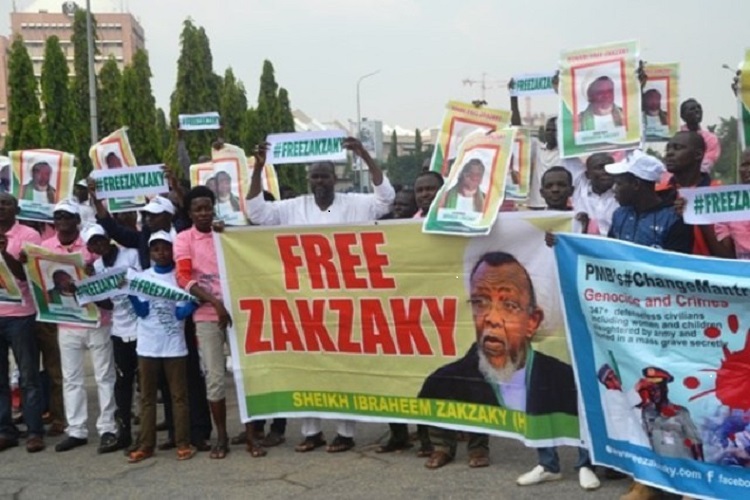
The ICIR: That takes us to the way police have handled protests in recent times. We have had cases of the police using live bullets against protesters and have recorded quite a number of deaths. It seems the government is more reckless in the violation of human rights. There is also the violation of court orders for the release of Ibrahim Zakzaky. Is there still hope for this government? We still have about three years to go.

Odinkalu: If we lose hope, that means we are all in trouble because then there is no other reason to live. Hope may not necessarily come from the government but we have got to believe that it is going to be possible to survive even this administration.

In 1995-97, a lot of Nigerians were losing hope and then all of a sudden we discovered hope, Abacha was gone and democracy – at least elective government – arrived. Then the politicians went their way and we are where we are. But the one thing I believe is we can’t lose hope and I am sure you are doing what you are doing partly as a project of hope.

Your [The ICIR] stories are not tangible, it is not as if we can hold your reports and shout eureka, yet your stories contribute to a tapestry that hopefully should inject citizens with an idea that a better tomorrow is possible and that is all that we can do.

And again to be fair, some people in the administration, within the public service, try. Through his own experience with intolerant neighbours, I think Yemi Osinbanjo has not done too terribly in terms of projecting the message of hope in quiet ways. Obviously being vice president is the most difficult job in the country right now and as vice president also you cannot upstage your principal, you have to be careful about optics of upstaging your principal.

But within the constraints of the office, now and again he does things that suggest he gets the message and he understands how it is about trying to do your best to project hope and be able to leverage on that for things that are bigger. And that’s why you can really ask for of people who are in public service. I talked about Governor Zulum and I talked about Governor Fashola. So, now and again you find some people who are making that effort, we need many more of those. But, and I think I have to say this, part of our problem is the judiciary and the uncertainties that the judiciary is bringing into the process which increasingly may be contributing to destroying people’s beliefs in the idea of elective government.

Today we are hearing that the Supreme Court has just decided that David Lyon in Bayelsa cannot be sworn in tomorrow. In Imo State, Emeka Ihedioha, who quite clearly won the elections, unquestionably won the elections, has also of a sudden been struck down as governor.

In Zamfara, again you had an outcome, elections were done, and then the Supreme Court said  … My view quite honestly is that it is not up to judges to decide who wins or loses elections. And you can see what is happening. Politicians no longer celebrate the declarations that come from elections. They wait until the tribunal, Court of Appeal, and Supreme Court have ruled, and that is when they start celebrating. That is just destructive.

Of course, we are responding to a reality that INEC has not been the kind of independent umpire that we expect, but democracy never promised magic. It promised that you will make mistakes, you will stumble, you will learn. So you don’t have to have a linear graph of progress. You have reversals.

Now, what is happening here is that the Supreme Court – of all courts, not even the trial courts – is introducing tremendous uncertainties into the picture. As I said, my view is that the Supreme Court can in fact strike out an election but the right to institute a government cannot be the decision of a majority of two judges out of three or three judges out of five or four judges out of seven.

And you can end up in a situation in which four judges from states totally unrelated to any part of the country where the issues are sit down and decide what happens in a state. Who is the panel that decided the Ihedioha case? A judge from Lagos, another judge from Zamfara, another judge from Niger. They connect one, two and decide who wins. That is the system and that’s wrong. I frankly believe that is wrong.

Let them strike down the elections and tell the people to go back, under these conditions, go back and conduct fresh elections. “INEC, you do it right this time.” It seems to me that is the remedy. Not you go and conjecture numbers that are manufactured and then you go and decide.

Another point is the inconsistency in the composition of the panels. Now for the presidential election panel, Mrs Odili could not sit, her husband is a former governor of Rivers State and his party affiliations are known. Justice Kekere-Ekun could not sit, again I suspect because of her family, marital links because this was a contest between the PDP and APC. At the Court of Appeal public pressure made sure that Justice Bukachiwa could not sit because of her marital links. Today, David Lyon has been sacked. Who was the presiding Justice of the Supreme Court in the case? Mrs Odili. Now, Emeka Ihedioha was sacked. Who read the judgment in that case? Justice Kekere-Ekun. There is no consistency and the optics don’t look good for the judiciary, it seems to me.

And when the people lose faith or are made to begin to question decisions of the judiciary for reasons other than legitimate disagreement, there is a problem. I don’t want to cast aspersions on any judiciary officer because I don’t have the material but I do think that the optics can be very bad for the Nigerian judiciary.

The ICIR: Staying on the topic of elections, many people are worried, looking at what happened in the last elections in Kogi and Bayelsa. People are not only losing confidence in the court but in the electoral process. It then means that the next elections will come and people will do anything to get into office.

Odinkalu: But that is the jurisprudence that has been manufactured by the Supreme Court. The jurisprudence coming out of the Supreme Court on elections is terrible. It basically licenses anything. You can get votes through a barrel of gun and that’s fine. But it goes further. With the judgment in Osun, you can actually go and get kidnappers or anything to lock in a judge and make sure he doesn’t go to court on a day and any judgment procured is gone, the proceedings of the tribunal can be gone. It totally endangers the system. I don’t think that the degree of contemplation required for that level of decision-making exists, which is why increasingly my view is that serving judges should not get involved in election petitions.

We have enough retired judges to take care of election petitions at the highest levels — presidential, governorship. Can we assign that to retired judges? What you will have is it saves time for judges to do their regular work and the incentives to over-monetise the system may well be reduced. I don’t know whether they will be completely reduced but it may well be possible to reduce those incentives.

The ICIR: In your own case in court instituted by former Rivers governor Peter Odili, you said the system that produced the judgment isn’t fair enough but you are appealing. Against the background that you don’t believe in the integrity of the judiciary, how hopeful are you?

Odinkalu: The case is still in court and my lawyers are handling that. The system must be allowed to correct itself. You have got to allow for the possibility that the system will correct itself. That is the reason why there are appeals. By design, the judicial system recognises that human errors do happen and for the possibility that it can correct itself. And even the Supreme Court can review its decisions. 

Governor Ihedioha is before the Supreme Court now with an application for the court to review itself; let’s see what happens. And I do genuinely believe that it is important to allow the system to correct itself before we reach our conclusions.

I invested in that process with everything I have. Let us allow the judicial process to work its way and then we will see what happens.

The ICIR: The Obama administration refused to give arms and ammunitions to Nigeria and one of the reasons they say is that we were decertified under the US Leahy Law. Now, the Trump administration is giving arms and ammunition to Nigeria and we know that a whole lot of them will find their way into the hands of Boko Haram. So, will the American government, in this case, be held culpable?

Odinkalu: I don’t know. I don’t know the contracts under which these supplies have taken place, so I don’t want to make conclusions about dispositions I’m not totally informed about. It is also the case that strictly speaking, under the US law, where you can trace causation between the US jurisdiction and violations of human dignity that happened outside the US jurisdiction, with instrumentality that is traceable back to the US jurisdiction, then you can establish liability. So if ammunition suppliers in the United States supply ammunitions that ultimately end up in the hands of Boko Haram without adequate safeguards, which are then used to violate the peace of people, say a violation of human rights, then it seems to me that’s it’s possible to trace that back to the United States and hold them for liability. But we will deal with that when we get to that. 

When you look at the numbers of security personnel killed, in nearly every situation, their weapons are collected by the people who kill them. We have had a lot of military bases destroyed in Borno and all their ammunitions were confiscated, seized, and taken over by Boko Haram or alleged Boko Haram elements. That’s a huge factor in the rearmament of Boko Haram.

So, that’s not to be ruled out. I don’t think we have done enough to make sure that doesn’t happen and we are not into this largely because we can’t protect a whole territory. So we are depopulating rural and civil rural settlements and setting them up into mega camps around which we can set up protection mechanisms with military assets and all of that, concentrate them so that we don’t have to disburse them. That’s exactly what is happening now in the northeast, certainly in Borno state.

That says we are limited in terms of our assets credibility for the purposes of managing the insurgency and that also says, contrary to what the Chief of Army Staff has said in most of his recent interviews that this is a crisis to be won, it doesn’t have an end in sight.

The ICIR: Virtually everybody in Nigeria but the president thinks that the service chiefs should be changed because insecurity is worsening. Why wouldn’t the president change the service chiefs even though they have failed woefully?

Odinkalu: Because he is the only person whose vote counts. 

The ICIR: What is he protecting? 

Odinkalu: You have got to find out. You see, you have a situation in which, I believe CDS [the Chief of Defence Staff] is RC [Regular Course] 25 or 26, and all the service chiefs are between RC 25 and RC 29, and now there are only I believe three Generals who met the Chief of Army Staff in the Defence Academy. Not more than three. 

There is General Oyebade, who I believe is RC 32, and then we’ve got Adeosun, who is RC 33, and one other. These are the only Generals who met the Chief of Army Staff. The COAS is RC 29. Now, RC 30 is down, RC 31 down, RC 32 is pretty much finished, 33 does not have more than two people left, 34 gone. How do you achieve quality replacements? We think our problem is the battlefront but you also have to preserve career viability for officers, and not just one officer but for cohorts of officers, and which is why officers are identified by their Regular Course.

When you have a particular course cohort exterminated by effluxion of time without achieving career ambitions, it breeds resentment, and that’s what is happening with our armed forces as it is. And that is probably the biggest source of problems in the fight against the insurgency. Why because we have got service chiefs who are supposed to be there until the day after Armageddon. Well, Armageddon is coming and it’s already happening. 

The ICIR: Lately, there have been reports on human rights violations, extra-judicial killings. Some are of the opinion that there have been a lot of war crimes in Nigeria. And, so many people have invited the International Criminal Court (ICC). Do you subscribe to the ICC coming to investigate and establish those accusations?

Odinkalu: When I was chair of the National Human Rights Commission (NHRC), I made a lot of efforts to establish dialogue with the leadership of the security services, first with General Azazi, Colonel Dasuki, with Chris Ekpenyong at the SSS, and late Alex Badeh. There are a lot of things we were able to achieve, which I cannot mention, which I will not allow myself to discuss publicly. I remember my relationship with Badeh initially didn’t always work and I remember the last encounter we had before we unlocked think, I told him, you see, I respect your uniform but you don’t have a monopoly of patriotism. I’m Nigerian just as you are and, believe it or not, I love this country as much as you do. 

I told them, the work you guys have got to do is very difficult and many of us will not be able to do it. I don’t want under my watch as chairman of NHRC for any Nigerian soldier or general to be charged or indicted by the ICC. I don’t care what is involved, but that means you have also got to trust people like me to do the kinds of things we need to do so that if they look to charge anybody, you can we have effective national institutions and they have investigated and done their work.

I remember when we did the Apo killings investigations at the NHRC, there were a lot of threats, a lot of people abused me, and a lot of people threatened to kill me. Of course, we found that those people had been unlawfully killed and we awarded damages. What people didn’t notice is that that was the first time senior generals in the armed forces were testifying publicly before any civilian-led government body in Nigeria’s history. That was the first time we were having that kind of encounter. We went to SSS headquarters and we took confidential evidence. And what people didn’t know was that a lot of negotiations went into convening all of that.

There was something else they didn’t realise, which is what I tried explaining to them. People look at what we say and think it is bad, [but] think what we could have said. We could easily have said the officers who killed these people were criminals and should be prosecuted; we didn’t say that. We could have named particular officers and said they should be indicted, they should lose their ranks, but we didn’t say any of that. All we did was exonerate the people who had been called terrorists post-mortem and awarded damages. But what that meant was, by doing that, you inoculate Nigerian officers against foreign intervention and people don’t understand this about human rights. It is actually a way to elevate the moral and diplomatic authority and currency of the country.

They think you’re there to bring the country down, but it is the exact opposite when you do it right and when you do it with skill and authority. Like I said, there are things I just can’t say and until I die I won’t be able to say them but I have documents to back everything up. 

At a point, there were things I did with the service chiefs that no member of my governing council knew about but, at the end of the day, we’ve got to understand that we have only one country. And with good conscience and due regards to legality, there are ways and means, boundaries within which we can do things that would enhance the way we conduct this campaign now on insurgency, against terrorism, and insecurity. At the moment, that isn’t happening. Of course, it is not helping that the current regime has refused or failed or neglected to redesignate a new governing council for the NHRC since 2015 and so I am the last chair of the commission. I don’t think that’s right.

The ICIR: A lot of Nigerians are always saying that people who have ideas and can run this country much better than what we have now are always shy of power, and never want to get involved because of the nature of politics in Nigeria. Are you one of those who think that I could change a lot of things but I don’t want to get involved? Putting it differently, the means by which leadership emerges appear to be defective and maybe people like us think that the system would not allow us to get there. How can we fix that system so that it allows our best brains to get into political office?

Odinkalu: First of all, we don’t all have to be politicians. There is power in different areas of life and I think part of the Nigerian problem is thinking that the only way to attain the ultimate is politics, which is why our GCFR, which is Nigeria’s highest award, is reserved only for heads of states and presidents. There is only one non-former of head of state who has received GCFR and that was Obafemi Awolowo from Shagari 1981. 

Now, there’s no reason why the highest national award cannot go to someone who is not a politician. There is only one non-politician GCON and that’s Aliko Dangote. 

Now, to your larger question, in my state, to signify interest in governorship — primaries in a political party, you need to start your noise-making with about N150 million, just to start noise-making. 

By the time you get to primaries, you would have committed well over N500 million. That’s not even to win primaries. By the time you win primaries, you’re into billions and that’s not the real elections. Now the question is who has that kind of money? No self-respecting professional could possibly have that kind of money. Which means you either have to steal, or you have to have someone steal you and steal your ideas and steal your wellbeing and your livelihood. If that doesn’t happen, you don’t stand a chance. Which means if you then get that person buying you to put you forward, you don’t have a programme. It’s that person’s programme you would be running. Does it make sense then to run?

There are places where it has been different but it is at the tail end of compromise. For instance, Fashola in Lagos State. But you don’t know what he endured. It’s just that he was properly brought up, it seems to me. He had very good grounding and he bore a lot of what he endured with tremendous calm and dignity. But he is the exception. Where else in Nigeria has the relationship between godfather and godson worked out right? None. Absolutely none. That’s the problem. How many are willing to endure that kind of thing and to reach those kinds of Faustian bargains? I don’t think there are too many people. So, can we change that system? Well I have seen so many people who promised to go and change that system, none of them succeeded. 

You know, there are party managers and party owners, which is part of the why. The parties are not organised. They don’t have proper records. There is no proper record sheet of any party, it is in booklets. Now those booklets have holes in them and so if you pay a party manager, your name from not being in the book can become number seven because when the original list was written, numbers were skipped and all these holes need to be filled by people who pay money. 

But if you have proper, legal records, you begin to modernise the parties. Unless you modernise the parties to a point where membership isn’t beholden to this kind of cookery, I don’t think professionals can be chanced.

The ICIR: There are Nigerians who say the country cannot continue as one the way it is. There are people also who say that Amotekun has forced a conversation around restructuring. If politicians won’t allow us to restructure, then we will find our way around it. What are your views about the emergence of Amotekun and the whole conversation around the need for Nigeria to restructure? 

Odinkalu: Amotekun is exactly that. It is restructuring. But you see, it is also thoughtful. Why do I say it is thoughtful? There was a problem with state police, which I think people need to acknowledge. Most state governors who don’t have state police now are despots. So you give them state police now, nobody will go to their states. We recognise, of course, on the other hand, that centralising policing in a federation is problematic. So how do you balance those two things? Avoiding abuse or further abuse of policing resources on the one hand and on the other ensuring that we have the exercise of policing powers in a way that is effective in a federation. 

Amotekun responded to this by saying let us not make it a state proposition but a regional proposition. And in the region, it just happens that we have APC and PDP. So, in that context, Amotekun was thoughtful in addressing the tensions. A regional unit is less likely to be abused by one governor by the mechanisms of inter-state dialogue intra-regional control.

That, it seems to me, recognised the political realities and messiness of the compromises in a federation. Nigeria is over-centralised and unquestionably so. Most states are not viable without federal allocation but most states can develop and be able to grow their revenue if the leaderships are responsible.

Look at Imo State. It was doing under N300 million monthly in Internally Generated Revenue (IGR) under Rochas Okorocha. Emeka Ihedioha was in power for about seven months. In those seven months, he raised the state’s IGR from between N300 and N350 million per month to about N1.1 billion. That sounds small in absolute terms but in relative times it is phenomenal. To the point where for the budget of this year before the Supreme Court passed its judgment, Imo State was projecting an annual IGR of about N30 to N36 billion from under N5 billion. That tells you something. It may sound ambitious but for Imo State’s human assets base, it is perfectly achievable.

This is the problem I have. The federal subventioning through allocation has made too many states rather comfortable in sharing the little money that they get and without trying the appropriate the assets potential of their respective states. And this is the challenge of the over-centralisation of the Nigerian federal system. When we talk about centralisation, we haven’t optimised our self-value. When you talk about this, a lot of people fret about it and part of the reason is they have not invested in the developing their people. Because when you invest in developing your people, you would not be afraid of unlocking your assets.

They would say, well, it is the south that is more developed but that’s not true. Absolutely not true. You are from the south and you have a Bank Verification Number (BVN), you are documented. But how much money do you have? How much assets do you have? Not a lot!

By contrast, you go to an Ardo, say, in Taraba State or Adamawa state. One Ardo who does not have a bank account, no BVN, no address, could have up to 800 cattle. That‘s a huge asset. But this Ardo, the chief of Fulani settlement, does not exist. He is not documented, he does not exist for any purposes but he has a voters card and doesn’t pay tax and we don’t see the person as able to pay tax because we look at him, he looks lean and he looks like he is withering but 800 cattle is a lot of money! It is a lot of tax revenue!

So part of our crisis of poor revenue is also a crisis of absence of civic inclusion, the fact that a lot of our citizens are not captured in our civic space, which is why many indices in Nigeria are hovering between 33 and 38 per cent. Broadband coverage is 37 per cent, bank coverage is about 35 per cent, and BVN coverage in that range, thirty-something per cent. That is the band everybody is chasing. What happens to all of the people who are outside it? Without broadening to those people, we can’t develop. We can’t optimise the potentials of the country. That is where Nigeria’s wealth is.

The ICIR: Professor, 2023 is coming. Do you have any fears like many of us have? Number two, many people are also talking about Igbo presidency. What are your views about that?

Odinkalu: 2023! Let’s survive 2020 yet and then 2021. Politicians are making their calculations, yes. But in terms of civics, at the end of the day you have to vote. Politicians will plot their ambitions about what they want to do, but the reality is there is a lot of uncertainty. It seems increasingly we are locked into a two-party system. There is now a ruling party APC and an opposition party PDP. They are both deeply flawed in many ways. We are in a process of flux and there is the possibility of realignment in many ways. Those are going to have to play themselves out, and part of playing themselves out on the basis of where the president is going to come from and what kind of president we are planning to have in 2023, I have my own suspicions about some of the things that could happen.

But responding specifically to the point about Igbo presidency, I think about it this way. It probably takes me back to where we started from. Every Nigerian, irrespective of where they come from and or what their ancestry is, has to be given a sense of belonging and that sense of belonging includes the sense that they can aspire to the highest country in the country within boundaries of law. I say within boundaries of law because the constitution precludes a Nigerian by naturalisation from aspiring for president. Unless we amend the constitution, that is what it is. So to run for presidency, you have to be a Nigerian either by birth or by descent. But within those boundaries, every Nigerian should be able to aspire.

One of the reasons the thing about Igbo presidency is arising is because people say some people have not be allowed to aspire legitimately to be the president. I find the nomenclature of the Igbo presidency a little troubling, I have to confess. Because if you become president, you are president of Ni-ge-ria. You have got to see the big country not the part that you come from.

My fear is that if you brand something as Yoruba president or Igbo president or Fulani president, you diminish the presidency. You have got to make sure you preserve the idea that this is a competition from different parts of Nigeria vying for the highest office in the land, which should have a sense of country. Secondly, you have got to preserve the idea that a certain quality of skill and person is required for that.

So, will I support a Rochas Okorocha who is Igbo and aspires to be president or a Theodore Orji who is Igbo and aspires for president just because we want an Igbo president? Of course, I can’t. So if you put up that kind of person and you put up any other person from any other part of Nigeria, I don’t yield to any balk in my Igbo identity but I will support that other person, and it is as simple as that.

So, I think we all have a responsibility to insist that our presidency has to elevate to a particular level of quality in people. It may not be the case now and that is part of the problem. We have got to keep insisting on that and if we continue to banalise as it as to be from that part rather than it has to be someone who can offer us that kind of thing, then we will keep ending up where we are.

I am not saying the two are necessarily incompatible, that is not my point. But I am not going to get an Igbo president at the expense of getting a good president. If it is a choice any day between a president from a particular part and a president who can take us somewhere, I will… because nation-building is a forward-looking project. It is not about where you come from; it is more importantly about where but you can take us. That is the issue.

We have not had that so far. Maybe, Obasanjo had a pan-Nigerian outlook. I am not one of his greatest admirers but I will give him that. Yar’adua may have been provincial in his origin but he was a Lagos boy and his biggest achievement was the Niger Delta. That shows someone who understood the country.

I do think we have to continue to look for that kind of person, somebody who can transcend where they come from. If the person is Igbo let’s support the person, but let us not bring out a crook and all go behind a person just because of where they come from. That I cannot buy at all.

The ICIR: If you had a few minutes with President Muhammadu Buhari, what would you want to talk to him about? What would you tell him?

Odinkalu: Nothing! Quite frankly, nothing. 

The ICIR: Why? You don’t want to dignify him with your perspectives? Why would you have such an opportunity and not make use of it?

Odinkalu: Look, this is a man who has run for the presidency as a soldier and run for the presidency as a retired soldier not once, not twice, not three times, but four times; and then reelected to the presidency. If he doesn’t know what to do, I will not waste my words or time — It is as simple as that. What am I going to tell him? So why was he running for the thing so much in the first place?

You see, I think we have to be humble enough to understand the limits of our place and, for me, not telling him anything is understanding the limits of my place.

If the man consistently since he was 40 years old as a soldier in the prime of his youth has been running for this thing and this is all he can deliver, I have no words that can cure his illness. You can quote me as I have just said it. Absolutely nothing!

FG to hand-over completed road projects to 16 varsities

0

THE Federal government on Sunday has announced plans to hand over completed internal road projects in sixteen tertiary institutions starting from February 23 up until March.

The federal government had disclosed this via its Twitter platform stating that such action was in fulfillment of the Buhari administration’s commitment to infrastructural development across the country.

The tweet noted that the Federal Ministry of Works and Housing would be taking the lead on this action.

The universities include University of Ibadan (UI) and UCH; Federal University of Technology, Owerri; University of Benin (UNIBEN); Federal University of Gashua, Yobe; Bayero University, Kano; University of Nigeria (UNN), Nsukka; Federal Polytechnic Ede, Osun; University of Maduguri (UNIMAID).

Other institutions include Federal Polytechnic, Offa, Kwara; Federal University Our Ekiti; University of Calabar; Federal Polytechnic Kaura- Namoda, Zamfara; Federal College of Education, Kastina, Kaduna Polytechnic and Federal University, Lokoja.

However some Nigerians on Twitter  have expressed their opinions on the information.

Reacting to the tweet, @OUCHFRANDIB was in awe as to why the construction of roads in tertiary institutions should be executed by the federal government rather than the institutions themselves.

He said: “Is this supposed to be an announce or what? Thought as it is in the other world, it should be a normal & ongoing routine project budgeted for an executed for by d various Unis? Making it federal project or contract means inviting corruption and kick backs. Please restructure Nigeria”.

Another user identified as @KingRetweetsL called on the federal government, other than roads, should also invest in upgrading hostel facilities, as most of them are inhabitable.

Relatively, others insisted that handling over completed roads to institutions was not as imperative as giving out scholarships to students, providing job opportunities and investing in useful facilities for the student efficiency.

SERAP asks court to stop Gbajabiamila, House members from spending over N5b to buy cars

0

THE Socio-Economic Rights and Accountability Project (SERAP) has filed a lawsuit asking the Federal High Court, Abuja to “restrain and stop” Femi Gbajabiamila, Speaker of the House of Representatives and members of the House from spending over N5 billion to buy 400 exotic cars.

SERAP in a release on Sunday disclosed that the suit was filed alongside 192 concerned Nigerians as co-plantiffs.

“Reps shouldn’t be buying expensive cars while asking us to tighten our belts,”it said in the statement.

In suit number, FHC/ABJ/CS/205/2020 filed on Friday, SERAP  asked that the court “restrain and stop the National Assembly Service Commission from releasing funds to the House members to buy 400 Toyota Camry 2020 model cars estimated to cost $35,130 per car.

SERAP and the concerned Nigerians argued that Nigerians have a right to honest and faithful performance by their public officials including lawmakers, even as they (public officials) owe a fiduciary duty to the general citizenry.

“All those who hold the strings of political power and power over spending of Nigeria’s commonwealth have a duty to answer for their conduct when call upon to do so by Nigerians,” the group said.

The House of Representatives on February 5, during an executive session, passed a resolution that 400 Toyota Camry 2020 cars should be purchased as official vehicles for 360 members.

Other beneficiaries of the proposed cars included top management staff, Chief of Staff to the two presiding officers, as well as some of their special advisers and assistants.

Reacting, SERAP said it was illegal and unconstitutional for members of the House, to choose to buy expensive and exotic cars, thus rejecting cheaper and “equally reliable options”, while they encourage Nigerians to tighten their belts and to patronize Nigerian brands.

It argued that if lawmakers put into considerations the state of the disadvantaged in the country and the need for judicious spending of public funds “they would not have voted to spend over $35,000 per car” given the current economic and financial realities of Nigeria.

Citing the “chronic” state of “poverty in Nigeria”, and the inability of government to pay salaries of workers and pensions, SERAP said such funds could only be released, pending an impact assessment of the spending on access to public services and goods like education, security, health and clean water was carried out.

In the lawsuits, SERAP asked that the court determines, whether the proposed plan by the House was not in breach of Section 57[4] of the Public Procurement Act 2007, the oath of office, and Paragraph 1 of Code of Conduct for Public Officers (Fifth Schedule Part 1) of the Nigerian Constitution of 1999 (as amended).

It also sought to determine if the House was “either unaware of the constitutional and statutory provisions on their fiduciary duties and judicious use of public funds or deliberately glossing over these provisions”.

The suit, however, stated that such proposal by the House does not only show the need to elevate their “personal interests over and above the public interests” but showed insensitivity to the plight of Nigerians thereby violating section 14 (2)(b) of the Nigerian Constitution of 1999.

The group noted that it was the right of Nigerians to demand a review downward of the said sum of money proposed to purchase cars having knowledge of huge monthly allowances and severance paid to them.

“There is no better time for any government/public institution to take issues of security and welfare/wellbeing of Nigerians seriously due to rampant kidnapping, banditry and terrorism in many parts of the country than now.

“This case raises issues of public interests, national interest, public concern, social justice, good governance, transparency and accountability,” SERAP said.

Nigerian authorities targeting Shiites because they are a minority— Amnesty International

0

AMNESTY International (AI) says Nigerian authorities have continually targeted Islamic Movement of Nigeria (IMN) members also known as Shiites because they are a minority religious group.

The international human rights group was reacting to the recent  release of 91 Shiite members, who were  discharged and acquitted by a Federal High Court in Kaduna  after being detained since December 2015 for allegedly killing a soldier.

In a tweet, AI stated that it welcomed the release of the IMN members.

It however,  said that the inability of Nigerian authorities to prove charges laid against the members was evidence that they were targets because they are a minority religious group and not necessarily because they caused mayhem in the society.

Speaking with The ICIR,  Osai Ojigho, Country Director of Amnesty International reiteratedthat the Shiite members were being persecuted because of their religious affiliation and not necessarily because they caused mayhem in the society.

It would be recalled that about 200 Shiite members were arrested in December 2015 after the group had a clash with the Nigerian Army during a religious procession.

The clash which reportedly led to the death of about 350 Shiite members and a soldier was a result of the blockage of the PZ junction in Zaria, Kaduna by members of IMN who were said to be on their annual procession, thus preventing the Chief of Army Staff, Tukur Buratai and his convoy from passing.

The Commission of Inquiry set-up by the Kaduna State government to investigate the cause of the clash between members blamed the leader of the group, Ibraheem El-Zakzaky for all the transgressions of the Shiites.

A copy of the commission’s report made available to the New Telegraph said that El-Zakzaky had refused to order his followers to allow passage to the Chief of Army Staff, Tukur Buratai and his convoy, when members of the IMN blocked the road at the PZ junction in Zaria, Kaduna State.

The 295-page report, which has 15 chapters, quoted the Secretary to Kaduna State Government as saying that Governor Nasir El Rufai had personally called El-Zakzaky on phone “to persuade him to prevail on his members to remove the road blockade to no avail.”

Leader of the sect, Ibrahim El-Zakzaky, his wife and many of his followers were arrested after the incident.

Zakzaky who will be marking his 67th birthday this year, has been charged with culpable homicide and other offences, all of which he denies.

The Nigerian government in 2019 declared the IMN group a terrorist group, proscribing their activities.

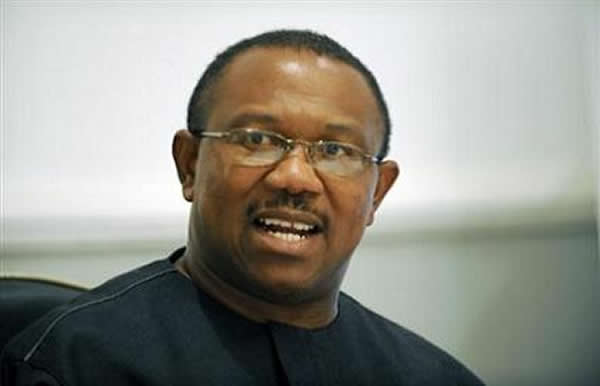
We are in a bad situation, I live in fear everyday, Peter Obi decries insecurity in Nigeria 

0

FORMER Governor of Anambra State, Peter Obi has decried the level of insecurity in Nigeria, saying that the country is in a bad situation.

“We have to be innovative in politics. We have to get the right people who are prepared to save this country. We are in a bad situation. I am in a bad situation. Anybody who tells you that we are doing well is lying. I live in fear every day,” Obi said in Abuja on Saturday.

Obi who was also vice presidential candidate of the People’s Democratic Party (PDP) in 2019 general elections, made this remark while speaking at the 8th Veritas University convocation held in Bwari, a suburb of Abuja.

He maintained that creation of job for the mass of unemployed Nigerian youths is one potent way to address the problem of insecurity in the country.

“The insecurity is totally unacceptable. One of the greatest cures for insecurity is to get people employed,” he noted.

The former governor also lamented the high cost of governance in the country, citing the large convoy of political office holders as one of those excesses.

According to him, it is irresponsible for political office holders to move in such large convoys.

Obi said during his time as Anambra State governor, he had used a convoy of 20 cars until he discovered that 13 of the cars were empty and carried no officials.

“You see big people going round with 15 or 20 vehicles and causing confusion all over the place and disturbing public peace and everybody with his own big title.

“If I was coming here with 20 policemen, to Nigerians, that shows I am ‘Your Excellency’. That is irresponsibility; it doesn’t happen anywhere in the world,” he stated.

He argued that there is no place in the world where one man moves around with 22 vehicles as convoy.

“There is no place in the world that I have seen where one man moves around with 22 vehicles. It is madness. I used it as a governor. You will not believe it. I used it as a governor until I asked to find out one day how many of the cars people were occupying, and about 13 of the cars were empty.”

Obi explained that what heavy convoy does is create difficulties for commuters and creates confusion for the people.

$100m loot to Bagudu: PDP tasks NASS to conduct forensic probe on Buhari’s Presidency

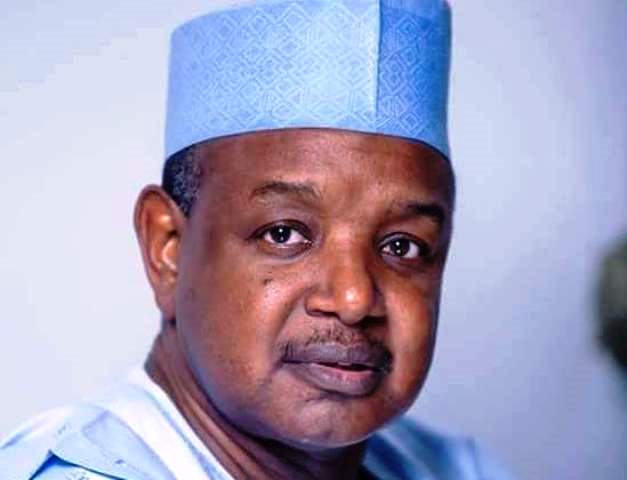
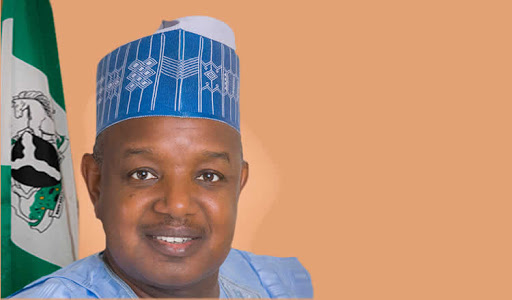
FOLLOWING the allegation of $100 million diversions to Abubakar Bagudu, the Kebbi State Governor, the People’s Democratic Party (PDP) on Saturday tasked members of the National Assembly (NASS) to conduct a forensic probe of the Presidency.

The major opposition party said it is time for the lawmakers to rescue the country against “illegalities” committed by the President Muhammadu Buhar administration.

“The PDP, therefore, calls on the NASS to immediately redeem the image of our nation by invoking its statutory instruments to order a forensic investigation into the handling of repatriated funds given a huge corruption that has pervaded the Presidency,” the party added.

The ICIR had earlier reported, February, how the Jersey government, United States government and the Nigerian government signed a pact to repatriate $308million loot stolen by the late General Sani Abacha.

Few days after, the $308million described as the world’s largest asset recovery across the borders was shared before the major players returned home.

However, following a report by Bloomberg accusing the Buhari administration of planning to transfer $100 million from the recovered sum to Bagudu, the presidency has remained silent.

“The report that the Buhari-led government has been blocking attempts to recover part of the looted funds traced to Kebbi State Governor, Atiku Bagudu, the Chairman of APC Governors Forum, who was reportedly indicted by the WhiteHouse for allegedly helping in transferring billions of dollar out of the country during the military era, speaks volumes of the corruption and concealments going on in the Buhari Presidency,” the party alleged in a statement shared on its social media handle.

“The recent revelation of huge corruption in the Buhari administration has further exposed the fact that the administration has been living a lie; parading as saints with false anti-corruption posturing, whereas it has been swimming in a huge ocean of corruption and massive treasury looting.”

Meanwhile, Bagudu was accused of being the arrowhead for the late Abacha while the nation’s resources are being fleeced.

Upon his return to the country, Bagudu was elected as Senator from 2009 to 2015, and thereafter became Kebbi state governor who is currently enjoying his second term in office.

The party, however, blamed the current government of being an accomplice rather than promoting social justice and fighting corruption.

It maintained that the supposed anti-corruption drive, “speaks volumes of the corruption and concealments going on in the Buhari Presidency.”

“It is clear that the Buhari Presidency has further smeared itself, and no longer commands the trust and confidence of stakeholders within and outside the country in its fight against corruption.”

“There is already apprehension in the public space of huge complicity and patronizing of corruption under President Buhari’s watch, which is directly responsible for our worsening corruption rating, a comatose economy, hardship and untold suffering which have turned our nation into world’s poverty capital,” the party alleged.

It further blamed the party for being silent on the accusation stressing that failure of the Presidency to “give a direct response to the issues raised by the White House State Department only validates the widely held position within and outside our country that the administration is not only irredeemably corrupt but also serves as a haven for corrupt individuals.

UK cautions Nigerian students, others against money laundering

0

THE BRITISH government has issued a strong warning to prospective Nigerian students and other international students in the United Kingdom against money laundering and other related criminal activities.

The UK’s warning followed a report from its National Economic Crime Centre (NECC) which revealed that international students’ bank accounts have been a tool for money laundering in the country.

According to a statement issued in Abuja by the United Kingdom through the Nigeria Ministry of Education, NECC said international students are often targeted through social media platforms by scammers who use their accounts for third party transfer.


READ ALSO:

The NECC stated that the targeted students are usually coerced into using their accounts for a fee after the completion of the transfer.

It disclosed that 99 bank accounts were discovered and frozen in 2019 noting that most of the accounts belonged to international students.

Such bank accounts, the NECC explained, were used for illicit deposit transfers amounting to over  three million Euros.

Reiterating its commitment to rid itself of such activities, the United Kingdom said it would terminate the studentship of any international student found culpable of the crime.

The statement further noted that visas for international graduate students are set to increase in 2020 owing to the government’s plan to introduce a post-study work visa.

INTERVIEW: How Nigeria’s insecurity is aided by too many ungoverned territories — Odinkalu [Part I]

CHIDI Odinkalu, a writer and Professor of Law, and former chairman of the National Human Rights Commission has for several decades dedicated himself to advancing human rights and political accountability in Nigeria.

On Thursday, February 13, and in the company of The ICIR‘s Dayo Aiyetan, Ajibola Amzat, Yekeen Akinwale, and ‘Kunle Adebajo, Odinkalu bared his thoughts on trending issues in Nigeria.

In the first of this two-part interview, he speaks on the underlying reasons for insecurity in Nigeria, the need for family planning, President Muhammadu Buhari’s perceived nepotism, and the role of government as a giver of hope among other topical issues.


The ICIR: There are so many recent events but I want us to look at Nigeria. And the recent assessment of the federal government done by Bishop Matthew Kukah. I wonder what your assessment of this government in the last five years is in terms of the promises, the chief goal they set for themselves in terms of security and the economy, how have they fared?

https://www.facebook.com/TheICIR/videos/1075219106192009/

Odinkalu: We had a conversation before the election, I do not know if you remember. I told you what my inclination was and why, and my inclination has not changed.

But in 2015, some people asked me to write a memorandum for Buhari after the elections and to set out a set of priorities for the incoming administration. I told them it wasn’t necessary, and that as far I was concerned the incoming president had a three-point agenda: Nigeria, Nigeria, Nigeria. And that if you can give every Nigerian irrespective of where they come from or how they worship a sense of belonging in the country, Nigerians would be pleased. Five years later, I still feel the same way and on that call, President Buhari has failed abysmally.

At the level of the Nigeria sense of how government is appropriated in terms of optics, he has failed. And those optics are important when people begin to look and see that everything is in one part of the country. It’s not enough, to begin with, to say others did it, because this is the first president in Nigeria to have successfully run on a platform of change.

In 1983, the Nigerian People’s Party of the late Nnamdi Azikiwe ran on a platform of change, but they were not successful. Buhari was the first president whose platform was explicitly “change”.

Now, again to be theoretically fair to him, he did not say change to what, so it could be change for the worse, it could be change for the better. His slogan was “change”; he did not say change for the better. Typically and honestly, it was “change”; and I think it is very important to make this point because people did not ask him what kind of change. People assumed that the change would be for the better without asking him or committing him explicitly to change for the better. It is the same thing.

Four years after that, he promised Next Level. Next level to what? Nobody asked him. So we are also complicit in the failure of a positive agenda or an agenda that offers the country positive progress.

But you see, 10 ministers from the northwest and all of them have full cabinet rank. You brought the security services under the control of one part of the country. You see Nigeria is so bad that when recently he appointed a deputy governor of the Central Bank, whose name appears to come from the southeast although he is from the south-south, everybody was jumping in joy. That is how so bad it is. And that made news for a lot of people, but that tells you what is wrong with the country.

Now that kind of appointment is a mid-level appointment, so it should not be news of that sort but because it was so out of the ordinary, it was news and that is the point.

Now, it is not just optics, when you appoint all members of your security services leadership from one part of the country, what happens is you only hear what you want to hear, not what you need to hear.

Secondly, the people who are not represented will never be able to be reassured that you are taking a decision with the best of their interest at heart. And so the security challenges you have are deeper, not easier to manage. This is at the level of optics.

https://www.facebook.com/watch/?v=1075219106192009

The reality is that most other parts of the country are not well looked after. If you are from the south-west. In 1988, as a youth corps member, I lived in Lagos and was going to Ibadan every day for three months. I will go and teach at the University of Ibadan and return with the bus every day, five days of the week. You can’t do that today. Then, I could determine that the journey would not take me more than one and a half hours. Today, Lagos to Ibadan will take anything from two and a half hours to five hours, and you can’t even predict what would happen along the way. Lagos to Ife, which used to be three hours give or take now takes the better part of four and a half, five hours.

If you are going to places like Ekiti, you have your fate in your hands. Now, the road networks in the southwest are worse than the road networks in the southeast, and the southeast has terrible road networks to begin with, so I could go on. It is not as if the roads in the north are better, by the way, where you find good roads but you can’t even use them because the security is terrible. So, there is no part of the country that can say it is doing well.

Notwithstanding all these appointments from one part of the country, the North has the worst security situation than any other part of the country. The North has the worst economy, it has the worst indices, and if I were a Northerner, I would feel terrible.

The question is: which part of Nigeria has seen positive change since President Buhari came to power to enable people believe in the country; and the answer is none.

The ICIR: Against the background of what happened yesterday, he went to Borno where our story says he won 92 per cent of the votes and then he was booed. What we are talking about is not a matter of a year ago. Before the last election, the situation was this bad but he won the election, how did that happen if he has done so badly?

Odinkalu: You have to ask INEC of course. I can’t be speaking for INEC and there are things I cannot say publicly because I got them in a confidential context. But it is quite clear that quite a good number of places to which INEC could not safely deploy assets, election-governing assets, produced results. There are places where INEC could not deploy election officers and election materials and did not deploy them, which produced results. That is very manifest. But INEC alone can explain how that happened; these are all the miracles of the Nigerian electoral process. It is not just in Borno, by the way. Even in the president’s home state, Kastina, there were places where INEC could not safely deploy officers and INEC knows that this is the truth. They alone can explain what happened; I can’t.

The ICIR: We’ll come back to the election. Let’s stay on the topic of security. Yesterday, at the launch of the Mass Atrocities report by Global Right, you did say that the problem of insecurity is the problem of governance of ungoverned spaces. Can you expatiate on that?

Odinkalu: In Nigeria, our policy-making is kind of on the hoof and, for everybody, our problems will end if we can get enough soldiers to shoot our way out of Boko Haram and all the people who are committing these atrocities, but we can’t. And when you look at the underlying data, not the number of people killed but the places where people are killed and the states which have the biggest problems of killings. You will notice the two most populous states in Nigeria are Lagos and Kano.

Lagos is the smallest state by territory in all of Nigeria, about 3,777 square kilometres give or take. Kano state is the second smallest state in northern Nigeria, second only to Gombe state, Gombe is about 18,197 square kilometres, Kano is just a little about 20,000 square kilometres.

Now, it also happens that Gombe state and Kano state are the two states in northern Nigeria with the least problem of mass violence, and it is not an accident. Now, where are the states in Nigeria with the biggest problems of mass violence? 

Borno state, which is about 70,800 square kilometres, and it’s the second-largest state in Nigeria. Number two, now, in terms of incidents and number of killings, Niger state is about 76,300 square kilometres. It is the biggest state in Nigeria by landmass. Number three, Kaduna state is the fourth largest state in Nigeria, the third is Taraba state. Kaduna is about 46,100 square kilometres. The third-largest state is Taraba state; in terms of violence it is number four. And you can go on and on. Yobe state is number six, Zamfara state is number seven, Adamawa state is number eight in terms of landmass, and number five is Bauchi.

Now, what is common to all of these states? Vast tracks of land. Take Niger state, which is now increasingly a zone of killings. At 76,300 square kilometres and 25 Local Government Areas, Niger is ungovernable.

Now, try and understand this. Imo state, as I was trying to explain yesterday is just about 5,000 square kilometres and Imo state has 27 Local Government Areas. Niger state has 25 Local Government Area and is over 15 times the size of Imo state. Basically, the average size of a Local Government Area in Niger state is close to the size of Imo state.

What does that mean? You have so much territory, you can’t deploy protection assets effectively. Niger state is over 20 times the size of Lagos state. Lagos state has over five times the number of police assets than Niger state.

So, when you have a crisis, you can’t deploy assets of protection effectively, and any assets you what to deploy are invariably overwhelmed by territory and landmass. They can’t effectively cover everywhere, they are outnumbered. That is the crisis we have in the north.

Zamfara state has nine Local Government Areas with a territory of about 39,000 square kilometres, barely twice the size of kano. It has just nine Local Government Areas, what are you going to do with that? How are you going to deploy protection assets? You can’t. Borno state with nearly 71,000 square kilometres has the same number of Local Government Areas as Imo state, 27.

Kano and Gombe states are the two states that kind of buck the trend in the North but that is because they are small to the others. And when you compare the sizes. Jam’are Local Government Area in Bauchi state, which is a site of great difficulty in Bauchi is about 6,800 square kilometres, which is about the size of Enugu state. Enugu state is the biggest state in the Southeast of Nigeria. It is one local government in Bauchi. Jam’are is the biggest Local Government Area in Bauchi.

This is where the crisis is. It is not about guns and no guns, shoot or no shoot, we don’t have enough assets to control the territories that we are dealing with. You are not going to have banditry in Lagos state. Now, if you look in the South, you will discover that the state with the greatest violence is Rivers state. And Rivers state is the one state that comes close to replicating, not in size or scale of landmass in the North but the case of ungovernability of territory because of its ungoverned waterways and creeks. And you find that again in Bayelsa state, that is the problem.

So there is a commonality of patterns of ungoverned territory. For me, it is very clear. That means that if you can extend the reach of government and of the state, the further you can extend it, the more likely you are to be able to control this violence. But we cannot do that thinking the only way we can do it is by shooting.

We have got to make government more effective. We have got ensure people steal less. We have got to spend less on overheads so that government can begin to acquire more legitimacy, which is why if you go to Borno state, you go to some places like Dikwa and what you are seeing is Boko Haram levying taxes and providing services. Those are places where government should be playing those roles. But now people have made their peace with outlaws and those outlaws have been providing protection. For me, it’s very clear; the insecurity issue is a reflection of a deeper problem, which is mal-governance.

Unless we are able to address this at the level of governmental systems, we will have this problem and it is going to deepen.

The ICIR: Are you suggesting we should have more personnel or more arms and ammunition? Or should those big states be further broken down into smaller government areas?

Odinkalu: Guns don’t govern… When you speak to the military aspect, they will tell you: kinetic mechanisms which are basically warfare mechanisms cannot win this thing. What they give you is a tactical window in which to emplace longer-term solutions and longer-term solutions are adopting governance mechanisms.

When you have meningitis ravaging an entire state, and instead of spending money on basic medical care and equipment and personnel, a governor is spending money sending marabouts to go to Mecca and pray, there is a problem. You cannot have government if there are no roads for the citizens to transact. I do not know if you have tried to go from Minna to Wushishi in Niger state, or maybe I am putting it too far. Try and go from Suleja to Minna, and then from Minna to Bida. Minna to Bida is about 83 kilometres; it will take you close to five hours.

Talking about national integration and nation-building, the biggest form of integration is commerce, it is inter-marriage, it is spontaneous activities by citizens. What the state does is to enable it. It enables it through providing security, through providing roads, and basic infrastructure so citizens can then pursue their own interactions.

When I went to secondary school in Imo State, I went to a Federal Government College in the late 70s, early 80s, parents would send their children to the train terminal in Kaduna. This was eight years after a civil war that had conflagrated the entire country. But parents on different sides of that war could trust that if they delivered their children at a train terminal in Kaduna, the train would convey them safely to Enugu and to another train terminal where they would be picked up and dispersed to their various schools in that neighbourhood. It worked perfectly. Today, in the same Kaduna, a parent in the south, Barnawa, will not send their child to a school in Malali in the north. A parent in Jos cannot send their child to school in Bassa, also in Plateau state. That is the problem we have got. And if we don’t do this, we can’t build a country.

If we have a situation in which everyone is in their little cot of the country, they do primary school, secondary school, nursery, university, everything, and then they are elected from there to become senate president, it will not work. So at the level of spontaneous interaction that drives national integration, we are stuck. At the level of institutional mechanisms that enhance the legitimacy of government so that citizens can offer obedience, we are stuck. At the level of optics that enable citizens to see the government as doing its best to integrate and protect all of us within the framework of a shared Nigerian identity, we are stuck. Something needs to change. Otherwise, it will be difficult.

The ICIR: It appears the various forms of insecurity we have are a matter of economic conditions. Unemployment is rising and the youth take to criminality because they do not have things to do. Do you buy that idea also?

There are predisposing economic factors that make it more likely that people could make choices towards violence. That’s true, but those factors are not new. How many of us in this room inherited a trust fund? How many of us came from parents who had Mercedes-Benz cars? We probably all came from poor families in many ways. Our parents struggled to pay school fees, we had to go without food for some time, we knew rural life for what it was. I am sure that every one of us has seen poverty. Now Ilubirin in Lagos for example; if you went to Ilubirin before they damaged it, you saw poverty. I had clients and cases in Ilubirin; it was an Egun settlement. I thought I had seen poverty until I went to Ilubirin. In the houses built on top of water, people did everything, washed and did ablution, on top of water, but they had dignity. 

You know, I went to see my clients there and I entered those place and they gave me food, they had soft drinks for me, and when I was leaving they gave me whatever they could afford as gifts. They were not thieves. My point is I think there is a level at which we conduct this conversation about insecurity in Nigeria and it becomes something that suggests that every poor person is an armed robber or a bandit and that is not true. All of us come from parts of Nigeria where people are poor and nevertheless have dignity.

Now, the problem is the hollowing out of the sense of dignity amongst poor people and not just dignity but hope. Today, people would rather kill as many as possible rather than put in the effort because the state is not offering us hope and that is what the state is supposed to do. It is not to give us handouts. But where is the source of hope for ordinary people so that people can look at that and say that, you know what, it might be bad today but tomorrow something good will come. That is what our political leaders from President Buhari down are failing to offer.

I don’t want to start being invidious but there are a few exceptions that suggest one or two politicians may understand the mission of leadership as offering hope. And we have got to demand of our political leaders that they offer hope to Nigerians because sometimes that is the only thing and the best you can offer as a leader.

The ICIR: But how do you offer hope to Nigerians?

Odinkalu: Through your examples. Was Obafemi Awolowo a saint? No, but you can point to the things he did. What is the best university in Nigeria? OAU. I didn’t go to OAU, but when you enter the premises of Obafemi Awolowo University — University of Ife — you will see a controlling mind. You will see somebody had a vision for something big.

There is no university campus in Nigeria that comes close in terms of its design and I think I have been to all the major universities in this country. None comes close. You look at the things Awolowo did, he had a mission, he had a vision. Go to the Southeast, there is no leader that comes close to what Micheal Okpara did. There is an eastern ring road and you will see it — Onitsha to Enugu, Enugu to Port Harcourt, Port Harcourt to Elele to Owerri back to Onitsha. It is a ring road. And then all the axials radiate from that. At each end of that ring road was something. There was a port in Port Harcourt, there was Hotel Presidential to offer tourism and rest in Enugu and you go to Enugu, the design of the city capital itself tells you there was a controlling mind.

You then had oil palm plantations, there were cashew plantations, and there was an investment in food security, education, human capital, and infrastructure. There was a plan.

Today, which governor do you look at? I can say Babatunde Fashola. You may not agree with everything Fashola did but there is no way you won’t credit him with something. He thought about what he wanted to do in Lagos. What was Fashola’s biggest achievement? Oshodi. Because Oshodi held the key to everything in Lagos: Environment, the blockage of the canal system in Lagos, the blockage of commerce, transit systems were all blocked from Oshodi. Everything Fashola achieved as far as I am concerned revolved around opening up of Oshodi. When Oshodi was opened up, Agege motor road opened up. That railway blockage was gone. 

Commute time in Lagos from end-to-end crashed, which made productivity rose. As that happened, values in Lagos stated rising. It took thinking, it took planning, it took implementation. But a lot of our governors are not interested in doing that kind of thing. 

I cut Fashola a lot of slack notwithstanding a lot of things because you can see a man who made an effort. Nigerians are not asking for miracles. When you look at Fashola’s successors, you see that the man actually did well. And that is my point about giving hope but let me even try illustrating it even further. By the time Fashola had gone two years into his administration, the value of properties had increased by somewhere between 60 and 80 per cent. By the time he finished his administration, the value of property all over Lagos had more than doubled. So if you owned property in Olodi Apapa or in Agege or in Lawanson in 2007, by 2015 if your property was worth N10,000, by 2015 it was worth N40,000.

What that meant was that your commercial asset value has completely been re-ordered. You can go to a bank all of a sudden and free up credit and invest in doing other things. By contrast, when Orji Uzor Kalu became governor in Abia State in 1999, if you were worth N10,000 by the time he finished in 2007 you were worthless that N2,000.

While Fashola was growing value, Orji Uzor Kalu was destroying it. That is the difference. And these are two Nigeria extremities, so that’s the point. I don’t want to use the new governors and yet I am driven to. Governor Zulum in Borno State is facing a very difficult situation but you can see he is trying to make an effort. He appears to care. He is not yet at the four-year threshold so I don’t want to rush to judgment, but at least you can see a man who appears to care about the state. Abdul’aziz Yari was in charge of Zamfara State for eight years and see where the state ended up. That is the difference.

I don’t think it is a question; governors can offer hope and that is part of the point. I am not particularly sympathetic to President Buhari. I think that is very well known, but I don’t think Nigeria can be fixed by Buhari alone or by the federal government alone. A lot of governors are falling woefully and without the states picking up the slack and performing well, nothing the federal government does will work. At that level, governors need to do much better. Right now, most of them are failing.

The ICIR: Something that worries a lot of people in the civil society actually is the population of not just unemployed but uneducated youth. There are probably hundreds of thousands of young people don’t have an education and don’t appear to have a future. That is problematic and it is like a ready army for anything in the future; how does the governor of a state deal with that kind of crisis?

Odinkalu: Thirty-one years ago in 1989, General Babaginda was president and Olikoye Ransom-Kuti was health minister and they enacted a National Population Policy, which promoted the idea that the average family size should be four children plus a father and a mother. What happened to that policy?  

This, Tunji Dare on Daily Nation and Abimbola Adelakun on the Punch wrote about Hon. Alhassan Ado-Doguwa, 27 seven children and four wives. Four wives and 27 children give you an average of about seven children per woman. He is not an exception, by the way. Jigawa’s average fertility per woman is 8.3 and in the Northwest, it is just under 8.1. In the NorthEast, it is about 7.9. In Lagos, average fertility per woman is now 4.09. Now, what is the difference? In much of Lagos, many of those people will be one family of husband-wife and child. In much of these other places, average fertility per woman is not average family size. So, when a man can marry four wives with average fertility of 7, that gives you 28 children. 

At that family size, you cannot sustain anti-corruption efforts. It is just not possible because you cannot just live-off your legitimate livelihood and at the same time sustain those children and send them to school.

That is the problem, so you have to start with responsible parenting and responsible family sizes and government has a role in that. Right now, you see that at the level of some dialogue, some people think that population and poverty can be weaponised for purposes of achieving political control, that you can give birth to any number of children you want without looking after them and every four years weaponise them for the purposes of controlling power. And that is irresponsible because the first set of people as we are discovering who will be damaged by that are the same people who are weaponising population and poverty.

But it seems to me that at some level, the leadership of northern Nigeria has got to open up about population size. The Emir of Kano tried to do that and see what happened to him. It is a very delicate conversation but it has to be had. Why do I say so? Right now, that is Nigeria’s biggest national security crisis. It is not Boko Haram. Nigeria faces a perfect storm in about 20 to 25 years. We would be about double our population. 

We would be the third-largest country in the world after India and China, oil would be a diminished source of revenue in the country because it would have been replaced by our major buyers in North America and in Europe and the people who would be buying our oil at that point would not be needing much of it and cannot be paying a lot of money for it. 

And so we will need different sources of money and the biggest sources of revenue at that point will be innovation and human skill and human capital, which means taxation. But we are not investing in our people now so that they would be available to be taxed in the next 20 to 25 years. So that means per capita, the likelihood is that the GDP is on a downward curve while our population is a massive upward curve.

Our population is growing now between 2.6 and 2.8 per cent per annum. Our economy has flatlined at around 1 per cent per annum. That means we have a crisis of demand and supply. We have more mouths than we can produce to feed. Yet that crisis of demand and supply is going to keep compounding. 

Today we have been running a recurrent deficit for over five years, that means we have been borrowing to pay our overheads and borrowing all of our capital expenditure. We cannot improve our infrastructure and we are barely 200 million. 

We are not building new schools, so we cannot absorb the number of kids coming through and we are not training new teachers. We cannot build new roads without debts, that is prohibited. So the question is how are we going to absorb, where is our elasticity to take all of these new kids? That’s the challenge, and if the leadership doesn’t face up this now, there will be nobody in 25 years to turn out the lights. 

159 children reunite with families in North East – ICRC report

0

THE International Committee of the Red Cross (ICRC) in collaboration with the Nigerian Red Cross Society has stated in its report for 2019 that 159 displaced children have been reunited with their families, following efforts in handling 21,630 cases of missing persons in the North East.

The program which began in 2013 has succeeded in helping 367 persons reunite with their families, as well as helping 886 missing persons secure information about the whereabouts or fate of their loved ones, the ICRC stated in the report.

It was gathered that the non-religious humanitarian organisation in the whole of 2019 was able to provide assistance to 800,000 persons.

In the report shared with The ICIR, it was stated that about 750,000 persons received food and basic items assistance, while 50,000 persons received aid to help enhance and sustain their means of livelihood.


READ ALSO:

In providing access to water and shelter, the organisation was also able to make life better for about 507 persons and about 62,000 internally displaced persons were able to find accommodation in improved, temporary shelters, as stated in the report.

The ICRC reported that 500,000 patients benefited from medical consultations in 18 primary health care centers, while over 7,700 patients also received surgical care from the ICRC surgical team at the Maiduguri State Specialist Hospital.

Not fewer than 314 patients also were fitted with artificial limbs through the ICRC physical rehabilitation program, as over 3,700 community members and arms carriers were trained in emergency first aid techniques.

The report highlighted the challenges often met in the field, noting that increasing threats to aid workers made working more difficult, and urged that workers who risk their lives to reach affected populations should be treated with respect.

Abacha Loot: Presidency keeps mute on alleged plans to divert $100 million Abacha loot to Kebbi State Governor, Bagudu

0

THE Federal Government has kept mute on the allegation that President Muhammadu Buhari plans to transfer incoming Abacha loot of $100 million to Kebbi state Governor, Abubakar Bagudu.

According to a Bloomberg report released on Friday, the Nigerian government has said it plans to transfer incoming Abacha loot of $100 million to Kebbi state Governor, Abubakar Bagudu.

The report says plans by the Nigerian government to transfer the said amount to the sitting governor and right-hand man of the former military ruler, Sani Abacha would undermine President Muhammadu Buhari’s plans to fight corruption in the country.

A filling made from the District Court on behalf of the District of Columbia in Washington revealed that President Buhari wants to honour a 17-year-old agreement which makes Bagudu entitled to the funds.

The U.S. Department of Justice says Bagudu was involved in corruption with Abacha. The DoJ also contends that the Nigerian government is hindering U.S. efforts to recover allegedly laundered money it says it’s traced to Bagudu.

Bloomberg reported that Buhari’s administration says a 17-year-old agreement entitles Bagudu to the funds and prevents Nigeria from assisting the U.S., according to recent filings from the District Court for the District of Columbia in Washington.

Matthew Page, an associate fellow at London-based Chatham House and former Nigeria expert for U.S. intelligence agencies said the move by the Nigerian government may frustrate further efforts by the US to repatriate stolen money to Nigeria.

“Instead of welcoming U.S. efforts, Nigeria’s lawyers appear to be supporting the interests of one of the country’s most powerful families,” Page said.

“This case illustrates how complex and contentious repatriating stolen assets to Nigeria can be.”

Transparency International estimates that the former military ruler may have looted as much as $5 billion during his 1993-1998 rule.

According to the Department of Justice (DoJ), General Abacha and others systematically embezzled billions of dollars in public funds from the Central Bank of Nigeria on the false pretence that the funds were necessary for national security.

The late General and his conspirators withdrew the funds in cash and then moved the money overseas through U.S. financial institutions, the DoJ said.

The DoJ explained how Abacha and his finance minister also allegedly caused the government of Nigeria to purchase Nigerian government bonds at vastly inflated prices from a company controlled by Bagudu and Mohammed Abacha, generating an illegal windfall of more than $282 million.

In addition, General Abacha and his associates allegedly extorted more than $11 million from a French company and its Nigerian affiliate in connection with payments on government contracts. Funds involved in each of these schemes were allegedly laundered through the United States.

The DoJ contends that the Nigerian government is hindering U.S. efforts to recover allegedly laundered money it says it’s traced to Bagudu.

However, when The ICIR reached out to the Senior Special Assistant Media and Publicity to the President, Garuba Shehu for reaction to this allegation, he did not reply to text messages sent to his phone by our reporter after he requested that he should send a message when a phone call was put across to him.

The move has also attracted reactions from Nigerians.

The Socio-Economic Rights and Accountability Project (SERAP) in a Twitter message on Friday remarked that “The reported plan by the Nigerian government to give $100 million from loots recovered from Sani Abacha to Kebbi State Governor Atiku Bagudu is a betrayal of the victims of corruption and an affront to the UN Convention against corruption.”