Home Blog Page 239

Shettima urges judiciary to foster confidence in Nigeria’s capital market

VICE President Kashim Shettima has called on Nigeria’s judiciary to enhance trust and efficiency within the country’s capital market.

He made the call during the  Securities and Exchange Commission (SEC) Judges’ Workshop on Monday, July 7, in Abuja.

He said effective dispute resolution mechanisms underpin investors’ confidence and market stability.

“A strong and trustworthy capital market is fundamental to national economic transformation,” Shettima stressed.

Beyond its role as a trading platform, the capital market mobilises long-term funds that are crucial for infrastructure, business expansion, and job creation.

All these are vital to Nigeria’s development goals amid a young and growing population, the vice president pointed out.

He believes that investors’ trust hinges on a legal system capable of resolving disputes promptly and fairly.

“Justice delayed is justice denied, especially in financial markets where timing is critical,” Shettima said.

The vice president further called on judges to deepen their knowledge of capital market laws and work closely with the SEC to uphold market integrity.

The workshop, themed ‘Repositioning the Nigerian Capital Market for National Economic Transformation through Effective Dispute Resolution,’ brought together the Chief Justice of Nigeria, President of the Court of Appeal, Chief Judges, Attorney-General, SEC officials, and legal practitioners.

On his part, SEC Director General Emomotimi Agama stated that the workshop aimed to enhance judicial capacity, promote consistency in rulings, and foster collaboration between regulators and the judiciary.

Commending the passage of the Investments and Securities Act (ISA), he said, “The ISA 2025 is a legislative success, a legal milestone, and a reform that ushers in a new era for our capital market.

“By enacting this progressive law, Nigeria has taken a bold step toward fostering a more transparent, efficient, resilient, and secure investment climate.”

The workshop was part of the SEC’s objective of engaging the Judiciary in capital market operations, especially on the specialised law, regulations, and ethics upon which market integrity relies.

It is also part of its commitment to a deeper engagement with all stakeholders, ensuring that the provisions of the ISA 2025 are widely disseminated, discussed and fully understood to achieve its goals in restoring investors confidence, bringing timely succour to aggrieved investors and creating a broad-based participation of Nigerians in wealth creation, Agama explained.

“As judges, your interpretations of these provisions will set legal precedents that will shape market behaviour for decades.

“Furthermore, recent cases have highlighted the need for judicial preparedness. This workshop will therefore provide practical case studies on capital market litigation, foster dialogue between judges, regulators, and market operators, and equip the judiciary with tools to handle sophisticated financial crimes,” Agama added.

3 ways Nigerian government could lift millions out of hunger, poverty – IMF

THE International Monetary Fund (IMF) has suggested three ways the Nigerian government could lift millions of its citizens out of hunger and poverty.

It gave this advice in an article titled, ‘How Nigeria Can Unleash Its Economic Potential’, released on Monday, July 7.

The organisation said Nigeria could solve its current challenges of high inflation and widespread poverty, among others, if it focused on these three key priorities.

Firstly, the IMF said the country needed stronger and more sustained growth to lift millions of people out of poverty and food insecurity.

“This does not happen overnight. In the meantime, making growth more inclusive also requires scaling up the existing cash transfer system,” the Bretton Woods financial institution member stated.

Secondly, it suggested that as an essential ingredient for economic development, Nigeria needed an effective budget framework.

“Delivering effective investments in people and infrastructure requires realistic budget assumptions, strong expenditure management, and transparent implementation and reporting—which, in turn, can strengthen accountability.

“For its part, monetary policy should continue to decisively tackle inflation and reduce economic uncertainty,” the IMF said.

Also, the IMF urged the government to continue to increase domestic revenues.

It said this was essential given Nigeria’s substantial funding needs in growth-enabling areas such as agriculture, infrastructure, including access to electricity, and climate adaptation.

It added that the government’s tax reforms would make it easier to pay taxes and ensure that everyone who owes taxes pays them.

“Over time, once the ongoing cost-of-living crisis abates and the cash transfer system is fully operational, there will be room to align tax rates with those in neighbouring countries.

“For now, the share of revenue that goes to interest spending leaves too little for investment in people and infrastructure. It is therefore critical that the substantial financial savings from the removal of fuel subsidies flow to the government to fund priority spending,” the IMF said.

It said achieving Nigeria’s potential required continued reforms and an effective social safety net to carry the most vulnerable along.

The IMF suggestions came barely a week after it raised concerns that Nigeria had experienced increased poverty and food insecurity in the past two years of President Bola Tinubu’s administration.

It highlighted this concern in its 2025 Article IV Mission with Nigeria, released on Wednesday, July 2.

While it hailed the government’s implementation of major reforms, including removing fuel subsidies, stopping monetary financing of the fiscal deficit, and improving the functioning of the foreign exchange market, it said that at the same time the decisions were taken, poverty and food insecurity rose.

ICIR launches project to tackle sexual harassment in universities

THE International Centre for Investigative Reporting (The ICIR) has launched a new initiative aimed at addressing sexual harassment in Nigerian universities, especially among female students.

The project, titled “Empowering Female Students to Challenge Sexual Harassment in Nigerian Universities,” is being carried out as part of the organisation’s ongoing ‘Oga Lecturer Initiative’.

Funded by the Development Research and Project Centre (dRPC) through its NGO Support Initiative (NSI), the project seeks to address a long-standing crisis in Nigeria’s tertiary education system, including the exploitation of female students by academic staff in exchange for grades or academic favours.

The new phase of the ‘Oga Lecturer Initiative’ will focus on two universities in Abuja, where it will create safe reporting channels for survivors of sexual harassment while supporting peer-led advocacy on campus. Accordingly, the initiative will also provide training, tools, and direct engagement opportunities with university authorities to foster institutional reform.

“Sexual harassment is a global issue, but Nigerian universities have not done enough to address it,” The ICIR said in a statement.

“Weak reporting systems and limited accountability have allowed this culture to thrive unchecked,” it added.

According to The ICIR, the project is designed not only to expose harassment but also to equip students with the confidence and knowledge to challenge it.

Many female students have reported feeling silenced, ashamed, and vulnerable, often forced to make impossible choices between academic success and personal safety.

Through public awareness campaigns and student-centred empowerment, the project will push for stronger university policies and long-term structural change in how sexual misconduct is addressed within academic institutions.

“By empowering students and fostering campus-wide conversations, this project aims to break the silence and challenge the harmful power dynamics that have endured for too long,” the Centre said.

The ICIR has previously documented dozens of cases of sexual misconduct in higher education through the ‘Oga Lecturer Project’, and continues to push for transparency and accountability in Nigeria’s university system.

It would be recalled that in June 2025, the dRPC awarded a grant support of N85 million to The ICIR alongside 16 other nonprofit organisations recently affected by the United States Agency for International Development (USAID) and other international aid cuts.

In a similar vein, the  Federal Ministry of Women Affairs (FMWA) in September 2023 honoured the dRPC for supporting the Women Economic Empowerment (WEE) policy.

The award was based on the dPRC’s Partnership for Advancing Women in Economic Development (PAWED) project, which aims at building sustainable advocacy around WEE interventions, said the then Minister of Women Affairs, Uju Kennedy-Ohanenye, while awarding a national medal of recognition to dPRC in Abuja.

“The recognition bestowed upon the dRPC-PAWED by the National Council on Women’s Affairs is a testament to their exceptional dedication and impact. It highlights the pivotal role of civil society organisations in driving positive change and transforming women’s lives in Nigeria,” Ohanenye stated.


Enugu Air: ‘Don’t let it go the way of Nigerian Airways’, Keyamo tells Mbah

0

THE Minister of Aviation and Aerospace Development, Festus Keyamo, has appealed to Enugu State Governor Peter Mbah not to allow the newly launched airline in the state to go the way of Nigerian Airways, which liquidated years ago.

Keyamo also urged the state government to ensure Enugu Air is run professionally and shielded from political interference and bureaucratic inefficiency.

The minister said these during the inauguration of the airline in the state capital on Monday, July 7.

“What is left to advise is, do not let Enugu Air go the way of Nigerian Airways. Run it professionally and do not let bureaucracy kill Enugu Air. Be prompt in your departure and arrival.”

Keyamo commended Mbah’s leadership style and development strides.

“I want to mirror what the president said the other day while he was in Enugu to commission projects. Dr. Peter Mbah, you’re in PDP, but we’re scared of you. The way you’re going, we don’t know what will happen, and we don’t know how to drop a scheme to defeat you, but we will be planning,Keyamo added.

According to him, beyond party lines, the Enugu governor has a progressive spirit and has done well for his state, making him one of the best-performing governors.

Speaking at the event, Mbah said that since he took over power, the airline had been among the key objectives he had outlined in his pledge to make Enugu the premier destination for investment.

“Today, we have our airline, and with it, we’re opening doors to a sector that once felt out of reach. Enugu Air has given more wings to our dreams, and today we take that first flight together,Mbah stated.

He described the project as a giant leap for the state, a gold standard for government and private partnership.

Welcoming guests to the occasion, the state Commissioner for Transport, Obi Ozor, said, “In the first two weeks of my joining Mbah’s administration, the governor asked me, ‘Is there anything wrong or difficult in becoming like Dubai or Singapore in terms of transportation and logistics?'” I remember saying no, sir.”

“This is one of the days when we say Enugu’s mission is to transform Africa. Enugu does not need to wait for the future. The future is here with us,he stated.

He thanked the governor for dreaming boldly and for getting his vision into action. 

In a recent statement, the state government said the airline would begin its maiden domestic flight operations.

In the statement, signed by Ozor, the government expressed delight at announcing the launch of the state-owned commercial airline.

According to the statement, the airline is part of the integrated blueprint of the Mbah-led government for a modern, multifaceted transport ecosystem to make Enugu a major aviation hub.

PRNigeria petitions IGP over alleged unlawful email access by NIPSS

THE Founder and Chief Executive Officer of PRNigeria, Yushau Shuaib, has petitioned the Inspector-General of Police, Kayode Egbetokun, demanding an investigation into alleged unlawful access to a private editorial email belonging to PRNigeria by officials of the National Institute for Policy and Strategic Studies (NIPSS)

He revealed that an internal editorial email from PRNigeria mysteriously appeared as an attachment in an official query served to him by NIPSS, raising serious questions about how the confidential communication was accessed.

Shuaib said that he was once a participant in the prestigious Senior Executive Course (SEC 47) at NIPSS, and two senior NIPSS officials, A.A. Mustapha and Elias Wahab, informed him of a pending query. 

Shuaib explained that the query sent on behalf of the Acting Director of Studies Nima Salman Mann, a lawyer, arrived with an attachment of a document not related to NIPSS protocols or any misconduct, but of a private email from PRNigeria titled “Understanding the ‘Blue’ in the Blue Economy: A PR Perspective.”

In a petition dated July 1, 2025, addressed to the IGP, Shuaib accused NIPSS officials of unlawfully accessing a private editorial email belonging to his organisation.

“This email was never sent to, copied to, or shared with any NIPSS official,” Shuaib said in his petition. 

“Its appearance in an internal disciplinary proceeding indicates an alarming breach of digital privacy and suggests unauthorised surveillance, data intrusion, or unlawful system access,” he added. 

He called on the Nigeria Police Force to invite Nima Salman Mann, Mustapha, and Wahab for questioning, and to launch a thorough and impartial investigation into the unauthorised access to PRNigeria’s email.

“A thorough technical analysis could uncover digital footprints or access logs that may help trace the source and method of the unauthorised intrusion,” he said.

According to him, the petition draws attention to possible breaches of the Cybercrime Act, 2015 (as amended in 2024), referencing Section 24, which criminalises the unlawful interception of electronic communications.

While urging that all individuals found culpable be identified and prosecuted in accordance with the Cybercrime Act, Shuaib also called for the implementation of safeguards to prevent future breaches of digital privacy by public institutions.

He highlighted the sensitive nature of PRNigeria’s operations, noting that the platform frequently handled security-related information and depended on anonymous sources who got guaranteed digital safety and confidentiality.

“The illegal breach of our internal system by these NIPSS officials not only threatens the foundation of our editorial independence but also endangers the safety and anonymity of our trusted sources,” he warned.

Sexual harrassmrent allegation: a timeline of Senator Natasha trials, tribuation

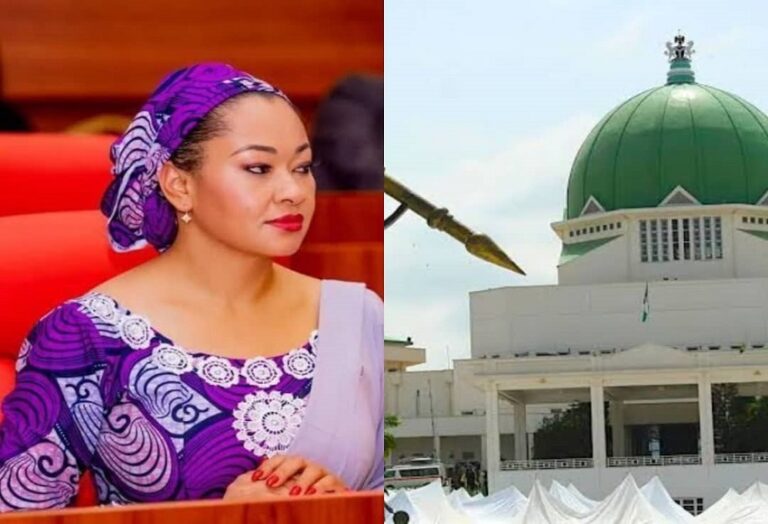
CRISIS began for Senator representing Kogi Central, Natasha Akpoti, Uduaghan, on Thursday, February 20, 2025, when she protested against the reassignment of her Senate seat without prior notice. 

She resisted the change, calling it an attempt to silence her, while Senate Chief Whip, Tahir Monguno, justified the move, citing Senate rules and party affiliations.

Her protest led to a heated exchange with Senate President, Godswill Akpabio, who ordered the sergeant-at-arms to remove her from the chamber.

This led to the Senate unanimously referring her to the Ethics Committee for disciplinary review, which later recommended her suspension.

Amid the dispute, in an interview on Arise Television, she accused Akpabio of making repeated sexual advances toward her, which she said she rejected. 

She alleged that her refusal was the reason behind their frequent clashes at plenary sessions.

According to her, some of Akpabio’s love proposals were made with her on the phone and face-to-face in her husband’s presence. She further alleged that she had all the evidence for her claims.

Although the Kogi senator, on Wednesday, March 5submitted an official petition regarding the sexual harassment and abuse of office by Akpabio, the Ethics Committee threw out the petition, citing key procedural oversights that allegedly undermined the petition’s legitimacy.

Akpoti-Uduaghan, however, resubmitted the petition, shortly before her suspension.

Suspended for six months despite a court order

In March, the Nigerian Senate suspended Akpoti-Uduaghan for six months, despite an interim order from a Federal High Court in Abuja restraining the Senate from investigating her actions.

The court, presided over by Obiora Egwuatu, had on March 5 issued an injunction stopping the Senate Committee on Ethics, Privileges, and Public Petitions from proceeding with its probe.

The ruling followed an ex parte application filed by Akpoti-Uduaghan’s legal team.

However, the Senate went ahead with the investigation and, based on the committee’s findings presented by Neda Imasuen, voted to suspend the Kogi lawmaker for violating Senate rules. 

The suspension, expected to take effect from March 6, meant that the female lawmaker will be barred from accessing the National Assembly premises and her office will be locked. 

The punishment also extended to her salary and those of her legislative aides being withheld for the duration of the suspension.

The Senate further ruled that Akpoti-Uduaghan will not be allowed to represent Nigeria in any official capacity while serving the suspension. 

The committee noted that she might submit a written apology, which could lead to a review of the suspension.

A failed attempt to recall her

Amid her suspension from the senate, a petition to recall her from the senate was submitted to the Independent National Electoral Commission (INEC) by a group of registered voters from her region. 

The move marked a significant attempt to remove her from office.

The petition dated 21 March 2025 was submitted on Monday, March 24, at the INEC headquarters in Abuja. 

The petition was submitted by a group known as Concerned Kogi Youth and Women.

The group in the petition addressed to the INEC Chairman, Mahmood Yakubu, demanded the recall of Akpoti-Uduaghan.

According to the petitioners, the petition for her recall was filed under Section 68 of the 1999 Constitution of the Federal Republic of Nigeria and INEC’s guidelines for recall petitions.

However, in a statement issued on Thursday, April 3, 2025, INEC ruled that the petition failed to meet constitutional requirements.

INEC emphasised that the petition was reviewed in line with its 2024 Regulations and Guidelines for Recall, ensuring due process and fairness. 

With the petition failing to meet the constitutional requirement, INEC stated that no further action would be taken regarding the senator’s recall.

The homecoming

The ICIR reports that despite a police order asking Akpoti-Uduaghan to cancel her homecoming rally, a Kogi State ban on public gatherings, and a curfew imposed in the Okehi Local Government Area where her residence is located, hundreds of her supporters welcomed her with jubilation on April 1 at her Ihima home. 

At the rally, she called on Nigerians to hold Governor Ahmed Ododo of Kogi state, former Governor Yahaya Bello, and Senate President Akpabiowhollyaccountable for any violence that may arise during her homecoming event in her state.

She warned that if the rally was infiltrated by violence, the aforementioned political figures should be held responsible.

The event saw her supporters dancing and chanting in her honour, defying the security restrictions and ban, which many Nigerians see as political intimidation.

The Police Command, in a statement signed by its Public Relations Officer, William Aya, and released to journalists hours before the rally, said the rally was against the state government’s ban on political gatherings issued on Monday, March 31.

Similarly, the order was followed with a curfew in the Okehi Local Government Area, which restricted movement and gatherings, particularly near Akpoti-Uduaghan’s residence.

Despite the restrictions on vehicle convoys, public gatherings, and curfew, Akpoti-Uduaghan reached the venue of the rally through a helicopter.

At the rally, she declared that she was not afraid of anyone.

Shortly after her homecoming rally, the Kogi State government declared through the Commissioner for Information, Kingsley Fanwo, that the senator committed an offence by addressing supporters on Tuesday, March 1, 2025.

Fanwo said that despite her claim of coming to visit her people for Sallah festivities, all her addresses were political to incite the people against constitutional authorities at the federal and state levels to create panic.

According to him, the rally aimed to create tension and ensure that there was violence in the state.

Natasha’s family house attacked in Kogi

On Thursday, April 17, the Kogi State Police Command confirmed an attack on the family house of Akpoti-Uduaghan.

The State Commissioner of Police, Miller Dantawaye, confirmed that gunmen attacked the lawmaker’s family residence in Obeiba Community in Okehi Local Government Area.

Dantawaye disclosed that the command had been fully briefed on the incident by the Okehi LGA Divisional Police Officer, but  no arrest had been made.

FG drags suspended Senator to court

The  Federal Government filed a criminal suit against Akpoti-Uduaghan over comments she made on national television that were allegedly defamatory.

The case, marked CR/297/25, was filed on May 16, 2025, before the Federal Capital Territory (FCT) High Court, with Akpoti-Uduaghan listed as the sole defendant.

According to court documents, the government was charging the senator under Section 391 of the Penal Code (Cap 89, Laws of the Federation, 1990) for allegedly “making imputation knowing or having reason to believe that such imputation will harm the reputation of a person.”

The said comments were allegedly made during a live broadcast of Channels Television’sPolitics Today’ on April 3, 2025, where Akpoti-Uduaghan was said to have criticised unnamed individuals in a manner the government claimed was defamatory.

The former Kogi governor, Bello, had in April petitioned the Inspector-General of Police (IGP), Kayode Egbetokun accusing Akpoti-Uduaghan of making defamatory statements against him.

Road to reinstatement

The ICIR reported that in a suit, a Federal Capital Territory (FCT) High Court on Thursday, June 19, granted Akpoti-Uduaghan a ₦50 million bail in a case involving her and the Nigerian government.

The bail came after she pleaded not guilty to an alleged defamation charge preferred against her.

In the ruling, the judge, Chizoba Orji, granted the female lawmaker bail with one surety, who must be a “responsible resident” of the FCT and have landed property in the nation’s capital.

The judge adjourned the case to September 23, 2025, for continuation of the trial.

In a similar suit, following a case by the federal government against Akpoti-Uduaghan, a Federal High Court in Abuja on Monday, June 30, granted bail to her on self-recognition.

She was arraigned on six counts bordering on alleged cybercrime.

The Senator was accused of allegedly making false statements against Senate President Akpabio and Kogi State’s former governor, Bello.

According to the charge, she alleged that Akpabio instructed the Kogi State former governor to ensure that she was harmed in Kogi State rather than in Abuja to mislead investigators about her attackers.

The federal government, which sued the lawmaker on behalf of Akpabio and Bello, stated that her statements, widely shared through digital platforms, were knowingly false and intended to initiate unrest.

The judge, Mohammed Umar, proceeded to grant the request of the defence counsel and granted the senator bail on self-recognition.

The court adjourned until September 22 for the commencement of the trial.

The Senator finally got relief on Friday, July 4 when a Federal High Court (FHC) in Abuja ordered the Nigerian Senate to recall her back to the Senate.

The judge, Binta Nyako, described as extreme the six-month suspension that was imposed on the lawmaker by the Senate.

The judge faulted the provision in Chapter 8 of the Senate Standing Rules, as well as Section 14 of the Legislative Houses, Powers, and Privileges Act, declaring both to be overextending.

The court ruled that Senate President Akpabio acted correctly in denying Akpoti-Uduaghan the opportunity to speak during plenary since she wasn’t seated in her designated seat and ordered Akpoti-Uduaghan to apologise to the Senate.

Nyako added that the two pieces of legislation failed to identify the maximum period that a serving lawmaker could be suspended from office.

The court noted that Akpoti-Uduaghan’s six-month suspension effectively kept her from her legislative duties for about 180 days, given the 181-days sitting requirement for lawmakers per cycle.

According to the court, while the Senate has the authority to discipline its members, any sanction imposed must be proportionate and not excessively deprive constituents of their representation.

Earlier, the court fined Akpoti-Uduaghan ₦5 million for contempt over a satirical apology to Akpabio that she posted on her Facebook page on April 27, 2025.

Senate sets conditions for Natasha’s return 

Meanwhile, despite a Federal High Court ruling in Abuja that nullified her six-month suspension, the Senate has outlined conditions for the reinstatement of Akpoti-Uduaghan.

Senate Spokesperson Yemi Adaramodu said that the Red Chamber would not reinstate the embattled Akpoti-Uduaghan immediately.

Adaramodu noted that the court judgment did not override the Senate’s constitutional powers to discipline its members.

However, Adaramodu explained that the Senate would only reconvene to deliberate on the issue once Akpoti-Uduaghan complies with the court’s directives.                     The big question, however is, will the ebattled senator bounce back to occupy her seat in the Red chamber?

Trump 10% extra tariffs on ‘BRICS’ partners pose burden for Nigeria

UNITED States (US) President Donald Trump has threatened an additional 10 percent tariffs on countries aligning themselves with the ‘BRICS’, which is expected to burden Nigeria’s economy.

He made the statement on his Truth Social channel on Monday, July 7.

“Any Country aligning itself with the anti-American policies of BRICS will be charged an additional 10% Tariff.

“There will be no exceptions to this policy,” Trump said.

The US President has been critical of the BRICS, an economic bloc whose members initially comprise Brazil, Russia, India, China, and South Africa.

The bloc aims to boost countries’ international standing and challenge the US and Western European powers.

In 2024, the group expanded to include Iran, Egypt, Ethiopia, and the United Arab Emirates (UAE), while Indonesia further became the first Southeast Asia member of the bloc.

In January, Nigeria joined Belarus, Bolivia, Cuba, Kazakhstan, Malaysia, Thailand, Uganda, and Uzbekistan as BRICS’ ninth partner country after the alliance’s partner-country category was created at the 16th BRICS Summit in 2024.

Nigeria has since then continued to push for full membership.

The ICIR reports that immediately after Trump assumed office in January, he imposed a series of import taxes on goods from other countries, including a 14 per cent tariff on Nigeria.

Baring the impact this will have on its economy, the Nigerian government had pointed out that the US tariffs would hurt its oil and non-oil export businesses.

The ICIR reported that the Minister of Industry, Trade, and Investment, Jumoke Oduwole, said it could potentially disrupt trade relations and affect the competitiveness of Nigerian products in the US market, especially in sectors reliant on market access and price competitiveness.

She noted that a significant portion of over 90 per cent of Nigeria’s exports, comprising crude petroleum, mineral fuels, oils, and gas products, would be affected.

With Trump’s extra tariff threat, it could heighten the burden on the Nigerian economy.

Trump’s 10 per cent additional tariffs come following the BRICS leaders ‘ meeting in Brazil for a two-day summit, which started on Sunday, July 6, to reaffirm the bloc’s commitment to multilateral diplomacy.

It also comes as the US begins formally notifying affected countries of the tariffs it had declared earlier this year, with letters and deals set to roll out on Monday.

At the start of the tariffs, Trump had asked affected countries to make deals with the US in hopes of a concession.

He has further asked his global counterparts to take it or leave it, as the tariff letters go out today, Monday.p

In his opening remarks at the BRICS Summit in Rio de Janeiro, the Brazilian President, Luiz Inacio Lula da Silva, was quoted as saying that the world is witnessing the unparalleled collapse of multilateralism.

“If international governance does not reflect the new multipolar reality of the 21st century, it is up to BRICS to help bring it up to date,” he said.


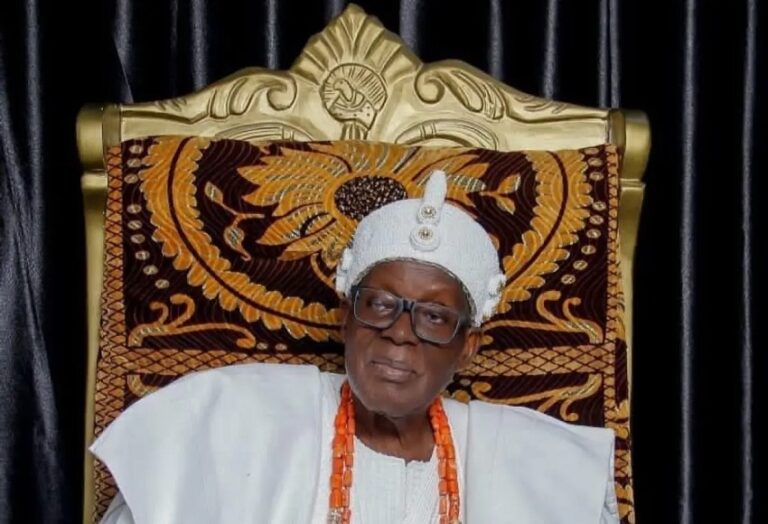
Olubadan, Oba Olakulehin passes on at 90

0

THE Olubadan of Ibadanland, Owolabi Olakulehin, has passed away
at the age of 90.

He died in the early hours of Monday, July 7.

The monarch died when activities marking his 90th birthday celebrations and first anniversary coronation were still ongoing.

Olakulehin received the staff of office from Oyo State Governor Seyi Makinde on July 12, 2024. He was the 43rd Olubadan of Ibadanland.

The late monarch became the Mogaji for the Ige Olakulehin Family of Ita-Baale Olugbode, in Ibadan North-East Local Government Area of Oyo State in 1983.

He was crowned Jagun Balogun of Ibadan in 1986 by the late Oba Asanike. He rose through the ranks and became part of the Olubadan-In-Council in 2006.

Later, in 2016, he was made Balogun of Ibadanland, a position he held for eight years.

Olakulehin was crowned the new Olubadan of Ibadanland after a 38-year journey through the traditional council’s hierarchy.

He started as Jagun Balogun in 1986 and rose through various positions, becoming Balogun in 2016.

Before his crowning, Olakulehin had a distinguished military career, retiring as a major in 1979.

He also had a successful entrepreneurial career, founding several businesses, including a building contracting company and a printing press. He also ventured into politics, serving as a member of the House of Representatives in 1992.

Despite controversies surrounding his emergence due to his age, Olakulehin remained focused and led the traditional council in Ibadanland for almost a year.

He died just 15 months after becoming the Olubadan.

Doxxing explained: what it is and how to stay safe

EARLIER this year, a video surfaced online displaying photos of 87 alleged loan defaulters in Nigeria, accompanied by the caption, “Please settle your loan.”

Also on June 20, 2025, Yinka Theisen, wife of Linc Edochie, publicly shared May Yul Edochie’s phone number on her Instagram page, claiming it was in retaliation after May allegedly leaked her personal number earlier.

This act, which sparked outrage across Nigeria, not only raises concerns about privacy violations but also highlights how revealing an individual’s personal information could result into online harassment, cyberbullying, and online harm.

In today’s increasingly digital world where personal information is often just a few clicks away, the act of doxxing has emerged as a dangerous tool for harassment and intimidation, mostly used by malicious actors.

Doxxing is the act of publicly revealing or publishing private, personal information about an individual typically without their consent with malicious intent. This personal information could include home addresses, social security numbers, and names of employers.

The term originated from dropping documents and has evolved to include a range of tactics aimed at exposing sensitive data like full names, home addresses, phone numbers, email addresses, workplace information and private conversations or photo.

Often, the goal is to shame, threaten, or cause real-world harm such as job loss, stalking, or physical harassment.

Is doxxing illegal?

The legality of doxxing depends on jurisdiction and the type of information shared. In many countries, sharing publicly available information like a company email may not be illegal on its own.

However, doxxing becomes unlawful when it involves: threats, stalking, or harassment, leaking non-public information such as financial records, personal messages, violating data protection laws or terms of service and encouraging others to attack or harass the individual – a practice known as brigading.

A Lagos-based lawyer, Abulwasiu Mujeeb, explained in a report by The ICIR that publishing someone’s personal data without consent violates Nigeria’s data privacy laws. He cited Section 2.4 of the NDPR, which mandates that personal data must be processed lawfully and fairly, and Section 3.1, which prohibits using data beyond necessary purposes.

Mujeeb also referenced Section 24(1) of the Cybercrime Act, which criminalises online harassment, and Sections 34 and 37 of the Nigerian Constitution, which guarantee dignity and privacy, respectively.

In many cases, doxxing is used as a tool of online retaliation, punishing people for expressing their opinions, reporting on controversial topics, or simply having a public presence.

Doxxing can happen to anyone, but journalists, activists, public officials, women, and minorities are disproportionately targeted.

Doxxing as a form of information disorder

Doxxing is not just a form of harassment, it’s often tied to misinformation and disinformation campaigns. False claims or manipulated contents are sometimes used as a justification to expose an individual.

Unlike misinformation or disinformation which involve false or misleading content, doxxing falls under a category called malinformation.

In cases of malinformation, the information being shared is true, but it is deliberately exposed or used to cause harm to a person, group, or organization.

Praise Cole, a fact-checker with DUBAWA, explains that malinformation is dangerous because it takes something that is true and twists its purpose.

“It could be the utterance, statement of a person, data, material or document related to the person using that particular piece of information for malicious intent against that person to harm the reputation of the person in question often to damage someone’s reputation, incite harassment, or endanger their safety. It’s not about whether the information is correct—it’s about how it’s used,” he said.

He stressed that doxxing becomes particularly dangerous in sensitive periods like elections, where true details about public figures, such as past statements, documents, or scandals are reshared or reposted, often selectively or out of context, to manipulate public perception and sway political outcomes.

We often see this play out in the political space, especially during elections, where opposition parties dig up authentic information about a candidate, perhaps relating to scandals or allegations of misappropriation of funds and use it to damage the person’s reputation.

“Such tactics are aimed at influencing public perception and swaying opinions during critical periods like elections,” Cole added.

Speaking with an official from the Nigeria Data Protection Commission (NDPC), Itunu Dosekun, stated that the NDPC Act prohibits doxxing and also provides avenue for victims seeking redress and punishment for offenders.

“Yes the Act prohibits it, and we always ask citizens to report any breach of their privacy to the Commission. We have several means, including through email (info@ndpc.gov.ng), our social media handles, and letters can be sent physically to the office,” Dosekun said.

How to stay safe from doxxing online

While no method is foolproof, following these tips could help you stay safe from doxxing online:

1. Limit public exposure

One of the most effective ways to protect yourself from doxxing is by limiting the amount of personal information you make publicly available online. Doxxers often rely on details people unknowingly share to build profiles about them.

Avoid posting sensitive details such as your home address, phone number, personal email address, or information about your family, workplace, or school on public profiles. Even photos can give away more than you realise as images showing your house, street signs, or workspace can expose your location.

It’s also important to regularly review your privacy settings on social media, restricting who can view your posts and profile details, and disabling features like location tagging.

2. Use pseudonyms

Another effective way to safeguard yourself against doxxing is by using pseudonyms or separate professional email addresses when engaging online. Using your real name or primary personal email across multiple platforms can make it easier for malicious actors to link your online presence with your real-world identity.

Instead, consider adopting usernames or pseudonyms that don’t reveal personal details, especially on platforms where privacy is crucial. For professional engagements, create and use dedicated email addresses that don’t include identifiable information such as your full name or date of birth.

3. Enable two-factor authentication

It’s also important to strengthen the security of your online accounts by enabling two-factor authentication (2FA) and using strong, unique passwords. Two-factor authentication adds an extra layer of protection by requiring a second verification step, such as a code sent to your phone or generated by an app before granting access.

This makes it significantly harder for anyone to hack into your accounts even if they manage to obtain your password. Equally vital is the use of strong passwords that combine uppercase and lowercase letters, numbers, and special characters.

Avoid using easily guessable information like birthdays or common words. Using password managers can help you generate and store complex passwords securely, ensuring you don’t have to rely on your memory alone.

4. Avoid posting location data or identifiable details.

Another essential step in protecting yourself from doxxing is to avoid sharing location data or identifiable personal details online. Information such as your home address, workplace, frequent hangout spots, or even photos that reveal your surroundings can make it easier for malicious actors to track you down or piece together your identity.

Even seemingly harmless posts, like tagging your location in real time or sharing photos with visible street signs, house numbers, or landmarks can expose more than you intend. Turning off location tagging on your social media apps and being deliberate about the personal details you share can significantly reduce your vulnerability. Being cautious with what you reveal helps keep your personal life private and secure.

5. Report threats promptly

If you notice that your personal information has been exposed online or receive threats, it’s crucial to act quickly. Report the issue to the platform where the breach occurred—most social media websites have dedicated channels for handling abuse, harassment, or privacy violations.

Additionally, if the exposure involves serious threats to your safety, contact law enforcement agents like the Nigeria Police Force or the Nigeria Security and Civil Defence Corps (NSCDC). Prompt reporting not only helps take down harmful content but also creates a record of the incident, which can be vital if legal action becomes necessary. Acting swiftly can reduce the potential harm and help authorities or platforms intervene before the situation escalates.

For journalists and fact-checkers, using tools like Google’s Advanced Protection Program or privacy-first browsers (e.g., Brave, Firefox with add-ons) can offer extra layers of security.

This report is republished from the Factcheckhub.

High food prices persist, farmers, traders lament

THE prices of food commodities continue to pose a challenge for many Nigerians, despite a recent moderation in the prices of some food items.

To worsen the concern, some farmers, sellers, and market women have expressed worries about how fluctuating food prices are affecting the purchasing power of most Nigerians.

According to the latest monthly commodities price report by the Financial Derivatives Company (FDC) dated July 3,  the prices of commodities moderated in the just concluded month.

A 50 kilogramme bag of rice remains stable at N80,000, beans are slightly down by 5.06 per cent to N75,000, same with garri by 2.86 per cent to N32,000, tomatoes basket remains unchanged at N110,000, pepper is up by 25 per cent to N150,000, and onion is stable at N140,000.

“Domestic commodity prices are falling on weaker demand and consumer resistance,” the FDC report stated.

The food prices, which stakeholders – farmers, sellers, and buyers – still consider high in the market, raise concerns despite the sharp drop in inflation as reported by the National Bureau of Statistics (NBS).

Since rebasing the Consumer Price Index (CPI) in January, the inflation rate has dropped to 22.97 per cent from close to 40 per cent, but the prices of food items have remained high.

Analysts believe that this trend does not reflect the economic reality, as a lot of Nigerians’ purchasing power has been eroded, and there seems to be a disconnect between what the NBS data says and what the prices of foodstuffs are in markets.

Sellers, buyers lament

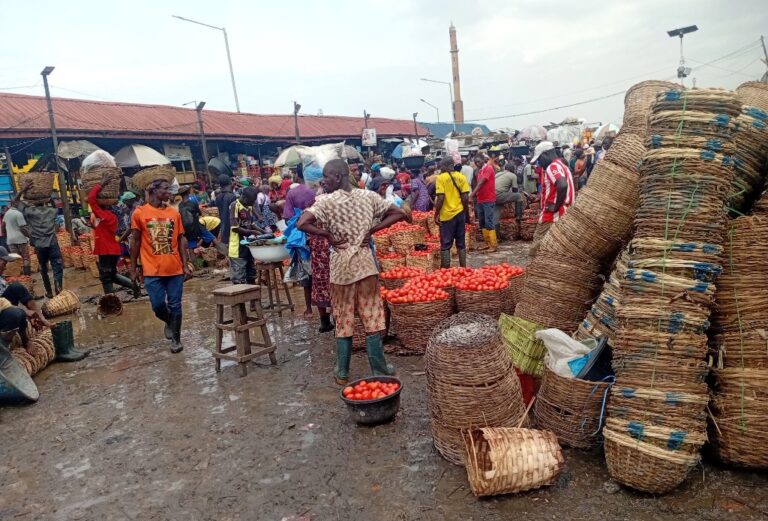
Muhammed Layan, a tomato seller at the Mile 12 market, the biggest perishable food market in Lagos, lamented the increasing prices of food items.

He told The ICIR that a basket of selected tomatoes, which he used to sell for about N25,000, N30,000, and N35,000, was being sold in the market at N70,000.

“The one (tomatoes) I’m selling, we bring it from the north, not from Cameroon. Over there, they sell it for N30,000 to N35,000, depending on where it is coming from,” Layan explained.

He noted that market prices could be different as some tomatoes are brought in from Jos, Kano, Kaduna, including in Jigawa, Benue, Gombe, Bauchi, Sokoto, Kebbi, Nasarawa, Zamfara, and Kogi in the north.

For Idris Isah, an onion seller also at the popular Mile 12 market, the increasing prices of food items have seen the price inched higher in the market to N150,000, depending on the size of the onions and fuelled by transportation costs.

Idris Isah
Idris Isah, an onion seller. Photo: The ICIR

“We transport onions from the north with N5,000 a bag,” said Isah, who hinted that he brings the onions he sells at the Mile 12 market from Maduguri, Borno state.

Lamenting the costs of food items in the market, a woman who gave her name as Mama Iyabo, said the prices are still high and wants them to come down considerably.

“Paint of rice is N7,000, and beans are N4,800. We want it to come well so that we can feed our family.

“We are not getting the money the way we are spending it on food,” she said.

Another woman, Ngozi Ndukwe, who also came to buy things in the market, expressed that if only the prices of food items could continue to come down, the hardship could be reduced.

“The hardship is too much. The government should do something about the price of food before we all die in this country,” she said, frustratedly.

Floods, insecurity threaten food supply

For most of the northern states where the huge agricultural foods are produced and supplied to the south, there has been concern over the spread of insecurity, as well as incessant flooding that is impacting food supply.

In its recent flood alert, the National Emergency Management Agency (NEMA) noted that 15 states were at high risk of flooding, including Kogi, Imo, Enugu, Adamawa, Taraba, Borno, Zamfara, Katsina, and the Federal Capital Territory, The ICIR reported.

At the time, a devastating flooding incident in communities Mokwa, Niger state, have left over 3,000 residents displaced, 2,000 homes destroyed, and critical infrastructure, including three bridges and several roads, farmlands affected, The ICIR had also reported.

The region has also been battered with insecurity, which has led to the killings of thousands, and farmers are scared of going back to their farmlands because of the herdsmen-farmers crisis.

The recent insecurity situation in Benue State, following fresh attacks in the Makurdi and Katsina-Ala local government areas that led to the reported killing of over 200 people from the food basket state, raised further concerns about adequate food supply to the south.

In a statement on June 17, the director-general of the Lagos Chamber of Commerce and Industry (LCCI), Chinyere Almona, expressed concern that the recent herdsmen-farmers clashes in the middle-belt region, alongside flooding disasters, are indicators of a looming shortfall in food harvest.

“These shocks pose significant risks to food availability and prices, which could drive food inflation — an essential component of the headline inflation index — in the third and fourth quarters of 2025,” she said.

Farmers’ association shares worries

Speaking to The ICIR about the relative drop in some foodstuffs and scarcity of some others, the National Secretary of the All Farmers Association of Nigeria (AFAN), Yunusa Halidu, said the factors are both internal and external.

He specifically hinted that the sharp drop in the price of beans lately was not because of a bumper harvest.

Muhammed Layan
Muhammed Layan displays his selected basket of tomatoes. Photo: The ICIR

According to Halidu, farmers are yet to start planting beans, and nowhere in all the 19 Northern states, including some parts of the South, has planting commenced.

Check by The ICIR shows that in Nigeria, the planting and harvesting periods for beans vary depending on the region’s climate and rainfall patterns, with a growing cycle of 60 to 90 days.

In the south, farmers usually plant beans twice a year, beginning around March or April and ready for harvest by June or July, while in the north, farmers typically plant beans in June or July, and are harvested between September and October.

“The reason for the crash in the price is just because of the fear of the pronouncement of the federal government of last year or earlier this year, for the importation of grain,” Halidu said.

He explained that a lot of people have the fear that when the federal government boosts the market with these commodities, the price is going to crash.

“It is a disadvantage for a lot of farmers, people like us who produced at high cost last year, but just for us to hear that this year the federal government makes a pronouncement that they are going to import grain.

“It was good for the consumer, but not good for the producers because a producer wants to produce and make a profit, especially people who are into business,” Halidu lamented.

On the scarcity of tomatoes and peppers in the market, Halidu said it was because of their seasonal nature, which makes the prices cheap during the harvest period and expensive when the harvest is over.

He noted that tomatoes are harvested in the north two or three times annually, and the same is true with pepper, with the help of irrigation farming.

He, however, expressed worries that the production capacity has been very low, which may not be unconnected with the insecurity in the country, frightening most farmers from going back to their farmlands.

“So, that is why the prices of those items are always up a couple of times because of the low production capacity, especially rice,” Halidu said.

Further expressing concern about Nigerians’ appetite for foreign goods, Halidu said most Nigerians prefer foreign rice to locally produced rice, causing the frequent fluctuation in price.

The prices of beans, which have dropped to about N80,000, are a sign of things to come, the chief executive officer, Graeme Blaque, Zeal Akaraiwe, said on the Arise programme, ‘Business Week’ on Saturday, July 5.

“Prices are down significantly, which I’m happy about because consumer prices need to come down from where they are,” he said.

Blaque added that if the price could be stable, in practice, it would be great to hedge against volatility.