Home Blog Page 24

NRC suspends Warri-Itakpe train service over operational glitches

0

THE Nigerian Railway Corporation (NRC) has suspended operations on the Warri–Itakpe Train Service (WITS) over what it described as operational and technical concerns.

In a statement issued on Tuesday, the corporation said the decision followed advice from its engineers and was aimed at allowing critical assessments on the rail corridor.

According to the NRC, the temporary halt is part of efforts to improve safety, reliability and service delivery on the route, which connects parts of Delta, Edo and Kogi states.

“The temporary suspension has become necessary to enable the corporation to carry out critical operational assessments aimed at ensuring continued safety, reliability, and improved service delivery on the corridor,” the statement said.

The NRC explained that engineers were already working to address the issues, adding that passengers would be informed before the end of the week when normal operations would resume.

While apologising for the disruption the development may cause commuters and businesses that rely on the service, the NRC assured the public that steps were being taken to restore operations as quickly as possible.

The agency also reaffirmed its commitment to providing safe and efficient rail transport services across the country.

The latest development comes days after the Federal Government announced a 50 per cent reduction in train fares for travellers during the Sallah celebration.

The fare reduction was disclosed in a statement by the Permanent Secretary of the Federal Ministry of Transportation, Funsho Adebiyi, who said the move was introduced to ease transportation costs for Nigerians travelling during the festive period.

The ICIR reports that the Warri-Itakpe service has been shut down several times due to operational glitches.

ADC postpones results collation as Atiku leads party primary in 22 states, FCT

THE African Democratic Congress (ADC) has postponed the collation of results for its presidential election.

Chairman of the party’s presidential primary election committee, Ikechi Emenike, announced the postponement Tuesday night after more than four hours of result collation at the congress hall of the Transcorp Hilton Hotel in Abuja.

Emenike said the decision to suspend the collation was taken to allow Muslim party members to observe Eid-el-Kabir, adding that the exercise would resume at 8 p.m. today (Wednesday)

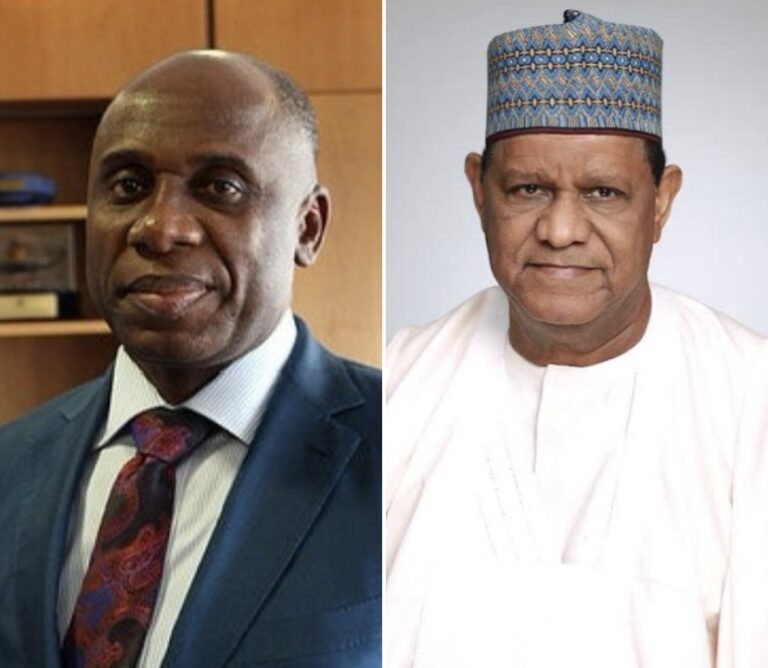
The ICIR reported that ADC conducted a nationwide direct primary on Monday to select its candidate for the 2027 presidential election, with former Vice-President Atiku Abubakar, former managing director of the defunct FSB International Bank, Mohammed Hayatu-Deen, and a former Minister of Transportation, Rotimi Amaechi emerging as the leading contenders.

According to the Cable, the results collated so far show that Abubakar is leading with 1,390,276 votes, while Amaechi secured 248,455 votes and Hayatu-Deen trails with 156,075 votes.

Abubakar is currently ahead in 22 states, including Kebbi, Anambra, Abia, Ekiti, Ondo, Gombe, Oyo, Imo, Yobe, Nasarawa, Enugu, Benue, Osun, Kogi, Taraba, Kano, Adamawa, Sokoto, Zamfara, Borno, Niger, Plateau, as well as the Federal Capital Territory (FCT)

However, Amaechi, is leading in Akwa Ibom and Ebonyi states.

The ICIR reported that the primary was marred by controversy, as Amaechi and Hayatu-Deen rejected the results, alleging widespread irregularities and voter disenfranchisement.

Amaechi, said that the process was neither free nor transparent, alleging that about 80 per cent of party members were denied the opportunity to vote.

He stressed that ADC could not be engaging in the same practices it accused the ruling All Progressives Congress and the Independent National Electoral Commission of committing.

Hayatu-Deen also rejected the process and announced that he would not attend the official declaration of the results.

Abducted Oyo pupils remain in captivity as Nigeria marks Children’s Day, governor reacts

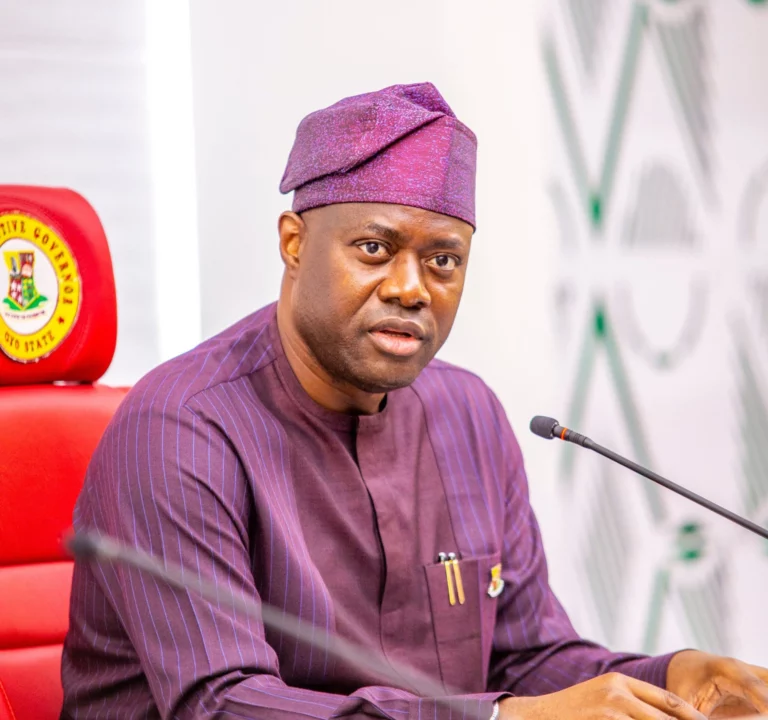
Oyo State Governor, Seyi Makinde, has expressed concern and support for the families of schoolchildren and teachers currently being held captive by bandits in the state.

The governor shared his concern in a message marking the dual celebration of Eid-el-Kabir and National Children’s Day shared on his official X handle Wednesday morning.

“As we mark this year’s Eid and Children’s Day, our thoughts are with every family awaiting the return of their loved ones, and with security agencies working to keep our communities safe,” he wrote.

The ICIR reports that Nigeria has set aside May 27 for the annual celebration of Children’s Day, to honour children, advance their protection, education, and well-being, but in a rare coincidence, the date also aligned with the 2026 Eid-el-Kabir celebrations, a major Islamic festival symbolising sacrifice, devotion, and faith.

Makinde’s message is coming early two weeks after terrorists attacked three schools in the Oriire Local Government Area of the state on May 15, abducting dozens of pupils, including toddlers, as well as teachers.

One of the teachers, Adesiyan Adegboye, was killed during the attack, while a Mathematics teacher, Michael Oyedokun, was reportedly beheaded in captivity, sparking outrage and renewed calls for the swift rescue of those still in the kidnappers’ custody.

The ICIR reported that the State Police Command confirmed another abduction of two staff members of the Cocoa Research Institute of Nigeria (CRIN) in Ibadan by gunmen, two days after.

Makinde in his latest remark, acknowledged the pain and uncertainty being experienced by affected families during what should have been a period of celebration and togetherness.

“We are working to ensure the safe return of those who were kidnapped in Oriire LGA. May this holy season fill our state with peace,” the governor explained.

According to PUNCH, the suspected terrorists responsible for abduction opened communication channels with the state government on Saturday. However, it remains unclear whether the negotiations are being handled directly by the governor or through representatives of the state or the Federal Government.

Amaechi, Hayatu-Deen reject ADC presidential primary over alleged rigging

TWO of the three presidential aspirants of the African Democratic Congress (ADC), Rotimi Amaechi and Mohammed Hayatu-Deen, on Tuesday rejected the party’s presidential primary over alleged rigging and voter disenfranchisement.

The protests came as the party continued collation of results from the nationwide exercise held  on Monday, May 25., ahead of the 2027 presidential election

Amaechi, a former Minister of Transportation, in a statement, on his X handle, said the process was neither free nor transparent.

“Following reports of widespread voter disenfranchisement in most parts of the country during the African Democratic Congress (ADC) presidential primaries yesterday, I unequivocally reject the concocted results being announced,” he said.

Amaechi alleged that about 80 per cent of party members were denied the opportunity to vote.

“There’s no way that about eighty per cent of members of the party were not allowed to vote, and you expect me to accept such results,” he said.

He stressed that ADC could not be engaging in the same practices it accused the ruling All Progressives Congress and the Independent National Electoral Commission of committing.

“A party that criticises the ruling  APC and INEC for vote buying, rigging and writing of results cannot be engaging in vote buying, writing of results, and other electoral malpractices that leads to the disenfranchisement of voters who are party members,” he added.

Hayatu-Deen also rejected the process and announced that he would not attend the official declaration of the results.

“I will not be attending the announcement of the ADC presidential election results today. I am concerned by reports from across the country of widespread vote rigging, some of which I myself observed, and will therefore be taking advice on my next steps,” he said.

Reacting to the allegations, the ADC National Publicity Secretary, Bolaji Abdullahi in an interview om Channels Television, said the party had not established any evidence of irregularities.

“We don’t have any evidence to be able to support his position or to deny his position because we’ve not collated the results,” Abdullahi said.

“We’ve not noticed any pattern in the result, and we’ve not seen enough to be able to establish a pattern,” he added.

Meanwhile, the ADC announced that collation of results had begun at the party’s national secretariat.

In a statement on its official handle, the party said the process reflected its commitment to transparency and internal democracy.

The latest crisis adds to the internal challenges that have trailed the opposition coalition built around the ADC ahead of the 2027 elections.

The coalition had attracted key opposition figures, including former governors Peter Obi and Rabiu Kwankwaso, who joined the platform as part of efforts to build a united front against President Bola Tinubu of the APC ahead of 2027.

However, both politicians dumped the coalition earlier this month and moved to the Nigeria Democratic Congress, NDC,  amid internal disputes and legal wranglings within the ADC.

Ex-Southampton Nigerian footballer Victor Udoh dies at 21

FORMER Southampton and Royal Antwerp forward, Victor Udoh, has died at the age of 21.

According to UK mirror, the Nigerian footballer was found dead in Abuja under what was described as suspicious circumstances.

Udoh had recently returned to Nigeria following the end of his spell with Czech club Dynamo České Budějovice, which he joined after leaving Southampton in 2025.

Southampton confirmed his death in a statement, expressing grief over the loss of the former academy player.

“We are devastated by the tragic passing of former player Victor Udoh at the age of 21,” the club said.

“The thoughts of everyone at the club go out to Victor’s loved ones at this extremely difficult time.”

Royal Antwerp also mourned the player, describing the news of his death as heartbreaking.

“With great dismay, RAFC has learned of the passing of former player Victor Udoh,” the Belgian club said.

“Our thoughts are with Victor’s family, friends, and loved ones. We wish them much strength, support, and warmth during this particularly difficult time.”

Udoh joined Southampton in February 2025 on a three-and-a-half-year deal but spent only a brief period at the club, featuring in eight matches for the under-21 side in Premier League 2 without making a senior appearance.

He later left by mutual consent in search of regular playing time before joining Czech second-tier side Dynamo České Budějovice.

Before moving to England, the deceased grew at Royal Antwerp after joining from Abuja-based Hypebuzz in 2023.

He impressed with Antwerp’s reserve side, scoring 12 goals in 27 appearances for the Young Reds, before breaking into the first team, where he made 28 appearances.


Eid-el-Kabir: Abuja ram sellers blame insecurity, transport costs for price surge

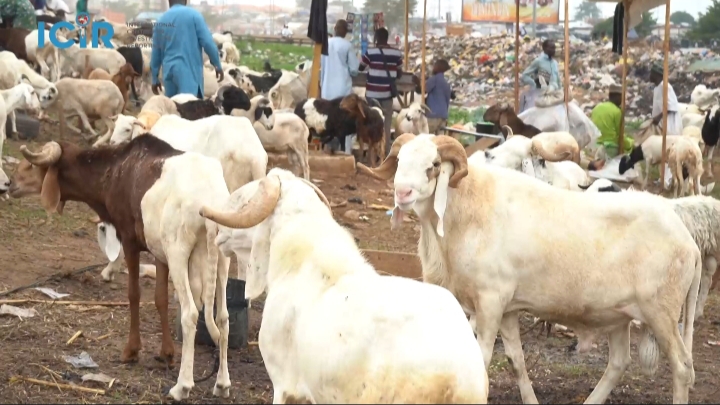
Less than 24hours to Eid-el-Kabir, livestock markets in Lugbe, a suburb situated within the Abuja Municipal Area Council are experiencing low patronage. Traders attribute the downturn to increase in livestock prices driven by rising transportation costs and persistent insecurity in sourcing regions. The ICIR reports on how the current economic realities are affecting the supply of livestock in Lugbe Market.

For livestock sellers in the market, the current sales cycle falls short of previous years.

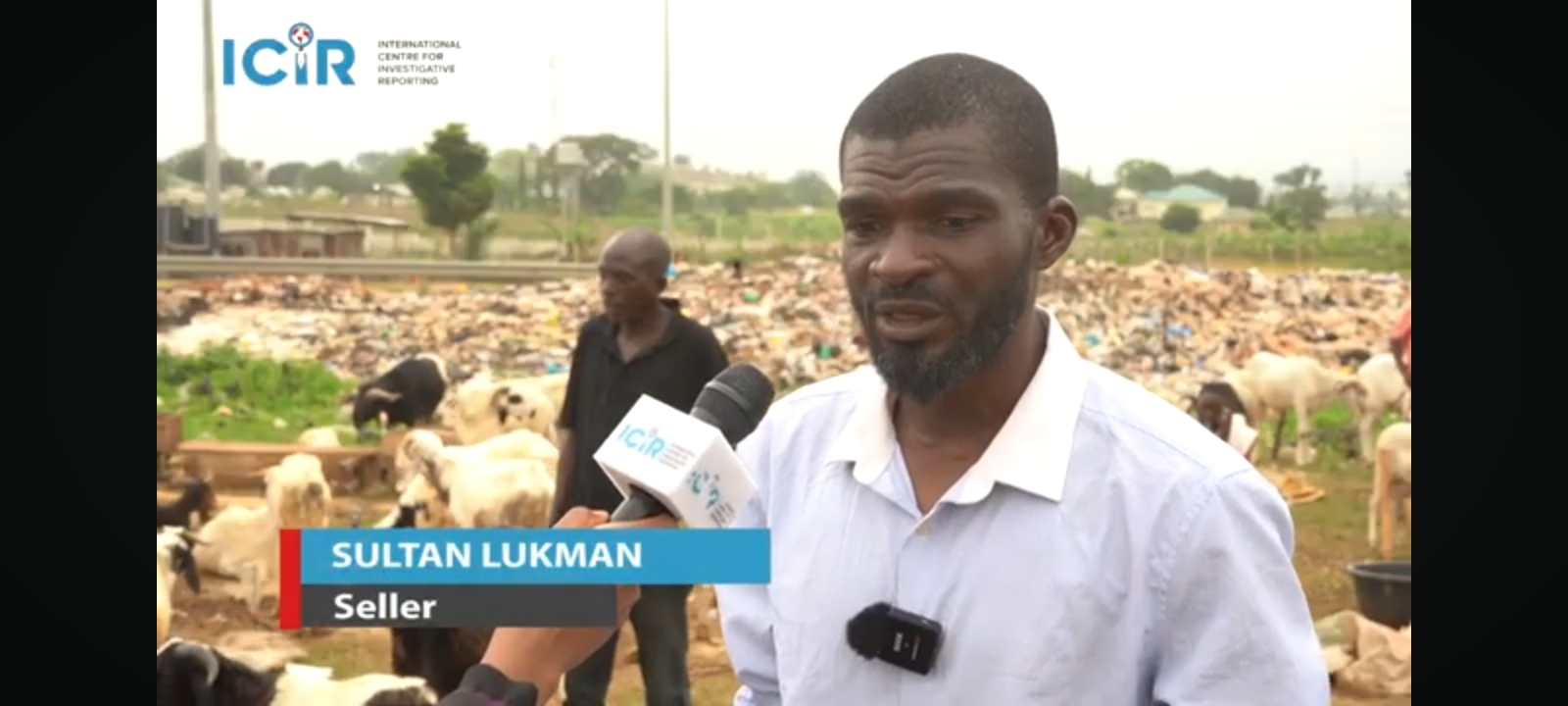
Sultan Lukman, a ram seller, said sales volume have dropped by more than half compared to the same period last year. He noted the low patronage due to the high cost of the animals.

“I came here with more than 12 rams, and I’ve barely sold four, compared to last year, where I sold everything. I was even helping my partners here to sell theirs. But this time around, it is very poor,” Lukman lamented.

Sultan Lukman

He explained that the price hike is a direct reflection of the expenses incurred in moving the animals from parts of the northern region to the capital city.

“They are complaining that the rams are too expensive, and it’s not our fault. Transportation is too expensive. I spent hundreds of naira just to bring in these rams,” he noted.

He didn’t end it there, he spoke about the feeding expenses of the stocks, saying the incessant hike in transportation has made everything harder to reach.

Another seller, Mukhtar Yahya, corroborated this, factoring fuel prices and transportation cost as the major factor for the massive price spike in the livestock market.

But a ram seller simply identified as Aliyu Muhammadu said insecurity and particularly banditry have disrupted traditional supply chains in rural communities.

“Many people that sell to us are nowhere to be found,” he said adding that “in Zamfara, they ran away because bandits were always going to their villages.”

Buyers adjust budgets amid price inflation 

The ICIR observed that the impact of the price hike is felt heavily by residents and buyers who visited the market with fixed budgets, only to find that prices have doubled or tripled over the past 12 months.

A buyer, identified as Bello Abubakar, expressed surprise at the market realities after failing to secure an animal within his planned budget. He was forced to review his household festive spending to accommodate the purchase. He said the price has ruined lots of planning he had done.

“This ram, I bought it for 350,000 naira. I was thinking I would find a good one for 250,000 naira, but I did not get any. Now, I have to go back home and review my budget, as what I planned to buy will have to reduce because I have spent too much on the ram,” he said.

Another buyer, Chukwuemeke, noted that the rates mentioned by the sellers shocked him, as he was only expecting the changes in price to be slightly different from last year.

“Walai, rams are too costly. When I bought a ram last year, the price was just 300,000 to 400,000 naira, but today, I’m hearing 800,000 naira and above.”

The leadership of the livestock market confirmed to the ICIR that the current economic situation has severely altered their sales patterns. Speaking on behalf of other sellers, Firdaus Sanni observed that while inquiries from buyers are high, they still record low sales because consumers cannot afford the price rates given to them.

Sanni stated, “The ram we used to sell for N200,000 to N300,000 is now going for N500,000 to N600,000. People are crying that there is no money.”

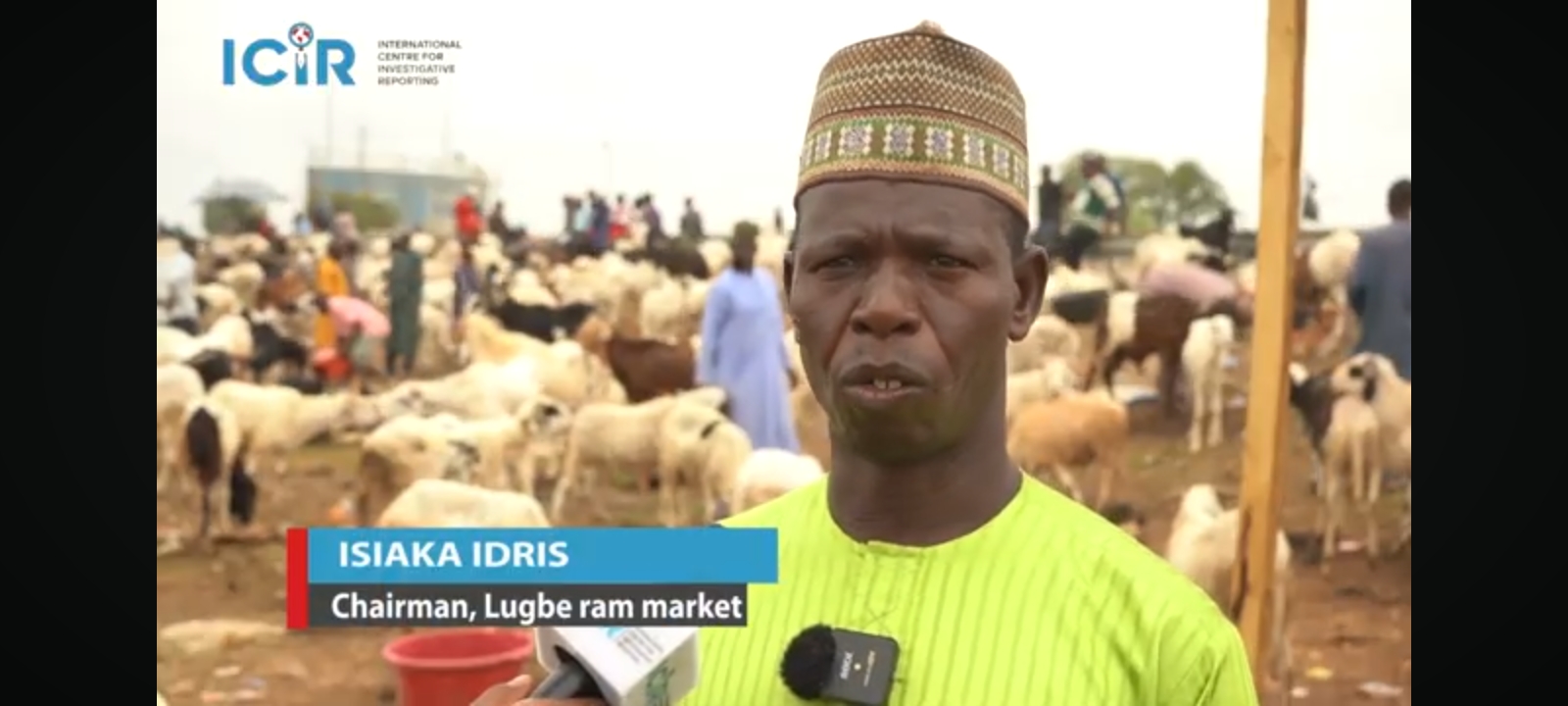
However, Isiaka Idris, the chairman of the livestock market said the turnout this year hasn’t been impressive. He added that corporate and bulk buyers who usually purchase large quantities for distribution have been noticeably absent.

“In previous years, people would come and buy in bulk, up to 50 pieces. But I haven’t seen them this year,” he stated.

Idris speaking with the ICIR reporter

Despite the slow start, traders express hope that market activity will improve in on Eid day as civil servants receive their monthly salaries.

AAC adopts Sowore as consensus candidate for 2027 presidential election

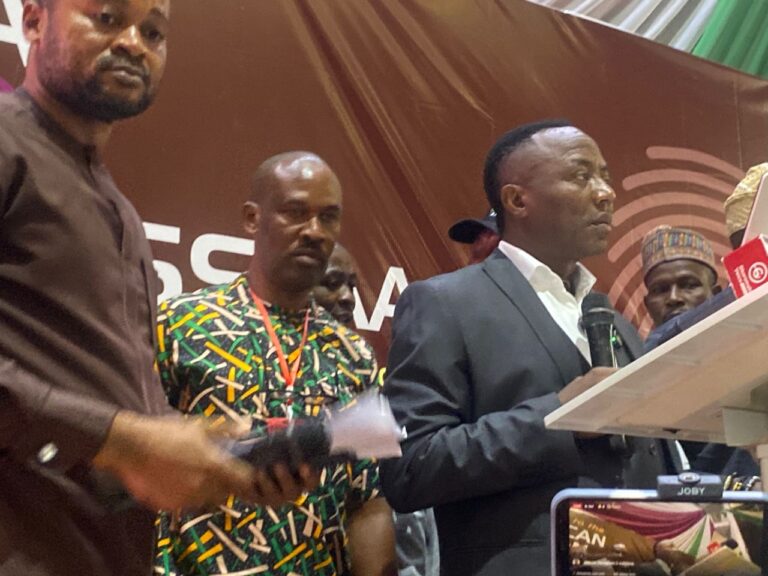
THE African Action Congress (AAC) has adopted its former presidential candidate, Omoyele Sowore, as its consensus candidate for the 2027 presidential poll.

Chairman of the AAC presidential primary committee, Kayode Babayomi, announced the adoption during the party’s 2027 presidential primary, stating that the party had resolved to present a consensus candidate ahead of the next general election in line with the 2026 Electoral Act.

Following his adoption, Sowore formally handed over his position as national chairman of the party to Samuel Ajeyigbe, the AAC Deputy National Chairman (Administration).

Addressing party members and supporters after the adoption, Sowore described the AAC as “the only registered socialist party in Nigeria” and “the only genuine opposition” capable of confronting what he called the “criminal conspiracy” masquerading as democracy in the country.

Sowore said the party represented “the oppressed masses gathered in every shanty, village, and town across the country,” insisting that the AAC was not interested in joining Nigeria’s political establishment but in dismantling it.

The activist, publisher, and politician also accused the government of implementing “copy-and-paste neo-colonial policies” dictated by the International Monetary Fund (IMF) and the World Bank.

According to him, the removal of fuel subsidy without adequate palliatives deepened economic hardship and widened inequality across the country.

“The economic pain we feel today is a policy choice,” he said, adding that “the cruel decision to remove fuel subsidies without any palliative measures or local refining capacity was a decree handed down from Washington, D.C.”

Sowore also criticised what he described as the “privatisation of security” in Nigeria, alleging that security institutions had become tools for the protection of the elite rather than ordinary citizens.

“The police have become an enforcement organ of the ruling class,” he said, adding that the State Security Service had become “a vicious attack dog.”

He linked the country’s insecurity to unemployment, inequality, and the concentration of wealth among a few powerful individuals, arguing that the rise of banditry, kidnapping, and insurgency reflected deeper structural failures within the Nigerian state.

“These people did not fall from the sky. They are the bitter fruits of the diseased tree we call a country.”

Sowore further accused powerful business interests of monopolising key sectors of the economy, including fuel distribution, cement production, and telecommunications, which he described as “economic terrorism.”

“When a private businessman can hold an entire nation hostage over fuel prices, that is no longer capitalism — it is economic terrorism,” he stated.

Campaign promises

Speaking further, the AAC candidate promised that, if elected, his government would nationalise strategic sectors, dismantle monopolies, prosecute corrupt public officials, and invest heavily in education, healthcare, transportation, and job creation.

“The new economic direction must be people-centered, color-coded, and driven by the specific needs and strengths of our population. The true measure of economic success must no longer be the obscene wealth of a few oligarchs, but the prosperity, dignity, and opportunities available to ordinary Nigerians,” he said.

He also unveiled what he called four “people-driven economic models,” which he listed as the Orange and Yellow Economy, Purple and Pink Economy, Blue Economy, and Green Economy.

According to him, the models are aimed at empowering youths, women, and environmentally sustainable industries.

Sowore further announced that the party would declare a “Nationwide State of Resistance” on August 5 against “tyranny, oppression, corruption, exploitation, and the destruction of Nigeria’s future.”

“It was on August 5th that the #RevolutionNow protests erupted across Nigeria,” he said. “History is speaking to us again.”

Jonathan eligible to contest 2027 poll, court rules

0

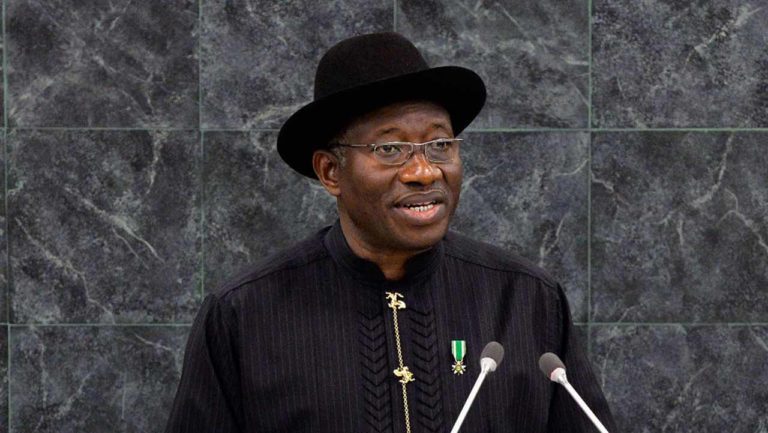
A FEDERAL High Court in Abuja has dismissed a case seeking to stop former President Goodluck Jonathan from contesting the 2027 presidential election, clearing the way for him to participate if he decides to join the race.

The judge, Peter Lifu, delivered the judgment on Tuesday, May 26, ruling that the suit filed by lawyer Johnmary Jideobi lacked merit and amounted to “an abuse of court process” according to Daily Trust.

The court also ordered the plaintiff to pay N20 million in damages to Jonathan and an additional N1 million to the Attorney-General of the Federation (AGF).

Jideobi had asked the court to determine whether Jonathan could seek the presidency again under Sections 1(1), 1(2), 1(3), and 137(3) of the 1999 Constitution. He argued that since Jonathan had already taken the oath of office twice as president, he should not be allowed to contest another presidential election.

The plaintiff also requested an order preventing the Independent National Electoral Commission (INEC) from accepting or publishing Jonathan’s name as a candidate for the 2027 poll.

However, Lifu ruled that the plaintiff failed to show any personal injury or legal interest that gave him the right to file the case.

According to the judge, previous decisions by both the Federal High Court in Yenagoa and the Court of Appeal had already affirmed Jonathan’s eligibility to contest, making those decisions binding on the Abuja court.

He further dismissed an application asking him to withdraw from the matter over alleged bias, describing the request as frivolous.

During earlier proceedings, lawyers representing Jonathan and the AGF strongly opposed the request for the judge to step aside.

Jonathan’s counsel, Uche, argued that the motion was baseless and urged the court to rely on its records. He said the allegations against the judge amounted to “gross misrepresentation.”

Counsel to the AGF, Maimuna Lami-Shiru, also opposed the application, insisting there was no evidence questioning the judge’s impartiality. She described the motion as “baseless, unmeritorious and an abuse of court process.”

After hearing arguments on the recusal request, Lifu proceeded to hear both the preliminary objection and the main suit, stating that judgement would be delivered immediately if the application failed.

Jonathan’s legal team later asked the court to dismiss the case and award N50 million in costs against the plaintiff. The defence relied on earlier court rulings, including Andy Solomon v Jonathan and Cyracus Njoku v Jonathan, which had favoured the former president.

The lawyers argued that Section 137(3) of the Constitution could not be applied retroactively against Jonathan because his last election contest was in 2015. They also maintained that the suit was politically motivated and that the plaintiff lacked locus standi to bring the action.

The AGF’s lawyer supported the argument and asked the court to throw out the suit entirely.

INEC did not appear during the hearing, prompting the judge to close its case.

Although the judgement removes a legal obstacle, Jonathan has not publicly declared interest in the 2027 presidential election.

Recently, a faction of the Peoples Democratic Party reportedly backed by Oyo State Governor Seyi Makinde announced Jonathan as its preferred presidential candidate for the next general election. The former president has neither accepted nor rejected the endorsement.

Similar speculation also surrounded Jonathan ahead of the 2023 elections, but he eventually stayed out of the race and did not obtain nomination forms from any political party.

NNPC to court: Dangote fuel prices high, unstable

THE Nigerian National Petroleum Company Limited (NNPC) has informed the Federal High Court in Lagos that petroleum products from Dangote Petroleum Refinery are sold at high and unstable prices.

It argued that granting the refinery’s request of allowing it to be the sole fuel supplier in Nigeria could create a monopoly.

In a counter-affidavit filed in opposition to Dangote Refinery’s suit (No. FHC/L/CS/857/2026), NNPC asked the court to dismiss the case, describing it as premature, incompetent, and an abuse of court process.

“The plaintiff’s petroleum products are already sold at significantly high and fluctuating market prices, dictated by its commercial interests,” NNPC said.

The ICIR reports that the dispute stemmed from Dangote Refinery’s challenge to the issuance of petrol import licences by the Nigerian Midstream and Downstream Petroleum Regulatory Authority (NMDPRA) to marketers and NNPC.

The refinery argued that the licences violated existing regulations and undermined its $20 billion investment, especially as it claimed to supply more than 90 per cent of Nigeria’s petrol demand. The company accused NNPC and regulators of frustrating its operations through inadequate crude oil supply and continued fuel importation despite its production capacity.

Responding, NNPC argued that there was no independently verified evidence proving the refinery could meet Nigeria’s fuel demand without support from imports.

According to the national oil company, the refinery’s production figures are selective and incomplete and do not account for critical aspects of fuel distribution such as logistics, storage, transportation, and strategic reserves.

The NNPC warned that relying on a single supplier could threaten national energy security and expose the country to shortages, supply disruptions, and price instability if refinery operations are interrupted.

The company also argued that the refinery’s requests would unfairly restrict other operators in the importation and supply chain, effectively creating monopoly control of the sector.

Defending the continued issuance of import licences, NNPC said the Petroleum Industry Act permitted regulators to approve imports when necessary to ensure energy security and market stability. It maintained that the law did not impose a mandatory ban on fuel importation.

It further denied allegations that it sabotaged Dangote Refinery’s operations or deliberately withheld crude oil supplies, stating that crude allocation depends on commercial agreements, logistics, production realities, and security considerations.

Petroleum Products Retail Outlets Owners Association of Nigeria (PETROAN) also backed NNPC’s position, insisting that competition in the petroleum sector was necessary to prevent price exploitation and encourage lower fuel prices through multiple supply sources.

PETROAN President, Billy Gillis-Harry, stressed that while Dangote Refinery’s investment was commendable, Nigeria’s downstream market must remain open and competitive to protect consumers from arbitrary pricing and supply shocks.

The latest legal battle marks another major confrontation between Dangote Refinery and government oil agencies over fuel importation, crude supply arrangements, and competition in Nigeria’s deregulated downstream petroleum sector.

The ICIR reports that the NNPC’s fight with Dangote Refinery continues as the national oil company persistently fails to revamp the government-owned Warri, Port-Harcourt and Kaduna refineries after wasting a huge chunk of state resources on them.

FG cancels $717.7m World Bank power loan amid worsening blackouts

THE Federal Government has cancelled $717.7 million in undisbursed World Bank funding earmarked for Nigeria’s struggling power sector.

According to PUNCH, the bank revealed that the cancellation followed a formal request by the Nigerian government and a mutual decision by both parties to discontinue the programme due the failure to meet key reform targets.

“The restructuring will result in the cancellation of the entire undisbursed balance in the amount of $717.7m equivalent, and no further disbursements will be made under the programme following approval of this restructuring,” the document read.

The ICIR reports that Nigeria remained the International Development Association’s third-largest borrower in the first quarter of 2026, despite a slight decline in exposure from $18.7 billion in December 2025 to $18.5 billion as of March 31, 2026.

The latest IDA financial statements showed only Bangladesh with $22.7 billion and Pakistan with $19.2 billion ranked above Nigeria, whose exposure represented about eight per cent of the institution’s $230.8 billion loan portfolio.

Nigeria’s exposure rose by $1.2 billion from $17.3 billion in March 2025, highlighting the country’s continued dependence on concessional World Bank financing.

The Bank in its latest report also announced that the programme’s closing date had been moved forward from June 30, 2027, to May 31, 2026, effectively ending the initiative more than a year earlier than planned.

The World Bank said Nigeria’s electricity sector continued to grapple with deep-rooted structural problems including weak distribution performance, transmission bottlenecks, underutilised generation capacity, and persistent financial imbalances despite years of reforms and significant financial support.

According to the Bank, high technical, commercial, and collection losses in the distribution segment, coupled with inadequate cost recovery, have created recurring financing gaps and severe liquidity pressures across the power value chain.

“These constraints have created recurrent financing gaps, most notably in the form of tariff shortfalls, which generate liquidity pressures across the value chain and weaken the operational and financial performance of sector institutions,” the document added.

The ICIR reports that this development has brought an end to the remaining portion of the $1.52 billion Power Sector Recovery Performance-Based Operation amid worsening tariff deficits, mounting financial strain, and persistent implementation setbacks.

Recall that the Federal Government launched the Power Sector Recovery Performance-Based Operation on June 23, 2020, with financing of about $752.5 million aimed at improving electricity supply reliability, strengthening the sector’s financial sustainability, and boosting accountability across the power value chain.

After seeing the progress of the recovery programme, the Bank approved an additional $763.5 million on June 9, 2023, to take effect on June 19, 2024, and address the staggering structural challenges. The programme was also extended to June 2027 bringing the total additional funding to about $1.52 billion.

However, while the original programme recorded substantial results and largely disbursed its funds, the additional financing struggled to meet major reform conditions, leading to minimal disbursements and the eventual cancellation of the remaining balance.

Tariff shortfalls reportedly declined by 71 per cent between 2019 and 2022, dropping from N581 billion to N166 billion. Regulatory cost recovery also improved significantly from 56 per cent to 94 per cent, while electricity supplied to the distribution grid rose by 13 per cent between 2018 and 2021.

Encouraged by these gains, the World Bank approved additional funding to strengthen operational performance, improve governance, and support performance improvement plans, particularly at the Transmission Company of Nigeria.

However, the reforms failed to progress as expected and the World Bank blamed much of the setback on major macroeconomic developments, especially the liberalisation of Nigeria’s foreign exchange market in June 2023, which triggered a sharp depreciation of the naira and significantly increased the cost of gas used for power generation.

More than 70 per cent of electricity supplied to Nigeria’s national grid is generated from natural gas priced in US dollars.

At the same time, electricity tariffs for most consumers remained largely unchanged despite rising generation costs. The bank noted that tariffs had effectively remained frozen since early 2023, except for Band A customers whose rates were adjusted to cost-reflective levels in April 2024.

As a result, tariff shortfalls surged sharply from N140 billion in 2022 to about N1.9 trillion annually in 2024 and 2025, placing heavy pressure on government finances.