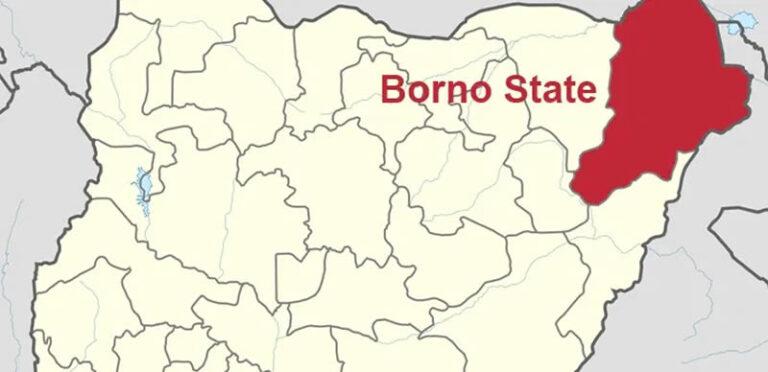
THE Borno State Police Command has confirmed 10 people killed and many injured after a suicide bomber detonated an explosive at a local food joint in Konduga Local Government Area of Borno State.
The spokesperson of the State Police Command, Nahum Daso, confirmed on Saturday, June 21, that the incident occurred around 10 pm on Friday.
“Yesterday, around 22:00 in Konduga, unfortunately, somebody invaded a gathering with a bomb, killing over 10 persons,” Daso said.
He said that the command is making efforts to restore peace and order in the area, noting that an investigation into the incident had commenced to uncover details of the attack.
“We have deployed our EOD experts, together with the military and other security agencies, to the town. Investigation is ongoing to ascertain what actually or really happened. The details are still scanty,” the PPRO added.
The ICIRreported that the State Governor, Babagana Zulum, recently accused some Nigerian politicians and members of the armed forces of serving as informants and working with Boko Haram insurgents.
The governor called on President Bola Tinubu to prioritise ground-level intelligence and heed professional advice from the military.
While stressing that the military alone would not end insurgency because they could not boast of good weapons like the insurgents, the governor reiterated the importance of adopting both kinetic and non-kinetic approaches to address the crisis.
The ICIR also reported that the governor banned the sale of petrol in filling stations across the Bama Local Government Area of the state, as part of efforts to address security challenges in the area.
LABOUR Party (LP) presidential candidate in the 2023 election, Peter Obi, has criticised President Bola Tinubu for not visiting Yelwata, the Benue community where several people were recently killed.
Obi accused the president of giving a “flimsy excuse” to avoid demonstrating the empathy and leadership expected during national tragedies.
Writing on his X handle, Obi emphasised that true leadership requires sacrifice, presence, and responsibility, particularly during periods of national mourning.
“One of the consistent principles of leadership is the willingness to make ultimate sacrifices and take risks. A true leader does not make excuses or complain; he shows up, sacrifices, and provides solutions, especially in difficult times.
While I do not advocate for our president to expose himself to monumental risks, I cannot accept the excuse that bad roads prevented him from reaching Yelwata in Benue State, especially after he had already made it to the state. This visit happened days after the massacre, with enough time to plan appropriately.” Obi wrote.
Obi questioned Tinubu’s leadership, saying that if the Commander-in-Chief of the country could not access a part of his nation because of bad roads, it raised serious concerns about the safety and welfare of ordinary Nigerians who travel those same routes daily.
The former Anambra governor argued that reports indicated presidential aides and advance teams were able to reach Yelwata, showing that the route was accessible. He further questioned why the presidential air fleet, which includes helicopters, was not utilised to arrange an airlift if the roads were genuinely impassable.
Obi maintained that the issue was not about logistics but about priorities, stressing that the people of Benue did not need protocols or official press statements but the physical presence of their president.
He emphasised that what was required in such moments was compassion, not excuses. He further argued that Nigeria could not afford a leadership style that shirks responsibility during national crises, insisting that the foundation of a New Nigeria must rest on truth, courage, and the willingness of leaders to show up when it matters most.
The ICIRreported that schoolchildren in Makurdi, the Benue State capital, were made to file on major roads under heavy rainfall on Tuesday, June 18, to welcome Tinubu during his one-day visit to the state.
This occurred despite a public holiday declared by the state government and harsh weather conditions that left many of the children soaked, shivering, and without adequate shelter.
The president said in the state that the torrential downpour stopped him from visiting the Yelwata community.
FORMER Attorney General and Minister of Justice (AGF), Abubakar Malami, has criticised the President Bola Tinubu-led Federal Government for failing to protect lives and properties in Argungu and Zuru Emirates of Kebbi State.
Malami also blamed the state government and political leaders in the Zulu Emirates for falling short of expectations in safeguarding the lives of their people.
“Lives are being lost, the rights of the people are being violated, and their wealth is being destroyed,” Malami said.
The former AGF, who served under the former President Muhammadu Buhari administration, expressed sadness with the “deteriorating security situation” in the state a short video he released in Birnin Kebbi.
“I wonder how the Federal Government is not doing enough to protect the lives and properties of citizens, let alone the state and local governments,” he said.
Malami, a native of Kebbi State, cautioned against politicising security issues and voiced deep concern over the recent attacks in the Zuru community, which he said claimed over 200 lives.
“Security issues should not be politicised,” he said, adding that “Strange systems of insecurity have emerged in Kebbi, which are very disturbing and alarming.”
He emphasised the urgent need for immediate action from all levels of government to improve security in the state and the nation.
“Lakurawa continue to hold communities in the Argungu Emirate to ransom, while bandits destabilise the people of Kyebu and Tadurga in the Zuru Emirate,” he stressed while condemning the dimensions of attacks by gunmen on the state’s residents
The ICIRreported in April that the Kebbi State Police command confirmed the death of 16 villagers following a deadly bandits’ attack on Tungan Taura and Tungan Ladan communities in Augie Local Government Area.
According to the police, the assailants, suspected to be members of the notorious Lakurawa group, invaded the villages in large numbers and launched a violent assault.
On January 2, over 50 Lakurawa fighters attacked a checkpoint on the Augie-Kangiwa Road, killing two policemen before raiding a ranch near Natsini village
The ICIR reports that under Buhari’s government, where Malami served for eight years, thousands of people were killed in the country, especially in the North-West geo-political zone, where Kebbi is located.
IRAN and Israel launched fresh attacks in the early hours of Saturday, June 21, just a day after Tehran declared it would not engage in nuclear negotiations under threat.
Iran’s Fars news agency reported that Israel targeted the Isfahan nuclear facility and confirmed there was no leakage of hazardous materials. A building in the city of Qom was hit, with early reports indicating a 16-year-old was killed and two others injured.
Shortly after 2:30 a.m. local time in Israel (2330 GMT Friday), the Israeli military issued a warning about an incoming missile barrage from Iran, prompting air raid sirens in parts of central Israel, including Tel Aviv, and across the Israeli-occupied West Bank.
Iran targeted Tel Aviv, a metropolitan area of around four million people and the country’s business and economic hub, where some critical military assets are also located.
An Israeli military official said Iran had fired five ballistic missiles and that there were no immediate indications of any missile impacts or casualties.
The ICIRreported that Israel launched attacks on Iran on June 13, claiming its longtime adversary was close to developing nuclear weapons. In response, Iran, which insists its nuclear programme is solely for peaceful purposes, retaliated with missile and drone strikes on Israeli targets.
The Human Rights Activists News Agency said Israel’s air attacks had killed 639 people in Iran, including the military’s top echelon and nuclear scientists.
United States President Donald Trump told reporters at the airport in Morristown, on Friday, that he believed Iran could obtain a nuclear weapon “within a matter of weeks, or certainly within a matter of months…We can’t let that happen.”
Trump disagreed with his Director of National Intelligence, Tulsi Gabbard, stating she was wrong to suggest there was no evidence that Iran was developing a nuclear weapon.
However, Israel said it carried out strikes on dozens of military targets on Friday, including missile production sites, a research facility in Tehran it claimed was linked to nuclear weapons development, and military installations in western and central Iran.
Iranian Foreign Minister Abbas Araqchi said there would be no negotiations with the US “until Israeli aggression stops.” However, he arrived in Geneva on Friday for talks with European foreign ministers, where Europe aimed to revive a path toward diplomacy.
Meanwhile, Trump has reiterated that he would take up to two weeks to decide whether the US should join the conflict, saying it would allow time “to see whether or not people come to their senses.” He added that he was unlikely to urge Israel to ease its airstrikes to keep diplomatic efforts alive.
“I think it’s very hard to make that request right now. If somebody is winning, it’s a little bit harder to do than if somebody is losing, but we’re ready, willing and able, and we’ve been speaking to Iran, and we’ll see what happens,” he said.
The Geneva talks showed little sign of progress, and Trump expressed doubt that negotiators would succeed in reaching a ceasefire.
“Iran doesn’t want to speak to Europe. They want to speak to us. Europe is not going to be able to help in this one,” Trump said.
Israel’s envoy to the United Nations, Danny Danon, told the Security Council on Friday his country would not stop its attacks “until Iran’s nuclear threat is dismantled.”
Meanwhile, Russia and China have called for an immediate de-escalation of the conflict.
ACOALITION group led by former Vice President Atiku Abubakar and former Kaduna State Governor Nasir El-Rufai has formed a new party and is seeking registration by the Independent National Electoral Commission (INEC).
The proposed party – All Democratic Alliance (ADA) – also has former Minister of Transport, Rotimi Amaechi, and former Senate President David Mark as its leaders.
The application letter, dated June 19, was marked ‘received’ by INEC on Friday, June 20.
A copy of the letter was reportedly signed by the group’s interim National Chairman. Akin Rickets.
According to a statement by the coalition, the development followed a meeting of its leaders in Abuja on May 6.
The statement was signed by Amaechi and Umar Ardo as the chairman and secretary of the New Platform Committee (NPC), respectively.
The NPC said it had 15 members mandated to form an association to apply to INEC to register the new political party.
According to the statement, a series of meetings were held, sub-committees were constituted, and reports were submitted to the committee leading to the meeting and resolutions.
“At the meeting of the New Platform Committee held on Thursday, June 19, 2025, the committee approved the formation of the ADA as a political association and the party’s logo, slogan, and motto.
“Also approved were the party manifesto, its constitution, and the appointment of the interim leadership of the party, with Akin A. Ricketts as protem chairman, and Abdullahi Musa Elayo as protem national secretary,” the group stated.
The coalition also directed the interim leadership of the proposed political party to get office accommodation, open a bank account for the party, after registration by INEC, and operate the activities of the party as enshrined in its constitution and the Electoral Act (2022).
In recent months, there have been increasing talks about the possible formation of a coalition, comprising Atiku Abubakar, the 2023 presidential candidate of the Labour Party LP, Peter Obi, and El-Rufai, to defeat President Bola Tinubu in the 2027 presidential election.
It would be recalled that Atiku was the presidential candidate of the Peoples’ Democratic Party (PDP) in the last poll.
While leaders of the coalition had hinted at forming a new party to present a formidable team against Tinubu in the next election, the ruling APC has repeatedly said that a coalition against Tinubu would fail.
While responding to the planned coalition in April, the presidency mocked Abubakar, El-Rufai and other opposition leaders.
While many Nigerians are groaning that the APC government has worsened hardship for citizens, the party’s membership has, however, been swelling in the past months as more PDP and other parties’ members defect to the ruling party.
THE Labour Party presidential candidate in the 2023 general election, Peter Obi, has decried the over N200 trillion unaccounted funds by the Nigerian National Petroleum Company Limited (NNPCL), saying it reaffirmed his position that the country has become a crime scene.
Obi lamented at this in a statement shared on his X handle on Friday, June 20.
“It is with the utmost sadness that I once again reaffirm what I have consistently said: Nigeria has become a crime scene,” he lamented.
The ICIRreported on Thursday, June 19, that the Senate Committee on Public Accounts, during an investigative session with a team from NNPCL, raised concern over the N200 trillion unaccounted funds in the audited financial statements between 2017 and 2023.
The committee had flagged the discrepancies, questioning the NNPCL over the absence of detailed records to justify massive legal and auditing fees, as well as contradictions in receivables said to be worth approximately N210 trillion.
“How else does one explain the recent revelation by the Senate, which uncovered the audited accounts of the NNPC from 2017 to 2023?
“The Senate uncovered ₦210 trillion in financial irregularities, ₦103 trillion in so-called “accrued expenses”, and another ₦107 trillion in unaccounted “receivables.” No documentation. No accountability. No consequences,” Obi lamented.
He stressed that this was not just another scandal but a clear and damning confirmation of a nation held hostage by monumental corruption.
The ICIR earlier reported that the over N200 trillion unaccounted funds were more than the country’s 10-year budget combined.
Concerning this, Obi highlighted that Nigeria’s national budget within the said period of 2017 to 2023 was as follows:
2017 ₦7.440 trillion.
2018 ₦9.120 trillion
2019 ₦8.916 trillion
2020 ₦10.590 was initially approved and in June revised to ₦9.974 trillion due to COVID
2021 ₦13.588 trillion.
2022 ₦17.130 trillion
2023 ₦21.830 trillion
This sums to over N87 trillion.
“Our total national budget within the said period was not up to 50% of the said financial discrepancies and irregularities.
“This is a criminal institutionalised betrayal of the Nigerian people and a grave threat to the future of the society our children will live in,” he maintained.
Obi, a former governor of Anambra State and a former banker, emphasised that no responsible nation can continue to function in this manner without confronting this truth.
“This criminality masquerading as governance must be stopped and dismantled for a better Nigeria,” he added.
JUSTICE and peace advocate, Redzie Jugo, has called on the Nigerian government to amend the Firearm Act (2004) to allow citizens who are vulnerable to attacks to carry arms.
He argued that access to weapons for self-defence could help communities that are prone to attack overpower their assailants as insecurity escalates in some parts of the country.
Jugo, founder of the Starina Initiative for Peace, Justice and Development and a prominent voice for justice, accountability, and community resilience, made the call in an exclusive interview with The ICIR.
“Why don’t you look at the Firearms Act again and take cognisance of the fact that the IG of Police and the President have been given the sole right of making sure that people, the victims of vulnerable communities can have access to those firearms so that they can safeguard themselves and so that they can see another day,” he said.
@theicirWhy local communities should be empowered to defend themselves amidst incessant killings in Benue, Plateau and other states. ↪️Watch the full video: https://youtu.be/6bTArLknImw ↪️Read the interview: https://www.icirnigeria.org/why-nigerias-security-architecture-must-expand-to-empower-local-communities-to-defend-themselves-redzie-jugo/ #StopBenueGenocide♬ original sound – The ICIR
He said the Act impeded communities’ capacity to fight their attackers.
“As it stands, the Firearms Act is a major albatross around the neck of communities. Why do I say that? The terrorists come into these villages with military-grade weaponry, and they assail and pillage and kill innocent women, children, and men. And soon thereafter, when the community vigilantes gather themselves and they want to repel, because that is all that they can do, repel – even the communities that you are referring to, let us face it, it can only be said that they repelled them.
“There are thousands of terrorists with military-grade weapons who are running amok in villages and forests around the place. So imagine that kind of situation. And we are saying that we must do the right thing, and that is to put pressure on the authorities to be able to amend certain policies, certain laws, to be able to allow vulnerable communities to just see another day [have access to arms legally to defend themselves],” he stated.
The ICIR reports that Nigeria has been grappling with persistent insecurity, particularly in the North-Central and North-West.
Benue and Plateau states in the North-Central have been under heavy attacks by suspected herdsmen in recent weeks.
Last Friday, over 200 residents in the Yelewata community in Benue State were killed and over 3,000 persons were displaced during an overnight attack by suspected herdsmen.
In his interview with The ICIR, Jugo, who is also the coordinator of the National Day of Mourning in Plateau State, suggested that the military could create a department that would be in charge of training local vigilantes in vulnerable communities, since the armed forces could not be present in every community at all times.
He said such a structure would help strengthen grassroots defence mechanisms.
“You may not find one military or one police individual right now in a Kemapa community in a village of Bassa LGA in Plateau State…We cannot get the personnel who can go to Benue LGAs, or can be in Lantang, or can be in Mangu at every point in time, but you can engage the locals to be able to operate under the auspices of the law,” he added.
According to him, the conversation on the amendment to the Firearms Act has not gone far for political reasons, noting that a lot of people shy away from it.
“I spoke to a couple of members of the National Assembly, and it was not something they wanted to speak about,” he said.
Jugo noted further that some of the communities in Plateau State had been taken over and renamed by assailants.
“And we heard very painfully how some of those communities, the Jol community in Riyom local government, had their names changed.
“A week or two after an attack, a man went back to his house. There was somebody living in his house, and there was a woman there. And when he looked flabbergasted at the situation, she quickly advised him to leave the house before her husband came back,” he recalled.
He also urged state governors to unite and present a common front by engaging President Bola Tinubu in direct conversations over the Act.
Jugo warned that the insecurity crisis could eventually consume Nigeria if not well handled.
There is a war going on to take over the Nigerian state, and except we see it for what it is, this war will reach every locality. And Nigeria, as we know it today, will become the Central African Republic tomorrow, or Libya, or Afghanistan, name them.”
ON Thursday, June 19, the Defence Headquarters (DHQ) said Nigerian armed forces eliminated 6,260 terrorists and arrested 14,138 terrorists and other criminals within the past two years across the country.
The Deputy Director of Defence Media Operations, Ibrahim Abu-Mawashi, a brigadier general, stated this while providing updates on the armed forces’ operations during a meeting with media executives in Abuja.
The meeting was held to give an account of two years of the Chief of Defence Staff (CDS), Christopher Musa, a general, and other service chiefs in office.
Abu-Mawashi said the troops rescued 5,365 kidnapped victims and recovered a large cache of arms and ammunition in various operations within the period.
He said the troops also killed 103 criminals and apprehended 2,760 others.
Breaking down the successes recorded in each of the troubled geo-political zones, he said the troops of Operation Delta Safe in the Niger Delta region recovered N83 billion worth of stolen crude oil.
He said in the North-East, the troops of Operation Hadin Kai killed 1,246 Boko Haram members and ISWAP terrorists and arrested 2,467 others.
Additionally, the troops rescued 1,920 civilians andrecovered 982 arms and 2,153 rounds of ammunition in the region.
In the North-West, Abu-Mawashi said the troops of Operation Fasan Yamma killed 1,374 bandits, including their top commanders, in Zamfara, Kaduna, Katsina, Kebbi, and Sokoto states.
He explained that troops operating in the North-Central region neutralised 730 terrorists, bandits and violent extremists, and arrested 7,153 others.
They also rescued 1,510 civilians and recovered 1,065 weapons and 19,709 rounds of ammunition.
In the South-East, Abu-Mawashi said the troops of Operation UDO KA eliminated 440 terrorists and arrested 1,677 criminals. They also rescued 294 civilians, recovered 683 weapons and 21,300 rounds of ammunition.
Besides, they also killed 80 criminals, arrested 1,763 others, and rescued 89 kidnap victims in the region.
In his remarks, Director of Defence Information, Tukur Gusau, reaffirmed the military’s commitment to keeping the Nigerian public accurately and adequately informed about the activities, achievements, and sacrifices of the armed forces.
Infographic on Killings in Nigeria under President Tinubu
Meanwhile, The ICIR reports that the number of terrorists killed by the armed forces is about 35 per cent of the people who lost their lives to insecurity in the country within the period when compared with the data from the Armed Conflict Location & Event Data (ACLED)
A total of 18,079 persons were killed and 8,043 were abducted between May 29, 2023, and May 2, 2025, according to ACLED.
President Bola Tinubu appointed the security chiefs on June 19, 2023.
Borno State topped the list of people killed with 4,710 persons, followed by Zamfara with 2,659, and Katsina with 2,010.
The states with the lowest number of deaths within the period are Gombe (7), Ekiti (17), and Kano (29)
The ICIR reported that over 600 people were killed by non-state actors across Nigeria, 45 days after Tinubu assumed office (between May 29 and July 13, 2023)
Killings in Nigeria by non-state actors have continued despite the efforts of the security forces to contain them.
Attacks by gunmen have persisted in states, including Benue and Plateau, with over 200 reportedly killed in Benue within a week.
THE Independent Petroleum Marketers Association of Nigeria (IPMAN) said Dangote Refinery’s plan to start petrol distribution to marketers free of charge across the country would make the product cheaper.
The IPMAN’s National Publicity Secretary, Chinedu Ukadike, welcomed the plan on Channels Television’s Sunrise Daily programme on Friday, June 20.
He said Dangote Refinery had seen a problem in the sector and had decided to address it.
“If you look at the Dangote’s statement, it is a strong policy statement. If you read down that statement, you will understand that he foresaw a lot of problems in the oil and gas industry and also decided to tackle them.
“It is something that we welcome with a lot of cheers because it is going to bring fuel cheaper to our doorpost,” Ukadike said.
He added that the Dangote Refinery’s plan would relieve marketers of unnecessary costs.
“Our pipelines have gone for years, nobody is talking about the pipelines wired all over the country from all 21 depots. Products are not being moved. We are suffering the brunt of bringing these products from the seashores of the country, where DAPMAN (Depot and Petroleum Marketers Association of Nigeria) members have their tank farms.
“But if you look at Dangote’s statement, you will see that a heavy load has been lifted out of the independent marketers,” the IPMAN secretary said.
The ICIR reported that Dangote Refinery on Sunday, June 15, announced the free distribution of petrol and diesel to marketers, dealers, and other large users across the country.
The plan is to commence on August 15, even as the refinery said it had procured 4,000 brand-new compressed natural gas (CNG)-powered tankers for the take-off.
The IPMAN position, however, differed from earlier concerns by the Petroleum Products Retail Outlets Owners Association of Nigeria (PETROAN).
The PETROAN had expressed worry that the Dangote Refinery’s plan would disrupt the operations in the oil and gas value chain.
It said the Dangote Refinery plan would go against earlier recommendations by stakeholders within the sub-sector for refiners to be allowed to refine, storage facilities owners to store for adequate energy security, marketers to market, and for retail outlets to sell the products.
However, IPMAN disagreed with the position, insisting that as a refinery, Dangote had the right to find a better way to get his products to the marketers.
RESIDENTS of Gelegele, a coastal community in Edo State, blame persistent gas flaring for crippling their primary sources of livelihood— fishing & farming—and for exposing them to serious health risks. This report highlights how years of pollution from gas flaring, according to locals, have continued to devastate the environment and endanger lives, despite their outcry.
It was a sweltering Friday in Gelegele, a quiet local community in Edo State. A group of topless kids splashed water on one another with ecstasy, their laughter cutting through the thick afternoon heat. Some rested in an old canoe by the shore, tired yet reluctant to leave the bank. A group of women loaded bags of Garri (made from cassava) into canoes headed for neighbouring villages. Not far from them, under a small patch of shade, sat Serah Awowu, a native of Gelegele, who had spent her entire life in this riverside community.
“As you can see, life here is no longer what it used to be. The kids have taken over the water since there are no longer fishes because of the fire (gas flare),” Awowu lamented. She sat on the wooden bench placed under the makeshift tent, wiping sweat from her forehead as the midday sun beat down on the Gelegele riverbank.
Serah Awowu’s fishing business suffered due to gas flaring. Photo: Nurudeen Akewushola/The ICIR
She told The ICIR that they have had problems fishing in the community, largely due to environmental concerns occasioned by gas flaring activities in the heart of the community by an oil firm. Her friend, who sat quietly beside her, Susan, said her own family has had to endure severe heat because their house is located very close to where the flaring occurs.
Gelegele is a riverside community in the Ovia North-East Local Government Area of Edo State, Nigeria. Traditionally, the community’s economy has been anchored on fishing and agriculture (mainly cassava), leveraging its proximity to the Ovia River and fertile lands. However, the discovery and subsequent exploration of oil resources have altered this dynamic.
The firm called Dubri Oil Company Limited (DOCL), which took overoperations from the American Phillips Oil Company, owned the flare stack in the heart of Gelegele. Residents blamed the continuous gas flaring from the flare stack for severe environmental degradation and socio-economic challenges.
Gas flaring is the wasteful burning of natural gas from industrial oil extraction and production. The extraction process releases various environmental pollutants, including greenhouse gases, carbon dioxide, methane, and black carbon. The World Bank has said that Nigeria and nine other countries account for 75 per cent of global gas flaring.
The nine other countries include Russia, Iraq, Iran, the United States, Venezuela, Algeria, Mexico, Libya, and China.
Gas flaring negatively impacts the climate and environment. It releases CO2, contributing to global warming. It also causes acid rain, which affects the productivity of the soil for agriculture.
A field assessment showedthat the distance of the Dubri Oil Company flare stack to the farthest residential building in Gegelele is less than 600m, and the closest residential building at Gelegele to the flare stack is about 20m.
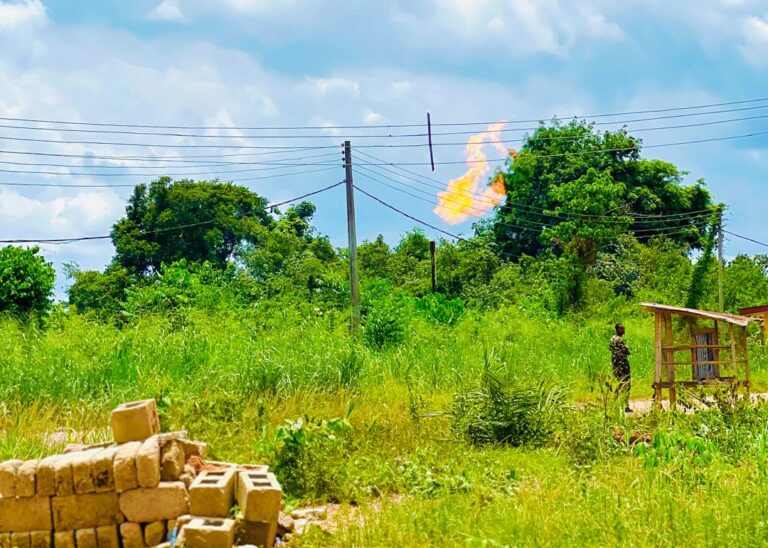
During a visit to the company on April 25, fire was seen gushing from the flare stack situated within the community. Residents who spoke with The ICIR confirmed that this was a daily occurrence.
Gas flares coming out from the flare stack situated at Gelegele community by Dubril Oil Company/ Picture taken on April 25, 2025 by Nurudeen Akewushola/ ICIR.
They said the situation has had detrimental effects on their health and livelihoods. They report experiencing excessive heat, skin diseases, and eye problems, which they attribute to toxic emissions from gas flaring activities.
According to them, the situation has also caused a decline in aquatic life, further affecting fishing activities. They added that agricultural productivity has dropped due to soil degradation, leading to food insecurity and economic hardship. Despite these challenges, residents say they have received minimal support or compensation, prompting renewed calls for an end to oil and gas exploration in the area, as well as demands for environmental remediation and restitution.
Gas flaring robs women of their livelihood
Both Awowu and Susan complained that there has been a gradual decline in their income over the years due to the gas flaring activities, and they have had to make do with other menial jobs to survive and feed their families.
“This gas flare is killing everything. When I was small, we used to take our fish to markets in other communities to sell,” she recalled, adding, “Now, there’s nothing left to sell.”
“The fishes have disappeared. Before, we used to catch big fish. We would go to the market and sell to make a lot of money. Many of our people are now hopeless, and it all began when these oil and gas people came around,” Awowu said.
Other families like Awowu’s told The ICIR that they have received no tangible benefits from the companies operating in their backyard. She said not even when hope briefly flickered for her daughter, who was shortlisted for a scholarship under the company’s scholarship programme.
Despite the promise, the scholarship never came through. Timi, her daughter, is now a student at Delta State University, and Awowu, with limited means, is left to shoulder her education costs, amounting to over N300,000 a year.
Vero Abagi, 81, who has been fishing in the community for two decades, is also forced to contend with the negative impact of gas flaring. She recalled that the situation continues to worsen over the years due to the flare on the river, which makes it hard for fish to survive.
Vero Abegi used to fish in the Gelegele river but can no longer do that due to environmental issues. Photo: Nurudeen Akewushola/The ICIR
“We can’t fish like we used to before because the water is polluted. If you went to the river before, your rubber would be full, but now there are no fishes again,” Abegi said, her eyes sunken and tired.
Abegi recalled, “Catching fish used to be easy, but now it’s very difficult. Over ten years ago, we could catch up to one board of catfish at a time. It’s the fire (gas flare) that’s affecting the water; not that the water is drying up. The fish now swims far away from the community. If you go farther away from here, you might still be able to catch some.”
Studies have shown that gas flaring releases air pollutants such as nitrogen oxides, carbon oxides, and sulfur oxides. These pollutants increase the acidity of the soil, making it difficult for vegetation to grow around flare sites. They also damage mangrove swamps and salt marshes, reduce plant growth, degrade soil quality, and lower agricultural productivity.
In some areas near gas flares, there is no vegetation at all due to the combined effects of intense heat and acidic soil. Similarly, a study on the impact of gas flaring on crop farming in the Niger Delta found that it significantly slows down crop growth.
Patience Gijere, a 42-year-old farmer in the community, is one of the victims. She explained that farming has not been easy for her due to the impact of the gas flares on her farmland located a few kilometres from the company.
Patience’s crops no longer yield faster due to the impact of gas flaring. Photo: Nurudeen Akewushola/The ICIR
“Our crops used to grow well, but that’s no longer the case. I just came back from the farm. When it’s time to harvest cassava, you will notice the stems are dying and the leaves look yellow instead of green. This is because of the gas flaring. It’s what is spoiling our crops.
“I used to make up to one million naira to two million naira if I farmed one acre of land and got up to 50 bags of garri, but now I get only ten bags at most. It hasn’t been easy,” she said.
Residents live under excessive heat, battle ailments
Doris Obi, another resident of the community, told The ICIR that residents battle rashes, severe headaches, dim vision, weak legs, and excessive heat due to the environmental crisis in the community.
“The heat in this community is terrible,” she lamented. If a fair-skinned person stays for just a month or two, their skin darkens completely,” she lamented.
Obi has lived most of her life in the Gelegele community. After completing her primary and secondary education, she left for some years but returned about seven years ago and has watched her community and health deteriorate under the impact of environmental pollution.
Doris Obi developed a vision problem after moving to Gelegele community. Photo: Nurudeen Akewushola/The ICIR
According to Obi, the pollution has also affected her eyesight. She explained that before moving back from Lagos in 2017, she had no vision problems. However, after a few years of living near constant gas flaring, her sight began to deteriorate, and she now relies on eyeglasses provided by a non-governmental organisation.
“I wasn’t using glasses before. But after coming back here, my eyes got worse. An NGO brought people from Benin who tested us and gave me these glasses. They said the environmental pollution is affecting our eyes.”
Obi said the gas flaring from oil operations has affected people’s health and their source of livelihood, as the particles released into the air have contaminated their environment, including the rivers and farmlands that once supported fishing and farming.
“The gas flare releases particles that spread everywhere, causing different kinds of diseases. Even our drinking water is not properly treated, and the contamination affects our health, making us age faster and grow grey hair early.”
She lamented the lack of basic infrastructure in the community, saying the community health centre lacks essential drugs and qualified doctors, while the roads are in terrible condition.
“When my husband was sick, there was no drip at the health centre. We had to buy 7Up and mix it with salt as a substitute. We badly need drugs, doctors, and proper healthcare services,” she said.
Godsey Kororo, a community elder and 60-year-old retiree, spent 25 years working with the company. He joined the company in 1995 and retired in 2020. He said, “The flare is not good with my skin. It is giving me heat in my body. Sometimes in the night, my body feels hot. The environment in this place is very hot. Do you know that this place is polluted everywhere? If you buy a zinc roof for your house, within one month, the zinc will rust.”
He added that the heat and the pollutants in the air have caused various health issues for the people, including skin problems and respiratory difficulties.
“People cannot even kill fish in the river. There is no fish. When I was young, people went to the river to catch fish. But now, no fish. I am telling you,” he said, highlighting how the pollution has destroyed the environment and made it impossible for the community to rely on traditional sources of food.
“We are not enjoying anything as if there is no oil company here. Do you know how much they pay to the community? Just meagre amounts as gas flaring compensation,” he said.
Godsey expressed frustration with the lack of benefits for the residents. He said that while the company pays compensation to the government for the gas flaring, the funds are not being properly distributed to the community, leaving many without the promised support.
The situation of Gelegele residents mirrors the dire conditions in Nigeria’s Delta region, which constitutes the majority of the 2 million people living within 4 kilometres away from flare sites across the country and are exposed to the black fumes and toxins emitted.
They face the risk of respiratory issues, including asthma, cough, and breathing difficulties, as well as eye and skin irritations, and prolonged exposure to gas flaring activities compared to communities without such exposure.
“The impact is minimal,” says company’s supervisor
Dubri Oil Company Limited (DOCL) is a Nigerian-owned oil company, created in 1987. They took over the oil field after an American company, Phillips Oil, left. Since then, Dubri has been running oil exploration activities in the community.
Speaking with The ICIR, the supervisor of the company, Banigo Da-Onamata insisted that the company is adhering to environmental guidelines in its operation and giving back to the community.
“If you go round the Niger Delta, it’s a common thing. Although things are changing, and with time, we also have plans ongoing. Within the shortest period, gas flaring will be a thing of the past, meaning that as you are seeing today, you might not see it tomorrow.”
He said the company has tried to reduce the volume of the gas being flared and also engaged contractors who come to the community to analyse the impact and advise the company.
“They go to the water and take the samples. They also check community members. It’s a procedure in the oil system,” he said. “With the data that we have over time, the impact has been minimal. I don’t think we have ever had issues in Gelegele and that’s why we always engage the service of professionals.”
“The impact is even like zero. It’s not something that causes harm. For instance, you won’t feel it until you get close to it for some metres. Even if you go to other parts of Benin when there are no flares, there’s heat.”
He said the company has impacted the community in terms of healthcare and education.
“There’s a hospital built by the company for the members of the community. We have also offered scholarships to indigenous members of the community.”
However, a visit to the clinic shows that it lacks manpower, a laboratory and adequate drugs. The ICIR gathered that the hospital has four personnel.
The officer in charge of the hospital, Raphael Ekano, explained that many residents complain of heat rashes, arthritis, cough and Tuberculosis due to inhaling flames from the gas flare.
Health worker in charge of the Gelegele community confirms that residents report illnesses associated with gas flaring. Photo: Nurudeen Akewushola/The ICIR
He explained that due to the lack of a laboratory, there are issues that the healthcare centre may not be able to detect. He bemoaned the inadequate supply of drugs and the shortage of manpower in the hospital.
“This is a primary healthcare centre in which we handle so many cases. It’s only when we get cases that we cannot handle that we refer them. The problem with this health centre is that we don’t have a Laboratory, and because of this, there are some cases that we cannot handle, such as Anaemia. We need to refer them. Like last week (at the time of interview), we had some cases of diarrhoea. In three days, I didn’t sleep at all. Both day and night, I treated like eight people for diarrhoea. We thank God that everything is under control.
“Tuberculosis is one of the issues we have in this community, and this is aggravated by inhaling the gas flames. We also have many people complaining of arthritis, joint pains and so on and we do treat them.”
He said that gas flaring has intensified the heat in the community, which sometimes causes residents to develop health issues such as skin rashes.
One of the ‘expired’ drugs recently supplied to the hospital
“The heat is too high in the community,” he lamented. “People are also developing coughs due to constant exposure to fumes from gas flaring. It doesn’t stop there — gas flaring can severely affect the lungs and even contribute to illnesses like tuberculosis. For individuals with pre-existing lung conditions, inhaling these toxic substances can worsen their health drastically.”
What has government done?
Although Nigeria has pledged to end gas flaring and introduced fines for oil companies that violate this policy, gas flaring continues. As a result, the health of people in the Niger Delta like the Gelegele remains at risk.
A study published in the International Journal of Scientific Reports shows that gas flaring poses damage to human health and the environment, making experts call for the need to implement measures to reduce or end gas flaring to protect the communities living near flaring sites.
The study stated that the level of ambient air pollutants in the Niger Delta region like Edo relative to Lagos State revealed that pollutants levels are uppermost in the former where the majority of flare sites are. The author maintains that some of the greenhouse gases emitted at flare sites contribute to global warming. The environmental consequences include food insecurity, a higher risk of disease, acid rain, corrosion of buildings from polluted rainfall, and increased costs from extreme weather events due to airborne toxins such as benzene.
Nigeria enacted the Petroleum Industry Act in 2021, with some of its sections designed to decrease gas flares and address the environmental and social problems caused by excessive flaring. Its goal is to safeguard the local environment, conserve resources, and ensure human safety by enforcing emergency shutdown procedures.
It states that unauthorised flaring is an offence and requires companies that flare to pay a fee, which would be used for environmental remediation and to provide relief to the affected communities. However, experts have said this approach is ineffective because the penalties are not weighty enough to be a deterrent as it enables giant companies like to continue to flare despite the impacts on the environment.
In December 2024, the House of Representatives, passed for second reading, a bill for an act to prohibit gas flaring, encourage commodity utilisation and provide for penalties and remedies for gas flaring violations.
The bill sponsored by Babajimi Benson, seeks to prohibit the flaring and venting of natural gas, except in strictly regulated circumstances, while encouraging the utilisation of gas resources to foster economic growth and energy generation.
River in Gelegele community. Photo: Nurudeen Akewushola/The ICIR
The proposed legislation aims to mitigate the environmental, health, and economic impacts of gas flaring, aligning Nigeria’s oil and gas operations with international climate change commitments.
Whoever violates the proposed law would face stringent penalties, including fines of $5 per 1,000 standard cubic feet of gas flared and potential suspension of operations for repeat violations.
The current penalties for gas flaring in Nigeria officially stand at $2 per 1,000 scf. Currently, companies producing more than 10,000 barrels per day (bpd) pay a fine of $2 per 1,000 scf of gas flared, while companies producing less than 10,000bpd pay a fine of $0.5.
Efforts to reach the Edo State Ministry of Environment proved abortive at the time of filing this report. The ministry’s Public Relations Officer, Joy Efekwe, said the director in charge of the matter was not on seat.
In August 2024, the state government told Dubril Oil Company to stop gas flaring in the community and do more to alleviate the suffering of the people by focusing on Corporate Social Responsibility.
The government urged the company to capture and liquefy the gas being flared in the centre of the community with modern technology to prevent the women from health hazards. However, checks by The ICIR show that the company continues to flare gas within the community despite the order.
Expert calls for stricter penalties
Analysts have emphasised the need for more stringent enforcement of existing policies and laws to curb gas flaring further and increase penalty collection.
“Overall, Nigeria’s gas flaring activities have considerably reduced over the years, as a result of certain government policies that have been put in place to incentivise the reduction of flaring,” Joshua Olorunmaiye, an oil and gas lawyer had told Business Day.
“However, it would seem that not enough is being done to enforce policy direction and laws that are meant to stifle incessant gas flaring.”
An Environmentalist and Executive Director of Gbolekekro Women Empowerment and Development Organisation (GWEDO), Cynthia Bright, urged the government to enforce stricter penalties for gas flaring and ensure that oil companies are held accountable for the social and environmental damage they cause.
She explained that years of oil exploration and gas flaring have left women and children in the Gelegele community battling health and environmental challenges.
She pointed out that the companies only require to trap the gas and channel it for other uses, such as electricity, rather than flaring it, which is detrimental to the environment.
Cynthia, who began her advocacy journey in 2017, explained that when she first arrived in the community, residents were unaware of the dangers of gas flaring.
“When I got to Gelegele, I met women using gas flares to dry pepper and the children were using it to dry clothes because they saw it as normal fire,” she said, adding, “We had to educate them that it was not a good practice because they didn’t know the risks.”
She also highlighted several health conditions prevalent among residents, such as arthritis, frequent fever because of heat, skin rashes, miscarriages, and partial blindness due to the gas flaring.
According to the Petroleum Industry Act (PIA) 2021, particularly Chapter 3, Sections 234 to 257, oil companies operating in host communities like Dubril Oil are required to establish a Host Communities Development Trust, funded with 3 per cent of their annual operating expenditure. This Trust is designed to finance projects that promote the socioeconomic development of host communities, including the provision of healthcare, education, and infrastructure.
However, despite this legal obligation, Cynthia described the Trust intervention as inadequate. She said they once received nearly expired children’s syrups and a few packs of paracetamol without providing medical personnel or proper healthcare support.
“The community rejected the expired drugs after we educated them about the dangers,” she said.
Despite continuous extraction activities, Cynthia said the Trust has failed to provide basic amenities like clean water or functional healthcare facilities. She criticised the government’s handling of gas flaring, citing a conversation with a principal engineer in the company who denied polluting the environment.
“He now said they are working towards zero emissions, and I asked, “what are you emitting that you are working towards zero emissions? You can see that it is a very critical issue. Is it that they are aware, and they are pretending like they are not aware, or they don’t even know?” she asked.
“These companies do not care. Even the government does not care. Whatever happens in Niger Delta or Gelegele community is none of their business as far as money (fine) is being channelled to their treasury.
“Don’t forget that these community people were so impoverished, but they were enjoying their impoverished life because when they went to the river, they would see fish, and some of them would take them to another community to sell those fish.
“My late mother-in-law built her house through fish trading, but today, that is no longer possible,” she said.
Cynthia urged the Federal Government to prioritise the well-being of the citizens over profit and look into the policies and framework around gas flaring in Nigeria.
“The government should look at the frameworks and policies and see how they can rephrase them. If you say gas flaring is prohibited, let it remain like that. What is the essence of putting a fine? Putting a fine means it is just a joke because these companies will continue to pay the fine.”