Home Blog Page 265

Bruises, blood, legal costs: Plight of The ICIR at the frontlines of accountability reporting

I have spent the last decade in the media, much of it navigating the precarious terrain of accountability journalism in Nigeria. But nothing quite prepares you for the moment your newsroom becomes the headline.

In May 2024, The International Centre for Investigative Reporting (ICIR) was not breaking the news, we were the news. Dayo Aiyetan, The ICIR’s Executive Director and Nurudeen Akewushola, an investigative reporter, responded to what the police described as a “fact-finding invitation” at the Nigeria Police Force – National Cybercrime Centre (NPF-NCCC). Accompanied by legal counsel, they entered the facility.  Noon came. Then 3 p.m. Then 6 p.m. And they still had not returned. Their numbers were not reachable. 

This is Nigeria, where journalists cannot walk into police stations without apprehension. Here, the Cybercrime Act – repealed in part but still being wielded – has been weaponised over and over to intimidate the press and other critical voices.

Last year, Femi Falana, human rights lawyer and a Senior Advocate of Nigeria (SAN), noted that it was illegal for security agencies to arrest journalists for cyberstalking, noting that Section 24 of the Cybercrime Act 2015 which had criminalised ‘cyberstalking’, ‘insult’, ‘causing annoyance’, ‘sending offensive messages’, ‘criminal intimidation’, and ‘causing annoyance’, had been repealed.

During this year’s World Press Freedom Day, editors in newsrooms across the country who spoke with The ICIR highlighted the Cybercrime Act as one of the most dangerous instruments against press freedom.

“Many Nigerian journalists have been arrested by the police on ridiculous charges like cybercrime. What does journalism have to do with cybercrime? asks Chikezie Omeje, the Africa Editor, Organized Crime and Corruption Reporting Project (OCCRP).

“The Cybercrime Act has proven effective in stifling press freedom,” adds Aminu Naganye, Editor at WikkiTimes, an outlet that has been repeatedly harassed. At one point, the online newspaper closed its physical office and the publisher, Haruna Mohammed Salisu, was forced to relocate due to persistent threats by the authorities.

L-R: The ICIR’s Executive Director Dayo Aiyetan and Nurudeen Akewushola
L-R: The ICIR’s Executive Director Dayo Aiyetan and Nurudeen Akewushola.

The ICIR participated in a media-wide campaign calling for the release of detained journalist Daniel Ojukwu. I helped print the banners on behalf of The ICIR: #FreeDanielOjukwuNow. We marched to Louis Edet House, the Nigeria Police Force (NPF) Headquarters.  Ojukwu, a journalist with the Foundation for Investigative Journalism (FIJ), had spent ten days in custody – some of them incommunicado, it was unsurprising when FIJ’s News and Features Editor, Joseph Adeiye, tells The ICIR how vaguely worded laws like the Cybercrime Act are increasingly used to target journalists.

“Revealing stories and accountability reports are often labelled defamatory,” says Adeiye. “Reporters are taken in for weeks or months of unnecessary questioning, all in a bid to intimidate them.”

Back to the police invitation to The ICIR

Working in the media accountability space, we know how quickly these situations escalate. We feared the police invitation to The ICIR would.

After six long hours, we issued a press statement about our inability to reach our Executive Director and reporter. Finally, Aiyetan was released. But not Akewushola. Perhaps they assumed he’ll be easier to break being young, early-career, not yet “battle-worn.” But at The ICIR, we stand by our reporters. So Aiyetan stayed behind.

Eventually, after mounting public pressure and calls from concerned stakeholders, I received a call. It was from the president of  International Press Institute (IPI) Nigeria Chapter, Musikilu Mojeed: “Nurudeen has been released, on bail.” It was 9 p.m.

As the Editor, I informed the newsroom and our partners, including civic actors and the press. Those of us who stayed behind finally headed home. But this was only half the battle.

Akewushola was shaken by the incident. “I was destabilised for days,” he states. “Overwhelmed by the reality that I could have ended up in prison simply for exposing wrongdoing. The experience made me question how safe journalists are in this country and of course, press freedom generally”.

The toll journalism takes on family and friends is often not spotlighted. The impact of harassment on accountability journalism affects more than just the journalist; it ripples outwards. Akewushola’s family was traumatised. “Seeing them so distressed because of my work added a heavy emotional burden,” he says.

WikkiTimes publisher, Salisu had once echoed the same, “My work is attracting sorrow to my family, and I worry about them.”

Akewushola had planned to travel home for Eid. He never did. His bail conditions required him to remain available for questioning.

“I had taken a leave so that I would be able to travel home for Eid, but I couldn’t because it’s part of the conditions for my release to be around and come back if they summon me,” he explains.

He learnt something from the ordeal. “It taught me I wasn’t alone in the struggle,” he reflects, “My newsroom, civil society, and other media organisations all stood by me.”

The ICIR became the story itself as our Executive Director, Dayo Aiyetan, and young reporter Nurudeen Akewushola responded to a "fact-finding invitation" at the Nigeria Police Force – National Cybercrime Centre (NPF-NCCC). Image generated using AI with prompt from Bamas Victoria
The ICIR became the story itself as our Executive Director, Dayo Aiyetan, and young reporter Nurudeen Akewushola responded to a “fact-finding invitation” at the Nigeria Police Force – National Cybercrime Centre (NPF-NCCC). Image generated using AI with prompt from Bamas Victoria

Before the police invitation, The ICIR had published an investigation into police housing fraud. Former Inspector General of Police Solomon Arase, then Chairman of the Police Service Commission (PSC), was named in the investigation. He threatened a lawsuit. Corpran Limited, the developer involved, attempted to stop the publication. When the police invitation for questioning came, it was vague. We asked for specifics about the petition. None was given. We suspected the connection. Our sources confirmed it. Aiyetan and Akewushola later did too.

Days later, Arase weaponised his office to announce a lawsuit through the Police Service Commission’s spokesperson, Emeka Ani, a move Aiyetan described as an abuse of office.

“The investigative report that irked Mr Solomon Arase and the lawsuit he purports to have filed [as of then The ICIR had not received formal notification] are his personal business and have nothing to do with his position as PSC Chairman, and is a blatant abuse of office,” Aiyetan states.

Aiyetan was dismayed that Arase was using the police and its agencies to hound The ICIR, its reporter and editors for a story in which the interest of the police and its property were being protected while noting that the police should be investigating the former IGP instead of “harassing journalists for doing their job.” As such The ICIR petitioned President Bola Tinubu and asked for his removal. Days after, Arase was removed.

The ICIR is currently in court with Arase, and also the developer Corpran Limited. This is the other half of the battle.

This is not The ICIR’s first brush with Strategic Lawsuits Against Public Participation, (SLAPPs). In two years, the Centre has faced at least seven cases. “It’s not because our reports are false – we’re rigorous in our investigations,” Aiyetan says, “but people use lawsuits to punish us. It’s vendetta. It’s intimidation. They want to waste our time, drain our resources.”

And they do.

“Just two suits – from the same person – one filed in Abuja, one in Lagos, have cost us over N5 million,” Aiyetan reveals. “Without partners helping with legal fees, we wouldn’t survive.” The ICIR has gotten financial support from Media Defence, an international media organisation that provides legal support to journalists, citizen journalists and independent media across the world. It has also gotten other forms of assistance from the Yar’Adua Centre Joint Civic Defence Fund.

The suit in Abuja suit has been dismissed.

Since the Arase suit, The ICIR has received multiple threats of lawsuits. Some have escalated into court cases. The most recent was filed in Kaduna by the Executive Secretary of the National Board for Technical Education (NBTE), Idris Bugaje following The ICIR’s investigation into allegations of financial recklessness at the organisation.

What should have been a routine verification which included taking pictures in a public space, became a full day event when ICIR Editor went on fact-finding. Image generated using AI with prompt from Bamas Victoria
What should have been a routine verification which included taking pictures in a public space, became a full-day event when ICIR News Editor went on fact-finding. Image generated using AI with prompt from Bamas Victoria

Legal intimidation is not the only weapon. Sometimes, it’s physical.

In December 2023, The ICIR’s News Editor, Marcus Fatunmole, went to Eagle Square in Abuja to fact-check claims that had gone viral. A video in circulation had claimed that the government was refurbishing second-hand buses to use for a proposed intervention.  The video gained traction because of President Tinubu’s promises on June 12 and October 1, Democracy Day and Independence Day, respectively, that his government would procure and deploy high-capacity buses across Nigeria to alleviate pains due to his government’s removal of fuel subsidy.

It should have been a routine verification which included taking pictures in a public space. But he was detained for six hours by the private security guards and police, verbally harassed, threatened to delete the images, and only released after the intervention of civic actors like the Coalition for Whistleblowers Protection and Press Freedom (CWPPF) and The ICIR leadership.

“The experience affected me mentally because I lost my productive time to a baseless matter,” Fatunmole says, while noting that it disrupted the newsroom work for the day.

Earlier, in April 2023, The ICIR journalist, Sinafi Omanga, was beaten while discreetly trying to document a case of jungle justice on two men accused of stealing a mobile phone. A man in military uniform and a woman, who identified themselves as soldiers of the Nigerian Army, led the mob action causing him bodily harm.

His eyeglasses were broken, his N5,000 was stolen, and he was forced to pay N4,000 to his attackers, which he did by calling a colleague to make the transfer.

“Upon destroying my eyeglasses, my eyes became the primary target for their punches,” he says. In a separate interview, Omanga spoke about the helplessness he felt at that moment and how it became a defining moment, especially when he noticed a police van passing without intervening.

Even though he got days off, received medical attention and was refunded what was lost by The ICIR, Omanga says, the physical and financial pains are nothing compared to the trauma.

“I became scared of doing my job, especially when it involves the use of a camera. To this day, I still worry about my safety when on the field, especially with a camera. Suddenly, journalism feels so risky to me,” he notes.

In April The ICIR journalist Sinafi Omanga was beaten while discreetly trying to document a case of jungle justice on two men accused of stealing a mobile phone. Image generated using AI with prompt from Bamas Victoria

Also, in September 2023, the Federal Road Service Commission (FRSC) officials attacked Mustapha Usman, another journalist with The ICIR while documenting an altercation with a female driver.

“About five of them surrounded and attacked me,” he says. They seized his press ID card and took it to their office which was nearby. It took the intervention of the Corps spokesperson to get them to release his ID.

These violations of freedom of the press negatively impact journalists, particularly the young or new entrants into the business, as it makes them rethink their career choices and the stories they want to report on.

“The truth is that immediately after the incident, I found myself more cautious and hesitant when covering stories involving law enforcement”, Usman states.

Usman has a fear of law enforcement agencies, particularly the police. He has documented and reported in-depth cases of harassment, “I know how brutal and unprofessional some can be,” he says during a recent interview with The ICIR.

The ICIR’s Executive Director was not spared from physical assault. On February 25, 2023, during the general elections, he was assaulted in Gwagwalada by political thugs. They tore his clothes, stole his phone, wallet, car keys and other documents. Some of these he was able to recover due to the efforts of Hamza Sadiq, a Chief Superintendent of Police (CSP) whom he described as “a committed, passionate officer.”

The price of accountability reporting for us has been marked by bruises, blood, legal costs, and mental strain, but there have been allies and support. Saidu Muhammed Lawal, the Managing Partner of Spectrum Legal Services, which has represented The ICIR on several SLAPP cases says “SLAPP cases are usually filed by high-ranking public holders who are embroiled in accusations of corruption.”

He adds, “in some cases, there is an effort to get an injunction restraining the civil society organisations from publishing anything in relation to the public office holder even before the case is heard.”

Busola Ajibola, a Deputy Director at the Centre For Journalism Innovation & Development (CJID) and one of the coordinators of the Coalition for Whistleblowers Protection and Press Freedom (CWPPF), was present when Fatunmole was detained and also during the meditation with FRSC after Usman’s assault. Responding to the question about what justice looks like for the Nigerian press, she says: “Justice means making sure the perpetrators of SLAPPs do not win or get to censor the media. It should be criminal when powerful individuals intentionally set out to censor the press.”

Achieving this, she says, requires a multifaceted approach, including having broader conversations with the judiciary. To this end, Ajibola says CJID has partnered with global organisations, and they give support which includes reviewing and tightening newsroom processes by pointing out aspects that might leave them vulnerable to SLAPP and other legal threats.

“We are in conversation with the Nigerian Bar Association (NBA) since 2024, the partnership will allow us to seek pro bono support from the public interest litigation arm of NBA across the country”, she adds.

She calls for a national legal support fund for newsrooms. “We are advocating that newsrooms come together and institute a legal support fund. Something that can be accessed in time of emergency.”The ICIR became the story itself as our Executive Director, Dayo Aiyetan, and young reporter Nurudeen Akewushola responded to a "fact-finding invitation" at the Nigeria Police Force – National Cybercrime Centre (NPF-NCCC). Image generated using AI with prompt from Bamas Victoria

But poor funding has been a challenge for many newsrooms in Nigeria, which Omeje of OCCRP notes constitutes journalism’s major threat. He however adds that aside from ensuring reports are fair and accurate, newsrooms should also consider insuring themselves against SLAPPs.

Responding to The ICIR question on what kind of support is available to newsrooms facing press freedom violations, the Committee to Protect Journalists (CPJ), says “CPJ’s Emergency Response Team provides financial and non-financial support to journalists following an incident related to their journalistic work. This sometimes includes legal help.”

It adds that the partners with other organisations to help journalists with legal needs and is a member of the Legal Network for Journalists at Risk (LNJAR), which coordinates support to media facing legal threats.

The body, which promotes press freedom worldwide, also notes that “Journalists in Nigeria are regularly prosecuted and face legal harassment for their work. This underscores the need for lawmakers to prioritise reforms that decriminalise defamation and ensure journalism is not criminalised.”

The Nigerian Constitution guarantees press freedom in Section 39 but offers no shield from its consequences. Journalism in Nigeria is like walking a tightrope across a minefield. You never know which report triggers the next lawsuit, the next arrest, and the next beating.

The Tinubu administration has on different occasions pledged to uphold the freedom of the press whether adversarial or complimentary, all eyes are on them to walk the talk.  While we wait, we continue to have newsroom leaders helpless and having to tell young reporters that getting arrested, harassed comes with the territory.

This report was produced by ICIR in collaboration with the Centre for Journalism Innovation and Development (CJID) as part of a project documenting issues focused on press freedom in Nigeria.
Pope Leo preaches tolerance, love in Pentecost message

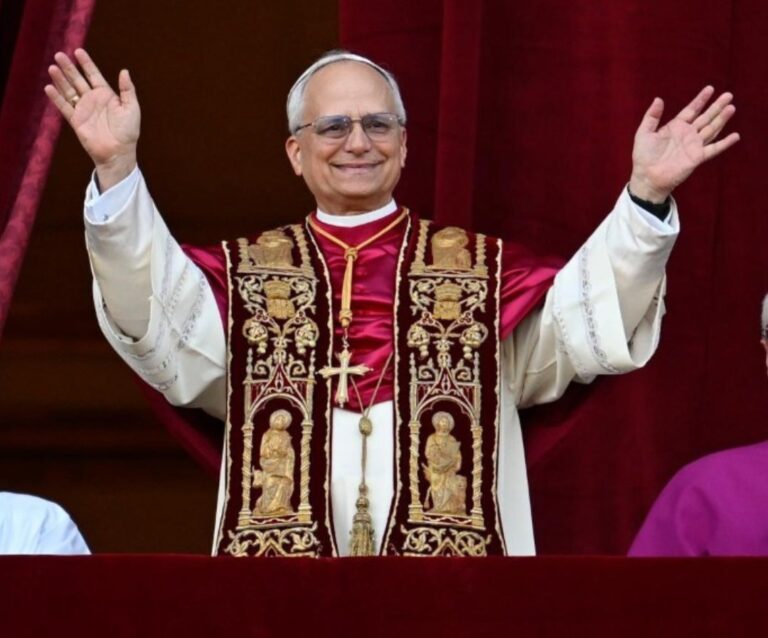
POPE Leo XIV on Sunday, June 8, urged believers to reject what he described as an exclusionary mindset, which he linked to the rise of nationalism globally.

Although he didn’t mention any specific events or leaders, his message emphasised the need for openness, calling on people to open borders within their hearts and minds.

The homily, delivered during a Pentecost Mass in St. Peter’s Square, came a month after the Chicago-born Robert Prevost became pope. Before the service, the 69-year-old pontiff greeted an estimated 80,000 worshippers as he toured the Square in his popemobile under sunny skies.

“The church must open the borders between peoples and break down the barriers between class and race. People must move beyond their fear of those who are different. The Holy Spirit breaks down barriers and tears down the walls of indifference and hatred.

“Where there is love, there is no room for prejudice, for security zones separating us from our neighbours, for the exclusionary mindset that, tragically, we now see emerging also in political nationalisms,” he said.

Pope Leo XIV did not directly address physical borders in his message, but his emphasis on breaking down walls and barriers seemed to allude to policies like those of United States President Donald Trump, who has taken a hard stance against illegal immigration.

He also emphasised that the Holy Spirit provides a remedy for broken relationships tainted by distrust, prejudice, or the desire to control others.

The Pope referenced recent instances of femicide, saying that such violence often stemmed from relationships driven by domination and power imbalances.

Addressing the impact of technology, Leo warned that while people are more digitally connected than ever, many are becoming increasingly isolated. He described this phenomenon as a paradox of constant online presence without genuine human connection, where individuals are surrounded by others but still feel alone.

Since his election in May, the pope has consistently called for unity and reconciliation and has expressed readiness to mediate international conflicts. This included his first official phone call with Russian President Vladimir Putin, as part of efforts to foster peace.

Throughout his messages, Pope Leo has maintained a strong focus on breaking barriers and building understanding between individuals and nations.

CBT won’t end examination malpractices – NUT

THE Nigeria Union of Teachers (NUT) has expressed doubts over the plan to adopt computer-based examinations by the West African Examinations Council (WAEC) and the National Examinations Council (NECO), stating that it won’t end examination malpractices.

The NUT National President, Audu Amba, made this known in an interview with the News Agency of Nigeria (NAN) on Sunday, June 8, 2025, in Abuja, while reacting to the federal government’s directive for WAEC and NECO to fully implement Computer-Based Testing by 2026.

The directive mandates that both the multiple-choice and essay sections of WAEC and NECO exams will be conducted using computer-based testing starting with the May/June 2026 session. WAEC is specifically expected to commence CBT for objective papers by November 2025.

Minister of Education, Tunji Alausa, who announced the policy, stated that the transition to CBT aimed to improve efficiency and curb exam malpractices.

However, NUT President Audu Amba argued that the root cause of widespread malpractice in Nigeria’s education system lied in the overemphasis on paper qualifications.

He explained that since society places high value on certificates and grades, students are often driven, sometimes with their parents’ backing, to obtain them by any means necessary, even if they lack the knowledge or skills to justify those credentials.

In one of its reports on examination malpractices, The ICIR reported that the Ondo State Police Command arrested a parent, Dorcas Asije, and four others for allegedly assaulting Alexander Rotifa, the vice principal of a secondary school in Akure.

Asije, whose child was accused of cheating during the ongoing West African Senior School Certificate Examination (WASSCE), was said to have orchestrated the attack on the school official.

“We have placed more emphasis on certificates. What is your grade? What are your scores? Not minding the intelligence of that student. The students will go out of their way to make sure that they get the marks that will give them the certificate,”  Amba said.

He also stressed the importance of bridging the digital literacy gap among both students and teachers before rolling out the policy, noting that this would likely involve providing extra training and necessary resources.

“We are talking about CBT exams. Where is the light, manpower, and network? You see, we have a long way to go. How many of our teachers in our localities are even computer literate? We don’t sit down within the city and give a directive that cannot be implemented.

“In my village, for instance, the network ceases. You can’t get it until you get to a particular place, and so it is in many of our villages. Some of our students have not seen a computer before, not to mention operating it,” he said

The NUT president stressed that several issues must be tackled promptly before the introduction of CBT can be effectively implemented. He emphasised the importance of collaboration among key stakeholders to enhance the education sector for the benefit of students and the country as a whole.

Tinubu to address NASS on Democracy Day as FG declares public holiday

0

PRESIDENT Bola Tinubu will address a joint session of the Senate and the House of Representatives on Thursday, June 12, at the National Assembly Complex, Abuja.

The address of the joint session of the National Assembly is part of the activities marking the Democracy Day celebrations, as the Federal Government has also declared the same day a public holiday to commemorate the 2025 Democracy Day celebration.

The House of Representatives Spokesman, Akin Rotimi, reportedly announced this in a statement on Sunday.

“The Special joint sitting is scheduled to be held at the House of Representatives Chamber, National Assembly Complex, commencing at 11:00 AM, with preliminary proceedings ahead of the arrival of President Bola Ahmed Tinubu, GCFR, at noon.

“The theme for this year’s celebration is: ’26 years of democracy: Renewing our commitment to national development.” President Tinubu is expected to attend the occasion as Special Guest of Honour and will deliver a presidential address to the joint sitting,” he stated.

In a similar vein, Minister of Interior, Olubunmi Tunji-Ojo, announced Democracy Day as a public holiday in a statement issued by the Permanent Secretary, Magdalene Ajani, on Sunday, June 8.

He said, “June 12 represents our historic journey to building a nation where truth, justice reign, and peace is sustained and our future assured.

“The last 26 years tell the story of our resilience, strength, and courage, and a hope renewed than ever.”

The minister reiterated the commitment of the Renewed Hope government of President Bola Tinubu to the universal value of democracy that is based on freely-expressed will of the people in determining Nigeria’s political, economic, social, and cultural systems.

While declaring the holiday, Tunji-Ojo congratulated Nigerians for an uninterrupted 26 years of civil rule.

The ICIR reports that until 2018, Nigeria commemorated Democracy Day every May 29.

In 2019, former President Muhammadu Buhari changed the Democracy Day celebration to June 12 every year.

The restoration of June 12 as Democracy Day carries huge significance in the history of Nigeria, as it has been described as the most significant in the country’s post-independence political history.

It was on that date in 1993 that a presidential election, believed to be the freest, fairest, and most peaceful, was held for the first time since the 1983 military coup.

On the day, an estimated 14 million Nigerians – irrespective of ethnic, religious, class, and regional affiliations- defied bad weather to elect their president with the hope of ending years of military dictatorships, The ICIR reported.

The former military Head of State, General Ibrahim Babangida, however, annulled the election results, which went in favour of the Social Democratic Party (SDP), Moshood Abiola.

Trump ends ties with Musk, warns of ‘serious consequences’

0

DONALD Trump announced on Saturday, June 7, that his relationship with billionaire Elon Musk has ended.

He warned of “serious consequences” if Musk supports U.S. Democrats challenging Republicans backing his major tax and spending legislation.

In a phone interview with NBC News, Trump refused to specify the consequences and said there had been no discussions about investigating Musk.

When asked if his ties with the Tesla and SpaceX CEO were officially over, Trump responded in the affirmative and made it clear he had no interest in mending the relationship.

“I have no intention of speaking to him,” Trump said.

However, Trump said he hadn’t considered canceling U.S. government contracts with Musk’s companies, including Starlink’s satellite internet services and SpaceX’s rocket launches.

The tension between the two escalated in the just-ended week, with Musk slamming Trump’s bill, calling it a disgusting abomination.

Musk’s opposition to the bill has added challenges to its passage in Congress, where Republicans have only narrow majorities in both the House and Senate.

The legislation narrowly cleared the House last month and is currently being reviewed in the Senate, where some Republicans are considering potential amendments.

Independent analysts project that the bill would increase the U.S. national debt by $2.4 trillion over the next decade, raising concerns among lawmakers, including fiscally conservative Republicans.

Musk also called for the creation of a new political party to represent the “80 per cent in the middle” of the American electorate.

Despite the hurdles, Trump expressed confidence on Saturday that the bill will be passed by July 4, Independence Day.

“In fact, yeah, people that were, were going to vote for it are now enthusiastically going to vote for it, and we expect it to pass,” Trump told NBC.

Musk has removed several social media posts criticising Trump, including one that suggested backing the president’s impeachment, seemingly aiming to tone down the public spat that intensified on Thursday, June 5, 2025.

Musk, currently the world’s richest individual, heavily financed Trump’s 2024 presidential bid, contributing nearly $300 million during last year’s U.S. elections and claiming credit for the Republicans keeping their House majority and regaining control of the Senate.

Trump had appointed Musk to lead an initiative aimed at reducing the size of the federal workforce and curbing government spending, even praising him at the White House just a week earlier for his role as the head of the Department of Government Efficiency.

However, Musk managed to cut only about 0.5 per cent of total government spending, falling significantly short of his bold promise to slash $2 trillion from the federal budget.

NiMet forecasts 3 days of rain, thunderstorms across Nigeria

0

THE Nigerian Meteorological Agency (NiMet) has forecast a period of thunderstorms and rainfall across several parts of Nigeria from Sunday, June 8, to Tuesday, June 11, 2025.

In a weather outlook issued on Saturday, June 7, in Abuja, NiMet indicated that wet weather is likely in multiple regions, including the North, North-Central, and Southern parts of the country.

The agency noted that while Sunday may start with cloudy skies in many locations, weather conditions are expected to change as the day unfolds.

“In the afternoon/evening hours, there are prospects of thunderstorms with rains over parts of Taraba, Adamawa, Katsina, Kano, Zamfara, Kaduna, Jigawa, Borno, Gombe, and Bauchi,” the statement read.

The North-Central zone is predicted to witness comparable weather conditions, with a cloudy morning transitioning into rain and thunderstorms later in the day across states like the Federal Capital Territory, Niger, Nasarawa, Kwara, Kogi, Benue, and Plateau.

In the South, NiMet anticipates a relatively quiet start to the day with overcast skies, which will later give way to rainfall in various states across the region.

“Rain showers are anticipated over parts of Oyo, Ogun, Ondo, Ebonyi, Ekiti, Edo, Abia, Imo, Enugu, Anambra, Lagos, Akwa Ibom, Cross River, Rivers, Delta, and Bayelsa States,” the statement noted.

By Tuesday, the forecast indicates a continuation of the weather trend, with isolated thunderstorms and moderate rainfall expected in areas such as Zamfara and Kaduna in the morning. NiMet highlighted the importance of public caution as the unstable weather conditions persist.

In its advisory, the agency called on Nigerians to adopt precautionary measures in anticipation of the forecasted weather.

“Disconnect electrical appliances from electrical sockets. Stay away from tall trees to avoid impact from falling branches and broken trees,” the statement warned.

It further advised motorists to avoid driving during heavy downpours and to secure loose outdoor items that may be displaced by strong winds.

NiMet also advised airline operators to make use of airport-specific weather forecasts for effective flight planning and to minimize disruptions.

Established under the 2003 Act, The ICIR had reported several weather forecasts by  NiMet, as an agency of government which plays a vital role in gathering and interpreting atmospheric data.

The agency also delivers forecasts and issuing early warnings essential for sectors like agriculture, aviation, disaster management, and public safety.

The agency continues to utilise advanced technologies such as satellite imagery, automated weather stations, and Doppler radar systems nationwide to monitor weather patterns and provide timely updates.

Trump vs. Musk feud triggers Tesla stock crash

0

A public fallout between U.S. President Donald Trump and billionaire entrepreneur Elon Musk has led to significant financial repercussions for Tesla and raised broader concerns among investors.

The dispute intensified on Thursday, June 5, after Musk publicly criticised President Trump’s “One Big Beautiful Bill,” a major tax and spending initiative projected by the Congressional Budget Office (CBO) to add $2.4 trillion to the federal deficit over the next decade.

Musk, who had recently stepped down from his role as head of the Department of Government Efficiency (DOGE), retorted on his X handle (formerly Twitter), criticising the bill while noting that he he had not seen the bill prior to its release.

Musk voiced concerns that the bill could exacerbate the national debt, which stands at approximately $36.2 trillion, and potentially push the country into a recession.

He wrote, “Trump tariffs will cause a recession in the second half of this year.”

In response, President Trump took to his TruthSocial platform to denounce Musk, threatening to terminate all government contracts and subsidies linked to Musk’s companies, including Tesla and SpaceX.

He posted, “The easiest way to save money in our Budget, Billions and Billions of Dollars, is to terminate Elon’s Governmental Subsidies and Contracts. I was always surprised that Biden didn’t do it!”

The feud has had immediate financial implications. Tesla’s stock experienced a sharp decline, falling 14 per cent on Thursday, marking one of its worst single-day performances.

The clash between President Trump and Musk, both influential figures in American politics and business, has triggered concerns among investors about the stability of government-business relations.

The situation may also impact ongoing government deals with Musk-led ventures, including Tesla and SpaceX, as the administration considers reevaluating contracts and subsidies associated with these companies, analysts at the Economic Times wrote.

The situation may also impact ongoing government deals with Musk-led ventures, including Tesla and SpaceX, analysts at the Economic Times wrote.

Trump’s sweeping tariffs war on the economies and businesses across the world has been generating global criticism and retaliation against the country, The ICIR has spotlighted this in several reports.

Reports indicates that tesla stock is making a rebound following comments suggesting reconciliation.

Regulatory gaps on phone number recycling fuel identity theft, data breaches

WHEN Okezie Kelechi lost his SIM card, the one he had used since his secondary school days, he didn’t think much of it. He was shocked weeks later to find out it had been reassigned to someone else.

“I had no idea that if your SIM card has been inactive for more than three months, they will resell it,” he wrote on social media. “They recycled my SIM card and sold it. Same number, I have had it since secondary school.”

Kelechi’s story is far from unique. Across Nigeria, more people are waking up to the realities of what is known as SIM recycling, a process where telecommunication companies reassign inactive phone numbers to new users. While allowed under existing rules set by the Nigerian Communications Commission (NCC), the practice is now raising serious concerns over data privacy, fraud, and national security.

A regulatory gap with real-life consequences

Experts in Nigeria’s telecommunications and security sectors are increasingly warning that the NCC’s failure to establish stronger oversight of SIM recycling is endangering millions.

“Beyond the data breaches, this issue posed a big threat to national security. I have always maintained the need for a central data system in Nigeria,” said Daniel Makolo, a retired senior official of the Nigerian Immigration Service to The ICIR. “There’s much more to this if we don’t pay attention to an appropriate central data mining system that gives us a history of each person in the country.”

Ayodele Ajayi, an engineering professor at the Federal University of Technology, Akure, explained the security risks from his own experience.

“I used to have one Airtel number, but I travelled out. Before I came back, it was reallocated to another user,” he said.

Because phone numbers are tied to Bank Verification Numbers (BVNs) and National Identity Numbers (NINs), reassigning them can expose people to identity theft and financial loss. The NCC should find a way to notify users when their numbers are at risk of being deactivated, Ajayi urged.

He also recounted an incident he witnessed at a bank, “a woman was narrating how she used to have a particular number but lost it. Somebody saw the number and started using it. The woman said that before she could act, the person who got the number had started using it and had connived with a bank office to almost wipe out all her savings.

“Upon arriving at the bank to check her account balance, she found out that she had only N50,000 left from about N5 million she had saved up.”

Ajayi emphasised that while recycling is a practical move for telcos to manage limited number availability, more caution is needed. “Let people know so they can migrate their data to another line, particularly now that almost every channel we use is linked to the phone number, including our bank verification number (BVN)”, he stated. 

Kelechi recalled that his number was reassigned to another user despite still being active on WhatsApp.

“I used to wonder why random Hausa boys were always messaging me and calling me baby.

He added that “when I finally visited MTN office in Nigeria, I was told the line has been sold to someone else. E pain me, I no go lie.”
Screenshot of Kelechi's post.
Screenshot of Kelechi’s post.

Another social media user Elizabeth Kandi, @DrETKandi warning others about the hidden risks of SIM inactivity alleges that when reassigned the new user can have  access to your USSD banking.

“If your Nigerian number was connected to your Nigerian bank accounts for USSD, if you didn’t use it for long, the network provider can disconnect and sell the number to someone else…but that person would be able to access your money via USSD,” Kandi wrote. Her post underscores the growing fear that recycled numbers, still linked to sensitive services like mobile banking, can open the door to fraud and financial loss.

Why do Telcos recycle SIMs?

At a virtual stakeholder meeting in April 2025, NCC Executive Vice Chairman Aminu Maida acknowledged the concern noting that with the evolving landscape, it has become necessary to address emerging challenges that could undermine consumer rights.

He further noted that the Quality-of-Service Business Rules 2024 stipulate that a prepaid line without a revenue-generating event for six months must be deactivated.

This means if a prepaid SIM card goes unused for six months (i.e., no calls, texts, or data use), it must be deactivated. If the inactivity continues for another six months, the number may be recycled/reallocated to a new user.

In Section 28 of the NCC’s draft business  it is stated that all recycled SIMs must be purged of any NIN attached  to allow a new user to link their own NIN. But real-world cases suggest that in practice, many recycled numbers are not properly sanitised before reassignment.

The business case for SIM recycling

For telecom operators, recycling isn’t just a technical choice, it’s economic.

The chairman of the Association of Licensed Telecoms Operators of Nigeria (ALTON), Gbenga Adebayo, explained that subscribers do not have ownership rights to SIM cards in their possession, as the telecom operators pay procurement and recurring costs for each registered subscriber.

He further explained that SIM cards are “recycled” to prevent number exhaustion while reducing the cost of generating and maintaining them.

“SIM cards are reassigned to reduce the dormant subscribers, as telcos are profit-oriented organisations,” Adebayo said.

In the exercise of its powers under Section 70 of the NCC Act (2003), the commission made provisions for the development of a new numbering plan for Nigeria. Under the provision, telcos are obligated to pay a sum that is the ‘numbering plan fees’ to maintain their allocated numbers.

Such fees are stipulated at regular intervals and subject to review as the commission deems appropriate.

It is deemed to be a waste of funds to pay for a SIM card that is not active and generating income. Hence, the SIM is deactivated after a certain period of dormancy and reassigned to another user.

While industry leaders acknowledge the need for efficiency in SIM recycling, experts believe the burden lies with the NCC to prioritise user safety.

“They should know if a phone number is linked to the NIN or BVN and should not reallocate such a number to any other user, “Ajayi notes, while stressing the importance of telcos taking precautionary measures before SIM reallocation.

Makolo agrees, stressing the need for an integrated national data system to protect citizens.

When The ICIR contacted the NCC official spokesperson, Nnenna Ukaoha, to speak on data breach concerns posed by the SIM reallocation and number recycling, she did not respond despite several calls and questions that required the commission’s response.

Why FG is linking Nigeria to Niger by rail – Official

0

THE Managing Director of the Nigerian Railway Corporation (NRC), Kayode Opeifa, said the Federal Government is linking the  Kano-Maradi railway because of its strategic importance to Nigeria’s food supply chain.

Speaking on Channels Television’s Sunrise on Saturday, June 7, Opeifa explained that the rail link between Kano and the Niger Republic is crucial, emphasising that transportation is central to food security and cannot be separated from the food supply chain.

“According to AU 2063, African countries are encouraged to link with landlocked countries because there is potential in those countries. By the way, from the literature I’ve read, the food security for Nigeria and West Africa in cereal and livestock is tied to Maradi. So, you can see the reasoning linking Kano to Maradi.

“Beyond that, if you take mobility out of the equation, you won’t have food security. When you take mobility out of logistics and supply chain, you are just joking, and that’s what Nigerian managers of our food security should understand,” Opeifa explained.

He stated that mobility is central to ensuring food security, adding that,” the Kano-Maradi rail line—extending from Kano to Kaduna, then to Abuja and Lagos—will play a significant role in achieving that goal.”

Opeifa stated that the government is dedicated to ensuring that major cities are linked through a newly developed rail infrastructure plan. He also revealed that the federal government has plans to establish additional rail lines across various cities.

He further disclosed that moving the rail system to the concurrent legislative list has opened up opportunities for states to access grants and invest in their rail development.

According to him, the creation of this new rail map aims to improve connectivity between key urban centres.

The Nigerian states that have strong economic linkage with Niger include Kano, Jigawa, Kaduna, Katsina, Borno, Yola, and some parts of Kaduna.

Trade between Nigeria and Niger Republic rebounded strongly in 2024, with exports from Nigeria soaring by 77.12 per cent to $53.4 million, according to the  data from the National Bureau of Statistics (NBS).

The total trade volume between both countries climbed to $59.6 million in 2024, up from $32.7 million recorded in 2023, despite diplomatic tensions

Tinubu, Obi, Atiku others mourn late highlife legend Mike Ejeagha

TRIBUTES  have continued to pour in for veteran Nigerian highlife musician, Mike Ejeagha, who died Friday night, with President Bola Tinubu and other eminent Nigerians sending in their condolence messages to the family.

The ICIR reported that his eldest son, Emma Ejeagha, confirmed that the musician, aged 95, passed away around 8 p.m. on Friday, June 6, after battling a long-term illness.

In a statement issued on Saturday, June 7, by his Special Adviser on Information and Strategy, Bayo Onanuga, the President honoured Ejeagha as “one of Nigeria’s greatest folklorists, songwriters, and musicians in the Igbo language.”

Tinubu praised Ejeagha’s efforts in preserving and promoting Igbo culture through his music, noting that the artist’s distinctive storytelling inspired generations and helped maintain cultural heritage.

“May the spirit and values of Gentleman Mike Ejeagha’s music continue to remind us that music has the power to revive, heal, and redirect energy towards worthy causes that help build our nation,” the President stated.

Former Anambra State Governor, Peter Obi, and 2023 presidential candidate, also sent his condolence message on X.

“I just read the sad news of the passing of the legendary highlife musician, songwriter, folklorist, and cultural custodian, Pa Mike Ejeagha.

His transition marks the end of an era, but not the end of his voice — his songs will continue to echo through generations as testaments to wisdom, culture, and truth,” he said.

He commended Ejeagha for harnessing music as a means of education, healing, and safeguarding the rich philosophical heritage of Igbo culture.

“For over six decades, Pa Ejeagha, popularly known as Gentleman Mike Ejeagha, used music not merely as art, but as a medium for teaching, healing, and preserving the moral and philosophical wealth of the people.

“His lyrics, rich with proverbs and folk wisdom, were moral compasses for both young and old. He immortalised the essence of life—its humour, discipline, spirituality, and resilience,” he continued.

Enugu State Governor, Peter Mbah, also took to X to express his profound grief.

“Mike Ejeagha was a legend, a cultural ambassador, and a revered son of Enugu State. His fan base transcended boundaries, and he was one of the most recognisable voices in music.

Ejeagha’s immense talent and genius lay in how he took simple indigenous folktales and turned them into unforgettable songs that resonate across cultures,” he said.

On behalf of the Enugu State Government, I offer heartfelt condolences to the Ejeagha family and assure them of our support.

As a government, we will ensure that his memory is duly immortalised. Above all, I pray that his family experiences the comforting grace of God’s love and the fortitude to bear the loss.” The statement read

Former Vice President Atiku Abubakar also reflected on the renewed popularity of Ejeagha’s music, thanks to Brian Jotter.

“It is heartwarming to note that thanks to Brain Jotter, highlife maestro Mike Ejeagha had his ‘Gwo gwo gwo ngwo’ encore dance before the curtain was drawn. Rest in music, Gentleman Mike Ejeagha,” he stated.

Brain Jotter, whose viral video brought Ejeagha’s music back to the attention of a new generation, wrote in his social media handle, “39 years ago, he made magic, 39 years later, we dance to it again. Now he rests, but his melody lives forever. Rest on, legend.”