Home Blog Page 2687

CONFIRMED: Military received at least five alerts before Dapchi attack but did nothing


Nigerian security forces failed to act on at least five advance warnings that a convoy of Boko Haram fighters was heading towards a town where they abducted 110 schoolgirls last month, an investigation by Amnesty International has revealed.

The military failed to respond while Boko Haram conducted an armed raid on the Government Girls Science and Technical College in Dapchi, Yobe State on February 19, in an assault with chilling echoes of the infamous Chibok girls’ abduction of 2014.

Amnesty said between 2pm and 6.30pm on February 19, security forces received at least five calls warning them that the armed group was  en route to Dapchi.

The first call was made to the army command in Geidam, 54km from Dapchi, informing them that Boko Haram fighters had been seen at Futchimiram heading to Gumsa, a village about 30km from Dapchi. However, the evidence documented by Amnesty International shows that the military did nothing to engage with Boko Haram and ensure the protection of civilians.

“The Nigerian authorities must investigate the inexcusable security lapses that allowed this abduction to take place without any tangible attempt to prevent it,” said Osai Ojigho, Amnesty International’s Nigeria Director.

“As an even greater priority, the government must use all lawful means at its disposal to ensure that these girls are rescued.

“The authorities appear to have learned nothing from the abduction of 274 schoolgirls in Chibok, Borno State in 2014 and failed to ensure protection for civilians in northeast Nigeria, specifically girls’ schools.”

In response to the Chibok abduction, the Safe Schools Initiative, which is currently coordinated by the Presidential Committee on the North-East Initiative, was launched to improve security around schools. However, no framework seems to be in place to prevent further abductions and it appears that the Nigerian military is unable to protect schools from attack.

“Evidence available to Amnesty International suggests that there are insufficient troops deployed in the area, and that an absence of patrols and the failure to respond to warnings and engage with Boko Haram contributed to this tragedy,” said Osai Ojigho.

“The Nigerian authorities have failed in their duty to protect civilians, just as they did in Chibok four years ago. Despite being repeatedly told that Boko Haram fighters were heading to Dapchi, it appears that the police and military did nothing to avert the abduction.”

Amnesty International gathered testimonies from multiple credible sources showing that the Nigerian army and police received multiple calls up to four hours before the raid on Dapchi but did not take effective measures to stop the abduction or rescue the girls after they were taken by Boko Haram fighters.

The military withdrew troops from the area in January, meaning the closest personnel were based one hour’s drive from Dapchi.

COMMANDER AWARE OF BOKO HARAM MOVEMENT FOUR HOURS BEFORE ABDUCTION

The sighting of an armed convoy at Futchimiram immediately sparked several phone calls to alert authorities. Sources who informed the military commander in Geidam at 2pm report that he responded to them by saying he was aware of the situation and was monitoring it.

At around 3pm, the convoy arrived in Gumsa, where they remained till 5pm. People in Gumsa called Dapchi villagers to warn them that Boko Haram fighters were on their way. One villager who received such a call said he informed a police sergeant who promised to notify the Dapchi Division Police Officer (DPO).

At around 6:30pm, when residents were heading to the mosque for evening prayers, Boko Haram members entered Dapchi. Witnesses said Boko Haram fighters asked for directions to the military post, the local government office and the girls’ school.

A police source in Dapchi told Amnesty International that officers fled because they feared that the Boko Haram fighters would overpower them.

GOVERNMENT MUST INVESTIGATE ROOT CAUSES OF FAILURE TO RESPOND

A source based in northeast Nigeria told Amnesty International: “All the military needed to do was send troops towards Gumsa from Geidam or Babban Gida, while telling its troops in Damasak, Kareto, Gubio and Magumeri to be on the lookout or be on patrol.”

A review of the Nigerian army’s actions by Amnesty International’s crisis advisor for military operations also concluded that the military’s response was woefully inadequate. The review took into consideration the locations of the soldiers and the time it would take to get to Dapchi, as well as the route taken by Boko Haram.

According to victims and witnesses interviewed by Amnesty International, Boko Haram left Gumsa for Dapchi at around 5:00pm, arriving at around 6:30pm. They left Dapchi at around 7:30pm in the direction of Gumsa, where villagers say they arrived at around 9:00pm.

During the attack, army officials both in Geidam and Damaturu were again alerted. The military only arrived in Dapchi shortly after Boko Haram left.

Villagers in Dapchi and Gumsa said a military jet arrived about one hour after Boko Haram left Dapchi.

Six days after the abduction, on February 25, a security meeting was held at the governor’s office in the state capital, Damaturu, attended by state and Federal Government officials, security chiefs, the military officials operating in the area and representatives of the school and parents. The authorities were aware that the military was notified at least four hours before the attack that suspected Boko Haram fighters were heading to Gumsa. No one appears to have asked why the military did not respond adequately or why there were not enough troops.

President Muhammadu Buhari subsequently ordered an investigation into the response to the abduction.

“The government’s failure in this incident must be investigated and the findings made public – and it is absolutely crucial that any investigation focuses on the root causes,” Ojigho added.

“Why were insufficient troops available? Why was it decided to withdraw troops? What measures has the government taken to protect schools in northeast Nigeria? And what procedures are supposed to be followed in response to an attempted abduction?”

FAMILIES OF ABDUCTED GIRLS LEFT WITHOUT ANY INFORMATION

The abduction was followed by confusion. Initially, the authorities denied any girls were abducted, then the Yobe State authorities stated that the military had rescued the girls. But the girls did not return home, and on February 22 the state government confirmed the abductions.

One parent told Amnesty International: “That night we heard their voices when they were being taken, but there was nothing we could do. Everyone was scared. Boko Haram did not stay in the town for more than one hour.”

Another parent described how the girls’ relatives were not given any information until the following day, and had to wait outside the school to find out if their loved ones were safe.

“Many parents were hopeful that their daughters were inside. We stood there from morning till around 5pm in the evening, when they let the students out. It was at that point it dawned on me that my daughter was among those abducted,” he said.

Another parent whose daughter returned said: “Nobody told parents officially that their daughters were taken. While I was glad seeing my daughters, I felt bad for other parents whose daughters could not be found.”

NO LESSONS FROM CHIBOK ABDUCTION

The response to this abduction has chilling similarities to the abduction of 276 schoolgirls in Chibok, Borno State, in April 2014.

On that occasion, the military also had four hours’ advance warning but failed to take the immediate action needed to stop it, with most military personnel withdrawn shortly before the abduction.

Similarly, the abduction was followed by a climate of confusion and suspicion, which appeared to slow down the Nigerian authorities’ efforts to locate and free the abducted girls.

After the Chibok abduction, the military initially said that almost all the abducted girls had been rescued, but later had to retract that statement.

The government of President Goodluck Jonathan originally investigated Boko Haram’s responsibility for the Chibok abductions but never made the report public. In January 2016, Buhari ordered another investigation into the government’s response to the Chibok abduction. This report was also never made public.

“Regrettably, no lessons appear to have been learned from the terrible events at Chibok four years ago. What happened in Dapchi is almost a carbon copy of what happened in Chibok, with the security forces failing to respond to warnings – and the same result for another hundred girls and their families,” Ojigho lamented.

“All authorities must now work together to ensure the girls are brought home safely and this never happens again. This abduction is a war crime and those responsible must be brought to justice. As a first step, the two reports into the Chibok abductions should be made public.”

Amnesty International called on Boko Haram to immediately release the girls and all others in its captivity.

To make the claims in this report, a team of Amnesty International researchers visited Dapchi and interviewed 23 people, including girls who escaped, parents of the abducted girls, local officials and eyewitnesses, to document this abduction. They also interviewed three security officials.

The sources independently verified a list of Nigerian security officials who were alerted on February 19, before and during the raid on the school.

Fresh trouble for Melaye as police arrest two notorious thugs ‘working for him’


Dino Melaye, representative of Kogi West Senatorial District at the Senate, is in fresh trouble as he has been charged by the police with criminal conspiracy and illegal possession of firearms.

A statement released on Monday by Jimoh Moshood, Force Public Relations Officer, said two notorious leaders of political gangs, who had been working for the controversial senator and one Alhaji Mohammed Audu, had been arrested.

The gang leader, Kabiru Saudi, also known as OSAMA, and Nuhu Salisu, also known as SMALL, were caught with two AK-47 rifles, five pump action guns, two locally-made pistols and one AK-47 ammunition and a heap of charms.

When they were interrogated, they confessed they were political thugs hired by politicians to cause mayhem and disrupt peace in Kogi State.

Moshood said: “According to the gang leader, Osama, he has been working as a political thug for one Alhaji Mohammed Audu, a politician in the state.

“He said Alhaji Mohammed Audu invited him to Abuja and introduced him to Senator Dino Melaye and they met on Airport Road, Abuja, inside Senator Dino Melaye’s car in the month of December 2017.

“The suspect further confessed that Senator Dino Melaye told him that they should start working for the senator as his political thugs and they should recruit and train other thugs to work for him in preparation toward 2019 general election to enable him (Sen. Dino Melaye) challenge his political opponents and disorganise Kogi State.”

The police said Osama further confessed that Melaye handed him a bag containing one AK-47 rifle, two pump action guns and N430,000.00 to share with his boys.

“Consequent upon the indictments and criminal confessions against Senator Dino Melaye by the principal suspect, Kabiru Saidu a.k.a Osama, 31 years, Nigeria Police Force wrote a letter dated 2nd of March, 2018 addressed to the Senate President, Federal Republic of Nigeria, informing and requesting him to release Senator Dino Melaye to report to Commissioner of Police, Kogi State Command on the 7th March, 2018 to answer to criminal offences leveled against him, to enable the Police carry out a discreet investigation into the confessions of the principal suspect against Senator Dino Melaye. But Senator Dino Melaye have refused to honour the Police invitation till date,” Moshood continued.

“A case of criminal conspiracy and unlawful possession of prohibited firearms have therefore been filed by the Nigeria Police Force at Federal High Court Lokoja on 16th March, 2018 against the two suspects mentioned above, Senator Dino Melaye and Mohammed Audu who is also a suspect in the matter and is now on the run.

Senator Dino Melaye had earlier accused the IGP for wanting him dead when he ordered the immediate withdrawal of police orderlies attached to private individuals in the country.

Melaye on withdrawal of police from VIPs: The IGP wants me dead


Dino Melaye, the senator representing Kogi West at the National Assembly, says the order by Ibrahim Idris, Inspector General of Police, for immediate withdrawal of police escorts attached to private individuals, was targeted at him.

Melaye, Chairman of the Senate Committee on the FCT, said this via his Twitter handle on Monday evening.

He said that having survived assassination attempts twice, he deserves special police protection “in a country where I am a tax payer”.

Melaye was recently arraigned before the Federal High Court, Abuja, by the office of the Attorney-General of Federation for allegedly providing false information to the Nigerian Police.

According to the suit, Melaye falsely informed the police that he had survived an attempt on his life by assassins sent by Edward David, Chie of Staff to Yahaya Bello, Governor of Kogi State.

This is in spite of the fact that days after Melaye made the claims, Jimoh Moshood, spokesman of the Police, paraded six suspects whom he said were arrested in connection with the failed assassination attempt.

Melaye pleaded not guilty to the charges and was granted bail in the sum of N100,000 and one surety in like sum.

The case was adjourned to May 16 and 17 for continuation of hearing.

IGP Idris orders withdrawal of policemen attached to politicians, VIPs


Ibrahim Idris, Inspector General of Police, has ordered the immediate withdrawal of police officers attached to politicians, rich and powerful private citizens and other Very Important Persons (VIPs).

Idris gave the order on Monday at a meeting with commissioners of police and assistant inspectors general of police at the police headquarters.

Speaking to newsmen after the meeting, Abayomi Shogunle, Head of the Police Public Complaints Unit, said private financial institutions were excluded from the order.

“The IG asked the commissioners to go back to their states and withdraw the police officers from private individuals and companies,” Sogunle said.

“After that, the commissioners would start accepting applications for protection and examine individuals cases to see who has serious security threat that could warrant being granted police protection in their states.”

Sogunle said Idris’ order would be implemented in full, unlike similar directives by past IGPs which were never carried out.

He explained that Idris had written President Muhammadu Buhari, asking him “to approve the categories of public officials who would be entitled to police orderlies”. Only those approved by the President would be entitled to personal police protection, he added.

Mike Okiro, Chairman of the Police Service Commission and former IGP, had said during an interview that 150,000 out of a total of about 400,000 police personnel, were attached to private individuals.

Also, last year, Isah Misau, a member of the Senate, accused Idris of pocketing billions of naira annually in bribes collected from big companies and wealthy individuals in order to provide them with police escorts.

Misau is currently facing libel charges filed against him by the office of the attorney general of the federation, following the allegations.

Ramaphosa, president of South Africa, culpable in MTN Nigeria’s forex scandal?


President Cyril Ramaphosa of South Africa could be implicated in the allegation of gross foreign exchange violation against MTN Nigeria, according to an investigation by Finance Uncovered and Amabhungane, investigative websites based in the UK and South Africa respectively.

Ramaphosa, who was sworn in as South Africa’s President in February following the resignation of Jacob Zuma, was MTN’s non-executive Chairman as of the time the violations allegedly took place.

Also, Ramaphosa’s former investment holding company, Shanduka, is among MTN Nigeria’s major shareholders whose names have been mentioned in the forensic audit of billions of dollars which flowed illicitly in and out of Nigeria.

In September 2016, Dino Melaye raised the matter on the floor of the Senate, alleging that MTN had connived with a serving minister to illegally move over $12 billion out of Nigeria in the last decade.

“Between 2006 and 2016, the MTN, in collaboration with four commercial banks and with the help of a serving Minister, moved over $12 billion out of this country,” Melaye claimed

“All hands must be on deck to recover every loot in the country. We are in a precarious situation and now is the time to recover every stolen money in the country.”

MTN denied the allegation. But almost one year before Melaye’s revelation, Premium Times had published a report detailing how MTN Nigeria outwit Nigerian authorities to ship millions of dollars abroad, thereby avoiding paying adequate tax.”

According to a confidential audit report sighted by Finance Uncovered, no allegations of wrongdoing were made against MTN but questions were raised about whether MTN knew that its bankers violated Nigerian laws and that it might even have benefited from this.

South Africa’s Standard Bank, which is also MTN’s major banker, is one of several global banking groups alleged to have “breached” Nigeria’s foreign exchange regulations repeatedly, to the tune of billions of dollars over a period of 15 years.

A spokesperson for the bank in Nigeria refused to comment on the development, saying the bank had received no “formal communication” that it was being investigated.

South Africa’s Public Investment Corporation (PIC) was also accused of receiving an irregular forex clearance around the time it acquired its MTN Nigeria stake from Shanduka in 2015.

Ramaphosa’s family trust held a 29.6 percent stake in Shanduka but he eventually unbundled his shareholdings after he became deputy president in 2014.

The investment was a bad one for the PIC: the shares were declared to be worth R2,802,327,000 at the time of purchase; in the 2017 annual report for the PIC they were valued at only R996,000,000 – 35% of what they were bought for.

Much of the loss in value was due to the massive fine imposed on MTN in October 2015 for violations of Nigerian subscriber registration rules.

In August 2012, Ramaphosa’s Shanduka investment vehicle received clearance from its Nigerian bank, Standard Chartered Nigeria, to bring $10,9-million in preference shares and equity to Nigeria to invest in the MTN company there.

Also, the Nigerian forensic report indicates that between October 2012 and January 2015, Shanduka Telecommunication (Mauritius) Limited received dividends of $88,7 million from MTN Nigeria.

At the time, Ramaphosa held the largest stake in Shanduka, and was also the non-executive Chairman of the MTN Group.

As of late February 2018, MTN’s official website showed Shanduka Telecommunication (Mauritius) as owning 2.71% of MTN Nigeria. But the website was updated days later to reflect a new shareholder: South African state-owned Public Investment Corporation (PIC)

When contacted, a spokesperson for the PIC confirmed that the corporation “acquired MTN Nigeria shares through Over The Counter (OTC) market in Nigeria … in 2015 for USD 230.993 million”.

“The parties involved in the transaction were Standard Chartered bank, which acted as an Escrow Agent and Sao Capital as the transaction advisor,” he said. “There was no negotiation with Mr Ramaphosa, Shanduka or MTN.”

Read the full story here.

If you’re not a senator, leave Ambode’s Lagos now!

0


By Tunde Odesola

It is not the red piece of cloth waved by the matador in a bullfight that enrages the bull. Bulls are colourblind. The red piece of cloth is to mask the blood of the gored bull. Sheer animalistic instinct propels the bull to charge at one of the three matadors, who rides a horse, taunting the brawny beast. Bullfighting is common to Spain, Portugal, France and some Latin America countries such as Mexico, Colombia, Ecuador, Venezuela and Peru.

Basically, bullfighting is in three parts: The entry, the planting of the banderillas, and the killing of the bull. The entry sees the bull being released into the bullring with one of the matadors approaching it. The planting of the banderillas is the thrusting of wooden spikes into the bull’s neck muscle to weaken it, and the third and final part is putting the bull to the sword. After the bull is felled, harnessed horses come in and pull out the unfortunate animal, which would be cut up and sold in the local market. The head of the matadors that kill all six bulls could be awarded one or the two ears of the bull. And if the spectators feel he did the job with panache, they would root for him to be given the tail of the bull.

If the head matador is injured and leaves the bullring to receive treatment, the remaining two matadors must kill the bull. But if by fate and grit, the bull survives the fight, which is a very rare occurrence, it would be granted a pardon called ‘indulto’ in Spanish and returned to its home ranch to become a stud for the rest of its life.

A few days ago, the Governor of Lagos State, Akinwunmi Ambode, and Lagosians were locked in a bullfight over the state’s an-arm-and-a-leg Land Use Charge. The matador and the bull were in the bullring – sizing, guesstimating, eyeballing and assessing each other. Who will blink first? The matador did; he backtracked, dropped his sword headlong into the sandy arena. He also dropped the red cloth and sauntered out of the ring with a grim, sad frown etched on his brow. But the bull will not be fooled. It continues to watch intently, muscles taut, head lowered, body angled back like a catapult ready to fly. Lagos is on the cross.

The contempt unfolding in Lagos today couldn’t happen over 2,000 years ago in the whole of Rome and Judea when Jesus Christ was dragged before Pontius Pilate. The priests and the elders of the time couldn’t unilaterally pronounce Jesus guilty; they had to take him through the law of the land. And Pontius Pilate, who represented the law, openly asked the traducers who they would love to be released between Jesus, the Messiah and Barabbas, the notorious criminal. The people shouted, ‘Jesus!’ Pilate tried all he could to deliver Jesus Christ from the priests and the elders because he knew they wanted to kill him out of envy. Pilate stalled. The shouts of ‘Crucify him!’ became intense even as Pilate inquired what Jesus’ offence was. Absolving himself of Jesus’ impending crucifixion, Pilate washed his hands off the case and released Jesus to them.

In a mutual respect move, one would have expected the Lagos State Government to make wide consultations with all the various segments of the Lagos economy before arriving at the controversial Land Use Charge which saw rates increase by 400 per cent. Did the Lagos Sate House of Assembly meet with all segments of the economy? If it did, did the opinions of the segments reflect in the 400 per cent increase?

How Ambode, a chartered accountant, assented to the record-breaking increase in an economy that just moved from recession to depression was an ultimate betrayal of voters’ trust. Chinese philosopher, Confucius, never lived in Lagos but in an enduring epigram, he says: “To see and listen to the wicked is already the beginning of wickedness.”

I had thought the governor was a different breed until this shocking action that revealed his underbelly and disrespect for Lagosians. To think that the state-in-council sat and approved the increase showed that the political hegemony bequeathed by Governor Emeritus, Asiwaju Bola Tinubu, in Lagos State, is low on benevolence and high on malevolence. To think that Ambode expects Lagosians to applaud the reduction of the rate shows the hypocrisy in the prebendal politics of ‘Baba so pe’ (Baba says), which is always quick to describe the opposition Peoples Democratic Party as wicked and greedy.

Really, I don’t think there’s any difference between the nest-of-killers’ politics and the politics of a godhead, who determines who get into posts within vicious transport unions, local government councils, state executives and legislatures, federal parliaments, federal cabinet, churches, mosques, banks and palm wine drinkers’ club. Ambode and his cabinet must have thought that Lagosians remained the puppets which subsequent administrations controlled on the strings of deceit and coercion; bringing the word of promise to their ears and breaking it to their hope.

Methinks announcing a price increase and reducing the same to gain cheap political popularity had faded out of governmental fad. If any state was to return to that vomit, it shouldn’t be our Almighty Lagos.

Not a few Lagosians saw through the politics of the rate reduction. Many are still shocked as to why the government decided to trifle with its immense goodwill earned on the platter of non-lousy service delivery. They contend that if the governor wasn’t playing politics and taking the masses for granted, he shouldn’t have, in the first instance, assented to the unholy increment. They’re also quick to note that the governor shouldn’t have embarked on a superfluous reduction after all the hues and cries, but should have returned the law to the assembly for a proper amendment – when the spirit of the disturbing law still lives.

Some of the questions on the lips of Lagosians are: How would the government check landlords who are sure to increase rents astronomically? Is the new law not unfair to property owners whose buildings or lands aren’t in use? Did the representatives of the masses in the Lagos State House of Assembly truly enact a law that stipulates 100 per cent increase in charge if payment was not made between 75 and 105 days? Does the increase reflect the economic realities of the citizenry?

Defending the law, Lagos State Commissioner for Finance, Akinyemi Ashade, said property of N10 million and below constituted 75 per cent of property owners in the state, who were expected to pay N5, 000 per annum as land use charge. But the commissioner failed to state how much the owners of property above N10m were expected to pay.

The calibre of people Ambode is building his new Lagos for is probably encrypted in the revelation by the senator representing Kaduna-Central senatorial district, Shehu Sani, that each of the nation’s 109 senators monthly receives a running cost of N13.1 million and a consolidated salary of N750, 000, in addition to N200 million for constituency projects.

The labourer, teacher, civil servant, commercial motorcyclist, unemployed, petty trader, struggler appear to have no place in the future Lagos.

Aside from senators and privileged members of the political class, other Nigerians whose citizenships are guaranteed in the new Lagos, on account of their earnings, include big-time kidnappers, big-time assassins such as Ade Lawyer, transport union kingpins, herdsmen, sweepstake winners, armed robbers, ‘pen robbers’, security chiefs, corrupt judges, big-time prostitutes, rich clerics, successful sycophants, shylock businessmen, smart blackmailers, foreign-based footballers, expatriates, etc.

Despite FG’s claims, Lassa Fever patients recount high treatment costs


Despite the claims by Isaac Adewole, Minister of Health, and Chikwe Ihekwuazu, National Coordinator of the Nigeria Centre for Disease Control, that treatment for Lassa Fever is absolutely free of charge, some patients who were treated of the disease say they paid huge sums of money at Irrua Specialist Hospital, Edo State, the major hospital for treatment of Lassa fever in the country.

In a statement he issued exactly a week ago, in response to a report by TheGuardian that more people were dying of Lassa fever due to the high cost of accessing treatment, Ihekwuazu insisted that the Federal Government had provided free treatment for Lassa Fever patients in the country.

“We read with surprise the headline in the Nigerian Guardian newspaper on Sunday March 11 2018 stating that the prohibitive cost of treatment is engendering high mortality from Lassa fever,” Ihekwuazu had said.

“While we acknowledge the high cost of treating Lassa fever cases in Nigeria, especially the cost of the drug Ribavirin, we want to state unequivocally that the Federal Government of Nigeria has ensured that Ribavirin has been provided free-of-charge to patients, for every single case of Lassa fever reported in Nigeria in 2018.”

He added that some state governments had provided some equipment needed to combat the disease, thereby further subsidising the treatment.

Also, Adewole, writing on his official Twitter handle, described the report as false, affirming that Lassa fever treatment was free.

But a follow-up report by TheGuardian on Sunday showed that patients who were treated of Lassa Fever at Irrua Specialist Hospital, and other medical centres across the country, paid heavily for their treatment.

According to the report, only the drug ‘Ribavirin’ was given them free. They had to pay for every other thing, including a Lassa Pack, hand gloves, face masks, bed space and feeding.

Fredrick Patrick (not real names), a nurse at Federal Medical Centre (FMC) Jalingo, Taraba State, told reporters that he spent a total of N180,000 for all he bought when he was transferred to Irrua.

He said the items paid for were: “Metoclopramide injections, Ampiclix capsules, hand gloves, Valium injections, Haloperidol injection, Vitamin B Complex injection, Saline drip, Paracetamol injection, syringes, urine bags, digital thermometer, face mask, among others.”

“Apart from Ribavirin, I bought almost all the drugs that I was administered; I paid about N19, 100 for the Lassa pack, bed fee is N1, 000 every day; meal was N1, 500 every day whether you ate the food or not,” he added.

“My younger ones were made to pay N25, 000 for oxygen when I was unconscious, I was given one pint of blood, and had to give the donor N8, 000, and we also paid for the screening. I bought other medical items such as gloves, face mask, drugs and others.”

Before he was transferred to Irrua, Patrick had briefly been managed at FMC Jalingo, where he worked as a nurse and contracted the fever in the first place, after managing a suspected case. At the FMC, he also paid for all his treatment; only Ribavirin was provided FOC.

“At FMC Jalingo, I bought almost all the drugs by myself. I paid for bed space, as well as, meals and others just like in Irrua. I was buying Rocephin IV injection every day for morning and night and the cost was N3, 500 for one. So, I was buying two for N7, 000 per day for three days, plus other anti-malaria drugs that I bought,” he said.

He however admitted that management of Lassa Fever at Irrua was more comprehensive and advanced than it was at FMC Jalingo.

“For instance, at Jalingo, they will be giving you Ribavirin without testing your organs to see if the kidney is functioning well and receiving the drugs…Also, they will just discharge you after giving you the Ribavirin when they see you are clinically okay, without carrying out a confirmatory test. But that is not the case at Irrua.

“At Irrua, even though I appeared to be clinically okay, they still went ahead and did a confirmatory test and when the test returned positive for Lassa fever, they couldn’t discharge me. They continued treatment until I was negative before I was discharged.”

Another patient who was admitted at Irrua alongside his wife said both of them paid for their treatment.

“My wife and I were both admitted. I was discharged on February 1, and my wife was discharged on the 15th day of the same month. We had to buy so many drugs and medical items,” said Osaze Okunbor (not real names).

“The Lassa pack was N19, 100 and the discharge fee for me was N69, 000 and my wife’s was about N45, 000.

“Aside that, we paid for blood, which was bought outside the hospital. We also paid for screening of the blood, which was about N4, 000, and this was done by the hospital.

“There are other drugs and items that we bought on our own that were not recorded, such as Omeprazole, Biofem, which was very expensive. We were given the list and told to go and buy the drugs and our relatives did that while we were admitted,” he said.

Another lady, whose sister is still on admission at Irrua, also said she was told to look for N80,000 else “my sister’s healing will be affected because she needs to be on the drugs immediately”.

“I didn’t have the money, so I had to run around to get a loan. Already, I have spent as much as N70, 000, and all the money has finished,” she said.

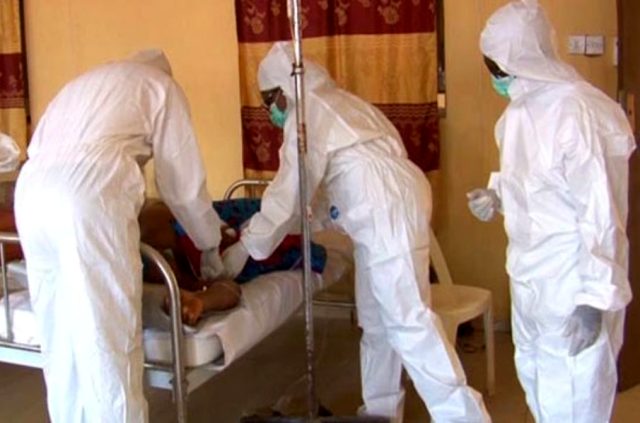
According to the NCDC, Lassa Fever led to the death of 43 persons, including medical personnel, between January 1 and February 3, 2018.

The acute viral haemorrhagic fever is known to be transmitted by rats.

The long walk to 2019

0


By Simon Kolawole

A huge number of Nigerians, from what I can see, will vote against President Muhammadu Buhari in 2019. Which is no news, really. All you need to do is read the newspapers, watch the TV, listen to the radio or browse the internet to come to that conclusion. Those who voted against him in 2015 will certainly do it again. But the crowd is expanding rapidly, from what I can glean, and this is what should actually worry Buhari, who has so far not hidden his intention to seek a second term in office. When your opponents rally against you, that is natural. But when your own supporters become openly critical of you, then you need to worry. Buhari needs to lose some sleep.

But anytime someone tells me Buhari has lost much goodwill and does not deserve another term in office in 2019, the statement I usually make is that “you cannot analyse an election in isolation of the opposition”. It is not enough to say an incumbent has failed and does not deserve another chance. You need to also work out how he will be voted out. If not, he will get re-elected by default in spite of public disenchantment. People can be dissatisfied as much as they want, but that could translate to nothing in the end. In the “aluta” community, they say “organise, don’t agonise”. No amount of agonising can defeat Buhari if the opposition is not well organised.

The way the Nigerian political firmament is today, what you can call opposition is highly fragmented. Coming barely a year to the general election, this is no good news. I’m told 24 hours is a long time in politics and something major can still happen — which is true. However, by this time in 2014, APC was already consolidated and ready to do battle. Today, much of opposition’s hope is built on the assumption that people are disappointed with Buhari and will automatically vote against him. Yet we know you don’t defeat an incumbent in Africa through wishful thinking. Anywhere an incumbent has lost, it is usually because the opposition played smarter.

If it is so easy to displace an incumbent, PDP would have been sent packing since 2003. The disenchantment with President Olusegun Obasanjo was such that his popularity was arguably at an all-time low. He had lost a large chunk of support in the north because of a supposed agreement that he would do only one term. He had fallen out with the south-east as the campaign for the sovereign state of Biafra gathered pace. He had offended the south-south because of the delay in implementing 13% derivation and the destruction of Odi. PDP was alien to the south-west, although Obasanjo was banking on the “shon of the shoil” sentiments to win there.

Generally, Obasanjo was poorly rated during his first term in office. He spent most of the time in the air looking for “foreign investors”. He was constantly at war with the National Assembly and organised labour. There was pervasive insecurity, from Sharia riots in the north to uprising by Bakassi boys and OPC in the south. Political killings were commonplace. Fuel prices kept going up, leading to strikes, and the refineries remained comatose. Power supply was as epileptic as ever. Federal roads were an embarrassment, with the horrendous Benin-Ore axis — the gateway to the oil-rich region that produces the Nigeria’s livelihood — making headlines as the “shame of a nation”.

Obasanjo still went on to get a second term. Why? People would talk about the incumbency factor — which guarantees the misuse of state agencies such as the electoral commission, police, military, DSS, NNPC and CBN. I wouldn’t downplay the significance of that. However, as we saw in 2015, you can control all these things and still lose an election if the opposition is very strong. As at 2003, the opposition was highly fragmented: ANPP (which is now part of APC) was limited to the north; AD (whose leaders later moved on to form AC/ACN before fusing into APC) was basically a south-west property; and APGA was more interested in Biafra.

In a sense, Obasanjo played on the fragmentation of opposition parties to keep PDP in power. In 1999, there were three officially recognised parties — PDP, APP and AD. The military actually wanted a two-party system — which would have produced only PDP and APP — but afraid that the south-west might boycott the election and raise hell again, they lightened the preconditions to accommodate AD. At the end of the general election, PDP produced 21 governors, APP nine and AD six. If APP and AD had fused, as was being proposed then, they would have controlled 15 states and would most likely have grown stronger to keep PDP in check in subsequent elections.

AD, however, insisted on going it alone, ridiculing APP (All Peoples Party) as “Abacha People’s Party” because of the preponderance of those who served the Abacha government. Ironically, AD went into an alliance with the same APP for the 1999 presidential election, losing to the PDP. On assuming office, Obasanjo began to systematically decimate the opposition. He appointed the APP chairman, Alhaji Mahmud Waziri, as his special adviser. He later made the AD chairman, Alhaji Adamu Ahmed Abdulkadir, his special assistant. The opposition was in disarray and began to die in instalment. Thereafter, Obasanjo lured many ANPP (formerly APP) governors into his fold.

After the 2003 polls, most ANPP governors became Obasanjo’s “boys”. Buhari, the ANPP flag bearer, became politically orphaned. Not a single ANPP governor was with him any longer, including Mallam Ibrahim Shekarau who had been elected governor of Kano state simply because Buhari raised his hand. In no time, Nigeria began to move towards a one-party state — which Obasanjo had vigorously propagated for decades as a commentator on African affairs. Many opposition governors started defecting to the PDP. When Obasanjo was leaving in 2007, PDP controlled 29 out of 36 states. The party was walking on water. At some point, they threatened to rule Nigeria for 60 years.

But something changed ahead of the 2015 elections. Many would say it was because of President Goodluck Jonathan’s soft nature — “live and let live” — while others would say it was because there were powerful political forces at play. Whatever it was, the opposition managed to come together, even if it was a marriage of strange bed fellows. Helped by the fracturing of PDP and the defection of five governors, the emerging APC became a redoubtable force. For the first time, the opposition had a real chance of displacing the ruling party. It appeared they had learnt from their failures in 2003, 2007 and 2011. And, by the way, there was a formidable Buhari to fly the flag.

Typical of Nigerian politicians, as soon as Buhari won the election, they began to flock to APC. I was scared and I wrote about it (THISDAY, April 5, 2015), warning that opposition might become insignificant again — the same thing that sustained PDP in power for 16 years. Today, APC has 24 governors to PDP’s 11 and APGA’s one. In the national assembly, legislators are daily defecting to APC without shame. Politicians who could have stayed back to rebuild PDP could not imagine life in political wilderness devoid of milk and honey. They started flocking to APC. Whereas APC is internally unstable, it is not losing as many key members as necessary to impact on its fortune.

PDP, as presently constituted, is still the strongest opposition platform. But its brand image is not sparkling. After overcoming the storm-in-a-tea-cup internal imbroglio which many swore had the hand of APC, the PDP is now perceived as the property of one or two governors. Meanwhile, the SDP has been telling us that governors and senators will defect to “our fold” in large numbers “next week” but next week never seems to come. There is also the third force as well as the third farce. The youth are mobilising and saying they are not too young to run. A lot is going on, but where is the harmonisation? It’s less than 10 months to the nomination of candidates!

What am I driving at? It is not enough to say “Anyone But Buhari”. Agreed, “Anyone But Jonathan” worked magic in 2015, but it was a combination of many factors. For one, the opposition worked together. They were not just shouting “Anyone But Jonathan” all over the place. Remember, too, that there was a Buhari with massive electoral value in the north who was helped by a national movement to take out Jonathan. Yoruba would say “ara ran bombu l’owo”. Everything simply came together in the nick of time. While I am not ruling out the chances of the opposition (I’m not that reckless), I also don’t think they should assume that displacing Buhari is a done deal.

AND FOUR OTHER THINGS…

SANI REVELATION

Senator Shehu Sani has set the ball rolling by telling us how much each senator takes home every month. It comes to over N14m in a country where minimum wage is N18,000. Every senator — Hausa, Yoruba, Igbo, Fulani, Muslim, Christian, conservative, progressive — collects it. The senate spokesman tried to assault our intelligence by saying “it is nothing new, it is in the budget” — knowing fully that it is not broken down. Now that we know what senators earn, what about the reps? They will tell us it is inside the budget! Can the “progressive” reps help us break it down? And may we know how much do members of the 36 houses of assembly take home too? Nigeria!!!

BUHARI VS JONATHAN

Was it not last week that I was wondering why we keep discussing former President Goodluck Jonathan when we should be discussing President Muhammadu Buhari? At what point are we going to move on and face the future? Buhari himself is determined to keep playing that game. He was in Dapchi, Yobe state, where 110 schoolgirls remain missing after being kidnapped, and he boasted that he reacted better than Jonathan did over the Chibok kidnappings in 2014. The parents of the Dapchi girls will not agree with Buhari, though. And you can understand why. If Buhari did better than Jonathan, why are their daughters still with Boko Haram? Simple.

THE TROLLERS

Mr. Olusegun Adeniyi, chairman of THISDAY editorial board and arguably Nigeria’s most popular columnist, almost ran into an ambush on Twitter last week. Assuming that he was going to have an intellectual engagement on the state of the Nigerian media, he walked straight into trolling by one chap who said journalists collect money from Buhari (the fellow even dragged the name of my humble self into it). In my opinion, those who lack integrity are always the first to question the integrity of others. Nevertheless, public debate is critical to our development and all good people must learn to eat the rice and ignore the stone. Tact.

STEPHEN HAWKING

I don’t know much about physics, just that I am always fascinated by things like gravitation, motion, time, space, light, relativity, black hole and stuff. The more I try to understand them, the more I force my brain into overdrive, so I quickly respect myself and give up. Stephen Hawking, the British physicist who just died at the age of 76, goes into history for propounding theories that left fellow physicists with problems to solve! Isaac Newton gave us the law of gravitation. When man eventually landed on the moon over 200 years later, the law was more than confirmed. Hawking’s theory on the black hole will be absolutely confirmed someday. Maybe in AD 2300. Genius.

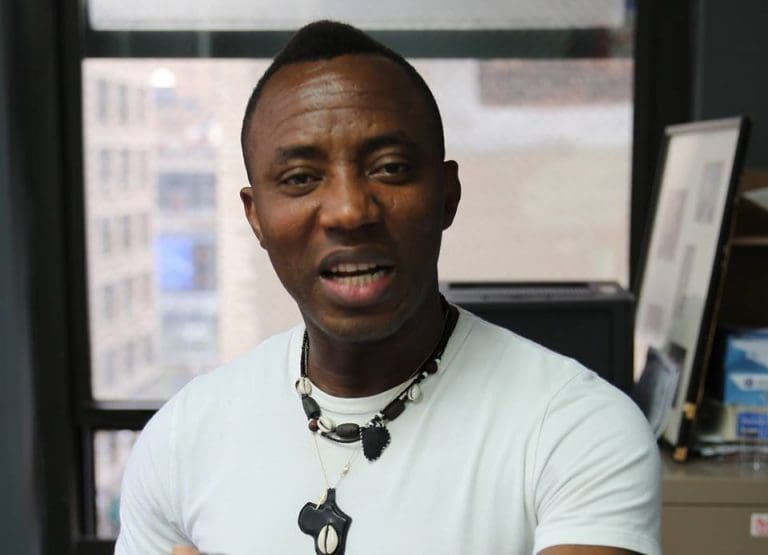
Sowore: What experience did Mandela have when he became president of South Africa?


Omoyele Sowore, Publisher of Sahara Reporters, says the woes of Nigeria over the years were caused by the so-called “experienced” politicians, hence the need for the country to try something new.

Sowore, who has declared his intention to run for president in 2019, said this during an interview with TheCable, stressing that leaders who went on to achieve great success in office were all termed “inexperienced”.

“No one has the experience to be President until you become President. Even then, since 1999, we have been ruled by two former heads of state – Obasanjo and Buhari. What did Nigeria gain from their so-called experience?” Sowore queried.

“Our current President rode to power largely based on the premise that he would use his previous experience as a head of state and a military general to fight corruption and defeat Boko Haram.

“Corruption has grown worse. Now even snakes and monkeys have joined our peculiar political class as looters of public funds. Just a few weeks ago, Boko Haram captured over 100 girls from Dapchi in Yobe State, President Buhari’s government acted almost exactly.

“On the other hand, what experience did Mandela have when he became South Africa’s President? He had just spent the previous 27 years in prison,” Sowore continued.

“What previous experience did Obama have in running a country before he became President? His critics laughed at his credentials as a community organizer. And as you might recall by the time he started running for the presidency, he had only been a senator for about a year.”

Sowore added that he had no prior experience as a journalist or a media personnel, and had never been an IT person when he founded Sahara Reporters, which is now one of, if not the biggest, of Nigeria’s online news platforms.

“In 2006, I decided that the best way to advance that cause was to create a platform that would fearlessly and courageously expose bad governance and corruption.  I wasn’t even a journalist,” he said.

“I had no experience in journalism and trust me, I was ridiculed and derided by ‘professionals’ even though they fed fat on our brand of journalism. I had never built a website. I had no experience in media. But I had a clear vision and a dream.

“Fast forward 12 years later and Sahara Reporters has become a globally acclaimed media platform. We are the global pioneers of our unique brand of citizen journalism.

“Sahara Reporters is now a full-fledged media enterprise. We have helped sustain democracy not just in Nigeria but across the African continent in nations like Zimbabwe, Ethiopia, Ghana and the Gambia.”

Sowore, 47, said having spent almost 30 years of his life as an activist, he believes he is prepared to face and surmount the challenges of nation-building.

But to people who believe leadership at the national level is more than activism, Sowore said: “I will point them to two activists who, just in the last 25 years, have demonstrated this fact for all the world to see: Mandela in South Africa and Obama in America.

“Compare their track records to their so-called non-activist peers in Nigeria. Can you compare Mandela or Obama to Obasanjo, Goodluck Jonathan or Buhari? Of course not!

“Activism is merely a commitment to good governance and a fearless dedication to holding leadership accountable. A committed activist will bring to governance the same commitment and dedication with which they drove governments to be more responsible.

“This is my life’s work. And in seeking the presidency, I am simply seeking a bigger and more effective platform to implement my vision for Nigeria.”

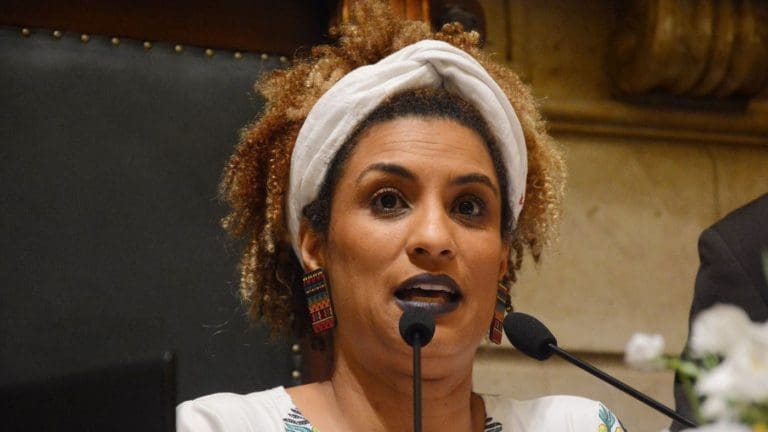
Marielle Franco, black female politician and human rights defender, shot dead in Brazil


Marielle Franco, a female black politician, has been shot dead along with her driver by two men in what appears to have been a targeted assassination.

Franco, 38, was a groundbreaking politician who had become a voice for disadvantaged people in the teeming favelas that are home to almost one-quarter of Rio de Janeiro’s population, where grinding poverty, police brutality and shootouts with drug gangs are routine.

Los Angeles Times reports that as of Wednesday, she organised a rally where she urged demonstrators to push for better treatment of black women.. Hours later, she was dead, gunned down along with her driver as they travelled through the city’s downtown.

Police said two men fired nine shots into Franco’s car and sped off. Franco’s driver, Anderson Pedro Gomes, was also killed. A press officer sitting next to her in the back seat was injured.

Civil Police Chief Rivaldo Barbosa declined to release details of the shooting and said no motive for the attack had been established.

Franco was a gay black woman who defied the odds of Rio politics to win the fifth-highest vote count among council members when she was elected in 2016.

During her almost 15 months in office, she presented 16 bills, two of which became law — one regulating motorcycle taxis, an important means of transportation in Rio’s favelas, and one targeting City Hall contracts with social health organizations, which are often subjects of corruption investigations.

The day before her death, Franco sent out a tweet questioning the action of police in a homicide.

“Another homicide of a young man that could be credited to the police. Matheus Melo was leaving church when he was killed. How many others will have to die for this war to end?” she wrote.

Her party also pointed to her vocal disapproval of a particular military police unit, which she called the “battalion of death”.

A woman cries next to a banner with an image of Councilwoman Marielle Franco. (Leo Correa / Associated Press)

“Marielle had just denounced the military police’s brutal and truculent operation in the Iraja region of the Acari community,” the Socialism and Liberty Party said in a statement. “We demand an immediate and rigorous investigation of this heinous crime. We will not keep quiet!”

Human Rights Watch and Amnesty International condemned the killings, while friends, colleagues and politicians paid tribute to Franco.

Franco’s death reverberated across the city and beyond as thousands of people gathered at rallies, expressed their outrage on Twitter and wept openly in public. Several human rights organization suggested the shooting was political and was an attack on those who push for improved rights in Brazil. Activists urged authorities to investigate the slaying as an assassination.

On Thursday afternoon, crowds gathered outside Rio de Janeiro’s council chamber chanting “not one step backwards” ahead of a ceremony in honour of Franco inside. Many wept as her coffin was carried inside.

The spontaneous demonstration brought together union members, feminists, leftists and residents of the city’s poorer communities.Protests and memorials were quickly arranged in Rio, São Paulo, Brasília and other urban centers, hashtags such as #MarielleFranco, #MariellePresente and #NãoFoiAssalto (“It wasn’t a robbery”) began to trend on Twitter, and Brazilians adopted a new online rallying call: “Marielle, present, now and forever!”

“Another dead black woman,” wrote Adriana Vasconcellos on a Facebook event page for the protest in São Paulo. “They kill us in every way, when they murder our children, when they arrest and murder our husbands, when they silence us. But we will not keep quiet. We will keep screaming, denouncing and fighting.”