A cash sum of $9 million (N2.75 billion) has allegedly been found at the Abuja residence of the Paul Tarelah Boroh, a retired Brigadier-general who was last week sacked as Special Adviser on Niger Delta to the President.
The discovery was made in the early hours of Tuesday, following his arrest by a joint team of operatives of the Economic and Financial Crimes Commission (EFCC) and the Office of the National Security Adviser (ONSA).
His arrest was confirmed by by Wilson Uwujaren, EFCC’s Head of Media and Publicity.
A senior security agent also told the newspaper that Boroh was picked up from his home in Gwarimpa, Abuja, on Monday, but was taken back at about 3 a.m. on Tuesday by the security operatives, who then raided his house for hours and made the cash discovery of $9 million.
“The former adviser was driven to his home in an unmarked car after his arrest. His home was searched for several hours and about $9 million cash was discovered in several safe boxes in several parts of the house,” said the source.
“The combined team of EFCC and the National Security Adviser’s operatives were very thorough with the search. Indeed, at a point, they broke all the locks in the home, including his wife’s closet. The recovered cash has been deposited at the Office of the NSA.”
Last week, President Muhammadu Buhari relieved Boroh as Coordinator of the Presidential Amnesty Programme for former Niger Delta militants, and approved the appointment of Charles Quaker Dokubo, a professor, as replacement.
A statement released by Femi Adesina, presidential spokesman, announcing Boroh’s sack also contained the President’s directive for Babagana Monguno, National Security Adviser, to fully investigate the amnesty office’s activities from 2015 when Boroh was appointed till date, citing “allegations of financial impropriety and other acts that are allegedly detrimental to the objectives of the Presidential Amnesty”.
This directive is believed to have been triggered by a petition sent to the President in August.
In the petition, signed by one Timi Angalabiri on behalf of the Niger Deltans for Accountability and Good Governance (NDAGG), the President was urged to suspend the ex-Amnesty Programme boss “for a credible investigative inquiry to commence into the non-payment of tuition fees and living expenses of recently graduated Niger Delta students in universities across the United States, the United Kingdom and Nigeria, with many institutions withholding the students’ certificates due to the non-payment of tuition fees ranging from nine months to two years, despite receiving over N70 billion within this time frame”.
Meanwhile, members of the Reformed Niger Delta Avengers and other militant groups have threatened to attack oil installations in the Niger Delta if Boroh is not reinstated within four weeks.
Celebrations are still ongoing in Yobe State and other parts of the country over the return of the schoolgirls kidnapped from Dapchi in February, though many say several questions remain unanswered.
However, a lot has happened in the country in the 30 days that the girls spent in Boko Haram captivity. Below is a rundown of some.
MORE THAN 90 KILLED BY HERDSMEN
Over 90 persons were killed in several herdsmen attacks in at least three states in the North-Central region of the country: Benue, Plateau and Kogi.
On March 5, suspected herdsmen attacked Omusu Edimoga community, in Okpokwu Local Government Area of Benue state, killing 24 persons. Exactly a week after, a similar attack on Dundu Village, in Bassa LGA of Plateau State, claimed 26 lives. And on March 14, it was the turn of Dekina and Omala Local Government Areas of Kogi State, where 32 persons were reported killed. Another attack on March 19 claimed the lives of 10 persons, including a traditional ruler.
In fact, the Benue State government had planned another mass burial for victims of the fresh attacks, but the plan was botched when it was announced that President Muhammadu Buhari would be visiting the state.
BUHARI VISITS TROUBLED STATES
The President eventually visited the states plagued by herdsmen attacks. Buhari’s tour of ‘troubled states’ generated some controversy among Nigerians, with many wondering why the move took him so long.
Buhari’s visit, however, did little to assuage the rampaging herdsmen. In fact, while still in Plateau State, herdsmen attacked a community in the state, killing five.
But it was Buhari’s comments in Benue State that became a major talking point, days later. The President had said he was unaware that Ibrahim Idris, the Inspector-General of Police, did not obey his directive to relocate to Benueto restore calm.
“I’m not aware that the IG did not spend 24 hours in the state as directed by me, I am getting to know in this meeting,” he said. Femi Adesina, his spokesman, later explained that his principal is not omniscient and so cannot know everything.
REPS RECALL ABDULMUMIN JIBRIN
Abdulmumin Jibrin, the Kano House of Reps member who was suspended in 2016 after making allegations of budget padding against Yakubu Dogara, Speaker of the House and other principal officers, was recalled on March 13.
Jibrin was suspended for 180 legislative days — about one calendar year — but he ended up spending more days outside the parliament, as the powers that be insisted he must apologise to the house before he could be recalled. Well, he did — according to Dagara, at least.
SENATOR WAKILI PASSED ON
Ali Wakili, senator representing Bauchi South constituency at the National Assembly, died on March 17.
Wakili, who was Chairman of the Senate committee on poverty alleviation, was said to have suddenly slumped at his house in Gwarimpa, Abuja, and died shortly after. He was buried same day in accordance with Islamic rites.
OSINBAJO GIVES DAUGHTER OUT IN MARRIAGE
Perhaps in keeping with the mood of the nation, Vice President Yemi Osinbajo gave his first daughter, Oludamilola, away in marriage in a quiet but glamorous ceremony, held inside the State House.
Journalists were barred from the event, which had select family members of the couple and a number of government officials in attendance.
VP REVEALS ‘GRAND CORRUPTION’ BY JONATHAN ADMINISTRATION
Just a few days ago, Osinbajo made a startling the revelation: the Goodluck Jonathan administration approved the release of N150 billion “in cash”, in local and foreign currencies, few weeks before the 2015 general election. Meanwhile, in the whole of 2014, only about N153 billion was released for capital projects in five critical sectors of the economy: power, works, housing, transportation and agriculture.
According to Osinbajo, “we can’t talk of the Nigerian economy without talking about the blight that was caused years ago by people simply stealing the resources of this country”.
Of course many more noteworthy events occurred during this time frame. You may complete the list with the ones you remember.
Boko Haram has released the schoolgirls it abducted from Government Girls Science and Technical College in Dapchi, Yobe State, on February 19.
However, five of the girls died in captivity while one more, Leah Sharibu — the only Christian of the 110 abductees — is missing.
A security source familiar with the release told the ICIR that Boko Haram insurgents personally drove the girls to Dapchi without a single gun, exchanged pleasantries with villagers, and dropped them off.
“The girls were dropped off in the same nine vechicles with which they were kidnapped,” said the source. “Villagers already cited them around Kusur, Yobe State, since Tuesday, which clearly negates government claims of fighting an unknown enemy. The villagers saw them, knew they were Boko Haram members, they came in and left without hurting anyone or having to defend themselves against being hurt by anyone.”
The abduction happened in similar fashion, Boko Haram raiding the school and making away with girls without resistance, thereby prompting a blame game between the Army and the Police on which security agency was responsible for watching over the town at the time.
A subsequent finding by Amnesty International revealed that the Military received at least five alerts in the four hours preceding the raid, but made no move to forestall it.
Time was about 9:30 pm; two cars collided in a ghastly accident at the busy VON junction along the Nnamdi Azikiwe International Airport Expressway in Lugbe on Thursday February 1. A policeman at the scene immediately called the Federal Road Safety Corp (FRSC) emergency telephone numbers and spoke with someone on the other end.
The nearest FRSC unit was at the Berger yard along the Lugbe expressway, less than two kilometres from the scene of the accident. The voice promised that road safety officials would soon be at the scene. But they never showed up. After waiting in vain for the FRSC officials, good Samaritans at the secene evacuated the victims, who were in a pool of blood, to some hospitals inside Lugbe.
The police officer, who spoke to the ICIR but asked not to be named, disclosed that his friend and one of the FRSC officials at the Lugbe unit told him later that they could not come for the rescue because there was no fuel in their vehicles.
Also speaking anonymously, an FRSC official at the Lugbe unit said they no longer went on patrol because of logistic challenge. He added that sometimes the staff had to use their money to fuel patrol cars because funds were sometimes not released at all or mostly infrequently released.
“The truth is that we can no longer respond to emergencies the way we used to because of lack of funds,” he revealed.
“You will hardly see our vehicles on patrol these days, we only stay at particular locations to observe traffic. Even to get to those locations sometimes we have to use our money to buy fuel or plead with some of our special marshals to help out.”
What FRSC budgeted for fuel in five years
The days may have gone when FRSC patrol vehicles were a regular feature of highways and city roads across the country. The days may also be over when men of the FRSC responded promptly to road crashes on highways or city roads.
Despite expressing commitment to meeting the goal of reducing road crashes in the country by 50 per cent by the year 2020, lack of funds for operations and logistics may hinder the FRSC from meeting this goal.
It is now common to drive from one state to another without sighting a single FRSC patrol vehicle on highway surveillance. Instead of patrolling the highways and roads on safety surveillance, patrol vehicles are now stationed at some accessible intersections.
It is no different in the Federal Capital Territory, where the headquarters of the FRSC is located. In the past, it was common to see FRSC men in their patrol vehicles driving along the Abuja-Kaduna highway to ensure road safety and prompt intervention in case of a road crash.
The same for the Abuja-Lokoja highway, which has one of the highest road traffic in the country. FRSC operatives on special duty would drive patrol vehicles to different inter-sections on the Abuja-Lokoja road while their ambulances were on designated locations on the road.
But recently, things have been looking down for the organisation, as most of its patrol vehicles have been grounded due to alleged lack of funds for maintenance. At least eight grounded patrol vehicles, including an ambulance, are parked at the premises of the FRSC headquarters in Abuja.
Although road crashes and deaths have reduced over the years, especially in recent years, this has been due largely to public enlightenment campaigns and the introduction of the speed limiter by the FRSC.
According to the National Bureau of Statistics (NBS), there were 8,560 road crashes across the country, resulting to 4,527 deaths. In 2017, the figure was slightly lower, with 7,937 road crashes and 4,410 deaths. There are fears that low budget may erode the gains made in the past years and make the roads less safe.
While a total of N32,738,177.299 was budgeted for the FRSC in 2015 — an increase of over N2 billion over that of 2014 — it fell to N30,693,265.509 in 2016. In 2017, the budget was increased to N34,797,349,549 but it was not fully released. The commission had to make special request for logistics from the Presidency for its public enlightenment campaigns last December.
This was acknowledged by Corps Marshal Boboye Oyeyemi when he addressed officers recently at the commission’s headquarters in Abuja. He commended President Muhammadu Buhari for providing “logistics support” that ensured a successful campaign in December. According to a press release dated December 28, 2017, by Bisi Kazeem, Corps Public Education Officer, FRSC, Oyeyemi expressed gratitude to President Muhammadu Buhari for his support towards the success of the campaign for safer road environment in the country.
Allocation to FRSC in five years
Also, in his remark last month during the celebration of 30 years of FRSC, the Corp Marshal acknowledged the support of the presidency but solicited more funding for the FRSC to enable it deliver on its mandate. Officers, who spoke off the record in reaction to the Corp Marshal’s speech, said he was “being diplomatic” so as not to ruffle feathers.
They disclosed that the FRSC now relies more than ever before on Special Marshals to improve traffic in city centres. In many parts of Abuja where traffic hold-ups have become regular features, it is common to see special marshals directing and trying to ease the flow of traffic.
ICIR took a trip to Kaduna and Minna in February to see what the FRSC was doing along these busy roads. No single FRSC patrol vehicle was sighted throughout the stretch of the road. Thus, if there was a crash on either of these roads, FRSC may not be able to make timely response to save lives.
A road safety official in Minna who also spoke off the record told this reporter that lack of adequate vehicles and funds for logistics was affecting the operations of the commission.
But efforts to get the spokesman of FRSC to comment on how budgetary constraint is affecting the operations of the commission were unsuccessful. When the ICIR visited his office on February 5, to interview him on the challenges of the commission, he said he was busy and needed time to get relevant information. He asked the reporter to call him the following week. When the reporter called, he requested that the questions be sent to his phone. This was immediately done, yet there was no response.
After one week, the reporter called him again, and he repeated his promise to get back to the reporter. But he never did. Last Monday, the reporter sent him a reminder and still no reply.
The Corps under the administration of the present Corps Marshal has earned notable achievements and recognition, they include: Winner, best MDA in Nation Building: NITDA-NIHILENT e-Governance, 2015; Award for excellence in Humanitarian Service in Nigeria, 2015; Award to exceptional commitment to Road Safety in the 2014 Premier Africa Road Safety Award, among others. However, it does loot ill-equipped to contribute to the saving of lives on highways.
Abubakar Rasheed, Executive Secretary of National Universities Commission (NUC), says the population of students in public and private universities is currently about two million.
Rasheed said this on Tuesday in Abuja at the opening of a workshop on proposed ‘Higher Education Reform and Africa Centre of Excellence-Impact’, organised by NUC in collaboration with the World Bank.
He said universities in the country need to be re-organised to meet present-day demands instead of merely increase in number.
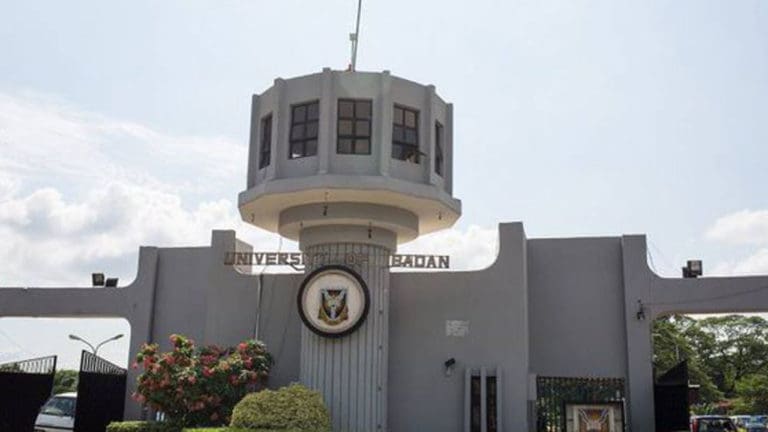
“In 1948-49 there were only 210 students (University of Ibadan). As of December 31st 2017, we had nearly 2 million students in Nigerian universities,” he said. “At independence in 1960 to 1962, Nigeria had only five universities. Today, we have 162 universities,”
Rasheed lamented many acts of academic corruption in the universities, adding that the commission was working to introduce anti-plagiarism software that would checkmate academic theft.
While identifying such corrupt practices in the Nigerian university system to include delay in release of results, money for marks, sexual harassment, delay in release of transcripts, among others, Rasheed said those acts impact negatively on the quality of graduates in the country.
“Many of our graduates in Art, Humanities, Social Sciences cannot construct sensible sentences in paragraphs; they cannot take minutes.” he said. “Many of our graduates in Science, Applied Science, and Engineering cannot fit in after a little training into the challenges of the real life of the industries, and so on.”
He stated that the ugly development prompted the commission to set up a committee headed by Peter Okebukola, a former NUC Executive Secretary, adding that by the end of the year the level of academic corruption would be reduced by 10 per cent.
Also speaking at the workshop, Andreas Blom, representative of the World Bank, who spoke on the immediate and long-term expected support of the Bank for Nigerian universities, called for more funding for the institutions to meet the research needs of the country.
Olufemi Bamiro, a former Vice Chancellor of University of Ibadan, stressed the need for skills development in the over 3,000 programmes run in the nation’s universities.
Vice President Yemi Osinbajo says the President Muhammadu Buhari-led government has reversed the grand corruption that characterised governance in Nigeria in the past, and has set the country on a firm path of growth and development.
Speaking during the Ogun State Investors Forum on Tuesday, Osinbajo said the economy of Nigeria could not be discussed without reference to the years of indiscriminate stealing of the country’s resources by a few corrupt leaders.
For instance, Osinbajo said that the sum of $3 billion was frittered away in one single policy of the immediate past government. This sum, Osinbajo said, could have been used to finance several capital projects, such as the Abuja-Kaduna-Kano road, the second Niger bridge, the Enugu-Portharcourt road, the East-West road, the Shagamu-Ore-Benin road, the Karo-Maiduguri road, the Abuja-Lafia-Akwanga-Keffi road, and the old Lagos-Abeokuta road.
“That’s what the $3 billion that some people made away with, could have done. And that’s why it is important for us to understand that our country’s problems must be analysed from the perspective of what our real issues are,” he said.
“We can’t talk of the Nigerian economy without talking about the blight that was caused years ago by people simply stealing the resources of this country.
“In one single transaction, the sum of N100 billion and $289 million in cash were released three weeks to the 2015 elections. And that release, of course, was money that was essentially embezzled.
“When you consider that in 2014, when oil prices were at an average of $110 a barrel, only N99 billion was spent on Power, Works and Housing, those three ministries put together. Agriculture and Transportation got about N14 and N15 billion respectively.
“So the total spent on capital (expenditure) in 2014, on those areas I’ve mentioned, was N153 billion; and over N150 billion was released and shared in three days. So this is the enormity of what we are talking about.
“There is no country in the world that can survive on grand corruption on the scale that we are talking about.
“That is why it was important for the Federal Government of Nigeria, under President Muhammadu Buhari, to reverse that grand corruption. So we spent, in 2017, N1.3 trillion on capital, the highest spent in the history of the country, earning almost 60 percent less than we were earning in 2014. So you can do far more with less, if you are prudent with the resources of this country.”
On Monday, during the 7th presidential quarterly business forum for private sector stakeholders, Osinbajo was quoted as saying that Jonathan’s government spent only N153 billion in three years.
“We saw from the presentation of the minister of finance that N14 billion was spent on agriculture in 2014, transportation N15 billion, so the total spent on infrastructure in those three years were N153 billion and in two weeks before the elections, N150 billion was essentially shared,” he had said.
But his speech on Tuesday appears to be a clarification, to reflect that the N153 billion released for capital projects were specifically for five ministries: power, works, housing, transportation and agriculture, in 2014.
VP @ProfOsinbajo: In 2014 the Federal Government spent a total of N153 billion on Power, Works, Housing, Agriculture and Transportation. Meanwhile an equivalent sum – N150 billion naira – was released and embezzled in the days leading to the 2015 elections. #OgunInvestorsForum
Meanwhile, Reno Omokri, former aide to Jonathan, has since denied the allegation that N150 billion was shared few weeks to the 2015 general election.
Omokri said it was sad that Osinbajo had “surrendered his tongue to Satan to be used to spread slander and lies”, daring him to produce evidence to back his allegations.
There has been no official response by former President Goodluck Jonathan.
The Federal Government on Tuesday proceeded with the trial of four members of the Indigenous People of Biafra (IPOB) by filing a fresh three-count charge against them, despite the absence of Nnamdi Kanu, their leader.
The four defendants are Benjamin Madubugwu, Bright Chimeze, Chidiebere Onwudiwe and David Nwawuisi.
The case started with Kanu among the defendants, but it stalled following his disappearance in September 2017 when the Army deployed troops to Umuahia for its ‘Operation Python Dance’.
Shuaibu Labaran, the prosecution lawyer, had successfully asked the court to hear the charge against the other defendants separately.
During the proceedings, Labaran alleged that IPOB members threatened the life of an operative of the State Security Service (SSS) through an online publication containing a picture of the operative taken during the previous sitting.
However, Nnemeka Ejiofor, counsel to one of the defendants asked the court to disregard the allegation, and argued that the alleged publication “does not bear any similarities with a traceable medium”.
Binta Nyako, the presiding judge, warned those in attendance not to take pictures in the courtroom, “otherwise, I shall ban the press”.
“I shall also ban family members; I can do all that,” she added.
All four defendants pleaded not guilty to the charge, and Mrs Nyako adjourned the case till Thursday for further hearing.
In a release on Monday, IPOB had said it would resume a “campaign of civil disobedience on the streets of Biafraland and beyond” if their “brothers” are not granted bail by the Abuja Federal High Court.
“IPOB is calling on Biafrans worldwide to get ready because we must compel Nigerian government to free our brothers, Benjamin Madubugwu, David Nwawusi, Bright Chimezie Ishinwa, Chidiebere Onwudiwe and provide our leader they abducted on the 14th of September 2017,” it said.
Bode Ayorinde, member representing Owo/Ose constituency of Ondo State at the National Assembly, has likened Nigeria’s democracy to a home where the legislative arm of government is the husband and the executive arm, the wife.
Ayorinde gave the analogy during AIT’s Focus Nigeria on Tuesday, while trying to explain why the 2018 budget has not been passed despite its presentation to the National Assembly by President Muhammadu Buhari since October 2017.
According to him, the executive, as the wife, prepares a budget for the home and presents to the husband, the legislature, who now takes a critical look at the budget and decides whether to add some more items to it or remove items that he deems unnecessary.
“The executive is the wife, in a democracy, the legislature is the husband. The wife prepares a budget for the home and presents to her husband. He now looks at it and decides what to add and what to remove,” Ayorinde said.
He stressed that the delay in passing the budget was to enable the National Assembly do the necessary scrutiny that would ensure that the budget is implemented to the letter when passed.
For instance, Ayorinde said the Medium Term Expenditure Framework (MTEF) of the Buhari administration was supposed to cover three years, but there has been a lack of discipline on the part of the executive to stick to the approved MTEF.
“If you say you want to construct a three-kilometre road for N150 million, N50 million annually for three years, we expect that you should budget for the first year N50 million, second year N50 million, the third year N50 million. But if you bring N50 million this year, and you are bringing N150 million or N30 million next year, you need to bring another MTEF to now say ‘I’m adjusting the basis of my budget’.
“So there should be discipline from the preparation, because what you are bringing to us is an estimate, and if the discipline is not there to stick to the provisions of the MTEF, then there is the need for you to bring it annually, the purpose of the MTEF is [thus] defeated.”
Ayorinde said Nigerians ignorantly bash the National Assembly for delaying the budget when in fact the lawmakers should be applauded for ensuring that the budget document eventually signed into law is an implementable one.
He added: “I was driving through Asokoro yesterday when I saw a big white billboard [with the inscription]: ‘National Assembly, stop padding the budget, go and pass the 2018 budget’. I read it, I laughed [and said] democracy is beautiful because it gives everybody the opportunity to express himself.
“But the truth about it is that: are we padding budget? Who is the maker of the budget under the constitution? Is it not the National Assembly that makes the budget under the constitution?”
Ayorinde lamented that the uncooperative attitude of various Ministries, Departments and Agencies (MDAs) of government, contributed to the delay in passing the budget.
“Let us appeal to the MDAs. Let the MDAs see the National Assembly as a necessary instrument of running democracy; not as a burden,” he said.
“As it is now, the MDAs see the National Assembly as a burden. When you see your husband as a burden, you can’t make progress. We [at the National Assembly] will always have questions (about the budget).
“We have a democracy now because of the National Assembly. Remove the National Assembly and we have a government. During the era, the executive was there, the judiciary was there. But we celebrate democracy because of the National Assembly. Let everybody in government recognise this fact.
“Nigerians should also ask, what is the percentage of implementation of the previous budget? And Nigerians cannot ask in their rooms. It is the National Assembly that will ask on their behalf.
“The one we approved last year, what is the level of implementation? An MDA comes to you, everything on salaries, released. Everything on overhead — to buy paper, to hold meetings — released. The capital that will improve the lives of the people, 20 per cent released, and you want us not to ask questions, then what is the purpose of electing us? So these are the reasons why the budget (is being delayed)?”
Yesterday’s directive by Ibrahim Idris, Inspector General of Police, that all police escorts attached to private individuals and companies be withdrawn has been described by many as mere playing to the gallery.
Some others say Idris’ order was perhaps to bolster his claims of innocence of allegations by Isah Misau, a retired police officer-turned senator, that he pockets no less than N10 billion monthly – N120 billion annually – from big companies and VIPs whom he assigns special police escorts.
The order for withdrawal of police escorts from private individuals has been a ritual for successive police chiefs over the years, but these orders have proven not to be worth the paper on which they were written.
OGBONNAYA ONOVO, 2009
In August 2009, while conducting his maiden press conference as IGP, Ogbonnaya Onovo ordered all police personnel attached as private orderlies to private individuals to return to their bases.
Onovo’s audacious order included policemen attached to former heads of states, ministers, legislators and state governors.
He listed the category of persons that were entitled to personal police orderlies, adding that “all persons not listed above are hereby given seven days to release the Police personnel attached to them, and to make alternative arrangements”.
“Such Police personnel are also given seven days from today to report to their commanders in readiness for training.
“Heads of Commands and Formations whose personnel are involved are hereby warned to compile and forward the list of their returning personnel latest 13th August, 2009.
“By this date, any policeman or woman who continues in such duty will be dismissed forthwith and delisted.”
Was the directive obeyed to the letter? Your guess is as good as ours!
One week after issuing the order, Uzor Amakulor, then Commissioner of Police in Anambra State, told citizens of the state that the order excluded “the people that matter in the society”.
In that category, he listed Emeka Anyaoku, former Secretary-General of the Commonwealth; Alex Ekwueme, former Vice President; and even Pete Edochie, ace nollywood actor, who had been kidnapped days earlier.
“We cannot withdraw their orderlies, because they are the people that matter in the society,” Amakulor insisted..
HAFIZ RINGIM, 2010
In October 2010, Hafiz Ringim, who succeeded Onovo as IGP, issued his own directive — this time warning that officers that refused to return to their bases would be arrested, delisted and prosecuted.
According to Emmanuel Ojukwu, police spokesman at the time, Ringim formed a special monitoring unit to ensure compliance to his directives, but one report quoted an anonymous policeman as describing the directive as “the usual hot air expected from a new police boss”.
“The beneficiaries of the special duty racket are the senior police officers who are given fat sums every month,” the source explained.
“Policemen on special duty may obey the latest order, but once the politicians and others who crave their services go to see the people in charge, an instruction will be passed to the CP to restore the police detail and the order will be forgotten after some time.”
MOHAMMED ABUBAKAR, 2012
Abubakar took over from Ringim with a rather ambitious objective of delivering to Nigeria and Nigerians “the best policing service”. So in his first few months in office, he rolled out a number of directives which he said would restore professionalism and integrity to the police profession.
Among them was the cancellation and withdrawal of all approved police guards for private individuals and corporate bodies.
Also, Abubakar ordered that no person should be detained by the police beyond 24 hours except specifically permitted by law. He also ordered the dismantling of intra-state and highway roadblocks across the country especially on the roads of Lagos, Edo and south-eastern states.
All the directives fell flat on their faces.
SOLOMON ARASE, 2016
During a visit to Niger State in March 2016 as part of his tour of all police commands in the country, Solomon Arase, then IGP, lamented that Nigeria was “grossly under-policed”, adding that there were just about 8,000 police personnel in Niger State.
Arase made the comments during a meeting with Miyetti Allah Cattle Breeders Association of Nigeria, National Union of Road Transport Workers, students, Federal Road Safety Corps (FRSC) and other security agencies in the Niger State.
“I have given a directive that policemen on postings as orderlies to individuals, including politicians, be withdrawn immediately and redeployed to other more sensitive posts in order to provide the needed security across the country,” Arase said.
But in the same speech, Arase also called on “individuals, private organisations and communities to come to the aid of the Police in the country by providing logistics to them to facilitate their activities”, adding that government could not shoulder the responsibilities of security alone.
EZEKWESILI SUMS IT UP
The reaction of Oby Ezekwesili, former Minister of Education, to Monday’s announcement by the Nigerian Police, aptly captures the feeling of many Nigerians.
“How many other times have we heard this “immediate withdraw” notice? They keep taking Citizens’ for a ride. One day be one day,” Ezekwesili tweeted.
Very annoying kind of “Breaking News”. How many other times have we heard this “immediate withdraw” notice? They keep taking Citizens’ for a ride. One day be one day…… https://t.co/TPLXUw1ai6
An Uber self-driving car hit and killed a woman crossing the street in Arizona, USA, on Monday — a potential blow to the technology expected to transform transportation.
Police say Elaine Herzberg, 49, was walking her bicycle outside the crosswalk on a four-lane road in the Phoenix suburb of Tempe about 10 p.m. on Sunday (0400 GMT Monday) when she was struck by the Uber vehicle – a Volvo XC90 SUV travelling at about 65 kilometres per hour.
According to Reuters, the car was in autonomous mode with an operator behind the wheel when the accident occurred. Herzberg later died from her injuries in a hospital.
Consequently, Uber said it was suspending tests of its self-driving vehicles, which are currently going on in Arizona, Pittsburgh and Toronto, all in the US.
When fully developed, analysts say self-driving cars will drastically cut down on motor vehicle fatalities and create billion-dollar businesses.
Monday’s accident, however, highlights the possible challenges ahead, as the cars confront real-world situations involving real people.
“The pedestrian was outside of the crosswalk. As soon as she walked into the lane of traffic she was struck,” said Ronald Elcock, a Police Sergeant.
Elcock, however, said he did not yet know how close Herzberg was to the vehicle when she stepped into the lane, adding that he believes Herzberg may have been homeless.
A local newspaper quoted Sylvia Moir, the Tempe Police Chief, as saying videos taken from the vehicle showed that “it would have been difficult to avoid this collision in any kind of mode (autonomous or human-driven) based on how she came from the shadows right into the roadway.”
“I suspect preliminarily it appears that the Uber would likely not be at fault in this accident,” Moir said, though acknowledging that charges could be filed against the operator in the Uber vehicle.
Arizona had approved companies testing self-driving vehicles as a means to economic growth and jobs.
Doug Ducey, the Governor of Arizoa, reached out to Uber in 2016 after California regulators cracked down on the company over its failure to obtain testing permits.
Self-driving cars being tested routinely get into fender-benders with other vehicles. Last week, a self-driving Uber crashed with another vehicle in Pittsburgh, local news reported, but there were no injuries.