Home Blog Page 2690

Ngwuta deceived NIS to acquire two valid standard passports, witness says

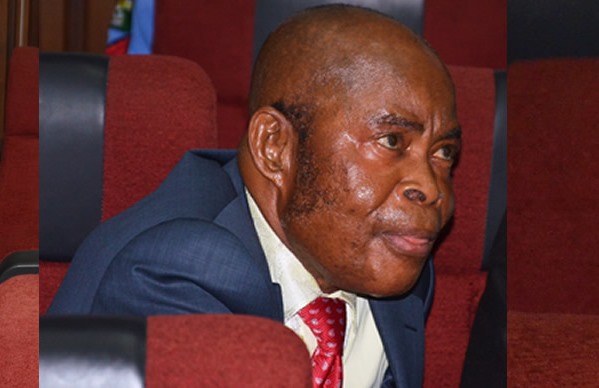
The Nigerian Immigration Service (NIS) says Sylvester Ngwuta, suspended Justice of the Supreme Court deceived it into issuing him two similar standard international passports in contravention of the immigration Act.

Ngwuta was among the seven senior justices whose houses were raided by operatives of the Department of State Services (DSS) in October 2016.

Multiple travel passports were alleged to have been recovered from his house, as well as huge sums of money in local and foreign currencies.

He was initially arraigned in November 2016 before Justice John Tsoho of the Federal High Court, Abuja, on a 16-count charge bordering on corruption, abuse of office and breaches of the Immigration Act.

The charges were later reduced to 12 counts in March 2017, and later increased to 13 counts in May.

At the resumption of hearing on Friday, Tanko Kutana, a senior immigration officer, who is also one of the prosecution witnesses, told the court that Ngwuta had deposed to an affidavit to support his claims that he misplaced his old passport.

Kutana said the NIS was not in a position to doubt the claim and subsequently issued Ngwuta a new passport, based on the strength of the affidavit.

“My Lord, the new passport was issued to Justice Ngwuta by the Immigration Service, having been convinced that he actually lost the first one,” Kutana said.

“The service replaced the lost passport because it had no cause to doubt the affidavit evidence deposed to by the defendant when he reported the loss of the document.”

However, Kutana said the service was taken aback to discover that the defendant was using the two passports stamped with visas simultaneously.

“The forensic report shows that the defendant, Ngwuta, was using the two standard passports interchangeably, at the time of his arrest on October 7, 2016 by the operatives of the Department of State Service.

“We would not have been here if the defendant had returned the recovered passport to the service when he found it,” Kutana said, adding that the action violated immigration law.

He said it was outright illegality to have and use two standard passports with similar registration number interchangeably.

Kutana confirmed that four diplomatic passports and two standard passports were found in Ngwuta’s possession, but he said none of the six documents were forged.

“I did the analysis on the six passports to determine whether there was forgery and by the time I concluded my analysis of the passports I found no evidence of forgery in any of them,” he said.

Kutana also agreed that there could be circumstances under which a citizen may have more than one passport, but it did not include having two similar ones as was the case with Ngwuta.

Section 1, sub-section 1(a) of the Immigration Act (2015) states: “A person who has, holds or is in unauthorised possession of more than one valid standard Nigerian Passport … commits an offence and is liable on conviction to imprisonment for a term of ten years or a fine of Two Million Naira or both.”

After a cross-examination of the witness, Justice Tsoho adjourned the case to October 20 for continuation of hearing.

Ngwuta is also facing separate false assets declaration charges at the Code of Conduct Tribunal (CCT) in Abuja.
1000 human skulls from Africa resurface in Germany

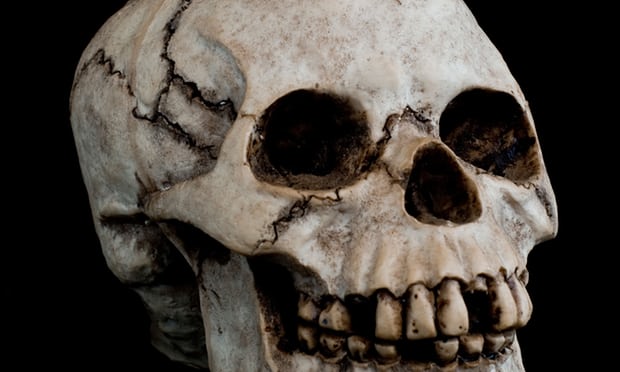
Germany has launched a two-year study to determine the origins of more than 1,000 human skulls, mostly from Rwanda, brought to Europe during the colonial era for racial “scientific” research, AFP reports.


Billed as an important first step to understanding the skulls’ provenance the study could one day lead to their return to east Africa.

“We’re now looking at the circumstances surrounding the origins of these skulls,” said Hermann Parzinger, head of the Prussian Cultural Heritage Foundation, which is leading the project.

“And then, we will decide together with the origin countries what would be the appropriate way [to resolve the issue]”, he added.

US museum ‘storing remains of Namibian genocide victims’

The skulls were shipped to Germany by expedition forces around 1907-08 for the anthropologist Felix von Luschan, who was studying human development.

But over the decades – and as Germany lurched into two world wars – the collection was moved into deep storage.

In 2011, Berlin’s Charite hospital finally turned the skulls over to the Prussian Cultural Heritage Foundation, which runs most of Berlin’s museums, libraries, archives and research institutes.

Bernhard Heeb, who is leading the research project, said the skulls were in “very poor condition” when the foundation received them, and years were spent cleaning them, putting fragments together, building up an inventory and sorting them geographically.

Most paperwork documenting the skulls had been lost, and researchers’ best clues were notes written on the bones themselves.

The majority of the skulls are marked as stemming from Germany’s former East African colonies, including 986 from Rwanda, 41 from Tanzania, four from Burundi and 54 others are simply marked East Africa.

“What we will do now is to form a network with our colleagues in Tanzania, Rwanda, Burundi to research the origins of these objects together,” said Heeb.

Rwandan ambassador Igor Cesar said Kigali had been unaware of the human remains until 2016.

“One hundred years have gone by without us knowing about this at all,” he said.

“When one hears 1,000 skulls, the first question is: how come? How could one get 1,000 skulls?,” he said, noting that there were no cemeteries in Rwanda at that time, and that bodies were buried near family homes.

Asked if Kigali would make a demand for restitution, Cesar said it was “too early”.

“The skulls are here, they’re not going to go away. They have waited 100 years. Our interest at the moment is to know the history behind these skulls. And when we know exactly what that is, we will think about how best to deal with it.”

Germany has in recent years handed back 20 skulls belonging to indigenous Namibians.

The skulls were among an estimated 300 taken to Germany after a slaughter of indigenous Namibians during an anti-colonial uprising in what was then called South West Africa, which Berlin ruled from 1884 to 1915.

The skulls gathered dust in the German archives until 2008, when public broadcaster ARD reported that they were still at the Medical History Museum of the Charite hospital, and at Freiburg University in the southwest. The publicity prompted Namibia to seek their return.


READ ALSO:

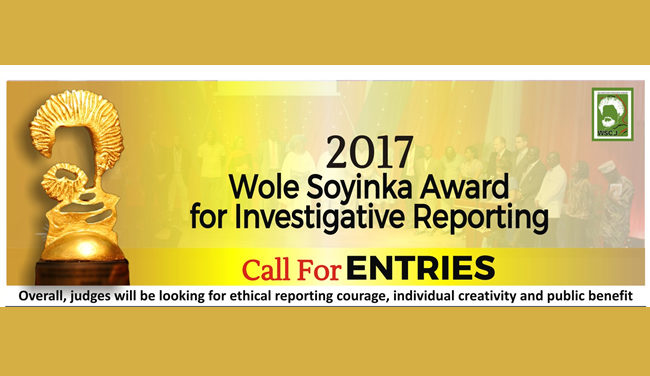
CALL FOR APPLICATIONS: 2017 Wole Soyinka Award for Investigative Reporting

The Wole Soyinka Centre for Investigative Journalism (WSCIJ) is calling for applications for the 12th edition of the Wole Soyinka Award for Investigative Reporting.

The award is open for Nigerian journalists or team of journalists with stories published between 4th October 2016 and 3rd October 2017.

This award seeks to honour outstanding reports from the print, online, photo, editorial cartoon, television, and radio categories in general.

Submitted reports must involve in-depth coverage of clandestine activities on public and or corporate corruption, human rights abuses, or on regulatory failures in Nigeria.

This year’s award will also include a special prize for reports on agriculture and food security to serve as encouragement to reporters covering the Agric sector.

This special category is as result of WSCIJ’s partnership with Oxfam, an international organisation dedicated to working to end the injustices that cause poverty.

Entries will be assessed by a panel of Judges made up of media experts and related professionals with good understanding of investigative reporting.

Criteria for judgement includes, quality of investigation, evidence, human rights elements, ethical reportage, courage, individual creativity, public interest, impact and quality of presentation.

Interested journalists must submit the reports on or before 4pm on October 26, 2017.

Online categories should be emailed to entries@wscij.org, while all other entries must be delivered to the Wole Soyinka Centre for Investigative Journalism office, Second Floor, No 18A Abiodun Sobajo Street, Off Lateef Jakande Road, Agidingbi, Ikeja, Lagos.

Lara Owoeye-Wise, a member of the Board of Trustees of ICIR, is the only female winner of the award in the TV category (2006), while in 2016, Fisayo Soyombo, the current Editor of the ICIR, then working with TheCable, emerged winner of the online category.

He was also proclaimed the 2016 WSCIJ-Nigerian Investigative Reporter of the Year.

UPDATE: After meeting with Buhari, Kachikwu keeps silent

The meeting between the President Muhammadu Buhari and Ibe Kachikwu, Minister of State for Petroleum, at the State House has ended with Kachikwu keeping sealed lips on the outcome of the meeting.

The meeting lasted about 1hour and 20minutes, but the Minister, who arrived the State House at about 11:40 am for the meeting declined comments when approached by State House Correspondents.

The closed door meeting between Buhari and Kachikwu came on the heel of his allegations of insubordination and humiliation against Maikanti Baru, Group Managing Director of the Nigerian National Petroleum Corporation (NNPC).

He had alleged that the NNPC boss had repeatedly sidelined and disrespected the board of the national oil firm, which is chaired by the minister of state.

According to a memo that was leaked to the media, Kachikwu had informed Buhari that Baru unilaterally approved the award of contracts worth over $25 billion without any approval from the NNPC board.

This came a day after the NNPC announced a massive shakeup which affected 55 management staff, and Kachikwu said neither he nor the board had any idea about the appointments, stressing that it wasn’t the first time changes would be made without the board’s input.

“It is in the spirit of service and absolute belief in your leadership and integrity that I have, after one year of tolerating these disrespectful and humiliating conducts by the GMD, decided to bring these to your attention,” Kachikwu wrote.

He called on the President to intervene and “save the office of the Minister of State from further humiliation and disrespect by compelling all parastatals to submit to oversight regulatory mandate and proper supervision”.

Meet the new members of CBN’s Monetary Policy Committee

Thursday’s announcement of Aishah Ahmad, as a nominee for the post of Deputy Governor in the Central Bank of Nigeria (CBN) has been described by many Nigerians as a welcome development.

The 40-year old Ahmad (she will be 41 on October 26), once approved by the Senate, is expected to assume her new responsibilities with a rich resume and experience.

President Muhammadu Buhari also asked the Senate to confirm the appointment of four others into the Monetary Policy Committee (MPC) of the CBN in accordance to relevant sections of the CBN Act.

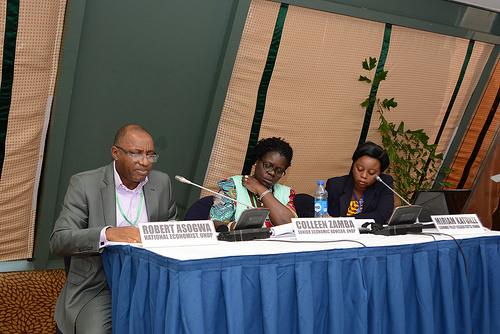
They are: Adeola Adenikinju; Aliyu Sanusi; Robert Asogwa and Asheikh Maidugu.

The MPC is the highest policy making committee of the CBN and its mandate is to review economic and financial conditions in the economy and to determine appropriate stance of policy in the short to medium term, among others.

So here are the profile of each of the newly appointed members of the CBN’s MPC.

AISHA AHMAD

Ahmad is currently the Executive Director (retail banking) at Diamond Bank Plc. A consummate professional with about 20 years of banking experience in international and local financial insititutions.

She is also the chairperson of the executive council of Women in Management, Business and Public Service (WIMBIZ), a non-profit organisation founded in 2001 which key focus is to improve the capacity of women to aspire to leadership positions in the workplace and in business.

Ahmad, from Niger State, North-Central Nigeria, replaces Sarah Alade, former CBN Deputy Governor, who retired in March this year.

She will resume at her new post immediately after Senate’s confirmation.

ADEOLA ADENIKINJU

Adenikinju is a Professor of Economics in the University of Ibadan, Oyo State, Nigeria. His research interests include Petroleum and Energy Economics, Macroeconomic modeling, and Economic Development Issues.

He has consulted for many international and local organizations including the European Union, United Nations, the Nigeria Liquefied Natural Gas Company (NLNG), The African Economic Research Consortium, ECOWAS, the World Bank, and the National Data Bank, among others.

Adenikinju was one of the Consultants that prepared the First Perspective Plan for Nigeria. He is also involved in the United Nations Project Link that makes economic projection for the Nigerian Economy.

He was a Senior Special Assistant to the President, Office of the Chief Economic Adviser to the President between 2010 and 2011.

ALIYU SANUSI

Aliyu Rafindadi Sanusi is an Associate Professor of Economics at the Ahmadu Bello University, Zaria, Kaduna State. He also holds a Masters Degree in International Business from Lancaster University Management School, where he also obtained his PhD in Economics.

Sanusi was a former Special Assistant to the Chief Economic Adviser to the president of the Federal Republic of Nigeria. He has also served in a number of Federal Government Committees.

He has consulted for a number of Local and International Organisations, including Heinrich Boll Foundation, Adam Smith International (ASI) as well as Nigeria Infrastructure Advisory Facility (NIAF) which is sponsored by the UK Department for International Development (DFID)

Sanusi’s area of research interest is applied econometrics with applications to monetary economics, international economics and macroeconomics.

ROBERT ASOGWA

Robert Asogwa holds a doctorate degree from the University of Nigeria, Nsukka. His area of specialty is macro economics.

Asogwa is currently a consultant with the United Nations Development Programme (UNDP).

ASHEIKH MAIDUGU

Asheikh Maidugu is currently a Director at the Federal Inland Revenue Services. He obtained his Bachelors Degree in Economics from the University of Maiduguri, Borno State, Nigeria.

He also holds a Masters Degree in Money, Trade and Finance from the same University and a Ph.D holder in Development Economics and International Development from Usman Dan Fodio University, Sokoto.

Maidugu was a senior lecturer at the University of Maiduguri between 1994 and 2007 before proceeding to the Debt Management Office in Abuja where he served as the Chief Operations Officer.

In 2010, he moved to the FIRS and was in charge of coordinating the development of the Corporate Plan of the Service, as well as monitoring the implementation of the annual plan.

Buhari, Kachickwu in closed-door meeting

President Muhammadu Buhari and Ibe Kachikwu , Minister of State for Petroleum Resources, are currently in a closed door meeting at the State House, Abuja.

The meeting is about Kachikwu’s allegations of insubordination and humiliation against Maikanti Baru, Group Managing Director of the Nigerian National Petroleum Corporation (NNPC).

The Minister arrived the State House at 11:40am on Friday.

He had alleged that the NNPC boss had repeatedly sidelined and disrespected the board of the national oil firm, which is chaired by the minister of state.

The minister, in a leaked letter, had informed Buhari that against the rules, some over $25bn contracts were never reviewed or discussed with him or the board of NNPC.

Nnamdi Kanu’s followers have entered ‘one chance vehicle’, says Nigerian Army

The Nigerian Army says the people following Nnamdi Kanu, Leader of the Indigenous People of Biafra, have entered a one chance vehicle.

“One chance vehicle” in the Nigerian parlance means finding oneself in a bad situation without any means of escaping.

Sani Usman, Director of Army Public Relations, said this during a two-day media conference on military’s enhancement of human rights.

Usman said Kanu took advantage of his eloquence to deceive many people into buying into his propaganda, which was his sole means of livelihood.

Reiterating that the army have no knowledge of Kanu’s whereabouts, Usman insisted that Kanu’s family and his lawyer know exactly where he is hiding.

“There was an allegation that somebody (Kanu) went into hiding. Now, I can’t remember the day but in an interview on Channels TV, one of Nnamdi Kanu’s younger brothers said that he was in hiding and he knew where he was,” Usman said.

“And one lawyer came up that he has taken the Chief of Army Staff to court. Now, who gave you the brief?

“You said you do not know where he (Kanu) is. Now, who gave you the brief? And the media is asking us where is Nnamdi Kanu?

“Why not ask the man that said so who gave him the brief to take people to court when he does not know where the man is?

“That is why those people following him have entered into a one-chance vehicle. This is somebody standing trial in a criminal case.

“Sometimes, whether we like it or not, we want to stand against the truth. But no matter how long, the truth will come to pass on October 17. This is an individual without a means of livelihood.

“I can speak eloquently. So what? If I can speak like him; I can also have my own group, that’s exactly what is happening.

“So, what is the essence of our education as a people? You know that somebody is in a criminal case, and you believe in him.”

Kanu is currently facing treason charges before Justice Binta Nyako of the Federal High Court, Abuja, alongside three others: David Nwawuisi, Benjamin Madubugwu and Chidiebere Onwudiwe.

He was granted bail on health grounds with stringent conditions which he has serially breached, but his co-accused were all denied bail and are currently in Kuje Prison in Abuja.

The next adjourned date for the trial is October 17, but as things stand currently, nobody knows whether Kanu will show up for the hearing as his whereabouts remain unknown.

Stop suffering the righteous and protecting the wicked, Fayose tells FG

Ayodele Fayose, the Governor of Ekiti State, says the Muhammadu Buhari-led Federal Government is one that suffers the righteous and protects the wicked.

Fayose said this on Thursday at Ado-Ektiti, the State Capital, during the celebration of the 2017 World Teachers’ Day.

He lamented that teachers in the state could not be paid their salaries because the EFCC is still holding the State’s Commissioner for Finance and the Accountant General over allegations of misappropriation of bailout funds.

“Those who want to be in governance should have the interest of the people at heart,” Fayose said.

“Not like today, the righteous are suffering (and) there is protection for the wicked. Today, my teachers can’t get paid because of the EFCC arrested my Commissioner for Finance and my Accountant General.

“If they are fighting Fayose, let them fight me. Don’t suffer Ekiti people. You can take my salary if you like, because I won’t stop talking.

“They should look at the plight of these teachers and if they want to do anything they should charge them (the arrested persons) to court. What is right is right.”

Fayose also said that the federal government should understudy Ekiti State so as to learn how to put the nation’s education back in shape.

Ekiti State has emerged tops in the number of candidates that passed the National Examination Council (NECO) Senior Secondary Certificate Examination (SSCE) in 2017.

“There’s no pride. They should come and see. What are we doing differently? Why are we coming first? How did we move from number 35 to number 1?” Fayose said.

“We must be doing something right. The Federal Government too can learn from states. There should be a peer review that should represent the interest of the people more.

“We are doing a lot, we are at the back of our teachers. We listen to them. I pick their calls, when they call me I listen to them. When their children and wards are getting married I’m always part of it. When they are taking chieftancy titles I’m part of it.

“I do not relate to them like teacher-governor relationship. I pick calls, I reply text messages, if can’t do it now I do it later because everybody is important.”

Fayose has declared his interest to run for the 2019 presidential election under the platform of the Peoples Democratic Party, PDP, in spite of the party’s zoning arrangement.

It was during his declaration ceremony in September that the EFCC arrested his Toyin Ojo, Fayose’s Finance Commissioner and Yemisi Owolabi, his Accountant General.

Both men were arrested “following their refusal to honour previous invitations for interrogation in relation to pending investigation on the misuse of bail-out funds by the Ayodele Fayose administration”, read a statement that was later issued by the EFCC.

Osinbajo: Our administration has been fair to all segments of the country

Vice President Yemi Osinbajo says the administration of Muhammdau Buhari has been fair to all segments of the country.

Osinbajo said this on Thursday in Abuja at an event organised by the Situation Room, a civil society organisation.

He said that allegations of marginalisation by the federal government are usually based on perception as facts point to the contrary.

“This government in its decisions and appointments has been fair to all segments of the country,” Osinbajo said.

“On national unity, we need to accept that in a good number of cases, we’re not looking at facts, just perception.”

For instance, Osinbajo explained that ministers are classified as senior or junior, noting that all but one of the ministers from the South East region Nigeria are senior ministers.

Osinbajo also answered questions on various issues that are currently trending in the polity. Issues like the forthcoming Anambra governorship election, the anti-corruption campaign, the menace of Fulani herdsmen, involvement of young people, etc.

He reiterated that the federal government will not interfere in the electoral process or use the security agencies to take sides during election.

On the war against corruption, Osinbajo said: “Yes, our anti-corruption policy is somewhat reactive, but we are also proactive, e.g. through the TSA.

“It is not business as usual, and there are layers and layers of accountability. The Whistleblower policy is proactive.

“I am amazed that civil society is so silent on the anti corruption fight, that there is so little outrage about it. There are hardly any serious activists in the anti-corruption space! I was involved in groups like Integrity.

“Civil Society should be demanding that those who have been named and shamed remain named and shamed!”

Commenting on the issue of youth participation in governance, Osinbajo said that government must remove all barriers that inhibit young people from taking part in politics “but ultimately, people themselves have to show interest”.

UNICEF sets three ambitious goals for Nigeria on early childhood development

Primary one pupils at Government Primary School, Afikpo, Ebonyi State

Two years of free pre-primary education, six months of paid maternity leave, and four weeks of paid paternity leave are the three policies that UNICEF says the Nigerian government must implement to reverse the poor physical and mental growth of children in the country.

Nigeria currently has only one year of free pre-primary education, three months of paid maternity leave, and no paternity leave at all.

At the national Early Childhood Development (ECD) conference in Abuja last week, the UN children’s agency lamented that critical national policies have failed to provide enough foundation for children’s growth.

As Unicef is proposing new policies, the previous ones it helped Nigerian government to develop have not been implemented, otherwise the appalling physical and mental growth status of the children would have been improved upon.

Pre-primary education is an aspect of ECD that has been neglected by government and left for the private sector and development partners.

Ten years ago, Unicef supported the development of the national policy for integrated ECD in Nigeria.

After six years of inaction on the policy by the government, Unicef helped the Federal Ministry of Education to develop the guidelines for implementing the policy in 2013.

One year later, Unicef supported the Nigerian Educational Research and Development Council (NERDC) to develop one-year primary school education curriculum and also supported the development of teacher’s guild for one-year pre-primary school education curriculum.

In 2015, Unicef supported the Federal Ministry of Education to develop the early childhood development standards for Nigeria.

Unicef in 2016 developed ECD teaching methodologies with a focus on Reggio Emilia and other child-centred approaches.

Last week, Unicef gathered ECD specialists from around the world for a three-day conference to tell the Nigerian leaders the importance of investing early in every Nigerian child and to understand that early years matter.

But for the government, investing in early childhood education does not really matter.  While the Federal Ministry of Education will spend N205.8 million to purchase three exotic Toyota LC V8 2016 model at the rate of N68.6 million each, it will spend just N7.2 million for all the activities to improve early childhood education this year.

Part of the N7.2 million earmarked for early childhood education will also be used to fund capacity building for caregivers across the states of the federation.

With this meagre budget for pre-primary education, any significant effort to improve early childhood education will still fall on Unicef and other non-governmental organisations.

Early childhood education as stated in the national policy on education covers the pre-primary school (day-care and nursery) until a child reaches the official school age of 6 years to start primary school.

As important as this formative education is in a child’s cognitive development, only 35 percent of children who are within three to five years are attending an organised early childhood education programme.

Nigeria’s poor status in early childhood education is largely caused by the northern part of the country where enrolment has remained extremely low. In Yobe and Sokoto states, less than 5 percent of eligible children are attending organised early childhood education programme. Apart from Kaduna State, the rest of the 12 states in the northwest and northeast have less than 20 percent of the children attending early childhood education. Meanwhile, in the southern Nigeria, more than 80 percent of the children are attending early childhood education. Ekiti, Imo, Enugu, and Anambra states have more than 90 percent of the children enrolled in pre-primary education.

“Investing in Early Childhood Development including services to support caregivers, quality pre-primary education and good nutrition will help to secure healthy and productive future generations in Nigeria,” says Mohamed Fall, Unicef representative in Nigeria.

During the conference, Unicef launched its new global report on ECD, Early Moments Matter for every child.

“The early moments of life offer an unparalleled opportunity to build the brains of the children who will build the future. But far too often, it is an opportunity squandered,” the report says.

“For nations, the price of not investing in early moments is children with poorer health, fewer learning skills and reduced earning potential. It is a weaker economy and a greater burden on health, education and welfare systems. It is intergenerational cycles of disadvantage that hinder equitable growth and prosperity.”

Swadchet Sankey, Unicef education specialist told the ICIR that investment in pre-primary education is substantially lacking in Nigeria, stressing the need to increase awareness among parents, teachers and government.

“They need to invest more money in training teachers, adding the right curriculum, the right materials,” Sankey says.

“You go to some schools; they only supply books for their primary. It’s like they are just an addendum. Even supervisors when they go to supervise, they hardly enter the pre-primary. When they are training teachers, they only teach the primary school and JSS or they will involve some of the pre-primary but the training they are giving them is not relevant to what they should be doing.”

The evidence is very clear: children who have access to quality pre-primary education do better in primary school and they earn more as adults compared to those who have not had the chance to go through quality pre-primary education.

But the hurdle is convincing an unwilling government that it is better to invest in early childhood education than buying exotic vehicles for officials of the ministry of education.

Anyway, progress is being made as Sunny Echono, the Permanent Secretary of Ministry of Education, pledges that 5 percent of universal basic education intervention fund will now be dedicated to developing the early childhood education.