Home Blog Page 2705

Mama Taraba and the APC crisis

0

By Reuben Abati

Mama Taraba is Senator Aisha Alhassan, the current Minister of Women Affairs in the Muhammadu Buhari cabinet, and arguably the most influential female politician in Taraba state today. She did something shocking and unusual in Nigerian politics during the last Eid-el-Kabir holidays. While paying homage to former Vice President Alhaji Atiku Abubakar, she addressed him as follows: “Your Excellency, our father and our President by the grace of God, come 2019…” Members of the ruling All Progressives Congress (APC) have been on a warpath with her since then.

They have labeled Mama Taraba a traitor, and an ingrate and have even called for her immediate sack, disgrace, humiliation and outright dismissal for “anti-party activities”. What is not clear is how a serving Minister expressing an opinion amounts to “an anti-party activity.” Alhaji Atiku Abubakar whom she visited is a member and one of the leaders of the APC, and she has since made it clear, not only in private but through the BBC, that she regards Atiku as her political godfather and mentor, and should he decide to run for President in 2019, she will support him, not Buhari.

She does not deserve the hate speeches she is getting from the Buhari apologists. If Kaduna Governor Nasir el-Rufai is to be believed, Mama Taraba has never regarded President Buhari as her political mentor. He was not even her choice as a presidential candidate in the 2015 APC primaries. She voted for her mentor, Alhaji Atiku Abubakar who contested against the incumbent President at the time.

She deserves high marks for her consistency, honesty, and courage. Any close watcher of Nigerian politics can easily appreciate the gravity of the risk that she has taken.  It is that kind of risk that could attract a punishment worse than dismissal from the Cabinet. In the estimation of those who are asking for her to be punished by both the ruling party and the President, Mama Taraba has crossed certain “red lines”.

In the first place, she did not go to Daura to pay homage to the President, instead, she went to Adamawa to visit former Vice President Alhaji Atiku Abubakar, a man who has declared interest in sending President Buhari out of Aso Villa. In Nigeria’s unwritten manual of politics and governance, political appointees are not to be seen with those who are considered enemies or rivals of the ruler.  Mama Taraba not only crossed that line, she went many steps further.

It is also the rule in Nigerian politics that political appointees are expected to sing the praise of their bosses in public all the time, and should they have any misgivings they can only express those misgivings privately.  The problem this has created is that most political appointees are as subservient as civil servants. They don’t express independent opinions as they should, not to talk of misgivings. They just act as directed. The President or the Governor is considered the wisest man exercising a divine mandate that no man should question. The corridor of power in Nigeria is littered with sycophants. In one state for example, the new Speaker of the State House of Assembly was asked if the legislature under his watch would avoid the temptation of becoming the Governor’s rubber stamp. The fellow reportedly responded: “I tell you, this House of Assembly will not only be the Governor’s rubber stamp, we will be his Seal!”

Mama Taraba has chosen to be different. Those who are criticising her are not stupid either, but it is just so convenient for them to play the role of sycophants and court jesters. They know when Mama Taraba says President Buhari should not run in 2019, what she is really saying is that she does not consider him fit enough for that office. She is more or less passing a vote of no confidence in the President. She is by the same token advertising Atiku Abubakar as a better person. The crabs in the corridor of power have amplified these suggestions to the level of blasphemy. But the truth is that there are many of them who probably hold the same opinion, who are secretly working against the Buhari Presidency, but they would never admit doing so publicly. These green snakes under the green grass, are the hidden saboteurs, the Judases President Buhari must beware of.

They are like the members of the Akintola group in the First Republic in the then Western Region. In the fight for political supremacy between Samuel Ladoke Akintola, who would later cross to the NNDP (or Der-mor as the people called it) and Chief Obafemi Awolowo of the Action Group, many supporters of the former openly supported Awolowo, but they were loyal to Akintola and the NNDP. There was even a famous song on this: “Bi o ri owo mi, o o ri inu mi, Demo ni mo wa.” The elevation of perfidy into a strategy started long ago in Nigerian politics.  In this instance, Mama Taraba has boldly called the bluff of her adversaries: she says she is ready to quit the Cabinet if she is asked to leave. How many of her colleagues feel the same way but too scared to say so?

With Aisha Alhassan, President Buhari knows where he stands.  It is better for him that this is so. Ordinarily, Mama Taraba should support him. In 2015, she contested for the Gubernatorial position in Taraba state on the platform of the All Progressives Congress and lost. She petitioned the State Election Tribunal and won, but this victory at the Tribunal which would have made her the first elected female Governor in Nigeria was later upturned by the Appeal and Supreme Courts.

By bringing her into his Cabinet, President Buhari rehabilitated her. He was advised against offering her the position then because she was a known Atiku person. President Buhari needs not regret the choice he has made. His appointment of non-Buhari persons into his Cabinet, including persons who refused to leave the PDP and join the APC, and are still in the PDP or other parties, is an indication of his own largeness of heart and statesmanship.

He should be glad that this particular Minister has spoken honestly. At least, he now knows that he cannot rely on her political structures in Taraba state and wherever else she wields influence. In case he plans to run in 2019, Mama Taraba has already served him an early notice – he would have to build his political machinery in that state around someone else. Her critics insist that she should on her own resign and go back to her Atiku.

This raises the question of the nature of loyalty in politics. What determines loyalty?  There is a lot of obsession with loyalty or disloyalty in Nigerian politics. Did Aisha Alhassan take an oath of office to serve Buhari or the Federal Republic of Nigeria? What we know is that political leaders in Africa place loyalty to themselves above loyalty to the state. Which is why our security and law enforcement agencies are so mercurial; they are ever so busy protecting the political interests of the incumbent, and will change should the incumbent change, rather than focusing on their core mandates. If Mama Taraba is efficient in the discharge of her duties as Minister, President Buhari should ignore those who are asking him to sack her.

What cannot be ignored though, is that the ruling APC is truly and terribly in crisis. The subsequent attacks on Alhaji Atiku Abubakar by the pro-Buhari wing of the APC, following his declaration that he was used and dumped by the President further confirms the depth of this internal turmoil. But was Atiku really used and dumped, or to use his word, “sidelined?” He says: “I was sidelined, I have no relationship with the government. I’ve not been contacted even once to comment on anything and in turn, I maintained my distance. They used our money and influence to get to where they are but three years down the lane, this is where we are.” These are strong words.

The bitterness in Alhaji Atiku Abubakar’s tone touches the heart. But can he really claim that he has been sidelined when Mama Taraba, his loyalist and at least one or two others from his political camp are playing key roles in the Buhari government? Could they have gone to work for Buhari without his “permission” or knowledge? The side-talk that they got the job on their own merit is opaque given the clientelist character of political proximity in African democracies.

With Mama Taraba’s statement, Atiku’s protest, and the epigrammatic statement by Senator Shehu Sani about Asiwaju Bola Ahmed Tinubu, that was thrown in, the support base for President Buhari’s likely shot at a second term in office appears shaky. Senator Sani confirms this when he says: “The Lion Monarch should reach out to the aggrieved but silent Lagoon Lion so that he doesn’t explode like the Hippo. The Lagoon Lion controls waters that can drown… The disloyal Cobra who spat venom before you and the friendly Viper who sprayed venom behind you are all snakes. In comparison, the former is of lesser evil than the latter.” In straightforward English, Shehu Sani is saying President Buhari is likely to drown politically if he does not pay homage to “the silent Lagoon Lion.”

The tragedy of the APC is that a party that came to power as a party of change-agents has in all of two years and four months become a party of lions, hyenas, jackals, snakes and rats. Those who have been using these animal kingdom references so freely are party insiders who obviously know the circumstances of their own party. What is seen is an increasingly atomistic political party, looking hubristically, like the dominant party it displaced. It is worse that the party leaders are now speaking in tongues.

In a statement issued on September 25, 2016, Asiwaju Bola Tinubu sounded a note of warning asking for an urgent reform of the party. He was ignored.  As at this moment, the APC is yet to hold a national convention; it has no Board of Trustees. Internal party processes have broken down. It should also be recalled that when Senator Bukola Saraki made the moves that saw him emerge as Senate President of the 8th National Assembly in 2015, the first and the only prominent party leader he visited was Alhaji Atiku Abubakar.

It was a very sensitive move in the APC chess game – the anti-Saraki and anti-Atiku groups within the party are still fuming two years later! In the 2015 election, President Buhari got close to 2 million votes from Kano state. Today, Kano is divided against his Presidency. During the last Sallah, supporters of the incumbent Governor, Abdullahi Ganduje, and loyalists of the former Governor Rabiu Kwankwaso turned the prayer ground into a battle-field, using machetes freely on a Holy day! Ganduje is pro-Buhari. Kwankwaso nurses a Presidential ambition.

The big threat to the Buhari Presidency is not the likes of Aisha Alhassan, who speak their minds, but the possible union of the lions, snakes, the hyenas and the rats, hiding in dark corners, waiting to take their pounds of flesh from the party and the Buhari Presidency.
Relics of a N76bn project… Seven spots in Abuja where CCTV cameras are not working

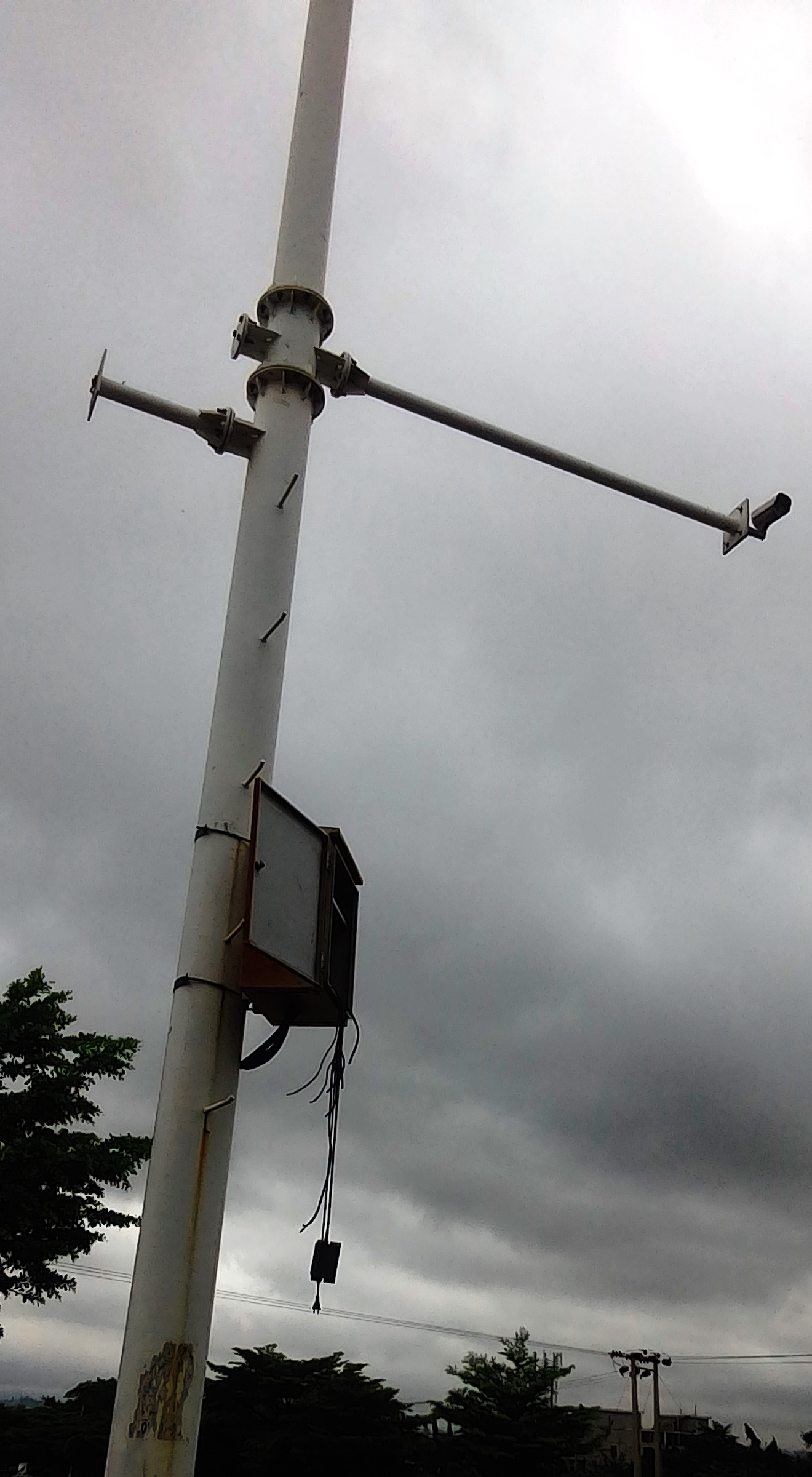
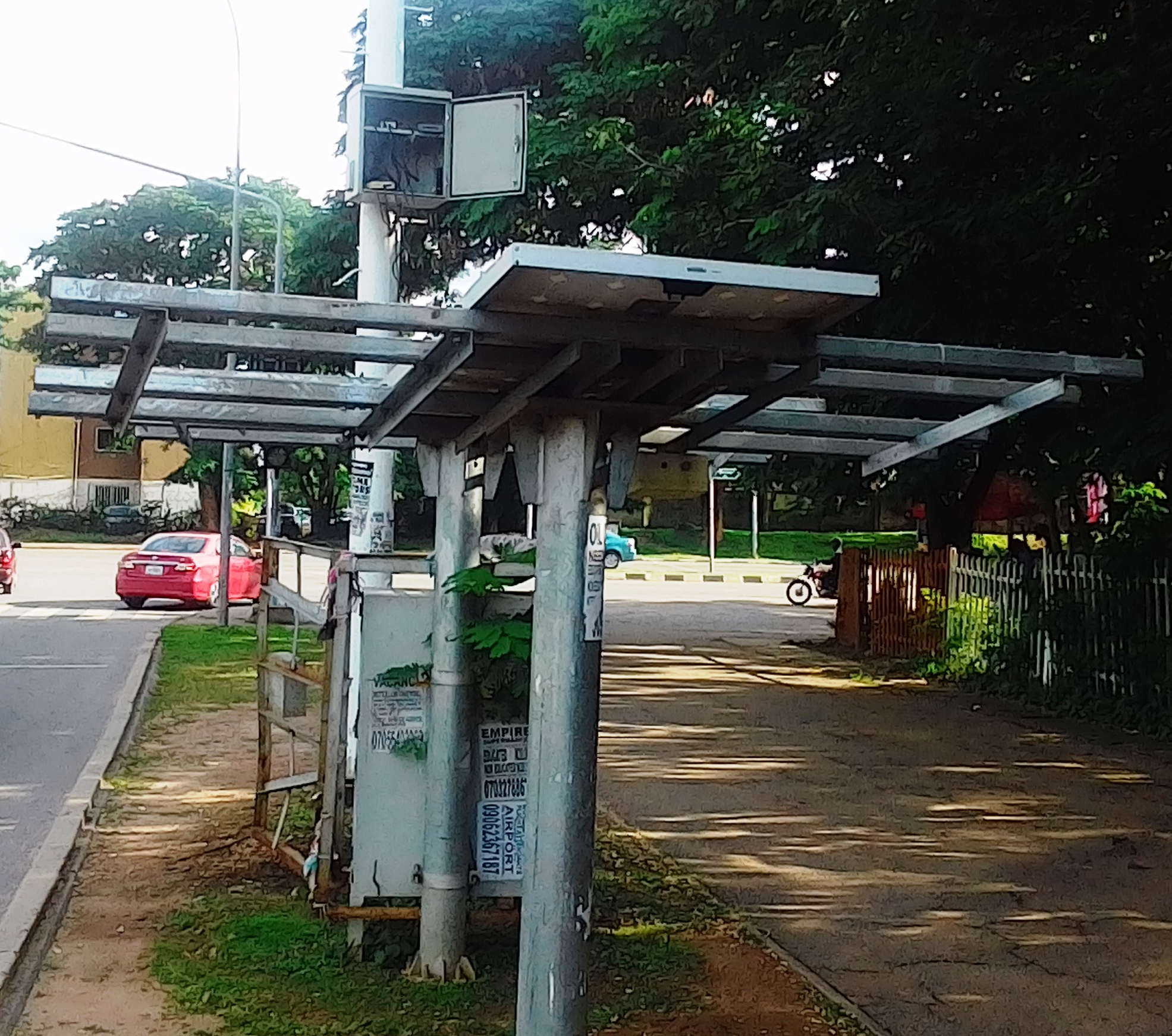
For first-time visitors, the sight of Closed Circuit Television (CCTV) cameras on major roads suggests that Abuja, the seat of power, is well under tight security surveillance. But a second and closer look will reveal that the technology offers nothing more than physical presence — the cameras are not working.

But not functioning is not the only minus with the multi-billion naira CCTV; the fact that they have never worked since their installation on Day One is just the impetus desperate vandals needed to strip them of all the accessories.

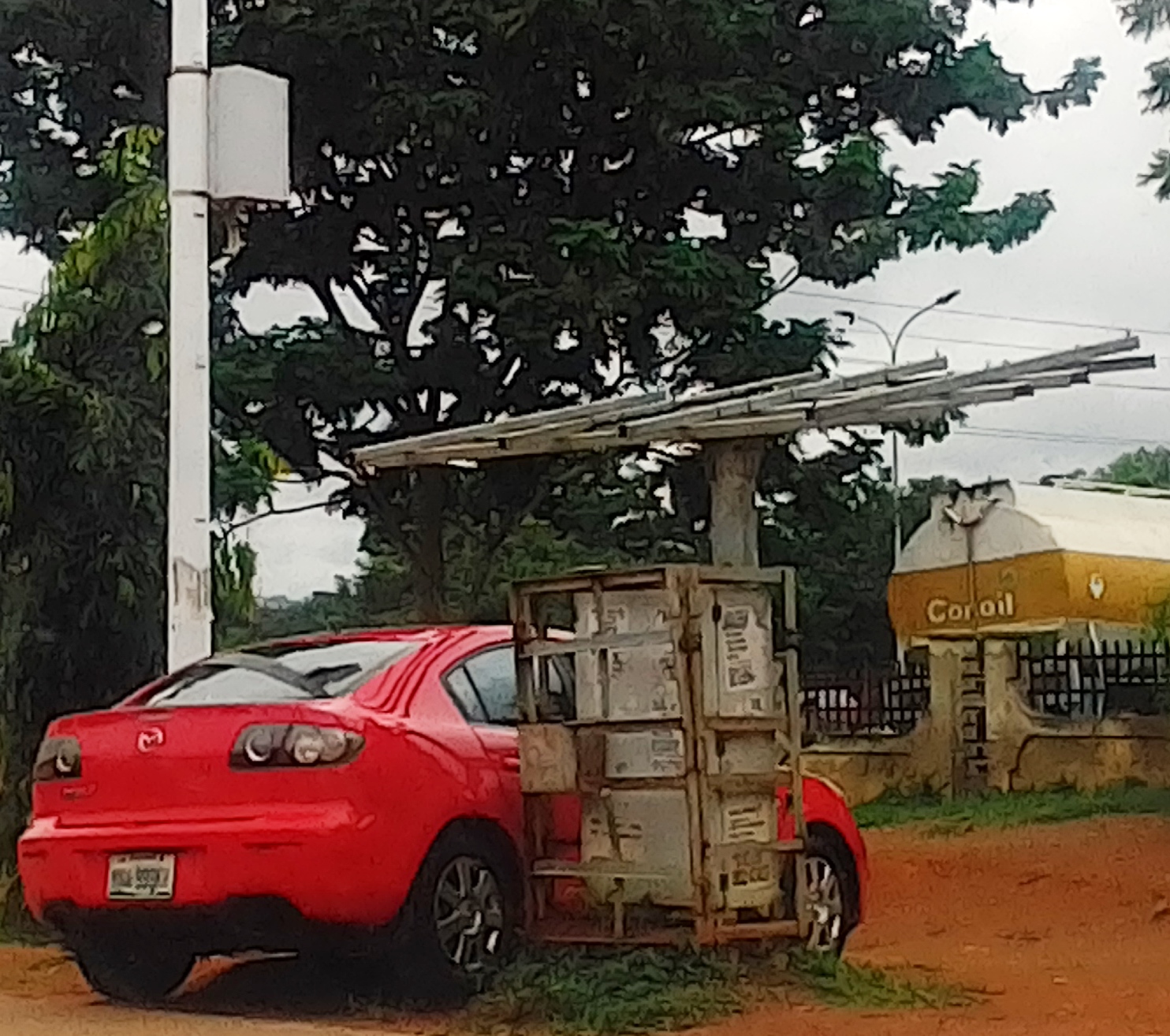
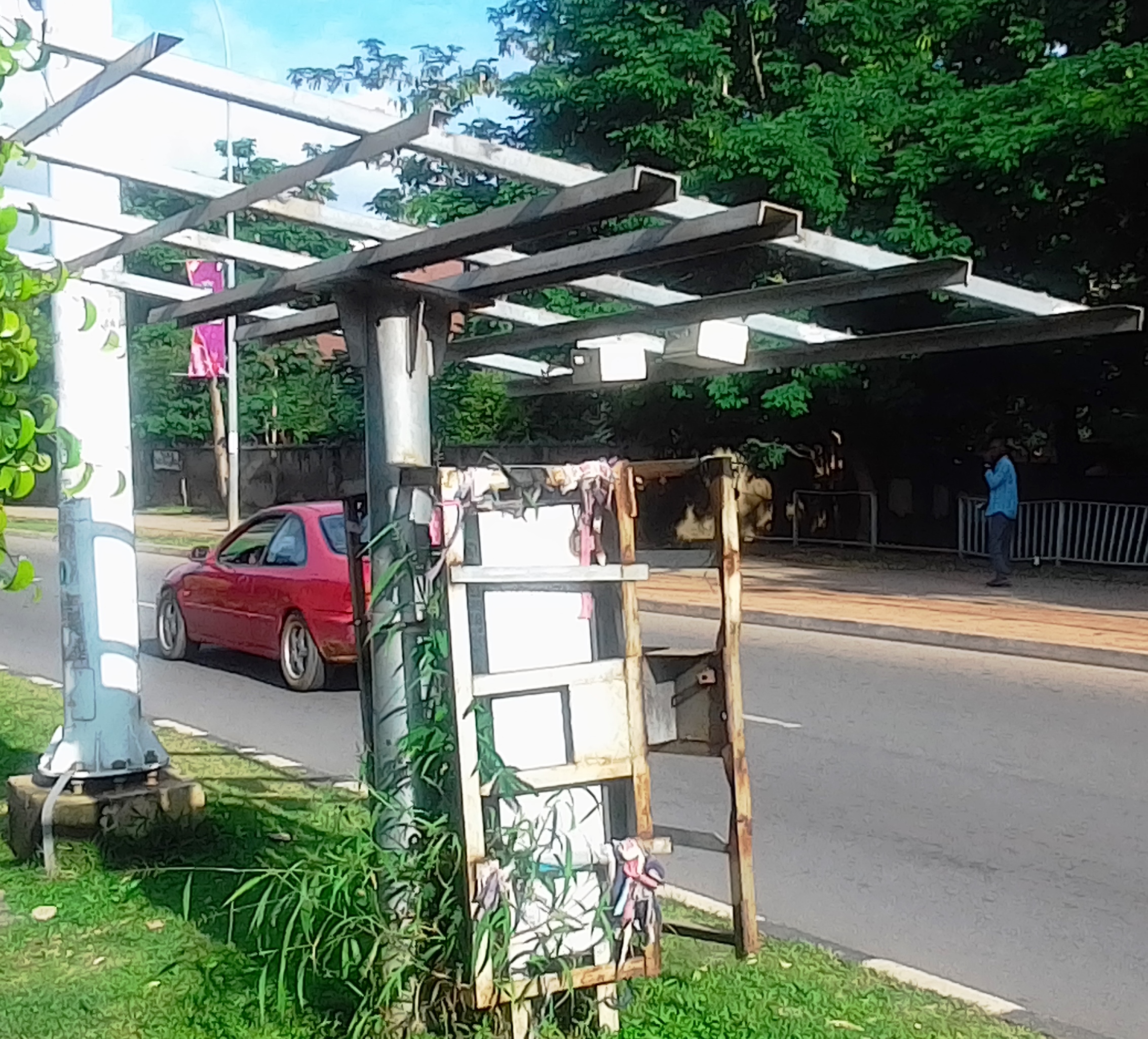
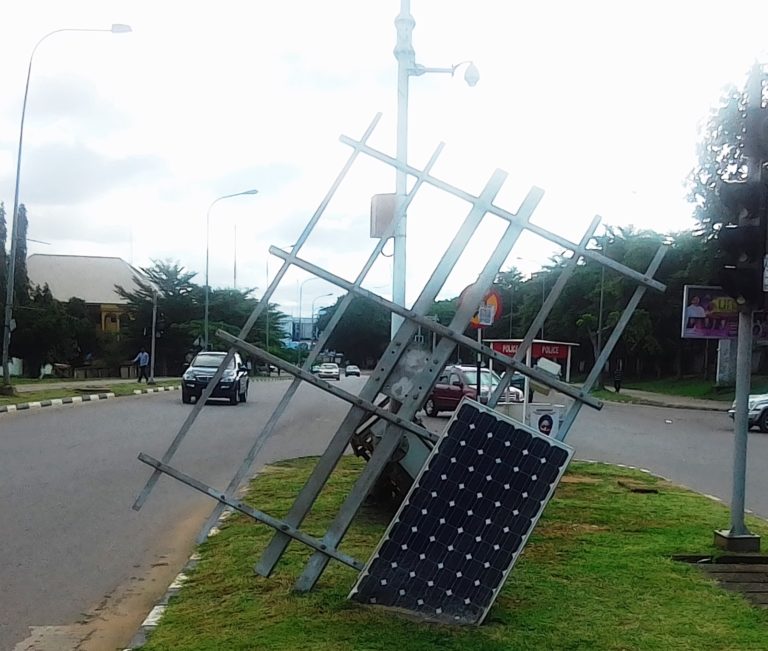
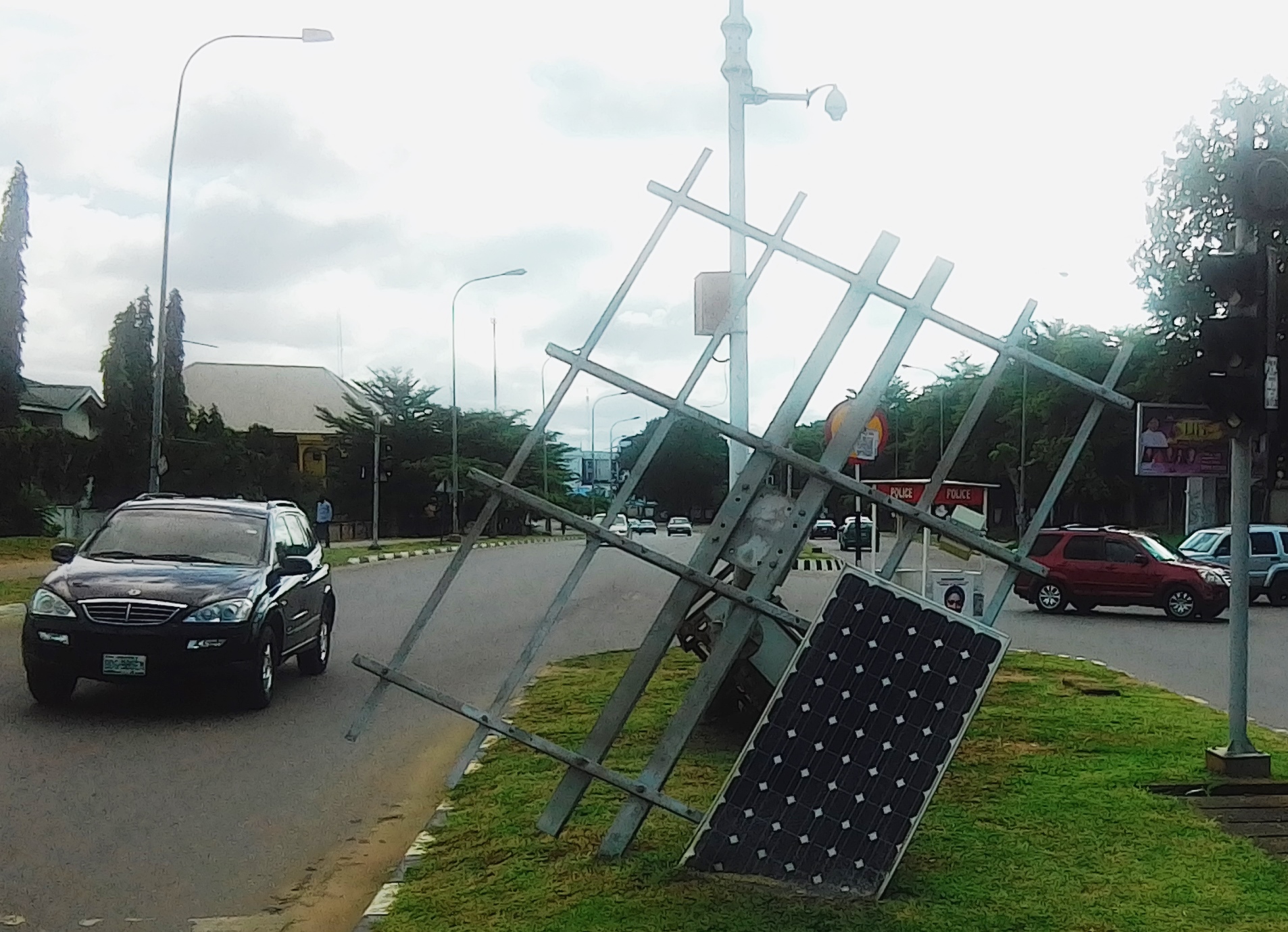
From cameras to cables, batteries and solar panels, almost all the CCTV installations within and around Abuja have been vandalized. Though they are meant to capture crimes in the city, the cameras cannot even protect themselves! What remains of many of them now re just the carcasses.

FLASHBACK

The project, National Public Security Communication Project, was awarded to ZTE Communications, a Chinese firm, for $470m — an equivalent of N76b — in 2010, after Olusegun Aganga, then Minister of Finance Minister, led a delegation to Beijing, China, where the Memorandum of Understanding (MoU) was signed.

On the team were Adamu Waziri, the then Minister of Police Affairs, and Hafiz Ringim, the then Inspector General of Police.

ICIR reported on July 10, 2014 that the House of Representatives directed its committees on Information and Communication Technology (ICT) Public Safety and National Security to find out why the CCTV installed in Lagos and Abuja failed to detect criminal activities, and to submit findings within two weeks.

The directive followed a motion by Saviour Udoh (Akwa-Ibom/PDP) in view of brazen acts of terrorism perpetrated within Abuja metropolis.

Details of the project are wrapped in secrecy despite the attempt of the National Assembly to intervene. However three years after the House’s directive, ICIR brings to you seven places in Abuja, out of several other places where the facilities are lying in ruins.

TAFA BALEWA ROAD

With just one out of the four solar panels remaining, the panels stand lies on the ground on the ever-busy road, which connects the Nigerian Army Headquarters and the Central Bank of Nigeria (CBN), adjacent Radio House and International Conference Centre.

AHMADU BELLO WAY, AREA 11

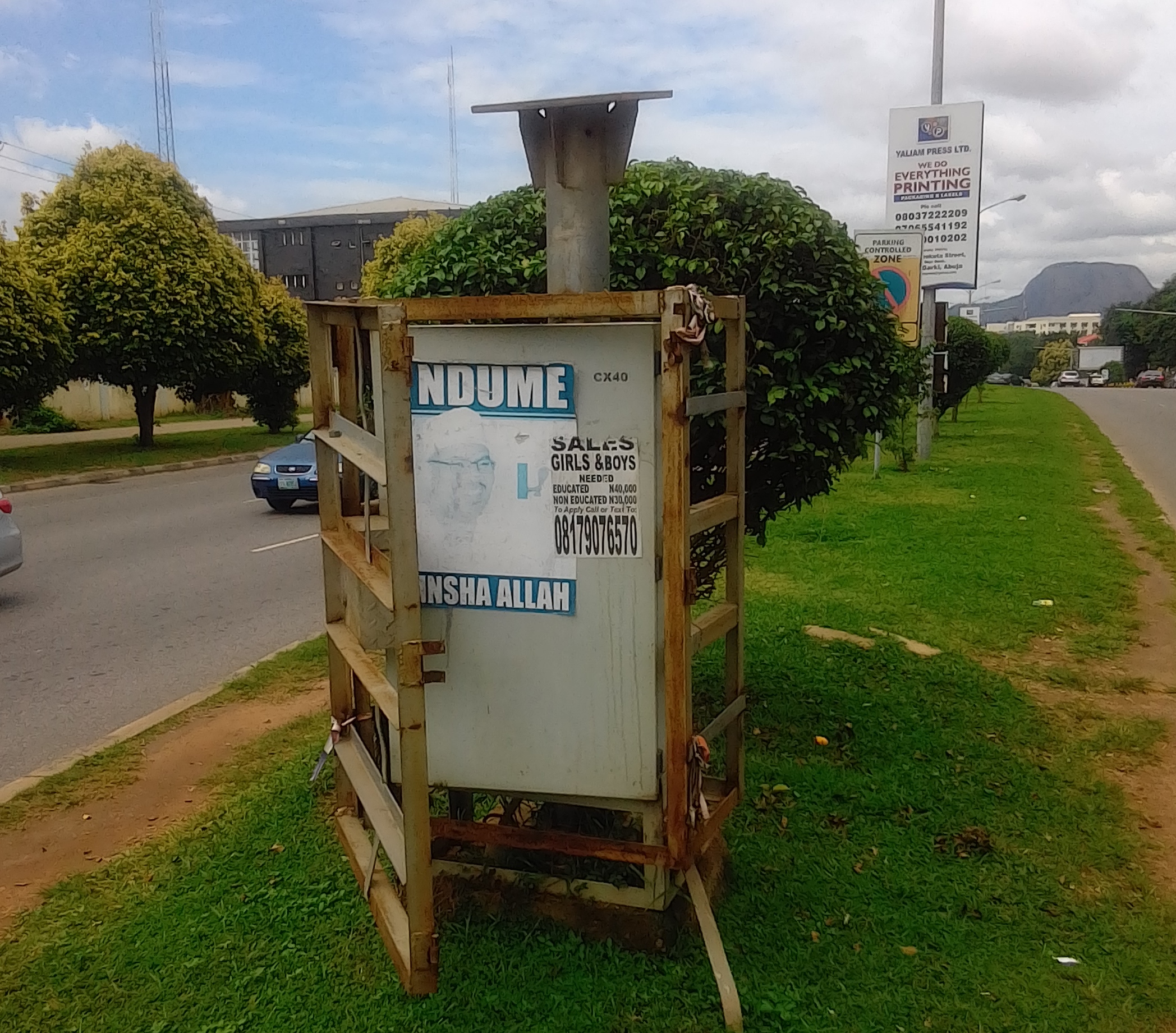
Standing some metres away from the office of Director of Legal Studies, Nigerian Army, is a skeletal solar panel stand. It is just almost in front of a Diamond Bank branch. But it long fell to the preying hands of vandals — the solar panels and the control box beside it is empty as well.

NIPOST HEADQUARTERS JUNCTION

Here, the CCTV stand was long knocked down by an unknown motorist. The remnants lay on the road median for months but when the ICIR visited, only the control box — bearing all kinds of posters — and a vandalised solar panel were standing. The solar panels, CCTV and other accessories, including the mast, have disappeared.

PPPRA HEADQUARTERS

The Petroleum Products and Pricing Regulatory Agency (PPRA) building is just behind the Abuja National Mosque and very close to the Millennium Towers project. Given the strategic and sensitive nature of these edifices, one would have thought it would be almost impossible to vandalize an installation such as CCTV Alas! There’s arguably none of the CCTVs there that has remained intact. They all have lost their vital parts despite heavy security around the axis.

LIFE CAMP ROUNDABOUT

Due to its busy nature and volume of traffic, day and night, there are seven CCTVs from the Jabi express road roundabout up to the headquarters of Directorate of Vehicle Inspection also known as VIO at Mabushi. Surprisingly, and disturbingly too, they all have lost their accessories to vandals. Government seems not bothered by this development.

OLUSEGUN OBASANJO ROAD

Those who are familiar with this road that stretches from Area 10 to Zone 7 know it already that the CCTV cameras and their poles on the road are eye-sores. They are all empty without gadgets.

SULTAN ABUBAKAR ROAD

On Sultan Abubakar Road, a CCTV stand there is not only damaged, it provides a shelter for a lunatic, too. A pillow suggestively placed on the solar panel board indicates a resting place for someone, perhaps at night. But the cameras and other installations have vanished.

Diezani unilaterally withdrew N59bn from two NNPC accounts, says audit report

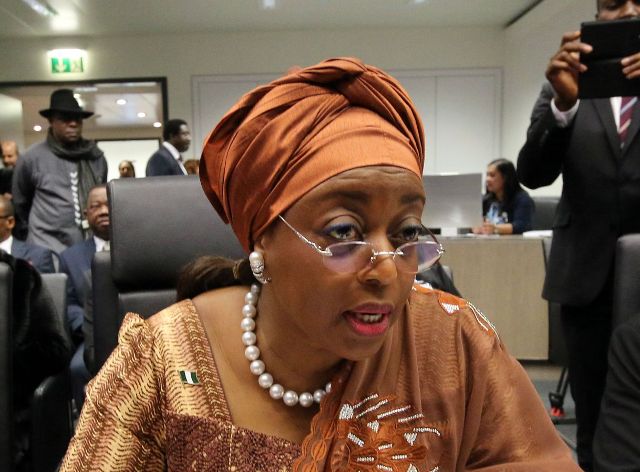
Diezani Alison-Madueke, the embattled former Minister of Petroleum Resources, unilaterally withdrew billions in local and foreign currencies from the joint venture cash calls account of the Nigerian National Petroleum Corporation (NNPC).

This is according to the 2015 audit report put together by the Office of the Accountant General of the Federation.

According to the report, Alison-Madueke approved the withdrawal of about N59.44 billion from the two accounts belonging to NNPC.

A total of $292.09 million was withdrawn from the NNPC JVCC JP Morgan Chase Account in London, and N2.47 billion was from the NNPC JVCC naira account with the Central Bank of Nigeria.

The report also revealed that the sum of $289.2 million (about N56.97 billion at 2015 year end rate of N197 to $1) was released “in cash” to the National Intelligence Agency (NIA) for the “procurement of 13 items of expenditure to enable NIA to respond to the nation’s mounting diverse and complex security challenges”.

Another $2.89 million was charged as commission on the transaction, bringing the total amount disbursed to $292.09 million.

The report pointed that the NIA had sought the approval of then President Goodluck Jonathan for the release of the funds, but there was no evidence that Jonathan granted the request.

At Tin-Can port, Customs intercepts 1,100 guns disguised as ‘wash-hand basins’


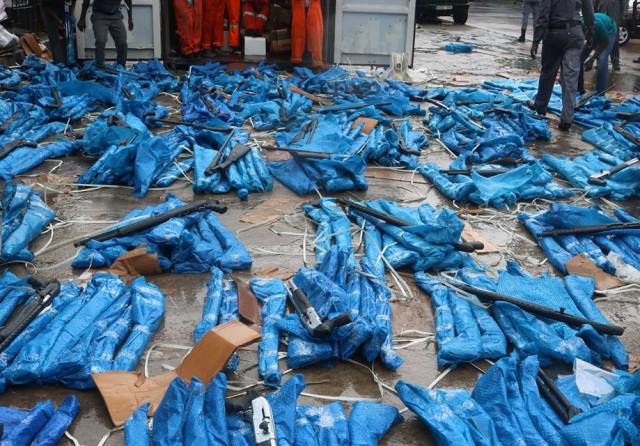
The Nigeria Customs Service have seized 1,100 unites of pump-action rifles imported into Nigeria through the Tincan Island Port, Lagos.

Hameed Ali, Comptroller General of Customs, said the weapons were contained in cartons marked “wash-hand basins”.

Ali said the consignment came in from Turkey and it is believed that an arms syndicate is behind the importation.

He also said that a customs officer and a clerk working in the Port had been arrested as part of investigations to get to the root of the matter.

The recent discovery far outnumbers the 661 units of pump-action rifles that were discovered in 49 disguised boxes at the same Tincan Island ports in January.

Three persons were arrested in connection to the discovery but nothing has been heard about it nine months after.

Daura rail line will address import competition from Ghana, Togo, says Amaechi

0

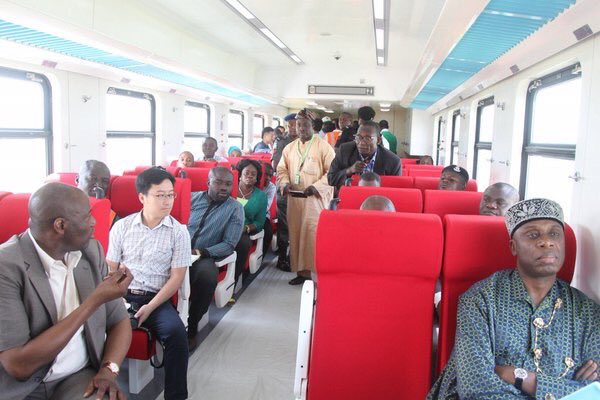
Rotimi Amaechi, Minister of Transportation, says the federal government approved the new rail line to Daura to enable its landlocked neighbours, like Niger, import goods from Nigerian ports instead of going to Togo and Ghana.

The new rail line plan generated misgivings among Nigerians, who believe that President Muhammadu Buhari was favouring his hometown Daura in Katsina State, when other major Nigerian cities, especially in the south-east, are not considered in the rail line plan.

However, Amaechi said government realised that the Daura rail line would stop the country’s landlocked neighbours like Niger from importing through Ghana, Togo and even Benin Republic because of absence of rail line connecting their areas with Nigeria.

Amaechi stated this while speaking with journalists after the monthly project steering committee meeting on the $1.5bn Lagos-Ibadan rail project.

“We realised that we had competitors from our land-locked neighbours, competitors like Ghana, Togo and even Benin Republic. These landlocked neighbours are importing through these countries because we don’t have rail lines that go to them,” Daily Trust quoted him as saying.

“So, to address this situation, Mr President approved a rail line that will go to Maragi in Niger. But that rail line, which will come from Kano to Maragi in Niger, must pass through some cities. So the rail line passes through Kazuare and then Daura before proceeding to Jibya and then Maragi. Is it that when the rail line gets to Kazuare, it jumps into the air over Daura? No, it has to pass through Daura to get to Jibiya and Maragi. It’s quite unfortunate that people read meanings to a rail line going to Daura.

“With this rail line, it addresses the competition we have with Ghana and Togo for our landlocked neighbours. So we can now tell our landlocked neighbours that we can take their goods and services from our ports in Lagos to their country.

“But one thing good for me as a man that has the mandate to connect all state capitals by rail is that, from Daura, we will also link Katsina State, thereby leaving us with just three more state capitals to connect: Zamfara, Sokoto and Kebbi.”

FACT CHECK: Did Jonathan, as president, ‘take education seriously’, as he claimed in Malaysia? Well…

On Friday, Goodluck Jonathan, former President, told a gathering in Malaysia that the education sector in Nigeria recorded significant improvement during his time in office.

Jonathan said this while presenting a paper at the International Summit on Peace, organised by the Junior Chambers International (JCI).

He said that his administration’s special attention to education was based on his belief that it was the only way to achieve sustainable peace and development in Nigeria.

JONATHAN’S WORDS

“My administration took education seriously because I saw education as the weapon with which we could break the bond between illiteracy and crime levels,” he said.

“Throughout the time I was in office, education enjoyed the highest sectoral allocation in the nation’s budget.

“This was why we were able to scale up our education programmes, especially at the tertiary level, where there was an obvious need to address the challenge of insufficient spaces for our youths.

“We built 12 additional conventional universities and two more specialised institutions, including one maritime university and a police university.

“With that, we expanded the opportunities to educate our youth in relevant fields, and produce the manpower needs of our economy.

“I am a firm believer in education, and just as I had said elsewhere, any nation that does not spend its wealth in educating its youth will eventually spend that wealth to fight insecurity.”

FACTS

Indeed, the Jonathan administration approved the creation of 12 new federal universities in states that, before then, had no federal university. They include Kogi (Lokoja), Nasarawa (Lafia), Gombe (Kashere), Taraba (Wukari), Jigawa (Dutse) and Katsina (Dutsin-ma).

Others are in Ebonyi (Ndufu-Alike), Bayelsa (Otuoke), Ekiti (Oye Ekiti), Yobe (Gashua), Kebbi (Birnin Kebbi) and Zamfara (Gusau).

It is also true that Jonathan commissioned Nigeria’s first Maritime university, located in Okerenkoko community in Warri, Delta State, in 2014.

Also, the Jonathan-administration upgraded the Nigerian Police Academy in Kano to a degree-awarding institution in March 2015.

It is arguable, however, whether the creation of these new universities translated into “significant improvements” for the education sector.

For instance, the Maritime University in Warri has remained a source of controversy, with Rotimi Amaechi, now Minister of Transportation, threatening that the federal government could abandon the project, and branding it “a waste of resources”.

Most of the newly-created federal universities, like almost all government-owned institutions, lack adequate funding and infrastructure to run optimally.

ASUU STRIKES UNDER JONATHAN

According to Isaac Obasi,a professor at the University of Abuja, the Nigerian university system recorded a total 14 months of industrial action by the Academic Staff Union of Universities (ASUU) during Jonathan’s five-year presidency.

They are as follows: five months in 2010, shortly after Jonathan was sworn in to succeed late President Musa Yar’Adua; three months in 2011 and six months in 2013.

It must be said that the problem was not specifically caused by Jonathan, but, well, they took place under his watch.

JONATHAN’S BUDGETARY ALLOCATION TO EDUCATION

The budgetary allocation to the ministry of education in 2010 — when Jonathan was Yar’Adua’s deputy — was N295 billion. However, the amount increased considerably to N356.4 billion in 2011, Jonathan’s first full year on the job. And it kept increasing subsequently: N400.1 billion in 2012; N432.6 billion in 2013, N495.2 billion in 2014 before dropping slightly to N483.1 billion in 2015.

Under Muhammadu Buhari, it dropped to N367.73 bn (6.01 percent) in 2016 and N448.01bn (approximately 6 percent) in 2017.

Spreadsheet of the Budget Allocation to some MDAs from 2010 to 2015. Data from www.budgetoffice.gov.ng

CONCLUSION

Jonathan was right to state that the education sector received the highest budgetary allocation during his presidency, even though the allocations fell way short of the 26 percent recommendation by the United Nations.

However, just like successive administrations, the increase in the budgetary allocations to the education sector under Jonathan, did not directly translate to a “significant improvement” in the sector.

Many Nigerian students, mostly children of the rich, continued to flock out of the country in search of better education in Europe and America and even neighbouring Ghana.

The United Nations Educational, Scientific and Cultural Organization (UNESCO) recommends that every country set aside at least 26 percent of its total budget to enable nations pay proper attention to rising education demands.

Melaye loses court case to stop INEC’s recall process

Nnamdi Dimgba, a Justice of the federal high court Abuja, has dismissed the application filed by Dino Melaye, Chairman of the Senate Committee on the Federal Capital Territory, challenging his recall process, which was commenced by the Independent National Electoral Commission (INEC).

The judge ordered INEC to go ahead with process, saying that the 90-day constitutional timeline for recalling a federal legislator, which had been paused when Melaye first filed the application on June 23, will start counting from Monday.

On July 6, 2017, John Tsoho, another Justice of the federal high court Abuja, had issued an exparte order directing all parties to maintain status quo.

On Monday, however, Justice Dimgba, to whom the case was reassigned, ruled that the recall process should be restarted and Melaye served the petition from his constituents, as well as the full list and signatures of persons in support of the recall process.

Dimgba directed INEC to issue another timetable for the process, one which will afford Melaye at least two weeks to enable him prepare his defence against the recall process.

He noted that there was no provision in Section 69 of the Constitution requiring Melaye’s constituents to afford him fair hearing before sending a petition of recall to INEC.

He also described Melaye’s suit as “hasty, premature and presumptuous” given that INEC  had already scheduled a verification exercise to authenticate the signatures that accompanied the recall petition.

“He must first go into the verification exercise and only when he does not get justice that he can come to court,” Dimgba said.

Melaye had said that the so-called recall petition from his constituents contained signatures of people who had died long ago.

He has insisted that the process was a “comedy of errors” being orchestrated by Yahaya Bello, the Kogi State Governor with whom he does not see eye to eye.


READ ALSO:

Probe panel reveals how Yusuf, suspended NHIS boss, ‘siphoned N919m’ with bloated training

An investigative panel set up by the Federal Ministry of Health to probe Usman Yusuf, suspended Executive Secretary of the National Health Insurance Scheme, NHIS, has concluded its investigations and submitted its findings to the presidency.

A copy of the report, which was sighted by Punch Newspaper, described Yusuf as one who acted like a saint but was actually “milking the agency dry”.

According to the panel, Yusuf oversaw the siphoning of up to N919 million from the coffers of the agency in the name of payment to consultants for staff training.

The report stated that in some instances, the number of purported trainees was way more than the entire number of employees at the NHIS, while in some other instances, some employees were registered for the same training in two different states at the same time, with the facilitators charging as high as N250,000 per participant.

“The total number of staff at the NHIS is 1,360. The total number of staff trained by the scheme based on analysis of payment vouchers on training was 1,992, while the figure submitted by the NHIS was 2,023 within three months (October-December 2016),” the report read.

“The difference between the number of staff trained and the number of staff on the nominal roll was as a result of manipulation of names. It was discovered that some staff did not attend (training) but payments were made for both course fee and staff allowances.”

Some consultants allegedly paid in huge sums of monies into designated bank accounts as kickbacks to officials of the NHIS.

One GK Kanki Foundation allegedly paid N2.8 million into a Skye Bank account with number 1040569204 belonging to one Magaji Garba, at the directive of Vincent Mamdam, the Assistant General Manager (Insurance) at the NHIS.

“The total course fees paid to the training firms was N508, 036, 096 while staff allowances for all the training was N411, 608, 704 totalling N919, 644, 800,” the report read.

All these happened without the involvement of the Procurement Department of the NHIS, which is the appropriate department to handle such issues.

The report revealed that all the transactions were basically between Yusuf and the Human Resources Department, contrary to due process.

Also, the probe panel discovered that monies were siphoned in the name of local and foreign trips by NHIS employees, who received estacode and per diem allowances in contravention of laid-down rules.

The NHIS boss received $900 estacode (for foreign trips) and N50,000 per diem (for local trips), but the report revealed that he also collected allowances for trips that were fully sponsored by companies or hospitals.

Yusuf was also accused of paying allowances and salaries to persons who were not employees of the NHIS.

The panel therefore recommended that Yusuf and other NHIS staff who benefitted from such illegal allowances should refund the sum of N82 million.

“The committee found that the total amount spent on the training was N919, 644, 800. The entire process and his actions involving all the foreign trips, engagement of training consultants and documentation of their payment processes amounting to N508, 036, 096 were devoid of due process,” the report read.

“Therefore, the sum of N508, 036, 096 should be recovered from the training consultants by the NHIS.”

The committee also recommended that the Economic and Financial Crimes Commission, EFCC, should probe Yusuf and the NHIS for diversion of funds and contravention of the Procurement Act of 2007.

Yusuf, who was a professor of Haematology-Oncology and Bone Marrow Transplantation in the United States prior to his appointment in July 2016, was suspended by Isaac Adewole, Minister of Health, in July this year, following various allegations and petitions against him.

Allegations against Yusuf were first raised by Kabiru Marafa, a Zamfara State Senator, during Senate plenary on March 21. They include “corrupt expenditure of N292 million incurred by Mr. Yusuf for healthcare financing training; illegal expenditure of N218 million for training of staff, scandalous expenditure of N400 million purportedly for training during month of October 2016 and N50 million for T-shirts and face caps despite presidential order banning promotional items and souvenirs”.

2019 elections in September 2017 — Nigeria now in ‘political recession’

0

A blind man who only listens to radio must be thinking this is September 2018 rather than September 2017. It is still two long years before the 2019 presidential election but the distraction of that election was so palpable last week.

Aisha Alhassan, Minister for Women Affairs, sparked off the latest round of 2019 election conversations when she swore “by Allah” to BBC Hausa that if Atiku Abubakar, former Vice President, decides to contest the election — as if anyone thinks Atiku won’t — she would support him over President Muhammadu Buhari

Some of Buhari’s staunchest loyalists, led by Nasir el-Rufai, Governor of Kaduna State, have publicly made a case for her sack. But Alhassan preempted the move and already saying she was unafraid of the consequences: “If because of what I said, I am sacked, it will not bother me because I believe in Allah, that my time has elapsed; that is why.”

‘Mama Taraba’, as she is fondly called, has been accused of disloyalty, but that’s a small matter. Arguments of disloyalty to Buhari are tenuous; she and Atiku go way back. There is a decade of existing godfatherism that a two-year ministerial appointment cannot alter. Similarly, there is little space in logic for arguments that Alhassan displayed uncommon courage and should, therefore, be retained. The truth is her support for Atiku is not motivated by principle; she isn’t rooting for him because of his incorruptibility or business acumen or man management or leadership qualities; she wants him because he is her Godfather. By her statement, Alhassan gives herself up as one of the numerous na-we-we politicians dotting the Nigerian leadership space. Her brand of politics is man-know-man, the very phenomenon that has rendered the country incapable of fulfilling its potentials.

The more important matter is that by her pronouncements, she has triggered a complex chain of energy-sapping, time-consuming conversations about the 2019 election. Already, el-Rufai, self-acclaimed member of a gang of ministers and governors who are “Buharists”, says the group will ensure that Buhari runs in 2019. And how will this group make this happen? Between Wednesday, when Alhassan spoke out, and now, these ministers and governors must have held a series of meetings. They want to know how many Alhassans are hibernating in Buhari’s cabinet, they want to know why Buhari hasn’t sacked her, they want to compile a list of reasons why she should be shown out of government, they want to re-analyse how many Atikus are lurking around or perhaps loitering in Buhari’s government; they will assign targets to each individual and fix a date to update one another on their discoveries. As reported by SaharaReporters on Saturday, one of such meetings held on Friday, with Buhari and his aides confirming to el-Rufai his decision to run. In short, the time that should have been invested in governance has been diverted to mid-term politicking.

From now till May 2019, governance will no longer run at full capacity. El-Rufai says were Buhari not to run, he would tell them whom to vote for. It’s a bit straightforward if Buhari chooses to run; but if he doesn’t, a few governors and ministers will neglect their duties and start plotting, from now, an imaginary journey to Aso Rock. The likes of Bukola Saraki, who everyone knows will someday contest a presidential election, will feel his time is now. The consequence is that proceedings at the Senate will become even more partisan than they currently are; plenary debates will be nothing more than political wrestling, and bills are unlikely to be considered on the basis of their value, rather the political capital that can be extracted from the sponsor.

The 2019 craze has since trickled to the people. In some states, re-election machinery is gearing up for motion, the most recent being Oyo, where the “south-west office” of the Buhari re-election campaign was launched (in Ibadan) last month.

Vice-President Yemi Osinbajo isn’t left out, too. A volunteer group that claims “never” to have met him has launched a website propping him for the presidency in 2019. “Note that Osinbajo did not endorse this volunteer group,” the group stated in a fully capitalized disclaimer on the site. “We have never met him. We are strong believers in the fact that he is the right ruler for Nigeria and must create a peoples volunteer base for him.”

Curiously, this group that has never met Osinbajo is in possession of some original, high-resolution photos of him from events staged both home and abroad. The group claims to be volunteering, but the site looks too crisp and user-friendly to belong in the class of volunteer websites. Someone with current or previous links to government is funding these guys. The natural suspicion will be to imagine that Osinbajo knows nothing about it but there is slim chance someone close to him is behind the project. Otherwise — and this is the likeliest scenario — someone in the opposition is floating that site to cause commotion in the All Progressives Congress (APC), specifically to trigger bad blood between Buhari and Osinbajo. Whatever the case is, high-wire 2019 election mind games have begun, and governance will bear the brunt. It’s official: Nigeria is now in political recession.

It’s a shame that this is coinciding with the country’s exit from its worst economic recession in 29 years. Although it is not yet Uhuru, credit must go the Buhari government. At the dawn of the recession in August 2016, figures from the National Bureau of Statistics (NBS) showed that both the oil and non-oil sectors of the economy were woeful. During the period under review, oil production was estimated at 1.69million bpd, which was 0.42 million bpd lower from production in the first quarter of 2016. Oil production was also lower relative to the corresponding quarter in 2015 by 0.36million bpd when output was recorded at 2.05million bpd. The figures were that low because militants repeatedly bombed oil installations while global crude oil prices fell cruelly. It was inevitable, in the end, that the economy would recede.

The most recent figures from the NBS showed oil production to have averaged 1.84million bpd — 0.15million barrels higher than the daily average production in the first quarter of 2017, and 0.03million bpd higher than the stat for the corresponding quarter of 2016. Credit to the Buhari government for finding a way to quieten the militants in the Delta, thereby increasing oil output. For this — don’t listen to the Peoples Democratic Party (PDP) — the government deserves some credit. Oil prices have recovered slightly as well. Well, that’s down to luck, but if the government stomached the ill-luck of falling prices, it perhaps deserves the luck of recovering prices.

But there are still some concerns. The non-oil sector grew by 0.45% in Q2 2017, a second successive quarterly growth after growing 0.72% in Q1 2017. Such marginal increase is proof of the fragility of the economic recovery. More importantly, it proves we could soon be back where we were — especially if militants return to their cowardly throw-a-bomb-and-run-for-cover war, or if oil prices resume their fall.

Importantly, Nigeria cannot be contented with merely growing out of recession; the economy, particularly the non-oil sectors, needs to be strengthened so that the people can become economically prosperous. A 0.55 percent growth in the GDP is still some 2.3 percent lower than the country’s population growth rate. An estimated 14,000 babies are being delivered every day but our revamped economy can take care of only under 3,000 of them. To measure up, growth must increase by an extra 2.8 percent.

Unfortunately, premature 2019 election shenanigans threaten to derail the government from fully focusing on this, and the many other important tasks ahead. This is why I’ve always thought Nigeria needs to switch to a single term of six years for presidents — focus on all you can do in those six years and never be burdened by the distraction of re-election. It would be the perfect scenario to help the country avoid phases like the current one, where we’re emerging from economic recession and slipping into political recession.


Soyombo, Editor of the International Centre for Investigative Reporting (ICIR), tweets @fisayosoyombo

Abba Alli: Buhari should run in 2019… he has to finish the job he started

President Muhammadu Buhari should run for a second term in 2019 in order to fully sanitise the political system, Abba Alli, Buhari’s childhood classmate and former senator, has said.

Alli made this comments in reaction to the calls by some politicians that the President should not contest in the 2019 general election, or that he should even resign as a result of ill-health.

In an interview with Punch, Ali maintained that the President was full of life when his childhood classmates of 1953 paid him a visit in his hometown, Daura, during the Sallah holidays.

“President Buhari is hale and hearty; let me first clear that impression on his health,” he said.

“Those urging him to resign on health grounds have forgotten that God is the creator of mankind and he has the final say on when one will die.

“I have seen an old man in Katsina here who was in coma for four months, yet the old man thereafter lived for another eight years before he eventually died.

“I have also seen a situation where a man was seen today in good health and died the following day not as a result of accident but normal natural death.

“President Buhari should go for a second term in office.  He has started a good job which is acknowledged both within the country and globally. And it is better he contests again for a second term in office so that he can finish the good job he has started.”

Alli maintained that there is scarcely any politician in the country today who compares to Buhari in terms of sincerity and love for the people.

He described the President as a man who is “not out to accumulate wealth but to put Nigeria in its appropriate place in the comity of nations”.

“Based on my experience in politics and with my age, I am saying it with all seriousness that I have not seen anybody among the current crop of politicians in the country who has a good intention like President Buhari,” he said.

“Many of them have amassed enormous wealth meant to take care of their people. Many are still stealing blindly.

“President Buhari stands out among the current political class in Nigeria. I will rather encourage him to go for a second term so that there will be sanity in the political sphere.”