Home Blog Page 29

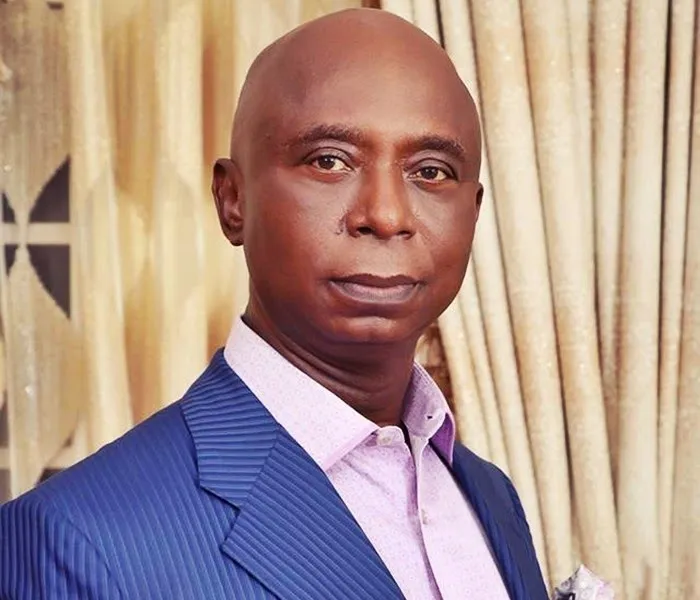
Ned Nwoko loses APC return ticket to Okowa

FORMER Delta State governor and Senator, Ifeanyi Okowa, has defeated incumbent senator Ned Nwoko to clinch the All Progressives Congress (APC) ticket for the Delta North Senatorial District ahead of the 2027 general election.

Okowa secured a landslide victory in the APC primaries conducted across the nine local government areas of the district, polling 113,309 votes to defeat Nwoko, who garnered 2,612 votes.

The outcome marks a major political upset in Delta North, ending Nwoko’s bid to retain the party’s senatorial ticket and further reshaping the political landscape ahead of the 2027 polls.

Speaking after the victory, Okowa thanked party members and supporters for their overwhelming confidence in him, promising to provide effective and people-oriented representation if elected into the Senate.

“I thank my people for the love they have showered upon me, and I pray that the Lord God will continue to energise me to do the best I can for the whole of Delta North. I have one promise: that I will serve the people with all my heart,” he said.

Okowa stressed the importance of accessibility and regular engagement with constituents, noting that elected representatives must remain close to the people they serve.

“I expect to return home as regularly as possible to greet our people. You cannot be a senator and stay away from your people because they sent you to represent them. I shall be a good representative of the good people of Delta North. Whenever my presence is needed, they will surely find me,” he added.

The APC primary result is expected to reshape political discussions within Delta State, with attention now shifting to the 2027 senatorial election and the possible implications of Nwoko’s defeat on the party’s internal dynamics in Delta North.

The party is currently conducting a wave of primaries across Nigeria ahead of the 2027 general elections, with contests for Senate, House of Representatives, governorship, and other party tickets already triggering major political realignments, surprise defeats, and internal disputes in several states.

The ongoing primaries follow the timetable released by the Independent National Electoral Commission (INEC) for the 2027 elections, prompting political parties to begin selecting candidates nationwide

Court grants El-Rufai N100m bail in alleged phone interception case

0

A FEDERAL High Court in Abuja has granted bail to former Kaduna State governor, Nasir El-Rufai, in the sum of N100 million over allegations bordering on unlawful interception of telephone conversations involving the National Security Adviser (NSA), Nuhu Ribadu.

The presiding judge, Joyce Abdulmalik, granted the bail on Monday, May 16, with several conditions, including the provision of one surety in like sum.

The court ordered that the surety must reside in either Maitama or Asokoro districts of Abuja and deposit the original Certificate of Occupancy of a landed property with the court registry.

Abdulmalik further held that the surety must be a federal civil servant not below Grade Level 17 and provide evidence of salary payments for at least three months, alongside a letter of authentication from the manager of a bank within the court’s jurisdiction.

The court also directed the surety to depose an affidavit of means, enter into a bail bond, submit a recent passport photograph, and provide a verification letter from the surety’s department, as well as a tax clearance certificate covering the last six months.

As part of the conditions, El-Rufai was ordered to deposit all valid international passports with the court registry.

The judge further directed the former governor to report to the headquarters of the State Security Service (SSS) every last Friday of the month at 10 a.m. to sign an attendance register pending the determination of the case.

She warned that failure to comply with any of the conditions would lead to an automatic revocation of the bail.

The court additionally ordered El-Rufai to submit a letter of attestation from the chairman of the Kaduna Traditional Council.

The ICIR earlier reported that the SSS arraigned El-Rufai before the Federal High Court on April 23 over alleged unlawful interception of Ribadu’s phone conversations and other alleged breaches of national security laws.

The charges were amended from three to five counts during resumed proceedings before the judge – Abdulmalik. El-Rufai pleaded not guilty to all the charges.

His legal troubles stemmed from comments he made during an interview on Arise Television in February, where he claimed that he became aware of an alleged directive by Ribadu for his arrest through tapped phone conversations.

“The government thinks that they’re the only ones that listen to calls… Someone tapped his phone,” El-Rufai had said during the interview.

Aside from the SSS case, the former governor is also facing separate corruption-related charges instituted by the Independent Corrupt Practices and Other Related Offences Commission (ICPC) before Kaduna State and Federal High Courts.

The ICPC accused El-Rufai of offences including alleged abuse of office, diversion of public funds, money laundering, unlawful award of contracts, and approving payments for projects allegedly not executed during his tenure as governor between 2015 and 2023.

In one of the cases, prosecutors alleged that he approved the payment of about N11 billion to a company for a Kaduna light rail project that “was never executed”, while another charge accused him of unlawfully receiving severance benefits exceeding approved entitlements.

El-Rufai denied all the allegations in the cases and pleaded not guilty.

On April 14, The ICIR reported that after hearing both sides, the court granted bail to the former governor. The court granted him N100 million bail with sureties, including conditions that he must provide responsible guarantors, among others. 

Seven teachers abducted, one killed in Oyo school attack – Makinde

0

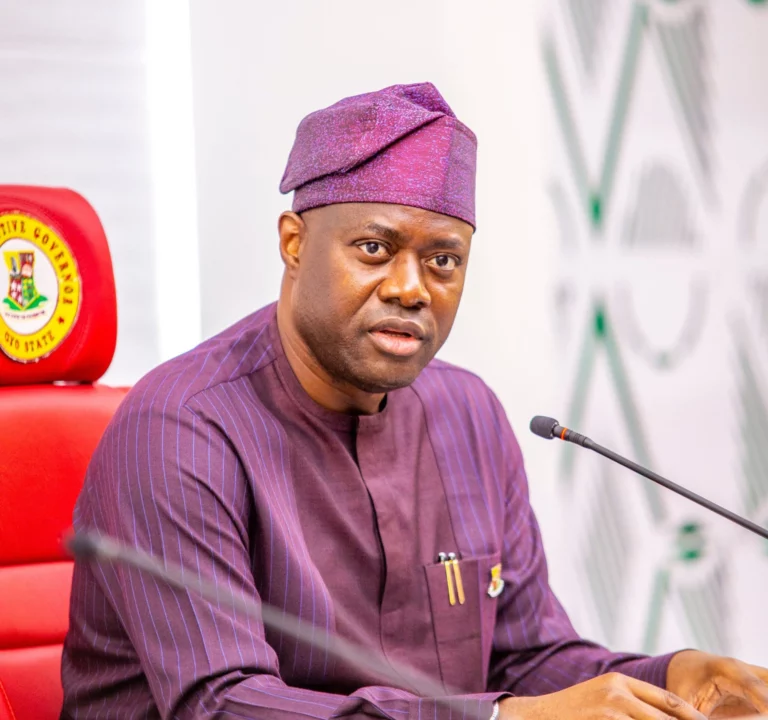
OYO State Governor, Seyi Makinde, on Sunday, May 17, revealed that seven teachers were kidnapped during attacks on schools in Oriire Local Government Area of the state.

The governor also said one of the victims was killed.

The ICIR reports that gunmen stormed communities along the Ahoro-Esiele/Yawota axis in Oriire, Ogbomoso, on Friday, May 15, and attacked schools, including Community High School, Ahoro-Esiele, L.A. Primary School, Esiele, and Yawota Baptist Nursery and Primary School, abducting both staff and pupils.

Briefing journalists on the security situation in the state, Makinde explained that he had met with security chiefs and heads of relevant agencies to assess rescue strategies for the abductees.

According to him, intelligence gathered so far shows that an Islamic Studies teacher lost his life during the attack, while security operatives have arrested six people within the affected communities and another three persons considered to have links with the attacks.

He linked the attack to insecurity in neighbouring states, noting that insurgents and other criminals fleeing military onslaughts could have moved into the state.

“With the pressure on the terrorists and the bandits in the North-West, they will keep moving southward,” the governor said.

Makinde further disclosed that preliminary investigations indicate that some of those arrested might have played crucial roles as informants assisting the attackers from within the local communities.

He assured residents that efforts were ongoing to rescue the victims safely.

Further details from the incident show that


2026 AAAS Kavli Science Journalism Awards seek entries

THE AAAS Kavli Science Journalism Awards is accepting entries for its 2026 awards. The contest year is from July 16, 2025, to July 15, 2026, with a contest entry deadline of August 1, 2026.

Entrants may submit up to three entries in all categories, which include print/online, audio, video and children’s science news.

In each category, there are two awards: Gold, with a prize of $5,000, and Silver, with a prize of $3,500.

The deadline for applications is August 1, 2026. Interested applicants can apply here.


Nigerian, US forces kill over 20 ISIS fighters in fresh Borno airstrikes 

THE  Defence Headquarters (DHQ) has announced the continuation of coordinated military operations with the United States Africa Command (AFRICOM) against Islamic State (ISIS) fighters in Nigeria’s North-East, with fresh airstrikes reportedly killing more than 20 militants in the Metele area of Borno State.

In a statement on Monday, May 16, the Director of Defence Information, Samaila Uba, said the strikes were carried out following intelligence on the “convergence and migration” of terrorist fighters within the region.

According to the military, the latest operation formed part of sustained offensives aimed at dismantling terrorist networks and denying insurgents safe havens across the country.

“The ongoing operations follow the neutralisation of ISIS commander Abu-Bilal al-Minuki and are part of sustained efforts to disrupt terrorist networks, remove them from the battlefield and deny the terrorists any safe haven within Nigeria,” the statement read.

The DHQ stressed that the Armed Forces of Nigeria would continue aggressive operations to defend the country’s sovereignty and territorial integrity.

“There will be no safe haven for all terrorists anywhere in Nigeria,” the statement added.

The announcement came as AFRICOM separately confirmed that US forces coordinated additional “kinetic strikes” with the Nigerian government on May 17 against ISIS targets in North-Eastern Nigeria.

A statement by AFRICOM Public Affairs on Monday, noted that the US military command said intelligence confirmed that the targets were ISIS militants, while post-strike assessments were still ongoing.

“No U.S. or Nigerian forces were harmed,” AFRICOM stated.

The command said the operation was aimed at weakening the terror group’s ability to plan attacks against both Nigeria and allied nations.

“The removal of these terrorists diminishes the group’s capacity to plan attacks that threaten the safety and security of the U.S. and our partners,” the statement stressed.

AFRICOM also reiterated its commitment to supporting partner nations with “specialized U.S. capabilities” to tackle shared security threats.

The latest strikes follow an earlier joint operation on May 16, during which Abu-Bilal al-Minuki, described as ISIS second-in-commander globally, was reportedly killed in another coordinated strike in the North-East.

“Tonight, at my direction, brave American forces and the Armed Forces of Nigeria flawlessly executed a meticulously planned and very complex mission to eliminate the most active terrorist in the world from the battlefield,” Donald Trump wrote on his social media handle.

According to him, the operation was carried out in Africa with support from intelligence sources tracking the activities of the terror leader.

“Abu-Bilal al-Minuki, second in command of ISIS globally, thought he could hide in Africa, but little did he know we had sources who kept us informed on what he was doing,” he added.

The ICIR reports that both developments came days after Nigeria deepened its counterterrorism engagement with the US following a high-level meeting in Washington between the National Security Adviser, Nuhu Ribadu, and top US officials led by Vice President J.D. Vance and Secretary of State Marco Rubio.

According to a statement shared by Secure Nigeria, the meeting reinforced what it described as a “decisive U.S.-Nigeria partnership to confront terrorism in West Africa” amid growing extremist threats across the region.

Sir Harry Evans Global Fellowship 2027 seeks entries

THE Sir Harry Evans Global Fellowship is seeking applications for its programme which provides opportunity for exceptional early-career journalists.

Selected fellows will undertake a nine-month investigative project with Durham University and Reuters and will be mentored by top Reuters editors while having access to Durham’s academics and research resources. Fellows will be given the opportunity to develop rigorous, fact-based research and reporting skills.

Besides, the fellows will pursue the project from inside a Reuters newsroom in London, New York, Sydney or Toronto with the additional support of colleagues in Durham’s Institute of Advanced Studies. They will deliver a public seminar at the IAS, sharing their learnings from the fellowship and supporting the understanding of journalism at the University. The inaugural Sir Harry Evans Fellow, Waylon Cunningham, was part of a Reuters investigative team which won a 2024 Pulitzer Prize in national reporting.

The fellowship has a monthly salary of c.£4,444 per month (equivalent to a pro-rata salary of c.£53,333 per year). In addition, there is a £1,250 per month living stipend and a one-off payment of £1,800 for travel and related expenses.

Qualified applicants should have between two-and five-years’ professional journalism experience. Where a prospective applicant is not currently a journalist but has worked in an investigative reporting capacity in a related professional field (for example, working as an author or researcher on authoritative investigative work, or developing in-field photo or video research projects, documentaries, or exhibitions), applications may be considered on a case-by-case basis.

Applications close on 10 July 2026 at 12 noon BST. Applications received after the closing date will not be accepted. Interested applicants can apply here.


Russia’s recruitment of Africans for its war and how to stop It

0

IN October 2025, Francis Ndung’u Ndarua left Nairobi for what he thought would be an engineering job in Russia. Then he vanished. Two months later, a video of Francis in military uniform surfaced online. With a landmine strapped to his chest, a Russian voice calls him a “can opener.” A February 2026 All Eyes On Wagner investigation documented 1,417 Africans enlisted in the Russian army since 2023. Fifty-one recruits died within their first month of the war. These recruitments were illegal under international and national laws. The United Nations Mercenary Convention prohibits the recruitment and training of foreign combatants. In Africa, Kenya and South Africa criminalize unauthorized foreign military and mercenary services. Recruiters did not translate contracts from Russian, and many recruits did not understand what they had signed. There is an urgent need to end Russia’s illegal recruitment of young Africans. African countries need to empower their citizens with the right information, provide viable alternatives for the youth, and address economic obstacles that leave youth susceptible to ‌Russia’s recruitment.

Russia did not build its recruitment pipeline from scratch, but rather exploited the vulnerabilities that African countries had already created. South Africa’s 1998 Foreign Military Assistance Act criminalises unauthorised foreign military service. In 27 years, it has produced no convictions. The Organisation of African Unity’s 1977 Anti-Mercenarism Convention lacks the will for enforcement. Kenya closed 600 recruitment agencies, yet its intelligence service reported Russia has recruited about 1,000 of the former’s citizens. 

Across the continent, there is a pattern of unenforced laws and unused conventions. Meanwhile, African countries produce millions of graduates with no viable path to employment or legal migration. Young Africans are dying in a war that is not theirs, under contracts that recruiters tricked them into. If governments in Africa cannot protect their citizens against foreign exploitation, they undermine the social contract on which their legitimacy depends. To allow another country to systematically exploit Africa’s human resources for its military and economic objectives is a concession of sovereignty. Countries that tolerate such exploitation are absent.

Russia’s recruitment pipeline runs on information asymmetry. Secret recruiters on Telegram channels promise monthly salaries of up to $3500, Russian citizenship, and noncombatant roles. The reality is passport confiscation and deployment to assault waves. Closing the information gap would be the fastest and rights-based intervention.

Recruits who survived and returned home are the most powerful voices in the fight against the pipeline. They represent exactly what Russian contracts deliver: unpaid wages, forced redeployment, and what Ukrainian officials call “meat assaults.” Their testimony should be the centrepiece of a continent-wide counter-recruitment effort, using the same platforms, Telegram and TikTok, that the recruiters use.

The best solution is not censorship or internet shutdowns, which African countries too often resort to. Instead, they should provide access to the right information. When the BBC documented recruiter Polina Azarnykh posting 490 invitations to African men through a single Telegram channel, it did more by disrupting the pipeline than any government directive. 

Besides state regulation, transparency and public pressure are the tools that will hold media platforms accountable to the government. South Africa models transparency and public pressure. In August 2025, South African journalists and citizens exposed TikTok influencers promoting Alabuga’s drone factory as a career opportunity. Within days, widespread public reporting forced TikTok to ban the accounts permanently, and the government opened an investigation without passing a new law.

All Eyes on Wagner identified three groups that the pipeline targets. The first group is job seekers wanting work abroad, and the second is students seeking education overseas. The third group is the would-be migrants who were told that Russia is a route to Europe. These are rational people pursuing real aspirations through the only channels available to them. The solution is not to restrict those aspirations, but to offer better channels.

Kenya’s Diaspora Placement Agency (DPA) provides a free, verified overseas job database and transparent contracts. The DPA delivers exactly what Russia’s recruitment pipeline promises but fails to deliver. Every affected African country should create a similar system. The government should open such systems to private recruitment platforms and industries that can verify opportunities at scale.

Russia has expanded its government-sponsored scholarship program to over 5,000 African students for the 2025/2026 academic session. Ukraine’s foreign ministry warns these scholarships may mask Russia’s recruitment efforts. The response should not be to discourage study abroad but to build credible alternatives. For example, verified exchange programmes with transparent terms and consular protection built in.

Tighter borders do not help the situation. When Kenya airports increased scrutiny, recruiters rerouted through Istanbul and Abu Dhabi. African countries cannot suppress the demand for opportunity by restricting supply. Offering more beneficial options is the best way to contend with illegal recruiters. Countries that avoid competition are putting the citizens they are supposed to protect in grave danger.

A former Sierra Leonean soldier captured in Ukraine told PBS that Africans keep signing Russian recruitment contracts “because we have no hope.” That hopelessness is not a natural condition. Policy manufactured it, and policy can also undo it.

What is the Way Forward?

African countries should adopt three reforms. First, to help local startups, simplify business registration through a digital process. Rwanda implemented online business registration, and formal youth employment doubled Kenya’s rate. Kenya still requires days of agency visits. The difference is not geography. It is the decision by one government to break the norm and another’s choice to maintain it.

Second, secure property rights for young entrepreneurs. Across the continent, insecure land titles limit young people’s ability to build long-term projects, borrow against assets, and attract investment. African countries should fast-track digital land registration and simplify title transfers, starting in urban centres where recruitment pressure is highest. Young people who own assets have a reason to stay back.

Third, open labour markets to private competition. State monopolies channel opportunities to the rich and connected. Kenya’s DPA proved in real time that when the government offered verified work abroad, it created direct competition with Russia’s pipeline. Other African countries should replicate it and go further by licensing private recruitment firms, establishing industry-verified job boards, and partnering with destination countries to pre-clear work permits. Legitimate opportunities are the most effective counter-recruitment tool available. Each remaining barrier is a recruitment subsidy paid to the predator that offers a way out. 

South Africa’s 61 percent youth unemployment, despite a relatively open economy, shows that economic freedom without adequate education and infrastructure is insufficient. But economic growth and prosperity remain the foundation. Without these changes, every other intervention is a patch on a wound that governments keep reopening.

Picture a young Kenyan with viable economic opportunities, a legal route to work abroad, and access to the testimony of those who survived Russia’s illegal recruitment. That young Kenyan would not board a flight based on a contract in a language he cannot read. African countries must set precedents against digital recruitment for foreign exploitation of every kind. They must build migration systems that protect rather than criminalise. African countries have spent months blaming Moscow, while the pipeline they built is still running. It is time to stop the blaming and start dismantling the economic barriers that make young Africans vulnerable to foreign exploitation.

Jack is an M.Sc. student at SOAS, studying Violence, Conflict and Development, and is currently on placement with African Liberty.


Police arrest six suspected ‘one-chance’ robbers, recover weapons in Lagos

0

THE Lagos State Police Command has arrested six suspected members of a notorious “one chance” robbery syndicate allegedly operating around Ago Palace Way in Okota area of the state. 

The arrests were made on Sunday, May 17, by operatives during a routine stop-and-search operation along the axis.

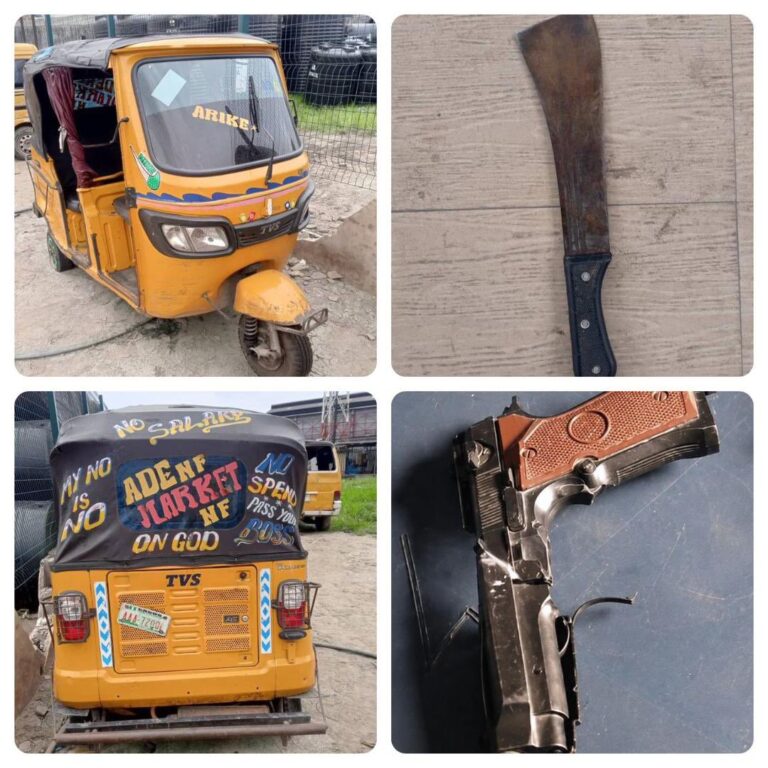
The suspects were intercepted while traveling in a tricycle with registration number AAA 720 QL during an active attempt to rob unsuspecting commuters.

According to a statement released by the state Police Public Relations Officer, Abimbola Adebisi, a superintendent of police, the suspects immediately fled the vehicle upon sighting the police.

“On sighting the police, the suspects reportedly jumped down and abandoned the tricycle. A cutlass allegedly used for their operations and a mobile phone were recovered at the scene.

“Further investigation led to the arrest of the six suspects identified as: Basiru Rilwan ‘m’, 23 years; Afeez Akeem ‘m’, 25 years; Ademola Yekeen ‘m’, 20 years; Sodipo Oyeyemi ‘m’, 27 years; Ayomide Gafar ‘m’; and Fabayo Michael ‘m’, 28 years. The suspects were found in possession of a dummy pistol allegedly used in carrying out their criminal activities. The suspects will be charged to court on completion of investigation.”

The command said under the leadership of the state Commissioner of Police, Tijani Fatai, it would sustain proactive policing strategies aimed at combating crime and ensuring the safety of residents across the state.

It also urged the public to continue to provide timely and credible information to aid its officers’ efforts to rid the state of criminal elements.

The ICIR reports that Lagos is one of Nigerian states with one chance criminal syndicates. The syndicates are a group of robbers who disguise as commercial motorists and passengers.

They often lure unsuspecting passengers into their vehicles and rob them of their belongings, including cash, phones and other valuables.

Many victims who resisted their attacks have been killed or severely injured. The criminals operate with weapons, including axes, cutlasses and guns. They also possess point-of-sale machines (PoS), which they use to force their victims to empty their bank accounts.


WHO declares Ebola outbreak in DRC, Uganda global emergency

THE World Health Organization (WHO) has declared the Ebola outbreak caused by Bundibugyo virus in the Democratic Republic of the Congo (DRC) and Uganda a Public Health Emergency of International Concern (PHEIC), following rising deaths, infections among health workers, and confirmed cross-border transmission.

The declaration was made on May 16, 2026, by the WHO Director-General after consultations with affected countries and following laboratory confirmation of the outbreak in eastern DRC and imported cases in Uganda.

According to the statement, the outbreak began on May 5, 2026, when health authorities were alerted to a rapidly spreading illness with unusually high mortality in Mongbwalu Health Zone, Ituri Province. 

It noted that early reports included deaths among health workers, prompting rapid investigation across Mongbwalu, Rwampara, and Bunia health zones.

It further noted that blood samples collected from affected areas on May 14, 2026, were analysed by the Institut National de Recherche Biomédicale (INRB) in Kinshasa, where laboratory testing confirmed Bundibugyo virus disease (BVD) in eight of 13 samples on May 15. 

Following confirmation, the DRC Ministry of Public Health, Hygiene and Social Welfare officially declared the country’s 17th Ebola disease outbreak.

“This is the 17th Ebola disease outbreak in the DRC since 1976. The last Ebola disease outbreak in the country was declared on 4 September 2025 with total of 64 cases (53 confirmed, 11 probable), including 45 deaths (CFR 70.3%), reported from six health areas in Bulape Health Zone, Kasai Province.

“The end of outbreak was declared on 1 December 2025. The last BVD outbreak was reported on 17 August 2012 by the DRC Ministry of Health in Province Orientale.  A total of 59 cases, 38 confirmed and 21 probable cases, including 34 deaths were reported. The outbreak was declared over on 26 November 2012 by the MOH,” WHO wrote.

What the virus is and how it spreads 

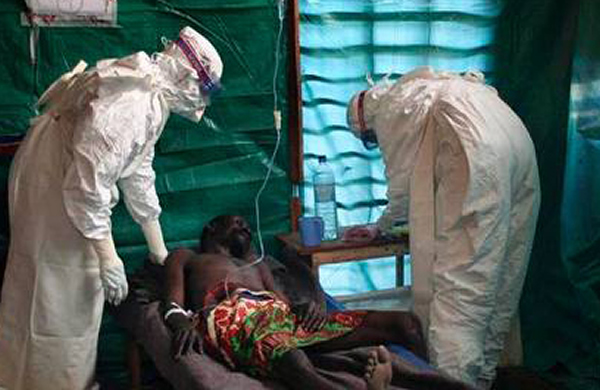
WHO explained that Bundibugyo virus disease is a severe and often fatal form of Ebola caused by the Bundibugyo virus, a member of the Orthoebolavirus genus. The virus is zoonotic in origin, with fruit bats believed to be the natural reservoir, and transmission to humans occurring through direct contact with infected wildlife or exposure to bodily fluids of infected persons, as well as contaminated surfaces. 

The disease spreads further through close contact between individuals, particularly in healthcare settings where infection prevention measures are weak, and during unsafe burial practices.

The organisation noted that the incubation period ranges from two to 21 days, during which infected individuals are not yet contagious. 

It warned that early symptoms are non-specific and often resemble malaria or other endemic infections, beginning with fever, fatigue, muscle pain, headache and sore throat, before progressing in severe cases to vomiting, diarrhoea, organ failure and sometimes haemorrhaging. 

WHO said this would make early detection difficult without laboratory testing.

Cases and spread in DRC and Uganda 

In its statement, the global health body stressed that as of May 15, 2026, a total of 246 suspected cases and 80 deaths had been recorded across three health zones in Ituri Province — Rwampara, Mongbwalu and Bunia — with 24 patients in isolation. 

The agency also reported that most suspected cases involve people aged between 20 and 39, with women accounting for more than 60 per cent of infections, suggesting significant household and caregiving transmission.

It added that Uganda’s Ministry of Health had also confirmed an outbreak after detecting imported cases linked to DRC, with no local transmission being detected in Uganda so far.

Challenges in containment

WHO said the outbreak was unfolding in a complex humanitarian and security environment in eastern DRC, where ongoing conflict in Ituri Province is restricting access for surveillance teams and delaying response operations.

The agency noted a four-week gap between the first suspected case and laboratory confirmation, which suggested a low index of suspicion among healthcare workers. It also reported breaches in infection prevention and control (IPC), particularly after several health workers became infected and died.

In addition, WHO said the region faced high population displacement, with more than 273,000 displaced people and nearly 1.9 million people in need of humanitarian assistance, further complicating outbreak control.

It stressed that there was no licensed vaccine or specific antiviral treatment for Bundibugyo virus disease. 

“The case fatality rates in the past two BVD outbreaks have ranged from 30 per cent to 50 per cent. Unlike Ebola virus disease, there is no licensed vaccine or specific therapeutics against Bundibugyo virus, though early supportive care is lifesaving,” the statement added.

It said management depends entirely on early detection, isolation of cases, aggressive supportive care such as fluid replacement and organ support, strict infection prevention and control in health facilities, safe and dignified burials, and intensive contact tracing for up to 21 days. 

 

Police confirm 17 officers killed in terror attack on Yobe military base

1

THE Nigeria Police Force (NPF) has confirmed the death of 17 of its officers following a terrorist attack on the Nigerian Army Special Forces School in Buni Yadi, Gujba Local Government Area of Yobe State.

In a statement on Saturday, May 16, by the Force Public Relations Officer, Anthony Placid, the Force said the officers were killed during an attack on the training institution in the early hours of May 8, 2026.

According to the statement, the officers were undergoing specialised operational training at the facility when terrorists launched what the NPF described as a coordinated assault from multiple directions at about 1:15 a.m.

It added that several personnel of the Nigerian Army also lost their lives while repelling the attack.

He expressed condolences to the families of the deceased officers, saying their sacrifices would not be forgotten.

“The officers, who were undergoing specialised operational training at the institution, lost their lives when terrorists launched a coordinated attack on the facility from multiple directions at about 0115hrs. Several gallant personnel of the Nigerian Army also made the ultimate sacrifice while courageously repelling the attack.

“The Inspector-General of Police, IGP, Olatunji Rilwan Disu, psc (+), NPM, described the fallen officers as courageous and dedicated personnel who demonstrated exceptional patriotism and commitment to national security through their participation in advanced counterterrorism and tactical training programmes. The IGP conveyed the heartfelt condolences of the entire Force to the bereaved families, assuring them that the sacrifices of the deceased officers will never be forgotten,” the statement added.

The IGP commended the resilience of the surviving officers and urged them to remain committed to completing the training programme in honour of their fallen colleagues.

The attack was part of the coordinated assault on military formation in Yobe State, which the troops of the Joint Task Force North-East Operation Hadin Kai claimed to have been repelled on May 7.

In a statement on May 8, after the incident, Operation Hadin Kai said fighters suspected to be members of the Islamic State West Africa Province attacked the headquarters of the 27 Brigade in Buni Gari and nearby military positions from multiple directions under the cover of darkness.

The military said troops, supported by the air component of the operation, repelled the assault, killing more than 50 terrorists, while recovering weapons and ammunition from fleeing insurgents.

Operation Hadin Kai also confirmed that two soldiers were killed during the encounter, while some military equipment, including Mine-Resistant Ambush Protected vehicles and gun trucks, sustained minimal damage.

Buni Yadi and surrounding communities in Gujba axis have repeatedly witnessed insurgent attacks over the years due to the activities of terrorist groups operating in Nigeria’s North-East region.

In its statement on Saturday, the NPF said it would continue to work with the armed forces and other security agencies to track down those responsible for the attack and bring them to justice.