Home Blog Page 306

17 confirmed dead in fresh attacks on Benue communities

0

SEVENTEEN people have been confirmed dead in fresh attacks by suspected militias in Gbagir community, Ukum Local Government Area (LGA) of Benue State.

The latest assault occurred on Thursday on the Sankera axis of the LGA and simultaneously in neighbouring Logo LGA. 

According to the Benue State Police Command, suspected militia launched a coordinated attack in Gbagir, killing five people before security operatives engaged them. 

The command, in a statement on Friday, April 18, stated that while the operation was ongoing, another group attacked Logo, where 12 more persons were murdered, bringing the death toll to 17.

The command spokesperson, Sewuese Anene, said the Commissioner of Police, Steve H. Yabanet, had deployed tactical teams to the area in response to intelligence on an impending attack.

“Information was received that a large number of suspected militia had invaded the Sankera axis of Benue state with the intention to attack communities around Gbagir, Ukum Local Government Area. Upon receipt of this report, the Commissioner of Police, Benue State Police Command, CP. Steve H. Yabanet FCID, psc (+) ordered tactical teams to move to the area and join forces with police officers on ground and other security agencies to forestall the attack.

“Following this order, a team of officers moved to the area and engaged them. While the attackers were being repelled in the early hours of today, they shot sporadically at unsuspecting farmers as they came across them.  Five (5) persons were recovered at the Gbagir area and taken to the hospital, where they were confirmed dead.

“Unfortunately, an unsuspected simultaneous attack was carried out in Logo, where twelve (12) persons were killed before the arrival of the police, making a total of seventeen persons. However, security agencies within the  Sankera axis are still engaging the bandits as they retreat to the forest around the Taraba axis,” the statement read in part.

The police also cautioned against the spread of unverified information on social media, warning it could inflame tensions in the already volatile region.

The renewed attacks in Sankera came barely 48 hours after suspected herders launched brutal attacks on three communities—Emichi, Odudaje, and Okpamaju—in Otukpo LGA, southern Benue. 

The onslaught also followed the killing of 11 persons at Otobi community in the same local government area the previous night.

According to Channels Television, the Otukpo LGA Chairman, Maxwell Ogiri, confirmed the attacks, noting that the invaders struck while police officers were still at the palace of the Ochidoma, addressing the previous day’s massacre. 

He noted that three residents sustained injuries, while women and children fled their homes out of fear.
Edo State did NOT pay ₦6bn to Northerners, hand over 16 vigilantes after Uromi killings

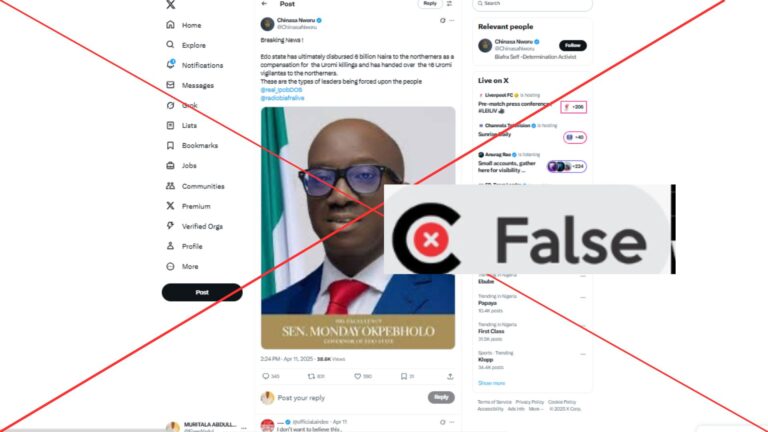
A post circulating on social media platform X (formerly Twitter) claims that the Edo State Government paid ₦6 billion in compensation to Northerners over the Uromi lynching incident and also handed over 16 vigilantes to them.

The post was made by user @ChinasaNworu and reads:

The post circulates through an X user @Chinasa Nworu whose post reads:

“Breaking News !

Edo state has ultimately disbursed 6 billion Naira to the northerners as a compensation for  the Uromi killings and has handed over  the 16 Uromi vigilantes to the northerners. 

These are the types of leaders being forced upon the people”

The post has generated traction on the platform with over 36 thousand views, 590 likes, and 345 persons have commented as of 18th of April 2025.

CLAIM

Edo State paid ₦6 billion in compensation to Northerners and handed over 16 vigilantes following the Uromi killings.

THE FINDINGS

An investigation by The FactCheckHub shows that this claim is FALSE.

X post retrieved Online Inserted FALSE VERDICT

On March 28, 2025, 16 Northern Nigerian travellers, mostly Hausa hunters, were lynched in Uromi, Esan North-East Local Government Area of Edo State. The group was traveling from Port Harcourt to Kano for Eid celebrations when local vigilantes and members of the Edo State Security Network intercepted them at Udune Efandion, suspecting them due to the presence of hunting rifles in their vehicle. A mob attack ensued, leading to the deaths

The incident sparked widespread displeasure across the country. President Bola Tinubu condemned the killings as “dastardly” and called for immediate action from security agencies. Edo Governor Monday Okpebholo described the act as “barbaric” and ordered a full investigation. Police confirmed the attack and said over 30 suspects had been arrested.

After reviewing available reports, from a keyword search conducted by our researcher, there is no credible evidence to support the claim that the Edo State Government paid ₦6 billion in compensation to northern Nigerians or handed over 16 vigilantes following the Uromi killings.​

However,  Okpebholo did pledge to compensate the families of the 16 victims during a condolence visit to Kano State. However, the exact amount of compensation was not specified in the reports. 

Our check regarding the vigilantes shows that the Edo State Government suspended all illegal vigilante groups operating in the state and the Commander of the Edo State Security Corps. Investigations are still ongoing, with 14 suspects arrested in connection with the incident according to media report from Vanguard and ​Punch.    

When contacted by The FactCheckHub, Fred Itua, spokesperson for the Edo State Governor, debunked the viral claim, No such development had occurred.

He said: “If such a development had occurred, the information would be publicly available. Besides, how much is the state’s entire budget for someone to claim that ₦6 billion has already been paid out?”

Itua added that the progress made so far is the submission of reports by a joint settlement committee set up by both the federal and state governments.

VERDICT

The claim that Edo State paid ₦6 billion to Northerners and handed over 16 vigilantes after the Uromi killings is FALSE. There is no credible evidence to support it, and government sources have refutes the allegation.

This report is republished from the FactCheckhub.

I wanted Fubara impeached, Tinubu saved him, says Wike

0

THE Minister of the Federal Capital Territory, FCT, Nyesom Wike, has said the emergency rule introduced in Rivers State by President Bola Tinubu saved the suspended governor of the state, Siminalayi Fubara, because he wanted him to be impeached.

The minister stated this during an interview with some select journalists in Abuja on Friday, April 18.

“As a politician, I’m not happy because I wanted the outright removal of the governor, but for the interest of the state, the president did the right thing,Wike stated.  

Wike said the president’s action saved Rivers from implosion, arguing that the decision to appoint a sole administrator following Fubara’s suspension was a step in the right direction.

He also referenced the recent Supreme Court ruling against the suspended governor, noting that funds should not be allocated to unelected local government officials and that no funds could be spent at the state level without proper appropriation.

It’s not in my place to make the governor happy or comfortable, and that’s why there is power play.

“The point I’m trying to make is that Mr. President came in and saved the people of Rivers from that calamity or anarchy,he said.

The ICIR reported that Tinubu declared a state of emergency in Rivers State on March 18.

The declaration followed political turbulence in the state.

In a nationwide broadcast, the president suspended the state governor, his deputy, Ngozi Odu, and all members of the State House of Assembly for six months.

Tinubu blamed the governor and Wike for allowing the political crisis in the state to escalate.

He particularly criticised Fubara for failing to take action after an oil facility was blown up in the state.

He also accused Fubara of demolishing the state House of Assembly Complex as far back as December 2023 without rebuilding it since then.

The president said Fubara failed to act on vandalisation of pipelines by some militants in the state, and the governor took no action to contain them.

He also accused the governor of failing to condemn the attack, including the groups that had threatened mayhem and destruction of oil facilities should the governor be impeached.

He then declared what he described asextraordinary measuresto restore good governance, peace, order, and security in the state.

He nominated Ibok-Ete Ekwe Ibas, a retired vice admiral, as administrator to take charge of the affairs of the state.


Nigeria Health Watch opens applications for science-policy communication fellowship

NIGERIA Health Watch has launched its 2025 Science-Policy Communication Fellowship.

The fellowship is a three-month hybrid programme designed to bridge the gap between scientific research and health policymaking in Nigeria.

The fellowship targets early to mid-career professionals, researchers, academics, and health advocates passionate about public health and eager to become effective communicators and change agents in shaping evidence-informed policy.

Selected applicants will engage in virtual orientation, in-person training sessions, and ongoing mentorship.

The programme aims to deepen understanding of public health science and policy development. It also focuses on capacity building to fine-tune complex research findings into policy-relevant narratives and cultivate a network of skilled communicators championing evidence-based advocacy.

The application deadline is April 24, 2025.

Interested candidates can apply through the official application HERE.

WAEC bars 574 schools from 2025 exams as WASSCE begins in seven days

0

THE West African Examinations Council (WAEC) has revoked the examination centre status of 574 secondary schools across Nigeria over alleged involvement in examination malpractice.

While the council has not publicly listed the affected schools, they are likely among the over 22,000 schools that registered candidates in the 2024 West African Senior School Certificate Examination (WASSCE) cycle.

During a press briefing on Thursday, April 17, at WAEC’s national headquarters in Lagos State, the Head of the National Office, Amos Dangut, said the decision followed confirmed reports of widespread malpractice in the affected schools. 

He noted that the list of de-registered schools had been submitted to the Federal Government for further action.

He said, “574 schools are those ones that have got their licences revoked as far as examination centre is concerned. So, we will not conduct examinations there. We don’t know them as far as the conduct of examination is concerned.

“All centres that have been found culpable in examination malpractice and have been sanctioned by a particular examining body, that sanction will be upheld by other examination bodies. So, if a school is reported for malpractice and is still recognised, the information will be shared with other examination bodies,” he said.

This announcement came just a few days before the 2025 WASSCE is set to commence on April 24

A total of 1,973,253 candidates, comprising 979,228 males and 994,025 females, are expected to sit for the examination across 23,554 schools nationwide, according to Dagut.

Dagut further stressed that the candidates’ registration rose by over 150 candidates compared to last year.

The ICIR reports that 1,814,344 candidates registered for the 2024 WASSCE for school candidates.

The candidates were drawn from 22,229 schools across the nation.

“A total of 1,814,344 candidates from 22,229 schools have registered for the examination. Out of this number, 902,328 are males, amounting to 49.73 per cent, while 912,016 are females, which is 50.27 per cent of the candidates.

“The statistics show a further increase in the number of females and males, respectively, compared to last year. However, on the whole, the candidature for this year increased by 192,948,” Dagut had reportedly said.

Despite the 574 schools barred from hosting the exams, a comparative analysis shows that this year’s number of registered schools represents an increase of only 1,325 schools from the previous year.

Meanwhile, Dagut, on Thursday, noted that the body was leveraging on technology to improve delivery, noting the introduction of Computer-based West African Senior School Certificate Examination (CB-WASSCE).

“As an organisation that believes in the use of modern Information and Communications Technology (ICT) to solve myriads of problems as well as improve service delivery to the Nigerian child, the Council has introduced its maiden Computer-based West African Senior School Certificate Examination (CB-WASSCE) for School Candidates, 2025.

“It will interest you to know that from this year, two candidates will not have the same questions on each number. We have adopted this innovation for some of the WASSCE codes.

“This initiative is part of the paradigm shift in the education sector, particularly, the adoption of current test administration techniques geared towards upholding the academic and moral integrity of the National Policy on Education and in line with the vision of the Federal Ministry of Education,” he added.

China suspends liquefied gas trade with US

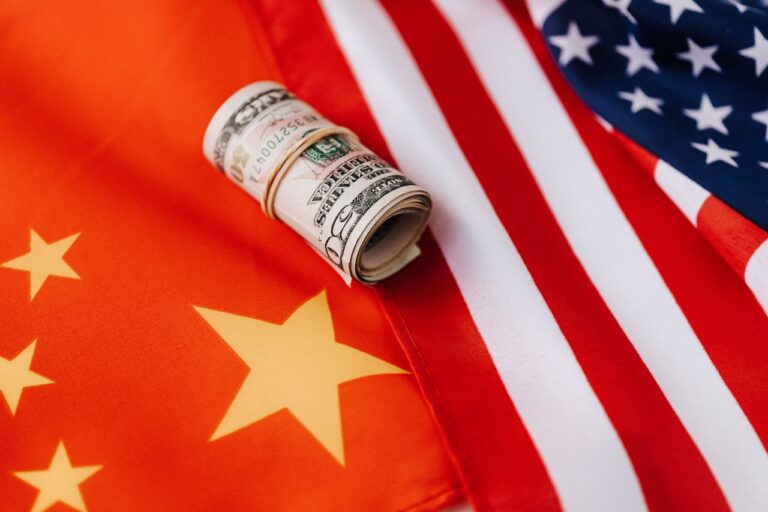
CHINA has suspended all liquefied natural gas (LNG) imports from the United States (US) for over 10 weeks.

The Financial Times reports on Friday, April 18, that shipping data showed no LNG shipments had taken place between the US and China since a 69,000-tonne tanker from Corpus Christi, Texas, docked in China’s Fujian province on February 6.

The report revealed that a second vessel originally destined for China was rerouted to Bangladesh after it failed to arrive before Beijing’s 15 per cent tariff on US LNG took effect on February 10.

The recent 49 per cent tariff hike on Chinese imports imposed by Trump has effectively priced US gas out of the Chinese market.

The ICIR reported that in February, Trump started initiating a trade war with major trading partners by raising import tariffs on 50 countries, causing turmoil in global markets, stoking fears of a recession, and wiping out trillions of dollars in market value from major companies.

China,  Washington’s top economic rival but a major trading partner, is the hardest hit after retaliating against the US, with tariffs imposed on its products last week now reaching a staggering 104 per cent.

Earlier that week, Trump announced a 90-day tariff pause for countries that had not retaliated against his country’s tariffs, including Nigeria, but confirmed that China would not be spared, raising duties on Chinese imports to 104 per cent.

Responding, Beijing announced an increase in tariffs on imports from the US to 125 per cent two days later.

China’s Ministry of Finance said this would be the last time China would match further US tariff hikes.

However, Trump announced that his administration was working on “tailored deals” with trading partners, emphasising that allies such as Japan and South Korea would be given priority.

As a result, Trump’s administration had talks with Japan on Tuesday, April 15.

The ICIR reports that the current freeze in the US LNG mirrors a previous suspension during Trump’s first term, which lasted for more than a year.

Experts have warned that the renewed blockade could have a long-term impact, as it drives China to strengthen its energy partnership with Russia and creates uncertainty around the future of major LNG infrastructure projects in the US and Mexico.

“There will be long-term consequences,” said Anne-Sophie Corbeau, a gas specialist at Columbia University’s Centre on Global Energy Policy.

“I do not think Chinese LNG importers will ever contract any new US LNG.”

After Russia invaded Ukraine, China sharply cut back on its LNG imports from the US.

Meanwhile, Chinese companies chose to resell US LNG cargoes to Europe, taking advantage of higher prices in that market. 

In 2024, just six per cent of China’s LNG imports came from the US, a drop from 11 per cent in 2021.

After setbacks in Gaza, Ukraine, Trump shifts attention to Iran’s nuclear threat

UNITED States (US) President Donald Trump has announced a shift in focus towards curbing Iran’s advancing nuclear programme after encountering setbacks in his efforts to swiftly deliver on campaign promises to bring peace to Gaza and Ukraine.

The ICIR reports that Trump blocked a planned Israeli strike on Iranian nuclear sites on Thursday in favour of negotiating a deal with Iran to limit its nuclear programme.

Israel had developed plans to attack the sites in May, according to the New York Times, which said the goal was to disrupt Iran’s ability to develop a nuclear weapon by a year or more.

After months of internal debate, Trump decided to seek negotiations with Iran rather than support military action.

The US and Iran held talks in Oman on April 12, and both countries described the talks as ‘positive’ and ‘constructive’.

The Trump administration announced on Thursday plans for a second round of talks with Iran, scheduled for Saturday, April 19, in Rome after years of hostility dating back to the Republican president’s first term, when he scrapped a 2015 nuclear deal and imposed a “maximum pressure” campaign of crippling sanctions.

According to Reuters, a source familiar with a White House meeting on Tuesday said discussions among Trump’s aides on the key elements of a potential framework for a nuclear deal were still in the early stages.

Meanwhile, two sources familiar with White House deliberations said the two sides might reach an interim agreement before finalising a more comprehensive deal.

However, Trump has repeatedly threatened to launch strikes on Iran’s nuclear sites if a deal fails to materialise.

On Thursday, Trump said that he was not in a hurry to strike Iran, emphasising that negotiations remained his preferred option.

“If there’s a second option, I think it would be very bad for Iran,” Trump said during a White House meeting with Italian Prime Minister Giorgia Meloni. “I think Iran is wanting to talk. I hope they’re wanting to talk. It’s going to be very good for them if they do.”

Leading the US negotiating team is Steve Witkoff, Trump’s friend and a real estate investor with no prior diplomatic experience, who some analysts have nicknamed the administration’s “envoy for everything.” 

Witkoff has been assigned the responsibility of securing a deal with Iran, as well as working to end the ongoing conflicts in Gaza and Ukraine.

The ICIR reported two weeks ago that Russia announced that it was working with the US to explore ideas for striking a peace deal in Ukraine following Trump’s expressing frustration with Vladimir Putin.

Russia’s announcement came after Trump told the media that he was furious after the Russian leader questioned the credibility of Ukrainian President Volodymyr Zelenskiy, threatening to impose secondary tariffs of between 25 and 50 per cent on buyers of Russian oil.

However, Russia and Ukraine have continued to exchange attacks despite the United States saying that it had signed separate agreements with Moscow and Kyiv for a ceasefire in the Black Sea.

Similarly, fresh Israeli airstrikes continue in Gaza as Trump’s ceasefire negotiations hit a deadlock

Israel proposed a prolonged truce in Gaza in exchange for the release of its remaining citizens held as hostages.

Israeli officials revealed that the proposal included the return of half of the 24 hostages still believed to be alive in Gaza, nearly 18 months after they were taken by Hamas-led gunmen.

CBEX crash: Things to know to protect your investment against Ponzi operators

IT all started on Friday, April 11, as a suspicion when a digital asset trading platform, Crypto Bridge Exchange Smart-Treasures (CBEX), postponed its investors withdrawals.

By Monday, April 14, the funds on each investor’s dashboard have been wiped out. This elicited worries that the platform had crashed. Nigerians who invested their fortune on the platform lost it.

The saga, however, has raised concerns about public enlightenment on things to know or watch against while making investment decisions.

What is a Ponzi scheme?

A Ponzi scheme is a fraudulent investment scam where early investors are paid with money from new investors, rather than from actual profits generated by the business.

It is a pyramid structure where the scheme’s longevity depends on attracting more and more new investors to keep earlier investors’ profits flowing.

Like other similar Ponzi schemes, CBEX operated on the notion of giving its investors a 100 per cent Return on Investment (ROI) in 30 days.

Within the last 10 years, many Nigerians have fallen victim to a series of Ponzi schemes, including the MMM Nigeria, Get Help Worldwide, Crowd Rising, Donation Hub, Lion’s Share and 6Dollars.

So, before deciding to invest as a potential investor, below are critical things to note or watch out for to make the best-calculated risk.

How to identify a Ponzi scheme and protect your investment

Every potential investor must take some steps to ensure that he or she does not fall into the hands of scammers who veil as genuine operators in the financial service sector.

According to financial analysts, the first step is to check whether a company is duly registered and licensed to operate in Nigeria.

While a company may be registered with the Corporate Affairs Commission (CAC) to do business in Nigeria, the company may not have been licensed by the Securities and Exchange Commission (SEC) to carry out an investment scheme or operate as a fund manager.

When any of these is void, analysts say the company may be operating illegally.

Speaking on CBEX, a financial analyst, Patrick Ajudua, noted that the company is an unlicensed investment platform which is neither registered in Nigeria nor Canada.

He pointed out that Ponzi schemes usually come with the promise of a very high return but low risk.

He said the operator offers a tempting 100 per cent return rate on investment within one month and structures the investment in such a way that encourages unsuspecting investors to bring in more participants with a reward system attached to it.

He explained that the Ponzi scheme also tires investors’ claim at maturity to the investment of another person.

How to verify companies on the SEC website

SEC is the apex regulator in the Nigerian capital market and is saddled with the responsibilities, operators, and sanctity of the market.

It provided a platform where all the companies carrying out one investment function or the other can be verified.

Called the Capital Market Operator Search (CMOS), the website provides the names and functions companies operating in the market are licensed to carry out.

The SEC regularly updates its list of registered companies through a multi-step process that includes registration, renewal, and monitoring. This process ensures that only compliant companies are allowed to operate in the market.

To verify the company or scheme, simply type the name of the company on the search bar, and if legally authorised to operate in the market, the name and function of the company will be displayed.

What to know about Ponzi scheme regulation

The recently signed Investment & Securities Act 2025 (ISA 2025) have given more power to the SEC to regulate all virtual and digital assets investment platforms, commodity exchanges and other platforms.

Among others, the Act provides that anyone found operating an unlicensed or Ponzi scheme will be made to pay a minimum penalty of N20 and face a 10-year jail term.

Meanwhile, the Economic and Financial Crimes Commission (EFCC) has launched an investigation into the CBEX crash. With no guarantees, the agency is working towards recovering funds for affected investors.

Experts in the financial sector believe that the SEC should also not fold its hands and allow this massive fraud and loss of investment by Nigeria to go unchallenged, The ICIR has reported.

Tinubu effectively governing Nigeria from Europe, says presidency amid widespread killings

0

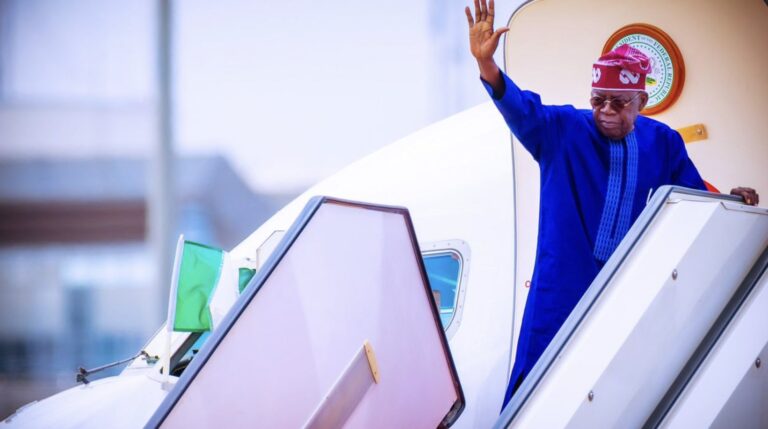
THE Federal Government has claimed that President Bola Ahmed Tinubu is effectively in charge of Nigeria’s governance from Europe, where he has been for weeks, as killings balloon and insecurity worsens in his absence. 

The Special Adviser to the President on Information and Strategy, Bayo Onanuga, made the claim in a statement on X on Thursday, April 17.

Onanuga emphasised that the president’s absence was temporary and aligned with the earlier communicated timeframe of his stay in Europe for about two weeks.

“The president left Paris for London at the weekend and has maintained constant communication with key government officials, overseeing critical national matters, including directives to security chiefs to address emerging threats in some parts of the country” 

Onanuga expressed gratitude to Nigerians for their concern over the president’s absence amid the country’s security challenges and assured that governance continued seamlessly in his absence.

The ICIR reported that Tinubu’s frequent trips to France, with the current one being his eighth trip to the European nation, have drawn criticism from some Nigerians, who question their necessity amid pressing domestic challenges.

Data gathered by The ICIR indicates that since his inauguration in 2023, the President has embarked on at least 38 international trips, frequently described as official or private, with France being the most frequently visited.

Onanuga, on April 2, announced Tinubu’s latest journey and described it as a working trip intended to review the administration’s mid-term performance.

In his latest statement, the president’s adviser noted that his principal would return to Abuja after the Easter holiday.

“The president’s commitment to his duties remains unwavering, and his administration continues to function effectively under his leadership,” he added

The ICIR reported that the former Labour Party (LP) presidential candidate, Peter Obi, urged Tinubu to immediately suspend his ongoing retreat in France and return to confront the escalating wave of insecurity across the country.

Obi cited recent killings, including renewed insurgent attacks in Borno State, killings in the North Central, abductions and killings in the South-East, and repeated pipeline explosions in the Niger Delta as why Tinubu should be on the ground in Nigeria to lead.

Obi’s statement, on Wednesday, April 16, came amid widespread outrage over a series of deadly attacks that have rocked communities, particularly in Plateau and Benue states, since Tinubu departed from Nigeria.

Obi also lamented the deteriorating state of the nation’s security architecture and accused the president of abdicating his responsibility by remaining abroad.

The ICIR reported that at least 50 people were killed in fresh attacks on villages in Bassa Local Government Area of Plateau State on April 4 and 6, while several others were displaced just a few days after the president left the country. 

The attack followed closely after a mass killing in Bokkos Local Government Area on March 28, where over 50 people, including children who were burned beyond recognition, lost their lives.

In Benue, a series of attacks by suspected armed herders have been recorded, including in Otukpo Local Government Area, the hometown of former Senate President David Mark.

Since April 3, the violence has reportedly claimed several lives and forced thousands to flee their homes.

Police confirm attack on Natasha’s home in Kogi

0

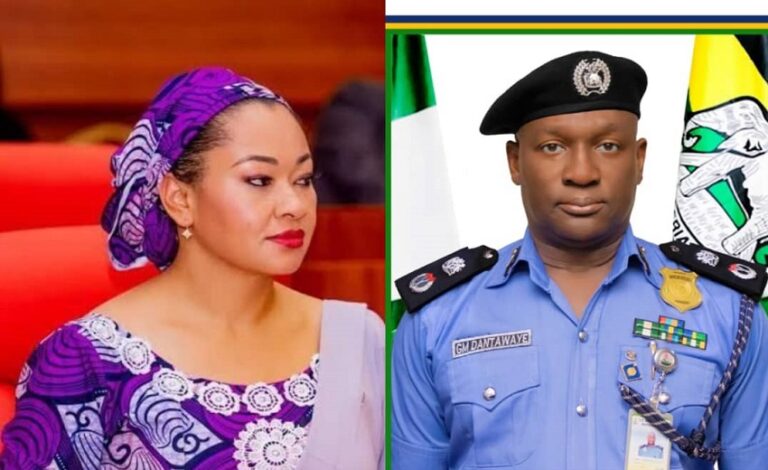
THE Kogi State Police Command has promised to probe the attack on the family house of Senator representing Kogi Central, Natasha Akpoti-Uduaghan.

The State Commissioner of Police, Miller Dantawaye, confirmed on Thursday, April 17, that gunmen attacked Akpoti-Uduaghan’s family residence in Obeiba Community in Okehi Local Government Area.

Dantawaye disclosed this in an interview with the News Agency of Nigeria (NAN) in Lokoja, the Kogi State capital.

According to the police commissioner, the incident occurred on Tuesday night.

He said the command had been fully briefed on the incident by the Okehi LGA Divisional Police Officer, but so far, no arrest has been made.

“Investigation into the incident has begun, and we shall get to the root of it. We will deal with those criminal elements that carried out the attack,” the CP said.

The lawmaker, Akpoti-Uduaghan, stated that the gunmen attacked her family’s house in Kogi, believing she was in the house.

According to her, during the attack, security operatives and community members responded promptly and chased the attackers away.

“No one was hurt. A report on the incident was quickly made at the police area command of the LGA,” she stated.

A statement from Akpoti-Uduaghan’s media team described the attack as a calculated attempt to silence the senator. It urged the Inspector-General of Police (IGP), Kayode Egbetokun, to immediately reinstate Akpoti-Uduaghan’s security details for her safety.

The media team called on the public to remain calm and added that her dedication to speaking the truth and representing her constituents should not be met with violence and intimidation.

Akpoti-Uduaghan had earlier urged Nigerians to hold Senate President Godswill Akpabio, Kogi State Governor Ahmed Ododo and his predecessor, Yahaya Bello, responsible if she and her supporters were attacked.

Akpoti-Uduaghan raised the alarm in a post via her official Facebook page.

She reiterated the call on Thursday, even though Akpabio, Bello and Ododo had distanced themselves from her claims and petitioned the IGP to summon or arrest her for questioning over the allegations.