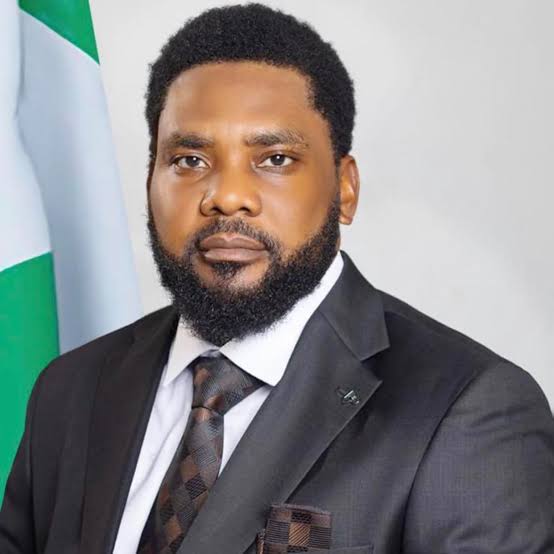
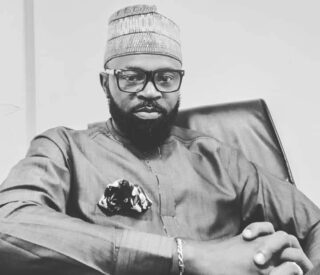
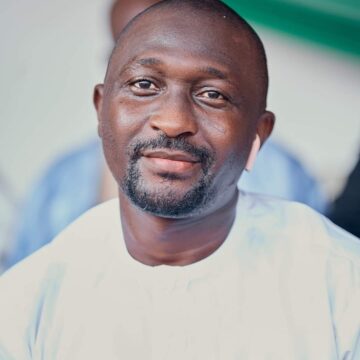
THE Energy Commission of Nigeria (ECN) has announced the return of its Director General, Mustapha Abdullahi, to office following his arrest by the Economic and Financial Crimes Commission (EFCC) over alleged money laundering offences.
The commission announced this on its official X handle on Thursday, describing Abdullahi as its “capacity DG.”
“Our Capacity DG is back!” the commission caption the post accompanied by a video showing Abdullahi walking into the commission’s headquarters in Abuja.
The commission also explained that the director-general had officially resumed duties at the agency’s headquarters and expressed gratitude to God and President Bola Tinubu.
“The Director-General and Chief Executive Officer of the (ECN), Dr. Abdullahi Mustapha, has officially resumed duty at the Commission’s headquarters in Abuja. He expresses gratitude to God almighty, President Bola Ahmed Tinubu,” it added.
The ICIRreported that EFCC operatives arrested Mustapha on Wednesday in Abuja over alleged money laundering offences involving more than N500 billion.
ECN debunked the arrest in a statement, stating that Mustapha only honoured an invitation to the EFCC, in line with due process and his respect for constituted authorities.
“It is important to clarify that he was not arrested but attended the engagement voluntarily as a responsible public servant committed to transparency and accountability,” it read.
President Bola Ahmed Tinubu appointed Abdullahi as DG and chief executive officer of the commission on October 24, 2023, as part of efforts to strengthen Nigeria’s energy transition and renewable energy drive.
Abdullahi is a mechanical engineer and energy expert. He hails from Okene Local Government Area of Kogi State, although he was born in Kano State in January 1985. Before his appointment as the commission’s DG, he served as senior technical adviser and chief of staff to the Minister of Innovation, Science and Technology.
Before his appointment, Abdullahi had worked for more than 10 years at the Nigerian Upstream Petroleum Regulatory Commission (NUPRC).
In December 2025, the Network Against Corruption and Drug Trafficking (NACAT) petitioned Tinubu, the EFCC, and the Independent Corrupt Practices and Other Related Offences Commission (ICPC) over alleged corruption within the commission.
The group accused Abdullahi of involvement in what it described as a coordinated scheme involving the award and payment of solar streetlight contracts worth hundreds of millions of naira to five companies allegedly linked to the same individuals.
NACAT alleged that the companies were registered within the same period, shared similar addresses in Abuja, and had common directors.
The organisation also alleged that procurement laws were violated in the award of the contracts.
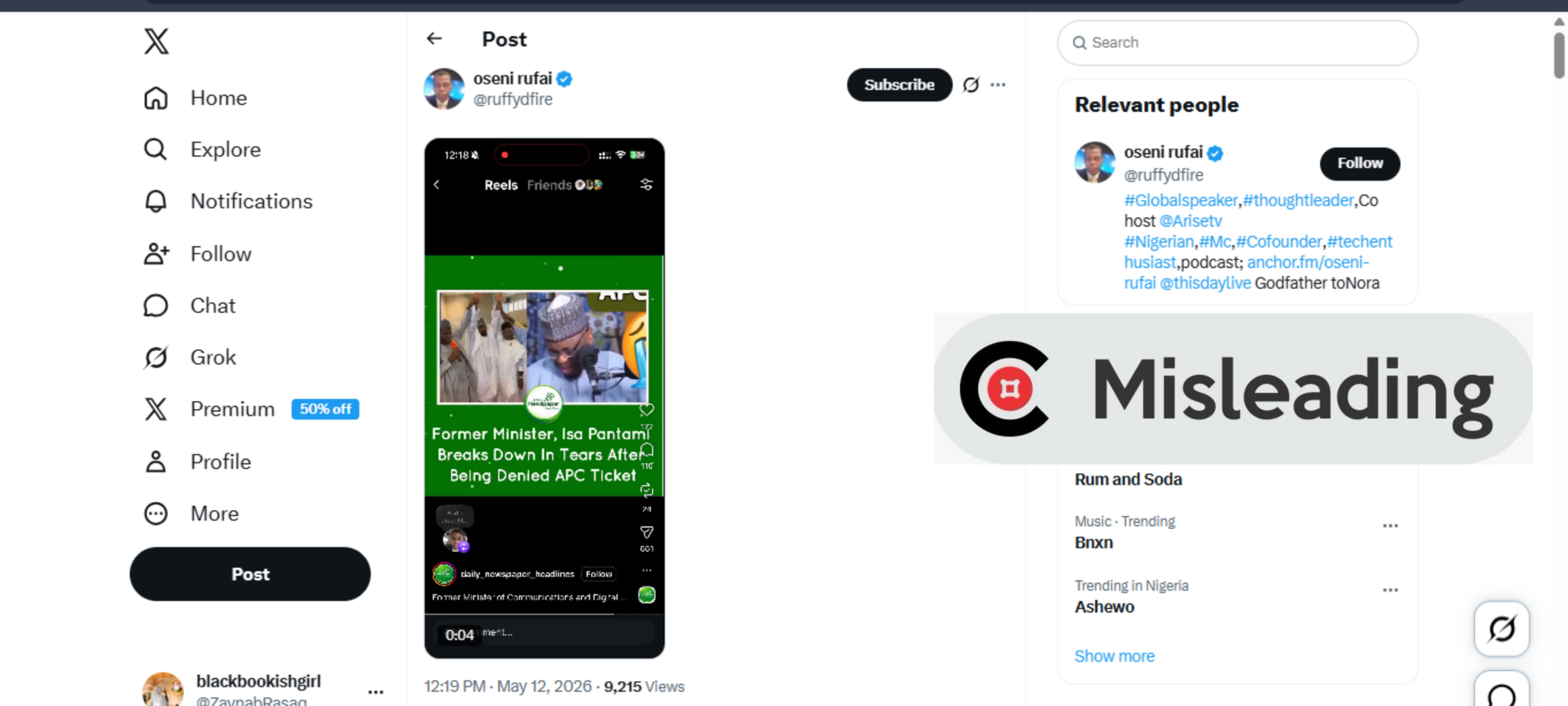
Arise News anchor, Oseni Rufai, on Tuesday, May 12, posted a video on X showing former Minister of Communications and Digital Economy, Isa Pantami, shedding tears.
He claimed the video showed Pantami’s reaction after he was denied the All Progressives Congress (APC) governorship ticket in Gombe State.
The video, first published by a news blog, @daily_newspaper_headlines, on Instagram, was shared by Rufai without verification.
As of 14:44pm (GMT) of that day, his post had garnered over 10,000 views, 100 likes, and 42 reposts, with many commenters believing the claim to be true.
Isa Ali Pantami was crying because he was denied governorship ticket by the APC.
Screenshot of the viral post on x
FINDINGS
Findings by The FactCheckHub show that the claim is MISLEADING.
The post gained traction amid Pantami’s governorship ambition on the ruling APC platform in Gombe State.
In recent public appearances, he has projected himself as a strong contender, citing his federal experience and technical background as qualifications to lead the state.
However, despite his clear interest in the race, he was recently denied the party’s ticket following the APC’s adoption of Jamilu Gwamna as its consensus governorship candidate for the 2027 election.
TheFactCheckHub subjected keyframes in the video shared by Rufai to Google Reverse Image Search, and the result shows that the video is not recent and has no connection with the party’s decision to deny him the ticket.
The original footage was posted by Pantami on his official TikTok account on April 18, 2024. The video captures the former minister delivering a religious lecture during a Ramadan sermon at the Al-Noor Mosque in Abuja.
His emotional state was a response to the message regarding the virtues of the Prophet Muhammad (PBUH) and the mercy of Allah.
Despite the clear religious context of the original footage, the video was stripped of its background by the platform to fit a political narrative and reposted by Rufai without verification.
The claim that the video shows Pantami shedding tears after being denied the APC governorship ticket is MISLEADING. The footage predates the current political development and shows Pantami becoming emotional during a religious sermon in 2024, not reacting to the APC’s governorship ticket decision.
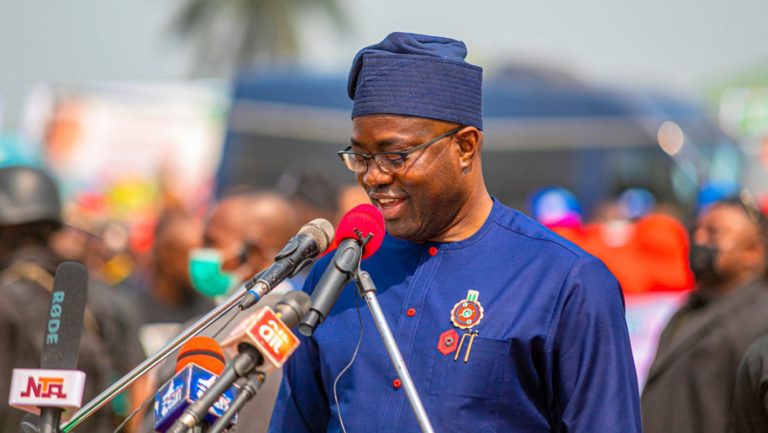
OYO State Governor, Seyi Makinde, has declared his intention to contest the 2027 presidential election under the platform of the Allied Peoples Movement amid growing coalition talks among opposition parties.
Makinde made the declaration on Thursday, May 14, during a rally at Mapo Hall in Ibadan, where leaders of a faction of the Peoples Democratic Party and the APM formalised a political alliance ahead of the 2027 general elections.
Addressing supporters at the event, the governor formally unveiled his bid for Nigeria’s top office.
“I, Oluseyi Abiodun Makinde, Excellency, announce my candidacy for the position of the President of the Federal Republic of Nigeria,” the governor said at the event.
The announcement followed the signing of a Memorandum of Understanding between the APM and the Kabiru Turaki-led faction of the PDP.
The agreement was signed in Ibadan by representatives of both parties, including Seyi Bamidele for the PDP faction and Oladele Oyadeji for the APM. Makinde and APM National Chairman, Yusuf Dantalle, also signed the pact on behalf of their respective political camps.
Speaking earlier on the alliance, the spokesperson for the Turaki-led PDP faction, Ini Ememobong, reportedly said the partnership emerged from opposition meetings held during the All Opposition Political Party Leaders summit in Ibadan in April.
The ICIRreported that on Saturday, April 25, leaders of major opposition political parties in Nigeria resolved to work towards presenting a single presidential candidate for the 2027 general election as part of efforts to challenge the ruling All Progressives Congress (APC).
The resolution was announced at the end of the National Summit of Opposition Political Party Leaders held in Ibadan, Oyo State, where key opposition figures gathered to discuss coalition-building and preparations ahead of the next general election.
Among those present were former Vice President Atiku Abubakar, former governors Peter Obi, Rotimi Amaechi, Rabiu Kwankwaso, and Rauf Aregbesola, among others.
Speaking at the summit, Makinde warned against one-party dominance, invoking the memory of the violent political crisis known as “Operation Wetie,” which rocked the old Western Region in the 1960s.
Since then, the African Democratic Congress (ADC) has conducted its primary elections, while some political actors, including Peter Obi and Rabiu Kwankwaso, have moved to the Nigeria Democratic Congress (NDC) to pursue their presidential ambitions.
The ICIR reports that the latest development came against the backdrop of a prolonged leadership crisis within the PDP, which has deepened since the fallout from the party’s 2023 presidential primary.
The internal dispute began after former Vice President Atiku Abubakar emerged as the PDP presidential candidate ahead of the 2023 election, defeating former Rivers State governor, Nyesom Wike, and other aspirants. The outcome triggered divisions within the party over zoning arrangements and leadership control.
The disagreement later evolved into a wider power struggle between camps loyal to Wike and those aligned with governors including Makinde and Bauchi State Governor Bala Mohammed.
By late 2025, the crisis worsened after rival conventions and parallel National Executive Committee meetings produced opposing leadership structures within the party. A faction backed by Wike installed a caretaker committee led by Abdulrahman Mohammed and recognised Samuel Anyanwu as its national secretary, while another bloc elected Kabiru Turaki as national chairman during a separate convention in Ibadan.
The conflict subsequently led to suspensions, expulsions and court battles between both camps.
Recently the Supreme Court nullified the Ibadan convention organised by Makinde-backed faction of the PDP in November 2025. The court had lampooned the faction for disobeying subsisting court orders.
The convention produced a National Working Committee led by Turaki. The court also struck out the majority judgment of the Court of Appeal, which in December had upheld the removal of Anyanwu as the PDP’s national secretary.
Following the judgment, both Makinde and Wike-aligned blocs have continued to assert control over the PDP, with each side interpreting the ruling in its favour.
While the Makinde faction has insisted on restructuring the party through its organs, the camp loyal to the minister maintained that the Supreme Court decision validated its control and structures.
The Federal High Court in Abuja has struck out the bail application filed by detained podcaster Justice Chidiebere, popularly known as Justice Crack.
Chidiebere is facing charges bothering on allegations of inciting soldiers to create discontent within the Nigerian Army.
A judge , Joyce Abdulmalik, made the decision following a disagreement among the defendant’s lawyers over legal representation during Thursday’s proceedings.
He consequently adjourned the case to May 18 for hearing of a fresh bail application.
The decision followed an application from a former counsel to Chidiebere, Marshall Abubakar, to withdraw the bail application earlier filed on behalf of the defendant.
The ICIR reported that Chidiebere was arraigned by the State State Services (SSS) last week in the charge marked FHC/ABJ/CR/253/2026, as the SSS accused him of alleged cybercrime offences linked to a viral video concerning the Nigerian Army.
Chidiebere was accused of circulating false information and publishing materials capable of causing public unrest, and was reportedly arrested by the Nigerian Army before being handed over for prosecution.
The video was said to have been accompanied by statements posted on his X handle, alleging inadequate feeding of Nigerian soldiers.
The court had, on May 4, scheduled May 14 for the hearing of his bail application after he was arraigned by the DSS and pleaded not guilty to a three-count charge.
When the case was called on Thursday, Leyii Abueh, from the Federal Ministry of Justice, informed the court that the Attorney-General of the Federation (AGF) had taken over the matter from the SSS in line with the relevant section of the law.
However, lawyers Femi Balogun and Abubakar both announced appearances for the defendant, with Balogun informing the court that he had been briefed by Chidiebere’s family to take over the bail application already before the court.
Abubakar, however, insisted that he remained the defendant’s counsel, stating that he had been appearing in the case and had not been formally disengaged.
The judge thereafter asked the defendant to identify his counsel, and the accused pointed to Balogun, a development that made Abubakar applied to withdraw all processes he had filed in the case, including the bail application relied upon by Balogun.
The judge struck out the applications filed by Abubakar and adjourned the matter until May 18 for hearing of a fresh bail application.
A FEDERAL High Court in Abuja has ordered the permanent forfeiture of assets linked to former Acting Accountant-General of the Federation, Chukwunyere Nwabuoku, following his conviction for money laundering and abuse of office.
A judge, James Omotosho, gave the order after ruling that the properties and funds were proceeds of unlawful activities.
The assets forfeited to the Federal Government include shares valued at about N1.9 billion, cash assets worth over N288 million, and a five-bedroom duplex located at No. 20 City Gate Estate, Kukwaba, Abuja.
The forfeiture followed an application filed by the Economic and Financial Crimes Commission (EFCC) seeking the confiscation of the assets traced to the former AGF.
According to court documents, the shares linked to Nwabuoku in several security companies were valued at N1,941,805,342 as of March 29, 2026.
The court also approved the forfeiture of funds held in accounts connected to companies including Temeeo Synergy Concept Limited, Turge Global Investment Limited, Laptev Bridge Limited and Arrafura Transnational Afro Ltd.
Part of the money forfeited included N220 million earlier refunded by Nwabuoku into the EFCC recovery account domiciled with the Central Bank of Nigeria.
Delivering the ruling, Omotosho held that the court was convinced the funds, shares and property were acquired through illegal means, especially considering the earlier judgment delivered against the former accountant-general.
The judge subsequently directed that all the assets be permanently handed over to the Federal Government.
Nwabuoku was sentenced in March 2026 after the court found him guilty on a nine-count charge bordering on money laundering involving N868.46 million.
Omotosho convicted him on all counts and sentenced him to eight years imprisonment on each charge, bringing the total sentence to 72 years. However, the sentences are to run concurrently.
The EFCC had accused the former AGF of working with several companies to move and conceal funds suspected to be proceeds of unlawful activities.
Confirming the conviction in an earlier statement posted on X, the anti-graft agency said, “The former Acting Accountant-General of the Federation, Chukwunyere Anamekwe Nwabuoku, who was prosecuted by the EFCC at the Federal High Court, Abuja, for money laundering involving N868.46 million, has been convicted and sentenced to jail for 72 years.”
AHEAD of the 2027 general elections, the All Progressives Congress (APC) in Kwara State has dropped 105 aspirants from the race for the State House of Assembly tickets following the party’s screening exercise.
The screening outcome, displayed at the APC secretariat in Ilorin on Thursday, showed that several lawmakers seeking another term in office failed to scale through the process and were marked ‘uncleared’ by the panel.
The names of the affected politicians appeared in an official document titled, “All Progressives Congress (APC) for the Nomination of Candidates for the 2027 General Election.”
Checks showed that 158 aspirants purchased nomination forms to contest the Assembly election under the ruling party, but only 53 were approved to continue with the process.
In Kwara Central, nearly all lawmakers seeking re-election were successful in the screening. The only exception was the representative of Alanamu/Ajikobi Constituency, Ayishat Alanamu, who did not make the list of cleared aspirants.
The exercise recorded more casualties in Kwara South, where a number of serving lawmakers were unable to secure approval from the committee.
Among them were. Ganiyu Salahu of Omupo Constituency and. Owolabi Rasaq of Share/Oke-Ode Constituency, both from Ifelodun Local Government Area.
Other lawmakers affected by the decision include Bamigboye Joseph of Oke-Ero Constituency, Omotosho Rasaq representing Isin Constituency, and Yusuf Gbenga of Essa/Shawo/Igboidun Constituency.
Meanwhile, lawmakers from Oyun Local Government Area, including the Deputy Speaker of the House, Ojo Oyebode, were cleared by the committee.
In Kwara North Senatorial District, the two lawmakers from Moro Local Government Area who are seeking re-election also made it through the screening.
The member representing Edu Constituency, Issa Gideon, was equally denied clearance. Gideon is currently serving a suspension from the Assembly over allegations of misconduct and actions said to have damaged the image of the legislature.
The Speaker of the Kwara State House of Assembly, Yakubu-Salihu, did not obtain a nomination form to return to the Assembly. Salihu is widely seen as one of the major contenders for the APC governorship ticket after reportedly participating in the party’s screening in Abuja ahead of the primaries.
Also absent from the Assembly race was Ganiyu Gabriel, who represents Ekiti Constituency. He is believed to be preparing for a House of Representatives bid for the Ekiti/Isin/Irepodun/Oke-Ero Federal Constituency seat.
Addressing party members before the screening began, the chairman of the committee, Success Musa, a professor, described the large number of aspirants as evidence of the APC’s growing influence in the state.
“I learnt we have 158 aspirants for the House of Assembly alone. That is democracy. That is what APC represents. It is the leadership shown by the chairman and our governor,” he said.
The development has reportedly created uncertainty among some lawmakers and their supporters, especially those hoping to secure second or third-term tickets under the ruling party.
Kwara State currently has 24 lawmakers in its House of Assembly, representing constituencies spread across the state’s 16 local government areas.
The latest development in Kwara comes days after a similar controversy in Rivers State, where the APC screened out 65 aspirants linked to Governor Siminalayi Fubara ahead of the party’s primaries for the 2027 elections.
A UNITED States court has sentenced a Nigerian professor, Nkechy Ezeh, to nearly six years in prison for masterminding a massive fraud scheme that diverted more than $1.4 million intended to help low-income preschool children in West Michigan.
Chief US District judge Hala Jarbou delivered the ruling and condemned the 61-year-old Founder of Early Learning Neighborhood Collaborative, calling her a fraud and a thief.
The court ordered Ezeh to repay $1.4 million to fraud victims, an additional $390,174 to the Internal Revenue Service and be taken into custody immediately to begin serving her prison sentence.
Ezeh was once widely celebrated in Michigan’s education and nonprofit sectors for running a nonprofit organisation that provided preschool support services including meals, transportation, advocacy, and educational funding in underserved communities across Kent County, Kalamazoo, and Battle Creek.
The organisation received financial support from federal programmes including Early Head Start and the US Department of Education, along with major private charities, but prosecutors said Ezeh used the nonprofit as a personal cash pipeline.
According to court filings, she diverted nonprofit funds to finance luxury travel to Hawaii, Europe, and Africa, paid for a family member’s wedding, and placed relatives on ELNC’s payroll despite them performing little or no legitimate work.
Authorities also said she used intermediaries to wire hundreds of thousands of dollars to family members in Nigeria, noting that the fallout devastated the organisation and the communities it served.
ELNC shut down in 2023, leaving dozens of employees suddenly unemployed and cutting off services to children living in poverty.
Federal prosecutors noted that 72 per cent of the children served by ELNC lived below the federal poverty line and were primarily children of color under the age of five.
Ezeh’s former bookkeeper and co-conspirator, Sharon Killebrew, was previously sentenced to 54 months in prison for her role in the scheme.
The investigation was led by the US Department of Health and Human Services Office of Inspector General and IRS Criminal Investigation.
The sentencing comes amid a broader federal crackdown on fraud involving taxpayer-funded programmes. Earlier this year, the Department of Justice announced the formation of the National Fraud Enforcement Division, aimed at aggressively prosecuting individuals who misuse federal funds.
Ezeh had publicly denied wrongdoing as federal investigators spent years unraveling the collapse of ELNC. Prosecutors said the case involved years of alleged fraud, litigation, and mounting financial irregularities tied to the nonprofit’s operations.
Ezeh eventually reversed course and entered a guilty plea to wire fraud and tax evasion charges in federal court, admitting that she conspired to steal approximately $1.4 million from ELNC and its donors between 2017 and 2023. According to court records, she accepted responsibility as part of a plea agreement reached shortly after her arrest by the FBI in December 2025.
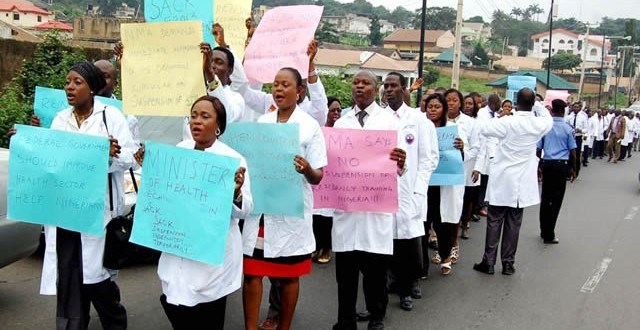
THE Nigerian Medical Association has threatened to file a N1 billion lawsuit against the Economic and Financial Crimes Commission (EFCC) over the alleged assault of a senior doctor during a raid by the commission at the University of Uyo Teaching Hospital.
The association said the planned legal action followed what it described as physical, emotional, professional and institutional harm caused by EFCC operatives during the operation carried out at the hospital on Tuesday.
The anti-graft agency had reportedly visited the hospital while investigating a fraud case involving a suspect receiving treatment at the facility. According to the EFCC, its operatives were there to verify a medical report submitted by the suspect and later approached the hospital’s Chief Medical Director after encountering resistance during enquiries.
The commission maintained that its officers withdrew peacefully and did not disrupt activities within the hospital.
However, the NMA gave a different account of the incident.
Addressing journalists in Uyo on Wednesday, the Chairman of the Akwa Ibom NMA, Aniekan Peter, a professor, accused masked EFCC operatives of attacking Eyo Ekpe, a professor of cardiothoracic surgery at the hospital.
He said, “We observed that Prof Eyo Ekpe was apprehended within the premises of UUTH by masked EFCC operatives who physically assaulted him, beat him to the point of bleeding, handcuffed him alongside other doctors and hospital staff who attempted to intervene.”
The NMA leader also alleged that he was affected during the operation while trying to seek clarification from the officers.
“Professor Peter, Akwa Ibom NMA chairman, was shoved and exposed to teargas when he approached the scene seeking clarification from the operatives,” he said.
The association described hospital premises as a sacred environment that should not be subjected to violent security operations. It further condemned the raid, calling it “barbaric, degrading, inhuman and a gross violation of the sanctity of the hospital environment.”
Reading a communiqué issued after an emergency meeting of the association, the Assistant Secretary of the NMA, Dr Unyime Ndoh, announced that the body had resolved to take legal action against the EFCC.
“We shall institute a legal action against the EFCC with a demand for damages in the sum of N1 billion for the physical, emotional, professional and institutional damages caused,” the communiqué stated.
The statement, endorsed by the NMA chairman in the state and its secretary, Ighorodje Edesiri, added that doctors would withdraw services until their demands were met. The demands include a public apology to the affected doctors as well as the identification and prosecution of officers involved in the operation.
The association also stated that there was no formal invitation extended to Ekpe or the NMA leadership before the raid took place.
In addition, the NMA announced that its members would suspend medical services to EFCC personnel and their relatives pending the resolution of the dispute.
MÉDECINS Sans Frontières (MSF) has said it recorded its highest admissions for child malnutrition in Nigeria in 2025, with more than 440,000 children treated.
The international medical charity disclosed this in its 2025 Nigeria Activity Report released in Abuja on Wednesday, May 13.
It warned that malnutrition, infectious diseases and poor maternal healthcare access continued to deepen humanitarian concerns in many parts of the country.
Malnutrition occurs when the body does not get the right amount of nutrients needed for healthy growth and development. It includes undernutrition, caused by inadequate intake of food or nutrients, and can lead to conditions such as wasting, stunting and severe acute malnutrition, particularly among children.
According to the report, MSF treated 353,989 children for severe acute malnutrition through outpatient programmes and admitted another 90,723 children with acute malnutrition and medical complications into stabilisation centres in facilities it supports across Nigeria.
MSF Country Representative in Nigeria, Ahmed Aldikhari, described the figures as the highest recorded by the organisation in recent years.
“The 2025 data tells a harrowing story: with over 440,000 children put on treatment, it is the year with highest admissions for malnutrition we’ve had in Nigeria in recent years,” Aldikhari said.
“We are seeing a vicious cycle where malnutrition is both a cause and a consequence of diseases such as measles, malaria, and diphtheria among others, and continues to affect vulnerable communities, especially when healthcare is delayed or inaccessible.”
He noted that diseases such as measles, malaria and diphtheria were worsening the nutrition crisis, particularly in communities where healthcare access remained delayed or inaccessible.
MSF linked the growing crisis to conflict, insecurity, displacement, inflation, flooding, drought and rising food prices, which it said had continued to limit families’ access to food and medical care.
The organisation also warned that humanitarian funding cuts were increasing pressure on already overstretched health services.
The report showed that infectious disease outbreaks continued to overwhelm health facilities in several states during the year.
MSF said it treated 341,239 malaria patients, 38,753 children for measles, 6,123 diphtheria patients and 985 meningitis cases across its projects and supported facilities in 2025.
The organisation said recurring outbreaks of cholera, Lassa fever, measles, meningitis, diphtheria and typhoid fever remained common, especially during the rainy season.
“Many of these illnesses are preventable,” Aldikhari said, stressing the need to strengthen vaccination coverage, water and sanitation systems, disease surveillance and access to timely treatment.
The report also highlighted continued concerns over maternal and newborn deaths in Nigeria, particularly in rural and conflict-ridden communities where women face barriers including insecurity, transportation difficulties, overstretched hospitals and weak referral systems.
The organisation added that many women arrived at health facilities with severe complications linked to delayed access to care, including obstructed labour, severe bleeding, infections and eclampsia.
“There is an urgent need for stronger investment in primary healthcare, referral systems, staffing, equipment and emergency maternal services, especially in underserved areas,” Aldikhari added.
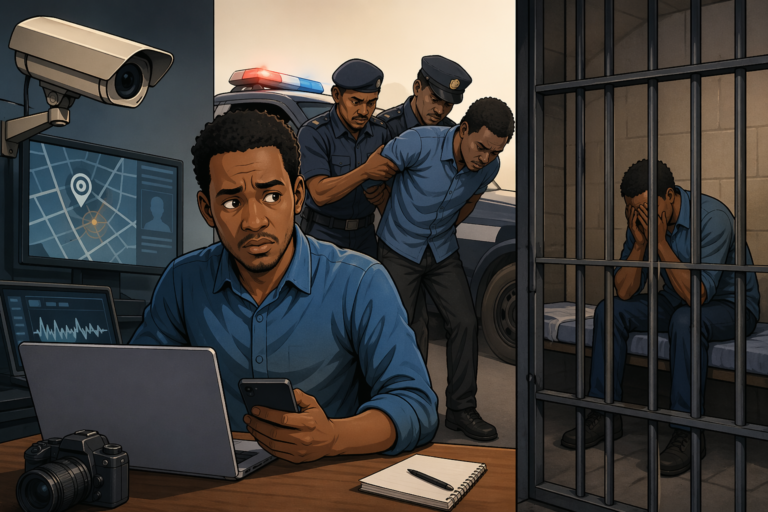
JOURNALISTS in Kaduna and Plateau states recount harrowing experiences of how past administrations secretly intercepted their phone calls, text and WhatsApp messages using GSM/UMTS Interception Systems to track, arrest, detain and torture them.
Onibiyo Segun recalled with certainty the day he was detained for 24 days at the Kaduna State Maximum Custodial Centre. He had been arrested by the police in Kaduna on November 23, 2018, over allegations of incitement, defamation of character and injurious falsehood against the former Governor in the state, Nasir El-Rufai.
“It started in 2017,” he recalled while hosting a popular road traffic programme on radio called ‘Oga jeje’. “I guess the governor got interested, and some of his boys called me that His Excellency would want to work with me. I turned it down.” He said in November 2018, while making a delivery in Minna, Niger State, he noticed a strange number had called him multiple times. “I answered the call and it was a police inspector,” Segun said.
Onibiyo Segun.
He said the officer asked him to report to the police station but more worrisome was that he described his exact location and insisted he could see him where he was. That was when it dawned on Segun that his phone could be tracked.
The journalist told The ICIR that he later found from a reliable source that the police had been intercepting his calls for two weeks and had called a close relative he was communicating with consistently with the aim of tracking him down.
Reports show that the El-Rufai administration procured several surveillance and communications-interception technologies between 2015 and 2023.
The state budget in 2017 indicated that the government appropriated N193.6 million toprocuregeo-position interceptor and location of GSM, UMTS system to check trends, intercept and locate kidnappers’ calls.
However, The ICIR’s findings revealed that the GSM/UMTS interceptor, a surveillance system used to track the location of mobile phones, intercept calls and SMS, identify SIM cards and devices, had also been used by the government to intercept journalists’ calls, leading to their harassments and unlawful detentions.
Arrest over a digital shadow
According to Segun, the tone of conversation shifted at the police station, when officers quickly surrounded him. “There was this funny character who was cocking his gun. I said you can’t harass me. They brought out some printouts with my picture, my name, and a Facebook post,” he recalled.
He said the post which had contained allegations against then governor El-Rufa had been made from a Facebook account he lost some years back. But the police First Information Report revealed that a government official had reported that the post was inciteful, defamatory, and injurious to the former governor.
“They asked me to submit my phones. People from the Government House came. I think about five of them, including lawyers and from the Justice Department.”
Segun said despite insisting that the Facebook account used to publish the post had long been compromised, he was charged before a magistrate the same day. Although he pleaded not guilty and was denied bail, he was taken to Kaduna State Custodial Centre by evening.
However, his arrest had triggered outrage as activists and pro-democracy groups condemned his detention.
“My lawyer and about six others came to represent me in court. I was handcuffed and taken to court,” he explained, noting that his legal team challenged his bail denial, arguing that the charges were not capital offences. However, while the bail process was going on, he was returned to the prison and locked up until the 12th of December when he made bail and was eventually released on December 15, 2018.
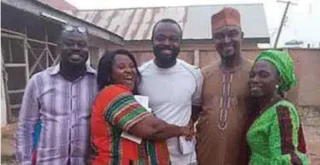
Onibiyo Segun with wife and friends after he was released. PC: PressReader
Segun’s story is not just about one arrest, but a broader pattern of how surveillances were used to pressure, intimidate and arrest journalists during the administration of El-Rufai as documented cases by media rights groups and press freedom organisations show.
Three months in prison because of a story
A former Bureau Chief of Vanguard Newspaper in Kaduna, Luka Binniyat, said he spent 97 days in the Custodial Centre after he wrote a story captioned, “Fulani herdsmen kill five College of Education students” that turned out to be false in December 2016.
“When I finally discovered that the story was not true, I called my editor and told him to ‘Please, drop the story,’ he didn’t drop it,” Binniyat narrated. The journalist said the then Commissioner of Information in Kaduna, Samuel Aruwan, ordered his arrest after which he was detained at the Kaduna Maximum Custodial Centre for over three months. “I was isolated. I spent the first week in prison. I got bail but the magistrate court didn’t acquit me,” he said.
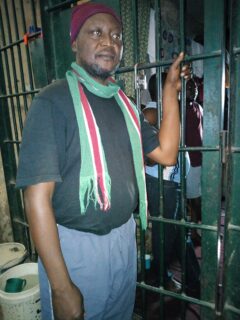
Luka Binniyat at the Kaduna State Prison in August 2017. PC Luka Binniyat
Binniyat said he was re-arrested on November 3, 2020, when he wrote another story about an alleged Christian massacre in Kaura Local Government Area of the state. “By then, Aruwan was the Commissioner of Internal Security and Home Affairs. He issued a statement, saying that it was a clash. I interviewed the senator representing Southern Kaduna Senatorial district, Danjuma Laah, whether what happened was a clash and not genocide. The senator said it was genocide, so I quoted him as saying Aruwan was trying to cover the genocide. Aruwan found that very offensive and ordered my arrest,” he explained.
The journalist said the police had used a device to track him at a time the government had disconnected communication networks across the city. “Apparently, they had a way of tracking phone numbers. They tracked me to the office of Southern Kaduna People’s Union. Six armed men in plainclothes stormed the office, and pointed a gun at the security guard who led them to the office I was in,” he said.
Binniyat confirmed seeing the tracking device in the police station and gave a pictorial description of what looked like GSM/UMTS Interception Systems. “When I went to the office, I saw the tracker. It’s a small device. Flat device, the size of a phone. They were connected with an antenna. At that time, they were tracking somebody. While writing my statement, they were trying to arrest another person. So, it points at coordinates. This is a part of town. If you show a dot there, and then you zoom it, you will see the address, the name of the street, you can zoom it to the exact spot where the phone is, where the person is. It’s slightly bigger than the size of an Android,” he recalled.
He said he was detained at five different police cells, before he was transferred to the correctional centre again where he spent 93 days marking the most terrible experience of his life.
“Even as bad as the prison cells were, the police cells were five times worse. There was a cell that would take like 70, 80 people. You had no place to sit down and stretch your legs. Cockroaches were common. Lice and bed bugs, the cell was stuffy, and then some of the big bosses in the cells will be smoking. People were fainting roughly every three hours and had to be taken out. In fact, one guy died,” he added.
The journalist said his case was taken to Federal High Court 1, Kaduna, and lingered there for years before he was finally acquitted and discharged in January 2026.
About GSM / UMTS interception systems
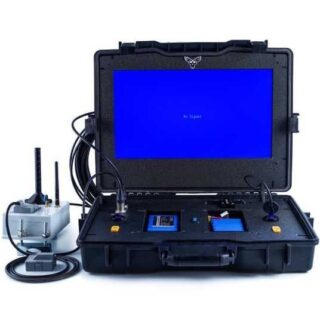
Photo of GSM Interception System. PC: NX Security System website
According to the websiteof Intercept Monitoring System, Cellular interception systems of GSM (2G), UMTS (3G), LTE (4G) are black server racks often labelled as “Interception Mediation Device (IMD)” or “LI Gateway” that have a suitcase-sized box with a small antenna mounted.
OluGbenga Odeyemi, the Chief Executive Officer of e86, a digital security and software company explained that GSM / UMTS IMSI Catchers, also known as Stingrays, act as ‘fake’ cell towers. “Your phone is designed to connect to the strongest signal; the device tricks your phone into connecting to it instead of the real network, allowing the operator to intercept calls, SMS, and location data.”
He said the Signalling System No. 7 is the protocol used by networks to talk to each other and therefore hackers or agencies can exploit flaws in SS7 to redirect calls or SMS to their equipment, essentially “man-in-the-middle” attacking the global telecom backbone. “This can happen even if you are thousands of miles away from the interceptor,” the cyber security expert said.
The ICIRreported that El-Rufai, the former governor of Kaduna State recently confessed at an interviewon Arise Television that the phone of the National Security Adviser (NSA), Nuhu Ribadu had been tapped, enabling him (El-Rufai) to listen to a conversation in which the NSA allegedly ordered for his arrest.
Speaking on Arise TV on February 13, El-Rufai alleged that security operatives attempted to detain him at the Nnamdi Azikiwe International Airport at the instance of anti-corruption authorities, describing the move as an abduction attempt. “Nuhu made the call and made the order that I must be in custody,” he said.
When asked how he became aware of the alleged directive, El-Rufai added: “The government thinks that they’re the only ones that listen to calls. Someone tapped his phone.”
He acknowledged that tapping phone calls without court authorisation was illegal but argued that state agencies routinely monitor communications without judicial approval.
The Nigerian Communications Commission while exercising its powers under section 70 of the Nigerian Communications Act, 2003 adopted the ‘Lawful Interception of Communications Regulations, 2019 on January 23, 2019, providing the legal framework for authorised agencies to intercept communications in Nigeria, such as phone calls, emails, and data.
It mandates licensees to install equipment capable of interception to protect national security, public safety, and public order.
However, the Socio-Economic Rights and Accountability Project (SERAP) in March 2026 SERAP filed a lawsuit against the Federal Government at the ECOWAS Community Court of Justice seeking to halt the implementation of the framework, arguing it is unconstitutional and lacks judicial oversight.
The request followed El-Rufai’s allegations, as the organisation insisted that the law is in serious interference with fundamental rights that cannot be authorised through subsidiary regulations or exercised in secrecy without strict safeguards.
Checks by The ICIR showed that the Kaduna State government under El-Rufai had spent at least N4 billion on the procurement of GSM UMTS System and installation of CCTV Cameras for monitoring and surveillance from 2016 to 2019.
In 2016, the government approved N74,931,004.32 on procurement, installation of CCTV cameras for monitoring and surveillance under Kaduna State University (KSU). In the same year, it approved N2,100,000,000 on the procurement of Comprehensive Security and Surveillance Equipment through the office of the Secretary to State Government (SSG). In 2017, it approved N26, 961,066.57 through KSU for the same surveillance gadgets. Besides, it spent N1,568,600, 000.00 in 2017 and N850,000,000 in 2019 through the SSG for the same gadgets.
Similarly, in 2017 and 2018, the state government approved N193,608,945.39 on procurement of Geo-position Interceptor and location of GSM UMTS System to check the trends and intercept/locate kidnappers calls and approved N173,608,945.39 in 2019 for the same purpose.
A report by Spaces for Change (S4C), a civil society organisation in 2024 revealed that Nigeria invested heavily in surveillance and interception technologies with Chinese tech firms Huawei, the dominant Chinese telecom vendor in the country.
It said the Nigerian government allocated approximately $40 million for interception technologies and an estimated $583 million on public surveillance projects, noting that most surveillance technologies used in Nigeria are imported from Israel, China, and the United States. It emphasised the risks posed by dual-use technologies that could be repurposed for oppressive purposes.
The ICIR reported that Paradigm Initiative, a digital rights group documented how at least N127 billion was spent on surveillance/security equipment from 2014 to 2017 with evidence showing that the procurements were made for political purposes to monitor political opponents.
Monitored through WhatsApp
A journalist with Leadership Newspaper, Midat Joseph said his WhatsApp was tapped because he was writing stories about the attacks and killings in the southern part of Kaduna State.
“Somebody within the security architecture informed me that my calls were being monitored by the government at that time, warning that I should be careful of my discussions on the phone,” he said.
Joseph explained that there was an attack in southern Kaduna, and he was added to a WhatsApp group where money was being raised for the affected community.
“There was a suggestion that a protest should be held in Kaduna, Abuja, or Kafanchan to draw the attention of the world. That was why they were trailing me. They were monitoring my conversations,” Joseph recalled.
Midat Joseph. PC: Midat Joseph
The journalist said the police arrested the friend he frequently conversed with and a web designer who designed a website for him.
“Based on the information I got, the Intelligence Response Team (IRT) from Lagos were told that I was into gun running. So, they thought they were coming to arrest a big suspect. They monitored my calls, a friend of mine was tricked and arrested.”
Midat said that he noticed a black, tinted bus trailing his car, days later, when he parked, the vehicle stopped behind him and armed men stepped out.
“I came out of the car, the police came out with guns, one of them said are you Mr. Midat, I said yes. When we got to the metro police station, they brought a sheet of paper with people’s comments and all the comments from that WhatsApp platform. They showed me my name, and asked, are you the one that made this comment, I said yes I made the comment. They said are you willing to write a statement on this? I said yes, so they gave me a paper,” the journalist said.
He recalled how he slept in the police cell that night and how the officers abandoned his case the following morning and left to arrest another suspect in Bauchi State.
“They confirmed that it was the government that ordered for my arrest. Pressure was high the following morning, as journalists across the country, my station and everybody condemned my arrest,” he added.
He said the matter was immediately transferred to the Office of the Commissioner of Police from the Metro Police Station, and consequently to the Police Headquarters. He noted that the police officers who were left behind told the commissioner that he was arrested for gun running.
“I was detained with hardened criminals inside the police cell at SARS Police Station in Kaduna,” he stated.
The journalist however said after appearing in court for over a month, the matter was struck out for lack of proper jurisdiction, stressing that the government and its lawyers never made any appearance.
A publication that led to 162 days in prison
In March 2019, Steven Kefas another journalist in Kaduna said he published an article titled “How the Kajuru Genocide Started,” but it drew the attention of authorities to him.
“In 2018, a rumour started spreading that El- Rufai was trying to balkanise the Adara chiefdom, which is one of the largest chiefdoms in Kaduna State. The then paramount ruler was against it and in October of that year, El Rufai invited him for a meeting. On his way back, the chief was abducted alongside his wife. The wife was released after a ransom was paid but they killed the man.”
Kefas said shortly after the chief’s death, a government gazette formalised the restructuring of the chiefdom, confirming earlier fears.
“I just noticed that my lines were being bogged down from March 2019. I was in Port Harcourt, and I noticed if you wanted to call me, you wouldn’t reach me. When I tried to make a call, I couldn’t. Something strange was happening to my phone.”
He said security operatives invited his friend, a security officer, for questioning adding that the officer was pressured to call him and lure him to a police station. When Kefas arrived, he said he was arrested without warrant.
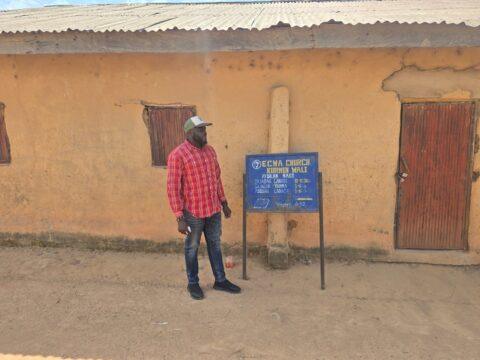
Steven Kefas on field work during an assessment of Kurmin Wali shortly after the January 18 mass abduction of 177 worshippers. PC: Steven Kefas
The journalist said that what followed was a prolonged legal battle and incarceration, as he spent 162 days in detention, much of it in the Custodial centre. He said prosecutors repeatedly argued in court that he should not be granted bail because even while in detention, he continued to criticise the government, a decision he claimed the judge agreed with.
But after months of routine remands, he said the judge had asked his prosecutors, “Do you have evidence?” Because the litigants could not produce any, Kefas said he was granted bail and by early 2020, the case ended. But his ordeal did not end as he claimed he had received multiple threatening messages and calls from anonymous callers after he amplified a report that allegedly linked security personnel to attackers.
The journalist explained that his lawyer had written to the Commissioner of Police in 2021 seeking protection after the multiple threats. To buttress this, he said one of the threats came through a letter written to a pastor in Kafanchan in which the pastor was asked to convey a message to Kefas. ‘They told him to tell me that they were going to hunt me down, that was in 2021 and by 2022 April I was attacked in my house,” he said.
Former commissioner responds
Former Commissioner of Internal Security and Home Affairs in Kaduna State, Samuel Aruwan whom journalists Binniyat and Kefas alleged was at the centre of their threats, insist that his actions against the two were strictly within legal boundaries and driven by personal safety concerns following what he described as ‘mischievous’ and damaging publications.
When The ICIR contacted him, Aruwan said he had filed a formal complaint to the police over Binniyat’s publication on November 1, 2021, accusing the journalist of publishing allegations amounting to injurious falsehood and also sent a separate letter to the senator quoted in the report the same day.
The former commissioner however distanced his office from direct operational control of surveillance and interception gadgets, when asked about claims that journalists had been tracked using state-supported surveillance tools.
Instead, he said surveillance gadgets acquired to combat kidnapping were handled by federal security agencies. “They were supports that Kaduna State government gave to intelligence agencies,” Aruwan said, adding that decisions on surveillance and threat classification fell within the jurisdiction of security agencies, and not his office.
When The ICIR contacted the Public Relations Officer of the Kaduna State Police Command, Mansir Hassan, for a response to the allegations, he said that he was not PRO at the time the incidents occurred.
When asked to provide access to the PRO who held the position during that period, Hassan said the officer could not comment because he was no longer with the Kaduna State Police Command.
The reporter further requested that Hassan review the command’s records to clarify the cases, but he declined to comment further.
“We Are Watching You” journalist alleges threat from Plateau SSS
At 7 a.m on September 18, 2020, an independent journalist in Plateau State, Masara Kim, said he published a story on his blog detailing what he claimed as “intelligence about planned coordinated attacks in communities in Jos South LGA.” By noon, Nigeria’s security agencies were already on his trail.
Masara Kim. PC: Masara Kim
“By 9 a.m, I started getting rumours from sources within the system that there was plan to arrest me. So, that morning, I left town immediately. Then, by around 12 p.m., I received a phone call from the DSS, which demanded I appear at its office to answer questions regarding the story. About an hour later, the police also called to invite me.”
Kim said the State Security Service, told him that it was just a friendly invitation, but he was left to wait for hours before the interrogation began. He was asked to reveal his sources and take down the article, but he refused.
“They threatened and told me, ‘you are being watched. We have every detail about you, and we can pick you at anytime, anywhere.’ They showed me a computer and said everything is here and we have everything about you here, if you think that you can hide. They threatened to put me in jail, but I refused to yield. So, they made me take off my belts, wristwatch, clothes. They took mugshots and locked me behind bars. I remember the OC Legal threatening to lock me up forever.”
The journalist said he was detained for two days and yielded to take down the article and publish a retraction. However, he refused to share details of his sources, noting that communities in Jos South were hit by coordinated assaults which killed the traditional leader in Foron.
“By the time I was out, after two days, the police were waiting. So, I was whisked away from the premises of the DSS straight to the police headquarters. I was interrogated by the CP.”
Kim alleged that after his release, the intimidation shifted online, as his devices showed signs of hacking, his communications were monitored and his blogs, masarakimsblog.com and mkreporters.media, were taken down till date.
“I did a couple of cyber security checks on my lines and my devices. I had to change my cell phones and my computers because there were traces of hacking. My two websites were brought down within weeks, and I still don’t have access to them,” he added.
Explaining what may have happened to Kim’s website, the CEO of e86, OluGbenga Odeyemi, who also a software engineer, explained that flooding websites with traffic could cause them to crash, adding that domain seizure can force companies hosting the URL to suspend the sites. He said websites hosts often used national security or copyright claims as pretext.
The ICIR’s checks on the Plateau State budget documents, security reports, and media coverage, shows that the administration of the former governor, Simon Lalong between 2015–2023, funded and procured several electronic surveillances systems amounting to N1 billion mainly through the state security outfit, Operation Rainbow and other agencies. While many items are described generically in budgets rather than by brand names, the records still reveal categories of surveillance technologies.
Although many procurement entries were vaguely described in official budgets, the documents reveal repeated spending on Electronic Security Gadgets at N45 million in 2023 alone under Operation Rainbow titled “Acquisition of Electronic Security Gadgets.”
The Lalong-led administration Secretary to the Government of the State, Danladi Atu, said he will have to gather details from documents and consult with Operation Rainbow before responding to questions when The ICIR contacted him for details on April 11, however, Atu has not responded to calls and messages at the time of filing this report.
Expert insight
The CEO of e86 explained that the difference between lawful and unlawful interception lies in authorisation and accountability adding that lawful interception is a legally sanctioned process where a government or law enforcement agency intercepts communications based on a specific warrant or court order.
Citing the Nigerian Communications Act 2003 and the Lawful Interception of Communications Regulations 2019, Odeyemi said the only authorised agencies that could carry out lawful interception are the Office of the National Security Adviser, the SSS, and the Nigerian Police Force, through a court order.
“Generally, an agency must apply for a warrant from a judge of the Federal High Court. The application must demonstrate that the interception is necessary for national security or to prevent a serious crime. The Cybercrimes Act 2015 as amended criminalises the intentional interception of any communication without “lawful authority.
“Section 37 of the 1999 Constitution guarantees the privacy of citizens’ “telephone conversations.” Any surveillance conducted without a specific, time-bound court order is a violation of this constitutional right,” he added.
He urged journalists to use forensic tools, including Mobile Verification Toolkit developed by Amnesty International, to scan their phones for indicators of compromise tied to known spyware.
“When journalists are surveilled, it creates a chilling effect. If a source knows the journalist’s phone is tapped, they will stop sharing sensitive information, effectively killing investigative stories on corruption. Journalists may avoid certain risky topics to protect themselves, which weakens the democratic role of the fourth estate,” he added.
He urged journalists to use Signal or WhatsApp with disappearing messages rather than regular SMS or voice calls.
SSS mum
The ICIR contacted the Deputy Director, Public Relations and Strategic Communications of the Department of the SSS, Favour Dozie on April 21 seeking reactions to allegations made by journalists in Plateau State against the agency but received no response. When contacted again via telephone on May 12, Dozie said she would revert. However, subsequent follow-up calls made by this reporter on May 13 had not been responded to as of the time of filing this report.