Home Blog Page 321

PETROAN cautions against substandard petrol importation

0

THE Petroleum Products Retail Outlets Owners Association of Nigeria (PETROAN) has called on regulatory bodies in the oil and gas industry to monitor the importation of substandard petroleum products, as the renewal of the naira-for-crude agreement is delayed.

PETROAN made the call in a statement on Thursday, April 3 by its spokesperson, Joseph Obele.

It noted that as the naira-for-crude tenure had ended, the association was cautioning refinery operators to prioritise the importation of high-quality crude oil.

“We call on regulatory agencies to be on high alert and conduct thorough laboratory analysis on all crude oil imports to ensure they meet the required standards.

“We also urge the relevant authorities to ensure that refinery operators adhere to the highest standards in their operations, including the importation of high-quality crude oil,” Obele stated.

The ICIR reports that the Nigerian Midstream and Downstream Petroleum Regulatory Authority (NMDPRA) and Nigerian Upstream Petroleum Regulatory Commission (NUPRC) are apex regulators in the Nigerian downstream and upstream oil and gas sector.

In the statement on Thursday, Obele said the association is concerned that the importation of substandard petroleum products would compromise the quality, undermine the growth and development of the oil and gas industry, and ultimately harm Nigerian consumers.

“We urge the refinery operators to ensure that the crude oil imported meets global standards to guarantee the production of high-quality petroleum products.

“It is noteworthy that Nigerian crude oil, classified as Sweet Crude (with less than 0.5 per cent sulphur content), is among the best in the world, and we see no reason why imported crude oil should be of lower standards,” he stressed.

He said the notion that the price of petroleum products might likely increase as the naira-for-crude deal comes to an end is a serious concern to PETROAN.

“To avoid this scenario and ensure price stability and energy sufficiency, PETROAN advocates that the window for importation of refined petroleum products should remain open,” Obele said.

He, however, said PETROAN was optimistic that the recent increase in the price of petrol is temporary.

Obele noted that the federal government’s reforms under the Petroleum Industry Act (PIA) encourage competition in the downstream sector, maintaining that competition is a catalyst for price reduction in any sector.

“We believe that as the market adjusts to the new realities, prices will stabilise and eventually decrease.

“To further protect the interests of our members and the Nigerian consumers, PETROAN will be vigilant and proactive,” he said.

The PETROAN spokesman hinted that the association would conduct laboratory tests on refined petroleum products to ensure its members and the public are not sold substandard products.

The Dangote Refinery on March 19 announced a temporary suspension of its sale of petroleum products in naira to oil marketers.

This comes as the naira-for-crude initiative, which started on October 1, 2024, and ended on March 31, 2025, has yet to be renewed, The ICIR reported.

The deal mandates that the Nigerian National Petroleum Company Limited (NNPCL) sell crude oil to Dangote Refinery and other local refineries in naira.

During the period, the pump prices of petrol products dropped sharply to about N860 in some retail outlets across the country.

However, following a delay in negotiations for the renewal of the deal, the Dangote Refinery on March 19 announced a temporary halt on the sale of petroleum products in naira.

Since then, the pump prices of petrol have been adjusted upward to above N900 in major cities, including Lagos and Abuja.

PSC approves appointment of Agbonika as Edo police commissioner amid Uromi killings controversy

0

THE Police Service Commission (PSC) has approved the appointment of Monday Agbonika as the Commissioner of Police (CP) for Edo State.

He replaces Betty Otimenyin, who was appointed on January 16, 2025.

Prior to his deployment to Edo State, where he now serves as the CP, Agbonika held the position of Commissioner of Police (Mounted Troops), Force Equitation Officer at Force Headquarters, Abuja.

In a statement released on Thursday, April 2, PSC spokesperson Ikechukwu Ani disclosed that Agbonika, who attended a posting interview chaired by PSC Chairman Hashimu Argungu, was tasked with proactively addressing and reducing the crime rate in Edo State.

He was specifically directed to investigate the recent killings of 16 travelling hunters in the state, and was informed that his success in the role would depend on how he handled the suspects arrested in connection with these killings.

Furthermore, the new CP was advised to ensure the involvement of relevant police departments, and not to rely solely on tactical units.

According to the statement, Agbonika assured the commission that he would uphold the relevant laws in the discharge of his duties and would always rely on the Inspector General of Police (IGP), Kayode Egbetokun, for necessary guidance.

The new Edo CP served as Commissioner of Police Communications (Operations), Deputy Commissioner of Interpol, Force Criminal Investigation Department Annex, Alagbon Close, Lagos; DCP Operations, Ports Authority Police Command, Port Harcourt.

He also served as DCP Department of Finance and Admin, Zone 16 Yenagoa; Area Commander Ota, Ogun State; Area Commander Idiimu, Lagos; and pioneer Area Commander, Ayetoro, Ogun State, amongst other postings.

The ICIR reported that President Bola Tinubu and other prominent Nigerians condemned the gruesome murder of some hunters who were in transit by an irate mob in Uromi, Edo State.

The ICIR gathered that the victims were travelling in a Dangote Cement truck when they were waylaid around 1.30 pm in the Udune Efandion community by local security.

Tinubu, in a statement by his spokesperson, Bayo Onanuga, on Friday, March 28, ordered a manhunt for the killers.

Tinubu, who expressed shock at the dastardly act, directed police and other security agencies to conduct swift and thorough investigations and punish the suspected culprits.

Also commenting on the incident, a former vice president and the candidate of the People’s Democratic Party (PDP) in the 2023 presidential election, Atiku Abubakar, said he was deeply saddened by reports of the tragic killing that took place in Edo State.

In a tweet he posted on X, Abubakar said the protection of innocent lives must remain paramount and urged the authorities to act swiftly and decisively to prevent a recurrence of jungle justice.

In a post on X regarding the incident, the Labour Party (LP) presidential candidate in the 2023 general election, Peter Obi, stated that the news of the killings of travellers is deeply saddening.

According to him, such killings have become a recurring tragedy in our decaying society.

He hailed the government for condemning the incident and initiating an investigation, and urged the authorities to address the killings of Edo indigenes to ensure that justice is served for all.

Meanwhile, the Edo State Governor, Monday Okpebholo, has confirmed that suspects arrested in connection with the brutal killing would be transferred to Abuja for further interrogation after the Eid-el-Fitri public holiday.

Okpebholo disclosed this on Monday, March 31, during a meeting with his Kano State counterpart, Abba Yusuf, and the deceased families. 

While speaking at the gathering, Okpebholo reiterated his commitment to ensuring justice for the victims. 

The unfortunate killing of the travellers in Edo State has generated outrage on social media, with many calling for a thorough investigation into the ugly incident.

Accountability: ICPC unveils initiative to monitor LG funds

1

THE Independent Corrupt Practices and Related Offences Commission (ICPC) has announced that it will begin monitoring funds across the 774 local governments in Nigeria.

This was disclosed during the launch of its Accountability and Corruption Prevention Programme (ACPP-LG) in Abuja on Thursday, April 3.

In his welcome speech at the event, the chairman of the ICPC, Musa Adamu Aliyu, explained that the initiative aims to detect and prevent the misuse of public funds, ensuring that resources allocated for national development are judiciously applied.

According to him, local governments play a vital role in delivering public services. However, many have struggled due to weak transparency mechanisms and the misappropriation of funds.

He said the ICPC initiative is urgent because over 60 per cent of corruption cases investigated by the commission at this level involve the diversion of public resources meant for critical projects such as healthcare and infrastructure.

“This decision ensures the direct disbursement of funds to local councils, removing undue state interference and creating a crucial opportunity for governance reform.

“As an anti-corruption agency, ICPC is committed to ensuring the success of this reform by enforcing compliance with anti-corruption laws and fostering a culture of transparency, accountability, and efficiency.”

He added that the objectives of the programme are designed to strengthen financial management, governance standards, and proactive disclosure in local councils.

He stressed that key objectives include ensuring transparency in local government operations and decision-making, facilitating proactive disclosure of financial and administrative activities, enhancing public communication and citizen engagement in governance.

He stated that the fight against corruption at the grassroots level is  for Nigeria’s future and urged all stakeholders to ensure that money meant for development is used for the people.

ICPC launches ACPPLG to monitor LG funds usage
A cross section of participants at the event

Speaking at the event, the Minister of Justice and Attorney General of the Federation (AGF), Lateef Fagbemi, represented by the Director of Public Prosecution, M.B. Abubakar, said the recent landmark judgement of the Supreme Court affirming the financial autonomy of local governments is a historic stride towards liberating the third tier of government from excessive state interference, thereby enhancing their effective capacity to deliver essential services to the grassroots.

He added that the significance of the judgement cannot be overstated, as it serves not only as a legal affirmation of constitutional principles but also as a moral directive towards fostering inclusive and sustainable development across the nation.

He stressed that the federal government remains resolute in its commitment to promoting transparency, accountability, and good governance at all levels, as encapsulated in the National Anti-Corruption Strategy.

He commended the ICPC for its unwavering dedication to the cause of integrity, transparency, and good governance.

The chairman of the Senate Committee on Anti-Corruption, Emmanuel Udende, who was represented at the occasion, said that as lawmakers, they are fully committed to enacting and strengthening legislations that promote accountability, transparency, and good governance at all levels.

He added that the Senate Committee on Anti-Corruption and Financial Crimes will work tirelessly to support policies that guarantee the responsible management of public funds, ensuring that allocations meant for local governments translate into real development for the people.

He said that through oversight functions, the National Assembly will remain vigilant in ensuring that local government administrations are held accountable.

In his remarks, the chairman of the House of Representatives Committee on Anti-Corruption, Kayode Akiolu, said the unveiling of the accountability and corruption prevention programme of the ICPC was timely and relevant and draws on the truism that prevention is better than cure.

Akiolu said the local government is the third tier of government and is clearly the closest to the people and requires all hands on deck to make the system work because they possess the capacity to impact the highest number of people in the country.

“Regrettably, in spite of years of reforms, the local government system continues to struggle to deliver on its mandate of taking good governance to the people in mostly rural areas and relieving other tiers of government of avoidable pressure.

According to Akiolu, the biggest impediment to the effectiveness of the local government system was its capture by state governments.

He added that good governance is achievable in Nigeria and called for the urgent need for unity of purpose in the nation with the anti-corruption fight.

Highlighting how the assessment of the 774 local government areas will be conducted, the spokesperson of the ICPC, Demola Bakare, said the methodology will be based on five focal points, which include fiscal transparency, open procurement, human resources, corruption control, and citizen engagement.

ICPC launches ACPPLG to monitor LG funds usage
ICPC spokesperson, Demola Bakare, making a presentation at the event

Bakare said that by focusing on these areas, the ICPC aims to strengthen governance structures, enhance service delivery, and restore public trust in local governments.

The ACCPP-LG is organised by the ICPC in partnership with the Centre for Fiscal Transparency and Public Integrity and the Nigerian Bar Association (NBA).

There were goodwill messages from a former Executive Secretary of NEITI, Waziri Adio, the Public Complaints Commission (PCC), the National Financial Intelligence Unit (NFIU), the Code of Conduct Bureau (CCB), the Fiscal Responsibility Commission (FRC), and the National Youth Service Corps (NYSC).

Others include, the United Nations Office on Drugs and Crimes (UNODC) and the Association of Local Government of Nigeria (ALGON).

Natasha: INEC rejects recall petition

THE Independent National Electoral Commission (INEC) has ruled that the petition seeking to recall Natasha Akpoti-Uduaghan, the representative of Kogi Central Senatorial District has failed to meet constitutional requirements.

Following a physical count of the signatures and thumbprints submitted, INEC determined that the petition did not have enough valid signatories to trigger a recall process, as stipulated in Section 69(a) of the 1999 Constitution (as amended).

In a statement issued on Thursday, April 3, 2025, after its weekly meeting, INEC disclosed that Kogi Central has 474,554 registered voters.  For a recall petition to be valid, it must be signed by more than half of this number, at least 237,278 voters.  However, after verification, only 208,132 signatures were confirmed, representing 43.86 per cent of registered voters. This figure fell short by 29,146 signatures, rendering the petition invalid.

“For emphasis, a petition for the recall of a Senator must comply with the provision of Section 69(a) of the Constitution of the Federal Republic of Nigeria 1999 (as amended), which requires the signatures of more than one-half of the registered voters in the constituency. The total number of registered voters in the Kogi Central Senatorial District is 474,554. More than one-half of this figure (i.e., 50 per cent+1) is 237,277+1, which is at least 237,278 voters.

“Across the 902 Polling Units in 57 Registration Areas and five Local Government Areas that make up the Senatorial District, the Commission ascertained 208,132 signatures/thumbprints from the submission made by the petitioners. This translates to 43.86 per cent of the registered voters which falls short of the constitutional requirement by 29,146 signatories,” the statement added.

A visualisation of the recall signature by INEC.
A visualisation of the recall petition by INEC.

INEC emphasised that the petition was reviewed in line with its 2024 Regulations and Guidelines for Recall, ensuring due process and fairness. 

With the petition failing to meet the constitutional requirement, INEC stated that no further action would be taken regarding the senator’s recall.

“Consequently, the petition has not met the requirement of Section 69(a) of the Constitution. Therefore, no further action shall be taken on the recall of the Senator,” INEC said.

It further noted that public notice has been issued by Clause 2(d) of the 2024 Recall Regulations, with the summary of the verification process made available on INEC’s official website and social media platforms.

The recall petition, submitted by a group identified as Concerned Kogi Youth and Women, was presented to INEC’s headquarters in Abuja on March 24, 2025.

It alleged that  Akpoti-Uduaghan had engaged in misconduct, abused her office, and displayed a pattern of deceitful behaviour that embarrassed the constituents and the Senate.

The petitioners claimed to have secured signatures from over half of the district’s registered voters, but INEC’s verification process proved otherwise.

With the recall attempt now officially dismissed, Akpoti-Uduaghan will continue to represent Kogi Central in the Senate.

Read how to recall your representative HERE.

Want to recall your lawmaker? Here’s how to do it in Nigeria

Lagos governor apologises over traffic chaos caused by bridge repairs

0

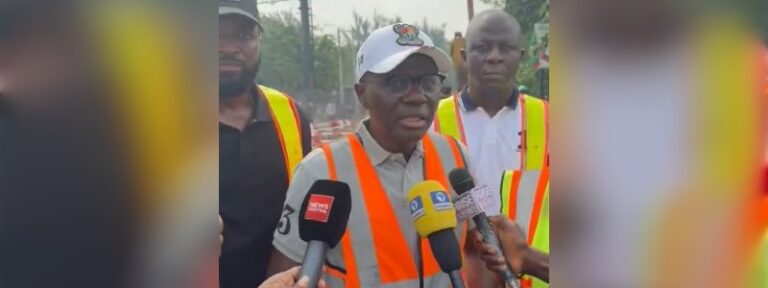
LAGOS State Governor Babajide Sanwo-Olu has apologised to residents of the state for the severe traffic congestion experienced on Wednesday and Thursday morning, which was caused by ongoing repair work on the Independence Bridge.

He issued the apology on behalf of the state and the Federal Government, according to a statement released on Thursday, April 3, by his media aide, Jubril Gawat.

The closure of the bridge for essential repairs had left thousands of Lagosians stranded in the area.

Videos and photos of commuters stuck in the gridlock circulated widely on social media following the closure, prompting significant public criticism.

“Governor of Lagos State, Mr @jidesanwoolu, says all the alternatives will be cleaned up more than before; More traffic officers and security operatives will be deployed to the roads as was done during the December period.

“Mr Governor also appealed to Lagosians to keep obeying traffic rules and also offices that can work from home, or work online for this period of work,” Gawat stated.

The ICIR reported on March 16 that the Lagos state government announced the shutdown of the Independence/Mekwen Bridge (inbound Marina/CMS route) for two months to allow emergency repairs.

According to a statement by the State Commissioner for Transportation, Oluwaseun Osiyemi, the emergency repairs are scheduled to take place from Wednesday, March 19, to Monday, May 26.

During the repair work, the section of the road from the National Open University of Nigeria (NOUN) through Bonny Camp Bridge and down to Independence Bridge would be closed to vehicular movement.

Similarly, the Bonny Camp Underpass Bridge service lane inbound Independence Bridge will not be available for motorists.

However, the service lane from Ahmadu Bello Way to Ozumba Mbadiwe will be open to traffic.

Motorists travelling to Victoria Island from Ahmadu Bello Way are advised to use Ozumba Mbadiwe Avenue inbound towards Akin Adesola Street, then proceed to Falomo Roundabout, and subsequently join Obafemi Awolowo Road to access Ring Road and continue their journeys, among other directives.

Meanwhile, Nigerians have taken to social media to criticise the government’s handling of the situation.

An X user, Mosebolatan, lamented why the governor is making law enforcement that should be standard practice appear like it is for special occasions, like road maintenance.

“Should a koropes [mini bus] drive against traffic anywhere? Should “double parking” happen at all?

“We all studied Traffic Management in our Civil Engineering undergrad [sic] years and it’s shameful that construction, reconstruction and maintenance works are done without proper planning,” Mosebolatan lamented.

The user added that there would be heavy traffic, but that management was key, stressing that there could be temporary and alternating lane shifts for morning and evening rush hour traffic.

Another X user, Afeez Ojuolape, further suggested that the Lagos state government could implement other time-sharing on another lane that they have not yet been concerned with repair works.

“Traffic movement from 12 am to 12 pm inward Ahmadu Bello and 1 pm to 12 am traffic movement outward Ahmadu Bello, while the alternative routes serve as the backup,” Ojuolape said.

Kidnappers release former NYSC DG Tsiga after 8 weeks

0

FORMER Director-General of the National Youth Service Corps (NYSC), Maharazu Tsiga, has been released by his abductors after spending eight weeks in captivity.

A family member, Suleiman Tsiga, confirmed his release to the News Agency of Nigeria (NAN) on Wednesday, April 2, in Katsina.

According to him, the retired army Brigadier-General is in good condition but is receiving medical care at an undisclosed location.

Tsiga was abducted on February 6, 2024, from his residence in Tsiga, Bakori Local Government Area of Katsina State, alongside several other residents. 

The gunmen initially demanded a ransom of N250 million for his release, which was later reduced to N50 million after negotiation, according to reports.

However, it remains unclear whether any ransom was paid before his freedom was secured.

Backstory

The abduction occurred during a late-night raid in which over 100 gunmen stormed Tsiga town. The assailants broke into homes, seizing residents, including the home of the retired Brigadier-General. 

It was reported that after surrounding his house, the attackers forced their way inside, prompting Tsiga to confront them before he was taken.

The armed men also carried out simultaneous attacks on neighbouring communities in the Kankara Local Government Area. During the raid, two residents were injured, while one of the attackers was mistakenly shot by his group.

Following the abduction, the Katsina State Police Command spokesperson, Abubakar Sadiq, stated that officers were deployed to the scene but arrived after the gunmen had already fled with their hostages.

“Unfortunately, before the arrival of the operatives, the hoodlums had already succeeded in their mission”, Saidiq explained.

The ICIR reports that there has been series of kidnap attempts and rescue missions by the security forces in Katsina.

In one of its most recent publications, The ICIR reported that security forces, comprising the Police and Army, rescued four kidnap victims in Dandume Local Government of Katsina State.

On December 8, 2024, the command said it rescued about 20 victims in two kidnap attempts by armed bandits in the state on Saturday, December 7.

The incidents took place in Jibia and Faskari Local Government Areas (LGAs), the command posted on its X handle on Sunday, December 8.

The first incident occurred on December 7, 2024, at about 1900 hours, at Kwanar Makera along the Katsina–Magamar Jibia road, Jibia LGA.

According to the police Public Relations Officer, Abubakar Sadiq Aliyu, a group of bandits, armed with dangerous weapons, AK-47 rifles, opened fire on a moving vehicle.

Trump imposes 14% tariff on Nigerian exports to US

CITING trade disparity, United States President Donald Trump has announced that exports from Nigeria to the United States will now be subject to a 14 per cent tariff.

Trump made the announcement on Wednesday evening, April 2, during a ‘Make America Wealthy Again’ event at the Rose Garden, presenting it as part of a broader strategy to rebalance global trade and tackle perceived unfair trade practices.

The Trump administration remarked that Nigeria imposes a 27 per cent tariff on US exports, a disparity the US notes has long harmed American businesses and consumers. 

Also in his speech, Trump portrayed the tariff as part of a broader effort to safeguard American industries and ensure that foreign nations adhere to “fair” trade rules. 

He also announced the beginning of what he termed a new era of “fair trade,” vowing to “supercharge America’s industrial base” and compel foreign markets long accused of blocking United States goods to open up.

“This is one of the most important days in American history,” Trump said. “We will supercharge our domestic industrial base. We will prise open foreign markets and break down foreign trade barriers, and ultimately, more production at home will mean stronger competition and lower prices for consumers.

“This will be, indeed, the golden age of Americans coming back. We’re going to come back very strongly,” he stated.

Along with the 14 per cent tariff on Nigerian exports, President Trump also introduced a broader trade policy that includes a standard 10 per cent tariff on all US imports. 

According to the policy, the new tariffs, effective immediately, apply to over 50 countries, including major trade partners such as China, the European Union, India, and Japan, along with developing economies across Asia, Africa, and Latin America.

Although Nigeria is not one of the highest tariff imposers, this adjustment signals that the US is targeting a broad range of countries, including not only economic rivals but also developing nations with which it had previously maintained preferential trade terms.

Edo Election: Ighodalo rejects tribunal ruling, vows appeal

0

THE Peoples Democratic Party (PDP) candidate in the 2024 Edo State governorship election, Asue Ighodalo, has rejected the verdict of the election tribunal, which upheld the victory of the All Progressives Congress (APC) candidate, Monday Okpebholo.

In a statement issued late on Wednesday, April 2, Ighodalo vowed to appeal the ruling at the Court of Appeal.

The Edo Governorship Election Petitions Tribunal, sitting in Abuja, had on Wednesday dismissed the petition filed by Ighodalo and the PDP, ruling that the election was conducted in substantial compliance with the Electoral Act 2022. 

The three-member panel, led by a justice,  Wilfred Kpochi, unanimously held that there was no justification for overturning the result of the poll.

Following the judgement, Ighodalo announced his intention to seek redress at the Court of Appeal.

He emphasised that his legal battle was not for personal gain but a fight for democracy and the right of the people of Edo State to elect their leaders freely.

I have, therefore, instructed my legal team to proceed to the Court of Appeal to challenge this decision, which we consider a huge travesty of justice.

“This is not about me or any single individual; it is about the very essence of democracy, the preservation of our collective right to freely determine our future, and the legacy we leave for generations unborn,” he said in a statement.

Ighodalo urged his supporters and PDP faithful to remain calm and law-abiding as they continue their pursuit of justice through legal means.

He maintained that the verdict did not mark the end of their journey but rather the beginning of a more determined struggle for electoral justice.

“As an avowed democrat, I respect the judiciary as the last hope of the common man, and I urge all of you, our dear good people of Edo State, to remain peaceful, calm and law-abiding in the aftermath of this Judgement.

“However, let it be clear: this is not the end of our journey, but the beginning of a greater struggle for justice, democracy, and the sanctity of the people’s mandate freely conferred on my running mate, Barr. Osarodion Ogie and I are on the platform of our great Party, the People’s Democratic Party (PDP).

”While we all may not agree with the verdict, we, however, remain steadfast in our belief that the rule of law must remain the bedrock of our democracy. Our pursuit of justice in this regard is an affirmation of our firm belief that the right of the good people of Edo State to freely choose their leaders through a credible, free and fair electoral process must never be compromised,” he added.

Recall that the Independent National Electoral Commission (INEC) had declared Monday Okpebholo of the All Progressives Congress (APC) as the winner of the September 21, 2024, governorship election.

He secured 291,667 votes against Ighodalo’s 247,655 votes.

But dissatisfied with the outcome, the PDP and its candidate filed a petition challenging the process, arguing that the election was not conducted in line with the provisions of the Electoral Act 2022. 

Ethiopia’s civil war: what’s behind the Amhara rebellion?

0

By Amanuel TESFAYE, University of Helsinki and Yared Debebe, University of Gondar

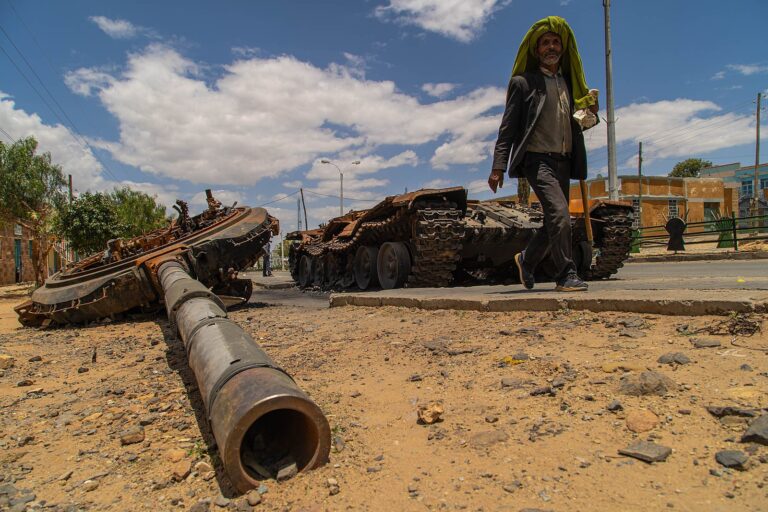
ETHIOPIA is in the grip of a civil war between federal government forces and the Fano, a loose alliance of ethnic-based militia in the Amhara region.

This conflict in Ethiopia’s north erupted less than a year after the devastating Tigray war, which ended in 2022.

The Amhara are one of Ethiopia’s largest ethnic groups and played a leading role in the making of the Ethiopian state. Amharic serves as the country’s working language.

The region shares a border with Tigray. During the Tigray war, which began in 2020, various Fano groups allied with the federal government. A peace deal in 2022 to stop the war sidelined the Amhara militia groups, which strained relations with the government.

The Amhara conflict began as minor sporadic clashes with government forces in April 2023. This rapidly escalated into a full-scale insurgency by August when Fano forces launched a full blown attack in an effort to control the region’s major cities.

The violence since has displaced more than 100,000 people and left 4.7 million children out of school.

The death toll from the conflict is piling up. In March 2025, the government claimed to have killed more than 300 Fano fighters.

We are researchers studying ethnic nationalism, social movements and insurgency in Ethiopia, with a focus on Amhara. Based on our studies into the Fano and ongoing research on Ethiopia’s political reforms process, we see three factors behind the escalating armed struggle in Amhara:

  • a mismanaged political transition from 2018 to 2020
  • fallout from the 2020-2022 Tigray war
  • a hollow pursuit of peace.

Mismanaged transition

Between 1991 and 2018, Ethiopia was governed by the Ethiopian People’s Revolutionary Democratic Front. This was a powerful coalition of four ethno-national parties representing Tigray, Amhara, Oromo, and Southern nations, nationalities and peoples.

Faced with a political crisis and growing unrest in 2014 following opposition clampdowns and arbitrary arrests, the coalition needed a change. Two members – the Oromo People’s Democratic Organisation and the Amhara National Democratic Movement – joined forces to oust the Tigray People’s Liberation Front from its dominant position. They did this by leveraging youth-led protests, which played out between 2015 and 2018.

Following the resignation of prime minister Hailemariam Desalegn in 2018, the two parties orchestrated Abiy Ahmed’s ascent to power.

For a moment, the relationship between the Oromo and Amhara wings of the coalition looked like one of equals. This didn’t last. In December 2019, Abiy merged the coalition into a single party, the Prosperity Party.

The Oromo wing positioned itself as the core of the Prosperity Party. It monopolised key political positions and economic opportunities. This included asserting control over the capital, Addis Ababa.

Amhara’s outspoken leaders who criticised this dominance faced removal, arrest or exile. The region’s president, Ambachew Mekonnen, was assassinated in June 2019.

Harassment, kidnappings for ransom and arrests were daily experiences for Amhara region residents trying to enter Addis Ababa. Members of the Amhara community also faced ethnic-based violence in various parts of the country.

These incidents provoked anti-government protests throughout Amhara.

Fallout from the Tigray war

A peace agreement signed in 2022 in South Africa ended a brutal two-year war in Tigray and neighbouring regions. However, it deepened the sense of marginalisation in Amhara.

While the agreement silenced the guns in Tigray, it sidelined Amhara constituencies by denying them representation in the talks despite the region being affected by the war. The agreement’s ambiguity regarding the fate of territories disputed between Amhara and Tigray, such as Welkait, further fuelled distrust.

The last nail in the coffin came in April 2023. The government decided to dismantle regional special forces. This was ostensibly aimed at consolidating the country’s fighting forces.

However, with unresolved territorial disputes and Oromo nationalist ambitions at the centre, disarming the Amhara Special Forces was interpreted as a move to weaken Amhara defences. Additionally, more than 200,000-strong Tigray Defence Forces were left intact. This contributed to a sense of vulnerability in neighbouring Amhara.

Public protests led to clashes with government forces. These protests morphed into an insurgency by the Fano in the following months.

The insurgency has expanded its reach and has public support across the region and in the diaspora.

The Fano insurgency is taking place in a territory three times the size of Tigray, stretching the federal army.

Various Fano factions cite objectives that range from the protection of Amhara interests to constitutional change and overthrowing the federal government.

However, the insurgency is still in its infancy. It lacks unified leadership, a cohesive structure or a chain of command. Factional divisions and competition persist, and there are no clear objectives.

Hollow pursuit of peace

The government seems determined to crush the Fano insurgency by force. A state of emergency was declared in August 2023 for six months. It was later extended.

While the state of emergency in Amhara officially ended in June 2024, some restrictions remain in place. This includes de facto curfews in major cities, including the capital Bahir Dar.

The counterinsurgency relies on heavy Ethiopian National Defence Forces deployments and drone strikes.

On the other hand, the government has indicated its openness to peace talks. However, it has avoided meaningful confidence-building measures, such as releasing Amhara political prisoners. A Peace Council established to mediate between the Fano and the government has proven ineffective. Its spokesperson has noted federal reluctance to negotiate.

The government’s peace efforts have centred on repeated calls for insurgents to surrender. There are reports that the government wants to talk to different Fano factions separately in the hope of fragmenting the insurgency further. Secret talks with one faction of the Fano are an indication of this strategy.

The path forward

The government’s violent counterinsurgency and occasional peace overtures are unlikely to succeed. The Prosperity Party is not popular in Amhara. A meaningful peace process – rather than calls for surrender or attempts to co-opt factions – is essential. This should start with measures like releasing arbitrarily detained Amhara activists, journalists, academics and politicians.

The federal government also needs to be part of a multi-stakeholder negotiation involving all Fano factions, civil society, community leaders, and domestic and diaspora-based opposition groups. Unbiased mediation from regional and international players may also be useful. Past attempts at piecemeal talks with factions of armed groups – be it in Tigray or Oromia – have prolonged insurgencies or fostered new ones. Only a comprehensive, all-inclusive dialogue can address the crisis.

Such a process needs to address deep-seated structural challenges. This includes ensuring the protection of Amhara minorities living in other regions, and the region’s representation within local, regional and federal government structures. Territorial disputes need to be addressed through a process rooted in historical context, constitutional principles and the consent of the people concerned.

Ultimately, enduring peace requires ending the cycle of ethnic dominance in Ethiopia’s federal governance arrangement.The Conversation

Amanuel Tesfaye, Doctoral Researcher, University of Helsinki and Yared Debebe, Assistant Professor, Political Science, University of Gondar

This article is republished from The Conversation under a Creative Commons license. Read the original article.


Edo: Tribunal dismisses Ighodalo, PDP petition, affirms Okpebholo as governor

0

The Edo Governorship Election Petitions Tribunal sitting in Abuja has dismissed the petition of the Peoples Democratic Party (PDP) and its candidate, Asue Ighodalo, filed against Monday Okpebholo of the All Progressives Congress (APC).

The court affirmed Okpebholo as the duly elected governor of Edo State.

The three-man panel of the Tribunal on Wednesday, April 2, upheld the election as being validly conducted.

The chairman of the Tribunal, Wilfred Kpochi, delivered the judgment after many hours of deliberation.

The tribunal, in a unanimous decision by a three-member panel, said it found no reason to cancel the outcome of the governorship election held in the state on September 21, 2024.

The panel dismissed the PDP petition as lacking in merit.

The Independent National Electoral Commission (INEC) had declared that Okpebholo of the APC got a total of 291,667 votes to defeat his closest rival, Ighodalo of the PDP, who secured a total of 247,655 votes.

Dissatisfied with the result, the PDP and its candidate approached the tribunal, alleging that the election was not conducted in substantial compliance with provisions of the Electoral Act 2022.

The Tribunal had earlier dismissed the petition instituted against Okpebholo by the Action Alliance (AA) and one Adekunle Rufai Omoaje for lacking merit and being frivolous.

The court held that Omoaje had no locus standi to institute the case, as his petition was not based on election-related matters.

Among other points, the Tribunal held that Omoaje did not participate in the governorship election and, as such, had no power to question the validity of the election.

The Tribunal also held that Omoaje’s grievance against the election was that he was not recognised as the National Chairman of the Action Alliance for the purpose of nominating candidates for the poll.

Omoaje had, in his petition, asked the Tribunal to declare the declaration of Okpebholo and APC as winners of the election by INEC as illegal, unlawful, unconditional, and null and void due to non-compliance with the Electoral Act.

The Tribunal also dismissed the petition filed by the Accord Party (AP) against Okpebholo.

The tribunal, in its ruling, held that the petitioners – AP and its candidate in the election, Bright Enabulele- failed to establish their claims with sufficient evidence as required.