Home Blog Page 347

U.S Supreme Court stops Trump from freezing nearly $2bn USAID’s fund

THE United States Supreme Court has rejected President Donald Trump’s request to freeze nearly $2 billion in foreign aid as part of his efforts to slash government spending.

In a split five to four decision on Wednesday February 5, the court upheld the order by the Washington-based District Judge, Amir Ali, directing the administration to swiftly release funds to contractors and grant recipients from the U.S. Agency for International Development and the State Department (USAID) for services previously rendered.

Chief Justice John Roberts and conservative justice Amy Coney Barrett joined the court’s three liberal justices to form a majority, rejecting the Trump administration’s request. 

Ali, a Federal High Court judge, had issued multiple rulings demanding that the government release funds frozen by Trump’s executive order, setting a February 26 deadline for the administration to disburse nearly $2 billion which the administration said could take weeks to be fully paid.

However, Roberts filed an emergency application to block the orders just hours before the midnight deadline, allowing the Supreme Court more time to review the administration’s formal request to block Ali’s ruling. 

On Wednesday,  the Supreme Court upheld Ali’s mandate in an unsigned order, noting that the federal judge’s original deadline for payment had lapsed, and the case remained active in district court, with further rulings anticipated.

A hearing is slated for Thursday, March 6, where Ali is expected to clarify the government’s obligations under a temporary restraining order issued on February 13.

The Supreme Court urged Ali to assess the practicality of compliance deadlines, signaling ongoing judicial oversight.

The ICIR reported that the Trump administration ordered a 90-day pause on all foreign aid on his first day in office on January 20, halting USAID operations around the world.

However, recipients and nonprofit groups filed two lawsuits, arguing that the freeze was an unconstitutional use of presidential power that blocked congressional funding allocated to USAID.

Lent begins today with Ash Wednesday: Here are things to know

0

LENT, a significant season in the Christian liturgical year, begins today, March 5, with Ash Wednesday.

The liturgical year is the Church calendar observed by Catholics, Anglicans, Lutherans, Orthodox Christians, and several other denominations.

On Ash Wednesday, worshippers receive a cross-shaped mark on their foreheads made from ashes. These ashes are obtained by burning palm fronds from the previous year’s Palm Sunday, according to the Catholic News Agency.

Palm Sunday, the Sunday before Easter, was observed on March 24 in 2024 and falls on April 13 this year. It is marked by the use of palm fronds, which worshippers wave during processions or fashion into crosses to take home.

This tradition commemorates Jesus Christ’s Triumphal Entry into Jerusalem when his followers laid palm branches before him, as recounted in the Gospels of Matthew, Mark, Luke, and John.

On Ash Wednesday, worshippers receive a cross-shaped mark on their foreheads made from ashes. Photo by Thays Orrico on Unsplash.

The Lenten season is a solemn period characterised by fasting, prayers, penance and almsgiving.

“Lent is a 40-day journey of sacrifice, prayer, and charity, echoing the time Jesus Christ, our Lord and Saviour, spent fasting in the wilderness” says the President of the Christian Association of Nigeria, (CAN), Daniel Okoh, in a statement released for the season.

Similarly, the Bishop of Enugu Catholic Diocese, Callistus Onaga, speaking on the need to use the Lenten season for sober reflection says,  “Once you are a human being, you have your shortcomings, and once you have your shortcomings, you are a sinner. So, observing the Lenten season helps Christians to turn away from their sins.”

The 40-day duration mirrors the fasting periods of Jesus Christ before his public ministry, as well as those of prophets Elijah and Moses, who each fasted for 40 days at different times.

The Lenten season culminates in Easter, which falls on April 20 this year, the Sunday after Palm Sunday.

Palm Sunday ushers in Holy Week, the sacred period in the Christian calendar.

“The Holy Week is where we take our journey with Jesus [Christ] from his passion through his death and into his resurrection. It begins this Sunday, Passion Sunday, sometimes called Palm Sunday,” says the Catholic Archbishop of Melbourne, Peter A. Comensoli, during last year’s video message titled “invitation to walk with Jesus this Holy Week”.

The Holy Week consists of:

  • Holy Monday, Holy Tuesday, and Holy Wednesday, which focus on Jesus’ teachings, his anointing at Bethany, and Judas’ betrayal.
  • Maundy Thursday, commemorating the Last Supper, where Jesus washed his disciples’ feet. The last super is said to be the beginning of the Eucharist (Holy Communion), celebrated in churches today.
  • Good Friday, marking Jesus Christ’s crucifixion.
  • Holy Saturday, a day of waiting, reflection, and remembrance of his time in the tomb before the celebration of the resurrection on Easter Sunday.

Beyond marking events and seasons, the liturgical year also dictates the colours of vestments  – clothes – worn by priests, choirs and used in church decorations.

During Lent, violet or purple is used, symbolising penance and preparation, while on Easter Sunday, the colour changes to white, signifying joy and resurrection. Red is used for the Holy week, while Black is used for Good Friday.

Amaewhule-led Assembly demands fresh list of appointees, gives Fubara 48 hours ultimatum

0

THE Rivers State House of Assembly has issued a 48-hour ultimatum to Governor Siminalayi Fubara, demanding the submission of nominees for various key positions within the state government. 

This resolution was passed during the Assembly’s 131st legislative session on Wednesday, March 5, in Port Harcourt, according to a letter addressed to the state governor. 

The Assembly, in the letter signed by the Speaker Martin Amaewhule, expressed concerns over the Governor’s alleged repeated appointments to positions that, by law, require prior screening and confirmation by the legislative body. 

The Assembly stressed that such unauthorized actions not only undermined the law but also posed a serious threat to democracy in the state.

According to the statement, the governor’s actions, including his decision to designate one Dagogo Iboroma for the post of attorney-general and commissioner for justice, without submitting his name for proper confirmation, constitute clear violations of the 1999 Constitution as amended, as well as other extant laws. 

The House further decried the swearing-in of several appointees as commissioners and members of other statutory bodies over the past months, noting that these appointments were executed without the mandatory legislative oversight. 

They considered the actions a breach of constitutional provisions governing such appointments.

The legislators also pointed out alleged irregularities in the constitution of the Rivers State Bureau on Public Procurement and the Rivers State Local Government Service Commission. 

They noted that appointments to these bodies were made without the mandatory screening and confirmation by the Assembly, alleged contravening the Rivers State Public Procurement Law No. 4 of 2008 and the Rivers State Local Government Law No. 5 of 2018, respectively.

The Assembly, however, mandated Fubara to submit a list of nominees for the aforementioned positions within 48 hours. 

This latest development came a few hours after the Assembly.gsve Fubara 48-hour ultimatum to represent the 2025 appropriation bill.

The Rivers government stated tha it had not yet received any official communication regarding the ultimatum.

In a letter dated March 5, 2025, addressed to the Speaker, the Secretary to the State Government, Tammy Danagogo, noted that the government only learnt about the letter containing the ultimatum on social media. 

He explained that, as of the close of business on March 4, neither the offices of the Governor, the Deputy Governor, nor the Accountant-General had received any such correspondence. 

The ICIR reported that the Assembly had, on Monday, March 3, given Fubara 48 hours to present the new 2025 budget.

In a resolution signed by Amaewhule, the lawmakers cited the Supreme Court’s directive halting federal allocations to the state and prohibiting spending from the Consolidated Revenue Fund until a properly passed Appropriation Bill is in place. 

The resolution stated that, in line with the provisions of the 1999 Constitution, the House expected the governor to submit the 2025 budget within 48 hours.

These ultimatums by the Rivers Assembly followed a recent Supreme Court judgment that reinstated Amaewhule and his faction as the legitimate members of the Assembly, which consequently invalidated the previous budget presentation made by Fubara to a rival faction. 

Earth Journalism Network launches 2025 biodiversity media grants

The Earth Journalism Network (EJN) has announced the launch of its 2025 Biodiversity Media Grants, aimed at supporting media organisations to enhance coverage of biodiversity issues worldwide.

EJN will award grants ranging from €10,000 to €12,000 to three or four media organisations. The initiative seeks to increase public awareness of biodiversity threats and highlight conservation solutions through quality journalism.

The grants are open to media organisations, journalist networks, civil society groups, and academic institutions based in low- and middle-income countries. Special consideration will be given to projects focusing on regions with high biodiversity or areas facing significant biodiversity loss.

Applicant projects should focus on themes such as exploring Other Effective area-based Conservation Measures (OECMs), nature-based solutions supporting biodiversity, Digital Sequence Information (DSI) and genetic resource sharing, and the potential negative impacts of conservation measures.

Applications for the 2025 Biodiversity Media Grants are due by March 30, 2025.

Interested applicants can apply using this link

Court orders temporary forfeiture of ‘diverted’ N1.37bn linked to El-Rufai’s government

0

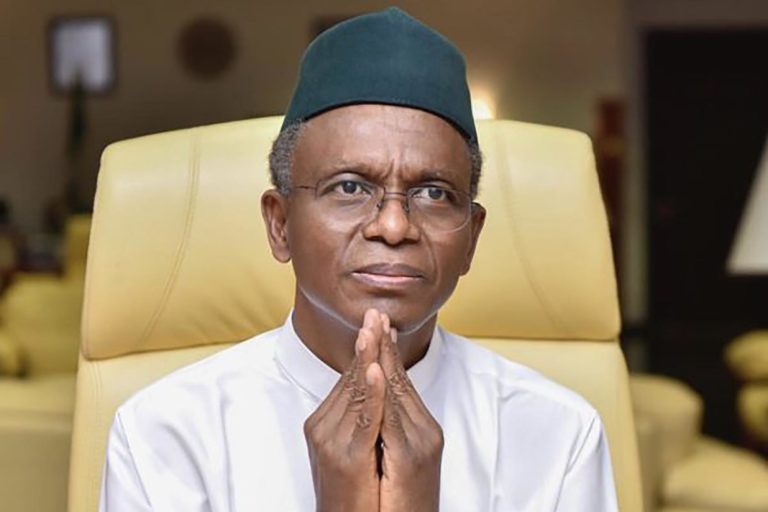
A Federal High Court sitting in Kaduna has ordered the temporary forfeiture of N1.37 billion allegedly diverted into a private account under the administration of former Kaduna State Governor, Nasir El-Rufai.

The ruling, delivered by the judge H. Buhari, followed an ex parte application filed by the Independent Corrupt Practices and Other Related Offences Commission (ICPC) on February 14, 2025.

The commission sought the order under various anti-corruption laws, including the Corrupt Practices and Other Related Offences Act 2000, the Advance Fee Fraud and Other Fraud Related Offences Act 2000, and the Proceeds of Crime (Recovery and Management) Act 2022.

The ICPC alleged that the funds were diverted into a private account belonging to INDO KADUNA MARTS JV NIG. LTD and were later recovered into the commission’s recovery account domiciled at the Central Bank of Nigeria (CBN).

The judge also directed that a public notice be published in two national newspapers, inviting any individuals or entities with legitimate claims to the funds to come forward and show cause why the money should not be permanently forfeited to the Federal Government of Nigeria.

The case has been adjourned to April 8, 2025, for a hearing on the final forfeiture.

The ICIR reports that the commission approached a Federal High Court in Kaduna, seeking an interim forfeiture order on the fund, which it said was a proceed from a fraudulent light rail project that the administration failed to execute.

The ICPC had recovered the money into the commission’s recovery account domiciled with the Central Bank of Nigeria in the course of an ongoing investigation into the activities of the officials of the state government during the period.

The exparte motion filed by the commission before the court seeks the court’s nod for the commission to repatriate the fund to the Kaduna State Government.

The ICPC noted that the alleged diversion had deprived the people of Kaduna State of the benefits of the rail transportation system which the money was meant for.

The ICIR reports that the alleged discovery contradicts El-Rufai’s claim that not a dime was stolen under his administration. The former governor had also boasted recently when he appeared on Arise Television for an interview that he led a corruption-free government.

According to documents filed by the ICPC before the court, the Kaduna State Government, under El-Rufai, entered into a joint venture agreement in October 2016 with Indo Kaduna MRTS JV Nig. Ltd to develop a light rail transport system in the state.

At the time the contract was awarded, the company was not registered with the Corporate Affairs Commission (CAC).  Despite this, the state government proceeded to transfer over N11 billion into the company’s account at Sterling Bank through multiple transactions between December 23, 2016, and January 17, 2017.

The ICIR reports that awarding a contract to an unregistered company is a serious violation of Nigerian law.

Section 814 of the Companies and Allied Matters Act (CAMA) 2020 mandates the registration of business names with the Corporate Affairs Commission (CAC).

Operating a business without such registration is considered an offence under Section 821 of the same Act. Therefore, making payment into the account of such a company not registered by the CAC contravenes these provisions.

How the alleged fraud unfolded

The ICPC’s investigation revealed that rather than execute the rail project, Jitender Sachdeva, the president of Indo Kaduna MRTS JV Nig. Ltd., also the Indian representative of Skipper Nigeria Limited, allegedly instructed Sterling Bank to place the funds in a fixed deposit account.

Over time, the fixed deposit yielded an interest of N326.8 million, increasing the total sum under scrutiny to N11.37 billion.

The interest on the fixed deposit was said to have been diverted to different accounts of Skipper Nigeria Limited domiciled with Sterling Bank Nigeria Limited.

Further investigations showed that in 2019, N10 billion was refunded to the Kaduna State Government following concerns about the project’s execution.

However, the ICPC found that a balance of N1.04 billion remained unaccounted for. This remaining amount, according to the commission, was funnelled into the accounts of GTA Engineering Nigeria Ltd., a subsidiary of Skipper Nigeria Ltd., under “payment for feasibility study” for the light rail project.

The ICPC said there was no evidence that any such study was conducted.

Relying on the Proceeds of Crime (Recovery and Management) Act (2022), and the Advance Fee Fraud and Other Fraud-Related Offences Act (2006) and Nigerian Constitution, ICPC asked the court to grant an interim forfeiture order on the funds.

The commission argued that the money represented illicit proceeds derived from a contract that was never executed and the fund should be forfeited to the Federal Government in public interest.

In addition to the forfeiture request, the ICPC also sought an order compelling the publication of the court proceedings in two national newspapers.

This would allow any interested parties such as the Kaduna State Government or companies involved in the transaction to contest the forfeiture request and provide justification for why the funds should not be permanently confiscated.

Controversial light rail project 

The Kaduna light rail project was initially presented as a major infrastructure initiative designed to modernise the state’s transport system and ease movement of residents.

However, the project was abandoned, despite the billions of naira allocated to it.

The legal battle over the N1.37 billion comes amid broader scrutiny of Kaduna State’s finances. The state is grappling with allegations of mismanagement under the former governor, particularly concerning massive debts allegedly incurred by his administration.

El-Rufai was accused by his successor, Uba Sani, of leaving Kaduna in a dire financial state with billions in liabilities.

Sani said he could not pay salaries and further lamented that El-Rufai left a “huge debt burden of $587m, N85bn, and 115 contractual liabilities” for his government.

El-Rufai’ defence 

Former members of the Kaduna State Executive Council (2015–2023) including El-Rufai, however, denied corruption allegations in the Light Rail Project and insisted that all payments made for the project followed due process.

They explained that the rail project was part of the El-Rufai administration’s infrastructural development agenda and was designed as a Public-Private Partnership (PPP), with an Indian firm, Skipper, securing the contract after a competitive bidding process.

The project was to be funded through a $600–700 million loan from the Indian EXIM Bank, with Kaduna State providing a 15 per cent equity contribution.

According to the statement they issued as their defence, the state government engaged a French consultancy firm, Systra, alongside GTA Engineering, to conduct a feasibility study, which cost $2.8 million (about N890 million). The officials said the study was necessary to secure the loan, and its findings led to an in-principle approval from the Indian EXIM Bank in 2017.

However, they claimed the project stalled after the Federal Government declined to provide a sovereign guarantee, which was a key requirement for securing the loan.

They further noted that the state had made a down payment of N12 billion as part of its equity contribution but later recalled the funds when it became clear that the project could not be executed. They argued that all refunds were made except for the N890 million feasibility study cost.

According to them, the feasibility study remains the property of the Kaduna State Government. They also said a forensic audit was conducted to verify the refunds.

They accused the ICPC of shifting its allegations “after initially claiming that N13 billion was missing.”

They further accused the commission of pressuring Sterling Bank to deposit N1.3 billion into an escrow account with the Central Bank of Nigeria (CBN), which they said comprised the feasibility study cost and accrued interest. They posited that the forfeiture process initiated by the ICPC was unjustified and politically motivated.

Reacting to the ICPC’s claim that the funds were deposited into an unregistered company’s account, the former officials admitted there was a delay in incorporating the joint venture company but maintained that no laws were broken.

They insisted that the project was handled transparently and that the feasibility study and related documents remained state assets that could be used whenever the project is revived.

Dag Hammarskjöld seeks entries for 2025 Journalism Fellowship

The Dag Hammarskjöld Fund for Journalists has announced the opening of applications for its 2025 Journalism Fellowship.

The fellowship would be offering an exclusive opportunity for journalists from developing countries to report from the United Nations Headquarters in New York City.

The fellowship is open to professional journalists aged 25 to 35 who are currently working full-time in print, broadcast, or online media in developing nations except Ghana, Namibia, and Kashmir.  

Successful applicants will have the opportunity to cover the UN General Assembly and engage directly with global policymakers, fostering international understanding through quality journalism.

Applicants are required to demonstrate a strong commitment to international affairs and provide evidence of their work through published news clips. Proficiency in English is mandatory, as all reporting and UN briefings are conducted in the language.

The fellowship covers travel, accommodation, and daily expenses during the reporting period. 

The programme, established in 1962 in honour of former UN Secretary-General Dag Hammarskjöld, aims to promote press freedom and support journalists from the Global South.

The application deadline for the 2025 fellowship is March 30, 2025. Interested journalists can access the application form here

Natasha submits sexual harassment petition against Akpabio 

0

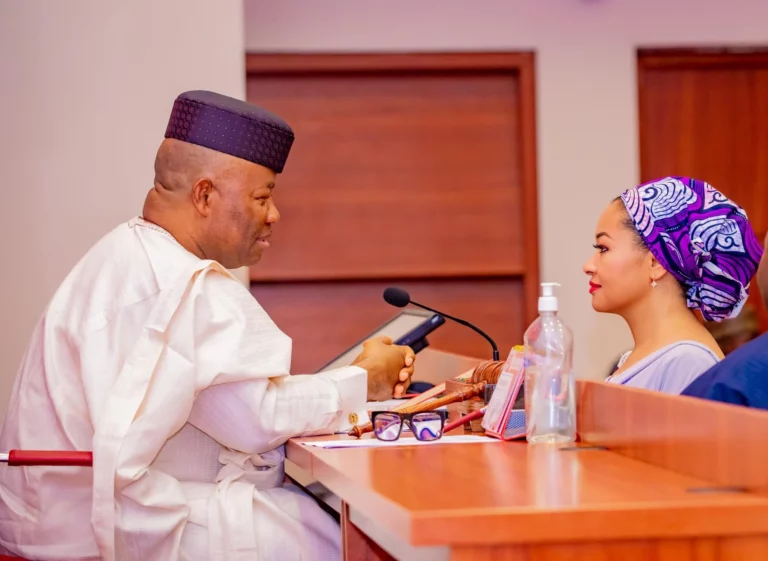
THE senator representing Kogi Central, Natasha Akpoti-Uduaghan, has submitted a sexual harassment petition against the Senate President, Godswill Akpabio.

As plenary resumed on Wednesday, March 5, after a week’s recess, Akpoti-Uduaghan, citing Order 40 of the Senate Rules, said that she had made comments on Arise TV regarding alleged sexual harassment by Akpabio.

While announcing her decision to formally present the allegations as a petition before the Senate, Akpabio granted her permission to proceed.

The Senate subsequently referred the petition to the Committee on Ethics, Privileges, and Code of Conduct, directing it to review the matter as soon as possible.

The ICIR on February 28 reported that Akpoti-Uduaghan accused Akpabio of making sexual advances towards her severally, which she said she turned down.

She said her stance towards the advances was the reason for her incessant conflicts with the Senate President at plenaries within the National Assembly Complex.

The dispute between Akpoti-Uduaghan and Akpabio started on February 27, after the former discovered that her seat had been reassigned without prior notice.

Her refusal to move to the new seat led to a tense confrontation with Akpabio, who ordered the sergeant-at-arms to order her out of the chamber.

However, Akpabio denied allegations of sexual harassment brought against him by Akpoti-Uduaghan.

Dismissing the allegations, Senator Akpabio said, “At no time did I ever harass any woman. I was raised very well by my late single mother, and I have always upheld respect for women. I was even awarded the most gender-friendly governor in Nigeria.”

The Senate President, who said he had been inundated with calls on the matter since February 25, and that he was aware of the growing social media discourse, urged Nigerians, the media, and social media users to refrain from drawing conclusions and instead await the court’s decision on the matter.

Meanwhile, supporters of Akpoti-Uduaghan converged at the National Assembly gate on Wednesday morning but were dispersed by police officers with tear gas.

The protesters demanded the immediate resignation of Akpabio over the alleged sexual harassment levelled against him.


School closure: Kano, Katsina, Bauchi, Kebbi among top 6 states with highest out-of-school children

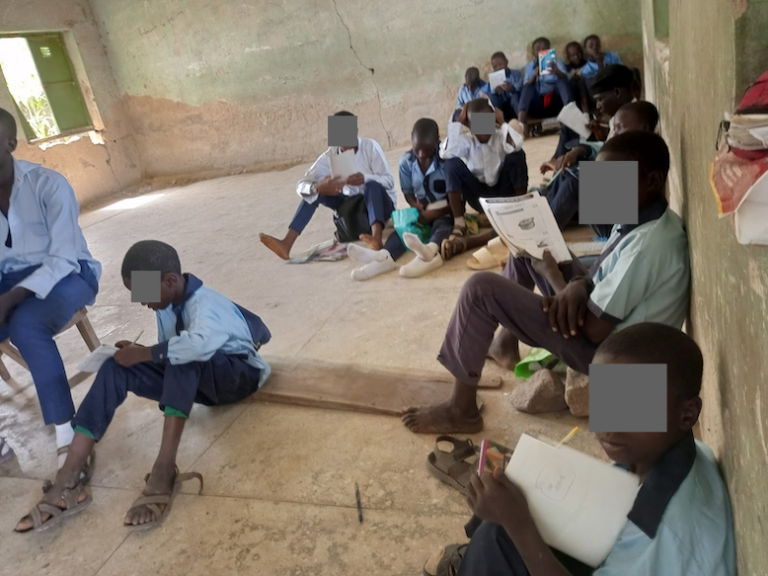
KANO, Katsina, Bauchi, and Kebbi States with some of the highest numbers of out-of-school children in Nigeria shut down schools for Ramadan, further disrupting education in places already struggling with low enrollment. The closures raise concerns about prolonged learning gaps and the broader impact on child development in these states.

According to data from the National Mass Education Programme Initiative (NMPI), the number of out-of-school children stands at 1.89 million in Kano, 1.4 million in Katsina, 1.37 million in Bauchi, and 1.06 million in Kebbi. This puts Kano at the top of the ranking with Katsina 2nd, Bauchi 3rd, and Kebbi 6th.

The ICIR reports that these four states have shut down schools to allow pupils and students observe a Ramadan break.

Ramadan is a 28-30 days fast observed annually by muslim faithfuls. The date and days are determined by the observation of the moon’s crescent.

In Bauchi State, the closure affect all public and private primary and secondary schools, as well as higher institutions of learning.

The state ministry of education, in its approved 2024–2025 academic calendar, had incorporated the break as part of the school schedule. 

According to the official academic calendar, the second term of the 2024/2025 session began on January 5, 2025. However, the term was divided into two phases with phase 1 running between January 5 – February 28. 

Phase 2 starts after a five-week break from March 1 to April 5, with classes resuming from April 6 to April 29. The five-week closure means students will have only about three weeks of learning before the term officially ends, raising concerns about the adequacy of instructional time. 

In Kebbi and Kano, the revised 2024/2025 academic calendars indicate that the Ramadan break commenced on March 1, 2025, with students expected to resume for the third term on April 7, 2025.

In Katsina, the government backed morality enforcing agency, Katsina State Hisbah Board directed the suspension of academic activities during the period. This directive they say also includes the stopping of “extra lessons.”

The pausing of academic activities also affects schools owned and operated by private individuals and religious organisations. The Catholic Church, which has schools impacted by this decision, has described it as a violation of their rights.

The Catholic Bishops Conference of Nigeria  in a statement said “The Nigerian state is secular, and this secularity is not a mere declaration; it is a fundamental principle that must guide all aspects of our national life”.

With these states already grappling with some of the country’s highest out-of-school rates, Nigerians, education experts and stakeholders fear the closure could further worsen an already dire situation.

The ICIR reports that Nigeria has one of the highest numbers of out-of-school children in the world, with estimates ranging between 10 and 20 million, according to 2024 UNICEF report.

Specifically, the country’s education system faces an alarming crisis, with 10.2 million children of primary school age, and another 8.1 million of junior secondary school age out of school, and 74 per cent of children aged 7–14 lacking basic reading and Math skills. 

According to the report, the crisis is compounded by increasing attacks on schools, with 19 documented incidents in 2022 and 2023 leading to the closure of 113 schools in Borno, Adamawa, and Yobe states due to insecurity. There were several other cases of attacks on schools in 2024.

For instance, the attack on primary and secondary schools in Kuriga, where 137 students were kidnapped led to its closure for several months. 

Data from the National Mass Education Programme Initiative (NMPI) shows that the four states which shut down schools for Ramadan are among those with the highest number of out-of-school children in the country.

The ICIR analysis shows that Kano, being one of the country’s most populous states, has nearly 1.89 million school-aged children not receiving formal education, translating to 39.2 per cent of its school-age population. 

Katsina has about 1.4 million children out of school, representing 45.9 per cent of its school aged population.

In Bauchi, the crisis is even more severe, with 55.7 per cent of school-age children not attending school. This accounts for 1.37 million children left behind in the educational system. 

Kebbi State has 67.6 per cent of its school-age population out of school, recording over 1.06 million children outside the classroom.

This means Kano, Katsina, Bauchi, Sokoto, Jigawa and Kebbi lead the ranking of out of school children in Nigeria respectively.

Zamfara, Yobe, Kaduna, Niger, Borno, Gombe, Oyo, Plateau, Adamawa sit in the top 15 of the ranking.

Sowore, NANS condemn school closures

Human rights activist and former presidential candidate, Omoyele Sowore, while reacting to the school closure in a recent interview published by TV Platinum, described the decision as ‘ignorant’ and ‘idiotic.’

“Saudi Arabia, where everybody is headed for lesser Hajj—did they close down their schools? You see, those are ignorant Muslims,” Sowore said.

He said if he were a president, no state governor would intervene with religion under his watch.

Also, the National Association of Nigerian Students, NANS, on Monday, March 3, threatened a nationwide protests should the affected state governments fail to reverse their decision to close down schools.

NANS, in a statement by its National Public Relations Officer, Samson Adeyemi, described the closure as an infringement on the right of every student to uninterrupted education.

The student body further noted that the development would negatively impact learning.

Recall that The ICIR reported that the affected state governments, particularly Bauchi, faced backlash following its decision on closing schools during the Ramadan.

The decision drew criticism from parents and Nigerians, who argued that such a long break could further harm the already struggling education system in a state with one of the highest rates of out-of-school children in Nigeria.

CAN calls decision discriminatory

The Christian Association of Nigeria (CAN) described the closure as discriminatory and a violation of the rights of non-Muslim students. The organisation further threatened that it would pursue legal action if the orders were not rescinded.

In a statement issued on Sunday, March 2, in Abuja, CAN President, Daniel Okoh, stated that “Policies impacting diverse populations—Muslims, Christians, and others—demand transparent, inclusive dialogue with parents, educators, religious leaders, and school proprietors.

Note: The headline was edited from top 5 to top 6

Why fuel price will drop further from now till June – Experts

0

MAJOR petroleum marketers, and oil sector governance experts have cited reasons why the price of Premium Motor Spirit (PMS), popularly called fuel in Nigeria would drop further down.

Nigeria, recently witnessed price cuts in fuel pricing, following the total deregulation of the petroleum sector, which also informed the official removal of petroleum subsidies as announced by President Bola Tinubu.

Earlier, Dangote Petrochemical refinery informed of a price drop shortly before this year’s Ramadan fasting, announcing that the company would absorb N16 billion loss by refunding N65/litre to marketers so Nigerians will benefit from cheaper fuel.

Not just Dangote, the Nigerian National Petroleum Company Limited (NNPCL) has similarly announced a price cut signalling a deeper competition for market share in the petroleum downstream sector.

Already, checks by The ICIR confirmed that some retail outlets owned by the NNPCL adjusted their petrol pump price to N860 per litre on March 3, at the same rate Dangote sells petrol at MRS filling stations in Lagos.

Accordingly, the company’s stations in Lagos adjusted their pumps to N860 per litre, down from N945 as of Sunday-March 2. This comes a few days after the Dangote refinery reduced its ex-depot petrol price from N890 to N825 per litre.

Informed analysts are of the view that Nigeria’s naira stability against the United States dollar which exchanges at 1,496.7/$ as of today, March 5 and improved local refining capacity in addition to a stable oil price could see the price cuts further till June 2025.

“From an analysis point of view, I expect the price to go further down in June which is also largely dependent on the global currency market and global oil price,” the chief executive officer of Financial Derivatives, Bismarck Rewane, said in response to the ongoing price war among Petroleum downstream players.

“In a price war, nobody wins, the consumers win in the short run then eventually the market goes back to where it should be. But, at the end of the day, between now and June, the price leadership will be firmly established,” Rewane said.

Commenting further on the development, former chairman of the Major Oil Marketers Association of Nigeria (MOMAN), Adetunji Oyebanji, shared a similar view but observed that regulatory authorities should ensure fairgrounds for competition for all players.

“It’s a new dawn for the deregulated petroleum sector, but there’s a need to ensure a fair competitive ground for all players who may not have the financial muscle to withstand the momentum. The regulators should ensure there is fair play in the competition, “Adetunji said.

He suggested that some petroleum retail outlets collaborate in sorting out logistics problems to sustain their business.

Speaking further on the development, the National Publicity Secretary of the Independent Petroleum Marketers Association of Nigeria (IPMAN), Chinedu Ukadike in response to the price cuts told The ICIR that prices would further go down if the NNPCL refineries across the nation performed optimally.

“If the Port Harcourt, Warri and Kaduna refineries work optimally, we would see more competition pushing down the petrol price. Many licensed refineries are also warming up to come on-stream and this will influence price cuts.

Recall, that on February 2, The ICIR reported that the Dangote refinery dropped its ex-depot price of petrol from N950 to N890, citing the decline in the price of crude oil at the international market.

“This strategic price adjustment is designed to provide essential relief to Nigerians in anticipation of the upcoming Ramadan season, while also supporting President Bola Ahmed Tinubu’s economic recovery policy by alleviating the financial burden on the Nigerian populace.

“It is important to note that Dangote Petroleum Refinery has consistently lowered the prices of petrol and other refined petroleum products to the benefit of Nigerians. This marks the second price reduction of PMS in February 2025, following a previous decrease of N60.00 earlier in the month,” the management said.

With the new adjustment in its ex-depot price of petrol, the refinery said the MRS Holdings filling stations would now sell for N860 per litre in Lagos, N870 in the South-West, N880 per litre in the North, and N890 per litre in the South-South and South-East respectively.

“The same product will also be available at the following prices in AP (Ardova Petroleum) and Heyden stations: N865 per litre in Lagos, N875 per litre in the South-West, N885 per litre in the North, and N895 per litre in the South-South and South-East,” it added.

With the consistent drop in the price and export of its refined petroleum products, the Dangote Petrochemical refinery company is gradually showing its market dominance in the Nigerian petroleum industries while the state-owned oil firm, Nigerian National Petroleum Company Limited (NNPCL), is behind.

Lately, the Dangote refinery sold two cargoes of aviation fuel to Saudi Aramco, the national oil company of Saudi Arabia.

In its monthly report for January 2025, the Organisation of Petroleum Exporting Countries (OPEC) noted that the emergence of Dangote refinery has reduced the importation of petroleum products from Europe to Nigeria.

Court stops Senate from probing Natasha

0

A FEDERAL High Court in Abuja has issued an interim order stopping the Senate from proceeding with its plan to investigate recent actions of the senator representing Kogi Central, Natasha Akpoti-Uduaghan.

The court, presided over by Obiora Egwuatu, issued the order on Tuesday, March 4, consequently blocking the Senate Committee on Ethics, Privileges and Public Petitions from deliberating on Akpoti-Udughan’s recent actions at the Red Chamber.

The order followed an ex parte application filed by counsels to Akpoti-Uduaghan.

The ICIR reported on February 20 that during a plenary, Akpoti-Uduaghan caused an uproar at the Senate when she discovered that her seat had been reassigned without prior notice.

She resisted the seat reassignment and argued that it was an attempt to silence her.

The Senate Chief Whip, Tahir Monguno, justified the change, citing Senate rules and shifts in party affiliations.

Akpoti-Uduaghan’s refusal led to a tense confrontation with Senate President Godswill Akpabio, who ordered the sergeant-at-arms to order her out of the chamber.

Following the seating arrangement dispute, the Senate unanimously voted to refer Akpoti-Uduaghan to the Committee on Ethics, Privileges, and Public Petitions for a disciplinary review.

The committee, led by Neda Imaseun, was tasked with submitting its findings within two weeks.

The ICIR reported that amid the crisis, Akpoti-Uduaghan filed a N100 billion defamation lawsuit against Akpabio and his aide, Mfon Patrick.

Akpoti-Uduaghan claimed that a Facebook post by Patrick allegedly contained defamatory remarks about her legislative competence and personal appearance.

The lawsuit sought damages and a public apology, claiming the publication harmed her reputation and subjected her to public ridicule.

Meanwhile, speaking during an interview on Arise Television’sThe Morning Showon Friday, February 28, Akpoti-Uduaghan accused Akpabio of making sexual advances towards her severally, which she said she turned down.

She said her stance towards the advances was the reason for her incessant conflicts with the Senate President at plenaries within the National Assembly Complex.

According to her, some of Akpabio’s love proposals were made with her on the phone and face-to-face in her husband’s presence. She further alleged that she had all the evidence for her claims.

She challenged the State Security Service (SSS) and National Intelligence Agency (NIA), among others, to probe her allegations.

She also said three other female senators among the 109 lawmakers in the Senate had been quiet about her plight.

According to her, the first time Akpabio made sexual advances to her was a day before her birthday and that of the Senate President, who shares the same birthday with her.

She further alleged that the Senate President made advances towards her when she went to his office in February after failed efforts to get approval to move a motion concerning the moribund Ajaokuta Steel Mill.

She described the situation between her and the Senate President as a situation where a university lecturer kept failing a student because she refused to sleep with him.