AS Nigerians mark Valentine’s Day, public health experts have raised concerns about the possible risks of unsafe sex.
The National Agency for the Control of AIDS (NACA) also warned about the dangers of unprotected intercourse, which could result in unwanted pregnancies and the spread of sexually transmitted infections (STIs).
The ICIR reports that while the day is traditionally associated with expressing love, many see it as an occasion for demanding sex.
In response, NACA, on Friday, February 14, launched an awareness campaign, urging Nigerians to make informed decisions about their sexual health.
“Love is powerful when it’s safe and informed! This Valentine’s Day, let’s celebrate love while spreading awareness about HIV/AIDS. Get tested, stay educated, and support those living with HIV. Love with knowledge, care with compass,” the organisation wrote on its social media handles.
Growing concerns over HIV, other infections
Nigeria bears the heaviest HIV burden in Sub-Saharan Africa, with about two million people living with HIV in the country, according to NACA.
In 2020 alone, AIDS-related deaths in Nigeria were estimated at approximately 49,000 across all age groups.
While antiretroviral therapy has improved the quality of life for many, health officials believe prevention remains the best strategy.
About 90 per cent of people living with HIV were receiving antiretroviral therapy (ART) as of 2021, according to data from Statista.
It also noted that the number of people living with HIV in Nigeria rose in the past years.
Access to effective HIV prevention, diagnosis, treatment, and care has made HIV a manageable chronic health condition, enabling people living with the virus to lead long and healthy lives. However, with the recent policy shift by U.S. President Donald Trump and the uncertainty around funding, many Nigerians are beginning to worry.
In addition to HIV, other STIs such as syphilis, gonorrhoea, and chlamydia are also on the rampage. The latest data published by Statista shows that as of 2020, about 7.5 million people in Africa had gonorrhea.
The report shows that the prevalence was higher among females, with about 4.3 million people infected, whereas the number of infections among males was 3.2 million.
On Chlamydia, the report highlighted that as of 2020, about 25.5 million people in Africa had the disease, with a higher prevalence among females of about 14.7 million people infected, whereas the number of infections among males was 10.8 million.
Dr. Michael Olarewaju, a public health expert, noted that many people engage in impulsive sexual activities, often under the influence of alcohol or ‘drugs’, leading to a rise in unwanted pregnancies.
“We know that engaging in unprotected sex always carries risks – significant risks, for that matter. And on a day like this, when emotions are running wild, some people drink a lot of things and they behave in an impulsive manner, the risks can be even greater than usual. The Impulsive behaviour may be a result of drinking and all that. Drinking is a surrogate marker for other dangerous behaviours, like risky sexual behaviour.
“So, what are the risks associated with this? First, they have the risk of picking up sexually transmitted infections (STIs) such as HIV – the most dreaded of them all – chlamydia, herpes, and human papillomavirus (HPV), which can lead to cervical cancer in the future.
“So the second thing is an unplanned pregnancy. Aside from the possibility of sexually transmitted infection, the next thing is an unplanned pregnancy. Some people would say it’s just once and all that but then on a day like this, you can’t tell how many people will get pregnant,” he said.
Beyond pregnancy, the risks, he noted, extended to unsafe abortions and potential complications, especially for individuals with co-existing STIs.
Olarewaju stressed that psychological distress was another major concern, adding that many might experience regret, anxiety, and even symptoms of post-traumatic stress disorder (PTSD) after engaging in unplanned sexual encounters.
’Love in the air’
In previous years, February 14 was characterised by extravagant displays of items associated with love, lavish dinners, gift exchanges, and street decorations with people donning red attires.
However, with soaring inflation, many would think Nigerians would find it difficult to spend on Valentine’s Day. The SBM Intelligence report ‘Love in the Air: How Nigerian Consumers Are Driving Valentine’s Day Growth in 2025,’ reveals otherwise.
The report, published on February 10, shows that many Nigerians are still willing to spend on Valentine’s Day celebrations.
According to the findings, 85.6 per cent of respondents indicated plans to mark the occasion, with some setting aside as much as N500,000 for gifts, outings, and other romantic gestures.
The survey examined Valentine’s Day spending habits among Nigerians aged 18 to 65.
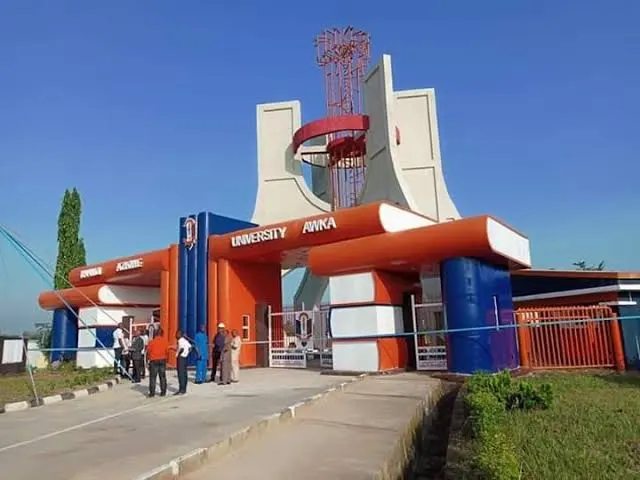
THE management of the Nnamdi Azikiwe University (UNIZIK), Awka, has expelled third-year student Goddy Mbakwe Precious following a viral video that captured her assaulting a lecturer Chukwudi Okoye in the university’s Theatre Arts and Film Studies department.
The expulsion was confirmed through a letter signed by the acting registrar, Victor I. Modebelu, on behalf of the acting vice-chancellor.
According to the expulsion, Precious was found guilty of gross misconduct in violation of the institution’s disciplinary regulations.
“Consequently, the acting vice-chancellor on behalf of the University Senate approved the committee’s recommendation that you be expelled and you are hereby expelled from Nnamdi Azikiwe University, Awka.
“The expulsion takes immediate effect,” the letter read.
The letter, issued on February 13, 2025, directed the student to vacate the university premises immediately and return any property in her possession.
The university noted that the decision came after a full review by the university’s disciplinary committee and subsequent approval by the university’s Senate.
Recall that the management said it had on February 11, launched an investigation into the viral video of the altercations, which sparked mixed reactions on social media.
Backstory
The events leading to the expulsion began on February 11, when a series of videos posted on social media showed a tense encounter between Precious and Okoye.
The altercation began when Okoye walked into Precious who was taking a video along the university hallway.
Footage showed Okoye tapping the student on the shoulder, saying “Excuse me” as he passed, but Mbakwe reacted, saying “Can you imagine? He just hit me.”
The situation escalated, with other videos showing Precious grabbing Okoye’s shirt and tearing it. She also bit the man on the wrist.
Throughout the process, Okoye was seen as maintaining his composure and not retaliating.
The ICIR, however, could not independently confirm how the incident degenerated as the lecturer was seen to have passed by the student in the first footage.
However, social media posts attributed to the lecturer and Precious provided differing accounts of the incident.
Precious, in a post attributed to her, claimed that someone attempted to grab her phone from behind, and eventually realised it was the same lecturer who had interrupted her video.
She further alleged that Okoye grabbed her “breast region,” and scratched her chest with his nail.
“I was devastated and at the same time still lamenting in pain as I picked up the pieces of my shattered phone. But the situation took a dark turn when the lecturer grasped my breast region, saying unspeakable things.
“I was left stunned, trying to comprehend the horror unfolding before me. As I realised my cleavage was exposed, I begged him to let me go, but he ignored my pleas, holding me firmly. His nails and clutches left certain prints and scratches on my chest rather.
“I was mortified. I tried to cover myself, pulling my dress together, and exclaimed in desperation, ‘Sir, I’ll hold you oh!’. I didn’t mean to threaten him; I just wanted him to release me. But he wouldn’t budge. In a split second, I bit his hands, hoping he’d let go. That was when I held his clothes and accidentally tore his shirt,” she reportedly said.
However, the lecturer, in a post linked to him, claimed that he overheard her insulting him and decided to return to ascertain if she was one of his students and also to demand that she delete the video that showed him passing by.
“My theatre Arts people, I had just left Hall 19, where Dr Ebekue (another lecturer) was teaching. Walking along the passage, I saw a girl doing a video with her phone,” he said.
He added, “Tapping her slightly, I asked her to excuse me as I walked past. After about two or three steps, I heard her say, ‘Who does this man think he is?’ I walked back to ascertain first if she was my student and second to make sure she deleted the video showing where I passed.”
According to him, the student bit him on both arms, tore his clothes, slapped him, and scratched his face in the process.
THE Central Bank of Nigeria (CBN) has again assured depositors and the public of the financial health of Keystone Bank Limited, triggered by recent developments that led to a full takeover of the bank by the Federal Government.
The growing concerns over Keystone Bank’s stability were recently heightened following a court order that dissolved the stake of the bank’s former shareholder, Sigma Golf Nigeria Limited, and forfeited them to the federal government.
Through the Economic and Financial Crimes Commission (EFCC), the federal government had filed a court action at the Lagos State High Court, Ikeja, against the former owners challenging its acquisition of Keystone Bank’s shares.
In a statement on Friday, February 14, signed by its acting director of corporate communications, Hakama Sidi Ali, the apex bank acknowledged the public concerns, stating that Keystone Bank is financially stable.
“The Central Bank of Nigeria (CBN) wishes to reassure the public that Keystone Bank Limited remains safe, sound, and fully operational.
“We acknowledge that this development may have triggered customer concerns; however, we wish to underscore that the stability of the banking system and the safety of depositors’ funds remain our top priorities,” CBN stated.
It maintained that Keystone Bank’s operations are entirely secure, and there is no reason for concern.
It said the Court Order merely reaffirmed its prior decision to take over the management of Keystone Bank in January 2024, following a change in its leadership.
Since then, the apex bank has closely monitored its operations to ensure it is in full compliance with regulatory standards and operational transparency and in the interests of depositors.
“As part of our commitment to safeguarding the financial system and building public trust, we shall continue to monitor the bank’s performance.
“We will take all necessary steps to protect the interests of depositors, staff, and stakeholders. Customers are also encouraged to contact Keystone Bank’s customer support or visit any Keystone Bank branch for inquiries or concerns,” CBN maintained.
The ICIR reported in October 2024 that following public concerns, the apex bank claimed Keystone Bank was financially healthy.
Its defence of the bank’s health came after it revoked the operating licence of Heritage Bank Plc, and news festered that it might withdraw the licence of some other struggling banks.
In a statement it issued at the time, CBN said it had no plan to withdraw the operating licence of Keystone Bank amid growing concerns over the bank’s financial health, The ICIRreported.
THE head of financial crime at crypto firm Binance, Tigran Gambaryan, has said three Nigerian lawmakers allegedly demanded a $150 million bribe from him.
Gambaryan and another Binance official, Nadeem Anjarwalla,were detained by the Nigerian government, which accused their firm of money laundering and encouraging criminality in Nigeria.
While in detention, the Binance chief said some lawmakers solicited bribes from him to free him from arrest and prosecution.
He was eventually released after the government dropped the charges against him following the intervention of the US government led by former president Joe Biden.
But in a post on his X handle on Friday, February 14, Gambaryan, whowas detained in Nigeria for several months listed some lawmakers as involved.
He added that, “At the House meeting, there were three members present.”
“There was a third House member, but I don’t recall his name. They set up fake cameras and media to make the meeting appear official, but the cameras weren’t even plugged in. As you may already know, this ended with them asking for a $150 million bribe, paid in cryptocurrency into their personal wallets. A Mickey Mouse operation at its best,” he tweeted.
Gambaryan also alleged in his post thatthe State Security Service (SSS), also known as the DSS, played a role in the meeting where the House members demanded the bribe.
He stated that a meeting was held with the SSS at its office on January 5, 2024, as a prerequisite to the subsequent meeting with the House of Representatives.
The ICIR reported that Gambaryan, a US national who was detained on February 26, 2024, was released on October 23, after the Nigerian government dropped the money laundering charges filed against him through the Economic and Financial Crimes Commission (EFCC).
The trial judge, Emeka Nwite, discharged Gambayran on health grounds.
The EFCC had informed the court that the case could not proceed on the last adjourned date due to Gambayran’s health condition.
In early 2024, Gambaryan travelled to Nigeria to address regulatory concerns between Binance and the Nigerian government. During this visit, Gambaryan and his colleague, Anjarwalla, were detained by Nigerian authorities on allegations of money laundering and tax evasion.
While Anjarwalla managed to escape in mysterious circumstances, Gambaryan was held in Kuje Prison for eight months.
He was eventually released in late 2024 following diplomatic interventions from the U.S. government.
Update:
Provide evidence, lawmaker tells Binance chief
Philip Agbese, one of the three lawmakers Gambaryan named has denied the bribery allegation against him.
He said, “I am outraged by the false allegations made by Tigran Gambaryan, an executive of the controversial crypto firm Binance, claiming that I was among those who demanded a $150m bribe from him.”
“These allegations are false. I was not part of any meeting with any Binance executive regarding money for any purpose. The leadership of the committee took the matter to court, and Binance has already apologised.”
He also explained that he is not a member of the Committee on Economic and Financial Crimes.
THE Port Harcourt Refinery, located in the Alesa-Eleme community, continues to operate at a minimal capacity months after its commissioning. A visit by The ICIR reveals that economic activities have yet to resume optimally, contradicting claims by the Nigerian National Petroleum Company Limited (NNPCL) of full operational status.
Residents of Alesa-Eleme, who previously depended on the refinery for their livelihoods, report that business remains slow. Boma Dokubo, a local food vendor, recalls how, before the refinery’s collapse, she would sell out her meals to depot workers before midday.
However, the downturn in operations has left her and others struggling to make ends meet.
Community leaders also express concerns. The Secretary-General of Alesa-Eleme, Timothy Mgbere, states that while the refinery was once loading over 100 trucks of petroleum products daily, current output struggles to reach 30 trucks.
“If the depot is fully functional, only PMS will load hundred trucks and above. Currently, the refinery is struggling to load with many marketers unable to access paid products,” he said.
“NNPCL for more than a week now is unable to load 30 trucks (AGO, PMS, DPK) all products put together. How would you tell us it’s 100 per cent functional. We are in the community, and we know what’s happening”, Timothy noted, this was at the point when media reports indicate that the refinery had stopped operation.
Timothy Mgbere-the Secretary -General of Alesa Community
Claims of full operation in question
The NNPCL commissioned the Port Harcourt Refinery on November 26, 2024, with promises of full-scale operations. However, an on-the-ground cehecks by The ICIR suggests that significant work remains incomplete. Despite official claims, skeletal loading and ongoing rehabilitation work indicate the refinery is not yet functioning at full capacity.
“We are not saying the refinery is non-functional, but the repairs are incomplete,” Timothy added.
Checks at the site confirm ongoing work.
“As an indigene, I can tell you what I have observed; loading has been skeletal. You cannot load PMS three trucks a day and you say the refinery is doing 100 per cent.
“If your output keeps coming three, five or seven trucks in a day, then there’s a question mark about the 100 per cent functionality as claimed by the NNPCL,” Timothy said.
Impact on petroleum supply and pricing
Findings show that the Port Harcourt depot, which supplies products to Makurdi, Calabar, and Aba, is not meeting demand. Many marketers have resorted to sourcing petroleum products from the Dangote Refinery instead.
The National Publicity Secretary of the Independent Petroleum Marketers Association of Nigeria (IPMAN), Chiedu Ukadike said, “Our findings showed the rehabilitation work is incomplete and loading is still skeletal, contrary to what we have been told.”
“We are currently not accessing products from the Port Harcourt refinery,” Ukadike had stated earlier in the year.
Although, shortly after a tour of the facility invitation was extended to former president Olugsegun Obasanjo, the Petroleum Products Retail Outlet Owners Association of Nigeria (PETROAN) noted that its members are now loading petroleum products from the Port Harcourt refinery.
Production and refinery capacity concerns
Despite reports of operational status, refinery insiders confirm that output remains limited.
The refinery, with an installed capacity of 210,000 barrels per day (bpd), is currently struggling to meet expectations. Insiders also disclosed that the refinery has been relying on Indorama Eleme Petrochemicals Limited for the further processing of Naphtha, raising questions about its ability to refine crude oil independently.
This development, petroleum experts say, will be causing intermittent glitch in the production which has overtime stirred criticisms with so many Nigerians cynical about the production level of the refinery.
The Portharcourt Refinery view at night.
Insider sources confided in The ICIR that although the rehabilitation work has been ‘fairly’ completed, the refinery still lacks capacity to meet with its crude supply with rehabilitation work still ongoing.
Energy analysts argue that the Port Harcourt Refinery’s delayed ramp-up is inadvertently boosting Dangote Refinery’s market dominance.
“The refinery is still at a completion stage,” said oil sector governance expert Henry Ademola Adigun. “What they have done have not worked effectively well. There are some setbacks to be corrected in the refinery for maximum production.”
The road leading to the refinery showing rehabilitation work ongoing.
NNPCL faces mounting scrutiny
Following criticisms over the refinery’s operational status, the NNPCL has been under intense scrutiny.
For instance, in a monitored interview on Arise Television on Thursday, November 28, the secretary of the Alesa community stakeholders, Timothy Mgbere, who appeared as a guest alleged that the 60,000 barrels per day had yet to become fully operational, contrary to the position of the NNPCL.
Reports surfaced that some of the fuel being sold was not newly refined but rather old stock stored at the facility for years.
“It is producing other additives and has not got to the level of petroleum production till the first quarter (Q1) next year (2025),” Adigun told The ICIR.
PETROAN’s spokesman, Joseph Obele, in November last year said that official communication indicated that fuel from the Port Harcourt Refinery would be sold at N1,030 per litre.
However, the NNPCL later stated that these were misleading claims and that its retail portal had not been fully opened for sales at the time. It clarified that bulk sales from the refinery had not yet commenced.
Shortly after, on December 21, 2024, the NNPCL said the Port Harcourt Refinery had commenced production after years of rehabilitation and began truck loading of petroleum products the same day, while noting that it was “fully operational”.
The Port Harcourt Refinery comprise two units, with the old plant having a refining capacity of 60,000 barrels per day (bpd) and the new plant 150,000 bpd, both summing up to 210,000 bpd.
The refinery was shut down in March 2019 for the first phase of repair works after the government secured the service of Italy’s Maire Tecnimont to handle the review of the refinery complex, with Eni appointed technical adviser.
The ICIR reported that the board and management of the NNPCL said the 60,000 barrels-per-day Port Harcourt Refinery was operating at 70 per cent of its installed capacity, with plans to ramp up to 90 per cent.
The NNPCL in a statement issued on Tuesday, November 27, said the refinery was producing the following daily outputs: straight-run gasoline (naphtha): blended into 1.4 million litres of premium motor spirit (PMS or petrol); kerosene: 900,000 litres; and automotive gas oil (AGO or diesel): 1.5 million litres.
The refinery also produces low-pour fuel oil (LPFO): 2.1 million litres and liquefied petroleum gas (LPG)
The clarification by the national oil company followed myriads of controversies that followed the official opening of the refinery with some information dished out by the NNPCL considered as half-truths and lies.
What to know about the Port Harcourt Refinery
The ICIRreported that NNPCL in 2021 used $1.5 billion on the financially battered Port Harcourt Refinery Company (PHRC), signing a contract with an Italian firm Maire Tecnimont S.p.A for the rehabilitation of the inefficient company.
Rather than privatise the refinery, the NNPCL has chosen to pump an equivalent of 4.5 percent of Nigeria’s 2021 budget into the refurbishment of a refinery that comprehensively lost N152.89 billion between 2017 and 2019.
Portharcourt Refining Company Limited (PHRC) is a refinery complex in Alexa-Eleme, Rivers State Nigeria that includes two oil refineries.
The refinery has a combined capacity of two refineries which is 210,000 barrels per day. The old refinery was designed to process 60,000 barrels per day of TNP- a blend of Medium Nigerian crude Oil, whilst the new refinery is capable of processing third party is capable of processing third party crude oil.
The rehabilitation work in 2021 was contracted to an Italian giant Technimont at the cost of $1.5 billion which the government announced has been was completed in November, but our findings in December showed truck loading and other economic activities are yet to pick up at the refinery.
Naphta is equally being refined (Naphta is the refining crude oil to various derivatives). It would be noted that the Naphta is currently heated with superheater with the help of Indorama Petrochemcial to a certain temperature for PMS to come out.
The Refinery is currently producing Naphta and Indorama Petroechemical is producing crack 65 for the refinery to enable a perfect blend of PMS.
“You need super heater to heat it to a certain temperature for PMS to come out,” a source with deep knowledge of the refinery who pleaded anonymity told The ICIR.
“What the refinery is doing now is Naphtha and Indorama is producing crack 65 for us. To get PMS, we are doing blending in partnership with Indorama nearby to us.
The colour of the fuel at the Port Harcourt Refinery sampled by hawkers at the Okirika community in Rivers State
He added, “Other derivatives are currently being produced easily but the refinery has to rely on Indorama since it’s producing Naphtha to blend and get PMS.”
The ICIR findings showed that there’s pipeline linking Indorama and the refinery for the cracking since the super heater is yet not available.
Economic activities
Findings showed economic activities are still dearth around the refinery community, although there are hope of gradual revival with the refinery coming back to life.
For Chukwudi Ezeoba who has worked at the refinery as a sub-contractor with some indigenous company in the past, he has his doubts about the full coming alive of the Refinery.
“No, I don’t believe yet. I know how the Eleme axis used to be alive with lots of economic activities once the refinery comes alive fully. I had worked there before and I can tell you the economic strengths.
Like Chukwudi, most Nigerians are still cynical about the true picture of what’s happening at the refinery with their Nigerian government also struggling with some ‘vital information’.
Doubts persist over refinery viability despite NNPCL’s explanations
Former President Olusegun Obasanjo recently criticised the government’s handling of the refinery.
In a televised interview on Channels Television January 2, he disclosed that a proposal by Aliko Dangote to manage the refinery was rejected in 2007, with the government opting for NNPCL control instead.
He questioned the wisdom of continued state management of the facility given its inefficiencies.
The former President had criticised the functionality of the rehabilitated refinery and accused the Nigeria National Petroleum Company Limited (NNPCL) of lacking in capacity to manage the nation’s refineries.
“When I was president, I wanted to do something about the three refineries we have: Port Harcourt, Warri, and Kaduna. Aliko got a team together after I asked Shell to come and run it for us. And Shell said they wouldn’t,” Obasanjo said.
Community development chairman of Okirika,Victor George, wearing singlet and complaining of neglect in employment of his people
Communities alleged neglect
Community members remain concerned about the refinery’s employment policies and economic impact, although some roads are currently being rehabilitated.
A community development chairman in Okrika, Victor George, expressed frustration over a lack of job opportunities for skilled locals.
“I have worked as a contract staff at the refinery before the commencement of the rehabilitation. I have a machine fabrication experience and there are members of my community who are also trained in certain skills and need to be employed,” he lamented.
He said the community will officially write to the government relations representatives a the refinery and follow up with the employment complaints.
On the flip side, Nigeria’s average daily crude oil production increased significantly to 1.539 million barrels per day (bpd) in January, exceeding the Organisation of Petroleum Exporting Countries (OPEC) quota.
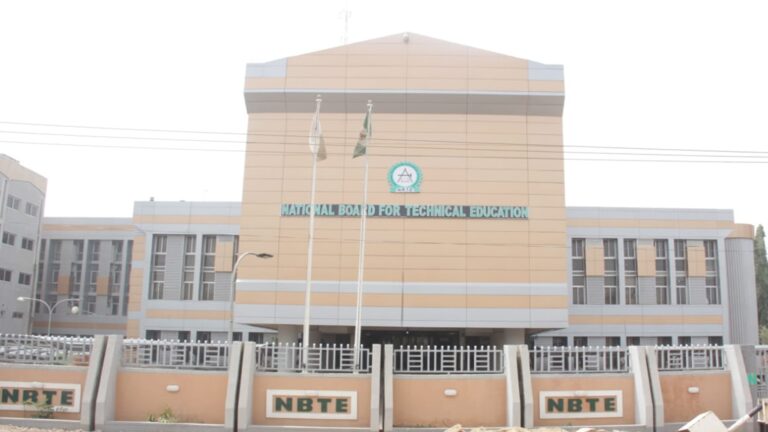
THE National Board for Technical Education (NBTE) in Kaduna has admitted to channelling accreditation funds directly into staff personal accounts in clear violation of Nigeria’s Public Sector Financial Regulation Act and the Ministry of Education’s directives.
It, however, failed to provide clear backing from the Nigerian extant law and Ministry of Education.
Rather, a statement by the NBTE’s head of media unit, Fatima Abubakar, confirmed ICIR’s finding that funds intended for accreditation processes were disbursed directly into personal accounts of staff members.
In its rebuttal, the board acknowledged that it disregarded explicit instructions to process all public funds exclusively through the Treasury Single Account (TSA).
“Since the creation of NBTE in 1977, physical accreditation had been done through cash advances to staff, who in turn pay resource persons air tickets, honoraria etc and at the end make retirements which were audited. The introduction of digital accreditation which would require no such cash advances in early 2024, meant clearance of a backlog of physical accreditations some paid in 2021. That period saw a lot of activities and cash advances all of which have now been retired.
“NBTE had closed the door for physical accreditation but due to complaint from stakeholders we had to allow a window till March 2025 to enable all institutions fix their ICT infrastructure. From April 2025 only digital accreditation shall be sustained and if any institution wants physical accreditation, it shall be outsourced to consultants as approved by the Minister of Education,” the statement said.
The board however kept mum on receiving accreditation fees into the NBTE Consult account—a private-sector entity established in 2021 by the Executive Secretary, Idris Bugaje, – even though this contravene established financial regulations and permission to do so was explicitly denied by the Ministry of Education.
The ICIR had reported that in many instances some institutions paid significant sums to complete their accreditation processes. But, instead of these funds reaching NBTE’s official accounts, they were funnelled into the privately managed NBTE Consult account—a move that flouted government financial regulations and bypassed proper oversight.
Since the creation of the NBTE consult, two directors have headed the unit in the past but in 2024, Bugaje was said to have removed one Bilkisu Daku, and appointed his in-law, Sani Nuhu KofarMata, as the managing director.
The ICIR reported that NBTE Executive Secretary, Bugaje was grilled by the Independent Corrupt Practices and other related offences Commission (ICPC), over allegations of unauthorised withdrawal of about N170 million from the Board’s Treasury Single Account (TSA) into personal accounts.
The investigation followed a petition sent to the commission by a whistleblower alleging the creation of an illegal kickback fund, corruption and nepotism, among other accusations, against Bugaje.
In reaction the NBTE in the statement said the top boss, was not being investigated by the ICPC. “Let it be stated clearly that the Executive Secretary is not under any investigation by ICPC. In mid 2024, there were several petitions by Lawal Hafiz, then suspended Director of NBTE and his collaborators, on allegations of diversion of funds for accreditation which was answered in letters to the Hon. Minister of Education and other government agencies,” it stated.
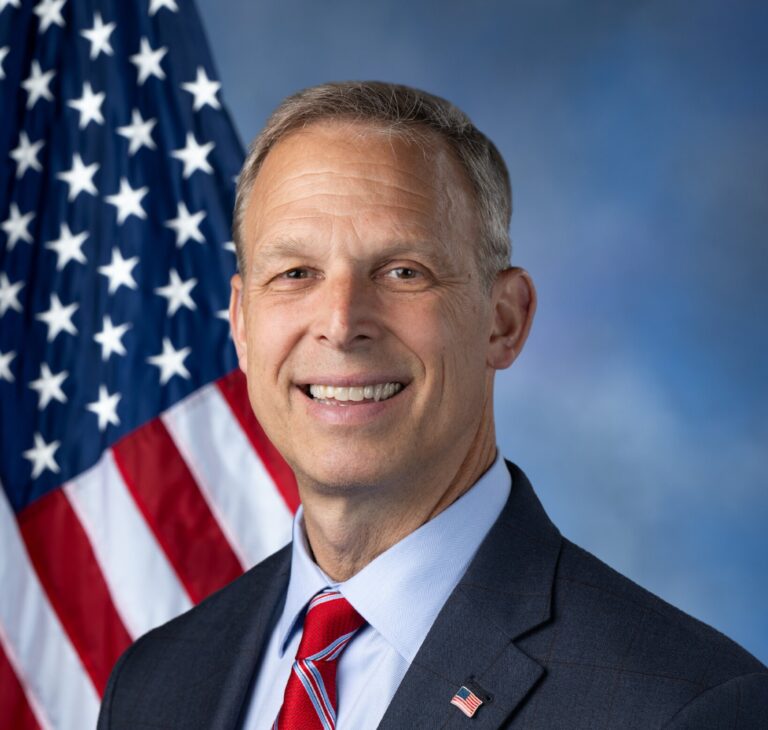
A US Congressman, Scott Perry, has accused the embattled United States Agency for International Development (USAID) of allegedly funding terrorist organisations, including Boko Haram, although he did not provide any evidence to back his claims.
Perry made the allegation during the inaugural hearing of the Subcommittee on Delivering on Government Efficiency, on Thursday, February 13.
In his presentation titled, “The War on Waste: Stamping Out the Scourge of Improper Payments and Fraud,“ Perry, a Republican from Pennsylvania asked several questions about USAID’s operations.
In a video that has gone viral, Perry queried, “Who gets some of that money? Does that name ring a bell to anybody in the room? Because your money, your money, $697 million annually, plus the shipments of cash funds in Madrasas, ISIS, Al-Qaeda, Boko Haram, ISIS Khorasan, and terrorist training camps. That’s what it’s funding.”
Perry also claimed that USAID spent $136 million to build 120 schools in Pakistan, but there was no evidence that the schools were ever constructed.
The lawmaker alleged that the programmes under Operation Enduring Sentinel, specifically the Women’s Scholarship Endowment and Young Women Lead, which receive $60 million and $5 million annually, respectively, were not benefiting the women in Afghanistan as intended.
He stated that according to the inspector general’s report, the Taliban did not allow women to speak in public, making it unlikely that the funds were used for their betterment.
Perry argued that the money was being used to fund terrorism through USAID and that the issue was not limited to Afghanistan but also affected neighbouring Pakistan.
“Somebody else got the money. You are paying for terrorism. This has got to end,” Perry stated.
Perry in the past have made allegations without evidence. The Washington Post noted that he played a key role in promoting false claims of fraud following the last US presidential election. In 2018 he was also accused of linking ISIS with the Las Vegas massacre without substantiating the claim.
The ICIR reports that Boko Haram is a terrorist organisation based in northeastern Nigeria. The group has carried out numerous violent attacks, including massacres and mass abductions, such as the killing of 59 schoolchildren and the kidnapping of 276 schoolgirls in 2014.
The USAID has been under fire since Donald Trump was sworn in as president on January 20. The administration immediately revealed its plan to dismantle the organisation.
The ICIR reported that USAID announced that it would be placing its staff on administrative leave, both in the US and abroad, following Trump’s decision.
The move, seen as controversial by many, sparked widespread criticisms from Democrats and human rights organisations, who argued that it would have a devastating impact on global humanitarian efforts.
The USAID supports health and emergency programmes in over 120 countries, including some of the world’s poorest regions.
Trump’s decision to dismantle the agency is part of a long-standing narrative among hard-line conservatives and libertarians, who believe that US taxpayer money should be spent on domestic priorities rather than foreign aid.
The agency, in a statement on its website, said that the staff leave would begin before midnight on February 7, 2024.
The decision to restrict USAID’s activities is led by billionaire Elon Musk.
Musk, considered a “special government employee” by the White House, heads the Department of Government Efficiency (DOGE).
He has been vocal in his criticism of USAID, describing it as a hub of “radical-left Marxists” who are anti-American.
The billionaire alleged that USAID was involved in illicit activities, including “rogue CIA work” and funding bioweapon research, such as COVID-19, which he claimed resulted in millions of deaths.
Established in 1961, USAID has a budget exceeding $40 billion, representing a relatively small proportion of the US government’s total annual expenditure of approximately $7 trillion.
Trump said DOGE would “dismantle government bureaucracy, slash excessive regulations, cut wasteful expenditures, and restructure federal agencies — essential to the ‘Save America’ movement. This will send shockwaves through the system, and anyone involved in government waste, which is a lot of people!”
Update: The report was updated to note that Perry did not provide evidence to substantiate his claim.
FRAY College has launched the Africa Health Communications Fellowship, a nine-month programme to improve health reporting and communication in Africa.
The fellowship targets journalists and health experts from Nigeria, South Africa, Kenya, Zambia, Malawi, and Ethiopia.
Selected fellows will receive virtual training, access to an exclusive e-course, a data stipend, and story production grants. The programme includes an in-person conference in Johannesburg to foster collaboration between media and health professionals.
Applicants must submit a motivational statement, CV, and published work samples.
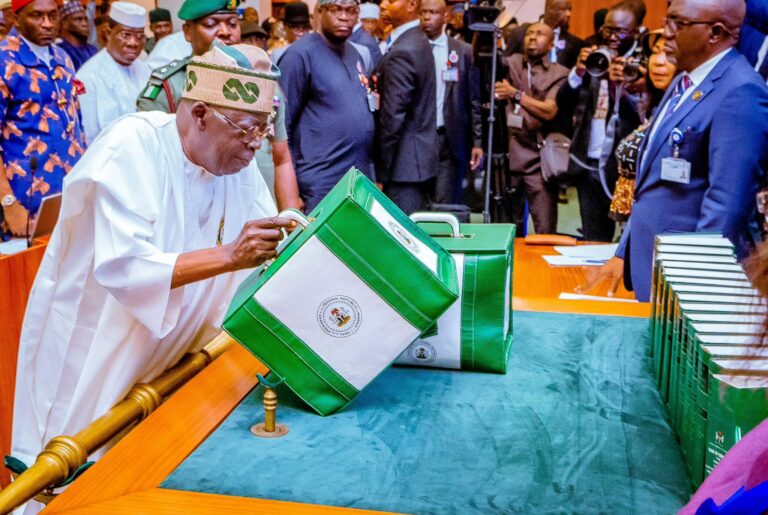
THE National Assembly on Thursday passed the ₦54.99 trillion 2025 appropriation bill, raising it from the initially proposed N49.7 trillion.
The bill was passed separately by the Senate and the House of Representatives.
A breakdown of the budget showed N3.645trillion for statutory transfers, N14.317trillion for debt servicing, N13.64trn for recurrent expenditure, and N23.963trillion capital expenditure (development fund), with fiscal deficit put at N13.08trn.
The deficit-to-gross domestic product (GDP) ratio was put at 1.52 per cent.
Last week, President Bola Tinubu increased the 2025 fiscal year budget from an initial N49.7 trillion to N54.2 trillion, seeking approval from the Senate and the House of Representatives.
The Chairman of the House Committee on Appropriations, Abubakar Bichi, while presenting the bill for consideration, stated that the committee met with the Presidential Economic Planning team to further discuss revenue projections and expenditure for the 2025 Appropriation Bill.
According to him, the 2025 Appropriation Bill was presented late, compared to that of 2024.
He urged the executive to present subsequent budgets to the National Assembly not later than three months before the next financial year, to maintain the January to December budget cycle.
The ICIR reports that the passed budget showed N3.645 trillion for statutory transfers, N14.3 trillion for debt servicing, N13.6 trillion for recurrent expenditure, and N23.9 trillion for capital expenditure.
Before President Tinubu requested an increase from the initial figure, The ICIR reported that the proposed 2025 budget is estimated at N47.9 trillion, representing a 36.6 per cent increase (or about ₦12.85 trillion) compared to the 2024 Federal Government of Nigeria (FGN) aggregate expenditure estimate of ₦35.06 trillion.
It would be noted that Bola Tinubu on Wednesday, December 18 presented Nigeria’s 2025 budget to a joint session of the National Assembly with key highlights, adjusting the exchange rate benchmark to N1,500 per dollar.
Christened ‘Budget of Restoration: Securing Peace, Rebuilding Prosperity,’ Tinubu presented a budget size of N47.9 trillion to the chambers.
He said the 2025 budget sought to consolidate the key policies his administration had instituted to restructure Nigeria’s economy and boost human capital development, increase the volume of trade and investments, bolster oil and gas production, get the manufacturing sector humming, and ultimately increase the competitiveness of the country’s economy.
In the medium-term expenditure framework (MTEF) and fiscal strategy paper (FSP) for 2025-2027 passed by the National Assembly on November 30, Tinubu has presented an exchange rate pegged at N1,400 to the dollar for the three years, The ICIRreported.
NIGERIA’s average daily crude oil production increased significantly to 1.539 million barrels per day (bpd) in January, exceeding the Organisation of Petroleum Exporting Countries (OPEC) quota.
OPEC stated in its monthly crude oil report released on Wednesday, February 12.
This is the first time Nigeria’s crude oil production exceeded the cartel’s quota since it set a daily target of 1.5 million for the country at its ministerial meeting on November 30, 2023.
In December 2024, the quota was extended to 2026 as Nigeria produced below the quota for over a year.
In the January oil market report, OPEC said the crude oil production figure was based on direct communication with the Nigerian government.
OPEC obtains data on crude oil production from two sources, that is direct communication — which is from member countries — and secondary communication, such as energy intelligence platforms.
The secondary sources showed that Nigeria’s crude production declined by two per cent to 1.49 million bpd in January from 1.52 million bpd in December 2024.
But the direct communication source shows Nigeria’s crude oil production rose by 54,000 or 3.6 per cent in January from 1.48 million bpd in December 2024.
Nigeria retained its position as the largest oil producer in Africa, surpassing Algeria, which produced 907,000 bpd in the review month, the report showed.
OPEC highlighted in the report that Nigeria’s oil production is likely to increase with the Dangote Refinery nearing full capacity.
It said, “The oil sector remains central to the economy, and the Dangote Refinery reaching full production capacity should help stabilise the petroleum product supply and possibly lower petrol prices.”
The ICIRreported that the Dangote Refinery had hinted at its plan to ramp up production to full capacity in March 2025.
The plant, with a full capacity of 650,000 barrels per day production, is currently producing at 85 per cent t, according to the refinery.
However, Nigeria’s inability to meet in daily crude oil production benchmark has been of serious concern over the years.
In its proposed 2025 budget being interrogated at the National Assembly, the government has set a 2.06 million bpd production target.
In its 2024 budget, the federal government set the crude oil production benchmark, including condensate, at 1.7 million bpd, but the country only reached an average daily production of 1.34 million bpd, OPEC data shows.
Failure to meet production targets impacts crude oil Nigeria’s revenue, which makes up over 70 per cent of the country’s yearly earnings, experts have consistently argued.
In June 2024, The ICIR analysed that the government was losing over N16 billion in revenue daily from crude oil production, amounting to N1.62 trillion between January and May 202,4 as oil production volume dropped rapidly.