back to top
Home Blog Page 373

Former NHIS boss Usman Yusuf remanded in Kuje Prison

0

THE Economic and Financial Crimes Commission (EFCC) has arraigned a former executive secretary of the National Health Insurance Scheme (NHIS), Usman Yusuf, on fraud allegations at the Federal Capital Territory (FCT) High Court.

Yusuf, who was arraigned on Monday, February 3, before a judge, Chinyere Nwecheonwu, pleaded not guilty to the five-count preferred against him.

The trial judge ordered his remand at the Kuje Correctional Centre.

This decision was made after the defendant’s counsel, O.I. Habeeb, requested that his client be held in the custody of the EFCC pending the hearing of his bail application.

However, the judge ruled that the defendant could not be kept in EFCC custody after arraignment and therefore ordered his remand at the correctional centre.

The case was adjourned to February 12 for the defendant’s bail hearing.

Yusuf is facing allegations of corruption and abuse of office.

He was arrested on Wednesday, January 29, when operatives of the EFCC stormed his Abuja home at about 4:30 p.m. and picked him up for alleged N4 billion fraud, among other infractions.

His arrest followed an ongoing investigation into an allegation that he inflated the NHIA’s ICT budget from N4.975 billion to N8.7 billion and approved payments beyond his approval limit.

According to media reports, the EFCC is investigating Yusuf for also awarding contracts to a company known as Lubekh Nigeria Limited, where his nephew Khalifa Hassan Yusufu is a director.

Yusuf, a professor of haematology/oncology and bone marrow transplant, is also being held for financial mismanagement and abuse of office.

It’s alleged that he used his position for personal gains, approving contracts without following due process and awarding contracts to firms that lacked the competence to execute projects.   

Yusuf was appointed as the head of NHIS (now the National Health Insurance Authority, NHIA) on July 29, 2016. His tenure at the agency was plagued by controversies.

He severally had confrontations with the former minister of health, Isaac Adewole, a professor, and the chairperson of the board of the former NHIS, Enyantu Ifenne, who jointly accused him of high-handedness, mismanagement, corruption and other infractions.

The NHIA staff protested at various times at the organisation’s headquarters in Jabi, Abuja, demanding his sack.

Several petitions were submitted to former President Muhammadu Buhari and the Federal Ministry of Health, alleging misconduct and fraudulent practices against him.

Buhari eventually sacked him in July 2019, ten months after he was suspended from office by the governing council of the agency.

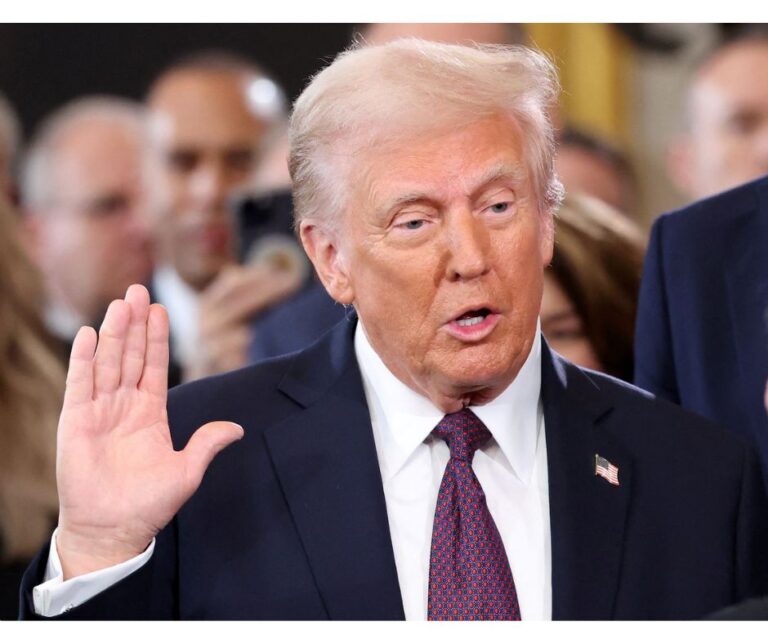
Trump moves to shut down USAID, cuts aid to South Africa

PRESIDENT Donald Trump’s administration is preparing to dismantle the U.S. Agency for International Development (USAID), a move confirmed by Elon Musk, his billionaire adviser.

According to Time, Musk who spoke during a live session on X space early Monday, February 3, claimed he had discussed the matter in detail with Trump, stating that “He (Trump) agreed we should shut it down.”

Describing the agency as beyond salvaging, Musk added, “It became apparent that it’s not an apple with a worm it in.  

 “What we have is just a ball of worms. You’ve got to basically get rid of the whole thing. It’s beyond repair. We’re shutting it down.”

The announcement came amid a growing controversy around USAID, with two senior security officials, John Voorhees and his deputy, Brian McGill, placed on leave after refusing to grant Trump’s inspection team – the Department of Government Efficiency (DOGE) – headed by Musk access to classified materials, according to a former U.S official who spoke with Associated Press on Sunday, January 2.

The official stated that despite lacking the necessary security clearances, DOGE eventually accessed USAID’s classified intelligence reports on Saturday, February 1. 

In response to reports about the incident, Musk wrote on X, “USAID is a criminal organisation. Time for it to die.” In another post, he said, “USAID is evil.” 

The planned closure of USAID is part of a wider push by the Trump administration to overhaul federal agencies.  USAID, which manages billions in U.S. foreign aid across more than 100 countries, has been a particular target of the Trump administration. 

The agency’s website was abruptly taken offline on Saturday without explanation.  

Trump suspends U.S. aid to South Africa

Alongside the USAID controversies, Trump announced a suspension of all future funding to South Africa, accusing its government of confiscating land and mistreating certain groups.

Trump stated that the United States would withhold aid until these issues are thoroughly investigated. 

In a post on Truth Social, Trump claimed South Africa was confiscating land and mistreating specific classes of people, 

He emphasised that such actions would not be tolerated by the United States. 

“South Africa is confiscating land, and treating certain classes of people very badly. It is a bad situation that the radical left media doesn’t want to so much as mention. A massive human rights violation, at a minimum, is happening for all to see. The United States won’t stand for it, we will act. Also, I will be cutting off all future funding to South Africa until a full investigation of this situation has been completed,” Trump wrote.

Meanwhile, in response, South African President Cyril Ramaphosa, while expressing his concerns about the development, stated that the country received little financial assistance from Washington outside of the President’s Emergency Plan for AIDS Relief (PEPFAR).

Ramaphosa defended his country’s land reform policies, clarifying that the recently signed expropriation law aimed to ensure equitable and just access to land in accordance with the country’s constitution, rather than to confiscate property. 

“South Africa, like the United States of America and other countries, has always had expropriation laws that balance the need for public usage of land and the protection of rights of property owners.  

“We look forward to engaging with the Trump administration over our land reform policy and issues of bilateral interest. We are certain that out of those engagements, we will share a better and common understanding of these matters. 

“The US remains a key strategic political and trade partner for South Africa. With the exception of PEPFAR Aid, which constitutes 17 per cent of South Africa’s HIV/AIDS programme, there is no other funding that is received by South Africa from the United States,” he said.

Meanwhile, these were part of the many controversies that have trailed Trump’s administration since he returned to power. 

The ICIR reported how Trump signed executive orders on his inauguration day on Monday, January 20, reversing several policies of his predecessor, Joe Biden.

Some of the orders include pulling out the US from the World Health Organisation (WHO), the  Paris Climate Agreement, ending birthright citizenship for children of illegal immigrants, and recognising only two genders – male and female.

The list includes defending women from gender ideology extremism, reinstating the ban on transgender military service, and renaming the Gulf of Mexico to the Gulf of America, among others.


Tems wins Best African Music Performance at 2025 Grammys

0

NIGERIAN singer Temilade Openiyi, otherwise known as Tems, has won the award for Best African Music Performance category at the 67th Grammy Awards.

Her song Love Me JeJe earned her the win, surpassing Tomorrow by Yemi Alade, MMS by Asake featuring Wizkid, Sensational by Chris Brown featuring Davido and Lojay, and Higher by Burna Boy in the same category.

This victory marks Tems’ second Grammy award. She won the first in 2023.

The award which took place at the crypto.com arena in Los Angeles on Sunday, February 2, honoured and raised funds for those impacted by the California wildfires.

The ICIR reported that Tems made history as the sole African artist with three nominations in the global music category. Her debut album, “Born in the Wild” was nominated for Best Global Music Album, while ‘Burning’ was nominated for Best R&B Song which she lost to SZA.

Music’s biggest night featured major wins for Kendrick Lamar, Beyoncé, Sabrina Carpenter, and Charli XCX.

Kendrick Lamar dominated the night with five wins across multiple categories, including Record of the Year, Song of the Year, Best Rap Song, Best Music Video, and Best Rap Performance for his hit Not Like Us.

Meanwhile, Beyoncé made history as the first Black woman in the 21st century to win Album of the Year, securing the award along with Best Country Album for Cowboy Carter.

Below are the categories featuring Nigerian nominees :

Best African Music Performance

Asake & Wizkid – MMS
Burna Boy – Higher
Chris Brown Featuring Davido & Lojay – Sensational

Tems – Love Me JeJe – WINNER

Yemi Alade – Tomorrow

Best Global Music Album

Antonio Rey – Historias de un Flamenco
Ciro Hurtado – Paisajes

Matt B & Royal Philharmonic Orchestra – Alkebulan II – WINNER

Rema – Heis
Tems – Born in the Wild

Best R&B Song

Coco Jones – Here We Go (Uh Oh)
Kehlani – After Hours
Muni Long – Ruined Me

SZA – Saturn – WINNER
Tems – Burning
For the complete list of nominees and winners, check the official Grammy website here.

South African troops are dying in the DRC: why they’re there and what’s going wrong

0

By Lindy Heinecken, Stellenbosch University

THE death of South African soldiers on a Southern African Development Community (SADC) mission in the Democratic Republic of Congo (DRC) has sparked fierce debate about the deployment of South African National Defence Force (SANDF) soldiers there. Some, including political parties, have questioned whether the soldiers were adequately trained, equipped and supported. Lindy Heinecken has spent decades researching the South African military in peacekeeping operations and has interviewed hundreds of soldiers about their experiences and the challenges during deployment. We asked her for her insights.


What is South Africa doing in the DRC?

The country is part of the Southern African Development Community Mission in the Democratic Republic of Congo (SAMIDRC), which includes troops from Malawi and Tanzania. This deployment followed approval by the Southern African Development Community in May 2023, in response to the deteriorating security situation in eastern DRC. The South African National Defence Force is leading the mission.

Their mandate is to support the DRC government, a member of the 16-member SADC group, in restoring peace, security and stability. The fact that the mandate states that it is to support the DRC government in combating armed groups that threaten peace and security in the eastern DRC implies that this is not a peacekeeping mission.

The legal basis for the deployment lies in the SADC Mutual Defence Pact, (2003), which states that “Any armed attack perpetrated against one of the States Parties shall be considered a threat to regional peace and security and shall be met with immediate collective action.”

The mandate gives them the responsibility to protect civilians, disarm armed groups, and help implement the August 2024 ceasefire agreement between the DRC and Rwanda, brokered by Angola as part of the Luanda Process. This agreement aimed to provide a more secure environment, and protect critical infrastructure to ensure the safe delivery of humanitarian aid. This is in line with the United Nations’ responsibility to protect victims of genocide, war crimes, ethnic cleansing and crimes against humanity.

The M23 rebel group, which is supported by Rwanda, has committed a wide range of atrocities in the eastern DRC which can be traced back to the 1994 genocide.

The impact on civilians has been devastating. While pinning down an exact number is difficult, it’s clear that the rebel forces operating in the eastern DRC, particularly the M23, pose a significant challenge to the stability of the region, and the safety and security of civilians.

The rebels are implicated in mass killings of civilians, rape and other forms of sexual violence and attacks on camps for internally displaced persons. The M23’s atrocities have been condemned by the international community. The United Nations and human rights bodies have called for an end to the violence. They also demand accountability for the perpetrators.

In sum, South African soldiers – alongside Malawians and Tanzanians – are in the DRC to assist the Congolese army in combating the armed groups and to protect civilians from violence and human rights abuses.

Are the soldiers adequately prepared and equipped?

Many questions have been asked about whether South African troops on the mission forces are adequately trained and equipped.

Critics claim this deployment is suicidal.

South African soldiers are well-trained and have served in numerous peace operations. Their extensive deployment means that they have accumulated valuable experience. They have been part of the UN Stabilisation Mission in the DR Congo, Monusco, almost since inception in 1999.

Monusco forces are still present in the DRC, but in the process of withdrawing. Congolese president Félix Tshisekedi requested they leave because of their perceived ineffectiveness.

Nonetheless, there are some valid concerns about the South Africans’ current level of preparedness for the DRC mission. Not least given the complex political situation. There are over 100 diverse armed groups involved. And the terrain is difficult.

The combination of budget cuts, resource limitations, and the complex nature of the conflict raises questions about the South African National Defence Force’s ability to effectively achieve its objectives, and ensure the safety of its personnel.

The force takes its own equipment on missions to ensure it is self-sufficient and can meet its specialised needs. The problem is that this equipment is old, leading to shortages due to maintenance problems. This affects the force’s ability to carry out its duties.

Budget cuts for defence over the years, to less than 1 per cent of GDP compared to the global average of 2 per cent, have severely affected the military’s ability to maintain equipment, conduct training exercises and modernise its force. This has led to a decline in overall readiness.

South African troops in the DRC lack essential resources, including adequate air support, attack helicopters and modern equipment. This limits their ability to respond quickly to threats and provide close air support for ground troops.

Despite having one of the most capable air forces in Africa, it is unable to deploy its Gripen and Rooivalk helicopters because they have not been serviced and lack spare parts.

The use of older equipment has also been less effective against the well-equipped M23.

Besides being outgunned, the regional mission is also out-manned.

The SADC mission in the DRC was authorised to have 5,000 troops from Malawi, South Africa and Tanzania. The actual deployment has fallen far short of this number. As of late January 2025, only about 1,300 troops had been deployed.

Where to from here?

There are concerns in the DRC about the presence of multiple foreign forces, given the relative ineffectiveness of these interventions.

There are also questions about the legitimacy of the mission. Rwanda has opposed the deployment, saying that the SAMIDRC, and specifically South Africa’s involvement, undermines regional unity and cooperation.

The best approach to peace and stability in the DRC requires a concerted effort by regional actors – the DRC, Rwanda, Uganda, Burundi, Kenya and the Southern African Development Community – to address the underlying causes of the conflict. This requires political dialogue with the regional actors, the UN, the international community and, most importantly, the Congolese people.

As for South Africa, it is time for some critical reflection on the future roles of its military. The equipment shortages and challenges it faces raise serious concerns about the defence force’s ability to carry out its core mandate of protecting South Africa, its territorial integrity and its people in accordance with the constitution.

The tragedy in the DRC highlights the dire need for the South African National Defence Force to be redesigned, modernised and funded to become more effective and capable, ready to meet the immediate challenges it faces (like ageing equipment) and ensure the security of South Africa.The Conversation

Lindy Heinecken, Professor of Sociology in the Department of Sociology and Social Anthropology., Stellenbosch University

This article is republished from The Conversation under a Creative Commons license. Read the original article.

UPDATED: Nigerian doctor commits suicide after losing child support case

0

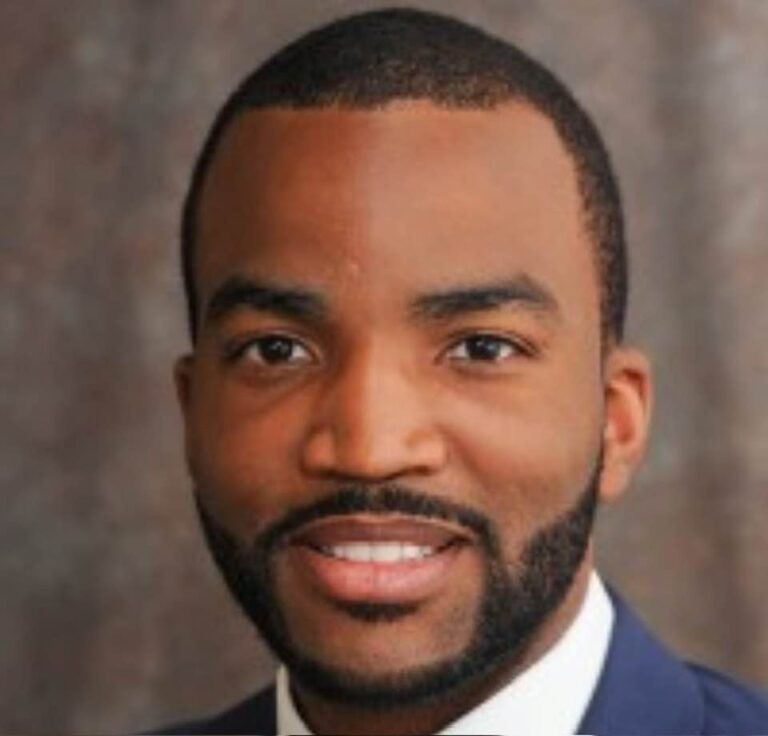
A 36-YEAR-OLD US-based Nigerian cardiologist, Ikenna Erinne, allegedly died by suicide after a court ruled in favour of his ex-wife in a child support case.

The incident reportedly took place on Sunday, January 26. Erinne, an indigene of Anambra State, had been engaged in a lengthy divorce dispute with his estranged wife, mainly concerning the custody of their children.

He lost the case when a U.S. court mandated him to pay in monthly child support.

Clayton Udoh, a Nigerian-American, confirmed the incident in a recent video post on social media, suggesting that the financial pressure from the court’s decision contributed to the doctor’s death.

Part of the video transcribed reads: “In a deeply troubling case, Dr. Ikenna Erinne, an American-trained cardiologist, took his own life after an American court ordered him to pay his ex-wife $15,000 monthly, following a prolonged divorce case.”

The amount was however debunked by the ex-wife’s father, Francis Van-Lare who in a post on Facebook said the child support was $1,900 which he accompanied with what appears to be transaction screenshots.

A screenshot of the post from Francis Van-Lere.
A screenshot of the post from Francis Van-Lare.

Udoh added that the deceased had spent thousands of dollars on legal fees before the court’s ruling and revealed that Erinne also lost his medical license due to the case.

He claimed: “He shot himself. He spent thousands on legal fees – money that went to waste. I’m talking about a process that leaves you impoverished. You go to court, and they take all your money. He lost his license as a cardiologist and was hit with $15,000 a month in child support, plus restricted access to his children.”

Obim Onujiogu, another member of the Nigerian community in the U.S., also confirmed Erinne’s death.

Onujiogu shared the funeral details in a Facebook post, stating that the funeral would be held on Monday, February 3, 2025, in Maryland, U.S.

In the U.S., divorce law generally governs the process of legally ending a marriage, with specific state laws guiding the division of assets, spousal support, and child custody.

Child custody is typically determined based on the child’s best interests, considering factors like the child’s relationship with each parent, the parent’s ability to provide care, and sometimes the child’s preference.

Child support laws require the non-custodial parent to contribute financially to the child’s upbringing, with the amount determined based on income, needs, and other factors.

However, some argue that the system is biased against African Americans, as it is often manipulated by their spouses.

NOTE: The report was updated to include Francis Van-Lare comment on the child support amount and a screenshot of his most. 

Man survives surgery after NDLEA evacuated 57 pellets from his stomach

0

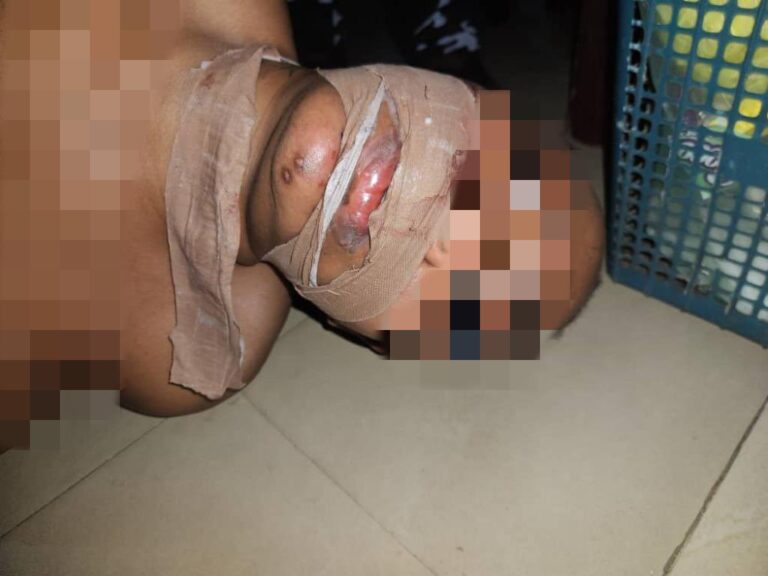
OPERATIVES of the National Drug Law Enforcement Agency (NDLEA) have rescued a 59-year-old businessman, Chijioke Igbokwe, after helping him to undergo emergency surgery to remove 57 of 81 cocaine pellets from his stomach.

The procedure, an exploratory laparotomy, was necessary after Igbokwe struggled for seven days to excrete the illicit substances, which he had ingested in Addis Ababa, Ethiopia.

According to a statement released on Sunday by the NDLEA spokesperson, Femi Babafemi, Igbokwe was arrested on January 26, at the Murtala Muhammed International Airport, Lagos State, during the inward clearance of passengers on an Ethiopian Airlines flight.

The statement said an NDLEA body scan confirmed the ingestion of illicit drugs, leading to Igbokwe being placed under excretion monitoring at the agency’s medical facility.

“Investigations revealed that Igbokwe, who claims to be a clothing trader at Arena, Oshodi, Lagos, departed Lagos on January 22 for Addis Ababa, where he ingested the 81 wraps of cocaine on 23 January before boarding a flight to Beirut, Lebanon, to deliver the illicit consignment for a fee of $3,000.

“Upon his arrival in Beirut, he was denied entry because he had less than $2,000, the minimum amount required for admission. He was subsequently deported to Addis Ababa, where he attempted to excrete the illicit drugs but failed. He then travelled to Lagos on January 25 with the consignment still in his system but was arrested upon arrival at the Lagos Airport by NDLEA officers on January 26.”

The agency explained that after five days of excretion monitoring, Igbokwe had only expelled 24 pellets despite receiving initial medical care at the NDLEA medical facility and Lagos State University Teaching Hospital, Ikeja.

It added that as it became critical and complications emerged due to pre-existing health conditions, Igbokwe was admitted to a tertiary hospital, where doctors performed an exploratory laparotomy to remove the remaining 57 cocaine pellets. The procedure was carried out after Igbokwe’s wife and brother signed the necessary consent forms on January 30, said the NDLEA.

The agency consequently retrieved 81 cocaine pellets from Igbokwe’s body, with a combined weight of 1.943 kilogrammes.

Multiple reports and the NDLEA have shown how Ethiopian Airlines is among the airlines preferred by drug barons for their illicit activities.

Meanwhile, the agency also said its operatives intercepted a 2,000kg shipment of Ghanaian Loud at Lekki Beach on January 29. Two suspects, Sunday Awoyede and Christopher Cletus, were arrested while loading the drugs onto a truck, stressing that another suspect, Lawal Idris Olasunkanmi, was caught the same day with 55kg of skunk in Mushin, Lagos.


Police commence third-party vehicle insurance enforcement

0

The Nigeria Police Force has announced that mandatory minimum third-party motor vehicle insurance would be enforced nationwide starting February 1.  

This enforcement follows the directive from the police inspector general, Kayode Egbetokun.

Third-party motor vehicle insurance is a mandatory policy in Nigeria that provides financial protection against damages or injuries caused to third parties by the insured vehicle.

This insurance covers liabilities such as physical injuries, property damage, and death resulting from accidents involving the insured vehicle.

According to Section 68 of the Insurance Act and Section 312 of the 1945 Motor Vehicle (Third Party Insurance) Act, all vehicle owners are required to possess third-party insurance before operating their vehicles on public roads. Non-compliance with these laws can result in penalties, including fines, imprisonment, or both.

Section 68 of the Insurance Act of 2003 states, “(1)No person shall use or cause or permit any other person to use a motor vehicle on a road unless a liability which he may thereby incur in respect of damage to the property of third parties is insured with an insurer registered under this Act.

“(Two) The insurance taken out pursuant to subsection (1) of this section shall cover liability of not less than N1 million.

“(3Three) The insurance under this section shall be in addition to the liabilities required to be insured under the Motor Vehicle (Third Party) Insurance Act, 1950, and shall be regulated mutatis mutandis by the provisions of the Act.

“(Four) A person who contravenes the provisions of this section commits an offence and is liable on conviction to a fine of N250,000 or imprisonment for one year or both.”

In a statement by the spokesperson for the Lagos State Police Command, Benjamin Hundeyin, all vehicle owners in Lagos must have at least a valid third-party insurance policy.

He urged those without any form of insurance to obtain one immediately and warned vehicle owners and operators against disregarding the order.

Hundeyin further stated that non-compliance would attract stiff penalties, including fines. “This initiative aims to ensure vehicle owners comply with stipulated insurance requirements to protect themselves and other road users,” he stated.

Meanwhile, the commissioner of police, Lagos State Command, Olanrewaju Ishola, has directed officers involved in the enforcement exercise to carry out their duties professionally.

He also warned that any form of misconduct or disrespect toward the public would not be tolerated.

In Akwa Ibom, the commissioner of police, Baba Azare, led a monitoring team across the Uyo metropolis and Ikot Ekpene on Saturday. He stated that the exercise aligned with Section 68 of the Insurance Act.

Azare emphasised that possessing valid third-party insurance was a legal requirement for all vehicle owners before using public roads. He added that the enforcement aimed to protect road users, ensure accountability, and promote adherence to traffic regulations.

“Today, we are here to monitor the enforcement of the third-party insurance compliance in Akwa Ibom State.

“So far, so good, in all the areas we have visited, people are complying, those who have not complied, their vehicles will be impounded and taken to the police station, where they have to comply with the third-party insurance before the release of their vehicles. “For those who will not comply accordingly, the process of prosecution will take place,” Azare said.

Azare noted that the enforcement would be a continuous exercise until everyone complied.

In Edo State, police public relations officer, Moses Yamu, in a statement, said the commissioner of police in the state, Betty Otimenyin, urged vehicle owners to obtain third-party insurance.

The commissioner warned that those who failed to update their vehicle particulars, particularly third-party insurance, would face sanctions.


FCT police rescue lady from suspected ritualist, suspect flees

0

THE Federal Capital Territory (FCT) Police Command has rescued a 25-year-old lady, Promise Eze, from a suspected ritualist and armed robber at an hotel in the Wuse area of Abuja.

The command said it had launched a manhunt for the fleeing suspect.

The FCT police public relations officer, Josephine Adeh, a superintendent of police, disclosed this in a statement shared on X on Sunday.

According to the statement, Promise Eze, from Ebonyi State, was found on Friday, January 31, tied to a chair, and her mouth sealed with plaster.

“She was found unconscious and in distress. Officers acted immediately, freeing her from captivity and rushing her to Wuse District Hospital, where she was resuscitated,” the police said.

Eze had checked into the hotel on January  30 with a man who introduced himself as Emmanuel Okoro from Lagos State.

Further investigations revealed that she had met the suspect online, where he introduced himself as Michael Prince and claimed to be an oil company worker based in Delta State. After she declined his invitation to Delta, they agreed to meet in Abuja.

The police disclosed that what was initially meant to be a harmless meeting metamorphosed into a traumatic experience for the victim.

The suspect allegedly brandished a dagger, used it to threaten and subdue Eze. He tied her hands and legs.

He also taped her mouth. He then left the hotel with her two mobile phones in preparation for how to “finish the job.”

The police added, “Alarmingly, before escaping, the victim overheard him speaking to suspected accomplices over the phone, informing them that he was on his way to regroup before returning to the hotel to finish the job.”

The police assured the public that efforts were ongoing to track down and apprehend the suspect.

The FCT commissioner of police, Olatunji Disu, was quoted as strongly condemning the incident and cautioning residents,  particularly young women, against meeting strangers without taking necessary precautions.

He reiterated the command’s commitment to public safety and urged anyone with useful information about the suspect’s whereabouts to report it to the police.

The police urged residents to remain vigilant and report any suspicious activities to law enforcement authorities.

The ICIR reports that the incident adds to a chain of such crime in Nigeria’s capital.

A similar disturbing incident occurred in a hotel in the Wuse area of Abuja in 2024, where a man was apprehended for allegedly attempting to kill a lady for ritual purposes.

The man had reportedly tied the lady’s hands and legs but was caught and forced to loosen her.

He was eventually arrested by officers of the National Security and Civil Defence Corps (NSCDC) and handed to the FCT police who paraded and charged him in court.

Earlier in January this year, The ICIR reported how Eliojo Salomey, a 24-year-old serving National Youth Service Corp (NYSC) member based in Mararaba, a fast-growing community near Abuja, was allegedly butchered by her boyfriend, a gospel singer, Timileyin Ajayi.

Similarly, in July 2024, a young man, Nuhu Ezra, was arrested by the FCT Police Command for being in possession of a human skull and bones.

According to the command, he had picked up the human skull and bones in a bush to sell for N600,000.

The ICIR reported that there had been a growing challenge of violent crimes in Abuja.

According to the FCT police commissioner,  the command dealt with a significant number of crimes, including 104 kidnappings and 268 armed robberies cases in the nation’s capital in 2024.


Dangote drops ex-depot petrol price to N890

0

THE Dangote Petroleum Refinery has reduced its ex-depot (gantry) price of petrol from N950 to N890, citing the decline in the price of crude oil at the international market.

It announced this in a statement issued by its chief branding and communications officer, Anthony Chiejina, on Saturday, February 1.

The price reduction takes effect immediately.

“This strategic adjustment is a direct response to the positive outlook within the global energy and gas markets, as well as the recent reduction in international crude oil prices.

“As part of Dangote Refinery’s unwavering commitment to transparency and fairness, this price revision reflects the ongoing fluctuations in global crude oil markets, as highlighted in the refinery’s statement on 19th January, when a modest increase was implemented due to the previously rising international crude oil prices,” Chiejina said.

The ICIR can report that crude oil prices have fallen for the second consecutive week.

On Friday, January 31, Brent crude oil price fell to $76.85, after peaking above $80 in previous weeks, following United States President Donald Trump’s recently announced reforms.

In the statement on Saturday, the Dangote Refinery said with its gantry price reduction from N950 to N890, it expected to see a meaningful decrease in the cost of petrol nationwide.

He said the price slash would drive down the prices of goods and services, as well as the overall cost of living, with a positive ripple effect on various sectors of the economy.

“In addition, Dangote Petroleum Refinery calls upon marketers to collaborate in this effort, to ensure that these benefits are passed on to the Nigerian populace.

“This collective initiative will contribute to the wider economic recovery plan led by His Excellency, President Bola Ahmed Tinubu, who is dedicated to making Nigeria self-sufficient in refined petroleum products and positioning the country as a leading oil export hub,” Chiejina added.

In a related development, the Petroleum Products Retail Outlet Owners Association of Nigeria (PETROAN) believes that the Port Harcourt and Warri refineries would lead to a crash in the pump price of petrol.

The group said the refineries were fully operational, with its members loading petroleum products, including DPK, AGO, and PMS.

The Nigerian National Petroleum Company Limited (NNPCL) had revived the Port Harcourt and Warri refineries after years of failed turnaround maintenance on the facilities.

In a statement on Saturday by its national public relations officer, Joseph Obele, PETROAN said contrary to doubts that had greeted the two refineries operations, they had been revamped and were fully operational with its members loading petroleum products, including DPK, AGO, and PMS at the facilities.

“The resurgence of these refineries has sparked intense competition, which is expected to drive down petroleum prices.

“As Nigerians advocate for lower PMS prices, it is clear that competition is a crucial factor in triggering price reductions,” Obele stated.

He said the revitalisation of the facilities had numerous benefits, including the eradication of adulterated petrol, diesel and kerosene from the market.

The PETROAN regretted that for years, the absence of functional refineries led to a proliferation of fake petroleum products, posing significant risks to consumers.

“The refineries’ functionality has also contributed to a decrease in crude oil theft, which has hindered Nigeria’s ability to meet OPEC production targets. As crude oil production increases, Nigeria is expected to generate more revenue and stabilise the naira.

“The revitalised refineries have created job opportunities, with deserted depots now bustling with activity. The host communities are also benefiting from empowerment programmes, which are expected to positively impact insecurity and crime rates in the region,” Obele stated.

Medical jet with six onboard crashes in Philadelphia

0

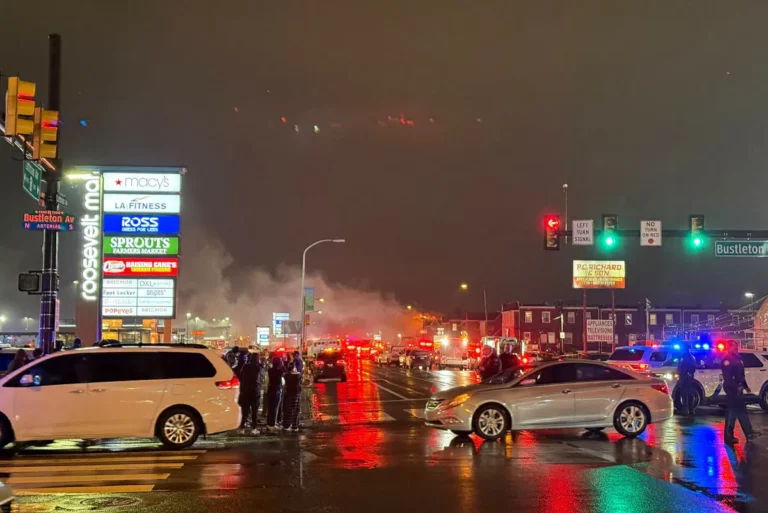
A MEDICAL jet has crashed into multiple buildings in northeast Philadelphia, causing homes and vehicles to go up in flames and injuring people on the ground.

Jet Rescue Air Ambulance, the company operating the plane, confirmed in a statement that the aircraft was on a medical mission on the evening of Friday, January 31, and carrying four crew members, a child patient, and the patient’s mum.

During a news conference at the crash site, Pennsylvania Governor Josh Shapiro acknowledged that there would likely be casualties, describing the incident as an awful aviation disaster.

Emergency teams quickly arrived at the crash site, where residents gathered on streets with burning debris and aircraft wreckage.

Witnesses recounted a chaotic scene as many people were injured and buildings engulfed in flames.

Spokesperson for Jet Rescue Air Ambulance, Shai Gold, stated that the child aboard the plane was receiving treatment in the US for a life-threatening condition and the crew was on its way back to Tijuana, Mexico.

The spokesperson confirmed that the child was accompanied by her mother, a pilot, a copilot, a doctor, and a paramedic.

Gold also said a third-party charity funded the child’s treatment. “She fought quite a lot to survive, and unfortunately, this tragedy on the way home,” he said.

The Mexican Consulate in Philadelphia issued a notice on X, urging Mexican nationals affected by the crash to call a helpline for assistance.

Philadelphia Mayor Cherelle Parker stated that officials were uncertain about the number of fatalities, but the city was asking for prayers for anyone and everyone affected.

The crash occurred just blocks away from Roosevelt Mall, a three-story shopping centre in a densely populated area of Philadelphia, the fifth-largest city in the U.S. The location is surrounded by terraced houses and shops.

Videos posted online show the plane descending rapidly, followed by a massive fireball.

Witnesses reported that shrapnel from the crash damaged cars and scattered burning debris across the streets. Photos of the aftermath reveal cars engulfed in flames and severely damaged.

This comes days after after a passenger plane collided in mid-air with a helicopter near Washington DC on the evening of Wednesday, January 29 2025.