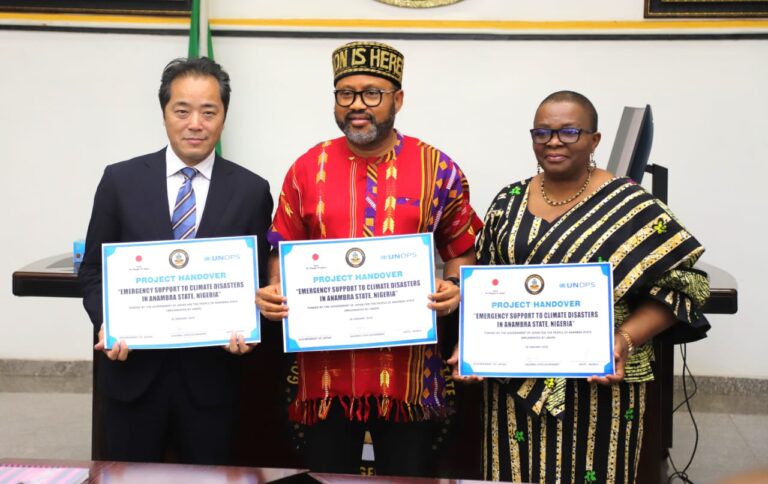
JAPAN and the United Nations Office for Project Services (UNOPS) have handed over vehicles and ICT equipment to the Anambra State Emergency Management Agency (SEMA) to boost the agency’s response to disasters.
The donation followed The ICIR’sinvestigation into how abandoned government projects expose communities in the state to erosion and related crises.
The equipment, handed over on January 30, in Awka, the state capital, includes 10 vehicles (three pickup trucks, four SUVs, and three cargo trucks) and 25 ICT devices (eight laptops, 10 GPS devices, five photocopiers, and two GPS flood detection and monitoring tools).
The intervention is part of the $690,000 project titled “Emergency Support to Climate Disasters in Anambra State,” aimed at equipping SEMA for timely and effective disaster response.
Speaking at the ceremony, the director and representative of UNOPS, Ifeoma Esther Charles-Monwuba, emphasised the project’s dual objective of providing immediate humanitarian assistance and strengthening disaster management systems in Anambra State.
“The overarching goal of this project is to provide humanitarian assistance to flood victims while enhancing the logistical and operational capacity of the Anambra State Emergency Management Agency. This will ensure timely and adequate services are delivered before, during, and after disaster incidents in the state,” she stated.
She detailed how the vehicles and ICT equipment would transform the agency’s ability to respond effectively to natural disasters, particularly floods.
“The provision of these resources will not only enhance the logistical capacity of SEMA but also improve emergency preparedness and response outcomes. The vehicles, for instance, will ensure faster deployment of relief materials and personnel to affected areas, while the ICT tools will provide critical support in data collection, flood monitoring, and coordination of rescue operations.”
Charles-Monwuba also highlighted the project’s long-term focus on building resilience against climate disasters.
“Beyond the provision of equipment, we have also included capacity-building workshops to train SEMA staff on the proper use of these tools. The aim is to ensure sustainability and maximise the impact of this intervention. With this support, we hope Anambra State will be better prepared to handle future disasters and protect its communities.”
She expressed gratitude to the Government of Japan for funding the project and reaffirmed UNOPS’s commitment to supporting vulnerable communities.
“This collaboration showcases the power of partnerships in addressing climate-related challenges, and we are grateful to the Government of Japan for its dedication to disaster risk reduction in Nigeria.”
The project’s broader aim is to ensure that Anambra State is equipped to respond to disasters and prevent them, using advanced tools for flood monitoring and early warning systems.
The ICIRreported that Anambra, one of the South-East states battling perennial erosion and flooding challenges, has over 100 gully sites. Only about 30 have received attention according to a research, ‘Review of Gully Erosion in Anambra State: Geology, Causes, Effects, Control Measures and Challenges Associated with Its Mitigation’.
THE ICIR’s investigation showed that some of the awarded erosion and flood control contracts aimed at solving the problems have remained completely abandoned. Work never started on some while others were poorly executed and have almost returned to their previous states.
DRUG abuse is a menace that has affected many lives in Nigeria. The chairman of the National Drug Law Enforcement Agency (NDLEA), Buba Marwa, announced at a United Nations Office on Drugs and Crime (UNODC) joint press conference on June 19, 2023, that 31,675 drug offenders had been apprehended, resulting in 5,147 convictions and the seizure of over 6.3 million kilograms of illicit drugs.
Available figures from the UNODC 2022 report indicate that 14.4 per cent (14.3 million) of Nigerians within the age group 15-64 years abuse drugs.
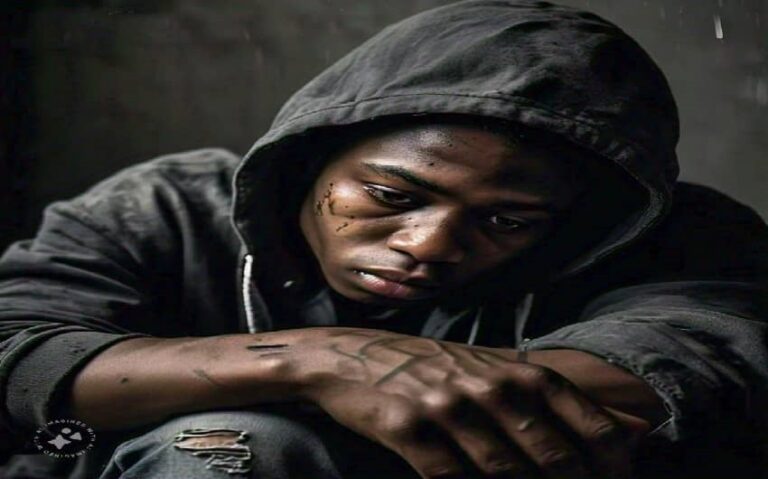
Drug abuse in Nigeria has become endemic, and the consequence can be seen in the increase in the number of young people suffering mental health issues as a result of substance abuse.
Some survivors of drug abuse shared their gruelling experiences with The ICIR.
‘The devil gave me something to work with’
Mayor Ozizi, from Kogi State, a young man, from a family of five, was brought up with strong Christian values, however he got involved with drugs after his secondary school education while waiting to gain admission into tertiary institution.
Mayor Ozizi
Ozizi spotting a white shirt and black trousers calmly narrating how he got involved in drugs said, “I had friends who smoked cigarettes; I detest it. I see it as a very bad thing, but in life, they say never judge an action until you are involved in it.
“After secondary school, while waiting to gain admission into a tertiary institution, like they said, the idle mind is the devil’s workshop; the devil gave me something to work with, and it was drugs, unfortunately.”
Ozizi blamed peer group influence for his ordeal, pointing out that he wanted to “feel among” within his circle of friends.
“I also wanted to hear people share their experiences of how they took things like codeine, cough syrup that got them drowsy and high. Those feelings and peer pressure got me doing drugs, and I abused all sorts of drugs then, ranging from crack cocaine to smoking all sorts of cigarettes. I did codeine, I abused alcohol, I took cigarettes, I took Rephnol, Siphnol; all sorts of drugs,” he said.
He said his parents were shocked when they discovered he was using drugs because they did give him a good upbringing and provided him a conducive environment.
“I had no reason to do drugs because I have basically all I wanted. I was in school, and everything was going well with me. I was actively involved in Church activities. I was a very bright, upcoming child, but unfortunately, I got hooked on drugs, and my parents were shocked at first. Then I was trying to salvage the situation, but it just got worse and worse,” he said.
Road to rehabilitation
As the situation got worse so also his mental health deteriorated. It was at this point he knew he needed urgent help, before then he has dropped out of University of Ilorin where he was a 300 level student of accounting.
“Nothing happened; I just stopped going to school,” he said.
“I knew I needed help, but I couldn’t help myself. I was in a mess- total mess. I knew I was in a deep mess because I could not clean up myself, my hygiene was zero. I would leave my hair bushy; I couldn’t cut it, I would rather use the money to smoke, I could not wash my clothes. I was leaving like hell on earth,” Ozizi said.
After leaving university, he was taken to a rehab, where he spent three years without any improvement to his mental health.
“After that experience, that was when I really made up my mind that I was doing this for myself because, at some point, I thought I was going to be a better person for my parents or stop drugs because I was helping my parents. But, after three years, I knew that I was doing it for myself,” the now sober Ozizi stated.
Through a family friend his parents got to know Secure-D-Future International Initiative (SDF), a rehabilitation home in Abuja.
Freedom
After spending months at the rehabilitation centre, Ozizi was able to pick himself up and embrace a new life free from drugs. Although he said it was not an easy journey, he is quite happy with his freedom.
“I am in a state where I am really happy. I got my confidence back. I can now look at anybody in the eyes andface. I am all right; I am in my right state of mind,” he stated.
He said those days when he could not look people in the eyes when having a conversation were over as he has been able to overcome that after painstaking efforts. I couldn’t walk with my head up high, but now my self-confidence and self-esteem are 100 per cent,” he said, staring at the reporter eyeball to eyeball.
Life as a drug addict
Ozizi said being is financially draining as such he resulted to petty thieving, like stealing and selling his family property to buy drugs. For instance, he sold his family television set twice, removed fans from the ceiling, and sold standing fans.
“I sold them at ridiculous prices. I sold an air conditioner worth N250,000 for N2,500 just to get my next fix”, he said.
He talked back to his parents and attempted to get physical with them whenever they engage him.
Ozizi said that for any drug addict, the easiest thing is how to locate a place to buy drugs. “It is not hard; it’s just like a magnet when you are an addict. It won’t take you minutes for you to locate a hideout or a slum or ghetto where they sold drugs.”
Advice for people still hooked on drugs
Ozizi, who has gone back to school and is now completing his degree at the National Open University of Nigeria (NOUN), advised people who still dwell on drugs to run away from it in their interest. He stressed that drug addiction is a life destroyer.
“Drug abuse is a menace now, everybody knows. It is really destroying youths, destroying destinies, destroying the lives of young ones. I will say total abstinence: don’t do drugs, don’t try it, if you have done, stop,” he advised.
He also advised guardians and parents of people still doing drugs to seek professional help.
‘How drugs stopped me from completing my law degree’
The ICIR also spoke to two young men who are recovering from drug addiction.
One of them, a 28-year-old who sought identity protection, said he started taking drugs at 16 and has now realised that it can only lead to destruction.
“At first, I thought it was fun; I thought it was something I could handle myself. I was doing it underground; nobody was aware until it started showing on me. People were asking me what was wrong with me—things like that,” he stated.
He said he tried to stop it but it was not easy, but thankfully, he had now learned how to manage it and was on the verge of quitting permanently.
‘I abandoned my law degree’
He stated that his addiction to drugs had hindered his ability to concentrate in school and ultimately prevented him from graduating with his peers from the law department.
He disclosed that he had been using drugs throughout his university years, and his addiction had led him to deceive his loved ones into sending him money.
“I was studying law; I left at my 400 level just a year to my final year, and my mates are done now. I used to lie to get money; I used to sell my own clothes or people’s property just to buy drugs.”
He revealed that, in his desperation for drugs, he had previously betrayed his dealers. Whenever he was broke, he would ask them for drugs, but they would mock or insult him.
In retaliation, he would report them to NDLEA or police officials to be caught. As a reward, he said he would receive a portion of the seized drugs, typically half or 80 per cent, and the dealers would be forced to pay for bail. He confessed that, at the time, his sole concern was getting his hands on drugs.
“Depending on the arrest, for instance, if they caught a dealer with four grams, they could give me three grams and just keep the remaining gram as evidence against the dealer. For the dealer, it is even better if there is less evidence.
“Sometimes, if I requested for money, they do give me to buy so as to confirm what I told them about the dealer. Any amount I requested, they gave me. NDLEA officers and Police, I worked with them,” he confessed.
According to him, after his condition got worse as a result of drugs, his parents took him to a rehabilitation centre for the second time in Abuja.
“At first I thought they could not handle my case at Secure-D-Future International Initiative. But they said all they needed from me was my cooperation and when I started cooperating with them, I started making adjustments and changes. I hope with time if I keep up with them by the grace of God, I will be off the drugs,” he told The ICIR.
‘My mother’s sudden death led me into drugs’
Another drug survivor who also pleaded to be anonymous said the death of his ‘beloved’ mother led him to take hard drugs.
According to him, he was the youngest child of his mother but thelack of adequate love from his stepmother and siblings after his mum died led him to loneliness and made him seek comfort in drugs.
The 32-year-old revealed that he started taking drugs at 14 while he was in SS2 and did drugs for about 14 years of his life.
A drug abuse victim
“I was very close to my mum, and when she died, I lost interest. I just had to find something that would keep me happy, I got relief from drugs.
“I am from a polygamous home; I do see my other siblings get motherly care, which I lacked. So, I started following bad friends; from them I learnt how to smoke weed; then I graduated to taking codeine and other drugs. When I was in 200 level, I got introduced to crack, which made everything worse,” he said.
Stealing, a normal habit for drug abusers
The young man who gained admission to Kwara State University but could not graduate also confessed, like others, that lying and stealing was the strategy he employed to finance his lifestyle.
“I lied; I do carry things that do not belong to me, like people’s phones. Whenever I was sent on an errand, I made away with the money just to get drugs. My dad got tired at some point after doing all he could. He lost interest in me because he thought I could never recover,” he stated.
Suicide thoughts crossed my mind
He revealed that he lost all hope and even attempted suicide. Fortunately, his sister intervened, bringing him to a treatment centre where he received much-needed help. He gratefully acknowledged his progress in overcoming his addiction.
Mental detoxification is necessary – Expert
A mental health advocate and founder of Secure-D-Future International Initiative (SDF), Saadatu Adamu, who spoke on the need for advocacy on mental health, said mental detoxification is key.
Adamu, who is also a counsellor, said it is not right to just focus on medication while looking after drug abuse survivors and not into physiotherapy and focus more on their minds because, according to her, everything starts with the mind.
mental health advocate and founder of Secure-D-Future International Initiative (SDF), Saadatu Adamu,
“If you listen to them, you will hear how the mind played a key role in what they were struggling with it in the past. so, we believe that mental detox is very key because you can add it up with medication,” she stated.
She advised people struggling with drugs to seek help. “You might think you can do it alone, but it might be difficult. It is important for them to seek help. I know society will frown at it, but it is the best thing to do,” she said.
DIGITAL money lending firms, popularly known as ‘loan apps’ have continued posting alleged ‘loan defaulters’ photos online. But the big question is, what does the law say about this act?
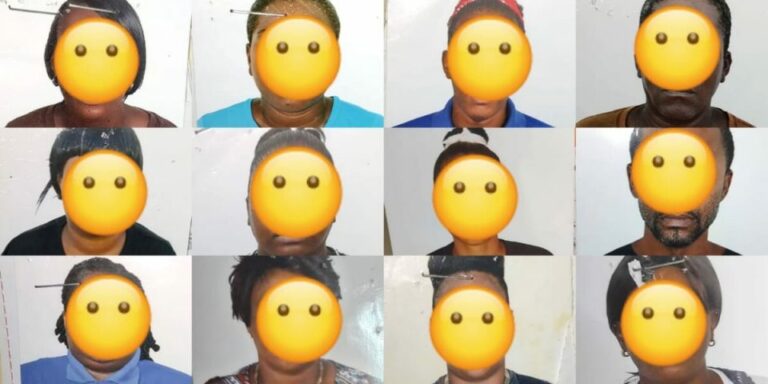
Nigerians woke on January 5, to witness pictures of 87 ‘loan defaulters’ in a video shared online, with the caption “Please settle your loan.”
This act, which has sparked outrage across the country, not only raises concerns about privacy violations but also highlights how the loan app’s actions may negate Nigeria’s laws designed to protect citizens from harassment, cyberbullying, and unauthorised use of personal data.
The ICIR has done extensive reporting on money lending firms and cyberbullying which you can read here and here. You can also read similar stories below:
Many loan apps claim to offer quick access to funds but have continuously use unethical ways to retrieve their funds like the recent act of the digital money lenders which has reportedly compiled the images of individuals who allegedly defaulted on their loans and shared them in a video.
The video was then posted online, accompanied by a message urging the defaulters to settle their outstanding debts.
Recall there were attempts by the government to curb the activities of these digital lenders.
In 2023 the Federal Competition and Consumer Protection Commission (FCCPC) delisted up to 37 loan apps for breach of privacy and operating without regulatory approval.
FCCPC had flagged many loan apps for violating the Limited Interim Regulatory/Registration Framework and Guidelines for Digital Lending, 2022, and initiated efforts to shake up the digital money lending space.
Violation of privacy and data protection laws
A Lagos-based lawyer, Abulwasiu Mujeeb, highlighted the position of the law on the action done by the digital money lender. He condemned it as very brutal and unacceptable because it subjects the people involved to depression and intense frustration.
“The behaviour affects mental well-being, and ruins the reputations of the defaulters,” he said.
This act raises serious questions about the loan app’s adherence to Nigeria’s Data Protection Regulation (NDPR), which mandates that personal information should only be processed for specific, legitimate purposes and with the consent of the individual.
He said the Data Protection Act (NDPR), Section 2.4 emphasises that personal data should be processed lawfully and fairly, with the consent of the data subject. The publishing of images without permission directly violates this provision.
Section 3.1 of NDPR on data minimisation also prohibits the use of personal data beyond what is necessary.
“Publicly displaying the defaulters’ images online for a non-consensual purpose goes against this principle,” he added.
He cited another law that penalises their act as the Cybercrime (Prohibition, Prevention, etc.) Act 2024 as amended, particularly Section 24, which criminalises the use of online platforms to harass or intimidate individuals.
The publishing of these photos and the accompanying message can be seen as an attempt to publicly shame and intimidate the defaulters, creating unnecessary emotional distress.
“Section 24 (1) of the Cybercrime Act makes it an offense to send or transmit messages online that are intended to harass or intimidate someone.
“The loan app’s video with defaulters’ photos could be perceived as offensive, obscene, and menacing, thus falling under this provision.”
Mujeeb noted that the Act also violates constitutional rights, adding that beyond data protection and cybercrime laws, this incident also infringes on the fundamental rights enshrined in the Nigerian Constitution.
He quoted Section 34 (Right to Dignity of the Human Person) which guarantees that no individual should be subjected to inhuman or degrading treatment.
Also, Section 37 (Right to Privacy) guarantees the protection of individuals’ private data. Unauthorised publication of personal images is a direct infringement of this right, as it exposes individuals to public shaming without their consent.
Rights of defaulters and legal remedies
When asked if the defaulters have a case even though they are owing, he said what the lenders ought to have done was what defaulters are entitled to now.
He explained that if the loan app couldn’t get their money from the defaulters through messages and calls or even through their guarantors, they should have filed a case against them instead of publicly disgracing them.
Even though the way these sharks’ approach to contact the defaulters is also another dilemma, he recounted how he was contacted by one of them not long ago in respect of a loan obtained by a friend. “As if we obtained the loan together or I was there when he took the loan,” he said.
He said all these should signal a warning to the people patronising the sharks to stand for themselves and work against all odds not to take their loan.
He noted that the defaulters whose pictures were posted online can through the Human Rights Commission to seek redress in court for online harassment, data, and privacy violations.
Last year, the FCCPC warned against usitlising unethical recovery methods, while promising to take a “zero stance” against it.
“… the commission is intensifying enforcement efforts and adopting a zero stance towards any exploitation of consumers or abusive conduct whether in balance calculations, loan default enforcement or recovery process.”
The commission however advised consumers to patronise only approved digital money lenders.
FORMER Vice President Atiku Abubakar has accused President Bola Tinubu of not fighting corruption but going after dissenting voices.
Abubakar, the presidential candidate of the Peoples Democratic Party (PDP) in the 2023 election, disclosed this in a tweet on his X handle on Friday, January 31.
Usman was arrested on Wednesday, January 29, when operatives of the EFCC stormed his Abuja home at about 4:30 p.m. and picked him up for alleged N4 billion fraud, among other infractions. He was billed to be arraigned the following day.
His arrest followed an ongoing investigation into an allegation that he inflated the NHIA’s ICT budget from N4.975 billion to N8.7 billion and approved payments beyond his approval limit.
According to mediareports, the EFCC is investigating Yusuf for also awarding contracts to a company known as Lubekh Nigeria Limited, where his nephew Khalifa Hassan Yusufu is a director.
Yusuf, a professor of haematology/oncology and bone marrow transplant, is also being held for financial mismanagement and abuse of office. It’s alleged that he used his position for personal gains, approving contracts without following due process and awarding contracts to firms that lacked the competence to execute projects.
Reacting to Yusuf’s arrest on Friday, Abubakar said his arrest was politically motivated and not an attempt at combating corruption.
“Two days ago, the nation was jolted by the arrest of Professor Usman Yusuf, a fierce and unyielding social critic.
“Though the charges against him have been festering since the previous administration, it is impossible to ignore the strong likelihood that his detention is politically motivated,” Abubakar said.
He added that the Tinubu government, despite being riddled with individuals who themselves were embroiled in scandals and investigations by both local and international authorities, continued to use state machinery to silence its critics and weaponised pending investigations to suppress all opposition.
He said it was absurd that while the administration sheltered those under investigation, it continued to exploit state institutions to stifle dissent, all under the pretence of combating corruption.
“Even to the most inattentive, it has become glaringly clear that Tinubu is not waging a war on corruption – he is waging a war on the opposition, manipulating the system for his own political advantage.”
It was the third time within a week that Abubakar would criticise the president.
On Tuesday, Abubakar and former Kaduna State Governor Nasir El-Rufai raised alarmover what they described as a growing threat to Nigeria’s democracy.
Speaking at a national conference on strengthening democracy in Abuja on Monday, January 27, the leaders warned that if urgent action was not taken, the country could lose its hard-fought democracy.
Abubakar highlighted the erosion of democratic values, arguing that Nigeria was at a crossroads.
He criticised the growing influence of the judiciary in determining electoral outcomes and argued that the courts, not the people, decided candidates and winners.
“We really are at a crossroads in this democratic experiment. We either decide we want to be democratic or we decide to abandon it,” he said.
Abubakar also expressed frustration with the National Assembly, calling for legislative reforms to empower political parties and ensure the people determine who governs them.
He further accused the Federal Government of undermining opposition parties through financial inducements, adding that some political party leaders were given N50 million each.
“I want to say it here publicly. I met with a political party leadership in the present opposition, and they told me flatly that this government gives them N50 million each.
“Where do we go from here? This means that if we are not careful, we are talking to some of you here, but you are recipients of the N50 million from the APC government,” the former PDP presidential candidate said.
Similarly, on Thursday, January 30, the former vice president attacked Tinubu’s government for arresting human rights activist, Omoyele Sowore. He also accused the government of picking the former NHIA executive secretary for probe.
He wrote on his X handle, “When I made the clarion call that Tinubu and the APC were devoting their energies to the systematic harassment, intimidation, and dismantling of the opposition, all in service of their grand design for a one-party autocracy, I became the target of vicious attacks. The arrest and baseless prosecution of @YeleSoworeis the latest chapter in this unrelenting campaign.
“Now, they have seen fit to add Professor Usman Yusuf — an outspoken critic of this administration — into their grim roster. At the pace they are going, it seems they may soon find themselves contending with the incarceration of every one of us.”
A CHEIFTAIN of the All Progressives Congress (APC), Joe Igbokwe, has dismissed any possibility of President Bola Ahmed Tinubu failing in his bid for a second term.
He boasted that the Nigerian leader had a history of indomitability in elections.
In a social media post, Igbokwe argued that Tinubu’s political weight, influence years of planning for clinching the presidency, which he achieved in 2023, would see him through in 2027 when he recontests.
He dismissed critics and told those hoping to dislodge Tinubu in 2027 that the president would “reposition, retool, and restructure.”
“No Nigerian East, West, North or South can match PBAT (President Bola Ahmed Tinubu) in raising men and women across Nigeria. His humongous works across Nigeria speak for him every day, any day, anywhere.
“Perish the thought if you are one of those who think he will fail and will not get a second term. He will succeed, he will reposition Nigeria, he will advance the course of Nigeria, he will grow Nigeria. He will fix Nigeria, he will retool Nigeria, he will restructure Nigeria, he will raise Nigeria up, he will reform Nigeria etc.
“If you want to fight your opponents, do some little due diligence about the person, study their backgrounds, ask questions about them, do what we call SWOT analysis, check his antecedents, check his track records, check where he is coming from etc,” he said.
However, Igbokwe’s position came at a time of deepening economic hardship and growing discontent with the Tinubu administration’s policies.
Since assuming office in May 2023, Tinubu’s policies, particularly the removal of petrol subsidy, and the floating of the naira, have led to skyrocketing inflation, worsening cost-of-living crisis, and increased hardships.
The prices of basic commodities, transportation, and services have surged, putting immense strain on average Nigerians.
The government’s handling of security has also drawn criticism, with continued kidnapping incidents, bandit attacks, and insurgency still posing a major threat across the country.
In addition, The ICIRreported that organised labour unions, including the Nigeria Labour Congress (NLC) and Trade Union Congress (TUC), have frequently clashed with the government over policies perceived as anti-worker, with continued threats of nationwide strikes over economic hardships.
While the president approved a new minimum wage of N70,000 in July 2024, many Nigerian workers have not yet received the improved salaries.
The workers are currently gearing up for nationwide protests against the 50 per cent hike in telecom services in the country – a hike endorsed by the Tinubu’s government. The protests are scheduled for February 4.
Growing political opposition and internal cracks in APC
Beyond the economic turmoil, Tinubu is facing increasing opposition both from within and outside his ruling All Progressives Congress (APC)
The former Kaduna State governor, Nasir Elrufai, and ex-minister of transportation, Rotimi Amaechi, who are notable chieftains of the APC, have distanced themselves from his administration.
Amaechi, also a former governor of Rivers State, had accused Nigerian leaders, including Tinubu, of having uncontrollable avarice for power.
He said Nigerian politicians’ primary objective was to hold on to power at all costs, even if it meant resorting to theft and violence.
Amaechi, who contested and lost the APC presidential primary to Tinubu in 2022, stated these at the National Conference on Strengthening Democracy in Nigeria held in Abuja earlier this week.
Speaking at the event, Amaechi said the country’s situation required that citizens devise strategies on how to sack many leaders from office in the next election.
Similarly, El-rufai at the conferencedescribed the situation in the country as a “national emergency,” warning that the opposition risks extinction unless it united.
He called on opposition parties to form a united platform to challenge the ruling party and save the nation’s democracy.
The opposition Peoples Democratic Party (PDP) and the Labour Party (LP) are also capitalising on Tinubu’s perceived failures to relaunch themselves into the hearts of Nigerians.
Leaders from both parties, including the former Vice President Atiku Abubakar, and Peter Obi (of the PDP and LP respectively) have consistently attacked Tinubu’s administration for failing to deliver good governance expected by citizens.
Abubakar and Obi vied for the presidency against Tinubu in the February 25, 2023 election but lost.
Many Nigerians believe that Abubakar and other leading politicians in opposition parties, including the New Nigeria Peoples Party (NNPP) and Social Democratic Party (SDP) are strategising to unseat Tinubu should he recontest for the presidency in 2027.
THE Police Service Commission (PSC) has approved the immediate retirement of officers above 60 or those who have served for 35 years.
In a statement signed by its spokesperson, Ikechukwu Ani, on Friday, January 31, the commission at its 24th plenary meeting of 27th and 28th September 2017 had approved that recruits and other officers of the Nigeria Police Force (NPF) should have their date of appointment in the Force against the date of their enlistment documented.
“The commission has passionately revisited its decision and has come to the conclusion that the said decision in its intent and purpose contradicted the principle of (the) merger of service in the Public service and it is in violation of Public Service Rule No 020908 ( i & ii) which provides for retirement on (the) attainment of 35 years in service or 60 years of age.”
“Accordingly, the commission, at its 1st extraordinary meeting of the 6th management board held today, Friday, 31st January 2025, approved the immediate retirement of those officers who have spent more than 35 years in service and those above 60 years of age.”
The commission’s chairman, Hashimu Argungu, a retired deputy inspector-general of police, presided over the meeting, which had Adamu Paul Galumje, a retired justice of the Supreme Court, who represented the judiciary in attendance.
Also in attendance at the meeting were Taiwo Lakanu, a deputy inspector general of police, who represented the police; and Onyemuchi Nnamani, the commission’s secretary.
The commission added that it had conveyed the decision to the inspector general of police (IGP), Kayode Egbetokun, for implementation.
This is coming amid controversy surrounding Egbetokun’s tenure as the NPF chief.
Decision comes amid protests against Egbetokun’s continued stay in office
Egbetokun has continued to face the heat since Monday, January 27, when a human rights activist and the presidential candidate of the African Action Congress (AAC) in the 2023 election, Omoyele Sowore, honoured the police invitation in Abuja.
Sowore was later charged by the police for alleged cyberstalking and false publication against Egbetokun on Tuesday, January 28.
The charges, filed at the Federal High Court in Abuja and shared by Sowore’s handle on X,showed that the lawsuit stemmed from his posts on X, where he was said to have referred to Egbetokun as an “illegal IGP.”
According to the charge sheet seen by The ICIR, the police accused Sowore of making statements capable of causing a breakdown of law and order.
Sowore, in a fresh post on his Facebook handle on Thursday, January 30, insisted that the IGP’s tenure was illegal.
However, in a statement signed by police spokesperson Muyiwa Adejobi, on Thursday, the NPF said Sowore’s claim was unfounded and sought to undermine the legitimacy of the IGP’s appointment as well as public confidence in the police.
It referred to Part III, Section 7 (6) of the amended Police Act, 2020, which states, “The person appointed to the office of the inspector-general of police shall hold office for four years.”
According to the police, this amendment aims to provide stability and continuity in the leadership of the NPF, enabling the IGP to implement long-term plans and policies without fear of abrupt termination.
“It is crucial for members of the public to be aware that IGP Egbetokun’s status as the 22nd Indigenous inspector-general of police is both legally and procedurally sound,” the NPF stated.
The police said it viewed Sowore’s claim as an attempt to erode public trust and foster confusion regarding the force’s leadership.
Quoting relevant portions of the amended Police Act, the attorney-general of the federation, Lateef Fagbemi, a senior advocate, also averred that Egbetokun’s continued stay in office was legal.
Genesis of crisis
The ICIR reports that President Bola Tinubu appointed Egbetokun as acting IGP’ in October 2023, pending his confirmation by the National Assembly.
The appointment took effect on the 31st of the same month.
Egbetokun should have left office on September 4, 2024, the day he clocked 60.
Rather than allow him to go, the Tinubu-led Federal Government pushed a bill for the amendment of the Police Act, which consequently paved the way for the IGP’ to remain in office for four uninterrupted years, meaning he will quit office in October 2027.
Many citizens who opposed this speedy amendment of the Police Act by the National Assembly claimed the move was to aid Tinubu, who is likely to seek a second term and use Egbetokun and the entire police to his advantage in the 2027 presidential poll before Egbetokun’s tenure will elapse.
The ICIR reports that Egbetokun was Tinubu’s chief security officer when he was Lagos State Governor in 1999.
He was promoted to deputy inspector-general of police shortly after Tinubu’ won the February 25, 2023, presidential election, with many Nigerians suspecting he could be the next IGP’ because of his closeness to Tinubu.
A FORMER deputy governor of the Central Bank of Nigeria (CBN), Kingsley Moghalu, has decried African leaders’ reliance on aid for the greater chunk of their healthcare funding, amid worry over the United States’ funding freeze.
He called on African countries to prioritise healthcare funding from their resources rather than relying on foreign support.
Moghalu, the current president of the African School of Governance (ASG), a pan-African graduate school focused on public policy and governance based in Kigali, Rwanda, made the call in a statement on Friday, January 31.
He said dependence on external assistance for healthcare interventions was not a sustainable strategy for the continent.
“African countries must prioritise funding for healthcare from their own resources. Reliance on foreign aid for healthcare interventions is not wisdom.
“President Trump’s withdrawal of the U.S. from WHO is a wake-up call. African countries can fund their healthcare,” he said.
The ICIR reports that Trump signed an order to pull his country out of the World Health Organisation (WHO) membership and funding on the day he assumed power on Monday, January 20.
The order was one of the executive orders he signed on his inauguration day. It marked the second time Trump would exit the U.S. from the WHO.
He was critical of how the international health body handled COVID-19 when he first came to office, but his successor, former President Joe Biden, returned the US to the WHO.
Moghalu believes Trump’s latest action is a wake-up call for African nations to take responsibility for their healthcare systems.
He criticised African leaders for their misplaced priorities, noting that the amount of aid received was insignificant compared to the resources wasted on luxuries and corruption.
“Many simply have the wrong priorities. What many African countries receive in aid is nothing compared to the resources that are wasted on the comfort of politicians or corruptly misappropriated. There are, of course, countries that are exceptions to this general situation,” Moghalu said.
He acknowledged the African nations that have demonstrated better fiscal responsibility as exceptions to the trend.
The political economist further urged governments across the continent to take decisive action to ensure that healthcare funding is treated as a critical national priority.
The ICIR reported that the Federal Government welcomed the decision by the United States to exempt HIV treatment programmes from the 90-day freeze on foreign aid spending.
The waiver, announced by the Joint United Nations Programme on HIV/AIDS (UNAIDS) on Wednesday, January 29, would ensure the continued distribution of lifesaving HIV medications, providing relief for millions of Nigerians and other people around the world who rely on donor-funded treatment.
The ICIR also reported that the executive order signed by Trump had raised serious concerns among health stakeholders in Nigeria, given that the country has the highest number of people living with HIV in the West and Central African region.
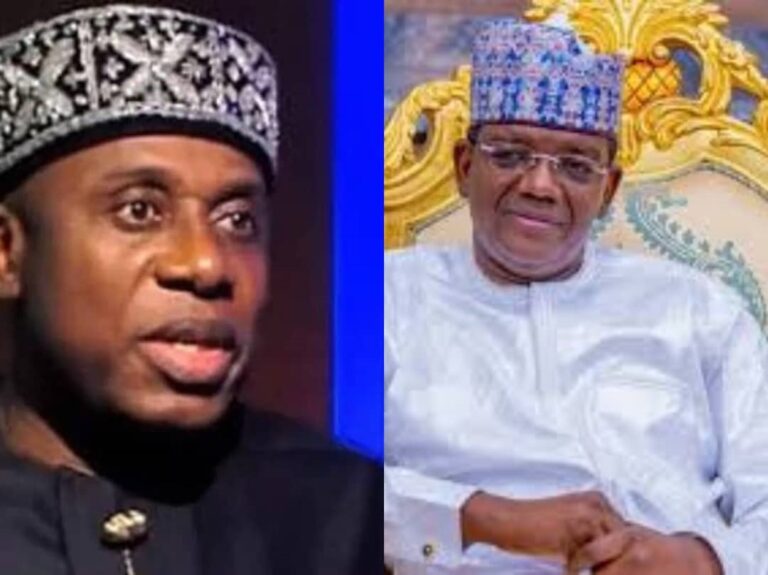
FOR the second time in three months, the minister of state for defence, Bello Muhammed Matawalle, has warned the former minister of transportation, Rotimi Amaechi, to stop inciting violence or face consequences.
Matawalle described recent remarks by Amaechi concerning the leadership style of President Bola Ahmed Tinubu as reckless and inciting.
Amaechi, also a former governor of Rivers State, had accused Nigerian leaders of having uncontrollable avarice for power.
He said Nigerian politicians’ primary objective was to hold on to power at all costs, even if it meant resorting to theft and violence.
Amaechi, who contested and lost the All Progressives Congress (APC) presidential primary to President Bola Tinubu in 2022, stated these at the National Conference on Strengthening Democracy in Nigeria held in Abuja earlier this week.
Speaking at the event, Amaechi said the country’s situation required that citizens devise strategies on how to sack many leaders from office in the next election.
However, he noted that rather than being told the blatant truth that they were failures, such leaders were being deceitfully hailed by the same people they denied good leadership.
He argued that the current political structure in the country was unlikely to change under Tinubu’s government if citizens failed to form a strong alliance against the ruling party before the next election.
“The politician is there in Nigeria to steal, to maim, to kill, and to remain in power. If you think Tinubu will give it to you, you are wasting your time,” he stated.
Reacting to the statement, Matawalle said it was reckless and dangerous for a former public officeholder to make such “inflammatory remarks”.
“At a time when the government is working tirelessly to consolidate national unity and security, no responsible leader should fan the flames of violence and political unrest,” Matawalle stated.
He warned against spreading what he described as narratives of violence and anarchy among Nigerians, adding that Nigeria is a country governed by laws, not a place where power is taken by force.
Matawalle warned that security agencies were watching closely, and anyone trying to incite violence or destabilise the nation would be held accountable and face the full force of the law.
The statement, signed by the director of press and public relations at the Ministry of Defence, Henshaw Ogubike, stressed that the government would not tolerate subversive rhetoric aimed at undermining national unity or inciting lawlessness.
Matawalle cautioned Amaechi that power is attained through democratic means, not through coercion, violence, or lawlessness.
He reaffirmed the commitment of Tinubu’s administration to upholding peace, democratic values and national security.
The ICIR reports that this is not the first time the defence minister will be cautioning Amaechi for allegedly inciting Nigerians against the Tinubu-led government.
In October 2024, Matawalle accused Amaechi of inciting violence and unrest in Nigeria following his comments on hardship in the country.
THE Nigeria Police Force (NPF) has refuted claim by human rights activist Omoyele Sowore alleging that the inspector-general of police (IGP), Kayode Egbetokun, continued stay in office is illegal.
The NPF described the claim as “baseless and misleading.”
Sowore, the presidential candidate of the African Action Congress (AAC) in the 2023 election, has maintained that the tenure of the IGP is illegal.
The ICIR reports that President Bola Tinubu appointed Egbetokun as acting IGP’ in October 2023, pending his confirmation by the National Assembly.
The appointment took effect on 31st of the same month.
Egbetokun should have left office on September 4, 2024, the day he clocked 60.
Rather than allow him to go, the Tinubu-led Federal Government pushed a bill for the amendment of the Police Act, which consequently paved the way for the IGP’ to remain in office for four uninterrupted years, meaning he will quit office in October 2027.
Many citizens who opposed this speedy amendment of the Police Act by the National Assembly claimed the move was to aid Tinubu, who is likely to seek a second term and use Egbetokun and the entire police to his advantage in the 2027 presidential poll, before Egbetokun’s tenure will elapse.
The ICIR reports that Egbetokun was Tinubu’s chief security officer when he was Lagos State Governor in 1999.
He was promoted as deputy inspector-general of police shortly after Tinubu’ won the February 25, 2023 presidential election, with many Nigerians suspecting he could be the next IGP’ because of his closeness to Tinubu.
Given Sowore stance on the IGP, he was formally charged by the police for alleged cyberstalking and false publication against the IGP on Tuesday, January 28.
The charges, filed at the Federal High Court in Abuja and shared by Sowore’s handle on X showed that the lawsuit stemmed from Sowore’s posts on X, where he was said to have referred to Egbetokun as an “illegal IGP.”
According to the charge sheet seen by The ICIR, the police accused Sowore of making statements capable of causing a breakdown of law and order.
Sowore, in a fresh post on his Facebook handle on Thursday, January 30, insisted that the IGP’s tenure is illegal when he wrote, “It is reported that Kayode Egbetokun, Nigeria’s Illegal Inspector General of Police, has hurriedly left a conference in Rwanda to return to Nigeria to address concerns by police cadres regarding his continued unjust, unfair, and illegal occupation of the office of the IGP beyond the expiration of his tenure in 2024, having served for 35 years and also attained the age of 60. The straightforward solution is to retire and allow others to rise through the ranks.”
The police stand
However, in a statement issued on Thursday and signed by police spokesperson, Muyiwa Adejobi, the NPF said Sowore’s claim was unfounded and sought to undermine the legitimacy of the IGP’s appointment as well as public confidence in the police.
It referred to Part III, Section 7 (6) of the amended Police Act, 2020 which states, “The person appointed to the office of the inspector-general of police shall hold office for four years.”
This is against the previous law which mandated the IGP’ to retire immediately he clocked 60 years or had served for 35 years.
The police said Egbetokun’s tenure was ratified by the Police Council, and he had received the requisite confirmation letter from the presidency, validating his tenure from October 31, 2023, to October 31, 2027.”
It added, “In line with the provisions of Section 8A of the executive bill passed, which amended the Police Act, clearly stating that “Any person appointed to the office of inspector-general of police shall remain in office until the end of term stipulated in the letter of appointment in line with the provisions of Section 7(6) of this Act.”
According to the police, this amendment aims to provide stability and continuity in the leadership of the Nigeria Police Force, enabling the IGP to implement long-term plans and policies without fear of abrupt termination.
“It is crucial for members of the public to be aware that IGP Egbetokun’s status as the 22nd indigenous inspector-general of police is both legally and procedurally sound,” the NPF stated.
The police said it viewed Sowore’s claim as an attempt to erode public trust and foster confusion regarding the force’s leadership.
The Force cautioned individuals and groups against perpetuating such “unfounded narratives that could mislead the public and jeopardise national security.”
.Controversy over IGP’s
The controversy about the tenure of the IGP didn’t start with the current police boss. Egbetokun’s predecessor, Usman Baba, was not in any way different.
Baba clocked 60 years old in March 2023 and attained the mandatory 35 years of service but he remained in office till Tinubu removed him and appointed Egbetokun as his replacement three months later.
The Police Act Amendment Bill
In July 2024, the National Assembly passed a Bill for the IGP to complete a four-year tenure.
The Police Act Amendment Bill was passed to enable a person appointed to the office of the IGP to remain in office until the end of the term stipulated in the letter of appointment.
Tinubu forwarded the bill to the House of Representatives and Senate to amend the tenure of the IGP.
According to Section 18(8) of the Police Act 2020, Egbetokun, who was born on September 4, 1964, was expected to retire in September 2024, when he will be 60 years old.
Specifically, Section 18(8) of the new Act states: “Every police officer shall, on recruitment or appointment, serve in the Nigeria Police Force for 35 years or until the age of 60 years, whichever is earlier.”
But while the Police Act pegs the retirement age of police officers at 60 years of age or 35 years of service, another section of the bill also pegs the tenure of the IG at four years.
The controversial amendment, which caused outrage, was the inclusion of Section 18(8A), which gives IGPs special civil service rights and enforces Section 7 of the Act.
Part III, Section 7 (6) of the Act, which repealed the Police Act Cap. P19, Laws of the Federation of Nigeria, 2004, prescribed a four-year single tenure for a person appointed to the office of the IG subject to the provisions of clause 18(8).
Section 18(8A) of the Nigeria Police Act 2020 was amended as follows: “Notwithstanding the provisions of subsection (8) of this section, any person appointed to the office of Inspector-General of Police shall remain in office until the end of the term stipulated in the letter of appointment in line with the provisions of Section 7(6) of this Act.”
The amendment implies that once a police officer is appointed as inspector general, they must serve a four-year term, regardless of their age or years of service
Some human rights activists like Sowore have, however, kicked against Egbetokun enjoying the new term limit.
THE Federal Government of Nigeria has welcomed the decision by the United States to exempt HIV treatment programmes from its recently announced 90-day freeze on foreign aid spending.
The waiver, announced by the Joint United Nations Programme on HIV/AIDS (UNAIDS) on Wednesday, January 29, would ensure the continued distribution of lifesaving HIV medications, providing relief for millions of Nigerians and other people around the world who rely on donor-funded treatment.
The ICIR reported that the executive order signed last week had raised serious concerns among health stakeholders in Nigeria, given that the country has the highest number of people living with HIV in the West and Central African region.
TheUnited States President’s Emergency Plan for AIDS Relief (PEPFAR), has been a lifeline for millions of people living with HIV, providing access to life-saving antiretroviral therapy (ART), with the medications not only keeping the virus in check but also preventing further transmission.
The project, launched in 2003 under former President George W. Bush, has reportedly provided antiretroviral therapy (ART) for over 20.6 million people worldwide. Its interventions also help to prevent mother-to-child transmission of HIV and have saved an estimated 26 million lives.
Meanwhile, reacting to the latest development, the director-general of the National Agency for the Control of AIDS (NACA), Temitope Ilori, lauded the U.S. on the waiver while acknowledging the uncertainties surrounding foreign aid under the new administration.
According to her, the government has pledged to strengthen local funding mechanisms and work towards a sustainable HIV response that is less vulnerable to shifts in foreign aid policies.
She noted key strategies to include enhanced stakeholder collaboration, policy reforms, and increased investment from both the public and private sectors.
“Last week, the Trump administration issued an executive order halting foreign aid for 90 days. However, on Tuesday, January 28, 2025, the administration issued a waiver for lifesaving medicines and medical services, offering a reprieve for a worldwide HIV treatment programme. This waiver allows for the continuous distribution of HIV medications.
“The Nigerian government appreciates the U.S. government waiver and is mindful of the potential change to foreign aid in the near future under the new administration. The Nigerian government would intensify domestic resource mobilisation strategies towards ownership and sustainability of the HIV response in the country with a view to reducing the risks of donor aid policy shifts to the HIV response while ensuring that the country’s strategic goals and targets in the fight against HIV are achieved.
“Through effective stakeholder collaboration, creating favourable policies and enabling environment and advocacy to policy makers, Nigeria can still achieve the target of ending AIDS by 2030,” Ilori said.
She further encouraged persons living with HIV to continue accessing treatment services across the country, as she assured that PEPFAR-supported programmes remained operational.
“We encourage the patient community to continue accessing HIV treatment services in service delivery points across the country and appeal to all our state governors, private sector partners, all the honourable members of the National Assembly and State Houses of Assembly, civil society organisations, the media and all other relevant stakeholders, to continue in their commitment and support to the fight against HIV/AIDS in Nigeria,” the statement added.
The ICIR reported that the World Health Organisation (WHO) and other relevant health bodies had expressed fears over the freezing of the HIV funding by the U.S. government.
Beyond the immediate impact on treatment access, WHO had warned that the funding freeze could disrupt scientific advancements in HIV care, including innovative diagnostics, affordable medicines, and community-based healthcare models.
“Such measures, if prolonged, could lead to rises in new infections and deaths, reversing decades of progress and potentially taking the world back to the 1980s and 1990s when millions died of HIV every year globally, including many in the United States of America,” the statement added.
Also, the president of the International AIDS Society (IAS), Beatriz Grinsztejn, had warned that the situation “ is a matter of life or death,”
“PEPFAR provides lifesaving antiretrovirals for more than 20 million people – and stopping its funding essentially stops their HIV treatment. If that happens, people are going to die and HIV will resurge.