SPANISH club Sevilla FC has invited Nigerian talent Ola Great for a trial with its international team, Sevilla FC D, after he successfully completed a viral social media challenge.
The challenge, posted on Sevilla’s English C account, has ultimately secured Great the opportunity to showcase his skills at the club’s Innovation Center, according to a statement by the football club on Thursday, January 30.
The challenge began when Great posted a request on X, asking how many ‘reposts’ his post needed to gain a trial with the Spanish club, with the handler demanding 100,000.
Consequently, the post met and exceeded the required number of reposts on January 21, a day after the request, but there were concerns when the club didn’t immediately respond to the outcome.
However, the club said in a statement on Thursday that it was waiting for Great in Sevilla for the trial.
The statement was accompanied by a video of another Nigerian, Chinese Paul Obi, who recently signed for the academy, extending a personal invitation to Ola Great.
“Hello, my friend Ola. I’m Obi Paul, a Nigerian player for Sevilla FC D, and we would love for you to come and take a trial with our international team. We’re waiting for you,” Obi said in the video.
The club further noted that Obi had already integrated into the team led by coach Óscar Olomo.
Great, who is now preparing for the upcoming trial, joins a squad with diverse backgrounds in Sevilla FC D, which already includes players from Indonesia, the United States, Mexico, Puerto Rico, and Sweden.
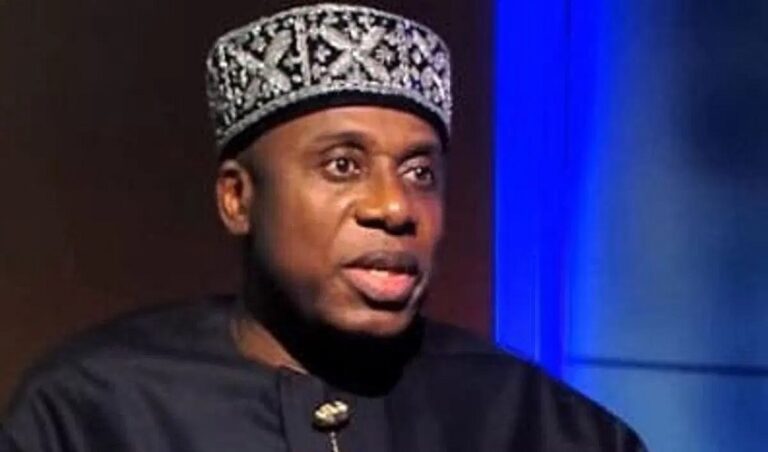
A FORMER Minister of Transport, Rotimi Amaechi, has accused Nigerian leaders of having uncontrollable avarice for power.
He said Nigerian politicians’ primary objective was to hold on to power at all costs, even if it meant resorting to theft and violence.
Amaechi, who contested and lost the All Progressives Congress (APC) presidential primary to President Bola Tinubu in 2022, stated these at the National Conference on Strengthening Democracy in Nigeria held in Abuja earlier this week.
The conference, which brought together stakeholders from different political parties, was to enable participants to brainstorm on the nation’s democratic journey.
Speaking at the event, Amaechisaid the country’s situation required that citizens strategies on how to sack many leaders from office in the next election.
However, he noted that rather than being told the blatant truth that they were failures, such leaders were being deceitfully hailed by the same people they denied good leadership.
He noted that such feigned applause would be misinterpreted, allowing politicians to act with impunity.
He argued that the current political structure in the country was unlikely to change under President Bola Tinubu’s government if citizens failed to form a strong alliance against the ruling party before the next election.
“The politician is there in Nigeria to steal, to maim, to kill, and to remain in power. If you think Tinubu will give it to you, you are wasting your time,” he stated.
Amaechi said his involvement in Nigerian politics since he left university in 1987 was shaped by poverty and claimed he had been part of the process till today.
He boasted that he remained a strong force and could not be wished away in the APC.
“You can’t wish me away in the formation of APC; you certainly can’t wish me away. You can’t wish me away in how APC won the election; youcan’t.
“But the truth is that if some of us did not stick out our necks to say PDP, Goodluck (Jonathan), we want to die with you. When they saw that we were ready to die, they gave up power,” he stated.
The ICIR reports that Amaechi, who joined politics after he graduated from the university, was the Speaker of the Rivers State House of Assembly for eight years – between 1999 and 2007.
Before then, he had served as special adviser to former Governor Peter Odili when he was deputy governor in 1992.
Ameachi, who clocks 60 this year, served as the Rivers State governor for eight years – from 2007 and 2015 – before joining former President Muhammadu Buhari’s government, where he served as minister of transportation for nearly eight years.
He resigned on March 17, 2022, to contest for the presidency. He lost the party’s primary to Tinubu.
For the first time in over two decades, Ameachi has operated outside a public office. He has also not been recognised by the Tinubu’s government.
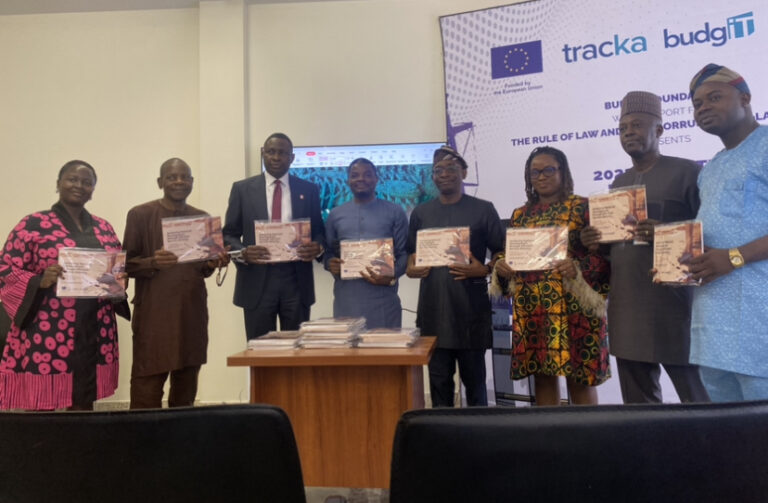
Tracka, a public accountability unit of BudgIT, has revealed in its latest report that over N99 billion has been squandered on 352 federal government projects that were either abandoned or left uncompleted.
The findings, which were presented by, Tracka’s Head, Ayomide Ladipo, during a review of the organisation’s 2023/2024 field activities on Thursday, January 30, triggered renewed calls for urgent reforms in Nigeria’s budgeting and procurement processes to improve transparency, efficiency, and service delivery.
Between September 2023 and September 2024, Tracka tracked 1,404 federal projects, and uncovered that 223 projects, valued at N79.81 billion, were not executed while another 129, costing N19.81 billion, had been abandoned.
Altogether, these uncompleted and neglected projects represent a total loss of N99.62 billion—money that should have been used to develop vital infrastructure across the country, Ladipo noted.
According to the report, only 720 projects were completed, amounting to N91.28 billion, while 332 others remain ongoing, with N91.61 billion allocated to them.
Speaking on procurement fraud and corruption in the public sector while giving his goodwill message, the Economic and Financial Crimes Commission (EFCC) Chairman,Olanipekun Olukayode,condemned the current budgeting system, which he said allocates funds to government agencies without their input.
He argued that this approach leads to failed projects and increased corruption, with procurement accounting for over 90 per cent of public sector corruption in Nigeria.
“One of the major problems we have in Nigeria is the issue of public corruption. When you are talking about public corruption substantially, statistics have shown that more than 90 per cent of public graft, apart from bribery, and all of that, comes through contract and procurement,” the EFCC helmsman said.
He also expressed concerns over the country’s annual budget process, arguing that it hinders effective project implementation.
He frowned at the practice of ‘envelop budgets’ without consultation with the relevant agencies, saying that this practice leads to inefficiencies and poor accountability.
“You can’t hold me accountable for what I wasn’t part of. If I’m not part of the preparation of my budget, it will be difficult for me to execute the same budget. This is what has led us to where we are now,” he said.
Also speaking, the Director-General of the Bureau of Public Procurement (BPP) Adebowale Adedokun, stressed the importance of transparent procurement processes in driving national development.
He described procurement as the “gateway” through which government projects and services reach the people and assured stakeholders that the BPP under his leadership would prioritise accountability, efficiency, and legal access to procurement data.
He emphasised that every government project must now come with a contract management plan to track progress and prevent abandoned projects.
Adedokun stated that the agency had saved over N1.9 trillion through its procurement oversight, preventing funds that “ordinarily would have been siphoned.”
He also disclosed that over N14 trillion had been generated for Nigeria through procurement regulations since 2016, with recent efforts saving $150,000 in just one transaction.
Other details
A further breakdown of Tracka’s findings also highlighted discrepancies in fund disbursement. Out of the 1,404 projects tracked, it noted that payment data was available for only 671 projects, with N178 billion disbursed to 614 contractors.
The report revealed that many contractors received payments without delivering on their obligations.
Some examples of failed projects cited in the report include the construction of Tudun Wuss-Wandi-Baraza-Durr-Zumbulpolchi-Dot-Kwanar, roads in Bauchi State, where N205 million was allocated. However, after multiple payments totalling N1.4 billion to Datum Construction Nigeria Ltd., the roads remain in disrepair.
Also cited was the rehabilitation of roads in Nasarawa State, where N1.18 billion was allocated, but after N401 million was disbursed to Mainstream Contractors Nigeria Ltd., no project was done.
The report further highlighted several systemic issues fuelling the abandonment and non-completion of projects, including alleged interference by the National Assembly, poor oversight by Ministries, Departments, and Agencies (MDAs), and a lack of transparency in the management of public resources.
It also accused the National Assembly of inflating and inserting projects into the budget for personal gains. In the 2024 budget alone, 7,447 projects worth N2.24 trillion were inserted, with the Federal Ministry of Agriculture having the highest number of such projects, according to the report.
On Freedom of Information (FOI)response rate, Ladipo said: “This year, we wrote 377 letters to the MDAs, seeking updates on projects assigned to them. Coincidentally, we again recorded a 2.1 per cent response rate as we did in 2022, but as against one respondent who acted within the seven days as stipulated in the FOI Act last year, five of them did in 2023. “
Earlier, the Country Director of Budgit, Gabriel Okeowo, praised the invaluable contributions of its Tracka unit responsible for analysing, evaluating, and reviewing budgets.
Okeowo stated that over the past 11 years, Tracka had continuously worked to assess how government spending impacts local communities, focusing particularly on capital projects.
NIGERIA’s imports of gasoline is on course for an eight-year low, dropping to 110,000 barrels a day between January 1-24, 2025.
Data compiled by Bloomberg from analytics firm Vortexa show this on Wednesday, January 29.
It attributed the drop in petrol importation into the country to the ramp-up of petroleum production from the Dangote Refinery.
“Shipments into the country stood at about 110,000 barrels-a-day during Jan. 1-24, data compiled by Bloomberg from analytics firm Vortexa show.
“If that rate were to continue for the rest of the month, the country’s imports—most of which come from Europe—would hit their lowest since 2017,” it said.
The 650,000 nameplate refinery started the production of premium motor spirit (PMS), otherwise known as petrol, in September 2024, after months of delay in coming on stream, arising from regulatory bottlenecks and securing crude oil from the state-owned oil firm, the Nigerian National Petroleum Company Limited (NNPCL).
The data further indicated that the country’s new mega-refinery is pushing out foreign suppliers, boosting the African nation’s fuel independence.
“A large part of the slowdown in Nigeria’s gasoline imports is due to the ramp-up of the Dangote refinery,” Vortexa analyst Samantha Hartke was quoted to have said. “Northwest Europe will have to find alternative homes for its gasoline supplies.”
The 110,000bpd is the lowest since 2017 when imports used to be above 200,000bpd and sometimes as high as 400,000bpd.
Industry experts also hold the view that the Dangote refinery, which has the highest refining capacity in Africa and Europe, has disrupted global oil trade and pushed some refineries in Europe out of the market.
Although the refinery is not yet operating at its full capacity, it is seen boosting Nigeria’s fuel independence by reducing imports.
Stockpiles of gasoline held in independent storage in Amsterdam-Rotterdam-Antwerp — a key exporting hub for barrels to Nigeria — have meanwhile hit a record high, according to figures from Insights Global, adding that the stockpiles have surged to record highs.
The Dangote refinery, which is getting most of its field stocks from the United States as the NNPCL appears not to meet crude supply to the refinery, has helped reduce Nigeria’s imports of refined petroleum products while also exporting to other countries.
Dangote’s PMS is being exported to various African countries including Ghana, Togo, Cameroon, South Africa, and Angola, as well as to Europe.
Earlier this month, The ICIRreported that the Dangote Refinery ramping up of production capacity was pushing some European refineries which hitherto serviced the Nigerian market out of business.
META, the parent company of Facebook and Instagram, has agreed to pay $25 million to settle a lawsuit filed by United States President Donald Trump over the suspension of his accounts following the January 6, 2021, attack on the Capitol.
According to a report by BBC, the settlement, which was first reported by the Wall Street Journal, marks a significant development in Trump’s long-standing battle with major social media platforms.
The ICIRreported that Trump sued Meta and its CEO, Mark Zuckerberg, in 2021, arguing that the suspension of his accounts amounted to censorship.
Trump said in the lawsuit filed in the US District Court in Miami that social media companies and their chief executive officers (CSOs) violated the right to freedom of speech guaranteed by the First Amendment of the U.S. Constitution.
He prayed the court to end the alleged censorship, noting that if they could ban a president, “they can do it to anyone.”
The company initially imposed a two-year ban on Trump’s accounts, before later reinstating them in the build-up to the 2024 U.S. presidential election. The account was reinstated in July 2024.
According to reports, $22 million of the settlement funds will go toward Trump’s presidential library, while the remaining amount will cover legal fees and compensation for other plaintiffs involved in the case.
However, Meta has not admitted to any wrongdoing as part of the settlement.
The lawsuit’s resolution comes amid signs of improved relations between Trump and Zuckerberg.
In November 2024, following Trump’s election victory, Zuckerberg visited Trump’s Mar-a-Lago resort, a move widely interpreted as an effort to mend relations.
In December, Meta donated $1 million to Trump’s inauguration fund.
Earlier this month, Zuckerberg was seen among several tech industry billionaires at Trump’s inauguration at the U.S. Capitol, alongside figures like Google’s Sundar Pichai, Amazon’s Jeff Bezos, and Elon Musk, owner of X (formerly Twitter).
The ICIR reported that X had also permanently suspended Trump’s account after the Capitol riot, citing the risk of further incitement.
However, after Elon Musk acquired Twitter in 2022, he reinstated Trump’s account following a public poll on the platform.
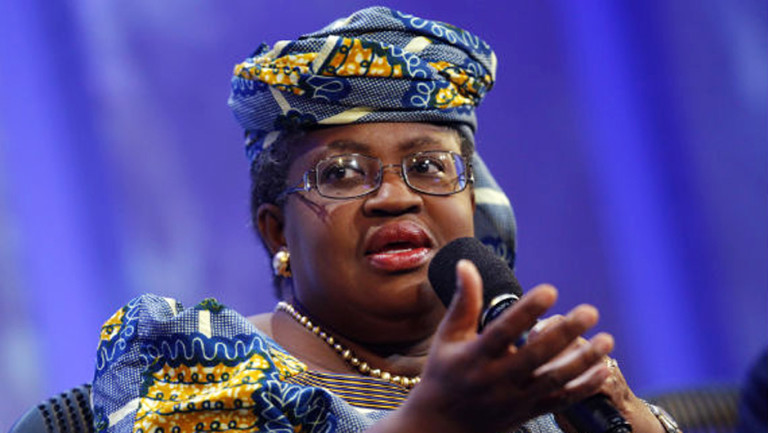
THE Director-General of the World Trade Organisation (WTO), and Nigeria’s former Coordinating Minister of the Economy, Ngozi Okonjo-Iweala, has urged member countries to guard against retaliating Donald Trump’s trade tariff threats.
United States President Donald Trump delivered his first international speech of his second term, appearing via livestream before the World Economic Forum in Davos, Switzerland, last Thursday.
Trump’s remarks, however, took a combative approach to international trade diplomacy, as he once again threatened tariffs against foreign competitors — and even allies like the European Union (EU) and Canada.
“My message to every business in the world is very simple: Come make your product in America, and we will give you among the lowest taxes of any nation on earth,” Trump said.
“But if you don’t make your product in America, which is your prerogative, then very simply you will have to pay a tariff. Differing amounts, but a tariff,” he added.
When prodded for reactions on the sidelines of the just concluded World Economic Forum at Davos in Switzerland, Okonjo-Iweala said, there are WTO ways of handling such trade tariff concerns, adding, “Fragmentation and protectionism won’t promote trade integration among member countries.”
She stressed the importance of integrating global trade and warned that protectionism and fragmental are not better options.
“Over the past five years, trade has been facing challenges and there has been increasing protectionism measures, and that has been a course for concern. When you look at the numbers, global trade has been largely resilient. However, $30.4 trillion is higher than the pre-pandemic peak period.
“Second, our latest numbers showed that 80 per cent of trade is going on under WTO terms, any disintegration won’t favour member countries,” she added.
Commenting further on the dangers of fragmentation, the WTO DG said, “There’s cause to worry and we’re seeing increasing fragmentation and protectionism.
“We have done some work and seen that if we break into geo-political trading blocs, we may end up with a 6.4 per cent loss on global real gross domestic products (GDP) in longer terms.
She likened the possible loss impact of global real GDP of 6.4 per cent to losing the size of the economies of Japan and Korea put together.
“Let’s chill, let’s not get too over excited, and let’s not do a tit-for-tat. Let’s not hear something from one member and immediately apply counter-tariffs. We don’t want to see the increase in fragmentations, “she stressed.
Speaking further on Canada’s position on possible retaliation on Trump’s tariff threats, the WTO director-general said, “Politicians need to defend themselves among their populations so I am not surprised to hear Canada’s stance on possible retaliation.
“I do believe that we have responsible members of which Canada is one. The EU and the US are also trying to follow our laid down path.
“I have seen the EU trying to follow a path and China has also complained against the EU. We have told them to keep following our path and there’s a tough discussion going on with the EU and China currently, following our prescribed conditions,” she added.
The ICIR reports that the overall objective of the WTO is to help its members use trade as a means to raise living standards, create jobs, and improve people’s lives.
The WTO operates the global system of trade rules, helps developing economies build their trade capacity, and seeks to create a more inclusive trading system.
Since the signing of the Marrakesh Agreement Establishing the WTO on 15 April 1994, global trade has surged, reaching over US$ 30.4 trillion in 2023, a fivefold increase since 1995, according to data from the global trade organisation.
The ICIRreported that Ngozi Okonjo-Iweala, has cried out that trade growth within Africa is being hindered by a high tariff, which she put at 435 per cent.
Okonjo-Iweala condemned the high tariff, and the general high cost of doing business in Africa as detrimental to the continent’s transitioning into the African Continental Free Trade Area Agreement (AfCTA).
THE Economic and Financial Crimes Commission (EFCC) will arraign former executive secretary of the National Health Insurance Authority (NHIA), Usman Yusuf, today Thursday, January 30.
Usman was arrested on Wednesday, January 29, when operatives of the EFCC stormed his Abuja home at about 4:30 p.m. and picked him up for alleged N4 billion fraud, among other infractions.
His arrest followed an ongoing investigation into an allegation that he inflated the NHIA’s ICT budget from N4.975 billion to N8.7 billion and approved payments beyond his approval limit.
According to mediareports, the EFCC is investigating Yusuf for also awarding contracts to a company known as Lubekh Nigeria Limited, where his nephew Khalifa Hassan Yusufu is a director.
Yusuf, a professor of hematology/oncology and bone marrow transplant is also being held for financial mismanagement and abuse of office. It’s alleged that he used his position for personal gains, approving contracts without following due process and awarding contracts to firms that lacked the competence to execute projects.
In a telephone chat with The ICIR, the EFCC spokesperson, Dele Oyewale, confirmed Yusuf’s arrest and planned arraignment on Thursday (today)
Yusuf was appointed as the head of NHIA (formerly National Health Insurance Scheme, NHIS) on July 29, 2016. His tenure at the agency was plagued by controversies.
He severally had confrontations with the former minister of health, Isaac Adewole, a professor, and the chairperson of the board of the former NHIS, Enyantu Ifenne, who jointly accused him of high-handedness, mismanagement, corruption and other infractions.
The NHIA staff protested at various times at the organisation’s headquarters in Jabi, Abuja, demanding his sack.
Several petitions were submitted to former President Muhammadu Buhari and the Federal Ministry of Health, alleging misconduct and fraudulent practices against him.
Buhari eventually sacked him in July 2019, ten months after he was suspended from office by the governing council of the agency.
FOUR years after the European Union launched public toilets it constructed in 14 communities in Ekiti State to curb open defecation and improve access to safe water supply, many residents still prefer defecating in nearby bushes instead of using the toilets.
They see public toilets as disgusting and unhygienic without a toilet in their homes.
Most people who defecate in the bush use leaves instead of water to clean their anus.
While a few dig the ground and cover their faeces with sand when they are done, others abandon the faeces for flies and domestic pets like dogs and pigs to feast on.
Apart from the bush being a host to dangerous pests and reptiles, including snakes and scorpions, open defecation is frowned upon by health experts, including the World Health Organization (WHO).
The United Nations defines open defecation as “when people defecate in the open – for example, in fields, forests, bushes, lakes and rivers – rather than using a toilet.”
The ICIR visited 14 communities with EU toilets in Ekiti State in the second week of November 2024 and discovered that only two of the communities use the toilets for the purpose they were built.
Nine communities abandoned the facilities and three converted them for other purposes.
The toilet was abandoned and overgrown with weeds in Imesi community
About the toilets
The EU funded the construction of the toilets between 2018 and 2020 under its Water Supply and Sanitation Reform Programme III and handed them over to the communities to manage.
Seven communities benefitted from the facilities each in Gbonyin and Ekiti West Local Government Areas (LGAs).
The communities are Ode, Egbe, Imesi, Agbado, Aisegba, Iluomoba, and Ijan in Gbonyin LGA and Aramoko, Erinjiyan, Ikogosi, Ido-Ile, Erio, Ipole-Iloro and Oke-Imesi in Ekiti West LGA.
They are in the southern and central senatorial districts of the state, respectively.
Each facility has two sections containing two flush toilets, urinals, a bathroom, and a washing tub.
It also has a solar-powered motorised borehole, a pumping machine, an overhead water tank, a car wash canopy that accommodates two cars, and outdoor water faucets providing water for the car wash and the public.
The frontage of each toilet is floored and each section of the facilities has a gate and key, preventing unauthorised access or abuse of use.
All the toilets are painted in the same colours – navy blue and yellow.
Dirty seat and walls of the EU-funded public toilet in Ode-Ekiti. PC: Marcus Fatunmole/The ICIR
Upon their completion in 2020, the EU and Bread of Life Development Foundation, a Nigerian-based non-government organisation that handled the construction, in collaboration with the Ekiti State Small Towns Water Supply and Sanitation Programme, handed the projects dubbed: Farewell to Open Defecation” over to the communities.
The ICIR’s findings showed that the state government objected to the communities being fully in charge of the facilities, but the funder’s plan for the communities to manage the toilets sailed through.
Toilets were built because of poor sanitation, water supply in state
Before the toilets were built, Ekiti State had safe sanitation coverage of 32 per cent in rural and small towns and 38 per cent in urban towns. Open defecation was 68 per cent in the state – the highest in the South-West, according to the state Water, Sanitation, and Hygiene policy. These data were contained in a statement issued by Babatope Babalobi, the team lead of the Bread of Life Development Foundation, on behalf of the EU and the state government when work began on the project in 2018.
The abandoned EU-funded public toilet in Ekiti State
The statement said the United Nations Children’s Fund (UNICEF) 2014 survey showed that 92 per cent of the communities in Gbonyin LGA were without public latrines, and in Ekiti West, 124 communities were found not to have any form of public latrines, quoting the Ekiti-West WASH Profile 2014 report.
As of the time the project was conceived, Ekiti State was among the 2.1 billion people globally who lacked access to safe water, and another 4.5 billion who lacked safely managed sanitation, according to the WHO.
The state’s children were also among the 361,000 under five years who died yearly due to diarrhoea occasioned by unsafe water.
The WHO links poor sanitation and contaminated water to transmission of diseases namely cholera, dysentery, hepatitis A, and typhoid.
As of September 2024, the Nigeria Centre for Disease Control and Prevention (NCDC) recorded 19 suspected cholera cases in Ekiti State.
Current state of EU toilets in Ekiti
Human faeces littered the toilet floors and surroundings in Imesi, Agbado, and Ipole-Iloro where they are abandoned by the communities.
This means that rather than the communities using them to prevent open defecation, the toilets are tools for promoting it.
The ICIR’s findings showed that each functional toilet has a manager. Users pay a token (approximately N50) to use the toilets, and the water is sold at a very cheap rate to attract users and keep the facility running. For instance, a 50-litre keg is sold for N50 in communities where the facilities are functional.
The toilet in Agbado is under lock and key and not used
A part of the revenue generated goes to the community while the remainder is used to maintain the building and support the facility manager.
Many residents interviewed said they were more comfortable defecating in the bush which envelopes their towns than using a public toilet. They said using a public toilet was the last option because of safety concerns.
Others said they preferred other amenities, including schools, hospitals, and empowerment centres to public toilets.
A striking issue with The ICIR’s finding is that people in communities where the toilets were abandoned declined to speak with the reporter. Some residents of those communities were also averse and resisted check on the facilities.
However, residents of communities where the toilets were functional were welcoming and glad about the donation.
Governor’s town, neighbouring community convert toilets to restaurants
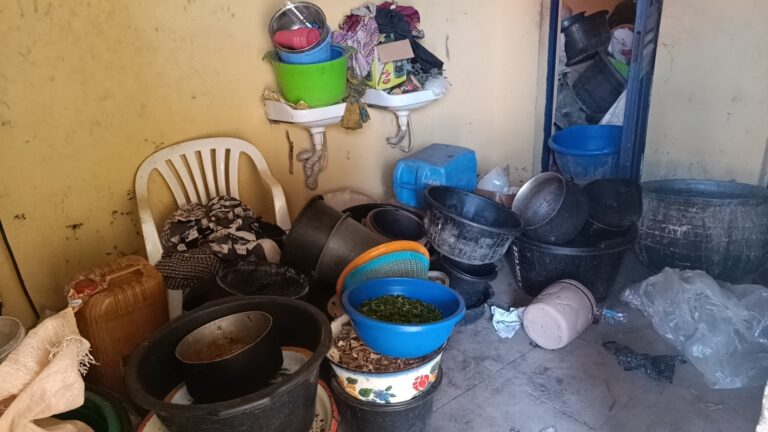
In Ikogosi, the home of the state governor, Biodun Oyebanji, a woman uses the toilet as a restaurant. She keeps all her foodstuff, pots, and other utensils in a section of the toilet. She also built a wooden kitchen and cafe as annexes to the facility.
Her restaurant attracted about a dozen customers within 30 minutes spent by the reporter at the building as she dished out different meals, including beans, rice, bread, assorted meat, and drinks to her customers.She was supported by a female cook.
The state of the toilet in Ikogosi, Governor Biodun Oyebanji hometown, where a woman uses it as a restaurant. She keeps her pots and other utensils in one section of the toilet
Ikogosi is a leading tourism community in the state. It is expected to set the pace in sanitation and maintain available infrastructures for that purpose.
In 2022, The ICIRreported how the hometown of the former Senate President and presidential aspirant on the platform of the ruling All Progressives Congress (APC) in the 2023 general election, Ahmad Lawan, stank because of poor sanitation.
The case of the toilet misapplication was the same in Erijiyan, a community before Ikogosi, where another woman, Aduyemi Modupe, runs a big restaurant in front of the toilet.
“I’ve been here for about two years. Since I came here, the water has not run. We have also been unable to use the toilet. The pipes had been damaged before I got here. None of the things installed in the building is working.
“I urge the government to help us. I have just repaired the pumping machine and I spent so much money to repair it. The canopy provided outside the premises has been blown away by the wind. I appeal to the government if it can turn the toilet for other uses. If the government also wants us to keep using the facility as a toilet, I plead that it helps us to repair it.”
The woman said nobody had used the toilet since she started running her business there. “Nobody even asks about it or shows interest in using it. Even if there is water and everything is working fine, nobody uses it.”
Similarly, inErio community, the toilet is used as a barbing salon. At least two people work at the salon, which attracts a good number of customers daily.
The ICIR saw one of the toilet rooms used for taking a nap by users.
A baby taking a nap inside a bathroom of the EU-funded toilet in Erio Ekiti. PC: Marcus Fatunmole/The ICIR
The facility manager, Tosin Bamigbade, said, “We only use the toilet once a year when a major pastor in the town organises a programme and many people come to his church. The church people are usually here for a week. That’s the only time we use it. Nobody asks about the toilet after that.
“We use a section of the toilet as a barbing salon so that the building will not just be there. We also use the other section for toilet.”
Aramoko, Ido-Ile communities use facilities
The ICIR observed that the toilets were partially used in two communities namely Aramoko and Ido-Ile.
In Aramoko, the facility manager is a retired director of environmental health, Olofintuyi Abiodun. He said, “Since I took over this place, I’ve been trying my best to maintain it because as a professional, I make sure the environment is tidy. One of the challenges we have is that people do not patronise this place. They will be saying they don’t have money.
“The people that handed it over to me said I should be collecting N50. Still, the people will say they don’t have money. Instead of patronising here, they enter the bush up there to do whatever they want to do.”
He said he made necessary repairs with the token he collected, adding that the facility never had any major problems.
He also said there had been an improvement in the number of houses with toilets in the community.
A barbing salon inside the EU-funded toilet at Erio-Ekiti. PC: Marcus Fatunmole/The ICIR
At Ido-Ile, one of the users, Ayeni Toyese told The ICIR, “This water is very useful to us in the town. We don’t have water in our street. This is the water that we drink, use for bathing, washing and cooking. We don’t want the facility to have any problem and we’re hoping that we will get another one like this to further support us.”
She said the water was always available.
Another user, Toyin Odewale, concurred with Toyese’s position. She appealed to the government and other well-meaning organisations to support the community with similar aid.
She said she had used the water for over four years, and it had always served her.
The manager, an elderly woman, Aduke Babatope, said many people come to fetch the water. She sells a big bowl for N20, three 25-litre kegs for N50, and a paint rubber for N10.
But she said people only use the toilet whenever there are events in the town and visitors come to the community. Bathing and excreting are both N50.
She’s managed the facility for three years. The woman said the water wasn’t selling well during the rainy season but would not be enough for those who need it during the dry season.
According to her, part of the money she generates goes to the community and she retains the remainder for herself and for the maintenance of the building.
The EU-funded toilet at Ido-Ile community is well-maintained and functional
Communities where toilets are partly in use
Police officers use the toilet in Egbe community. It is built near the town’s market and police station. A section of the toilet was given to the police officers.
Two of the officers expressed delight with the toilet while speaking with The ICIR.
Ode community also claimed to be using the facility but the toilet seats were too dirty to make the claim valid.
Built close to the community’s market, the toilet is managed by Ifagbure Oluwasegun.
He claimed that up to 60 people use the toilet daily, but from the look of the facility, his claim is doubtful because the toilet seats and floors are too dirty. They appeared unused for months.
He said out of 100 houses, only about 30 have toilets in the town.
A food vendor near the toilet, Ebun Akinyemi, said the toilet would be useful to the community, especially market people, visitors and motorists if well managed. She was silent on whether the facility had been used recently.
State of the EU-funded toilet infrastructure in Imesi-Ekit
Communities where toilets are fully abandoned
The toilets are completely abandoned in the following communities: Imesi, Agbado, Aisegba, Ilu-Omoba, Ijan, Ipole-Iloro and Oke-Imesi.. The facility manager at Ilu-Omoba, Joseph Micheal, said the toilet stopped working in 2023 because the pumping machine got damaged.
It would cost N250,000 to repair the machine and the community had yet to provide the money, he said.
A resident, Omolere Olamilekan, said people who used the toilet before it became bad had resorted to using the bush, while potable water had been a huge challenge for people of the area.
The ICIR reports that toilets in Agbado, Imesi, Aisegba, Ijan, Ipole-Iloro and Oke-Imesi are left in the bush.
In Oke-Imesi, the building’s ceiling and roof are falling off. Its walls are cracking.
Ayo Jolayemi, who runs a private clinic at a storey building near the toilet said, “I came in here around April 2021 and I met this facility. What I was told was that the town’s authority from the Oba’s place had a committee looking after it. I met it bad, and put in my money to renovate it. I was maintaining the place. Later, there was a major damage through the borehole.
Residents of Imesi community deficate on the toilet ground, meaning they use it to promote open defecation instead of using it to prevent the practice
“I called the authorities to see what was happening there. They came, and since then they have not been coming. That was November last year. I called other people I knew, but nobody responded.”
He said the borehole was the major problem with the facility.
He also told the reporter that people in the community faced difficulty in getting safe water, as according to him, such a problem could be ameliorated if the toilet functioned and its water ran.
Ekiti government reacts
Reacting to the findings, the permanent secretary of the Ministry of Infrastructure and Public Utilities in the state, Olumide Ajayi, said the EU’s concept of the projects was to hand them over to the communities, even though the state wasn’t happy with the decision, it allowed it to be.
Ajayi agreed with The ICIR’s findings on the state of the toilets, stressing that the state intended to appraise the use of the toilets after three years and make a comprehensive report to the EU.
The ICIR reports that the three years he claimed had since elapsed because the projects were launched in 2020.
The toilet is well-managed in Aramoko Ekiti
“We are not unaware of what you found there. But we have to respect the position of the people that designed that concept, that we should review its operations after three years, and that the communities should maintain it within those years. The state should respect that because it was donated to us.
“It was not donated for us to manage but to the communities to manage.”
He said the toilets should not have been handed over to the communities that abandoned or misapplied them.
“We are going to make a comprehensive report of this situation and share with the EU and share with the proponent of that concept to EU because we argued then that it shouldn’t have been fully handed over to the communities. An agreement was signed between the EU’s representatives and the communities before the EU handed over the projects to them.
Similarly, a senior official in the ministry, who was part of the state’s team that executed the project, Jide Olatilu, an engineer, confirmed The ICIR’s findings.
He said he was at Ikogosi in October and met the woman who converted the toilet into a restaurant, and she insulted him when he challenged her.
“I can tell you some communities are not using the toilets. I think the major issue is the payment of the user fee. We said they should engage a vendor to operate and maintain the toilet facilities. They cannot use it without making a payment.
“We will not be tired. We will continue with our sensitisation until they know how to use the toilet and pay. How much? N20 or N50,” he stated.
Canopy for car wash section of the abandoned public toilet in Aisegba Ekiti blown off by wind. PC: Marcus Fatunmole/The ICIR
EU, Bread of Life Foundation declines comments
The ICIR contacted the Bread of Life Development Foundation which executed the projects on its findings. Its leader, Babatope Babalobi, said he had nothing to say about the project.
He said his organisation no longer had anything to do with the toilets since it completed work on them, and they were delivered to the communities.
Similarly, the EU declined to comment on the toilets.
The ICIR sent a mail to the Nigerian office of the EU on November 15, 2024. The organisation failed to respond.
The EU’s head of communication in Nigeria, Modestu Chukwulaka, was also contacted. He requested details of the findings. They were sent to him by text message and email on November 20, 2024.
His efforts to get reactions to the findings from relevant departments in the EU yielded no fruits.
The ICIR further contacted the European Climate, Infrastructure and Environment Executive Agency through email on December 28, 2024.
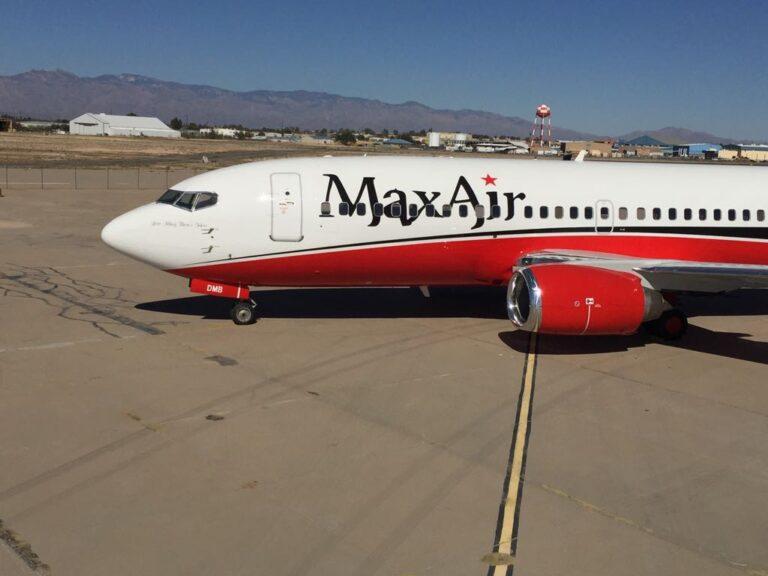
THE Nigeria Civil Aviation Authority (NCAA) has suspended Max Air Airlines for three months following an incident involving one of its aircraft at the Mallam Aminu Kano International Airport, Kano.
The authority disclosed this in a statement signed by its spokesman, Michael Achimugu, on Wednesday, January 29.
“As a result of this incident, Max Air is suspending its domestic flight operations for a period of three months with effect from midnight, 31st January, 2025, to allow for an internal appraisal of its operations by its management,” NCAA said.
A Max Air aircraft, B734, with registration 5N-MBD, on landing at the Kano Airport at about 10:51 pm, reportedly suffered a wheel landing gear collapse and a tyre burst while landing on the runway.
Six crew members and 53 passengers were onboard, but none suffered any major injuries during the incident.
The runway has since been cleared and flight operations have resumed at the airport, according to the Federal Airports Authority of Nigeria (FAAN).
The Nigerian Safety Investigation Bureau (NSIB) had further initiated an investigation into the incident.
In the statement on Wednesday, the NCAA said it would provide the required support to the NSIB on its investigation.
“It must be stated that the specific cause(s) of this incident can only be established after the NSIB has conducted its investigation,” it stated.
The NCAA said it had started organisational risk profiles for each scheduled operator, including Max Air, which is nearing its conclusion.
During the period, the NCAA said it would conduct a thorough safety and economic audit on Max Air.
“The safety audit will entail a re-inspection of Max Air’s organisation, procedures, personnel, and aircraft as specified by Part 1.3.3.3(b) of the Nigeria Civil Aviation Regulations, while the economic audit will critically examine the financial health of the airline to guarantee its capability to sustain safe flight operations.
“The resumption of Max Air’s domestic flight operations will be predicated on the satisfactory completion of this audit,” it said.
The NCAA added it was aware of the inconvenience its action might cause intending passengers of Max Air. However, it said the safety and well-being of passengers were paramount.
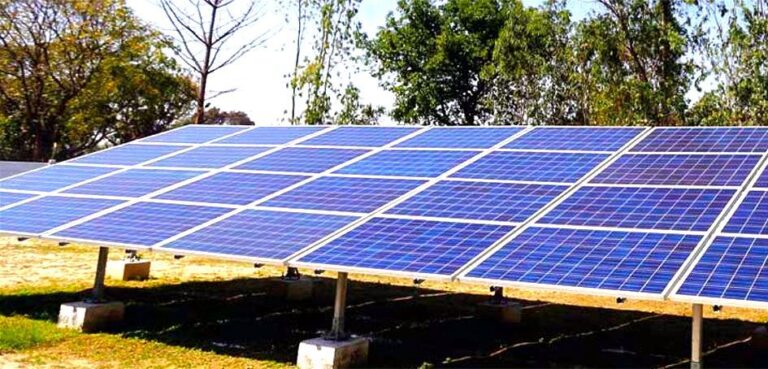
PRESIDENT Bola Tinubu has secured $70 million from the International Finance Corporation (IFC) as funding for the mini-grid projects which target underserved Nigerians without access to electricity.
The President secured the fund at the Africa Energy Summit which ended on Tuesday, January 28, in Dar es Salam, Tanzania.
The fund is part of a $1 billion facility set up by the IFC through grants from the Rockefeller Foundation and the African Development Bank.
According to the Managing Director of the IFC, Makhtar Diop, Nigeria is the first country to benefit from the fund.
“Yesterday President Tinubu signed the first project using this facility, yesterday we signed for $70 million, Diop announced at a session during the summit.”
The ICIR reports that with recurrent national grid collapse, mini-grids fill an important gap between expensive grid extension projects and low-power solutions like solar home systems, with most Nigerian homes and institutions opting for alternative energy from weak national grid infrastructure.
Power sector watchers said Nigeria’s large population and strong economy make it an attractive place to build the sector; the vast but underdeveloped mini-grid market offers revenue potential.
“Establishment of independent mini-power grids would greatly minimise power failure in the country,” a power sector expert, Joseph Adedayo said.
Commenting on concerns of energy poverty in Nigeria, the country director, of Power for All, Ify Malo said, “Looking at the issues around electricity, it is actually a poverty issue, there is something we call the energy ladder, and if we don’t get people climbing that ladder from tier 1 to tier 5 using much more sophisticated methods of energy access, we are going to have a lot more people remaining in poverty.”
“Energy access is a problem majorly faced by rural inhabitants who don’t have access to electricity at all while unreliability is faced by urban dwellers, who are paying for electricity but are not getting enough or even getting at all to meet their energy needs,” she added.
Electricity is a scarce commodity in Nigeria. With just over 4,000 megawatts supplying nearly 220 million people, the electricity access deficit stands at about 40 per cent nationwide.
The picture looks even darker in rural areas. There, 73 per cent of the population is off the power grid.
The ICIR reports that electrification is crucial to achieving Sustainable Development Goal 7: “access to affordable, reliable, sustainable and modern energy for all.”
The ICIRreported that the Rural Electrification Agency (REA) confirmed the electrification of 46,661 Micro, Small, and Medium Enterprises (MSMEs) will foster ease of doing business growth and provide opportunities for wealth creation.
The agency also said households and public facilities are also being electrified with a total of 103 mini-grids geared toward providing an enabling business and economic environment for them.