Home Blog Page 376

WHO urges Trump to exempt HIV treatment from US funding freeze

0

THE World Health Organization (WHO) has urged the United States government to introduce exemptions that would ensure uninterrupted delivery of lifesaving HIV treatment and care. 

This appeal followed President Donald Trump’s policy directing immediate funding pause for HIV programmes in low- and middle-income countries, putting millions of lives at risk.

The funding disruption, according to reports, has particularly affected the United States President’s Emergency Plan for AIDS Relief (PEPFAR), a global initiative that has been instrumental in combating HIV for over two decades. 

The ICIR reports that PEPFAR has been a lifeline for millions of people living with HIV, providing access to life-saving antiretroviral therapy (ART), with the medications not only keeping the virus in check but also preventing further transmission. 

The project, launched in 2003 under former President George W. Bush, has reportedly provided antiretroviral therapy (ART) for over 20.6 million people worldwide. Its interventions also help to prevent mother-to-child transmission of HIV and have saved an estimated 26 million lives. 

However, with the Trump administration halting U.S. foreign aid funding, Nigeria, among other countries now faces a critical shortage of these essential drugs.  

“A funding halt for HIV programmes can put people living with HIV at immediate increased risk of illness and death and undermine efforts to prevent transmission in communities and countries,” WHO said in a statement on Tuesday, January 28.

The global health body feared a return to the devastating conditions of the 1980s and 1990s when millions died from HIV-related illnesses globally.

Beyond the immediate impact on treatment access, WHO warned that the funding freeze could disrupt scientific advancements in HIV care, including innovative diagnostics, affordable medicines, and community-based healthcare models. 

“Such measures, if prolonged, could lead to rises in new infections and deaths, reversing decades of progress and potentially taking the world back to the 1980s and 1990s when millions died of HIV every year globally, including many in the United States of America.

“For the global community, this could result in significant setbacks to progress in partnerships and investments in scientific advances that have been the cornerstone of good public health programming, including innovative diagnostics, affordable medicines, and community delivery models of HIV care,” the statement added.

It, therefore, appealed to the US Government to enable exemptions to ensure the delivery of lifesaving HIV treatment and care.

Nigeria faces rising infections, strain on health system, experts warn

In a similar development, concerns have been raised by Nigerian public health experts, including medical advocate Egemba Fidelis, popularly known as Aproko Doctor.

Aproko Doctor warned that the decision could lead to a surge in infections, an increase in AIDS-related deaths, and further strain on Nigeria’s fragile healthcare system.

The public health expert, in a post on X, on Tuesday, January 28, while reacting to the funding cut, outlined the potential consequences if Nigeria failed to act. 

“If Nigeria doesn’t rise to the occasion and take charge, infections will rise, currently it’s close to 200,000 infections every year, people will die from AIDS, (and) drugs are not available. Our already burdened healthcare system will be burdened further which might be make or break,” he warned.  

He further noted that beyond HIV/AIDS, the funding pause would also affect programmes tackling tuberculosis and malaria. 

He warned that these diseases, which already pose significant public health challenges, could become more difficult to control, further overwhelming the country’s medical infrastructure.  

The ICIR reports that Nigeria has long relied on donor support to sustain its health programme, with the latest development leaving many vulnerable Nigerians in limbo.

According to reports, Nigeria bears the heaviest HIV burden in Sub-Saharan Africa, with about two million people living with HIV in the country. In 2020 alone, AIDS-related deaths in Nigeria were estimated at approximately 49,000 across all age groups.

While there is no cure for HIV infection, access to effective HIV prevention, diagnosis, treatment and care, including for opportunistic infections, has made HIV infection a manageable chronic health condition and enabled people living with HIV to live long and healthy lives.

Calling on the government to take ownership of its health system, another public health expert, Chioma Nwakanma-Akanno, noted that the “Time to step up was years ago, the second best time is now!”

“Awoof (free) funding is unsustainable. Lives will be lost if you don’t step up! People who have attained U=U with HIV could relapse. HIV can become AIDS, and that would be tragic,” Nwakanma-Akanno wrote on her X handle.

PDP headquarters in turmoil as Anyanwu, Ude-Okoye clash at BoT meeting

0

THERE was chaos at the Peoples Democratic Party (PDP) headquarters in Abuja on Wednesday, January 29,  as the party’s Board of Trustees (BoT) met to address some issues within the party.

The meeting presided over by acting national chairman, Umar Damagum, was attended by prominent party members, including national secretary, Samuel Anyanwu, Ben Obi, a former senator, former youth leader, Sunday Ude-Okoye, and BoT chairman, Adolphus Wabara.

However, tension soon enveloped the gathering as a crisis broke out between Anyanwu and Ude-Okoye, both contending for the party’s national secretary.

Trouble began when Ude-Okoye, who had arrived earlier, was asked to leave following the arrival of Anyanwu and Damagum.

Ude-Okoye declined, resulting in chaos.

Security operatives have taken over the party’s headquarters, and it’s unclear if the meeting continued as of the time of filing this report.

Background to crisis

In 2023, the party’s South-East zone nominated Sunday Ude-Okoye to replace Anyanwu, who was selected as the party’s candidate for the Imo State governorship election.

The zone argued that Anyanwu’s candidacy necessitated his resignation as national secretary. The matter has been the subject of litigation, with a High Court and an Appeal Court in Enugu ruling in favour of Ude-Okoye as the legitimate national secretary.

However, a subsequent ruling by the Court of Appeal in Abuja has introduced a new twist, issuing a restraining order that directs Anyanwu to remain in office pending the outcome of litigation over the matter at the Supreme Court.

The ICIR reports that the crisis highlights the ongoing power struggles within the party.

Trouble within the PDP began months before the 2023 general election. Former Vice President Atiku Abubakar and the incumbent minister of the Federal Capital Territory (FCT), Nyesom Wike, were the leading party members seeking to pick the party’s ticket for the presidential election held in February 2023.

Abubakar eventually picked the ticket while Wike and his block refused to support the former vice president’s candidacy.

Wike eventually became a prominent member of President Bola Tinubu’s cabinet and has since insisted that he is a member of the PDP.

Many party stalwarts, including Bauchi State Governor Bala Mohammed, have been angered by the minister’s stance.

Multiple reports have also linked Wike’s presence in Tinubu’s government to some of the crises in the PDP.

Rental income: How much does Buhari get in allowance as former president?

0

FORMER President Muhammadu Buhari recently revealed that he sustained himself financially through rental income from one of his two houses in Kaduna State.

It was not the first time the former leader would make statements alluding to living a modest life, different from his peers. Buhari had repeatedly said he had no personal businesses except a cattle farm in Daura.

However, such claims have been questioned by Nigerians, given the impunity and corruption that characterised his government.

One of his closest officials and former Governor of the Central Bank of Nigeria, Godwin Emefiele, has been tried and found guilty of corruptly enriching himself by acquiring assets worth billions under the administration of Buhari’s successor, President Bola Tinubu. The Nigerian court has ordered a final forfeiture of some of the assets.

Recently, another court ordered forfeiture of 753 mansions illegally acquired by an unnamed public official under Buhari. The former leader rode to power in 2015 on the mantra of ‘change’ which had the fight against corruption as one of its pillars.

What do former presidents get? 

The ICIR reports that Buhari could receive N4.2 million annual allowance from the proposed 2025 budget by the Tinubu administration.

Buhari and other former Nigerian leaders and their vice, including Yakubu Gowon, Ibrahim Babangida, Olusegun Obasanjo, and Goodluck Jonathan are to receive N2.3 billion in the proposed budget.

The ICIR’s check on the remuneration of former presidents and heads of state in Nigeria shows that all former presidents and heads of state in Nigeria are entitled to a monthly upkeep allowance of N350,000, which totals N4.2 million annually.

They also receive other benefits, including security personnel such as three to four armed policemen and a State Security Service officer as an aide-de-camp (ADC).

Additionally, they are provided with three vehicles that are replaced every four years, a diplomatic passport for life, and free medical treatment for themselves and their immediate family within Nigeria.

If needed, they can also receive medical treatment abroad at the Federal Government’s expense.

Other perks include a 30-day annual vacation, a well-furnished office, and a five-bedroom house in a location of their choice.

Addressing his audience in Hausa during an All Progressives Congress (APC) caucus meeting on Saturday, January 25, in Katsina State’s Government House, Buhari said he owned three houses: one in his hometown of Daura, Katsina State, and two in Kaduna State.

He explained that one of the Kaduna properties had been rented out, and he used its income for his daily living expenses.

He claimed he fought corruption while in office, and boasted that no one could accuse him of illicit enrichment.

Buhari highlighted the intricacies of governing Nigeria, noting that Nigerians often underestimated the challenges their leaders faced in leading them. 

“Nigeria is a difficult country to govern, but most Nigerians are unaware. You will not understand the complexities of leadership and the country itself until you find yourself in the administrative position of the country,Buhari remarked.

The ICIR reports thats a fact-checked done in 2019 in response to a claim by a former governor showed that Buhari owned properties Kano and Abuja with land in Port Harcourt.

While former presidents namely Obasanjo and Jonathan are often seen attending conferences, monitoring elections, and other high powered activities around the world, Buhari has returned to a full private life, similar to the life he lived after he was overthrown as a military leader in 1985. His public appearances are few and far between. 

Nearly 3,700 Nigerians face deportation from US

0

AT least 3,690 Nigerians have been scheduled for deportation from the United States, as President Donald Trump’s deportation of illegal immigrants in the country gets underway.   

The Trump administration has been carrying out raids and arrests in several cities, including Chicago, New York City, and Los Angeles, targeting illegal immigrants.

This latest development is part of a broader effort by the administration to tighten immigration laws, with thousands of people already detained and hundreds deported in recent days.

According to a report, the US has broken down the data by nationality and the number of people billed to be returned home.

The report detailed efforts of the Enforcement and Removal Operations of US Immigration and Customs Enforcement (ICE), an agency responsible for enforcing immigration laws within the US.

According to a recent document released by the ICE, Mexico and El Salvador top the list of countries with the most people facing deportation, with 252,044 and 203,822 citizens, respectively.

In a recent development, hundreds of migrants were arrested and deported on military aircraft, marking the commencement of President Donald Trump’s mass deportation operation.

The US government’s crackdown on illegal immigration has created a sense of apprehension among undocumented immigrants, including Nigerians, who are now living in fear of being deported.

Recall that Trump, on his inauguration day as the 47th President of the US on Monday, January 20, 2025, signed a series of executive orders aimed at tightening immigration policies, including the stoppage of citizenship by birth for children of illegal immigrants.

The ICIR reported that Trump signed more than 40 executive orders on his inauguration day, reversing several policies of his predecessor, Joe Biden.

Some of the orders include pulling out the US from the World Health Organisation (WHO), the  Paris Climate Agreement, ending birthright citizenship for children of illegal immigrants, and recognising only two genders – male and female.

The list includes defending women from gender ideology extremism, reinstating the ban on transgender military service, and renaming the Gulf of Mexico to the Gulf of America, among others.

ECOWAS retains trade, travel privileges for Burkina Faso, Mali, Niger

0

THE Economic Community of West African States (ECOWAS) has announced that citizens of Burkina Faso, Mali, and Niger would continue to enjoy free movement, trade, and investment benefits within the region despite their official withdrawal from the bloc.  

In a statement issued on Wednesday, January 29, ECOWAS reaffirmed that national passports and identity cards bearing the ECOWAS logo would remain valid for travel within the region until further notice. 

It also maintained that goods and services from the three countries would still be processed under the ECOWAS Trade Liberalization Scheme (ETLS).

The regional body emphasised that visa-free movement, residency, and business establishment rights for citizens of the withdrawing nations would remain in place. 

The statement also directed relevant authorities to cooperate with ECOWAS officials from Burkina Faso, Mali, and Niger during the transition period, which runs from January 29 to July 29, 2025.  

“All relevant authorities within and outside the ECOWAS member states are requested and required to: (a) recognise national passports and identity cards bearing ECOWAS logo held by the citizens of Burkina Faso, the Republic of Mali and the Republic of Niger, until further notice.

“(b) Continue to treat goods and services coming from the three countries in accordance with the ECOWAS Trade Liberalization Scheme (ETLS) and investment policy.

“c) Allow citizens of the three affected countries to continue to enjoy the right of visa-free movement, residence and establishment in accordance with the ECOWAS protocols until further notice.

“(d) Provide full support and cooperation to ECOWAS officials from the three countries in the course of their assignments for the Community,” the statement read.

ECOWAS clarified that these measures would stand until further deliberations determine the future relationship between the bloc and the three nations. 

The decision came about six weeks after ECOWAS’ approval of their withdrawal during its 66th Ordinary Session in Abuja on December 15, 2024, citing respect for their sovereignty under Article 91 of the revised ECOWAS treaty.  

The ICIR reported that the withdrawal followed months of diplomatic engagement led by Presidents Faure Gnassingbé and Bassirou Diomaye Faye of Togo and Senegal, respectively, as well as mediation efforts by Tinubu.

The authority, however, set a six-month transition period from January 29 to July 29, 2025, to allow for continued negotiations. 

During this time, ECOWAS said its doors remained open for the three countries to rejoin the bloc.

“Without prejudice, for the spirit of the opening, The authority directs the president of the commission to launch withdrawal formalities after the deadline of 29th January 2025 and to draw up a contingency plan covering various areas.”

The authority also directed the council of ministers to convene an extraordinary session during the second quarter of 2025 to consider and adopt both separation modalities and the contingency plan covering political and economic relations between ECOWAS and the three countries.

Forensic verification of $7bn FX backlogs show corruption – CBN

THE Governor of the Central Bank of Nigeria (CBN), Olayemi Cardoso, said that forensic verification of $7 billion foreign exchange (FX) backlogs which revealed corrupt practices is nearing completion and is in the final settlement process.

Cardoso disclosed this at the Nigeria Foreign Exchange (FX) Code launch in Abuja on Tuesday, January 28.

He said the process is to help restore transparency and trust in the market and uncover unethical and illegal practices in FX transactions.

“We must not forget where we are coming from. The era of multiple exchange rates, which created privileges for a select few at the expense of most Nigerians, severely undermined market integrity.

“As an example, the $7 billion of FX backlogs that have taken over 12 months to verify has led to the discovery of multiple unethical and even illegal practices that we should not be proud of as a nation. The forensic verification process is now near complete, and final settlements will be processed accordingly,” Cardoso said.

He stressed that the practice had negative impacts on inflation, currency depreciation, and the erosion of public confidence in the system.

Cardoso assured that such distortions would no longer be tolerated under the FX Code, which mandates strict adherence to ethical principles.

The apex bank boss noted that CBN had embarked on reforms including the unification of exchange rate windows and recalibration of monetary policy tools, aimed at addressing structural issues.

He reiterated that the CBN is now on the part of preventing a recurrence of market distortions.

The ICIR can report that the FX backlogs stem from legacy issues during the period of multiple exchange rates and systemic abuses that eroded public confidence.

In February 2024, the CBN revealed that about $2.4 billion foreign exchange backlog was not valid for settlement.

At the time Cardoso asserted that of the initially reported $7 billion FX liabilities on the Federal Government, about $2.4 billion were identified as invalid following a forensic audit by Deloitte Management Consultant.

The audit’s findings showed various infractions, including non-existent entities and unauthorised FX allocations, making these liabilities invalid.

Cardoso had committed to clearing the FX backlog for the aviation sector when international airlines threatened to halt their operations in Nigeria, The ICIR reported.

Nigerians investing with Risevest are exposed to high-fraud risk, SEC warns

0

THE Securities and Exchange Commission (SEC) has warned Nigerians sternly against investing with Risevest Technologies Limited, stressing its high-fraud risk status.

The firm is a digital dollar/fund manager in the Nigerian capital market.

In a public notice released by the Commission on Tuesday, January 28, the SEC declared that Risevest is not registered to operate in any capacity within the country’s regulated capital market.

The public notice read, “The attention of the Securities and Exchange Commission (“The Commission”) has been drawn to the activities of Risevest Technologies Limited, which holds itself out as a Digital Dollar/Fund Manager in the Nigerian Capital Market.

“The Commission hereby notifies the public that Risevest Technologies Limited is NOT Registered by it to operate in any capacity in the Nigerian Capital Market.

“Accordingly, the public is advised to refrain from engaging with Risevest Technologies Limited or any of its representatives in respect of any business pertaining or relating to the Nigerian capital market,” the notice stated.

The regulatory body noted that the firm’s activities pose significant risks to investors, as transacting with unregistered and unregulated entities increases the likelihood of fraud and financial losses.

The Commission, therefore, advised the public to exercise caution and verify the regulatory status of companies before making investment decisions.

The SEC emphasised that dealing with unapproved investment platforms could result in serious financial risks, reiterating that its role as the apex regulatory body in the capital market is to protect investors and ensure the credibility of investment platforms.

The Commission urged Nigerians to always confirm the regulatory status of investment firms via its dedicated portal (www.sec.gov.ng/cmos) before engaging in any financial transactions.

This verification process, the SEC insists, is crucial to safeguarding funds and avoiding fraudulent schemes disguised as legitimate investment opportunities.

“The Commission uses this medium to reiterate that transacting in the Nigerian Capital Market with unregistered and unregulated entities exposes investors to the risk of fraud and potential loss of investment.

“The investing public is therefore reminded about the need to confirm the status of companies and entities offering investment opportunities on the Commission’s dedicated portal – www.sec.gov.ng/cmos, before transacting with them,” SEC further warned.

The latest SEC advisory comes amidst growing concerns over online investment schemes promising high returns, with many unsuspecting Nigerians falling victim to fraudulent platforms that operate without regulatory oversight.

The ICIR reported that SEC has earlier blacklisted six e-commerce companies for operating without registration and for engaging in dubious financial services not authorised by the commission.

The unregulated online trading platforms SEC blacklisted are Prime Invest, FXBoxed and New Finance LLC & New Fx Limited.

The commission noted that unlisted firms were not registered by the SEC Nigeria, and the financial services offered by them are also not authorised.

Afenifere demands Nnamdi Kanu’s release, appoints Farotimi as organising secretary

0

THE Yoruba socio-cultural organisation, Afenifere, led by Ayo Adebanjo, has called on President Bola Tinubu to immediately release the detained leader of the Indigenous People of Biafra (IPOB), Nnamdi Kanu.

Afenifere called on Tinubu to release Nnamdi Kanu in a communiqué signed by its deputy leader, Oba Oladipo Olaitan.

The group described Kanu, leader of the proscribed Indigenous People of Biafra (IPOB), as a political detainee whose continued detention was unjustified.

The decision followed a meeting at Adebanjo’s residence in Ogun State on Tuesday, January 28.

According to the regional body, Kanu’s fair trial is no longer guaranteed due to the courts conflicting and controversial legal proceedings against him.

It argued that the IPOB leader’s detention without trial was unreasonable, given the circumstances surrounding his case, including his abduction in 2021 and repatriation to Nigeria.

“In the interest of justice and national reconciliation, Afenifere urges President Tinubu to release Nnamdi Kanu forthwith. There is no justifiable reason to continue to keep him in detention without trial,” part of the communiqué read.

At the meeting, Afenifere also announced the appointment of human rights activist Dele Farotimi as its new national organising secretary.

Farotimi’s appointment came barely 24 hours after a legal luminary, Afe Babalola, agreed to drop a defamatory suit filed against him.

Recall that Babalola had dragged Farotimi to court for allegedly defaming him in his book titled ‘Nigeria and Its Criminal Justice System’.

Meanwhile, at the meeting, Afenifere sounded the alarm on the state of insecurity in Nigeria, saying it was as bad as it was under the previous administration led by Muhammadu Buhari.

It called on the president to take serious action to protect the lives and property of people in the nation.

The group recalled the recent warning from Oyo State Governor Seyi Makinde about an influx of bandits as an example of why something needed to be done about insecurity.

Afenifere said Nigeria’s vast territory, population, and federal structure made it impossible to secure the country effectively with a single unitary police command, which it said made restructuring and state police imperative.

The meeting was attended by delegates from the South West, Kogi, and Kwara states, including Kofoworola Bucknor Akerele, Sola Ebiseni, and Akin Onigbinde, among others.

Police charge Sowore for calling Egbetokun ‘illegal’ IGP

0

HUMAN rights activist and former presidential candidate, Omoyele Sowore, has been formally charged by the Nigeria Police Force (IGP) for alleged cyberstalking and false publication against the inspector general of police, Kayode Egbetokun. 

The charges, filed at the Federal High Court in Abuja, and shared by Sowore’s handle on X, on Tuesday, January 28, show that the lawsuit stemmed from Sowore’s posts on X, where he was said to have referred to Egbetokun as an “illegal IGP.”

According to the charge sheet seen by The ICIR, the police accused Sowore of making statements capable of causing a breakdown of law and order. 

The three-count charge alleged that on December 13, 2024, and December 20, 2024, Sowore knowingly transmitted messages via his verified X account to “cause a false publication against the inspector general of police.”

Part of the charges read, “That you, Omoyele Sowore, that on the 13th day of December 2024, within the jurisdiction of this honourable court, did intentionally and knowingly send messages through your verified X handle account “Omoyele Sowore” and cause a publication against the inspector general of police where you called him “…illegal IGP Kayode Egbetokun” which you know to be false, for the purpose of causing breakdown of law and order and you caused the message to be sent and thereby committed an offence contrary to section 24(1)(b) of the Cybercrime (Prohibition, Prevention, ETC) Act, 2015 as Amended (2024) and punishable under section 24(2)(c) (ii) of the same Act.

“That you, Omoyele Sowore, that on the 13th day of December 2024, within the jurisdiction of this Honorable Court, did intentionally and knowingly cause the transmission of messages through your verified X handle account “Omoyele Sowore” links and cause a publication against the inspector general of police where you called him “…illegal IGP Kayode Egbetokun” which you know to be false and tagged the verified Nigeria Police Force X handle @policeNG, containing threats to insight (sic) the Nigerians against the Nigeria Police Force and harm it (sic) property or reputation of the inspector general of police or the Nigeria Police Force and thereby committed an offence and punishable under section 24(2)(c) (ii)of the Cybercrime (Prohibition, Prevention, ETC) Act, 2015 as Amended 2024.”

The ICIR reports that the NPF had invited Sowore to its headquarters in Abuja on Monday, January 27, for allegations of “resisting and obstructing public officers, disobedience to lawful order, acts intended to cause grievous harm or prevent arrest, compelling action by intimidation, reckless and negligent acts, refusal to assist public servant, and cyberstalking.”

He has since been kept in custody after he rejected the bail conditions by the police.

In a tweet on his X handle, hours after he honoured the invitation, the activist said the NPF requested that he deposit his international passport and provide a level 17 civil servant as a guarantor for bail.

He said he rejected the conditions and opted to remain in custody.

Consequently, the police re-evaluated his bail conditions and requested the production of a level 16 civil servant. The police also directed him to surrender his international passport, which he declined outrightly.

Controversies surrounding Egbetokun’s tenure

In a series of tweets in December 2024, Sowore dubbed Egbetokun illegal IGP. This followed earlier concerns raised by many Nigerians over the legitimacy of his continued stay in office after he had reached the mandatory retirement age of 60. 

However, the Senate, in a swift move, on July 23, passed a bill extending his tenure, allowing President Bola Tinubu to retain him in office beyond the previously established retirement age.

 The bill, widely criticised by many, including civil society groups, was seen as a move by Tinubu to consolidate his control of the police ahead of the 2027 elections. Egbetokun was Tinubu’s chief security officer (CSO) when the president was Lagos State governor.

Despite dissenting voices, the bill passed its first, second, and third readings in less than 20 minutes. 

To incorporate the new provision, the Senate amended Section 18 of the Nigerian Police Act 2020 by substituting sub-section (8) with the following revised clause:

“(8) Notwithstanding any other provision, every police officer shall serve in the Nigeria Police Force for 40 years or until they reach the age of 65, whichever comes first.”  

Whereas, the amended Section 18 (8) of the Nigeria Police Act stated: “Every police officer, upon recruitment or appointment, is required to serve in the Nigeria Police Force for a maximum of 35 years or until they reach the age of 60, whichever occurs first.” 


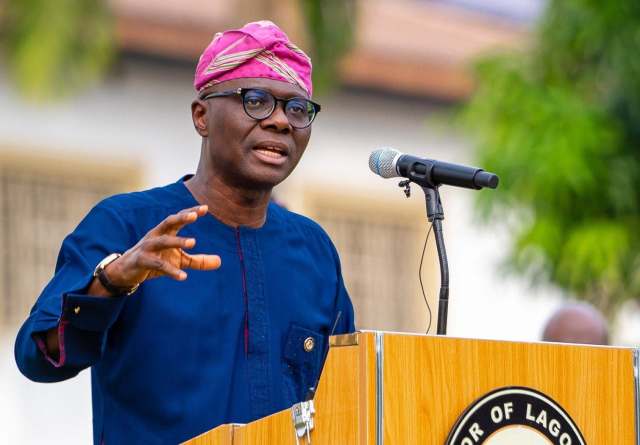
FG, Lagos sign MoU to begin 68km green line rail project

THE Lagos State Government said it has signed a Memorandum of Understanding (MoU) with the Federal Government to kickstart exploratory work on the 68-kilometre Green Line rail project.

The state commissioner for information and strategy, Gbenga Omotoso, announced this during a citizen/media stakeholders forum on Monday, January 27.

He said the agreement was reached with the Federal Government’s Ministry of Finance Incorporated (MOFI) on behalf of the federal government.

The green line project will connect Marina to the Lekki Free Trade Zone, traversing key areas such as Victoria Island, Lekki, and Ajah.

“The Lagos State Government has said it has signed an MoU with the Federal Government’s Ministry of Finance Incorporated (MOFI) to kickstart exploratory work on the development of the  Green Line project,” Omotoso said

The rail project is expected to enhance connectivity, support economic activities and contribute to the state’s infrastructure development.

It complements the progress made in the Blue Line and Red Line projects.

The ICIR can report that the first phase of the Blue Line, spanning 13 kilometres from Marina to Mile 2, commenced operations in September 2023.

The Red Line, covering 27 kilometres of its planned 37-kilometre route from Agbado in Ogun State to Oyingbo in Lagos, began operations in 2024. It covers eight strategically located stations: Agbado, Iju, Agege, Ikeja, Oshodi, Mushin, Yaba, and Oyingbo.

Construction is ongoing in the second phase of the Blue and Red Lines to meet the transportation needs of the state’s growing population.

The Federal Government has already proposed N146.14 billion in its 2025 budget estimates as counterpart funding for the Lagos Green Line Metro Rail Project, findings have shown.

The funding will be transferred to MOFI to manage on behalf of the Ministry of Transport for the project’s development.

In September, the Lagos State Government formalised an agreement with MOFI and China Harbour Engineering Company (CHEC) for the Green Line’s development.

Omotoso added there are plans for the Lagos state government to connect the Red Line with the Blue Line, noting that work has also commenced on the second phase of the Blue Line, extending it from Mile 2.