THE International Centre for Investigative Reporting (ICIR) has rewarded exceptional staff members for their diligence and commitment to the organisation’s growth in 2024.
Five staff members were awarded cash prizes and plaques in what has become a tradition at the organisation during the Centre’s annual staff retreat, held in Abuja between January 10 and 11.
Chukwudi Iwuoha and Eunice Musa, who work at the Centre’s programmes department, won the award for male and female employees of the year.
The awards were presented to them by the Centre’s executive director, Dayo Aiyetan, who commended their ingeniousness and resilience.
Aiyetan recounted how the awardees put in their best to propel the Centre’s growth in 2024.
He said their sacrifices deserved commendations, even as he urged them to do more in the new year.
Reacting, Chukwudi expressed delight with the award.
“All I can say is a big thank you to the International Centre for Investigative Reporting for this special recognition. It is one thing to pay staff for work done, it is another thing to appreciate and reward their efforts,” he said.
Eunice Musa who won the female category shared the same thoughts as her counterpart. She said the award was an inspiration to do more.
“I am humbled and honoured to receive this recognition. I’m grateful to work with such a talented and supportive team, and I’m proud to contribute to The ICIR’s mission.”
The ICIR’s ICT officer, Abdulaziz Gobir, was the runner-up for the male employee of the year category.
He shared his feelings on the recognition, “I want to thank The ICIR so much for this recognition. I am truly honoured and grateful for the opportunity to contribute to the success of our organisation. I dedicate this to everyone who has inspired and supported me.”
Meanwhile, an investigative journalist, Mustapha Usman, won the Reporter of the Year award.
In 2024, Mustapha authored over 500 reports, including investigative and special reports.
Presenting the award, The ICIR Editor, Victoria Bamas, described the award as the recognition of excellence and dedication demonstrated by Mustapha with his timely and important stories.
Mustapha said of the award, “This is such an amazing moment for me. Winning Reporter of the Year is a great feat.”
Mustapha recounted joining The ICIR as a young journalist who was keen to learn and hold power to account.
“ I had big dreams but little experience, and every step of the way, this organisation pushed me to be better. The ICIR gave me the platform, mentorship, and courage to pursue stories that matter; stories that amplify the voices of the unheard.
“Journalism, for me, has always been about telling the stories that matter, stories about people, their struggles, triumphs, and sometimes, their pains. And I can say that I have documented several of them.”
Mustapha dedicated the award to the people whose voices were amplified through his work, and to his colleagues who inspire him daily.
He extended his gratitude to the editors and mentors who helped to shape his career.
Another investigative reporter with the Centre, Nurudeen Akewushola, was the runner-up for the Reporter of the Year award.
Nurudeen, who also works as a fact-checker at the FactCheckHub – the fact-checking arm of The ICIR – was overwhelmed with joy for clinching the award.
“I’m excited about this commendation. Our work is sensitive, demanding and requires a lot of risks. Yet, moments like this make all the challenges worthwhile. I am deeply thankful to my editors, colleagues, and The ICIR for creating an environment that encourages young journalists like me to do great stories.”
Nurudeen was one of the journalists who made headlines in 2024. He was detained by the Nigerian police alongside The ICIR’s executive director for his investigation that exposed sleaze within the highest echelon of the Nigeria Police Force.
COMMERCIAL Point-of -Sale (PoS) operators mushrooming around filling stations retail outlets are conniving with some pump attendants to add arbitrary charges to consumers purchasing fuel, The ICIR findings have shown.
While some filling station outlets negotiate with banks to have their own PoS machines which customers can use without incurring charges, others connive with commercial PoS merchants to extort Nigerians through arbitrary charges.
Findings by The ICIR revealed that some filling station retail outlets flagrantly refuse to have their own POS machines for transactions from the bank, while pointing to commercial merchants loitering around the stations.
“I had an experience at AY Shafa filling station in Abuja whereby the pump attendant pointed me to a commercial PoS merchant, who charged me extra from the fuel I bought under the pretext that I didn’t have PoS,”our reporter who made purchase at the filing station in early December said.
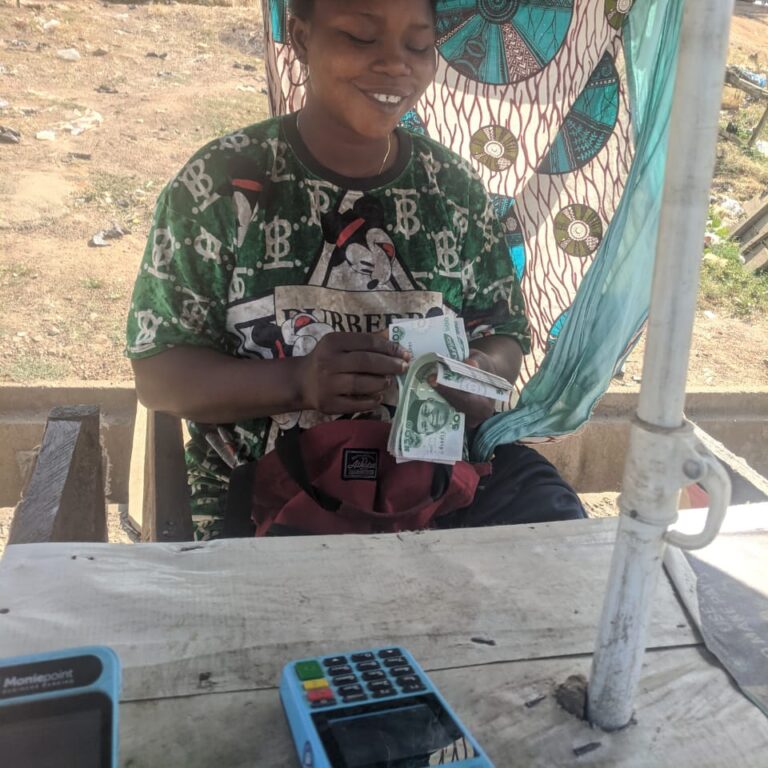
Aside the filling stations, the ICIR visited the Kubwa village market-at the Bwari Area Council of the FCT and interacted with food sellers who readily had PoS merchants whom they refer food stuffs buyers to.
Picture shows traders aligning with PoS operators to charge buyers claiming not to accept transfers except from the PoS operators
“I have experienced this several times when I went to buy from the market here in Kubwa. Some of the food sellers, especially the meat and ‘ogbono’ sellers will tell you to pay with charges to a PoS merchant nearby. The worse is the vegetable sellers who tell you they don’t have account and readily point to PoS merchants loitering around for you to pay,” a food seller and restaurant owner, Margaret Osai told The ICIR.
Industry analysts say this pattern pushes up inflation, especially with the current cash rationing currently being witnessed by the apex bank, to deposit money banks and automated-teller-machines (ATM).
“When so much money is chasing few goods it spikes inflation, remember, we’re import dependent and are highly exposed to monetary risks, with this kind of charges, it exposes all of us to higher inflationary risks because of higher cost of money in transactions,” a development economist, Celestine Okeke, told The ICIR.
Our reporter had a firsthand experience at the market while he went to make a Christmas purchase. He witnessed the usual antics of the meat sellers at the market.
A PoS merchant at his business outlet in Kubwa-FCT
“I don’t have an account but there are PoS merchants around who can help you transfer, and they pay me. That comes with a cost sir,” a clothes seller told our reporter who went to make purchase at the just ended festive season.
The ICIR reports that the PoS merchants hanging around the markets charge as high as N300 for N5,000 withdrawal and N600 for N10,000. It would be noted that these prices are not fixed, rather arbitrarily charged to customers who might not have options apart from the ‘proxy’ PoS merchants.
This development has kept surging the cost of funds for businesses, with Nigerians suffocating from the current 34.6 per cent inflationary pressure.
Most Nigerians are double-charged as cash scarcity persists with the CBN rationing of the cash further forcing Nigerians to buy naira with naira.
Lamenting about the development, Oluchi Okafor, a restaurant manager in Kubwa told The ICIR that food buyers battle constant change in price and additional charges from PoS merchants.
“I had a terrible experience, and my meat seller will tell you he doesn’t have account for transfer and will go ahead to point at a POS where you can withdraw money and pay him.
Traders referring to buyers to use nearby PoS, claiming not to have an account.
“POS will charge you up to N1,000 for N50,000 cash. You will give it to the POS man and right in your front, the meat seller will hand it back to the POS girl and give you your meat! I noticed this and stopped buying from him,” she added.
The ICIR reported that CBN had directed Nigerian banks to set N100,000 per day as a withdrawal limit for customers on point-of-sale terminals nationwide amid cash scarcity.
The apex bank disclosed this in a recent circular to all Nigerian banks, titled, ‘cash-out limits for agent banking transactions,’ which outlines other measures.
CBN said the restriction was in line with the apex bank’s ongoing efforts to advance a cashless economy.
This directive is currently being exploited through arbitrary charges by traders under the guise of ‘no cash’ without being sanctioned by the relevant authorities.
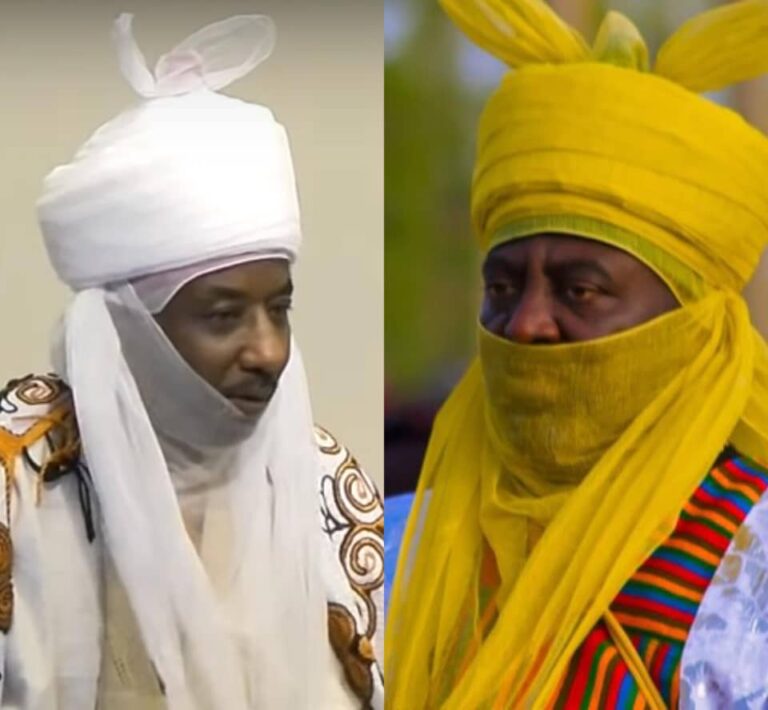
THE Court of Appeal has set aside the ruling of the Federal High Court, Kano, that nullified the appointment of Sanusi Lamido Sanusi as the 16th Emir of Kano.
The Federal High Court had on Thursday, June 20, 2024, reinstated deposed Ado it Bayero as the emir, consequently annulling the state government’s reinstatement of Sanusi Lamido Sanusi as the emir.
The court abrogated the Kano State Emirate Law 2024, which dissolved the five Emirates in the state.
It also dismissed the state government’s repeal of the Kano Emirates Council Law, which the state had used to sack Sanusi and install Bayero as emir.
The judge, Abdullahi Muhammad Liman, in his ruling, ordered all parties involved in the case to maintain the status quo.
A kingmaker in the defunct Kano Emirate, Aminu Babba Danagundi, also known as the Sarkin Dawaki Babba, through his attorney, Chikaosolu Ojukwu (SAN), had sued the Governor Abba Yusuf-led government to contest the new law’s validity and requested that the court void it.
Sanusi’s reinstatement threw the state into confusion as the dethroned Emir Bayero refused to relinquish his office.
But in a judgment read by Gabriel Omoniyi Kolawole on Friday, January 10, a three-member panel of the Court of Appeal, Kano, held that the order nullifying the steps taken by the Kano State Government pursuant to the 2024 Emirates Council Law was made by Liman without jurisdiction.
The appellate court ruled that the fundamental rights enforcement suit filed by an aggrieved kingmaker—Aminu Babba Dan Agundi—on which basis Liman issued the June 20 order, was not only invalid but the court lacked the jurisdiction to hear the matter.
Meanwhile, in another ruling, the Court of Appeal, Abuja Division, on Friday, January 10, ordered a fresh hearing into the Kano Emirate impasse.
The court, headed by Mohammed Mustapha, ruled that Bayero was not given a fair chance to present his case.
The courtcriticised the Kano High Court for not following proper procedures, including failing to notify Bayero of the hearing, and emphasised the importance of ensuring all parties have an equal opportunity to be heard.
The three-member panel of the court upheld the appeal on the issue of fair hearing, citing that the lower court should have notified the appellant and allowed them to get new legal representation after their lawyer withdrew.
The Court of Appeal ordered the case to be sent back to the Kano State High Court’s chief judge to be reassigned to a different judge for a speedy decision.
The ICIR reported in July that the Kano State High Court ordered Bayero to stop parading himself as the Emir.
The court, in a judgement by Amina Aliyu, on Monday, July 15, also barred four other deposed emirs from posing as the emirs of Bichi, Rano, Karaye, and Gaya.
According to the court’s ruling, they should return the government’s moveable and immovable items in their custody.
The Kano State government filed the lawsuit on May 27, 2024, through its lawyer, Ibrahim Isah-Wangida.
The suit sought to prevent Bayero and other deposed emirs from posing as traditional leaders.
Ibrahim-Gaya (Emir of Gaya), Ibrahim Abubakar II (Emir of Karaye), Kabiru Muhammad-Inuwa (Emir of Rano), Aminu Ado Bayero (15th Emir of Kano), and Nasiru Ado Bayero (2nd Emir of Bichi) were listed as respondents.
The emirship tussle in Kano has persisted for months since the government abolished the five emirates in the state.
While Bayero refused to relinquish his office and has occupied the mini palace in the Nasarawa area of Kano City, Sanusi has been in charge of the main palace.
On June 3, The ICIR reportedthat the tussle over the throne left Kano residents and other Nigerians confused over who would lead the Kano Durbar, a significant and historic festival in the state usually led by the emir.
However, a few days before the festivities, the police banned all durbar activities as part of efforts to sustain peace in the state.
OYO State Governor Seyi Makinde has approved the appointment of Abimbola Owoade as the new Alaafin of Oyo, ending a two-year succession crisis in the ancient town.
The announcement was made in a statement on Friday, January 10, by the commissioner for information and orientation, Dotun Oyelade, who explained that the selection process involved extensive consultations and traditional divinations conducted by the Oyomesi, the Oyo kingmakers.
The commissioner expressed optimism that Owoade’s reign would usher in peace, prosperity, and unity for the historic Oyo Kingdom.
“Prince Abimbola Akeem Owoade, after thorough consultations and divinations, has been recommended by the Oyomesi and approved by Governor Seyi Makinde as the new Alaafin of Oyo,” the statement read.
According to him, the appointment ends the legal and social disputes that followed the passing of the former Alaafin, Oba Lamidi Adeyemi III, who died on April 22, 2022.
“This decision has put to rest all the socio-legal controversies that have arisen since the transition of the late Oba Adeyemi. We urge the people of Oyo State to support the new Alaafin and join the government in celebrating this historic moment,” he said.
The ICIR reports that the appointment contrasts with the initial recommendation of some Oyomesi members, who had recommended Lukuman Gbadegesin for the throne.
Shortly after the recommendation in 2023, two of the council members claimed irregularities in the selection process.
However, the Bashorun of Oyo, Yusuf Akinade, shortly after the recommendation insisted that the selection process adhered to due process and was unanimously approved by all seven kingmakers.
Akinade defended the process, citing adherence to the 1961 Alaafin Chieftaincy Declaration and the 2000 Chiefs Law of Oyo State.
He noted that the inclusion of two warrant chiefs in the voting process, which had sparked debates among kingmakers, was upheld by a court ruling in December 2022.
THE demand by some shareholders for FBN Holdings Plc to call for an Extra-ordinary General Meeting (EGM) to remove the board chairman, Femi Otedola, has again questioned the Central Bank of Nigeria (CBN) corporate governance rules.
The company has been enmeshed in some internal crisis in recent times since Otedola took over as the chairman of the board.
Shareholders have since then been wary about the intricacies going on at FBN Holdings and its subsidiary, First Bank of Nigeria Limited.
A recent development is a call by some shareholders on FBN Holding to hold an EGM, invoking section 215 (1) of the CAMA (Companies and Allied Matters Act) that grants 21 days for the meeting to be held.
The section states “The board of directors may convene an extraordinary general meeting whenever they deem fit, and if at any time there are not within Nigeria sufficient directors capable of acting to form a quorum, any director may convene an extraordinary general meeting.”
The EGM aims to remove Otedola and a non-executive director, Julius Omodayo-Owotuga, from the board.
According to a report by ThisDay on Thursday, January 9, a group of shareholders claimed Otedola had mismanaged the bank since becoming the chairman of FBN Holdings.
They asserted that FBN Holdings has not known peace since the former CBN governor, Godwin Emefiele, influenced Otedola’s acquisition of significant shares in the bank that led to his emergence as chairman.
Emefiele requested the former chief executive officer of First Bank of Nigeria Limited, Adesola Adeduntan, to work with Otedola to help the chairman take over the bank.
The rapport created paved the way for Otedola to become a non-executive and, subsequently, the chairman of the board, the shareholders alleged.
The ICIRreported that Adeduntan’s resignation eight months before the expiration of his tenure violated the CBN corporate governance guidelines.
Otedola was further alleged to had a hand in the abrupt resignation of Adeduntan, the exit of a former chairman of First Bank of Nigeria Limited, Tunde Hassan-Odukale, and the removal of an executive director, Tosin Adewuyi, whom Otedola was said to have side-stepped for the position of the CEO.
He was also accused of favouring the appointment of the new CEO of First Bank, Olusegun Alebiosu, who pledged allegiance to him to run the Holdco and bank at will.
Other allegations against Otedola were that he had secured a loan of about $50 million (N90 billion) from the African Export-Import Bank (Afreximbank) to enable him to take full control during FBN Holdings’ proposed N360 billion private placement which some shareholders have kicked against and preferred instead a rights issue or public offer
FBN Holdings reacts
In a statement on Thursday, January 9, signed by its company secretary, Adewale Arogundade, FBN Holdings reacted to the report.
It asserted that the concern by shareholders to have Otedola removed as chairman does not in any way impact its operations, claiming that all the businesses within the group continue to provide uninterrupted services to its customers.
“We assure our valued customers, shareholders, investors, other stakeholders and the general public that we are taking all necessary steps to protect the interests of the Company and its subsidiaries.
“The group’s performance continues to improve, resulting in a higher market capitalisation even as we work towards surpassing the regulatory minimum capital well ahead of the deadline.”
It admitted that two of the company’s shareholders called for the EGM, FBN Holding claimed that the group and the subsidiary remain committed to the highest level of corporate governance.
“The Registrar and Lead Issuing House are collating the returns from all receiving agents in respect of its rights issue which closed on December 30, 2024,” it added.
A check by The ICIR, however, showed that the company’s share price dipped by -1.27 per cent to close at N31.50 at the close of trading on the floor of the Nigerian Exchange Limited (NGX) on Thursday.
Meanwhile, the Nigeria stock market was uptick on Thursdays as investors gained N792.73 billion, raising the market capitalisation to N64.35 trillion.
Shareholder’s association reacts
Commenting on the call for an EGM to remove Otedola, the national president of New Dimension Shareholders, Patrick Ajudua, told The ICIR that CBN must ensure that rules and regulations are strictly followed in resolving the various contending issues as failure may lead to the collapse of the bank and eventually result into the regulatory takeover of the bank and loss of shareholders investment.
“Just as we have continuously advocated for all stakeholders to ensure amicable settlement of the dispute in the overall interest of the bank and to place the survival of the bank above their interest,” he added.
The ICIRreported lately that the bank has yet to officially make its position known over the alleged layoff of 100 of its senior staff in its bid to restructure and reposition the bank ahead of 2025.
The organisation can recall that FBN Holdings has been a subject of battle over who holds the single largest share of the institution.
In its 2023 audited financial statements, FBN Holdings put Otedola as the single largest shareholder with a 9.41 per cent stake ahead of Oba Otudeko’s Barbican Capital which stake was omitted at the time, raising questions about CBN corporate governance.
Since then, Otedola has increased his stake in the bank’s shares.
UNSTABLE grid, interest rate hikes from the Central Bank of Nigeria (CBN), electricity and telecom tariff hikes are some of the economic issues that will shape Nigeria’s businesses and economy in 2025.
For some economists, 2025 is not a year for the faint-hearted. The federal government’s reforms on gasoline (fuel) subsidy removal and naira floating against the US dollar are already taking a toll on Nigerians and heightening business risks.
“Price moderation of gasoline is to be expected if prices from our West African neighbours are aligning with our own. The International oil price is also a major determinant of the price moderation. We may see the price settling at N1,000 in the first quarter as global oil price rises. We may also begin to see exchange rate stability because of less import-dependent on gasoline aided by Dangote refinery and rehabilitation from the government-owned refineries,” the chief executive officer of Financial Derivatives Company, Bismarck Rewane, said in response to business risk exposures for 2025.
Bismarch Rewane, Chairman Technical Committee on implementation of minimum wage and CEO of Financial Derivatives Company.
Naira devaluation is also a major risk factor for businesses, the manufacturing sector and investors which can unsettle their overall economic plan.
“The price of bread could rise further this year because of the rising cost of diesel and raw materials that we import for bread production. In 2024, almost 40 per cent of our people were leaving the business because of high cost of production and raw materials. Sadly, we are not accessing any facility from the commercial banks because of high interest rates,” the president of the Premium Beadmakers Association of Nigeria, Emmanuel Onuorah, said.
On naira’s devaluation, findings have shown that from December 2023 to December 2024 the Nigerian naira depreciated by 46.8 per cent relative to the US dollar, and the dollar appreciated by 88.25 per cent relative to the Nigerian naira, based on the official exchange rate (N1,538/$).
Also, from November 2023 to November 2024, the naira depreciated by 51.79 per cent relative to the US dollar, as the dollar appreciated by 107.41 per cent relative to the naira, based on the official exchange rate (N1738/$).
Further risk projections showed businesses are still worried over the national grid. The electricity grid collapsed up to 12 times in 2024, which raises questions over the country’s obsolete grid and over-reliance on the central grid.
Energy watchers have argued that the collapse would persist in 2025 unless the government intensifies efforts in transmission expansion and states attract investments through their regulatory and investment agencies, riding on the Electricity Act.
Beyond the grid collapse, electricity tariff hike is also expected this year which according to the Electricity Act 2023 is to be effected bi-annually considering exchange rate variables and rising inflation.
“The government needs to do something about power and clearing of debts owed gas generating companies. We need power for the industrialisation of our country. Electricity deficit in Nigeria is more than 40 per cent. We still have millions of unmetered customers, and these are gaps that must be plugged to grow investors’ confidence,” the head of Investment Research at Cardinal Stone, Phillip Anegbe said.
Another risk exposure for the Nigerian economy is rising inflation. Since the commencement of Tinubu’s administration, Nigeria has been battling high inflation which rose for the third straight month in November 2024, soaring to a near 30-year high of 34.6 per cent, up from 33.9 per cent in the prior month.
Food inflation in Nigeria reached 39.93 per cent in November, 2024, a sharp increase from 32.84 per cent in November 2023.
As a result of this, most Nigerian families are struggling to have three square meals in 24 hours as the federal government’s promised food import waiver on essential food items in 2024 failed without effective implementation.
The rise in food inflation poses a greater challenge to some food companies and overall Nigeria’s spending.
“I had expected the food import waiver to take effect last year, but that did not happen. Currently, I spend 65 per cent of my earnings on food. The rest goes into transport and other essential things. I do not even have anything left to save or invest,” said a Lagos-based Ibrahim Wahab, who has a family of four.
Reforms triggering risks
The ongoing reforms of the federal government, focused on naira devaluation and fuel subsidy removal had exposed Nigerian businesses and upbeat investors to massive risks with inflation currently at 34.6 per cent.
2025 proposed budget
The reforms are triggering multiple risks for businesses as volatile exchange rate and rise in the price of gasoline also influence rising costs of funds for purchase of raw materials for production.
Nigeria has been paying the price of Tinubu-led federal government’s reforms but are yet to reap the positive effects.
Politicians have also told Nigerians to make intentional sacrifices, but yet to stop their flamboyance which is noticeable even on the oversized convoy fleet of the President, Bola Tinubu, during his 2024 Lagos Christmas holiday trip.
Although, there are some glimmers of hope noticed on the performance of Nigeria’s stock market which was bullish and returned over N21 trillion profits above Nigeria’s current inflation rate, commodity crops like cocoa did well at the international scene and returned huge profits for investors in the value chain.
Despite this, there’s is still widespread hunger and anxiety of most people looking for where the next meal will come.
The Centre for the Promotion of Private Enterprises (CPPE) listed forex volatility, interest rate, inflation financial and monetary policy and regulations as critical risks for businesses in 2025.
Muda Yusuf, Chairman/Chief Executive Officer, CPPE. File Copy.
“Other business risks expected include cyber security, political, environmental/climate change and corruption, especially concerning public sector transactions and contracts,” the Chief Executive Officer of (CPPE), Muda Yusuf, disclosed in an email sent to The ICIR.
Yusuf stressed that commercial bank’s lending at over 35 per cent is disruptive to businesses and the manufacturing sector, adding, “There is no way you can fund any sector now with a financial facility from the commercial bank.”
He expressed concern with the CBN’s constant interest hike approach which has failed to solve the problem of rising inflation.
“Businesses cannot access credit from banks, cost of funds is so high and unbearable for the real sector. This is high risk exposure for businesses as inflation still remains the big elephant in the room, “he added.
Suggesting on better strategies, he stressed on the importance of alignment of the monetary and fiscal policies. He urged the federal to sustain the momentum on local petrol production, which would impact on exchange rate stability.
“Government has to be deliberate on petrochemical industries. Now that the subsidy on gasoline is gone, the government needs to be deliberate and appreciate these refineries and ensure they work optimally.
A senior economist at Stears Incorporated, Dumebi Oluwole, said the government reforms could expose investors to further risks, while urging government to have a stable policy to enable investors plan.
She suggested to the government to be formal on its policies and ensure those who pay for higher electricity tariffs don’t get ripped off through grid collapse and estimated billing.
“Don’t rip off the band A electricity users through estimated billing and grid collapse. Be firm in your reforms so that investors can know the direction of the economy and plan.
She stressed that N15 trillion on debt servicing is a higher risk on government since on the first line charge and susceptible to amount generated in revenues.
“Debt servicing suffocates funds for infrastructure. If we don’t marry the fiscal side well with the monetary policy, it becomes a problem.
“Instead of borrowing, we should be looking at equity, not just borrowing because it starves fund for critical investment.
“Asset based financing, attracting foreign direct investments and equity are way to go and Nigeria has lots of dormant idle assets in trillions of naira,” she stressed.
Concerns over rising poverty
Nigeria remains one of the poverty capitals of the world, with over 100 million people living in extreme poverty and more than 150 million in multidimensional poverty. The situation has deteriorated significantly over the past 18 months under the current administration
The ICIR reports that Nigeria has fallen from being the largest economy in Africa, with a GDP of $574 billion and a per capita income of over $3,500 in 2014, to now ranking fourth on the continent.
What financial and investment agencies are saying
Afrinvest’s Nigeria Economic and Financial Market Review of 2024 and 2025 Outlook has projected that six major sectors are poised to boost the Nigerian economy this year.
The firm, which is involved in investment banking, securities trading, asset management, trust services, consultancy, and technology forecast a modest recovery in 2025, supported by stabilising inflation and improved global demand, amid persistent risks from geopolitical tensions and climate change.
According to the report: “Beyond the Rhetorics: Transforming Reforms to Tangibles,” the sectors that will aid Nigeria’s economic growth are agriculture, oil & gas, consumer goods, industrial goods, banking and telecommunication.
Afrinvest forecasts that Nigeria’s economic prospects will be largely hinged on the proposed tax reforms and effective implementation of the tax reforms would help unlock about N7.5 billion annually, which are essential for fiscal sustainability in 2025.
“The reforms would be pivotal to revitalising the currently challenged fiscal capacity evidenced by the jump in national debt-to-GDP ratio to N138 trillion and 58.3 percent in 11 months of 2024 from N97.3 trillion and 40.1 percent in 2023 respectively,” the report said.
It highlighted that the banking sector recapitalisation exercise remains vital to achieving Nigeria’s $1.0 trillion economy ambition by 2030.
“The positive spillovers from a successful banking sector recapitalisation in 2025 would include wealth and job creation across other sectors of the economy as well as the attraction of foreign capital to the economy,” the report added.
The telecom sector is expected to remain under pressure from FX dynamics which will strain operational costs and profitability with the proposed tariff hike also creating business uncertainties.
The ICIR reports, however that strategies such as renegotiations of existing tower lease agreements and upward review of tariffs in first quarter (Q1) 2025 would aid telecom giants in combating the challenging environment.
THE Federal Government said it would not engage foreign mercenaries in the fight against insecurity in the country.
The government said hiring foreign mercenaries to fight insecurity would not end the crisis.
Minister of Foreign Affairs, Yusuf Tuggar, said this while hosting his Chinese counterpart, Wang Yi, at the Presidential Villa, Abuja, on Thursday, January 9.
He said Nigeria had a track record of successfully tackling insecurity, especially when backed by its allies.
The ICIR reports that Nigeria has consistently fought insecurity for over a decade. The crisis began with Boko Haram in the first decade of this century.
While the nation shuddered from the devastations, especially the human toll that accompanied the conflict, another deadly group widely known as bandits and Lakurawa surfaced.
Citizens from the country’s North have been more victims of the groups’ onslaughts.
Nigeria is also confronted by a faceless group called “unknown gunmen.” These weapon-wielding marauders unleash mayhem and kill at will. The country’s South-East has faced the worst attacks by this group.
Thousands of lives have been lost to insecurity in the country, with corresponding destruction of communities, loss of revenues and resources, infrastructures and displacements of millions across the country.
Addressing his guest, who was in Nigeria on an official visit, Tuggar maintained that Nigeria enjoyed good collaboration with China, adding that the partnership had yielded notable gains.
He expressed Nigeria’s readiness to work with China and produce military equipment to avoid reliance on foreign nations for supplies.
“Private military companies (mercenaries), as far as we are concerned, it doesn’t matter whether they’re from North, South, East, West. We don’t think it is going to provide the panacea. But when you work with us, then we’re able to lead others in solving the problem.
“Also, we want to work with countries like China in domesticating production of military equipment, both kinetic and non-kinetic. This is what we’re looking for so that we don’t have to go out looking to procure because of the delays and so many rules and regulations. We need to be able to produce locally,” the minister stated.
The Chinese minister said the strategic planning of President Xi Jinping and President Bola Tinubu, through the China-Nigeria relations, had achieved major outcomes.
The Chinese government also expressed delight over Nigeria’s plan to float panda bonds in the Asian nation through its currency swap policy.
A LAGOS Magistrate Court sitting in Ogba has ordered the remand of Stella Nwadigbo, 45, at the Kirikiri Correctional Facility for allegedly assaulting a three-year-old pupil in Ikorodu, Lagos State.
The court’s decision came after Nwadigbo was arraigned on Thursday, January 9, following her arrest by the Lagos State Police Command, according to a statement by the Command’s spokesperson, Benjamin Hundeyin.
The ICIR reported that the arrest was prompted by a viral video showing the suspect subjecting the child to degrading treatment, which sparked public outrage.
The footage, which went viral on social media, showed the teacher aggressively smacking the child in the face repeatedly for struggling with a lesson.
The incident was initially handled by the Family Support Unit (FSU) of the Ikorodu Police Division before being transferred to the Gender Unit at the Command Headquarters for further investigation.
The police noted that the victim has since been taken to a medical facility for treatment.
While the Ogba Magistrate Court 1 adjourned the case to February 18, 2025, for further hearing, the suspect was remanded in custody at the Kirikiri Correctional Facility.
“Following receipt of the video, the Family Support Unit (FSU) of Ikorodu Police Division promptly arrested the suspect on Wednesday, January 8, 2025, and transferred her to the Gender Unit of the Command Headquarters same day after preliminary investigations. The victim was taken to a medical facility for adequate medical attention.
“The suspect has since been remanded to Kirikiri Correctional facility till February 18, 2025, when the case comes up for continuation of hearing.
“The Commissioner of Police, Lagos State Command, CP Olanrewaju Ishola, psc(+), mnips, while commending Nigerians for promptly alerting the police to the situation, assures them of the ever-readiness of the command to respond quickly and appropriately to situations towards ensuring the safety and security of resident and visitors to Lagos State,” the statement added.
The ICIR reported that in response to the incident, Christ Mitots School, where the incident happened, issued a public apology to the child’s family and announced the indefinite suspension of the teacher.
“We are aware of a deeply troubling incident involving one of our teachers and a student, which has been circulating on social media,” the school’s statement reads in part.
The school also revealed plans to implement mandatory training for teachers on child protection and positive disciplinary practices as well as a whistle-blowing system to report inappropriate behavior.
“In light of this incident, we are taking firm steps to ensure such behaviour is never repeated. As such, we will be organising mandatory training sessions for teachers to reinforce child protection protocols, emphasise positive disciplinary practices, and cultivate greater sensitivity in interactions with students.
“Additionally, we have introduced a confidential whistle-blowing system to encourage the prompt reporting of inappropriate behaviour.”
TRAINING for Good announces 2025 Tarbell Fellowship.
The programme will focus exclusively on fellows seeking to cover artificial intelligence.
The programme incorporates expert speakers, feedback and mentorship from experienced journalists.
Fellows will receive a nine-month placement at a major newsroom, and participate in a study group covering AI governance and technical fundamentals.
Upon graduation, fellows are expected to bring their impact-focused perspective to major newsrooms and publications around the globe.
The hybrid fellowship will run from June 2025 to May 2026.
Early-career journalists worldwide can apply for a fellowship that awards stipends up to US$50,000.
In addition, fellows will attend a week-long summit in San Francisco, California, from August 18 to 23, 2025. Travel and accommodation costs will be fully covered.
Interested applicants can participate in a virtual information session on January 15, 2025.
The application deadline is February 28, 2025. Interested applicants can apply here.
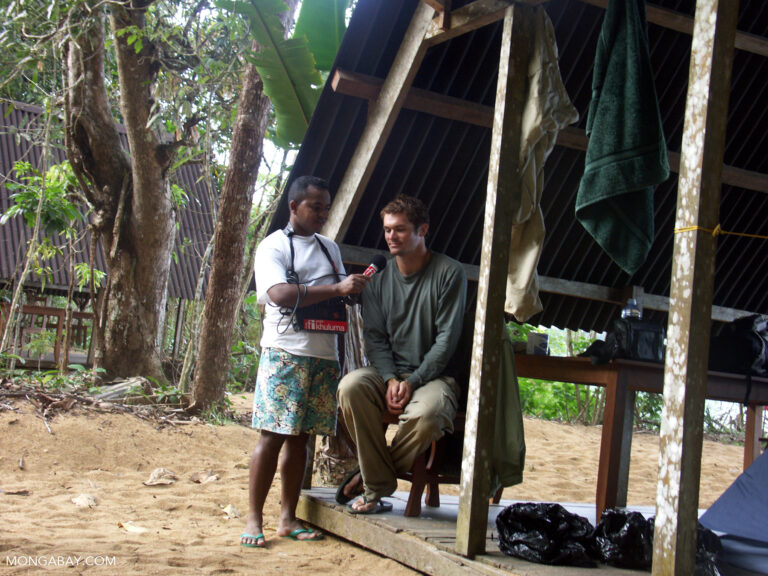
MONGABAY is accepting applications for the Y. Eva Tan Conservation Reporting Fellowship.
The programme will provide opportunities for journalists to report on critical environmental issues, gaining valuable training, experience, and credibility that will help them advance their careers in journalism and communications.
During the six-month fellowship, fellows will work directly with the fellowship editor to produce six stories.
The programme will support up to 12 fellows this year – six at Mongabay’s Global English Bureau and six at its Spanish-Language Bureau, Mongabay-Latam. Work is remote.
Aspiring environmental journalists from tropical countries are eligible for a reporting fellowship.
Eligible applicants must be from a low to upper-middle-income tropical country, as classified by the World Bank.
Fellows will receive a US$3,000 stipend.
The next application deadline is January 19, 2025.