Home Blog Page 391

2025: Preparing for another storm of grid collapse, rising inflation, tariff hikes

UNSTABLE grid, interest rate hikes from the Central Bank of Nigeria (CBN), electricity and telecom tariff hikes are some of the economic issues that will shape Nigeria’s businesses and economy in 2025.

For some economists, 2025 is not a year for the faint-hearted. The federal government’s reforms on gasoline (fuel) subsidy removal and naira floating against the US dollar are already taking a toll on Nigerians and heightening business risks.

“Price moderation of gasoline is to be expected if prices from our West African neighbours are aligning with our own. The International oil price is also a major determinant of the price moderation. We may see the price settling at N1,000 in the first quarter as global oil price rises. We may also begin to see exchange rate stability because of less import-dependent on gasoline aided by Dangote refinery and rehabilitation from the government-owned refineries,” the chief executive officer of Financial Derivatives Company, Bismarck Rewane, said in response to business risk exposures for 2025.

Bismarch Rewane, Chairman Technical Committee on implementation of minimum wage and CEO of Financial Derivatives Company
Bismarch Rewane, Chairman Technical Committee on implementation of minimum wage and CEO of Financial Derivatives Company.

Naira devaluation is also a major risk factor for businesses, the manufacturing sector and investors which can unsettle their overall economic plan.

“The price of bread could rise further this year because of the rising cost of diesel and raw materials that we import for bread production. In 2024, almost 40 per cent of our people were leaving the business because of high cost of production and raw materials. Sadly, we are not accessing any facility from the commercial banks because of high interest rates,” the president of the Premium Beadmakers Association of Nigeria, Emmanuel Onuorah, said.

On naira’s devaluation, findings have shown that from December 2023 to December 2024 the Nigerian naira depreciated by 46.8 per cent relative to the US dollar, and the dollar appreciated by 88.25 per cent relative to the Nigerian naira, based on the official exchange rate (N1,538/$).

Also, from November 2023 to November 2024, the naira depreciated by 51.79 per cent relative to the US dollar, as the dollar appreciated by 107.41 per cent relative to the naira, based on the official exchange rate (N1738/$).

Further risk projections showed businesses are still worried over the national grid. The electricity grid collapsed up to 12 times in 2024, which raises questions over the country’s obsolete grid and over-reliance on the central grid.

Energy watchers have argued that the collapse would persist in 2025 unless the government intensifies efforts in transmission expansion and states attract investments through their regulatory and investment agencies, riding on the Electricity Act.

Beyond the grid collapse, electricity tariff hike is also expected this year which according to the Electricity Act 2023 is to be effected bi-annually considering exchange rate variables and rising inflation.

“The government needs to do something about power and clearing of debts owed gas generating companies. We need power for the industrialisation of our country. Electricity deficit in Nigeria is more than 40 per cent. We still have millions of unmetered customers, and these are gaps that must be plugged to grow investors’ confidence,” the head of Investment Research at Cardinal Stone, Phillip Anegbe said.

Another risk exposure for the Nigerian economy is rising inflation. Since the commencement of Tinubu’s administration, Nigeria has been battling high inflation which rose for the third straight month in November 2024, soaring to a near 30-year high of 34.6 per cent, up from 33.9 per cent in the prior month.

Food inflation in Nigeria reached 39.93 per cent in November, 2024, a sharp increase from 32.84 per cent in November 2023.

As a result of this, most Nigerian families are struggling to have three square meals in 24 hours as the federal government’s promised food import waiver on essential food items in 2024 failed without effective implementation.

The rise in food inflation poses a greater challenge to some food companies and overall Nigeria’s spending.

“I had expected the food import waiver to take effect last year, but that did not happen. Currently, I spend 65 per cent of my earnings on food. The rest goes into transport and other essential things. I do not even have anything left to save or invest,” said a Lagos-based Ibrahim Wahab, who has a family of four.

Reforms triggering risks

The ongoing reforms of the federal government, focused on naira devaluation and fuel subsidy removal had exposed Nigerian businesses and upbeat investors to massive risks with inflation currently at 34.6 per cent.

2025 proposed budget

The reforms are triggering multiple risks for businesses as volatile exchange rate and rise in the price of gasoline also influence rising costs of funds for purchase of raw materials for production.

Nigeria has been paying the price of Tinubu-led federal government’s reforms but are yet to reap the positive effects.

Politicians have also told Nigerians to make intentional sacrifices, but yet to stop their flamboyance which is noticeable even on the oversized convoy fleet of the President, Bola Tinubu, during his 2024 Lagos Christmas holiday trip.

Although, there are some glimmers of hope noticed on the performance of Nigeria’s stock market which was bullish and returned over N21 trillion profits above Nigeria’s current inflation rate, commodity crops like cocoa did well at the international scene and returned huge profits for investors in the value chain.

Despite this, there’s is still widespread hunger and anxiety of most people looking for where the next meal will come.

The Centre for the Promotion of Private Enterprises (CPPE) listed forex volatility, interest rate, inflation financial and monetary policy and regulations as critical risks for businesses in 2025.
Business risks to expect in 2025 - CPPE
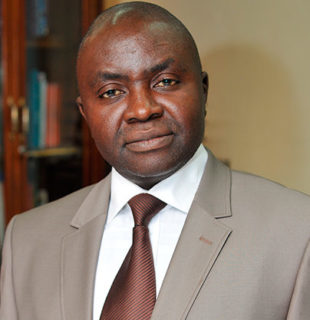
Muda Yusuf, Chairman/Chief Executive Officer, CPPE. File Copy.

“Other business risks expected include cyber security, political, environmental/climate change and corruption, especially concerning public sector transactions and contracts,” the Chief Executive Officer of (CPPE), Muda Yusuf, disclosed in an email sent to The ICIR.

Yusuf stressed that commercial bank’s lending at over 35 per cent is disruptive to businesses and the manufacturing sector, adding, “There is no way you can fund any sector now with a financial facility from the commercial bank.”

He expressed concern with the CBN’s constant interest hike approach which has failed to solve the problem of rising inflation.

“Businesses cannot access credit from banks, cost of funds is so high and unbearable for the real sector. This is high risk exposure for businesses as inflation still remains the big elephant in the room, “he added.

Suggesting on better strategies, he stressed on the importance of alignment of the monetary and fiscal policies. He urged the federal to sustain the momentum on local petrol production, which would impact on exchange rate stability.

“Government has to be deliberate on petrochemical industries. Now that the subsidy on gasoline is gone, the government needs to be deliberate and appreciate these refineries and ensure they work optimally.

A senior economist at Stears Incorporated, Dumebi Oluwole, said the government reforms could expose investors to further risks, while urging government to have a stable policy to enable investors plan.

She suggested to the government to be formal on its policies and ensure those who pay for higher electricity tariffs don’t get ripped off through grid collapse and estimated billing.

“Don’t rip off the band A electricity users through estimated billing and grid collapse. Be firm in your reforms so that investors can know the direction of the economy and plan.

She stressed that N15 trillion on debt servicing is a higher risk on government since on the first line charge and susceptible to amount generated in revenues.

“Debt servicing suffocates funds for infrastructure. If we don’t marry the fiscal side well with the monetary policy, it becomes a problem.

“Instead of borrowing, we should be looking at equity, not just borrowing because it starves fund for critical investment.

“Asset based financing, attracting foreign direct investments and equity are way to go and Nigeria has lots of dormant idle assets in trillions of naira,” she stressed.

Concerns over rising poverty

Nigeria remains one of the poverty capitals of the world, with over 100 million people living in extreme poverty and more than 150 million in multidimensional poverty. The situation has deteriorated significantly over the past 18 months under the current administration

The ICIR reports that Nigeria has fallen from being the largest economy in Africa, with a GDP of $574 billion and a per capita income of over $3,500 in 2014, to now ranking fourth on the continent.

What financial and investment agencies are saying

Afrinvest’s Nigeria Economic and Financial Market Review of 2024 and 2025 Outlook has projected that six major sectors are poised to boost the Nigerian economy this year.

The firm, which is involved in investment banking, securities trading, asset management, trust services, consultancy, and technology forecast a modest recovery in 2025, supported by stabilising inflation and improved global demand, amid persistent risks from geopolitical tensions and climate change.

According to the report: “Beyond the Rhetorics: Transforming Reforms to Tangibles,” the sectors that will aid Nigeria’s economic growth are agriculture, oil & gas, consumer goods, industrial goods, banking and telecommunication.

Afrinvest forecasts that Nigeria’s economic prospects will be largely hinged on the proposed tax reforms and effective implementation of the tax reforms would help unlock about N7.5 billion annually, which are essential for fiscal sustainability in 2025.

“The reforms would be pivotal to revitalising the currently challenged fiscal capacity evidenced by the jump in national debt-to-GDP ratio to N138 trillion and 58.3 percent in 11 months of 2024 from N97.3 trillion and 40.1 percent in 2023 respectively,” the report said.

It highlighted that the banking sector recapitalisation exercise remains vital to achieving Nigeria’s $1.0 trillion economy ambition by 2030.

“The positive spillovers from a successful banking sector recapitalisation in 2025 would include wealth and job creation across other sectors of the economy as well as the attraction of foreign capital to the economy,” the report added.

The telecom sector is expected to remain under pressure from FX dynamics which will strain operational costs and profitability with the proposed tariff hike also creating business uncertainties.

The ICIR reports, however that strategies such as renegotiations of existing tower lease agreements and upward review of tariffs in first quarter (Q1) 2025 would aid telecom giants in combating the challenging environment.


Nigeria rules out hiring foreign mercenaries to fight Lakurawa, bandits, others

THE Federal Government said it would not engage foreign mercenaries in the fight against insecurity in the country.

The government said hiring foreign mercenaries to fight insecurity would not end the crisis.

Minister of Foreign Affairs, Yusuf Tuggar, said this while hosting his Chinese counterpart, Wang Yi, at the Presidential Villa, Abuja, on Thursday, January 9. 

He said Nigeria had a track record of successfully tackling insecurity, especially when backed by its allies.

The ICIR reports that Nigeria has consistently fought insecurity for over a decade. The crisis began with Boko Haram in the first decade of this century.

Boko Haram grew and was joined by the Islamic State – West African Province (ISWAP)

While the nation shuddered from the devastations, especially the human toll that accompanied the conflict, another deadly group widely known as bandits and Lakurawa surfaced.

Citizens from the country’s North have been more victims of the groups’ onslaughts.

Nigeria is also confronted by a faceless group called “unknown gunmen.” These weapon-wielding marauders unleash mayhem and kill at will. The country’s South-East has faced the worst attacks by this group.

Thousands of lives have been lost to insecurity in the country, with corresponding destruction of communities, loss of revenues and resources, infrastructures and displacements of millions across the country.

Addressing his guest, who was in Nigeria on an official visit, Tuggar maintained that Nigeria enjoyed good collaboration with China, adding that the partnership had yielded notable gains.  

He expressed Nigeria’s readiness to work with China and produce military equipment to avoid reliance on foreign nations for supplies.  

“Private military companies (mercenaries), as far as we are concerned, it doesn’t matter whether they’re from North, South, East, West. We don’t think it is going to provide the panacea. But when you work with us, then we’re able to lead others in solving the problem.

“Also, we want to work with countries like China in domesticating production of military equipment, both kinetic and non-kinetic. This is what we’re looking for so that we don’t have to go out looking to procure because of the delays and so many rules and regulations. We need to be able to produce locally,” the minister stated.

The Chinese minister said the strategic planning of President Xi Jinping and President Bola Tinubu, through the China-Nigeria relations, had achieved major outcomes.

The Chinese government also expressed delight over Nigeria’s plan to float panda bonds in the Asian nation through its currency swap policy.


Teacher remanded in Kirikiri over assault of three-year-old pupil

0

A LAGOS Magistrate Court sitting in Ogba has ordered the remand of Stella Nwadigbo, 45, at the Kirikiri Correctional Facility for allegedly assaulting a three-year-old pupil in Ikorodu, Lagos State.  

The court’s decision came after Nwadigbo was arraigned on Thursday, January 9, following her arrest by the Lagos State Police Command, according to a statement by the Command’s spokesperson, Benjamin Hundeyin.

The ICIR reported that the arrest was prompted by a viral video showing the suspect subjecting the child to degrading treatment, which sparked public outrage. 

The footage, which went viral on social media, showed the teacher aggressively smacking the child in the face repeatedly for struggling with a lesson.

The incident was initially handled by the Family Support Unit (FSU) of the Ikorodu Police Division before being transferred to the Gender Unit at the Command Headquarters for further investigation. 

The police noted that the victim has since been taken to a medical facility for treatment.  

While the Ogba Magistrate Court 1 adjourned the case to February 18, 2025, for further hearing, the suspect was remanded in custody at the Kirikiri Correctional Facility.  

“Following receipt of the video, the Family Support Unit (FSU) of Ikorodu Police Division promptly arrested the suspect on Wednesday, January 8, 2025, and transferred her to the Gender Unit of the Command Headquarters same day after preliminary investigations. The victim was taken to a medical facility for adequate medical attention.

“The suspect has since been remanded to Kirikiri Correctional facility till February 18, 2025, when the case comes up for continuation of hearing. 

“The Commissioner of Police, Lagos State Command, CP Olanrewaju Ishola, psc(+), mnips, while commending Nigerians for promptly alerting the police to the situation, assures them of the ever-readiness of the command to respond quickly and appropriately to situations towards ensuring the safety and security of resident and visitors to Lagos State,” the statement added.

The ICIR reported that in response to the incident, Christ Mitots School, where the incident happened, issued a public apology to the child’s family and announced the indefinite suspension of the teacher. 

“We are aware of a deeply troubling incident involving one of our teachers and a student, which has been circulating on social media,” the school’s statement reads in part.

The school also revealed plans to implement mandatory training for teachers on child protection and positive disciplinary practices as well as a whistle-blowing system to report inappropriate behavior.

“In light of this incident, we are taking firm steps to ensure such behaviour is never repeated. As such, we will be organising mandatory training sessions for teachers to reinforce child protection protocols, emphasise positive disciplinary practices, and cultivate greater sensitivity in interactions with students.

“Additionally, we have introduced a confidential whistle-blowing system to encourage the prompt reporting of inappropriate behaviour.”

Tarbell Fellowship seeks early-career journalists

TRAINING for Good announces 2025 Tarbell Fellowship.

The programme will focus exclusively on fellows seeking to cover artificial intelligence.

The programme incorporates expert speakers, feedback and mentorship from experienced journalists.

Fellows will receive a nine-month placement at a major newsroom, and participate in a study group covering AI governance and technical fundamentals.

Upon graduation, fellows are expected to bring their impact-focused perspective to major newsrooms and publications around the globe.

The hybrid fellowship will run from June 2025 to May 2026.

Early-career journalists worldwide can apply for a fellowship that awards stipends up to US$50,000.

In addition, fellows will attend a week-long summit in San Francisco, California, from August 18 to 23, 2025. Travel and accommodation costs will be fully covered.

Interested applicants can participate in a virtual information session on January 15, 2025.

The application deadline is February 28, 2025. Interested applicants can apply here.

Mongabay offers Conservation Reporting Fellowship

MONGABAY is accepting applications for the Y. Eva Tan Conservation Reporting Fellowship.

The programme will provide opportunities for journalists to report on critical environmental issues, gaining valuable training, experience, and credibility that will help them advance their careers in journalism and communications.

During the six-month fellowship, fellows will work directly with the fellowship editor to produce six stories.

The programme will support up to 12 fellows this year – six at Mongabay’s Global English Bureau and six at its Spanish-Language Bureau, Mongabay-Latam. Work is remote.

Aspiring environmental journalists from tropical countries are eligible for a reporting fellowship.

Eligible applicants must be from a low to upper-middle-income tropical country, as classified by the World Bank.

Fellows will receive a US$3,000 stipend.

The next application deadline is January 19, 2025.

Interested applicants can apply here.

Lagos school suspends teacher for assaulting pupil

0

FOLLOWING widespread condemnation, Christ Mitots School in Ikorodu, Lagos State, has suspended a teacher, Stella Nwadigo, caught on video assaulting a toddler during a numeracy class. 

The footage, which went viral on social media, showed the teacher aggressively smacking the child in the face repeatedly for struggling with a lesson.

The incident led to the teacher’s arrest by the police and drew harsh criticism from Nigerians, including child rights advocates, parents, and the public. 

Many described the teacher’s actions as inhumane and unprofessional, calling for stricter measures to address corporal punishment in educational institutions.

In a statement by the school on Thursday, January 9, the management expressed horror at the incident, condemning the teacher’s actions as “unacceptable and contrary to the values and principles of our school.”

“We are aware of a deeply troubling incident involving one of our teachers and a student, which has been circulating on social media,” the school’s statement reads in part.

“The video shows a teacher engaging in the physical discipline of a student in a manner that is completely unacceptable and contrary to the values and principles of our school.

“As an institution deeply committed to fostering a culture of respect, care, and dignity, we are horrified by this incident and wish to make unequivocally clear that such actions will not be tolerated,” the school said.

The school announced that the teacher had been suspended indefinitely while investigations were ongoing into the assault.

The school apologised to the affected child and his family, noting that it had introduced a whistle-blowing system to encourage the prompt reporting of inappropriate behaviour in the school.

“In light of this incident, we are taking firm steps to ensure such behaviour is never repeated. As such, we will be organising mandatory training sessions for teachers to reinforce child protection protocols, emphasise positive disciplinary practices, and cultivate greater sensitivity in interactions with students.

“Additionally, we have introduced a confidential whistle-blowing system to encourage the prompt reporting of inappropriate behaviour.

“We ask for the public’s patience and understanding as we work to address this matter responsibly and comprehensively,” the school added.


Investors to earn N23. 75bn from Presco’s bond issuance

PRESCO Plc is set to offer N100 billion Series 1 bond issuance from the Nigerian capital market, an investment that would position investors to earn N23.75 billion in interest payments.

Presco, one of Nigeria’s biggest palm oil makers, recently announced its plans to raise the N100 billion as part of its N150 billion bond programme.

The instrument will be issued at a 7-year tenure with a yield range of 23.25 per cent to 23.75 per cent.

It would return approximately N23.75 billion in interest to participating investors and mark the largest corporate bond issuance in the industry

A bond is a debt obligation, according to the Nigerian Securities and Exchange Commission (SEC).

Investors who buy corporate bonds are lending money to the company issuing the bond, and in return, the company makes a legal commitment to pay interest on the principal and to return it when the bond matures.

The N100 billion bond issuance represents Presco’s second venture into the Nigerian capital market, following its successful raise of N34.5 billion in 2022 under Series 1 of its N50 billion issuance programme.

The issuance was also a 7-year bond but carried a coupon rate of 12.85 per cent.

“I think that it’s relatively easy for Nigerians to take advantage of the Presco bond,” the head of Financial Institutions Rating at Agusto & co, Ayokunle Olubunmi, told The ICIR while responding to how Nigerians could take advantage of the Presco bond issuance.

“What would be best to do is for any interested individuals to check the prospectus for details information about the bond issuance or approach the Issues House for details.

“I am sure they will get the details of the transaction in the prospectus, including the minimum subscription amount that someone can invest,” he said.

With the Central Bank of Nigeria (CBN) rate hike spiking the boom being witnessed in the Nigerian capital market, Olubunmi believes it is a good time for Nigerians to invest in the capital market.

“Now the interest rates are high, and we all know that it will come to be high forever. Depending on how you look at it, the expectation is that interest rate might turn lower this year,” he said.

Olubunmi further explained that by investing in this kind of instrument, whether a five-year or seven-year instrument, the individual investor would earn the fixed interest rate all through the tenure of the bond.

He stressed, “Even if the CBN decides to start cutting interest rates downward, the interest on the bond will remain.

“So, irrespective of the movement in interest rates, even if the interest rate in the market drops to 0.5 per cent or even 0.7 per cent, you will still be earning the exact amount of 23.25 interest rate for the Presco bond,” Olubunmi added.

A capital market operator, David Adonri, told The ICIR that the boom being recorded in the Nigerian capital market is expected to extend to 2025 due to emerging favourable market and economic conditions.

Commenting on Presco’s proposed bond issuance, he said, “The company is performing well and the new capital injection will strengthen it further in seizing the vast businesses available in its industry.

“The capital raising exercise will attract a lot of interest from investors and hence facilitate its success. It is a good development for prospective investors who will benefit from the prospects of the company.”

The ICIR analysis of companies’ profit margins in the first quarter of 2024 revealed that Presco posted the highest profit margin than companies in other sectors.

The organisation reported that Presco’s revenue increased to N42.55 billion compared to N21.92 billion in the first quarter of 2023.

Its net profit rose to N24.06 billion from N9.96 billion, and its net profit margin to 56.54 per cent from 45.46 per cent in the review period.

Following the high-interest monetary environment of the CBN, corporate issuers have increasingly turned to shorter-tenured commercial papers, enabling them to offer competitively high yield rates without the extended commitment of longer-term bonds.

Anambra Catholic priest quits Christianity, joins African traditional religion

0

A Catholic priest, Echezona Obiagbaosogu, has announced his resignation from the church to join African traditional religion.

Obiagbaosogu, a lecturer in African Traditional Religion at Nnamdi Azikiwe University, Awka, disclosed this after recently defending his PhD dissertation titled ‘Rainmaking and Control in Igbo African Medicine: A Case Study of Isieke in Ihiala Local Government Area, Anambra State,’ according to an interview published by Starconnect Media.

In his doctoral research, Obiagbaosogu looked into the ancient African practice of rainmaking.

According to his findings, rainmaking involves a combination of natural elements, spiritual communication, and what he describes as African science.

He argued that rainmakers, known as “debia ogwu” in Igbo culture, utilise herbs, roots, and hydroscopic stones to interact with the atmosphere and influence rainfall.

Obiagbaosogu explained that there were three distinct methods of rainmaking: the use of clay tripods and concoctions, coldrone structures with fermented herbs, and psycho-spiritual techniques that rely on the power of the human mind.

Speaking about his journey, Obiagbaosogu, who was a priest for 17 years, said his decision stemmed from a deep curiosity about African spirituality and the art of rainmaking. 

He described his transition as a quest to reconnect with the cultural values and spiritual practices that have been undermined by colonial influences.

“I have come to realise that my true calling is to serve my people through the ancient traditions of our ancestors. I was a Catholic priest for 17 years before resigning to embrace the traditional African religion. The topic of my research is ‘Rainmaking and Control in Igbo African Medicine: A case study of Isieke in Ihiala Local Government Area, Anambra State’.”

Obiagbaosogu shared that his upbringing played a significant role in shaping his beliefs, noting that his father, a Christian who still valued traditional medicinal practices, and his maternal grandfather, a traditionalist, inspired his appreciation for nature and indigenous knowledge. 

He said these early influences sparked his interest in rainmaking, which became the focus of his academic research. 

“Everything about this research stems from my curiosity about nature and God. The research reflects my curiosity about spirituality and the nature of God. As a priest, I had the opportunity to work in health sectors, and I understand what health is all about,” he said.

While still a seminary student, he stressed that he witnessed a family friend demonstrate rainmaking, an experience that set him on a path of academic and spiritual exploration.

“My research in rainmaking and control is rooted in finding the truth and understanding how native doctors contribute to preserving African values. I discovered that it is indeed a reality and done by dibia (native doctors). I am not turning my back on God, but rather, I am embracing the divine in a more meaningful and authentic way.”

During his research, Obiagbaosogu said he spent months studying with a renowned native doctor, learning the intricacies of rainmaking and its connection to Igbo spirituality. 

He emphasised that traditional African practices should be viewed as science rather than superstition.

“We can also access these magical laws, which we call African magic or religion. It is not the African magic of Nollywood. The African magic of Nollywood is one of the tools used to destroy our culture and values.

“African magic is actually African science, which remains unexplored. We must begin to modify, codify, and document it for posterity,” he said.

Reflecting on his decision to leave the priesthood, Obiagbaosogu described it as a natural progression, “Life is a process. Things happen, and people begin to look left and right.

“One important thing is for the person to know themselves. If you understand yourself and remain open to reality, you will begin to make decisions for your life.”

Over 53% of electricity customers unmetered – NERC

0

THE Nigerian Electricity Regulatory Commission (NERC) has said that approximately 53.85 per cent of registered electricity customers across Nigeria remain unmetered.

NERC, an independent regulatory body saddled with the responsibility of regulating the electric power industry in the country, disclosed this in its 2024 third quarter (Q3) report.

According to NERC, 6,156,726, representing 46.15 per cent of 13,339,635 registered electricity customers have been metered as of September 30, 2024.

This means that 7,182,909 customers are yet to be metered, representing 53.85 per cent of unmetered electricity customers across the country.

It stated, “184,507 end-user customers were metered across all the Electricity Distribution Companies (DisCos) with Ikeja, Ibadan, and Abuja DisCos recording the highest number of meter installations – they accounted for 25.45%, 21.48%, and 14.61% respectively, of the total installations.

“Relative to 2024/Q2 when 51,826 customers were metered, there was a +256.01% increase in the total number of customers metered in 2024/Q3.”

It pointed out that Eko, Ibadan, Ikeja and Benin DisCos recorded the greatest improvements of 2,120 per cent, 575.60 per cent, 417.40 per cent, and 389.32 per cent respectively in the number of meter installations compared to the second quarter of 2024.

On the contrary, Aba, Kaduna, and Jos DisCos, recorded 43.90 per cent, Kaduna 24.69 per cent and Jos 9.31 per cent decline in the number of meter installations in the review quarter, respectively.

The huge gap of unmetered customers has been of concern despite penalties to get the DisCos to comply with its directives against capping estimated billing for electricity consumers.

The Federal Competition and Consumer Protection Commission (FCCPC) has backed  NERC for sanctioning erring DisCos infringing on the customers’ rights and had equally sought stronger sanctions for erring DisCos to deter future violations.

The ICIR reported that NERC had issued N10.51 billion in fines to all the DisCos following their non-compliance to cap estimated billing for unmetered customers in the country.

In February 2020, the ‘Order on Capping of Estimated Bills’ was issued and subsequently, a monthly energy cap for all DisCos, but the regulation has not been followed.

An energy cap is aimed at aligning the estimated bills for unmetered customers with the measured consumption of metered customers on the same supply feeder.

Meanwhile, in October 2024, the Minister of Power, Adebayo Adelabu, announced the federal government plans to procure 1.8 million meters to address the issue of estimated billing nationwide with the first batch expected by December 2024, and the final batch to arrive by the second quarter of 2025.

He also hinted at the plans to procure a minimum of 3 million meters over the next five years, at an annual average of 2 million meters per annum and also the support of the World Bank to procure about 3.5 million meters within the next two to three years.

In November 2024, NERC directed the DisCos to replace obsolete meters for their customers at no cost following reports of some electricity companies requiring customers to pay to replace Unistar prepaid meters, even as President Bola Tinubu had called on the minister to prioritise the acceleration of the National Mass Metering Programme (NMMP) as part of ongoing efforts to reform Nigeria’s power sector.

Kano special adviser dies day after swearing-in

0

SPECIAL Adviser to Kano State Governor on Works, Ahmad Ishaq Bunkure, has died a day after his appointment.

He reportedly died on Wednesday, January 8, in Egypt.

The state Governor Abba Kabir Yusuf expressed sadness over his passing in a statement by his spokesperson, Sanusi Bature Dawakin Tofa, on Wednesday, January 8.

In his condolence message, Yusuf described Bunkure’s death as a tragic and irreplaceable loss to Kano State, his family, and the wider political community.

He prayed for God’s mercy on the deceased and strength for his family to bear the loss.

“This is a heartbreaking moment for us as a government. Engr. Bunkure was a dedicated professional whose expertise and contributions were expected to drive our administration’s vision for development. His loss is deeply felt,the governor said.

Meanwhile, condolences have continued to pour in for the family of the late special adviser, including from former governor of the state, Rabiu Musa Kwankwaso, and members of the Kano State Government.

Recall that the state government announced a fresh round of appointments and reassignments on Sunday, January 5.

The governor, through its spokesperson, announced that Ahmad Muhammad was appointed a special adviser on publicity.

Yusuf also appointed Bunkure as a special adviser on works.

The governor said Bunkuru’s “track record in project execution” would be pivotal to the state’s development drive.