FOLLOWING widespread condemnation, Christ Mitots School in Ikorodu, Lagos State, has suspended a teacher, Stella Nwadigo, caught on video assaulting a toddler during a numeracy class.
The footage, which went viral on social media, showed the teacher aggressively smacking the child in the face repeatedly for struggling with a lesson.
The incident led to the teacher’s arrest by the police and drew harsh criticism from Nigerians, including child rights advocates, parents, and the public.
Many described the teacher’s actions as inhumane and unprofessional, calling for stricter measures to address corporal punishment in educational institutions.
In a statement by the school on Thursday, January 9, the management expressed horror at the incident, condemning the teacher’s actions as “unacceptable and contrary to the values and principles of our school.”
“We are aware of a deeply troubling incident involving one of our teachers and a student, which has been circulating on social media,” the school’s statement reads in part.
“The video shows a teacher engaging in the physical discipline of a student in a manner that is completely unacceptable and contrary to the values and principles of our school.
“As an institution deeply committed to fostering a culture of respect, care, and dignity, we are horrified by this incident and wish to make unequivocally clear that such actions will not be tolerated,” the school said.
The school announced that the teacher had been suspended indefinitely while investigations were ongoing into the assault.
The school apologised to the affected child and his family, noting that it had introduced a whistle-blowing system to encourage the prompt reporting of inappropriate behaviour in the school.
“In light of this incident, we are taking firm steps to ensure such behaviour is never repeated. As such, we will be organising mandatory training sessions for teachers to reinforce child protection protocols, emphasise positive disciplinary practices, and cultivate greater sensitivity in interactions with students.
“Additionally, we have introduced a confidential whistle-blowing system to encourage the prompt reporting of inappropriate behaviour.
“We ask for the public’s patience and understanding as we work to address this matter responsibly and comprehensively,” the school added.
PRESCO Plc is set to offer N100 billion Series 1 bond issuance from the Nigerian capital market, an investment that would position investors to earn N23.75 billion in interest payments.
Presco, one of Nigeria’s biggest palm oil makers, recently announced its plans to raise the N100 billion as part of its N150 billion bond programme.
The instrument will be issued at a 7-year tenure with a yield range of 23.25 per cent to 23.75 per cent.
It would return approximately N23.75 billion in interest to participating investors and mark the largest corporate bond issuance in the industry
A bond is a debt obligation, according to the Nigerian Securities and Exchange Commission (SEC).
Investors who buy corporate bonds are lending money to the company issuing the bond, and in return, the company makes a legal commitment to pay interest on the principal and to return it when the bond matures.
The N100 billion bond issuance represents Presco’s second venture into the Nigerian capital market, following its successful raise of N34.5 billion in 2022 under Series 1 of its N50 billion issuance programme.
The issuance was also a 7-year bond but carried a coupon rate of 12.85 per cent.
“I think that it’s relatively easy for Nigerians to take advantage of the Presco bond,” the head of Financial Institutions Rating at Agusto & co, Ayokunle Olubunmi, told The ICIR while responding to how Nigerians could take advantage of the Presco bond issuance.
“What would be best to do is for any interested individuals to check the prospectus for details information about the bond issuance or approach the Issues House for details.
“I am sure they will get the details of the transaction in the prospectus, including the minimum subscription amount that someone can invest,” he said.
With the Central Bank of Nigeria (CBN) rate hike spiking the boom being witnessed in the Nigerian capital market, Olubunmi believes it is a good time for Nigerians to invest in the capital market.
“Now the interest rates are high, and we all know that it will come to be high forever. Depending on how you look at it, the expectation is that interest rate might turn lower this year,” he said.
Olubunmi further explained that by investing in this kind of instrument, whether a five-year or seven-year instrument, the individual investor would earn the fixed interest rate all through the tenure of the bond.
He stressed, “Even if the CBN decides to start cutting interest rates downward, the interest on the bond will remain.
“So, irrespective of the movement in interest rates, even if the interest rate in the market drops to 0.5 per cent or even 0.7 per cent, you will still be earning the exact amount of 23.25 interest rate for the Presco bond,” Olubunmi added.
A capital market operator, David Adonri, told The ICIR that the boom being recorded in the Nigerian capital market is expected to extend to 2025 due to emerging favourable market and economic conditions.
Commenting on Presco’s proposed bond issuance, he said, “The company is performing well and the new capital injection will strengthen it further in seizing the vast businesses available in its industry.
“The capital raising exercise will attract a lot of interest from investors and hence facilitate its success. It is a good development for prospective investors who will benefit from the prospects of the company.”
The ICIR analysis of companies’ profit margins in the first quarter of 2024 revealed that Presco posted the highest profit margin than companies in other sectors.
The organisation reported that Presco’s revenue increased to N42.55 billion compared to N21.92 billion in the first quarter of 2023.
Its net profit rose to N24.06 billion from N9.96 billion, and its net profit margin to 56.54 per cent from 45.46 per cent in the review period.
Following the high-interest monetary environment of the CBN, corporate issuers have increasingly turned to shorter-tenured commercial papers, enabling them to offer competitively high yield rates without the extended commitment of longer-term bonds.
A Catholic priest, Echezona Obiagbaosogu, has announced his resignation from the church to join African traditional religion.
Obiagbaosogu, a lecturer in African Traditional Religion at Nnamdi Azikiwe University, Awka, disclosed this after recently defending his PhD dissertation titled ‘Rainmaking and Control in Igbo African Medicine: A Case Study of Isieke in Ihiala Local Government Area, Anambra State,’ according to an interview published by Starconnect Media.
In his doctoral research, Obiagbaosogu looked into the ancient African practice of rainmaking.
According to his findings, rainmaking involves a combination of natural elements, spiritual communication, and what he describes as African science.
He argued that rainmakers, known as “debia ogwu” in Igbo culture, utilise herbs, roots, and hydroscopic stones to interact with the atmosphere and influence rainfall.
Obiagbaosogu explained that there were three distinct methods of rainmaking: the use of clay tripods and concoctions, coldrone structures with fermented herbs, and psycho-spiritual techniques that rely on the power of the human mind.
Speaking about his journey, Obiagbaosogu, who was a priest for 17 years, said his decision stemmed from a deep curiosity about African spirituality and the art of rainmaking.
He described his transition as a quest to reconnect with the cultural values and spiritual practices that have been undermined by colonial influences.
“I have come to realise that my true calling is to serve my people through the ancient traditions of our ancestors. I was a Catholic priest for 17 years before resigning to embrace the traditional African religion. The topic of my research is ‘Rainmaking and Control in Igbo African Medicine: A case study of Isieke in Ihiala Local Government Area, Anambra State’.”
Obiagbaosogu shared that his upbringing played a significant role in shaping his beliefs, noting that his father, a Christian who still valued traditional medicinal practices, and his maternal grandfather, a traditionalist, inspired his appreciation for nature and indigenous knowledge.
He said these early influences sparked his interest in rainmaking, which became the focus of his academic research.
“Everything about this research stems from my curiosity about nature and God. The research reflects my curiosity about spirituality and the nature of God. As a priest, I had the opportunity to work in health sectors, and I understand what health is all about,” he said.
While still a seminary student, he stressed that he witnessed a family friend demonstrate rainmaking, an experience that set him on a path of academic and spiritual exploration.
“My research in rainmaking and control is rooted in finding the truth and understanding how native doctors contribute to preserving African values. I discovered that it is indeed a reality and done by dibia (native doctors). I am not turning my back on God, but rather, I am embracing the divine in a more meaningful and authentic way.”
During his research, Obiagbaosogu said he spent months studying with a renowned native doctor, learning the intricacies of rainmaking and its connection to Igbo spirituality.
He emphasised that traditional African practices should be viewed as science rather than superstition.
“We can also access these magical laws, which we call African magic or religion. It is not the African magic of Nollywood. The African magic of Nollywood is one of the tools used to destroy our culture and values.
“African magic is actually African science, which remains unexplored. We must begin to modify, codify, and document it for posterity,” he said.
Reflecting on his decision to leave the priesthood, Obiagbaosogu described it as a natural progression, “Life is a process. Things happen, and people begin to look left and right.
“One important thing is for the person to know themselves. If you understand yourself and remain open to reality, you will begin to make decisions for your life.”
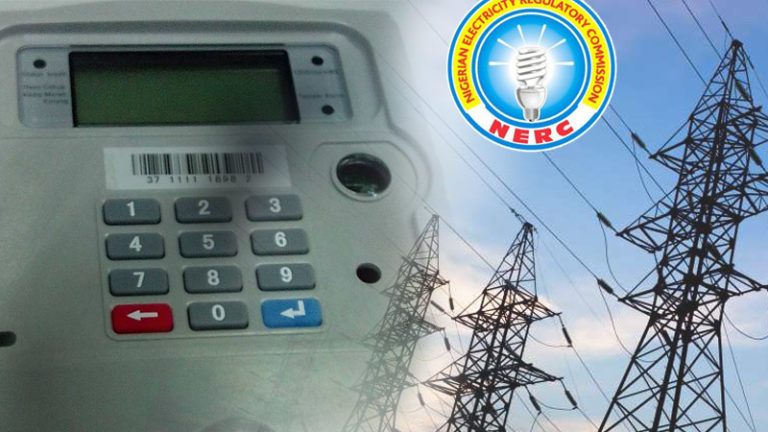
THE Nigerian Electricity Regulatory Commission (NERC) has said that approximately 53.85 per cent of registered electricity customers across Nigeria remain unmetered.
NERC, an independent regulatory body saddled with the responsibility of regulating the electric power industry in the country, disclosed this in its 2024 third quarter (Q3) report.
According to NERC, 6,156,726, representing 46.15 per cent of 13,339,635 registered electricity customers have been metered as of September 30, 2024.
This means that 7,182,909 customers are yet to be metered, representing 53.85 per cent of unmetered electricity customers across the country.
It stated, “184,507 end-user customers were metered across all the Electricity Distribution Companies (DisCos) with Ikeja, Ibadan, and Abuja DisCos recording the highest number of meter installations – they accounted for 25.45%, 21.48%, and 14.61% respectively, of the total installations.
“Relative to 2024/Q2 when 51,826 customers were metered, there was a +256.01% increase in the total number of customers metered in 2024/Q3.”
It pointed out that Eko, Ibadan, Ikeja and Benin DisCos recorded the greatest improvements of 2,120 per cent, 575.60 per cent, 417.40 per cent, and 389.32 per cent respectively in the number of meter installations compared to the second quarter of 2024.
On the contrary, Aba, Kaduna, and Jos DisCos, recorded 43.90 per cent, Kaduna 24.69 per cent and Jos 9.31 per cent decline in the number of meter installations in the review quarter, respectively.
The huge gap of unmetered customers has been of concern despite penalties to get the DisCos to comply with its directives against capping estimated billing for electricity consumers.
The Federal Competition and Consumer Protection Commission (FCCPC) has backed NERC for sanctioning erring DisCos infringing on the customers’ rights and had equally sought stronger sanctions for erring DisCos to deter future violations.
The ICIRreported that NERC had issued N10.51 billion in fines to all the DisCos following their non-compliance to cap estimated billing for unmetered customers in the country.
In February 2020, the ‘Order on Capping of Estimated Bills’ was issued and subsequently, a monthly energy cap for all DisCos, but the regulation has not been followed.
An energy cap is aimed at aligning the estimated bills for unmetered customers with the measured consumption of metered customers on the same supply feeder.
Meanwhile, in October 2024, the Minister of Power, Adebayo Adelabu, announced the federal government plans to procure 1.8 million meters to address the issue of estimated billing nationwide with the first batch expected by December 2024, and the final batch to arrive by the second quarter of 2025.
He also hinted at the plans to procure a minimum of 3 million meters over the next five years, at an annual average of 2 million meters per annum and also the support of the World Bank to procure about 3.5 million meters within the next two to three years.
In November 2024, NERC directed the DisCos to replace obsolete meters for their customers at no cost following reports of some electricity companies requiring customers to pay to replace Unistar prepaid meters, even as President Bola Tinubu had called on the minister to prioritise the acceleration of the National Mass Metering Programme (NMMP) as part of ongoing efforts to reform Nigeria’s power sector.
SPECIAL Adviser to Kano State Governor on Works, Ahmad Ishaq Bunkure, has died a day after his appointment.
He reportedly died on Wednesday, January 8, in Egypt.
The state Governor Abba Kabir Yusuf expressed sadness over his passing in a statement by his spokesperson, Sanusi Bature Dawakin Tofa, on Wednesday, January 8.
In his condolence message, Yusuf described Bunkure’s death as a tragic and irreplaceable loss to Kano State, his family, and the wider political community.
He prayed for God’s mercy on the deceased and strength for his family to bear the loss.
“This is a heartbreaking moment for us as a government. Engr. Bunkure was a dedicated professional whose expertise and contributions were expected to drive our administration’s vision for development. His loss is deeply felt,” the governor said.
Meanwhile, condolences have continued to pour in for the family of the late special adviser, including from former governor of the state, Rabiu Musa Kwankwaso, and members of the Kano State Government.
Recall that the state government announced a fresh round of appointments and reassignments on Sunday, January 5.
The governor,through its spokesperson, announced that Ahmad Muhammad was appointed a special adviser on publicity.
Yusuf also appointed Bunkure as a special adviser on works.
The governor said Bunkuru’s “track record in project execution” would be pivotal to the state’s development drive.
OFFICERS of the Nigeria Immigration Service (NIS) in Nigeria’s Federal Capital Territory (FCT) and other states are hardly issued official ID cards when they are employed. Consequently, they resort to self-help by obtaining them from the black markets where street vendors have become major producers of ID cards for NIS Staff. Beyond security implications, The ICIR’s investigation shows that this trend which has been ongoing for years has not abated even with the recent commissioning of the Bola Ahmed Tinubu Technology Innovation Centre, touted to be a “one of a kind” data and biometric hub in Africa.
On December 10, President Bola Tinubu commissioned the Nigerian Immigration Service (NIS) Technology Innovation Centre at the agency’s Abuja headquarters.
The President declared that with the launch of the technology facility, “the Service is taking its rightful place as a security agency.”
“The integration of this security project that would monitor our borders – air, land and sea – and give us prior information as to the identify of persons entering and leaving the country, amongst other things, is a fulfilment of our dream of a secure border,” Tinubu said.
President Bola Tinubu flanked by Minister of Interior Olubunmi Ojo and the CG Of NIS Kemi Nandap at the commissioning of the Nigerian Immigration Service (NIS) Technology Innovation Centre at the agency’s Abuja headquarters.
Also speaking at the occasion, the Minister of Interior, Olubunmi Tunji–Ojo, said that the technology being deployed at the facility, named after President Tinubu, “is one of the best in Africa which is certified by the International Civil Aviation Organisation (ICAO)”.
On her part, the Comptroller General of the NIS, Kemi Nandap, described it as “the system we have put in place aims to protect our borders and ensure national security”, adding that, “it functions to detect suspicious travel patterns, pick out persons of interest, biometrics real time 24 hours surveillance, among others.”
Unknown to President Tinubu and other guests who had come to celebrate the technology, a few metres from where they were seated, in the main administrative building, was the Service’s staff biometric centre, which had not yet produced identity cards for officials for at least three years.
Unknown to President Tinubu and other guests who had come to celebrate the technology, a few metres from where they were seated, in the main administrative building, was the Service’s staff biometric centre, which had not yet produced identity cards for officials for at least three years.
Immigration officials who spoke with The ICIR in confidence confirmed that the biometric centre has not produced a single ID card for officials since 2021 and that they have had to get and pay for their identification cards from roadside vendors.
The busy compound of the NIS national headquarters on the ever-busy Airport Road in Sauka, Abuja, the Federal Capital Territory, FCT, glowed as usual on that Monday afternoon in November 2024, just a couple of weeks before the commissioning of the new biometric centre.
The ICIR, however, observed a strange occurrence.
Immigration officers, some in uniforms, some in mufti, entrusted with protecting the country’s borders among other very sensitive tasks, gathered around a shop at the busy Mammy Market at the NIS headquarters. They waited impatiently for their turns to collect official identity cards for as low as N1,500 to N2,000.
Many of the operatives look confused because one of their most important tools comes from a street seller rather than the Service, as one might expect.
It was an unbelievable sight that raised a basic question: why are immigration staff compelled to seek means of identification from street vendors, something that the service was supposed to issue them? This is more so as there is a biometric centre right inside the administrative building at the headquarters.
Shock, disbelief
The issue of staff of NIS getting ID cards for themselves from the streets is alarming and unbelievable to the extent that some security experts contacted to speak on the matter expressed disbelief, shock and refused to comment on the matter.
“Their headquarters in Sauka Abuja has a full-fledged human resource department that does ID cards for them. Immigration is one of the oldest paramilitary services that has adequate funding and cannot be said not to be able to print ID cards for staff.
“My friend, it is not true, it can’t be true, this is difficult to believe,” one of them who chose to remain anonymous for security reasons told The ICIR.
NIS Technology Building at the National Headquarters, Abuja
An official of the NIS, who wouldn’t want to be named for fear of victimisation, said that the issue of staff of a sensitive paramilitary organisation like the NIS getting their identity cards from the street is a worrisome trend that most of them are frustrated about.
According to the official, it has been like that since the tenure of the former Comptrollers-General Muhammed Babandede, who headed the service between 2016 – 2021, Isah Jere Idris, who was CG between 2021 – 2023, Caroline Wura-Ola Adepoju who held the position until February 2024 and has continued with the current CG, Kemi Nanna Nandap, who took over in March 2024.
“ID card is not important to them. Anybody can walk in here or at the airport with a fake uniform and ID and claim to be an NIS officer. Imagine the risk involved,” the official stated.
A stolen vehicle at the NIS headquarters
The ICIR gathered that sometime in 2023, a man dressed in full uniforms bearing the rank of an Assistant Comptroller of Immigration, stole a car at the NIS headquarters and escaped with it but was later caught at the point of selling the car. This was confirmed by a source in NIS.
“Things like that and even worse can only happen when staff are not properly identified. You don’t know who is who,” the source stated.
An ID cards serves as a means of identification. It usually, contains the name, picture, and other pertinent information of the bearer.
It also serves to validateone’s identity and demonstrate who one is and more often, it gives one permission to access restricted and non-restricted places.Besides, for a security agency like the NIS, an ID card is also a security document that bears the biometric data of the holder.
NIS ID cards for sale
Apart from the Mammy Market at the Immigration headquarters, The ICIR reporter also visited a business centre in the heart of Gwagwalada town in the FCT. The trip was in the company of an Immigration officer. The purpose was to confirm how easy it is to procure an NIS ID card.
“We arrived at a two-storey building in the heart of Gwagwalada. There, a man sitting in front of an old computer welcomed us like a groom welcoming his new bride and right in the presence of other customers, the NIS officer approached the vendor, negotiated for an ID card, paid and was told to pick up the new identity card the following day. The transaction was quick, effortless and was like a well-rehearsed routine”, the reporter stated.
“Na so we dey do am for here,” the officer said in pidgin English. “This one tey self, for the other place, na only 10 minutes,” the officer told the reporter on the way out.
“It’s a huge joke. Anyone can fake this card and pose as an immigration officer,” the officer said.
NIS FCT Command, Gwagwalada
The reporter also visited the NIS FCT command at Gwagwalada. The journey took him to a small business shop using a big umbrella as a shade right in front of the FCT NIS command. The shop rests on the wall of the command.
“How much for an ID card?” the NIS officer asked the vendor. “Oga na N2,000” the vendor responded without asking any questions.
Then the negotiation started, and at the end of it, it was agreed that the NIS official would pay N2,000 and the card would be ready within a few hours after payment.
A business stand where an Immigration ID card can be obtained beside the NIS FCT Command in Gwagwalada
Back at the popular Mammy Market at the NIS headquarters in Abuja, amid the buying and selling going on, getting an immigration ID card is like buying the popular akara (bean cake) on the street of Abuja.
The ICIR reporter approached many vendors in the market asking to get an ID Card.
At all the shops visited, the only requirement needed to get an ID is a service number, uniform to take a passport photograph, genotype, rank and money ranging from N1,500 to N2,000.
Mammy Market at the NIS national headquarters in Abuja
In one of the shops visited, The ICIR reporter presented all the necessary information pretending to be a staff of the NIS in need of an Immigration ID card but didn’t go ahead with it when the vendor asked the reporter to take a photograph with NIS uniform.
“Ididn’t come with my uniform. I left it at home. Is there a way out?” The ICIR reporter asked.
“You need your uniform sir, if it is not here, you can collect it from any of your colleagues,” the vendor advised.
“No, I will come again another day,” the reporter said.
The ICIR reporter noticed that in all the places visited, the vendors did not ask any critical questions to verify if the customer was a genuine NIS official before producing an ID card.
Although the source had stated that you do not need your uniform to get an ID card because the vendors have photos with uniform and rank on which they can match your portrait photo however the reporter noticed that most of the vendors contacted insisted on passport photograph taken with NIS uniform.
Other states not spared in the NIS ID card saga
The ICIR gathered that the situation at the NIS headquarters prevails in other states. A staff of the NIS based in Kano, North-West Nigeria who joined the paramilitary organisation in 2020 revealed that the Service has not issued them an ID card in the state command since joining. According to the staff, they are left with procuring identity card from the streets.
The staff who sought identity protection said, “I was just promoted so I needed a new ID card and the easiest place to get it is in the Mammy Market. It will cost me just N2,000,” he stated.
Another NIS staff based in Kwara State in a chat with The ICIR confirmed getting the ID card from a staff of the commission who produces ID cards for officers in bulk at his business centre in town.
A copy of an ID card produced by a vendor for an NIS staff. The barcode when scanned is not functional.
“Don’t worry, I will introduce you to one of our officers here who normally gets it for us. It is N2,000 outside but he does his own for N1,500,” the officer told our reporter who presented as an NIS staff who needed an ID card.
In Bayelsa, an NIS officer told The ICIR that the state command produces ID cards for them at N3,000 per person. This is contrary to what the Public Relations Officer of the NIS, Kenneth Udo, claimed in a telephone chat on Wednesday, December 18.
According to Udo, service staff can obtain identity cards for free. “It is free, you can’t pay for an ID card. Not at all. It is free,” the NIS PRO stated.
In Akure, Ondo State, an immigration officer confirmed to The ICIR that senior officers from the command collect around N5,000 to issue them ID cards.
In Minna, Niger State, according to an immigration officer, the Mammy Market at the state command is the easiest place to get an identity card for N2,000.
In Maiduguri, the Borno State capital, an NIS officer told The ICIR that procuring an official ID card costs between N1,500 and N2,000, depending on your negotiating power.
A vendor showing ICIR reporter a NIS staff card he is working on at the Mammy Market, NIS Headquarters, Abuja
A newly recruited officer of the NIS based in Enugu said the only option for getting an ID card is from the streets because authorities do not issue them to anyone.
“They didn’t give us any ID card, so we resorted to self-help which in my view is not the best,” the officer stated.
Implications
If immigration officers pay street vendors out of their pocket for essential documents such as an ID card, the implications can only be imagined considering the importance and sensitive nature of the service.
According to a security analyst, Emeka Okoro, some potential security implications of immigration officers procuring their ID cards from street vendors include the presence of fake immigration officers at the airport creating confusion which can lead officers to the danger of accepting phoney or counterfeit documents that could jeopardise national security and make them more susceptible to bribery and corruption thereby endangering border security.
“There will be lack of accountability because it will be difficult to trace and keep an eye on officer’s activity in the absence of uniform ID cards provided by the NIS. Misconduct and security breaches may result from this lack of accountability,” he opined.
A vendor attending to a customer who wants to obtain an NIS ID card in Gwagwalada, FCT
He added that Nigeria’s border security is greatly aided by immigration officers so there may be threats to national security, such as the possibility of criminals or terrorists infiltrating the nation if they are not adequately outfitted with standardised identification cards.
Okoro said data breaches and lack of trust in the Service are other implications when immigration personnel procure their own ID cards themselves.
He added that ID cards from street vendors can lead them to produce them using false or stolen identities, which can undermine the immigration system and the nation at large.
He also observed that it can increase data compromise and loss of sensitive information because according to him, street vendors may not adhere to standard security protocols, as such it makes them vulnerable to security breaches.
Commenting further on the implications, a public affairs and security analyst, Senator Iroegbu, said it is a security risk and a glimpse of the rot in the system if NIS officials resort to street vendors for ID cards.
“This could also jeopardise the overall immigration processes and system including passport issuance and visa processing,” he stated.
NIS budget and the ID card unit
A critical analysis of the funds allocated to the NIS in the budget from the year 2018 to 2024 indicates a total of N8.15 billion for items relating to the construction and furnishing of an immigration data processing centre.
A visit to the section responsible for providing ID cards for staff at the administrative wing of the NIS technology building at the headquarters in Abuja in November 2024 shows that the place is just a mere ID card office in name.
The entrance of the unit responsible for providing ID cards for NIS officers at the NIS Headquarters in Abuja
An officer who went into the biometric data centre to get an ID card came out to inform The ICIR reporter that the officers in charge told him to come back in two weeks.
“They said I should come back in two weeks. That’s what they have been saying for months now. Of what use is the ICT office if they cannot produce an ordinary ID card for staff?” the angry official asked as he walked away from the reporter.
The NIS provides identity cards for its staff – Spokesperson
When The ICIR contacted the spokesperson of the Civil Defence, Correctional, Fire and Immigration Services Board (CDCFIB), Juliet Okeh, she directed The ICIR to call the PRO of the NIS, Kenneth Udo.
“Idon’t have authority to speak on that because it’s not under our purview. Ours is to recruit, promote and discipline erring officers. That one is their problem at the service. Reach out to the service PRO, she said.
The NIS spokesperson claimed there is a provision for ID cards for staff at the NIS.
The Spokesperson of Nigeria Immigration Service, Kenneth Udo
“We are a security organisation, so if you hear that our people are getting their ID cards outside, that should tell you that it is not true. We have a system here that we churn out ID cards to our staff. How can you go and get an ID card outside? It makes no sense,” he stated.
According to him, there is an office responsible for providing identity cards for staff.
“It is for them to make themselves available and have their ID cards. As a security officer, how can you go and get it outside? That is something unheard of. They get it here. ID card is centralised. What they do is from time to time, they visit commands, take their biometrics, produce and send to them,” he said.
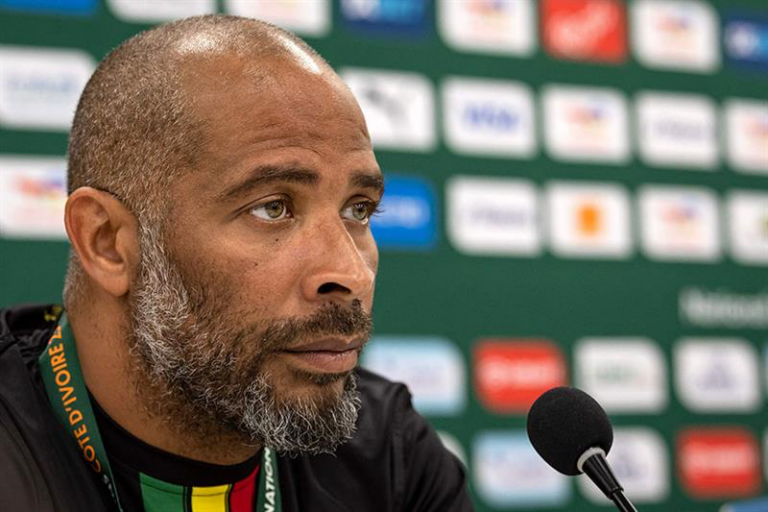
THE Nigeria Football Federation (NFF) has appointed a Malian, Eric Chelle, as the head coach of the Super Eagles.
Chelle takes over from the interim manager, Augustine Eguavoen.
The NFF announced Chelle’s appointment in a statement on Tuesday, January 7.
The appointment takes immediate effect as the new gaffer works to qualify Nigeria for the 2026 World Cup.
Chelle, 47, was recommended as the gaffer by the NFF technical and development sub-committee on January 2.
“The Executive Committee of the Nigeria Football Federation has endorsed the recommendation of its Technical and Development Sub-Committee for the appointment of Mr. Éric Sékou Chelle as head coach of Nigeria’s senior men’s national football team, Super Eagles.
“At its meeting held in Abuja on Thursday, January 2, 2025, the NFF Technical and Development Sub-Committee recommended the appointment of the former head coach of Mali’s senior men’s national team as the new head coach of the Super Eagles. This recommendation was endorsed by the NFF Executive Committee on Tuesday, January 7,” the NFF said in a statement.
The new Super Eagles coach is expected to manage the home-based Super Eagles at the 2024 African Nations Championship in Tanzania, Kenya, and Uganda, where Nigeria will compete with 17 other countries from February 1-28.
The Super Eagles B team has commenced training at the Remo Stars Stadium in Ikenne, with a strong technical crew at the helm. Led by Daniel Ogunmodede, Fidelis Ilechukwu, and experienced goalkeeper trainer Olatunji Baruwa, who played a key role in the team’s qualifying victories over Ghana, the team is intensifying preparations for the upcoming competition.
The new Super Eagles coach led Mail to a quarterfinal at the 2023 Africa Cup of Nations finals, where he lost to the hosts Ivory Coast on a 2-1 score in extra time.
Born in Cote d’Ivoire to a French father and Malian mother, Chelle was eligible to play for three countries namely France, Mali and Cote d’Ivoire; he chose Mali where he had five caps.
He had also coached clubs such as GS Consolat, FC Martigues, Boulogne, and MC Oran.
Chelle, beyond the upcoming 2024 African Nations Championship, has a challenge of getting Nigerian National team qualify for the 2026 World Cup.
The ICIR reports that Nigeria’s sluggish start to the qualification saw the team failing to win a game in four matches, as they seek to reverse the trend in the remaining six fixtures this year.
With a 2-1 defeat to Benin, draws with Lesotho, Zimbabwe and South Africa, Nigeria remains in fifth position and has just three points out of possible 12.
Rwanda, South Africa and Benin lead the group with seven points each while Lesotho trails with five points.
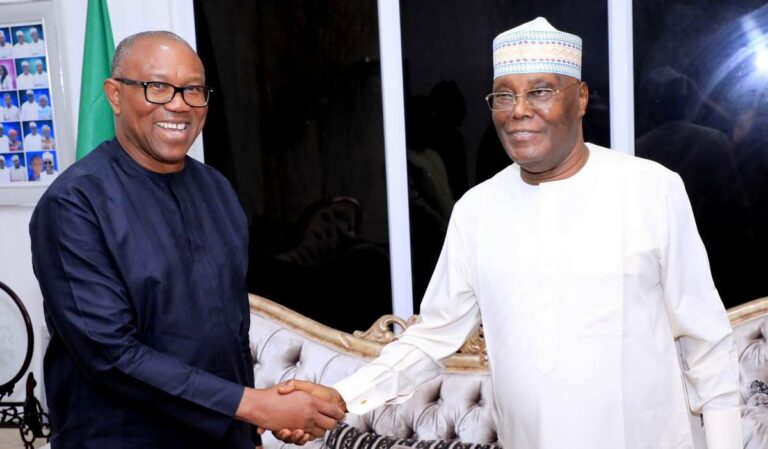
FORMER Vice President Atiku Abubakar has described recent remarks by the spokesperson of the All Progressives Congress (APC), Felix Morka, against the Labour Party presidential candidate in the 2023 election, Peter Obi, as disturbing.
Abubakar said rather than accuse Obi as a critic who had crossed the line over his constant position on the state of the nation, the President Bola Tinubu-led Federal Government was the one which deserved such an attribute.
Abubakar demanded an apology from Morka and the Tinubu’s administration which he described as authoritarian.
While featuring on Arise Television’s Sunday Interview on December 5, Morkaclaimed that Obi had “crossed the line” in his New Year Day criticism of President Bola Tinubu’s administration.
He accused Obi of desperately seeking to incite Nigerians into bringing down Tinubu’s government.
“Mr. Obi is shooting from the hip. He is not looking or taking an aim. Hejust shoots wildly like the Wild Wild West movies we used to see back in the day. He is not being rational. He’s absolutely irrational in his thinking and in his public commentaries.
“For a man who was governor for eight years and left nothing to remember in Anambra State by way of legacy or transformation. But all of a sudden, after serving as governor for eight years and not having the wisdom to change Anambra State or make Anambra the beacon or sample of governance in the country…
“I am not somebody to go on the offensive in that manner, but Mr Peter Obi has crossed the line so many times, and I think that at this point, it has come to him, whatever he gets, he needs to manage it.”
Reacting to Morka’s stance in a post on his X handle on Tuesday, January 7, Abubakar said the APC chieftain’s response to Obi was ‘inflammatory.’
He described the comments on the TV show as a “disturbing emblem of the current administration’s unsettling strategy in addressing opposition figures.”.
Abubakar said the threat against Obi, coupled with the prolonged detention of a prominent dissent, Mahdi Shehu, and others signalled a worrisome shift towards an authoritarian governance model, where the rights of opposition voices were being suffocated.
He argued that the choice of words used by the APC’s spokesperson, “particularly the ominous suggestion that Obi has ‘crossed the line,’ reveals an alarming disdain for democratic principles.”
He added that such a language was rooted in hostility and had no place in a free society where civil discourse and engagement should reign supreme.
“A true democracy thrives on the healthy exchange of ideas, where the criticisms and contributions of opposition leaders, like Peter Obi, are seen as vital for the betterment of governance and the promotion of public accountability.
“It is not merely the right, but the solemn duty of a democratic government to listen attentively to the voices of its critics, to engage in meaningful dialogue, and to allow space for the articulation of alternative viewpoints.
“Instead, we are faced with a chilling threat that suggests Obi must ‘be ready for whatever comes his way.’ What, exactly, does Mr. Morka imply by this? It is imperative that the ruling party provides clarity on this disturbing insinuation.” Abubakar remarked.
He further stated that the manner in which the APC spokesperson framed Obi’s calls for constructive engagement, as a “lawless Wild West scenario” was equally troubling and disparaging.
He said such “reckless and derogatory” expressions could not be tolerated. He called on the APC to issue a formal apology to Obi.
“If there is anyone who has truly ‘crossed the line,’ it is the Tinubu administration, whose continuous vilification of opposition figures as mere irritants to be crushed is a dangerous precedent,” he added.
The ICIR reports that Obi had reacted to Morka’s statements, saying he would not be silenced for speaking truth to power.
In a tweet on his official X handle, Obi asked if he crossed the line in his New Year message.
“While I have received all sorts of messages, one Mr Felix Morka has gone further to accuse me of “crossing the line” and has warned that I will face the consequences.
“I find it necessary to share this message again and urge everyone who has not seen it to watch. If I have truly crossed the line, I invite anyone to point it out, as I remain committed to upholding decorum. However, I will not be silenced in my resolve to speak truthfully, especially as our nation continues to drift toward undemocratic practices,” Obi tweeted.
He claimed the nation was increasingly transforming into an authoritarian and repressive regime, where freedom of expression was being systematically suppressed.
DANGOTE Cement, BUA Foods and 10 other companies earned over 70 per cent of the N21.84 trillion gains the Nigerian stock market posted in 2024, as the market remains largely untapped by the Nigerian government, The ICIR can report.
The boom saw the market capitalisation, a total market value of all the company’s outstanding shares, rise to N62.76 trillion at the close of trading in December 2024 from N40.92 trillion the market opened in January.
A cursory look at the total market value by companies shows that Dangote Cement, BUA Foods and 10 other companies gained approximately 74.03 per cent or N16.17 trillion of the N21.84 trillion NGX posted in 2024.
The other companies are Airtel Africa, Lafarge Africa, Seplat Petroleum Development Company, Transcorp Hotels, Geregu Power, Transcorp Power, United Bank for Africa (UBA), Zenith Bank, FBN Holdings and Guaranty Trust Holding Company (GTCO).
According to the NGX, high-profile listings energised trading activities on the exchange, providing investors with a broader range of blue-chip stocks with notable entries including Geregu Power, Transcorp Power, Aradel Holdings, and BUA Foods.
It noted that the listings propelled the market capitalisation from N12.79 trillion at the end of 2019 to N62.76 trillion as of December 2024, representing a meteoric increase of N49.97 trillion.
“Inflationary pressures have made equities an attractive hedge, and strategic new listings have significantly boosted market activity,” the group managing director/chief executive officer of Nigerian Exchange Group, Temi Popoola, said.
An analysis of the market capitalisation of the 12 companies shows that BUA Foods gained N3.99 trillion, Dangote Cement N2.71 trillion, Transcorp Power N2.35 trillion, Geregu Power N1.88 trillion, Seplat N1.99 trillion, and Airtel Africa N1.014 trillion.
GTCO gained N485.61 billion, Transcorp Hotels N469.31 billion, Lafarge Africa N619.34 billion, UBA N285.57 billion, Zenith Bank N215.07 billion, and FBN Holdings N161.53 billion.
Growth in the companies’ market capitalisation in 2024. Data from NGX
In Janaury 2024, The ICIRreported that Dangote, Airtel, MTN, and nine others owned 79 per cent of NGX’s total market capitalisation.
Stock market remains untapped
Despite the impressive growth, challenges remain that the Nigerian capital market continues to grapple with high transaction costs, information asymmetry, monetary tightening, low trading volumes, and wide bid-ask spreads, all of which stifle liquidity, according to Proshare’s 2025 market outlook.
Amidst the challenges, however, experts believe in the potential of leveraging the equity market through the listing of national assets, such as Nigerian National Petroleum Company (NNPC) Limited, to unlock liquidity and stimulate domestic and foreign investment.
The capital market is not only a platform for raising funds but also a vital engine for wealth creation, economic diversification, and infrastructure development, the director-general of the Securities and Exchange Commission (SEC), Emomotimi Agama, said at the 28th annual conference of the Chartered Institute of Stockbrokers (CIS) in November 2024.
He stressed that by effectively channelling resources into productive sectors, the market can stimulate industrial growth and technological advancement, adding that the ambitious goal of President Bola Tinubu’s $1.0 trillion economy could only be achieved through the collective efforts of all stakeholders in the financial ecosystem.
The projected federal government revenue of N34.82 trillion would only be sufficient to take care of total recurrent expenditure (debt and non-debt) of N30.02 trillion, leaving about N4.8 trillion available for capital expenditure, if budget benchmarks are met, the president of Capital Market Academics of Nigeria (CMAN) and former Commissioner for Finance, Imo State, Uche Uwaleke, maintained while delivering the inaugural CMAN Fellowship Lecture and investiture ceremony in December 2024.
Uwaleke, who is also the director at the Institute of Capital Market Studies, Nasarawa State University, pointed out that there have been worries that the federal government budget deficit financing in recent years has relied significantly on external borrowing.
He believes the federal government should de-emphasise Eurobonds financing options because of their expensive rates, lamenting that the weight of non-concessional Eurobonds in the external debt portfolio had grown substantially.
Nigeria’s external debt currently stood at N63.1 trillion ($42.9 billion) and its overall debt profit at NN134.3 trillion ($91.3 billion), according to the Debt Management Office (DMO).
“Although Eurobonds represent about 35% of the country’s external debt stock, they now account for 55 per cent of the cost of external debt service,” Uwaleke pointed out.
President Tinubu has proposed a 2025 budget aggregate expenditure of N47.9 trillion, debt recurrent expenditure of N15.81 trillion, non-debt recurrent expenditure of N14.21 trillion, and capital expenditure of N16.48 trillion, deficit of N13.08 trillion and revenue of N34.82 trillion.
According to Uwaleke, capital expenditure should be financed via the capital market plus any surplus from government revenues.
He suggested that the government could achieve this by raising funds through infrastructure bonds (domestic and sovereign Sukuk, Green bonds), and Panda bonds (instead of expensive Eurobonds), securitisation, public-private partnerships (PPPs), privatisation proceeds, and including long-term funds from development partners.
In December 2024, the Nigerian stockbrokers identified strategies by which the federal government can deepen the capital market to achieve its proposed $ 1tn economy without increasing borrowing or deploying ways and means to finance the economy.
In a communique signed by the president and chairman of the council of the Chartered Institute of Stockbrokers (CIS), Oluropo Dada, and the registrar and chief executive, Josiah Akerewusi, the Institute had urged the federal government to list NNPCL and other moribund state enterprises on the secondary markets to deepen the markets, enhance the companies’ ability to make a profit and generate revenue for the government through tax.
DISENGAGED staff members of the Central Bank of Nigeria (CBN), who were laid off in a mass redundancy last year, are currently seeking redress at the National Industrial Court of Nigeria in Abuja.
The aggrieved former staff members, in an originating summons filed on July 4, 2024, under the NICN Civil Procedure Rules 2017, raised several issues for the court to determine.
The ICIR in April last year reported the CBN commencement of gradual sack of some of its workers, which raised anxiety among its staff, as members where forcefully being exited without the mandatory 60 years retirement and violation of some its internal policies.
Recall, the apex bank had at the resumed investigative hearing on Friday, January 3, at the Federal House of Representatives said the 1,000 workers who left the bank were not forced out.
This is contrary to the latest development as the ex-staff are currently seeking legal redress following their ‘forceful’ exit.
Among other matters, the ex-CBN staff members are praying for the court to decide whether they were denied their constitutional right to a fair hearing before and after their appointments were terminated.
They claim that the CBN violated internal policies, Nigerian labour laws, and contractual rights.
The claimants—Stephen Gana, Kabiru Idris, Benedict Agbo, Peter Adeyemi, John Yisa, Eleanor Ihua, Stephen Ambore, Edom Obi, Dabo Chundung, Ekpe-Oko Roupa, Alabi Mubarak, Isa Yusuf, Quadru Ralph, Olasupo Adedokun, Dauda Yusuf, Ogidi Tolu, Levi David, Umar Kurba, Christopher Alfred, Gana Nma, Tanko Joel, Iyare Christian, Paul Iza, Alzebeokhai Esiemokhai, Pius Odunze, Isiuwe Uwadiahu, Vivienne Usoro, Imoh Francis, Ofili Lydia, Onunkwor Christopher, Adeshina Nurudeen, Bukar Ahmed, and Ajayi Omosolape—are all represented by Okwudili Abanum in a class action lawsuit.
They argue that the termination process carried out through letters titled “Reorganisational and Human Capital Restructuring” dated April 5, 2024, violated both the CBN human resources policies and procedures manual and Section 36 of the Nigerian Constitution. The claimants further argue that the process lacked the necessary consultation and fair hearing mandated by law.
They also contend that the termination letters, issued on the grounds of restructuring, were arbitrary, illegal, and unconstitutional.
In light of this, the claimants seek an order declaring their dismissal null and void.
Additionally, the claimants are requesting a restraining order to prevent the CBN from terminating their employment without following the proper procedures. They are also seeking a declaration for their immediate reinstatement and payment of salaries and benefits from the date of termination.
The suit references Article 16.4.1 of the HRPPM, which mandates consultation with the joint consultative council and adherence to fair procedures before employment actions adversely affect staff. The claimants contend that this provision was flagrantly disregarded, as they were given just three days to vacate their positions and hand over official property.
They are also seeking N30 billion in general damages for psychological distress, hardship, and reputational harm caused by the dismissal, as well as an additional N500 million to cover the cost of the suit.
During the first mention of the suit on November 20, 2024, the court urged the parties involved to attempt an amicable resolution of the matter. Justice O. A. Osaghae noted, “This is a new matter; it is mentioned for the first time. I have looked at the processes, and it is my view that parties should attempt an amicable resolution of this dispute. Accordingly, parties are encouraged, under section 20 of the NICA 2006, to attempt an amicable settlement.”
Meanwhile, the CBN, represented by a team of lawyers led by Inam Wilson (SAN), informed the court that they had filed a preliminary objection to the claimant’s suit, which was served to the claimants on November 4, 2024.
Following the defendant’s counsel’s submission, Justice Osaghae adjourned the case to January 29, 2025, for the hearing of the preliminary objection.
It is recalled that in 2024, the CBN terminated the appointments of about a thousand staff in four batches between March and May of that year.
Some laid-off staff claimed they received severance payments as low as N5,000, while others said their gratuities were absorbed entirely to offset outstanding loans.
Although the layoff was officially attributed to reorganisation and human capital restructuring, the affected staff argue that the process violated the CBN Act, which mandates board approval for significant employment decisions.
On December 4 last year, the CBN stated that its early exit package was entirely voluntary and without negative repercussions for eligible staff.