THE high prevalence of drug abuse among young people in Nigeria is worrisome and calls for urgent action, an expert dealing with drug addiction and rehabilitation, Dokun Adedeji has said.
Adedeji, the chief executive officer of Compassionate Care Recovery Initiative, called on the Federal Government to declare a state of emergency on drug abuse and trafficking in the country.
He said drugs and substance abuse had negatively impacted Nigerian society and heightened the risk of mental illnesses, addiction, and related crises.
Many Nigerians, especially the youth, share Adedeji’s thoughts.
An Abuja resident, Isyaku Walbe, told The ICIR in a chat on Friday, December 27, that there was no area in the city where one would not see youths abusing drugs. He added that the trend was prevalent in the country.
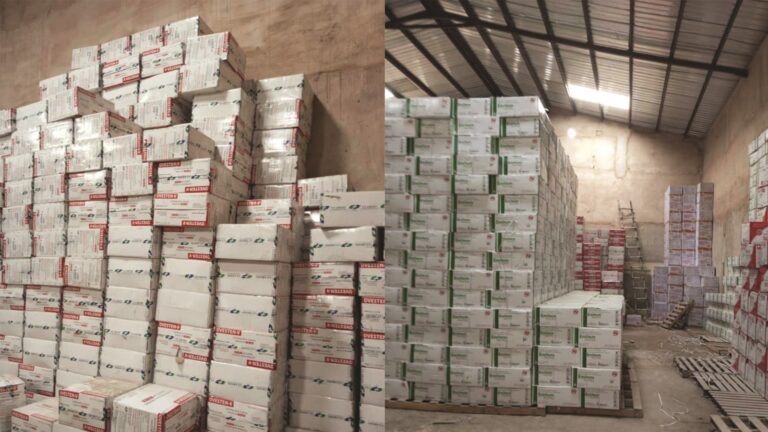
A large cache of drugs seized by the NDLEA during Christmas in 2023
“There is no corner in this Abuja where you will not see people abusing one drug or the other. My friends told me it is like that across the nation. We are losing our youths to drugs and the government needs to rise to the occasion. Otherwise, it may be disastrous,” he warned.
He listed substances like crack, cocaine, codeine, tramadol, and cannabis as the most commonly used and abused in Nigeria.
According to him, users primarily seek to escape emotional pain caused by socio-economic and other societal issues by using the substances.
The World Health Organisation (WHO) defines drug and substance abuse as the harmful use of psychoactive substances like alcohol and illicit drugs.
A United Nations Office on Drugs and Crime (UNODC) report in Nigeria quoted by the National Library of Medicine (NLM) reveals that 14.3 million Nigerians, or 14.4 per cent of people aged 15-64, suffer from drug abuse.
People aged 25-39 are most affected, with cannabis, opioids, and cough syrup being the most commonly abused substances.
Speaking on how the nation could tame the menace of drug abuse, particularly among its youth, the chief executive officer of Compassionate Care Recovery Initiative suggested that the National Drug Law Enforcement Agency (NDLEA) strengthen its drug demand reduction (DDR) unit and provide it with more funding and personnel.
CEO, Compassionate Care Recovery Initiative (CCRI), Dokun Adedeji
He called for the review of laws relating to drug trafficking in the country.
While calling for increased awareness of the implications of drug abuse, he said drug matters should be considered a public health issue and not a criminal offence to discourage stigma and discrimination.
He highlighted the need for collective action to address these substances’ availability, affordability, and local manufacturing.
He also blamed widespread drug trafficking and abuse on value erosion in society.
“The erosion of values has fueled greed, which is noticeable in the level of drug trafficking even in the face of interdiction and prosecution,” Adedeji stated.
He suggested that the NDLEA chairman, Mohammed Buba Marwa, spearhead stakeholder engagement by meeting with key stakeholders.
He also called for capacity building of the NDLEA staff and anti-graft agencies; the establishment of drug users’ rehabilitation centres in the country’s geopolitical zones, and registration of private rehabilitation centres.
THE popular Zuba fruit market, located in Gwagwalada, Nigeria’s Federal Capital Territory (FCT), remains in bad shape seven years after a contract was awarded and part of the money released for its construction. Although the road, according to sources in the market, was touched in 2022. This report unravels controversies surrounding the award of the road project since 2017.
Helen Bebor, a 50-year-old plantain seller, left home in the middle of 2023 with the hope of making sales from her daily plantain business. However, an accident at the Zuba fruit market road caused her to break her leg. Bebor said the injury which kept her at home for almost a year, also caused her untold hardship and trauma, as she was unable to support her family financially.
“While walking along the road, a wheelbarrow pusher was coming, and another one was parked on the road. There was no way for me to pass, so I was trying to excuse the one coming towards me when I fell.
“The road is very narrow; there were many people, and nobody wanted to give me a chance to pass,” she said in anguish as she tried to describe the bad condition of the road leading to the Zuba fruit market.
Helen Bebor, a victim of bad road in Zuba fruit market
Like Bebor, a wheelbarrow pusher in the market, Ismaila Sani, lamented the bad state of the road. Sani said he left the market unceremoniously after he repeatedly damaged his customers’ wares while trying to navigate the terrible road.
“The road was terrible. Never again will I go there. I prefer to stay idle or look for another thing to do than return to the Zuba fruit market,” he said.
Helen Bebor’s injured leg still wrapped in a band-aid
Inside the fruit market
Zuba fruit market is a hub for farmers nationwide, offering lucrative opportunities for fruit traders looking to expand beyond their local markets. Located along the Kaduna-Lokoja expressway, the market deals majorly in fruits and is regarded as one of the biggest in the nation’s capital.
The Secretary of the Nigeria Fruit Market Association, Zuba branch, Shafiu Mohammed, said the market is strategic because traders transport fruits from all over the country to the market.
“This is not a small market; traders from all over the country and neighbouring countries buy and sell here too,” Mohammed said.
Secretary Zuba Fruit Market Association, Shafiu Mohammed
The caretaker chairman of the Fruits Sellers Association of Nigeria (FSAN), Zuba branch, Labaran Abubakar, and Garba Inuwa, a vehicle owner who plies the road daily, re-echoed Mohammed’s claim.
Abubakar revealed that the fruit market generates a lot of revenue daily, even though he failed to disclose the actual amount. He said the officials of the Gwagwalada area council normally take a percentage of the revenue while the market union keeps the other share.
According to him, key sources of revenue for the market come from wheelbarrow pushers, okada riders, vehicles that offload fruits, and commissions on transactions.
Decrepit state of the market road
Despite the undisclosed revenue, traders and visitors endure difficulty in accessing the market due to the terrible condition of the only access road that leads there from the Lagos Park junction.
Multiple sources at the popular market said the deplorable condition of the road has become an embarrassment. They claimed the road had been ignored by the Gwagwalada Area Council, which controls the market.
The ICIR reports that due to the poor state of the road, the market lacks several basic amenities, such as water, standard stores, storage facilities, organised structure, and security, among others.
A bad portion of the Zuba fruit market road.
A visitor to the market, Nkiru Michael, criticised the local government for focusing on collecting revenue rather than investing in necessary repairs and upgrades. She urged the government to repair the road to ensure the market’s progress and enhance good living conditions.
Questions over contract awards
Multiple sources in the market told The ICIR that the contract for the Zuba fruit market road was awarded twice or worked on two different timespan between 2017 and to date.
The market association, speaking through its chairman, Labaran Abubakar, and secretary, Shafiu Mohammed, alleged that the road had been hurriedly constructed and commissioned in 2022. They alleged that because the work was poorly done, it began to show signs of damage within months.
The commissioning of the road in 2022, which many of the market leaders attested to, however, left unanswered questions as none of them could recall the name of the contractor or who commissioned the road.
An attempt was made to obtain the 2023 audit report to review the specifics of the 2022 road construction contract.
However, upon closer inspection, the document merely provided details of financial statements, without indicating any contract award or project done.
A source at the FCT ministry revealed to The ICIR that they have not been aware of any additional audit reports on area councils being released since 2019.
However, according to the 2019 FCT Annual Audit Report on the six area councils, the contract for the construction of the road was first awarded in 2017 to Ayo Atoyebi and Co. at the cost of N98.7 million.
Image of the front page of the FCT audit report on six local area councils in 2019 and page 148, where the contract was mentioned
The report stated that N12 million was paid in advance for the repair of the road, leaving a balance of N87.7 million. The audit report stated that the work was at 20 per cent at the end of 2019 and urged the Gwagwalada Area Council to ensure that the contractor, who was not on-site at the time inspectors visited, was mobilised back to the site.
The Corporate Affairs Commission (CAC) portal, shows that the company that was indicated in the FCT 2019 Annual Audit Report on the six area councils, Ayo Atoyebi and Company Ltd with registration number: 1059577 is active and was registered on August 22, 2012, with its address as plot 863, Action Area Bwari, Abuja, FCT.
Labaran Abubakar, Caretaker chairman, Fruit Sellers Association of Nigeria, Zuba branch
2022 controversial road repair by “unknown contractor”
Some of the stakeholders like Abubakar said in 2022, a contractor came to site and hurriedly did the road and it was commissioned in 2022.
Abubakar and other market traders said their joy at the road’s commissioning was short-lived, as the situation worsened a few months later.
Abubakar accused the contractor of doing a shoddy job, but when asked several times about the contractor’s identity, he and other traders said they could not remember.
They also claimed that the 2022 contractor did not erect a signpost that should have carried the company name and other details of the project. They also added that the contractor did not also put warning signposts that construction was ongoing while working on the road while explaining that there were no road diversion or roadblock signs erected while the construction were ongoing.
The ICIR gathered that the non-provision of a waring signpost by the contractor to indicate work being done during the road construction is a clear violation of the National Road Traffic Regulations 2012, Section 213(1)(2).
The section states, “Any person, company, organisation, or enterprise involved in the construction or maintenance of a public road shall provide adequate warning signs of the ongoing construction or maintenance at the construction areas day and night. “Failure to comply with this provision is an offence, and any person, company, organisation, or enterprise in contravention shall be liable on conviction to a fine of N50,000.00 or to a term of 18 months’ imprisonment or both,” it states.
The president of the Nigerian Institute of Structural Engineers (NISE), Lagos chapter and an expert on highway engineering, Isaac Akiije, said one can only challenge the non-provision of a signpost that indicates a contractor’s detail or a warning signpost by a contractor during the road construction can only be questioned if the clause for signpost erection is included in the budget.
He explained that if the signpost is part of the agreement and if it’s not done, then it is wrong.
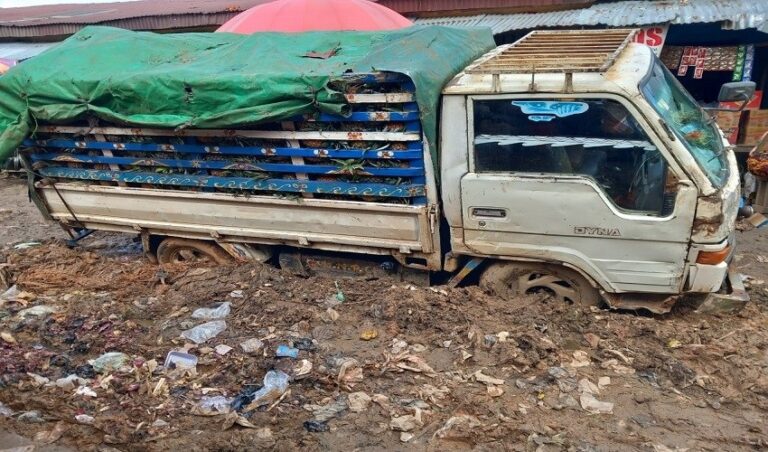
Image of a vehicle that broke down on the bad road.
Contractor denies handling project, N12 million payment
Though the 2019 FCT Annual Audit Report on the six area councils indicated that the contract for the construction of the road was first awarded in 2017 to Ayo Atoyebi and Co. Ltd, the contractor denied knowledge of the contract.
The Audit Report stated that N12 million had been paid in advance for the repair of the road, leaving a balance of N87.7 million and that the work had been at 20 per cent at the end of 2019.
However, in response to a Freedom of Information (FOI) request for the details of the contract for the construction of the Zuba fruit market road, Ayo Atoyebi and Co. in a letter sent to The ICIR on July 2, 2024, and signed by its administrative manager, James Ayodeji, stated that it carried out a diligent search into its current and archived project files but could not locate any contract for the construction of the fruit market road in Zuba.
“It is therefore our submission that we are neither aware of the project, nor do we have anything to do with such a project,” the company stated.
In a follow-up conversation with The ICIR on October 17, the Group Managing Director (GMD) of Ayo Atoyebi and Co., Ayofe Atoyebi, denied being given the contract and claimed he had never seen the contract papers.
“If I can see all the real documents that you are talking about, my legal team will work on it. We will sue anybody because nobody gave us any contract,” he said.
“Atoyebi and Co. is a company whose profile is everywhere. The profile is in the works department, federal works, FCDA, and anyone can pick our name and use it. That is why you are doing your job as an investigative journalist,’ he added.
He, however, explained that his company had entered into a Public-Private Partnership (PPP) agreement with the Gwagwalada Area Council to construct the Zuba fruit market but the partnership did not see the light of day.
“We did not do road; we only entered PPP on the construction of the fruit market, and they defaulted,” he said, adding: “We entered there and spent a lot of money, but the marketers did not allow us to construct.
“They demolished our work, so we took them to court and we won. As far as the road is concerned, we don’t know anything.”
“We spent money, we did all our things, we got approval, and when we moved to the site, these people came and fought us and destroyed all our property, and we went to court and won. This was between 2017 and 2018,” he stated.
“We sent somebody to Gwagwalada; he did not see anything like that. You are telling us something that we don’t know anything about. Somebody is using my company name just like the other time, we submitted some documents and they used it for someone else,” he said.
Road constructed with asphalt should last 20 years- NISE President
President of the Nigerian Institute of Structural Engineers (NISE), Lagos chapter, Akiije, told The ICIR that a road done with asphalt should last at least 20 years.
He, however, said there are instances where roads are hurriedly done to achieve applause. Akiije described such roads as political and said materials used for such roads are likely compromised.
A bad portion of the Zuba fruit market road
“From what you said, the road lasted for less than three years, so it could be a political road. They must have compromised with the material and thickness of each layer,” he said.
He explained that engineering roads takes time and attention, as each layer must have a specific material and size.
“One must investigate the specific material and size of each layer before one can decide if the road was designed to last for three or five years, but a road done with asphalt should last at least 20 years,” he said.
Traders seek urgent intervention
The Zuba Fruit Market Association has pleaded with the government to repair the 1-kilometre road from Lagos Park to Zuba roundabout, saying its poor condition continues to affect traders’ livelihoods, causing vehicles conveying fruits to get stuck, leading to losses as perishables get rotten.
Naomi Isa, an elderly trader, expressed concerns about the road’s impact on her sales, while Nneka Dioke, chairperson of the plantain section, highlighted the road’s deterioration since 2022. She said traders struggle as the bad state of the road leads to low patronage and reduced daily income.
Abubakar and the secretary of the market association, also appealed to the FCT minister, Nyesom Wike, and Gwagwalada council chairman, Abubakar Jibrin Giri, to repair the road, emphasising the market’s strategic importance and potential for progress.
Naomi Isa, a trader in the Zuba fruit market
A Wheelbarrow pusher whose income depends on the market, Sirajo Ma’ashi, submitted that he is almost giving up on working in the market.
“Honestly, this (Zuba fruit market) road is giving us problems; it is terrible,” he said.
FCT minister, Gwagwalada chair, ignore FOI requests
The Head of operations at the Abuja Markets Management Limited (AMML), Innocent Amaechina, told The ICIR that the Zuba fruit market is not under the purview of the organisation. According to him, Gwagwalada Local Area Council controls the market.
A FOI request was sent to the office of the Auditor-General (AG) of the FCT Area Council, seeking to confirm the authenticity of the audit report produced by the office in 2019 and provide a hard copy for reference purposes.
FOI Request
A response received from the office of the Auditor General of the FCT council areas directed that the inquiry be forwarded to the FCT minister.
In compliance with the response, a FOI request was sent to the office of the FCT minister on September 24, demanding the same information. After the expiration of the seven days allowed by the FOI Act, a reminder was forwarded to the minister on October 7, 2024.
As of the time of this report, the FCT minister, Nyesom Wike has yet to respond to the request and the reminder.
Similarly, the chairman of Gwagwalada Area Council has also failed to respond to the FOI request sent to his office on September 12, asking for details of the contract awarded for the construction of the Zuba fruit market road. A reminder forwarded on September 24 was also ignored.
By their actions, the minister of the FCT, Nyesom Wike, and the chairman of the Gwagwalada area council, Abubakar Giri, have violated sections 1(1), 2(4), 4 and 5 of the FOI Act, which mandates that they make available such information requested to members of the public and, where necessary, grant or give reasons for denying a request within seven days.
The information requested from the Gwagwalada area council through the FOI in the controversial contract includes; the contract description, details of the contract, the name of the contractor, the date the contract was awarded, the amount released to the contractor as a deposit, and date of contract award for the 2017 construction of Zuba fruit market road captured by the FCT audit report 2019 on local council areas.
Acknowledgment copy of FOI request sent to the Chairman of Gwagwalada Area Council
Others include; the date the project was advertised and the media outlets used, the contract execution period, the status of the project, and approved budgetary provisions. These details if provided as requested, could shed more light on the nature and scope of the contract awarded in 2017 and what happened to the N12 million paid to the first contractor.
However, after snubbing the request and a reminder sent to his office, the chairman of the Gwagwalada Area Council, Giri finally spoke about the contract in a chat with The ICIR on October 18 and 19.
He said he was not aware of the 2017 contract because it didn’t happen under his tenure but that of his predecessor, Adamu Mustapha.
“I was not in office at that time, so I don’t know anything about the contract. I came to office in 2022,” he declared.
He, however, confirmed that there was a road project in 2022 but again said it had been carried out before he moved into the office.
Abubakar Jibrin Giri, chairman of the Gwagwalada area council
When asked about his plan to fix the deplorable condition of the market, he said, “I am not doing anything at Zuba Fruit Market now.” The attempt by the Chairman to absolve himself of the 2017 and 2022 contracts awarded for the repair of the Zuba Fruit Market Road projects violates sections 11–14 Procurement Act 2007 which state that procuring entities must keep electronic and file (hard copy) records of a contract for at least 10 years from the date of contract award.
The Procurement Act 2007 also states that within 3 months of the end of each financial year, procuring entities shall transmit all procurement-related records to the Bureau of Public Procurement (BPP) showing the parties involved, date, and value of the contract, as well as other information relating to the procurement proceedings that BPP may request.
By this law, the chairman of Gwagwalada should have records of the contract for the Zuba fruit market even though he was not in office when it was awarded, as the government is known to be a continuum. The chairman’s reluctance to provide contract details implies a possible attempt to hide information from the public and a lack of transparency in the award of the contract.
FOR many women in Anambra State, pregnancy used to feel like a looming financial storm. “How will I afford the next antenatal visit?” and “Can we pay for a safe delivery?” were questions that haunted the minds of expectant mothers, particularly as Nigeria’s economic situation continued to deteriorate.
Access to proper antenatal care (ANC) and safe delivery services was a distant dream for most, especially in rural and low-income areas, where the high cost of healthcare often meant families had to choose between medical care and basic survival.
In September 2023, the state government launched an initiative, the Free Antenatal and Delivery Programme, aimed at addressing this crisis head-on. The programme mandates government-owned hospitals and Primary Healthcare Centres (PHCs) to offer free antenatal care and delivery services. The policy, aimed at curbing maternal mortality and alleviating the financial burden on struggling families in the state, was a welcome relief at a time of growing uncertainty.
The Commissioner for Health, Afam Obidike, who shed further light on the programme stated: “The manifesto of our governor is that we’re able to give people of the state and people residing in Anambra state quality and accessible healthcare system and one of them being maternal child health. Then, we looked at the indices in the healthcare system, analysed the maternal mortality, people dying when they are giving birth and most of them die as a result of inability to access care because of the finance involved.
“Also, the hardship in the country even continues to worsen the outcome. So, the Governor resolved that anybody that is pregnant should go to public hospitals – primary and secondary care facilities for free drugs, free ante-natal, delivery and cesarean sessions,” Obidike said.
The policy targeted at further strengthening the capacity of the 329 PHCs across the political wards in the state, already enrolled under the Basic Health Care Provision Fund (BHCPF), is primarily to improve maternal and child health care in the state.
For the first time in a long while, expectant mothers could access healthcare without the crippling fear of what it would cost them and their families.
A year after the programme’s launch, the results have been promising. In healthcare facilities where the initiative was rolled out, patronage surged, with many more women now accessing care.
A lifeline for expectant mothers
For Ifeoma Nwosu, a market trader from Nise, Awka South Local Government Area (LGA), the programme has been a lifeline. She said women like herself now speak of relief rather than anxiety when discussing their pregnancies.
“I was worried about how we would manage,” she recalled. “But this programme allowed me to have my baby without worrying about the costs or opting for other unsafe practices.”
Another resident of the area, Praise Okon, shared a similar story.
“My husband manages someone’s shop and earns so little. If I had been asked to pay, I wouldn’t have attended antenatal care regularly,” she explained, grateful for the free services that have become a necessity given the current economic climate.
Praise Okon from Akwa Ibom during Monday Ante-natal visit
Joy Okeke; pregnant with her second child, also shared her relief.
“It is a big relief for me as a struggling mother. The money saved from not paying for my care can now be spent on equally important things like school fees of my children and feeding,” she noted.
Another beneficiary of free antenatal care and delivery services at the Maternal and Child Health Clinic in Amawbia, Awka South LGA, Nwanneka Nwalieji, expressed her gratitude during a visit by Radio Nigeria. She had brought her one-month-old baby girl for immunisation and reflected on her pregnancy journey.
“I joined ANC from the first month of my pregnancy and never had any difficulty until I delivered my baby,” she said, visibly contented.
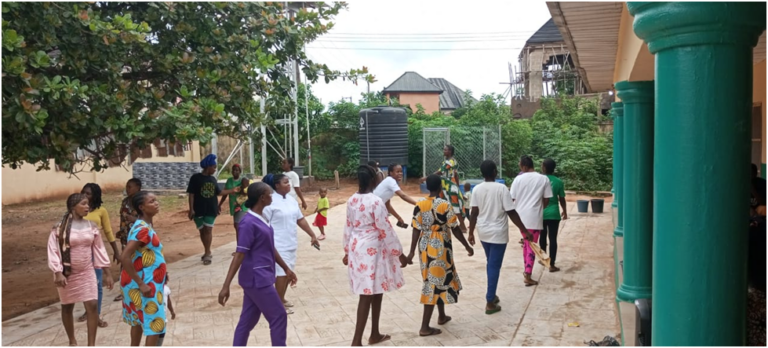
Pregnant women led by OIC Nduka on morning exercise
Healthcare workers have also noted the increase in activity. The Officer-in-Charge (OIC) at Nise PHC, Awka South LGA, Ifeoma Obi, said that attendance at antenatal care sessions had increased to 25 women from the previous 10.
“Formerly our facility couldn’t boast of 11 deliveries in a month. But in September it was 11. The month before that (August) was 10. Previous months was about nine. But formerly, we used to get two, three or four deliveries in a month. There is a great difference,” she said.
Princess Ayomide resides in Mgbakwu, Awka North LGA and regularly visits the PHC in the area. “I feel greatly relieved,” she said. “If I had to pay for all these services, it would be too much to bear. Let the government sustain it.”
According to the OIC of Mgbakwu PHC, Virginia Nduka, many women who had not attended antenatal care started showing up for deliveries once they heard about the programme.
“In June, we had 20 deliveries, in July 22, and in August 24. The numbers keep increasing,” she said. “Antenatal registrations have jumped from around 100 last year to between 150 and 200 currently.”
Chidinma Nnaluo, in her early 20s, had just delivered her baby boy hours before Radio Nigeria visted Mgbakwu PHC. Nnaluo, who hails from the community, said she joined the programme in January 2024 and it helped her cut cost and rely on credible medical information concerning her pregnancy, which led to her safe delivery. She said she does not joke with participating in antenatal care sessions every Mondays.
“I registered immediately after discovering I was pregnant. I’ve attended antenatal care here without any cost,” Nnaluo remarked.
Pregnant women led by OIC Nduka on morning exercise
In Oyi LGA, similar stories abound. Ujunwa Igwe-John shared how thorough the care has been, “The first day I came for antenatal, they conducted HIV tests, checked my blood pressure, blood levels, and more. Now, I only worry about school fees and feeding my children.”
Women across other facilities including Amansea PHC, Ogba Mbaukwu PHC, Nibo PHCs 1 and 2, and Umuwaulu PHC share similar good tidings about the programme which have taken a huge financial burden off their shoulders.
Commenting on the policy in July 2024, Governor Chukwuma Soludo reported that over 60,000 women have benefited from the initiative while the State Health Commissioner, Dr. Afam Obidike, had earlier in May 2024 shared similar tidings, adding that 120 cesarean sections had been performed since its launch in September 2023.
In an exclusive interview with Radio Nigeria in October 2024, the Commissioner again reported that between 63,000 and 70,000 women had benefited from the free ANC and nearly 11,000 safe deliveries without any maternal death from the benefiting facilities.
This, for him, also points at the potential of the programme to reduce maternal mortality currently put at 286 per 100,000 live births among 1.3 million women of reproductive age in the area.
Tension between success and shortcomings
While the state’s free maternal care initiative has delivered undeniable benefits, it has also exposed deep-rooted systemic challenges that continue to plague Anambra’s healthcare sector. The increased patronage is straining an already overstretched system, with healthcare workers struggling to cope with the rising demand. Chronic understaffing is a persistent issue, with many PHCs heavily reliant on volunteers to fill the gap.
At the PHC in Umuawulu, Awka South LGA, for example, infrastructure improvements have not led to higher patronage due to the shortage of healthcare workers. “People complain that there is only one nurse available,” said OIC Juliana Nnaemena.
Newly renovated PHC Umuawulu
“I’ve been the only government staff here since last year. Although, a nurse midwife was briefly assigned, she was reposted without replacement.”
The OICs who would not want to be mentioned for fear of being victimized faulted the government for not making adequate preparations for the programme. “They should have recruited more midwives. Before this programme, we got money to run the facility from ANC and delivery.
“But now, everything is free and we no longer generate money. Yet, I do not have staff to work with. So, I engaged four volunteers each of whom I pay N25,000 monthly salary. Every month, I run helter-skelter to get enough money to pay them. Sometimes, I pay from my salary,” one of them lamented.
Earlier this year, 500 healthcare workers were recruited by the state government, but this has barely made a dent in addressing the long-standing workforce shortages. According to the minimum standards for PHCs in Nigeria, each facility ideally requires up to 24 staff members. The recent hires are, therefore, just a drop in the ocean, and complaints about manpower shortages persist across many centres. Going by this standard, the state ideally will require up to 14,832 to efficiently run all its 618 PHCs.
However, this standard has been described as too ambitious and unrealistic as many secondary facilities in the state and other parts of the country cannot boast of more than a few health workers, explained Obiora Agbakwuru, Coordinator of the National Primary Health Care Development Agency (NPHCDA).
“This, for me, is not realizable. What we will be looking at is to have at least four nurse-midwives in each health facility with a record officer who takes and keeps data, which is still currently done by the OICs. There should be distinction between who takes data, who gives vaccines or injections so that the OICs can pay attention to administrative matters.
At the moment, most of the officers in charge of facilities in the state are Community Health Extension Workers (CHEW). According to the minimum standard, each PHC needs four qualified midwives to take safe delivery.
The uneven distribution of staff is another concern. For instance, findings revealed that Umunya PHC in Oyi LGA, which has only handled 18 deliveries since the programme’s inception, has four staff members, while busier facilities like MCH Amawbia and Nise PHC are severely understaffed.
Maternal and Child Health Care Clinic Amawbia, Awka South LGA.
The Programme Officer, Justice Development and Peace Caritas (JDPC) Nnewi, a not-profit organization committed to promoting holistic development highlighted other pressing challenges Onyekachi Ololo, said “The referral system needs strengthening, particularly the transportation network between PHCs and general hospitals. In addition, staff should be incentivised to improve service delivery.”
Ololo also raised concerns about women arriving at PHCs without basic supplies.
“Because the services are free, many come empty-handed without sanitary materials, tissues, or other essential items. There’s a need for greater awareness about what the programme covers.”
Investigations also revealed that since most PHCs rely on volunteers to sustain their operations and they no longer generate money from ANC and delivery, some OICs have devised other survival strategies such as directing patients to get items not provided by government from shops where they have an interest. At other times, they get the pregnant women or their families to keep sealed lips about the amount paid for services rendered.
This was confirmed from the conversation between Radio Nigeria and one of the women. “When it requires for you to pay money and all that, definitely now,… you understand. You can’t just get some drugs without payment. I am talking about those ones not provided by the government,” she said responding to a question on whether they still pay for anything under whatever guise.
Complementary effort to the BHCPF
The free antenatal care (ANC) and delivery programme complements the Basic Health Care Provision Fund (BHCPF), a national initiative under the National Health Act aimed at improving access to primary healthcare for vulnerable populations, including pregnant women, children under five, and people with disabilities.
However, according to the Coordinator, National Primary Health Care Development Agency, (NPHCDA) Obiora Agbakwuru, only 329 out of Anambra’s 618 functional PHCs are enrolled in the BHCPF, leaving many facilities without crucial quarterly disbursements.
This gap is yet unfilled as the state government’s free maternal care programme still runs in the same facilities that are already under the BHCPF. Be that as it may, under-funding of many facilities remains a significant challenge more especially in facilities left out of the box.
Even in PHCs taking part in the two programme, Ololo said, “Some OICs disclosed that they are contemplating laying off their volunteers despite being short-staffed because they no longer charge fees for ANC and delivery services. Otherwise, they continue to pay them from their salaries,” Ololo stressed.
Although PHCs are technically the responsibility of local governments, many local authorities have neglected their duties, due to financial dependence on the state government. However, with the Supreme Court’s recent ruling granting financial autonomy to local governments, there is renewed optimism for significant improvements in the future.
Experts believe that both the BHCPF and Anambra’s free maternal care programme are critical to achieving Universal Health Coverage (UHC) by 2030, ensuring that people can access a full range of quality health services when needed, without facing financial hardship.
First-time mother on her way out of the PHC Nise
Agbakwuru, offered further insight, “BHCPF funds the Basic Minimum Package of Health Services, which includes ANC and delivery services, to ensure that all Nigerians, especially the poor, have access to healthcare. This aligns directly with the free ANC service provided by the Anambra state government.”
“The financial burden on families is reduced, allowing indigent families to access crucial services that prevent maternal and child mortality at no cost,” Agbakwuru added.
Impact on the ground: mixed results across LGAs
The initiative’s impact varies across the state. Data from the District Health Information System (DHIS2) shows significant improvements in some council areas. In Aguata, antenatal care (ANC) registrations increased from 6,832 in 2022/2023 to 7,500 in 2023/2024. In the same period, Awka South saw a sharp rise from 14,715 to 23,593 while Idemili South recorded an increase from 6,617 to 9,270.
However, Onitsha North LGA experienced a decline, with ANC registrations dropping from 38,307 to 29,011, Anambra East saw a decrease from 7,551 to 6,774. Idemili North also recorded a slight reduction, from 13,489 to 13,291.
These disparities in ANC and delivery rates between facilities highlighted gaps in healthcare access, which according to Ololo, are driven by factors such as location, awareness, and lingering distrust between the public and government.
Many of the facilities not offering the free ANC and delivery as well as BHCPF are still in pitiable state and in dire need of attention with negative impact on patronage.
Shortcomings acknowledged, solution in progress
When reached for comments, Obidike said the state government was aware of the programme’s limitations and has begun addressing them. First, he said, the government approved the upgrade of the facilities to address the infrastructural decay and make them attractive to residents. Indeed, some of the facilities visited such as PHC Mgbakwu, Umuawulu PHC are beneficiaries of this upgrade.
Commissioner for Health, Anambra speaking on free ANC and delivery programme.
“Up to 100 facilities have been renovated, and more are set for upgrade. Solar power installations are being rolled out to improve energy supply, and modern equipment is being distributed for safer deliveries.
“We will soon embark on the second phase where other essential items will be distributed to 326 facilities,” the Health Commissioner said.
Regarding the need for more healthcare workers, Obidike said there are plans for further recruitment.
“Maybe next year, we will recruit again,” Obidike said while also promising to look into the alleged lopsidedness in postings of health workers.
“I have noted it especially the facilities you mentioned. We will look at the nominal role and redistribute.”
He also spoke on irregular supplies of drugs and consumables.
“We provide 10 packs of delivery kits for 10 deliveries. When they have used up to eight, the OICs are expected to make a request for more. But they must provide data showing how the previous supplies were used. Delays happen when requests are not made on time.”
According to him, robust monitoring and supervision mechanisms are in place to boost success rate of the program. “We post signs in all facilities that say, ‘If you’re asked to pay anything, call these numbers.’ One of the numbers is mine,” the Commissioner explained.
“We also collect beneficiaries’ contact details for follow-up. Staff caught collecting money under any pretense have been made to refund the beneficiaries and were sanctioned. Compliance has steadily improved.”
Obidike said there are also plans to incentivise healthcare workers. “For every caesarean section, the government pays the hospital an extra ₦50,000 for staff involved. We are considering incentives for PHC workers too.”
Notwithstanding Obidike’s comments, sustaining the momentum of the programme requires more than vigilance. As the initiative grows, so does the need for consistent resources and deeper community involvement to reach its full potential, said Obiora Agbakwuru, Coordinator of the NPHCDA.
For optimal results, Agbakwuru emphasized the need for consistent provision of essential drugs and active community engagement to promote the program and gather feedback.
“Regular monitoring and evaluation will help identify areas for improvement,” he added.
This report was done with support from the International Centre for Investigative Reporting, ICIR.
IN 2023, several projects aimed at improving healthcare delivery were commissioned across Kano State. However, this investigation reveals that poor jobs by contractors and lax oversight by government agencies have undermined these efforts.
From leaking roofs in newly built facilities at, Baburi and Rangaza wards, to an abandoned decade-old project in Dandaji, there is a recurring trend of poor supervision as well as disregard for the procurement law.
During a heavy rainstorm in mid-2024, Sadiya Isah rushed her five-year-old son to the health post dispensary in Dariya, a community in Baburi ward, Tudun Wada Local Government Area (LGA) of Kano State. Desperation had driven her to find immediate medical attention for her child.
“My son was shivering and I thought he was going to die,” she recalled, her voice heavy with emotion. With no other health facility nearby, Sadiya said the health post dispensary offered their only hope.
She recalled that as they entered the building, the rain intensified, flooding parts of the dispensary.
“It was raining and the water was coming in through the roof and the windows. The walls had cracks, and the rain just poured in,” Sadiya explained.
She said the dispensary staff scrambled to contain the rain, mopping and using buckets to clear the water, while trying to attend to her son.
The constituency project document.
“The staff were doing their best, but the condition of the building made things very difficult for them,” she recalled.
For decades, residents of rural communities such as Yammawa, Dan Ariba, Fan Qura, Dakutiku, Hayin Yola, Dokartanya, Dariya and Yalwa, in Tudun Wada LGA had faced challenges accessing healthcare. The nearest medical facility is located at least 10 kilometers away.
In 2023, the contract for a new health post dispensary was awarded in Dariya for the sum of N11,798,710.67 to Mohammed Sani Global Services Ltd.
However, few months after the project was completed, residents said it failed to meet standard expectations as it had leaking roofs which prevented proper use of the facility during the rainy season.
A cleaner and security guard at the facility, Isah Abdulkarim Dariya, said they did not expect the roof of the newly constructed building in December 2023 to leak during the following rainy season.
“We were happy when the government built this dispensary because a lot of communities can now access healthcare. But now, we’re pleading with the contractor to come and fix the leaking roof,” he said.
“Every time it rains, the roof leaks, and it damages our medical supplies. We have to pack everything up, and patients end up getting soaked. Afterwards, we have to clean up the facility,” he said. The security guard said despite complaints and visits of government officials on inspections, the issue has remained unaddressed.
He recalled a recent incident where a woman receiving an intravenous fluid was forced to move from the spot due to the leaking roof.
Dariya Health Post Dispensary.
“We had to find another spot because the rain was coming through the ceiling where she had been lying. We couldn’t leave her there, it wasn’t safe anymore,” he explained.
A resident of the Dariya community, Shuaibu Isah Haladu, who at the time of her visit on August 25 said he was representing Sale Ginsau, the officer – in charge of the health post. Haladu, who said the officer was away on an outreach, expressed concern about the state of the health post.
“The ceiling is leaking badly. If we put a bucket under it, it fills up quickly, and it’s not just one place, it’s mostly the entire ceiling. Our records and books have been damaged beyond repair. They’ve all been soaked, and we’ve had to pack them away,” he stated.
He said the health post dispensary serves between 20 and 40 patients daily and claimed that the roofing of the dispensary was poorly constructed and needed to be replaced.
The constituency project document
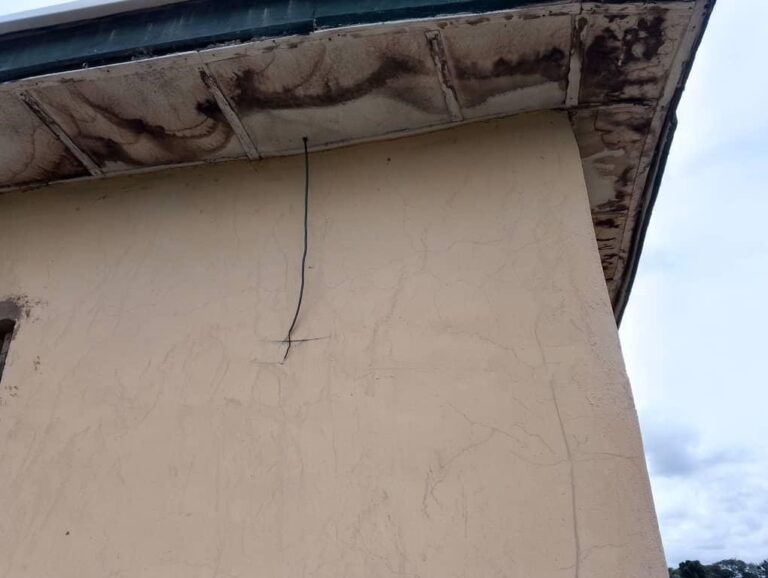
A physical assessment of the facility revealed that the building appears in good shape on the surface. However, upon a closer inspection, discolored ceilings and damages were noticed.
Photo of Dariya Health Post Dispensary.
No succour despite N11m Dariya contract
The National Primary Health Care Development Agency (NPHCDA), sets the minimum standard for primary health care in Nigeria. It states that a health post dispensary should contain two rooms with cross ventilation. Also, walls and roof must be in good condition with functional doors and netted windows. However, though the Dariya health post meets other standards, it failed to meet the roofing and wall standard prescribed by the NPHCDA.
Hafsat Abubakar Gaya, who works as a site supervisor at Mc Dream Concept Ltd; a real estate company in Kano, explained that the lifespan of a roof is between 20 to 25 years before it develops any defect. She said for a roof to possibly develop faults within months or a year of construction is a sign of poor work or proof that substandard materials were used.
How Kano works ministry breached procurement law
In 2023, the Kano State government, through the Ministry of Works and Housing awarded the contract for the construction of a health post dispensary in Baburi ward for 11,798,710.67 to Mohammed Sani Global Ltd.
The company was incorporated on September 22, 2015. However, the status of the company in the Corporate Affairs Commission (CAC) portal shows that it is inactive. According to NG-check, the company’s registered office address is No. 85, Ibrahim Taiwo Road with Mohammed Sani Murtala, Garba Umar and Adamu Aliyu Nuhu as directors.
The company showing inactive.
This reporter placed a call to Mohammed Sani, the contractor responsible for the project, on September 5, 2024 and when asked if he knew that his company was inactive on the CAC portal, He said “I am not aware that I have to pay my annual returns to CAC but I am aware of the taxes paid to the Federal Inland Revenue Service (FIRS) and I do that,” he said.
The award of contracts to an inactive company is a direct breach of Section 31(4) (d) of the Kano State Public Procurement Act 2022. The section states that a bid or tender shall be excluded from any particular procurement proceeding if, “the bidder is in arrears regarding payment of due taxes, charges, pensions or social insurance contribution, unless such bidders have obtained a lawful permit with respect to allowance or difference of such outstanding payment in instillments.”
Chapter 16 of the Companies and Allied Matters Act (CAMA, 2020) makes it a statutory prerequisite for every company in Nigeria to file annual returns yearly. Failure to do so is a contravention of sections 417 – 424 of the CAMA, 2020, which states that, “every company must make and deliver their annual returns to the CAC every year.”
Also, section 27 (3) states that, “Public officers and members of tender boards and all procurement bodies shall ensure that: (3) The goods, works or services procured are of satisfactory quality.
However, both the contractor and the state ministry of works failed to adhere to this provision that ensures quality checks of contracts.
Speaking further, Sani said that he never personally visited the project site.
“To be honest, I didn’t go to the site myself, but I sent my engineers, and they did the work,” he said, adding, “I don’t even know the exact location, but I know it was in Baburi ward. We have a lot of projects, so I don’t keep track.”
When informed of the leaking roof, Sani appeared unaware of the issue. Attributing it to the rainy season, he said, “It’s probably because of the rain. Even my own house is leaking.”
He addedl “We followed everything outlined in the contract. Since there is extra work needed now, I haven’t collected my retention fee. Once the ministry conducts their inspection and confirms the additional work required, we will go back and repair it.”
“I think I received about 50 per cent, but I can’t remember exactly. What I do know is that the ministry hasn’t paid me in full, although I know they’re still processing it,” he said.
Substandard materials undermine building structure – CSO
The Executive Director of Victory Health and Education Awareness Initiative and a budget expert, Salisu Yusuf, raised concerns regarding the use of substandard materials in construction projects.
He emphasised the long-term consequences of poor-quality materials, noting that the integrity of any construction should be the priority for contractors and the government.
“If a building starts leaking before it is even used or within some months of completion, just imagine how it will be in a few years. The problem isn’t just about the roofing; if substandard materials are used on the roof, there’s a high chance that other parts of the building, like the walls or foundation, are also compromised.”
He explained that substandard materials not only undermine the structure itself but can also damage equipment and facilities.
“When it comes to constituency projects, it’s all about the people. Whether it’s construction, supply, or anything else, don’t look at yourself or what you’ll gain. Focus on how it will benefit the community,” he said.
Similarly, a project was awarded 2023 by Kano State Ministry of Works to Boko Agro Allied Nig. Ltd for the construction of Health Centre type C2 in Rangaza ward of Ungoggo Local Government Area (L.G.A) for N17,617,281.10.
Billed for completion in three months, as stated in the award letter from the Ministry of Works, the health centre, was still being constructed on September 5 when this reporter visited the site. It ought to have been completed in December, 2023.
Payment processing for Boko Agro AlliedThe ongoing health centre type C2
Findings also revealed out that the project was built in the vicinity of an already existing Primary Health Centre, (PHC) in Sabon Gari/Gundimi in Rangaza ward which contains two rooms and a washroom. The project as seen by this reporter has a coloured ceiling which indicates it is leaking even before being put to use. This was confirmed by the guard at the facility Jibril Zannuni, and also a resident of Gundimi.
The existing PHC and the new type C2 health centre behind it.
When this reporter called the number listed for Boko Agro Allied Nig. Ltd in the contract award document to know why he built the project within the vicinity of an existing PHC, the receiver, who confirmed that he owns the company, refused to provide his name, saying he was not the right person to speak on the contract. He promised to forward his manager’s phone number, but never did.
This reporter followed up with calls and text messages but the contractor never responded. However, while on the site, Zannuni, the guard revealed that the contractor he knew was not Boko Allied but Bunyaminu Basaraki. He put a call and handed over the phone to this reporter.
While speaking to him, Basaraki confirmed that he was in charge of the contract and denied being Boko Agro Allied. When asked if he bought the contract from Boko Agro Allied, he evaded the question but insisted he was in charge of the project. He, however, failed to disclose the name of his company.
This reporter then informed Bunyaminu that she would obtain his contact information from Zannuni for further discussion on the project. Upon reaching out to Zannuni again, he clarified that “Bunyaminu is a busy politician and that’s why, perhaps, he didn’t pick your calls.”
Further checks revealed Bunyaminu’s full name as Bunyaminu Musa Adamu, the chairman of New Nigeria People’s Party (NNPP ) in Ungoggo Local Government Area. The politician himself confirmed this to the reporter.
After text messages, WhatsApp and again made several calls, he answered and said, “I saw your messages. I am currently busy and on my way to attend a seminar at Dawakin Kudu LGA. I will send you all the contract information that you asked for when I am back.”
Asked again if he is Boko Agro Allied, he said in Hausa: “Ni wakilin shi ne,” which means “I am his representative.” The representative, however, was yet to send the requested information as at October 30, 2024.
A screenshot of the conversation.
Breach of contract from both the ministry of works and contractor
While Boko Agro Allied is an active company on CAC, having been registered on October 21, 2020, the company was less than three years when it was awarded the contract as seen in the contract award letter dated October, 13, 2023.
Both the federal and Kano State public procurement laws mandate that contractors seeking to be awarded contracts must meet several compliance requirements. For example, Section 31 (1) of the Kano Procurement Act states that, “All bidders, in addition, to requirement contained in any solicitation document, shall possess the following; (a) Professional and technical qualification to carry out particular procurement.”
The qualification also includes the submission of a valid tax clearance certificate which usually takes up to three years.
Section 85 of the Personal Income Tax Act (PITA) outlines the rules for issuing a Tax Clearance Certificate (TCC). It specifies that a TCC will be granted if the taxpayer has paid all taxes due for the preceding three years or, alternatively, if the taxpayer was not liable to pay tax during that period.
The section also highlights that a TCC is mandatory for certain transactions involving government agencies, ministries, and banks. Some of these transactions include securing government contracts, loans, and licenses. If a company or individual seeks to engage in such dealings, they must present their TCC to prove compliance with tax obligations.
The award of project is a breach of Section 27 (3) and (5) of the Kano Procurement Act, 2022 which stipulates that; public officers and members of tender boards and all procurement bodies shall ensure that: “The goods, works or services procured are of satisfactory quality” and (5) which states, “The goods are delivered, services are provided, or the works are completed in a timely manner in accordance with the procuring entity’s priorities.”
However, by the time of this reporter’s visit, the work was ongoing and had missed the three month’s deadline for the project.
Dandaji medical centre turned into laundry
In 2023, a federal contract was awarded to Slash Visions Ltd for the completion and equipping of an abandoned medical center in Dandaji Kofar Ruwa ward, Dala Local Government Area.
The project, valued at N50 million, was facilitated through the National Primary Health Care Development Agency. According to Gov. spend.ng on December 20, 2023, the contractor received an initial payment of N12,471,248.07, representing 30 per cent mobilisation funds.
Photo from Gov.Spend
Despite promises, several lawmakers representing Dala constituency have failed to ensure the completion of the Dandaji medical centre, initially started in 2003.
A resident of Dandaji, Mujitapha Kabir Ishaq, said that over the years, different lawmakers had pledged to finish the project but these promises never materialised, leaving the facility in a state of neglect.
“Babangida Yakudima before the last election repaired the roofing and painted the building during his campaign,” Mujitapha explained, adding, “but when he lost the election, the project was abandoned again,” he said.
Dandaji community, with an estimated population of 5,000 people, remains without a health facility and residents are forced to travel to Dala Orthopedic Hospital or patronise private hospitals and pharmacies for treatment.
“This is a costly option for many,” Mujitapha added.
A middle-aged woman and mother, Rahama Umar, lives near the unfinished Dandaji Medical Centre. As an asthmatic patient, her proximity to the facility would ideally make it easier for her to access the care she urgently needs.
Unfortunately, the decade-long abandoned centre has forced her and other residents to travel to distant medical facilities to receive medical care.
“I don’t know if my frequent attacks are because I’m getting older,” Umar said, adding,“My asthmatic attacks have been happening more often. It could be triggered by extreme heat, a tiring day, or even emotions like happiness or sadness,” she said.
“If I don’t have my inhaler with me, they have to take me to a far medical facility for an IV injection because medication doesn’t work well with me,” she said.
According to her, it would have been a lot easier if the Dandaji medical centre was completed. “In that case, even my son or neighbour could easily take me there with if it’s night or daytime.”
“The last time any work was done was before the 2023 elections. Every time there’s a new election, they promise to finish it, but nothing ever happens,” she lamented.
When this reporter visited the health centre, the first thing that became evident was that the place had been turned into a laundry company with over 10 people washing/ironing.
One of the workers who wished to remain anonymous, said, “construction started in 2003, and it was halted shortly after. The work resumed in 2020 and then 2022 and it also stopped.”
“It was in the last phase (2022 to the campaign period of 2023) that the roof was reroofed and it was painted but that’s where it stopped,” he said.
Both Mujitapha and Umar called on the government and politicians to prioritise the completion of the medical centre and provide much-needed healthcare services to the community.
“We are tired of promises.The politicians need to fear God and fulfill their commitments. The people of Dandaji have been neglected for too long, Mujitapha said.”
Lawmaker reacts
When contacted on October 13, 2024, Babangida Alasan Yakudima, the immediate past lawmaker representing Dala constituency, said the project was abandoned before he assumed office in 2019.
“When the people demanded its completion, I included it in the 2020-2021 budget but the funds allocated were insufficient, and the then contractor did a shabby job,” Yakudima said.
Yakudima noted that he sought further solutions by increasing the project’s budget in the 2023 budget and raised the amount to N50 million because things were getting more expensive.
“The contractor has done more than the allocated funds could cover. His work has passed N25 million. He even started the work before receiving any payment.”
The lawmaker further attributed delays to funding challenges with the NPHCDA and leadership changes. He however, promised to follow up to see to its completion.
Breach of the procurement act, 2007
The contract was awarded to Slash Visions Limited, an active company listed on the Corporate Affairs Commission (CAC) portal. Incorporated on October 13, 2020, the company’s stated business activities include operating as general contractors and merchants. Their scope extends to buying, selling, manufacturing, and dealing in various articles, products, systems, and appliances that align with the company’s objectives, or are commonly traded by businesses with similar purposes.
However, the project, facilitated by the NPHCDA, remains unused by the intended beneficiaries due to lack of completion. This contravenes the Public Procurement Act of 2007, specifically Sections 16(1)(e) and (f), which stipulates that public procurements must “achieve value for money and fitness for purpose” and promote both economy and efficiency. The NPHCDA, as the awarding agency, bears responsibility for ensuring the project meets these legal standards.
Also, under Section 37(1), payment for procurement must be settled “promptly and diligently.” However, the contractor, Alhaji Umar, claims delays in receiving funds from the NPHCDA, has left the facility unfinished.
Section 20(1) of the Act designates the NPHCDA’s accounting officer as the party responsible for supervising procurement processes and ensuring compliance with procurement laws. This includes planning, organising tenders, evaluating, and executing contracts. However, the agency did not comply with this to see its completion.
The Managing Director of Slash Visions Ltd, Umar Labaran, explained that the company began work on the site even before mobilisation by fixing the roofing, drainage, and making patches. He noted that after receiving 30 per cent of the mobilisation fee in December 2023, further payments stalled.
“The NPHCDA’s leadership-change complicated things; they’re focusing only on 2024 projects, neglecting 2023 obligations.” Umar added, “I’ve done over 40-60 per cent of the work. If payments come through, I’ll complete the project, but without funds, I can’t continue.”
“I have spoken with Hon. Yakudima and we are still pushing to get the funds released. I don’t want to abandon the project, but without payment, it’s difficult to proceed with the work,” he said.
Agency, ministry ignore FOI
On Monday, October 7, 2024, a Freedom of Information (FOI) request was sent to the Ministry of Works, Housing, and Transport. The request sought clarification on why the ministry awarded a contract of a health post dispensary in Dariya community to Mohammed Sani Global Services Ltd, an inactive company. It also inquired whether the ministry was aware of the leaking roofs at the newly built health post and the ongoing project at Rangaza which is ongoing by Boko Agro Allied Nig. Ltd.
Also, the FOI requested an explanation for the breach of contract concerning the Rangaza ward project and access to all related contract documents. However, the ministry has failed to respond to the FOI requests.
A separate FOI was also sent to the National Primary Health Care Development Agency regarding delays in the federal project at Dandaji Medical Centre. The inquiry sought financial progress reports and other relevant documents on the project’s completion. Again, the NPHCDA failed to respond to the request.
Acknowledgement copy of FOI sent to the NPHCDA.
This investigation was done with suppor from the John D. and Catherine T. MacArthur Foundation and the International Centre for Investigative Reporting, ICIR.
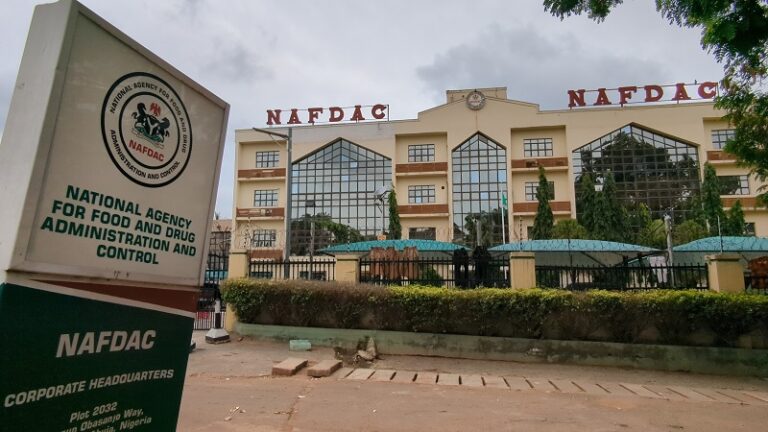
THE National Agency for Foods and Drugs Administration and Control (NAFDAC) said it destroyed substandard and counterfeit goods valued at over ₦120 billion between July and December 2024.
The agency stated this on Sunday, December 29, through a statement by its media and communication consultant, Sayo Akintola.
It destroyed expired and unregistered drugs worth ₦11 billion in Ibadan, Oyo State, on Wednesday, December 11, 2024.
The statement said that earlier in November, the agency confiscated fake medicines valued at ₦300 million during a raid at Tyre Village in the Trade Fair Complex, Lagos State.
Besides, its officers shut down counterfeit alcohol packaging at the fair, seizing items worth ₦2 billion after reports of illegal revalidation of expired alcoholic beverages.
The agency intensified its fight against substandard and counterfeit products in Nasarawa State, where its officers, led by the director of the FCT Directorate, Kenneth Azikiwe, raided Karu Market near the FCT-Nasarawa border. During the operation, bags of repackaged expired rice worth approximately ₦5 billion were seized, said the agency.
In another operation in Nasarawa State, the agency sealed a factory and eight shops involved in packaging and distributing counterfeit rice valued at about ₦5 billion. On December 19, 2024, NAFDAC targeted Ninjur Ventures on Abacha Road, Karu, and confiscated over 1,600 bags of counterfeit rice in Abuja’s Wuse and Garki markets, all valued at around ₦5 billion.
Altogether, the agency destroyed more than ₦120 billion worth of seized products across the six geopolitical zones and the FCT between July and December 2024.
It reaffirmed its commitment to protecting public health, especially during the festive season.
Its director-general, Mojisola Adeyeye, a professor, emphasised that the agency remained resolute in its battle against counterfeit goods.
“We will not rest on our oars until the merchants of death are forced out of operation. The coming year will be tough for people who prioritise money over the well-being of their fellow human beings by compromising the quality of medicines and food products in the country.
“We are using this medium to appeal to Nigerians to buy only NAFDAC-registered drinks from reputable and licenced retailers, bars, and supermarkets. If a product is being sold well below its normal price or lacks the usual taxes on liquors, then it is probably fake,” Adeyeye warned.
The agency further urged the public to stay alert and report any suspected substandard or counterfeit products to its nearest office.
TROOPS from Sector 2 of the Joint Task Force North-West, Operation Fansan Yamma, have arrested a 25-year-old suspected female ammunition courier, Shamsiyya Ahadu.
In a statement issued Sunday, December 29 2024 in Gusau, Lt. Col. Abubakar Abdullahi, coordinator of the Joint Media coordination Centre, confirmed the arrest.
Ahadu and her accomplice, a motorcyclist, Ahmed Husaini, were apprehended on December 28 in the Badarawa area of Shinkafi Local Government Area, Zamfara State.
She was caught with 764 rounds of 7.62mm special ammunition and six magazines intended for delivery to the camp of terrorist leader Bello Turji.
“Her arrest followed an intelligence report regarding the movement of the terrorists’ logistics along the road from Kware to Badarawa communities in the Shinkafi Local Government Area of Zamfara State.
“In response to the development, troops of Operation Fansan Yamma promptly established a roadblock leading to the apprehension of the suspects.
“Both suspects are currently undergoing investigation by appropriate authorities,” the statement reads in part.
The statement emphasised the troops’ commitment to dismantling terrorist networks and preventing the illegal movement of arms and ammunition within their area of operation.
It urged the public to continue providing credible information that could lead to the arrest of wanted terrorists and their collaborators. It acknowledged and appreciated the ongoing local support from the community in helping achieve the operation’s objectives.
Nigeria faces a plethora of macroeconomic challenges worsened by President Bola Tinubu’s fuel subsidy removal and exchange rate unification. At present, food inflation has throttled to over 40per cent, transportation costs more than doubled in the last year, and borrowing costs as high as 50per cent compounding hardships for the citizens and stifling businesses. Kazeem Bello in this interview with EHIME ALEX speaks on the state of the Nigerian economy and expectations in the coming year, including on the grey area in the tax reform bill and what Trump’s administration could mean for Nigeria’s economy. Bello is a global development economist, professional investment banker, private equity manager, risk manager, project manager, and currently the CEO/principal partner with Afrique Capital and Equity Funds Ltd, New York, United States.
The ICIR: In all its six monetary policy committee meetings held this year, CBN hiked the benchmark interest rates currently at 33.9per cent to maintain its orthodox approach in fighting inflation even when inflation declined in August. Did hiking of interest rates serve its primary purposes and where will the approach lead the country?
Bello: The Central Bank of Nigeria (CBN) has been relentlessly working hard to revamp the damages that may have been inflicted on its operational confidence in the first instance and equally to address the declining economic fortune of Nigeria. These two objectives are essentially central, and they are by no means easy for the CBN so far to overcome. It has been a mixed blessing in some ways, but CBN has been able to restore confidence in its operations and its determination to push virile reforms in the financial system, helping in building domestic and foreign investors’ confidence.
To this extent, we would have to give the CBN the space to undertake a critical evaluation of the economy, conduct its empirical synergies, and determine what it considers the most appropriate strategy to tackle the economic issues, especially the trending inflation and the heat up with the Naira depreciation. In the past six months, we have seen a consistent hike in interest rates to assist tackle and ease the inflationary pressure in Nigeria. The expected outcomes are not evolving at the moment but the CBN is convinced that this strategy, with sustained efforts, should result in a downward pressure for real inflation. We have to believe in the CBN expectations on inflation, but it is currently not manifesting in dampening the inflation pressure in Nigeria, which in real terms is approximately 38per cent regardless of what the official source is stating. Food inflation has remained extremely vulnerable to mounting pressure on real inflation. At approximately 45 per cent, it is one primary area that the government must immediately tackle to stem the upward trend in real inflation in the new year.
In effect, rather than embark upon another fresh hike in interest rates, which is equally killing productivity in the economy, the CBN working with the government must figure out how to tackle some identified subsistence indicators that are fueling real inflation, and we would see a declining inflation altogether in Nigeria in 2025. This includes tackling the effect of food inflation, cost of living, especially transportation costs, and daily means of survival for the people. With this, inflation will see a downward reversal without any need to hike interest rates. The belief in the financial cycle is that the interest rates hiking may have assisted to a large extent, to halt spiral increases in real inflation, however, it has not worked to bring it down for several obvious reasons, hence it is generally advisable to look elsewhere than roll out another round of interest rate hiking.
The ICIR: It is obvious that the CBN has missed the 21per cent inflation rate target for this year. However, how quickly do you think Nigeria can begin to see a drastic reduction in the inflation figure as CBN insists on maintaining its orthodox approach?
Bello: There are several ways to tackle the inflation challenges in Nigeria. My past position on this issue may have been justified, especially when late last year, the government projected to reduce inflation to 21per cent by the end of 2024, and I indicated it is practically impossible due to the prevailing economic challenges and circumstances. Tackling inflation must always be a double-edged sword. The monetary and fiscal objectives and implementation must always align. That is not happening at the moment in Nigeria, hence it will be very difficult to tame inflation in the absence of this important component.
For instance, I practically kicked against the N6.2 trillion 2024 supplementary budget for several reasons. I believe the CBN equally and quietly advised the Federal Government of Nigeria against it. My position was that it would result in pressure for both the real inflation and the Naira exchange rate, plus there is no guarantee of revenue inflows to fund that extra expenditure. This is precisely what has happened, and the government has created additional pressure on the economy by acquiring more debts to fund fiscal expenditures or budget deficit funding.
Business activity drop in June amid rising inflation. Illustrative photo by Photo by Ricky Esquivel via Pexel.
This is not helping the economy and it is creating systemic dislocation between the monetary policy and the fiscal policy implementation. The economy is the one suffering it and there must be concerted and careful consideration to realign these policy implementation strategies to help lift the economy. If this does not happen, we will see essentially worse economic numbers by the middle of 2025, especially arising from massive spending that will happen soon in the first quarter of 2025 with a new budget year.
As usual, I have my numbers for building the 2025 budget, which includes working to get the real inflation number down to 30per cent by the end of 2025 as the most realistic target out there. Unfortunately, the inflation pressure will continue to stick around until and unless the government imbibes some of the policy realignment we have mentioned above.
The ICIR: What will a benchmark exchange rate of N1,400 mean for Nigeria’s economy as proposed in the 2025 budget?
Bello: The Nigeria Naira will end the year as the global unstable currency for 2024. It will also carry that record of the market that may have witnessed the highest intervention in 2024. It was, however, extremely difficult to understand why with the foreign reserve growing robustly and importation reduced significantly, the market is still trending toward a painful depreciation of the domestic Naira. CBN has carried out careful plans during the year, to stabilise that market without much success. It has instigated several interventions, which it has sworn in the past to halt, but the market is still having a negative outlook. There has been a noticeable appreciation of the Naira in the past few days, most likely due to heavy intervention in the market that increases inflows, but that is not sustainable by the CBN.
To address the market issue, we have to look at other extraneous factors that may be dragging down all CBN efforts in the market. That is to figure out how to fight back against the faceless interventionists or the illegal speculators that have infiltrated that market as we speak. The monster in the house in Nigeria may not necessarily be the fuel subsidy removal, but the foreign exchange market. We have talked about the potentially damaging impact of these speculators infiltrating the market. To seriously tackle this problem, there must be determined efforts to wipe these infiltrators out of the market.
President Bola Tinubu while presenting the 2024 budget
The use of N1,400 as a benchmark for the budget has no economic implication whatsoever. It is just a reference number used by the government to estimate its deficit numbers in its budget. Last year’s budget was predicated on approximately N950 or thereabout, despite the Naira trading at about an average of N1,500 for most of this year, the budget deficit persisted resulting in massive borrowing during the year. So that number is not sacrosanct and does not produce anything other than providing the extent of the budget deficit inherent in the 2025 budget. I would have suggested a higher number to reduce the deficit and pressure the government to figure out how to raise revenue for 2025 budget funding which is about $30 billion at the moment.
The ICIR: You must have been following the dramas regarding the tax reform bills. But with particular emphasis on the proposed reduction in company income tax for the time being, how significant will it impact companies’ performances?
Bello: Yes, I have contributed significantly in advocating for a complete overhaul of the tax administration and system in Nigeria. Nigerians and experts are generally interrogating the current Tax Bill and it should be subjected to wider consultation not primarily to determine who it favours or not, but to test the veracity of its assistance in solving the prolonged tax administration problems in Nigeria.
There are several positive sides to the new bill while some grey areas need to be addressed before being passed into law. We must always figure out how to assist our industrial sector and manufacturing sector grow and provide a conducive environment for them to carry on their businesses. Tax incentive is one approach amongst several of them to achieve this goal. The new bill is business and company-friendly, attempting to wipe out or merge taxes and levies on companies while removing the tax burden on small businesses altogether. We would continue to have the conversation around the tax system as ramped up in the new bill, but my current fear about the tax bill is its liberal strategies, portending to exempt too many people from paying taxes in Nigeria.
CBN Governor, Olayemi Cardoso
We have to teach Nigerians how to learn the basic essence of paying taxes, but removing over 60 per cent of the tax-payable population from paying taxes is completely a liberal policy that will backfire in the future. What Nigeria needs is to increase its tax bracket base and subjecting over 60 per cent of the tax-paying population to zero tax payment will not augur well for the economy down the line. What we need to have done at the moment is drive home the importance of paying taxes and bring more numbers of the population within the tax payment system instead of exempting them. Then, the government can issue tax payment refunds and credits to reduce or zero out their payments. This can then be phased out gradually as the economy improves.
But when you ask people not to pay tax and, in the future, they get used to that subsidised mentality again, it will be difficult for the government to impose a tax on them because they will resist it. However, with tax refunds and tax credit strategies, especially for the vulnerable ones, they will learn the ethics and importance of paying tax in the first place as a compulsory civic responsibility to the country, and equally understand why the government is awarding them refunds and tax credits. That is the way to do it, to ensure that every citizen is captured in the tax system.
The ICIR: Nigeria’s foreign reserves is currently over $40 billion. How can this help to save the naira from its weakness against the dollar?
Bello: I have addressed this issue above; the foreign reserve itself does not assist in straightening out the problems with the Naira. It goes beyond that. You can have a big foreign reserves wallet, but if the market dynamics are not efficiently managed with the right tools, the exchange rate will still be impacted negatively anyway. Permit me first to review the 2025-2027 Appropriate Bill being reviewed by the National Assembly (NASS) for details. We know the budget size is about N47 trillion and a few other sketch details. A more critical look at the details will assist obtain adequate information to project the outcome of the budget.
I guess the question should have been to review the performance of the 2024 budget at the moment. With the end of the year nearing, it may be safe to conclude that the 2024 budget may not have achieved its objectives, especially in improving the economic fortune of Nigeria. The economic numbers are generally not maxing up. We have an average growth rate ending this year at about 2.8per cent; the food inflation at about 45per cent, the exchange rate over 80% depreciation over that of last year, real inflation still proving very stubborn, debt profile rising under the weight of not necessarily declining revenue but inadequate revenue for government, gross domestic product (GDP) declining to a record low of $198 billion by end of 2024, per capita income averaging $870 and consumer purchasing power index at its lowest in decades for Nigerians. We surely need to launch an investigation into the performance metrics of the 2024 budget first and this will assist us obtain more robust and pragmatic strategies to adopt in 2025.
The ICIR: How do you see Trump’s policies hitting Nigeria’s economy from next year, knowing that Nigeria’s budget implementation largely depends on revenues from crude oil?
Bello: The second coming of Donald Trump will be very busy, swift from all indications. It will be saddled with significant and overwhelming destruction, distractions, and changes that time may never permit him to overcome. To this extent, like in the first Trump administration, there will not be any strategic focus on Africa. Trump will be taking a head-on battle with NATO and China, and with this sucking most of his global diplomatic playbook, Africa will not certainly show up in his playbook.
Whatever the current Nigerian administration seems to harness during Trump’s incoming administration would be significant issues that Nigeria itself will instigate, and it must make economic sense to Trump otherwise, it is a no-brainer. We remember the only time Trump gave Nigeria any space or audience for bilateral discussion during his first term, was when Nigeria committed significant cash payments to acquire some Military Jet fighters from the US Defense to combat the menace of Boko Haram by President Buhari. We would like to see a similar call at this time except the Nigeria government must creatively get some mutually important beneficial deal on the table to attract Trump. One such may be for Nigeria to shun joining the BRICS (a global intergovernmental organisation). Trump has already sent out soundbites to warn his Guff Arab friends to stay clear of BRICS if they intend to tangle with him for the next four years. Nigeria may have to ignore BRICS to secure some specific attention from Trump, and that will be a loss for South Africa in that direction.
Nigeria’s Crude Oil exports to the U.S. have been on the decline and the U.S. will see franking oil production increase under Trump. Anyway, the Dangote Refinery ironically is importing Crude Oil from the U.S. at the moment, hence Crude Oil will play any role in getting attractions from the new man in the White House.
THE legislative arm of Egor Local Government Council in Edo State has impeached its chairman, Eghe Ogbemudia, and her deputy, Frank Osawe.
The lawmakers arm also suspended key principal officers, including Majority Leader, Bosede Omokaro, Iwinosa Enabulele, and Chief Whip, Elliot Inneh Enni.
Ogbemudia and Osawe were impeached on allegations of gross misconduct, abuse of office, financial misappropriation, unlawful withholding of statutory allowances for a principal member and three other council members, as well as budget padding.
The impeachment motion was initiated by Nosakhare Isiegbuwa, seconded by Stella Ogida Osagioduwa, and endorsed by four legislators.
The suspended principal officers were accused of failing to collaborate effectively with the council chairman, causing a two-month delay in councillors’ salaries, neglecting their oversight duties, and failing to ensure the timely payment of salaries. Five council members supported the motion for their suspension, while one member was absent.
At Friday’s plenary, Isiegbuwa presented the findings of a seven-member panel investigating allegations of misconduct against the chairman and her deputy.
The report found both officials guilty of all charges. Following a unanimous voice vote, the councillors officially removed Ogbemudia and Osawe from office.
The ICIRreported that the State’s House of Assembly suspended chairmen and their deputies from office on December 17, 2024 following allegations of insubordination and gross misconduct by Governor Okpebholo. However, the suspension was reversed by a High Court sitting in Benin.
The judge who presided over the case, Efe Ikponmwonba, issued a mandatory injunction compelling the defendants, including the Edo State Governor, Monday Okpebholo, the Edo State Government, the attorney-general, and the accountant-general to restore the claimants to their respective offices.
The court further restrained the defendants from acting on the resolution passed by the state House of Assembly suspending the chairmen and their deputies.
Ikponmwonba stressed that the status quo as of December 12, 2024, must be maintained pending the hearing and determination of the motion on notice.
The case was adjourned to February 17, 2025, for a hearing, with the court directing that hearing notices be issued to the defendants.
Background
The ICIR reports that the suspended chairmen and their deputies were removed from office on December 17, 2024 following allegations of insubordination and gross misconduct by Okpebholo.
The Assembly accused the officials of failing to submit financial statements as directed by the governor.
The decision to suspend them was made after a petition by the governor, who alleged that the council leaders had refused to provide financial records to the state government.
At the plenary, the motion for their suspension was moved by Isibor Adeh, representing Esan North East 1, and seconded by Donald Okogbe, representing Akoko-Edo 2.
Out of 23 lawmakers present, 14 voted in favour of the suspension, six opposed it, and three abstained. The suspension was initially set for two months, with the House Speaker, Blessing Agbebaku, directing the clerk to record the votes.
Days later, the Economic and Financial Crimes Commission (EFCC) launched an investigation into the activities of the suspended council leaders.
In a letter dated December 17, 2024, and signed by its director of investigation, Abdulkarim Chukkol, the EFCC summoned the chairpersons for questioning.
The commission requested certified documents detailing payroll records, bank statements, and council finances from January 2024 to date.
Chairpersons from six councils, including Akoko-Edo, Egor, and Esan Central, were summoned to appear on December 19, while others were scheduled for December 20.
The commission stated that the probe was in line with its mandate under the EFCC (Establishment) Act of 2004.
As the investigation continues, The ICIR reports that the reinstatement order adds another layer of complexity to the unfolding events in Edo State’s governance.
Okpebholo of the All Progressives Congress (APC) took over from Godwin Obaseki of the Peoples’ Democratic Party (PDP) under whom the election that brought the council leaders into office was conducted.
The governor defeated Obaseki’s preferred candidate, Asue Ighodalo, in the election.
SOME officers of the Ogun State Police command have been detained for allegedly demanding money from the family of a missing girl before addressing the case.
The Nigeria Police Force Public Relations Officer, Muyiwa Adejobi, shared the update in a post on X on Saturday, December 28 2024. He did not reveal the identities of the officers involved, but stated that they were being held in detention.
The post read in part:
“Otta missing girl: The policemen who demanded money before they could attend to the case have been arrested and are now in detention for disciplinary action.
“We condemn such an act and will not tolerate it. It is inhuman, apathetic, and unprofessional.”
Adejobi reiterated the command’s dedication to finding the missing girl and assured the public that efforts were underway to locate her soon.
“The Ogun State Police command has been on the case. The girl will be found as soon as possible. We also urge the family of the victim to cooperate with the police,” he added.
The seven-year-old was reportedly abducted by a frequent customer of her mother in Ogun State on Monday December 23, 2024.
This was made known in an X post by the girl’s cousin on Wednesday, December 25, 2024 while also noting that the incident was reported to the nearest police station in the community.
He further stated that the mother was asked to pay ₦10,000 to file the report and an additional ₦30,000 to track the suspect’s phone number.
“We have reported to a police station in Sango and the struggling mom has been asked to pay a total of N10,000 to report the case (she has done that). And to bring N30,000 for the suspect’s phone number to be tracked. She’ll be going back there tomorrow to pay.
“As it is now, work has not even started. She only paid N8000 to write her statement at the station and a total of N2000 to print out pictures of the missing girl. Then to track the phone number, she has to pay the sum of N30,000 and get a court affidavit to take to MTN office,” he wrote.
THE Federal Government has pledged to thoroughly investigate Wednesday’s accidental bombing that claimed the lives of more than 10 people in Gidan Bisa and Runtuwa villages of Silame Local Government Area, Sokoto State.
This was revealed in a statement on Friday December 27, by the Press Secretary to the Sokoto State Governor, Ahmad Aliyu.
According to the statement, the Minister of State for Defence, Bello Matawalle, made this known during a condolence visit to Governor Ahmed Aliyu in Sokoto.
Describing the incident as deeply unfortunate, Matawalle assured that a comprehensive investigation would be conducted to uncover the circumstances surrounding the tragedy and ensure justice is served.
“ President Bola Tinubu is worried by the unfortunate incident and asked me to come and condole you over what happened,” Matawalle said.
The minister noted that military airstrikes occasionally miss their targets due to inaccurate intelligence provided during operations.
He added that security reports indicated the affected area was a stronghold of the Lakurawa bandits, which might have contributed to the error.
The National Emergency Management Agency reported that over 10 people died due to a bomb released in two communities in the Local Government Area.
According to the agency, the bomb was launched by a fighter jet targeting Lakurawa terrorists but mistakenly hit Gidan Bisa and Runtawa communities.
Meanwhile, a former Vice President, Atiku Abubakar, and the former governor, Aminu Tambuwal, have demanded impartial probe into the incident.