A Federal High Court in Abuja has ordered the Nigeria Immigration Service (NIS) to pay N3 million as damages to Benita Ezumezu for failing to issue her international passport within the stipulated six weeks.
The court also directed the NIS to immediately issue her passport and ensure that applicants who meet all requirements are issued passports within six weeks, as stipulated by Section 9(4) of the Immigration Act, 2015.
The judgment, delivered by Emeka Nwite, came after Benita filed a suit marked FHC/ABJ/CS/75/2023, challenging the non-issuance of her passport.
According to court documents, Benita completed her biometric enrolment on October 6, 2022, and was informed by the NIS that her passport would be issued within six weeks. She also presented an expedited processing request from her organisation, underscoring the urgency of the matter. Despite these efforts, her passport was not issued 14 weeks later, forcing her to approach the court.
In her suit, Benita argued that the NIS’s failure to issue her passport violated Section 9(4) of the Immigration Act and infringed on her right to freedom of movement as guaranteed by the Nigerian Constitution and the African Charter on Human and Peoples’ Rights. She further claimed that the delay caused her significant monetary losses and denied her access to critical career opportunities.
The court found the respondents’ arguments unconvincing, upheld Benita’s claims, and granted all her reliefs. Justice Nwite declared that as of October 6, 2022, Benita had fulfilled all requirements and was entitled to receive her passport within the stipulated timeline. He condemned the delay as a breach of statutory obligations and a violation of her fundamental rights.
The court awarded N3 million in damages against the respondents for the losses and inconveniences caused. Additionally, Justice Nwite emphasised the need for accountability, ordering the Interior Minister and the NIS to ensure that all applicants who meet the requirements for international passports are issued their documents within six weeks, as required by law. This directive aims to prevent future delays and uphold the integrity of the immigration process.
The ICIR exclusively reported that in August, 2022, Benita Ezumezu applied for her Nigerian passport ahead of an official trip to Lusaka, Zambia, and to facilitate her postgraduate studies in the United States. She had also secured a fully funded Mandela Washington Fellowship under the Young African Leaders Initiative.
Benita hoped to receive her passport within the six-week timeline promised by the then Minister of Interior, Rauf Aregbesola, who had assured Nigerians of a seamless passport process.
However, despite completing her biometric enrolment on October 6, 2022, and meeting all requirements, the NIS failed to issue her passport even after 14 weeks. Frustrated, she approached the court, seeking justice for the delays, which caused her to miss critical career opportunities and suffer financial losses.
The NIS had indicated on its website that first-time passport applicants should expect their passports within six weeks, a timeline reiterated by former minister Aregbesola.
Despite these assurances, Benita, like many other Nigerians, faced prolonged delays, prompting her to take legal action. The court’s ruling in her favor underscores the importance of upholding citizens’ rights and holding public institutions accountable for lapses in service delivery.
An earlier investigation by The ICIR revealed how Nigerians suffer frustration and extortion in the hands of corrupt immigration officers when seeking to obtain their Nigerian passports.
The report exposed the high level of racketeering, touting and other unprofessional conducts by personnel of the NIS undermining the essence of the open website created for members of the public to easily apply for their passports without third party interference.
The publication eventually led to a public outcry and condemnation of the criminal acts. Some of the affected officials were subsequently transferred out of their bases, while others were laid off from the Service.
This investigation reports on the dire situation faced by residents of the neglected Ekukunela community in Ikom, central Cross River State as the only health post serving six villages is collapsing before their very eyes. The construction of a comprehensive health centre for the people started in 2010 but remains uncompleted after 14 years.
Roseline Awu Ayang is a businesswoman in Ekukunela, Ikom Local Government Area (LGA) of Cross River State. The mother of five is worried about the health situation in her community due to the deteriorating state of the only health facility.
“Many women deliver their children there but some lose their babies. The place is not nice, it is small, and not okay for us. The workers are trying, it is just that the place is not nice,” troubled Roseline told TheInvestigator.
The Ekukunela health post serves six villages, including Nkwan Enim, Obioko, Nkanibin, and Nsamengbe 1, 2, and 3. The facility used to be the community’s town hall but was converted into a health post about thirty (30) years ago due to the need for a health facility.
The health post has no ceiling, electricity, water, essential drugs, nursing station, laboratory, or wards. The hall used as a waiting room is also used as the makeshift ward, it has just a bed donated by a good-spirited individual and offers no privacy at all to patients.
The Ekukunela health post that serves six villages, including Nkwan Enim, Obioko, Nkanibin, and Nsamengbe 1, 2, and 3.
The labour room has just a bed and nothing else; the drip is hung by the door frame. The store is used as a pharmacy and record room, but it is too small, so some files are arranged on the table used to attend to patients. For over three years, no doctor has visited the health post.
Anthony Enya Odum is the facility’s Community Health Officer (CHO). His dreams of saving lives led him to volunteer, and he has been doing so for close to a decade.
Like Odum, Nsan Igbor Nsan, a volunteer for over 16 years, the unsatisfactory working conditions is killing their morale. They have no monthly take-home and survive on the goodwill of people and handouts when they attend to patients.
Records from the Niger Delta Development Commission (NDDC) PMIS Portal show that the Commission contracted Jismac Nigeria Limited on May 27, 2010 to build a block of standard cottage/comprehensive health centre in Ekukunela for N43,436,040.60.
The contract award letter.
Construction began the same year, and in 2013, when roofing was done, it stalled for another three years before plastering was done around 2016. TheInvestigator’s findings show that the contractor received a total of N23 million in three tranches (N6 million, N8 million and N9 million).
From 2016 to the time of this investigation, the project has not been attended to and the yet-to-be-completed building is now used as a church by the Redeemed Christian Church of God (RCCG).
The uncompleted block of comprehensive health centre in Ekukunela.
The chairman of the Ekukunela Community Town Council, Nzan Nzie Nkwan poured his heart out to TheInvestigator, painting a picture of neglect and a desire to survive at all costs.
Nzie described their situation as “living in bondage” because a project meant to boost quality and affordable healthcare within the region has failed and after 14 years, there is no hope.
Fuming, he said, “We discovered that this community is large enough to have a cottage centre where we would have doctors.”
He identified healthcare for pregnant women, particularly during delivery as one of the most pressing challenges of the community.
“We have been having issues, especially during delivery. For operations, labour and other severe illnesses our people have been trekking to make sure their lives are safe especially now that we have a high cost of price caused by fuel. We have been recording deaths because of the lack of a functional health centre and amenities. Between 2010 to now we have recorded between 15 and 20 deaths. We are rejected by the government.”
Nzie said that the community lacks more than a health centre. “The road construction (referring to the entrance) is by the community; we are donating money to see how to scale through. As I am talking to you, we have taxed people compulsorily to enable us to have access roads; otherwise, by this time, you would not have come in.”
About electricity, Nzie stated that they have been in darkness for over two decades, adding that “since Donald Duke left office, we have lacked light till today, who can we turn to and who can we write through is our challenge today.”
Corroborating the Ekukunela Community Town Council Chairman’s position, the Clan Head of Ekukunela/Alesi Clan, Ofutop 2, Ntun Moses Eyam, said death robbed them of their community advocates who championed their course.
The Clan Head said, “I was told that about 50 per cent was completed but as I’m talking to you it is one late Dr Mike Nzan Nkwan that was the person fighting to make sure it was completed.”
Until his death last year, late Dr Nkwan ran a subsidised medical outreach in his community which metamorphosed into the County Specialist Hospital, a secondary facility on June 1st, 2000, located at Calabar Road, Four Corners, Ikom.
Furthermore, he added “Here, the people we have are all dead and gone. Those we have, have not gone to that level that they can move a motion to say I want this and this to be done in this community.”
Despite their importance during an election, he lamented that they still get cheated by politicians.
“I feel bad because we don’t have people who will fight for us and each time an election is around without us here a candidate cannot win but once we vote them in, they forget about us, the challenge is that we don’t have people in politics to speak for us,” he stated.
Lack of water drives open defecation
The Ekukunela community also lacks potable water. There are two main sources of water – contaminated stream and a borehole.
Nzie noted “We have three boreholes and none has been working for about 15-20 years. When I came into government (2023) I invested over N1m before our people had access to water from one of them, with community money. If I take you to the source of our water, you will pity us.”
TheInvestigator visited the stream which is their main source of water apart from the one functioning borehole and observed that open defecation is practiced there. From a kilometre to the stream, the stench of faeces and urine was so strong it could upset the stomach.
The stream environment was not clean, and the water looked contaminated such that, if not boiled or treated properly could lead to waterborne disease or illness.
“The level at which people have used the path has channeled erosion down to the stream. During the rain, we will not be able to fetch for about a day or two so that the gutter water that enters will clear off.” Odum told TheInvestigator.
Confirming the practice of open defecation, the Community Health Officer added, “Another thing is that we are still practicing open defecation and at the end of the day the erosion will wash them down to the stream. This is the major source of water outside the one functional borehole repaired this year.”
Shoddy job
To alleviate the water situation in Ekukunela, the Federal Government spent N10 million from the 2023 budget to provide a solar-powered borehole. The Federal Cooperative College, Ibadan, is the implementing agency.
Rather than install the borehole in Ekukunela, it was diverted to Agbaragba, TheInvestigator uncovered in this six-week investigation.
Further finding shows that rather than deliver a solar-powered borehole as contracted, the contractor provided a second-hand generator which hardly powers the pumping machine.
L-R: Nzan Nzie Nkwan, chairman of the Ekukunela Community Town Council. The borehole. Ntun Moses Eyam, Clan Head of Ekukunela_Alesi Clan, Ofutop 2.
Nkwan Patrick, in whose compound the borehole is located, said they are not feeling the impact of the project because it was poorly done.
Sharing more about the challenges of the borehole, Nkwan said “If you pump water for like 15 minutes, it will seize, and you’ll have to wait for over two hours before you can pump again.”
Furthermore, he said the water needs to be cleaner and often comes with mud.
TheInvestigator went through Open Treasury, GovSpend, EyeMark, YMonitor and the Federal Cooperative College (FCC) Ibadan websites and found nothing relating to the contract or the contractor.
The generator
High cost of materials dtalled the job – Contractor
To understand the challenges that have left Ekukunela in a state of despair, TheInvestigator got in touch with the contractor and the facilitators of the cottage/comprehensive health centre and solar-powered borehole.
The contractor, Zack Agba, told TheInvestigator that the high cost of materials led to the project’s stalling.
“When they awarded the job, we did everything. The problem was that the value of cement was N600 and it went up to N2,000. The material went up, and I bought over N2 million and kept them. I don’t know whether the tiles will still be there,” he said.
Zack said that outside the N23 million received, his company invested an additional N10 million making a total of N33 million that has been spent on the project.
To recover his money and complete the job “We applied for variation, nobody was answering. During Ndoma Egba we wrote” Zack lamented.
He confirmed that he gave the Redeemed Christian Church of God (RCCG) permission to use the place “instead of leaving the place wasting away”.
The NDDC was contacted multiple times, but calls, SMS, and emails went unanswered. On Thursday, November 7th, 2024, TheInvestigator called twelve times, the same day an SMS was sent. The next day another reminder was done via text.
On Tuesday, November 12, 2024, another round of calls went unanswered, and a text message was sent that also did not elicit a reply. Following two weeks of no response to calls, SMS, and the contact form on their website, a Freedom of Information Act (FOIA) request was also sent. This, too, went unanswered.
Information requested include the contract description, date of contract award, the amount paid, the contract execution period, the contract value, the approved budgetary provision, the level of completion, and remarks on the project status of.
Our reporter called the Provost of the Federal Cooperative College in Ibadan, Stephen Oyeleye, over the phone in November to speak to him about the solar-powered borehole contract supervised by his institute,
He was out of town, he said, and promised to provide the details of the contractor and answers as to why the borehole was taken to Agbaragba and not done as specified the following week.
After three reminders between November 7 and 9, the Provost has not provided answers until the time of filing this report.
Abandoned health project leads to loss of trust in government, warns expert
The Chief Executive Officer of the Centre for Healthworks Development and Research Initiative (CHEDRES), Felix Ukam Ngwu, was contacted by TheInvestigator to analyse the impact of the yet-to-be-completed health centre and water situation on the community members. He noted that when a contractor abandons a community health project, it has several implications for the community, for the government and the overall health.
“One of the implications to that of the community is you see that by abandoning that project, the community now faces more health risks,” he averred.
According to him, part of the impact of the community’s state is losing trust in the government. “The community will no longer trust that kind of contractor, or even the government and any organization that goes to do any work there.” Mr Ukam maintained.
He went on to assert that when a contract gets stalled for any reason it leads to “financial loss,” adding that “There are also accountability issues. You know, poor project oversight.”
He called on the community “to take ownership of the project. It’s important to seek partnerships with other development organisations to ensure the completion of the project.”
The government was urged to “Consider re-awarding the contract if the current contractor is unable to fulfill it. It’s crucial to take action through advocacy, partnerships, and re-awarding the contract to ensure that the project is completed.”
TheInvestigator produced this story through its Environmental and Accountability Reporting (EAR) project with support from the International Centre for Investigative Reporting and the MacArthur Foundation.
THIS report investigates several road and erosion projects across in Biu communities and how inconsistencies in their execution continues to endanger commuters and members of the community.
With Mallam Musa Ibrahim’s tricycle truck laden with people and their harvested goods, he navigated the dilapidated Mandaragirau bridge. His face, etched with fear, reflected deep-seated anxiety.
His apprehension was not unfounded. The bridge, scarred by Boko Haram attacks in 2014, has claimed many lives. Trucks carrying luggage and desperate passengers, have plunged into the river below. These tragedies could have been averted had a contract awarded for the rehabilitation project on the road been executed.
Despite receiving payment for the job, as confirmed by the Open Treasury Portal, Qexum Wireless Limited has yet to commence work on the site.
In the same vein, in Gora, a community in Shani Local Government Area of Borno State, the poorly executed road project by Abibat Hamali Construction Limited is preventing trucks from accessing the village. This reporter gathered that a committee was purposely set up to monitor and prevent trucks with loads from passing through because the last time trucks used the new road, the damages recorded had not yet been fixed.
Yet, the Federal College of Horticulture Dadin Kowa fabricated a completion report to get Abibat Hamali Construction Limited paid.
Further investigation reveals a disturbing pattern of neglect and mismanagement of public funds. Not only the Mandaragirau bridge and Gora road project, but numerous other road and erosion control projects worth N1,642,997,055, intended to improve Borno’s infrastructure, have been left uncompleted, abandoned, or shoddily executed due to poor supervision by federal government’s Ministries, Departments and Agencies ( MDAs), in contravention of the Public Procurement Act of 2007.
The Mandaragirau Bridge Project and Diversion of Public Funds in 2023, the Federal Ministry of Works contracted Qexum Wireless Limited to repair the Mandaragarau bridge, which was nearly destroyed by Boko Haram insurgents in 2014.
A visit to the project site on October 22, 2024, showed that no work had been done on the bridge.
Photo of Mandagirau Bridge.
However, by November 2, 2023, the Federal Ministry of Works had paid Qexum Wireless Limited the sum of N8,976,744.
This reporter submitted a Freedom of Information Act (FOIA) request to the office of the Federal Controller of Works in Borno State, requesting the contact information such as name of the contractor, timelines, monies released, among others, but the controller’s office refused to grant this request.
The company’s address with the Corporate Affairs Commission is 197, Bacita Close Area 2 Garki, Abuja, FCT, Abuja. However, on November 28, 2024, when this reporter tried to locate the office, the address only took this reporter to a residential area. There was no sign of a signboard indicating an office at the address. People around the area said they are not aware of an office with that name.
The CAC records also gave the company directors’ names as Ibrahim Maikano and Liya Maikano.
Across social media, Ibrahim Maikano is a popular name. LinkedIn and Facebook, for instance, provided no fewer than a hundred people bearing the name, including Ibrahim Maikano Gori, a one-time candidate for the State House of Assembly in Bauchi State.
A poster for Gori.
When this reporter reached out to Gori, he admitted to being among the company’s directors but said he was not aware of the bridge rehabilitation contract.
“Yes, I know about it (Qexum Wireless Limited) but I know nothing about this contract,” Gori said through a phone call, promising to make inquiries and get back to this reporter. However, he never did, even after a reminder through a phone call and messages.
What federal controller of works said about the project
In an interview with the Federal Controller of Works, Salisu Adamu, stated that he did not have enough details about executed projects because he was newly deployed. However, he explained that the project file indicated that it was to be implemented in a different location other than Mandaragirau.
“I am newly deployed here. I resumed office just last week, but I saw an envelope containing information that said because the military had closed the Damboa – Biu Road, the former controller had written to the director, saying it was impossible for the project to be implemented in Mandaragirau. He, however, suggested implementing the project on Gadan Hausari (Bridge of Hausari” – along Kano Motor Park – here in Maiduguri. and I saw he got the approval,” Adamu said.
Certainly when this reporter visited the location given by Adamu there was a bridge, and there was also erosion control work on both sides of the bridge, using stone and cement as reinforcement.
Photo showing the drainage control work
According to Saleh Audu, who sells scrap iron around the bridge, the erosion control work was carried out between June and July 2024. Mohammed Gate, a welder who has a shop beside the bridge, pointed to a different erosion control work close to the bridge, which he said was also carried out in the last quarter of 2023. However, this reporter could not confirm whether these were the project Salisu referred to because there was no signboard indicating who had done the job.
Photo showing another drainage control work
Further investigation reveals that Qexum Wireless Limited’s expertise is not road construction or erosion control. As at November 8, 2023, records from the CAC showed that the company’s only expertise was in “business of communications and telecommunications services in all aspects.” Yet, it was awarded the bridge construction contract. The provisions of Section 16 of the Public Procurement Act emphasized that, before being awarded a project, contractors must have the technical competence and legal capacity of bidders in public procurement.
Further investigation reveals that Qexum Wireless Limited’s expertise is not road construction or erosion control.
Biu motorists disagree with the claim on road closure
Commercial drivers plying the Mandaragirau bridge have disagreed that insecurity prevented the implementation of the project.
According to the record of the Open Treasury Portal, the project received funding on November 2, 2023. The Ministry of work’s state office claimed that the Damboa-Biu Road was closed by the military in 2023, necessitating the diversion of the project to Maiduguri for similar maintenance.
However, Mamman Adamu Maidala, Chairman of Tashan Gandu, Biu Branch, argued that while the road was closed for some years, it had remained open from 2023 to date.
“This is the business we know best. This motor park has remained resilient in providing transportation services to Mandagirau people and beyond. We know the road was closed for some years, but it has remained open from 2023 to date. I don’t think the level of insecurity in the area would have stopped the repair of the bridge. Besides, the bridge is closer to Biu than Mandaragirau, and there are soldiers along the route.”
The drivers also lamented the level of accidents caused by the dilapidated bridge.
“The last accident on the bridge involved a tricycle truck and a wheel truck. Both, carrying luggage and passengers, plunged into the river below. One person died, while others sustained injuries,” Danjumma Garba, the secretary of Tashan Gandu, added.
Mamman Adamu Maidala (in the middle) and other members
Federal Ministry also paid contractor N991 million for substandard Job
Further investigation revealed that this was not the first time the ministry had paid contractors for work not properly done.
In the same year, 2023, the ministry also contracted Vipan Global Investment Resources Limited to fix flooding problems along the Uba-Askira-Mbalala Road in Borno State.
Findings show that the affected areas were located at 27km, 28km, 29km, 59km, and 61km marks from Uba town.
Residents and drivers who guided this reporter to the project sites pointed to a culvert at Yimir Ali village (27 kilometres from Uba town), a road washout at the entrance of Askira (28 kilometres from Uba), Mbalala (59 kilometres from Uba town), and Kadarma village (29 kilometres from Uba town).
A visit to these sites on October 23, 2024 showed that the condition of the road is bad, even though drivers said the contractors had “completed” their work between December 2022 and January 2023. If so, one would wonder about the actual quality of the work done, given how the road still looked during the visit. How fast did a well built road, or even a recently rehabilitated one, gets damaged, one would ask.
This reporter observed that a culvert at Yimir Ali village, which, according to residents, was repaired, still remained in a bad condition. The company’s work on the washouts at the entrance of Askira, Kadarma and Mbalala was destroyed: the concrete drainage works had broken away from the road.
Photo showing Yimir Ali culvert Photo showing Askira road Photo showing Mbalala road to Kadarma
Members of the Uba branch of the National Union of Road Transport Workers (NURTW), also described the project implementation as a ‘scam’.
“The road is still bad as it was. Nothing changed. The work carried out a few months ago is nowhere to be found. The work did not correct anything,” said Lafiya Lampir, treasurer of the union in Uba, who has been driving for over 30 years.
Photo of Lafiya Lampir (in the middle) and other members of the union
Records showed that the company has been paid nearly a billion, which is believed to be a payment, or a part of it, for the project. On September 29, 2023, the ministry paid Vipan Global Investment Resources Limited the sum of N991,397,342.44.
On September 29, 2023, the ministry paid Vipan Global Investment Resources Limited the sum of N991,397,342.44.
This reporter could not speak with the company for comments. Its address on the record of the Corporate Affairs Commission is not very clear. The address listed is “No 54, Mohammed Salim, Apo quarters, Abuja, FCT.” However, Apo Quarters is a large area with different zones. The reporter attempted to locate the office but was unsuccessful.
The company’s directors are Alhaji Yakubu Abubakar, Alhaji Kabiru Magaji, and Yakubu Yakubu Abubakar, who serves as secretary, according to the CAC filing.
Social media searches showed that Alhaji Kabiru Magaji is being used by some people, including the former chairman of Roni Local Government of Jigawa.
However, when this reporter reached out to the former chairman for confirmation, he said he has no relationship with the company.
“We are village people. I don’t know anything about this company. Either I am not the person or my name was used wrongly there,” Magaji said.
What the controller said About the N991 million project
Speaking about the status of the project’s implementation, Adamu, the federal controller of works, said that the project was completed.
“As I told you earlier, based on the records I saw when I came to this office, the project has been completed,” Adamu said, without providing further details including contact information of the contractor in violation of Section 16(15) of the Public Procurement Act, which mandates procuring entities to make procurement records available for public inspection and to keep those records for a minimum of ten years.
Federal College of Horticulture Dadin Kowa claimed project was 100 per cent completed
In 2022, the Federal College of Horticulture Dadin Kowa paid the sum of N311,540,000 to Hafdala Corporate Limited for the construction of a road in Gamadadi, a ward in Bayo Local Government. Similarly, it paid the sum of N199,957,095 to Abibat Hamali Construction Limited for the construction of roads, culverts, and drainage in Gora, a community in Shani Local Government of Borno.
The record of the Open Treasury Portal, which also captured the payments, did not provide a full description of the projects’ technical requirements, including the distance of the roads to be constructed.
To understand the technical requirements, this reporter visited the college on October 21, 2024, with a FOI request letter and requested to inspect the project files. However, Adamu Umar Abubakar, the college’s procurement officer, insisted that the project files were with their works department. He asked the reporter to come back on October 24, 2024, when everything would be ready. Although he kept his promise, the project files he handed over to the reporter lacked essential documents, including the Bill of Quantity.
When the reporter asked for the Bill of Quantity to understand the contract’s specifications such as the distance of the road construction, Abubakar, claimed that he did not have it. To dismiss the reporter, Abubakar promised to send the remaining documents via WhatsApp, which he never did, even after several follow-up calls.
However, from conversations with Abubakar and contractors, this reporter established that Hafdala Corporate Limited was contracted to construct a kilometre road with culverts and drainage, while Abibat Hamali Construction Company was to construct a kilometre road with culverts and drainage.
Based on this, this reporter visited the locations on October 21, 2024. There was indeed a road project, which was still incomplete. In addition to that, the condition of the completed part is still bad.
However, Federal College of Horticulture Dadin Kowa had already provided monitoring reports that stated the projects were 100 per cent complete. The college, being the supervising agency, is expected to monitor execution of the work, and ensure all specifications are met, before issuing a completion certification. This certificate of completion would then guarantee the completion of the payment of the contractor’s remaining balance.
Screenshot of first page of the report about road construction in Gora Screenshot of first page of the report about Gamadadi road project
These reports, prepared by the college, were part of the documents handed over to the reporter by Abubakar. They were signed by one Usman Mohammed, whose office designation wasn’t stated.
The report versus the reality
Abubakar, the procurement officer of the Federal College of Horticulture, Dadin Kowa, stated that Hafdala Corporate Limited was contracted to construct a 1-kilometre road in Gamadadi.
However, measurements using a motorcycle speedometer during the visit showed that about 300 meters of the road constructed was not asphalted.
Photo showing unpaved road of Maina Baba in Gamadadi
The people of Maina Baba were also aggrieved that the contractor had left the site, along with equipment, since some six months ago.
“The road stopped around the house of Alhaji Gambo Maina Baba, but initially when they came, we were happy they measured up to my place here. But at the end of the day, that’s where they stopped. They said they would come back, but we don’t know when,” Lawan Umar Abare, the traditional ruler of Maina Baba, lamented.
Lawan Umar Abare
In his response, Mohammed Sani Abatcha, the site engineer of Hafdala Corporate Limited, disagreed with the community’s claim that he had left the site.
“We did not finish our work. We only took some of our equipment; the other equipment is there under the care of our guard man,” Abatcha claimed, but in reality, this reporter did not see any equipment during the visit.
The reality also contradicted the college’s second report on the work of Abibat Hamali Construction Limited, who was contracted to construct a 6-kilometre road with culverts and drainage in Gora, a community in Shani Local Government Area of Borno.
The report stated that the project was 100 per cent complete, but a visit to the community showed that only 4.5 kilometres of road had been constructed. Moreover, the road had already developed potholes just some months after construction.
Photo showing a section of road constructed in Gora
Also, speaking Mohammed Ahmadu, a resident of the Gora community and a diploma graduate in civil engineering who also worked as a labourer during the road construction, disputed the college’s claim that technical requirements for the contract implementation, including the removal of 600 mm of deep topsoil from the site and replacement with compacted laterite, had been achieved, and that the asphalt laid on the road was 150 mm thick.
Ahmadu said he was not sure these requirements were met.
“Our area needs special treatment when it comes to road construction. We have abundant waterlogged areas here, but each time I tried to correct them (the contractors), they would say they were working with project specifications,” Ahmadu said.
“I cannot say the asphalt laid was up to 150 mm thick, nor can I defend the claim that 600 mm of deep topsoil was removed and replaced with compacted laterite. The truth is that many things went wrong, but they would always defend themselves by saying that was the contract specification given to them.”
Ahmadu Gora
As a labourer on the project, Ahmadu could not challenge the contractors. The only person who could do that was the District Head of Gora. Yet, he complained that the contractors worked in isolation from the community.
“It was unfortunate that the contractors didn’t even bother to introduce themselves to me before starting the work. As the head of the community, I only saw them constructing the road. The Emir of Shani also made the same complaint to us,” Ibrahim Abdulkareem Gora, the District Head of Gora said, lamenting that after the road construction, the community had to set up a committee that eventually stopped trucks from plying the road because it was poorly constructed.
This reporter tried to speak with engineers to get expert opinion on whether these requirements were achieved in the work. However, most of them were unwilling to speak against the work of their colleagues. One of them who volunteered to speak to this reporter refused to have his name mentioned. According to him, the road suffered from substandard work.
“The thing is, if you construct a road where water is flowing, no matter how good the road is, it may likely spoil or break. But this road, in particular, the way I see it, there is a poor quality of work in terms of compaction. Also, the thickness of the asphalt is not up to standard gauge.’
Speaking based on project requirements, he said, “The 600mm removal of top soil means the top soil will be evacuated, we call it bad soil. It will be replaced with fill materials, and after which 150MM of laterite will be applied to give way for ramming, then asphalt will be applied.” Noting that the asphalt thickness should not be less than 50mm.
How Abibat Hamali Construction subleted Gora project to a company without filings with CAC
Contrary to the public record and the college’s report, the investigation revealed that Abibat Hamali Construction Limited only received funds from the government but were not the ones who implemented the project. They engaged another company, who did not seem to have been registered with the CAC as checks on the site didn’t return any result.
Screenshot of CAC dashboard showing no record of JRC Engineering Construction Limited.
At the project site, the signboard displayed is that of JRC Engineering Construction Limited as the contractor, not Abibat Hamali Construction Limited. As of the morning hours of November 27, 2024, the CAC portal did not return any result when search was made, indicating that no company was registered with that name.
The provisions of Section 16 of the Public Procurement Act, states that a company must be registered under the Companies and Allied Matters Act before it can participate in public procurement.
JRC Engineering Construction Limited signboard at the site in Gora
This reporter obtained the phone number of a representative of the ‘company’ from the community. The representative of JRC Engineering Construction Limited, who identified himself as Engr. Kabir Okene, admitted that the project was sub-contracted to his firm by Abibat Hamali Construction Limited.
Even though the Federal College of Horticulture Dadin Kowa’s report showed that the project was 100 per cent complete, Okene’s accounts were contrary.
“The project was sub-contracted to us. I think what we did was 4.5 kilometres. It remains about 1.5 kilometres,” Okene said.
Nigerian Building and Road Research Institute (NBRRI) on erosion control project in Briyel
The record of the Open Treasury Portal indicated that Hafdala Corporate Limited was paid the sum of N140,102,610 to construct drainage networks for erosion control in Briyel, the headquarters of Bayo Local Government in Borno.
Of the total sum, N10,579,623.60 was released as a 5 per cent retention payment, meaning the final payment for the project. The implication of this is that the agency certified that the project had been completed.
However, on a visit to the project site in Briyel on October 25, 2024 showed that parts of the drainage networks have been destroyed, probably due to poor reinforcement, and people were at risk of losing their houses to expanding gullies.
Photo showing part of drainage control work in Briyel
Aisha Sulaiman, resident of Briyel speaking in her father’s absence, feared that the gullies might consume their house if nothing was done quickly.
“The drainage networks has affected a portion of our house, and now it is collapsing. If this gully expands a little, it will destroy our house,” Aisha said, stressing that if this happened, they would have no choice but to relocate.
“We have done our best to fill up the gullies, but they keep expanding. I think at this juncture, we will need serious intervention from the government,” said Salisu Usman, another resident of Briyel whose house was also threatened by expanding gullies.
Kurbagayi project by Hafdala Corporate Limited under NBRRI
In the same vein, NBRRI paid Hafdala Corporate Limited the sum of N52,317,543.02, as captured by Open Treasury Portal, to construct 650 meters (0.65 km) of road in Kurbagayi, in Kwaya Kusar local government in Borno.
A visit to the project site in Kurbagayi showed that the work was not complete, with residents saying that the company left the site seven months ago.
In Kurbagayi, the company split the 650-meter road into different streets in the village. Most of the streets were either half-asphalted or not asphalted at all.
Photo showing unpaved road of Kurbagayi
Residents who spoke to this reporter expressed their frustration with the project execution.
Lawan Ibrahim Kurbagayi, the Traditional Ruler of Kurbagayi, said the contractor told them that he would return to complete the work, but months had passed without him being sited there.
Photo of Lawan Ibrahim Kurbagayi
Abdullahi Yunusa, the secretary to the traditional ruler, told this reporter that the incomplete streets included Layin Lawan, Layin Hassan Na Jaye, Layin Mallam Surajo, Layin Audu Kartau, Layin Mallam Hassan Mai Dariyu, and Layin Muhammadu Yamta, and lamented that the contractor had removed all his equipment from the village.
In response to questions about both the erosion project in Briyel and the road construction project in Kurbagayi, Mohammed Sani Abatcha, the site engineer of Hafdala Corporate Limited, said they were working on completing the projects.
“For the erosion project in Briyel, we had finished everything before the rain came and destroyed almost everything. We have started fixing it, and we will finish it,” Abatcha said. “On the Kurbagayi road construction, you must have seen some of the roads were not paved. The work is in progress; we will come back to finish it.”
NBRRI North East Zonal Office keeps mum
In response to questions regarding our findings on the projects, Baba Yarima, the North East Zonal Coordinator of the Nigerian Building and Road Research Institute, said he could not speak to the media about the project. This reporter visited the zonal office in Gombe on October 21, 2023.
“I am not authorised to speak to you. I will refer you to our head office in Abuja,” Yarima said, emphasising that the reporter should readdress the FOI request letter to the head office in Abuja.
Request for information.
Infrastructure deficit in Nigeria
According to the National Bureau of Statistics (NBS), Nigeria currently faces a significant infrastructure deficit.
Infrastructure value amounts to only 30 per cent of its GDP, falling well short of the World Bank’s international benchmark of 70 percent. Nigeria’s population is growing at a rate of over 2.5 per cent annually and is projected to reach 400 million people by 2050, further intensifying the strain on the country’s infrastructure.
Roads projects were awarded to address Nigeria’s infrastructure shortage, as many communities remain disconnected from markets due to poor access roads. As a result, Nigeria continues to lose billions in revenue generation.
Lawmakers respond to discrepancies in project execution
This reporter spoke with Muhammad Ali Ndume, the senator representing the Southern Borno Federal Constituency, about the state of execution of the special intervention projects meant to address flooding along the Uba-Askira-Mbalala Road and Maiduguri-Bama-Pulka-Gwazo Road. Senator Ndume said he was not aware of all the details of the project. He asked this reporter to send over details of the project via WhatsApp for a follow-up.
“I am just hearing about this from you. I know about a road construction project along the route but not this one. Thank you, Muhammad. Send me the details of your findings tomorrow. I will follow it up and get back to you,” Senator Ndume said through a WhatsApp call on November 28, 2024. However, his feedback is still being awaited by the time this report was ready for publication.
Similarly, the reporter reached out to Muktar Aliyu Betara, representing the Biu/Bayo/Kwaya Kusar/Shani Federal Constituency, who facilitated the roads and erosion control projects in Mandaragirau (Biu), Briyel (Bayo), Kurbagayi (Kwaya), and Gora (Shani).
In his response, Betera said he is aware of the uncompleted project, but explained that work stopped when the contractor was not paid.
“The contractors stopped work because money given to them has finished, period. Write to the ministry to give them money,” Hon. Betera said.
Speaking on the erosion control project in Briyel, the lawmaker said the work was executed, but it was rainfall that destroyed some parts.
“Muhammad, it was heavy downpour that affected it,” Betera said through a WhatsApp call, noting that the incident was natural and could happen to any project. However, he explained that the contractor was also waiting for funding to complete the project.
He also said the Mandagirau Bridge Project in Biu Local Government of Borno was not facilitated by him. He said the project could be under the Federal Ministry of Works.
Records from the Open Treasury Portal showed that Hafdala Corporate Limited was paid N87,000,000 for the road construction in the Gamadadi area of Kwaya Kusar.
The contract award letter also said Hafdala Corporate Limited was contracted for the construction of the Gamadadi road at the sum of N311,380,000 (three hundred and eleven million, three hundred and eighty thousand Naira only).
According to the payment vouchers, the sum of N307,000,000 was released. However, after deduction of taxes (VAT 7.5 per cent, WHT 2.5 per cent, and STD 1 per cent), the company was paid N273,230,000.
He was also paid less by N3,957,095 (probably withheld as retention).
The monitoring reports by the supervising agency said they were all 100 per cent completed.
Going by the vouchers and the contract award letter, Hafdala Corporate Limited only has an unpaid balance of N4,000,000 (probably withheld as retention).
On the other hand, the contract award letter of Abibat Hamali Construction Limited for the road construction in Gora (Shani) also said the contract sum was N199,957,095. The money released was N196,000,000. After deduction of taxes (VVAT 7.5 per cent, WHT 2.5 per cent, and STD 1 per cent), the company was paid N174,440,000.
He was also paid less by N3,957,095 (probably withheld as retention).
CSO reacts, as MDAs keep mum
The Head Tracka Project of BudgIT Nigeria, Ayomide Ladipo, stated that her organisation has had similar experiences where projects were not traceable in communities or were poorly executed, and MDAs did not respond to FOI requests. Tracka Project in Nigeria focuses on tracking project implementation and sensitizing communities about government projects for their communities.
“This is because the government thinks people are working for them, not the other way around,” Miss Ladipo said. She added that CSOs and media platforms need to set an example by taking ministries to court for failing to honor FOI requests.
Implications of non-compliance with the Public Procurement Act
The provisions of Section 16 of the Public Procurement Act, mandates open and competitive bidding, transparency, timeliness, equity, accountability, and value for money in all public procurement. Section 16(6) also stipulates that bidders or contractors must possess the necessary qualifications, financial capability, equipment, and personnel to fulfill contract obligations.
However, in the case of these projects, these provisions were not fully adhered to. For instance, the engagement of unregistered companies or those without requisite technical knowhow, contradicts these provisions. The Ministry of Works also awarded a bridge repair contract to companies with no construction knowledge.
Section 58 of the Public Procurement Act imposes penalties, including debarment and fines, for non-compliance with its provisions. Despite these, contractors continue to get away with poor execution, and elsewhere, complete non-implementation of projects.
This investigation is supported by the John D. and Catherine T. MacArthur Foundation and the International Centre for Investigative Reporting( ICIR).
THE chief of defence staff (CDS), Christopher Musa, has accused two communities recently hit by the military during an air raid on Lakurawa terrorist group in Sokoto State of harbouring the gang.
He also warned civilians harbouring criminals to desist or face the consequences.
Musa said this while visiting troops of Operation FASAN YANMA at 8 Division Headquarters in Sokoto, where he addressed the Christmas Day bombing of civilians in two communities in Silame Local Government Area by the Nigerian Air Force.
Musa said airstrike, intended to neutralise Lakurawa terrorists mistakenly hit Gidan Sama and Rumtuwa communities, resulting in the deaths of villagers and wounding several others.
He suggested that the villagers were to blame for allegedly harbouring terrorists, stating that the military would not take responsibility for attacks on communities supporting terrorists.
The military chief called on all Nigerians not to harbour suspected criminals in their midst but expose and distance themselves from them.
He also warned that the military would not tolerate any criminals disturbing the nation’s peace.
“We have individuals that still harbour them and once you do that, you are making yourself a legitimate target. We will appeal; do not harbour them; do not live with them to avoid being a legitimate target.
“Please, do not hang around them; do not give them any support in whatever ways because once you do that, you are making yourself a target,” the CDS said.
He argued that the military had done its due diligence and had video evidence of the incident, which it would review as part of its investigation.
The CDS urged the media to minimise publicity for bandits and other criminal elements. He also stated that Nigeria would not permit any foreign military base on its soil.
He also called on neighbouring countries, including Niger, Chad, and Benin to collaborate with Nigeria in combating forces that threaten peace.
Addressing the troop, Musa commended them for their unwavering dedication and sacrifices in ensuring Nigeria’s safety and security.
He expressed satisfaction with their commitment to duty despite the challenges they faced.
He also highlighted the “successes achieved by the recent deployment of the Special Operations Brigade to dislodge and eliminate Lakurawa terrorists from their camps in Sokoto and Kebbi States.”
He reassured the troops that the Armed Forces would continue to sustain its operations in the region.
Meanwhile, Sokoto State Governor Ahmed Aliyu has visited the Gidan Sama and Rumtuwa communities to assess the damage done by the strike and offer condolences to the victims’ families.
The governor announced a donation of N20 million and 100 bags of food items for the grieving families.
This donation was disclosed by the National Emergency Management Agency (NEMA) on X.
NEMA reported that over 10 people died due to a bomb released in two communities in the Silami Local Government Area.
According to the agency, the bomb was launched by a fighter jet targeting Lakurawa terrorists but mistakenly hit Gidan Bisa and Runtawa communities.
Meanwhile, former Vice President Atiku Abubakar and the state former governor, Aminu Tambuwal, are demanding an impartial probe into the incident.
THE Federal Government has denied allegations by the head of Niger’s junta, Abdourahamane Tchiani, that Nigeria is preparing a military base for France in the North.
Responding to the allegations, the Federal Government, through the national security adviser (NSA), Nuhu Ribadu, declared on Thursday, December 26, that Nigeria had never and would never allow any foreign military base in the country.
In a Christmas Day broadcast, Tchiani accused Nigeria of harbouring the armed Lakurawa terrorist group and also plotting to destabilise his country.
Ribadu, while speaking on the BBC Hausa Service, denied the allegation.
According to him, Nigeria has maintained peaceful relationships with its neighbouring countries, including Chad, Benin, and Cameroon.
He said this commitment to regional harmony was rooted in Nigeria’s foreign policy principles, which emphasised African unity, non-interference, and peaceful dispute resolution.
Regarding the claim of France having a military base in Nigeria, the NSA noted that Nigeria had a history of rejecting requests for military bases from foreign powers, including the United States and the United Kingdom.
He explained that this stance reflected Nigeria’s commitment to maintaining its sovereignty and independence.
Ribadu said the Niger leader did not want Nigeria to have anything to do with France because of his country’s alliance with Russia, stressing that Nigeria would continue to make friends with any country that could contribute to its economy’s potential, including Russia, USA, France and Brazil among others.
“Unlike Niger, who had given their base to several foreign military bases, Nigeria has not and will never do such.
“Nigeria will continue to be a friend to the people of Niger Republic regardless of the current situation,” the NSA said.
The minister of information and national orientation, Mohammed Idris, has also rejected Tchiani’s allegations.
According to Idris, in a statement on Thursday, the military leader’s claims were purely imaginative.
Idris emphasised that Nigeria had never collaborated with France or any other nation to support terrorist activities or destabilise the Niger Republic.
He also highlighted President Bola Tinubu’s “exemplary leadership” as chairman of the Economic Community of West African States (ECOWAS), adding that the President had maintained an open dialogue with the Niger Republic despite the ongoing crisis.
He added that Nigeria remained committed to fostering peace, harmony, and strong diplomatic relations with Niger and had achieved significant successes in combating terrorism in the region through its armed forces and collaboration with the Multinational Joint Task Force (MNJTF).
Meanwhile, ECOWAS has backed Nigeria against allegations by the Niger leader.
The ECOWAS Commission rejected the allegations, calling them unfounded, and expressed concern over the accusations in a statement issued in Abuja on Thursday.
The commission said it stood firmly with Nigeria and other ECOWAS member states against allegations that they sponsored terrorism.
ECOWAS said for years, Nigeria had supported peace and security in several countries, not only in the West African sub-region but also across the African continent.
The regional body added that the recent successes recorded by the Multinational Joint Task Force (MNJTF), which Nigeria leads, demonstrate the country’s commitment to peace and security across the region.
“ECOWAS therefore refutes any suggestion that such a generous and magnanimous country would become a state sponsor of terrorism.”
The commission also called on all states in the region to promote dialogue and stability and to refrain from making baseless accusations,” the statement read.
The ICIR reports that Niger Republic is among three member states that pulled out of ECOWAS recently because of the the regional bloc’s position on putsches that brought their leaders into power.
BAUCHI State Governor Bala Mohammed has said that the tax reform bills sponsored by President Bola Tinubu-led Federal Government could lead to anarchy.
He urged the President to backtrack on the policy.
Mohammed stated this during a Christmas Day celebration organised in Bauchi on Thursday, December 26.
He claimed the policy would not favour the North as the governors would not be able to pay salaries.
“To the tax reforms- it is not a good policy for northern Nigeria because we are not going to get money to pay you salaries.
“They must listen; otherwise, they are calling for anarchy, and that is not good. We voted for the President in the state and other states.”
Mohammed believes tax reforms could only favour a particular state he refused to name, adding that the North would resist the reform.
“It is not about religion. It is not about tribe. It is about national unity. It is about national hegemony.
“We are all about good leadership, and we will continue to urge them for the time being. But if the situation persists, they will see our real colour. We are going to fight for it,” said.
The governor’s position followed earlier criticisms of the tax bills by many leaders in the North and a recent insistence by the President that the tax reform had come to stay.
During his first presidential media chat on Monday, December 23, Tinubu reaffirmed his position on the reforms.
“Tax reform is here to stay. We cannot continue to do what we were doing yesterday in today’s economy. The essence of the tax reform bills is to eliminate the influence of colonial rule on Nigeria’s economy,” he said.
He further emphasised the importance of an efficient tax system in addressing Nigeria’s challenges and ensuring sustainable development.
“We cannot just continue to do what we were doing year after year in today’s economy. We cannot retool this economy with the old broken books, and I believe I have that capacity; that is why I went into the race…
“I am focused on what Nigeria needs and what I must do for Nigeria. It is not just going to be eldorado for everybody, but the new dawn is here. I am convinced, and you should be convinced,” Tinubu maintained.
The tax reform has generated a lot of controversies from stakeholders.
The ICIRreported in November that the National Economic Council (NEC) recommended a withdrawal of the bills from the National Assembly.
Northern governors and lawmakers have also expressed stiff opposition to the proposed reform, questioning the timing and certain provisions of the bills, especially on the value-added tax.
The ICIRreported that on December 4, the Senate suspended further deliberation on the bills, following the continued disagreements over their key provisions.
The decision came after the Senate leadership constituted a special committee to resolve controversies surrounding the proposed legislation.
AN analysis of the Federal Government’s 2025 budget proposal by The ICIR showed that five regional development commissions under the new Ministry of Regional Development, are expected to spend nearly all their N2.5 trillion allocation on salaries.
A breakdown of the 2024 budget proposal shows that the commissions will spend 99.7 per cent of their budgets on personnel costs, while only leaving just 0.3 per cent for developmental projects.
Commissions under the ministry include the Niger Delta Development Commission (NDDC), North East Development Commission (NEDC), and South West Development Commission (SWDC).
Others are the North West Development Commission (NWDC), and South East Development Commission (SEDC).
The breakdown of the budget proposal shows that the NDDC tops the list with N776.5 billion fully allocated to salaries.
This was followed by the NWDC with N585.9 billion and the SWDC with N498.4 billion.
An infographic showing the proposed budget allocations for the regional commissions
Similarly, the SEDC set aside N341.3 billion, while the NEDC allocated N290.9 billion for salaries, amounting to 97.8 per cent of its total budget. This was out of the 297.5 billion earmarked for the commission.
Aside from the NEDC, which budgeted 97.8 per cent for personnel costs, four other commissions budgeted all their funds to pay salaries.
This means that in total, the ministry will be spending 99.7 per cent of its total allocation on personnel costs.
Recall that President Bola Tinubu had in October 2024 established the Ministry of Regional Development to oversee all the regional commissions.
The new ministry replaced the Niger Delta Development Ministry. However, the allocation raises concerns over the ability of these commissions to drive the much-needed development in their regions.
On Wednesday, December 18, President Bola Tinubu presented N47.90 trillion proposed budget for 2025 to the National Assembly.
Presenting the budget titled “Budget of Restoration: Securing Peace, Rebuilding Prosperity,” to the joint session of the National Assembly, the President outlined approaches to addressing Nigeria’s key development priorities.
He said the various allocations reflected the administration’s commitment to enhancing human capital development, a critical component of its Renewed Hope Agenda.
WITH fines set far beyond what their families can afford, and conditions that violate both the Nigerian constitution and international child protection laws, many minors are left in limbo following the crackdown on demonstrators during the protests that shook the nation in August. In this second part of the investigation, The ICIR’s Mustapha Usman delves into some of the circumstances surrounding their arrest and detention.
Sixteen-year-old Salmanu Suleman recalled every detail: the cold bite of the handcuffs on his small wrists. The panic as he was led inside the desolate police cell with officers’ guns aimed at him. The hours of standing to allow a few others to take a quick nap. And the thought of not seeing his mother again. All the memories came to him like a wave crashing onto the shore.
He is from Kilgore of Yabo local government, some kilometres from Sokoto town.
It was August 1, the first day of the protest and he was in front of the Usmanu Danfodiyo University Teaching Hospital to get water and food for his ailing mother. He had just gotten to the hospital with his mother, who was rushed to the emergency centre due to a sickness that morning. Being the elder son of his mother and the only one available to tend to her needs, he went out of the hospital premises to get water and food for her.
He was stopped by the police, pushed into their van and was taken to the Sokoto State CID. That was when he heard last about his mother.
“Now, I don’t know whether my mother is alive or not or if she returned home,” he said.
Salman’s mother had come to Sokoto town for a wedding ceremony when she fell sick. Her father was not available, so she became a responsibility of her aunt and his. Upon getting to the hospital that morning, they were told she needed a drip. But he needed to get her something to eat too, so he went out.
“I was arrested on Thursday around the UDUTH main gate when I came to buy food for my mother,” he said. “As I was working beside the road, they just called and asked me to enter their car. I asked them what I have done. But they just corked their gun, and l quickly surrendered and entered the police car.”
Even when Salman, who graduated from Nagarta College Sokoto this year, explained that he only came out to get food for his mother, and was not part of the protest, they turned a deaf ear.
Although he spent a day at the state CID, he was still being held at the Sokoto remand home 58 days after his arrest. He had not heard from his father or other relatives.
Salman, alongside another young boy, Yasir Nuba in Sokoto remand centre.
“Since the time l was arrested and brought here, nobody had ever visited me. I have some relatives here in Sokoto, but I don’t know their contacts.”
Salman said he wanted to go back to his father’s house to continue his education and business, but he had no money to pay a fine of N130,000 to secure his freedom.
“I’m living with people here peacefully but life here is not easy at all. I needed to go back to my father’s home to continue my education and business because my father was a furniture maker, and he trained us in his business.”
This is not an isolated incident. Many children under 18 were picked up across states that participated in the EndBadGovernance protest from August 1-10, especially in Sokoto and Kano States. Some of these children were not part of the protesters but were caught in the crossfire.
In Kano, at least 40 minors were arrested, while in Sokoto at least 16 were arrested and arraigned during the protests. In Sokoto, those who pleaded guilty under a mobile court set up at the State CID without legal representation, which had been dubbed illegal, paid fines exceeding N100,000 for offences bordering on criminal conspiracy, disturbance of public peace, and mischief.
Minors arrested by the Kano state police command. Photo: Kano police command/Facebook.
Even though the Nigerian Constitution and Child Rights Act clearly stipulate that children under the age of 18 should not be treated as adults in the justice system, these minors faced severe violations of their rights. According to the Act, no child should be subjected to inhumane or degrading treatment, nor be unlawfully detained or kept incommunicado by security operatives.
Section 204 of the Child Rights Act states, “No child shall be subjected to the criminal justice process or to criminal sanctions, but a child alleged to have committed an act which would constitute a criminal offence if he were an adult shall be subjected only to the child justice system and processes set out in this Act.”
The police’s actions, including detaining minors like Salman, with adults without legal representation or access to family, show a blatant disregard for both national laws protecting children’s rights, according to Ridwan Oke, a human rights lawyer, and founder of Iris Attorneys LP.
Also, Section 205 of the Act provides for the protection of the privacy of a child at all stages of the child justice administration and that the interest of the child must be paramount in all proceedings. Oke stressed that parading them in front of cameras, granting unnecessary access, and failure to protect their images is a blatant disrespect of the law. He said any information that may lead to the identification of a child offender is not expected to be published.
Arrested on his way to Islamic school
Yasir Nura’s case is no different. Knelt on a hard floor, alongside Salman in the remand home, Nura’s eyes, a boy from Rimin Tawaye in Sokoto, were filled with tears. His cheeks hollow, and his skin stretched tightly over his face, making his eyes look larger like they’re pleading for something they can’t quite put into words. His clothes hang loosely on his body, faded and worn. He had been on that cloth since he was picked up 58 days earlier.
Nura is 15, but life has not been easy for him. He lost both his parents and now lives with his mother’s relatives, who, he said have become his only family. Even though Nura explains that they do what they could to provide for him, he sells milk to augment the support and assist the family before going to Islamiyah.
But that fateful Thursday was different. Nura was arrested by the police, with a uniform on his neck, as he was heading to his Islamiyah class.
“I was arrested with my uniform on my way to Islamiyah School,” he said, adding, “They took me to the CID and later on to this place (prison) on the second day.”
Nura insisted he was never part of the EndBadGovernance protests. “I wasn’t amongst the protesters; it was after the protest that I came out, just on my way to Islamiyah school, and they arrested me,” he said, even as he, alongside, Salman still hoped that they will regain freedom soon enough.
“My relatives are the ones taking care of me, and they don’t have the means to pay the N130,000 we were asked to pay for bail,” he said.
Not backing down
Recently, the Inspector-General of Police, Kayode Egbetokun, authorised the arraignment of 76 detained #EndBadGovernance protesters at the Federal High Court in Abuja. Among them, were 27 minors, who had spent over 90 days in custody.
The minors in court.
Charged with offenses under case FHC/ABJ/CS/503/2024, these children now face a 10-count charge that includes treason and conspiracy to destabilise Nigeria between July 31 and August 4, in violation of Section 96 of the Penal Code and punishable under Section 97.
The court proceedings on November 1 took a dramatic turn when a 15-year-old defendant and a few others collapsed in the judge’s presence. The boys, alongside others, appeared visibly malnourished and showed clear signs of suffering and fatigue.
This case was aside a number of other minors arrested in other parts of the country, particularly, those who although had been granted bail but had not met the conditions and remained in prisons, over three months after their arrest. This may too be the case of the over 20 minors arraigned in Abuja, as the court imposed against them, what has been described as an outrageous bail condition.
The court granted bail in the sum of N10 million each to the minor protesters who were arraigned and are however required to provide one surety, who must be a civil servant.
Although the incident has continued to intensify public scrutiny and raised questions about the conditions under which these minors have been held for three months, the Nigerian police claimed that the suspects who collapsed in court before their arraignment did so intentionally, as part of a planned effort to draw negative publicity.
“Today, an unexpected incident in court saw six of the suspects suddenly rushed out and fainted, drawing media attention in a deliberate manner to attract negative attention.
“Medical aid was promptly provided to these individuals, demonstrating the Police Force’s commitment to the welfare of those in its custody, irrespective of the allegations they face.” the IGP said.
Deji Adeyanju, the counsel to the defendants, in a report by FIJ, argues that these arrests violate Nigeria’s laws on minors and their protection under the Child Rights Act.
“Only magistrates should be granting remand warrants,” Adeyanju said, questioning the legality of the extended detention without proper legal justification.
He pointed out that, under Nigerian law, remand warrants for minors should be granted only under stringent circumstances and should not exceed 14 days. However, many of the detained minors had been held for over 28 days, far exceeding these legal limits. “A remand warrant should not last longer than 14 days in the first instance, and it can be granted for a further 14 days if the first one expires,” he said.
However, with the incident heightened when some minors, who were among 76 persons arraigned by the Nigerian Police Force (NPF), collapsed in the court on Friday, October 1, president Bola Tinubu ordered the release of the minors on November 4.
What it feels like losing family members
For many victims tracked by The ICIR to document their ordeals, the fear of reprisal is too strong to speak openly or even grant consent. It took an extra effort to convince some of them to share their plights as many described how they have been living in fear ever since.
Ayuba, whose son, Halifa, and nephew were arrested by the police, said the period of their absence felt like hell, but he could only thank God for bringing them back alive.
Halifa Ayuba, one of the victims of the police arbitrary arrest in Kano during the protest.
Halifa Ayuba, a 20-year-old alongside his two relatives – 17-year-old Bashir Hassan and 13-year-old Yusuf Yahaya – spent 43 days in detention after picking up what they described as ‘outdated foreign currency’ on the streets of Kano during the first day of a protest.
The trio had gone out for the protest at the government house, and walked through Zaria Road, and subsequently marched down to Galadanci on the day of protest. But on their way back, the young boys picked up some foreign currency sprayed by some individuals.
Yusuf Yahaya, 13, one the Ayuba’s nephew picked up by the police during the protest.
When the boys reached Gwale, a policeman stationed around the axis, called them and asked what they were doing with the money. When they explained that they picked the money up on the street, their boss ordered their arrest.
“They were taken to the Gwale police division, where the DPO asked his officer to put them behind the canter. After 30 minutes the DPO said they should be put in the cell. The next day they took them to the state CID where they spent three days. They were later remanded in prison where they spent 43 days,” Ayuba says.
Ayuba said the detectives arrested his wards despite clearly seeing that they were harmless children. He also lamented that his children would spend nearly 50 days in prison without respect to their fundamental rights.
Ayuba’s son, Halifa narrating his experience at the Kano state CID, said it was hell.
“We couldn’t sleep for three days, the cell was so jam-packed that you couldn’t even squat. We spent three days standing, no ventilation, and people were just fainting. No space to sleep at all.
“We all stuck to the wall and created a space that could contain five people, so those five people will sleep for 30 minutes then wake up and give another set of five people will sleep for thirty minutes.
“They didn’t feed us. There was one person who usually volunteered and bought food for us. Many people were suffering from ulcers in the cell, people were just fainting anyhow.”
His experience at the Goron Dutse prison was like ‘Paradise,’ compared to what he witnessed at the hands of the police. “It was like paradise because of care and feeding provided. We were given soap to wash our bodies and bath. So, we spent 43 days before we were released.”
More pathetic stories
The vice president, Nigerian Bar Association, and the chairman committee on Human Rights, Mansur Aliyu, told The ICIR that 91 individuals were arrested during the protests, among which 75 adults were remanded in the correctional centre.
While at the prison and remand home, Mansur Aliyu came into contact with Yahusa Muhammad and his colleagues. Muhammad from Dan Chadi village, a few kilometres away from Sokoto, who came from Oyo State with his friends, explained that they were all arrested, and their luggage nowhere to be found.
“When we were profiling them at the prison and remand home, our first question was about their names, followed by where they resided. One of them who identified himself as Yahusa explained that he had just arrived from Oyo State with his bag and everything, alongside his colleagues.
“After being dropped off by the car, they were immediately arrested and taken to the CID. Unfortunately, he found himself in prison without the ability to locate his luggage.
“While interviewing another person, he told me that he was arrested on his motorcycle while carrying some children to a particular place. Mobile police blocked and picked him up. He didn’t even know the whereabouts of his motorcycle up till that moment. Another fellow also told me that on Friday while he was carrying his prayer mat and heading to the mosque, he was arrested. He was simply pushed into the police vehicle and taken to the CID,” Aliyu narrates.
Amnesty condemns detention, says 24 citizens killed by police
Reacting to this, the Amnesty International condemned what it described as the ‘violent crackdown’ by Nigerian security forces of the #Endbadgovernance protest, which it said resulted in at least 24 deaths and the detention of over 1,200 protesters, including minors.
In its report “Bloody August: Nigerian Government’s Violent Crackdown on #Endbadgovernance Protests”, Amnesty says police used live ammunition against peaceful protesters, killing young people, children, and an elderly person in states like Kano, Kaduna, and Niger.
“People in Nigeria witnessed unbelievable lawlessness as security personnel fired live ammunition at peaceful protesters. The death toll could be higher than 24 because of the authorities’ desperate efforts to cover up the atrocities. Peaceful protests over government policies is now a matter of life and death in Nigeria.
“The Nigerian authorities must hold the police and other security agencies to account for unleashing deadly force on people who did not constitute an imminent threat to lives. It is shocking that police have engaged in flagrant denials of wrongdoing despite public evidence to the contrary. This speaks to their utter disregard for the sanctity of human lives. President Bola Tinubu must constitute an independent and impartial investigation of human rights violations during the #Endbadgovernance protests,” said the director of Amnesty International Nigeria, Isa Sanusi.
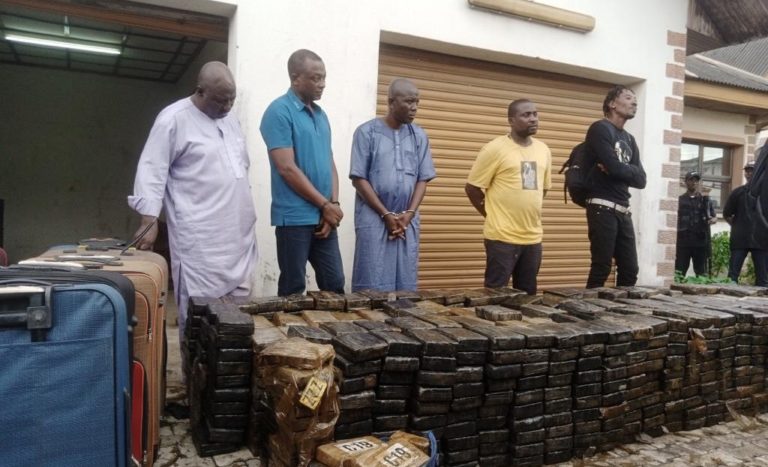
FOUR out of the five drug kingpins arrested in connection with the seizure of 2,139.55 kilograms of cocaine at an Ikorodu residential estate in 2022 have been convicted by a Federal High Court in Lagos.
The court, presided over by Yellim Bogoro, sentenced the accused to various jail terms totalling 28 years with hard labour.
The convicts: Soji Jubril Oke, 71; Wasiu Akinade, 55; Emmanuel Arinze Chukwu, 67; and Kelvin Christopher Smith, 44, were charged in October and December 2022 with six counts in charge number FHC/L/607C/2022.
The trial of the fifth suspect, Oguntolure Sunday, arraigned along with them is still ongoing.
The charges border on conspiracy to form and operate a drug trafficking organisation (DTO); management and financing of a DTO; and importation and possession of 2,139.55 kilograms of cocaine, among others.
According to the NDLEA spokesperson, Femi Babafemi, in a statement on Thursday, December 26, the trial judge, after over two years of prosecution, handed one of the accused, Christopher Smith, a Jamaican, four years imprisonment with hard labour.
Chukwu was sentenced to 16 years, Oke to five years with hard labour, and Akinade to three years in jail with hard labour.
The judge, however, gave the convicts varying options of fine with the exception of one of them who will serve his full jail term without an option of fine.
They were also to forfeit a grey colour Toyota Tacoma SUV marked AAA-734HT registered in the name of Emmanuel Chukwu; $50,000 belonging to Chukwu; N55.9 million also belonging to Chukwu; N9. 3 million belonging to Akinade and another N3 million also belonging to Akinade.
The Agency also in another suit marked FHC/L/MISC/672/2024 and filed before Bogoro on December 9, 2024, after an initial interim forfeiture order, secured the final forfeiture of two houses linked to members of the drug cartel.
The court also ordered the final forfeiture and confiscation of some property belonging to the accused to the Federal Government.
The property includes houses in Sholebo Estate, Ikorodu and Victoria Garden City (VGC) Estate, both in Lagos state.
The ICIR reported that operatives of the NDLEA had on Sunday, September 18, 2022, raided a house located at 6 Olukuola Crescent, Solebo Estate, Ikorodu, Lagos where over 2.1 tons of cocaine were seized.
The agency said it was the largest singular cocaine seizure in the history of Nigeria’s anti-narcotic operations.
The drug kingpins, four of whom were jailed as indicated in this report, were picked from hotels and their hideouts in different parts of Lagos between the night of Sunday and Monday, September 19, 2022.
THE International Center for Journalists (ICFJ), with support from YouTube, is accepting nominations for the inaugural News Creator Award for Excellence in Independent Video Journalism.
This award celebrates news innovators who are transforming how essential stories are shared.
Content should focus primarily on public interest news and adhere to journalistic standards of excellence.
Solo creators and individuals working for small newsrooms of 20 people or fewer are welcome to apply.
Independent video journalists and news creators around the world are eligible for an award.
Eight winners will be recognised at the 2025 International Journalism Festival in Perugia, Italy.
The deadline for the submission of application is January 15, 2025.


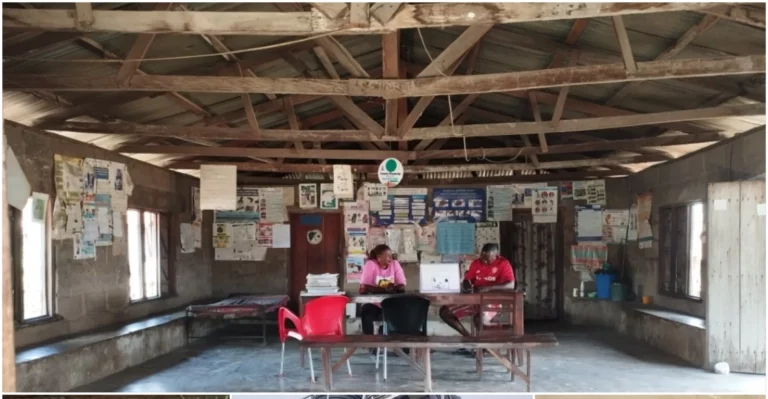


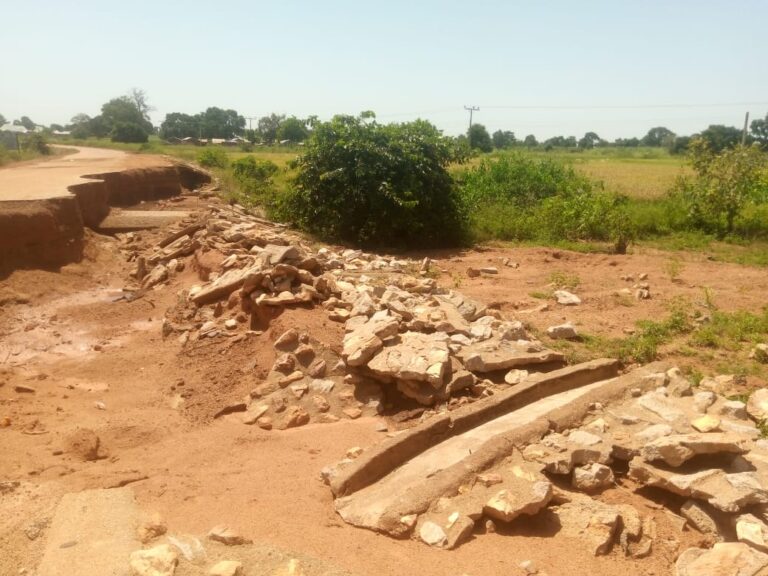


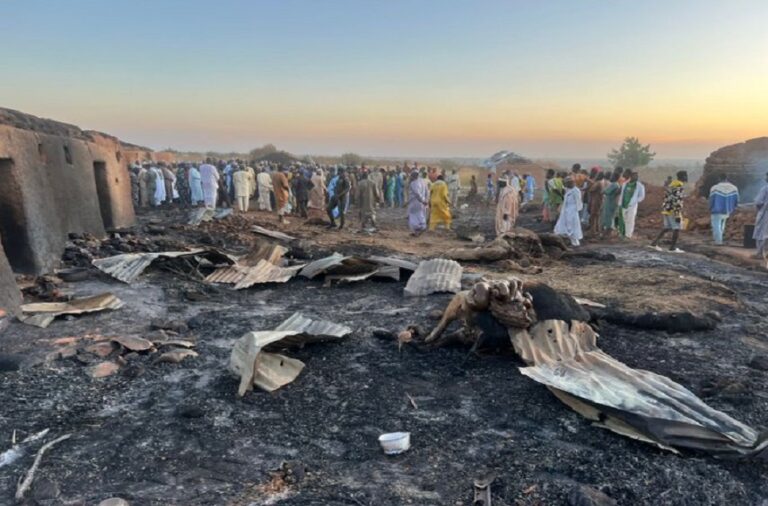

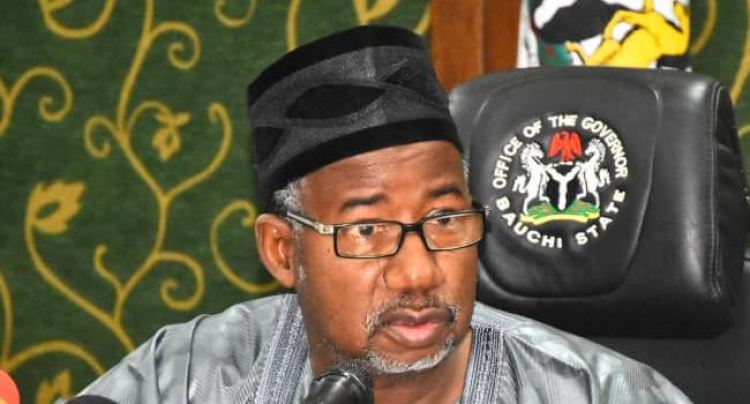


![Disappearing voices [part 2]: Untold stories of young Nigerians arrested during crackdown on hunger protesters](https://www.icirnigeria.org/wp-content/uploads/2024/12/5A73D068-6D44-4A44-A5C8-78A3B8AB6585-768x568.jpeg "Disappearing voices [part 2]: Untold stories of young Nigerians arrested during crackdown on hunger protesters")