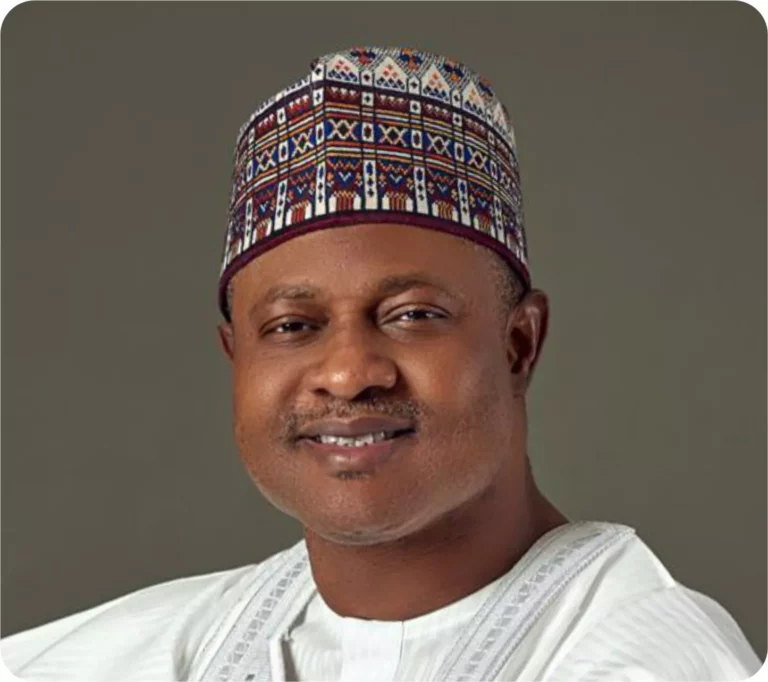
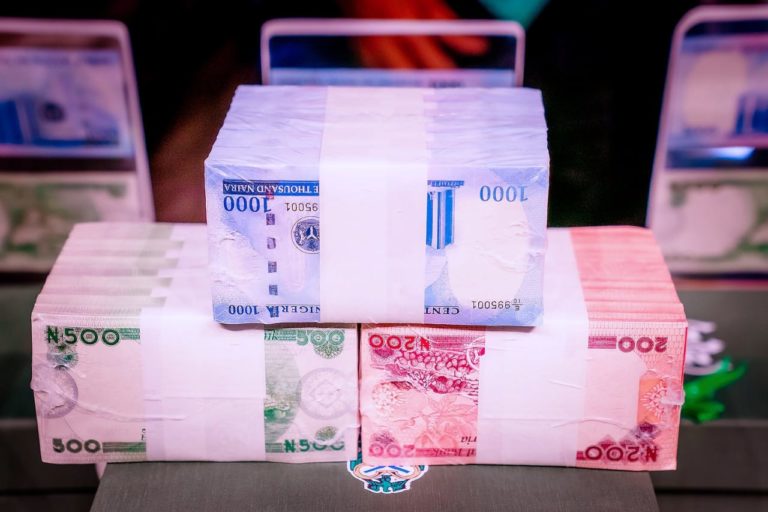
EBONYI State Governor Francis Nwifuru will gift each civil servant in the state N150,000 for this year’s Christmas celebration.
The plan was announced by the governor’s chief press secretary, Monday Uzor, in a Facebook post on Friday, December 13.
Uzor disclosed on Friday that the state civil servants would receive the bonus on or before noon on Tuesday, December 17, 2024.
“Every Worker in Ebonyi State service will receive ₦150,000 as a Christmas bonus before 1 pm on Tuesday,” part of the post read.
He said the governor took the decision as part of measures to cushion the effects of hardship and make the workers have memorable Christmas and New Year festivities.
The gift came after the governor approved the payment of N75,000 minimum wage to civil servants in the state in October.
Nwifuru, through his spokesperson, announced the commencement of the new minimum wage implementation on October 27.
Uzor quoted the governor as saying “The least paid civil servant on grade level 2 will enjoy a full minimum wage of N75,000 while from grade level 3 and above will get incremental of N40,000 across board.”
The governor noted that the decision was in appreciation of workers’ commitment to duty and their understanding.
” Our workers have shown a lot of commitment and respect to us as a government,” Uwifuru stated.
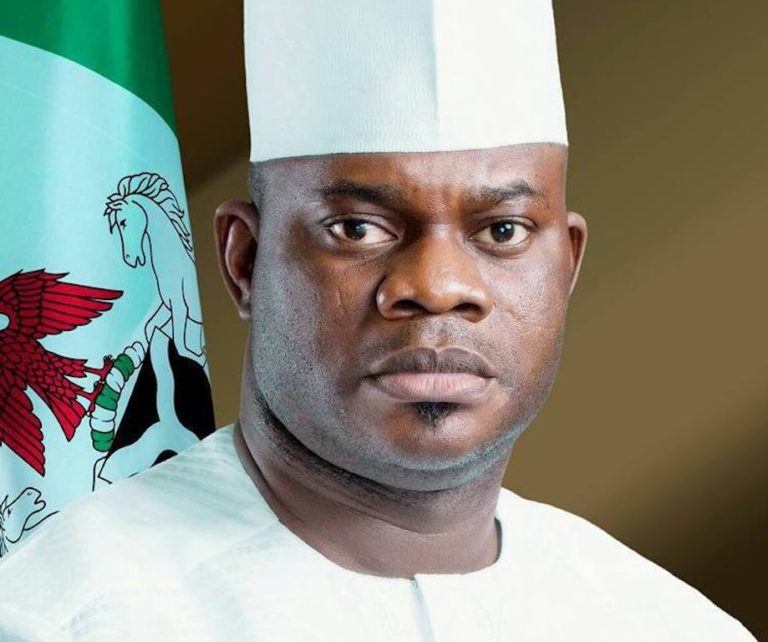
THE Federal High Court in Abuja has granted ₦500 million bail to the immediate past Governor of Kogi State, Yahaya Bello.
The judge, Emeka Nwite, who presided over the court session on Friday, December 13 ordered that Bello must provide two sureties in like sum.
He ruled that to secure his bail, Bello’s two sureties must provide proof of financial capability and own properties in Abuja. He added that the court would verify the properties’ title documents.
In addition, Bello must also surrender his international passport and deposit two recent passport photos, and his sureties are required to do the same.
The judge asked that Bello be held at the Kuje Correctional Center until he meets these conditions.
The governor had pleaded not guilty to the ₦80 billion fraud allegations preferred against him by the Economic and Financial Crimes Commission (EFCC) which charged him with 19 counts of alleged money laundering.
At the resumed hearing on Friday, December 13, EFCC’s counsel, Kemi Pinheiro, informed the court that he wished to withdraw an earlier application to expedite the arraignment.
He stated that the application was no longer relevant. Defence counsel, Joseph Daudu, did not object, and the judge granted the request and dismissed the application.
Recall that in a separate case, the Federal Capital Territory (FCT) High Court, on Tuesday, December 10, remanded Bello, in Kuje Correctional Centre, pending hearing of his bail application.
The judge, Maryann Anenih, adjourned the hearing in a N110 billion money laundering case brought against Bello by the (EFCC) to January 29, 30 and February 25 and 27, 2025, for hearing.
The judge had earlier refused to grant a bail application filed by Bello, saying it was filed prematurely.
Anenih, while delivering the ruling, said having been filed when the 1st defendant, Bello, was neither in custody nor before the court, the application was incompetent.
The former governor is standing trial, along with two others over an alleged N110 billion money laundering charge brought against them by the EFCC.
Citing the Administration of Criminal Justice Act (ACJA), the judge explained that bail applications could be made when a defendant is arrested, detained, arraigned, or brought before the court.
The judge granted bail to the 2nd defendant, Umar Oricha, in the sum of N300 million with two sureties who must own property in the Maitama District of Abuja.
Oricha is not allowed to travel without the court’s permission and will remain in the Kuje Correctional Centre until he meets the bail conditions.
The 3rd defendant, Abdulsalami Hudu, also received N300 million bail with the same conditions. The judge specified that each surety could only bond for one defendant, and the defendants must surrender their international passports to the court Registrar.
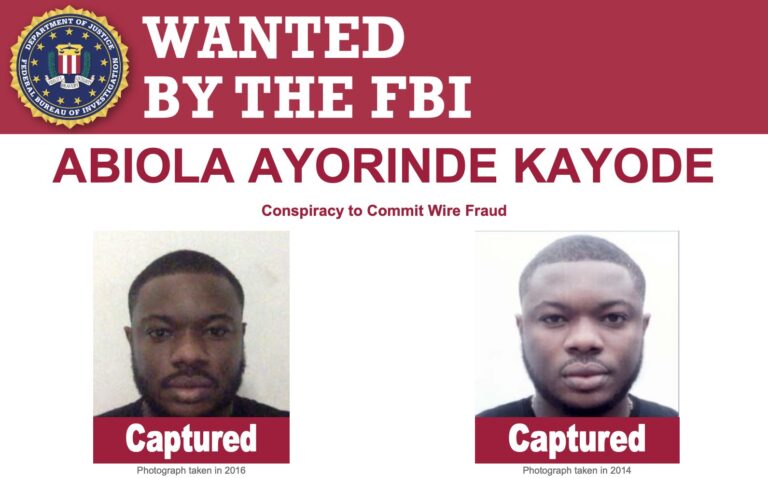
A NIGERIAN national, Abiola Kayode, 37, has been extradited to the United States to face charges in connection with a business email compromise (BEC) scheme that allegedly defrauded businesses in Nebraska and other US states of over $6 million.
The fraud was said to have occurred between January 2015 and September 2016, with millions siphoned from businesses across multiple states.
Kayode was arrested in Ghana in April 2023 following a U.S. extradition request, with Ghanaian authorities, including the Office of the Attorney General and Ministry of Justice, granting the request, which eventually led to his transfer to the United States.
According to a statement by the United States Attorney’s Office in the District of Nebraska, on Thursday, December 12, the Federal Bureau of Investigation (FBI) special agents accompanied Kayode to Nebraska, where he made an initial court appearance on December 11, 2024, before a magistrate judge, Michael Nelson.
The judge consequently ordered the accused to remain in custody pending trial.
According to the indictment filed in August 2019, Kayode and his co-conspirators carried out the scheme by spoofing email accounts to impersonate high-ranking executives of targeted companies.
Using these fraudulent accounts, they allegedly instructed employees to wire large sums of money to bank accounts controlled by the conspirators, with many of these accounts reportedly belonging to victims of romance scams, who were deceived into transferring the stolen funds further.
The statement noted that the FBI had been pursuing the case for years, with some of Kayode’s co-conspirators already convicted and sentenced.
“Some of Kayode’s co-conspirators have already been convicted and sentenced. Adewale Aniyeloye, one of the fraudsters sending the spoofed e-mails to the target business, was sentenced in February 2019 to 96 months’ imprisonment and ordered to pay $1,570,938.05 in restitution.
“Pelumi Fawehinimi, a bank account facilitator, was sentenced in March 2019 to 72 months imprisonment and ordered to pay $1,014,159.60 in restitution. Onome Ijomone, a romance scammer, was sentenced in January 2020 to 60 months’ imprisonment and ordered to pay $508,934.40 in restitution after his successful extradition from Poland,” the statement added.
It said one Alex Ogunshakin, a co-conspirator who provided bank accounts for the scheme, was also sentenced to 45 months’ imprisonment in October 2024 after his successful extradition from Nigeria.
The US government stressed that other co-conspirators remained at large.
Speaking about the extradition, FBI Omaha special agent in charge, Eugene Kowel, reiterated the agency’s determination to bring all perpetrators to justice.
“Today, Abiola Kayode is the second of those co-conspirators to be extradited to stand trial in Nebraska. Our message to the remaining four co-conspirators: we are coming for you.
“Dismantling cyber-criminal groups that victimise U.S. citizens is a priority for the FBI, DOJ, and our international law enforcement partners. The FBI, working together with our partners in Ghana, particularly the Office of the Attorney General and Ministry of Justice, the Ghana Police Service – INTERPOL, and the Ghana Immigration Service, will continue to pursue and bring to justice criminals who engage in business email compromise and other fraud schemes.”
Several Nigerians living abroad have been accused of fraud, while others have received jail sentences in recent years for various crimes.
On October 12, The ICIR reported that a Nigerian man in the United States, Oludayo Adeagbo, bagged seven-year jail term for his involvement in a business email breach plot involving millions of dollars.
The US Department of Justice in a statement noted that Adeagbo attempted to steal over $3 million from victim entities in Texas by participating in various cyber-enabled BEC schemes.
Also, in August 2024, The ICIRreported that four Nigerians were jailed for helping people live in the UK after being convicted of forging over 2,000 marriage certificates.
The convicts, identified as Abraham Alade Olarotimi Onifade, 41, Abayomi Aderinsoye Shodipo, 38, Nosimot Mojisola Gbadamosi, 31, and Adekunle Kabir, 54, were all sentenced at Woolwich Crown Court in London.
According to the UK Home Office, the four convicts were members of a criminal group involved in carrying out fraudulent EU Settlement Scheme applications for Nigerian nationals.
Between March 2019 and May 2023, they were caught with several criminal operations including providing fake Nigerian customary marriage certificates among other fraudulent documentation to help people illegally remain in the UK.
THE attorney-general of the federation (AGF) and minister of justice, Lateef Fagbemi, a senior advocate, has threatened to file a contempt of court suit against governors who refused to comply with the Supreme Court ruling on local government autonomy.
Fagbemi issued the threat on Thursday, December 12, at the 2024 annual conference of the National Association of Judiciary Correspondents in Abuja.
He said he was aware that some governors embarked on legislations which appeared to be antithetical to the judgment of the Supreme Court on the local government autonomy.
“My simple comment is that the states concerned are advised not to tread within the precincts of contempt of court.
“Some states have, by their various illegal actions, starved local government councils to the extent that most of them cannot exercise their constitutional powers or perform their statutory functions.
“This is one type of government inhumanity to another type of government,” he stated.
Fagbemi cited Section 1(2) of the Nigerian Constitution, emphasising that the country must be governed solely in accordance with its constitutional provisions.
The AGF explained that his request from the apex court to declare governors’ attempts to override constitutional provisions as unconstitutional was driven by a desire to uphold the rule of law.
Fagbemi stressed that granting local governments autonomy promised by the Constitution would lead to a more independent and accountable system.
He opined that this, in turn, would encourage greater public participation in politics and result in more effective governance at the grassroots level.
He added that with autonomy, local government councils would fulfil their constitutional duties without interference from state governors and citizens would also be empowered to take an active role in shaping the development of their communities.
The minister also warned local government chairmen across Nigeria against mismanaging public funds.
He emphasised that the autonomy granted to the local governments by the Supreme Court aimed to enhance grassroots development, not to enrich individuals. Fagbemi stressed that any chairman found guilty of looting public funds would face the law.
Chief Justice of Nigeria (CJN), Kudirat Kekere-Ekun, highlighted the vital roles of the media and judiciary in societal development during the event.
She said trustworthy journalism was essential for building public confidence in the judiciary.
The ICIR reported that the Supreme Court made a landmark ruling on July 11, 2024, granting financial autonomy to the country’s 774 local government areas.
The court also deemed it unconstitutional for governors to withhold local government funds.
The Supreme Court also barred governors from dissolving elected local government councils and replacing them with caretaker committees.
However, it appears that not all state governors are complying with the Supreme Court’s judgment.
For instance, Oyo State Governor Seyi Makinde has expressed concerns, calling for a homegrown solution to prevent the people from suffering.
Some states have even gone as far as creating legislation that could circumvent the Supreme Court’s ruling.
The ICIR reported that the Anambra State House of Assembly passed the Local Government Administration Bill 2024 on October 8, 2024, despite criticism from civil society groups and opposition parties.
The bill, which was later signed into law by Governor Chukwuma Soludo on October 15, 2024, established a “State Joint Local Government Account” to manage federal allocations to local government areas.
During the signing of the bill into law, Soludo expressed concerns that granting full autonomy to local governments could lead to chaos and undermine sustainable development.
More than five months after the Supreme Court’s judgment, the Federal Government still hasn’t made direct payments to local governments, as ordered.
According to PUNCH, Minister of Finance Wale Edun explained that the government hadn’t started making these payments due to certain “practical impediments”.
THE year 2024 has been a whirlwind of events and conversations that captured the attention of Nigerians on social media.
From political milestones and economic challenges to moments of cultural pride and heated controversies, the digital space buzzed with activity, reflecting the pulse of the nation.
This report provides an overview of the most viral happenings in Nigeria for 2024, exploring how these events shaped public discourse and societal priorities.
Kuriga mass kidnapping
In Kuriga, Kaduna State, over 100 students were kidnapped earlier this year. The incident sparked widespread concerns and outrage nationwide, with many calling for improved security measures to protect schools and students.
The incident was a reminder of the persistent insecurity challenges faced in Nigeria, particularly in the northern region. It also raised concerns about the impact of such incidents on the education sector and the well-being of students.
The ICIR reports that the residents said there was no means of escape. The local security and some of the residents, despite quickly arming themselves, could only watch the bandits go away with their children due to the fear of shooting down their wards.
AFCON
In February, Cote d’Ivoire, the host country of the 2023 African Cup of Nations (AFCON) defeated Nigeria’s Super Eagles, smiling home with the $7M prize money and their third title after winning in 1992 and 2015.
Nigeria on the other hand extended their eleven-year trophy drought. The ICIR reports that the host nation’s road to the finals was a testament of grass to grace. They began the AFCON tournament with a disastrous start, leading to the hurried appointment of a new coach, Emerse Fae, after they heaved a sigh of relief emerging to the next round as one of the four best losers on the group stage.
Borno flood
A devastating flood hit Maiduguri submerging part of the city, and several areas and displacing families and animals from a museum.
Several persons said the flood was caused by the breakdown of the Alau Dam which serves as the city’s water reservoir. The ICIRreported that the United Nations raised alarm over the devastating flooding impact in the state, which it said had exacerbated an already critical food and nutrition crisis in the state’s internally displaced person camps.
Also, another report by The ICIRexplained that the Nigeria Hydrological Services Agency (NIHSA) report on the 2024 annual flood outlook revealed that 33 out of 36 states in Nigeria had been predicted to experience a high risk of devastating flood between July and September 2024.
The NIHSA said that at least 135 LGAs had been mapped out as vulnerable to flooding this year.
Some affected states included Adamawa, Akwa Ibom, Anambra, Bauchi, Bayelsa, Benue, Borno, Cross River, Delta, Ebonyi, Edo, Imo, Jigawa, Kaduna, Kano, Katsina, Kebbi, Kogi, Kwara, Lagos, Nasarawa, Niger, Ogun, Ondo, Osun, Oyo, Plateau, Rivers, Sokoto, Taraba and Yobe.
Davido’s wedding to Chioma and custody law suit
Social media went abuzz for more than a week after artiste, David Adeleke, popularly known as Davido, announced his wedding to his long-time lover, Chioma. They tied the knot at Habour Point Centre, Lagos. The event was graced by high-profile politicians and businessmen, as well as prominent figures from the entertainment industry. They included fellow musicians, actors, and other socialites. Some highlights of the wedding were the trending hashtag #CHIVIDO2024 on social media.
The ICIRreported that days before the artiste announced his wedding, he had filed a lawsuit against the mother of his first child, Sophia Momodu, seeking custody of their daughter, Imade.
Responding to the lawsuit, Momodu, denied the accusations made by the singer against her, claiming he abandoned their daughter.
EndBadGovernance protests
From August 1 to 10, 2024, Nigeria witnessed a nationwide protest that sparked outrage and garnered acceptance from citizens across the country. The protests, which began in Lagos and the Federal Capital Territory (FCT), Abuja, quickly spread to other states. At the core of the demonstrations were grievances over poor governance and economic hardship, which many attributed to President Bola Tinubu’s recent reforms.
Protesters carried placards bearing messages such as: “End bad governance in Nigeria” and “Make lawmakers’ jobs part-time,” while chanting solidarity songs that resonated with millions of Nigerians frustrated by the nation’s challenges.
The ICIR reported that such public demonstrations are not new to Nigeria, as citizens have historically used protests to express their dissatisfaction with the government.
Findings by The ICIRrevealed that between 1929 and 2024, at least seven major mass protests have taken place in the country, reflecting a longstanding tradition of civic activism.
US election
On the heels of Donald Trump’s success in the just concluded US presidential election, global geopolitics and economic alignments are currently ongoing with Nigeria not left out.
The ICIR looks further into some economic and geo-political implications of Trump’s presidency to Nigeria.
Chidimma and Miss Universe drama
Chidinma Adetshina a 23-year-old Nigerian-South African beauty queen, withdrew from the Miss South Africa ( Miss SA) pageant following a series of xenophobic attacks after making it to the top 16 at the pageant.
Following her withdrawal from the Miss South Africa (Miss SA) pageant competition, the Miss Universe Nigeria (MUN) organisation invited Chidinma to participate in the 2024 Miss Universe Nigeria pageant competition which she accepted gladly and won.
“I have decided to participate in the Miss Universe Nigeria 2024 beauty pageant. I am looking forward to participating in Africa’s most prestigious beauty pageant – Miss Universe Nigeria,” she said in a video post.
With Chidinma winning the Miss Universe Nigeria, she automatically represented the country at the 73rd Miss Universe competition held in Mexico.
On Sunday, November 17, 2024, Adetshina finished as the first runner-up at the 73rd Miss Universe competition held in Mexico.
The grand finale of the 2024 edition of the beauty pageant was held in Mexico City in the early hours of Sunday, November 17.
The ICIRreported that despite participating in the pageant for 37 years, Nigeria had neither won the title nor emerged as a runner-up.
However, the country has succeeded in some categories, including a top 10 finish in 2001, winner of the Miss Congeniality award in 2014, top 20 finish in 2019, and best national costume in 2021.
What viral moments did we miss? Let us know in the comment section.
THE National Economic Council (NEC) has postponed discussions on establishing state police to its next meeting in January 2025 following its endorsement by 36 state governors.
Kaduna State Governor Uba Sani, who stated this on Thursday, December 12, said the decision followed the submission of reports by most states to the National Economic Council (NEC).
Sani revealed this while briefing the State House correspondents after the 147th NEC meeting chaired by Vice-President Kashim Shettima in Abuja.
According to him, the delay was necessitated by the need for a comprehensive report from the NEC secretariat and further stakeholder engagement.
“The council decided to step down the discussion until the next council meeting because we need to come up with a report from the secretariat.
“There will be further stakeholder engagement after the panel and deliberation by the members of the NEC,” Sani said.
Sani further emphasised that the move to create state police stemmed from the pressing security challenges faced across the country.
He stressed the alarming prevalence of ungoverned spaces and the inadequate number of security personnel to address the needs of all states.
According to him, existing security agencies like the police and the military lack the manpower to maintain comprehensive coverage nationwide.
“That is the reason why most of us agreed that the establishment of state police in Nigeria is the way forward to address the problem of insecurity in the country.
“So, today one of the topics of discussion at the NEC meeting is the update on the creation of the state Police.
“And I can say here that from what is available, virtually most of the states are in agreement with the establishment of state police in Nigeria,” the governor said.
The ICIR reports that the push for state police has gained more traction among governors in recent times, with most citing persistent security challenges across the country and the inadequacy of existing security structures.
The NEC had on November 21, during its 146 meeting gave Kwara, Adamawa, Kebbi and the Federal Capital Territory (FCT) a week ultimatum to submit a report on their positions.
The Bayelsa State Governor Douye Diri, who disclosed the NEC ultimatum to newsmen after the meeting, said 33 states had submitted their reports.
“Council was updated with the submission of the establishment of state police, and it was reported that 33 states have submitted their positions, while three states are yet to do so, and these three states are Adamawa, Kebbi and incidentally, Kwara, which is the chairman of our forum, and the FCT, are yet to submit their positions.
“The council mandated these remaining states and FCT to make their submissions within the next one week, and resolved to present a consolidated states’ position on the state police to the National Economic Council at our next meeting,” Diri said.
On Thursday, February 15, the Federal Government and 36 state governors agreed to create state police.
This was part of the outcome of a meeting between President Bola Tinubu and state governors at the Presidential Villa.
Minister of Information and National Orientation, Mohammed Idris, disclosed this to reporters after the meeting.
He said the process was still in its early stages and would take shape after further discussions.
The ICIR reported that a bill for creating state police has scaled a second reading at the House of Representatives.
The bill, sponsored by the Deputy Speaker of the House, Benjamin Kalu and 14 others, seeks to alter the relevant sections of the 1999 Constitution to pave the way for states to establish their police forces across the country.
THE Central Bank of Nigeria (CBN) has been largely silent over the cash scarcity that has hit businesses in this 2024 yuletide season, across the country.
This has prompted the Point-of-Sales (PoS) transaction operators to adjust their charges to almost 100 per cent higher.
Last year, Nigerians suffered the same fate as cash scarcity and high cost as commercial banks continue to ration cash dispensing to consumers.
Most automated teller machines (ATM) dispensing spots in Abuja Federal Capital Territory (FCT) are currently not dispensing, forcing most businesses to rely on PoS merchants for their transactions.
Already, transaction charges are going up, as most PoS operators devise means of ‘buying’ money at higher costs (charges) to transact with customers.
“It’s difficult for us to get cash now. Banks ration it to us. Even those of us licensed PoS operators don’t get more than N10,000 a day,” a PoS operator in Kubwa, Nneka Oparaku told The ICIR.
Following the rising cost of transactions, retails stores and filling stations outlets are arbitrarily adding charges to their customers .
Economic watchers say, this development and additional charges for transactions could worsen inflation which is already at 33.88 per cent, according to October figures.
“This is sad and I expect the CBN to take appropriate actions on this. Why should people be spending naira to buy naira with the current rate of inflation,” a development economics, Celestine Okeke told The ICIR.
Checks in some parts of the country showed difficulties encountered by many Nigerians to access cash from the ATM.
Unfortunately, PoS operators are currently taking advantage of the situation to demand exorbitant transaction charges which some economic watchers say is pressuring up inflation on citizens.
A mechanic based in Kubwa – a satellite town at the Federal Capital Territory (FCT), Emeka Ojiaku, described the situation as terrible and tortuous and urged banks to make cash available.
“This is really difficult for us in small businesses. We can’t even save in the bank again. We’ll be feeding from hand to louth,” he said.
At Providus Bank at Nitel Junction in Central Business District, some customers on the queue told the ICIR that with the current situation, it’s better to not to be keeping money in the bank’s anymore.
Bank Customers queue for cash at at Providus Bank in Central Business District,Abuja.
“Why should I have to keep my money in the bank and suffer to get it back. It’s a very serious problem. I have learnt my bitter lessons and not all my money will be in the bank again,” a bank customer, Gloria Ajala, told The ICIR.
What PoS officials are saying on the situation
The National vice president of the Association of Mobile Money and Bank Agents of Nigeria (AMMBAN), Obiora Oti, said the CBN must not make cash policies in isolation with the PoS licensed operators.
He said, “CBN must give quota to the Mobile money operators in their cash disbursement policy. They should out us in the equations. We are at the mercy people and the government in most cases who blame us for every misnomer in cash business,” he said.
He noted that the association has met with the Chairman House Committee on Banks and Auxiliary institutions, Eze Nwachukwu, to find a last solution to the problem.
Commenting in a similar vein, an official of licensed PoS operator in Edo State, Juliet Madike, said additional electronic levy charge of N50 for transaction above N10,000 constitutes what triggered the higher transaction costs.
According to Juliet, operational costs for PoS business and arbitrary charges by local governments and municipal authorities also affects higher charges on customers.
“There’re so many costs attached to an average PoS operators. The recent one is the electronic levy, taxes and business space. The charges are not entirely our fault,” she said.
The ICIR reports that buying naira, suffocates business with most businesses struggling with higher bank interest rates and inflation.
The ICIR sent messages to the head corporate of communications at the CBN, Sidi Hakama, but got no response.
In Lagos, Ogun state banks limit ATM dispensers to N5,000
Many of the Nigerian banks visited in Ogun State have configured their automated teller machines (ATMs) to dispense a maximum of N5,000 when using other ATM cards on their machine.
The reporter visited Guaranty Trust Bank (GTB) at the Redemption City in Mowe and observed that the bank’s ATM could only dispense N5,000 to customers using the ATM card from other banks.
A PoS merchant at his business outlet in Kubwa-FCT
This withdrawal can only be done once as further attempts to withdraw with other banks’ ATMs were unsuccessful meaning the bank could be restricted to withdraw more than once using other banks’ ATM cards.
With the GTB cards, customers could withdraw N10,000 at once and also have access to subsequent withdrawals but the limit the machine can give was N10,000.
The reporter also visited other banks like FCMB, Ecobank Zenith Bank and Access Bank.
He observed that at Access Bank customers were also limited to N5,000 withdrawals using other banks’ ATM cards but they could have access to withdraw more than once.
The limit of N5,000 withdrawal placed on banks’ ATMs indicates that the banks could be faced with scarcity of cash which has become a norm during the Christmas season.
PoS operators raise charges
PoS operators have started to increase the amount they charge their services to customers who either want to make a withdrawal, deposit money or transfer money on behalf of a customer to a recipient.
A PoS operation, who gave her name as Esther told the reporter that she has started charging N150 for a N5,000 cash withdrawal but that others are charging N200 with her location at Opic Road, Loburo, Mowe.
She said she has been sourcing the bulk of the cash she used to transact business daily from market traders and filling station attendants.
“We pay to get the cash from market women and people that are selling something. We also go to filling stations to look for cash to use for our business. If customers come and you say you don’t have cash they will think that you are not serious.
“So, we have to go to them and buy the money from them. If they give us N10,000, we pay them N100 and if it is N20,000 they collect N200. That is why I am charging 150 to make back my money,” Esther said.
Esther said she would have been collecting N100 for every N5,000 withdrawal but that the Opay account she used has started to remove some fees for her account.
The ICIR can report that the fintech companies – Opay, PalmPay, MoniePoint and other mobile money operating companies – have begun a deduction of N50 Electronic Money Transfer Levy (EMTL) from customer inflows of N10,000 and above since September 9, 2024.
“If Opay removes N50 from my account, I have to add it to the charge that the customer will pay me,” Esther added.
Another PoS operator, Idayat, corroborated that PoS operators are sourcing cash from traders and the filling stations.
But she claimed she had not started charging more than N100 for an N5,000 withdrawal from customers.
According to her, she has a rapport with some bank staff who help her to get cash from the bank but refused to name any bank.
“The ATM is only giving us N10,000. I go to the bank and people help me to get more cash but I pay them something.”
According to Idayat, she could get as high as N200,000 cash from the bank and tip the staff N1,000 or more.
The apex bank had recently said it would sanction banks failing to dispense cash through their ATMs, as part of efforts to ensure sufficient cash in circulation.
The CBN Governor, Yemi Cardoso, made this declaration at the end of the 297th Monetary Policy Committee (MPC) meeting in Abuja in November, directing banks to ensure there is always enough cash available for withdrawals.
“We have devised a monitoring system, a spot-checking system, whereby we will go to the banks and just ensure that these things are done in the way and manner in which they are meant to be done.
“And if they are not, again, there will be sanctions but I believe that at the stage we are in now, everybody realises that stakeholders play their part in ensuring that cash gets to the desired places they are intended to be,” Cardoso warned.
THE Kano State Governor Abba Kabir Yusuf has announced a major reshuffling of his cabinet.
The governor, on Thursday, December 12, sacked the Secretary to the State Government (SSG), Abdullahi Baffa Bichi, and scrapped the Office of the Chief of Staff (COS), currently occupied by Shehu Wada Sagagi.
In a statement by the governor’s spokesperson, Sanusi Bature Dawakin-Tofa, the governor said the first major rejig of his cabinet took immediate effect, adding that the decision was to effect a pragmatic political realignment of his administration.
According to the statement, Yusuf maintained that the decision was to ensure optimal performance by his administration and make the state’s people enjoy dividends of democracy.
Five commissioners were sacked by the governor in the cabinet shake-up. They include commissioner for finance, Ibrahim Jibril Fagge; culture and tourism; Ladidi Ibrahim Garko; information and internal affairs; Baba Halilu Dantiye; special duties; Shehu Aliyu Yammedi; and rural community development; Abbas Sani Abbas.
According to Dawakin Tofa, the governor also reassigned some commissioners “to enhance administrative performance and political retooling.”
They include the deputy governor, Aminu Abdulssalam, who has been moved from the ministry of local government and chieftaincy affairs to higher education; Mohammad Tajo Usman, who was moved from science and technology to local government and chieftaincy affairs; and Yusuf Ibrahim Kofar Mata, who was moved from higher education to science, technology, and innovation.
The list includes Amina Abdullahi, from humanitarian and poverty alleviation to women, children, and disabled, and Nasiru Sule Garo, from the ministry of environment and climate change to special duties.
Similarly, the commissioner of project monitoring and evaluation, Ibrahim Namadi, has been moved to transport, while Umar Haruna Doguwa of the ministry of education was moved to the water resources ministry.
Others are Ali Haruna Makoda from water resources to education; Aisha Lawal Saji from the ministry of women, children, and disabled to tourism and culture; and Muhammad Diggol from transport to the ministry of project monitoring and evaluation.
However, the statement added that SSG, Bichi, was dropped on health grounds.
Recall that in 2023, Yusuf sackedthe commissioner for lands, Adamu Aliyu, who threatened judges handling the election petition tribunal in the state.
In a statement on Friday, September 15, the dismissed commissioner for information, Dantiye, described Aliyu’s comment as unguarded.
Aliyu had threatened the state’s tribunal judges in response to allegations that the judges had been bought off, asking them to choose between money or their lives.
In addition to the commissioner, the governor dismissed Aliyu Yusuf, his special adviser on youth and sports.
THE Independent National Electoral Commission (INEC) has suggested using computer-generated voting slips as an alternative to permanent voter cards (PVCs) in future elections.
The chairman of INEC, Mahmood Yakubu, stated this at the quarterly consultative meeting with residents electoral commissioners (RECs) in Abuja on Thursday, December 12.
He stated that PVCs should no longer be the sole requirement for voting, especially with the introduction of the Bimodal Voter Accreditation System (BVAS).
He opined that voters who already had PVCs could still use them, but going forward, computer-generated slips would be sufficient for accreditation. This change would save costs and prevent issues with PVC collection and voter disenfranchisement, he argued.
“The Commission also believes that with the introduction of the bimodal voter accreditation system (BVAS), the use of the permanent voters’ cards (PVC) as the sole means of identification for voter accreditation on election day should be reviewed.
“This will not only save costs; it will also eliminate the issues around the collection of PVCs and the diabolical practice of buying up the cards from voters in order to disenfranchise them,” he stated.
According to the INEC boss, among other key highlights of the Commission’s recommendations is the imperative of legal clarity in result management with regard to manual transfer versus the electronic transmission of results.
Yakubu announced that the commission had extensively consulted with its officials and major stakeholders after releasing its comprehensive 524-page report on the 2023 general election.
He added that with the completion of several off-cycle elections, he believed it was the ideal time to implement the recommendations from the election review.
He said out of the 142 recommendations, 86 required administrative action by the Commission.
On the legal review, he said eight recommendations required legislative actions by the National Assembly and promised that the Commission would make a presentation to the joint committee of the Senate and House of Representatives on electoral matters as they continued to deliberate on electoral reform.
He said the review report also contained recommendations on early/special voting for the millions of Nigerians who could not vote on account of the roles they play during elections, such as INEC officials, security personnel, ad hoc staff, observers, and journalists who are deployed outside the places where they registered to vote.
Additionally, he stated that recommendations had been made to include diaspora voting, unbundle the Commission by creating an electoral offences tribunal, and establish a distinct body to manage political party registration and regulation.
The INEC chairman also noted that the commission planned to work with other organisations, including the National Identity Management Commission (NIMC) and the National Population Commission (NPC), to create procedures for the expeditious cleaning up of voter registration.
THE minister of the Federal Capital Territory (FCT), Nyesom Wike, has insisted on the continuous demolition of properties in the nation’s capital, stating that he will not be swayed by ‘blackmail’.
Speaking during the distribution of operational vehicles to security agencies at the Federal Capital Territory Administration (FCTA) Secretariat in Abuja on Thursday, December 12, Wike said he would not be deterred by blackmail or public outcry.
He described the actions taken by the Federal Capital Development Authority (FCDA) as necessary to reclaim land unlawfully occupied.
According to him, the structures being demolished by the FCDA are illegal buildings constructed on government land.
“Let me use this opportunity to tell Nigerians and residents of Abuja, we are not afraid of blackmailing,” Wike stated.
“In fact, you cannot be in this kind of position and say you cannot be blackmailed particularly as regards this Abuja. There are so many land grabbers. Some of us have come to put our feet down. Let heaven fall. It is even better that heaven comes down now so that we would not be fasting again to go to heaven.”
The minister added that the properties being demolished not only pose security risks but had been constructed on lands that rightfully belonged to the government.
“We would stop anybody who thinks they will take government land for whatever reason without formal approval. We would not look at your face. If you like be a civil rights activist or a television personality…
“What is wrong is wrong; no amount of blackmail can stop us. People take government property without approval or documentation.”
The ICIR reports that Wike’s latest reaction was despite protests and widespread backlash on demolitions in the FCT, with many Nigerians dubbing the former Rivers governor as a “land grabber.”
Recently, residents of Life Camp, a community in the city, protested against attempts to demolish Paulosa Homes, which they claimed was being carried out under Wike’s directive.
The event was followed by a video of Martins Vincent Otse, popularly known as VeryDarkMan, during his visit to the community, accusing the FCT Minister of wrongfully revoking people’s ownership rights.
Meanwhile, the minister’s comments came as the Senate has ordered a probe into the demolitions.
A motion sponsored by the senator representing the FCT, Ireti.Kingibe, had called for an immediate halt to the demolitions and the establishment of an investigative committee.
The committee, according to the Senate, will look into the impact of the demolitions, which have left many residents displaced, and will also invite Wike to explain the rationale behind the exercises.
In his remarks, Senate President Godswill Akpabio clarified that while some demolitions were court-ordered and could not be halted, the Senate was concerned about those that were not.
Akpabio further stressed that Wike would be required to appear before the committee to explain the situation.