Home Blog Page 407

Nigerian Navy gets first female aircraft pilot

THE Nigerian Navy has successfully trained and certified its first female pilot, Changfe Maigari, a navy lieutenant.

Maigari was decorated at the Nigerian Navy Sunset and Awards Night at the Naval Headquarters Training Command at Ebubu-Eleme, Rivers State, on Friday, December 14.

Speaking during the event, the Chief of Naval Staff, Emmanuel Ogala, a vice admiral, said the event is to celebrate the milestone achieved by the Navy and an opportunity for the Navy to reflect on its accomplishments, foster camaraderie, and recognise the hard work of its officers and ratings, particularly those who have distinguished themselves.

Ogala said throughout 2024, the Navy undertook various operations to combat oil theft and strengthen security in Nigeria’s territorial waters and the Gulf of Guinea.

He added that the Navy achieved fleet recapitalization, infrastructure development, and enhanced personnel welfare, all in line with its strategic plan for 2021-2030.

He recalled that in January 2024, the Navy launched Operation ‘Delta Sanity’ and incorporated aerial surveillance into their operations using helicopters and unmanned aerial vehicles to improve Nigeria’s maritime domain awareness in order to combat the issue of oil theft and other maritime crimes.

“The operation recorded tremendous successes, which led to the arrest of numerous vessels and suspects involved in oil theft and other crimes and increased Nigeria’s daily crude oil production, as many oil companies have reported about 100 per cent terminal factor in the past few months,” the naval boss stated.

During the occasion, Maigari, the first female pilot, thanked the Nigerian Navy for providing her with the opportunity to achieve her career goals.

Maigari hails from Langtang North Local Government Area of Plateau but was born in Kaduna.

She had am impressive career which kicked off in 2016 when she graduated from the Nigerian Defence Academy (NDA) and was commissioned as a sub-lieutenant.

After that, she served on the Nigerian Navy Ship Unity, gaining valuable experience that would eventually lead her to make history as Nigeria’s first female naval pilot.

Meanwhile, Rivers State Governor Siminalayi Fubara congratulated the Navy on a successful year and expressed his administration’s readiness to collaborate with the Navy, particularly in combating oil theft.

He noted that the Navy is usually tasked with the challenging responsibility of protecting oil lines, 90 per cent of which are located in the Niger Delta region’s swamps.

Fubara praised the Navy’s efforts, stating that they have done well for the nation. He also reiterated his government’s commitment to supporting the Navy in its operations.

FG, states, LGs share N1.7trn revenue in November

THE Federation Accounts Allocation Committee (FAAC) has shared N1.727 trillion among the Federal Government, states, and local government areas for November.

This is contained in a communiqué issued after the FAAC meeting held on Thursday, December 12 in Abuja.

According to the communiqué, the N1.727 trillion total distributable revenue comprised statutory revenue of N455.354 billion.

It also comprised distributable Value Added Tax (VAT) revenue of N585.700 billion, Electronic Money Transfer Levy (EMTL) revenue of N15.046 billion and Exchange Difference revenue of N671.392 billion.

The communiqué indicated that total gross revenue of N3.143 trillion was available in the month of November.

“Total deduction for cost of collection was N103.307 billion, while total transfers, interventions, and refunds was N1.312 trillion,” it said.

It said that gross statutory revenue of N1.827 trillion was received for the month of November.

“This is higher than the sum of N1.336 trillion received in the month of October 2024 by N490.339 billion.

“Gross revenue of N628.972 billion was available from the VAT in November. This was lower than the N668.291 billion available in the month of October by N39.318 billion ” it said.

The communiqué said that from the N1.727 trillion total distributable revenue, the Federal Government received the total sum of N581.856 billion, and the state governments received N549.792 billion.

“The LGCs received the sum of N402.553 billion, and a total sum of N193.291 billion (13 per cent of mineral revenue) was shared to the benefiting states as derivation revenue,” it said.

On the N455.354 billion statutory revenue, the communiqué said that the Federal Government received N175.690 billion, and the state governments received N89.113 billion.

It said that the LGCs received N68.702 billion, and the sum of N121.849 billion (13 per cent of mineral revenue) was shared to the benefiting States as derivation revenue.

“From the N585.700 billion VAT revenue, the Federal Government received N87.855 billion, the state governments received N292.850 billion, and the LGCs received N204.995 billion.

“A total sum of N2.257 billion was received by the Federal Government from the N15.046 billion EMTL. The state governments received N7.523 billion, and the LGCs received N5.266 billion,” it said.

It said that in November, Oil and Gas Royalty and CET Levies recorded significant increases, while Excise Duty, VAT, Import Duty, Petroleum Profit Tax, Companies Income Tax, and EMTL decreased considerably.


READ ALSO:


Since the total removal of fuel subsidy by the Bola-Tinubu led administration, federation allocation has improved hugely with some economic watchers calling on citizens to advocate for priority spendings in health and public infrastructure by public officers.

“Nigerians must begin to ask questions over spendings by public office holders, they need to question every spending. This is not the time for more flambuoyant spendings by the politicians, it’s time for work since Nigerians have made the sacrifice of going without petrol subsidy, we need to see more good road networks across the country, good public schools and health infrastructure across the country,” a development economist, Celestine Okeke told The ICIR.

The ICIR reported that the Gross revenue of N668.291 billion was available and distributed from the Value Added Tax (VAT) in October 2024. This was higher than the N583.675 billion available in the month of September 2024 by N84.616 billion.

Troops kill 181 terrorists, arrest 253, rescue 161 kidnap victims

THE Nigerian military says it has killed 181 terrorists, arrested 253 suspects, and rescued 161 kidnapped victims in the last week.

The military said the operation, which is part of its ongoing effort to combat national threats, has achieved significant successes over the past week.

This was disclosed by the director of Defence Media Operations, Edward Buba, a major general, on Friday, December 13, in Abuja.

Buba said one of those arrested is a notorious gun runner identified as Mohammed Musa (aka Mamman), who was arrested in Plateau State.

According to him, in the South-South, troops foiled oil theft of the estimated sum of Seven Hundred and Twenty-Eight Million Two Hundred and Ninety-Seven Thousand Six Hundred and Fifty Naira (N728,297,650.00) only.

He added that troops recovered 228 assorted weapons and 6,749 assorted ammunition.

Buba gave the breakdown of weapons and ammunition as follows: 4 GPMGs, 3 G3 rifles, 85 AK-47 rifles, 38 fabricated rifles, 36 Dane guns, 12 FN rifles, 3 fabricated revolver pistols, 24 locally made pistols, 16 pump-action guns, 2 single-barrel guns, 1 Beretta pistol, 4 hand grenades, 3 IEDs, and 63 magazines.

“Others are: 2,891 rounds of 7.62mm special ammo, 1,354 rounds of 7.62mm NATO, 586 rounds of 7.62 x 51mm ammo, 821 rounds of 7.62 x 39mm ammo, 12 rounds of 5.56mm ammo, 409 rounds of 7.62mm PKT ammo, 32 rounds of 7.62 x 54mm PKT ammo, 21 rounds of 9mm ammo, 618 live cartridges, 1,146 assorted empty cases of ammo, 3 bandoliers, 4 Baofeng radios, 15 vehicles, 33 motorcycles, 42 mobile phones, and the sum of N577,800.00, only amongst other items.”

According to the military, troops in the Niger Delta area discovered and destroyed 25 crude oil cooking ovens, 10 dugout pits, 38 boats, 44 storage tanks, and 47 illegal refining sites.

Other items recovered include 6 speedboats, 3 receivers, 48 drums, 3 motorcycles, one mobile phone, and 12 vehicles, among others.

In addition, Buba said troops recovered 765,680 litres of stolen crude oil and 86,725 litres of illegally refined AGO.

He added that troops will continue to act with tremendous force to ensure the terrorists and their cohorts are destroyed and will also continue to create an atmosphere in which citizens live in peace and are safe from acts of terror.

Buba noted that all military efforts are aimed at degrading terrorists wherever they are hibernating or hiding.

Recently, the military says it uncovered a desperate recruitment drive by terrorists, particularly the ISWAP terrorist group, on social media.

Buba disclosed this in a statement in November 2024, affirming that troop operations had severely depleted their ranks and files.

EFCC arrests Nigerian for allegedly defrauding over 100 Australians

0

THE Economic and Financial Crimes Commission (EFCC) has apprehended a suspected internet fraudster, Osang Otukpa, accused of scamming 139 Australians of $8 million.

Otukpa was arrested at Murtala Mohammed International Airport, Ikeja, Lagos upon arrival from the United States of America on Friday, December 6, 2024.

According to a statement issued on Friday by the EFCC’s Head of Media and Publicity, Dele Oyewale, Otukpa allegedly operated under five aliases—Ford Thompson, Oscar Tyler, Michael Haye, Jose Vitto, and Kristin Davidson—to defraud the victims.

He stated that the suspect enticed his victims through social media to invest in a fraudulent cryptocurrency platform called Liquid Asset Group.

“Otukpa, who goes by five aliases, namely: Ford Thompson, Oscar Donald Tyler, Michael Haye, Jose Vitto and Kristin Davidson scammed the victims by luring them on the social media to invest in his rogue cryptocurrency investment platform, Liquid Asset Group.

“The proceeds of the alleged crimes were routed to his bank accounts through a global cryptocurrency exchange platform.”

Oyewale stated that the suspect would be charged to court upon conclusion of investigations.

The ICIR had reported that a 37-year-old Nigerian, Abiola Kayode, has been extradited from Ghana to the United States to face allegations of orchestrating a business email compromise scheme that defrauded businesses in Nebraska and other states of over $6 million between 2015 and 2016.

Earlier this year, The ICIR had highlighted five financial scams for individuals to be wary of, which included, investment scams which Otukpa had defrauded his victims with.

Security: FCT Police ban firecrackers during festive season

THE Federal Capital Territory (FCT) Police Command has banned the use of firecrackers (knockouts) during the upcoming Christmas and New Year celebrations.

The police, in a statement by its spokesperson, Josephine Adeh, on Saturday, December 14, warned that the ban is implemented to ensure the safety of all residents and to protect lives and property throughout the festive season.

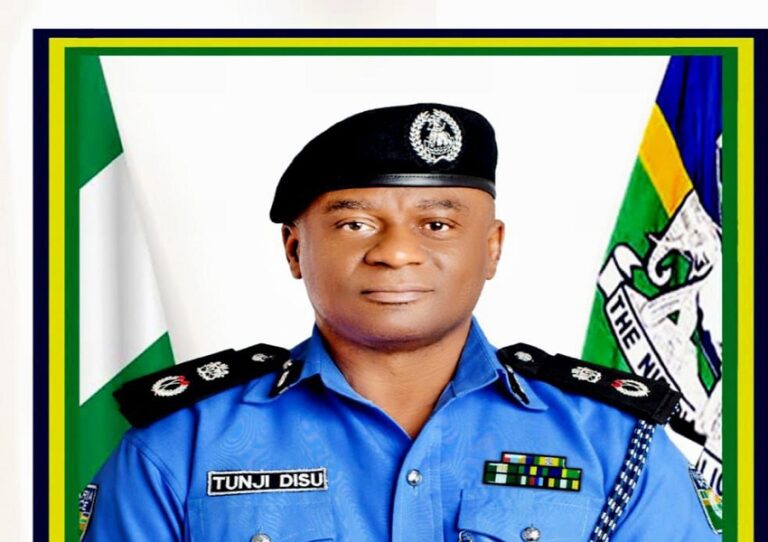
The FCT police emphasised that the commissioner, Olatunji Disu, warned that the use of the banned items can lead to unnecessary panic and anxiety within the community.

Additionally, they present significant risks, including fire hazards and other preventable incidents.

The police added that violators, including sellers and users of firecrackers and fireworks, will be subject to arrest and prosecution under the law.

The law enforcement outfit urged community leaders and residents to raise awareness about the potential dangers associated with these items.

The command appealed to FCT residents to remain vigilant and report any suspicious activities or violations of this directive to the police.

They assured of its  committment to maintaining law and order during this festive period. It encouraged everyone to celebrate responsibly, wishing all peaceful and joyful Christmas and new Year celebrations.

Meanwhile, in an operation last week led by the CP, Olatunji Disu, the command arrested seven “one-chance” robbery suspects.

Disu said the police’s ongoing crackdown against notorious robbery syndicates that have been preying on commuters will continue in the FCT.

Disu stated this on Thursday, December 12, while parading the suspects and 13 seized tinted vehicles used in the criminal activities.

The commissioner expressed his gratitude for the ongoing support from the public, which he said has been crucial in achieving recent successes.

He credited the reduction in “one-chance” robberies to a combination of robust intelligence gathering, well-coordinated tactical operations, and strong community cooperation.

“One-chance” robbers are known for using vehicles mostly with tinted glasses to trick and rob innocent passengers. The menace has long plagued the FCT but according to the police, recent crackdowns have severely weakened these criminal gangs, breaking up key parts of the networks behind these crimes.

NERC adopts new mini-grid tariff tool to ensure fair pricing

0

THE Nigerian Electricity Regulatory Commission (NERC) said it has adopted the African Forum for Utility Regulators (AFUR) mini-grid tariff tool to ensure fair and efficient pricing.

The new tool will enhance the process of determining cost-reflective tariffs for mini-grid projects.

In a statement on Friday, December 13, NERC said the tool was developed through a collaboration between the commission and the AFUR, as well as other key stakeholders in the energy sector.

“The tool supports implementing the amended Mini-Grid Regulations 2023 by introducing new features such as portfolio applications, which allow developers to register multiple mini-grid sites under a single application.

“This simplifies processes, fosters efficient regulatory oversight, and benefits from economies of scale, helping to reduce end-user tariffs for mini-grid projects,” it stated.

The commission hinted that the AFUR mini-grid tariff tool is expected to be rolled out across 30 African countries in the coming years.

It is to bring regulatory consistency to the mini-grid subsector, making it easier for project developers to operate across jurisdictions, NERC stressed.

It added that mini-grid developers are required to start using the tool to file permit applications at the Commission effective Monday, December 16, 2024.

A mini-grid is a small-scale, local energy grid that provides electricity to a specific community, village, or group of consumers.

It is typically designed to operate in isolation from the main national grid and to serve a limited number of consumers.

It is often built to explore renewable energy sources such as solar, wind, hydro, and biomass.

Energy experts believe that the development of mini-grids will help mitigate the incessant collapse of the national grid.

The national grid has collapsed nothing less than 10 times this year, leaving households in darkness and businesses to suffer and incur higher energy costs as the pump price of petrol and diesel has surged since the removal of fuel subsidy.

On Thursday, December 12, the national grid broke down again, worsening the plights of Nigerians and it is in doubt if electricity supply has been restored to all parts of the country.

One collapse too many: What is national grid, why does it keep collapsing?

0

NIGERIA’s national power grid has experienced several collapses in recent times. This comes at a huge cost to power infrastructure and businesses relying essentially on grid power.

Power sector watchers say the incessant collapse is largely caused by weak, obsolete transmission infrastructure and lack of central communication system in the grid management.

They also believe that with the enactment of the Electricity Act 2023, the states should be able to take responsibilities to protect national electricity assets and discourage central grid systems.

“All the 36 state governors should be encouraged to invest in power distribution and transmission assets. They should also encourage grid decentralisation to lessen the pressure on the national grid,” an energy lawyer, Fodil Mohammed Noah, said in response to the incessant grid collapse.

Consequently, over reliance of the 11 distribution companies, generation and transmission companies on a single grid infrastructure exposes Nigeria’s power supply to high risk with recurrent grid collapse a major concern.

What is National Grid?

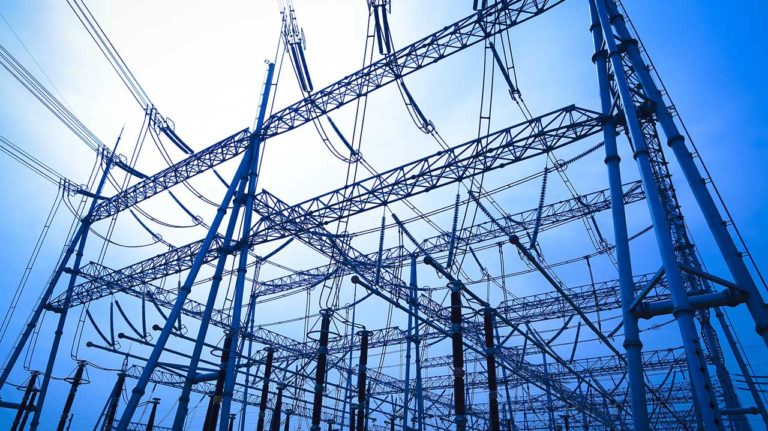
The national power grid, according to NERC, is a vast network of electrical transmission lines that link power stations to end-use customers across the country and it is designed to function within specific stability boundaries, including voltage (330kV ± 5.0 per cent) and frequency (50Hz ± 0.5 per cent).

“Any deviation from these stability ranges can result in decreased power quality and, in severe cases, cause widespread power outages, ranging from a partial collapse of a section of the grid to a full system collapse.

“When the electricity demand is higher than the supply, the grid frequency drops. Conversely, if supply surpasses demand, the frequency increases. In reaction to the grid operating at a frequency outside of the normal operation range (especially when the frequency is too low), safety settings on generation units may cause the units to shut down, “NERC said.

The frequent collapse  has left several unanswered questions about poor management of the grid and what the stakeholders in the power sector need to do differently.

Major causes of grid collapse

The ICIR findings revealed that one of the major causes of grid collapse is instability and overload.

When the demand for electricity exceeds the capacity of the transmission lines, they can become overloaded. It may lead to overheating, equipment failure or cascading outages.

Also, poorly designed or malfunctioning protection systems like circuit breakers can fail to isolate faults, which can lead to system wide-issue. Transformers which are crucial in stepping down high-voltage electricity for distribution is also a factor. Their failure can cause localised or large scale power outages.

Generator failures in  which a major power generation unit (such as a large hydro, stream or thermal Unit)) goes off-line unexpectedly, the loss of power generation can strain the remaining generators. Inadequate training or miscommunication among system operators can result in wrong decisions which can cause systems disturbances.

Earthquakes can damage physical infrastructure, including power plants and transmission lines, leading to a collapse in the system

Floods can inundate power stations and disrupt the operation of transmission lines, particularly in low-lying areas.

GenCos lost over N21billion in 2024 over grid collapse

Experts in power sector have lamented the increasing impact of grid collapses on  Generating Companies (GenCos) in Nigeria, citing that this year alone, each has incurred at least N21,873,684,285 losses.

During a recent paper presentation tagged: “Understanding the impact of grid collapses and machine shutdowns on thermal GenCos machines (The technical and commercial implications), Stephen Ogaji, noted that apart from great revenue loss due to the inability to generate power into the grid, grid collapse affects not only the utilities but also the entire economic system that depends on a stable power supply.

Ogaji also highlighted that grid collapses and forced shutdowns on thermal GenCos lead to decrease in capacity utilisation, resulting to a decrease in revenue by the station, poor efficiency in gas utilisation, poor utilisation of contracted gas on take-or-pay commitment, and deterioration or damage of key mechanical and electrical equipment during frequent startups and shutdowns, among others.

Also, presenting statistics on “Understanding the impact of grid collapse on the GenCos hydro machines (the technical and commercial implication)”, a power sector expert, Jacob John Barasuno, said each hydropower GenCos had incurred at least N21,873,684,285 losses in 2024.

He noted that the losses this year are much higher than previous years.

He cited that while amount lost following grid collapse by each  GenCo was at least N6,300,305,615 and N2,379,055,538 in 2023 and 2022 respectively, he maintained that it signified an increasing trend in grid collapses in the country.

Ageing infrastructure and insufficient investment

Power systems with outdated or poorly maintained infrastructure are more prone to failures. Ageing transformers, circuit breakers, and transmission lines may fail under stress, contributing to a collapse.

Also, insufficient investments in infrastructure, maintenance, and upgrades can result in systems being unable to handle growing demand or new technological challenges.

It would be noted that Nigeria’s SCADA(Supervisory Control and Data Acquisition) which is a system that allows industrial organisations to monitor, control, and manage industrial processes, machines and plants are obsolete and doesn’t communicate real time to necessary parties for actions which as a result often triggers system collapse.

SCADA are made up of software and hardware components that work together to gather data, record it and present information through human-machines interfaces.

Impact of grid collapse on hydro power plant

So far ,Nigeria has recorded about 12 grid collapse this year ,which raised concerns by industry stakeholders over poor attention given by sector stakeholders on grid collapse.

Economic implications

Grid Collapse poses significant threat to Nigeria’s power sector, resulting in frequent disruptions, equipment damage, and substantial revenue losses for generation companies.

Technically, grid collapse can cause catastrophic damage to generators, transformers, and other critical infrastructure, leading to prolonged downtime and costly repairs.

Commercially, the impact is equally severe, as GenCos face reduced power sales, penalties for non-delivery(in bilateral and cross-border trades) and increased operational expenses.

The dwindling resources exacerbate these challenge,  making it difficult for GenCos to maintain, repair and replace damaged equipment, ultimately compromising the reliability and efficiency of power supply.

Impact on hydro power plants

Several equipment got burnt because they cannot with stand such a voltage: automated system controllers programmes are altered.

Due to vibrations, there’s a misalignment on some shaft. There’s also contamination of lubrication oil to bearings.

Damaged parts may not be available since most of the machines are imported and not locally sourced.


Appeal Court vacates order restraining release of funds to Rivers State

0

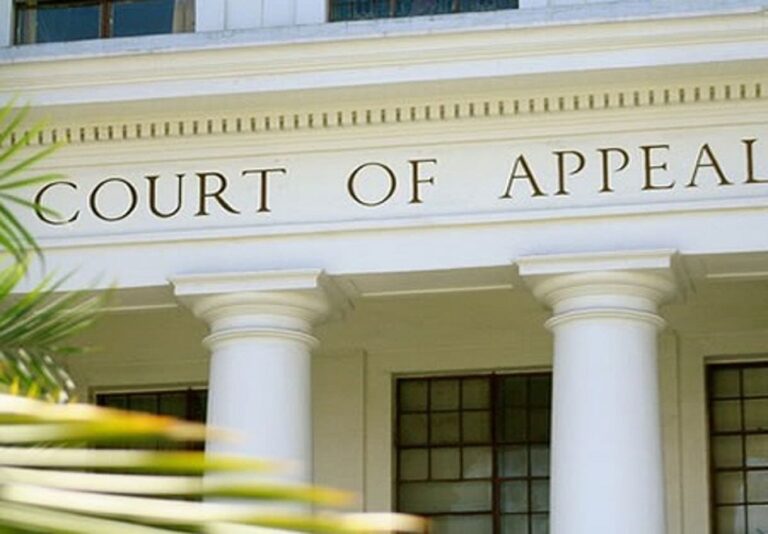
THE Court of Appeal Abuja has vacated all orders restraining the Central Bank of Nigeria (CBN) and the Accountant General of the Federation from releasing funds to the Rivers State Government.

A three-member panel of the appellate court led by Hamman Barka ruled on Friday, December 13, that the Federal High Court in Abuja lacked jurisdiction to handle a case involving state revenue.

The appellate court sided with the Rivers State government, overturning all orders made by Joyce Abdulmalik that restricted the state’s access to its consolidated revenue fund.

Essentially, the court found that Abdulmalik’s orders were unconstitutional and that the lower court had overstepped its bounds by entertaining the matter in the first place.

The appellate court held that the said orders were unconstitutional, null, and void, having been made without jurisdiction, adding that the lower court overreached itself and didn’t have the jurisdiction to entertain the matter.

The court, having held that the case of the appellants had merit, subsequently allowed the appeal and set aside all the orders made by Abdulmalik.

Abdulmalik had in October ordered the stoppage of the release of federal monthly allocations from the consolidated funds to the Rivers State Government.

In the ruling, the court had restrained the CBN from allowing the state to access its share of the federation account. 

This judgment was delivered in response to a lawsuit filed by the factional leadership of the Rivers State House of Assembly, led by Martins Amaewhule, which accused the state executive of failing to comply with a court order related to the re-presentation of the state’s 2024 appropriation bill.

Abdulmalik, in her ruling on Wednesday, October 30, ruled that the presentation of the 2024 budget by Fubara to four members of the state House of Assembly was an aberration and an affront to Nigeria’s 1999 Constitution (as amended).

According to the judge, Fubara’s receipt and distribution of monthly allocations since January 2024 was illegal.

She directed Zenith Bank, Access Bank, the CBN, and the accountant general of the federation to stop Fubara from getting access to funds from the Consolidated Revenue and Federation Account.

However, Fubara appealed the Federal High Court ruling that halted the monthly Federal Allocation Account Committee (FAAC) disbursement to the state on November 23.

The governor, through his counsel, Yusuf Ali, a senior advocate, requested the Court of Appeal to vacate the October 30 judgment by the Federal High Court.

The appeal, marked CA/ABJ/CV/1303/2024, was filed before a three-member panel of justices, led by Barka.

Fubara, in his appeal, contended that the Federal High Court’s decision was issued without proper consideration and called for the reversal of the order. 

The governor also sought to nullify the directive by Abdulmalik on October 30, which included the prohibition on disbursing funds from the federation account to the state.

This move to halt the monthly allocation came amidst a broader political rift between Fubara and his predecessor and minister of the Federal Capital Territory (FCT), Nyesom Wike.

Both leaders have been at loggerheads over who controls the PDP structure in the state since 2023, with President Bola Tinubu’s efforts to resolve the stalemate yielding no result.

Afe Babalola seeks Dele Farotimi’s removal from Nigerian bar

0

THE law firm of Afe Babalola & Co. has filed a petition with the legal practitioners’ disciplinary committee (LPDC) calling for the removal of lawyer and human rights activist, Dele Farotimi, from the roll of legal practitioners in Nigeria.

The LPDC, established under the Legal Practitioners Act, is tasked with ensuring ethical standards within the legal profession.

The petition, dated December 6, 2024, and signed by Ola Faro, a partner at the firm, accused Farotimi of breaching multiple provisions of the rules of professional conduct for lawyers. 

It specifically alleged that Farotimi engaged in conduct detrimental to the judiciary by making unfounded allegations of corruption against Supreme Court justices, legal practitioners, and members of Afe Babalola & Co., as outlined in his book, Nigeria and Its Criminal Justice System.

The 90-page petition, reported by Punch, detailed accusations that Farotimi not only discredited the Nigerian judiciary but also engaged in unethical behaviour, including alleged bribery of judicial officers and unlawful conduct with clients. 

Faro, who stated he was writing in his personal capacity and on behalf of the firm, emphasised that Farotimi’s actions undermined the integrity of the legal profession and the administration of justice.

The ICIR reports that this petition followed a series of legal battles involving Farotimi and Afe Babalola’s firm in no fewer than three different courts in the country. 

The ICIR reported how courts in Abuja and Oyo State recently barred him from publishing, selling, or distributing copies of his book, citing defamation and cyberbullying claims. 

The petition, however, accused Farotimi of obstructing justice for personal and client gains, using offensive language against justices, and distorting facts to influence outcomes.

“Knowingly engaged in illegal conduct in the cause of his practice as a legal practitioner. Treated his fellow lawyers without respect, fairness, consideration and dignity, allowing ill feelings between opposing clients to influence his conduct and demeanour by distorting the facts of a case in the cause of his practice as a legal practitioner.

“Failed to observe good faith and fairness in dealing with other lawyers in respect to a case already decided by the Supreme Court. Conducted himself in a manner that obstructed, delayed and adversely affected the administration of justice by taking steps to frustrate a decision of the Supreme Court for his personal benefit and the benefit of his client who lost at the Supreme Court.

“Treated the court, particularly the Supreme Court without respect, dignity and honour by using uncouth, unprofessional, undignified and offensive language against the Supreme Court and the justices of the Supreme Court. Made defamatory statements against judicial officers rather than making a complaint to appropriate authorities,” the petition reads in part.

According to the petitioners, Farotimi’s controversial book contains statements that could inflame both the legal profession and society. 

The petitioner claimed the statements ridicule the judiciary and damage the reputations of those named, including senior lawyers and justices of the Supreme Court.

Meanwhile, The ICIR reported that following Farotimi’s arrest and arraignment in Ekiti and Abuja, he has since been remanded in prison, pending further proceedings. 

While Farotimi was granted a ₦50 million bail by the Federal High Court in Ado-Ekiti on Monday, December 9, the Ekiti Magistrate Court denied him bail.

The judge of the Ekiti Magistrate Court, Abayomi Adeosun, on Tuesday, December 10, reserved a ruling on the bail application filed by the accused till December 20, 2024.


Tinubu appoints acting controller-general for Correctional Service

0

PRESIDENT Bola Ahmed Tinubu has appointed Nwakuche Ndidi as the acting controller-general (CG) of the Nigerian Correctional Service (NCS).

Ndidi’s appointment was contained in a statement by Secretary of the Civil Defence, Correctional, Fire, and Immigration Board, Ja’afaru Ahmed, on Friday, December 13.

The appointment takes effect on December 15, 2024, following the expiration of the term of the current CG, Haliru Nababa.

Until his appointment, Ndidi served as the deputy controller-general in charge of Training and Staff Development Directorate.

The statement added that he was born on November 26, 1966, in Oguta, Imo State.

He is a fellow of the National Institute for Policy and Strategic Studies and holds the national honour of Member of the Federal Republic.

Tinubu urged Ndidi to leverage his wealth of experience in his new role.

The NCS is a very important arm of paramilitary in Nigeria. Data from the NCS in 2023 showed that 54,141 inmates awaited trial.

The number represents 69 per cent of inmates in the nation’s prisons.

To await trial means the court has yet to pass its final verdict on the crime allegedly committed. Hence, the alleged criminal is remanded until a judgment is passed.

The data show that as of December 11, 2023, the number of inmates was 78,446, of which 24,305 had been convicted.

The number of inmates increased by 2,937 in December 2023 from 75,509 reported in December 2022.

By gender, the total number of male inmates is 76,670, while females are 1,776.


READ ALSO:


The ICIR findings in the 2024 proposed budget submitted by the Federal Government showed that the NCS had a capital expenditure of N13.91 billion of the total N120.63 billion allocated.

This means the NCS was to spend more of its budget (88.5 per cent) on personnel and overhead costs, while capital projects would take 11.5 per cent.

A glance through some of the capital projects shows ongoing construction of 3,000 capacity maximum security prison in Abuja with N700.87 million; the construction and rehabilitation of custodial centres and barracks nationwide with N7.70 billion; and the construction of four 3,000-capacity maximum security custodial centres in four states with N1.86 billion, among others.