Home Blog Page 412

[FOR THE RECORD] Combatting corruption in Nigeria: the imperative of starting with procurement fraud – ICPC chair

0

THE chairman of the Independent Corrupt Practices & Other Related Offences Commission (ICPC) Musa Aliyu Musa who is a senior advocate of Nigeria (SAN) gave the keynote address at The ICIR’s close-out and award ceremony for the Open Contract Reporting Project (OCRP).

The project, funded by MacArthur Foundation, had spanned seven years and saw the training of over 300 journalists and the publication of over 500 critical reports focusing on the budgeting and procurement process.

At the close-out ceremony, held December 10, 2025, Musa gave the Keynote titled, ‘Combatting corruption in Nigeria: the imperative of starting with procurement fraud’.

See the prepared speech below:

Combatting corruption in Nigeria: the imperative of starting with procurement fraud’

Distinguished Guests, Ladies and Gentlemen,

It is with immense pleasure that I stand before you today at this landmark occasion, marking the close-out and award ceremony of the Open Contract Reporting Project (OCRP). I commend the International Centre for Investigative Reporting (ICIR) for its relentless commitment to transparency, accountability, and good governance through this transformative initiative.

Today, we gather not only to celebrate the achievements of this project but also to reflect on a critical issue that has consistently eroded public trust, hindered development, and undermined our collective aspirations as a nation: corruption. Specifically, we focus on an insidious manifestation of this menace—procurement fraud.

Corruption as a cankerworm

It is very fundamental to state that corruption diverts resources from the poor to the rich, increases the cost of running businesses, distorts public expenditures and deters foreign investors. It is a major barrier to sound and equitable development in a nation.

Corruption, at its core, is an abuse of entrusted power for personal gain, which often manifests in the form of bribery, embezzlement, nepotism, and fraud. It thrives in both public and private spheres, permeating various sectors and institutions. By engaging in corrupt practices, individuals compromise their ethical obligations, prioritise personal interests over the greater good of the populace, and perpetuate a vicious cycle of misconduct.

What is procurement?

Procurement can be defined as the acquisition by any means, including by purchase, rental, lease, hire purchase, license, tenancy, franchise, or any other contractual means, of any type of works, assets, services, or goods, including livestock or immovable property.

This definition encompasses all methods by which public entities acquire goods, works, and services, ensuring that such processes adhere to principles of transparency, competition, and value for money as stipulated under the Act.

The audience may agree with me that most of the corruption in MDAs can be linked to procurement. The procurement process in MDAs poses a huge risk of malpractice, including the risk of fraud where all the essential steps of procurement, principles and core values of procurement are not followed or deliberately circumvented. The systemic irregularities across ministries, departments, and agencies (MDAs) based on experience include irregular contract awards, breach of the Public Procurement Act by failing to adhere to mandatory approvals, absence of procurement plans and monies spent on contracts without obtaining required approval.

The infractions above underscore the urgency of addressing procurement fraud as a critical step in combating corruption and ensuring the effective utilisation of public funds. Efforts to strengthen oversight mechanisms and enforce compliance with procurement laws remain essential.

Why procurement fraud?

Procurement fraud is the unlawful manipulation of procurement procedures in acquiring goods & services and obtaining unfair advantage during the process. It involves – the fraud triangle, Pressure, opportunity, and Rationalisation. Please note that when greed overcomes fear, fraud prevails.

Procurement fraud has different dimensions, like – pre-contract procurement fraud, which entails fraud in need for goods and services, fraud in the development of work types & specifications, bid rigging and collusion, defective pricing, and price fixing. It also entails fraud during pre-solicitation, fraud during the solicitation, fraud during bidding, fraud during bid evaluation, fraud during the contract and fraud in the award of the contract.

Procurement is the bedrock of public service delivery. It is through procurement processes that governments build infrastructure, deliver healthcare, provide education, and ensure basic services for citizens. However, it is also a domain that has become synonymous with malfeasance.

Reports indicate that a significant proportion of corruption cases in Nigeria are linked to procurement fraud—ranging from inflated contract sums and kickbacks to ghost projects and the deliberate manipulation of tender processes.

The impact is devastating:

  • Projects critical to citizens’ welfare are either poorly executed or abandoned.
  • Public funds meant to improve lives are siphoned into private pockets.
  • Trust in government institutions diminishes, fuelling apathy and resentment.

The role of the OCRP

The Open Contract Reporting Project represents a groundbreaking effort in this regard. By leveraging investigative journalism and citizen engagement, the project has:

  • Exposed procurement irregularities in critical sectors.
  • Promoted transparency by making contract processes and outcomes accessible to the public.
  • Empowered citizens and civil society to demand accountability.

The success of the OCRP demonstrates that when we align technology, collaboration, and a commitment to ethical governance, we can dismantle corruption’s grip on public procurement.

ICPC’s Commitment

At the Independent Corrupt Practices and Other Related Offences Commission (ICPC), we understand the strategic importance of procurement in the fight against corruption. Over the years, we have developed tools and strategies to address this menace:

  1. The Constituency and Executive Projects Tracking Initiative (CEPTI): Through this initiative, we have tracked and monitored public projects nationwide, ensuring funds are not misappropriated. The Commission has been able to recover N50,366,423,400 from 2019- 2023 from contractors who abandoned project sites, and many more contractors were forced to go back to the site. The 6th phase of the exercise is currently ongoing, and the total asset recoveries from January 2024 till date is with the sum of N116,270,410.89.
  1. Systems Study and Review: By evaluating procurement processes in MDAs, we have identified loopholes and recommended reforms.
  2. Partnerships: We have collaborated with civil society and the media to ensure the public remains informed and involved.

However, our work is far from complete. The findings of the OCRP provide valuable insights that will guide our ongoing and future interventions.

A call to action

Ladies and gentlemen, as we celebrate the achievements of the OCRP, I urge us all—government officials, journalists, civil society organisations, and the private sector—to commit to a shared goal: a Nigeria where public resources are managed transparently and efficiently. To achieve this:

  1. Strengthen Oversight Mechanisms: Public procurement laws must be rigorously enforced, with sanctions for violations.
  2. Empower Citizens: Platforms that enable citizens to monitor public contracts must be scaled up.
  3. Enhance Collaboration: Stakeholders across sectors must work together to build an ecosystem of accountability.
  4. Promote Ethical Leadership: Leaders at all levels must lead by example, demonstrating integrity in public service.

Conclusion

As we close the chapter on the OCRP, let us open a new one—a chapter defined by collective resolve, bold action, and measurable progress in the fight against corruption. Procurement fraud is not an insurmountable challenge; it is a call to action for every one of us to stand firm for the Nigeria we envision.

I congratulate all awardees for their exceptional contributions to this project and encourage them to continue being beacons of integrity and excellence. Together, let us write a new narrative for Nigeria—one where transparency, accountability, and good governance are the cornerstones of our democracy.

Thank you, and may we remain steadfast in our mission to combat corruption for a brighter, more prosperous Nigeria.

God bless the Federal Republic of Nigeria.
2024 ZEKE Award for Systemic Change calls for application

IN partnership with the Foundation for Systemic Change, the Social Documentary Network (SDN) is accepting entries for the ZEKE Award for Systemic Change.

The competition recognises outstanding visual stories documenting systemic changes leading to sustainable solutions to global issues.

All entries must have between six and 30 photographs related to a specific theme. The submission may also have a multimedia component to supplement the still images.

Professional and amateur photographers around the world can compete for a US$2,500 award.

The entry fee is US$25 until December 31. From January 1, 2025, until the deadline, the entry fee is US$30.

Scholarships are available for photographers from countries without access to credit cards or where the entry fee would be prohibitive.

First-place winners will be featured in ZEKE magazine and a travelling exhibition.

The deadline for the submission of application is January 15, 2025. Interested applicants can apply here.

Hundreds of passengers stranded at Lagos Airport after plane crash-landed in Abuja

0

HUNDREDS of passengers were stranded at the local terminal of Murtala Mohammed International Airport in Lagos State, on Wednesday, December 11, after an Allied Air cargo aircraft crash-landed at the Nnamdi Azikiwe International Airport (NAIA) in Abuja.

The accident at the Abuja Airport disrupted flights across the country.

The ICIR saw hundreds of passengers at the domestic wing of the Lagos Airport, with scores of them not having a seat.

Passengers whose flights were scheduled to take off at 10:30am remained at the airport until 3pm.

Pastry shops at the section of the airport were besieged by hungry passengers who devoured all items available for sale within two hours.

Some passengers were stranded at the airport for five hours as the airport became heavily crowded following the suspension of activities at the Abuja airport.

An official at the airport who pleaded anonymity blamed the challenges faced by passengers on the incident at the Abuja airport.

“You can see that the departure hall was not designed for the population of people you see here. That’s why they are standing and could not get a seat. We have been pleading with them,” the official said.

The ICIR observed that at least 80 per cent of the passengers were scheduled to fly on Air Peace.

Air Peace staff kept pleading with the passengers and served them refreshments but failed to explain the cause of the delay.

However, the airline deployed about six aircraft simultaneously to take passengers to different routes, including Kano, Abuja, Owerri, and other states at about 3:30 pm.

The Allied Air cargo aircraft with registration number 5N-JRT was said to be carrying six crew members when it crash-landed at about 10:05 a.m. on Wednesday, December 11 in Abuja.

It reportedly crash-landed due to the failure of one of its landing gears.

Reports indicate that the crew members were promptly evacuated and were taken to the  063 Nigerian Air Force (NAF) Hospital for medical assessment.


READ ALSO:


Emergency responders swiftly secure the crash site, cordoning off the area under the supervision of the Military Airport Commandant (MAC) and other relevant agencies.

Sources told The ICIR that the incident caused commotion at the airport for about two hours, as the incident led to the temporary closure of the airport’s runway.

The ICIR reported in May 2023 that a MAX Air aircraft crash-landed at the Abuja Airport after its tyre burst into flames.

Nigerians must question tax spending – Oyedele

0

AS the debate on tax reform bills rages on, the Chairman Presidential Committee on Tax and Fiscal Reform, Taiwo Oyedele, said Nigerians must hold public officials to account on how they spend tax payers money.

Oyedele, who spoke on Tuesday, December 10, at the 2024 National Tax Conference organised by the Tax Justice and Governance Platform, said such questions should put political officeholders on their toes on judicious tax spending.

The event has the theme; “Economics Stabilisation for Equity: Ensuring Fairness and Fiscal Reforms.”

Oyedele stressed that tax payments are mostly not beneficial to the people, despite concerns over the rising cost of governance.

We have a situation whereby some state governors build Airports that are not viable, yet have poor health and primary education facilities in their states. All these must stop,” Oyedele said while encouraging public advocacy on tax usage.

He added,”Nigerians must explore all the avenues of engaging with the government on fiscal prudence. A situation whereby some citizens destroy government’s facilities during protest rather than engaging government constructively.

Other speakers at the event, want the government to reconsider the tax bill and give wider room for consultation.

“A lot of businesses are closing down, we cannot float the exchange rate and also remove subsidy as well as implement tax reform bill. This is too much on businesses and many of them are at the receiving end of the reform,” a tax expert, Angela Ajala told the ICIR on the sideline at the event.

In his earlier remarks at the event, the executive director of Civil Society Legislative Advocacy Centre (CISLAC), Auwal Rafsanjani, said there are some controversial areas in the bill while he urged the national assembly to consult widely on the bill.

“Tax has taken a deep sit in Nigeria’s national discourse. Nigerians are expecting the national assembly to do justice to areas of concerns and ensure rebuilding of trust and confidence of the people.

He added, ” Tax bill controversies must discourage north versus south sentiments. The government must also pay attention to areas that have human right violations.”

He stressed that the government needs to address clarification on what constitutes non essential items in the bill, give updates on the current tax status and explain clearly administrative framework for the implementation.

Recall, that on September 3, the President submitted four tax reform bills to the National Assembly for consideration, based on recommendations from the Presidential Committee on Fiscal and Tax Reforms, led by Taiwo Oyedele, to review existing tax laws.

The bills include the Nigeria Tax Bill 2024, aimed at providing a fiscal framework for taxation in the country, and the Tax Administration Bill, which seeks to offer a clear and concise legal framework for all taxes, reducing disputes.

The other bills are the Nigeria Revenue Service Establishment Bill, which proposes to repeal the Federal Inland Revenue Service Act and establish the Nigeria Revenue Service, and the Joint Revenue Board Establishment Bill, which would create a tax tribunal and tax ombudsman.

The bills, the ICIR reported which have now passed a second reading at the House of Representatives have faced stiff resistance from political heavyweights, mostly in Nigeria’s northern region

Ademola Adeyemi-Bero appointed chair OPEC board of governors

0

THE Organisation of the Petroleum Exporting Countries (OPEC) has appointed Ademola Adeyemi-Bero as the chairman of its board of governors for 2025.

Adeyemi-Bero was also appointed as Nigeria’s OPEC governor for next year.

The minister of state for petroleum resources (oil), Heineken Lokpobiri, said Adeyemi-Bero’s appointment was confirmed at the 189th meeting of the OPEC conference.

In a statement by his media aide, Nneamaka Okafor, the minister hailed Adeyemi-Bero’s elevation as a testament to Nigeria’s active contributions to the global oil industry.

Lokpobiri added that the appointment provides Nigeria with a vital platform to advocate for balanced energy policies that benefit oil producers, consumers, and the global economy.

The minister also appreciated Gabriel Aduda, permanent secretary of the federal ministry of women affairs, who is also the outgoing Nigerian OPEC governor, for his exemplary service.

“Ambassador Aduda played an instrumental role in advancing Nigeria’s interests within OPEC and ensuring the country’s influential presence in global energy discussions,” Lokpobiri said.

According to the statement, OPEC also appointed Adeeb Al-Aama as governor of Saudi Arabia for OPEC, and as the alternate chairman of the board of governors for 2025.

“The OPEC conference brought together representatives from member countries to address significant issues, including reports from the secretary-general and the Economic Commission Board (ECB), and to deliberate on critical internal matters,” Okafor added.

“The conference also extended the tenure of His Excellency Haitham Al Ghais as OPEC Secretary General for another three years, effective August 1, 2025.

“Member nations commended his exceptional leadership and the Secretariat’s unwavering commitment to the organization’s objectives.”

Recall, at its last meeting, OPEC had extended Nigeria’s oil production quota of 1.5 million barrels of crude per day (bpd) to 2026.

The oil alliance also extended the level of overall crude oil production for OPEC and non-OPEC participating countries “in the DoC as agreed in the 35th OPEC and non-OPEC Ministerial Meeting, as per the attached table until 31 December 2026”.

The ICIR reported that Nigeria’s crude oil production averaged 1.352 million barrels per day in August, according to OPEC.

The 1.352 million barrels per day(bpd) production is based on direct communication with the Nigerian authorities on crude oil production for the month.

In its monthly oil market report released on Tuesday, September 10, the OPEC stated that Nigeria’s crude oil production slightly increased by 45,000 barrels, the ICIR reported also stated.

Notable Nigerians caught spreading misinformation in 2024

0

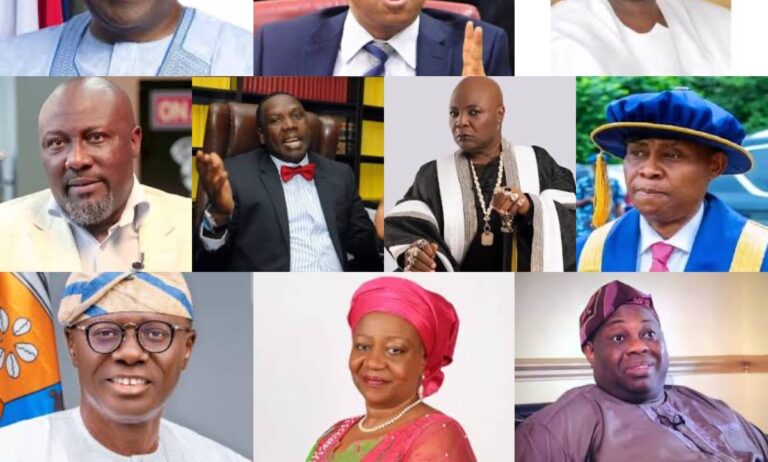
THE year 2024 is marked by a flurry of claims from Nigerian public figures, spanning diverse topics such as politics, economics, and sports. With the growing prevalence of misinformation, public statements by prominent individuals have increasingly come under scrutiny.

Prominent among the fact-checked individuals this year was President Bola Ahmed Tinubu, whose statements on Nigeria’s population, economic policies, and national developments were analysed at least three times. Other influential individuals, including Adedeji Adeleke, Dino Melaye, and Lauretta Onochie, also made headlines with claims that turned out to be MISLEADING, or FALSE following our thorough investigation.

This report highlights some of the verifications conducted by The FactCheckHub in 2024 where notable Nigerians either misrepresented facts or propagated outright falsehoods. This list is in no particular order.

1. Bola Tinubu

Nigeria’s President, Bola Ahmed Tinubu, is the top on our list having been fact-checked on at least three different occasions this year. 

The first was during an early morning nationwide broadcast on Monday, October 1, 2024. President Tinubu had shared updates on the nation’s progress, economic outlook, and security measures as Nigeria celebrated its 64th anniversary. 

In this report, we fact-checked some of Tinubu’s claims using verifiable data and official sources. Out of the nine claims analysed by The FactCheckHub, six were TRUE, while three were either MISLEADING or FALSE. 

Also, following the nationwide protests that rocked Nigeria over economic hardship, President Tinubu addressed citizens in the early hours of Sunday, August 4, 2024.

The FactCheckHub team monitored the Nigerian president’s broadcast on Channels TV and examined the veracity of his claims. Out of the six claims that we analysed, three were found to be TRUE, while the remaining three were either UNPROVEN or FALSE. 

2. Adedeji Adeleke

In October, Nigerian billionaire, Adedeji Adeleke, the father of popular Nigerian music artiste, Davido said he is building a 1,250-megawatt thermal power plant which will also become the biggest thermal power plant in Nigeria.

He said it during the Seventh Day Adventist General Conference Annual Council in Maryland, United States of America (USA) on October 15, 2024.

Findings by The FactCheckHub show that the claim is FALSE. Publicly available data have shown that Egbin power station is the biggest thermal power plant in Nigeria at 1,320MW; this therefore means a 1,250MW power plant cannot be said to be the biggest.

3. Dino Melaye

In August, a former Nigerian lawmaker, Dino Melaye, posted on X footage that shows the Nigerian athlete, Tobi Amusan, partaking in a race alongside a claim that she won two gold medals at the Paris 2024 Olympics in France.

Our findings showed that the claim was MISLEADING, as the footage posted by Melaye has been online since July 2022.

Also in April, Melaye shared footage of a sitting of the Federal Executive Council with the claim that the Federal Government of Nigeria has scrapped some parastatals and agencies alike.

According to him, the agencies scrapped include the Federal Radio Corporation of Nigeria (FRCN), Independent Corrupt Practices and Other Related Offences Commission (ICPC), Nigeria Centre for Disease Control (NCDC), Nigerian Communications Commission (NCC), and the Nigerian Television Authority (NTA).

Our findings showed that only PTAD and NSSEC are to be scrapped, according to the Oronsaye Report while others are yet to be merged or subsumed as announced by the Nigerian government in February 2024.

4. Dele Momodu

In August, a prominent Nigerian journalist and publisher, Dele Momodu, posted an aerial video that shows a large crowd protesting on a busy street to depict the August nationwide protest in Niger State.

Our findings showed that the claim is MISLEADING, as the video is from a protest in Kenya held in June 2024 over the proposed tax bill.

5. Daniel Bwala 

In February, Daniel Bwala, who is now a Special Adviser to President Tinubu shared a press release from the Central Bank of Nigeria (CBN) stating that the apex bank would convict any individual transacting with foreign currency.

Our findings showed that the press release was published on July 4, 2015 and not this year.

6. Ali Ndume

The Nigerian Senate Majority Chief Whip, Ali Ndume, claimed that Nigeria has only 200,000 armed forces personnel across the country.

Ndume stated this on January 23, 2024 while speaking on the country’s security situation during an interview on Channels TV’s programme, Politics Today.

Our findings, based on data obtained from the Global Fire Power (GFP) website, which was last updated on January 9, 2024, showed that Nigeria has an estimated total military personnel of 280,000, while the number of active military personnel stood at 230,000. These figures are higher than the figure quoted by Senator Ndume.

7. Lauretta Onochie

In September, a former Presidential aide, Lauretta Onochie, posted a photo showing a woman arrested by Police with a claim that it shows Canada-based Nigerian woman, Amaka Sonnberger, who threatened to poison Yoruba and Benin people living in the North American country on TikTok.

Our findings showed that the claim is MISLEADING, as the woman in the photo is Nikema Williams, a Georgia State lawmaker, when she was arrested during a protest in 2018.

Williams (D-Atlanta) was arrested by Capitol police during a protest over election ballot counts in the rotunda of the state capitol building on November 13, 2018, in Atlanta, USA.

9. Babajide Sanwo-Olu

The Lagos State governor, Babajide Sanwo-Olu made multiple false claims regarding his achievements as governor since 2019 during an interview on Channels Television’s Politics Today on October 16, 2024.

Sanwo-Olu said Lagos is recording 90-94 per cent budget performance year in and year out but our findings showed that the state’s yearly budget has consistently fallen below that range. He also said Lagos state budget has tripled from about N620 billion to N2.3 trillion in 5 years which was also found to be FALSE.


10. Charly Boy

Finally, on this list is a Nigerian musician, Charles Oputa also known as Charly Boy. He posted a video allegedly showing the looting of a warehouse during  the nationwide #EndBadGovernance protests in Nigeria.

Our findings showed that the claim is MISLEADING, as the video has been online since March 2024 and showed mobs who broke into a government storage facility in Gwagwa area of the Federal Capital Territory (FCT) on March 3, 2024 and looted stored food items.

This fact-check is republished from The FactCheckHub 

Complex Systems Summer School Journalism Fellowship seeks entries

SANTA Fe Institute (SFI) offers a journalism fellowship for accomplished reporters.

National and international journalists with a demonstrated interest in and record of reporting about matters related to complex systems are encouraged to apply for this residential fellowship in Santa Fe, New Mexico.

Application is open until February 17, 2025. Applications are reviewed on a rolling basis.

During their residency in Santa Fe, two selected journalists will learn alongside graduate students, postdoctoral scientists and professionals through an intensive series of lectures and labs taught by world-renowned faculty.

Experienced journalists with a record of reporting on matters related to complex systems can apply for a residential fellowship.

The fellowship term is five weeks, which provides an immersive opportunity for the selected fellows to participate in SFI’s Complex Systems Summer School held at the Institute of American Indian Arts in Santa Fe (June 8-July 4, 2025) and to spend an additional week at the Santa Fe Institute after the end of the school.

A stipend of $6,250 for the five-week programme is provided. As students of the Complex Systems Summer School, fellows will be housed at the Institute of American Indian Arts.

The stipend may enhance the fellow’s existing salary or the journalist’s employer may offset his or her ongoing salary with the stipend.

Enrollment in SFI’s Complex Systems Summer School is provided free of charge. Travel reimbursement is also provided. SFI benefits are not included in this offer.

The deadline for the submission of application is February 17, 2025.

Interested applicants can apply here.

Yerevan Short Film Festival accepting entries

THE Yerevan Short Film Festival seeks entries for its awards.

The awards, which will be held in Yerevan, Armenia, from June 26 to 30, 2025, include national and international competitions for short fiction and documentary films.

Films up to 30 minutes in length produced in the 24 months before the festival will be accepted. All non-English-language films must have English subtitles.

The festival pays for the participants’ accommodation and meals. If possible, it partially covers the cost of travel.

Filmmakers and authors of short documentaries and feature films can submit entries.

The entry fee in the international category ranges from US$3 to US$10.

The regular deadline is December. The late deadline is January 25, 2025, and the extended deadline is February 25, 2025.

Interested applicants can apply here.

Businesses, households groan as Nigeria’s national grid collapsed 11 times since February

0

NIGERIA’S national grid has collapsed 11 times since February 2024, worsening the country’s electricity crises. 

The ICIR reports that each failure affects households, businesses, and critical sectors like healthcare, where a consistent power supply is essential.

The last of such collapse was recorded on Wednesday, December 11, throwing many parts of the country into darkness.

This year’s first grid collapse occurred on February 4, 2024, when the grid’s capacity fell from 2,407 megawatts to just 31 megawatts by midday, eventually reaching zero.

Since then, the grid has continued to break down, including collapses on August 5 and three times in October.

Notably, the October 14 collapse was followed by a partial failure the next day, and another incident on October 19.

The breakdowns highlight the challenges with the country’s outdated power infrastructure, which has repeatedly failed to deliver stable electricity.

On December 6, The ICIR reported how the Senate threatened to reverse the power privatisation.

While criticising the power privatisation and describing it as “fraudulent and exploitative” the Senate said the privatisation plunged Nigeria deeper into darkness, leaving citizens without solutions.

It also condemned operators in the sector, comprising Generation Companies (GenCos), Transmission Company of Nigeria (TCN), and Distribution Companies (DisCos), over their inability to deliver reliable electricity, asserting that they had added no significant value to the sector.

Senators’ reactions followed the presentation of a  report by the Senate Committee on Power during Thursday’s plenary, which investigated frequent national grid collapses and related issues.

Senator Enyinnaya Abaribe (APGA, Abia South), who presented the findings, attributed the persistent grid failures to factors such as ageing infrastructure, abandoned projects worth trillions of naira, regulatory inefficiencies, security lapses, lack of modern monitoring systems like supervisory control and data acquisition (SCADA), and inadequate financial oversight.

According to him, despite substantial investments in electricity infrastructure, the grid has suffered 105 collapses over the past decade. He revealed the significant costs incurred during grid failures, particularly in restarting power plants.

He said, “Restarting a plant after a grid collapse (known as a “black start”) is considerably more expensive than normal operations.”

Citing an instance, he disclosed that while running costs for a plant like Azura, Delta, or Shiroro are approximately $105,000, restarting costs can reach $7 million per incident.

The ICIR  reports that grid collapses cost Nigeria an estimated ₦42.5 billion for these three plants alone, with broader implications for the entire power sector.

Speaking further at the Senate, Abaribe noted other pressing issues, including operational inefficiencies, abandoned projects, regulatory gaps, security challenges, and the absence of SCADA systems essential for real-time monitoring and management.

“Whenever a plant is shut down, they restart the plant and to restart it, which they call a black start, it costs far more than running the plant.

“While it costs $105,000 to run the plant, to restart it will cost $7m. So anytime we have a shutdown occasioned by grid collapse, three plants in Nigeria that supply most of our electricity, Azura, Delta and Shiroro, to restart the plant cost Nigeria $25m or ₦42.5 billion and if we expand it to the rest of the operating plants in Nigeria, it is actually not quantifiable.

“Aging infrastructure has been identified as a critical factor contributing to frequent grid failures. Many components of the grid are outdated and have not undergone necessary maintenance or upgrades, leading to increased vulnerability to failures”, he added.

In his contribution to the debate, Adams Oshiomhole (APC, Edo North), faulted the privatisation policy as flawed and exploitative, stating it imposed undue financial burdens on Nigerians.

He said, “The Discos are out for profit while they make our people suffer. I never imagined that a private person would collect money for services he did not render and Nigerians are helpless.”

He recalled a personal experience of having to purchase a transformer and pay for its installation, only for it to become the property of the Abuja Electricity Distribution Company (AEDC). Oshiomhole called for a comprehensive review of the privatisation policy in line with the administration’s “Renewed Hope Agenda.”

“After the procurement, it becomes the property of AEDC (Abuja Electricity Distribution Company). I even had to pay money from my pocket to connect the transformer to the grid.

“We have to revisit this ill-advised privatisation and we are going to advise Mr President in line with his Renewed Hope Agenda, to review the power sector privatisation,” Oshiomhole suggested.


Access Bank expands to Malta where Nigerian bigwigs allegedly own blending plant

0

ACCESS Holdings Plc said it had opened a subsidiary in Malta, a country where Nigerian bigwigs have allegedly opened blending plants to facilitate the importation of petroleum products adversely affecting the Nigerian economy.

The chairman of Dangote Industries Limited, Aliko Dangote, had recently accused some officials of the Nigerian National Petroleum Company Limited (NNPCL), oil traders, and terminals of opening a blending plant in Malta to frustrate his 650,000 nameplate refinery which can serve Nigeria and also for exports.

“Some of the terminals, some of the NNPC people, and some traders have opened a blending plant somewhere off Malta. We all know these areas. We know what they are doing, Dangote had said.

Although the group chief executive officer of NNPCL, Mele Kyari, tried to dismiss the allegations, saying he did not own a blending plant in Malta, it is arguable whether his reaction was not convincing enough to fend off the allegation.

In a statement on Tuesday, December 10, sent to the Nigerian Exchange Group, Access Bank Group announced that The Access Bank UK Limited has established its first fully owned subsidiary in Malta, christened The Access Bank Malta Limited.

It hinted that the banking licence application has been approved by both the European Central Bank (ECB) and the Malta Financial Services Authority (MFSA), signalling a significant step in enhancing trade connectivity between Europe and Africa.”

As a credit institution, the Malta subsidiary will bolster Europe-Africa trade flows.

Malta, a renowned international financial centre, and a gateway between the two continents, is strategically positioned to play a pivotal role in advancing commerce and fostering economic partnerships, it stated.

“By establishing operations in Malta, we will gain a foothold in a market that bridges Europe and North African economies, moving us one step closer to our goal of becoming Africa’s Gateway to the World. It further enhances our Bank’s capacity to support clients with innovative solutions tailored to cross-border trade and investment opportunities,” the banking group’s managing director and chief executive officer, Roosevelt Ogbonna, said.

The managing director and CEO of The Access Bank Malta Limited, Renald Theuma, added, “Malta is uniquely positioned as a bridge between Europe and Africa, making it an ideal location for our subsidiary. This move allows The Access Bank Malta Limited to engage more closely with customers in Europe and deliver tailored financial solutions that drive growth and connectivity across both continents.”