Home Blog Page 44

WSCIJ seeks pitches for investigative stories

THE Wole Soyinka Centre for Investigative Journalism (WSCIJ) is inviting applications from local investigative journalists for story support under the Collaborative Media Engagement for Development Inclusivity and Accountability (CMEDIA) project.

This call opened on April 16, 2026, and will close on April 2026. CMEDIA seeks to strengthen accountability journalism at the local level by supporting high-quality investigative stories that interrogate governance, amplify underreported voices, and drive measurable change.

Through this call, selected journalists will receive support to produce in-depth, evidence-based reports that uncover systemic issues and promote transparency and accountability.

Applicants are expected to propose investigative story projects that (i) address pressing local issues, including governance, service delivery, human rights, public spending, environment, health, education, and social justice.

(ii) Interrogate national policies, decisions, or trends through a local lens, demonstrating how broader systemic issues affect specific communities or populations.

(iii) Amplify affected communities and underreported voices, ensuring those most impacted are meaningfully represented.

(iv) Show clear potential for accountability outcomes, such as exposing wrongdoing, highlighting implementation gaps, or prompting institutional or community-level responses.

(v) Are evidence-driven and feasible, with identifiable sources, data points, or access pathways within the programme timeline.

(vi) Demonstrate originality and relevance, offering depth, context, and fresh insight into recurring or emerging issues.

(vii) Include potential for follow-up reporting and impact tracking beyond initial publication.

The deadline for applications is April 30, 2026. Interested applicants should apply here.

FG: No ‘hidden spending’, World Bank report misinterpreted

0

THE Federal Ministry of Finance has dismissed claims that Nigeria is engaging in “hidden spending” or diverting federation revenue, describing such reports as a misrepresentation of the latest Nigeria Development Update by the World Bank.

In a press statement issued on Sunday, April 19, the Minister of State for Finance, Taiwo Oyedele, said recent media commentaries misunderstood key aspects of the report, particularly deductions made by the Federation Account Allocation Committee (FAAC).

“The misreporting in question incorrectly characterises Federation Account Allocation Committee (FAAC) deductions as “waste” or missing funds. This is incorrect,” Oyedele said.

The ICIR reports that the ministry’s clarification follows public debate triggered by the latest Nigeria Development Update released by the World Bank.

The report examines Nigeria’s fiscal position, revenue flows, and macroeconomic outlook, highlighting concerns around deductions from the federation account while also noting ongoing reforms to improve transparency and efficiency.

Some analysts interpretations of the report suggest that a significant share of FAAC revenues was being diverted or not transparently accounted for, sparking criticism from civil society groups.

Their arguments focused on the scale of deductions and raised questions about fiscal transparency, prompting reactions from stakeholders and now the federal government.

The ministry maintained that FAAC deductions are legitimate fiscal transactions and not evidence of waste or missing funds. It explained that the deductions cover statutory transfers, savings and investments, security-related expenditures, cost-of-collection charges, refunds to Ministries, Departments and Agencies (MDAs), and transfers benefiting state and local governments.

“It is important to emphasise that refunds and transfers to states and other tiers of government are not leakages. They represent legitimate fiscal flows, including repayments of obligations and statutorily backed allocations,” the minister said.

Oyedele also accused some analysts of selectively using outdated data while ignoring ongoing reforms highlighted in the World Bank report, pointing to new public financial management measures introduced in early 2026.

“Some commentaries selectively relied on past data while ignoring the forward-looking analysis and ongoing public financial management reforms highlighted in the report. The World Bank explicitly notes that reforms implemented in early 2026, including the recently signed Executive Order to safeguard remittance of petroleum revenues, are already addressing concerns around deductions, and are expected to improve transparency while increasing revenues available to all tiers of government by about 0.4 per cent of GDP annually,” he added.

Highlighting broader findings from the report, the minister said Nigeria’s economic outlook is improving, with growth becoming more diversified across sectors and inflation gradually easing due to policy interventions.

“The broader message of the World Bank report is positive and forward-looking: Economic growth is becoming more broad-based across sectors. Inflation, while still elevated, is declining due to deliberate policy actions. Nigeria’s external position has strengthened significantly, with improved reserves and a current account surplus,” Oyedele said.

Contrary to claims of fiscal distress, he stressed that the World Bank report does not suggest a collapse of Nigeria’s fiscal system but instead acknowledges that ongoing reforms are yielding results.

“The World Bank does not conclude that Nigeria’s fiscal system is collapsing or that reforms have failed. Rather, it states that reforms are working, and they must be sustained and deepened to translate macroeconomic gains into inclusive growth,” he said.

Oyedele reaffirmed the commitment of the Federal Government to fiscal transparency, improved revenue mobilisation, and efficient public spending, as it urged media organisations and stakeholders to avoid “twisted interpretations” of fiscal data that could undermine public confidence and reform efforts.

NBC directive: SERAP threatens lawsuit as Amnesty, Atiku kick

0

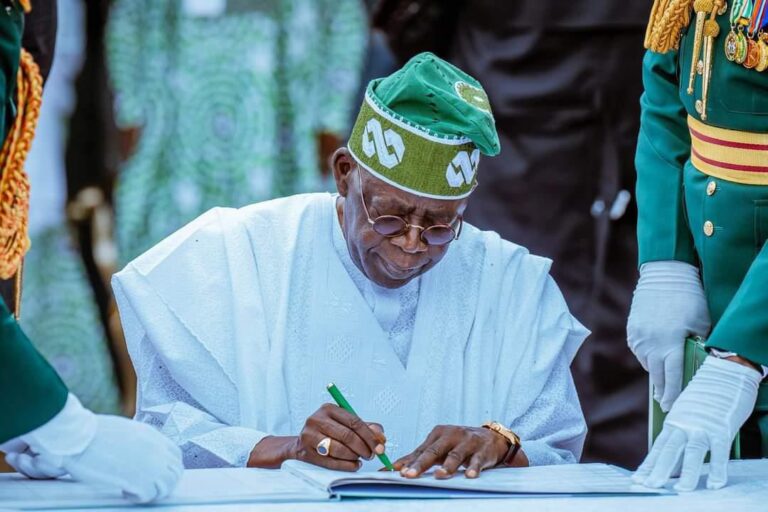
THE Socio-Economic Rights and Accountability Project (SERAP) has called on President Bola Tinubu to instruct the National Broadcasting Commission (NBC) to withdraw its recent directive warning broadcast stations against bias, bullying, and breaches of the broadcast code.                                                        The organisation gave the government a 48-hour ultimatum to withdraw the directive, warning that it would pursue legal action if there is no response.

This move follows a formal notice issued by the NBC on April 17, where the regulator warned that anchors expressing personal opinions or intimidating guests would face sanctions as the country prepares for the 2027 general elections.

The ICIR reported that the commission categorised such actions as Class B breaches and emphasised that editorial responsibility remains strictly with the broadcaster.

In a letter dated April 18, 2026, and signed by its Deputy Director, Kolawole Oluwadare, the organisation urged the President to direct the Minister of Information, Mohammed Idris, and the NBC to withdraw the notice.

SERAP described the NBC’s order as an unlawful attempt to silence independent media and restrict freedom of expression.

“The NBC’s notice represents a dangerous attempt to impose prior censorship on the media and suppress legitimate journalistic expression.”

SERAP maintained that the commission’s threat of sanctions over personal opinions undermines the role of the media in a democratic society. The organisation argued that the Nigerian Constitution and international human rights law protect both the absolute right to hold opinions and the qualified right to express ideas of all kinds.

“The Nigerian Constitution and international human rights law protect both the absolute right to hold opinions and the qualified right to express ideas of all kinds.”

“We would be grateful if the recommended measures are taken within 48 hours. If we have not heard from your government and the NBC by then, SERAP shall take all appropriate legal actions to compel compliance,”

It also criticised Section 1.10.3 of the Broadcasting Code, which the NBC cited to restrict presenters from expressing personal views, and urged the NBC to amend sections of the Code to align with constitutional and international human rights standards.

“This amounts to prior restraint that impermissibly excludes commentary, analysis, and value judgments, the core of journalism and democratic discourse,” SERAP added.

Although the NBC’s initial warning emphasised neutrality and the prevention of hate speech, SERAP argued that the threat of sanctions for broadly defined conduct could create a “chilling effect” on journalists and broadcasters.

Amnesty International also condemned the commission’s directive, arguing that the move appears designed to pressure media houses into self-censorship, which poses a significant threat to press freedom and democratic accountability.

The organisation highlighted that the independence of editorial content is a cornerstone of a functional society, allowing the public to engage in the free exchange of ideas.

Isa Sanusi, the Executive Director of Amnesty International Nigeria, noted that the country’s broadcast media should enable people to

“freely seek, debate, receive and impart information and ideas as envisaged by the African Charter on Human and Peoples’ Rights and the International Covenant on Civil and Political Rights.”

He urged the government to end the misuse of regulatory powers to suppress independent journalism.

Sanusi stated that “the Nigerian authorities must stop using the NBC in an unrelenting quest to silence journalists and media organisations that are crucial to ensuring an independent and diverse media space that fulfills people’s right to information.”

The group further maintained that the recent directive is both authoritarian and unconstitutional, encouraging broadcasters across the country to not waver.

Similarly, former Vice President Atiku Abubakar described the NBC’s advisory as “yet another troubling attempt to muzzle the media and shrink the space for free expression in Nigeria.”

He expressed concern that the regulator frequently resorts to heavy-handed directives as elections approach, suggesting that such actions do more to silence dissent than to uphold ethical journalism.

Atiku emphasised that ethical standards should not be treated as seasonal tools to be weaponised during campaigns, but rather as constant obligations. He warned that the timing of these regulations signals a government more focused on controlling narratives than on permitting a transparent electoral process, affirming his support for the media platforms.


JAMB apologises for delay in UTME result release, warns against result fasification

3

THE Joint Admissions and Matriculation Board (JAMB) has issued an apology to candidates following a delay in the release of results for those who sat for the Unified Tertiary Matriculation Examination (UTME) on Friday, April 17, 2026.

The board had previously indicated that the second batch of the 2026 results would be available by midnight on Saturday. However, the failure to meet this timeline caused concern among candidates and parents.

In a statement released on Sunday, the Board’s spokesperson, Fabian Benjamin, attributed the delay to the official engagement of the Board’s chief executive.

“We sincerely apologise for the delay in releasing the results for Friday April 17, which is the second batch in the series as earlier promised. Our Chief Executive was unavailable due to an important engagement but would be in the office today, and we assure you that the results will be released later in the day,  before nightfall,” the statement reads.

The board further expressed regret for the anxiety caused to candidates who stayed up expecting their scores.

The delay affects only the second batch of the series. JAMB confirmed that the first batch, consisting of 632,788 results for candidates who wrote the examination on Thursday, April 16, has already been processed and released.

Candidates from the first batch have been checking their results via SMS, as the board noted that result slips are not yet available for printing at this stage.

JAMB advised candidates to check their results by sending “UTMERESULT” as an SMS to 55019 or 66019 using the phone number linked to their registration.

The board also issued a stern warning against the manipulation of result messages. It revealed that security agencies are already taking action against individuals attempting to forge scores.

“Currently, two candidates and one parent are in custody for engaging in result falsification using AI and other electronic means. Any candidate found culpable will face the full consequences of the law,”

The 2026 UTME is currently ongoing nationwide. JAMB assured all stakeholders that the examination process is being closely monitored and that subsequent results will be released in batches as they are cleared.

FCT teachers begin indefinite strike Monday over unmet demands

0

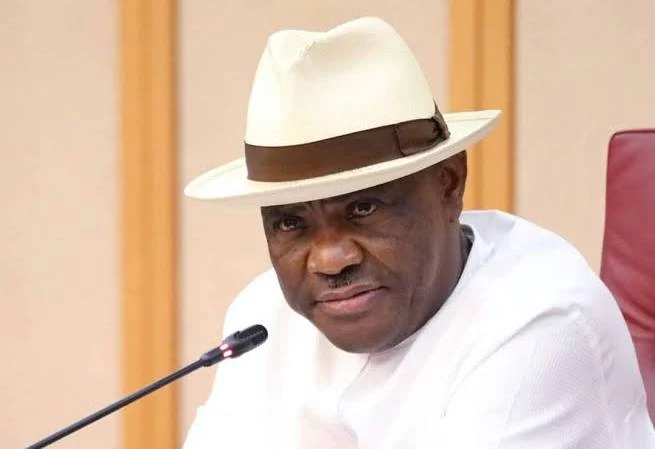
PRIMARY and secondary school teachers in the Federal Capital Territory (FCT) have been directed to commence an indefinite strike from Monday, following unresolved welfare issues and delays in implementing agreed reforms.

The directive was issued by the State Wing Executive Council (SWEC) of the Nigeria Union of Teachers (NUT), FCT chapter, jointly signed by Chairman Abdullahi Shafa, Secretary Margaret Jethro, and Publicity Secretary Ibukun Adekeye. After an emergency meeting held in Gwagwalada, Abuja, on Friday, the union instructed all teachers to comply fully with the strike and await further directives.

The union said the decision followed the expiration of a seven-day ultimatum issued to the FCT Minister, Nyesom Wike, over the non-implementation of key agreements affecting teachers’ welfare.

While acknowledging the minister’s intervention in approving the N70,000 minimum wage and settling nine months’ salary arrears, the union expressed concern over the government’s failure to act on the report of a committee set up in July 2025.

“The Minister constituted a committee on July 7, 2025 with a mandate to, within two weeks, harmonise all outstanding entitlements of primary school teachers. The committee was also directed to make appropriate recommendations that would lead to a permanent solution to the frequent industrial disputes involving FCT primary school teachers,” the statement read.

According to the union, the committee was mandated to harmonise outstanding entitlements and propose lasting solutions to recurring disputes involving FCT primary school teachers. Although the panel submitted its report in August 2025, its recommendations have yet to be made public or implemented.

“The committee concluded its assignment and submitted its report in August 2025, however, the report is yet to be made public,” it added.

The union said it had demanded that the Wike-led FCT Administration, within the seven-day ultimatum, release and begin implementation of the report addressing outstanding entitlements of primary school teachers.

It also called for the removal of the “vacancies” condition attached to the promotion of classroom teachers, and a comprehensive review of the 2024 promotion exercise conducted by the FCT Civil Service Commission to ensure eligible teachers are promoted without hindrance.

The union expressed concern that despite the expiration of the initial seven-day ultimatum on March 19, and an additional 28-day grace period granted to the authorities, there has been no concrete response to the issues raised.

The NUT said the prolonged delay, coupled with the government’s silence on teachers’ outstanding demands amid worsening economic conditions, left it with no option but to resume strike action, adding that teachers will remain off duty until all pending issues are addressed.

“After exhaustive deliberations on the industrial issues and the silence on the legitimate demands of teachers’ welfare, the Council resolved that all public primary and secondary school teachers in the FCT shall, with effect from Monday, proceed on an indefinite strike until our demands are met,” the union said.

Parents were also advised to keep their children at home until further notice, as schools will remain shut during the industrial action.

Nigeria to deploy 200 Special Forces to Türkiye for training-Defence minister

0

NIGERIA has secured a bilateral agreement with Türkiye to train 200 members of its Special Forces, marking a significant step in deepening military cooperation between both countries.

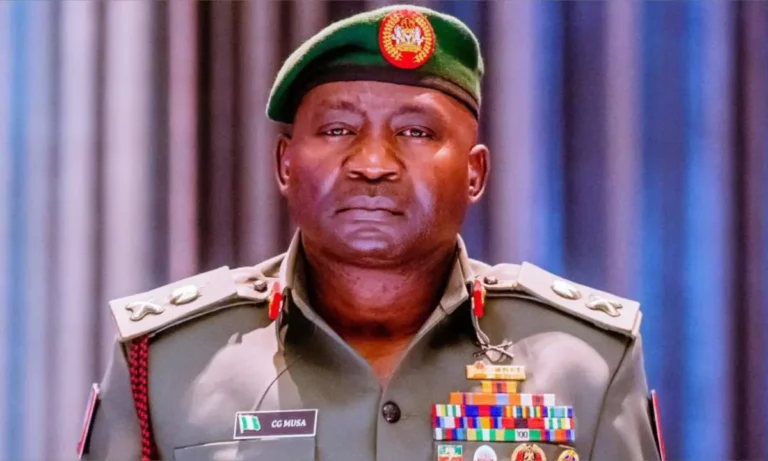
The Minister of Defence, Christopher Musa, disclosed the development on the sidelines of the Antalya Diplomacy Forum 2026 held in Antalya, noting that the deployment would commence immediately upon his return to Nigeria. The developent followed discussions with his Turkish counterpart, Yasar Guler.

“I’ve had a meeting with the Turkish Minister of Defence, where we shared a lot of ideas on how to improve our relationship, defence-wise. Türkiye has improved dramatically in the production of military hardware. Nigeria is still developing, and we have agreed that we are going to partner so that we have a co-production of some of these items,” he said.

According to Musa, the agreement provides a training quota for 200 Nigerian Special Forces personnel, with broader plans for sustained military collaboration, noting that joint exercises between both countries are already scheduled, with the first expected later this year.

“We have a Special Forces training agreement. Türkiye has agreed to give us 200 Special Forces trainees, so as soon as I return, we are sending them here for training. We will continue to do a lot. There will be exercises. The first exercise is coming up later in the year. So, in so many areas of defence, we are going to work together,” Musa said.

The minister said Nigeria’s nearly 17-years battle against insurgency reflects a form of asymmetric warfare, noting that Türkiye has faced a comparable fight against terrorism for over four decades.

“Because of that, we will move into training, production, and improving on our defence, industrial production, and exchange of officers and soldiers,” he said.

The ICIR reported that when President Bola Tinubu appointed former Chief of Defence Staff, Christopher Musa, as  defence minister in December 2025,  many  people were elated with the decision.

His appointment elicited high expectations largely because of his vast experience in counter-insurgency campaigns and how outspoken he was against terrorism.

However, Musa recently marked his 100 days in office, and the security situation across the nation has remained volatile, with renewed insurgent attacks, military casualties, and communities still under threat.

The Renewed Dystopia of President Bola Ahmed Tinubu (II)

0

By Chidi Anselm Odinkalu

When he was inaugurated as Nigeria’s elected president on 29 May 2015, Muhammadu Buhari identified three priority issues for his immediate attention. In the order in which he itemised them, these were: insecurity, persistent corruption and energy. President Buhari asserted that he would tackle these “head on” and, switching mental gears into his role as the leader of the All Progressives Congress (APC), promised that “Nigerians will not regret that they have entrusted national responsibility to us.” He got that wrong but let’s not get ahead of the story.

A mere 200 kilometres away, on the same day, at a similar event in Kaduna, at his inauguration as the elected governor of Kaduna State, one of Buhari’s acolytes in the same party, Nasir el-Rufai, identified insecurity as “an obstacle to progress” and promised to “work with law enforcement officials to drastically reduce violent crime” and  “insure safety of life and limb.”

By the time both men left office eight years later – one as president and the other as state governor – they had each and together managed to achieve the exact opposite. What occurred was more than mere abdication on insecurity; it felt like active conspiracy in perpetrating and perpetuating it.

Few communities felt the consequences of this like the Adara. The Adara are found in Munya and Paikoro Local Government Areas (LGAs) of Niger State as well as in Kachia (Kaduna South Senatorial Zone). In Kaduna Central, the Adara are in Chikun and Kajuru LGAs. The experience of the Adara across these state boundaries advertise the failures of government on insecurity, especially since 2015.

As Nigeria prepared for general elections in 2019, Nasir el-Rufai, as governor of Kaduna State, decided to abolish the Adara Chiefdom and turn it into an Emirate. The Districts and Villages Restructuring (Amendment) Order ostensibly executed by the governor on the third anniversary of his inauguration in May 2019 – with no notice to the affected populations – abolished the stool of the Adara, occupied at the time by the Agwam Adara, Dr. Raphael Maiwada Galadima. In its place, Governor el-Rufai proposed to create a Kachia Chiefdom and a Kajuru Emirate respectively. The order was not gazetted until three months later in August 2018.

Rumours of this development unsettled coexistence among ethnically diverse communities in the Adara Chiefdom. Upon learning about it, the Agwam Adara was reported to have “resisted the change due to the fact that the Adara Chiefdom is dominated by an indigenous Christian population and therefore could not be described as an emirate or appointed an Emir.”

Around 18 October 2019, murderous violence broke out in Kasuwan Magani within the Chiefdom. Over 55 persons were reportedly killed. The state governor visited the following day ostensibly to assess the situation and provide reassurance to a febrile community. The Agwam Adara was also present at the assessment by the governor, accompanied by his wife. Later in the evening, on his way back to his palace from the events of the day along the Kaduna-Kachia Road, some “armed men intercepted the convoy of the traditional ruler and opened fire, forcing them to stop.” This happened in Maikyali village.

The attackers murdered four persons, including close-protection assets from the Nigerian Police Force attached to the Agwam Adara. They then abducted the traditional ruler with his wife. One week later, the abductors killed the Agwam Adara and “his corpse was moved to Katari, about 85 kilometres between Abuja and Kaduna, before the kidnappers contacted the family of the late chief, informing them where to pick the corpse.” The state governor was absent from his funeral.

The affected communities were not natural strongholds of the governor or his party. In what was projected to be a close contest for the control of the state, marginal shifts in voting or turnout were likely to be dispositive. What looked like a design to create maximum violence in time for the elections of 2019 became a self-fulling prophecy. As the country prepared to head to the polls, Adara-land in Kaduna Central Senatorial Zone descended into an orgy of mass atrocities.

The first reported attacks were in Anguwan Barde in the Maro Ward around 10 February 2019, resulting in the reported killing of 11 persons. The attack on Karamai village about one week later reportedly killed over 40, with many more wounded. A contemporaneous incident in ⁠Banono village in Anguwan Aku reportedly killed at least another 26.

Around the same time, Nasir el-Rufai as governor claimed publicly that “66 Fulanis” had been massacred in Kajuru. Both the Police and the National Emergency Management Agency (NEMA) were unable to confirm this and independent fact checkers accused the governor of peddling “misleading narratives”.

One month after the first attack, Unguwan Barde would witness another attack around 11 March 2019, which killed a reported 33 persons. Around the same day, a separate incident in Dogon Noma killed over 72 persons.

In one month, between February and March 2019, the Adara Development Association, (ADA), reported over 148 community members killed or massacred with at least 545 houses destroyed in multiple incidents. The Fulani community put the casualty count among their own community at 131. In what looked like a statistical duel in human tragedy, the government was actively complicit.

In the period from the first reported attack on Anguwan Barde in February 2019 to the second week of April 2026, over 300 documented attacks or atrocity incidents occurred in the Adara communities of Kachia and Kajuru LGAs of Kaduna State, resulting in hundreds of human casualties and billions in destruction. Over 50 villages and settlements have been emptied into internal displacement.

Rather than find the perpetrators and bring them to book, the response of the government was to round up the leadership of the Adara community and lock them away in indefinite pre-trial detention for 112 days. As the Federal High Court would later find, they were consistently refused bail and were only released after the Director of Public Prosecutions found no grounds for their detention or prosecution.

The truth was to manifest five years later after the Adara leaders through the secretary-general of the ADA, Awemi Dio Maisamari, sued for civil remedies in 2024. In defence of the claim, government claimed that “the Adara Chiefdom and surrounding areas had become centres of violent crimes such as terrorism, banditry, kidnapping, armed robbery and murder, resulting in severe breakdown of law and order.” It further asserted that the scale of these atrocities “required immediate and extraordinary measures to restore peace and security.”

However, the government did not accuse the Adara leadership of having committed any of these crimes. Instead, it said, their mere existence was “prejudicial to peace” and a “significant threat to the stability of Kaduna State as a whole.”

When she eventually decided the case in May 2025, Hauwau Buhari, a judge of the Federal high Court, found as a fact that the arrest and detention of the Adara leaders was “not the result of an impartial, independent police investigation based on credible evidence of a crime, but rather stemmed from a politically motivated complaint.”

On Easter Sunday 2026, brave holdouts among the Adara in Ariko village in Kachia LGA went to church. While there, they were attacked in two different houses of worship by assailants who killed at least five and abducted over 38. Rather than deploy to rescue the victims, the government put out a false claim that they had been rescued. This reprised a similar script from January 2026 when the authorities similarly denied a deadly attack on Kurmin Wali community in which over 177 were abducted.

This past week, President Bola Ahmed Tinubu has publicly claimed that in taking over from President Muhammadu Buhari in 2023, he essentially succeeded himself. It was a proud assertion of both policy and political continuity. In saying so, he asserted clear ownership of more than one decade of complicity by Nigeria’s ruling party in the use of atrocity violence for political purposes. That is not the renewed hope he promised. For the Adara people, it has been dystopia on a vampire scale.

A lawyer and a teacher, Odinkalu can be reached at chidi.odinkalu@tufts.edu


Iran to close Hormuz again, one day after reopening

0

COMMERCIAL shipping sources have reported renewed Iranian military restrictions and fresh insecurity in the Strait of Hormuz, just a day after indications that limited shipping movement had resumed.

Shipping industry sources revealed this on Saturday, April 18, noting that vessels transiting the corridor received direct radio messages from Iran’s navy declaring the Strait closed again to commercial traffic. While no ships were officially blocked, maritime operators described the situation as highly unstable.

According to Reuters three maritime security and shipping sources said that at least two merchant vessels were also reportedly struck by gunfire while attempting to cross the waterway, marking a sharp escalation in risk for one of the world’s most critical energy corridors, through which roughly one-fifth of global oil and liquefied natural gas flows.

The latest disruption comes only hours after maritime tracking data showed a convoy of eight tankers entering the Strait, the first significant movement since the outbreak of the US-Israeli conflict with Iran seven weeks ago. 

That brief easing followed Iran’s earlier announcement that the Strait had been reopened under a temporary ceasefire arrangement linked to broader regional diplomacy.

However, the situation reversed on Saturday after Iranian authorities said they were reinstating strict military control over the waterway, citing continued US naval actions and what Tehran described as violations of a blockade on Iranian ports.

Iran’s armed forces reportedly justified the move as a response to what it called “piracy under the guise of enforcement,” arguing that an earlier agreement allowing limited passage of commercial vessels had been undermined.

A message attributed to Iran’s Supreme Leader Mojtaba Khamenei, posted on a Telegram channel, said the navy was prepared to inflict “new bitter defeats” on its adversaries, signalling continued hardline positioning despite diplomatic efforts.

The developments contrast with remarks earlier from Donald Trump, who hinted at “pretty good news” regarding Iran but warned that fighting could resume if no agreement is reached before a ceasefire deadline next week.

The renewed uncertainty follows a fragile sequence of diplomatic shifts, just a day earlier, Iran had signalled that the Strait would remain open under a 10-day US-brokered ceasefire tied to de-escalation efforts involving Israel and Lebanon. 

The United States government has not yet issued a formal response to Saturday’s developments.

Offa robbery politically motivated trial, says ex-Kwara Governor

0

Former Kwara State Governor, Abdulfatah Ahmed, has rejected a reported 20-count charge allegedly filed against him and others over the 2018 Offa robbery, describing the move as a politically driven attempt to persecute opposition figures.

In a statement on Saturday, April 18, Ahmed said the charges reportedly initiated under the administration of AbdulRahman AbdulRazaq are “false, baseless, and a desperate attempt to weaponise the instruments of the state.”

“My attention has been drawn to the so-called 20-count charge reportedly filed by the administration of AbdulRahman AbdulRazaq against my person, alongside that of Bukola Saraki and others, over the tragic 2018 Offa robbery. Let me state clearly and unequivocally: these allegations are false, baseless, and a desperate attempt to weaponise the instruments of the state for political persecution.

“Let me state clearly and unequivocally: these allegations are false, baseless, and a desperate attempt to weaponise the instruments of the state for political persecution,” Ahmed said.

Ahmed’s statement followed the 20-count charge suit the Kwara State Government filed against the former senate president Bukola Saraki and Abdulfatah Ahmed over allegations that they were armed suspects convicted in connection with the Offa robbery.

In charges  filed on April 9, 2026, at the Kwara State High Court in Ilorin, also listed as defendants Yusuf Abdulwahab, a former Chief of Staff to Ahmed, and Alabi Olalekan, another aide.

The former governor, who was named alongside former Senate President Saraki, insisted he has no connection, “direct or indirect,” to the deadly robbery attack that shook Offa in 2018 and left dozens dead.

“The Offa robbery remains one of the most painful chapters in the history of our dear state. Like every well-meaning Kwaran, I mourned the victims and stood firmly for justice. It is therefore both shocking and deeply troubling that years after thorough investigations and judicial processes at the federal level, this administration has chosen to resurrect a matter already settled for purely political ends,” he explained.

Ahmed argued that the Offa robbery case had already undergone extensive investigation and judicial review at the federal level, making the current charges suspicious.

“Let it also be known that during my tenure, I upheld the rule of law and never interfered with security agencies or judicial processes. I have nothing to hide and absolutely no link, direct or indirect, to any criminal activity, including the unfortunate Offa incident. The attempt to rely on recycled testimonies and discredited claims only reinforces what this trial truly represents; a political script, not a pursuit of justice.

“I have full confidence in the judiciary and trust that the courts will not allow themselves to be used as tools for political manipulation. Truth remains constant, and no amount of propaganda can overturn it,” he added.

He accused the Kwara State Government of pursuing a political agenda ahead of the 2027 elections, alleging that the case is intended to silence perceived opponents and shift public attention away from governance challenges.

“This latest move by the Kwara State Government is not about justice. It is about vendetta. It is about silencing perceived political opponents and rewriting narratives ahead of 2027. It is about distracting the good people of Kwara from the pressing issues of governance, including economic hardship, rising insecurity, and the visible decline in infrastructure and public services across the state.

“There are serious security situations with over 400 deaths, over 200 in captivity , all left with reckless abandonment. The best we could do in this circumstance is a political mockery…no Kwarans deserve more. With no new evidences, case has gone to the highest court where the hopes of the common lies. Yet rather than accept incapacity, the gov has chosen a path of mockery for the innocent and peace loving people of Offa. Time for Kwarans to recalibrate and avoid the kind of mistake that brought characters like this to lead us,” Ahmed said.

Ahmed decried what he termed a “mockery of the dead,” arguing that revisiting the case without new evidence undermines justice for victims of the Offa robbery, as he urged residents of Kwara State to remain calm and law-abiding, warning against what he described as attempts to create division and distraction.

“To the good people of Kwara State, I urge you to remain calm, law-abiding, and focused. Do not be distracted by this calculated attempt to divide us or derail our collective aspirations for a better Kwara. History will judge all actions, and justice, true justice, will prevail. Kwarans should not allow this kind of judicial rascality and political weaponization of sad events to create diversionary attention. This is a clear mockery of the dead.

Background

The April 2018 Offa robbery was one of Nigeria’s most notorious armed attacks in recent years, involving coordinated assaults on  five commercial banks and security personnel, and resulting in multiple fatalities of at least 33  killed 33 persons, including a pregnant woman and 12 police officers.

The robbers attacked First Bank, Guaranty Trust Bank, Ecobank, Zenith, Union Bank and Ibolo Micro-Finance Bank, all in Offa.

The case drew national attention and led to a series of arrests, prosecutions, and political controversy as two of the suspects involved in the armed robbery were arrested by the police in May.

In June, the police invited Ahmed and Saraki over the bank robberies and to report to the Force Intelligence Response Team Office at Guzape, Abuja to answer to the allegations reportedly levelled against them by five alleged gang leaders involved in the robberies.

However, both Saraki and Ahmed denied association with the armed robbers. In September 2024, a high court in Kwara found the five defendants guilty of illegal possession of firearms, armed robbery, and culpable homicide. In January, the court of appeal upheld the conviction and sentence of the five convicts.

Ahmed’s latest remarks are likely to further intensify debate over the case, especially as political activities gradually build toward the 2027 general elections.

Saraki governed Kwara between 2003 and 2011. He served as the senate president from 2015 to 2019, and Ahmed became Kwara governor after the tenure of Saraki in 2011 and served till 2019.

NBC reads riot act to broadcasters over bias, bullying ahead 2027

THE National Broadcasting Commission (NBC) has issued a formal notice to all broadcasters and stakeholders following what it describes as a sustained increase in breaches of the 6th edition of the Nigeria Broadcasting Code.

In a statement issued on Friday, April 17, via its Facebook page, the commission expressed concern over news, current affairs, and political programmes that depart from the core obligations of accuracy, balance, and professionalism.

As Nigeria begins its move toward the 2027 general elections, the Commission noted it will enforce strict and uncompromised compliance with every provision of the Code. Particular focus is being placed on regulations relating to fairness, accuracy, hate speech, incitement, and respect for constitutional bodies, the regulatory body says.

The statement addresses a disturbing departure from ethical standards by programme presenters and anchors. Citing Section 1.10.3 of the code, the commission reminded stations that the broadcaster shall ensure its presenter does not express his or her opinion in the programme as a matter of professional standard.

“Specific areas where presenters are currently failing to meet these standards include expressing personal opinions as facts, bullying or intimidating guests, and denying a fair hearing to opposing views or otherwise compromising neutrality,” the statement says.    The regulatory body warned that such conduct now carries a specific classification for sanctions:

“Any anchor found to have expressed personal opinion as fact, bullied or intimidated a guest, or denied fair hearing to opposing views would be deemed to have committed a Class B breach.”

The NBC emphasised that editorial responsibility remains the sole burden of the broadcaster and cannot be transferred to guests, even during live unscripted broadcasts.

The commission highlighted the misuse of broadcast platforms by political actors to disseminate inflammatory content and information capable of undermining national unity.

“Inflammatory, divisive, or unsubstantiated broadcasts will attract regulatory sanctions,” the NBC noted, stressing that compliance with the broadcast code is mandatory, not discretionary.

The commission further observed that instead of fulfilling their obligation to inform the public accurately, some platforms are being used to amplify social tensions and propagate misinformation.

Consequently, the NBC urged media houses to ensure that their airwaves remain platforms for credible information and national cohesion rather than tools for disorder.